Shoolini Durga Mantra
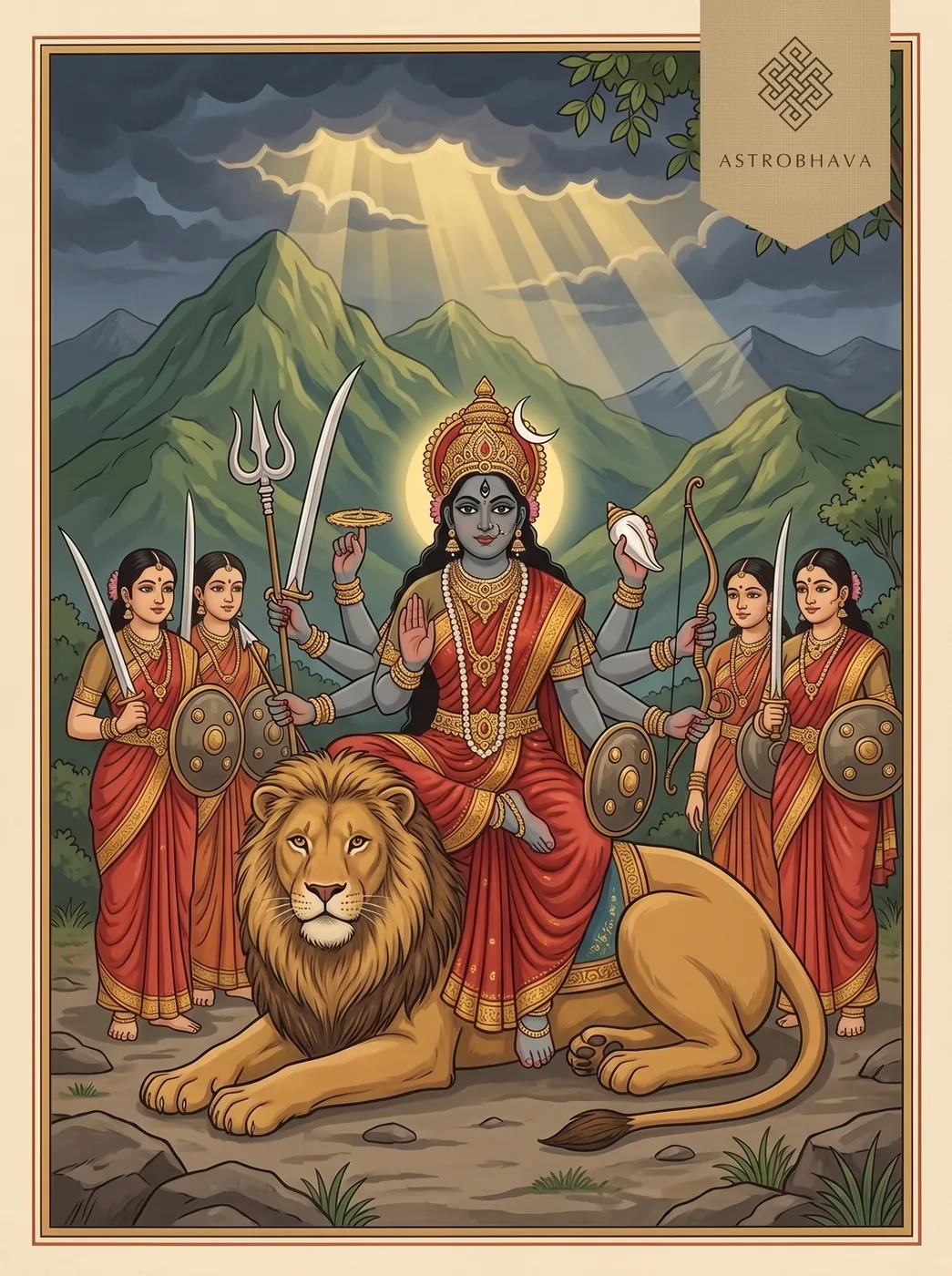
अध्यारूढां मृगेन्द्रं सजलजलधरश्यामलां हस्तपद्मैः शूलं बाणं कृपाणमरिजलजगदाचापपाशान् वहन्तीम् । चन्द्रोत्तंसां त्रिनेत्रां चतसृभिरसिना खेटकान् बिभ्रतीभिः कन्याभिः सेव्यमानां प्रतिभटभयदां शूलिनीं भावयामि ॥Also known as Jvalamalini Vidmahe
In Devanagari, Tamil, Telugu, Kannada, Malayalam and English — with the meaning of every word, and the one syllable most people pronounce wrongly.
 The Durga Homam, performed for youBook →
What the Shoolini Durga Mantra is
The Shoolini Durga mantra, as given here, is a pair of texts addressed to Shoolini, the form of Durga named for the shula, the trident she carries. The first is a dhyana, a meditation verse in the long sragdhara metre, from the eleventh chapter of the Sharada Tilaka, the tantric digest of Lakshmana Desikendra, in its section on Shulini Durga. It builds her image detail by detail: seated on a lion, dark as a cloud heavy with rain, eight weapons in her lotus hands, the crescent moon on her head, three eyes, and four maidens with swords and shields attending her. The second is the Shoolini Gayatri, 'Jvalamalini vidmahe', in the three-part Gayatri pattern, as the Shulini Kalpa of the Akasha Bhairava Kalpa records it in its eighty-second verse. It names her as the one garlanded with flames and the great trident-bearer, then asks Durga to guide the mind. The longer Jvala Shoolini root mantra is not printed: the Kalpa calls it secret, and tradition gives it only at initiation.
The wing of Sharabha and a hill town
According to Shaiva tradition, Shoolini belongs to the episode that follows Narasimha's slaying of Hiranyakashipu. The man-lion's anger did not subside, and the gods could find no way to calm it. Shiva then took the form of Sharabha, a being part bird and part lion with eight legs, which the Shiva Purana describes as winged. Later tradition reads the two wings as two goddesses, Pratyangira on one side and Shoolini on the other, so that Shoolini is the Goddess who enters the confrontation alongside Shiva and helps restore the balance of the world. Vaishnava tradition does not accept this account and tells the episode differently. In Tamil Nadu, the Kampahareswarar temple at Thirubhuvanam, built under Kulottunga Chola III, gives Sharabha a shrine of his own, and at the Skandhashramam temple in Chennai his image carries Pratyangira and Shoolini on its two wings. Far to the north, the hill town of Solan in Himachal Pradesh takes its name from Shoolini Devi, the family deity of the former rulers of Baghat State. In the last week of June the town keeps a three-day fair in which her image is carried in a decorated palanquin to the temple of her sister Durga in Ganj Bazar, stays there, and is brought back on the final day.
The mantra, in six scripts
- अध्यारूढां
- adhyārūḍhāṃ — seated upon
- मृगेन्द्रं
- mṛgendraṃ — the lion (king of beasts)
- सजलजलधरश्यामलां
- sajalajaladharaśyāmalāṃ — dark as a rain-filled cloud
- हस्तपद्मैः
- hastapadmaiḥ — with her lotus hands
- शूलं
- śūlaṃ — trident
- बाणं
- bāṇaṃ — arrow
- कृपाणमरिजलजगदाचापपाशान्
- kṛpāṇamarijalajagadācāpapāśān — sword, discus, conch, mace, bow and noose
- वहन्तीम्
- vahantīm — carrying
- ज्वालामालिनि
- jvālāmālini — (Mantra 1) to her garlanded with flames
- विद्महे
- vidmahe — may we know
- महाशूलिनि
- mahāśūlini — the great trident-bearer
- धीमहि
- dhīmahi — let us meditate on
- तन्नो
- tanno — that ... us (tat + naḥ)
- दुर्गा
- durgā — Durga
- प्रचोदयात्
- pracodayāt — may she inspire
Shoolini Durga Mantra lyrics in full
The meditation verse from the Sharada Tilaka, followed by the Shoolini Gayatri.
All 2 verses, in Sanskrit, Tamil, Telugu, Kannada, Malayalam and English, each with its meaning. Choose a script:
Download the Shoolini Durga Mantra PDFAll 2 verses with their meanings, in Sanskrit. Free to print and keep.
अध्यारूढां मृगेन्द्रं सजलजलधरश्यामलां हस्तपद्मैः शूलं बाणं कृपाणमरिजलजगदाचापपाशान् वहन्तीम् ।
चन्द्रोत्तंसां त्रिनेत्रां चतसृभिरसिना खेटकान् बिभ्रतीभिः कन्याभिः सेव्यमानां प्रतिभटभयदां शूलिनीं भावयामि ॥
அத்யாரூடாம் ம்ருகேந்த்ரம் ஸஜலஜலதரஶ்யாமலாம் ஹஸ்தபத்மைஃ ஶூலம் பாணம் க்ருபாணமரிஜலஜகதாசாபபாஶாந் வஹந்தீம் ।
சந்த்ரோத்தம்ஸாம் த்ரிநேத்ராம் சதஸ்ருபிரஸிநா கேடகாந் பிப்ரதீபிஃ கந்யாபிஃ ஸேவ்யமாநாம் ப்ரதிபடபயதாம் ஶூலிநீம் பாவயாமி ॥
అధ్యారూఢాం మృగేన్ద్రం సజలజలధరశ్యామలాం హస్తపద్మైః శూలం బాణం కృపాణమరిజలజగదాచాపపాశాన్ వహన్తీమ్ ।
చన్ద్రోత్తంసాం త్రినేత్రాం చతసృభిరసినా ఖేటకాన్ బిభ్రతీభిః కన్యాభిః సేవ్యమానాం ప్రతిభటభయదాం శూలినీం భావయామి ॥
ಅಧ್ಯಾರೂಢಾಂ ಮೃಗೇನ್ದ್ರಂ ಸಜಲಜಲಧರಶ್ಯಾಮಲಾಂ ಹಸ್ತಪದ್ಮೈಃ ಶೂಲಂ ಬಾಣಂ ಕೃಪಾಣಮರಿಜಲಜಗದಾಚಾಪಪಾಶಾನ್ ವಹನ್ತೀಮ್ ।
ಚನ್ದ್ರೋತ್ತಂಸಾಂ ತ್ರಿನೇತ್ರಾಂ ಚತಸೃಭಿರಸಿನಾ ಖೇಟಕಾನ್ ಬಿಭ್ರತೀಭಿಃ ಕನ್ಯಾಭಿಃ ಸೇವ್ಯಮಾನಾಂ ಪ್ರತಿಭಟಭಯದಾಂ ಶೂಲಿನೀಂ ಭಾವಯಾಮಿ ॥
അധ്യാരൂഢാം മൃഗേന്ദ്രം സജലജലധരശ്യാമലാം ഹസ്തപദ്മൈഃ ശൂലം ബാണം കൃപാണമരിജലജഗദാചാപപാശാന് വഹന്തീമ് ।
ചന്ദ്രോത്തംസാം ത്രിനേത്രാം ചതസൃഭിരസിനാ ഖേടകാന് ബിഭ്രതീഭിഃ കന്യാഭിഃ സേവ്യമാനാം പ്രതിഭടഭയദാം ശൂലിനീം ഭാവയാമി ॥
adhyārūḍhāṃ mṛgendraṃ sajalajaladharaśyāmalāṃ hastapadmaiḥ śūlaṃ bāṇaṃ kṛpāṇamarijalajagadācāpapāśān vahantīm |
candrottaṃsāṃ trinetrāṃ catasṛbhirasinā kheṭakān bibhratībhiḥ kanyābhiḥ sevyamānāṃ pratibhaṭabhayadāṃ śūlinīṃ bhāvayāmi ||
I meditate on Shoolini, seated upon the lion, dark as a rain-filled cloud, holding in her lotus hands the trident, arrow, sword, discus, conch, mace, bow and noose. She wears the crescent moon on her head and has three eyes; four maidens bearing swords and shields attend her, and she fills every opponent with fear.
ज्वालामालिनि विद्महे महाशूलिनि धीमहि ।
तन्नो दुर्गा प्रचोदयात् ॥
ஜ்வாலாமாலிநி வித்மஹே மஹாஶூலிநி தீமஹி ।
தந்நோ துர்கா ப்ரசோதயாத் ॥
జ్వాలామాలిని విద్మహే మహాశూలిని ధీమహి ।
తన్నో దుర్గా ప్రచోదయాత్ ॥
ಜ್ವಾಲಾಮಾಲಿನಿ ವಿದ್ಮಹೇ ಮಹಾಶೂಲಿನಿ ಧೀಮಹಿ ।
ತನ್ನೋ ದುರ್ಗಾ ಪ್ರಚೋದಯಾತ್ ॥
ജ്വാലാമാലിനി വിദ്മഹേ മഹാശൂലിനി ധീമഹി ।
തന്നോ ദുര്ഗാ പ്രചോദയാത് ॥
jvālāmālini vidmahe mahāśūlini dhīmahi |
tanno durgā pracodayāt ||
May we know her who wears a garland of flames; let us meditate on the great bearer of the trident. May that Durga inspire and guide us.
The syllable people get wrong
In mahāśūlini and śūlinīṃ the first syllable is śū: a palatal 'sh' with a long 'oo', said shoo-li-ni, not 'soo' as the common spelling Soolini suggests. Hold the ū about twice as long as the short i that follows, and keep the stress off the middle syllable.
When the Shoolini Durga Mantra is chanted
Weekday. Friday
Questions
Have your chart read before you decide
Chanting is yours to do, and free. But which deity your situation calls for — and whether a mantra alone is the right response — depends on your chart. Sometimes it is; sometimes it is not.
- Over 30 years in the Guru–Sishya Parampara, from the age of five
- He reads every chart himself — 60 minutes, one to one, never delegated
- Charts are read only between sunrise and sunset, following tradition
