Shuklambaradharam Vishnum
शुक्लाम्बरधरं विष्णुं शशिवर्णं चतुर्भुजम् । प्रसन्नवदनं ध्यायेत् सर्वविघ्नोपशान्तये ॥Also known as Shuklam Baradharam
In Devanagari, Tamil, Telugu, Kannada, Malayalam and English — with the meaning of every word, and the one syllable most people pronounce wrongly.
 The Ganapathi Homa, performed for youBook →
What the Shuklambaradharam Vishnum is
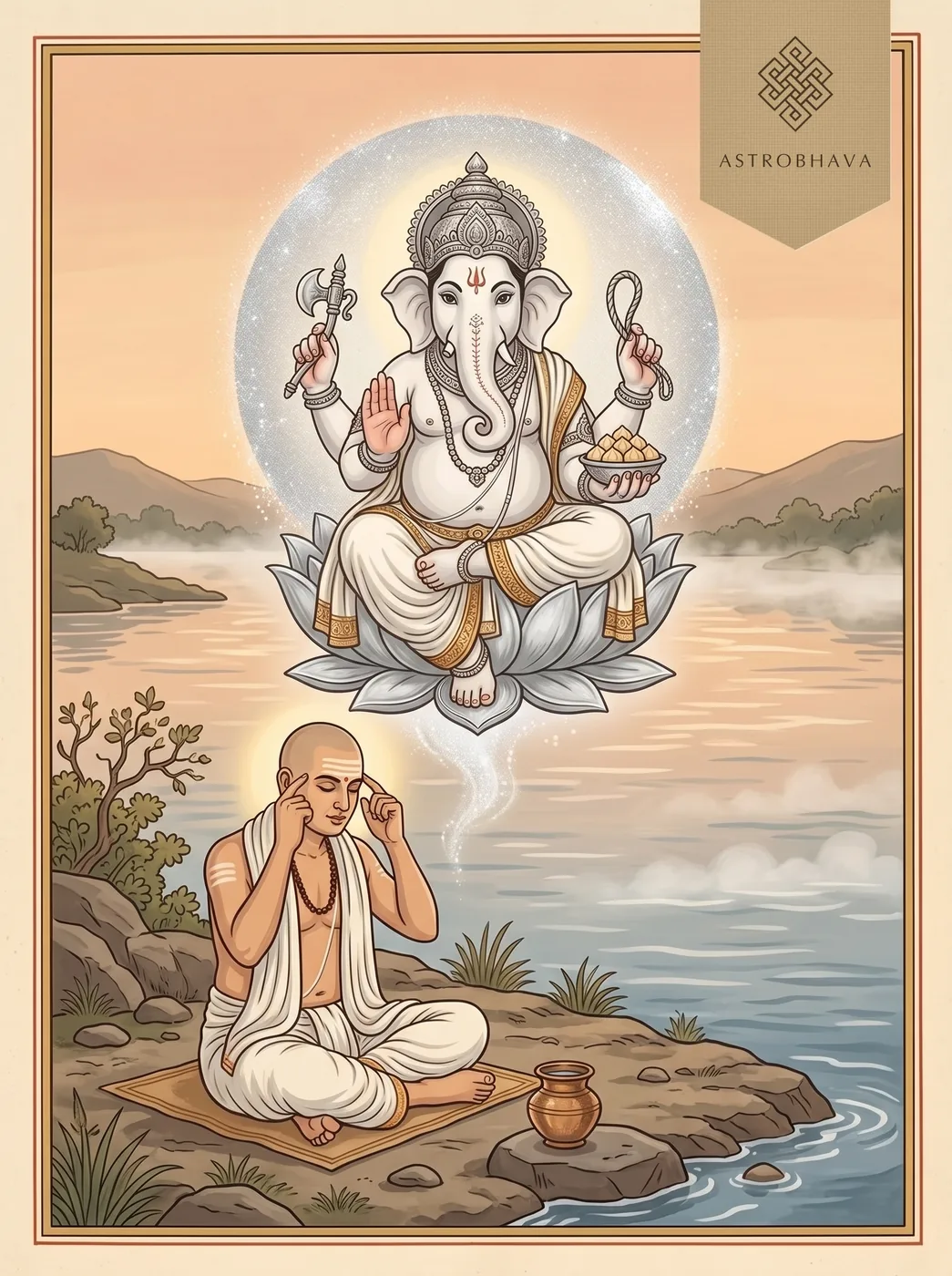
Shuklambaradharam Vishnum is the opening of a single Sanskrit shloka that stands in two places at once: it is the first of the prefatory verses recited before the Vishnu Sahasranama, and it is the verse many families and priests say to Ganesha before starting a rite, a journey or a piece of study. No author is recorded. The verse is an anushtubh of four eight-syllable quarters and works as a dhyana, a form to hold in the mind. Its first line gives four features: shuklambaradharam, wearing white cloth; vishnum, the all-pervading one; shashivarnam, the colour of the moon; and chaturbhujam, four-armed. The second line adds prasannavadanam, a calm and gracious face, then the only verb, dhyayet, 'one should meditate', set in the third person rather than spoken to the deity. The last word gives the purpose, sarvavighnopashantaye, for the quieting of every obstacle. Because the only name in the verse, Vishnu, can also be read as a description, each tradition finds its own deity in it.
One verse read by two traditions
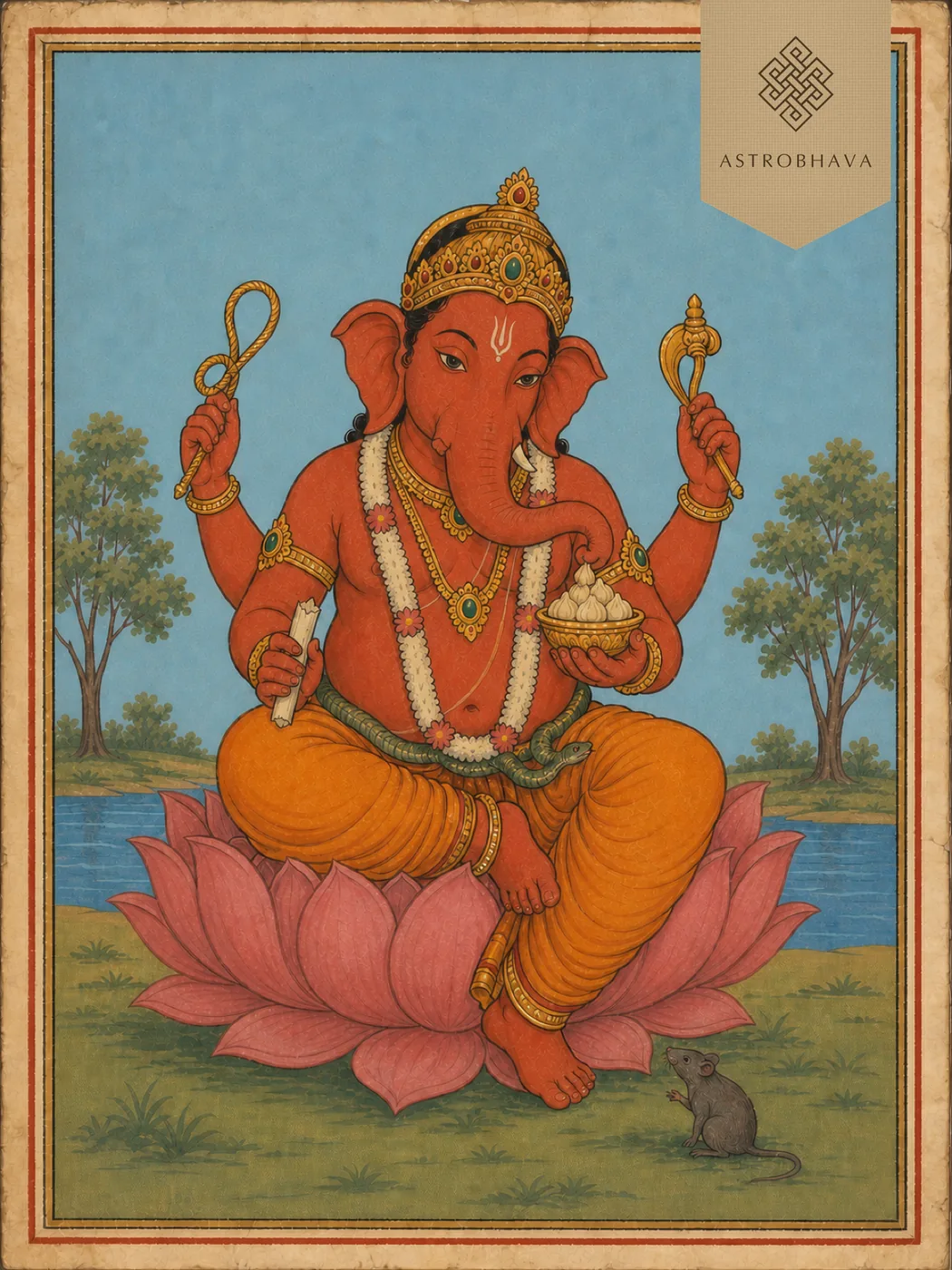
The verse has no composition story; its history is the history of where it is placed. In most printed editions of the Vishnu Sahasranama it heads a short run of prefatory verses that come before Vaishampayana begins the Mahabharata narrative, so it is not part of the Anushasana Parva text itself. The verse that follows, Yasya dviradavaktradyah, asks the reciter to take refuge in Vishvaksena, whose hundreds of attendants, led by the elephant-faced one, keep obstacles away. Read in that sequence, Vaishnava teachers take the white-clad, four-armed figure as Vishnu, and Sri Vaishnava teaching also applies it to Vishvaksena, who in their belief clears hindrances from the path of Vishnu's devotees. Smarta households read the same words as a Ganapati dhyana. Their explanation rests on the word vishnum: Ganesha is called Vishnu because he pervades everything. The white garments and moonlike colour are taken as a deliberate change from the red cloth and vermilion body with which he is usually pictured, and his four hands are said to hold the goad, the noose, a bowl of modakas and the gesture of reassurance. Sandhyavandanam manuals for Smartas of the Apastamba Sutra print it as the Ganapati dhyanam that opens the daily twilight rite, with the temples struck lightly with the knuckles at five marked points in the verse. Some sandhya manuals note that Vaishnavas leave this step out.
The mantra, in six scripts
- शुक्लाम्बरधरं
- śuklāmbaradharaṃ — wearing white garments
- विष्णुं
- viṣṇuṃ — Vishnu, the all-pervading one
- शशिवर्णं
- śaśivarṇaṃ — moon-coloured
- चतुर्भुजम्
- caturbhujam — four-armed
- प्रसन्नवदनं
- prasannavadanaṃ — with a serene, gracious face
- ध्यायेत्
- dhyāyet — one should meditate on
- सर्वविघ्नोपशान्तये
- sarvavighnopaśāntaye — for the calming of all obstacles
Shuklambaradharam Vishnum lyrics in full
One four-quarter verse, as printed at the head of the Vishnu Sahasranama.
All 1 verses, in Sanskrit, Tamil, Telugu, Kannada, Malayalam and English, each with its meaning. Choose a script:
Download the Shuklambaradharam Vishnum PDFAll 1 verses with their meanings, in Sanskrit. Free to print and keep.
शुक्लाम्बरधरं विष्णुं शशिवर्णं चतुर्भुजम् ।
प्रसन्नवदनं ध्यायेत् सर्वविघ्नोपशान्तये ॥
ஶுக்லாம்பரதரம் விஷ்ணும் ஶஶிவர்ணம் சதுர்புஜம் ।
ப்ரஸந்நவதநம் த்யாயேத் ஸர்வவிக்நோபஶாந்தயே ॥
శుక్లామ్బరధరం విష్ణుం శశివర్ణం చతుర్భుజమ్ ।
ప్రసన్నవదనం ధ్యాయేత్ సర్వవిఘ్నోపశాన్తయే ॥
ಶುಕ್ಲಾಮ್ಬರಧರಂ ವಿಷ್ಣುಂ ಶಶಿವರ್ಣಂ ಚತುರ್ಭುಜಮ್ ।
ಪ್ರಸನ್ನವದನಂ ಧ್ಯಾಯೇತ್ ಸರ್ವವಿಘ್ನೋಪಶಾನ್ತಯೇ ॥
ശുക്ലാമ്ബരധരം വിഷ്ണും ശശിവര്ണം ചതുര്ഭുജമ് ।
പ്രസന്നവദനം ധ്യായേത് സര്വവിഘ്നോപശാന്തയേ ॥
śuklāmbaradharaṃ viṣṇuṃ śaśivarṇaṃ caturbhujam |
prasannavadanaṃ dhyāyet sarvavighnopaśāntaye ||
One should meditate on the all-pervading Lord who wears white garments, who is bright like the moon, who has four arms and a serene, smiling face. The verse says this meditation brings the removal of all obstacles.
The syllable people get wrong
In सर्वविघ्नोपशान्तये (sarvavighnopaśāntaye), the gh of vighna is aspirated and is often flattened to 'vigna'; give the g a breath, then join vighna to upaśāntaye through a single o: sar-va-vigh-no-pa-shaan-ta-ye, holding the long ā of śān.
When the Shuklambaradharam Vishnum is chanted
Weekday. Tuesday
Questions
Have your chart read before you decide
Chanting is yours to do, and free. But which deity your situation calls for — and whether a mantra alone is the right response — depends on your chart. Sometimes it is; sometimes it is not.
- Over 30 years in the Guru–Sishya Parampara, from the age of five
- He reads every chart himself — 60 minutes, one to one, never delegated
- Charts are read only between sunrise and sunset, following tradition
