Sivapuranam
நமச்சிவாய வாஅழ்க நாதன் தாள் வாழ்க இமைப்பொழுதும் என் நெஞ்சில் நீங்காதான் தாள் வாழ்கAlso known as Namasivaya Vazhga
In Tamil and English — with the meaning of every word, and the one sound most people pronounce wrongly.
What the Sivapuranam is
Sivapuranam is the first hymn of the Tiruvacakam, the Tamil collection of 51 poems by the Shaiva saint Manikkavacakar, which together with his Tirukkovaiyar makes up the Eighth Tirumurai of the Tamil Shaiva canon. It runs to 95 lines in kali venba metre. Despite the name, it is not the Sanskrit Shiva Purana: the poet names his own song in line 19, calling it a sivapuranam, an ancient account of Shiva, and promising to recite it. The hymn moves in clear stages. Lines 1 to 16 hail Shiva's feet in three refrains, vazhga (long live), velka (be victorious) and potri (praise). Lines 17 to 20 state why the poet sings. The long middle is one unbroken address: the soul's passage through grass, worm, beast, human and god, the body as a hut of nine gates, and a string of names for a Lord who is light and dark, near and far. Lines 92 to 95 say what awaits those who understand it.
A minister, a guru and a kurundha tree
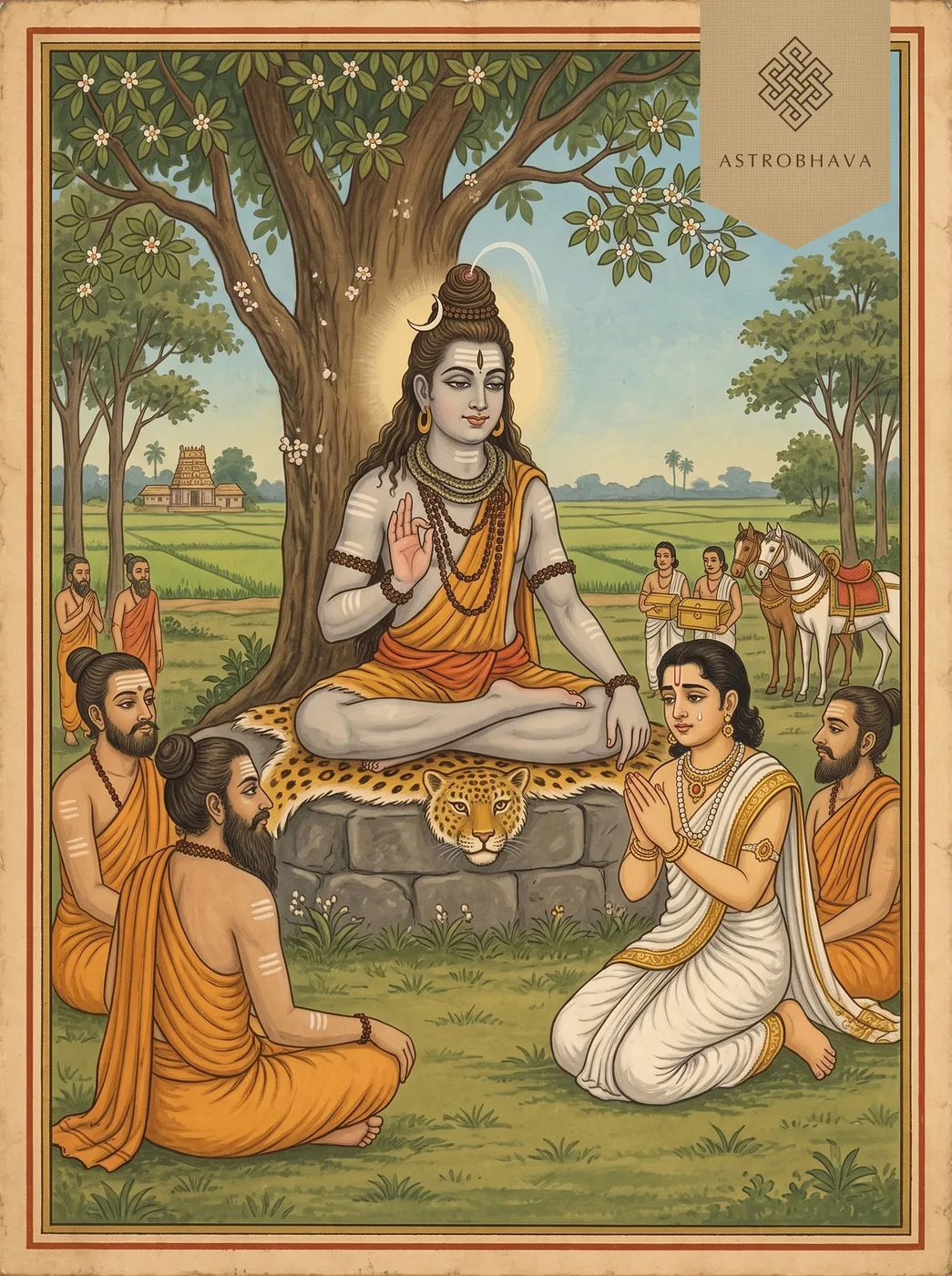
According to tradition, Manikkavacakar was born at Tiruvathavur near Madurai and rose to be chief minister to a Pandya king. Sent with royal gold to buy horses for the cavalry, he reached Tirupperunturai and found an ascetic teacher seated under a kurundha tree among his disciples. The teacher was Shiva himself, and a single glance of initiation ended the minister's career. He spent the horse money on a temple there, the shrine now known as Avudaiyarkoil, where the deity is worshipped without an image, on a bare pedestal. When the king demanded his horses, the legend continues, Shiva turned jackals into horses for a day; once handed over they turned back, the minister was imprisoned, and the Vaigai rose in flood until the king understood whom he had been dealing with. The Tirumurai editions head Sivapuranam as sung at Tirupperunturai, and the hymn carries that memory in line 15, which hails 'our God of glorious Perunthurai'. A later legend, set at Chidambaram, holds that Shiva came as a Brahmin, wrote down the poems as the saint sang them, and left the palm leaves in the shrine of Nataraja, signed with his name. The hymn's own closing lines also turn to Thillai, naming the dancer there. His date is debated, with proposals running from the 3rd to the 9th century; the 9th century is most often given.
The opening lines, in Tamil and English
- நமச்சிவாய
- namaccivāya — Namasivaya, the five-syllable name
- வாஅழ்க
- vāaḻka — long live
- நாதன்
- nātaṉ — of the Lord
- தாள்
- tāḷ — the feet
- வாழ்க
- vāḻka — long live
- இமைப்பொழுதும்
- imaippoḻutum — even for the blink of an eye
- என்
- eṉ — my
- நெஞ்சில்
- neñcil — in the heart
- நீங்காதான்
- nīṅkātāṉ — of him who never leaves
- தாள்
- tāḷ — the feet
- வாழ்க
- vāḻka — long live
Sivapuranam lyrics in full
The complete 95-line hymn in Tamil, set out in nineteen groups of lines. The word 'Tiruchitrambalam', customarily said after it, is not part of the hymn.
All 95 lines, in Tamil and English, each with its meaning. Choose a script:
Download the Sivapuranam PDFAll 95 lines with their meanings, in Tamil. Free to print and keep.
நமச்சிவாய வாஅழ்க நாதன் தாள் வாழ்க
இமைப்பொழுதும் என் நெஞ்சில் நீங்காதான் தாள் வாழ்க
கோகழி ஆண்ட குருமணி தன் தாள் வாழ்க
ஆகமம் ஆகிநின்று அண்ணிப்பான் தாள் வாழ்க
ஏகன் அநேகன் இறைவன் அடி வாழ்க
namaccivāya vāaḻka nātaṉ tāḷ vāḻka
imaippoḻutum eṉ neñcil nīṅkātāṉ tāḷ vāḻka
kōkaḻi āṇṭa kurumaṇi taṉ tāḷ vāḻka
ākamam ākiniṉṟu aṇṇippāṉ tāḷ vāḻka
ēkaṉ anēkaṉ iṟaivaṉ aṭi vāḻka
Hail Namasivaya. Hail the feet of the Lord. Hail the feet of him who never leaves my heart even for the blink of an eye, of the jewel of a Guru who ruled at Kokazhi, and of him who became the Agamas and draws near in sweetness; hail the feet of the Lord who is one and also many.
வேகம் கெடுத்தாண்ட வேந்தன் அடி வெல்க
பிறப்பறுக்கும் பிஞ்ஞகன் தன் பெய்கழல்கள் வெல்க
புறத்தார்க்குச் சேயோன் தன் பூங்கழல்கள் வெல்க
கரம் குவிவார் உள்மகிழும் கோன்கழல்கள் வெல்க
சிரம் குவிவார் ஓங்குவிக்கும் சீரோன் கழல் வெல்க
vēkam keṭuttāṇṭa vēntaṉ aṭi velka
piṟappaṟukkum piññakaṉ taṉ peykaḻalkaḷ velka
puṟattārkkuc cēyōṉ taṉ pūṅkaḻalkaḷ velka
karam kuvivār uḷmakiḻum kōṉkaḻalkaḷ velka
ciram kuvivār ōṅkuvikkum cīrōṉ kaḻal velka
Victory to the feet of the king who stilled my restless rush and took me as his own; victory to the anklets of Pinnakan, the Lord who ends rebirth; to the flower-like feet of him who is far from those who stand outside; to the feet of the Lord who delights within those who join their palms; and to the glorious one who raises up those who bow their heads.
ஈசன் அடி போற்றி எந்தை அடி போற்றி
தேசன் அடி போற்றி சிவன் சேவடி போற்றி
நேயத்தே நின்ற நிமலன் அடி போற்றி
மாயப் பிறப்பு அறுக்கும் மன்னன் அடி போற்றி
சீரார் பெருந்துறை நம் தேவன் அடி போற்றி
ஆராத இன்பம் அருளும் மலை போற்றி
īcaṉ aṭi pōṟṟi entai aṭi pōṟṟi
tēcaṉ aṭi pōṟṟi civaṉ cēvaṭi pōṟṟi
nēyattē niṉṟa nimalaṉ aṭi pōṟṟi
māyap piṟappu aṟukkum maṉṉaṉ aṭi pōṟṟi
cīrār peruntuṟai nam tēvaṉ aṭi pōṟṟi
ārāta iṉpam aruḷum malai pōṟṟi
Praise to the feet of Isa, the feet of my Father, the feet of the radiant one, the red feet of Shiva; praise to the feet of the spotless one who abides in love, of the king who cuts off deluding birth, and of our God of glorious Perunthurai. Praise to the mountain that grants a bliss that never cloys.
சிவன் அவன் என் சிந்தையுள் நின்ற அதனால்
அவன் அருளாலே அவன் தாள் வணங்கிச்
சிந்தை மகிழச் சிவபுராணம் தன்னை
முந்தை வினைமுழுதும் ஓய உரைப்பன் யான்
civaṉ avaṉ eṉ cintaiyuḷ niṉṟa ataṉāl
avaṉ aruḷālē avaṉ tāḷ vaṇaṅkic
cintai makiḻac civapurāṇam taṉṉai
muntai viṉaimuḻutum ōya uraippaṉ yāṉ
Because Shiva stands within my mind, by his grace I bow at his feet, and with a glad heart I recite this Sivapuranam so that all my past karma may come to an end.
கண் நுதலான் தன்கருணைக் கண்காட்ட வந்து எய்தி
எண்ணுதற்கு எட்டா எழில் ஆர் கழல் இறைஞ்சி
விண் நிறைந்து மண் நிறைந்து மிக்காய் விளங்கு ஒளியாய்
எண் இறந்து எல்லை இலாதானே நின் பெரும்சீர்
பொல்லா வினையேன் புகழுமாறு ஒன்று அறியேன்
kaṇ nutalāṉ taṉkaruṇaik kaṇkāṭṭa vantu eyti
eṇṇutaṟku eṭṭā eḻil ār kaḻal iṟaiñci
viṇ niṟaintu maṇ niṟaintu mikkāy viḷaṅku oḷiyāy
eṇ iṟantu ellai ilātāṉē niṉ perumcīr
pollā viṉaiyēṉ pukaḻumāṟu oṉṟu aṟiyēṉ
The Lord with an eye on his brow came and showed me his eye of grace, and I bowed at his beautiful feet that thought cannot reach. You fill the sky, you fill the earth and surpass them, a shining light, beyond count and without limit; I, of wicked deeds, know no way to praise your great glory.
புல்லாகிப் பூடாய்ப் புழுவாய் மரமாகிப்
பல் விருகமாகிப் பறவையாய்ப் பாம்பாகிக்
கல்லாய் மனிதராய்ப் பேயாய்க் கணங்களாய்
வல் அசுரர் ஆகி முனிவராய்த் தேவராய்ச்
செல்லாஅ நின்ற இத் தாவர சங்கமத்துள்
pullākip pūṭāyp puḻuvāy maramākip
pal virukamākip paṟavaiyāyp pāmpākik
kallāy maṉitarāyp pēyāyk kaṇaṅkaḷāy
val acurar āki muṉivarāyt tēvarāyc
cellāa niṉṟa it tāvara caṅkamattuḷ
As grass, as shrub, as worm, as tree, as many kinds of beast, as bird, as snake, as stone, as human, as ghost, as hosts of spirits, as mighty asuras, as sages and as gods, within this ever-moving world of the fixed and the moving,
எல்லாப் பிறப்பும் பிறந்து இளைத்தேன் எம்பெருமான்
மெய்யே உன் பொன் அடிகள் கண்டு இன்று வீடு உற்றேன்
உய்ய என் உள்ளத்துள் ஓங்காரமாய் நின்ற
மெய்யா விமலா விடைப்பாகா வேதங்கள்
ஐயா எனவோங்கி ஆழ்ந்து அகன்ற நுண்ணியனே
ellāp piṟappum piṟantu iḷaittēṉ emperumāṉ
meyyē uṉ poṉ aṭikaḷ kaṇṭu iṉṟu vīṭu uṟṟēṉ
uyya eṉ uḷḷattuḷ ōṅkāramāy niṉṟa
meyyā vimalā viṭaippākā vētaṅkaḷ
aiyā eṉavōṅki āḻntu akaṉṟa nuṇṇiyaṉē
I have been born in every birth and grown weary, my Lord. Truly, seeing your golden feet today, I have reached release. You stand as Om within my heart so that I may be saved; you are the True one, the spotless one, the rider of the bull, the subtle one whom the Vedas hail as Lord, rising high, deep and wide.
வெய்யாய் தணியாய் இயமானனாம் விமலா
பொய் ஆயின எல்லாம் போய் அகல வந்தருளி
மெய்ஞ்ஞானம் ஆகி மிளிர்கின்ற மெய்ச் சுடரே
எஞ்ஞானம் இல்லாதேன் இன்பப் பெருமானே
அஞ்ஞானம் தன்னை அகல்விக்கும் நல் அறிவே
veyyāy taṇiyāy iyamāṉaṉām vimalā
poy āyiṉa ellām pōy akala vantaruḷi
meyññāṉam āki miḷirkiṉṟa meyc cuṭarē
eññāṉam illātēṉ iṉpap perumāṉē
aññāṉam taṉṉai akalvikkum nal aṟivē
You are fierce and you are gentle, the spotless one who is also the sacrificer. You came in grace so that all that is false might leave, and you shine as true knowledge, a true flame. You are the Lord of bliss to me who has no knowledge, the good wisdom that drives away ignorance.
ஆக்கம் அளவு இறுதி இல்லாய் அனைத்து உலகும்
ஆக்குவாய் காப்பாய் அழிப்பாய் அருள் தருவாய்
போக்குவாய் என்னைப் புகுவிப்பாய் நின் தொழும்பின்
நாற்றத்தின் நேரியாய் சேயாய் நணியானே
மாற்றம் மனம் கழிய நின்ற மறையோனே
ākkam aḷavu iṟuti illāy aṉaittu ulakum
ākkuvāy kāppāy aḻippāy aruḷ taruvāy
pōkkuvāy eṉṉaip pukuvippāy niṉ toḻumpiṉ
nāṟṟattiṉ nēriyāy cēyāy naṇiyāṉē
māṟṟam maṉam kaḻiya niṉṟa maṟaiyōṉē
You have no beginning, measure or end; you create, protect and dissolve all the worlds and give grace; you release me and admit me into your service. Subtle as fragrance, you are far and near, the Lord of the Vedas who stands beyond word and mind.
கறந்த பால் கன்னலொடு நெய்கலந்தாற் போலச்
சிறந்தடியார் சிந்தனையுள் தேன் ஊறி நின்று
பிறந்த பிறப்பு அறுக்கும் எங்கள் பெருமான்
நிறங்கள் ஓர் ஐந்து உடையாய் விண்ணோர்கள் ஏத்த
மறைந்திருந்தாய் எம்பெருமான் வல்வினையேன் தன்னை
kaṟanta pāl kaṉṉaloṭu neykalantāṟ pōlac
ciṟantaṭiyār cintaṉaiyuḷ tēṉ ūṟi niṉṟu
piṟanta piṟappu aṟukkum eṅkaḷ perumāṉ
niṟaṅkaḷ ōr aintu uṭaiyāy viṇṇōrkaḷ ētta
maṟaintiruntāy emperumāṉ valviṉaiyēṉ taṉṉai
Like fresh-drawn milk mixed with sugarcane juice and ghee, you well up like honey in the thoughts of devotees and cut off birth, our Lord. You who have five colours stayed hidden even as the gods praised you; my Lord, as for me, bound by strong karma,
மறைந்திட மூடிய மாய இருளை
அறம்பாவம் என்னும் அரும் கயிற்றால் கட்டி
புறம்தோல் போர்த்து எங்கும் புழு அழுக்கு மூடி
மலம் சோரும் ஒன்பது வாயில் குடிலை
மலங்கப் புலன் ஐந்தும் வஞ்சனையைச் செய்ய
maṟaintiṭa mūṭiya māya iruḷai
aṟampāvam eṉṉum arum kayiṟṟāl kaṭṭi
puṟamtōl pōrttu eṅkum puḻu aḻukku mūṭi
malam cōrum oṉpatu vāyil kuṭilai
malaṅkap pulaṉ aintum vañcaṉaiyaic ceyya
the deluding darkness that hid me, tied with the hard ropes called virtue and sin, wrapped outside in skin and covered everywhere with worms and filth, a hut with nine gates that drip impurity; while the five senses deceived me and threw me into confusion,
விலங்கு மனத்தால் விமலா உனக்குக்
கலந்த அன்பாகிக் கசிந்து உள் உருகும்
நலம் தான் இலாத சிறியேற்கு நல்கி
நிலம் தன்மேல் வந்தருளி நீள்கழல்கள் காட்டி
நாயிற் கடையாய்க் கிடந்த அடியேற்குத்
vilaṅku maṉattāl vimalā uṉakkuk
kalanta aṉpākik kacintu uḷ urukum
nalam tāṉ ilāta ciṟiyēṟku nalki
nilam taṉmēl vantaruḷi nīḷkaḻalkaḷ kāṭṭi
nāyiṟ kaṭaiyāyk kiṭanta aṭiyēṟkut
to me, a small one with a beastly mind, O spotless one, lacking the goodness of a love that melts within and merges with you, you gave your grace, came down upon this earth and showed your long feet, to me, your servant, lying lower than a dog,
தாயிற் சிறந்த தயா ஆன தத்துவனே
மாசற்ற சோதி மலர்ந்த மலர்ச்சுடரே
தேசனே தேன் ஆர் அமுதே சிவபுரனே
பாசமாம் பற்று அறுத்துப் பாரிக்கும் ஆரியனே
நேச அருள்புரிந்து நெஞ்சில் வஞ்சம் கெடப்
tāyiṟ ciṟanta tayā āṉa tattuvaṉē
mācaṟṟa cōti malarnta malarccuṭarē
tēcaṉē tēṉ ār amutē civapuraṉē
pācamām paṟṟu aṟuttup pārikkum āriyaṉē
nēca aruḷpurintu neñcil vañcam keṭap
O Principle of compassion greater than a mother's; flame-flower blooming in a stainless light; radiant one, nectar full of honey, Lord of Sivapuram; noble one who cuts the bond of attachment and sustains me; granting loving grace so that the deceit in my heart is destroyed,
பேராது நின்ற பெருங்கருணைப் பேராறே
ஆரா அமுதே அளவிலாப் பெம்மானே
ஓராதார் உள்ளத்து ஒளிக்கும் ஒளியானே
நீராய் உருக்கி என் ஆருயிராய் நின்றானே
இன்பமும் துன்பமும் இல்லானே உள்ளானே
pērātu niṉṟa peruṅkaruṇaip pērāṟē
ārā amutē aḷavilāp pemmāṉē
ōrātār uḷḷattu oḷikkum oḷiyāṉē
nīrāy urukki eṉ āruyirāy niṉṟāṉē
iṉpamum tuṉpamum illāṉē uḷḷāṉē
you are the great river of compassion that never departs, nectar that never cloys, the Lord without measure, the light that hides from those who do not seek it. You melted me like water and stand as my precious life; you are beyond pleasure and pain, yet within them.
அன்பருக்கு அன்பனே யாவையுமாய் அல்லையுமாம்
சோதியனே துன்னிருளே தோன்றாப் பெருமையனே
ஆதியனே அந்தம் நடுவாகி அல்லானே
ஈர்த்து என்னை ஆட்கொண்ட எந்தை பெருமானே
கூர்த்த மெய்ஞ்ஞானத்தால் கொண்டு உணர்வார் தம் கருத்தின்
aṉparukku aṉpaṉē yāvaiyumāy allaiyumām
cōtiyaṉē tuṉṉiruḷē tōṉṟāp perumaiyaṉē
ātiyaṉē antam naṭuvāki allāṉē
īrttu eṉṉai āṭkoṇṭa entai perumāṉē
kūrtta meyññāṉattāl koṇṭu uṇarvār tam karuttiṉ
You love those who love you; you are all things and yet none of them; you are light and dense darkness, a greatness that does not show itself; you are the beginning, the end and the middle, and none of these; my Father and Lord, who drew me to you and took me as your own. In the minds of those who know you by keen true knowledge,
நோக்கரிய நோக்கே நுணுக்கரிய நுண் உணர்வே
போக்கும் வரவும் புணர்வும் இலாப் புண்ணியனே
காக்கும் எம் காவலனே காண்பரிய பேர் ஒளியே
ஆற்றின்ப வெள்ளமே அத்தா மிக்காய் நின்ற
தோற்றச் சுடர் ஒளியாய்ச் சொல்லாத நுண் உணர்வாய்
nōkkariya nōkkē nuṇukkariya nuṇ uṇarvē
pōkkum varavum puṇarvum ilāp puṇṇiyaṉē
kākkum em kāvalaṉē kāṇpariya pēr oḷiyē
āṟṟiṉpa veḷḷamē attā mikkāy niṉṟa
tōṟṟac cuṭar oḷiyāyc collāta nuṇ uṇarvāy
you are the vision hard to see, the subtle awareness hard to grasp, the holy one who has no going, coming or joining; our guardian who protects us, the great light hard to behold; a flood of bliss like a river, Father, standing above all as the flame-light of all that appears and as the subtle awareness beyond words.
மாற்றமாம் வையகத்தின் வெவ்வேறே வந்து அறிவாம்
தேற்றனே தேற்றத் தெளிவே என் சிந்தனையுள்
ஊற்றான உண்ணார் அமுதே உடையானே
வேற்று விகார விடக்கு உடம்பின் உள் கிடப்ப
ஆற்றேன் எம் ஐயா அரனே ஓ என்று என்று
māṟṟamām vaiyakattiṉ vevvēṟē vantu aṟivām
tēṟṟaṉē tēṟṟat teḷivē eṉ cintaṉaiyuḷ
ūṟṟāṉa uṇṇār amutē uṭaiyāṉē
vēṟṟu vikāra viṭakku uṭampiṉ uḷ kiṭappa
āṟṟēṉ em aiyā araṉē ō eṉṟu eṉṟu
In this changing world you come in many different forms as knowledge; you are the one who makes things clear and the clearness of clarity, the nectar that wells up as a spring in my mind, my Master. 'I cannot bear to lie in this alien, ever-changing body of flesh, my Lord, O Hara.' - so crying again and again,
போற்றிப் புகழ்ந்திருந்து பொய்கெட்டு மெய் ஆனார்
மீட்டு இங்கு வந்து வினைப்பிறவி சாராமே
கள்ளப் புலக்குரம்பைக் கட்டு அழிக்க வல்லானே
நள் இருளில் நட்டம் பயின்று ஆடும் நாதனே
தில்லையுள் கூத்தனே தென்பாண்டி நாட்டானே
pōṟṟip pukaḻntiruntu poykeṭṭu mey āṉār
mīṭṭu iṅku vantu viṉaippiṟavi cārāmē
kaḷḷap pulakkurampaik kaṭṭu aḻikka vallāṉē
naḷ iruḷil naṭṭam payiṉṟu āṭum nātaṉē
tillaiyuḷ kūttaṉē teṉpāṇṭi nāṭṭāṉē
praising and extolling you, they lost their falsehood and became true, never again to come back here into birth driven by karma. You are the one able to destroy the bonds of this deceitful hut of the senses; the Lord who dances in the deep darkness of night, the dancer in Thillai, the Lord of the southern Pandya land,
அல்லல் பிறவி அறுப்பானே ஓ என்று
சொல்லற்கு அரியானைச் சொல்லித் திருவடிக்கீழ்ச்
சொல்லிய பாட்டின் பொருள் உணர்ந்து சொல்லுவார்
செல்வர் சிவபுரத்தின் உள்ளார் சிவன் அடிக்கீழ்ப்
பல்லோரும் ஏத்தப் பணிந்து
allal piṟavi aṟuppāṉē ō eṉṟu
collaṟku ariyāṉaic collit tiruvaṭikkīḻc
colliya pāṭṭiṉ poruḷ uṇarntu colluvār
celvar civapurattiṉ uḷḷār civaṉ aṭikkīḻp
pallōrum ēttap paṇintu
'O you who cut off the misery of birth.' The verse says that those who understand the meaning of this song, sung at the holy feet of the one whom words cannot describe, and recite it, will go to Sivapuram and dwell beneath Shiva's feet, bowing, as all praise them.
The syllable people get wrong
The word repeated through the opening, vazhga (வாழ்க, vāḻka, 'long live'), turns on the Tamil letter ழ (ḻ): curl the tongue back and let it glide, between an English r and l, rather than saying 'vaz-ga' or 'vaal-ga'. In line 1 it is printed வாஅழ்க (vāaḻka), with the vowel drawn out for the metre, so the first one is held a beat longer: vaa-a-zhga.
When the Sivapuranam is chanted
Weekday. Monday
Questions
Have your chart read before you decide
Chanting is yours to do, and free. But which deity your situation calls for — and whether a mantra alone is the right response — depends on your chart. Sometimes it is; sometimes it is not.
- Over 30 years in the Guru–Sishya Parampara, from the age of five
- He reads every chart himself — 60 minutes, one to one, never delegated
- Charts are read only between sunrise and sunset, following tradition