Surya Arghya Mantra
एहि सूर्य सहस्रांशो तेजोराशे जगत्पते । अनुकम्पय मां भक्त्या गृहाणार्घ्यं दिवाकर ॥Also known as Ehi Surya Sahasramsho
In Devanagari, Tamil, Telugu, Kannada, Malayalam and English — with the meaning of every word, and the one syllable most people pronounce wrongly.
 The Surya Homam, performed for youBook →
What the Surya Arghya Mantra is
The Surya Arghya Mantra is not a single verse but a small family of formulas said while water is poured out to the sun, and this page prints the eight that ritual books carry. Mantra 1, 'Ehi Surya sahasramsho', calls the thousand-rayed sun to come and take the water; a near form of it is the invitation in the Bhavishya Purana, Brahma Parva 143.27. Some sandhya books end it 'deva ... namo'stu te' instead of 'bhaktya ... divakara'. Mantras 2 to 4 hail the sun as the fire Jatavedas and ask it to accept the offering; with Mantra 5, which adds his consort Sanjna, they are the arghya verses of the Chhath vrata kathas. Mantra 6 is the prose formula of the daily sandhya, said after the Gayatri, giving the water away as 'no longer mine'. Mantra 7, to Vivasvan and Savitr, is Kalika Purana 57.178, and Verse 1, 'Namah savitre', closes the set as praise. The bow 'Japakusuma' said afterwards belongs to the Navagraha Stotram page.
Sukanya learns the vow by the lake
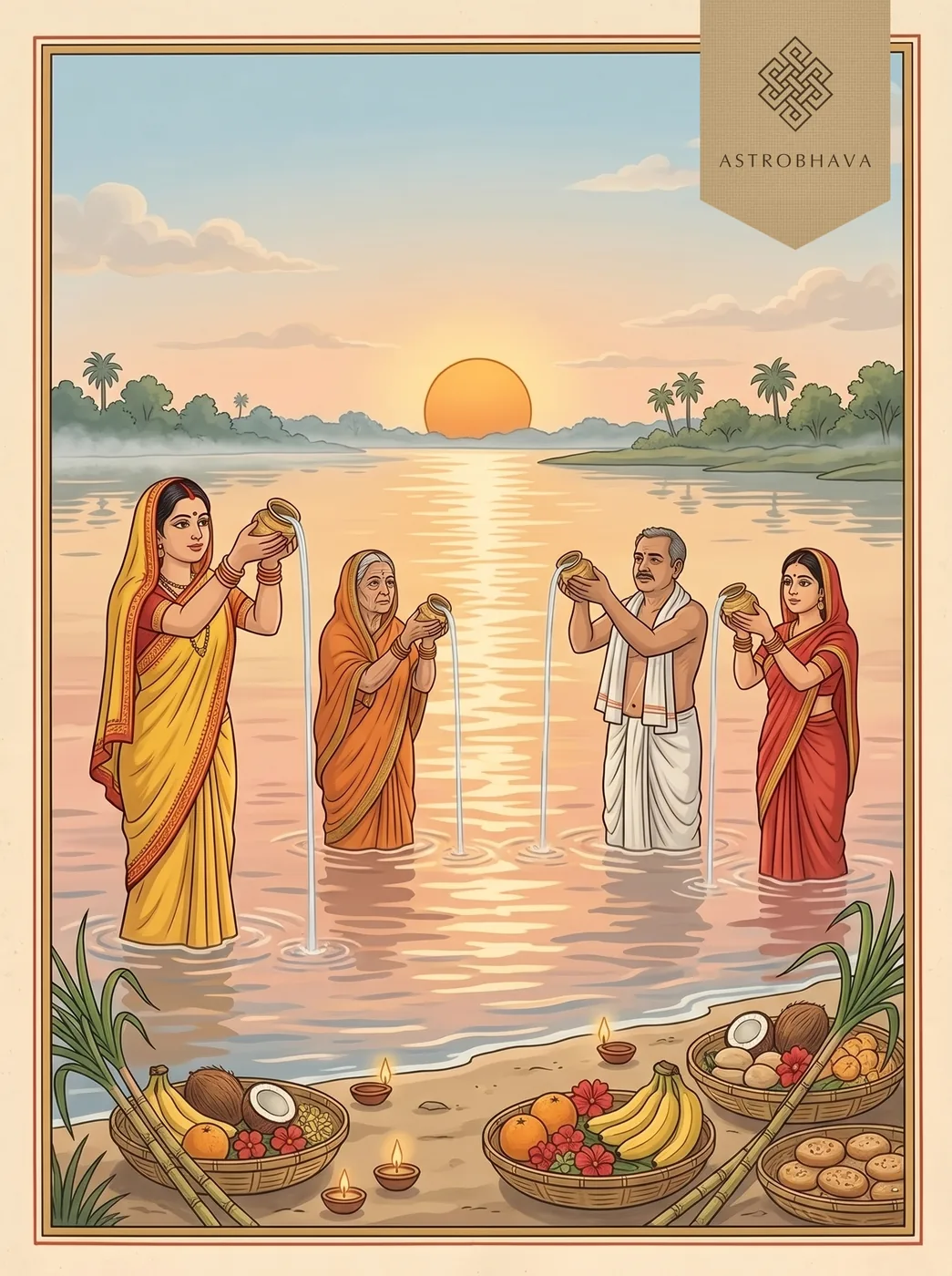
The Chhath manuals set these verses inside a story within a story. According to the Ravi-shashthi vrata katha, which the printed text closes as part of the Bhavishyottara Purana, Vaishampayana tells Janamejaya how the exiled Pandavas worried over feeding the sages who followed them into the forest, and how their priest Dhaumya steadied Draupadi with an older tale. Princess Sukanya, daughter of King Sharyati, had once pricked two glowing points in an anthill with a thorn, not knowing they were the eyes of the sage Chyavana, buried there in penance; to make amends the king gave her in marriage to the blinded sage. In the month of Kartika, going to a lake for water, she came upon Naga maidens worshipping the sun and asked what vow they kept. They taught her the fast of the bright Shashthi, the night of waking and the arghya at sunrise, with the words 'Namo'stu suryaya', 'Namo bhagavate tubhyam' and 'Ehi surya', followed by 'Namah savitre'. The katha says Chyavana's sight returned, and that Draupadi then kept the same vow. In the companion Pratihara Shashthi katha a wandering brahmin teaches the rite to a household in distress, and there the water, with red sandal, red flowers and fruit, is offered at a river bank with the verse that names Sanjna.
The mantra, in six scripts
- एहि
- ehi — come
- सूर्य
- sūrya — O Surya
- सहस्रांशो
- sahasrāṃśo — O thousand-rayed one
- तेजोराशे
- tejorāśe — O heap of radiance
- जगत्पते
- jagatpate — O master of the world
- अनुकम्पय
- anukampaya — be kind to
- मां
- māṃ — me
- भक्त्या
- bhaktyā — with devotion
- गृहाणार्घ्यं
- gṛhāṇārghyaṃ — accept the water-offering
- दिवाकर
- divākara — O maker of the day
Surya Arghya Mantra lyrics in full
Seven arghya formulas and one closing verse of praise, printed without accent marks.
All 8 verses, in Sanskrit, Tamil, Telugu, Kannada, Malayalam and English, each with its meaning. Choose a script:
Download the Surya Arghya Mantra PDFAll 8 verses with their meanings, in Sanskrit. Free to print and keep.
एहि सूर्य सहस्रांशो तेजोराशे जगत्पते ।
अनुकम्पय मां भक्त्या गृहाणार्घ्यं दिवाकर ॥
ஏஹி ஸூர்ய ஸஹஸ்ராம்ஶோ தேஜோராஶே ஜகத்பதே ।
அநுகம்பய மாம் பக்த்யா க்ருஹாணார்க்யம் திவாகர ॥
ఏహి సూర్య సహస్రాంశో తేజోరాశే జగత్పతే ।
అనుకమ్పయ మాం భక్త్యా గృహాణార్ఘ్యం దివాకర ॥
ಏಹಿ ಸೂರ್ಯ ಸಹಸ್ರಾಂಶೋ ತೇಜೋರಾಶೇ ಜಗತ್ಪತೇ ।
ಅನುಕಮ್ಪಯ ಮಾಂ ಭಕ್ತ್ಯಾ ಗೃಹಾಣಾರ್ಘ್ಯಂ ದಿವಾಕರ ॥
ഏഹി സൂര്യ സഹസ്രാംശോ തേജോരാശേ ജഗത്പതേ ।
അനുകമ്പയ മാം ഭക്ത്യാ ഗൃഹാണാര്ഘ്യം ദിവാകര ॥
ehi sūrya sahasrāṃśo tejorāśe jagatpate |
anukampaya māṃ bhaktyā gṛhāṇārghyaṃ divākara ||
Come, O Surya, thousand-rayed one, heap of radiance, master of the world. Be kind to me, O Divakara, maker of the day, and accept this water offered with devotion.
नमोऽस्तु सूर्याय सहस्रभानवे नमोऽस्तु वैश्वानरजातवेदसे ।
त्वमेव चार्घ्यं प्रतिगृह्ण देव देवाधिदेवाय नमो नमस्ते ॥
நமோஸ்து ஸூர்யாய ஸஹஸ்ரபாநவே நமோஸ்து வைஶ்வாநரஜாதவேதஸே ।
த்வமேவ சார்க்யம் ப்ரதிக்ருஹ்ண தேவ தேவாதிதேவாய நமோ நமஸ்தே ॥
నమోఽస్తు సూర్యాయ సహస్రభానవే నమోఽస్తు వైశ్వానరజాతవేదసే ।
త్వమేవ చార్ఘ్యం ప్రతిగృహ్ణ దేవ దేవాధిదేవాయ నమో నమస్తే ॥
ನಮೋಽಸ್ತು ಸೂರ್ಯಾಯ ಸಹಸ್ರಭಾನವೇ ನಮೋಽಸ್ತು ವೈಶ್ವಾನರಜಾತವೇದಸೇ ।
ತ್ವಮೇವ ಚಾರ್ಘ್ಯಂ ಪ್ರತಿಗೃಹ್ಣ ದೇವ ದೇವಾಧಿದೇವಾಯ ನಮೋ ನಮಸ್ತೇ ॥
നമോഽസ്തു സൂര്യായ സഹസ്രഭാനവേ നമോഽസ്തു വൈശ്വാനരജാതവേദസേ ।
ത്വമേവ ചാര്ഘ്യം പ്രതിഗൃഹ്ണ ദേവ ദേവാധിദേവായ നമോ നമസ്തേ ॥
namo'stu sūryāya sahasrabhānave namo'stu vaiśvānarajātavedase |
tvameva cārghyaṃ pratigṛhṇa deva devādhidevāya namo namaste ||
Salutation to Surya of a thousand beams; salutation to him who is the fire Vaishvanara, the all-knowing Jatavedas. O god, you yourself receive this offering; to you, god above the gods, salutation again and again.
नमो भगवते तुभ्यं नमस्ते जातवेदसे ।
दत्तमर्घ्यं मया भानो त्वं गृहाण नमोऽस्तु ते ॥
நமோ பகவதே துப்யம் நமஸ்தே ஜாதவேதஸே ।
தத்தமர்க்யம் மயா பாநோ த்வம் க்ருஹாண நமோஸ்து தே ॥
నమో భగవతే తుభ్యం నమస్తే జాతవేదసే ।
దత్తమర్ఘ్యం మయా భానో త్వం గృహాణ నమోఽస్తు తే ॥
ನಮೋ ಭಗವತೇ ತುಭ್ಯಂ ನಮಸ್ತೇ ಜಾತವೇದಸೇ ।
ದತ್ತಮರ್ಘ್ಯಂ ಮಯಾ ಭಾನೋ ತ್ವಂ ಗೃಹಾಣ ನಮೋಽಸ್ತು ತೇ ॥
നമോ ഭഗവതേ തുഭ്യം നമസ്തേ ജാതവേദസേ ।
ദത്തമര്ഘ്യം മയാ ഭാനോ ത്വം ഗൃഹാണ നമോഽസ്തു തേ ॥
namo bhagavate tubhyaṃ namaste jātavedase |
dattamarghyaṃ mayā bhāno tvaṃ gṛhāṇa namo'stu te ||
Salutation to you, the blessed one; salutation to you, Jatavedas. O Bhanu, shining one, accept the water I have offered; salutation to you.
ज्योतिर्मय विभो सूर्य तेजोराशे जगत्पते ।
अनुकम्पय मां भक्त्या गृहाणार्घ्यं दिवाकर ॥
ஜ்யோதிர்மய விபோ ஸூர்ய தேஜோராஶே ஜகத்பதே ।
அநுகம்பய மாம் பக்த்யா க்ருஹாணார்க்யம் திவாகர ॥
జ్యోతిర్మయ విభో సూర్య తేజోరాశే జగత్పతే ।
అనుకమ్పయ మాం భక్త్యా గృహాణార్ఘ్యం దివాకర ॥
ಜ್ಯೋತಿರ್ಮಯ ವಿಭೋ ಸೂರ್ಯ ತೇಜೋರಾಶೇ ಜಗತ್ಪತೇ ।
ಅನುಕಮ್ಪಯ ಮಾಂ ಭಕ್ತ್ಯಾ ಗೃಹಾಣಾರ್ಘ್ಯಂ ದಿವಾಕರ ॥
ജ്യോതിര്മയ വിഭോ സൂര്യ തേജോരാശേ ജഗത്പതേ ।
അനുകമ്പയ മാം ഭക്ത്യാ ഗൃഹാണാര്ഘ്യം ദിവാകര ॥
jyotirmaya vibho sūrya tejorāśe jagatpate |
anukampaya māṃ bhaktyā gṛhāṇārghyaṃ divākara ||
O Surya, all-pervading one made of light, heap of radiance, master of the world: be kind to me, O Divakara, and accept this water offered with devotion.
एहि सूर्य सहस्रांशो तेजोराशे जगत्पते ।
गृहाणार्घ्यं मया दत्तं संज्ञया सहित प्रभो ॥
ஏஹி ஸூர்ய ஸஹஸ்ராம்ஶோ தேஜோராஶே ஜகத்பதே ।
க்ருஹாணார்க்யம் மயா தத்தம் ஸம்ஜ்ஞயா ஸஹித ப்ரபோ ॥
ఏహి సూర్య సహస్రాంశో తేజోరాశే జగత్పతే ।
గృహాణార్ఘ్యం మయా దత్తం సంజ్ఞయా సహిత ప్రభో ॥
ಏಹಿ ಸೂರ್ಯ ಸಹಸ್ರಾಂಶೋ ತೇಜೋರಾಶೇ ಜಗತ್ಪತೇ ।
ಗೃಹಾಣಾರ್ಘ್ಯಂ ಮಯಾ ದತ್ತಂ ಸಂಜ್ಞಯಾ ಸಹಿತ ಪ್ರಭೋ ॥
ഏഹി സൂര്യ സഹസ്രാംശോ തേജോരാശേ ജഗത്പതേ ।
ഗൃഹാണാര്ഘ്യം മയാ ദത്തം സംജ്ഞയാ സഹിത പ്രഭോ ॥
ehi sūrya sahasrāṃśo tejorāśe jagatpate |
gṛhāṇārghyaṃ mayā dattaṃ saṃjñayā sahita prabho ||
Come, O Surya, thousand-rayed one, heap of radiance, master of the world. O master, together with your consort Sanjna, accept the water I have offered.
ब्रह्मस्वरूपिणे सूर्यनारायणाय इदमर्घ्यं दत्तं न मम ॥
ப்ரஹ்மஸ்வரூபிணே ஸூர்யநாராயணாய இதமர்க்யம் தத்தம் ந மம ॥
బ్రహ్మస్వరూపిణే సూర్యనారాయణాయ ఇదమర్ఘ్యం దత్తం న మమ ॥
ಬ್ರಹ್ಮಸ್ವರೂಪಿಣೇ ಸೂರ್ಯನಾರಾಯಣಾಯ ಇದಮರ್ಘ್ಯಂ ದತ್ತಂ ನ ಮಮ ॥
ബ്രഹ്മസ്വരൂപിണേ സൂര്യനാരായണായ ഇദമര്ഘ്യം ദത്തം ന മമ ॥
brahmasvarūpiṇe sūryanārāyaṇāya idamarghyaṃ dattaṃ na mama ||
This water is given to Surya Narayana, who has the form of Brahma; it is no longer mine. (The morning form; the manuals say it after the Gayatri, and use 'Rudra' at midday and 'Vishnu' in the evening.)
नमो विवस्वते ब्रह्मन् भास्वते विष्णुतेजसे ।
जगत्सवित्रे शुचये सवित्रे कर्मदायिने ॥
நமோ விவஸ்வதே ப்ரஹ்மந் பாஸ்வதே விஷ்ணுதேஜஸே ।
ஜகத்ஸவித்ரே ஶுசயே ஸவித்ரே கர்மதாயிநே ॥
నమో వివస్వతే బ్రహ్మన్ భాస్వతే విష్ణుతేజసే ।
జగత్సవిత్రే శుచయే సవిత్రే కర్మదాయినే ॥
ನಮೋ ವಿವಸ್ವತೇ ಬ್ರಹ್ಮನ್ ಭಾಸ್ವತೇ ವಿಷ್ಣುತೇಜಸೇ ।
ಜಗತ್ಸವಿತ್ರೇ ಶುಚಯೇ ಸವಿತ್ರೇ ಕರ್ಮದಾಯಿನೇ ॥
നമോ വിവസ്വതേ ബ്രഹ്മന് ഭാസ്വതേ വിഷ്ണുതേജസേ ।
ജഗത്സവിത്രേ ശുചയേ സവിത്രേ കര്മദായിനേ ॥
namo vivasvate brahman bhāsvate viṣṇutejase |
jagatsavitre śucaye savitre karmadāyine ||
Salutation, O Brahman, to Vivasvan, the shining one, the radiance of Vishnu; to the pure one who brings the world to birth, to Savitr who gives the fruit of action.
नमः सवित्रे जगदेकचक्षुषे जगत्प्रसूतिस्थितिनाशहेतवे ।
त्रयीमयाय त्रिगुणात्मधारिणे विरिञ्चिनारायणशङ्करात्मने ॥
நமஃ ஸவித்ரே ஜகதேகசக்ஷுஷே ஜகத்ப்ரஸூதிஸ்திதிநாஶஹேதவே ।
த்ரயீமயாய த்ரிகுணாத்மதாரிணே விரிஞ்சிநாராயணஶங்கராத்மநே ॥
నమః సవిత్రే జగదేకచక్షుషే జగత్ప్రసూతిస్థితినాశహేతవే ।
త్రయీమయాయ త్రిగుణాత్మధారిణే విరిఞ్చినారాయణశఙ్కరాత్మనే ॥
ನಮಃ ಸವಿತ್ರೇ ಜಗದೇಕಚಕ್ಷುಷೇ ಜಗತ್ಪ್ರಸೂತಿಸ್ಥಿತಿನಾಶಹೇತವೇ ।
ತ್ರಯೀಮಯಾಯ ತ್ರಿಗುಣಾತ್ಮಧಾರಿಣೇ ವಿರಿಞ್ಚಿನಾರಾಯಣಶಙ್ಕರಾತ್ಮನೇ ॥
നമഃ സവിത്രേ ജഗദേകചക്ഷുഷേ ജഗത്പ്രസൂതിസ്ഥിതിനാശഹേതവേ ।
ത്രയീമയായ ത്രിഗുണാത്മധാരിണേ വിരിഞ്ചിനാരായണശങ്കരാത്മനേ ॥
namaḥ savitre jagadekacakṣuṣe jagatprasūtisthitināśahetave |
trayīmayāya triguṇātmadhāriṇe viriñcinārāyaṇaśaṅkarātmane ||
Salutation to Savitr, the one eye of the world, the cause of its birth, keeping and dissolution; to him who is made of the three Vedas, who bears the three gunas, and whose self is Brahma, Narayana and Shiva.
The syllable people get wrong
In Mantra 1, sahasrāṃśo is often said and printed 'sahastramsho' with an extra t, a Hindi spelling habit; the word is sahasra (thousand) plus aṃśu (ray), so say sa-has-rām-sho, with the nasal ṃ before the ś and no t anywhere.
When the Surya Arghya Mantra is chanted
Festival. Chhath Puja, at the dusk and dawn arghya
Questions
Have your chart read before you decide
Chanting is yours to do, and free. But which deity your situation calls for — and whether a mantra alone is the right response — depends on your chart. Sometimes it is; sometimes it is not.
- Over 30 years in the Guru–Sishya Parampara, from the age of five
- He reads every chart himself — 60 minutes, one to one, never delegated
- Charts are read only between sunrise and sunset, following tradition
