Surya Ashtakam
आदिदेव नमस्तुभ्यं प्रसीद मम भास्कर । दिवाकर नमस्तुभ्यं प्रभाकर नमोऽस्तु ते ॥Also known as Adideva Namastubhyam
In Devanagari, Tamil, Telugu, Kannada, Malayalam and English — with the meaning of every word, and the one syllable most people pronounce wrongly.
What the Surya Ashtakam is
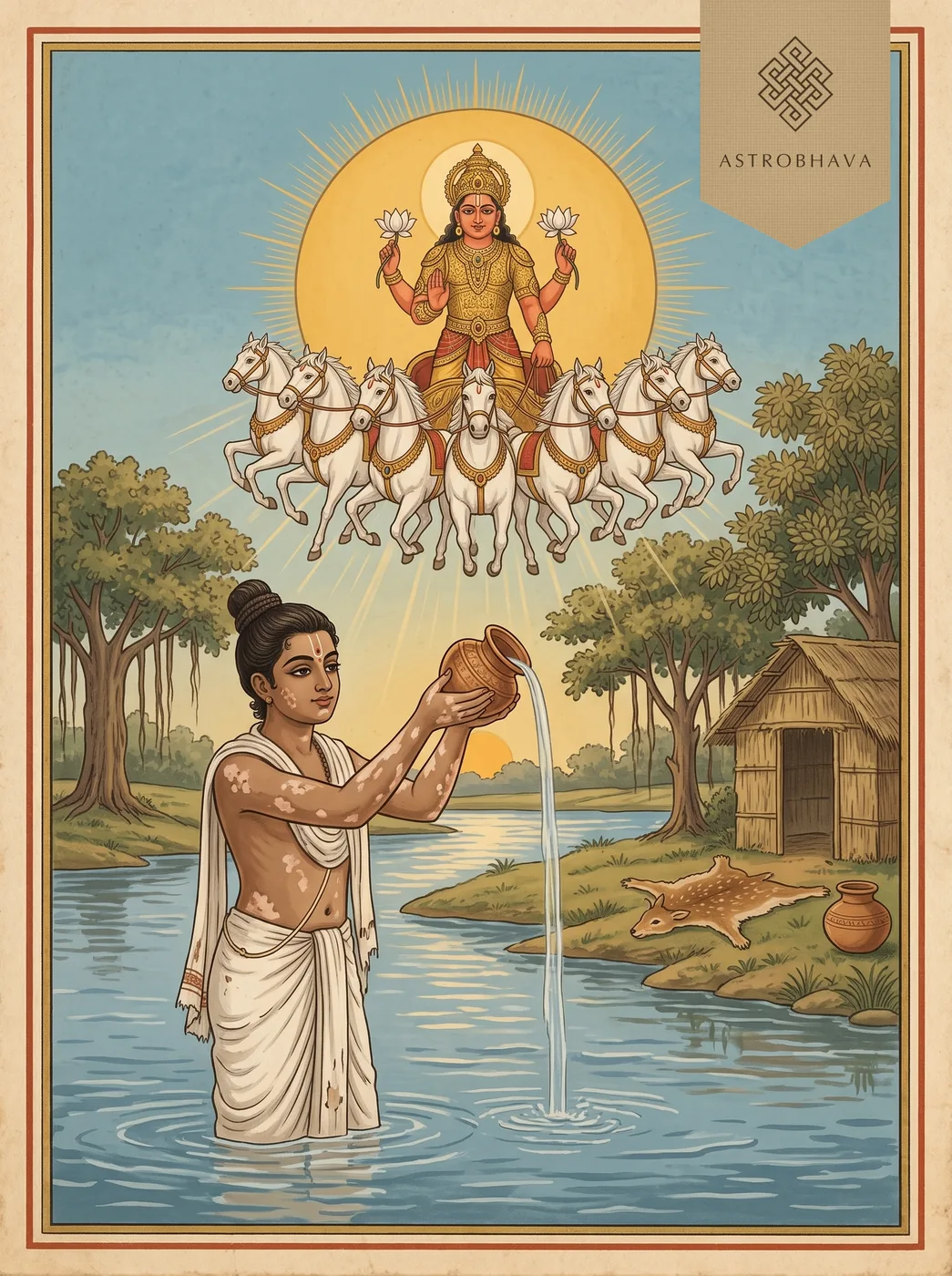
The Surya Ashtakam, printed in Sanskrit as the Suryashtakam, is a short hymn of praise to Surya that the printed collections introduce with the words 'Samba uvacha', Samba said, putting it in the mouth of Krishna's son. No author is named, and tradition assigns it to the Samba Purana, the Saura upapurana built around Samba's devotion to the Sun. Verse 1, without a refrain, is a plain plea: prasida mama, be gracious to me. Verses 2 to 8 each close on the same half-line, 'tam suryam pranamamyaham', I bow to that Sun, and in four of them the quarter before it repeats one fixed phrase. The picture changes from verse to verse: a white lotus held in the hand, a heaped mass of radiance, a colour like the bandhuka flower, a necklace and earrings, the bearer of a single wheel. Verse 8 ends on the giver of knowledge, realised knowledge and liberation. Three closing verses state the reward and set rules for Sunday.
Samba, the curse and the Chandrabhaga
The speaker of the hymn is Samba, the son of Krishna, and his story is the founding legend of Sun worship in the Saura Puranas. The Samba Purana relates that he mocked the sage Durvasa and was cursed with leprosy. Another telling makes Narada the cause: slighted by the young man, Narada led him to the pool where Krishna's wives were bathing, and Krishna himself pronounced the curse before learning of the trick. In both accounts it is Krishna who sends Samba to Surya as the one god able to lift the disease. Samba is said to have spent twelve years in penance at Mitravana, the grove of Mitra, on the banks of the Chandrabhaga, until the Sun restored him. In gratitude he raised a temple and, the Samba Purana adds, brought eighteen Maga Brahmins from Shakadvipa to serve as its priests. The Purana places Mitravana at Multan, the old Sun shrine now in Pakistan, while Odisha tradition sets the penance near Konark, where the dry bed of the Chandrabhaga lies close to the thirteenth-century temple. Odisha keeps the memory in Samba Dashami, in the month of Pausha, when mothers offer food to the rising Sun in the names of their children.
The mantra, in six scripts
- आदिदेव
- ādideva — O first god
- नमस्तुभ्यं
- namastubhyaṃ — salutation to you
- प्रसीद
- prasīda — be gracious
- मम
- mama — to me
- भास्कर
- bhāskara — O maker of light
- दिवाकर
- divākara — O maker of the day
- नमस्तुभ्यं
- namastubhyaṃ — salutation to you
- प्रभाकर
- prabhākara — O giver of radiance
- नमोऽस्तु
- namo'stu — let there be salutation
- ते
- te — to you
Surya Ashtakam lyrics in full
The eight verses spoken by Samba, followed by the three closing verses that state the reward.
All 11 verses, in Sanskrit, Tamil, Telugu, Kannada, Malayalam and English, each with its meaning. Choose a script:
Download the Surya Ashtakam PDFAll 11 verses with their meanings, in Sanskrit. Free to print and keep.
आदिदेव नमस्तुभ्यं प्रसीद मम भास्कर ।
दिवाकर नमस्तुभ्यं प्रभाकर नमोऽस्तु ते ॥
ஆதிதேவ நமஸ்துப்யம் ப்ரஸீத மம பாஸ்கர ।
திவாகர நமஸ்துப்யம் ப்ரபாகர நமோஸ்து தே ॥
ఆదిదేవ నమస్తుభ్యం ప్రసీద మమ భాస్కర ।
దివాకర నమస్తుభ్యం ప్రభాకర నమోఽస్తు తే ॥
ಆದಿದೇವ ನಮಸ್ತುಭ್ಯಂ ಪ್ರಸೀದ ಮಮ ಭಾಸ್ಕರ ।
ದಿವಾಕರ ನಮಸ್ತುಭ್ಯಂ ಪ್ರಭಾಕರ ನಮೋಽಸ್ತು ತೇ ॥
ആദിദേവ നമസ്തുഭ്യം പ്രസീദ മമ ഭാസ്കര ।
ദിവാകര നമസ്തുഭ്യം പ്രഭാകര നമോഽസ്തു തേ ॥
ādideva namastubhyaṃ prasīda mama bhāskara |
divākara namastubhyaṃ prabhākara namo'stu te ||
Salutations to you, O first among the gods; be gracious to me, O Bhaskara, maker of light. Salutations to you, O Divakara, maker of the day; O Prabhakara, giver of radiance, I bow to you.
सप्ताश्वरथमारूढं प्रचण्डं कश्यपात्मजम् ।
श्वेतपद्मधरं देवं तं सूर्यं प्रणमाम्यहम् ॥
ஸப்தாஶ்வரதமாரூடம் ப்ரசண்டம் கஶ்யபாத்மஜம் ।
ஶ்வேதபத்மதரம் தேவம் தம் ஸூர்யம் ப்ரணமாம்யஹம் ॥
సప్తాశ్వరథమారూఢం ప్రచణ్డం కశ్యపాత్మజమ్ ।
శ్వేతపద్మధరం దేవం తం సూర్యం ప్రణమామ్యహమ్ ॥
ಸಪ್ತಾಶ್ವರಥಮಾರೂಢಂ ಪ್ರಚಣ್ಡಂ ಕಶ್ಯಪಾತ್ಮಜಮ್ ।
ಶ್ವೇತಪದ್ಮಧರಂ ದೇವಂ ತಂ ಸೂರ್ಯಂ ಪ್ರಣಮಾಮ್ಯಹಮ್ ॥
സപ്താശ്വരഥമാരൂഢം പ്രചണ്ഡം കശ്യപാത്മജമ് ।
ശ്വേതപദ്മധരം ദേവം തം സൂര്യം പ്രണമാമ്യഹമ് ॥
saptāśvarathamārūḍhaṃ pracaṇḍaṃ kaśyapātmajam |
śvetapadmadharaṃ devaṃ taṃ sūryaṃ praṇamāmyaham ||
He rides a chariot drawn by seven horses, he is fierce in his blaze and is the son of Kashyapa. I bow to that Sun, the god who holds a white lotus.
लोहितं रथमारूढं सर्वलोकपितामहम् ।
महापापहरं देवं तं सूर्यं प्रणमाम्यहम् ॥
லோஹிதம் ரதமாரூடம் ஸர்வலோகபிதாமஹம் ।
மஹாபாபஹரம் தேவம் தம் ஸூர்யம் ப்ரணமாம்யஹம் ॥
లోహితం రథమారూఢం సర్వలోకపితామహమ్ ।
మహాపాపహరం దేవం తం సూర్యం ప్రణమామ్యహమ్ ॥
ಲೋಹಿತಂ ರಥಮಾರೂಢಂ ಸರ್ವಲೋಕಪಿತಾಮಹಮ್ ।
ಮಹಾಪಾಪಹರಂ ದೇವಂ ತಂ ಸೂರ್ಯಂ ಪ್ರಣಮಾಮ್ಯಹಮ್ ॥
ലോഹിതം രഥമാരൂഢം സര്വലോകപിതാമഹമ് ।
മഹാപാപഹരം ദേവം തം സൂര്യം പ്രണമാമ്യഹമ് ॥
lohitaṃ rathamārūḍhaṃ sarvalokapitāmaham |
mahāpāpaharaṃ devaṃ taṃ sūryaṃ praṇamāmyaham ||
Red in hue, seated on his chariot, he is the grandsire of all the worlds. I bow to that Sun, the god who takes away great sins.
त्रैगुण्यं च महाशूरं ब्रह्मविष्णुमहेश्वरम् ।
महापापहरं देवं तं सूर्यं प्रणमाम्यहम् ॥
த்ரைகுண்யம் ச மஹாஶூரம் ப்ரஹ்மவிஷ்ணுமஹேஶ்வரம் ।
மஹாபாபஹரம் தேவம் தம் ஸூர்யம் ப்ரணமாம்யஹம் ॥
త్రైగుణ్యం చ మహాశూరం బ్రహ్మవిష్ణుమహేశ్వరమ్ ।
మహాపాపహరం దేవం తం సూర్యం ప్రణమామ్యహమ్ ॥
ತ್ರೈಗುಣ್ಯಂ ಚ ಮಹಾಶೂರಂ ಬ್ರಹ್ಮವಿಷ್ಣುಮಹೇಶ್ವರಮ್ ।
ಮಹಾಪಾಪಹರಂ ದೇವಂ ತಂ ಸೂರ್ಯಂ ಪ್ರಣಮಾಮ್ಯಹಮ್ ॥
ത്രൈഗുണ്യം ച മഹാശൂരം ബ്രഹ്മവിഷ്ണുമഹേശ്വരമ് ।
മഹാപാപഹരം ദേവം തം സൂര്യം പ്രണമാമ്യഹമ് ॥
traiguṇyaṃ ca mahāśūraṃ brahmaviṣṇumaheśvaram |
mahāpāpaharaṃ devaṃ taṃ sūryaṃ praṇamāmyaham ||
He is the three qualities of nature, a mighty hero, and is Brahma, Vishnu and Maheshvara in one. I bow to that Sun, the god who takes away great sins.
बृंहितं तेजः पुञ्जं च वायुमाकाशमेव च ।
प्रभुं च सर्वलोकानां तं सूर्यं प्रणमाम्यहम् ॥
ப்ரும்ஹிதம் தேஜஃ புஞ்ஜம் ச வாயுமாகாஶமேவ ச ।
ப்ரபும் ச ஸர்வலோகாநாம் தம் ஸூர்யம் ப்ரணமாம்யஹம் ॥
బృంహితం తేజః పుఞ్జం చ వాయుమాకాశమేవ చ ।
ప్రభుం చ సర్వలోకానాం తం సూర్యం ప్రణమామ్యహమ్ ॥
ಬೃಂಹಿತಂ ತೇಜಃ ಪುಞ್ಜಂ ಚ ವಾಯುಮಾಕಾಶಮೇವ ಚ ।
ಪ್ರಭುಂ ಚ ಸರ್ವಲೋಕಾನಾಂ ತಂ ಸೂರ್ಯಂ ಪ್ರಣಮಾಮ್ಯಹಮ್ ॥
ബൃംഹിതം തേജഃ പുഞ്ജം ച വായുമാകാശമേവ ച ।
പ്രഭും ച സര്വലോകാനാം തം സൂര്യം പ്രണമാമ്യഹമ് ॥
bṛṃhitaṃ tejaḥ puñjaṃ ca vāyumākāśameva ca |
prabhuṃ ca sarvalokānāṃ taṃ sūryaṃ praṇamāmyaham ||
He is a vast, swelling mass of radiance; he is the wind and the sky as well. I bow to that Sun, the lord of all the worlds.
बन्धूकपुष्पसङ्काशं हारकुण्डलभूषितम् ।
एकचक्रधरं देवं तं सूर्यं प्रणमाम्यहम् ॥
பந்தூகபுஷ்பஸங்காஶம் ஹாரகுண்டலபூஷிதம் ।
ஏகசக்ரதரம் தேவம் தம் ஸூர்யம் ப்ரணமாம்யஹம் ॥
బన్ధూకపుష్పసఙ్కాశం హారకుణ్డలభూషితమ్ ।
ఏకచక్రధరం దేవం తం సూర్యం ప్రణమామ్యహమ్ ॥
ಬನ್ಧೂಕಪುಷ್ಪಸಙ್ಕಾಶಂ ಹಾರಕುಣ್ಡಲಭೂಷಿತಮ್ ।
ಏಕಚಕ್ರಧರಂ ದೇವಂ ತಂ ಸೂರ್ಯಂ ಪ್ರಣಮಾಮ್ಯಹಮ್ ॥
ബന്ധൂകപുഷ്പസങ്കാശം ഹാരകുണ്ഡലഭൂഷിതമ് ।
ഏകചക്രധരം ദേവം തം സൂര്യം പ്രണമാമ്യഹമ് ॥
bandhūkapuṣpasaṅkāśaṃ hārakuṇḍalabhūṣitam |
ekacakradharaṃ devaṃ taṃ sūryaṃ praṇamāmyaham ||
He glows like the red bandhuka flower and is adorned with a necklace and earrings. I bow to that Sun, the god who bears the single wheel.
तं सूर्यं जगत्कर्तारं महातेजः प्रदीपनम् ।
महापापहरं देवं तं सूर्यं प्रणमाम्यहम् ॥
தம் ஸூர்யம் ஜகத்கர்தாரம் மஹாதேஜஃ ப்ரதீபநம் ।
மஹாபாபஹரம் தேவம் தம் ஸூர்யம் ப்ரணமாம்யஹம் ॥
తం సూర్యం జగత్కర్తారం మహాతేజః ప్రదీపనమ్ ।
మహాపాపహరం దేవం తం సూర్యం ప్రణమామ్యహమ్ ॥
ತಂ ಸೂರ್ಯಂ ಜಗತ್ಕರ್ತಾರಂ ಮಹಾತೇಜಃ ಪ್ರದೀಪನಮ್ ।
ಮಹಾಪಾಪಹರಂ ದೇವಂ ತಂ ಸೂರ್ಯಂ ಪ್ರಣಮಾಮ್ಯಹಮ್ ॥
തം സൂര്യം ജഗത്കര്താരം മഹാതേജഃ പ്രദീപനമ് ।
മഹാപാപഹരം ദേവം തം സൂര്യം പ്രണമാമ്യഹമ് ॥
taṃ sūryaṃ jagatkartāraṃ mahātejaḥ pradīpanam |
mahāpāpaharaṃ devaṃ taṃ sūryaṃ praṇamāmyaham ||
That Sun is the maker of the world, the one who kindles great radiance. I bow to that Sun, the god who takes away great sins.
तं सूर्यं जगतां नाथं ज्ञानविज्ञानमोक्षदम् ।
महापापहरं देवं तं सूर्यं प्रणमाम्यहम् ॥
தம் ஸூர்யம் ஜகதாம் நாதம் ஜ்ஞாநவிஜ்ஞாநமோக்ஷதம் ।
மஹாபாபஹரம் தேவம் தம் ஸூர்யம் ப்ரணமாம்யஹம் ॥
తం సూర్యం జగతాం నాథం జ్ఞానవిజ్ఞానమోక్షదమ్ ।
మహాపాపహరం దేవం తం సూర్యం ప్రణమామ్యహమ్ ॥
ತಂ ಸೂರ್ಯಂ ಜಗತಾಂ ನಾಥಂ ಜ್ಞಾನವಿಜ್ಞಾನಮೋಕ್ಷದಮ್ ।
ಮಹಾಪಾಪಹರಂ ದೇವಂ ತಂ ಸೂರ್ಯಂ ಪ್ರಣಮಾಮ್ಯಹಮ್ ॥
തം സൂര്യം ജഗതാം നാഥം ജ്ഞാനവിജ്ഞാനമോക്ഷദമ് ।
മഹാപാപഹരം ദേവം തം സൂര്യം പ്രണമാമ്യഹമ് ॥
taṃ sūryaṃ jagatāṃ nāthaṃ jñānavijñānamokṣadam |
mahāpāpaharaṃ devaṃ taṃ sūryaṃ praṇamāmyaham ||
That Sun is the lord of the worlds, the giver of knowledge, of realised wisdom and of liberation. I bow to that Sun, the god who takes away great sins.
सूर्याष्टकं पठेन्नित्यं ग्रहपीडाप्रणाशनम् ।
अपुत्रो लभते पुत्रं दरिद्रो धनवान्भवेत् ॥
ஸூர்யாஷ்டகம் படேந்நித்யம் க்ரஹபீடாப்ரணாஶநம் ।
அபுத்ரோ லபதே புத்ரம் தரித்ரோ தநவாந்பவேத் ॥
సూర్యాష్టకం పఠేన్నిత్యం గ్రహపీడాప్రణాశనమ్ ।
అపుత్రో లభతే పుత్రం దరిద్రో ధనవాన్భవేత్ ॥
ಸೂರ್ಯಾಷ್ಟಕಂ ಪಠೇನ್ನಿತ್ಯಂ ಗ್ರಹಪೀಡಾಪ್ರಣಾಶನಮ್ ।
ಅಪುತ್ರೋ ಲಭತೇ ಪುತ್ರಂ ದರಿದ್ರೋ ಧನವಾನ್ಭವೇತ್ ॥
സൂര്യാഷ്ടകം പഠേന്നിത്യം ഗ്രഹപീഡാപ്രണാശനമ് ।
അപുത്രോ ലഭതേ പുത്രം ദരിദ്രോ ധനവാന്ഭവേത് ॥
sūryāṣṭakaṃ paṭhennityaṃ grahapīḍāpraṇāśanam |
aputro labhate putraṃ daridro dhanavānbhavet ||
One should recite the Surya Ashtakam daily; the verse says it removes the afflictions caused by the planets. It says the childless gain a son and the poor become wealthy.
आमिषं मधुपानं च यः करोति रवेर्दिने ।
सप्तजन्म भवेद्रोगी जन्मजन्म दरिद्रता ॥
ஆமிஷம் மதுபாநம் ச யஃ கரோதி ரவேர்திநே ।
ஸப்தஜந்ம பவேத்ரோகீ ஜந்மஜந்ம தரித்ரதா ॥
ఆమిషం మధుపానం చ యః కరోతి రవేర్దినే ।
సప్తజన్మ భవేద్రోగీ జన్మజన్మ దరిద్రతా ॥
ಆಮಿಷಂ ಮಧುಪಾನಂ ಚ ಯಃ ಕರೋತಿ ರವೇರ್ದಿನೇ ।
ಸಪ್ತಜನ್ಮ ಭವೇದ್ರೋಗೀ ಜನ್ಮಜನ್ಮ ದರಿದ್ರತಾ ॥
ആമിഷം മധുപാനം ച യഃ കരോതി രവേര്ദിനേ ।
സപ്തജന്മ ഭവേദ്രോഗീ ജന്മജന്മ ദരിദ്രതാ ॥
āmiṣaṃ madhupānaṃ ca yaḥ karoti raverdine |
saptajanma bhavedrogī janmajanma daridratā ||
The verse says that whoever eats meat and drinks liquor on the Sun's day (Sunday) will be sick for seven births and poor in birth after birth.
स्त्रीतैलमधुमांसानि यस्त्यजेत्तु रवेर्दिने ।
न व्याधिः शोकदारिद्र्यं सूर्यलोकं स गच्छति ॥
ஸ்த்ரீதைலமதுமாம்ஸாநி யஸ்த்யஜேத்து ரவேர்திநே ।
ந வ்யாதிஃ ஶோகதாரித்ர்யம் ஸூர்யலோகம் ஸ கச்சதி ॥
స్త్రీతైలమధుమాంసాని యస్త్యజేత్తు రవేర్దినే ।
న వ్యాధిః శోకదారిద్ర్యం సూర్యలోకం స గచ్ఛతి ॥
ಸ್ತ್ರೀತೈಲಮಧುಮಾಂಸಾನಿ ಯಸ್ತ್ಯಜೇತ್ತು ರವೇರ್ದಿನೇ ।
ನ ವ್ಯಾಧಿಃ ಶೋಕದಾರಿದ್ರ್ಯಂ ಸೂರ್ಯಲೋಕಂ ಸ ಗಚ್ಛತಿ ॥
സ്ത്രീതൈലമധുമാംസാനി യസ്ത്യജേത്തു രവേര്ദിനേ ।
ന വ്യാധിഃ ശോകദാരിദ്ര്യം സൂര്യലോകം സ ഗച്ഛതി ॥
strītailamadhumāṃsāni yastyajettu raverdine |
na vyādhiḥ śokadāridryaṃ sūryalokaṃ sa gacchati ||
The verse says that whoever gives up relations with women, oil, liquor and meat on the Sun's day suffers no illness, grief or poverty, and goes to the world of the Sun.
The syllable people get wrong
The refrain praṇamāmyaham, which closes verses 2 to 8, is often split back into 'pranamami aham' or slurred as 'pranam-myam'. It is one word of five syllables, pra-ṇa-mām-ya-ham, with a retroflex ṇ and the long ā held, so that 'taṃ sūryaṃ praṇamāmyaham' keeps its eight syllables.
When the Surya Ashtakam is chanted
Festival. Ratha Saptami (Magha Saptami)
Questions
Have your chart read before you decide
Chanting is yours to do, and free. But which deity your situation calls for — and whether a mantra alone is the right response — depends on your chart. Sometimes it is; sometimes it is not.
- Over 30 years in the Guru–Sishya Parampara, from the age of five
- He reads every chart himself — 60 minutes, one to one, never delegated
- Charts are read only between sunrise and sunset, following tradition