Surya Namaskar Mantras
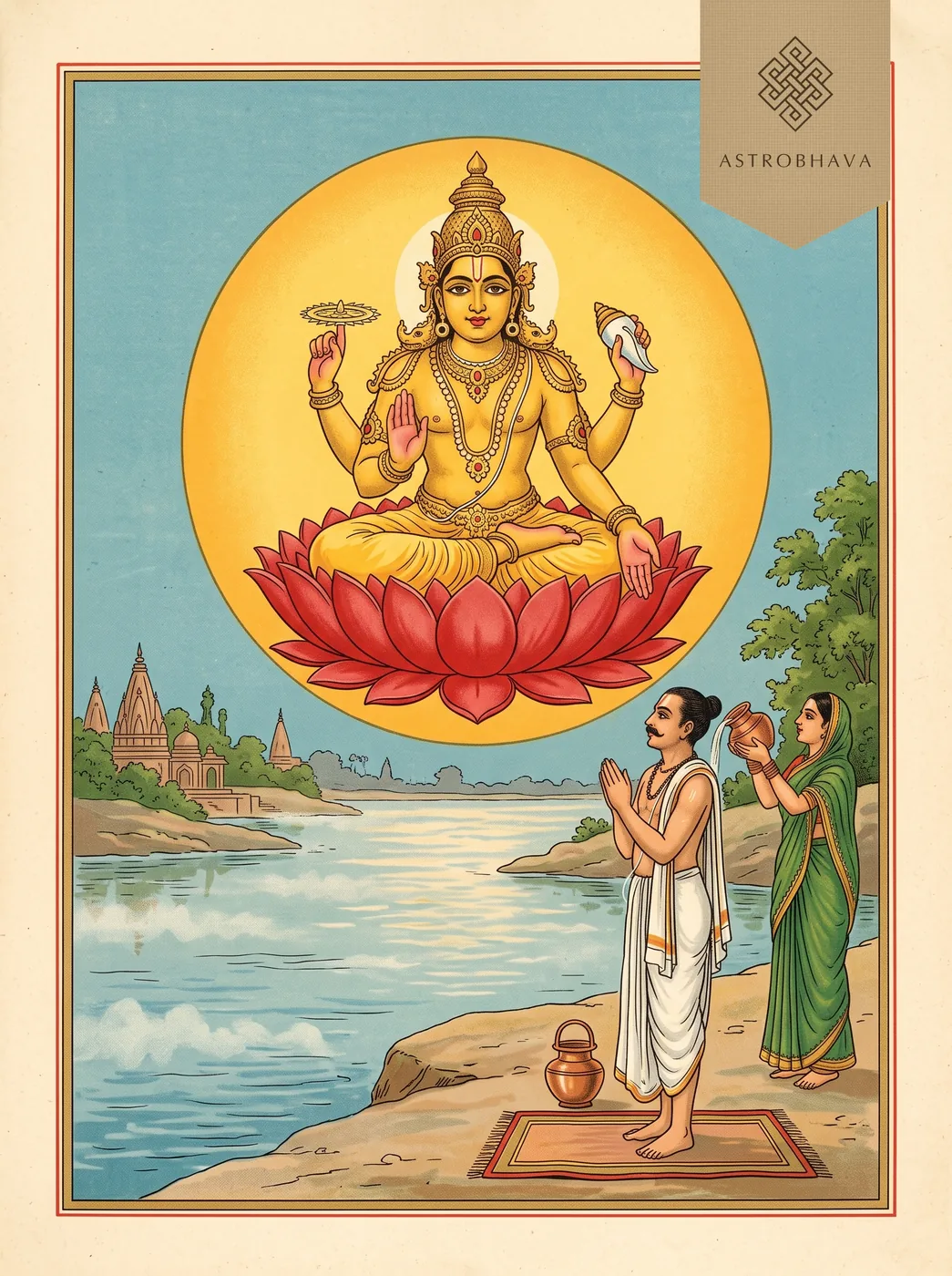
ध्येयः सदा सवितृमण्डलमध्यवर्ती नारायणः सरसिजासनसन्निविष्टः । केयूरवान् मकरकुण्डलवान् किरीटी हारी हिरण्मयवपुर्धृतशङ्खचक्रः ॥Also known as Om Mitraya Namah
In Devanagari, Tamil, Telugu, Kannada, Malayalam and English — with the meaning of every word, and the one syllable most people pronounce wrongly.
What the Surya Namaskar Mantras is
These are the Surya Namaskar mantras: the twelve short salutations to the Sun that accompany the sun salutation, each one Om, a single name of Surya in the dative, and namah. They are framed by a dhyana verse that does not picture the Sun as a charioteer at all: it asks the reader to hold in mind Narayana, seated on a lotus at the centre of the solar orb, crowned, wearing makara earrings and armlets, golden in form and carrying the conch and discus. The names then move through the Sun's offices in a fixed order. Mitra and Pushan are both Vedic Adityas, the first the friend of all beings and the second the nourisher. Hiranyagarbha is the golden source of the Rig Veda's creation hymn, Savitr is the impeller whose light the Gayatri asks for, and Arka and Bhaskara close the series on light itself. The names are traditional and anonymous; their order is the same in every printed form.
From Madhva's dawn rite to Aundh
The opening verse is older than the salutation it now introduces. It stands as verse 10 of the Sadachara Smriti, the short manual of daily conduct attributed to Madhvacharya, the Dvaita teacher who died around 1317. There it sits inside the morning sandhya: before the Gayatri is recited, the worshipper is told to see Narayana within the Sun's disc, so that the light they address has a form and a name. The same verse is printed in the Yoga Dipika and is quoted in the Shabdakalpadruma, the nineteenth-century Sanskrit lexicon compiled under Radhakanta Deb, which is why it travels through Smarta and Vaishnava households alike. The twelve names have a separate history. Tradition in Maharashtra links salutations to the Sun with the seventeenth-century saint Samarth Ramdas, though no early text spells out what was recited. In the 1920s Bhawanrao Shriniwasrao Pant Pratinidhi, ruler of the princely state of Aundh, made the practice widely known through his 1928 book on Surya Namaskars and described it as an existing Marathi custom rather than his own invention. Many popular editions add the seed syllables hram, hrim, hrum, hraim, hraum and hrah before the names; the classical dhyana verse itself carries no Om and reads dhyeyah sada, not dhyayet sada.
The mantra, in six scripts
- ध्येयः
- dhyeyaḥ — is to be meditated upon
- सदा
- sadā — always
- सवितृमण्डलमध्यवर्ती
- savitṛmaṇḍalamadhyavartī — dwelling in the centre of the Sun's orb
- नारायणः
- nārāyaṇaḥ — Narayana
- सरसिजासनसन्निविष्टः
- sarasijāsanasanniviṣṭaḥ — seated on a lotus seat
- केयूरवान्
- keyūravān — wearing armlets
- मकरकुण्डलवान्
- makarakuṇḍalavān — wearing makara-shaped earrings
- किरीटी
- kirīṭī — crowned
- हारी
- hārī — wearing a necklace
- हिरण्मयवपुर्धृतशङ्खचक्रः
- hiraṇmayavapurdhṛtaśaṅkhacakraḥ — golden-bodied, holding conch and discus
Surya Namaskar Mantra lyrics in full
The dhyana verse followed by the twelve names of the Sun in their customary order, without the seed syllables some editions add.
All 13 verses, in Sanskrit, Tamil, Telugu, Kannada, Malayalam and English, each with its meaning. Choose a script:
Download the Surya Namaskar Mantra PDFAll 13 verses with their meanings, in Sanskrit. Free to print and keep.
ध्येयः सदा सवितृमण्डलमध्यवर्ती नारायणः सरसिजासनसन्निविष्टः ।
केयूरवान् मकरकुण्डलवान् किरीटी हारी हिरण्मयवपुर्धृतशङ्खचक्रः ॥
த்யேயஃ ஸதா ஸவித்ருமண்டலமத்யவர்தீ நாராயணஃ ஸரஸிஜாஸநஸந்நிவிஷ்டஃ ।
கேயூரவாந் மகரகுண்டலவாந் கிரீடீ ஹாரீ ஹிரண்மயவபுர்த்ருதஶங்கசக்ரஃ ॥
ధ్యేయః సదా సవితృమణ్డలమధ్యవర్తీ నారాయణః సరసిజాసనసన్నివిష్టః ।
కేయూరవాన్ మకరకుణ్డలవాన్ కిరీటీ హారీ హిరణ్మయవపుర్ధృతశఙ్ఖచక్రః ॥
ಧ್ಯೇಯಃ ಸದಾ ಸವಿತೃಮಣ್ಡಲಮಧ್ಯವರ್ತೀ ನಾರಾಯಣಃ ಸರಸಿಜಾಸನಸನ್ನಿವಿಷ್ಟಃ ।
ಕೇಯೂರವಾನ್ ಮಕರಕುಣ್ಡಲವಾನ್ ಕಿರೀಟೀ ಹಾರೀ ಹಿರಣ್ಮಯವಪುರ್ಧೃತಶಙ್ಖಚಕ್ರಃ ॥
ധ്യേയഃ സദാ സവിതൃമണ്ഡലമധ്യവര്തീ നാരായണഃ സരസിജാസനസന്നിവിഷ്ടഃ ।
കേയൂരവാന് മകരകുണ്ഡലവാന് കിരീടീ ഹാരീ ഹിരണ്മയവപുര്ധൃതശങ്ഖചക്രഃ ॥
dhyeyaḥ sadā savitṛmaṇḍalamadhyavartī nārāyaṇaḥ sarasijāsanasanniviṣṭaḥ |
keyūravān makarakuṇḍalavān kirīṭī hārī hiraṇmayavapurdhṛtaśaṅkhacakraḥ ||
Narayana, who dwells at the centre of the orb of the Sun and is seated on a lotus, should always be meditated upon. He wears armlets, makara-shaped earrings and a crown, is adorned with a necklace, has a golden form, and holds the conch and the discus.
ॐ मित्राय नमः ॥
ௐ மித்ராய நமஃ ॥
ఓం మిత్రాయ నమః ॥
ಓಂ ಮಿತ್ರಾಯ ನಮಃ ॥
ഓം മിത്രായ നമഃ ॥
oṃ mitrāya namaḥ ||
Om, salutation to Mitra, the friend of all beings.
ॐ रवये नमः ॥
ௐ ரவயே நமஃ ॥
ఓం రవయే నమః ॥
ಓಂ ರವಯೇ ನಮಃ ॥
ഓം രവയേ നമഃ ॥
oṃ ravaye namaḥ ||
Om, salutation to Ravi, the shining one.
ॐ सूर्याय नमः ॥
ௐ ஸூர்யாய நமஃ ॥
ఓం సూర్యాయ నమః ॥
ಓಂ ಸೂರ್ಯಾಯ ನಮಃ ॥
ഓം സൂര്യായ നമഃ ॥
oṃ sūryāya namaḥ ||
Om, salutation to Surya, who sets all things in motion.
ॐ भानवे नमः ॥
ௐ பாநவே நமஃ ॥
ఓం భానవే నమః ॥
ಓಂ ಭಾನವೇ ನಮಃ ॥
ഓം ഭാനവേ നമഃ ॥
oṃ bhānave namaḥ ||
Om, salutation to Bhanu, the radiant one who gives light.
ॐ खगाय नमः ॥
ௐ ககாய நமஃ ॥
ఓం ఖగాయ నమః ॥
ಓಂ ಖಗಾಯ ನಮಃ ॥
ഓം ഖഗായ നമഃ ॥
oṃ khagāya namaḥ ||
Om, salutation to Khaga, who moves through the sky.
ॐ पूष्णे नमः ॥
ௐ பூஷ்ணே நமஃ ॥
ఓం పూష్ణే నమః ॥
ಓಂ ಪೂಷ್ಣೇ ನಮಃ ॥
ഓം പൂഷ്ണേ നമഃ ॥
oṃ pūṣṇe namaḥ ||
Om, salutation to Pushan, the nourisher of all.
ॐ हिरण्यगर्भाय नमः ॥
ௐ ஹிரண்யகர்பாய நமஃ ॥
ఓం హిరణ్యగర్భాయ నమః ॥
ಓಂ ಹಿರಣ್ಯಗರ್ಭಾಯ ನಮಃ ॥
ഓം ഹിരണ്യഗര്ഭായ നമഃ ॥
oṃ hiraṇyagarbhāya namaḥ ||
Om, salutation to Hiranyagarbha, the golden source who holds all within.
ॐ मरीचये नमः ॥
ௐ மரீசயே நமஃ ॥
ఓం మరీచయే నమః ॥
ಓಂ ಮರೀಚಯೇ ನಮಃ ॥
ഓം മരീചയേ നമഃ ॥
oṃ marīcaye namaḥ ||
Om, salutation to Marichi, the lord of rays.
ॐ आदित्याय नमः ॥
ௐ ஆதித்யாய நமஃ ॥
ఓం ఆదిత్యాయ నమః ॥
ಓಂ ಆದಿತ್ಯಾಯ ನಮಃ ॥
ഓം ആദിത്യായ നമഃ ॥
oṃ ādityāya namaḥ ||
Om, salutation to Aditya, the son of Aditi.
ॐ सवित्रे नमः ॥
ௐ ஸவித்ரே நமஃ ॥
ఓం సవిత్రే నమః ॥
ಓಂ ಸವಿತ್ರೇ ನಮಃ ॥
ഓം സവിത്രേ നമഃ ॥
oṃ savitre namaḥ ||
Om, salutation to Savitr, the one who brings forth and gives life.
ॐ अर्काय नमः ॥
ௐ அர்காய நமஃ ॥
ఓం అర్కాయ నమః ॥
ಓಂ ಅರ್ಕಾಯ ನಮಃ ॥
ഓം അര്കായ നമഃ ॥
oṃ arkāya namaḥ ||
Om, salutation to Arka, the radiant one worthy of praise.
ॐ भास्कराय नमः ॥
ௐ பாஸ்கராய நமஃ ॥
ఓం భాస్కరాయ నమః ॥
ಓಂ ಭಾಸ್ಕರಾಯ ನಮಃ ॥
ഓം ഭാസ്കരായ നമഃ ॥
oṃ bhāskarāya namaḥ ||
Om, salutation to Bhaskara, the maker of light who illumines all.
The syllable people get wrong
In पूष्णे (pūṣṇe), the sixth name, both ṣ and ṇ are retroflex and the ū is long, so it is said in two syllables, poosh-nay, with the tongue curled back through the whole ṣṇ cluster. Saying push-nee, or splitting it into poo-shu-nay, loses the name Pushan altogether.
When the Surya Namaskar Mantras is chanted
Festival. Ratha Saptami (Magha Shukla Saptami)
Questions
Have your chart read before you decide
Chanting is yours to do, and free. But which deity your situation calls for — and whether a mantra alone is the right response — depends on your chart. Sometimes it is; sometimes it is not.
- Over 30 years in the Guru–Sishya Parampara, from the age of five
- He reads every chart himself — 60 minutes, one to one, never delegated
- Charts are read only between sunrise and sunset, following tradition