Surya Chalisa
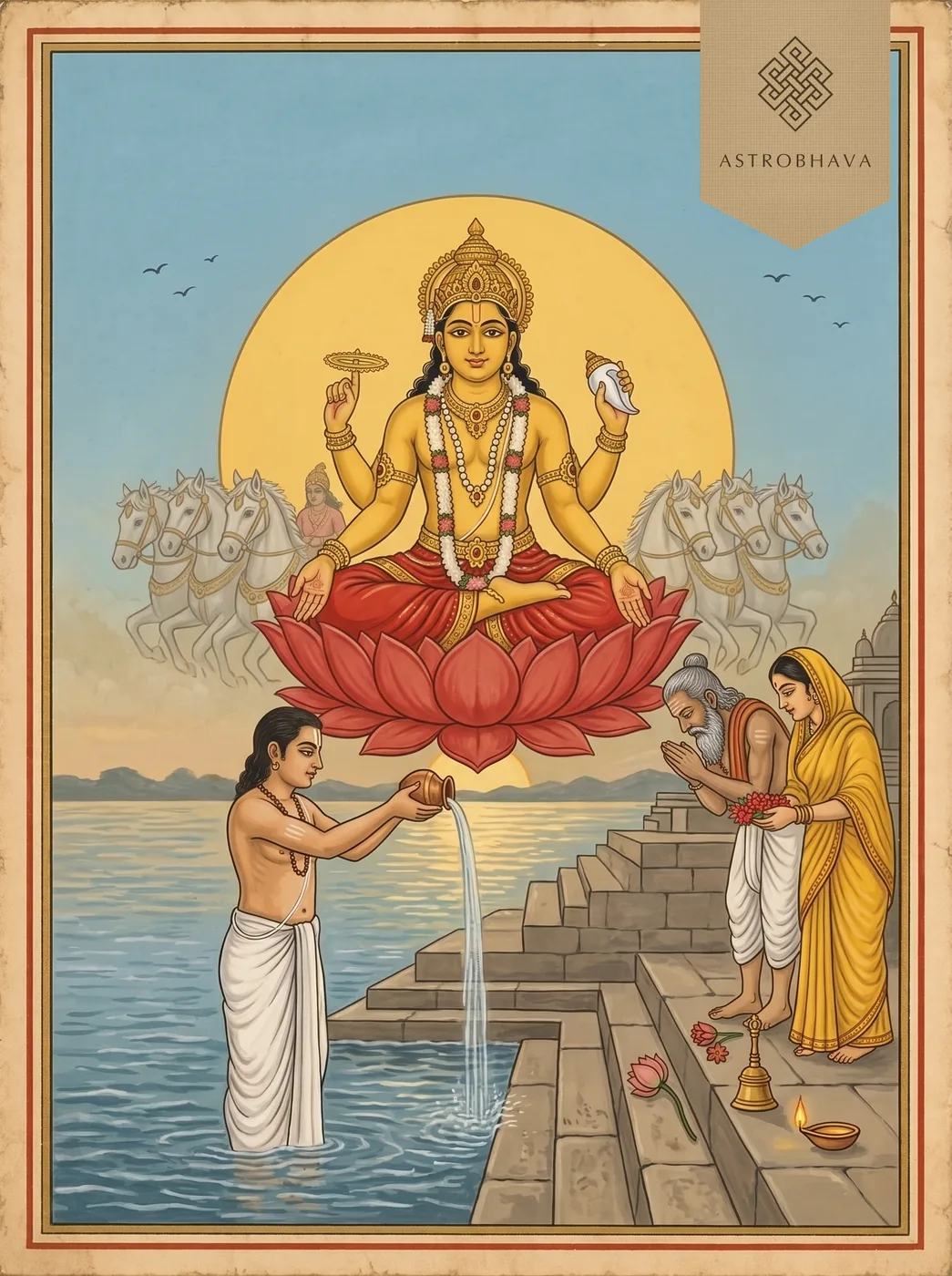
कनक बदन कुण्डल मकर मुक्ता माला अङ्ग । पद्मासन स्थित ध्याइये शंख चक्र के सङ्ग ॥Also known as Bhanu Chalisa
In Devanagari, Tamil, Telugu, Kannada, Malayalam and English — with the meaning of every word, and the one syllable most people pronounce wrongly.
 The Surya Homa, performed for youBook →
What the Surya Chalisa is
The Surya Chalisa, printed in Hindi booklets as Shri Surya Chalisa, is a forty-chaupai hymn to the Sun framed by two dohas. No poet signs it; the wording is the anonymous folk text of the popular chalisa collections, in a Hindi coloured by Braj and Awadhi. The opening doha pictures Surya golden-bodied with makara earrings and a pearl garland, seated on a lotus with conch and discus. The chaupais then move in four blocks. Chaupais 1 to 17 heap up his names and say what singing twelve of them with twelve bows is held to bring. Chaupais 18 to 30 form a small kavacha, placing a different solar name over each part of the body from head to feet. Chaupais 31 to 36 praise him as the light no planet can swallow and name Shani and Yama as his sons. Chaupais 37 to 40 give the Sun's name for each month, and the closing doha calls the whole a Bhanu Chalisa.
A folk hymn kept by the booklets
The Surya Chalisa has no composition legend. Unlike chalisas that close by naming their poet, its last doha gives no signature, and no temple or saint claims it. What survives is a text carried by print: the pocket chalisa-and-aarti collections sold at pilgrim towns, such as the 51 Chalisa Sangrah of Randhir Prakashan, Hardwar, where it runs over four pages. Hindi dailies reprint the same wording each year around Makar Sankranti and the kharmas month, when Sun worship comes to the fore in North India. Two wordings circulate. The booklet wording, printed here, reads in chaupai 30 that poverty and leprosy do not touch the reciter; the other wording reads dadru, a skin ailment, in place of poverty, and it drops the word hamsa from chaupai 25. Read closely, the hymn borrows its material from older Sanskrit Sun worship. Chaupais 9 and 10 echo the salutation names used in the Surya Namaskar, and the body-armour section follows the pattern of a Sanskrit kavacha. Its month list, however, does not match the Vishnu Purana roster of twelve Adityas, which gives Dhata for Chaitra; here Chaitra's Sun is Vedanga, Shravana is passed over, and the intercalary month receives the name Purusha.
The mantra, in six scripts
- कनक
- kanaka — golden
- बदन
- badana — body, form
- कुण्डल
- kuṇḍala — earrings
- मकर
- makara — makara-shaped
- मुक्ता
- muktā — pearl
- माला
- mālā — garland
- अङ्ग
- aṅga — on the body
- पद्मासन
- padmāsana — lotus seat
- स्थित
- sthita — seated
- ध्याइये
- dhyāiye — meditate on
- शंख
- śaṃkha — conch
- चक्र
- cakra — discus
- के
- ke — of, with
- सङ्ग
- saṅga — together with
Surya Chalisa lyrics in full
The booklet wording: one doha to open, forty chaupais, and one doha to close.
All 42 verses, in Hindi, Tamil, Telugu, Kannada, Malayalam and English, each with its meaning. Choose a script:
Download the Surya Chalisa PDFAll 42 verses with their meanings, in Hindi. Free to print and keep.
कनक बदन कुण्डल मकर मुक्ता माला अङ्ग ।
पद्मासन स्थित ध्याइये शंख चक्र के सङ्ग ॥
கநக பதந குண்டல மகர முக்தா மாலா அங்க ।
பத்மாஸந ஸ்தித த்யாஇயே ஶம்க சக்ர கே ஸங்க ॥
కనక బదన కుణ్డల మకర ముక్తా మాలా అఙ్గ ।
పద్మాసన స్థిత ధ్యాఇయే శంఖ చక్ర కే సఙ్గ ॥
ಕನಕ ಬದನ ಕುಣ್ಡಲ ಮಕರ ಮುಕ್ತಾ ಮಾಲಾ ಅಙ್ಗ ।
ಪದ್ಮಾಸನ ಸ್ಥಿತ ಧ್ಯಾಇಯೇ ಶಂಖ ಚಕ್ರ ಕೇ ಸಙ್ಗ ॥
കനക ബദന കുണ്ഡല മകര മുക്താ മാലാ അങ്ഗ ।
പദ്മാസന സ്ഥിത ധ്യാഇയേ ശംഖ ചക്ര കേ സങ്ഗ ॥
kanaka badana kuṇḍala makara muktā mālā aṅga |
padmāsana sthita dhyāiye śaṃkha cakra ke saṅga ||
With a golden form, makara-shaped earrings and a garland of pearls on the body, seated on a lotus with conch and discus at hand: meditate on him in this way.
जय सविता जय जयति दिवाकर ।
सहस्त्रांशु सप्ताश्व तिमिरहर ॥
ஜய ஸவிதா ஜய ஜயதி திவாகர ।
ஸஹஸ்த்ராம்ஶு ஸப்தாஶ்வ திமிரஹர ॥
జయ సవితా జయ జయతి దివాకర ।
సహస్త్రాంశు సప్తాశ్వ తిమిరహర ॥
ಜಯ ಸವಿತಾ ಜಯ ಜಯತಿ ದಿವಾಕರ ।
ಸಹಸ್ತ್ರಾಂಶು ಸಪ್ತಾಶ್ವ ತಿಮಿರಹರ ॥
ജയ സവിതാ ജയ ജയതി ദിവാകര ।
സഹസ്ത്രാംശു സപ്താശ്വ തിമിരഹര ॥
jaya savitā jaya jayati divākara |
sahastrāṃśu saptāśva timirahara ||
Victory to Savita, victory and glory to Divakara, the maker of day; the thousand-rayed one, drawn by seven horses, remover of darkness.
भानु पतंग मरीची भास्कर ।
सविता हंस सुनूर विभाकर ॥
பாநு பதம்க மரீசீ பாஸ்கர ।
ஸவிதா ஹம்ஸ ஸுநூர விபாகர ॥
భాను పతంగ మరీచీ భాస్కర ।
సవితా హంస సునూర విభాకర ॥
ಭಾನು ಪತಂಗ ಮರೀಚೀ ಭಾಸ್ಕರ ।
ಸವಿತಾ ಹಂಸ ಸುನೂರ ವಿಭಾಕರ ॥
ഭാനു പതംഗ മരീചീ ഭാസ്കര ।
സവിതാ ഹംസ സുനൂര വിഭാകര ॥
bhānu pataṃga marīcī bhāskara |
savitā haṃsa sunūra vibhākara ||
You are Bhanu, Patanga, Marichi and Bhaskara; Savita, Hamsa, the beautiful light, Vibhakara the maker of brilliance.
विवस्वान आदित्य विकर्तन ।
मार्तण्ड हरिरूप विरोचन ॥
விவஸ்வாந ஆதித்ய விகர்தந ।
மார்தண்ட ஹரிரூப விரோசந ॥
వివస్వాన ఆదిత్య వికర్తన ।
మార్తణ్డ హరిరూప విరోచన ॥
ವಿವಸ್ವಾನ ಆದಿತ್ಯ ವಿಕರ್ತನ ।
ಮಾರ್ತಣ್ಡ ಹರಿರೂಪ ವಿರೋಚನ ॥
വിവസ്വാന ആദിത്യ വികര്തന ।
മാര്തണ്ഡ ഹരിരൂപ വിരോചന ॥
vivasvāna āditya vikartana |
mārtaṇḍa harirūpa virocana ||
You are Vivasvan, Aditya and Vikartana; Martanda, the one whose form is Hari, and Virochana the radiant.
अम्बरमणि खग रवि कहलाते ।
वेद हिरण्यगर्भ कह गाते ॥
அம்பரமணி கக ரவி கஹலாதே ।
வேத ஹிரண்யகர்ப கஹ காதே ॥
అమ్బరమణి ఖగ రవి కహలాతే ।
వేద హిరణ్యగర్భ కహ గాతే ॥
ಅಮ್ಬರಮಣಿ ಖಗ ರವಿ ಕಹಲಾತೇ ।
ವೇದ ಹಿರಣ್ಯಗರ್ಭ ಕಹ ಗಾತೇ ॥
അമ്ബരമണി ഖഗ രവി കഹലാതേ ।
വേദ ഹിരണ്യഗര്ഭ കഹ ഗാതേ ॥
ambaramaṇi khaga ravi kahalāte |
veda hiraṇyagarbha kaha gāte ||
You are called the jewel of the sky, Khaga the sky-goer, and Ravi; the Vedas sing of you as Hiranyagarbha, the golden womb.
सहस्त्रांशुप्रद्योतन कहि कहि ।
मुनिगन होत प्रसन्न मोदलहि ॥
ஸஹஸ்த்ராம்ஶுப்ரத்யோதந கஹி கஹி ।
முநிகந ஹோத ப்ரஸந்ந மோதலஹி ॥
సహస్త్రాంశుప్రద్యోతన కహి కహి ।
మునిగన హోత ప్రసన్న మోదలహి ॥
ಸಹಸ್ತ್ರಾಂಶುಪ್ರದ್ಯೋತನ ಕಹಿ ಕಹಿ ।
ಮುನಿಗನ ಹೋತ ಪ್ರಸನ್ನ ಮೋದಲಹಿ ॥
സഹസ്ത്രാംശുപ്രദ്യോതന കഹി കഹി ।
മുനിഗന ഹോത പ്രസന്ന മോദലഹി ॥
sahastrāṃśupradyotana kahi kahi |
munigana hota prasanna modalahi ||
Calling you again and again the thousand-rayed illuminator, the sages grow glad and are filled with joy.
अरुण सदृश सारथी मनोहर ।
हाँकत हय साता चढ़ि रथ पर ॥
அருண ஸத்ருஶ ஸாரதீ மநோஹர ।
ஹாம்கத ஹய ஸாதா சடி ரத பர ॥
అరుణ సదృశ సారథీ మనోహర ।
హాఁకత హయ సాతా చఢి రథ పర ॥
ಅರುಣ ಸದೃಶ ಸಾರಥೀ ಮನೋಹರ ।
ಹಾಁಕತ ಹಯ ಸಾತಾ ಚಢಿ ರಥ ಪರ ॥
അരുണ സദൃശ സാരഥീ മനോഹര ।
ഹാഁകത ഹയ സാതാ ചഢി രഥ പര ॥
aruṇa sadṛśa sārathī manohara |
hāṃkata haya sātā caṛhi ratha para ||
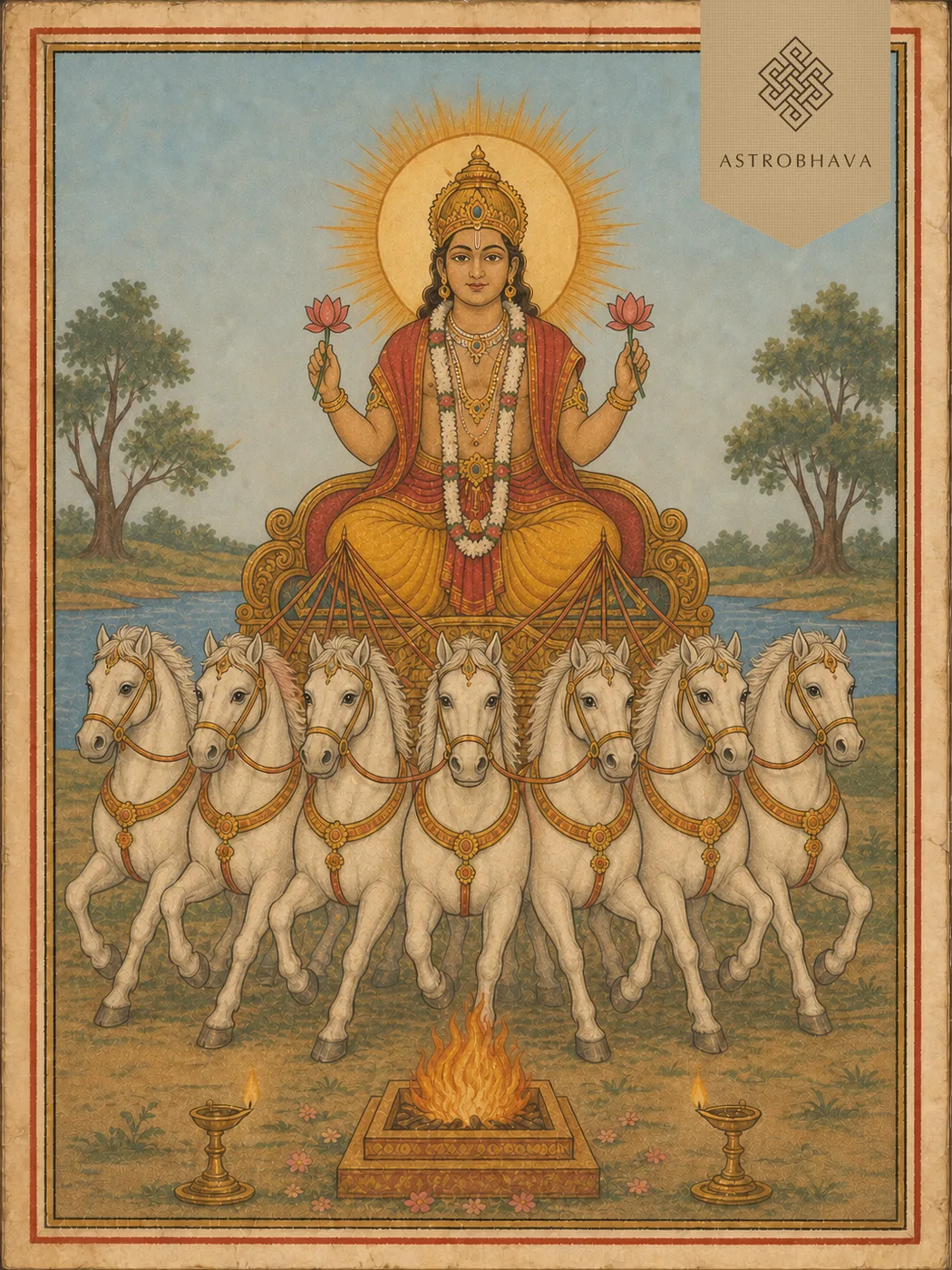
With a charming charioteer such as Aruna, you mount the chariot and drive its seven horses.
मंडल की महिमा अति न्यारी ।
तेज रूप केरी बलिहारी ॥
மம்டல கீ மஹிமா அதி ந்யாரீ ।
தேஜ ரூப கேரீ பலிஹாரீ ॥
మండల కీ మహిమా అతి న్యారీ ।
తేజ రూప కేరీ బలిహారీ ॥
ಮಂಡಲ ಕೀ ಮಹಿಮಾ ಅತಿ ನ್ಯಾರೀ ।
ತೇಜ ರೂಪ ಕೇರೀ ಬಲಿಹಾರೀ ॥
മംഡല കീ മഹിമാ അതി ന്യാരീ ।
തേജ രൂപ കേരീ ബലിഹാരീ ॥
maṃḍala kī mahimā ati nyārī |
teja rūpa kerī balihārī ||
The glory of your orb is wholly unique; I offer myself to your form of radiance.
उच्चैःश्रवा सदृश हय जोते ।
देखि पुरंदर लज्जित होते ॥
உச்சைஃஶ்ரவா ஸத்ருஶ ஹய ஜோதே ।
தேகி புரம்தர லஜ்ஜித ஹோதே ॥
ఉచ్చైఃశ్రవా సదృశ హయ జోతే ।
దేఖి పురందర లజ్జిత హోతే ॥
ಉಚ್ಚೈಃಶ್ರವಾ ಸದೃಶ ಹಯ ಜೋತೇ ।
ದೇಖಿ ಪುರಂದರ ಲಜ್ಜಿತ ಹೋತೇ ॥
ഉച്ചൈഃശ്രവാ സദൃശ ഹയ ജോതേ ।
ദേഖി പുരംദര ലജ്ജിത ഹോതേ ॥
uccaiḥśravā sadṛśa haya jote |
dekhi puraṃdara lajjita hote ||
Your chariot is yoked with horses like Uchchaihshravas; seeing them, even Indra, breaker of strongholds, feels abashed.
मित्र मरीचि भानु अरुण भास्कर ।
सविता सूर्य अर्क खग कलिकर ॥
மித்ர மரீசி பாநு அருண பாஸ்கர ।
ஸவிதா ஸூர்ய அர்க கக கலிகர ॥
మిత్ర మరీచి భాను అరుణ భాస్కర ।
సవితా సూర్య అర్క ఖగ కలికర ॥
ಮಿತ್ರ ಮರೀಚಿ ಭಾನು ಅರುಣ ಭಾಸ್ಕರ ।
ಸವಿತಾ ಸೂರ್ಯ ಅರ್ಕ ಖಗ ಕಲಿಕರ ॥
മിത്ര മരീചി ഭാനു അരുണ ഭാസ്കര ।
സവിതാ സൂര്യ അര്ക ഖഗ കലികര ॥
mitra marīci bhānu aruṇa bhāskara |
savitā sūrya arka khaga kalikara ||
Mitra, Marichi, Bhanu, Aruna, Bhaskara, Savita, Surya, Arka, Khaga and Kalikara:
पूषा रवि आदित्य नाम लै ।
हिरण्यगर्भाय नमः कहिकै ॥
பூஷா ரவி ஆதித்ய நாம லை ।
ஹிரண்யகர்பாய நமஃ கஹிகை ॥
పూషా రవి ఆదిత్య నామ లై ।
హిరణ్యగర్భాయ నమః కహికై ॥
ಪೂಷಾ ರವಿ ಆದಿತ್ಯ ನಾಮ ಲೈ ।
ಹಿರಣ್ಯಗರ್ಭಾಯ ನಮಃ ಕಹಿಕೈ ॥
പൂഷാ രവി ആദിത്യ നാമ ലൈ ।
ഹിരണ്യഗര്ഭായ നമഃ കഹികൈ ॥
pūṣā ravi āditya nāma lai |
hiraṇyagarbhāya namaḥ kahikai ||
taking the names Pusha, Ravi and Aditya, and saying 'Hiranyagarbhaya namah', salutation to the golden womb, (the devotee completes the twelve names).
द्वादस नाम प्रेम सों गावैं ।
मस्तक बारह बार नवावै ॥
த்வாதஸ நாம ப்ரேம ஸோம் காவைம் ।
மஸ்தக பாரஹ பார நவாவை ॥
ద్వాదస నామ ప్రేమ సోం గావైం ।
మస్తక బారహ బార నవావై ॥
ದ್ವಾದಸ ನಾಮ ಪ್ರೇಮ ಸೋಂ ಗಾವೈಂ ।
ಮಸ್ತಕ ಬಾರಹ ಬಾರ ನವಾವೈ ॥
ദ്വാദസ നാമ പ്രേമ സോം ഗാവൈം ।
മസ്തക ബാരഹ ബാര നവാവൈ ॥
dvādasa nāma prema soṃ gāvaiṃ |
mastaka bāraha bāra navāvai ||
Those who sing these twelve names with love and bow their head twelve times,
चार पदारथ सो जन पावै ।
दुःख दारिद्र अघ पुञ्ज नसावै ॥
சார பதாரத ஸோ ஜந பாவை ।
துஃக தாரித்ர அக புஞ்ஜ நஸாவை ॥
చార పదారథ సో జన పావై ।
దుఃఖ దారిద్ర అఘ పుఞ్జ నసావై ॥
ಚಾರ ಪದಾರಥ ಸೋ ಜನ ಪಾವೈ ।
ದುಃಖ ದಾರಿದ್ರ ಅಘ ಪುಞ್ಜ ನಸಾವೈ ॥
ചാര പദാരഥ സോ ജന പാവൈ ।
ദുഃഖ ദാരിദ്ര അഘ പുഞ്ജ നസാവൈ ॥
cāra padāratha so jana pāvai |
duḥkha dāridra agha puñja nasāvai ||
the verse says such a person gains the four aims of life, and sorrow, poverty and the heap of sins are destroyed.
नमस्कार को चमत्कार यह ।
विधि हरिहर कौ कृपासार यह ॥
நமஸ்கார கோ சமத்கார யஹ ।
விதி ஹரிஹர கௌ க்ருபாஸார யஹ ॥
నమస్కార కో చమత్కార యహ ।
విధి హరిహర కౌ కృపాసార యహ ॥
ನಮಸ್ಕಾರ ಕೋ ಚಮತ್ಕಾರ ಯಹ ।
ವಿಧಿ ಹರಿಹರ ಕೌ ಕೃಪಾಸಾರ ಯಹ ॥
നമസ്കാര കോ ചമത്കാര യഹ ।
വിധി ഹരിഹര കൌ കൃപാസാര യഹ ॥
namaskāra ko camatkāra yaha |
vidhi harihara kau kṛpāsāra yaha ||
This is the wonder of the salutation; it is the essence of the grace of Brahma, Vishnu and Shiva.
सेवै भानु तुमहिं मन लाई ।
अष्टसिद्धि नवनिधि तेहिं पाई ॥
ஸேவை பாநு துமஹிம் மந லாஈ ।
அஷ்டஸித்தி நவநிதி தேஹிம் பாஈ ॥
సేవై భాను తుమహిం మన లాఈ ।
అష్టసిద్ధి నవనిధి తేహిం పాఈ ॥
ಸೇವೈ ಭಾನು ತುಮಹಿಂ ಮನ ಲಾಈ ।
ಅಷ್ಟಸಿದ್ಧಿ ನವನಿಧಿ ತೇಹಿಂ ಪಾಈ ॥
സേവൈ ഭാനു തുമഹിം മന ലാഈ ।
അഷ്ടസിദ്ധി നവനിധി തേഹിം പാഈ ॥
sevai bhānu tumahiṃ mana lāī |
aṣṭasiddhi navanidhi tehiṃ pāī ||
O Bhanu, the verse says whoever serves you with the whole mind obtains the eight siddhis and the nine treasures.
बारह नाम उच्चारन करते ।
सहस जनम के पातक टरते ॥
பாரஹ நாம உச்சாரந கரதே ।
ஸஹஸ ஜநம கே பாதக டரதே ॥
బారహ నామ ఉచ్చారన కరతే ।
సహస జనమ కే పాతక టరతే ॥
ಬಾರಹ ನಾಮ ಉಚ್ಚಾರನ ಕರತೇ ।
ಸಹಸ ಜನಮ ಕೇ ಪಾತಕ ಟರತೇ ॥
ബാരഹ നാമ ഉച്ചാരന കരതേ ।
സഹസ ജനമ കേ പാതക ടരതേ ॥
bāraha nāma uccārana karate |
sahasa janama ke pātaka ṭarate ||
By uttering the twelve names, the sins of a thousand births are removed, the verse says.
उपाख्यान जो करते तवजन ।
रिपु सों जमलहते सोतेहि छन ॥
உபாக்யாந ஜோ கரதே தவஜந ।
ரிபு ஸோம் ஜமலஹதே ஸோதேஹி சந ॥
ఉపాఖ్యాన జో కరతే తవజన ।
రిపు సోం జమలహతే సోతేహి ఛన ॥
ಉಪಾಖ್ಯಾನ ಜೋ ಕರತೇ ತವಜನ ।
ರಿಪು ಸೋಂ ಜಮಲಹತೇ ಸೋತೇಹಿ ಛನ ॥
ഉപാഖ്യാന ജോ കരതേ തവജന ।
രിപു സോം ജമലഹതേ സോതേഹി ഛന ॥
upākhyāna jo karate tavajana |
ripu soṃ jamalahate sotehi chana ||
Your devotees who recite your story are, the verse says, freed in that very moment from enemies and from Yama, the lord of death.
धन सुत जुत परिवार बढतु है ।
प्रबलमोह को फँद कटतु है ॥
தந ஸுத ஜுத பரிவார படது ஹை ।
ப்ரபலமோஹ கோ பம்த கடது ஹை ॥
ధన సుత జుత పరివార బఢతు హై ।
ప్రబలమోహ కో ఫఁద కటతు హై ॥
ಧನ ಸುತ ಜುತ ಪರಿವಾರ ಬಢತು ಹೈ ।
ಪ್ರಬಲಮೋಹ ಕೋ ಫಁದ ಕಟತು ಹೈ ॥
ധന സുത ജുത പരിവാര ബഢതു ഹൈ ।
പ്രബലമോഹ കോ ഫഁദ കടതു ഹൈ ॥
dhana suta juta parivāra baḍhatu hai |
prabalamoha ko phaṃda kaṭatu hai ||
The verse says their family grows in wealth and children, and the noose of powerful delusion is cut.
अर्क शीश को रक्षा करते ।
रवि ललाट पर नित्य बिहरते ॥
அர்க ஶீஶ கோ ரக்ஷா கரதே ।
ரவி லலாட பர நித்ய பிஹரதே ॥
అర్క శీశ కో రక్షా కరతే ।
రవి లలాట పర నిత్య బిహరతే ॥
ಅರ್ಕ ಶೀಶ ಕೋ ರಕ್ಷಾ ಕರತೇ ।
ರವಿ ಲಲಾಟ ಪರ ನಿತ್ಯ ಬಿಹರತೇ ॥
അര്ക ശീശ കോ രക്ഷാ കരതേ ।
രവി ലലാട പര നിത്യ ബിഹരതേ ॥
arka śīśa ko rakṣā karate |
ravi lalāṭa para nitya biharate ||
Arka protects the head; Ravi always dwells on the forehead.
सूर्य नेत्र पर नित्य विराजत ।
कर्ण देस पर दिनकर छाजत ॥
ஸூர்ய நேத்ர பர நித்ய விராஜத ।
கர்ண தேஸ பர திநகர சாஜத ॥
సూర్య నేత్ర పర నిత్య విరాజత ।
కర్ణ దేస పర దినకర ఛాజత ॥
ಸೂರ್ಯ ನೇತ್ರ ಪರ ನಿತ್ಯ ವಿರಾಜತ ।
ಕರ್ಣ ದೇಸ ಪರ ದಿನಕರ ಛಾಜತ ॥
സൂര്യ നേത്ര പര നിത്യ വിരാജത ।
കര്ണ ദേസ പര ദിനകര ഛാജത ॥
sūrya netra para nitya virājata |
karṇa desa para dinakara chājata ||
Surya always presides over the eyes; Dinakara shines over the region of the ears.
भानु नासिका वास करहु नित ।
भास्कर करत सदा मुख कौ हित ॥
பாநு நாஸிகா வாஸ கரஹு நித ।
பாஸ்கர கரத ஸதா முக கௌ ஹித ॥
భాను నాసికా వాస కరహు నిత ।
భాస్కర కరత సదా ముఖ కౌ హిత ॥
ಭಾನು ನಾಸಿಕಾ ವಾಸ ಕರಹು ನಿತ ।
ಭಾಸ್ಕರ ಕರತ ಸದಾ ಮುಖ ಕೌ ಹಿತ ॥
ഭാനു നാസികാ വാസ കരഹു നിത ।
ഭാസ്കര കരത സദാ മുഖ കൌ ഹിത ॥
bhānu nāsikā vāsa karahu nita |
bhāskara karata sadā mukha kau hita ||
O Bhanu, dwell always in the nose; Bhaskara always does good to the mouth.
ओंठ रहैं पर्जन्य हमारे ।
रसना बीच तीक्ष्ण बस प्यारे ॥
ஓம்ட ரஹைம் பர்ஜந்ய ஹமாரே ।
ரஸநா பீச தீக்ஷ்ண பஸ ப்யாரே ॥
ఓంఠ రహైం పర్జన్య హమారే ।
రసనా బీచ తీక్ష్ణ బస ప్యారే ॥
ಓಂಠ ರಹೈಂ ಪರ್ಜನ್ಯ ಹಮಾರೇ ।
ರಸನಾ ಬೀಚ ತೀಕ್ಷ್ಣ ಬಸ ಪ್ಯಾರೇ ॥
ഓംഠ രഹൈം പര്ജന്യ ഹമാരേ ।
രസനാ ബീച തീക്ഷ്ണ ബസ പ്യാരേ ॥
oṃṭha rahaiṃ parjanya hamāre |
rasanā bīca tīkṣṇa basa pyāre ||
May Parjanya guard our lips; the beloved Tikshna, the fierce one, dwells within the tongue.
कंठ सुवर्ण रेत की शोभा ।
तिग्मतेजसः कांधे लोभा ॥
கம்ட ஸுவர்ண ரேத கீ ஶோபா ।
திக்மதேஜஸஃ காம்தே லோபா ॥
కంఠ సువర్ణ రేత కీ శోభా ।
తిగ్మతేజసః కాంధే లోభా ॥
ಕಂಠ ಸುವರ್ಣ ರೇತ ಕೀ ಶೋಭಾ ।
ತಿಗ್ಮತೇಜಸಃ ಕಾಂಧೇ ಲೋಭಾ ॥
കംഠ സുവര്ണ രേത കീ ശോഭാ ।
തിഗ്മതേജസഃ കാംധേ ലോഭാ ॥
kaṃṭha suvarṇa reta kī śobhā |
tigmatejasaḥ kāṃdhe lobhā ||
The throat has the splendour of Suvarnareta, the golden-seeded one; the shoulders are adorned by Tigmatejas, the one of piercing brilliance.
पूषां बाहू मित्र पीठहिं पर ।
त्वष्टा-वरुण रहत सुउष्णकर ॥
பூஷாம் பாஹூ மித்ர பீடஹிம் பர ।
த்வஷ்டா-வருண ரஹத ஸுஉஷ்ணகர ॥
పూషాం బాహూ మిత్ర పీఠహిం పర ।
త్వష్టా-వరుణ రహత సుఉష్ణకర ॥
ಪೂಷಾಂ ಬಾಹೂ ಮಿತ್ರ ಪೀಠಹಿಂ ಪರ ।
ತ್ವಷ್ಟಾ-ವರುಣ ರಹತ ಸುಉಷ್ಣಕರ ॥
പൂഷാം ബാഹൂ മിത്ര പീഠഹിം പര ।
ത്വഷ്ടാ-വരുണ രഹത സുഉഷ്ണകര ॥
pūṣāṃ bāhū mitra pīṭhahiṃ para |
tvaṣṭā-varuṇa rahata suuṣṇakara ||
Pusha guards the arms and Mitra the back; Tvashta and Varuna, the giver of warm rays, stay there too.
युगल हाथ पर रक्षा कारन ।
भानुमान उरसर्म सुउदरचन ॥
யுகல ஹாத பர ரக்ஷா காரந ।
பாநுமாந உரஸர்ம ஸுஉதரசந ॥
యుగల హాథ పర రక్షా కారన ।
భానుమాన ఉరసర్మ సుఉదరచన ॥
ಯುಗಲ ಹಾಥ ಪರ ರಕ್ಷಾ ಕಾರನ ।
ಭಾನುಮಾನ ಉರಸರ್ಮ ಸುಉದರಚನ ॥
യുഗല ഹാഥ പര രക്ഷാ കാരന ।
ഭാനുമാന ഉരസര്മ സുഉദരചന ॥
yugala hātha para rakṣā kārana |
bhānumāna urasarma suudaracana ||
Over both hands, for protection, Bhanuman stands guard; he shelters the chest and the belly.
बसत नाभि आदित्य मनोहर ।
कटि मंह हँस रहत मन मुदभर ॥
பஸத நாபி ஆதித்ய மநோஹர ।
கடி மம்ஹ ஹம்ஸ ரஹத மந முதபர ॥
బసత నాభి ఆదిత్య మనోహర ।
కటి మంహ హఁస రహత మన ముదభర ॥
ಬಸತ ನಾಭಿ ಆದಿತ್ಯ ಮನೋಹರ ।
ಕಟಿ ಮಂಹ ಹಁಸ ರಹತ ಮನ ಮುದಭರ ॥
ബസത നാഭി ആദിത്യ മനോഹര ।
കടി മംഹ ഹഁസ രഹത മന മുദഭര ॥
basata nābhi āditya manohara |
kaṭi maṃha haṃsa rahata mana mudabhara ||
The charming Aditya dwells in the navel; Hamsa stays at the waist, and the mind remains full of joy.
जंघा गोपति सविता बासा ।
गुप्त दिवाकर करत हुलासा ॥
ஜம்கா கோபதி ஸவிதா பாஸா ।
குப்த திவாகர கரத ஹுலாஸா ॥
జంఘా గోపతి సవితా బాసా ।
గుప్త దివాకర కరత హులాసా ॥
ಜಂಘಾ ಗೋಪತಿ ಸವಿತಾ ಬಾಸಾ ।
ಗುಪ್ತ ದಿವಾಕರ ಕರತ ಹುಲಾಸಾ ॥
ജംഘാ ഗോപതി സവിതാ ബാസാ ।
ഗുപ്ത ദിവാകര കരത ഹുലാസാ ॥
jaṃghā gopati savitā bāsā |
gupta divākara karata hulāsā ||
Gopati and Savita dwell in the thighs; Divakara gladdens the private parts.
विवस्वान पद की रखवारी ।
बाहर बसते नित तम हारी ॥
விவஸ்வாந பத கீ ரகவாரீ ।
பாஹர பஸதே நித தம ஹாரீ ॥
వివస్వాన పద కీ రఖవారీ ।
బాహర బసతే నిత తమ హారీ ॥
ವಿವಸ್ವಾನ ಪದ ಕೀ ರಖವಾರೀ ।
ಬಾಹರ ಬಸತೇ ನಿತ ತಮ ಹಾರೀ ॥
വിവസ്വാന പദ കീ രഖവാരീ ।
ബാഹര ബസതേ നിത തമ ഹാരീ ॥
vivasvāna pada kī rakhavārī |
bāhara basate nita tama hārī ||
Vivasvan guards the feet; outside dwells the remover of darkness, always.
सहस्त्रांशु सर्वांग सम्हारै ।
रक्षा कवच विचित्र विचारे ॥
ஸஹஸ்த்ராம்ஶு ஸர்வாம்க ஸம்ஹாரை ।
ரக்ஷா கவச விசித்ர விசாரே ॥
సహస్త్రాంశు సర్వాంగ సమ్హారై ।
రక్షా కవచ విచిత్ర విచారే ॥
ಸಹಸ್ತ್ರಾಂಶು ಸರ್ವಾಂಗ ಸಮ್ಹಾರೈ ।
ರಕ್ಷಾ ಕವಚ ವಿಚಿತ್ರ ವಿಚಾರೇ ॥
സഹസ്ത്രാംശു സര്വാംഗ സമ്ഹാരൈ ।
രക്ഷാ കവച വിചിത്ര വിചാരേ ॥
sahastrāṃśu sarvāṃga samhārai |
rakṣā kavaca vicitra vicāre ||
The thousand-rayed one takes care of the whole body; consider this a wonderful armour of protection.
अस जोजन अपने मन माहीं ।
भय जग बीच करहुँ तेहि नाहीं ॥
அஸ ஜோஜந அபநே மந மாஹீம் ।
பய ஜக பீச கரஹும் தேஹி நாஹீம் ॥
అస జోజన అపనే మన మాహీం ।
భయ జగ బీచ కరహుఁ తేహి నాహీం ॥
ಅಸ ಜೋಜನ ಅಪನೇ ಮನ ಮಾಹೀಂ ।
ಭಯ ಜಗ ಬೀಚ ಕರಹುಁ ತೇಹಿ ನಾಹೀಂ ॥
അസ ജോജന അപനേ മന മാഹീം ।
ഭയ ജഗ ബീച കരഹുഁ തേഹി നാഹീം ॥
asa jojana apane mana māhīṃ |
bhaya jaga bīca karahuṃ tehi nāhīṃ ||
The verse says that whoever holds this armour in the mind is touched by no fear anywhere in the world.
दरिद्र कुष्ट तेहिं कबहुँ न व्यापै ।
जोजन याको मनमहं जापै ॥
தரித்ர குஷ்ட தேஹிம் கபஹும் ந வ்யாபை ।
ஜோஜந யாகோ மநமஹம் ஜாபை ॥
దరిద్ర కుష్ట తేహిం కబహుఁ న వ్యాపై ।
జోజన యాకో మనమహం జాపై ॥
ದರಿದ್ರ ಕುಷ್ಟ ತೇಹಿಂ ಕಬಹುಁ ನ ವ್ಯಾಪೈ ।
ಜೋಜನ ಯಾಕೋ ಮನಮಹಂ ಜಾಪೈ ॥
ദരിദ്ര കുഷ്ട തേഹിം കബഹുഁ ന വ്യാപൈ ।
ജോജന യാകോ മനമഹം ജാപൈ ॥
daridra kuṣṭa tehiṃ kabahuṃ na vyāpai |
jojana yāko manamahaṃ jāpai ||
Poverty and leprosy never afflict the one who repeats this inwardly, the verse says.
अंधकार जग का जो हरता ।
नव प्रकाश से आनन्द भरता ॥
அம்தகார ஜக கா ஜோ ஹரதா ।
நவ ப்ரகாஶ ஸே ஆநந்த பரதா ॥
అంధకార జగ కా జో హరతా ।
నవ ప్రకాశ సే ఆనన్ద భరతా ॥
ಅಂಧಕಾರ ಜಗ ಕಾ ಜೋ ಹರತಾ ।
ನವ ಪ್ರಕಾಶ ಸೇ ಆನನ್ದ ಭರತಾ ॥
അംധകാര ജഗ കാ ജോ ഹരതാ ।
നവ പ്രകാശ സേ ആനന്ദ ഭരതാ ॥
aṃdhakāra jaga kā jo haratā |
nava prakāśa se ānanda bharatā ||
He who takes away the darkness of the world fills it with joy through new light.
ग्रह गन ग्रसि न मिटावत जाही ।
कोटि बार मैं प्रनवौं ताही ॥
க்ரஹ கந க்ரஸி ந மிடாவத ஜாஹீ ।
கோடி பார மைம் ப்ரநவௌம் தாஹீ ॥
గ్రహ గన గ్రసి న మిటావత జాహీ ।
కోటి బార మైం ప్రనవౌం తాహీ ॥
ಗ್ರಹ ಗನ ಗ್ರಸಿ ನ ಮಿಟಾವತ ಜಾಹೀ ।
ಕೋಟಿ ಬಾರ ಮೈಂ ಪ್ರನವೌಂ ತಾಹೀ ॥
ഗ്രഹ ഗന ഗ്രസി ന മിടാവത ജാഹീ ।
കോടി ബാര മൈം പ്രനവൌം താഹീ ॥
graha gana grasi na miṭāvata jāhī |
koṭi bāra maiṃ pranavauṃ tāhī ||
The one whom the host of planets cannot swallow and destroy, to him I bow ten million times.
मन्द सदृश सुतजग में जाके ।
धर्मराज सम अद्भुत बाँके ॥
மந்த ஸத்ருஶ ஸுதஜக மேம் ஜாகே ।
தர்மராஜ ஸம அத்புத பாம்கே ॥
మన్ద సదృశ సుతజగ మేం జాకే ।
ధర్మరాజ సమ అద్భుత బాఁకే ॥
ಮನ್ದ ಸದೃಶ ಸುತಜಗ ಮೇಂ ಜಾಕೇ ।
ಧರ್ಮರಾಜ ಸಮ ಅದ್ಭುತ ಬಾಁಕೇ ॥
മന്ദ സദൃശ സുതജഗ മേം ജാകേ ।
ധര്മരാജ സമ അദ്ഭുത ബാഁകേ ॥
manda sadṛśa sutajaga meṃ jāke |
dharmarāja sama adbhuta bāṃke ||
His sons in the world are Shani, the slow one, and the wondrous, splendid Dharmaraja (Yama).
धन्य धन्य तुम दिनमनि देवा ।
किया करत सुरमुनि नर सेवा ॥
தந்ய தந்ய தும திநமநி தேவா ।
கியா கரத ஸுரமுநி நர ஸேவா ॥
ధన్య ధన్య తుమ దినమని దేవా ।
కియా కరత సురముని నర సేవా ॥
ಧನ್ಯ ಧನ್ಯ ತುಮ ದಿನಮನಿ ದೇವಾ ।
ಕಿಯಾ ಕರತ ಸುರಮುನಿ ನರ ಸೇವಾ ॥
ധന്യ ധന്യ തുമ ദിനമനി ദേവാ ।
കിയാ കരത സുരമുനി നര സേവാ ॥
dhanya dhanya tuma dinamani devā |
kiyā karata suramuni nara sevā ||
Blessed, blessed are you, O god, jewel of the day; gods, sages and men serve you.
भक्ति भावयुत पूर्ण नियमसों ।
दूर हटतसो भवके भ्रमसों ॥
பக்தி பாவயுத பூர்ண நியமஸோம் ।
தூர ஹடதஸோ பவகே ப்ரமஸோம் ॥
భక్తి భావయుత పూర్ణ నియమసోం ।
దూర హటతసో భవకే భ్రమసోం ॥
ಭಕ್ತಿ ಭಾವಯುತ ಪೂರ್ಣ ನಿಯಮಸೋಂ ।
ದೂರ ಹಟತಸೋ ಭವಕೇ ಭ್ರಮಸೋಂ ॥
ഭക്തി ഭാവയുത പൂര്ണ നിയമസോം ।
ദൂര ഹടതസോ ഭവകേ ഭ്രമസോം ॥
bhakti bhāvayuta pūrṇa niyamasoṃ |
dūra haṭataso bhavake bhramasoṃ ||
One who worships with devotion and the full discipline is drawn away from the delusions of worldly existence.
परम धन्य सो नर तनधारी ।
हैं प्रसन्न जेहि पर तम हारी ॥
பரம தந்ய ஸோ நர தநதாரீ ।
ஹைம் ப்ரஸந்ந ஜேஹி பர தம ஹாரீ ॥
పరమ ధన్య సో నర తనధారీ ।
హైం ప్రసన్న జేహి పర తమ హారీ ॥
ಪರಮ ಧನ್ಯ ಸೋ ನರ ತನಧಾರೀ ।
ಹೈಂ ಪ್ರಸನ್ನ ಜೇಹಿ ಪರ ತಮ ಹಾರೀ ॥
പരമ ധന്യ സോ നര തനധാരീ ।
ഹൈം പ്രസന്ന ജേഹി പര തമ ഹാരീ ॥
parama dhanya so nara tanadhārī |
haiṃ prasanna jehi para tama hārī ||
Supremely blessed is that embodied person with whom the remover of darkness is pleased.
अरुण माघ महं सूर्य फाल्गुन ।
मधु वेदांगनाम रवि उदयन ॥
அருண மாக மஹம் ஸூர்ய பால்குந ।
மது வேதாம்கநாம ரவி உதயந ॥
అరుణ మాఘ మహం సూర్య ఫాల్గున ।
మధు వేదాంగనామ రవి ఉదయన ॥
ಅರುಣ ಮಾಘ ಮಹಂ ಸೂರ್ಯ ಫಾಲ್ಗುನ ।
ಮಧು ವೇದಾಂಗನಾಮ ರವಿ ಉದಯನ ॥
അരുണ മാഘ മഹം സൂര്യ ഫാല്ഗുന ।
മധു വേദാംഗനാമ രവി ഉദയന ॥
aruṇa māgha mahaṃ sūrya phālguna |
madhu vedāṃganāma ravi udayana ||
In Magha he is Aruna, in Phalguna Surya; in Madhu (Chaitra) the sun rises with the name Vedanga.
भानु उदय वैसाख गिनावै ।
ज्येष्ठ इन्द्र आषाढ़ रवि गावै ॥
பாநு உதய வைஸாக கிநாவை ।
ஜ்யேஷ்ட இந்த்ர ஆஷாட ரவி காவை ॥
భాను ఉదయ వైసాఖ గినావై ।
జ్యేష్ఠ ఇన్ద్ర ఆషాఢ రవి గావై ॥
ಭಾನು ಉದಯ ವೈಸಾಖ ಗಿನಾವೈ ।
ಜ್ಯೇಷ್ಠ ಇನ್ದ್ರ ಆಷಾಢ ರವಿ ಗಾವೈ ॥
ഭാനു ഉദയ വൈസാഖ ഗിനാവൈ ।
ജ്യേഷ്ഠ ഇന്ദ്ര ആഷാഢ രവി ഗാവൈ ॥
bhānu udaya vaisākha gināvai |
jyeṣṭha indra āṣāṛha ravi gāvai ||
In Vaishakha his rising is counted as Bhanu; in Jyeshtha he is sung as Indra, in Ashadha as Ravi.
यम भादों आश्विन हिमरेता ।
कातिक होत दिवाकर नेता ॥
யம பாதோம் ஆஶ்விந ஹிமரேதா ।
காதிக ஹோத திவாகர நேதா ॥
యమ భాదోం ఆశ్విన హిమరేతా ।
కాతిక హోత దివాకర నేతా ॥
ಯಮ ಭಾದೋಂ ಆಶ್ವಿನ ಹಿಮರೇತಾ ।
ಕಾತಿಕ ಹೋತ ದಿವಾಕರ ನೇತಾ ॥
യമ ഭാദോം ആശ്വിന ഹിമരേതാ ।
കാതിക ഹോത ദിവാകര നേതാ ॥
yama bhādoṃ āśvina himaretā |
kātika hota divākara netā ||
In Bhadon he is Yama, in Ashvin Himareta; in Kartik the leader is Divakara.
अगहन भिन्न विष्णु हैं पूसहिं ।
पुरुष नाम रवि हैं मलमासहिं ॥
அகஹந பிந்ந விஷ்ணு ஹைம் பூஸஹிம் ।
புருஷ நாம ரவி ஹைம் மலமாஸஹிம் ॥
అగహన భిన్న విష్ణు హైం పూసహిం ।
పురుష నామ రవి హైం మలమాసహిం ॥
ಅಗಹನ ಭಿನ್ನ ವಿಷ್ಣು ಹೈಂ ಪೂಸಹಿಂ ।
ಪುರುಷ ನಾಮ ರವಿ ಹೈಂ ಮಲಮಾಸಹಿಂ ॥
അഗഹന ഭിന്ന വിഷ്ണു ഹൈം പൂസഹിം ।
പുരുഷ നാമ രവി ഹൈം മലമാസഹിം ॥
agahana bhinna viṣṇu haiṃ pūsahiṃ |
puruṣa nāma ravi haiṃ malamāsahiṃ ||
In Agahan he is Bhinna, in Pausha Vishnu; in the intercalary month the sun bears the name Purusha.
भानु चालीसा प्रेम युत गावहि जे नर नित्य ।
सुख सम्पत्ति लहै विविध होंहि सदा कृतकृत्य ॥
பாநு சாலீஸா ப்ரேம யுத காவஹி ஜே நர நித்ய ।
ஸுக ஸம்பத்தி லஹை விவித ஹோம்ஹி ஸதா க்ருதக்ருத்ய ॥
భాను చాలీసా ప్రేమ యుత గావహి జే నర నిత్య ।
సుఖ సమ్పత్తి లహై వివిధ హోంహి సదా కృతకృత్య ॥
ಭಾನು ಚಾಲೀಸಾ ಪ್ರೇಮ ಯುತ ಗಾವಹಿ ಜೇ ನರ ನಿತ್ಯ ।
ಸುಖ ಸಮ್ಪತ್ತಿ ಲಹೈ ವಿವಿಧ ಹೋಂಹಿ ಸದಾ ಕೃತಕೃತ್ಯ ॥
ഭാനു ചാലീസാ പ്രേമ യുത ഗാവഹി ജേ നര നിത്യ ।
സുഖ സമ്പത്തി ലഹൈ വിവിധ ഹോംഹി സദാ കൃതകൃത്യ ॥
bhānu cālīsā prema yuta gāvahi je nara nitya |
sukha sampatti lahai vividha hoṃhi sadā kṛtakṛtya ||
The verse says those who sing this Bhanu Chalisa daily with love gain many kinds of happiness and wealth and are always fulfilled.
The syllable people get wrong
The name sahastrāṃśu, the thousand-rayed one, appears three times; it is Sanskrit sahasra plus aṃśu, so say sa-ha-SRAAM-shu, with the nasal running straight into a palatal sh, and without the intrusive t that the Hindi spelling सहस्त्रांशु suggests.
When the Surya Chalisa is chanted
Festival. Makar Sankranti
Questions
Have your chart read before you decide
Chanting is yours to do, and free. But which deity your situation calls for — and whether a mantra alone is the right response — depends on your chart. Sometimes it is; sometimes it is not.
- Over 30 years in the Guru–Sishya Parampara, from the age of five
- He reads every chart himself — 60 minutes, one to one, never delegated
- Charts are read only between sunrise and sunset, following tradition
