Surya Mandala Stotram
नमोऽस्तु सूर्याय सहस्ररश्मये सहस्रशाखान्वितसम्भवात्मने । सहस्रयोगोद्भवभावभागिने सहस्रसङ्ख्यायुगधारिणे नमः ॥Also known as Surya Mandala Ashtakam
In Devanagari, Tamil, Telugu, Kannada, Malayalam and English — with the meaning of every word, and the one syllable most people pronounce wrongly.
 The Surya Homam, performed for youBook →
What the Surya Mandala Stotram is
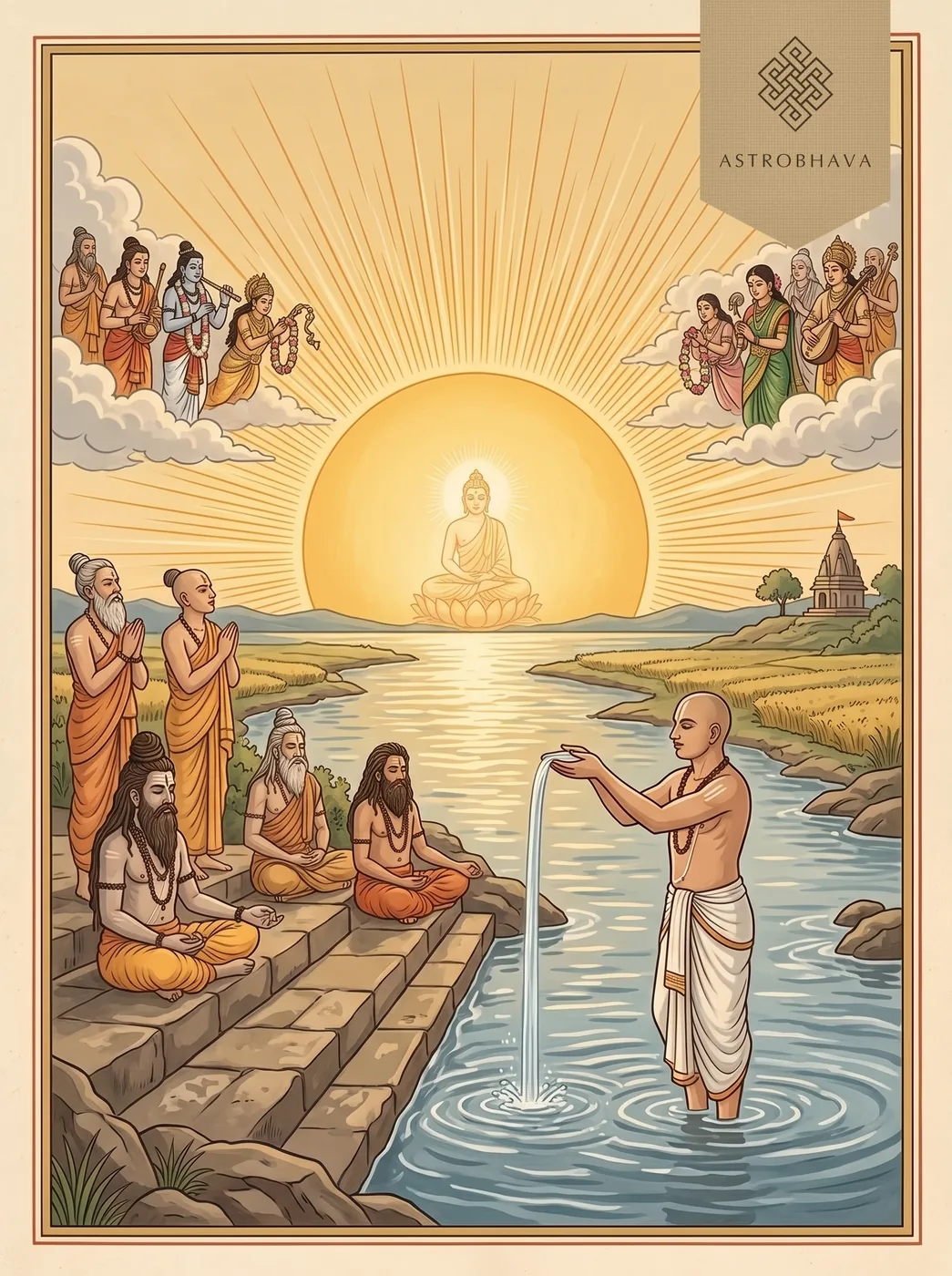
The Surya Mandala Stotram is a Sanskrit hymn to the mandala, the blazing orb of the Sun, rather than to Surya's figure in his chariot. Its closing line names the Bhavishyottara Purana as its source and frames it as part of a conversation between Sri Krishna and Arjuna; no individual poet is named. In the form chanted in South India it has thirteen verses. Verse 1 salutes Surya through the number one thousand, repeated four times: a thousand rays, a thousand branches, a thousand yogas, ages a thousand in number. Each of the next eleven verses opens with 'yanmandalam', that orb which, and ends on the same request, 'punatu mam tat savitur varenyam', may that most excellent light of Savitr purify me. Along the way the orb is called jewel-bright and without beginning, sung in the Rig, Yajur and Sama Vedas, the light of earth, sky and heaven, and finally the very self of the all-pervading Vishnu, reached by yogis. A single closing verse states the traditional reward.
The Gayatri's words in a Puranic hymn
The line printed after the closing verse reads, in substance: here ends the Surya Mandala Stotram from the Bhavishyottara Purana, in the dialogue of Sri Krishna and Arjuna. The Bhavishyottara is the last part of the Bhavishya Purana, often counted as a separate upapurana, and is chiefly a manual of vows, festival days, gifts and pilgrimage; the parent Bhavishya Purana carries a long run of chapters on Sun worship. The hymn itself tells no story. Its setting is the act of worship, and its refrain shows its roots. 'Tat savitur varenyam' are the opening words of the Gayatri, the Rigveda verse (3.62.10) attributed to the sage Vishvamitra and addressed to Savitr, the Sun as the one who sets the world in motion. Verse 6 adds 'bhur bhuvah svah', the three words spoken before the Gayatri. Each verse therefore restates the Gayatri's prayer in Puranic language, turning 'may he stir our thoughts' into 'may that light purify me'. Versions differ in length. Some printings open with a second salutation, 'namah savitre jagadekacakshushe', to the single eye of the world, and repeat the 'vedavido vadanti' verse near the end. One printing titles the poem Mandala Ashtakam and closes it as part of an Aditya Hridaya, a text distinct from the Ramayana hymn of that name.
The mantra, in six scripts
- नमोऽस्तु
- namo'stu — let there be salutation
- सूर्याय
- sūryāya — to Surya
- सहस्ररश्मये
- sahasraraśmaye — of a thousand rays
- सहस्रशाखान्वितसम्भवात्मने
- sahasraśākhānvitasambhavātmane — whose being comes forth in a thousand branches
- सहस्रयोगोद्भवभावभागिने
- sahasrayogodbhavabhāvabhāgine — who shares in states born of a thousand yogas
- सहस्रसङ्ख्यायुगधारिणे
- sahasrasaṅkhyāyugadhāriṇe — upholder of ages a thousand in number
- नमः
- namaḥ — salutation
Surya Mandala Stotram lyrics in full
An opening salutation, eleven verses on the Sun's orb, and a closing verse on the reward, as chanted in South India.
All 14 verses, in Sanskrit, Tamil, Telugu, Kannada, Malayalam and English, each with its meaning. Choose a script:
Download the Surya Mandala Stotram PDFAll 14 verses with their meanings, in Sanskrit. Free to print and keep.
नमोऽस्तु सूर्याय सहस्ररश्मये सहस्रशाखान्वितसम्भवात्मने ।
सहस्रयोगोद्भवभावभागिने सहस्रसङ्ख्यायुगधारिणे नमः ॥
நமோஸ்து ஸூர்யாய ஸஹஸ்ரரஶ்மயே ஸஹஸ்ரஶாகாந்விதஸம்பவாத்மநே ।
ஸஹஸ்ரயோகோத்பவபாவபாகிநே ஸஹஸ்ரஸங்க்யாயுகதாரிணே நமஃ ॥
నమోఽస్తు సూర్యాయ సహస్రరశ్మయే సహస్రశాఖాన్వితసమ్భవాత్మనే ।
సహస్రయోగోద్భవభావభాగినే సహస్రసఙ్ఖ్యాయుగధారిణే నమః ॥
ನಮೋಽಸ್ತು ಸೂರ್ಯಾಯ ಸಹಸ್ರರಶ್ಮಯೇ ಸಹಸ್ರಶಾಖಾನ್ವಿತಸಮ್ಭವಾತ್ಮನೇ ।
ಸಹಸ್ರಯೋಗೋದ್ಭವಭಾವಭಾಗಿನೇ ಸಹಸ್ರಸಙ್ಖ್ಯಾಯುಗಧಾರಿಣೇ ನಮಃ ॥
നമോഽസ്തു സൂര്യായ സഹസ്രരശ്മയേ സഹസ്രശാഖാന്വിതസമ്ഭവാത്മനേ ।
സഹസ്രയോഗോദ്ഭവഭാവഭാഗിനേ സഹസ്രസങ്ഖ്യായുഗധാരിണേ നമഃ ॥
namo'stu sūryāya sahasraraśmaye sahasraśākhānvitasambhavātmane |
sahasrayogodbhavabhāvabhāgine sahasrasaṅkhyāyugadhāriṇe namaḥ ||
Salutations to Surya of a thousand rays, whose being has come forth in a thousand branches. Salutations to him who shares in the states born of a thousand yogas and who upholds ages beyond counting, a thousand in number.
यन्मण्डलं दीप्तिकरं विशालं रत्नप्रभं तीव्रमनादिरूपम् ।
दारिद्र्यदुःखक्षयकारणं च पुनातु मां तत्सवितुर्वरेण्यम् ॥
யந்மண்டலம் தீப்திகரம் விஶாலம் ரத்நப்ரபம் தீவ்ரமநாதிரூபம் ।
தாரித்ர்யதுஃகக்ஷயகாரணம் ச புநாது மாம் தத்ஸவிதுர்வரேண்யம் ॥
యన్మణ్డలం దీప్తికరం విశాలం రత్నప్రభం తీవ్రమనాదిరూపమ్ ।
దారిద్ర్యదుఃఖక్షయకారణం చ పునాతు మాం తత్సవితుర్వరేణ్యమ్ ॥
ಯನ್ಮಣ್ಡಲಂ ದೀಪ್ತಿಕರಂ ವಿಶಾಲಂ ರತ್ನಪ್ರಭಂ ತೀವ್ರಮನಾದಿರೂಪಮ್ ।
ದಾರಿದ್ರ್ಯದುಃಖಕ್ಷಯಕಾರಣಂ ಚ ಪುನಾತು ಮಾಂ ತತ್ಸವಿತುರ್ವರೇಣ್ಯಮ್ ॥
യന്മണ്ഡലം ദീപ്തികരം വിശാലം രത്നപ്രഭം തീവ്രമനാദിരൂപമ് ।
ദാരിദ്ര്യദുഃഖക്ഷയകാരണം ച പുനാതു മാം തത്സവിതുര്വരേണ്യമ് ॥
yanmaṇḍalaṃ dīptikaraṃ viśālaṃ ratnaprabhaṃ tīvramanādirūpam |
dāridryaduḥkhakṣayakāraṇaṃ ca punātu māṃ tatsaviturvareṇyam ||
That orb which gives light, vast, shining like a jewel, fierce and without beginning, which brings an end to poverty and sorrow: may that most excellent light of Savitr purify me.
यन्मण्डलं देवगणैः सुपूजितं विप्रैः स्तुतं भावनमुक्तिकोविदम् ।
तं देवदेवं प्रणमामि सूर्यं पुनातु मां तत्सवितुर्वरेण्यम् ॥
யந்மண்டலம் தேவகணைஃ ஸுபூஜிதம் விப்ரைஃ ஸ்துதம் பாவநமுக்திகோவிதம் ।
தம் தேவதேவம் ப்ரணமாமி ஸூர்யம் புநாது மாம் தத்ஸவிதுர்வரேண்யம் ॥
యన్మణ్డలం దేవగణైః సుపూజితం విప్రైః స్తుతం భావనముక్తికోవిదమ్ ।
తం దేవదేవం ప్రణమామి సూర్యం పునాతు మాం తత్సవితుర్వరేణ్యమ్ ॥
ಯನ್ಮಣ್ಡಲಂ ದೇವಗಣೈಃ ಸುಪೂಜಿತಂ ವಿಪ್ರೈಃ ಸ್ತುತಂ ಭಾವನಮುಕ್ತಿಕೋವಿದಮ್ ।
ತಂ ದೇವದೇವಂ ಪ್ರಣಮಾಮಿ ಸೂರ್ಯಂ ಪುನಾತು ಮಾಂ ತತ್ಸವಿತುರ್ವರೇಣ್ಯಮ್ ॥
യന്മണ്ഡലം ദേവഗണൈഃ സുപൂജിതം വിപ്രൈഃ സ്തുതം ഭാവനമുക്തികോവിദമ് ।
തം ദേവദേവം പ്രണമാമി സൂര്യം പുനാതു മാം തത്സവിതുര്വരേണ്യമ് ॥
yanmaṇḍalaṃ devagaṇaiḥ supūjitaṃ vipraiḥ stutaṃ bhāvanamuktikovidam |
taṃ devadevaṃ praṇamāmi sūryaṃ punātu māṃ tatsaviturvareṇyam ||
That orb well worshipped by the hosts of gods, praised by the learned, the knower of the way to liberation through meditation: I bow to Surya, that God of gods. May that most excellent light of Savitr purify me.
यन्मण्डलं ज्ञानघनं त्वगम्यं त्रैलोक्यपूज्यं त्रिगुणात्मरूपम् ।
समस्ततेजोमयदिव्यरूपं पुनातु मां तत्सवितुर्वरेण्यम् ॥
யந்மண்டலம் ஜ்ஞாநகநம் த்வகம்யம் த்ரைலோக்யபூஜ்யம் த்ரிகுணாத்மரூபம் ।
ஸமஸ்ததேஜோமயதிவ்யரூபம் புநாது மாம் தத்ஸவிதுர்வரேண்யம் ॥
యన్మణ్డలం జ్ఞానఘనం త్వగమ్యం త్రైలోక్యపూజ్యం త్రిగుణాత్మరూపమ్ ।
సమస్తతేజోమయదివ్యరూపం పునాతు మాం తత్సవితుర్వరేణ్యమ్ ॥
ಯನ್ಮಣ್ಡಲಂ ಜ್ಞಾನಘನಂ ತ್ವಗಮ್ಯಂ ತ್ರೈಲೋಕ್ಯಪೂಜ್ಯಂ ತ್ರಿಗುಣಾತ್ಮರೂಪಮ್ ।
ಸಮಸ್ತತೇಜೋಮಯದಿವ್ಯರೂಪಂ ಪುನಾತು ಮಾಂ ತತ್ಸವಿತುರ್ವರೇಣ್ಯಮ್ ॥
യന്മണ്ഡലം ജ്ഞാനഘനം ത്വഗമ്യം ത്രൈലോക്യപൂജ്യം ത്രിഗുണാത്മരൂപമ് ।
സമസ്തതേജോമയദിവ്യരൂപം പുനാതു മാം തത്സവിതുര്വരേണ്യമ് ॥
yanmaṇḍalaṃ jñānaghanaṃ tvagamyaṃ trailokyapūjyaṃ triguṇātmarūpam |
samastatejomayadivyarūpaṃ punātu māṃ tatsaviturvareṇyam ||
That orb which is knowledge itself in solid form yet beyond reach, worshipped in the three worlds, whose nature is the three gunas, whose divine form is made of all radiance: may that most excellent light of Savitr purify me.
यन्मण्डलं गूढमतिप्रबोधं धर्मस्य वृद्धिं कुरुते जनानाम् ।
यत्सर्वपापक्षयकारणं च पुनातु मां तत्सवितुर्वरेण्यम् ॥
யந்மண்டலம் கூடமதிப்ரபோதம் தர்மஸ்ய வ்ருத்திம் குருதே ஜநாநாம் ।
யத்ஸர்வபாபக்ஷயகாரணம் ச புநாது மாம் தத்ஸவிதுர்வரேண்யம் ॥
యన్మణ్డలం గూఢమతిప్రబోధం ధర్మస్య వృద్ధిం కురుతే జనానామ్ ।
యత్సర్వపాపక్షయకారణం చ పునాతు మాం తత్సవితుర్వరేణ్యమ్ ॥
ಯನ್ಮಣ್ಡಲಂ ಗೂಢಮತಿಪ್ರಬೋಧಂ ಧರ್ಮಸ್ಯ ವೃದ್ಧಿಂ ಕುರುತೇ ಜನಾನಾಮ್ ।
ಯತ್ಸರ್ವಪಾಪಕ್ಷಯಕಾರಣಂ ಚ ಪುನಾತು ಮಾಂ ತತ್ಸವಿತುರ್ವರೇಣ್ಯಮ್ ॥
യന്മണ്ഡലം ഗൂഢമതിപ്രബോധം ധര്മസ്യ വൃദ്ധിം കുരുതേ ജനാനാമ് ।
യത്സര്വപാപക്ഷയകാരണം ച പുനാതു മാം തത്സവിതുര്വരേണ്യമ് ॥
yanmaṇḍalaṃ gūḍhamatiprabodhaṃ dharmasya vṛddhiṃ kurute janānām |
yatsarvapāpakṣayakāraṇaṃ ca punātu māṃ tatsaviturvareṇyam ||
That orb which awakens the hidden understanding, which makes dharma grow among people, and which brings an end to all sins: may that most excellent light of Savitr purify me.
यन्मण्डलं व्याधिविनाशदक्षं यदृग्यजुः सामसु सम्प्रगीतम् ।
प्रकाशितं येन च भूर्भुवः स्वः पुनातु मां तत्सवितुर्वरेण्यम् ॥
யந்மண்டலம் வ்யாதிவிநாஶதக்ஷம் யத்ருக்யஜுஃ ஸாமஸு ஸம்ப்ரகீதம் ।
ப்ரகாஶிதம் யேந ச பூர்புவஃ ஸ்வஃ புநாது மாம் தத்ஸவிதுர்வரேண்யம் ॥
యన్మణ్డలం వ్యాధివినాశదక్షం యదృగ్యజుః సామసు సమ్ప్రగీతమ్ ।
ప్రకాశితం యేన చ భూర్భువః స్వః పునాతు మాం తత్సవితుర్వరేణ్యమ్ ॥
ಯನ್ಮಣ್ಡಲಂ ವ್ಯಾಧಿವಿನಾಶದಕ್ಷಂ ಯದೃಗ್ಯಜುಃ ಸಾಮಸು ಸಮ್ಪ್ರಗೀತಮ್ ।
ಪ್ರಕಾಶಿತಂ ಯೇನ ಚ ಭೂರ್ಭುವಃ ಸ್ವಃ ಪುನಾತು ಮಾಂ ತತ್ಸವಿತುರ್ವರೇಣ್ಯಮ್ ॥
യന്മണ്ഡലം വ്യാധിവിനാശദക്ഷം യദൃഗ്യജുഃ സാമസു സമ്പ്രഗീതമ് ।
പ്രകാശിതം യേന ച ഭൂര്ഭുവഃ സ്വഃ പുനാതു മാം തത്സവിതുര്വരേണ്യമ് ॥
yanmaṇḍalaṃ vyādhivināśadakṣaṃ yadṛgyajuḥ sāmasu sampragītam |
prakāśitaṃ yena ca bhūrbhuvaḥ svaḥ punātu māṃ tatsaviturvareṇyam ||
That orb able to destroy illness, which is sung in the Rig, Yajur and Sama Vedas, and by which earth, sky and heaven are lit: may that most excellent light of Savitr purify me.
यन्मण्डलं वेदविदो वदन्ति गायन्ति यच्चारणसिद्धसङ्घाः ।
यद्योगिनो योगजुषां च सङ्घाः पुनातु मां तत्सवितुर्वरेण्यम् ॥
யந்மண்டலம் வேதவிதோ வதந்தி காயந்தி யச்சாரணஸித்தஸங்காஃ ।
யத்யோகிநோ யோகஜுஷாம் ச ஸங்காஃ புநாது மாம் தத்ஸவிதுர்வரேண்யம் ॥
యన్మణ్డలం వేదవిదో వదన్తి గాయన్తి యచ్చారణసిద్ధసఙ్ఘాః ।
యద్యోగినో యోగజుషాం చ సఙ్ఘాః పునాతు మాం తత్సవితుర్వరేణ్యమ్ ॥
ಯನ್ಮಣ್ಡಲಂ ವೇದವಿದೋ ವದನ್ತಿ ಗಾಯನ್ತಿ ಯಚ್ಚಾರಣಸಿದ್ಧಸಙ್ಘಾಃ ।
ಯದ್ಯೋಗಿನೋ ಯೋಗಜುಷಾಂ ಚ ಸಙ್ಘಾಃ ಪುನಾತು ಮಾಂ ತತ್ಸವಿತುರ್ವರೇಣ್ಯಮ್ ॥
യന്മണ്ഡലം വേദവിദോ വദന്തി ഗായന്തി യച്ചാരണസിദ്ധസങ്ഘാഃ ।
യദ്യോഗിനോ യോഗജുഷാം ച സങ്ഘാഃ പുനാതു മാം തത്സവിതുര്വരേണ്യമ് ॥
yanmaṇḍalaṃ vedavido vadanti gāyanti yaccāraṇasiddhasaṅghāḥ |
yadyogino yogajuṣāṃ ca saṅghāḥ punātu māṃ tatsaviturvareṇyam ||
That orb of which the knowers of the Veda speak, which the bands of Charanas and Siddhas sing, and which yogis and the companies devoted to yoga praise: may that most excellent light of Savitr purify me.
यन्मण्डलं सर्वजनैश्च पूजितं ज्योतिश्च कुर्यादिह मर्त्यलोके ।
यत्कालकालाद्यमनादिरूपं पुनातु मां तत्सवितुर्वरेण्यम् ॥
யந்மண்டலம் ஸர்வஜநைஶ்ச பூஜிதம் ஜ்யோதிஶ்ச குர்யாதிஹ மர்த்யலோகே ।
யத்காலகாலாத்யமநாதிரூபம் புநாது மாம் தத்ஸவிதுர்வரேண்யம் ॥
యన్మణ్డలం సర్వజనైశ్చ పూజితం జ్యోతిశ్చ కుర్యాదిహ మర్త్యలోకే ।
యత్కాలకాలాద్యమనాదిరూపం పునాతు మాం తత్సవితుర్వరేణ్యమ్ ॥
ಯನ್ಮಣ್ಡಲಂ ಸರ್ವಜನೈಶ್ಚ ಪೂಜಿತಂ ಜ್ಯೋತಿಶ್ಚ ಕುರ್ಯಾದಿಹ ಮರ್ತ್ಯಲೋಕೇ ।
ಯತ್ಕಾಲಕಾಲಾದ್ಯಮನಾದಿರೂಪಂ ಪುನಾತು ಮಾಂ ತತ್ಸವಿತುರ್ವರೇಣ್ಯಮ್ ॥
യന്മണ്ഡലം സര്വജനൈശ്ച പൂജിതം ജ്യോതിശ്ച കുര്യാദിഹ മര്ത്യലോകേ ।
യത്കാലകാലാദ്യമനാദിരൂപം പുനാതു മാം തത്സവിതുര്വരേണ്യമ് ॥
yanmaṇḍalaṃ sarvajanaiśca pūjitaṃ jyotiśca kuryādiha martyaloke |
yatkālakālādyamanādirūpaṃ punātu māṃ tatsaviturvareṇyam ||
That orb worshipped by all people, which makes light here in the world of mortals, which is the first of time and of the destroyer of time, and has no beginning: may that most excellent light of Savitr purify me.
यन्मण्डलं विष्णुचतुर्मुखाख्यं यदक्षरं पापहरं जनानाम् ।
यत्कालकल्पक्षयकारणं च पुनातु मां तत्सवितुर्वरेण्यम् ॥
யந்மண்டலம் விஷ்ணுசதுர்முகாக்யம் யதக்ஷரம் பாபஹரம் ஜநாநாம் ।
யத்காலகல்பக்ஷயகாரணம் ச புநாது மாம் தத்ஸவிதுர்வரேண்யம் ॥
యన్మణ్డలం విష్ణుచతుర్ముఖాఖ్యం యదక్షరం పాపహరం జనానామ్ ।
యత్కాలకల్పక్షయకారణం చ పునాతు మాం తత్సవితుర్వరేణ్యమ్ ॥
ಯನ್ಮಣ್ಡಲಂ ವಿಷ್ಣುಚತುರ್ಮುಖಾಖ್ಯಂ ಯದಕ್ಷರಂ ಪಾಪಹರಂ ಜನಾನಾಮ್ ।
ಯತ್ಕಾಲಕಲ್ಪಕ್ಷಯಕಾರಣಂ ಚ ಪುನಾತು ಮಾಂ ತತ್ಸವಿತುರ್ವರೇಣ್ಯಮ್ ॥
യന്മണ്ഡലം വിഷ്ണുചതുര്മുഖാഖ്യം യദക്ഷരം പാപഹരം ജനാനാമ് ।
യത്കാലകല്പക്ഷയകാരണം ച പുനാതു മാം തത്സവിതുര്വരേണ്യമ് ॥
yanmaṇḍalaṃ viṣṇucaturmukhākhyaṃ yadakṣaraṃ pāpaharaṃ janānām |
yatkālakalpakṣayakāraṇaṃ ca punātu māṃ tatsaviturvareṇyam ||
That orb called by the names of Vishnu and the four-faced Brahma, which is imperishable and takes away the sins of people, and which brings about the end of time and of the world-ages: may that most excellent light of Savitr purify me.
यन्मण्डलं विश्वसृजं प्रसिद्धमुत्पत्तिरक्षाप्रलयप्रगल्भम् ।
यस्मिन् जगत्संहरतेऽखिलं च पुनातु मां तत्सवितुर्वरेण्यम् ॥
யந்மண்டலம் விஶ்வஸ்ருஜம் ப்ரஸித்தமுத்பத்திரக்ஷாப்ரலயப்ரகல்பம் ।
யஸ்மிந் ஜகத்ஸம்ஹரதேகிலம் ச புநாது மாம் தத்ஸவிதுர்வரேண்யம் ॥
యన్మణ్డలం విశ్వసృజం ప్రసిద్ధముత్పత్తిరక్షాప్రలయప్రగల్భమ్ ।
యస్మిన్ జగత్సంహరతేఽఖిలం చ పునాతు మాం తత్సవితుర్వరేణ్యమ్ ॥
ಯನ್ಮಣ್ಡಲಂ ವಿಶ್ವಸೃಜಂ ಪ್ರಸಿದ್ಧಮುತ್ಪತ್ತಿರಕ್ಷಾಪ್ರಲಯಪ್ರಗಲ್ಭಮ್ ।
ಯಸ್ಮಿನ್ ಜಗತ್ಸಂಹರತೇಽಖಿಲಂ ಚ ಪುನಾತು ಮಾಂ ತತ್ಸವಿತುರ್ವರೇಣ್ಯಮ್ ॥
യന്മണ്ഡലം വിശ്വസൃജം പ്രസിദ്ധമുത്പത്തിരക്ഷാപ്രലയപ്രഗല്ഭമ് ।
യസ്മിന് ജഗത്സംഹരതേഽഖിലം ച പുനാതു മാം തത്സവിതുര്വരേണ്യമ് ॥
yanmaṇḍalaṃ viśvasṛjaṃ prasiddhamutpattirakṣāpralayapragalbham |
yasmin jagatsaṃharate'khilaṃ ca punātu māṃ tatsaviturvareṇyam ||
That orb renowned as the maker of the universe, mighty in creating, protecting and dissolving it, and into which the whole world is withdrawn: may that most excellent light of Savitr purify me.
यन्मण्डलं सर्वगतस्य विष्णोरात्मा परं धाम विशुद्धतत्त्वम् ।
सूक्ष्मान्तरैर्योगपथानुगम्यं पुनातु मां तत्सवितुर्वरेण्यम् ॥
யந்மண்டலம் ஸர்வகதஸ்ய விஷ்ணோராத்மா பரம் தாம விஶுத்ததத்த்வம் ।
ஸூக்ஷ்மாந்தரைர்யோகபதாநுகம்யம் புநாது மாம் தத்ஸவிதுர்வரேண்யம் ॥
యన్మణ్డలం సర్వగతస్య విష్ణోరాత్మా పరం ధామ విశుద్ధతత్త్వమ్ ।
సూక్ష్మాన్తరైర్యోగపథానుగమ్యం పునాతు మాం తత్సవితుర్వరేణ్యమ్ ॥
ಯನ್ಮಣ್ಡಲಂ ಸರ್ವಗತಸ್ಯ ವಿಷ್ಣೋರಾತ್ಮಾ ಪರಂ ಧಾಮ ವಿಶುದ್ಧತತ್ತ್ವಮ್ ।
ಸೂಕ್ಷ್ಮಾನ್ತರೈರ್ಯೋಗಪಥಾನುಗಮ್ಯಂ ಪುನಾತು ಮಾಂ ತತ್ಸವಿತುರ್ವರೇಣ್ಯಮ್ ॥
യന്മണ്ഡലം സര്വഗതസ്യ വിഷ്ണോരാത്മാ പരം ധാമ വിശുദ്ധതത്ത്വമ് ।
സൂക്ഷ്മാന്തരൈര്യോഗപഥാനുഗമ്യം പുനാതു മാം തത്സവിതുര്വരേണ്യമ് ॥
yanmaṇḍalaṃ sarvagatasya viṣṇorātmā paraṃ dhāma viśuddhatattvam |
sūkṣmāntarairyogapathānugamyaṃ punātu māṃ tatsaviturvareṇyam ||
That orb which is the very self of the all-pervading Vishnu, the highest abode, the pure reality, reached along the path of yoga by those of subtle inner sight: may that most excellent light of Savitr purify me.
यन्मण्डलं वेदविदोपगीतं यद्योगिनां योगपथानुगम्यम् ।
तत्सर्ववेद्यं प्रणमामि सूर्यं पुनातु मां तत्सवितुर्वरेण्यम् ॥
யந்மண்டலம் வேதவிதோபகீதம் யத்யோகிநாம் யோகபதாநுகம்யம் ।
தத்ஸர்வவேத்யம் ப்ரணமாமி ஸூர்யம் புநாது மாம் தத்ஸவிதுர்வரேண்யம் ॥
యన్మణ్డలం వేదవిదోపగీతం యద్యోగినాం యోగపథానుగమ్యమ్ ।
తత్సర్వవేద్యం ప్రణమామి సూర్యం పునాతు మాం తత్సవితుర్వరేణ్యమ్ ॥
ಯನ್ಮಣ್ಡಲಂ ವೇದವಿದೋಪಗೀತಂ ಯದ್ಯೋಗಿನಾಂ ಯೋಗಪಥಾನುಗಮ್ಯಮ್ ।
ತತ್ಸರ್ವವೇದ್ಯಂ ಪ್ರಣಮಾಮಿ ಸೂರ್ಯಂ ಪುನಾತು ಮಾಂ ತತ್ಸವಿತುರ್ವರೇಣ್ಯಮ್ ॥
യന്മണ്ഡലം വേദവിദോപഗീതം യദ്യോഗിനാം യോഗപഥാനുഗമ്യമ് ।
തത്സര്വവേദ്യം പ്രണമാമി സൂര്യം പുനാതു മാം തത്സവിതുര്വരേണ്യമ് ॥
yanmaṇḍalaṃ vedavidopagītaṃ yadyogināṃ yogapathānugamyam |
tatsarvavedyaṃ praṇamāmi sūryaṃ punātu māṃ tatsaviturvareṇyam ||
That orb sung by the knowers of the Veda, which yogis reach along the path of yoga: I bow to Surya, the one to be known through everything. May that most excellent light of Savitr purify me.
सूर्यमण्डलसुस्तोत्रं यः पठेत्सततं नरः ।
सर्वपापविशुद्धात्मा सूर्यलोके महीयते ॥
ஸூர்யமண்டலஸுஸ்தோத்ரம் யஃ படேத்ஸததம் நரஃ ।
ஸர்வபாபவிஶுத்தாத்மா ஸூர்யலோகே மஹீயதே ॥
సూర్యమణ్డలసుస్తోత్రం యః పఠేత్సతతం నరః ।
సర్వపాపవిశుద్ధాత్మా సూర్యలోకే మహీయతే ॥
ಸೂರ್ಯಮಣ್ಡಲಸುಸ್ತೋತ್ರಂ ಯಃ ಪಠೇತ್ಸತತಂ ನರಃ ।
ಸರ್ವಪಾಪವಿಶುದ್ಧಾತ್ಮಾ ಸೂರ್ಯಲೋಕೇ ಮಹೀಯತೇ ॥
സൂര്യമണ്ഡലസുസ്തോത്രം യഃ പഠേത്സതതം നരഃ ।
സര്വപാപവിശുദ്ധാത്മാ സൂര്യലോകേ മഹീയതേ ॥
sūryamaṇḍalasustotraṃ yaḥ paṭhetsatataṃ naraḥ |
sarvapāpaviśuddhātmā sūryaloke mahīyate ||
The verse says that whoever recites this fine hymn to the orb of the Sun constantly becomes pure of all sins and is honoured in the world of the Sun.
इति श्रीभविष्योत्तरपुराणे श्रीकृष्णार्जुनसंवादे सूर्यमण्डलस्तोत्रं सम्पूर्णम् ॥
இதி ஶ்ரீபவிஷ்யோத்தரபுராணே ஶ்ரீக்ருஷ்ணார்ஜுநஸம்வாதே ஸூர்யமண்டலஸ்தோத்ரம் ஸம்பூர்ணம் ॥
ఇతి శ్రీభవిష్యోత్తరపురాణే శ్రీకృష్ణార్జునసంవాదే సూర్యమణ్డలస్తోత్రం సమ్పూర్ణమ్ ॥
ಇತಿ ಶ್ರೀಭವಿಷ್ಯೋತ್ತರಪುರಾಣೇ ಶ್ರೀಕೃಷ್ಣಾರ್ಜುನಸಂವಾದೇ ಸೂರ್ಯಮಣ್ಡಲಸ್ತೋತ್ರಂ ಸಮ್ಪೂರ್ಣಮ್ ॥
ഇതി ശ്രീഭവിഷ്യോത്തരപുരാണേ ശ്രീകൃഷ്ണാര്ജുനസംവാദേ സൂര്യമണ്ഡലസ്തോത്രം സമ്പൂര്ണമ് ॥
iti śrībhaviṣyottarapurāṇe śrīkṛṣṇārjunasaṃvāde sūryamaṇḍalastotraṃ sampūrṇam ||
Thus ends the Surya Mandala Stotram, from the dialogue between Shri Krishna and Arjuna in the Bhavishyottara Purana.
The syllable people get wrong
In the refrain, vareṇyam (वरेण्यम्) has three syllables, va-reṇ-yam: the retroflex ṇ closes the second syllable and runs straight into ya. Saying 'va-re-ni-yam', with an extra i, is the common slip, and the same word is mispronounced the same way in the Gayatri.
Questions
Have your chart read before you decide
Chanting is yours to do, and free. But which deity your situation calls for — and whether a mantra alone is the right response — depends on your chart. Sometimes it is; sometimes it is not.
- Over 30 years in the Guru–Sishya Parampara, from the age of five
- He reads every chart himself — 60 minutes, one to one, never delegated
- Charts are read only between sunrise and sunset, following tradition
