Swarna Akarshana Bhairava Mantra
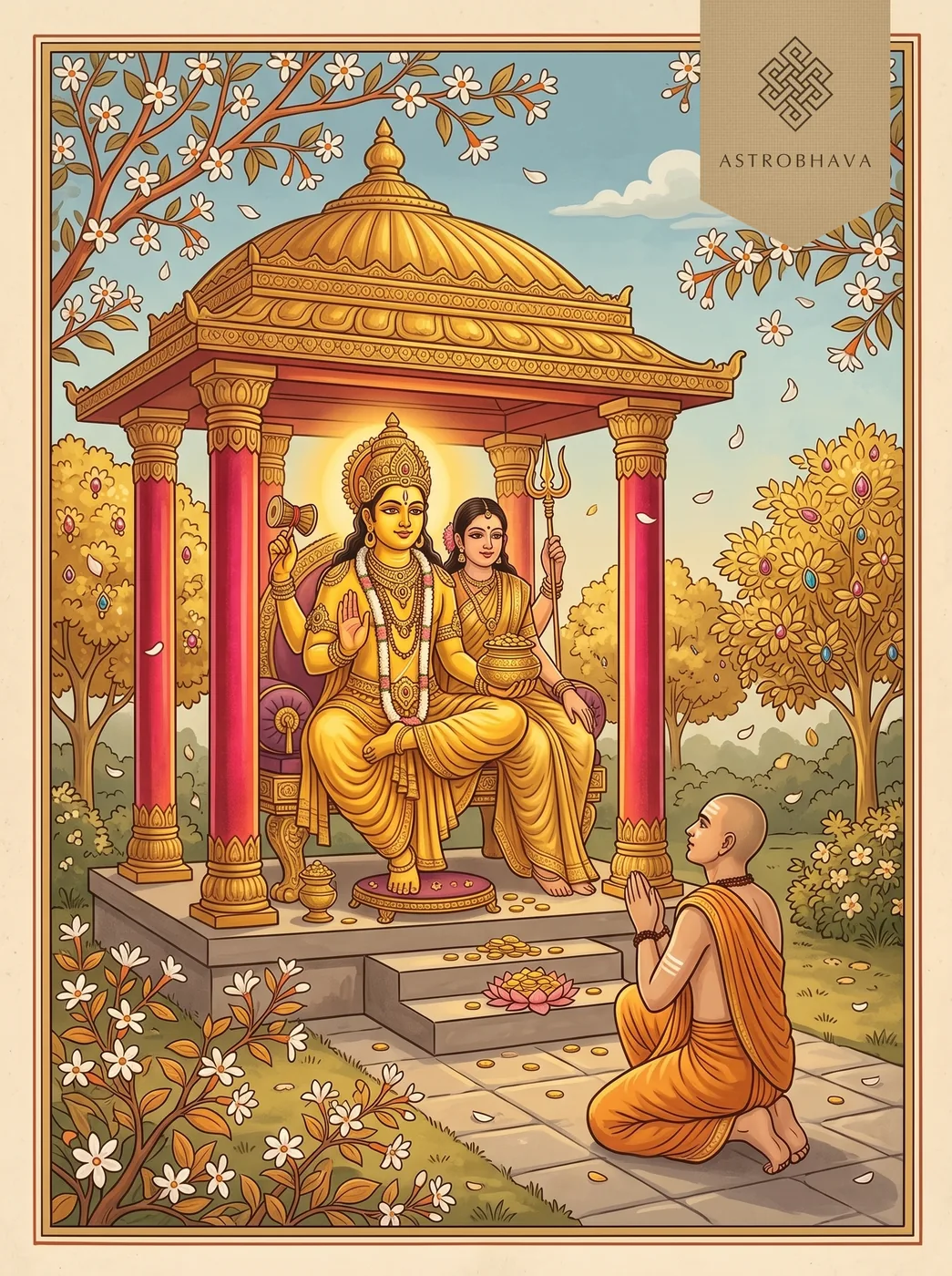
पारिजातद्रुमान्तारे स्थिते माणिक्यमण्डपे । सिंहासनगतं वन्दे भैरवं स्वर्णदायकम् ॥Also known as Namaste Bhairavaya Brahma Vishnu Shivatmane
In Devanagari, Tamil, Telugu, Kannada, Malayalam and English — with the meaning of every word, and the one syllable most people pronounce wrongly.
 The Swarna Akarshana Bhairava Homam, performed for youBook →
What the Swarna Akarshana Bhairava Mantra is
People who search for the Swarna Akarshana Bhairava mantra usually meet it inside a longer text, the Swarna Akarshana Bhairava Stotram, which closes by naming itself part of the Rudrayamala Tantra, spoken in a dialogue between Ishvara and Dattatreya. The mantra proper is a fifty-eight-syllable formula built on seed syllables; the text itself says it may be told only to one's own devotee, so tradition treats it as an initiation mantra and it is not printed here. What follows is the part meant for recital. Two dhyana verses picture Bhairava seated on a throne in a ruby pavilion among parijata trees, the colour of molten gold, with the Goddess beside him and a golden vessel in one of his four hands. Thirty verses of salutation follow, in the anushtubh metre with Brahma as their seer, moving from his many heads and arms to a closing run of golden epithets: golden throat, golden feet, golden girdle. Ten verses of phala shruti end the hymn.
A secret entrusted by Nandikeshvara
In the printed Rudrayamala form, the hymn is introduced by a short frame dialogue that is read but not chanted. The sage Markandeya approaches Nandikeshvara, chief of Shiva's attendants, and reminds him that the mantra of Maha Bhairava has already been taught. Now he wants the hymn itself: who first recited it, and what comes of reciting it. Nandikeshvara welcomes the question as one that serves the world. Interestingly, he calls the text a Batuka Bhairava stotra, linking this gold-giving form to the youthful Bhairava, and the hymn's own Verse 21 salutes him 'in the form of a child'. Nandikeshvara describes it as rare in the three worlds and meant for Bhairava's devotees, his servants and the poor, then adds a warning: it should be passed only to one's own devotee, or the teller incurs a curse. That caution is why the bija mantra stays with teachers. Tamil temple lore adds a second story. At the Thanthondreeswarar temple in Iluppaikudi, Sivaganga district, the presiding Bhairava is known as Swarna Akarshana Bhairavar and holds an Akshaya patram in place of the usual skull bowl. According to the temple legend, the Siddhar Kongana worshipped him there to learn alchemy; the gold he made vanished as he lifted it, and a self-luminous Shiva Lingam stood in its place.
The mantra, in six scripts
- पारिजातद्रुमान्तारे
- pārijātadrumāntāre — amid the parijata trees
- स्थिते
- sthite — standing
- माणिक्यमण्डपे
- māṇikyamaṇḍape — in the ruby pavilion
- सिंहासनगतं
- siṃhāsanagataṃ — seated on the throne
- वन्दे
- vande — I bow to
- भैरवं
- bhairavaṃ — Bhairava
- स्वर्णदायकम्
- svarṇadāyakam — the giver of gold
Swarna Akarshana Bhairava Mantra lyrics in full
The two dhyana verses, thirty verses of praise and ten closing verses of the Rudrayamala form. The initiation mantra and its nyasa are kept for teacher and student, as the text asks.
All 43 verses, in Sanskrit, Tamil, Telugu, Kannada, Malayalam and English, each with its meaning. Choose a script:
Download the Swarna Akarshana Bhairava Mantra PDFAll 43 verses with their meanings, in Sanskrit. Free to print and keep.
पारिजातद्रुमान्तारे स्थिते माणिक्यमण्डपे ।
सिंहासनगतं वन्दे भैरवं स्वर्णदायकम् ॥
பாரிஜாதத்ருமாந்தாரே ஸ்திதே மாணிக்யமண்டபே ।
ஸிம்ஹாஸநகதம் வந்தே பைரவம் ஸ்வர்ணதாயகம் ॥
పారిజాతద్రుమాన్తారే స్థితే మాణిక్యమణ్డపే ।
సింహాసనగతం వన్దే భైరవం స్వర్ణదాయకమ్ ॥
ಪಾರಿಜಾತದ್ರುಮಾನ್ತಾರೇ ಸ್ಥಿತೇ ಮಾಣಿಕ್ಯಮಣ್ಡಪೇ ।
ಸಿಂಹಾಸನಗತಂ ವನ್ದೇ ಭೈರವಂ ಸ್ವರ್ಣದಾಯಕಮ್ ॥
പാരിജാതദ്രുമാന്താരേ സ്ഥിതേ മാണിക്യമണ്ഡപേ ।
സിംഹാസനഗതം വന്ദേ ഭൈരവം സ്വര്ണദായകമ് ॥
pārijātadrumāntāre sthite māṇikyamaṇḍape |
siṃhāsanagataṃ vande bhairavaṃ svarṇadāyakam ||
I bow to Bhairava, the giver of gold, seated on a throne in a ruby pavilion that stands among the parijata trees.
गाङ्गेयपात्रं डमरूं त्रिशूलं वरं करैः सन्दधतं त्रिनेत्रम् ।
देव्या युतं तप्तसुवर्णवर्णं स्वर्णाकृषं भैरवमाश्रयामि ॥
காங்கேயபாத்ரம் டமரூம் த்ரிஶூலம் வரம் கரைஃ ஸந்தததம் த்ரிநேத்ரம் ।
தேவ்யா யுதம் தப்தஸுவர்ணவர்ணம் ஸ்வர்ணாக்ருஷம் பைரவமாஶ்ரயாமி ॥
గాఙ్గేయపాత్రం డమరూం త్రిశూలం వరం కరైః సన్దధతం త్రినేత్రమ్ ।
దేవ్యా యుతం తప్తసువర్ణవర్ణం స్వర్ణాకృషం భైరవమాశ్రయామి ॥
ಗಾಙ್ಗೇಯಪಾತ್ರಂ ಡಮರೂಂ ತ್ರಿಶೂಲಂ ವರಂ ಕರೈಃ ಸನ್ದಧತಂ ತ್ರಿನೇತ್ರಮ್ ।
ದೇವ್ಯಾ ಯುತಂ ತಪ್ತಸುವರ್ಣವರ್ಣಂ ಸ್ವರ್ಣಾಕೃಷಂ ಭೈರವಮಾಶ್ರಯಾಮಿ ॥
ഗാങ്ഗേയപാത്രം ഡമരൂം ത്രിശൂലം വരം കരൈഃ സന്ദധതം ത്രിനേത്രമ് ।
ദേവ്യാ യുതം തപ്തസുവര്ണവര്ണം സ്വര്ണാകൃഷം ഭൈരവമാശ്രയാമി ॥
gāṅgeyapātraṃ ḍamarūṃ triśūlaṃ varaṃ karaiḥ sandadhataṃ trinetram |
devyā yutaṃ taptasuvarṇavarṇaṃ svarṇākṛṣaṃ bhairavamāśrayāmi ||
I take refuge in Bhairava who draws gold, three-eyed, the colour of molten gold, joined by the Goddess, holding in his hands a golden vessel, a damaru drum, a trident and the gesture of granting boons.
ॐ नमस्ते भैरवाय ब्रह्मविष्णुशिवात्मने ।
नमस्त्रैलोक्यवन्द्याय वरदाय वरात्मने ॥
ௐ நமஸ்தே பைரவாய ப்ரஹ்மவிஷ்ணுஶிவாத்மநே ।
நமஸ்த்ரைலோக்யவந்த்யாய வரதாய வராத்மநே ॥
ఓం నమస్తే భైరవాయ బ్రహ్మవిష్ణుశివాత్మనే ।
నమస్త్రైలోక్యవన్ద్యాయ వరదాయ వరాత్మనే ॥
ಓಂ ನಮಸ್ತೇ ಭೈರವಾಯ ಬ್ರಹ್ಮವಿಷ್ಣುಶಿವಾತ್ಮನೇ ।
ನಮಸ್ತ್ರೈಲೋಕ್ಯವನ್ದ್ಯಾಯ ವರದಾಯ ವರಾತ್ಮನೇ ॥
ഓം നമസ്തേ ഭൈരവായ ബ്രഹ്മവിഷ്ണുശിവാത്മനേ ।
നമസ്ത്രൈലോക്യവന്ദ്യായ വരദായ വരാത്മനേ ॥
oṃ namaste bhairavāya brahmaviṣṇuśivātmane |
namastrailokyavandyāya varadāya varātmane ||
Om, salutation to you, Bhairava, whose self is Brahma, Vishnu and Shiva. Salutation to the one honoured by the three worlds, the giver of boons, whose very nature is the best.
रत्नसिंहासनस्थाय दिव्याभरणशोभिने ।
दिव्यमाल्यविभूषाय नमस्ते दिव्यमूर्तये ॥
ரத்நஸிம்ஹாஸநஸ்தாய திவ்யாபரணஶோபிநே ।
திவ்யமால்யவிபூஷாய நமஸ்தே திவ்யமூர்தயே ॥
రత్నసింహాసనస్థాయ దివ్యాభరణశోభినే ।
దివ్యమాల్యవిభూషాయ నమస్తే దివ్యమూర్తయే ॥
ರತ್ನಸಿಂಹಾಸನಸ್ಥಾಯ ದಿವ್ಯಾಭರಣಶೋಭಿನೇ ।
ದಿವ್ಯಮಾಲ್ಯವಿಭೂಷಾಯ ನಮಸ್ತೇ ದಿವ್ಯಮೂರ್ತಯೇ ॥
രത്നസിംഹാസനസ്ഥായ ദിവ്യാഭരണശോഭിനേ ।
ദിവ്യമാല്യവിഭൂഷായ നമസ്തേ ദിവ്യമൂര്തയേ ॥
ratnasiṃhāsanasthāya divyābharaṇaśobhine |
divyamālyavibhūṣāya namaste divyamūrtaye ||
Salutation to you, seated on a jewelled throne, shining with divine ornaments, adorned with divine garlands, whose form is divine.
नमस्तेऽनेकहस्ताय अनेकशिरसे नमः ।
नमस्तेऽनेकनेत्राय अनेकविभवे नमः ॥
நமஸ்தேநேகஹஸ்தாய அநேகஶிரஸே நமஃ ।
நமஸ்தேநேகநேத்ராய அநேகவிபவே நமஃ ॥
నమస్తేఽనేకహస్తాయ అనేకశిరసే నమః ।
నమస్తేఽనేకనేత్రాయ అనేకవిభవే నమః ॥
ನಮಸ್ತೇಽನೇಕಹಸ್ತಾಯ ಅನೇಕಶಿರಸೇ ನಮಃ ।
ನಮಸ್ತೇಽನೇಕನೇತ್ರಾಯ ಅನೇಕವಿಭವೇ ನಮಃ ॥
നമസ്തേഽനേകഹസ്തായ അനേകശിരസേ നമഃ ।
നമസ്തേഽനേകനേത്രായ അനേകവിഭവേ നമഃ ॥
namaste'nekahastāya anekaśirase namaḥ |
namaste'nekanetrāya anekavibhave namaḥ ||
Salutation to you of many hands, salutation to you of many heads. Salutation to you of many eyes, salutation to you of many glories.
नमस्तेऽनेककण्ठाय अनेकांसाय ते नमः ।
नमस्तेऽनेकपार्श्वाय नमस्ते दिव्यतेजसे ॥
நமஸ்தேநேககண்டாய அநேகாம்ஸாய தே நமஃ ।
நமஸ்தேநேகபார்ஶ்வாய நமஸ்தே திவ்யதேஜஸே ॥
నమస్తేఽనేకకణ్ఠాయ అనేకాంసాయ తే నమః ।
నమస్తేఽనేకపార్శ్వాయ నమస్తే దివ్యతేజసే ॥
ನಮಸ್ತೇಽನೇಕಕಣ್ಠಾಯ ಅನೇಕಾಂಸಾಯ ತೇ ನಮಃ ।
ನಮಸ್ತೇಽನೇಕಪಾರ್ಶ್ವಾಯ ನಮಸ್ತೇ ದಿವ್ಯತೇಜಸೇ ॥
നമസ്തേഽനേകകണ്ഠായ അനേകാംസായ തേ നമഃ ।
നമസ്തേഽനേകപാര്ശ്വായ നമസ്തേ ദിവ്യതേജസേ ॥
namaste'nekakaṇṭhāya anekāṃsāya te namaḥ |
namaste'nekapārśvāya namaste divyatejase ||
Salutation to you of many throats and many shoulders. Salutation to you of many sides, salutation to you of divine radiance.
अनेकायुधयुक्ताय अनेकसुरसेविने ।
अनेकगुणयुक्ताय महादेवाय ते नमः ॥
அநேகாயுதயுக்தாய அநேகஸுரஸேவிநே ।
அநேககுணயுக்தாய மஹாதேவாய தே நமஃ ॥
అనేకాయుధయుక్తాయ అనేకసురసేవినే ।
అనేకగుణయుక్తాయ మహాదేవాయ తే నమః ॥
ಅನೇಕಾಯುಧಯುಕ್ತಾಯ ಅನೇಕಸುರಸೇವಿನೇ ।
ಅನೇಕಗುಣಯುಕ್ತಾಯ ಮಹಾದೇವಾಯ ತೇ ನಮಃ ॥
അനേകായുധയുക്തായ അനേകസുരസേവിനേ ।
അനേകഗുണയുക്തായ മഹാദേവായ തേ നമഃ ॥
anekāyudhayuktāya anekasurasevine |
anekaguṇayuktāya mahādevāya te namaḥ ||
Salutation to you, the great god, bearing many weapons, served by many gods, possessed of many virtues.
नमो दारिद्र्यकालाय महासम्पत्प्रदायिने ।
श्रीभैरवीसंयुक्ताय त्रिलोकेशाय ते नमः ॥
நமோ தாரித்ர்யகாலாய மஹாஸம்பத்ப்ரதாயிநே ।
ஶ்ரீபைரவீஸம்யுக்தாய த்ரிலோகேஶாய தே நமஃ ॥
నమో దారిద్ర్యకాలాయ మహాసమ్పత్ప్రదాయినే ।
శ్రీభైరవీసంయుక్తాయ త్రిలోకేశాయ తే నమః ॥
ನಮೋ ದಾರಿದ್ರ್ಯಕಾಲಾಯ ಮಹಾಸಮ್ಪತ್ಪ್ರದಾಯಿನೇ ।
ಶ್ರೀಭೈರವೀಸಂಯುಕ್ತಾಯ ತ್ರಿಲೋಕೇಶಾಯ ತೇ ನಮಃ ॥
നമോ ദാരിദ്ര്യകാലായ മഹാസമ്പത്പ്രദായിനേ ।
ശ്രീഭൈരവീസംയുക്തായ ത്രിലോകേശായ തേ നമഃ ॥
namo dāridryakālāya mahāsampatpradāyine |
śrībhairavīsaṃyuktāya trilokeśāya te namaḥ ||
Salutation to the one who is death to poverty and the giver of great wealth. Salutation to you, joined with Sri Bhairavi, lord of the three worlds.
दिगम्बर नमस्तुभ्यं दिव्याङ्गाय नमो नमः ।
नमोऽस्तु दैत्यकालाय पापकालाय ते नमः ॥
திகம்பர நமஸ்துப்யம் திவ்யாங்காய நமோ நமஃ ।
நமோஸ்து தைத்யகாலாய பாபகாலாய தே நமஃ ॥
దిగమ్బర నమస్తుభ్యం దివ్యాఙ్గాయ నమో నమః ।
నమోఽస్తు దైత్యకాలాయ పాపకాలాయ తే నమః ॥
ದಿಗಮ್ಬರ ನಮಸ್ತುಭ್ಯಂ ದಿವ್ಯಾಙ್ಗಾಯ ನಮೋ ನಮಃ ।
ನಮೋಽಸ್ತು ದೈತ್ಯಕಾಲಾಯ ಪಾಪಕಾಲಾಯ ತೇ ನಮಃ ॥
ദിഗമ്ബര നമസ്തുഭ്യം ദിവ്യാങ്ഗായ നമോ നമഃ ।
നമോഽസ്തു ദൈത്യകാലായ പാപകാലായ തേ നമഃ ॥
digambara namastubhyaṃ divyāṅgāya namo namaḥ |
namo'stu daityakālāya pāpakālāya te namaḥ ||
Salutation to you who are clothed only by the directions; salutation again and again to you of divine limbs. Salutation to you who are death to the demons and death to sin.
सर्वज्ञाय नमस्तुभ्यं नमस्ते दिव्यचक्षुषे ।
अजिताय नमस्तुभ्यं जितामित्राय ते नमः ॥
ஸர்வஜ்ஞாய நமஸ்துப்யம் நமஸ்தே திவ்யசக்ஷுஷே ।
அஜிதாய நமஸ்துப்யம் ஜிதாமித்ராய தே நமஃ ॥
సర్వజ్ఞాయ నమస్తుభ్యం నమస్తే దివ్యచక్షుషే ।
అజితాయ నమస్తుభ్యం జితామిత్రాయ తే నమః ॥
ಸರ್ವಜ್ಞಾಯ ನಮಸ್ತುಭ್ಯಂ ನಮಸ್ತೇ ದಿವ್ಯಚಕ್ಷುಷೇ ।
ಅಜಿತಾಯ ನಮಸ್ತುಭ್ಯಂ ಜಿತಾಮಿತ್ರಾಯ ತೇ ನಮಃ ॥
സര്വജ്ഞായ നമസ്തുഭ്യം നമസ്തേ ദിവ്യചക്ഷുഷേ ।
അജിതായ നമസ്തുഭ്യം ജിതാമിത്രായ തേ നമഃ ॥
sarvajñāya namastubhyaṃ namaste divyacakṣuṣe |
ajitāya namastubhyaṃ jitāmitrāya te namaḥ ||
Salutation to you who know all, salutation to you of divine sight. Salutation to you, the unconquered, who have conquered every enemy.
नमस्ते रुद्ररूपाय महावीराय ते नमः ।
नमोऽस्त्वनन्तवीर्याय महाघोराय ते नमः ॥
நமஸ்தே ருத்ரரூபாய மஹாவீராய தே நமஃ ।
நமோஸ்த்வநந்தவீர்யாய மஹாகோராய தே நமஃ ॥
నమస్తే రుద్రరూపాయ మహావీరాయ తే నమః ।
నమోఽస్త్వనన్తవీర్యాయ మహాఘోరాయ తే నమః ॥
ನಮಸ್ತೇ ರುದ್ರರೂಪಾಯ ಮಹಾವೀರಾಯ ತೇ ನಮಃ ।
ನಮೋಽಸ್ತ್ವನನ್ತವೀರ್ಯಾಯ ಮಹಾಘೋರಾಯ ತೇ ನಮಃ ॥
നമസ്തേ രുദ്രരൂപായ മഹാവീരായ തേ നമഃ ।
നമോഽസ്ത്വനന്തവീര്യായ മഹാഘോരായ തേ നമഃ ॥
namaste rudrarūpāya mahāvīrāya te namaḥ |
namo'stvanantavīryāya mahāghorāya te namaḥ ||
Salutation to you in the form of Rudra, the great hero. Salutation to you of endless strength, the greatly fearsome one.
नमस्ते घोरघोराय विश्वघोराय ते नमः ।
नमः उग्राय शान्ताय भक्तानां शान्तिदायिने ॥
நமஸ்தே கோரகோராய விஶ்வகோராய தே நமஃ ।
நமஃ உக்ராய ஶாந்தாய பக்தாநாம் ஶாந்திதாயிநே ॥
నమస్తే ఘోరఘోరాయ విశ్వఘోరాయ తే నమః ।
నమః ఉగ్రాయ శాన్తాయ భక్తానాం శాన్తిదాయినే ॥
ನಮಸ್ತೇ ಘೋರಘೋರಾಯ ವಿಶ್ವಘೋರಾಯ ತೇ ನಮಃ ।
ನಮಃ ಉಗ್ರಾಯ ಶಾನ್ತಾಯ ಭಕ್ತಾನಾಂ ಶಾನ್ತಿದಾಯಿನೇ ॥
നമസ്തേ ഘോരഘോരായ വിശ്വഘോരായ തേ നമഃ ।
നമഃ ഉഗ്രായ ശാന്തായ ഭക്താനാം ശാന്തിദായിനേ ॥
namaste ghoraghorāya viśvaghorāya te namaḥ |
namaḥ ugrāya śāntāya bhaktānāṃ śāntidāyine ||
Salutation to you, most fearsome of the fearsome, fearsome to the whole universe. Salutation to the fierce one who is also calm, who gives peace to his devotees.
गुरवे सर्वलोकानां नमः प्रणवरूपिणे ।
नमस्ते वाग्भवाख्याय दीर्घकामाय ते नमः ॥
குரவே ஸர்வலோகாநாம் நமஃ ப்ரணவரூபிணே ।
நமஸ்தே வாக்பவாக்யாய தீர்ககாமாய தே நமஃ ॥
గురవే సర్వలోకానాం నమః ప్రణవరూపిణే ।
నమస్తే వాగ్భవాఖ్యాయ దీర్ఘకామాయ తే నమః ॥
ಗುರವೇ ಸರ್ವಲೋಕಾನಾಂ ನಮಃ ಪ್ರಣವರೂಪಿಣೇ ।
ನಮಸ್ತೇ ವಾಗ್ಭವಾಖ್ಯಾಯ ದೀರ್ಘಕಾಮಾಯ ತೇ ನಮಃ ॥
ഗുരവേ സര്വലോകാനാം നമഃ പ്രണവരൂപിണേ ।
നമസ്തേ വാഗ്ഭവാഖ്യായ ദീര്ഘകാമായ തേ നമഃ ॥
gurave sarvalokānāṃ namaḥ praṇavarūpiṇe |
namaste vāgbhavākhyāya dīrghakāmāya te namaḥ ||
Salutation to the teacher of all the worlds, whose form is the syllable Om. Salutation to you who are called the source of speech, salutation to you of far-reaching desire.
नमस्ते कामराजाय योषित्कामाय ते नमः ।
दीर्घमायास्वरूपाय महामायाय ते नमः ॥
நமஸ்தே காமராஜாய யோஷித்காமாய தே நமஃ ।
தீர்கமாயாஸ்வரூபாய மஹாமாயாய தே நமஃ ॥
నమస్తే కామరాజాయ యోషిత్కామాయ తే నమః ।
దీర్ఘమాయాస్వరూపాయ మహామాయాయ తే నమః ॥
ನಮಸ್ತೇ ಕಾಮರಾಜಾಯ ಯೋಷಿತ್ಕಾಮಾಯ ತೇ ನಮಃ ।
ದೀರ್ಘಮಾಯಾಸ್ವರೂಪಾಯ ಮಹಾಮಾಯಾಯ ತೇ ನಮಃ ॥
നമസ്തേ കാമരാജായ യോഷിത്കാമായ തേ നമഃ ।
ദീര്ഘമായാസ്വരൂപായ മഹാമായായ തേ നമഃ ॥
namaste kāmarājāya yoṣitkāmāya te namaḥ |
dīrghamāyāsvarūpāya mahāmāyāya te namaḥ ||
Salutation to you, king of desire, desired by women. Salutation to you whose form is the vast power of illusion, the great Maya.
सृष्टिमायास्वरूपाय विसर्गसमयाय ते ।
सुरलोकसुपूज्याय आपदुद्धारणाय च ॥
ஸ்ருஷ்டிமாயாஸ்வரூபாய விஸர்கஸமயாய தே ।
ஸுரலோகஸுபூஜ்யாய ஆபதுத்தாரணாய ச ॥
సృష్టిమాయాస్వరూపాయ విసర్గసమయాయ తే ।
సురలోకసుపూజ్యాయ ఆపదుద్ధారణాయ చ ॥
ಸೃಷ್ಟಿಮಾಯಾಸ್ವರೂಪಾಯ ವಿಸರ್ಗಸಮಯಾಯ ತೇ ।
ಸುರಲೋಕಸುಪೂಜ್ಯಾಯ ಆಪದುದ್ಧಾರಣಾಯ ಚ ॥
സൃഷ്ടിമായാസ്വരൂപായ വിസര്ഗസമയായ തേ ।
സുരലോകസുപൂജ്യായ ആപദുദ്ധാരണായ ച ॥
sṛṣṭimāyāsvarūpāya visargasamayāya te |
suralokasupūjyāya āpaduddhāraṇāya ca ||
Salutation to you whose form is the power that creates, who are the time of dissolution, who are worshipped well in the world of the gods, and who lift people out of danger.
नमो नमो भैरवाय महादारिद्र्यनाशिने ।
उन्मूलने कर्मठाय अलक्ष्म्याः सर्वदा नमः ॥
நமோ நமோ பைரவாய மஹாதாரித்ர்யநாஶிநே ।
உந்மூலநே கர்மடாய அலக்ஷ்ம்யாஃ ஸர்வதா நமஃ ॥
నమో నమో భైరవాయ మహాదారిద్ర్యనాశినే ।
ఉన్మూలనే కర్మఠాయ అలక్ష్మ్యాః సర్వదా నమః ॥
ನಮೋ ನಮೋ ಭೈರವಾಯ ಮಹಾದಾರಿದ್ರ್ಯನಾಶಿನೇ ।
ಉನ್ಮೂಲನೇ ಕರ್ಮಠಾಯ ಅಲಕ್ಷ್ಮ್ಯಾಃ ಸರ್ವದಾ ನಮಃ ॥
നമോ നമോ ഭൈരവായ മഹാദാരിദ്ര്യനാശിനേ ।
ഉന്മൂലനേ കര്മഠായ അലക്ഷ്മ്യാഃ സര്വദാ നമഃ ॥
namo namo bhairavāya mahādāridryanāśine |
unmūlane karmaṭhāya alakṣmyāḥ sarvadā namaḥ ||
Salutation again and again to Bhairava, destroyer of great poverty. Salutation always to the one skilled in uprooting misfortune.
नमोऽजामलबद्धाय नमो लोकेश्वराय ते ।
स्वर्णाकर्षणशीलाय भैरवाय नमो नमः ॥
நமோஜாமலபத்தாய நமோ லோகேஶ்வராய தே ।
ஸ்வர்ணாகர்ஷணஶீலாய பைரவாய நமோ நமஃ ॥
నమోఽజామలబద్ధాయ నమో లోకేశ్వరాయ తే ।
స్వర్ణాకర్షణశీలాయ భైరవాయ నమో నమః ॥
ನಮೋಽಜಾಮಲಬದ್ಧಾಯ ನಮೋ ಲೋಕೇಶ್ವರಾಯ ತೇ ।
ಸ್ವರ್ಣಾಕರ್ಷಣಶೀಲಾಯ ಭೈರವಾಯ ನಮೋ ನಮಃ ॥
നമോഽജാമലബദ്ധായ നമോ ലോകേശ്വരായ തേ ।
സ്വര്ണാകര്ഷണശീലായ ഭൈരവായ നമോ നമഃ ॥
namo'jāmalabaddhāya namo lokeśvarāya te |
svarṇākarṣaṇaśīlāya bhairavāya namo namaḥ ||
Salutation to the one bound to Ajamala, salutation to you, lord of the world. Salutation again and again to Bhairava, whose nature is to draw gold.
मम दारिद्र्यविद्वेषणाय लक्ष्याय ते नमः ।
नमो लोकत्रयेशाय स्वानन्दनिहिताय ते ॥
மம தாரித்ர்யவித்வேஷணாய லக்ஷ்யாய தே நமஃ ।
நமோ லோகத்ரயேஶாய ஸ்வாநந்தநிஹிதாய தே ॥
మమ దారిద్ర్యవిద్వేషణాయ లక్ష్యాయ తే నమః ।
నమో లోకత్రయేశాయ స్వానన్దనిహితాయ తే ॥
ಮಮ ದಾರಿದ್ರ್ಯವಿದ್ವೇಷಣಾಯ ಲಕ್ಷ್ಯಾಯ ತೇ ನಮಃ ।
ನಮೋ ಲೋಕತ್ರಯೇಶಾಯ ಸ್ವಾನನ್ದನಿಹಿತಾಯ ತೇ ॥
മമ ദാരിദ്ര്യവിദ്വേഷണായ ലക്ഷ്യായ തേ നമഃ ।
നമോ ലോകത്രയേശായ സ്വാനന്ദനിഹിതായ തേ ॥
mama dāridryavidveṣaṇāya lakṣyāya te namaḥ |
namo lokatrayeśāya svānandanihitāya te ||
Salutation to you, the goal of worship, who drive away my poverty. Salutation to you, lord of the three worlds, who rest in your own bliss.
नमः श्रीबीजरूपाय सर्वकामप्रदायिने ।
नमो महाभैरवाय श्रीभैरव नमो नमः ॥
நமஃ ஶ்ரீபீஜரூபாய ஸர்வகாமப்ரதாயிநே ।
நமோ மஹாபைரவாய ஶ்ரீபைரவ நமோ நமஃ ॥
నమః శ్రీబీజరూపాయ సర్వకామప్రదాయినే ।
నమో మహాభైరవాయ శ్రీభైరవ నమో నమః ॥
ನಮಃ ಶ್ರೀಬೀಜರೂಪಾಯ ಸರ್ವಕಾಮಪ್ರದಾಯಿನೇ ।
ನಮೋ ಮಹಾಭೈರವಾಯ ಶ್ರೀಭೈರವ ನಮೋ ನಮಃ ॥
നമഃ ശ്രീബീജരൂപായ സര്വകാമപ്രദായിനേ ।
നമോ മഹാഭൈരവായ ശ്രീഭൈരവ നമോ നമഃ ॥
namaḥ śrībījarūpāya sarvakāmapradāyine |
namo mahābhairavāya śrībhairava namo namaḥ ||
Salutation to the one whose form is the seed-syllable of prosperity, the giver of every wish. Salutation to Maha Bhairava; Sri Bhairava, salutation again and again.
धनाध्यक्ष नमस्तुभ्यं शरण्याय नमो नमः ।
नमः प्रसन्नरूपाय आदिदेवाय ते नमः ॥
தநாத்யக்ஷ நமஸ்துப்யம் ஶரண்யாய நமோ நமஃ ।
நமஃ ப்ரஸந்நரூபாய ஆதிதேவாய தே நமஃ ॥
ధనాధ్యక్ష నమస్తుభ్యం శరణ్యాయ నమో నమః ।
నమః ప్రసన్నరూపాయ ఆదిదేవాయ తే నమః ॥
ಧನಾಧ್ಯಕ್ಷ ನಮಸ್ತುಭ್ಯಂ ಶರಣ್ಯಾಯ ನಮೋ ನಮಃ ।
ನಮಃ ಪ್ರಸನ್ನರೂಪಾಯ ಆದಿದೇವಾಯ ತೇ ನಮಃ ॥
ധനാധ്യക്ഷ നമസ്തുഭ്യം ശരണ്യായ നമോ നമഃ ।
നമഃ പ്രസന്നരൂപായ ആദിദേവായ തേ നമഃ ॥
dhanādhyakṣa namastubhyaṃ śaraṇyāya namo namaḥ |
namaḥ prasannarūpāya ādidevāya te namaḥ ||
Salutation to you, master of wealth; salutation again and again to the one who gives refuge. Salutation to you of gracious form, the first god.
नमस्ते मन्त्ररूपाय नमस्ते रत्नरूपिणे ।
नमस्ते स्वर्णरूपाय सुवर्णाय नमो नमः ॥
நமஸ்தே மந்த்ரரூபாய நமஸ்தே ரத்நரூபிணே ।
நமஸ்தே ஸ்வர்ணரூபாய ஸுவர்ணாய நமோ நமஃ ॥
నమస్తే మన్త్రరూపాయ నమస్తే రత్నరూపిణే ।
నమస్తే స్వర్ణరూపాయ సువర్ణాయ నమో నమః ॥
ನಮಸ್ತೇ ಮನ್ತ್ರರೂಪಾಯ ನಮಸ್ತೇ ರತ್ನರೂಪಿಣೇ ।
ನಮಸ್ತೇ ಸ್ವರ್ಣರೂಪಾಯ ಸುವರ್ಣಾಯ ನಮೋ ನಮಃ ॥
നമസ്തേ മന്ത്രരൂപായ നമസ്തേ രത്നരൂപിണേ ।
നമസ്തേ സ്വര്ണരൂപായ സുവര്ണായ നമോ നമഃ ॥
namaste mantrarūpāya namaste ratnarūpiṇe |
namaste svarṇarūpāya suvarṇāya namo namaḥ ||
Salutation to you whose form is mantra, salutation to you whose form is a jewel. Salutation to you whose form is gold; salutation again and again to the golden one.
नमः सुवर्णवर्णाय महापुण्याय ते नमः ।
नमः शुद्धाय बुद्धाय नमः संसारतारिणे ॥
நமஃ ஸுவர்ணவர்ணாய மஹாபுண்யாய தே நமஃ ।
நமஃ ஶுத்தாய புத்தாய நமஃ ஸம்ஸாரதாரிணே ॥
నమః సువర్ణవర్ణాయ మహాపుణ్యాయ తే నమః ।
నమః శుద్ధాయ బుద్ధాయ నమః సంసారతారిణే ॥
ನಮಃ ಸುವರ್ಣವರ್ಣಾಯ ಮಹಾಪುಣ್ಯಾಯ ತೇ ನಮಃ ।
ನಮಃ ಶುದ್ಧಾಯ ಬುದ್ಧಾಯ ನಮಃ ಸಂಸಾರತಾರಿಣೇ ॥
നമഃ സുവര്ണവര്ണായ മഹാപുണ്യായ തേ നമഃ ।
നമഃ ശുദ്ധായ ബുദ്ധായ നമഃ സംസാരതാരിണേ ॥
namaḥ suvarṇavarṇāya mahāpuṇyāya te namaḥ |
namaḥ śuddhāya buddhāya namaḥ saṃsāratāriṇe ||
Salutation to the gold-coloured one, salutation to you of great merit. Salutation to the pure, the awakened, salutation to the one who carries us across worldly existence.
नमो देवाय गुह्याय प्रचलाय नमो नमः ।
नमस्ते बालरूपाय परेषां बलनाशिने ॥
நமோ தேவாய குஹ்யாய ப்ரசலாய நமோ நமஃ ।
நமஸ்தே பாலரூபாய பரேஷாம் பலநாஶிநே ॥
నమో దేవాయ గుహ్యాయ ప్రచలాయ నమో నమః ।
నమస్తే బాలరూపాయ పరేషాం బలనాశినే ॥
ನಮೋ ದೇವಾಯ ಗುಹ್ಯಾಯ ಪ್ರಚಲಾಯ ನಮೋ ನಮಃ ।
ನಮಸ್ತೇ ಬಾಲರೂಪಾಯ ಪರೇಷಾಂ ಬಲನಾಶಿನೇ ॥
നമോ ദേവായ ഗുഹ്യായ പ്രചലായ നമോ നമഃ ।
നമസ്തേ ബാലരൂപായ പരേഷാം ബലനാശിനേ ॥
namo devāya guhyāya pracalāya namo namaḥ |
namaste bālarūpāya pareṣāṃ balanāśine ||
Salutation to the hidden god, salutation again and again to the ever-moving one. Salutation to you in the form of a child, who destroy the strength of enemies.
नमस्ते स्वर्णसंस्थाय नमो भूतलवासिने ।
नमः पातालवासाय अनाधाराय ते नमः ॥
நமஸ்தே ஸ்வர்ணஸம்ஸ்தாய நமோ பூதலவாஸிநே ।
நமஃ பாதாலவாஸாய அநாதாராய தே நமஃ ॥
నమస్తే స్వర్ణసంస్థాయ నమో భూతలవాసినే ।
నమః పాతాలవాసాయ అనాధారాయ తే నమః ॥
ನಮಸ್ತೇ ಸ್ವರ್ಣಸಂಸ್ಥಾಯ ನಮೋ ಭೂತಲವಾಸಿನೇ ।
ನಮಃ ಪಾತಾಲವಾಸಾಯ ಅನಾಧಾರಾಯ ತೇ ನಮಃ ॥
നമസ്തേ സ്വര്ണസംസ്ഥായ നമോ ഭൂതലവാസിനേ ।
നമഃ പാതാലവാസായ അനാധാരായ തേ നമഃ ॥
namaste svarṇasaṃsthāya namo bhūtalavāsine |
namaḥ pātālavāsāya anādhārāya te namaḥ ||
Salutation to you who abide in gold, salutation to you who dwell on the earth. Salutation to you who dwell in the netherworld, who need no support.
नमो नमस्ते शान्ताय अनन्ताय नमो नमः ।
द्विभुजाय नमस्तुभ्यं भुजत्रयसुशोभिने ॥
நமோ நமஸ்தே ஶாந்தாய அநந்தாய நமோ நமஃ ।
த்விபுஜாய நமஸ்துப்யம் புஜத்ரயஸுஶோபிநே ॥
నమో నమస్తే శాన్తాయ అనన్తాయ నమో నమః ।
ద్విభుజాయ నమస్తుభ్యం భుజత్రయసుశోభినే ॥
ನಮೋ ನಮಸ್ತೇ ಶಾನ್ತಾಯ ಅನನ್ತಾಯ ನಮೋ ನಮಃ ।
ದ್ವಿಭುಜಾಯ ನಮಸ್ತುಭ್ಯಂ ಭುಜತ್ರಯಸುಶೋಭಿನೇ ॥
നമോ നമസ്തേ ശാന്തായ അനന്തായ നമോ നമഃ ।
ദ്വിഭുജായ നമസ്തുഭ്യം ഭുജത്രയസുശോഭിനേ ॥
namo namaste śāntāya anantāya namo namaḥ |
dvibhujāya namastubhyaṃ bhujatrayasuśobhine ||
Salutation again to you, the calm one; salutation again and again to the endless one. Salutation to you, two-armed, who also shine with three arms.
नमोऽणिमादिसिद्धाय स्वर्णहस्ताय ते नमः ।
पूर्णचन्द्रप्रतीकाशवदनाम्भोजशोभिने ॥
நமோணிமாதிஸித்தாய ஸ்வர்ணஹஸ்தாய தே நமஃ ।
பூர்ணசந்த்ரப்ரதீகாஶவதநாம்போஜஶோபிநே ॥
నమోఽణిమాదిసిద్ధాయ స్వర్ణహస్తాయ తే నమః ।
పూర్ణచన్ద్రప్రతీకాశవదనామ్భోజశోభినే ॥
ನಮೋಽಣಿಮಾದಿಸಿದ್ಧಾಯ ಸ್ವರ್ಣಹಸ್ತಾಯ ತೇ ನಮಃ ।
ಪೂರ್ಣಚನ್ದ್ರಪ್ರತೀಕಾಶವದನಾಮ್ಭೋಜಶೋಭಿನೇ ॥
നമോഽണിമാദിസിദ്ധായ സ്വര്ണഹസ്തായ തേ നമഃ ।
പൂര്ണചന്ദ്രപ്രതീകാശവദനാമ്ഭോജശോഭിനേ ॥
namo'ṇimādisiddhāya svarṇahastāya te namaḥ |
pūrṇacandrapratīkāśavadanāmbhojaśobhine ||
Salutation to the one perfect in the powers beginning with becoming minute, salutation to you of golden hands, whose lotus face shines like the full moon.
नमस्तेऽस्तु स्वरूपाय स्वर्णालङ्कारशोभिने ।
नमः स्वर्णाकर्षणाय स्वर्णाभाय नमो नमः ॥
நமஸ்தேஸ்து ஸ்வரூபாய ஸ்வர்ணாலங்காரஶோபிநே ।
நமஃ ஸ்வர்ணாகர்ஷணாய ஸ்வர்ணாபாய நமோ நமஃ ॥
నమస్తేఽస్తు స్వరూపాయ స్వర్ణాలఙ్కారశోభినే ।
నమః స్వర్ణాకర్షణాయ స్వర్ణాభాయ నమో నమః ॥
ನಮಸ್ತೇಽಸ್ತು ಸ್ವರೂಪಾಯ ಸ್ವರ್ಣಾಲಙ್ಕಾರಶೋಭಿನೇ ।
ನಮಃ ಸ್ವರ್ಣಾಕರ್ಷಣಾಯ ಸ್ವರ್ಣಾಭಾಯ ನಮೋ ನಮಃ ॥
നമസ്തേഽസ്തു സ്വരൂപായ സ്വര്ണാലങ്കാരശോഭിനേ ।
നമഃ സ്വര്ണാകര്ഷണായ സ്വര്ണാഭായ നമോ നമഃ ॥
namaste'stu svarūpāya svarṇālaṅkāraśobhine |
namaḥ svarṇākarṣaṇāya svarṇābhāya namo namaḥ ||
Salutation to your very form, shining with golden ornaments. Salutation to the one who draws gold; salutation again and again to the one who glows like gold.
नमस्ते स्वर्णकण्ठाय स्वर्णाभाम्बरधारिणे ।
स्वर्णसिंहासनस्थाय स्वर्णपादाय ते नमः ॥
நமஸ்தே ஸ்வர்ணகண்டாய ஸ்வர்ணாபாம்பரதாரிணே ।
ஸ்வர்ணஸிம்ஹாஸநஸ்தாய ஸ்வர்ணபாதாய தே நமஃ ॥
నమస్తే స్వర్ణకణ్ఠాయ స్వర్ణాభామ్బరధారిణే ।
స్వర్ణసింహాసనస్థాయ స్వర్ణపాదాయ తే నమః ॥
ನಮಸ್ತೇ ಸ್ವರ್ಣಕಣ್ಠಾಯ ಸ್ವರ್ಣಾಭಾಮ್ಬರಧಾರಿಣೇ ।
ಸ್ವರ್ಣಸಿಂಹಾಸನಸ್ಥಾಯ ಸ್ವರ್ಣಪಾದಾಯ ತೇ ನಮಃ ॥
നമസ്തേ സ്വര്ണകണ്ഠായ സ്വര്ണാഭാമ്ബരധാരിണേ ।
സ്വര്ണസിംഹാസനസ്ഥായ സ്വര്ണപാദായ തേ നമഃ ॥
namaste svarṇakaṇṭhāya svarṇābhāmbaradhāriṇe |
svarṇasiṃhāsanasthāya svarṇapādāya te namaḥ ||
Salutation to you of golden throat, wearing garments that glow like gold, seated on a golden throne, with golden feet.
नमः स्वर्णाभपादाय स्वर्णकाञ्चीसुशोभिने ।
नमस्ते स्वर्णजङ्घाय भक्तकामदुघात्मने ॥
நமஃ ஸ்வர்ணாபபாதாய ஸ்வர்ணகாஞ்சீஸுஶோபிநே ।
நமஸ்தே ஸ்வர்ணஜங்காய பக்தகாமதுகாத்மநே ॥
నమః స్వర్ణాభపాదాయ స్వర్ణకాఞ్చీసుశోభినే ।
నమస్తే స్వర్ణజఙ్ఘాయ భక్తకామదుఘాత్మనే ॥
ನಮಃ ಸ್ವರ್ಣಾಭಪಾದಾಯ ಸ್ವರ್ಣಕಾಞ್ಚೀಸುಶೋಭಿನೇ ।
ನಮಸ್ತೇ ಸ್ವರ್ಣಜಙ್ಘಾಯ ಭಕ್ತಕಾಮದುಘಾತ್ಮನೇ ॥
നമഃ സ്വര്ണാഭപാദായ സ്വര്ണകാഞ്ചീസുശോഭിനേ ।
നമസ്തേ സ്വര്ണജങ്ഘായ ഭക്തകാമദുഘാത്മനേ ॥
namaḥ svarṇābhapādāya svarṇakāñcīsuśobhine |
namaste svarṇajaṅghāya bhaktakāmadughātmane ||
Salutation to you whose feet glow like gold, beautiful with a golden girdle. Salutation to you of golden shanks, who are the wish-granting cow for your devotees.
नमस्ते स्वर्णभक्ताय कल्पवृक्षस्वरूपिणे ।
चिन्तामणिस्वरूपाय नमो ब्रह्मादिसेविने ॥
நமஸ்தே ஸ்வர்ணபக்தாய கல்பவ்ருக்ஷஸ்வரூபிணே ।
சிந்தாமணிஸ்வரூபாய நமோ ப்ரஹ்மாதிஸேவிநே ॥
నమస్తే స్వర్ణభక్తాయ కల్పవృక్షస్వరూపిణే ।
చిన్తామణిస్వరూపాయ నమో బ్రహ్మాదిసేవినే ॥
ನಮಸ್ತೇ ಸ್ವರ್ಣಭಕ್ತಾಯ ಕಲ್ಪವೃಕ್ಷಸ್ವರೂಪಿಣೇ ।
ಚಿನ್ತಾಮಣಿಸ್ವರೂಪಾಯ ನಮೋ ಬ್ರಹ್ಮಾದಿಸೇವಿನೇ ॥
നമസ്തേ സ്വര്ണഭക്തായ കല്പവൃക്ഷസ്വരൂപിണേ ।
ചിന്താമണിസ്വരൂപായ നമോ ബ്രഹ്മാദിസേവിനേ ॥
namaste svarṇabhaktāya kalpavṛkṣasvarūpiṇe |
cintāmaṇisvarūpāya namo brahmādisevine ||
Salutation to you, devoted to gold, in the form of the wish-granting tree and the wish-granting jewel. Salutation to the one served by Brahma and the other gods.
कल्पद्रुमाधःसंस्थाय बहुस्वर्णप्रदायिने ।
नमो हेमाकर्षणाय भैरवाय नमो नमः ॥
கல்பத்ருமாதஃஸம்ஸ்தாய பஹுஸ்வர்ணப்ரதாயிநே ।
நமோ ஹேமாகர்ஷணாய பைரவாய நமோ நமஃ ॥
కల్పద్రుమాధఃసంస్థాయ బహుస్వర్ణప్రదాయినే ।
నమో హేమాకర్షణాయ భైరవాయ నమో నమః ॥
ಕಲ್ಪದ್ರುಮಾಧಃಸಂಸ್ಥಾಯ ಬಹುಸ್ವರ್ಣಪ್ರದಾಯಿನೇ ।
ನಮೋ ಹೇಮಾಕರ್ಷಣಾಯ ಭೈರವಾಯ ನಮೋ ನಮಃ ॥
കല്പദ്രുമാധഃസംസ്ഥായ ബഹുസ്വര്ണപ്രദായിനേ ।
നമോ ഹേമാകര്ഷണായ ഭൈരവായ നമോ നമഃ ॥
kalpadrumādhaḥsaṃsthāya bahusvarṇapradāyine |
namo hemākarṣaṇāya bhairavāya namo namaḥ ||
Salutation to the one seated beneath the wish-granting tree, the giver of much gold. Salutation again and again to Bhairava who draws gold.
स्तवेनानेन सन्तुष्टो भव लोकेश भैरव ।
पश्य मां करुणादृष्ट्या शरणागतवत्सल ॥
ஸ்தவேநாநேந ஸந்துஷ்டோ பவ லோகேஶ பைரவ ।
பஶ்ய மாம் கருணாத்ருஷ்ட்யா ஶரணாகதவத்ஸல ॥
స్తవేనానేన సన్తుష్టో భవ లోకేశ భైరవ ।
పశ్య మాం కరుణాదృష్ట్యా శరణాగతవత్సల ॥
ಸ್ತವೇನಾನೇನ ಸನ್ತುಷ್ಟೋ ಭವ ಲೋಕೇಶ ಭೈರವ ।
ಪಶ್ಯ ಮಾಂ ಕರುಣಾದೃಷ್ಟ್ಯಾ ಶರಣಾಗತವತ್ಸಲ ॥
സ്തവേനാനേന സന്തുഷ്ടോ ഭവ ലോകേശ ഭൈരവ ।
പശ്യ മാം കരുണാദൃഷ്ട്യാ ശരണാഗതവത്സല ॥
stavenānena santuṣṭo bhava lokeśa bhairava |
paśya māṃ karuṇādṛṣṭyā śaraṇāgatavatsala ||
Bhairava, lord of the world, be pleased with this hymn. You who love those who come to you for refuge, look on me with eyes of compassion.
श्रीमहाभैरवस्येदं स्तोत्रमुक्तं सुदुर्लभम् ।
मन्त्रात्मकं महापुण्यं सर्वैश्वर्यप्रदायकम् ॥
ஶ்ரீமஹாபைரவஸ்யேதம் ஸ்தோத்ரமுக்தம் ஸுதுர்லபம் ।
மந்த்ராத்மகம் மஹாபுண்யம் ஸர்வைஶ்வர்யப்ரதாயகம் ॥
శ్రీమహాభైరవస్యేదం స్తోత్రముక్తం సుదుర్లభమ్ ।
మన్త్రాత్మకం మహాపుణ్యం సర్వైశ్వర్యప్రదాయకమ్ ॥
ಶ್ರೀಮಹಾಭೈರವಸ್ಯೇದಂ ಸ್ತೋತ್ರಮುಕ್ತಂ ಸುದುರ್ಲಭಮ್ ।
ಮನ್ತ್ರಾತ್ಮಕಂ ಮಹಾಪುಣ್ಯಂ ಸರ್ವೈಶ್ವರ್ಯಪ್ರದಾಯಕಮ್ ॥
ശ്രീമഹാഭൈരവസ്യേദം സ്തോത്രമുക്തം സുദുര്ലഭമ് ।
മന്ത്രാത്മകം മഹാപുണ്യം സര്വൈശ്വര്യപ്രദായകമ് ॥
śrīmahābhairavasyedaṃ stotramuktaṃ sudurlabham |
mantrātmakaṃ mahāpuṇyaṃ sarvaiśvaryapradāyakam ||
This hymn of Sri Maha Bhairava has been told; it is very rare, made of mantra, highly meritorious, and the verse says it grants every kind of prosperity.
यः पठेन्नित्यमेकाग्रं पातकैः स प्रमुच्यते ।
लभते महतीं लक्ष्मीमष्टैश्वर्यमवाप्नुयात् ॥
யஃ படேந்நித்யமேகாக்ரம் பாதகைஃ ஸ ப்ரமுச்யதே ।
லபதே மஹதீம் லக்ஷ்மீமஷ்டைஶ்வர்யமவாப்நுயாத் ॥
యః పఠేన్నిత్యమేకాగ్రం పాతకైః స ప్రముచ్యతే ।
లభతే మహతీం లక్ష్మీమష్టైశ్వర్యమవాప్నుయాత్ ॥
ಯಃ ಪಠೇನ್ನಿತ್ಯಮೇಕಾಗ್ರಂ ಪಾತಕೈಃ ಸ ಪ್ರಮುಚ್ಯತೇ ।
ಲಭತೇ ಮಹತೀಂ ಲಕ್ಷ್ಮೀಮಷ್ಟೈಶ್ವರ್ಯಮವಾಪ್ನುಯಾತ್ ॥
യഃ പഠേന്നിത്യമേകാഗ്രം പാതകൈഃ സ പ്രമുച്യതേ ।
ലഭതേ മഹതീം ലക്ഷ്മീമഷ്ടൈശ്വര്യമവാപ്നുയാത് ॥
yaḥ paṭhennityamekāgraṃ pātakaiḥ sa pramucyate |
labhate mahatīṃ lakṣmīmaṣṭaiśvaryamavāpnuyāt ||
The verse says that whoever recites it daily with a focused mind is freed from sins, gains great fortune and attains the eight kinds of prosperity.
चिन्तामणिमवाप्नोति धेनुं कल्पतरुं ध्रुवम् ।
स्वर्णराशिमवाप्नोति शीघ्रमेव स मानवः ॥
சிந்தாமணிமவாப்நோதி தேநும் கல்பதரும் த்ருவம் ।
ஸ்வர்ணராஶிமவாப்நோதி ஶீக்ரமேவ ஸ மாநவஃ ॥
చిన్తామణిమవాప్నోతి ధేనుం కల్పతరుం ధ్రువమ్ ।
స్వర్ణరాశిమవాప్నోతి శీఘ్రమేవ స మానవః ॥
ಚಿನ್ತಾಮಣಿಮವಾಪ್ನೋತಿ ಧೇನುಂ ಕಲ್ಪತರುಂ ಧ್ರುವಮ್ ।
ಸ್ವರ್ಣರಾಶಿಮವಾಪ್ನೋತಿ ಶೀಘ್ರಮೇವ ಸ ಮಾನವಃ ॥
ചിന്താമണിമവാപ്നോതി ധേനും കല്പതരും ധ്രുവമ് ।
സ്വര്ണരാശിമവാപ്നോതി ശീഘ്രമേവ സ മാനവഃ ॥
cintāmaṇimavāpnoti dhenuṃ kalpataruṃ dhruvam |
svarṇarāśimavāpnoti śīghrameva sa mānavaḥ ||
The verse says such a person surely obtains the wish-granting jewel, the wish-granting cow and the wish-granting tree, and quickly obtains a heap of gold.
त्रिसन्ध्यं यः पठेत्स्तोत्रं दशावृत्या नरोत्तमः ।
स्वप्ने श्रीभैरवस्तस्य साक्षाद्भूत्वा जगद्गुरुः ॥
த்ரிஸந்த்யம் யஃ படேத்ஸ்தோத்ரம் தஶாவ்ருத்யா நரோத்தமஃ ।
ஸ்வப்நே ஶ்ரீபைரவஸ்தஸ்ய ஸாக்ஷாத்பூத்வா ஜகத்குருஃ ॥
త్రిసన్ధ్యం యః పఠేత్స్తోత్రం దశావృత్యా నరోత్తమః ।
స్వప్నే శ్రీభైరవస్తస్య సాక్షాద్భూత్వా జగద్గురుః ॥
ತ್ರಿಸನ್ಧ್ಯಂ ಯಃ ಪಠೇತ್ಸ್ತೋತ್ರಂ ದಶಾವೃತ್ಯಾ ನರೋತ್ತಮಃ ।
ಸ್ವಪ್ನೇ ಶ್ರೀಭೈರವಸ್ತಸ್ಯ ಸಾಕ್ಷಾದ್ಭೂತ್ವಾ ಜಗದ್ಗುರುಃ ॥
ത്രിസന്ധ്യം യഃ പഠേത്സ്തോത്രം ദശാവൃത്യാ നരോത്തമഃ ।
സ്വപ്നേ ശ്രീഭൈരവസ്തസ്യ സാക്ഷാദ്ഭൂത്വാ ജഗദ്ഗുരുഃ ॥
trisandhyaṃ yaḥ paṭhetstotraṃ daśāvṛtyā narottamaḥ |
svapne śrībhairavastasya sākṣādbhūtvā jagadguruḥ ||
The verse says that for the noble person who recites the hymn ten times at each of the three junctions of the day, Sri Bhairava, teacher of the world, appears in person in a dream.
स्वर्णराशि ददात्यस्मै तत्क्षणं नास्ति संशयः ।
अष्टावृत्या पठेद्यस्तु सन्ध्यायां वा नरोत्तमः ॥
ஸ்வர்ணராஶி ததாத்யஸ்மை தத்க்ஷணம் நாஸ்தி ஸம்ஶயஃ ।
அஷ்டாவ்ருத்யா படேத்யஸ்து ஸந்த்யாயாம் வா நரோத்தமஃ ॥
స్వర్ణరాశి దదాత్యస్మై తత్క్షణం నాస్తి సంశయః ।
అష్టావృత్యా పఠేద్యస్తు సన్ధ్యాయాం వా నరోత్తమః ॥
ಸ್ವರ್ಣರಾಶಿ ದದಾತ್ಯಸ್ಮೈ ತತ್ಕ್ಷಣಂ ನಾಸ್ತಿ ಸಂಶಯಃ ।
ಅಷ್ಟಾವೃತ್ಯಾ ಪಠೇದ್ಯಸ್ತು ಸನ್ಧ್ಯಾಯಾಂ ವಾ ನರೋತ್ತಮಃ ॥
സ്വര്ണരാശി ദദാത്യസ്മൈ തത്ക്ഷണം നാസ്തി സംശയഃ ।
അഷ്ടാവൃത്യാ പഠേദ്യസ്തു സന്ധ്യായാം വാ നരോത്തമഃ ॥
svarṇarāśi dadātyasmai tatkṣaṇaṃ nāsti saṃśayaḥ |
aṣṭāvṛtyā paṭhedyastu sandhyāyāṃ vā narottamaḥ ||
The verse says he gives that person a heap of gold at once, without doubt. And the noble person who recites it eight times at the twilight hour ...
लभते सकलान् कामान् सप्ताहान्नात्र संशयः ।
सर्वदा यः पठेत्स्तोत्रं भैरवस्य महात्मनः ॥
லபதே ஸகலாந் காமாந் ஸப்தாஹாந்நாத்ர ஸம்ஶயஃ ।
ஸர்வதா யஃ படேத்ஸ்தோத்ரம் பைரவஸ்ய மஹாத்மநஃ ॥
లభతే సకలాన్ కామాన్ సప్తాహాన్నాత్ర సంశయః ।
సర్వదా యః పఠేత్స్తోత్రం భైరవస్య మహాత్మనః ॥
ಲಭತೇ ಸಕಲಾನ್ ಕಾಮಾನ್ ಸಪ್ತಾಹಾನ್ನಾತ್ರ ಸಂಶಯಃ ।
ಸರ್ವದಾ ಯಃ ಪಠೇತ್ಸ್ತೋತ್ರಂ ಭೈರವಸ್ಯ ಮಹಾತ್ಮನಃ ॥
ലഭതേ സകലാന് കാമാന് സപ്താഹാന്നാത്ര സംശയഃ ।
സര്വദാ യഃ പഠേത്സ്തോത്രം ഭൈരവസ്യ മഹാത്മനഃ ॥
labhate sakalān kāmān saptāhānnātra saṃśayaḥ |
sarvadā yaḥ paṭhetstotraṃ bhairavasya mahātmanaḥ ||
... gains all wishes within a week, the verse says, without doubt. Whoever always recites this hymn of the great-souled Bhairava ...
लोकत्रयं वशीकुर्यादचलां श्रियमाप्नुयात् ।
न भयं विद्यते क्वापि विषभूतादिसम्भवम् ॥
லோகத்ரயம் வஶீகுர்யாதசலாம் ஶ்ரியமாப்நுயாத் ।
ந பயம் வித்யதே க்வாபி விஷபூதாதிஸம்பவம் ॥
లోకత్రయం వశీకుర్యాదచలాం శ్రియమాప్నుయాత్ ।
న భయం విద్యతే క్వాపి విషభూతాదిసమ్భవమ్ ॥
ಲೋಕತ್ರಯಂ ವಶೀಕುರ್ಯಾದಚಲಾಂ ಶ್ರಿಯಮಾಪ್ನುಯಾತ್ ।
ನ ಭಯಂ ವಿದ್ಯತೇ ಕ್ವಾಪಿ ವಿಷಭೂತಾದಿಸಮ್ಭವಮ್ ॥
ലോകത്രയം വശീകുര്യാദചലാം ശ്രിയമാപ്നുയാത് ।
ന ഭയം വിദ്യതേ ക്വാപി വിഷഭൂതാദിസമ്ഭവമ് ॥
lokatrayaṃ vaśīkuryādacalāṃ śriyamāpnuyāt |
na bhayaṃ vidyate kvāpi viṣabhūtādisambhavam ||
... will win over the three worlds and gain lasting prosperity, the verse says; for that person there is no fear anywhere from poison, spirits and the like.
म्रियन्ते शत्रवस्तस्य ह्यलक्ष्मी नाशमाप्नुयात् ।
अक्षयं लभते सौख्यं सर्वदा मानवोत्तमः ॥
ம்ரியந்தே ஶத்ரவஸ்தஸ்ய ஹ்யலக்ஷ்மீ நாஶமாப்நுயாத் ।
அக்ஷயம் லபதே ஸௌக்யம் ஸர்வதா மாநவோத்தமஃ ॥
మ్రియన్తే శత్రవస్తస్య హ్యలక్ష్మీ నాశమాప్నుయాత్ ।
అక్షయం లభతే సౌఖ్యం సర్వదా మానవోత్తమః ॥
ಮ್ರಿಯನ್ತೇ ಶತ್ರವಸ್ತಸ್ಯ ಹ್ಯಲಕ್ಷ್ಮೀ ನಾಶಮಾಪ್ನುಯಾತ್ ।
ಅಕ್ಷಯಂ ಲಭತೇ ಸೌಖ್ಯಂ ಸರ್ವದಾ ಮಾನವೋತ್ತಮಃ ॥
മ്രിയന്തേ ശത്രവസ്തസ്യ ഹ്യലക്ഷ്മീ നാശമാപ്നുയാത് ।
അക്ഷയം ലഭതേ സൌഖ്യം സര്വദാ മാനവോത്തമഃ ॥
mriyante śatravastasya hyalakṣmī nāśamāpnuyāt |
akṣayaṃ labhate saukhyaṃ sarvadā mānavottamaḥ ||
The verse says that person's enemies perish, misfortune is destroyed, and the noble person always enjoys unfailing happiness.
अष्टपञ्चाशद्वर्णाढ्यो मन्त्रराजः प्रकीर्तितः ।
दारिद्र्यदुःखशमनः स्वर्णाकर्षणकारकः ॥
அஷ்டபஞ்சாஶத்வர்ணாட்யோ மந்த்ரராஜஃ ப்ரகீர்திதஃ ।
தாரித்ர்யதுஃகஶமநஃ ஸ்வர்ணாகர்ஷணகாரகஃ ॥
అష్టపఞ్చాశద్వర్ణాఢ్యో మన్త్రరాజః ప్రకీర్తితః ।
దారిద్ర్యదుఃఖశమనః స్వర్ణాకర్షణకారకః ॥
ಅಷ್ಟಪಞ್ಚಾಶದ್ವರ್ಣಾಢ್ಯೋ ಮನ್ತ್ರರಾಜಃ ಪ್ರಕೀರ್ತಿತಃ ।
ದಾರಿದ್ರ್ಯದುಃಖಶಮನಃ ಸ್ವರ್ಣಾಕರ್ಷಣಕಾರಕಃ ॥
അഷ്ടപഞ്ചാശദ്വര്ണാഢ്യോ മന്ത്രരാജഃ പ്രകീര്തിതഃ ।
ദാരിദ്ര്യദുഃഖശമനഃ സ്വര്ണാകര്ഷണകാരകഃ ॥
aṣṭapañcāśadvarṇāḍhyo mantrarājaḥ prakīrtitaḥ |
dāridryaduḥkhaśamanaḥ svarṇākarṣaṇakārakaḥ ||
The king of mantras, made of fifty-eight syllables, is proclaimed; the verse says it calms the sorrow of poverty and draws gold.
य एनं सञ्जपेद्धीमान् स्तोत्रं वा प्रपठेत्सदा ।
महाभैरवसायुज्यं सोऽन्तकाले लभेद्ध्रुवम् ॥
ய ஏநம் ஸஞ்ஜபேத்தீமாந் ஸ்தோத்ரம் வா ப்ரபடேத்ஸதா ।
மஹாபைரவஸாயுஜ்யம் ஸோந்தகாலே லபேத்த்ருவம் ॥
య ఏనం సఞ్జపేద్ధీమాన్ స్తోత్రం వా ప్రపఠేత్సదా ।
మహాభైరవసాయుజ్యం సోఽన్తకాలే లభేద్ధ్రువమ్ ॥
ಯ ಏನಂ ಸಞ್ಜಪೇದ್ಧೀಮಾನ್ ಸ್ತೋತ್ರಂ ವಾ ಪ್ರಪಠೇತ್ಸದಾ ।
ಮಹಾಭೈರವಸಾಯುಜ್ಯಂ ಸೋಽನ್ತಕಾಲೇ ಲಭೇದ್ಧ್ರುವಮ್ ॥
യ ഏനം സഞ്ജപേദ്ധീമാന് സ്തോത്രം വാ പ്രപഠേത്സദാ ।
മഹാഭൈരവസായുജ്യം സോഽന്തകാലേ ലഭേദ്ധ്രുവമ് ॥
ya enaṃ sañjapeddhīmān stotraṃ vā prapaṭhetsadā |
mahābhairavasāyujyaṃ so'ntakāle labheddhruvam ||
The verse says that the wise one who repeats this mantra, or always recites the hymn, surely attains union with Maha Bhairava at the end of life.
इति रुद्रयामलतन्त्रे स्वर्णाकर्षणभैरवस्तोत्रं सम्पूर्णम् ॥
இதி ருத்ரயாமலதந்த்ரே ஸ்வர்ணாகர்ஷணபைரவஸ்தோத்ரம் ஸம்பூர்ணம் ॥
ఇతి రుద్రయామలతన్త్రే స్వర్ణాకర్షణభైరవస్తోత్రం సమ్పూర్ణమ్ ॥
ಇತಿ ರುದ್ರಯಾಮಲತನ್ತ್ರೇ ಸ್ವರ್ಣಾಕರ್ಷಣಭೈರವಸ್ತೋತ್ರಂ ಸಮ್ಪೂರ್ಣಮ್ ॥
ഇതി രുദ്രയാമലതന്ത്രേ സ്വര്ണാകര്ഷണഭൈരവസ്തോത്രം സമ്പൂര്ണമ് ॥
iti rudrayāmalatantre svarṇākarṣaṇabhairavastotraṃ sampūrṇam ||
Thus ends the Swarna Akarshana Bhairava Stotram from the Rudrayamala Tantra.
The syllable people get wrong
The word dāridrya (poverty), in Verses 6 and 14, is often clipped to 'daridra'; say DAA-rid-ryuh, with a long first vowel and the r and y run together in the last syllable.
When the Swarna Akarshana Bhairava Mantra is chanted
Weekday. Monday
Festival. Ashtami tithi, above all Kalabhairava Ashtami
Questions
Have your chart read before you decide
Chanting is yours to do, and free. But which deity your situation calls for — and whether a mantra alone is the right response — depends on your chart. Sometimes it is; sometimes it is not.
- Over 30 years in the Guru–Sishya Parampara, from the age of five
- He reads every chart himself — 60 minutes, one to one, never delegated
- Charts are read only between sunrise and sunset, following tradition
