Thirumanthiram Anbe Sivam
அன்பு சிவம் இரண்டு என்பர் அறிவிலார் அன்பே சிவமாவது ஆரும் அறிகிலார்Also known as Anbu Sivam Irandenbar
In Tamil and English — with the meaning of every word, and the one sound most people pronounce wrongly.
 The Rudra Homam, performed for youBook →
What the Thirumanthiram Anbe Sivam is
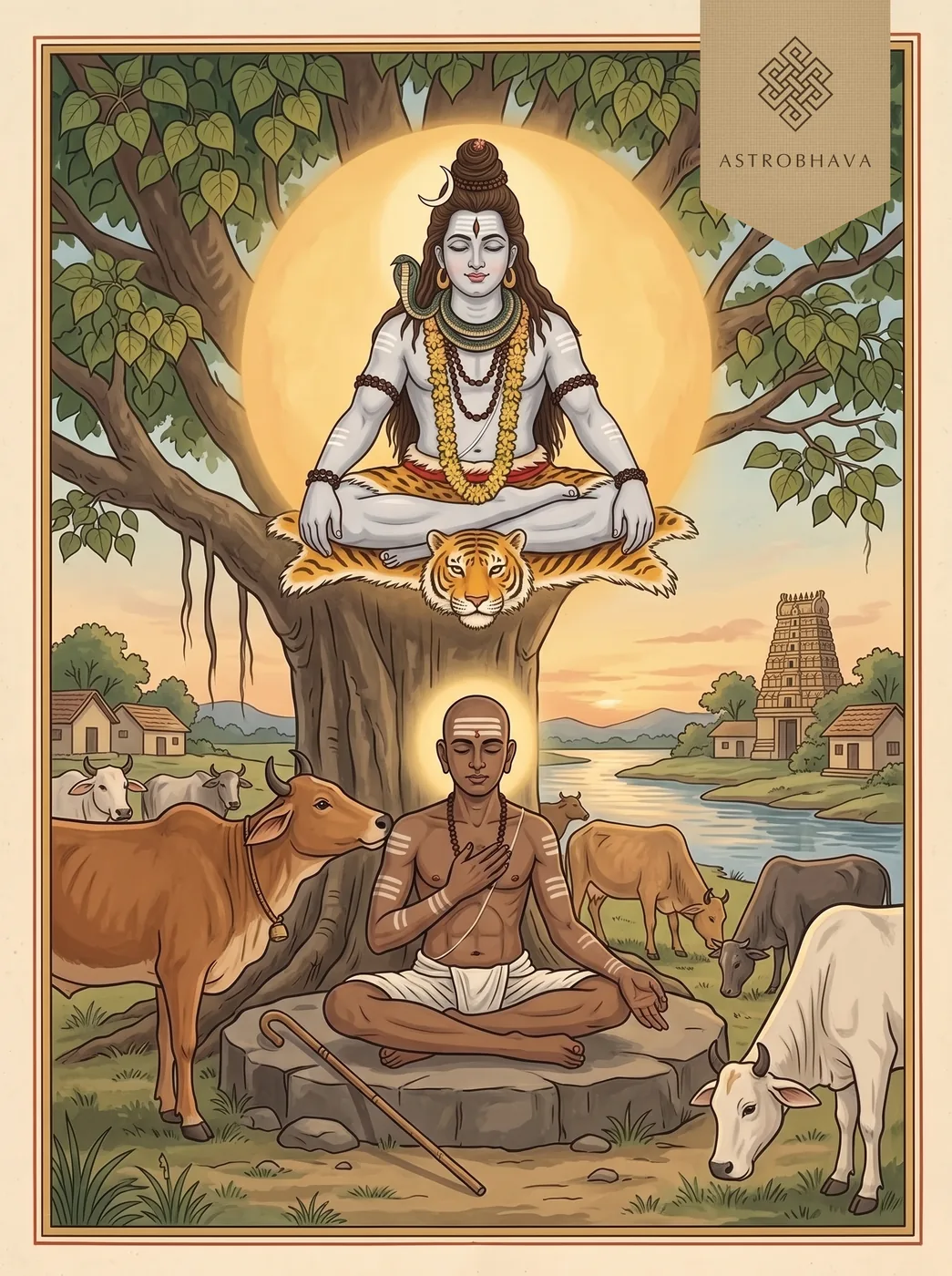
Thirumanthiram Anbe Sivam is the name devotees give to verse 270 of Tirumular's Thirumanthiram, whose lines declare that love itself is Shiva, and to the ten-verse chapter it opens. That chapter, Anbudaimai or 'Possessing Love', stands in the First Tantra of a work of more than three thousand Tamil verses in nine Tantras, counted as the Tenth Tirumurai of the Tamil Shaiva canon. Its four-line verses form a planned sequence. Verse 270 names the error of treating love and Shiva as two. Verse 271 pictures Shiva in a tiger skin brighter than gold, with the young crescent and sacred ash, and the poet's love entwined round him. Verse 272 says that even burning one's own bones as firewood will not reach him without a melting heart. Verse 273 sorts people by what they bring: longing, tenderness or worldly burden. Verses 274 to 278 urge the reader to melt their love and lament those who never seek him, and verse 279 closes on the Lord who rests within love.
A herdsman's body and a yogi's verses
Tirumular's life is told in Sekkizhar's Periya Puranam, the Tamil account of the sixty-three Nayanars, and the Thirumanthiram adds a few details in its own verses, naming Nandi as his teacher. According to tradition, a yogi initiated by Nandi on Kailash, holder of the eight siddhis, set out south to visit his friend the sage Agastya on the Pothigai hills, worshipping at Kashi, Chidambaram and other shrines on the way. Near the Kaveri, by Tiruvavaduthurai, he found a herd of cows lowing over their dead herdsman, Mulan of Sattanur village, killed by a snake. Out of pity he hid his own body in a hollow tree trunk and entered Mulan's, drove the cows home and turned away Mulan's wife, who took him for her husband. When he went back, his own body had vanished, and he read this as Shiva's will that he teach in the herdsman's plain Tamil. Known from then on as Tirumular, he sat in yoga under a peepal tree west of the Tiruvavaduthurai temple, waking, the account says, once a year to sing one verse until three thousand were complete. A shrine to him stands in that temple's outer enclosure. His date is disputed: proposals run from before the Common Era to the early 8th century.
The opening lines, in Tamil and English
- அன்பு
- aṉpu — love
- சிவம்
- civam — Shiva
- இரண்டு
- iraṇṭu — two
- என்பர்
- eṉpar — they say
- அறிவிலார்
- aṟivilār — the unwise
- அன்பே
- aṉpē — love itself
- சிவமாவது
- civamāvatu — is Shiva
- ஆரும்
- ārum — anyone
- அறிகிலார்
- aṟikilār — do not know
- அன்பே
- aṉpē — love itself
- சிவமாவது
- civamāvatu — is Shiva
- ஆரும்
- ārum — anyone
- அறிந்தபின்
- aṟintapiṉ — once they know
- அன்பே
- aṉpē — love itself
- சிவமாய்
- civamāy — as Shiva
- அமர்ந்திருந்
- amarntirun — abiding at rest
- தாரே
- tārē — they remain
Thirumanthiram Anbe Sivam lyrics in full
The ten verses of the Anbudaimai chapter, numbered 270 to 279 in the continuous numbering of the First Tantra.
All 40 lines, in Tamil and English, each with its meaning. Choose a script:
Download the Thirumanthiram Anbe Sivam PDFAll 40 lines with their meanings, in Tamil. Free to print and keep.
அன்பு சிவம் இரண்டு என்பர் அறிவிலார்
அன்பே சிவமாவது ஆரும் அறிகிலார்
அன்பே சிவமாவது ஆரும் அறிந்தபின்
அன்பே சிவமாய் அமர்ந்திருந் தாரே
aṉpu civam iraṇṭu eṉpar aṟivilār
aṉpē civamāvatu ārum aṟikilār
aṉpē civamāvatu ārum aṟintapiṉ
aṉpē civamāy amarntirun tārē
The unwise say that love and Shiva are two different things. No one knows that love itself is Shiva. Once a person knows that love itself is Shiva, they abide at rest as that love which is Shiva.
பொன்னைக் கடந்திலங் கும்புலித் தோலினன்
மின்னிக் கிடந்து மிளிரும் இளம்பிறை
துன்னிக் கிடந்த சுடுபொடி யாடிக்குப்
பின்னிக் கிடந்ததென் பேரன்பு தானே
poṉṉaik kaṭantilaṅ kumpulit tōliṉaṉ
miṉṉik kiṭantu miḷirum iḷampiṟai
tuṉṉik kiṭanta cuṭupoṭi yāṭikkup
piṉṉik kiṭantateṉ pēraṉpu tāṉē
He wears a tiger skin that shines brighter than gold, a young crescent moon gleams on Him, and He is bathed in sacred ash. My great love lies entwined with Him alone.
என்பே விறகா இறைச்சி அறுத்திட்டுப்
பொன்போற் கனலிற் பெரிய வறுப்பினும்
அன்போடு உருகி அகங்குழை வார்க்கன்றி
என்போல் மணியினை எய்தஒண் ணாதே
eṉpē viṟakā iṟaicci aṟuttiṭṭup
poṉpōṟ kaṉaliṟ periya vaṟuppiṉum
aṉpōṭu uruki akaṅkuḻai vārkkaṉṟi
eṉpōl maṇiyiṉai eytaoṇ ṇātē
Even if one used one's own bones as firewood, cut one's flesh and roasted it in a fire glowing like gold, the jewel that is the Lord cannot be reached. He is reached only by those who melt with love and whose hearts grow soft.
ஆர்வம் உடையவர் காண்பார் அரன்தன்னை
ஈரம் உடையவர் காண்பார் இணையடி
பாரம் உடையவர் காண்பார் பவந்தன்னைக்
கோர நெறிகொடு கொங்குபுக் காரே
ārvam uṭaiyavar kāṇpār araṉtaṉṉai
īram uṭaiyavar kāṇpār iṇaiyaṭi
pāram uṭaiyavar kāṇpār pavantaṉṉaik
kōra neṟikoṭu koṅkupuk kārē
Those with longing see Hara (Shiva) Himself; those with tender hearts see His two feet. Those who carry only the burden of worldly cares see nothing but rebirth, like travellers who take a harsh road into the hard Kongu country.
என்னன் புருக்கி இறைவனை ஏத்துமின்
முன்அன் புருக்கி முதல்வனை நாடுமின்
பின்அன் புருக்கிப் பெருந்தகை நந்தியும்
தன்அன் பெனக்கே தலைநின்ற வாறே
eṉṉaṉ purukki iṟaivaṉai ēttumiṉ
muṉaṉ purukki mutalvaṉai nāṭumiṉ
piṉaṉ purukkip peruntakai nantiyum
taṉaṉ peṉakkē talainiṉṟa vāṟē
Melt your love as I have melted mine, and praise the Lord; melt your love first, and seek the First One. Then, as love melted, the great and gracious Nandi (Shiva) made His own love stand foremost for me.
தானொரு காலம் சயம்பு என் றேத்தினும்
வானொரு காலம் வழித்துணை யாய்நிற்கும்
தேனொரு பால்திகழ் கொன்றை அணிசிவன்
தானொரு வண்ணம்என் அன்பில்நின் றானே
tāṉoru kālam cayampu eṉ ṟēttiṉum
vāṉoru kālam vaḻittuṇai yāyniṟkum
tēṉoru pāltikaḻ koṉṟai aṇicivaṉ
tāṉoru vaṇṇameṉ aṉpilniṉ ṟāṉē
Even if one praises Him only once as the Self-born, He will one day stand as a companion on the path to heaven. Shiva, who wears the honey-filled konrai (cassia) blossom, has stayed in my love in one unchanging form.
முன்படைத்து இன்பம் படைத்த முதலிடை
அன்புஅடைத்து எம்பெரு மானை அறிகிலார்
வன்படைத்து இந்த அகலிடம் வாழ்வினில்
அன்புஅடைத் தான்தன் அகலிடத் தானே
muṉpaṭaittu iṉpam paṭaitta mutaliṭai
aṉpuaṭaittu emperu māṉai aṟikilār
vaṉpaṭaittu inta akaliṭam vāḻviṉil
aṉpuaṭait tāṉtaṉ akaliṭat tāṉē
The First One created love first and bliss after it, yet people do not come to know our Lord through love. He who dwells in His own vast realm has placed love within this wide world's life, which is so full of hardship.
கருத்துறு செம்பொன்செய் காய்கதிர்ச் சோதி
இருத்தியும் வைத்தும் இறைவன் என்று ஏத்தியும்
அருத்தியுள் ஈசனை யாரருள் வேண்டில்
விருத்தி கொடுத்திடும் விண்ணவர் கோனே
karuttuṟu cempoṉcey kāykatirc cōti
iruttiyum vaittum iṟaivaṉ eṉṟu ēttiyum
aruttiyuḷ īcaṉai yāraruḷ vēṇṭil
virutti koṭuttiṭum viṇṇavar kōṉē
He is the radiant light, like glowing red gold, that dwells in the mind. If one holds Him within, worships Him outwardly, praises Him as Lord, and with love asks Isha for His rare grace, the verse says the King of the gods grants a flourishing life.
நித்தலும் துஞ்சும் பிறப்பையும் செய்தவன்
வைத்த பரிசு அறிந் தேயும் மனிதர்கள்
இச்சையு ளேவைப்பர் எந்தை பிரானென்று
நச்சியே அண்ணலை நாடுகி லாரே
nittalum tuñcum piṟappaiyum ceytavaṉ
vaitta paricu aṟin tēyum maṉitarkaḷ
iccaiyu ḷēvaippar entai pirāṉeṉṟu
nacciyē aṇṇalai nāṭuki lārē
He made the daily sleep and waking of every being, and people know the order He has set; even so they keep their hearts fixed on desire. They do not long for the Lord and seek Him, calling Him 'our Father and Master'.
அன்பினுள் ளான்புறத் தானுட லாயுளான்
முன்பின்உள் ளான்முனி வர்க்கும் பிரானவன்
அன்பினுள் ளாகி அமரும் அரும்பொருள்
அன்பினுள் ளார்க்கே அணைதுணை யாமே
aṉpiṉuḷ ḷāṉpuṟat tāṉuṭa lāyuḷāṉ
muṉpiṉuḷ ḷāṉmuṉi varkkum pirāṉavaṉ
aṉpiṉuḷ ḷāki amarum arumporuḷ
aṉpiṉuḷ ḷārkkē aṇaituṇai yāmē
He is within love and outside it, and He dwells in the body as its life; He was before all things and remains after, and He is Lord even of the sages. That rare Reality, who rests within love, becomes a close companion only to those who live in love.
The syllable people get wrong
In சிவம் (civam), the letter c stands for Tamil ச, which at the start of a word is said as a plain 's': say 'si-vam', not 'Shivam' or 'Chivam'. The same goes for சிவமாவது (civamāvatu), said 'si-va-maa-va-thu'.
When the Thirumanthiram Anbe Sivam is chanted
Weekday. Monday
Questions
Have your chart read before you decide
Chanting is yours to do, and free. But which deity your situation calls for — and whether a mantra alone is the right response — depends on your chart. Sometimes it is; sometimes it is not.
- Over 30 years in the Guru–Sishya Parampara, from the age of five
- He reads every chart himself — 60 minutes, one to one, never delegated
- Charts are read only between sunrise and sunset, following tradition
