Vedasara Shiva Stotram
पशूनां पतिं पापनाशं परेशं गजेन्द्रस्य कृत्तिं वसानं वरेण्यम् । जटाजूटमध्ये स्फुरद्गाङ्गवारिं महादेवमेकं स्मरामि स्मरारिम् ॥Also known as Pashunam Patim
In Devanagari, Tamil, Telugu, Kannada, Malayalam and English — with the meaning of every word, and the one syllable most people pronounce wrongly.
 The Rudra Homam, performed for youBook →
What the Vedasara Shiva Stotram is
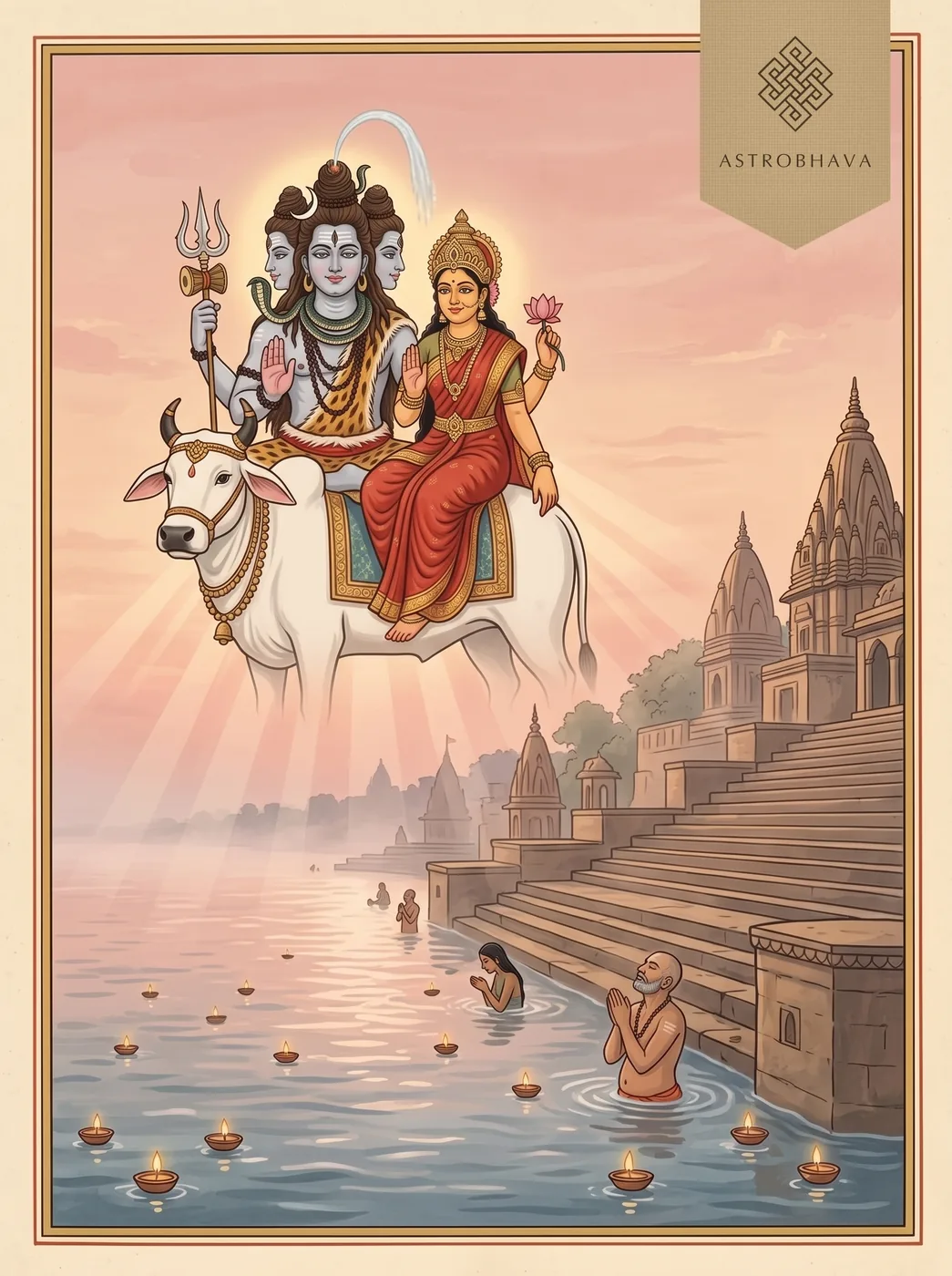
The Vedasara Shiva Stotram, also printed as the Vedasara Shiva Stava, is an eleven-verse Sanskrit hymn to Shiva that the colophon of the printed text ascribes to Adi Shankaracharya. Its title means 'the essence of the Veda', for its verses set Upanishadic teaching inside praise. Verses 1 to 3 picture the god: lord of all beings, clothed in an elephant's hide, the Ganga sparkling in his matted hair, three eyes of moon, sun and fire, five faces, a blue throat, Bhavani as consort. Verse 4 turns to direct address and the plea prasida, be gracious. Verses 5 to 7 move to the formless: the world's first seed, known through Om, untouched by the five elements, the fourth beyond darkness. Verses 8 and 9 are salutations and names. Verses 10 and 11 leave the bhujangaprayata metre for the longer vasantatilaka and close on Shiva as lord of Kashi and as the Linga in which the world dissolves. No verse on the fruit of reading is attached.
Upanishad teaching set in a hymn's metre
No Purana and no life of Shankara records an occasion for this hymn, and it carries no legend of its own. The attribution rests on its closing colophon, as with many short stotras gathered under his name, and an early twentieth-century printed collection of his hymns includes it. What the text does carry is the claim in its title, and that claim can be traced verse by verse. Verse 5 says the universe is born from him, sustained by him and dissolved in him, the same three-part definition of Brahman that the Taittiriya Upanishad gives in its third chapter, where Bhrigu is taught to seek that from which beings arise, by which they live and into which they return. Verse 7 calls Shiva turiya, the fourth, without duality; the Mandukya Upanishad describes the fourth state, lying past waking, dreaming and deep sleep, as tranquil, shivam or benign, and advaita, without a second. Verse 6 removes earth, water, fire, wind and space one by one before praising the one who still takes three forms. Older Vedic layers sit underneath as well: Pashupati, the opening title, was an epithet of Rudra in the Samhitas and Brahmanas. Verse 8 then names two roads to him, austerity and yoga on one side and knowledge of the Shruti on the other, and the hymn keeps both in view.
The mantra, in six scripts
- पशूनां
- paśūnāṃ — of beings
- पतिं
- patiṃ — lord
- पापनाशं
- pāpanāśaṃ — destroyer of sin
- परेशं
- pareśaṃ — supreme ruler
- गजेन्द्रस्य
- gajendrasya — of the king of elephants
- कृत्तिं
- kṛttiṃ — hide
- वसानं
- vasānaṃ — wearing
- वरेण्यम्
- vareṇyam — worthiest
- जटाजूटमध्ये
- jaṭājūṭamadhye — in the midst of the matted locks
- स्फुरद्गाङ्गवारिं
- sphuradgāṅgavāriṃ — with Ganga's water sparkling
- महादेवमेकं
- mahādevamekaṃ — Mahadeva, the one
- स्मरामि
- smarāmi — I remember
- स्मरारिम्
- smarārim — the foe of Kama
Vedasara Shiva Stotram lyrics in full
All eleven verses: nine in bhujangaprayata and two closing verses in vasantatilaka.
All 12 verses, in Sanskrit, Tamil, Telugu, Kannada, Malayalam and English, each with its meaning. Choose a script:
Download the Vedasara Shiva Stotram PDFAll 12 verses with their meanings, in Sanskrit. Free to print and keep.
पशूनां पतिं पापनाशं परेशं गजेन्द्रस्य कृत्तिं वसानं वरेण्यम् ।
जटाजूटमध्ये स्फुरद्गाङ्गवारिं महादेवमेकं स्मरामि स्मरारिम् ॥
பஶூநாம் பதிம் பாபநாஶம் பரேஶம் கஜேந்த்ரஸ்ய க்ருத்திம் வஸாநம் வரேண்யம் ।
ஜடாஜூடமத்யே ஸ்புரத்காங்கவாரிம் மஹாதேவமேகம் ஸ்மராமி ஸ்மராரிம் ॥
పశూనాం పతిం పాపనాశం పరేశం గజేన్ద్రస్య కృత్తిం వసానం వరేణ్యమ్ ।
జటాజూటమధ్యే స్ఫురద్గాఙ్గవారిం మహాదేవమేకం స్మరామి స్మరారిమ్ ॥
ಪಶೂನಾಂ ಪತಿಂ ಪಾಪನಾಶಂ ಪರೇಶಂ ಗಜೇನ್ದ್ರಸ್ಯ ಕೃತ್ತಿಂ ವಸಾನಂ ವರೇಣ್ಯಮ್ ।
ಜಟಾಜೂಟಮಧ್ಯೇ ಸ್ಫುರದ್ಗಾಙ್ಗವಾರಿಂ ಮಹಾದೇವಮೇಕಂ ಸ್ಮರಾಮಿ ಸ್ಮರಾರಿಮ್ ॥
പശൂനാം പതിം പാപനാശം പരേശം ഗജേന്ദ്രസ്യ കൃത്തിം വസാനം വരേണ്യമ് ।
ജടാജൂടമധ്യേ സ്ഫുരദ്ഗാങ്ഗവാരിം മഹാദേവമേകം സ്മരാമി സ്മരാരിമ് ॥
paśūnāṃ patiṃ pāpanāśaṃ pareśaṃ gajendrasya kṛttiṃ vasānaṃ vareṇyam |
jaṭājūṭamadhye sphuradgāṅgavāriṃ mahādevamekaṃ smarāmi smarārim ||
I remember Mahadeva, the one Lord of all beings, the destroyer of sin, the supreme ruler, the worthiest of all, who wears the hide of the king of elephants. In the midst of his matted locks the water of the Ganga sparkles; I remember him, the foe of Kama.
महेशं सुरेशं सुरारातिनाशं विभुं विश्वनाथं विभूत्यङ्गभूषम् ।
विरूपाक्षमिन्द्वर्कवह्नित्रिनेत्रं सदानन्दमीडे प्रभुं पञ्चवक्त्रम् ॥
மஹேஶம் ஸுரேஶம் ஸுராராதிநாஶம் விபும் விஶ்வநாதம் விபூத்யங்கபூஷம் ।
விரூபாக்ஷமிந்த்வர்கவஹ்நித்ரிநேத்ரம் ஸதாநந்தமீடே ப்ரபும் பஞ்சவக்த்ரம் ॥
మహేశం సురేశం సురారాతినాశం విభుం విశ్వనాథం విభూత్యఙ్గభూషమ్ ।
విరూపాక్షమిన్ద్వర్కవహ్నిత్రినేత్రం సదానన్దమీడే ప్రభుం పఞ్చవక్త్రమ్ ॥
ಮಹೇಶಂ ಸುರೇಶಂ ಸುರಾರಾತಿನಾಶಂ ವಿಭುಂ ವಿಶ್ವನಾಥಂ ವಿಭೂತ್ಯಙ್ಗಭೂಷಮ್ ।
ವಿರೂಪಾಕ್ಷಮಿನ್ದ್ವರ್ಕವಹ್ನಿತ್ರಿನೇತ್ರಂ ಸದಾನನ್ದಮೀಡೇ ಪ್ರಭುಂ ಪಞ್ಚವಕ್ತ್ರಮ್ ॥
മഹേശം സുരേശം സുരാരാതിനാശം വിഭും വിശ്വനാഥം വിഭൂത്യങ്ഗഭൂഷമ് ।
വിരൂപാക്ഷമിന്ദ്വര്കവഹ്നിത്രിനേത്രം സദാനന്ദമീഡേ പ്രഭും പഞ്ചവക്ത്രമ് ॥
maheśaṃ sureśaṃ surārātināśaṃ vibhuṃ viśvanāthaṃ vibhūtyaṅgabhūṣam |
virūpākṣamindvarkavahnitrinetraṃ sadānandamīḍe prabhuṃ pañcavaktram ||
I praise the great Lord, the lord of the gods, who destroys the enemies of the gods, the all-pervading master of the universe whose body is adorned with sacred ash. I praise the Lord of uncommon eyes, whose three eyes are the moon, the sun and fire, the ever-blissful five-faced Lord.
गिरीशं गणेशं गले नीलवर्णं गवेन्द्राधिरूढं गुणातीतरूपम् ।
भवं भास्वरं भस्मना भूषिताङ्गं भवानीकलत्रं भजे पञ्चवक्त्रम् ॥
கிரீஶம் கணேஶம் கலே நீலவர்ணம் கவேந்த்ராதிரூடம் குணாதீதரூபம் ।
பவம் பாஸ்வரம் பஸ்மநா பூஷிதாங்கம் பவாநீகலத்ரம் பஜே பஞ்சவக்த்ரம் ॥
గిరీశం గణేశం గలే నీలవర్ణం గవేన్ద్రాధిరూఢం గుణాతీతరూపమ్ ।
భవం భాస్వరం భస్మనా భూషితాఙ్గం భవానీకలత్రం భజే పఞ్చవక్త్రమ్ ॥
ಗಿರೀಶಂ ಗಣೇಶಂ ಗಲೇ ನೀಲವರ್ಣಂ ಗವೇನ್ದ್ರಾಧಿರೂಢಂ ಗುಣಾತೀತರೂಪಮ್ ।
ಭವಂ ಭಾಸ್ವರಂ ಭಸ್ಮನಾ ಭೂಷಿತಾಙ್ಗಂ ಭವಾನೀಕಲತ್ರಂ ಭಜೇ ಪಞ್ಚವಕ್ತ್ರಮ್ ॥
ഗിരീശം ഗണേശം ഗലേ നീലവര്ണം ഗവേന്ദ്രാധിരൂഢം ഗുണാതീതരൂപമ് ।
ഭവം ഭാസ്വരം ഭസ്മനാ ഭൂഷിതാങ്ഗം ഭവാനീകലത്രം ഭജേ പഞ്ചവക്ത്രമ് ॥
girīśaṃ gaṇeśaṃ gale nīlavarṇaṃ gavendrādhirūḍhaṃ guṇātītarūpam |
bhavaṃ bhāsvaraṃ bhasmanā bhūṣitāṅgaṃ bhavānīkalatraṃ bhaje pañcavaktram ||
I worship the lord of the mountain, the lord of the ganas, blue at the throat, who rides the king of bulls and whose nature is beyond the three gunas. I worship Bhava, the radiant one whose limbs are adorned with ash, the consort of Bhavani, the five-faced Lord.
शिवाकान्त शंभो शशाङ्कार्धमौले महेशान शूलिञ्जटाजूटधारिन् ।
त्वमेको जगद्व्यापको विश्वरूपः प्रसीद प्रसीद प्रभो पूर्णरूप ॥
ஶிவாகாந்த ஶம்போ ஶஶாங்கார்தமௌலே மஹேஶாந ஶூலிஞ்ஜடாஜூடதாரிந் ।
த்வமேகோ ஜகத்வ்யாபகோ விஶ்வரூபஃ ப்ரஸீத ப்ரஸீத ப்ரபோ பூர்ணரூப ॥
శివాకాన్త శంభో శశాఙ్కార్ధమౌలే మహేశాన శూలిఞ్జటాజూటధారిన్ ।
త్వమేకో జగద్వ్యాపకో విశ్వరూపః ప్రసీద ప్రసీద ప్రభో పూర్ణరూప ॥
ಶಿವಾಕಾನ್ತ ಶಂಭೋ ಶಶಾಙ್ಕಾರ್ಧಮೌಲೇ ಮಹೇಶಾನ ಶೂಲಿಞ್ಜಟಾಜೂಟಧಾರಿನ್ ।
ತ್ವಮೇಕೋ ಜಗದ್ವ್ಯಾಪಕೋ ವಿಶ್ವರೂಪಃ ಪ್ರಸೀದ ಪ್ರಸೀದ ಪ್ರಭೋ ಪೂರ್ಣರೂಪ ॥
ശിവാകാന്ത ശംഭോ ശശാങ്കാര്ധമൌലേ മഹേശാന ശൂലിഞ്ജടാജൂടധാരിന് ।
ത്വമേകോ ജഗദ്വ്യാപകോ വിശ്വരൂപഃ പ്രസീദ പ്രസീദ പ്രഭോ പൂര്ണരൂപ ॥
śivākānta śaṃbho śaśāṅkārdhamaule maheśāna śūliñjaṭājūṭadhārin |
tvameko jagadvyāpako viśvarūpaḥ prasīda prasīda prabho pūrṇarūpa ||
O beloved of Shiva (Parvati), O Shambhu, wearing the half-moon on your crown, O great Lord, bearer of the trident and of matted locks. You alone pervade the world and take the form of the universe; be gracious, be gracious, O Lord whose form is complete.
परात्मानमेकं जगद्बीजमाद्यं निरीहं निराकारमोंकारवेद्यम् ।
यतो जायते पाल्यते येन विश्वं तमीशं भजे लीयते यत्र विश्वम् ॥
பராத்மாநமேகம் ஜகத்பீஜமாத்யம் நிரீஹம் நிராகாரமோம்காரவேத்யம் ।
யதோ ஜாயதே பால்யதே யேந விஶ்வம் தமீஶம் பஜே லீயதே யத்ர விஶ்வம் ॥
పరాత్మానమేకం జగద్బీజమాద్యం నిరీహం నిరాకారమోంకారవేద్యమ్ ।
యతో జాయతే పాల్యతే యేన విశ్వం తమీశం భజే లీయతే యత్ర విశ్వమ్ ॥
ಪರಾತ್ಮಾನಮೇಕಂ ಜಗದ್ಬೀಜಮಾದ್ಯಂ ನಿರೀಹಂ ನಿರಾಕಾರಮೋಂಕಾರವೇದ್ಯಮ್ ।
ಯತೋ ಜಾಯತೇ ಪಾಲ್ಯತೇ ಯೇನ ವಿಶ್ವಂ ತಮೀಶಂ ಭಜೇ ಲೀಯತೇ ಯತ್ರ ವಿಶ್ವಮ್ ॥
പരാത്മാനമേകം ജഗദ്ബീജമാദ്യം നിരീഹം നിരാകാരമോംകാരവേദ്യമ് ।
യതോ ജായതേ പാല്യതേ യേന വിശ്വം തമീശം ഭജേ ലീയതേ യത്ര വിശ്വമ് ॥
parātmānamekaṃ jagadbījamādyaṃ nirīhaṃ nirākāramoṃkāravedyam |
yato jāyate pālyate yena viśvaṃ tamīśaṃ bhaje līyate yatra viśvam ||
He is the one supreme Self, the first seed of the world, free of desire, without form, known through Om. I worship that Lord from whom the universe is born, by whom it is sustained, and into whom it dissolves.
न भूमिर्न चापो न वह्निर्न वायुर्न चाकाशमास्ते न तन्द्रा न निद्रा ।
न चोष्णं न शीतं न देशो न वेषो न यस्यास्ति मूर्तिस्त्रिमूर्तिं तमीडे ॥
ந பூமிர்ந சாபோ ந வஹ்நிர்ந வாயுர்ந சாகாஶமாஸ்தே ந தந்த்ரா ந நித்ரா ।
ந சோஷ்ணம் ந ஶீதம் ந தேஶோ ந வேஷோ ந யஸ்யாஸ்தி மூர்திஸ்த்ரிமூர்திம் தமீடே ॥
న భూమిర్న చాపో న వహ్నిర్న వాయుర్న చాకాశమాస్తే న తన్ద్రా న నిద్రా ।
న చోష్ణం న శీతం న దేశో న వేషో న యస్యాస్తి మూర్తిస్త్రిమూర్తిం తమీడే ॥
ನ ಭೂಮಿರ್ನ ಚಾಪೋ ನ ವಹ್ನಿರ್ನ ವಾಯುರ್ನ ಚಾಕಾಶಮಾಸ್ತೇ ನ ತನ್ದ್ರಾ ನ ನಿದ್ರಾ ।
ನ ಚೋಷ್ಣಂ ನ ಶೀತಂ ನ ದೇಶೋ ನ ವೇಷೋ ನ ಯಸ್ಯಾಸ್ತಿ ಮೂರ್ತಿಸ್ತ್ರಿಮೂರ್ತಿಂ ತಮೀಡೇ ॥
ന ഭൂമിര്ന ചാപോ ന വഹ്നിര്ന വായുര്ന ചാകാശമാസ്തേ ന തന്ദ്രാ ന നിദ്രാ ।
ന ചോഷ്ണം ന ശീതം ന ദേശോ ന വേഷോ ന യസ്യാസ്തി മൂര്തിസ്ത്രിമൂര്തിം തമീഡേ ॥
na bhūmirna cāpo na vahnirna vāyurna cākāśamāste na tandrā na nidrā |
na coṣṇaṃ na śītaṃ na deśo na veṣo na yasyāsti mūrtistrimūrtiṃ tamīḍe ||
He is not earth, nor water, nor fire, nor wind, nor space; in him there is no drowsiness and no sleep. He has neither heat nor cold, no place and no guise, and no form at all; I praise him who yet takes the three forms.
अजं शाश्वतं कारणं कारणानां शिवं केवलं भासकं भासकानाम् ।
तुरीयं तमःपारमाद्यन्तहीनं प्रपद्ये परं पावनं द्वैतहीनम् ॥
அஜம் ஶாஶ்வதம் காரணம் காரணாநாம் ஶிவம் கேவலம் பாஸகம் பாஸகாநாம் ।
துரீயம் தமஃபாரமாத்யந்தஹீநம் ப்ரபத்யே பரம் பாவநம் த்வைதஹீநம் ॥
అజం శాశ్వతం కారణం కారణానాం శివం కేవలం భాసకం భాసకానామ్ ।
తురీయం తమఃపారమాద్యన్తహీనం ప్రపద్యే పరం పావనం ద్వైతహీనమ్ ॥
ಅಜಂ ಶಾಶ್ವತಂ ಕಾರಣಂ ಕಾರಣಾನಾಂ ಶಿವಂ ಕೇವಲಂ ಭಾಸಕಂ ಭಾಸಕಾನಾಮ್ ।
ತುರೀಯಂ ತಮಃಪಾರಮಾದ್ಯನ್ತಹೀನಂ ಪ್ರಪದ್ಯೇ ಪರಂ ಪಾವನಂ ದ್ವೈತಹೀನಮ್ ॥
അജം ശാശ്വതം കാരണം കാരണാനാം ശിവം കേവലം ഭാസകം ഭാസകാനാമ് ।
തുരീയം തമഃപാരമാദ്യന്തഹീനം പ്രപദ്യേ പരം പാവനം ദ്വൈതഹീനമ് ॥
ajaṃ śāśvataṃ kāraṇaṃ kāraṇānāṃ śivaṃ kevalaṃ bhāsakaṃ bhāsakānām |
turīyaṃ tamaḥpāramādyantahīnaṃ prapadye paraṃ pāvanaṃ dvaitahīnam ||
He is unborn and eternal, the cause of all causes, auspicious and absolute, the light that lights all other lights. I take refuge in the Supreme, the fourth state beyond darkness, without beginning or end, the purifier, free of all duality.
नमस्ते नमस्ते विभो विश्वमूर्ते नमस्ते नमस्ते चिदानन्दमूर्ते ।
नमस्ते नमस्ते तपोयोगगम्य नमस्ते नमस्ते श्रुतिज्ञानगम्य ॥
நமஸ்தே நமஸ்தே விபோ விஶ்வமூர்தே நமஸ்தே நமஸ்தே சிதாநந்தமூர்தே ।
நமஸ்தே நமஸ்தே தபோயோககம்ய நமஸ்தே நமஸ்தே ஶ்ருதிஜ்ஞாநகம்ய ॥
నమస్తే నమస్తే విభో విశ్వమూర్తే నమస్తే నమస్తే చిదానన్దమూర్తే ।
నమస్తే నమస్తే తపోయోగగమ్య నమస్తే నమస్తే శ్రుతిజ్ఞానగమ్య ॥
ನಮಸ್ತೇ ನಮಸ್ತೇ ವಿಭೋ ವಿಶ್ವಮೂರ್ತೇ ನಮಸ್ತೇ ನಮಸ್ತೇ ಚಿದಾನನ್ದಮೂರ್ತೇ ।
ನಮಸ್ತೇ ನಮಸ್ತೇ ತಪೋಯೋಗಗಮ್ಯ ನಮಸ್ತೇ ನಮಸ್ತೇ ಶ್ರುತಿಜ್ಞಾನಗಮ್ಯ ॥
നമസ്തേ നമസ്തേ വിഭോ വിശ്വമൂര്തേ നമസ്തേ നമസ്തേ ചിദാനന്ദമൂര്തേ ।
നമസ്തേ നമസ്തേ തപോയോഗഗമ്യ നമസ്തേ നമസ്തേ ശ്രുതിജ്ഞാനഗമ്യ ॥
namaste namaste vibho viśvamūrte namaste namaste cidānandamūrte |
namaste namaste tapoyogagamya namaste namaste śrutijñānagamya ||
Salutations, salutations to you, O all-pervading one whose form is the universe; salutations, salutations to you whose form is consciousness and bliss. Salutations, salutations to you who are reached through austerity and yoga; salutations, salutations to you who are reached through the knowledge of the Vedas.
प्रभो शूलपाणे विभो विश्वनाथ महादेव शंभो महेश त्रिनेत्र ।
शिवाकान्त शान्त स्मरारे पुरारे त्वदन्यो वरेण्यो न मान्यो न गण्यः ॥
ப்ரபோ ஶூலபாணே விபோ விஶ்வநாத மஹாதேவ ஶம்போ மஹேஶ த்ரிநேத்ர ।
ஶிவாகாந்த ஶாந்த ஸ்மராரே புராரே த்வதந்யோ வரேண்யோ ந மாந்யோ ந கண்யஃ ॥
ప్రభో శూలపాణే విభో విశ్వనాథ మహాదేవ శంభో మహేశ త్రినేత్ర ।
శివాకాన్త శాన్త స్మరారే పురారే త్వదన్యో వరేణ్యో న మాన్యో న గణ్యః ॥
ಪ್ರಭೋ ಶೂಲಪಾಣೇ ವಿಭೋ ವಿಶ್ವನಾಥ ಮಹಾದೇವ ಶಂಭೋ ಮಹೇಶ ತ್ರಿನೇತ್ರ ।
ಶಿವಾಕಾನ್ತ ಶಾನ್ತ ಸ್ಮರಾರೇ ಪುರಾರೇ ತ್ವದನ್ಯೋ ವರೇಣ್ಯೋ ನ ಮಾನ್ಯೋ ನ ಗಣ್ಯಃ ॥
പ്രഭോ ശൂലപാണേ വിഭോ വിശ്വനാഥ മഹാദേവ ശംഭോ മഹേശ ത്രിനേത്ര ।
ശിവാകാന്ത ശാന്ത സ്മരാരേ പുരാരേ ത്വദന്യോ വരേണ്യോ ന മാന്യോ ന ഗണ്യഃ ॥
prabho śūlapāṇe vibho viśvanātha mahādeva śaṃbho maheśa trinetra |
śivākānta śānta smarāre purāre tvadanyo vareṇyo na mānyo na gaṇyaḥ ||
O Lord with the trident in hand, O all-pervading master of the universe, O Mahadeva, Shambhu, great Lord, three-eyed one. O beloved of Shiva (Parvati), O peaceful one, foe of Kama, foe of the three cities: there is none other than you who is worthy to be chosen, honoured or counted.
शंभो महेश करुणामय शूलपाणे गौरीपते पशुपते पशुपाशनाशिन् ।
काशीपते करुणया जगदेतदेकस्त्वं हंसि पासि विदधासि महेश्वरोऽसि ॥
ஶம்போ மஹேஶ கருணாமய ஶூலபாணே கௌரீபதே பஶுபதே பஶுபாஶநாஶிந் ।
காஶீபதே கருணயா ஜகதேததேகஸ்த்வம் ஹம்ஸி பாஸி விததாஸி மஹேஶ்வரோஸி ॥
శంభో మహేశ కరుణామయ శూలపాణే గౌరీపతే పశుపతే పశుపాశనాశిన్ ।
కాశీపతే కరుణయా జగదేతదేకస్త్వం హంసి పాసి విదధాసి మహేశ్వరోఽసి ॥
ಶಂಭೋ ಮಹೇಶ ಕರುಣಾಮಯ ಶೂಲಪಾಣೇ ಗೌರೀಪತೇ ಪಶುಪತೇ ಪಶುಪಾಶನಾಶಿನ್ ।
ಕಾಶೀಪತೇ ಕರುಣಯಾ ಜಗದೇತದೇಕಸ್ತ್ವಂ ಹಂಸಿ ಪಾಸಿ ವಿದಧಾಸಿ ಮಹೇಶ್ವರೋಽಸಿ ॥
ശംഭോ മഹേശ കരുണാമയ ശൂലപാണേ ഗൌരീപതേ പശുപതേ പശുപാശനാശിന് ।
കാശീപതേ കരുണയാ ജഗദേതദേകസ്ത്വം ഹംസി പാസി വിദധാസി മഹേശ്വരോഽസി ॥
śaṃbho maheśa karuṇāmaya śūlapāṇe gaurīpate paśupate paśupāśanāśin |
kāśīpate karuṇayā jagadetadekastvaṃ haṃsi pāsi vidadhāsi maheśvaro'si ||
O Shambhu, great Lord, full of compassion, holder of the trident, husband of Gauri, lord of beings, who destroys the bonds that tie them. O lord of Kashi, you alone, out of compassion, withdraw this world, protect it and bring it forth; you are the Supreme Lord.
त्वत्तो जगद्भवति देव भव स्मरारे त्वय्येव तिष्ठति जगन्मृड विश्वनाथ ।
त्वय्येव गच्छति लयं जगदेतदीश लिङ्गात्मके हर चराचरविश्वरूपिन् ॥
த்வத்தோ ஜகத்பவதி தேவ பவ ஸ்மராரே த்வய்யேவ திஷ்டதி ஜகந்ம்ருட விஶ்வநாத ।
த்வய்யேவ கச்சதி லயம் ஜகதேததீஶ லிங்காத்மகே ஹர சராசரவிஶ்வரூபிந் ॥
త్వత్తో జగద్భవతి దేవ భవ స్మరారే త్వయ్యేవ తిష్ఠతి జగన్మృడ విశ్వనాథ ।
త్వయ్యేవ గచ్ఛతి లయం జగదేతదీశ లిఙ్గాత్మకే హర చరాచరవిశ్వరూపిన్ ॥
ತ್ವತ್ತೋ ಜಗದ್ಭವತಿ ದೇವ ಭವ ಸ್ಮರಾರೇ ತ್ವಯ್ಯೇವ ತಿಷ್ಠತಿ ಜಗನ್ಮೃಡ ವಿಶ್ವನಾಥ ।
ತ್ವಯ್ಯೇವ ಗಚ್ಛತಿ ಲಯಂ ಜಗದೇತದೀಶ ಲಿಙ್ಗಾತ್ಮಕೇ ಹರ ಚರಾಚರವಿಶ್ವರೂಪಿನ್ ॥
ത്വത്തോ ജഗദ്ഭവതി ദേവ ഭവ സ്മരാരേ ത്വയ്യേവ തിഷ്ഠതി ജഗന്മൃഡ വിശ്വനാഥ ।
ത്വയ്യേവ ഗച്ഛതി ലയം ജഗദേതദീശ ലിങ്ഗാത്മകേ ഹര ചരാചരവിശ്വരൂപിന് ॥
tvatto jagadbhavati deva bhava smarāre tvayyeva tiṣṭhati jaganmṛḍa viśvanātha |
tvayyeva gacchati layaṃ jagadetadīśa liṅgātmake hara carācaraviśvarūpin ||
From you the world comes into being, O god Bhava, foe of Kama; in you alone the world abides, O gracious Mrida, master of the universe. In you alone, O Lord, this world goes to its dissolution, in you whose nature is the Linga, O Hara, whose form is the whole universe of moving and unmoving things.
इति श्रीमत्परमहंसपरिव्राजकाचार्यस्य श्रीगोविन्दभगवत्पूज्यपादशिष्यस्य श्रीमच्छंकरभगवतः कृतौ वेदसारशिवस्तोत्रं सम्पूर्णम् ॥
இதி ஶ்ரீமத்பரமஹம்ஸபரிவ்ராஜகாசார்யஸ்ய ஶ்ரீகோவிந்தபகவத்பூஜ்யபாதஶிஷ்யஸ்ய ஶ்ரீமச்சம்கரபகவதஃ க்ருதௌ வேதஸாரஶிவஸ்தோத்ரம் ஸம்பூர்ணம் ॥
ఇతి శ్రీమత్పరమహంసపరివ్రాజకాచార్యస్య శ్రీగోవిన్దభగవత్పూజ్యపాదశిష్యస్య శ్రీమచ్ఛంకరభగవతః కృతౌ వేదసారశివస్తోత్రం సమ్పూర్ణమ్ ॥
ಇತಿ ಶ್ರೀಮತ್ಪರಮಹಂಸಪರಿವ್ರಾಜಕಾಚಾರ್ಯಸ್ಯ ಶ್ರೀಗೋವಿನ್ದಭಗವತ್ಪೂಜ್ಯಪಾದಶಿಷ್ಯಸ್ಯ ಶ್ರೀಮಚ್ಛಂಕರಭಗವತಃ ಕೃತೌ ವೇದಸಾರಶಿವಸ್ತೋತ್ರಂ ಸಮ್ಪೂರ್ಣಮ್ ॥
ഇതി ശ്രീമത്പരമഹംസപരിവ്രാജകാചാര്യസ്യ ശ്രീഗോവിന്ദഭഗവത്പൂജ്യപാദശിഷ്യസ്യ ശ്രീമച്ഛംകരഭഗവതഃ കൃതൌ വേദസാരശിവസ്തോത്രം സമ്പൂര്ണമ് ॥
iti śrīmatparamahaṃsaparivrājakācāryasya śrīgovindabhagavatpūjyapādaśiṣyasya śrīmacchaṃkarabhagavataḥ kṛtau vedasāraśivastotraṃ sampūrṇam ||
Thus ends the Vedasara Shiva Stotram, a work of the revered Shri Shankara, the teacher among wandering monks of the highest order and disciple of the revered Shri Govinda Bhagavatpada.
The syllable people get wrong
The first verse ends smarāmi smarārim (स्मरामि स्मरारिम्), 'I remember the foe of Smara'; the second word is smara + ari, so its middle ā is long: sma-RAA-rim, not 'smarim' or a repeat of smarāmi. The pun only works when the two words are kept distinct.
When the Vedasara Shiva Stotram is chanted
Weekday. Monday
Questions
Have your chart read before you decide
Chanting is yours to do, and free. But which deity your situation calls for — and whether a mantra alone is the right response — depends on your chart. Sometimes it is; sometimes it is not.
- Over 30 years in the Guru–Sishya Parampara, from the age of five
- He reads every chart himself — 60 minutes, one to one, never delegated
- Charts are read only between sunrise and sunset, following tradition
