Veerabhadra Mantra
ॐ वीरभद्राय नमः ।Also known as Om Veerabhadraya Namah
In Devanagari, Tamil, Telugu, Kannada, Malayalam and English — with the meaning of every word, and the one syllable most people pronounce wrongly.
 The Rudra Homam, performed for youBook →
What the Veerabhadra Mantra is
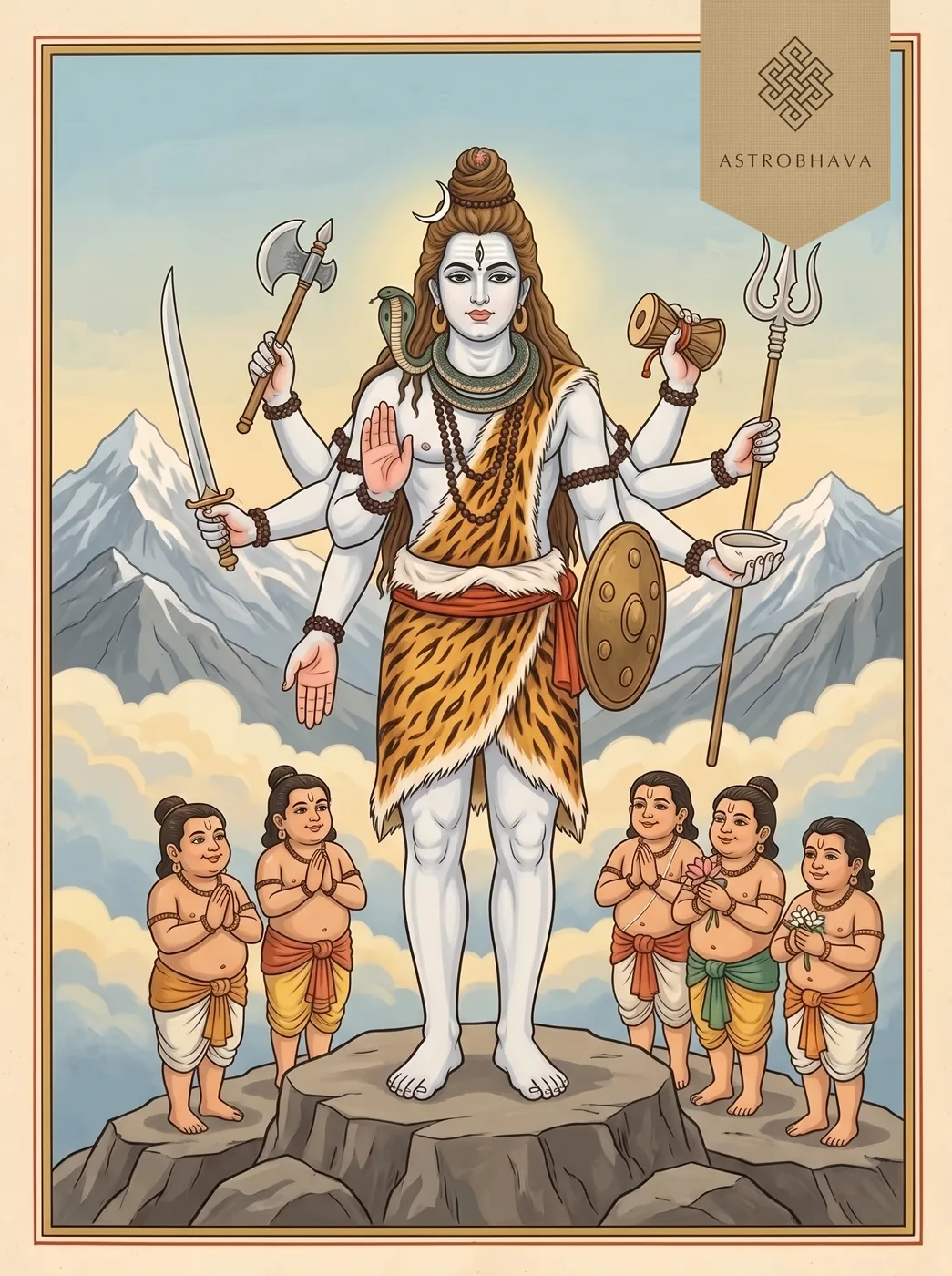
The Veerabhadra mantra, as this page prints it, is three short texts to Veerabhadra, the hero Shiva sent out to undo Daksha's sacrifice. First is the name mantra Om Veerabhadraya namah. It is the opening name of a 108-name list of Veerabhadra that its printing assigns to the Vayu Purana, and the same salutation is name 55 among Shiva's own 108 names. Two dhyanas follow, both in the long sragdhara metre of twenty-one syllables to a quarter. Gokshirabham pictures him white as cow's milk, his hands holding the axe, damaru, sword, shield, skull cup and trident and showing the fear-removing and boon-giving gestures, three-eyed, clad in tiger skin, riding a vetala among his own ganas. Ritual manuals print it as the meditation of the Veerabhadra mantra-prayoga, and the Aghora Veerabhadra temple at Therkilandaikulam in Tirunelveli district uses it in daily worship. Raudram rudravataram, which opens the Veerabhadra Sahasranama, shows the same god dark, fire-eyed, hair on end and wrapped in flame. No author is named for any of the three.
The lock of hair struck on the mountain
The Shiva Purana gives the episode at length in the Sati Khanda of its Rudra Samhita. Daksha held a great sacrifice and left out Shiva, though Shiva was married to his daughter. Sati went to the rite all the same, found no honour there, rebuked her father and gave up her body in a fire she kindled by yoga. When the routed ganas brought the news, Shiva plucked a cluster of his matted hair and dashed it on the mountain top. From one half rose Veerabhadra, from the other Mahakali with a vast host of goblins. Shiva ordered Veerabhadra to wreck the sacrifice with all its parts and come back quickly. At the site the ganas fought Indra and the guardians of the quarters, Manibhadra tore away the sage Bhrigu's moustache, and Daksha, found crouching behind the altar, was beheaded and his head flung into the fire-pit. Shiva then made Veerabhadra chief of his ganas. Other texts tell the birth differently: the Mahabharata has Mahadeva create him from his mouth, and the Padma Purana from a drop of Shiva's sweat. The story is still danced as Veeragase in Karnataka, where the narration ends with Daksha restored to life with a goat's head.
The mantra, in six scripts
- ॐ
- oṃ — Om, the sacred syllable
- वीरभद्राय
- vīrabhadrāya — to Veerabhadra, the auspicious hero
- नमः
- namaḥ — salutation
Veerabhadra Mantra lyrics in full
The name mantra, followed by two meditation verses: the milk-white form, then the dark form that opens the Sahasranama.
All 3 verses, in Sanskrit, Tamil, Telugu, Kannada, Malayalam and English, each with its meaning. Choose a script:
Download the Veerabhadra Mantra PDFAll 3 verses with their meanings, in Sanskrit. Free to print and keep.
ॐ वीरभद्राय नमः ।
ௐ வீரபத்ராய நமஃ ।
ఓం వీరభద్రాయ నమః ।
ಓಂ ವೀರಭದ್ರಾಯ ನಮಃ ।
ഓം വീരഭദ്രായ നമഃ ।
oṃ vīrabhadrāya namaḥ |
Om, salutation to Veerabhadra.
गोक्षीराभं दधानं परशुडमरुकौ खड्गखेटौ कपालं शूलं चाभीतिदाने त्रिनयनलसितं व्याघ्रचर्माम्बराढ्यम् ।
वेतालारूढमुग्रं कपिशतरजटाबद्धशीतांशुखण्डं ध्यायेद्भोगीन्द्रभूषं निजगणसहितं सन्ततं वीरभद्रम् ॥
கோக்ஷீராபம் ததாநம் பரஶுடமருகௌ கட்ககேடௌ கபாலம் ஶூலம் சாபீதிதாநே த்ரிநயநலஸிதம் வ்யாக்ரசர்மாம்பராட்யம் ।
வேதாலாரூடமுக்ரம் கபிஶதரஜடாபத்தஶீதாம்ஶுகண்டம் த்யாயேத்போகீந்த்ரபூஷம் நிஜகணஸஹிதம் ஸந்ததம் வீரபத்ரம் ॥
గోక్షీరాభం దధానం పరశుడమరుకౌ ఖడ్గఖేటౌ కపాలం శూలం చాభీతిదానే త్రినయనలసితం వ్యాఘ్రచర్మామ్బరాఢ్యమ్ ।
వేతాలారూఢముగ్రం కపిశతరజటాబద్ధశీతాంశుఖణ్డం ధ్యాయేద్భోగీన్ద్రభూషం నిజగణసహితం సన్తతం వీరభద్రమ్ ॥
ಗೋಕ್ಷೀರಾಭಂ ದಧಾನಂ ಪರಶುಡಮರುಕೌ ಖಡ್ಗಖೇಟೌ ಕಪಾಲಂ ಶೂಲಂ ಚಾಭೀತಿದಾನೇ ತ್ರಿನಯನಲಸಿತಂ ವ್ಯಾಘ್ರಚರ್ಮಾಮ್ಬರಾಢ್ಯಮ್ ।
ವೇತಾಲಾರೂಢಮುಗ್ರಂ ಕಪಿಶತರಜಟಾಬದ್ಧಶೀತಾಂಶುಖಣ್ಡಂ ಧ್ಯಾಯೇದ್ಭೋಗೀನ್ದ್ರಭೂಷಂ ನಿಜಗಣಸಹಿತಂ ಸನ್ತತಂ ವೀರಭದ್ರಮ್ ॥
ഗോക്ഷീരാഭം ദധാനം പരശുഡമരുകൌ ഖഡ്ഗഖേടൌ കപാലം ശൂലം ചാഭീതിദാനേ ത്രിനയനലസിതം വ്യാഘ്രചര്മാമ്ബരാഢ്യമ് ।
വേതാലാരൂഢമുഗ്രം കപിശതരജടാബദ്ധശീതാംശുഖണ്ഡം ധ്യായേദ്ഭോഗീന്ദ്രഭൂഷം നിജഗണസഹിതം സന്തതം വീരഭദ്രമ് ॥
gokṣīrābhaṃ dadhānaṃ paraśuḍamarukau khaḍgakheṭau kapālaṃ śūlaṃ cābhītidāne trinayanalasitaṃ vyāghracarmāmbarāḍhyam |
vetālārūḍhamugraṃ kapiśatarajaṭābaddhaśītāṃśukhaṇḍaṃ dhyāyedbhogīndrabhūṣaṃ nijagaṇasahitaṃ santataṃ vīrabhadram ||
One should meditate always on Veerabhadra, white as cow's milk, holding the axe and the damaru drum, the sword and the shield, the skull cup and the trident, and showing the gestures that remove fear and grant boons; shining with three eyes and clad in a tiger skin. Fierce, mounted on a vetala, with the crescent moon tied into his deep-tawny matted hair, adorned with the king of serpents, and surrounded by his own attendants.
रौद्रं रुद्रावतारं हुतवहनयनं चोर्ध्वकेशं सुदंष्ट्रं भीमाङ्गं भीमरूपं किणिकिणिरभसं ज्वालमालाऽऽवृताङ्गम् ।
भूतप्रेतादिनाथं करकमलमहाखड्गपात्रे वहन्तं वन्दे लोकैकवीरं त्रिभुवननमितं श्यामलं वीरभद्रम् ॥
ரௌத்ரம் ருத்ராவதாரம் ஹுதவஹநயநம் சோர்த்வகேஶம் ஸுதம்ஷ்ட்ரம் பீமாங்கம் பீமரூபம் கிணிகிணிரபஸம் ஜ்வாலமாலாவ்ருதாங்கம் ।
பூதப்ரேதாதிநாதம் கரகமலமஹாகட்கபாத்ரே வஹந்தம் வந்தே லோகைகவீரம் த்ரிபுவநநமிதம் ஶ்யாமலம் வீரபத்ரம் ॥
రౌద్రం రుద్రావతారం హుతవహనయనం చోర్ధ్వకేశం సుదంష్ట్రం భీమాఙ్గం భీమరూపం కిణికిణిరభసం జ్వాలమాలాఽఽవృతాఙ్గమ్ ।
భూతప్రేతాదినాథం కరకమలమహాఖడ్గపాత్రే వహన్తం వన్దే లోకైకవీరం త్రిభువననమితం శ్యామలం వీరభద్రమ్ ॥
ರೌದ್ರಂ ರುದ್ರಾವತಾರಂ ಹುತವಹನಯನಂ ಚೋರ್ಧ್ವಕೇಶಂ ಸುದಂಷ್ಟ್ರಂ ಭೀಮಾಙ್ಗಂ ಭೀಮರೂಪಂ ಕಿಣಿಕಿಣಿರಭಸಂ ಜ್ವಾಲಮಾಲಾಽಽವೃತಾಙ್ಗಮ್ ।
ಭೂತಪ್ರೇತಾದಿನಾಥಂ ಕರಕಮಲಮಹಾಖಡ್ಗಪಾತ್ರೇ ವಹನ್ತಂ ವನ್ದೇ ಲೋಕೈಕವೀರಂ ತ್ರಿಭುವನನಮಿತಂ ಶ್ಯಾಮಲಂ ವೀರಭದ್ರಮ್ ॥
രൌദ്രം രുദ്രാവതാരം ഹുതവഹനയനം ചോര്ധ്വകേശം സുദംഷ്ട്രം ഭീമാങ്ഗം ഭീമരൂപം കിണികിണിരഭസം ജ്വാലമാലാഽഽവൃതാങ്ഗമ് ।
ഭൂതപ്രേതാദിനാഥം കരകമലമഹാഖഡ്ഗപാത്രേ വഹന്തം വന്ദേ ലോകൈകവീരം ത്രിഭുവനനമിതം ശ്യാമലം വീരഭദ്രമ് ॥
raudraṃ rudrāvatāraṃ hutavahanayanaṃ cordhvakeśaṃ sudaṃṣṭraṃ bhīmāṅgaṃ bhīmarūpaṃ kiṇikiṇirabhasaṃ jvālamālā''vṛtāṅgam |
bhūtapretādināthaṃ karakamalamahākhaḍgapātre vahantaṃ vande lokaikavīraṃ tribhuvananamitaṃ śyāmalaṃ vīrabhadram ||
I bow to Veerabhadra, the fierce incarnation of Rudra, whose eye is fire, whose hair stands upright, with mighty tusks, terrible in body and form, rushing with the jingle of bells, his limbs wrapped in garlands of flame. Lord of spirits and ghosts, he carries a great sword and a vessel in his lotus hands; he is the one hero of the world, dark in hue, to whom the three worlds bow.
The syllable people get wrong
The first word of the first dhyana, gokṣīrābhaṃ (milk-white), is often flattened to "go-kshi-ra-bam": say "go-kshee-RAA-bhum", with kṣ as one "ksh" sound, long ī and ā, and a breathed bh, since ābha means lustre.
When the Veerabhadra Mantra is chanted
Weekday. Monday
Festival. Shravana and Karthika temple festivals
Questions
Have your chart read before you decide
Chanting is yours to do, and free. But which deity your situation calls for — and whether a mantra alone is the right response — depends on your chart. Sometimes it is; sometimes it is not.
- Over 30 years in the Guru–Sishya Parampara, from the age of five
- He reads every chart himself — 60 minutes, one to one, never delegated
- Charts are read only between sunrise and sunset, following tradition
