Vindhyavasini Chalisa
नमो नमो विन्ध्येश्वरी, नमो नमो जगदम्ब । सन्त जनों के काज को, करती नहीं विलम्ब ॥Also known as Vindhyeshwari Chalisa
In Devanagari, Tamil, Telugu, Kannada, Malayalam and English — with the meaning of every word, and the one syllable most people pronounce wrongly.
 The Durga Homam, performed for youBook →
What the Vindhyavasini Chalisa is
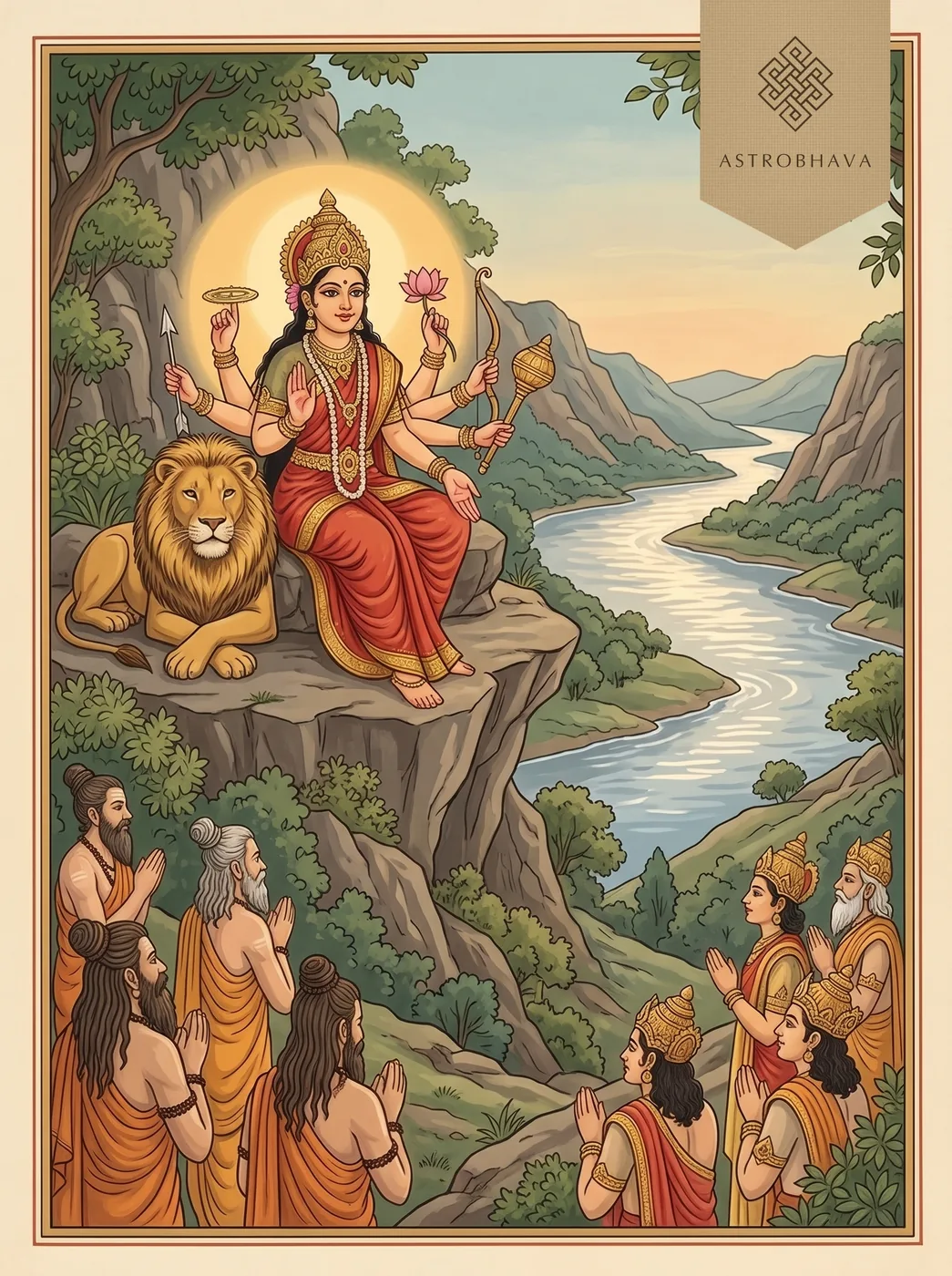
The Vindhyavasini Chalisa, also printed as the Vindhyeshwari Chalisa, which names itself in its closing lines as the Shri Vindhyachal Chalisa, is a Hindi hymn to Vindhyavasini, the Goddess who lives on the Vindhya hills at Vindhyachal, beside the Ganga in Mirzapur district, Uttar Pradesh. It carries no poet's name and no date, and belongs to the anonymous chalisa tradition of north India. The printed form is one opening doha followed by thirty-eight chaupais; 'chalisa', a forty, is the name of the genre rather than an exact count here. Chaupais 1 to 7 hail her as the lion-riding queen of the Vindhyas, whose glory even the thousand-mouthed Shesha tires of telling. Chaupais 8 to 18 then gather a long run of names into her one person, from Vaishnavi, Sharada and Lakshmi to shrine goddesses such as Hinglaj, Mumba and Patan. Chaupai 19 admits her names have no end, Chaupais 20 to 37 state what the verse says follows from remembering her, and Chaupai 38 closes on a plea for grace.
The infant who escaped Kamsa to the Vindhyas
The chalisa tells no story of its own; it points to a place. Its lines call her Vindhyachal Rani and Vindhyavasini, and the shrine behind those names has a well-known origin. In the Devi Mahatmya (11.42) the Goddess foretells that she will be born of Yashoda in the cowherd Nanda's house and will live on the Vindhya mountain. The Vindhyachala Mahatmya, the sacred history of the shrine, fills in the account. Kamsa, warned that Devaki's eighth child would kill him, had imprisoned Devaki and Vasudeva. At Vishnu's request Yogamaya was born as Yashoda's daughter, and Vasudeva carried the newborn Krishna away and brought the girl back in his place. When Kamsa tried to kill her she slipped free, told him that his slayer was already born, and went to the Vindhya range, where gods and sages worshipped her as Vindhyavasini. According to temple tradition she showed herself to Kamsa with eight arms, and so the 'Ashtabhuji' of Chaupai 14 has a shrine of its own, the Ashtabhuja temple on a hill near Vindhyachal. With the cave shrine of Kali Khoh and the main temple by the river, it forms the triangle that pilgrims walk as the Trikona circuit. Tradition reads the three as Mahalakshmi, Mahasaraswati and Mahakali, and the chalisa itself names Lakshmi, Sharada and Kali among her forms.
The mantra, in six scripts
- नमो
- namo — salutations
- नमो
- namo — salutations
- विन्ध्येश्वरी
- vindhyeśvarī — Lady of the Vindhyas
- नमो
- namo — salutations
- नमो
- namo — salutations
- जगदम्ब
- jagadamba — Mother of the world
- सन्त
- santa — saintly
- जनों
- janoṃ — people
- के
- ke — of
- काज
- kāja — work, task
- को
- ko — for
- करती
- karatī — she does (makes)
- नहीं
- nahīṃ — no
- विलम्ब
- vilamba — delay
Vindhyavasini Chalisa lyrics in full
An opening doha and thirty-eight chaupais, as the hymn is usually printed.
All 39 verses, in Hindi, Tamil, Telugu, Kannada, Malayalam and English, each with its meaning. Choose a script:
Download the Vindhyavasini Chalisa PDFAll 39 verses with their meanings, in Hindi. Free to print and keep.
नमो नमो विन्ध्येश्वरी, नमो नमो जगदम्ब ।
सन्त जनों के काज को, करती नहीं विलम्ब ॥
நமோ நமோ விந்த்யேஶ்வரீ, நமோ நமோ ஜகதம்ப ।
ஸந்த ஜநோம் கே காஜ கோ, கரதீ நஹீம் விலம்ப ॥
నమో నమో విన్ధ్యేశ్వరీ, నమో నమో జగదమ్బ ।
సన్త జనోం కే కాజ కో, కరతీ నహీం విలమ్బ ॥
ನಮೋ ನಮೋ ವಿನ್ಧ್ಯೇಶ್ವರೀ, ನಮೋ ನಮೋ ಜಗದಮ್ಬ ।
ಸನ್ತ ಜನೋಂ ಕೇ ಕಾಜ ಕೋ, ಕರತೀ ನಹೀಂ ವಿಲಮ್ಬ ॥
നമോ നമോ വിന്ധ്യേശ്വരീ, നമോ നമോ ജഗദമ്ബ ।
സന്ത ജനോം കേ കാജ കോ, കരതീ നഹീം വിലമ്ബ ॥
namo namo vindhyeśvarī, namo namo jagadamba |
santa janoṃ ke kāja ko, karatī nahīṃ vilamba ||
Salutations again and again to Vindhyeshwari, salutations again and again to the Mother of the world. In the work of the saintly she never delays.
जय जय जय विन्ध्याचल रानी ।
आदि-शक्ति जग विदित भवानी ॥
ஜய ஜய ஜய விந்த்யாசல ராநீ ।
ஆதி-ஶக்தி ஜக விதித பவாநீ ॥
జయ జయ జయ విన్ధ్యాచల రానీ ।
ఆది-శక్తి జగ విదిత భవానీ ॥
ಜಯ ಜಯ ಜಯ ವಿನ್ಧ್ಯಾಚಲ ರಾನೀ ।
ಆದಿ-ಶಕ್ತಿ ಜಗ ವಿದಿತ ಭವಾನೀ ॥
ജയ ജയ ജയ വിന്ധ്യാചല രാനീ ।
ആദി-ശക്തി ജഗ വിദിത ഭവാനീ ॥
jaya jaya jaya vindhyācala rānī |
ādi-śakti jaga vidita bhavānī ||
Victory, victory, victory to the Queen of the Vindhya hills, Bhavani, the primal power known throughout the world.
सिंहवाहिनी जै जगमाता ।
जै जै जै त्रिभुवन सुखदाता ॥
ஸிம்ஹவாஹிநீ ஜை ஜகமாதா ।
ஜை ஜை ஜை த்ரிபுவந ஸுகதாதா ॥
సింహవాహినీ జై జగమాతా ।
జై జై జై త్రిభువన సుఖదాతా ॥
ಸಿಂಹವಾಹಿನೀ ಜೈ ಜಗಮಾತಾ ।
ಜೈ ಜೈ ಜೈ ತ್ರಿಭುವನ ಸುಖದಾತಾ ॥
സിംഹവാഹിനീ ജൈ ജഗമാതാ ।
ജൈ ജൈ ജൈ ത്രിഭുവന സുഖദാതാ ॥
siṃhavāhinī jai jagamātā |
jai jai jai tribhuvana sukhadātā ||
Victory to the Mother of the world who rides the lion; victory, victory, victory to her who gives happiness to the three worlds.
कष्ट निवारिनि जै जगदेवी ।
जै जै सन्त असुर सुरसेवी ॥
கஷ்ட நிவாரிநி ஜை ஜகதேவீ ।
ஜை ஜை ஸந்த அஸுர ஸுரஸேவீ ॥
కష్ట నివారిని జై జగదేవీ ।
జై జై సన్త అసుర సురసేవీ ॥
ಕಷ್ಟ ನಿವಾರಿನಿ ಜೈ ಜಗದೇವೀ ।
ಜೈ ಜೈ ಸನ್ತ ಅಸುರ ಸುರಸೇವೀ ॥
കഷ്ട നിവാരിനി ജൈ ജഗദേവീ ।
ജൈ ജൈ സന്ത അസുര സുരസേവീ ॥
kaṣṭa nivārini jai jagadevī |
jai jai santa asura surasevī ||
Victory to the Goddess of the world who removes suffering; victory to her who is served by saints, demons and gods alike.
महिमा अमित अपार तुम्हारी ।
शेष सहस मुख वर्णत हारी ॥
மஹிமா அமித அபார தும்ஹாரீ ।
ஶேஷ ஸஹஸ முக வர்ணத ஹாரீ ॥
మహిమా అమిత అపార తుమ్హారీ ।
శేష సహస ముఖ వర్ణత హారీ ॥
ಮಹಿಮಾ ಅಮಿತ ಅಪಾರ ತುಮ್ಹಾರೀ ।
ಶೇಷ ಸಹಸ ಮುಖ ವರ್ಣತ ಹಾರೀ ॥
മഹിമാ അമിത അപാര തുമ്ഹാരീ ।
ശേഷ സഹസ മുഖ വര്ണത ഹാരീ ॥
mahimā amita apāra tumhārī |
śeṣa sahasa mukha varṇata hārī ||
Your glory is boundless and without end; even Shesha with his thousand mouths grows weary describing it.
दीनन को दुख हरत भवानी ।
नहिं देख्यो तुम सम कोइ दानी ॥
தீநந கோ துக ஹரத பவாநீ ।
நஹிம் தேக்யோ தும ஸம கோஇ தாநீ ॥
దీనన కో దుఖ హరత భవానీ ।
నహిం దేఖ్యో తుమ సమ కోఇ దానీ ॥
ದೀನನ ಕೋ ದುಖ ಹರತ ಭವಾನೀ ।
ನಹಿಂ ದೇಖ್ಯೋ ತುಮ ಸಮ ಕೋಇ ದಾನೀ ॥
ദീനന കോ ദുഖ ഹരത ഭവാനീ ।
നഹിം ദേഖ്യോ തുമ സമ കോഇ ദാനീ ॥
dīnana ko dukha harata bhavānī |
nahiṃ dekhyo tuma sama koi dānī ||
Bhavani, you take away the sorrows of the poor and helpless; no giver equal to you has ever been seen.
सब कर मनसा पुरवत माता ।
महिमा अमित भक्त विख्याता ॥
ஸப கர மநஸா புரவத மாதா ।
மஹிமா அமித பக்த விக்யாதா ॥
సబ కర మనసా పురవత మాతా ।
మహిమా అమిత భక్త విఖ్యాతా ॥
ಸಬ ಕರ ಮನಸಾ ಪುರವತ ಮಾತಾ ।
ಮಹಿಮಾ ಅಮಿತ ಭಕ್ತ ವಿಖ್ಯಾತಾ ॥
സബ കര മനസാ പുരവത മാതാ ।
മഹിമാ അമിത ഭക്ത വിഖ്യാതാ ॥
saba kara manasā puravata mātā |
mahimā amita bhakta vikhyātā ||
Mother, you fulfil the wishes of all; your boundless glory is known to your devotees.
जो नर ध्यान तुम्हारो लावै ।
सो तुरतहिं वाञ्छित फल पावै ॥
ஜோ நர த்யாந தும்ஹாரோ லாவை ।
ஸோ துரதஹிம் வாஞ்சித பல பாவை ॥
జో నర ధ్యాన తుమ్హారో లావై ।
సో తురతహిం వాఞ్ఛిత ఫల పావై ॥
ಜೋ ನರ ಧ್ಯಾನ ತುಮ್ಹಾರೋ ಲಾವೈ ।
ಸೋ ತುರತಹಿಂ ವಾಞ್ಛಿತ ಫಲ ಪಾವೈ ॥
ജോ നര ധ്യാന തുമ്ഹാരോ ലാവൈ ।
സോ തുരതഹിം വാഞ്ഛിത ഫല പാവൈ ॥
jo nara dhyāna tumhāro lāvai |
so turatahiṃ vāñchita phala pāvai ||
The verse says that whoever brings you into meditation at once receives the fruit he longs for.
तुही वैष्णवी तुही रुद्रानी ।
तुही शारदा अरु ब्रह्मानी ॥
துஹீ வைஷ்ணவீ துஹீ ருத்ராநீ ।
துஹீ ஶாரதா அரு ப்ரஹ்மாநீ ॥
తుహీ వైష్ణవీ తుహీ రుద్రానీ ।
తుహీ శారదా అరు బ్రహ్మానీ ॥
ತುಹೀ ವೈಷ್ಣವೀ ತುಹೀ ರುದ್ರಾನೀ ।
ತುಹೀ ಶಾರದಾ ಅರು ಬ್ರಹ್ಮಾನೀ ॥
തുഹീ വൈഷ്ണവീ തുഹീ രുദ്രാനീ ।
തുഹീ ശാരദാ അരു ബ്രഹ്മാനീ ॥
tuhī vaiṣṇavī tuhī rudrānī |
tuhī śāradā aru brahmānī ||
You alone are Vaishnavi, you alone are Rudrani; you alone are Sharada and Brahmani.
रमा राधिका श्यामा काली ।
तुही मातु सन्तन प्रतिपाली ॥
ரமா ராதிகா ஶ்யாமா காலீ ।
துஹீ மாது ஸந்தந ப்ரதிபாலீ ॥
రమా రాధికా శ్యామా కాలీ ।
తుహీ మాతు సన్తన ప్రతిపాలీ ॥
ರಮಾ ರಾಧಿಕಾ ಶ್ಯಾಮಾ ಕಾಲೀ ।
ತುಹೀ ಮಾತು ಸನ್ತನ ಪ್ರತಿಪಾಲೀ ॥
രമാ രാധികാ ശ്യാമാ കാലീ ।
തുഹീ മാതു സന്തന പ്രതിപാലീ ॥
ramā rādhikā śyāmā kālī |
tuhī mātu santana pratipālī ||
Rama, Radhika, Shyama and Kali; you alone, Mother, protect the saintly.
उमा माधवी चण्डी ज्वाला ।
वेगि मोहिं पर होहु दयाला ॥
உமா மாதவீ சண்டீ ஜ்வாலா ।
வேகி மோஹிம் பர ஹோஹு தயாலா ॥
ఉమా మాధవీ చణ్డీ జ్వాలా ।
వేగి మోహిం పర హోహు దయాలా ॥
ಉಮಾ ಮಾಧವೀ ಚಣ್ಡೀ ಜ್ವಾಲಾ ।
ವೇಗಿ ಮೋಹಿಂ ಪರ ಹೋಹು ದಯಾಲಾ ॥
ഉമാ മാധവീ ചണ്ഡീ ജ്വാലാ ।
വേഗി മോഹിം പര ഹോഹു ദയാലാ ॥
umā mādhavī caṇḍī jvālā |
vegi mohiṃ para hohu dayālā ||
Uma, Madhavi, Chandi and Jvala, be quickly merciful to me.
तूही हिङ्गलाज महरानी ।
तुही शीतला अरु विद्यानी ॥
தூஹீ ஹிங்கலாஜ மஹராநீ ।
துஹீ ஶீதலா அரு வித்யாநீ ॥
తూహీ హిఙ్గలాజ మహరానీ ।
తుహీ శీతలా అరు విద్యానీ ॥
ತೂಹೀ ಹಿಙ್ಗಲಾಜ ಮಹರಾನೀ ।
ತುಹೀ ಶೀತಲಾ ಅರು ವಿದ್ಯಾನೀ ॥
തൂഹീ ഹിങ്ഗലാജ മഹരാനീ ।
തുഹീ ശീതലാ അരു വിദ്യാനീ ॥
tūhī hiṅgalāja maharānī |
tuhī śītalā aru vidyānī ||
You alone are Hinglaj, the great queen; you alone are Shitala and the one of knowledge.
दुर्गा दुर्ग विनाशिनि माता ।
तुही लक्ष्मी जग सुखदाता ॥
துர்கா துர்க விநாஶிநி மாதா ।
துஹீ லக்ஷ்மீ ஜக ஸுகதாதா ॥
దుర్గా దుర్గ వినాశిని మాతా ।
తుహీ లక్ష్మీ జగ సుఖదాతా ॥
ದುರ್ಗಾ ದುರ್ಗ ವಿನಾಶಿನಿ ಮಾತಾ ।
ತುಹೀ ಲಕ್ಷ್ಮೀ ಜಗ ಸುಖದಾತಾ ॥
ദുര്ഗാ ദുര്ഗ വിനാശിനി മാതാ ।
തുഹീ ലക്ഷ്മീ ജഗ സുഖദാതാ ॥
durgā durga vināśini mātā |
tuhī lakṣmī jaga sukhadātā ||
Durga, the Mother who destroys the fortress of difficulty; you alone are Lakshmi, who gives happiness to the world.
तूही जाह्नवी अरु उत्रानी ।
हेमावती अम्ब निर्वानी ॥
தூஹீ ஜாஹ்நவீ அரு உத்ராநீ ।
ஹேமாவதீ அம்ப நிர்வாநீ ॥
తూహీ జాహ్నవీ అరు ఉత్రానీ ।
హేమావతీ అమ్బ నిర్వానీ ॥
ತೂಹೀ ಜಾಹ್ನವೀ ಅರು ಉತ್ರಾನೀ ।
ಹೇಮಾವತೀ ಅಮ್ಬ ನಿರ್ವಾನೀ ॥
തൂഹീ ജാഹ്നവീ അരു ഉത്രാനീ ।
ഹേമാവതീ അമ്ബ നിര്വാനീ ॥
tūhī jāhnavī aru utrānī |
hemāvatī amba nirvānī ||
You alone are Jahnavi (the Ganga) and Utrani; Hemavati, the Mother beyond all bonds.
अष्टभुजी बाराहिनि देवी ।
करत विष्णु शिव जाकर सेवी ॥
அஷ்டபுஜீ பாராஹிநி தேவீ ।
கரத விஷ்ணு ஶிவ ஜாகர ஸேவீ ॥
అష్టభుజీ బారాహిని దేవీ ।
కరత విష్ణు శివ జాకర సేవీ ॥
ಅಷ್ಟಭುಜೀ ಬಾರಾಹಿನಿ ದೇವೀ ।
ಕರತ ವಿಷ್ಣು ಶಿವ ಜಾಕರ ಸೇವೀ ॥
അഷ്ടഭുജീ ബാരാഹിനി ദേവീ ।
കരത വിഷ്ണു ശിവ ജാകര സേവീ ॥
aṣṭabhujī bārāhini devī |
karata viṣṇu śiva jākara sevī ||
Goddess of eight arms, Varahi, whom Vishnu and Shiva serve.
चौसट्ठी देवी कल्यानी ।
मङ्गला गौरी सब गुणखानी ॥
சௌஸட்டீ தேவீ கல்யாநீ ।
மங்கலா கௌரீ ஸப குணகாநீ ॥
చౌసట్ఠీ దేవీ కల్యానీ ।
మఙ్గలా గౌరీ సబ గుణఖానీ ॥
ಚೌಸಟ್ಠೀ ದೇವೀ ಕಲ್ಯಾನೀ ।
ಮಙ್ಗಲಾ ಗೌರೀ ಸಬ ಗುಣಖಾನೀ ॥
ചൌസട്ഠീ ദേവീ കല്യാനീ ।
മങ്ഗലാ ഗൌരീ സബ ഗുണഖാനീ ॥
causaṭṭhī devī kalyānī |
maṅgalā gaurī saba guṇakhānī ||
The sixty-four goddesses, the auspicious one; Mangala and Gauri, mine of every virtue.
पाटन मुम्बा दन्तकुमारी ।
भद्रकालि सुनु विनय हमारी ॥
பாடந மும்பா தந்தகுமாரீ ।
பத்ரகாலி ஸுநு விநய ஹமாரீ ॥
పాటన ముమ్బా దన్తకుమారీ ।
భద్రకాలి సును వినయ హమారీ ॥
ಪಾಟನ ಮುಮ್ಬಾ ದನ್ತಕುಮಾರೀ ।
ಭದ್ರಕಾಲಿ ಸುನು ವಿನಯ ಹಮಾರೀ ॥
പാടന മുമ്ബാ ദന്തകുമാരീ ।
ഭദ്രകാലി സുനു വിനയ ഹമാരീ ॥
pāṭana mumbā dantakumārī |
bhadrakāli sunu vinaya hamārī ||
Patan, Mumba and Dantakumari, and Bhadrakali, hear my humble prayer.
वज्रधारिणी शोक-नाशिनी ।
आयुरक्षिणी विन्ध्यवासिनी ॥
வஜ்ரதாரிணீ ஶோக-நாஶிநீ ।
ஆயுரக்ஷிணீ விந்த்யவாஸிநீ ॥
వజ్రధారిణీ శోక-నాశినీ ।
ఆయురక్షిణీ విన్ధ్యవాసినీ ॥
ವಜ್ರಧಾರಿಣೀ ಶೋಕ-ನಾಶಿನೀ ।
ಆಯುರಕ್ಷಿಣೀ ವಿನ್ಧ್ಯವಾಸಿನೀ ॥
വജ്രധാരിണീ ശോക-നാശിനീ ।
ആയുരക്ഷിണീ വിന്ധ്യവാസിനീ ॥
vajradhāriṇī śoka-nāśinī |
āyurakṣiṇī vindhyavāsinī ||
Holder of the thunderbolt, destroyer of grief, protector of life, she who dwells in the Vindhyas.
जया और विजया बैताली ।
मातु सङ्कटा अरु विकराली ॥
ஜயா ஔர விஜயா பைதாலீ ।
மாது ஸங்கடா அரு விகராலீ ॥
జయా ఔర విజయా బైతాలీ ।
మాతు సఙ్కటా అరు వికరాలీ ॥
ಜಯಾ ಔರ ವಿಜಯಾ ಬೈತಾಲೀ ।
ಮಾತು ಸಙ್ಕಟಾ ಅರು ವಿಕರಾಲೀ ॥
ജയാ ഔര വിജയാ ബൈതാലീ ।
മാതു സങ്കടാ അരു വികരാലീ ॥
jayā aura vijayā baitālī |
mātu saṅkaṭā aru vikarālī ||
Jaya and Vijaya, Baitali, Mother Sankata and the fearsome one.
नाम अनन्त तुम्हार भवानी ।
बरनै किमि मानुष अज्ञानी ॥
நாம அநந்த தும்ஹார பவாநீ ।
பரநை கிமி மாநுஷ அஜ்ஞாநீ ॥
నామ అనన్త తుమ్హార భవానీ ।
బరనై కిమి మానుష అజ్ఞానీ ॥
ನಾಮ ಅನನ್ತ ತುಮ್ಹಾರ ಭವಾನೀ ।
ಬರನೈ ಕಿಮಿ ಮಾನುಷ ಅಜ್ಞಾನೀ ॥
നാമ അനന്ത തുമ്ഹാര ഭവാനീ ।
ബരനൈ കിമി മാനുഷ അജ്ഞാനീ ॥
nāma ananta tumhāra bhavānī |
baranai kimi mānuṣa ajñānī ||
Bhavani, your names are endless; how could an ignorant human describe them?
जापर कृपा मातु तव होई ।
तो वह करै चहै मन सोई ॥
ஜாபர க்ருபா மாது தவ ஹோஈ ।
தோ வஹ கரை சஹை மந ஸோஈ ॥
జాపర కృపా మాతు తవ హోఈ ।
తో వహ కరై చహై మన సోఈ ॥
ಜಾಪರ ಕೃಪಾ ಮಾತು ತವ ಹೋಈ ।
ತೋ ವಹ ಕರೈ ಚಹೈ ಮನ ಸೋಈ ॥
ജാപര കൃപാ മാതു തവ ഹോഈ ।
തോ വഹ കരൈ ചഹൈ മന സോഈ ॥
jāpara kṛpā mātu tava hoī |
to vaha karai cahai mana soī ||
The verse says that the one on whom your grace falls, Mother, can do whatever his heart desires.
कृपा करहु मोपर महरानी ।
सिद्ध करिय अब यह मम बानी ॥
க்ருபா கரஹு மோபர மஹராநீ ।
ஸித்த கரிய அப யஹ மம பாநீ ॥
కృపా కరహు మోపర మహరానీ ।
సిద్ధ కరియ అబ యహ మమ బానీ ॥
ಕೃಪಾ ಕರಹು ಮೋಪರ ಮಹರಾನೀ ।
ಸಿದ್ಧ ಕರಿಯ ಅಬ ಯಹ ಮಮ ಬಾನೀ ॥
കൃപാ കരഹു മോപര മഹരാനീ ।
സിദ്ധ കരിയ അബ യഹ മമ ബാനീ ॥
kṛpā karahu mopara maharānī |
siddha kariya aba yaha mama bānī ||
Great Queen, have mercy on me, and now make these words of mine fruitful.
जो नर धरै मातुकर ध्याना ।
ताकर सदा होय कल्याना ॥
ஜோ நர தரை மாதுகர த்யாநா ।
தாகர ஸதா ஹோய கல்யாநா ॥
జో నర ధరై మాతుకర ధ్యానా ।
తాకర సదా హోయ కల్యానా ॥
ಜೋ ನರ ಧರೈ ಮಾತುಕರ ಧ್ಯಾನಾ ।
ತಾಕರ ಸದಾ ಹೋಯ ಕಲ್ಯಾನಾ ॥
ജോ നര ധരൈ മാതുകര ധ്യാനാ ।
താകര സദാ ഹോയ കല്യാനാ ॥
jo nara dharai mātukara dhyānā |
tākara sadā hoya kalyānā ||
The verse says that the person who holds the Mother in meditation always meets with well-being.
बिपति ताहि सपनेहुँ नहिं आवे ।
जो देवी कर जाप करावे ॥
பிபதி தாஹி ஸபநேஹும் நஹிம் ஆவே ।
ஜோ தேவீ கர ஜாப கராவே ॥
బిపతి తాహి సపనేహుఁ నహిం ఆవే ।
జో దేవీ కర జాప కరావే ॥
ಬಿಪತಿ ತಾಹಿ ಸಪನೇಹುಁ ನಹಿಂ ಆವೇ ।
ಜೋ ದೇವೀ ಕರ ಜಾಪ ಕರಾವೇ ॥
ബിപതി താഹി സപനേഹുഁ നഹിം ആവേ ।
ജോ ദേവീ കര ജാപ കരാവേ ॥
bipati tāhi sapanehuṃ nahiṃ āve |
jo devī kara jāpa karāve ||
The verse says that misfortune does not come to him even in dreams who has the japa of the Goddess performed.
जो नर कहँ ऋण होय अपारा ।
सो नर पाठ करे शतबारा ॥
ஜோ நர கஹம் ருண ஹோய அபாரா ।
ஸோ நர பாட கரே ஶதபாரா ॥
జో నర కహఁ ఋణ హోయ అపారా ।
సో నర పాఠ కరే శతబారా ॥
ಜೋ ನರ ಕಹಁ ಋಣ ಹೋಯ ಅಪಾರಾ ।
ಸೋ ನರ ಪಾಠ ಕರೇ ಶತಬಾರಾ ॥
ജോ നര കഹഁ ഋണ ഹോയ അപാരാ ।
സോ നര പാഠ കരേ ശതബാരാ ॥
jo nara kahaṃ ṛṇa hoya apārā |
so nara pāṭha kare śatabārā ||
The verse says that a person burdened with boundless debt should recite this a hundred times.
निश्चय ऋणमोचन होइ जाई ।
जो नर पाठ करे मन लाई ॥
நிஶ்சய ருணமோசந ஹோஇ ஜாஈ ।
ஜோ நர பாட கரே மந லாஈ ॥
నిశ్చయ ఋణమోచన హోఇ జాఈ ।
జో నర పాఠ కరే మన లాఈ ॥
ನಿಶ್ಚಯ ಋಣಮೋಚನ ಹೋಇ ಜಾಈ ।
ಜೋ ನರ ಪಾಠ ಕರೇ ಮನ ಲಾಈ ॥
നിശ്ചയ ഋണമോചന ഹോഇ ജാഈ ।
ജോ നര പാഠ കരേ മന ലാഈ ॥
niścaya ṛṇamocana hoi jāī |
jo nara pāṭha kare mana lāī ||
The verse says that the debt is surely released for the one who recites it with a settled mind.
अस्तुति जो नर पढ़ए पढ़ावे ।
या जग में सो बहु सुख पावे ॥
அஸ்துதி ஜோ நர படஏ படாவே ।
யா ஜக மேம் ஸோ பஹு ஸுக பாவே ॥
అస్తుతి జో నర పఢఏ పఢావే ।
యా జగ మేం సో బహు సుఖ పావే ॥
ಅಸ್ತುತಿ ಜೋ ನರ ಪಢಏ ಪಢಾವೇ ।
ಯಾ ಜಗ ಮೇಂ ಸೋ ಬಹು ಸುಖ ಪಾವೇ ॥
അസ്തുതി ജോ നര പഢഏ പഢാവേ ।
യാ ജഗ മേം സോ ബഹു സുഖ പാവേ ॥
astuti jo nara paṛhae paṛhāve |
yā jaga meṃ so bahu sukha pāve ||
The verse says that whoever reads this hymn of praise, or has it read, finds much happiness in this world.
जाको व्याधि सतावे भाई ।
जाप करत सब दूरि पराई ॥
ஜாகோ வ்யாதி ஸதாவே பாஈ ।
ஜாப கரத ஸப தூரி பராஈ ॥
జాకో వ్యాధి సతావే భాఈ ।
జాప కరత సబ దూరి పరాఈ ॥
ಜಾಕೋ ವ್ಯಾಧಿ ಸತಾವೇ ಭಾಈ ।
ಜಾಪ ಕರತ ಸಬ ದೂರಿ ಪರಾಈ ॥
ജാകോ വ്യാധി സതാവേ ഭാഈ ।
ജാപ കരത സബ ദൂരി പരാഈ ॥
jāko vyādhi satāve bhāī |
jāpa karata saba dūri parāī ||
Brother, the verse says that whatever illness troubles a person, by doing japa it all runs far away.
जो नर अति बन्दी महँ होई ।
बार हजार पाठ कर सोई ॥
ஜோ நர அதி பந்தீ மஹம் ஹோஈ ।
பார ஹஜார பாட கர ஸோஈ ॥
జో నర అతి బన్దీ మహఁ హోఈ ।
బార హజార పాఠ కర సోఈ ॥
ಜೋ ನರ ಅತಿ ಬನ್ದೀ ಮಹಁ ಹೋಈ ।
ಬಾರ ಹಜಾರ ಪಾಠ ಕರ ಸೋಈ ॥
ജോ നര അതി ബന്ദീ മഹഁ ഹോഈ ।
ബാര ഹജാര പാഠ കര സോഈ ॥
jo nara ati bandī mahaṃ hoī |
bāra hajāra pāṭha kara soī ||
The verse says that a person held in close confinement should recite it a thousand times.
निश्चय बन्दी से छुटि जाई ।
सत्य वचन मम मानहु भाई ॥
நிஶ்சய பந்தீ ஸே சுடி ஜாஈ ।
ஸத்ய வசந மம மாநஹு பாஈ ॥
నిశ్చయ బన్దీ సే ఛుటి జాఈ ।
సత్య వచన మమ మానహు భాఈ ॥
ನಿಶ್ಚಯ ಬನ್ದೀ ಸೇ ಛುಟಿ ಜಾಈ ।
ಸತ್ಯ ವಚನ ಮಮ ಮಾನಹು ಭಾಈ ॥
നിശ്ചയ ബന്ദീ സേ ഛുടി ജാഈ ।
സത്യ വചന മമ മാനഹു ഭാഈ ॥
niścaya bandī se chuṭi jāī |
satya vacana mama mānahu bhāī ||
The verse says he is surely freed from confinement; brother, accept my words as true.
जापर जो कछु सङ्कट होई ।
निश्चय देविहिं सुमिरै सोई ॥
ஜாபர ஜோ கசு ஸங்கட ஹோஈ ।
நிஶ்சய தேவிஹிம் ஸுமிரை ஸோஈ ॥
జాపర జో కఛు సఙ్కట హోఈ ।
నిశ్చయ దేవిహిం సుమిరై సోఈ ॥
ಜಾಪರ ಜೋ ಕಛು ಸಙ್ಕಟ ಹೋಈ ।
ನಿಶ್ಚಯ ದೇವಿಹಿಂ ಸುಮಿರೈ ಸೋಈ ॥
ജാപര ജോ കഛു സങ്കട ഹോഈ ।
നിശ്ചയ ദേവിഹിം സുമിരൈ സോഈ ॥
jāpara jo kachu saṅkaṭa hoī |
niścaya devihiṃ sumirai soī ||
Whatever trouble befalls anyone, let him surely remember the Goddess.
जा कहँ पुत्र होय नहिं भाई ।
सो नर या विधि करै उपाई ॥
ஜா கஹம் புத்ர ஹோய நஹிம் பாஈ ।
ஸோ நர யா விதி கரை உபாஈ ॥
జా కహఁ పుత్ర హోయ నహిం భాఈ ।
సో నర యా విధి కరై ఉపాఈ ॥
ಜಾ ಕಹಁ ಪುತ್ರ ಹೋಯ ನಹಿಂ ಭಾಈ ।
ಸೋ ನರ ಯಾ ವಿಧಿ ಕರೈ ಉಪಾಈ ॥
ജാ കഹഁ പുത്ര ഹോയ നഹിം ഭാഈ ।
സോ നര യാ വിധി കരൈ ഉപാഈ ॥
jā kahaṃ putra hoya nahiṃ bhāī |
so nara yā vidhi karai upāī ||
Brother, the one to whom no son is born should follow this method.
पाँच वर्ष सो पाठ करावै ।
नौरातर महँ विप्र जिमावै ॥
பாம்ச வர்ஷ ஸோ பாட கராவை ।
நௌராதர மஹம் விப்ர ஜிமாவை ॥
పాఁచ వర్ష సో పాఠ కరావై ।
నౌరాతర మహఁ విప్ర జిమావై ॥
ಪಾಁಚ ವರ್ಷ ಸೋ ಪಾಠ ಕರಾವೈ ।
ನೌರಾತರ ಮಹಁ ವಿಪ್ರ ಜಿಮಾವೈ ॥
പാഁച വര്ഷ സോ പാഠ കരാവൈ ।
നൌരാതര മഹഁ വിപ്ര ജിമാവൈ ॥
pāṃca varṣa so pāṭha karāvai |
naurātara mahaṃ vipra jimāvai ||
He should have the recitation done for five years and feed brahmins during the Navaratri.
निश्चय होय प्रसन्न भवानी ।
पुत्र देहि ताकहँ गुणखानी ॥
நிஶ்சய ஹோய ப்ரஸந்ந பவாநீ ।
புத்ர தேஹி தாகஹம் குணகாநீ ॥
నిశ్చయ హోయ ప్రసన్న భవానీ ।
పుత్ర దేహి తాకహఁ గుణఖానీ ॥
ನಿಶ್ಚಯ ಹೋಯ ಪ್ರಸನ್ನ ಭವಾನೀ ।
ಪುತ್ರ ದೇಹಿ ತಾಕಹಁ ಗುಣಖಾನೀ ॥
നിശ്ചയ ഹോയ പ്രസന്ന ഭവാനീ ।
പുത്ര ദേഹി താകഹഁ ഗുണഖാനീ ॥
niścaya hoya prasanna bhavānī |
putra dehi tākahaṃ guṇakhānī ||
The verse says that Bhavani is surely pleased and gives him a son who is a mine of virtues.
ध्वजा नारियल आनि चढ़ावै ।
विधि समेत पूजन करवावै ॥
த்வஜா நாரியல ஆநி சடாவை ।
விதி ஸமேத பூஜந கரவாவை ॥
ధ్వజా నారియల ఆని చఢావై ।
విధి సమేత పూజన కరవావై ॥
ಧ್ವಜಾ ನಾರಿಯಲ ಆನಿ ಚಢಾವೈ ।
ವಿಧಿ ಸಮೇತ ಪೂಜನ ಕರವಾವೈ ॥
ധ്വജാ നാരിയല ആനി ചഢാവൈ ।
വിധി സമേത പൂജന കരവാവൈ ॥
dhvajā nāriyala āni caṛhāvai |
vidhi sameta pūjana karavāvai ||
He should bring and offer a flag and a coconut, and have the worship done according to the rite.
नित प्रति पाठ करै मनलाई ।
प्रेम-सहित नहिं आन उपाई ॥
நித ப்ரதி பாட கரை மநலாஈ ।
ப்ரேம-ஸஹித நஹிம் ஆந உபாஈ ॥
నిత ప్రతి పాఠ కరై మనలాఈ ।
ప్రేమ-సహిత నహిం ఆన ఉపాఈ ॥
ನಿತ ಪ್ರತಿ ಪಾಠ ಕರೈ ಮನಲಾಈ ।
ಪ್ರೇಮ-ಸಹಿತ ನಹಿಂ ಆನ ಉಪಾಈ ॥
നിത പ്രതി പാഠ കരൈ മനലാഈ ।
പ്രേമ-സഹിത നഹിം ആന ഉപാഈ ॥
nita prati pāṭha karai manalāī |
prema-sahita nahiṃ āna upāī ||
He should recite it daily with his mind fixed, with love, and seek no other means.
यह श्रीविन्ध्याचल चालीसा ।
रङ्क पढ़त होवै अवनीसा ॥
யஹ ஶ்ரீவிந்த்யாசல சாலீஸா ।
ரங்க படத ஹோவை அவநீஸா ॥
యహ శ్రీవిన్ధ్యాచల చాలీసా ।
రఙ్క పఢత హోవై అవనీసా ॥
ಯಹ ಶ್ರೀವಿನ್ಧ್ಯಾಚಲ ಚಾಲೀಸಾ ।
ರಙ್ಕ ಪಢತ ಹೋವೈ ಅವನೀಸಾ ॥
യഹ ശ്രീവിന്ധ്യാചല ചാലീസാ ।
രങ്ക പഢത ഹോവൈ അവനീസാ ॥
yaha śrīvindhyācala cālīsā |
raṅka paṛhata hovai avanīsā ||
This is the Shri Vindhyachal Chalisa; the verse says that even a pauper who reads it becomes a lord of the earth.
यह जनि अचरज मानहु भाई ।
कृपा-दृष्टि जापर होइ जाई ॥
யஹ ஜநி அசரஜ மாநஹு பாஈ ।
க்ருபா-த்ருஷ்டி ஜாபர ஹோஇ ஜாஈ ॥
యహ జని అచరజ మానహు భాఈ ।
కృపా-దృష్టి జాపర హోఇ జాఈ ॥
ಯಹ ಜನಿ ಅಚರಜ ಮಾನಹು ಭಾಈ ।
ಕೃಪಾ-ದೃಷ್ಟಿ ಜಾಪರ ಹೋಇ ಜಾಈ ॥
യഹ ജനി അചരജ മാനഹു ഭാഈ ।
കൃപാ-ദൃഷ്ടി ജാപര ഹോഇ ജാഈ ॥
yaha jani acaraja mānahu bhāī |
kṛpā-dṛṣṭi jāpara hoi jāī ||
Brother, do not think it a wonder for the one on whom her gracious glance falls.
जै जै जै जग मातु भवानी ।
कृपा करहु मोहिं पर जन जानी ॥
ஜை ஜை ஜை ஜக மாது பவாநீ ।
க்ருபா கரஹு மோஹிம் பர ஜந ஜாநீ ॥
జై జై జై జగ మాతు భవానీ ।
కృపా కరహు మోహిం పర జన జానీ ॥
ಜೈ ಜೈ ಜೈ ಜಗ ಮಾತು ಭವಾನೀ ।
ಕೃಪಾ ಕರಹು ಮೋಹಿಂ ಪರ ಜನ ಜಾನೀ ॥
ജൈ ജൈ ജൈ ജഗ മാതു ഭവാനീ ।
കൃപാ കരഹു മോഹിം പര ജന ജാനീ ॥
jai jai jai jaga mātu bhavānī |
kṛpā karahu mohiṃ para jana jānī ||
Victory, victory, victory to Bhavani, Mother of the world; be gracious to me, knowing me as your devotee.
The syllable people get wrong
Vindhyeśvarī, the name in the first line of the opening doha, joins an aspirated dh directly to y: vin-DHYESH-va-ree, with a breath after the d and no vowel between dh and y. Saying 'Vindeshwari' drops both the aspiration and the y, and with them the link to Vindhya, the hills she is named for.
When the Vindhyavasini Chalisa is chanted
Weekday. Friday
Festival. Chaitra and Sharad Navaratri
Questions
Have your chart read before you decide
Chanting is yours to do, and free. But which deity your situation calls for — and whether a mantra alone is the right response — depends on your chart. Sometimes it is; sometimes it is not.
- Over 30 years in the Guru–Sishya Parampara, from the age of five
- He reads every chart himself — 60 minutes, one to one, never delegated
- Charts are read only between sunrise and sunset, following tradition
