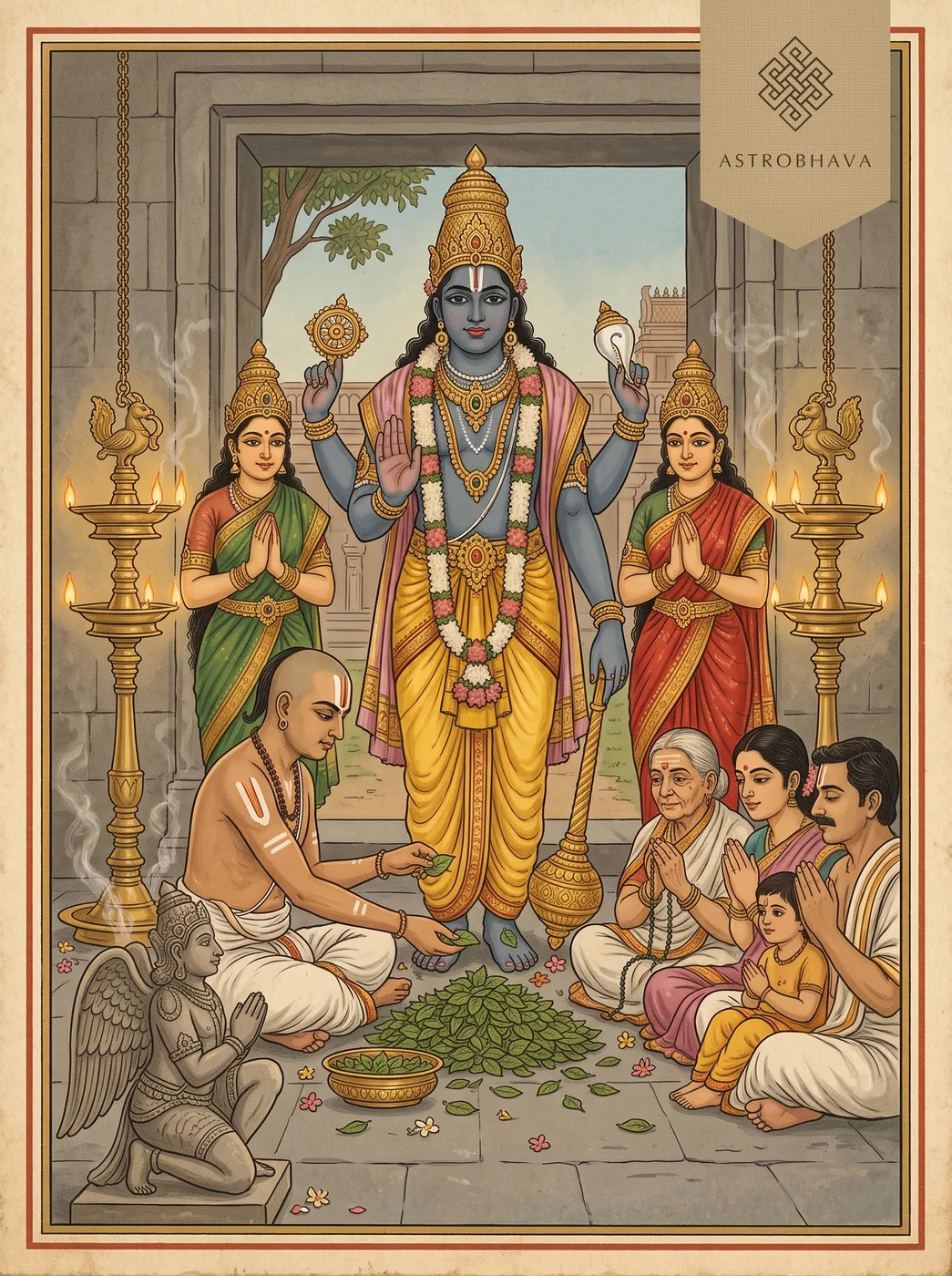
Vishnu Ashtottara Shatanamavali
ॐ विष्णवे नमः ।Also known as Vishnu Ashtottaram
In Devanagari, Tamil, Telugu, Kannada, Malayalam and English — with the meaning of every word, and the one syllable most people pronounce wrongly.
 The Lakshmi Narayana Homa, performed for youBook →
What the Vishnu Ashtottara Shatanamavali is
The Vishnu Ashtottara Shatanamavali, the 108 names of Vishnu, is a Sanskrit archana list in which each name is framed by Om before it and namah after it, making every line a single salutation. It follows, name for name, a fourteen-verse stotram whose colophon places it in the Shakta Pramoda, a ritual compendium first printed in 1891. No author is named. The list keeps no fixed order of avatars, yet the avatars run all through it: Vamana as Aditi's son and as Upendra, Parashurama as the bearer of the axe, Rama as Kausalya's joy and Ravana's enemy, Krishna as Damodara, Yashoda's son and Rukmini's husband, with Varaha, Narasimha and Hayagriva between them. Names 48 to 51 restate the opening line of the Rig Veda's Purusha Sukta: the thousand-headed Person, thousand-eyed and thousand-footed. The list closes on Rudra, Raghava and Madhusudana. The stotram's two result verses, which the namavali leaves out, say that the names remove sin, sorrow and poverty.
A Vaishnava litany in a Shakta manual
The stotram behind this namavali ends with the words 'iti shaktapramodatah', marking it as taken from the Shakta Pramoda, the 'Joy of the Goddess Worshippers'. The compendium was assembled at the instance of Raja Deva Nandan Singh Bahadur, a zamindar of Sheohar in the Muzaffarpur district of North Bihar, who had gathered a large collection of Shakta ritual texts and wanted to revive the worship of Kali in his region. The first edition appeared in 1891 and a second in 1894. Ten of its sixteen manuals belong to the Ten Mahavidyas, from Kali to Kamala, and one is a Kumari Tantra. The other five serve Ganesha, Vishnu, Shiva, Durga and Surya. Each manual follows one pattern: a meditation verse for the deity, its mantra and yantra, the order of worship, a protective kavacha and a litany of epithets. The 108 names of Vishnu are that litany in the Vishnu manual. The stotram is cast as speech to a listener, closing with 'thus the divine hundred and eight names have been told to you', but the text that circulates does not say who is speaking. In the South Indian puja editions where the list is now printed, the verses are broken into separate salutations for flower offering, and chanted forms such as jagatkartaya are kept even where grammar expects jagatkartre.
The mantra, in six scripts
- ॐ
- oṃ — Om, the sacred syllable
- विष्णवे
- viṣṇave — to Vishnu, the all-pervading
- नमः
- namaḥ — salutation
Vishnu Ashtottara Shatanamavali lyrics in full
One hundred and eight names, each set between Om and namah, in the order of the source stotram.
All 108 verses, in Sanskrit, Tamil, Telugu, Kannada, Malayalam and English, each with its meaning. Choose a script:
Download the Vishnu Ashtottara Shatanamavali PDFAll 108 verses with their meanings, in Sanskrit. Free to print and keep.
ॐ विष्णवे नमः ।
ௐ விஷ்ணவே நமஃ ।
ఓం విష్ణవే నమః ।
ಓಂ ವಿಷ್ಣವೇ ನಮಃ ।
ഓം വിഷ്ണവേ നമഃ ।
oṃ viṣṇave namaḥ |
Salutations to Vishnu, the all-pervading one.
ॐ जिष्णवे नमः ।
ௐ ஜிஷ்ணவே நமஃ ।
ఓం జిష్ణవే నమః ।
ಓಂ ಜಿಷ್ಣವೇ ನಮಃ ।
ഓം ജിഷ്ണവേ നമഃ ।
oṃ jiṣṇave namaḥ |
Salutations to Jishnu, the ever-victorious one.
ॐ वषट्काराय नमः ।
ௐ வஷட்காராய நமஃ ।
ఓం వషట్కారాయ నమః ।
ಓಂ ವಷಟ್ಕಾರಾಯ ನಮಃ ।
ഓം വഷട്കാരായ നമഃ ।
oṃ vaṣaṭkārāya namaḥ |
Salutations to Vashatkara, the one who is the sacred call "vashat" spoken as offerings are poured into the fire.
ॐ देवदेवाय नमः ।
ௐ தேவதேவாய நமஃ ।
ఓం దేవదేవాయ నమః ।
ಓಂ ದೇವದೇವಾಯ ನಮಃ ।
ഓം ദേവദേവായ നമഃ ।
oṃ devadevāya namaḥ |
Salutations to the God of gods.
ॐ वृषाकपये नमः ।
ௐ வ்ருஷாகபயே நமஃ ।
ఓం వృషాకపయే నమః ।
ಓಂ ವೃಷಾಕಪಯೇ ನಮಃ ।
ഓം വൃഷാകപയേ നമഃ ।
oṃ vṛṣākapaye namaḥ |
Salutations to Vrishakapi, a Vedic name of Vishnu, often read as the one who lifted the earth as the Boar and who embodies dharma.
ॐ दामोदराय नमः ।
ௐ தாமோதராய நமஃ ।
ఓం దామోదరాయ నమః ।
ಓಂ ದಾಮೋದರಾಯ ನಮಃ ।
ഓം ദാമോദരായ നമഃ ।
oṃ dāmodarāya namaḥ |
Salutations to Damodara, the one bound with a rope around the waist (as the child Krishna).
ॐ दीनबन्धवे नमः ।
ௐ தீநபந்தவே நமஃ ।
ఓం దీనబన్ధవే నమః ।
ಓಂ ದೀನಬನ್ಧವೇ ನಮಃ ।
ഓം ദീനബന്ധവേ നമഃ ।
oṃ dīnabandhave namaḥ |
Salutations to Dinabandhu, the friend and kinsman of the helpless.
ॐ आदिदेवाय नमः ।
ௐ ஆதிதேவாய நமஃ ।
ఓం ఆదిదేవాయ నమః ।
ಓಂ ಆದಿದೇವಾಯ ನಮಃ ।
ഓം ആദിദേവായ നമഃ ।
oṃ ādidevāya namaḥ |
Salutations to Adideva, the first and original God.
ॐ अदितेस्तुताय नमः ।
ௐ அதிதேஸ்துதாய நமஃ ।
ఓం అదితేస్తుతాయ నమః ।
ಓಂ ಅದಿತೇಸ್ತುತಾಯ ನಮಃ ।
ഓം അദിതേസ്തുതായ നമഃ ।
oṃ aditestutāya namaḥ |
Salutations to the one praised by Aditi (the source stotra reads "son of Aditi", that is Vamana).
ॐ पुण्डरीकाय नमः ।
ௐ புண்டரீகாய நமஃ ।
ఓం పుణ్డరీకాయ నమః ।
ಓಂ ಪುಣ್ಡರೀಕಾಯ ನಮಃ ।
ഓം പുണ്ഡരീകായ നമഃ ।
oṃ puṇḍarīkāya namaḥ |
Salutations to Pundarika, the one pure and beautiful as the white lotus.
ॐ परानन्दाय नमः ।
ௐ பராநந்தாய நமஃ ।
ఓం పరానన్దాయ నమః ।
ಓಂ ಪರಾನನ್ದಾಯ ನಮಃ ।
ഓം പരാനന്ദായ നമഃ ।
oṃ parānandāya namaḥ |
Salutations to Parananda, the one who is supreme bliss.
ॐ परमात्मने नमः ।
ௐ பரமாத்மநே நமஃ ।
ఓం పరమాత్మనే నమః ।
ಓಂ ಪರಮಾತ್ಮನೇ ನಮಃ ।
ഓം പരമാത്മനേ നമഃ ।
oṃ paramātmane namaḥ |
Salutations to the Supreme Self.
ॐ परात्पराय नमः ।
ௐ பராத்பராய நமஃ ।
ఓం పరాత్పరాయ నమః ।
ಓಂ ಪರಾತ್ಪರಾಯ ನಮಃ ।
ഓം പരാത്പരായ നമഃ ।
oṃ parātparāya namaḥ |
Salutations to the one higher than the highest.
ॐ परशुधारिणे नमः ।
ௐ பரஶுதாரிணே நமஃ ।
ఓం పరశుధారిణే నమః ।
ಓಂ ಪರಶುಧಾರಿಣೇ ನಮಃ ।
ഓം പരശുധാരിണേ നമഃ ।
oṃ paraśudhāriṇe namaḥ |
Salutations to the bearer of the axe (Parashurama).
ॐ विश्वात्मने नमः ।
ௐ விஶ்வாத்மநே நமஃ ।
ఓం విశ్వాత్మనే నమః ।
ಓಂ ವಿಶ್ವಾತ್ಮನೇ ನಮಃ ।
ഓം വിശ്വാത്മനേ നമഃ ।
oṃ viśvātmane namaḥ |
Salutations to the Self of the universe.
ॐ कृष्णाय नमः ।
ௐ க்ருஷ்ணாய நமஃ ।
ఓం కృష్ణాయ నమః ।
ಓಂ ಕೃಷ್ಣಾಯ ನಮಃ ।
ഓം കൃഷ്ണായ നമഃ ।
oṃ kṛṣṇāya namaḥ |
Salutations to Krishna, the dark one who draws all hearts.
ॐ कलिमलापहारिणे नमः ।
ௐ கலிமலாபஹாரிணே நமஃ ।
ఓం కలిమలాపహారిణే నమః ।
ಓಂ ಕಲಿಮಲಾಪಹಾರಿಣೇ ನಮಃ ।
ഓം കലിമലാപഹാരിണേ നമഃ ।
oṃ kalimalāpahāriṇe namaḥ |
Salutations to the remover of the impurities of the Kali age.
ॐ कौस्तुभोद्भासितोरस्काय नमः ।
ௐ கௌஸ்துபோத்பாஸிதோரஸ்காய நமஃ ।
ఓం కౌస్తుభోద్భాసితోరస్కాయ నమః ।
ಓಂ ಕೌಸ್ತುಭೋದ್ಭಾಸಿತೋರಸ್ಕಾಯ ನಮಃ ।
ഓം കൌസ്തുഭോദ്ഭാസിതോരസ്കായ നമഃ ।
oṃ kaustubhodbhāsitoraskāya namaḥ |
Salutations to the one whose chest shines with the Kaustubha jewel.
ॐ नराय नमः ।
ௐ நராய நமஃ ।
ఓం నరాయ నమః ।
ಓಂ ನರಾಯ ನಮಃ ।
ഓം നരായ നമഃ ।
oṃ narāya namaḥ |
Salutations to Nara, the eternal man, companion of Narayana.
ॐ नारायणाय नमः ।
ௐ நாராயணாய நமஃ ।
ఓం నారాయణాయ నమః ।
ಓಂ ನಾರಾಯಣಾಯ ನಮಃ ।
ഓം നാരായണായ നമഃ ।
oṃ nārāyaṇāya namaḥ |
Salutations to Narayana, the refuge and resting place of all beings.
ॐ हरये नमः ।
ௐ ஹரயே நமஃ ।
ఓం హరయే నమః ।
ಓಂ ಹರಯೇ ನಮಃ ।
ഓം ഹരയേ നമഃ ।
oṃ haraye namaḥ |
Salutations to Hari, the one who takes away sorrow and sin.
ॐ हराय नमः ।
ௐ ஹராய நமஃ ।
ఓం హరాయ నమః ।
ಓಂ ಹರಾಯ ನಮಃ ।
ഓം ഹരായ നമഃ ।
oṃ harāya namaḥ |
Salutations to Hara, the one who takes away all (also a name shared with Shiva).
ॐ हरप्रियाय नमः ।
ௐ ஹரப்ரியாய நமஃ ।
ఓం హరప్రియాయ నమః ।
ಓಂ ಹರಪ್ರಿಯಾಯ ನಮಃ ।
ഓം ഹരപ്രിയായ നമഃ ।
oṃ harapriyāya namaḥ |
Salutations to the one dear to Hara (Shiva).
ॐ स्वामिने नमः ।
ௐ ஸ்வாமிநே நமஃ ।
ఓం స్వామినే నమః ।
ಓಂ ಸ್ವಾಮಿನೇ ನಮಃ ।
ഓം സ്വാമിനേ നമഃ ।
oṃ svāmine namaḥ |
Salutations to the Lord and master.
ॐ वैकुण्ठाय नमः ।
ௐ வைகுண்டாய நமஃ ।
ఓం వైకుణ్ఠాయ నమః ।
ಓಂ ವೈಕುಣ್ಠಾಯ ನಮಃ ।
ഓം വൈകുണ്ഠായ നമഃ ।
oṃ vaikuṇṭhāya namaḥ |
Salutations to the Lord of Vaikuntha.
ॐ विश्वतोमुखाय नमः ।
ௐ விஶ்வதோமுகாய நமஃ ।
ఓం విశ్వతోముఖాయ నమః ।
ಓಂ ವಿಶ್ವತೋಮುಖಾಯ ನಮಃ ।
ഓം വിശ്വതോമുഖായ നമഃ ।
oṃ viśvatomukhāya namaḥ |
Salutations to the one whose faces turn in every direction.
ॐ हृषीकेशाय नमः ।
ௐ ஹ்ருஷீகேஶாய நமஃ ।
ఓం హృషీకేశాయ నమః ।
ಓಂ ಹೃಷೀಕೇಶಾಯ ನಮಃ ।
ഓം ഹൃഷീകേശായ നമഃ ।
oṃ hṛṣīkeśāya namaḥ |
Salutations to Hrishikesha, the master of the senses.
ॐ अप्रमेयात्मने नमः ।
ௐ அப்ரமேயாத்மநே நமஃ ।
ఓం అప్రమేయాత్మనే నమః ।
ಓಂ ಅಪ್ರಮೇಯಾತ್ಮನೇ ನಮಃ ।
ഓം അപ്രമേയാത്മനേ നമഃ ।
oṃ aprameyātmane namaḥ |
Salutations to the Self beyond all measure.
ॐ वराहाय नमः ।
ௐ வராஹாய நமஃ ।
ఓం వరాహాయ నమః ।
ಓಂ ವರಾಹಾಯ ನಮಃ ।
ഓം വരാഹായ നമഃ ।
oṃ varāhāya namaḥ |
Salutations to Varaha, the Boar incarnation.
ॐ धरणीधराय नमः ।
ௐ தரணீதராய நமஃ ।
ఓం ధరణీధరాయ నమః ।
ಓಂ ಧರಣೀಧರಾಯ ನಮಃ ।
ഓം ധരണീധരായ നമഃ ।
oṃ dharaṇīdharāya namaḥ |
Salutations to the upholder of the earth.
ॐ वामनाय नमः ।
ௐ வாமநாய நமஃ ।
ఓం వామనాయ నమః ।
ಓಂ ವಾಮನಾಯ ನಮಃ ।
ഓം വാമനായ നമഃ ।
oṃ vāmanāya namaḥ |
Salutations to Vamana, the dwarf incarnation.
ॐ वेदवक्ताय नमः ।
ௐ வேதவக்தாய நமஃ ।
ఓం వేదవక్తాయ నమః ।
ಓಂ ವೇದವಕ್ತಾಯ ನಮಃ ।
ഓം വേദവക്തായ നമഃ ।
oṃ vedavaktāya namaḥ |
Salutations to the one who speaks the Vedas.
ॐ वासुदेवाय नमः ।
ௐ வாஸுதேவாய நமஃ ।
ఓం వాసుదేవాయ నమః ।
ಓಂ ವಾಸುದೇವಾಯ ನಮಃ ।
ഓം വാസുദേവായ നമഃ ।
oṃ vāsudevāya namaḥ |
Salutations to Vasudeva, the one who dwells in all beings.
ॐ सनातनाय नमः ।
ௐ ஸநாதநாய நமஃ ।
ఓం సనాతనాయ నమః ।
ಓಂ ಸನಾತನಾಯ ನಮಃ ।
ഓം സനാതനായ നമഃ ।
oṃ sanātanāya namaḥ |
Salutations to the eternal one.
ॐ रामाय नमः ।
ௐ ராமாய நமஃ ।
ఓం రామాయ నమః ।
ಓಂ ರಾಮಾಯ ನಮಃ ।
ഓം രാമായ നമഃ ।
oṃ rāmāya namaḥ |
Salutations to Rama.
ॐ विरामाय नमः ।
ௐ விராமாய நமஃ ।
ఓం విరామాయ నమః ।
ಓಂ ವಿರಾಮಾಯ ನಮಃ ।
ഓം വിരാമായ നമഃ ।
oṃ virāmāya namaḥ |
Salutations to the one in whom all things come to rest.
ॐ विरजाय नमः ।
ௐ விரஜாய நமஃ ।
ఓం విరజాయ నమః ।
ಓಂ ವಿರಜಾಯ ನಮಃ ।
ഓം വിരജായ നമഃ ।
oṃ virajāya namaḥ |
Salutations to the one free of passion and impurity.
ॐ रावणारये नमः ।
ௐ ராவணாரயே நமஃ ।
ఓం రావణారయే నమః ।
ಓಂ ರಾವಣಾರಯೇ ನಮಃ ।
ഓം രാവണാരയേ നമഃ ।
oṃ rāvaṇāraye namaḥ |
Salutations to the enemy of Ravana.
ॐ रमापतये नमः ।
ௐ ரமாபதயே நமஃ ।
ఓం రమాపతయే నమః ।
ಓಂ ರಮಾಪತಯೇ ನಮಃ ।
ഓം രമാപതയേ നമഃ ।
oṃ ramāpataye namaḥ |
Salutations to the husband of Rama (Lakshmi).
ॐ वैकुण्ठवासिने नमः ।
ௐ வைகுண்டவாஸிநே நமஃ ।
ఓం వైకుణ్ఠవాసినే నమః ।
ಓಂ ವೈಕುಣ್ಠವಾಸಿನೇ ನಮಃ ।
ഓം വൈകുണ്ഠവാസിനേ നമഃ ।
oṃ vaikuṇṭhavāsine namaḥ |
Salutations to the one who dwells in Vaikuntha.
ॐ वसुमते नमः ।
ௐ வஸுமதே நமஃ ।
ఓం వసుమతే నమః ।
ಓಂ ವಸುಮತೇ ನಮಃ ।
ഓം വസുമതേ നമഃ ।
oṃ vasumate namaḥ |
Salutations to the one rich in wealth and radiance.
ॐ धनदाय नमः ।
ௐ தநதாய நமஃ ।
ఓం ధనదాయ నమః ।
ಓಂ ಧನದಾಯ ನಮಃ ।
ഓം ധനദായ നമഃ ।
oṃ dhanadāya namaḥ |
Salutations to the giver of wealth.
ॐ धरणीधराय नमः ।
ௐ தரணீதராய நமஃ ।
ఓం ధరణీధరాయ నమః ।
ಓಂ ಧರಣೀಧರಾಯ ನಮಃ ।
ഓം ധരണീധരായ നമഃ ।
oṃ dharaṇīdharāya namaḥ |
Salutations to the upholder of the earth.
ॐ धर्मेशाय नमः ।
ௐ தர்மேஶாய நமஃ ।
ఓం ధర్మేశాయ నమః ।
ಓಂ ಧರ್ಮೇಶಾಯ ನಮಃ ।
ഓം ധര്മേശായ നമഃ ।
oṃ dharmeśāya namaḥ |
Salutations to the lord of dharma.
ॐ धरणीनाथाय नमः ।
ௐ தரணீநாதாய நமஃ ।
ఓం ధరణీనాథాయ నమః ।
ಓಂ ಧರಣೀನಾಥಾಯ ನಮಃ ।
ഓം ധരണീനാഥായ നമഃ ।
oṃ dharaṇīnāthāya namaḥ |
Salutations to the lord of the earth.
ॐ ध्येयाय नमः ।
ௐ த்யேயாய நமஃ ।
ఓం ధ్యేయాయ నమః ।
ಓಂ ಧ್ಯೇಯಾಯ ನಮಃ ।
ഓം ധ്യേയായ നമഃ ।
oṃ dhyeyāya namaḥ |
Salutations to the one fit to be meditated upon.
ॐ धर्मभृतांवराय नमः ।
ௐ தர்மப்ருதாம்வராய நமஃ ।
ఓం ధర్మభృతాంవరాయ నమః ।
ಓಂ ಧರ್ಮಭೃತಾಂವರಾಯ ನಮಃ ।
ഓം ധര്മഭൃതാംവരായ നമഃ ।
oṃ dharmabhṛtāṃvarāya namaḥ |
Salutations to the best among the upholders of dharma.
ॐ सहस्रशीर्षाय नमः ।
ௐ ஸஹஸ்ரஶீர்ஷாய நமஃ ।
ఓం సహస్రశీర్షాయ నమః ।
ಓಂ ಸಹಸ್ರಶೀರ್ಷಾಯ ನಮಃ ।
ഓം സഹസ്രശീര്ഷായ നമഃ ।
oṃ sahasraśīrṣāya namaḥ |
Salutations to the thousand-headed one.
ॐ पुरुषाय नमः ।
ௐ புருஷாய நமஃ ।
ఓం పురుషాయ నమః ।
ಓಂ ಪುರುಷಾಯ ನಮಃ ।
ഓം പുരുഷായ നമഃ ।
oṃ puruṣāya namaḥ |
Salutations to the Purusha, the cosmic person.
ॐ सहस्राक्षाय नमः ।
ௐ ஸஹஸ்ராக்ஷாய நமஃ ।
ఓం సహస్రాక్షాయ నమః ।
ಓಂ ಸಹಸ್ರಾಕ್ಷಾಯ ನಮಃ ।
ഓം സഹസ്രാക്ഷായ നമഃ ।
oṃ sahasrākṣāya namaḥ |
Salutations to the thousand-eyed one.
ॐ सहस्रपादे नमः ।
ௐ ஸஹஸ்ரபாதே நமஃ ।
ఓం సహస్రపాదే నమః ।
ಓಂ ಸಹಸ್ರಪಾದೇ ನಮಃ ।
ഓം സഹസ്രപാദേ നമഃ ।
oṃ sahasrapāde namaḥ |
Salutations to the thousand-footed one.
ॐ सर्वगाय नमः ।
ௐ ஸர்வகாய நமஃ ।
ఓం సర్వగాయ నమః ।
ಓಂ ಸರ್ವಗಾಯ ನಮಃ ।
ഓം സര്വഗായ നമഃ ।
oṃ sarvagāya namaḥ |
Salutations to the one who goes everywhere.
ॐ सर्वविदे नमः ।
ௐ ஸர்வவிதே நமஃ ।
ఓం సర్వవిదే నమః ।
ಓಂ ಸರ್ವವಿದೇ ನಮಃ ।
ഓം സര്വവിദേ നമഃ ।
oṃ sarvavide namaḥ |
Salutations to the all-knowing one.
ॐ सर्वाय नमः ।
ௐ ஸர்வாய நமஃ ।
ఓం సర్వాయ నమః ।
ಓಂ ಸರ್ವಾಯ ನಮಃ ।
ഓം സര്വായ നമഃ ।
oṃ sarvāya namaḥ |
Salutations to the one who is everything.
ॐ शरण्याय नमः ।
ௐ ஶரண்யாய நமஃ ।
ఓం శరణ్యాయ నమః ।
ಓಂ ಶರಣ್ಯಾಯ ನಮಃ ।
ഓം ശരണ്യായ നമഃ ।
oṃ śaraṇyāya namaḥ |
Salutations to the refuge of all.
ॐ साधुवल्लभाय नमः ।
ௐ ஸாதுவல்லபாய நமஃ ।
ఓం సాధువల్లభాయ నమః ।
ಓಂ ಸಾಧುವಲ್ಲಭಾಯ ನಮಃ ।
ഓം സാധുവല്ലഭായ നമഃ ।
oṃ sādhuvallabhāya namaḥ |
Salutations to the one dear to the virtuous.
ॐ कौसल्यानन्दनाय नमः ।
ௐ கௌஸல்யாநந்தநாய நமஃ ।
ఓం కౌసల్యానన్దనాయ నమః ।
ಓಂ ಕೌಸಲ್ಯಾನನ್ದನಾಯ ನಮಃ ।
ഓം കൌസല്യാനന്ദനായ നമഃ ।
oṃ kausalyānandanāya namaḥ |
Salutations to the joy of Kausalya (Rama).
ॐ श्रीमते नमः ।
ௐ ஶ்ரீமதே நமஃ ।
ఓం శ్రీమతే నమః ।
ಓಂ ಶ್ರೀಮತೇ ನಮಃ ।
ഓം ശ്രീമതേ നമഃ ।
oṃ śrīmate namaḥ |
Salutations to the glorious one, with whom Shri (Lakshmi) dwells.
ॐ रक्षसःकुलनाशकाय नमः ।
ௐ ரக்ஷஸஃகுலநாஶகாய நமஃ ।
ఓం రక్షసఃకులనాశకాయ నమః ।
ಓಂ ರಕ್ಷಸಃಕುಲನಾಶಕಾಯ ನಮಃ ।
ഓം രക്ഷസഃകുലനാശകായ നമഃ ।
oṃ rakṣasaḥkulanāśakāya namaḥ |
Salutations to the destroyer of the race of demons.
ॐ जगत्कर्ताय नमः ।
ௐ ஜகத்கர்தாய நமஃ ।
ఓం జగత్కర్తాయ నమః ।
ಓಂ ಜಗತ್ಕರ್ತಾಯ ನಮಃ ।
ഓം ജഗത്കര്തായ നമഃ ।
oṃ jagatkartāya namaḥ |
Salutations to the maker of the world.
ॐ जगद्धर्ताय नमः ।
ௐ ஜகத்தர்தாய நமஃ ।
ఓం జగద్ధర్తాయ నమః ।
ಓಂ ಜಗದ್ಧರ್ತಾಯ ನಮಃ ।
ഓം ജഗദ്ധര്തായ നമഃ ।
oṃ jagaddhartāya namaḥ |
Salutations to the sustainer of the world.
ॐ जगज्जेताय नमः ।
ௐ ஜகஜ்ஜேதாய நமஃ ।
ఓం జగజ్జేతాయ నమః ।
ಓಂ ಜಗಜ್ಜೇತಾಯ ನಮಃ ।
ഓം ജഗജ്ജേതായ നമഃ ।
oṃ jagajjetāya namaḥ |
Salutations to the conqueror of the world.
ॐ जनार्तिहराय नमः ।
ௐ ஜநார்திஹராய நமஃ ।
ఓం జనార్తిహరాయ నమః ।
ಓಂ ಜನಾರ್ತಿಹರಾಯ ನಮಃ ।
ഓം ജനാര്തിഹരായ നമഃ ।
oṃ janārtiharāya namaḥ |
Salutations to the remover of people's suffering.
ॐ जानकीवल्लभाय नमः ।
ௐ ஜாநகீவல்லபாய நமஃ ।
ఓం జానకీవల్లభాయ నమః ।
ಓಂ ಜಾನಕೀವಲ್ಲಭಾಯ ನಮಃ ।
ഓം ജാനകീവല്ലഭായ നമഃ ।
oṃ jānakīvallabhāya namaḥ |
Salutations to the beloved of Janaki (Sita).
ॐ देवाय नमः ।
ௐ தேவாய நமஃ ।
ఓం దేవాయ నమః ।
ಓಂ ದೇವಾಯ ನಮಃ ।
ഓം ദേവായ നമഃ ।
oṃ devāya namaḥ |
Salutations to the shining God.
ॐ जयरूपाय नमः ।
ௐ ஜயரூபாய நமஃ ।
ఓం జయరూపాయ నమః ।
ಓಂ ಜಯರೂಪಾಯ ನಮಃ ।
ഓം ജയരൂപായ നമഃ ।
oṃ jayarūpāya namaḥ |
Salutations to the one whose form is victory.
ॐ जलेश्वराय नमः ।
ௐ ஜலேஶ்வராய நமஃ ।
ఓం జలేశ్వరాయ నమః ।
ಓಂ ಜಲೇಶ್ವರಾಯ ನಮಃ ।
ഓം ജലേശ്വരായ നമഃ ।
oṃ jaleśvarāya namaḥ |
Salutations to the lord of the waters.
ॐ क्षीराब्धिवासिने नमः ।
ௐ க்ஷீராப்திவாஸிநே நமஃ ।
ఓం క్షీరాబ్ధివాసినే నమః ।
ಓಂ ಕ್ಷೀರಾಬ್ಧಿವಾಸಿನೇ ನಮಃ ।
ഓം ക്ഷീരാബ്ധിവാസിനേ നമഃ ।
oṃ kṣīrābdhivāsine namaḥ |
Salutations to the one who dwells in the Ocean of Milk.
ॐ क्षीराब्धितनयावल्लभाय नमः ।
ௐ க்ஷீராப்திதநயாவல்லபாய நமஃ ।
ఓం క్షీరాబ్ధితనయావల్లభాయ నమః ।
ಓಂ ಕ್ಷೀರಾಬ್ಧಿತನಯಾವಲ್ಲಭಾಯ ನಮಃ ।
ഓം ക്ഷീരാബ്ധിതനയാവല്ലഭായ നമഃ ।
oṃ kṣīrābdhitanayāvallabhāya namaḥ |
Salutations to the beloved of the daughter of the Ocean of Milk (Lakshmi).
ॐ शेषशायिने नमः ।
ௐ ஶேஷஶாயிநே நமஃ ।
ఓం శేషశాయినే నమః ।
ಓಂ ಶೇಷಶಾಯಿನೇ ನಮಃ ।
ഓം ശേഷശായിനേ നമഃ ।
oṃ śeṣaśāyine namaḥ |
Salutations to the one who reclines on the serpent Shesha.
ॐ पन्नगारिवाहनाय नमः ।
ௐ பந்நகாரிவாஹநாய நமஃ ।
ఓం పన్నగారివాహనాయ నమః ।
ಓಂ ಪನ್ನಗಾರಿವಾಹನಾಯ ನಮಃ ।
ഓം പന്നഗാരിവാഹനായ നമഃ ।
oṃ pannagārivāhanāya namaḥ |
Salutations to the one whose mount is Garuda, the enemy of serpents.
ॐ विष्टरश्रवसे नमः ।
ௐ விஷ்டரஶ்ரவஸே நமஃ ।
ఓం విష్టరశ్రవసే నమః ।
ಓಂ ವಿಷ್ಟರಶ್ರವಸೇ ನಮಃ ।
ഓം വിഷ്ടരശ്രവസേ നമഃ ।
oṃ viṣṭaraśravase namaḥ |
Salutations to Vishtarashravas, the one of wide renown.
ॐ माधवाय नमः ।
ௐ மாதவாய நமஃ ।
ఓం మాధవాయ నమః ।
ಓಂ ಮಾಧವಾಯ ನಮಃ ।
ഓം മാധവായ നമഃ ।
oṃ mādhavāya namaḥ |
Salutations to Madhava, the husband of Lakshmi.
ॐ मथुरानाथाय नमः ।
ௐ மதுராநாதாய நமஃ ।
ఓం మథురానాథాయ నమః ।
ಓಂ ಮಥುರಾನಾಥಾಯ ನಮಃ ।
ഓം മഥുരാനാഥായ നമഃ ।
oṃ mathurānāthāya namaḥ |
Salutations to the lord of Mathura.
ॐ मुकुन्दाय नमः ।
ௐ முகுந்தாய நமஃ ।
ఓం ముకున్దాయ నమః ।
ಓಂ ಮುಕುನ್ದಾಯ ನಮಃ ।
ഓം മുകുന്ദായ നമഃ ।
oṃ mukundāya namaḥ |
Salutations to Mukunda, the giver of liberation.
ॐ मोहनाशनाय नमः ।
ௐ மோஹநாஶநாய நமஃ ।
ఓం మోహనాశనాయ నమః ।
ಓಂ ಮೋಹನಾಶನಾಯ ನಮಃ ।
ഓം മോഹനാശനായ നമഃ ।
oṃ mohanāśanāya namaḥ |
Salutations to the destroyer of delusion.
ॐ दैत्यारिणे नमः ।
ௐ தைத்யாரிணே நமஃ ।
ఓం దైత్యారిణే నమః ।
ಓಂ ದೈತ್ಯಾರಿಣೇ ನಮಃ ।
ഓം ദൈത്യാരിണേ നമഃ ।
oṃ daityāriṇe namaḥ |
Salutations to the enemy of the Daityas (demons).
ॐ पुण्डरीकाक्षाय नमः ।
ௐ புண்டரீகாக்ஷாய நமஃ ।
ఓం పుణ్డరీకాక్షాయ నమః ।
ಓಂ ಪುಣ್ಡರೀಕಾಕ್ಷಾಯ ನಮಃ ।
ഓം പുണ്ഡരീകാക്ഷായ നമഃ ।
oṃ puṇḍarīkākṣāya namaḥ |
Salutations to the lotus-eyed one.
ॐ अच्युताय नमः ।
ௐ அச்யுதாய நமஃ ।
ఓం అచ్యుతాయ నమః ।
ಓಂ ಅಚ್ಯುತಾಯ ನಮಃ ।
ഓം അച്യുതായ നമഃ ।
oṃ acyutāya namaḥ |
Salutations to Achyuta, the one who never falls or fails.
ॐ मधुसूदनाय नमः ।
ௐ மதுஸூதநாய நமஃ ।
ఓం మధుసూదనాయ నమః ।
ಓಂ ಮಧುಸೂದನಾಯ ನಮಃ ।
ഓം മധുസൂദനായ നമഃ ।
oṃ madhusūdanāya namaḥ |
Salutations to Madhusudana, the slayer of the demon Madhu.
ॐ सोमसूर्याग्निनयनाय नमः ।
ௐ ஸோமஸூர்யாக்நிநயநாய நமஃ ।
ఓం సోమసూర్యాగ్నినయనాయ నమః ।
ಓಂ ಸೋಮಸೂರ್ಯಾಗ್ನಿನಯನಾಯ ನಮಃ ।
ഓം സോമസൂര്യാഗ്നിനയനായ നമഃ ।
oṃ somasūryāgninayanāya namaḥ |
Salutations to the one whose eyes are the moon, the sun and fire.
ॐ नृसिंहाय नमः ।
ௐ ந்ருஸிம்ஹாய நமஃ ।
ఓం నృసింహాయ నమః ।
ಓಂ ನೃಸಿಂಹಾಯ ನಮಃ ।
ഓം നൃസിംഹായ നമഃ ।
oṃ nṛsiṃhāya namaḥ |
Salutations to Narasimha, the man-lion.
ॐ भक्तवत्सलाय नमः ।
ௐ பக்தவத்ஸலாய நமஃ ।
ఓం భక్తవత్సలాయ నమః ।
ಓಂ ಭಕ್ತವತ್ಸಲಾಯ ನಮಃ ।
ഓം ഭക്തവത്സലായ നമഃ ।
oṃ bhaktavatsalāya namaḥ |
Salutations to the one tender and loving towards his devotees.
ॐ नित्याय नमः ।
ௐ நித்யாய நமஃ ।
ఓం నిత్యాయ నమః ।
ಓಂ ನಿತ್ಯಾಯ ನಮಃ ।
ഓം നിത്യായ നമഃ ।
oṃ nityāya namaḥ |
Salutations to the eternal one.
ॐ निरामयाय नमः ।
ௐ நிராமயாய நமஃ ।
ఓం నిరామయాయ నమః ।
ಓಂ ನಿರಾಮಯಾಯ ನಮಃ ।
ഓം നിരാമയായ നമഃ ।
oṃ nirāmayāya namaḥ |
Salutations to the one free of all illness and defect.
ॐ शुद्धाय नमः ।
ௐ ஶுத்தாய நமஃ ।
ఓం శుద్ధాయ నమః ।
ಓಂ ಶುದ್ಧಾಯ ನಮಃ ।
ഓം ശുദ്ധായ നമഃ ।
oṃ śuddhāya namaḥ |
Salutations to the pure one.
ॐ नरदेवाय नमः ।
ௐ நரதேவாய நமஃ ।
ఓం నరదేవాయ నమః ।
ಓಂ ನರದೇವಾಯ ನಮಃ ।
ഓം നരദേവായ നമഃ ।
oṃ naradevāya namaḥ |
Salutations to the God who appears as a man (or, the god among men).
ॐ जगत्प्रभवे नमः ।
ௐ ஜகத்ப்ரபவே நமஃ ।
ఓం జగత్ప్రభవే నమః ।
ಓಂ ಜಗತ್ಪ್ರಭವೇ ನಮಃ ।
ഓം ജഗത്പ്രഭവേ നമഃ ।
oṃ jagatprabhave namaḥ |
Salutations to the lord of the world.
ॐ हयग्रीवाय नमः ।
ௐ ஹயக்ரீவாய நமஃ ।
ఓం హయగ్రీవాయ నమః ।
ಓಂ ಹಯಗ್ರೀವಾಯ ನಮಃ ।
ഓം ഹയഗ്രീവായ നമഃ ।
oṃ hayagrīvāya namaḥ |
Salutations to Hayagriva, the horse-necked form.
ॐ जितरिपवे नमः ।
ௐ ஜிதரிபவே நமஃ ।
ఓం జితరిపవే నమః ।
ಓಂ ಜಿತರಿಪವೇ ನಮಃ ।
ഓം ജിതരിപവേ നമഃ ।
oṃ jitaripave namaḥ |
Salutations to the conqueror of enemies.
ॐ उपेन्द्राय नमः ।
ௐ உபேந்த்ராய நமஃ ।
ఓం ఉపేన్ద్రాయ నమః ।
ಓಂ ಉಪೇನ್ದ್ರಾಯ ನಮಃ ।
ഓം ഉപേന്ദ്രായ നമഃ ।
oṃ upendrāya namaḥ |
Salutations to Upendra, the younger brother of Indra (Vamana).
ॐ रुक्मिणीपतये नमः ।
ௐ ருக்மிணீபதயே நமஃ ।
ఓం రుక్మిణీపతయే నమః ।
ಓಂ ರುಕ್ಮಿಣೀಪತಯೇ ನಮಃ ।
ഓം രുക്മിണീപതയേ നമഃ ।
oṃ rukmiṇīpataye namaḥ |
Salutations to the husband of Rukmini.
ॐ सर्वदेवमयाय नमः ।
ௐ ஸர்வதேவமயாய நமஃ ।
ఓం సర్వదేవమయాయ నమః ।
ಓಂ ಸರ್ವದೇವಮಯಾಯ ನಮಃ ।
ഓം സര്വദേവമയായ നമഃ ।
oṃ sarvadevamayāya namaḥ |
Salutations to the one in whom all the gods are contained.
ॐ श्रीशाय नमः ।
ௐ ஶ்ரீஶாய நமஃ ।
ఓం శ్రీశాయ నమః ।
ಓಂ ಶ್ರೀಶಾಯ ನಮಃ ।
ഓം ശ്രീശായ നമഃ ।
oṃ śrīśāya namaḥ |
Salutations to the lord of Shri (Lakshmi).
ॐ सर्वाधाराय नमः ।
ௐ ஸர்வாதாராய நமஃ ।
ఓం సర్వాధారాయ నమః ।
ಓಂ ಸರ್ವಾಧಾರಾಯ ನಮಃ ।
ഓം സര്വാധാരായ നമഃ ।
oṃ sarvādhārāya namaḥ |
Salutations to the support of all.
ॐ सनातनाय नमः ।
ௐ ஸநாதநாய நமஃ ।
ఓం సనాతనాయ నమః ।
ಓಂ ಸನಾತನಾಯ ನಮಃ ।
ഓം സനാതനായ നമഃ ।
oṃ sanātanāya namaḥ |
Salutations to the eternal one.
ॐ सौम्याय नमः ।
ௐ ஸௌம்யாய நமஃ ।
ఓం సౌమ్యాయ నమః ।
ಓಂ ಸೌಮ್ಯಾಯ ನಮಃ ।
ഓം സൌമ്യായ നമഃ ।
oṃ saumyāya namaḥ |
Salutations to the gentle and gracious one.
ॐ सौम्यप्रदाय नमः ।
ௐ ஸௌம்யப்ரதாய நமஃ ।
ఓం సౌమ్యప్రదాయ నమః ।
ಓಂ ಸೌಮ್ಯಪ್ರದಾಯ ನಮಃ ।
ഓം സൌമ്യപ്രദായ നമഃ ।
oṃ saumyapradāya namaḥ |
Salutations to the giver of gentleness and calm.
ॐ स्रष्टे नमः ।
ௐ ஸ்ரஷ்டே நமஃ ।
ఓం స్రష్టే నమః ।
ಓಂ ಸ್ರಷ್ಟೇ ನಮಃ ।
ഓം സ്രഷ്ടേ നമഃ ।
oṃ sraṣṭe namaḥ |
Salutations to the creator.
ॐ विष्वक्सेनाय नमः ।
ௐ விஷ்வக்ஸேநாய நமஃ ।
ఓం విష్వక్సేనాయ నమః ।
ಓಂ ವಿಷ್ವಕ್ಸೇನಾಯ ನಮಃ ।
ഓം വിഷ്വക്സേനായ നമഃ ।
oṃ viṣvaksenāya namaḥ |
Salutations to Vishvaksena, the one whose armies spread in every direction.
ॐ जनार्दनाय नमः ।
ௐ ஜநார்தநாய நமஃ ।
ఓం జనార్దనాయ నమః ।
ಓಂ ಜನಾರ್ದನಾಯ ನಮಃ ।
ഓം ജനാര്ദനായ നമഃ ।
oṃ janārdanāya namaḥ |
Salutations to Janardana, the one whom people pray to.
ॐ यशोदातनयाय नमः ।
ௐ யஶோதாதநயாய நமஃ ।
ఓం యశోదాతనయాయ నమః ।
ಓಂ ಯಶೋದಾತನಯಾಯ ನಮಃ ।
ഓം യശോദാതനയായ നമഃ ।
oṃ yaśodātanayāya namaḥ |
Salutations to the son of Yashoda.
ॐ योगिने नमः ।
ௐ யோகிநே நமஃ ।
ఓం యోగినే నమః ।
ಓಂ ಯೋಗಿನೇ ನಮಃ ।
ഓം യോഗിനേ നമഃ ।
oṃ yogine namaḥ |
Salutations to the yogi.
ॐ योगशास्त्रपरायणाय नमः ।
ௐ யோகஶாஸ்த்ரபராயணாய நமஃ ।
ఓం యోగశాస్త్రపరాయణాయ నమః ।
ಓಂ ಯೋಗಶಾಸ್ತ್ರಪರಾಯಣಾಯ ನಮಃ ।
ഓം യോഗശാസ്ത്രപരായണായ നമഃ ।
oṃ yogaśāstraparāyaṇāya namaḥ |
Salutations to the one devoted to the teaching of yoga.
ॐ रुद्रात्मकाय नमः ।
ௐ ருத்ராத்மகாய நமஃ ।
ఓం రుద్రాత్మకాయ నమః ।
ಓಂ ರುದ್ರಾತ್ಮಕಾಯ ನಮಃ ।
ഓം രുദ്രാത്മകായ നമഃ ।
oṃ rudrātmakāya namaḥ |
Salutations to the one whose self is Rudra.
ॐ रुद्रमूर्तये नमः ।
ௐ ருத்ரமூர்தயே நமஃ ।
ఓం రుద్రమూర్తయే నమః ।
ಓಂ ರುದ್ರಮೂರ್ತಯೇ ನಮಃ ।
ഓം രുദ്രമൂര്തയേ നമഃ ।
oṃ rudramūrtaye namaḥ |
Salutations to the one who takes the form of Rudra.
ॐ राघवाय नमः ।
ௐ ராகவாய நமஃ ।
ఓం రాఘవాయ నమః ।
ಓಂ ರಾಘವಾಯ ನಮಃ ।
ഓം രാഘവായ നമഃ ।
oṃ rāghavāya namaḥ |
Salutations to Raghava, the descendant of Raghu (Rama).
ॐ मधुसूदनाय नमः ।
ௐ மதுஸூதநாய நமஃ ।
ఓం మధుసూదనాయ నమః ।
ಓಂ ಮಧುಸೂದನಾಯ ನಮಃ ।
ഓം മധുസൂദനായ നമഃ ।
oṃ madhusūdanāya namaḥ |
Salutations to Madhusudana, the slayer of the demon Madhu.
The syllable people get wrong
Name 72, viṣṭaraśravase (विष्टरश्रवसे), 'the one of wide renown', is a compound of viṣṭara and śravas and is often run together as vishta-rash-ravase; divide it vish-ta-ra / shra-va-se, with the tongue curled back for the ṣṭ and the ś soft as in 'shine'.
When the Vishnu Ashtottara Shatanamavali is chanted
Weekday. Thursday
Questions
Have your chart read before you decide
Chanting is yours to do, and free. But which deity your situation calls for — and whether a mantra alone is the right response — depends on your chart. Sometimes it is; sometimes it is not.
- Over 30 years in the Guru–Sishya Parampara, from the age of five
- He reads every chart himself — 60 minutes, one to one, never delegated
- Charts are read only between sunrise and sunset, following tradition
