Vishnu Sahasranama
ॐ विश्वं विष्णुर्वषट्कारो भूतभव्यभवत्प्रभुःAlso known as Vishnu Sahasranamam
In Devanagari, Tamil, Telugu, Kannada, Malayalam and English — with the meaning of every word, and the one syllable most people pronounce wrongly.
 The Sudarshana Homam, performed for youBook →
What the Vishnu Sahasranama is
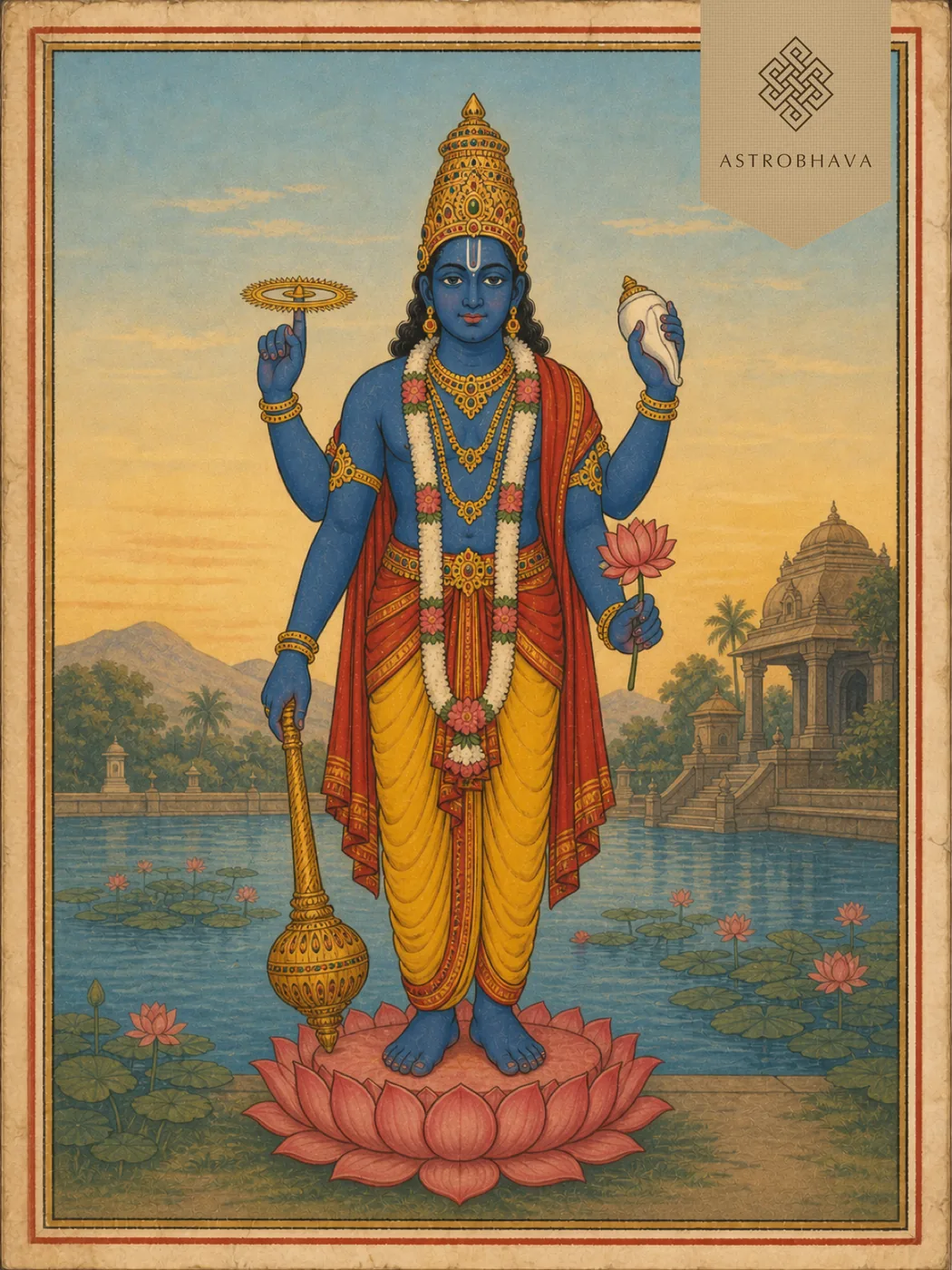
The Vishnu Sahasranama is the ordered recitation of one thousand names of Vishnu preserved in the Anushasana Parva of the Mahabharata. It is not a seed-syllable but a stotra in which each name isolates an attribute, a cosmic function or a deed of the Lord who reclines upon Ananta, who strode the three worlds as Vamana, and who abides as the inner controller of every being. Bhishma, fixed upon his bed of arrows, delivers the litany in reply to Yudhishthira’s inquiry concerning the highest dharma and the one deity worthy of constant remembrance. Subsequent acharyas—Shankara, Parashara Bhatta, Madhva and others—composed verse-by-verse commentaries that treat the thousand names as a complete theological lexicon. To speak of the Sahasranama is therefore to speak of Vishnu under the aspect of inexhaustible nameability: the one whose glory no finite catalogue can exhaust, yet who is approached precisely through this catalogue transmitted from the dying grandsire to the eldest Pandava.
Bhishma on the Bed of Arrows
In the Anushasana Parva of the Mahabharata, after the great war has ended, Yudhishthira approaches Bhishma who lies upon the shaft-strewn field awaiting the sun’s northward turn. The new king asks which single deity is to be worshipped, which is the highest dharma, and by the recitation of whose names a person may pass beyond sorrow. Bhishma answers by declaring Vishnu the supreme refuge and then utters the thousand names, each name a facet of the same undivided reality. The epic frames the recitation as both battlefield testament and theological summa: the warrior who has upheld dharma through exile and war now exhausts language itself in praise of the Lord who upholds the worlds. Later tradition regards this moment as the authoritative origin of the Sahasranama, so that every subsequent chanting re-enters the conversation between the stricken patriarch and the righteous king on the Kurukshetra plain. The names that follow—beginning with Vishva and Vishnu—unfold from that dialogue and remain inseparable from it.
The mantra, in six scripts
- ॐ
- oṃ — the primordial syllable
- विश्वं
- viśvaṃ — the universe
- विष्णुः
- viṣṇuḥ — Vishnu
- वषट्कारः
- vaṣaṭkāraḥ — the one uttered with vaṣaṭ
- भूतभव्यभवत्प्रभुः
- bhūta-bhavya-bhavat-prabhuḥ — lord of past, future and present
Vishnu Sahasranamam lyrics in full
The thousand names, from the Mahabharata (Anushasana Parva).
All 109 verses, in Sanskrit, Tamil, Telugu, Kannada, Malayalam and English, each with its meaning. Choose a script:
Download the Vishnu Sahasranamam PDFAll 109 verses with their meanings, in Sanskrit. Free to print and keep.
विश्वं विष्णुर्वषट्कारो भूतभव्यभवत्प्रभुः ।
भूतकृद्भूतभृद्भावो भूतात्मा भूतभावनः ॥
விஶ்வம் விஷ்ணுர்வஷட்காரோ பூதபவ்யபவத்ப்ரபுஃ ।
பூதக்ருத்பூதப்ருத்பாவோ பூதாத்மா பூதபாவநஃ ॥
విశ్వం విష్ణుర్వషట్కారో భూతభవ్యభవత్ప్రభుః ।
భూతకృద్భూతభృద్భావో భూతాత్మా భూతభావనః ॥
ವಿಶ್ವಂ ವಿಷ್ಣುರ್ವಷಟ್ಕಾರೋ ಭೂತಭವ್ಯಭವತ್ಪ್ರಭುಃ ।
ಭೂತಕೃದ್ಭೂತಭೃದ್ಭಾವೋ ಭೂತಾತ್ಮಾ ಭೂತಭಾವನಃ ॥
വിശ്വം വിഷ്ണുര്വഷട്കാരോ ഭൂതഭവ്യഭവത്പ്രഭുഃ ।
ഭൂതകൃദ്ഭൂതഭൃദ്ഭാവോ ഭൂതാത്മാ ഭൂതഭാവനഃ ॥
viśvaṃ viṣṇurvaṣaṭkāro bhūtabhavyabhavatprabhuḥ |
bhūtakṛdbhūtabhṛdbhāvo bhūtātmā bhūtabhāvanaḥ ||
He who is the universe itself; the all-pervading Vishnu; the one for whom the sacrificial call vashat is uttered; the Lord of past, future and present. He creates, sustains and is the very existence of all beings; the Self of all beings, who brings them forth and nourishes them.
पूतात्मा परमात्मा च मुक्तानां परमा गतिः ।
अव्ययः पुरुषः साक्षी क्षेत्रज्ञोऽक्षर एव च ॥
பூதாத்மா பரமாத்மா ச முக்தாநாம் பரமா கதிஃ ।
அவ்யயஃ புருஷஃ ஸாக்ஷீ க்ஷேத்ரஜ்ஞோக்ஷர ஏவ ச ॥
పూతాత్మా పరమాత్మా చ ముక్తానాం పరమా గతిః ।
అవ్యయః పురుషః సాక్షీ క్షేత్రజ్ఞోఽక్షర ఏవ చ ॥
ಪೂತಾತ್ಮಾ ಪರಮಾತ್ಮಾ ಚ ಮುಕ್ತಾನಾಂ ಪರಮಾ ಗತಿಃ ।
ಅವ್ಯಯಃ ಪುರುಷಃ ಸಾಕ್ಷೀ ಕ್ಷೇತ್ರಜ್ಞೋಽಕ್ಷರ ಏವ ಚ ॥
പൂതാത്മാ പരമാത്മാ ച മുക്താനാം പരമാ ഗതിഃ ।
അവ്യയഃ പുരുഷഃ സാക്ഷീ ക്ഷേത്രജ്ഞോഽക്ഷര ഏവ ച ॥
pūtātmā paramātmā ca muktānāṃ paramā gatiḥ |
avyayaḥ puruṣaḥ sākṣī kṣetrajño'kṣara eva ca ||
The pure Self; the Supreme Self; the highest goal of the liberated; the imperishable; the Person dwelling in the body; the witness; the knower of the field; the indestructible.
योगो योगविदां नेता प्रधानपुरुषेश्वरः ।
नारसिंहवपुः श्रीमान् केशवः पुरुषोत्तमः ॥
யோகோ யோகவிதாம் நேதா ப்ரதாநபுருஷேஶ்வரஃ ।
நாரஸிம்ஹவபுஃ ஶ்ரீமாந் கேஶவஃ புருஷோத்தமஃ ॥
యోగో యోగవిదాం నేతా ప్రధానపురుషేశ్వరః ।
నారసింహవపుః శ్రీమాన్ కేశవః పురుషోత్తమః ॥
ಯೋಗೋ ಯೋಗವಿದಾಂ ನೇತಾ ಪ್ರಧಾನಪುರುಷೇಶ್ವರಃ ।
ನಾರಸಿಂಹವಪುಃ ಶ್ರೀಮಾನ್ ಕೇಶವಃ ಪುರುಷೋತ್ತಮಃ ॥
യോഗോ യോഗവിദാം നേതാ പ്രധാനപുരുഷേശ്വരഃ ।
നാരസിംഹവപുഃ ശ്രീമാന് കേശവഃ പുരുഷോത്തമഃ ॥
yogo yogavidāṃ netā pradhānapuruṣeśvaraḥ |
nārasiṃhavapuḥ śrīmān keśavaḥ puruṣottamaḥ ||
He who is reached through yoga; the guide of those who know yoga; the Lord of primordial nature and of souls; the one of man-lion form; ever united with Shri; Keshava of beautiful locks; the supreme Person.
सर्वः शर्वः शिवः स्थाणुर्भूतादिर्निधिरव्ययः ।
सम्भवो भावनो भर्ता प्रभवः प्रभुरीश्वरः ॥
ஸர்வஃ ஶர்வஃ ஶிவஃ ஸ்தாணுர்பூதாதிர்நிதிரவ்யயஃ ।
ஸம்பவோ பாவநோ பர்தா ப்ரபவஃ ப்ரபுரீஶ்வரஃ ॥
సర్వః శర్వః శివః స్థాణుర్భూతాదిర్నిధిరవ్యయః ।
సమ్భవో భావనో భర్తా ప్రభవః ప్రభురీశ్వరః ॥
ಸರ್ವಃ ಶರ್ವಃ ಶಿವಃ ಸ್ಥಾಣುರ್ಭೂತಾದಿರ್ನಿಧಿರವ್ಯಯಃ ।
ಸಮ್ಭವೋ ಭಾವನೋ ಭರ್ತಾ ಪ್ರಭವಃ ಪ್ರಭುರೀಶ್ವರಃ ॥
സര്വഃ ശര്വഃ ശിവഃ സ്ഥാണുര്ഭൂതാദിര്നിധിരവ്യയഃ ।
സമ്ഭവോ ഭാവനോ ഭര്താ പ്രഭവഃ പ്രഭുരീശ്വരഃ ॥
sarvaḥ śarvaḥ śivaḥ sthāṇurbhūtādirnidhiravyayaḥ |
sambhavo bhāvano bhartā prabhavaḥ prabhurīśvaraḥ ||
He who is all; the destroyer at dissolution; the pure and auspicious; the steadfast; the source of the elements; the imperishable treasure; the one who takes birth of His own will; the giver of fruits; the supporter; the origin of all; the mighty one; the sovereign Lord.
स्वयम्भूः शम्भुरादित्यः पुष्कराक्षो महास्वनः ।
अनादिनिधनो धाता विधाता धातुरुत्तमः ॥
ஸ்வயம்பூஃ ஶம்புராதித்யஃ புஷ்கராக்ஷோ மஹாஸ்வநஃ ।
அநாதிநிதநோ தாதா விதாதா தாதுருத்தமஃ ॥
స్వయమ్భూః శమ్భురాదిత్యః పుష్కరాక్షో మహాస్వనః ।
అనాదినిధనో ధాతా విధాతా ధాతురుత్తమః ॥
ಸ್ವಯಮ್ಭೂಃ ಶಮ್ಭುರಾದಿತ್ಯಃ ಪುಷ್ಕರಾಕ್ಷೋ ಮಹಾಸ್ವನಃ ।
ಅನಾದಿನಿಧನೋ ಧಾತಾ ವಿಧಾತಾ ಧಾತುರುತ್ತಮಃ ॥
സ്വയമ്ഭൂഃ ശമ്ഭുരാദിത്യഃ പുഷ്കരാക്ഷോ മഹാസ്വനഃ ।
അനാദിനിധനോ ധാതാ വിധാതാ ധാതുരുത്തമഃ ॥
svayambhūḥ śambhurādityaḥ puṣkarākṣo mahāsvanaḥ |
anādinidhano dhātā vidhātā dhāturuttamaḥ ||
The self-existent; the bringer of happiness; the radiant one in the sun; the lotus-eyed; the one of mighty sound; without beginning or end; the upholder; the ordainer of actions and their fruits; supreme beyond all the elements.
अप्रमेयो हृषीकेशः पद्मनाभोऽमरप्रभुः ।
विश्वकर्मा मनुस्त्वष्टा स्थविष्ठः स्थविरो ध्रुवः ॥
அப்ரமேயோ ஹ்ருஷீகேஶஃ பத்மநாபோமரப்ரபுஃ ।
விஶ்வகர்மா மநுஸ்த்வஷ்டா ஸ்தவிஷ்டஃ ஸ்தவிரோ த்ருவஃ ॥
అప్రమేయో హృషీకేశః పద్మనాభోఽమరప్రభుః ।
విశ్వకర్మా మనుస్త్వష్టా స్థవిష్ఠః స్థవిరో ధ్రువః ॥
ಅಪ್ರಮೇಯೋ ಹೃಷೀಕೇಶಃ ಪದ್ಮನಾಭೋಽಮರಪ್ರಭುಃ ।
ವಿಶ್ವಕರ್ಮಾ ಮನುಸ್ತ್ವಷ್ಟಾ ಸ್ಥವಿಷ್ಠಃ ಸ್ಥವಿರೋ ಧ್ರುವಃ ॥
അപ്രമേയോ ഹൃഷീകേശഃ പദ്മനാഭോഽമരപ്രഭുഃ ।
വിശ്വകര്മാ മനുസ്ത്വഷ്ടാ സ്ഥവിഷ്ഠഃ സ്ഥവിരോ ധ്രുവഃ ॥
aprameyo hṛṣīkeśaḥ padmanābho'maraprabhuḥ |
viśvakarmā manustvaṣṭā sthaviṣṭhaḥ sthaviro dhruvaḥ ||
The immeasurable; Lord of the senses; the one with a lotus at His navel; Lord of the gods; whose work is the universe; the thinker; the one who reduces all at dissolution; the most massive; the ancient and constant.
अग्राह्यः शाश्वतः कृष्णो लोहिताक्षः प्रतर्दनः ।
प्रभूतस्त्रिककुब्धाम पवित्रं मङ्गलं परम् ॥
அக்ராஹ்யஃ ஶாஶ்வதஃ க்ருஷ்ணோ லோஹிதாக்ஷஃ ப்ரதர்தநஃ ।
ப்ரபூதஸ்த்ரிககுப்தாம பவித்ரம் மங்கலம் பரம் ॥
అగ్రాహ్యః శాశ్వతః కృష్ణో లోహితాక్షః ప్రతర్దనః ।
ప్రభూతస్త్రికకుబ్ధామ పవిత్రం మఙ్గలం పరమ్ ॥
ಅಗ್ರಾಹ್ಯಃ ಶಾಶ್ವತಃ ಕೃಷ್ಣೋ ಲೋಹಿತಾಕ್ಷಃ ಪ್ರತರ್ದನಃ ।
ಪ್ರಭೂತಸ್ತ್ರಿಕಕುಬ್ಧಾಮ ಪವಿತ್ರಂ ಮಙ್ಗಲಂ ಪರಮ್ ॥
അഗ്രാഹ്യഃ ശാശ്വതഃ കൃഷ്ണോ ലോഹിതാക്ഷഃ പ്രതര്ദനഃ ।
പ്രഭൂതസ്ത്രികകുബ്ധാമ പവിത്രം മങ്ഗലം പരമ് ॥
agrāhyaḥ śāśvataḥ kṛṣṇo lohitākṣaḥ pratardanaḥ |
prabhūtastrikakubdhāma pavitraṃ maṅgalaṃ param ||
He who cannot be grasped by the senses; the eternal; Krishna, dark-hued and of existence-bliss; the red-eyed; the destroyer at dissolution; full of wealth and excellence; the support of the three regions; the purifier; supreme auspiciousness.
ईशानः प्राणदः प्राणो ज्येष्ठः श्रेष्ठः प्रजापतिः ।
हिरण्यगर्भो भूगर्भो माधवो मधुसूदनः ॥
ஈஶாநஃ ப்ராணதஃ ப்ராணோ ஜ்யேஷ்டஃ ஶ்ரேஷ்டஃ ப்ரஜாபதிஃ ।
ஹிரண்யகர்போ பூகர்போ மாதவோ மதுஸூதநஃ ॥
ఈశానః ప్రాణదః ప్రాణో జ్యేష్ఠః శ్రేష్ఠః ప్రజాపతిః ।
హిరణ్యగర్భో భూగర్భో మాధవో మధుసూదనః ॥
ಈಶಾನಃ ಪ್ರಾಣದಃ ಪ್ರಾಣೋ ಜ್ಯೇಷ್ಠಃ ಶ್ರೇಷ್ಠಃ ಪ್ರಜಾಪತಿಃ ।
ಹಿರಣ್ಯಗರ್ಭೋ ಭೂಗರ್ಭೋ ಮಾಧವೋ ಮಧುಸೂದನಃ ॥
ഈശാനഃ പ്രാണദഃ പ്രാണോ ജ്യേഷ്ഠഃ ശ്രേഷ്ഠഃ പ്രജാപതിഃ ।
ഹിരണ്യഗര്ഭോ ഭൂഗര്ഭോ മാധവോ മധുസൂദനഃ ॥
īśānaḥ prāṇadaḥ prāṇo jyeṣṭhaḥ śreṣṭhaḥ prajāpatiḥ |
hiraṇyagarbho bhūgarbho mādhavo madhusūdanaḥ ||
The controller; the giver of life; life itself; the eldest; the most praiseworthy; Lord of creatures; the golden womb; the one who holds the earth within; consort of Lakshmi; slayer of the demon Madhu.
ईश्वरो विक्रमी धन्वी मेधावी विक्रमः क्रमः ।
अनुत्तमो दुराधर्षः कृतज्ञः कृतिरात्मवान् ॥
ஈஶ்வரோ விக்ரமீ தந்வீ மேதாவீ விக்ரமஃ க்ரமஃ ।
அநுத்தமோ துராதர்ஷஃ க்ருதஜ்ஞஃ க்ருதிராத்மவாந் ॥
ఈశ్వరో విక్రమీ ధన్వీ మేధావీ విక్రమః క్రమః ।
అనుత్తమో దురాధర్షః కృతజ్ఞః కృతిరాత్మవాన్ ॥
ಈಶ್ವರೋ ವಿಕ್ರಮೀ ಧನ್ವೀ ಮೇಧಾವೀ ವಿಕ್ರಮಃ ಕ್ರಮಃ ।
ಅನುತ್ತಮೋ ದುರಾಧರ್ಷಃ ಕೃತಜ್ಞಃ ಕೃತಿರಾತ್ಮವಾನ್ ॥
ഈശ്വരോ വിക്രമീ ധന്വീ മേധാവീ വിക്രമഃ ക്രമഃ ।
അനുത്തമോ ദുരാധര്ഷഃ കൃതജ്ഞഃ കൃതിരാത്മവാന് ॥
īśvaro vikramī dhanvī medhāvī vikramaḥ kramaḥ |
anuttamo durādharṣaḥ kṛtajñaḥ kṛtirātmavān ||
The almighty; the valiant; the bowman; the wise; whose stride spans the worlds; the all-pervading; the unsurpassed; the unassailable; the knower of all deeds; action itself; established in His own glory.
सुरेशः शरणं शर्म विश्वरेताः प्रजाभवः ।
अहः संवत्सरो व्यालः प्रत्ययः सर्वदर्शनः ॥
ஸுரேஶஃ ஶரணம் ஶர்ம விஶ்வரேதாஃ ப்ரஜாபவஃ ।
அஹஃ ஸம்வத்ஸரோ வ்யாலஃ ப்ரத்யயஃ ஸர்வதர்ஶநஃ ॥
సురేశః శరణం శర్మ విశ్వరేతాః ప్రజాభవః ।
అహః సంవత్సరో వ్యాలః ప్రత్యయః సర్వదర్శనః ॥
ಸುರೇಶಃ ಶರಣಂ ಶರ್ಮ ವಿಶ್ವರೇತಾಃ ಪ್ರಜಾಭವಃ ।
ಅಹಃ ಸಂವತ್ಸರೋ ವ್ಯಾಲಃ ಪ್ರತ್ಯಯಃ ಸರ್ವದರ್ಶನಃ ॥
സുരേശഃ ശരണം ശര്മ വിശ്വരേതാഃ പ്രജാഭവഃ ।
അഹഃ സംവത്സരോ വ്യാലഃ പ്രത്യയഃ സര്വദര്ശനഃ ॥
sureśaḥ śaraṇaṃ śarma viśvaretāḥ prajābhavaḥ |
ahaḥ saṃvatsaro vyālaḥ pratyayaḥ sarvadarśanaḥ ||
Lord of the gods; the refuge; supreme bliss; the seed of the universe; the origin of creatures; the luminous day; the year, as time; ungraspable like a serpent; consciousness itself; the all-seeing.
अजः सर्वेश्वरः सिद्धः सिद्धिः सर्वादिरच्युतः ।
वृषाकपिरमेयात्मा सर्वयोगविनिःसृतः ॥
அஜஃ ஸர்வேஶ்வரஃ ஸித்தஃ ஸித்திஃ ஸர்வாதிரச்யுதஃ ।
வ்ருஷாகபிரமேயாத்மா ஸர்வயோகவிநிஃஸ்ருதஃ ॥
అజః సర్వేశ్వరః సిద్ధః సిద్ధిః సర్వాదిరచ్యుతః ।
వృషాకపిరమేయాత్మా సర్వయోగవినిఃసృతః ॥
ಅಜಃ ಸರ್ವೇಶ್ವರಃ ಸಿದ್ಧಃ ಸಿದ್ಧಿಃ ಸರ್ವಾದಿರಚ್ಯುತಃ ।
ವೃಷಾಕಪಿರಮೇಯಾತ್ಮಾ ಸರ್ವಯೋಗವಿನಿಃಸೃತಃ ॥
അജഃ സര്വേശ്വരഃ സിദ്ധഃ സിദ്ധിഃ സര്വാദിരച്യുതഃ ।
വൃഷാകപിരമേയാത്മാ സര്വയോഗവിനിഃസൃതഃ ॥
ajaḥ sarveśvaraḥ siddhaḥ siddhiḥ sarvādiracyutaḥ |
vṛṣākapirameyātmā sarvayogaviniḥsṛtaḥ ||
The unborn; Lord of all; the ever-perfect; the goal itself; the beginning of all; the one who never falls from His nature; the embodiment of dharma who as the Boar raised the earth; of immeasurable nature; free from all attachments.
वसुर्वसुमनाः सत्यः समात्माऽसम्मितः समः ।
अमोघः पुण्डरीकाक्षो वृषकर्मा वृषाकृतिः ॥
வஸுர்வஸுமநாஃ ஸத்யஃ ஸமாத்மாஸம்மிதஃ ஸமஃ ।
அமோகஃ புண்டரீகாக்ஷோ வ்ருஷகர்மா வ்ருஷாக்ருதிஃ ॥
వసుర్వసుమనాః సత్యః సమాత్మాఽసమ్మితః సమః ।
అమోఘః పుణ్డరీకాక్షో వృషకర్మా వృషాకృతిః ॥
ವಸುರ್ವಸುಮನಾಃ ಸತ್ಯಃ ಸಮಾತ್ಮಾಽಸಮ್ಮಿತಃ ಸಮಃ ।
ಅಮೋಘಃ ಪುಣ್ಡರೀಕಾಕ್ಷೋ ವೃಷಕರ್ಮಾ ವೃಷಾಕೃತಿಃ ॥
വസുര്വസുമനാഃ സത്യഃ സമാത്മാഽസമ്മിതഃ സമഃ ।
അമോഘഃ പുണ്ഡരീകാക്ഷോ വൃഷകര്മാ വൃഷാകൃതിഃ ॥
vasurvasumanāḥ satyaḥ samātmā'sammitaḥ samaḥ |
amoghaḥ puṇḍarīkākṣo vṛṣakarmā vṛṣākṛtiḥ ||
The dwelling of all; of noble mind; truth itself; the same towards all; the unmeasured; ever equal; whose acts are never in vain; lotus-eyed; whose deeds are dharma; whose form is dharma.
रुद्रो बहुशिरा बभ्रुर्विश्वयोनिः शुचिश्रवाः ।
अमृतः शाश्वतस्थाणुर्वरारोहो महातपाः ॥
ருத்ரோ பஹுஶிரா பப்ருர்விஶ்வயோநிஃ ஶுசிஶ்ரவாஃ ।
அம்ருதஃ ஶாஶ்வதஸ்தாணுர்வராரோஹோ மஹாதபாஃ ॥
రుద్రో బహుశిరా బభ్రుర్విశ్వయోనిః శుచిశ్రవాః ।
అమృతః శాశ్వతస్థాణుర్వరారోహో మహాతపాః ॥
ರುದ್ರೋ ಬಹುಶಿರಾ ಬಭ್ರುರ್ವಿಶ್ವಯೋನಿಃ ಶುಚಿಶ್ರವಾಃ ।
ಅಮೃತಃ ಶಾಶ್ವತಸ್ಥಾಣುರ್ವರಾರೋಹೋ ಮಹಾತಪಾಃ ॥
രുദ്രോ ബഹുശിരാ ബഭ്രുര്വിശ്വയോനിഃ ശുചിശ്രവാഃ ।
അമൃതഃ ശാശ്വതസ്ഥാണുര്വരാരോഹോ മഹാതപാഃ ॥
rudro bahuśirā babhrurviśvayoniḥ śuciśravāḥ |
amṛtaḥ śāśvatasthāṇurvarāroho mahātapāḥ ||
The one who makes beings weep at dissolution; the many-headed; the upholder of the worlds; the source of the universe; whose names are pure to hear; the deathless; eternal and unmoving; the excellent goal; of great austerity.
सर्वगः सर्वविद्भानुर्विष्वक्सेनो जनार्दनः ।
वेदो वेदविदव्यङ्गो वेदाङ्गो वेदवित् कविः ॥
ஸர்வகஃ ஸர்வவித்பாநுர்விஷ்வக்ஸேநோ ஜநார்தநஃ ।
வேதோ வேதவிதவ்யங்கோ வேதாங்கோ வேதவித் கவிஃ ॥
సర్వగః సర్వవిద్భానుర్విష్వక్సేనో జనార్దనః ।
వేదో వేదవిదవ్యఙ్గో వేదాఙ్గో వేదవిత్ కవిః ॥
ಸರ್ವಗಃ ಸರ್ವವಿದ್ಭಾನುರ್ವಿಷ್ವಕ್ಸೇನೋ ಜನಾರ್ದನಃ ।
ವೇದೋ ವೇದವಿದವ್ಯಙ್ಗೋ ವೇದಾಙ್ಗೋ ವೇದವಿತ್ ಕವಿಃ ॥
സര്വഗഃ സര്വവിദ്ഭാനുര്വിഷ്വക്സേനോ ജനാര്ദനഃ ।
വേദോ വേദവിദവ്യങ്ഗോ വേദാങ്ഗോ വേദവിത് കവിഃ ॥
sarvagaḥ sarvavidbhānurviṣvakseno janārdanaḥ |
vedo vedavidavyaṅgo vedāṅgo vedavit kaviḥ ||
The all-pervading; all-knowing and radiant; before whom hostile armies scatter; the one who afflicts the wicked; the Veda itself; knower of the Veda; the flawless; whose limbs are the Vedic sciences; who reflects on the Veda; the seer.
लोकाध्यक्षः सुराध्यक्षो धर्माध्यक्षः कृताकृतः ।
चतुरात्मा चतुर्व्यूहश्चतुर्दंष्ट्रश्चतुर्भुजः ॥
லோகாத்யக்ஷஃ ஸுராத்யக்ஷோ தர்மாத்யக்ஷஃ க்ருதாக்ருதஃ ।
சதுராத்மா சதுர்வ்யூஹஶ்சதுர்தம்ஷ்ட்ரஶ்சதுர்புஜஃ ॥
లోకాధ్యక్షః సురాధ్యక్షో ధర్మాధ్యక్షః కృతాకృతః ।
చతురాత్మా చతుర్వ్యూహశ్చతుర్దంష్ట్రశ్చతుర్భుజః ॥
ಲೋಕಾಧ್ಯಕ್ಷಃ ಸುರಾಧ್ಯಕ್ಷೋ ಧರ್ಮಾಧ್ಯಕ್ಷಃ ಕೃತಾಕೃತಃ ।
ಚತುರಾತ್ಮಾ ಚತುರ್ವ್ಯೂಹಶ್ಚತುರ್ದಂಷ್ಟ್ರಶ್ಚತುರ್ಭುಜಃ ॥
ലോകാധ്യക്ഷഃ സുരാധ്യക്ഷോ ധര്മാധ്യക്ഷഃ കൃതാകൃതഃ ।
ചതുരാത്മാ ചതുര്വ്യൂഹശ്ചതുര്ദംഷ്ട്രശ്ചതുര്ഭുജഃ ॥
lokādhyakṣaḥ surādhyakṣo dharmādhyakṣaḥ kṛtākṛtaḥ |
caturātmā caturvyūhaścaturdaṃṣṭraścaturbhujaḥ ||
Overseer of the worlds; overseer of the gods; overseer of dharma; both effect and cause; the fourfold Self; of four emanations; the four-tusked; the four-armed.
भ्राजिष्णुर्भोजनं भोक्ता सहिष्णुर्जगदादिजः ।
अनघो विजयो जेता विश्वयोनिः पुनर्वसुः ॥
ப்ராஜிஷ்ணுர்போஜநம் போக்தா ஸஹிஷ்ணுர்ஜகதாதிஜஃ ।
அநகோ விஜயோ ஜேதா விஶ்வயோநிஃ புநர்வஸுஃ ॥
భ్రాజిష్ణుర్భోజనం భోక్తా సహిష్ణుర్జగదాదిజః ।
అనఘో విజయో జేతా విశ్వయోనిః పునర్వసుః ॥
ಭ್ರಾಜಿಷ್ಣುರ್ಭೋಜನಂ ಭೋಕ್ತಾ ಸಹಿಷ್ಣುರ್ಜಗದಾದಿಜಃ ।
ಅನಘೋ ವಿಜಯೋ ಜೇತಾ ವಿಶ್ವಯೋನಿಃ ಪುನರ್ವಸುಃ ॥
ഭ്രാജിഷ്ണുര്ഭോജനം ഭോക്താ സഹിഷ്ണുര്ജഗദാദിജഃ ।
അനഘോ വിജയോ ജേതാ വിശ്വയോനിഃ പുനര്വസുഃ ॥
bhrājiṣṇurbhojanaṃ bhoktā sahiṣṇurjagadādijaḥ |
anagho vijayo jetā viśvayoniḥ punarvasuḥ ||
The effulgent; the object of enjoyment; the enjoyer; the forbearing; the first-born at the beginning of the world; the sinless; the victorious; the conqueror; the source of the universe; who dwells again and again in bodies.
उपेन्द्रो वामनः प्रांशुरमोघः शुचिरूर्जितः ।
अतीन्द्रः सङ्ग्रहः सर्गो धृतात्मा नियमो यमः ॥
உபேந்த்ரோ வாமநஃ ப்ராம்ஶுரமோகஃ ஶுசிரூர்ஜிதஃ ।
அதீந்த்ரஃ ஸங்க்ரஹஃ ஸர்கோ த்ருதாத்மா நியமோ யமஃ ॥
ఉపేన్ద్రో వామనః ప్రాంశురమోఘః శుచిరూర్జితః ।
అతీన్ద్రః సఙ్గ్రహః సర్గో ధృతాత్మా నియమో యమః ॥
ಉಪೇನ್ದ್ರೋ ವಾಮನಃ ಪ್ರಾಂಶುರಮೋಘಃ ಶುಚಿರೂರ್ಜಿತಃ ।
ಅತೀನ್ದ್ರಃ ಸಙ್ಗ್ರಹಃ ಸರ್ಗೋ ಧೃತಾತ್ಮಾ ನಿಯಮೋ ಯಮಃ ॥
ഉപേന്ദ്രോ വാമനഃ പ്രാംശുരമോഘഃ ശുചിരൂര്ജിതഃ ।
അതീന്ദ്രഃ സങ്ഗ്രഹഃ സര്ഗോ ധൃതാത്മാ നിയമോ യമഃ ॥
upendro vāmanaḥ prāṃśuramoghaḥ śucirūrjitaḥ |
atīndraḥ saṅgrahaḥ sargo dhṛtātmā niyamo yamaḥ ||
The younger brother of Indra; the Dwarf; the tall one of the three strides; whose acts are never in vain; the pure; the mighty; who surpasses Indra; who gathers all at dissolution; creation itself; steadfast in His nature; the appointer; the inner controller.
वेद्यो वैद्यः सदायोगी वीरहा माधवो मधुः ।
अतीन्द्रियो महामायो महोत्साहो महाबलः ॥
வேத்யோ வைத்யஃ ஸதாயோகீ வீரஹா மாதவோ மதுஃ ।
அதீந்த்ரியோ மஹாமாயோ மஹோத்ஸாஹோ மஹாபலஃ ॥
వేద్యో వైద్యః సదాయోగీ వీరహా మాధవో మధుః ।
అతీన్ద్రియో మహామాయో మహోత్సాహో మహాబలః ॥
ವೇದ್ಯೋ ವೈದ್ಯಃ ಸದಾಯೋಗೀ ವೀರಹಾ ಮಾಧವೋ ಮಧುಃ ।
ಅತೀನ್ದ್ರಿಯೋ ಮಹಾಮಾಯೋ ಮಹೋತ್ಸಾಹೋ ಮಹಾಬಲಃ ॥
വേദ്യോ വൈദ്യഃ സദായോഗീ വീരഹാ മാധവോ മധുഃ ।
അതീന്ദ്രിയോ മഹാമായോ മഹോത്സാഹോ മഹാബലഃ ॥
vedyo vaidyaḥ sadāyogī vīrahā mādhavo madhuḥ |
atīndriyo mahāmāyo mahotsāho mahābalaḥ ||
The one to be known; the knower of all lore; ever in yoga; slayer of mighty demons; Lord of knowledge; sweetness itself; beyond the senses; the great wielder of maya; of great zeal; of great strength.
महाबुद्धिर्महावीर्यो महाशक्तिर्महाद्युतिः ।
अनिर्देश्यवपुः श्रीमानमेयात्मा महाद्रिधृक् ॥
மஹாபுத்திர்மஹாவீர்யோ மஹாஶக்திர்மஹாத்யுதிஃ ।
அநிர்தேஶ்யவபுஃ ஶ்ரீமாநமேயாத்மா மஹாத்ரித்ருக் ॥
మహాబుద్ధిర్మహావీర్యో మహాశక్తిర్మహాద్యుతిః ।
అనిర్దేశ్యవపుః శ్రీమానమేయాత్మా మహాద్రిధృక్ ॥
ಮಹಾಬುದ್ಧಿರ್ಮಹಾವೀರ್ಯೋ ಮಹಾಶಕ್ತಿರ್ಮಹಾದ್ಯುತಿಃ ।
ಅನಿರ್ದೇಶ್ಯವಪುಃ ಶ್ರೀಮಾನಮೇಯಾತ್ಮಾ ಮಹಾದ್ರಿಧೃಕ್ ॥
മഹാബുദ്ധിര്മഹാവീര്യോ മഹാശക്തിര്മഹാദ്യുതിഃ ।
അനിര്ദേശ്യവപുഃ ശ്രീമാനമേയാത്മാ മഹാദ്രിധൃക് ॥
mahābuddhirmahāvīryo mahāśaktirmahādyutiḥ |
anirdeśyavapuḥ śrīmānameyātmā mahādridhṛk ||
Great in intellect, in valour, in power and in splendour; of indescribable form; the glorious; of immeasurable nature; the one who held up the great mountain.
महेष्वासो महीभर्ता श्रीनिवासः सतां गतिः ।
अनिरुद्धः सुरानन्दो गोविन्दो गोविदां पतिः ॥
மஹேஷ்வாஸோ மஹீபர்தா ஶ்ரீநிவாஸஃ ஸதாம் கதிஃ ।
அநிருத்தஃ ஸுராநந்தோ கோவிந்தோ கோவிதாம் பதிஃ ॥
మహేష్వాసో మహీభర్తా శ్రీనివాసః సతాం గతిః ।
అనిరుద్ధః సురానన్దో గోవిన్దో గోవిదాం పతిః ॥
ಮಹೇಷ್ವಾಸೋ ಮಹೀಭರ್ತಾ ಶ್ರೀನಿವಾಸಃ ಸತಾಂ ಗತಿಃ ।
ಅನಿರುದ್ಧಃ ಸುರಾನನ್ದೋ ಗೋವಿನ್ದೋ ಗೋವಿದಾಂ ಪತಿಃ ॥
മഹേഷ്വാസോ മഹീഭര്താ ശ്രീനിവാസഃ സതാം ഗതിഃ ।
അനിരുദ്ധഃ സുരാനന്ദോ ഗോവിന്ദോ ഗോവിദാം പതിഃ ॥
maheṣvāso mahībhartā śrīnivāsaḥ satāṃ gatiḥ |
aniruddhaḥ surānando govindo govidāṃ patiḥ ||
The great archer; upholder of the earth; abode of Shri; the refuge of the good; the unobstructed; the delight of the gods; Govinda, known through the words of the Veda; Lord of the wise.
मरीचिर्दमनो हंसः सुपर्णो भुजगोत्तमः ।
हिरण्यनाभः सुतपाः पद्मनाभः प्रजापतिः ॥
மரீசிர்தமநோ ஹம்ஸஃ ஸுபர்ணோ புஜகோத்தமஃ ।
ஹிரண்யநாபஃ ஸுதபாஃ பத்மநாபஃ ப்ரஜாபதிஃ ॥
మరీచిర్దమనో హంసః సుపర్ణో భుజగోత్తమః ।
హిరణ్యనాభః సుతపాః పద్మనాభః ప్రజాపతిః ॥
ಮರೀಚಿರ್ದಮನೋ ಹಂಸಃ ಸುಪರ್ಣೋ ಭುಜಗೋತ್ತಮಃ ।
ಹಿರಣ್ಯನಾಭಃ ಸುತಪಾಃ ಪದ್ಮನಾಭಃ ಪ್ರಜಾಪತಿಃ ॥
മരീചിര്ദമനോ ഹംസഃ സുപര്ണോ ഭുജഗോത്തമഃ ।
ഹിരണ്യനാഭഃ സുതപാഃ പദ്മനാഭഃ പ്രജാപതിഃ ॥
marīcirdamano haṃsaḥ suparṇo bhujagottamaḥ |
hiraṇyanābhaḥ sutapāḥ padmanābhaḥ prajāpatiḥ ||
The radiance of the radiant; the subduer; the swan who removes the fear of worldly existence; of beautiful wings; the best of serpents; of golden navel; of great austerity; lotus-naveled; father of all creatures.
अमृत्युः सर्वदृक् सिंहः सन्धाता सन्धिमान् स्थिरः ।
अजो दुर्मर्षणः शास्ता विश्रुतात्मा सुरारिहा ॥
அம்ருத்யுஃ ஸர்வத்ருக் ஸிம்ஹஃ ஸந்தாதா ஸந்திமாந் ஸ்திரஃ ।
அஜோ துர்மர்ஷணஃ ஶாஸ்தா விஶ்ருதாத்மா ஸுராரிஹா ॥
అమృత్యుః సర్వదృక్ సింహః సన్ధాతా సన్ధిమాన్ స్థిరః ।
అజో దుర్మర్షణః శాస్తా విశ్రుతాత్మా సురారిహా ॥
ಅಮೃತ್ಯುಃ ಸರ್ವದೃಕ್ ಸಿಂಹಃ ಸನ್ಧಾತಾ ಸನ್ಧಿಮಾನ್ ಸ್ಥಿರಃ ।
ಅಜೋ ದುರ್ಮರ್ಷಣಃ ಶಾಸ್ತಾ ವಿಶ್ರುತಾತ್ಮಾ ಸುರಾರಿಹಾ ॥
അമൃത്യുഃ സര്വദൃക് സിംഹഃ സന്ധാതാ സന്ധിമാന് സ്ഥിരഃ ।
അജോ ദുര്മര്ഷണഃ ശാസ്താ വിശ്രുതാത്മാ സുരാരിഹാ ॥
amṛtyuḥ sarvadṛk siṃhaḥ sandhātā sandhimān sthiraḥ |
ajo durmarṣaṇaḥ śāstā viśrutātmā surārihā ||
The deathless; the all-seeing; the lion; who joins beings to the fruits of their deeds; who partakes of those fruits; the steady; the unborn; the irresistible; the instructor; of renowned nature; slayer of the foes of the gods.
गुरुर्गुरुतमो धाम सत्यः सत्यपराक्रमः ।
निमिषोऽनिमिषः स्रग्वी वाचस्पतिरुदारधीः ॥
குருர்குருதமோ தாம ஸத்யஃ ஸத்யபராக்ரமஃ ।
நிமிஷோநிமிஷஃ ஸ்ரக்வீ வாசஸ்பதிருதாரதீஃ ॥
గురుర్గురుతమో ధామ సత్యః సత్యపరాక్రమః ।
నిమిషోఽనిమిషః స్రగ్వీ వాచస్పతిరుదారధీః ॥
ಗುರುರ್ಗುರುತಮೋ ಧಾಮ ಸತ್ಯಃ ಸತ್ಯಪರಾಕ್ರಮಃ ।
ನಿಮಿಷೋಽನಿಮಿಷಃ ಸ್ರಗ್ವೀ ವಾಚಸ್ಪತಿರುದಾರಧೀಃ ॥
ഗുരുര്ഗുരുതമോ ധാമ സത്യഃ സത്യപരാക്രമഃ ।
നിമിഷോഽനിമിഷഃ സ്രഗ്വീ വാചസ്പതിരുദാരധീഃ ॥
gururgurutamo dhāma satyaḥ satyaparākramaḥ |
nimiṣo'nimiṣaḥ sragvī vācaspatirudāradhīḥ ||
The teacher; the greatest of teachers; the abode and light of all; the truth; of true valour; whose eyes are closed in yogic sleep; ever wakeful; the garlanded; Lord of speech, of vast intellect.
अग्रणीर्ग्रामणीः श्रीमान् न्यायो नेता समीरणः ।
सहस्रमूर्धा विश्वात्मा सहस्राक्षः सहस्रपात् ॥
அக்ரணீர்க்ராமணீஃ ஶ்ரீமாந் ந்யாயோ நேதா ஸமீரணஃ ।
ஸஹஸ்ரமூர்தா விஶ்வாத்மா ஸஹஸ்ராக்ஷஃ ஸஹஸ்ரபாத் ॥
అగ్రణీర్గ్రామణీః శ్రీమాన్ న్యాయో నేతా సమీరణః ।
సహస్రమూర్ధా విశ్వాత్మా సహస్రాక్షః సహస్రపాత్ ॥
ಅಗ್ರಣೀರ್ಗ್ರಾಮಣೀಃ ಶ್ರೀಮಾನ್ ನ್ಯಾಯೋ ನೇತಾ ಸಮೀರಣಃ ।
ಸಹಸ್ರಮೂರ್ಧಾ ವಿಶ್ವಾತ್ಮಾ ಸಹಸ್ರಾಕ್ಷಃ ಸಹಸ್ರಪಾತ್ ॥
അഗ്രണീര്ഗ്രാമണീഃ ശ്രീമാന് ന്യായോ നേതാ സമീരണഃ ।
സഹസ്രമൂര്ധാ വിശ്വാത്മാ സഹസ്രാക്ഷഃ സഹസ്രപാത് ॥
agraṇīrgrāmaṇīḥ śrīmān nyāyo netā samīraṇaḥ |
sahasramūrdhā viśvātmā sahasrākṣaḥ sahasrapāt ||
The one who leads forward; the leader of hosts; the radiant; justice itself; the guide; who moves beings as breath; thousand-headed; the Self of the universe; thousand-eyed; thousand-footed.
आवर्तनो निवृत्तात्मा संवृतः सम्प्रमर्दनः ।
अहः संवर्तको वह्निरनिलो धरणीधरः ॥
ஆவர்தநோ நிவ்ருத்தாத்மா ஸம்வ்ருதஃ ஸம்ப்ரமர்தநஃ ।
அஹஃ ஸம்வர்தகோ வஹ்நிரநிலோ தரணீதரஃ ॥
ఆవర్తనో నివృత్తాత్మా సంవృతః సమ్ప్రమర్దనః ।
అహః సంవర్తకో వహ్నిరనిలో ధరణీధరః ॥
ಆವರ್ತನೋ ನಿವೃತ್ತಾತ್ಮಾ ಸಂವೃತಃ ಸಮ್ಪ್ರಮರ್ದನಃ ।
ಅಹಃ ಸಂವರ್ತಕೋ ವಹ್ನಿರನಿಲೋ ಧರಣೀಧರಃ ॥
ആവര്തനോ നിവൃത്താത്മാ സംവൃതഃ സമ്പ്രമര്ദനഃ ।
അഹഃ സംവര്തകോ വഹ്നിരനിലോ ധരണീധരഃ ॥
āvartano nivṛttātmā saṃvṛtaḥ sampramardanaḥ |
ahaḥ saṃvartako vahniranilo dharaṇīdharaḥ ||
The one who turns the wheel of worldly existence; free from bondage; veiled by His maya; who crushes the wicked; who brings on the day as the sun; the fire that bears oblations; the wind; the upholder of the earth.
सुप्रसादः प्रसन्नात्मा विश्वधृग्विश्वभुग्विभुः ।
सत्कर्ता सत्कृतः साधुर्जह्नुर्नारायणो नरः ॥
ஸுப்ரஸாதஃ ப்ரஸந்நாத்மா விஶ்வத்ருக்விஶ்வபுக்விபுஃ ।
ஸத்கர்தா ஸத்க்ருதஃ ஸாதுர்ஜஹ்நுர்நாராயணோ நரஃ ॥
సుప్రసాదః ప్రసన్నాత్మా విశ్వధృగ్విశ్వభుగ్విభుః ।
సత్కర్తా సత్కృతః సాధుర్జహ్నుర్నారాయణో నరః ॥
ಸುಪ್ರಸಾದಃ ಪ್ರಸನ್ನಾತ್ಮಾ ವಿಶ್ವಧೃಗ್ವಿಶ್ವಭುಗ್ವಿಭುಃ ।
ಸತ್ಕರ್ತಾ ಸತ್ಕೃತಃ ಸಾಧುರ್ಜಹ್ನುರ್ನಾರಾಯಣೋ ನರಃ ॥
സുപ്രസാദഃ പ്രസന്നാത്മാ വിശ്വധൃഗ്വിശ്വഭുഗ്വിഭുഃ ।
സത്കര്താ സത്കൃതഃ സാധുര്ജഹ്നുര്നാരായണോ നരഃ ॥
suprasādaḥ prasannātmā viśvadhṛgviśvabhugvibhuḥ |
satkartā satkṛtaḥ sādhurjahnurnārāyaṇo naraḥ ||
The gracious; of serene nature; sustainer of the universe; protector of the universe; the manifold; who honours the good; honoured by the honoured; the righteous; who withdraws beings at dissolution; Narayana, abode of all beings; the eternal guide.
असङ्ख्येयोऽप्रमेयात्मा विशिष्टः शिष्टकृच्छुचिः ।
सिद्धार्थः सिद्धसङ्कल्पः सिद्धिदः सिद्धिसाधनः ॥
அஸங்க்யேயோப்ரமேயாத்மா விஶிஷ்டஃ ஶிஷ்டக்ருச்சுசிஃ ।
ஸித்தார்தஃ ஸித்தஸங்கல்பஃ ஸித்திதஃ ஸித்திஸாதநஃ ॥
అసఙ్ఖ్యేయోఽప్రమేయాత్మా విశిష్టః శిష్టకృచ్ఛుచిః ।
సిద్ధార్థః సిద్ధసఙ్కల్పః సిద్ధిదః సిద్ధిసాధనః ॥
ಅಸಙ್ಖ್ಯೇಯೋಽಪ್ರಮೇಯಾತ್ಮಾ ವಿಶಿಷ್ಟಃ ಶಿಷ್ಟಕೃಚ್ಛುಚಿಃ ।
ಸಿದ್ಧಾರ್ಥಃ ಸಿದ್ಧಸಙ್ಕಲ್ಪಃ ಸಿದ್ಧಿದಃ ಸಿದ್ಧಿಸಾಧನಃ ॥
അസങ്ഖ്യേയോഽപ്രമേയാത്മാ വിശിഷ്ടഃ ശിഷ്ടകൃച്ഛുചിഃ ।
സിദ്ധാര്ഥഃ സിദ്ധസങ്കല്പഃ സിദ്ധിദഃ സിദ്ധിസാധനഃ ॥
asaṅkhyeyo'prameyātmā viśiṣṭaḥ śiṣṭakṛcchuciḥ |
siddhārthaḥ siddhasaṅkalpaḥ siddhidaḥ siddhisādhanaḥ ||
Beyond number; of immeasurable nature; the transcendent; who commands the good; the pure; whose purposes are fulfilled; whose resolves come true; the giver of fruits; the means of attainment.
वृषाही वृषभो विष्णुर्वृषपर्वा वृषोदरः ।
वर्धनो वर्धमानश्च विविक्तः श्रुतिसागरः ॥
வ்ருஷாஹீ வ்ருஷபோ விஷ்ணுர்வ்ருஷபர்வா வ்ருஷோதரஃ ।
வர்தநோ வர்தமாநஶ்ச விவிக்தஃ ஶ்ருதிஸாகரஃ ॥
వృషాహీ వృషభో విష్ణుర్వృషపర్వా వృషోదరః ।
వర్ధనో వర్ధమానశ్చ వివిక్తః శ్రుతిసాగరః ॥
ವೃಷಾಹೀ ವೃಷಭೋ ವಿಷ್ಣುರ್ವೃಷಪರ್ವಾ ವೃಷೋದರಃ ।
ವರ್ಧನೋ ವರ್ಧಮಾನಶ್ಚ ವಿವಿಕ್ತಃ ಶ್ರುತಿಸಾಗರಃ ॥
വൃഷാഹീ വൃഷഭോ വിഷ്ണുര്വൃഷപര്വാ വൃഷോദരഃ ।
വര്ധനോ വര്ധമാനശ്ച വിവിക്തഃ ശ്രുതിസാഗരഃ ॥
vṛṣāhī vṛṣabho viṣṇurvṛṣaparvā vṛṣodaraḥ |
vardhano vardhamānaśca viviktaḥ śrutisāgaraḥ ||
The Lord of the sacred rites; who showers blessings; the all-pervading; whose steps are dharma; whose womb holds all beings; who nourishes; who grows as the world; ever apart; the ocean of scripture.
सुभुजो दुर्धरो वाग्मी महेन्द्रो वसुदो वसुः ।
नैकरूपो बृहद्रूपः शिपिविष्टः प्रकाशनः ॥
ஸுபுஜோ துர்தரோ வாக்மீ மஹேந்த்ரோ வஸுதோ வஸுஃ ।
நைகரூபோ ப்ருஹத்ரூபஃ ஶிபிவிஷ்டஃ ப்ரகாஶநஃ ॥
సుభుజో దుర్ధరో వాగ్మీ మహేన్ద్రో వసుదో వసుః ।
నైకరూపో బృహద్రూపః శిపివిష్టః ప్రకాశనః ॥
ಸುಭುಜೋ ದುರ್ಧರೋ ವಾಗ್ಮೀ ಮಹೇನ್ದ್ರೋ ವಸುದೋ ವಸುಃ ।
ನೈಕರೂಪೋ ಬೃಹದ್ರೂಪಃ ಶಿಪಿವಿಷ್ಟಃ ಪ್ರಕಾಶನಃ ॥
സുഭുജോ ദുര്ധരോ വാഗ്മീ മഹേന്ദ്രോ വസുദോ വസുഃ ।
നൈകരൂപോ ബൃഹദ്രൂപഃ ശിപിവിഷ്ടഃ പ്രകാശനഃ ॥
subhujo durdharo vāgmī mahendro vasudo vasuḥ |
naikarūpo bṛhadrūpaḥ śipiviṣṭaḥ prakāśanaḥ ||
Of beautiful arms; hard to hold in the mind; the eloquent; the great Lord; the giver of wealth; wealth itself; of many forms; of vast form; who pervades the rays of light; the illuminator.
ओजस्तेजोद्युतिधरः प्रकाशात्मा प्रतापनः ।
ऋद्धः स्पष्टाक्षरो मन्त्रश्चन्द्रांशुर्भास्करद्युतिः ॥
ஓஜஸ்தேஜோத்யுதிதரஃ ப்ரகாஶாத்மா ப்ரதாபநஃ ।
ருத்தஃ ஸ்பஷ்டாக்ஷரோ மந்த்ரஶ்சந்த்ராம்ஶுர்பாஸ்கரத்யுதிஃ ॥
ఓజస్తేజోద్యుతిధరః ప్రకాశాత్మా ప్రతాపనః ।
ఋద్ధః స్పష్టాక్షరో మన్త్రశ్చన్ద్రాంశుర్భాస్కరద్యుతిః ॥
ಓಜಸ್ತೇಜೋದ್ಯುತಿಧರಃ ಪ್ರಕಾಶಾತ್ಮಾ ಪ್ರತಾಪನಃ ।
ಋದ್ಧಃ ಸ್ಪಷ್ಟಾಕ್ಷರೋ ಮನ್ತ್ರಶ್ಚನ್ದ್ರಾಂಶುರ್ಭಾಸ್ಕರದ್ಯುತಿಃ ॥
ഓജസ്തേജോദ്യുതിധരഃ പ്രകാശാത്മാ പ്രതാപനഃ ।
ഋദ്ധഃ സ്പഷ്ടാക്ഷരോ മന്ത്രശ്ചന്ദ്രാംശുര്ഭാസ്കരദ്യുതിഃ ॥
ojastejodyutidharaḥ prakāśātmā pratāpanaḥ |
ṛddhaḥ spaṣṭākṣaro mantraścandrāṃśurbhāskaradyutiḥ ||
Bearer of vitality, energy and splendour; of luminous nature; who gives heat as the sun; full of excellence; whose syllable Om is clear; the sacred mantra; soothing like the moon's rays; with the splendour of the sun.
अमृतांशूद्भवो भानुः शशबिन्दुः सुरेश्वरः ।
औषधं जगतः सेतुः सत्यधर्मपराक्रमः ॥
அம்ருதாம்ஶூத்பவோ பாநுஃ ஶஶபிந்துஃ ஸுரேஶ்வரஃ ।
ஔஷதம் ஜகதஃ ஸேதுஃ ஸத்யதர்மபராக்ரமஃ ॥
అమృతాంశూద్భవో భానుః శశబిన్దుః సురేశ్వరః ।
ఔషధం జగతః సేతుః సత్యధర్మపరాక్రమః ॥
ಅಮೃತಾಂಶೂದ್ಭವೋ ಭಾನುಃ ಶಶಬಿನ್ದುಃ ಸುರೇಶ್ವರಃ ।
ಔಷಧಂ ಜಗತಃ ಸೇತುಃ ಸತ್ಯಧರ್ಮಪರಾಕ್ರಮಃ ॥
അമൃതാംശൂദ്ഭവോ ഭാനുഃ ശശബിന്ദുഃ സുരേശ്വരഃ ।
ഔഷധം ജഗതഃ സേതുഃ സത്യധര്മപരാക്രമഃ ॥
amṛtāṃśūdbhavo bhānuḥ śaśabinduḥ sureśvaraḥ |
auṣadhaṃ jagataḥ setuḥ satyadharmaparākramaḥ ||
The source of the moon at the churning of the ocean; the shining; the moon; Lord of the gods; the remedy for worldly existence; the bridge of the world; whose truth, dharma and valour are real.
भूतभव्यभवन्नाथः पवनः पावनोऽनलः ।
कामहा कामकृत्कान्तः कामः कामप्रदः प्रभुः ॥
பூதபவ்யபவந்நாதஃ பவநஃ பாவநோநலஃ ।
காமஹா காமக்ருத்காந்தஃ காமஃ காமப்ரதஃ ப்ரபுஃ ॥
భూతభవ్యభవన్నాథః పవనః పావనోఽనలః ।
కామహా కామకృత్కాన్తః కామః కామప్రదః ప్రభుః ॥
ಭೂತಭವ್ಯಭವನ್ನಾಥಃ ಪವನಃ ಪಾವನೋಽನಲಃ ।
ಕಾಮಹಾ ಕಾಮಕೃತ್ಕಾನ್ತಃ ಕಾಮಃ ಕಾಮಪ್ರದಃ ಪ್ರಭುಃ ॥
ഭൂതഭവ്യഭവന്നാഥഃ പവനഃ പാവനോഽനലഃ ।
കാമഹാ കാമകൃത്കാന്തഃ കാമഃ കാമപ്രദഃ പ്രഭുഃ ॥
bhūtabhavyabhavannāthaḥ pavanaḥ pāvano'nalaḥ |
kāmahā kāmakṛtkāntaḥ kāmaḥ kāmapradaḥ prabhuḥ ||
Lord of past, future and present; the purifying wind; who makes the wind move; fire; who removes the desires of seekers; who fulfils the wishes of devotees; the lovely; the one desired; the bestower of what is sought; the Lord.
युगादिकृद्युगावर्तो नैकमायो महाशनः ।
अदृश्यो व्यक्तरूपश्च सहस्रजिदनन्तजित् ॥
யுகாதிக்ருத்யுகாவர்தோ நைகமாயோ மஹாஶநஃ ।
அத்ருஶ்யோ வ்யக்தரூபஶ்ச ஸஹஸ்ரஜிதநந்தஜித் ॥
యుగాదికృద్యుగావర్తో నైకమాయో మహాశనః ।
అదృశ్యో వ్యక్తరూపశ్చ సహస్రజిదనన్తజిత్ ॥
ಯುಗಾದಿಕೃದ್ಯುಗಾವರ್ತೋ ನೈಕಮಾಯೋ ಮಹಾಶನಃ ।
ಅದೃಶ್ಯೋ ವ್ಯಕ್ತರೂಪಶ್ಚ ಸಹಸ್ರಜಿದನನ್ತಜಿತ್ ॥
യുഗാദികൃദ്യുഗാവര്തോ നൈകമായോ മഹാശനഃ ।
അദൃശ്യോ വ്യക്തരൂപശ്ച സഹസ്രജിദനന്തജിത് ॥
yugādikṛdyugāvarto naikamāyo mahāśanaḥ |
adṛśyo vyaktarūpaśca sahasrajidanantajit ||
Maker of the beginning of the ages; who turns the cycle of the ages; of manifold maya; the great devourer at the end; the invisible; of manifest form; conqueror of thousands; of endless victory.
इष्टोऽविशिष्टः शिष्टेष्टः शिखण्डी नहुषो वृषः ।
क्रोधहा क्रोधकृत्कर्ता विश्वबाहुर्महीधरः ॥
இஷ்டோவிஶிஷ்டஃ ஶிஷ்டேஷ்டஃ ஶிகண்டீ நஹுஷோ வ்ருஷஃ ।
க்ரோதஹா க்ரோதக்ருத்கர்தா விஶ்வபாஹுர்மஹீதரஃ ॥
ఇష్టోఽవిశిష్టః శిష్టేష్టః శిఖణ్డీ నహుషో వృషః ।
క్రోధహా క్రోధకృత్కర్తా విశ్వబాహుర్మహీధరః ॥
ಇಷ್ಟೋಽವಿಶಿಷ್ಟಃ ಶಿಷ್ಟೇಷ್ಟಃ ಶಿಖಣ್ಡೀ ನಹುಷೋ ವೃಷಃ ।
ಕ್ರೋಧಹಾ ಕ್ರೋಧಕೃತ್ಕರ್ತಾ ವಿಶ್ವಬಾಹುರ್ಮಹೀಧರಃ ॥
ഇഷ്ടോഽവിശിഷ്ടഃ ശിഷ്ടേഷ്ടഃ ശിഖണ്ഡീ നഹുഷോ വൃഷഃ ।
ക്രോധഹാ ക്രോധകൃത്കര്താ വിശ്വബാഹുര്മഹീധരഃ ॥
iṣṭo'viśiṣṭaḥ śiṣṭeṣṭaḥ śikhaṇḍī nahuṣo vṛṣaḥ |
krodhahā krodhakṛtkartā viśvabāhurmahīdharaḥ ||
The beloved one worshipped in sacrifice; the same in all; dear to the wise; wearing a peacock feather; who binds beings by maya; dharma itself; destroyer of anger; who acts against the wrathful; whose arms are everywhere; bearer of the earth.
अच्युतः प्रथितः प्राणः प्राणदो वासवानुजः ।
अपांनिधिरधिष्ठानमप्रमत्तः प्रतिष्ठितः ॥
அச்யுதஃ ப்ரதிதஃ ப்ராணஃ ப்ராணதோ வாஸவாநுஜஃ ।
அபாம்நிதிரதிஷ்டாநமப்ரமத்தஃ ப்ரதிஷ்டிதஃ ॥
అచ్యుతః ప్రథితః ప్రాణః ప్రాణదో వాసవానుజః ।
అపాంనిధిరధిష్ఠానమప్రమత్తః ప్రతిష్ఠితః ॥
ಅಚ್ಯುತಃ ಪ್ರಥಿತಃ ಪ್ರಾಣಃ ಪ್ರಾಣದೋ ವಾಸವಾನುಜಃ ।
ಅಪಾಂನಿಧಿರಧಿಷ್ಠಾನಮಪ್ರಮತ್ತಃ ಪ್ರತಿಷ್ಠಿತಃ ॥
അച്യുതഃ പ്രഥിതഃ പ്രാണഃ പ്രാണദോ വാസവാനുജഃ ।
അപാംനിധിരധിഷ്ഠാനമപ്രമത്തഃ പ്രതിഷ്ഠിതഃ ॥
acyutaḥ prathitaḥ prāṇaḥ prāṇado vāsavānujaḥ |
apāṃnidhiradhiṣṭhānamapramattaḥ pratiṣṭhitaḥ ||
The unfallen; the renowned; life itself; the giver of strength; younger brother of Indra; the ocean, treasury of the waters; the ground of all; ever vigilant; established in His own glory.
स्कन्दः स्कन्दधरो धुर्यो वरदो वायुवाहनः ।
वासुदेवो बृहद्भानुरादिदेवः पुरन्दरः ॥
ஸ்கந்தஃ ஸ்கந்ததரோ துர்யோ வரதோ வாயுவாஹநஃ ।
வாஸுதேவோ ப்ருஹத்பாநுராதிதேவஃ புரந்தரஃ ॥
స్కన్దః స్కన్దధరో ధుర్యో వరదో వాయువాహనః ।
వాసుదేవో బృహద్భానురాదిదేవః పురన్దరః ॥
ಸ್ಕನ್ದಃ ಸ್ಕನ್ದಧರೋ ಧುರ್ಯೋ ವರದೋ ವಾಯುವಾಹನಃ ।
ವಾಸುದೇವೋ ಬೃಹದ್ಭಾನುರಾದಿದೇವಃ ಪುರನ್ದರಃ ॥
സ്കന്ദഃ സ്കന്ദധരോ ധുര്യോ വരദോ വായുവാഹനഃ ।
വാസുദേവോ ബൃഹദ്ഭാനുരാദിദേവഃ പുരന്ദരഃ ॥
skandaḥ skandadharo dhuryo varado vāyuvāhanaḥ |
vāsudevo bṛhadbhānurādidevaḥ purandaraḥ ||
The one who flows as nectar; upholder of the path of dharma; bearer of the burden of all beings; giver of boons; who moves the winds; Vasudeva, the indwelling deity; of vast radiance; the first god; destroyer of the demons' cities.
अशोकस्तारणस्तारः शूरः शौरिर्जनेश्वरः ।
अनुकूलः शतावर्तः पद्मी पद्मनिभेक्षणः ॥
அஶோகஸ்தாரணஸ்தாரஃ ஶூரஃ ஶௌரிர்ஜநேஶ்வரஃ ।
அநுகூலஃ ஶதாவர்தஃ பத்மீ பத்மநிபேக்ஷணஃ ॥
అశోకస్తారణస్తారః శూరః శౌరిర్జనేశ్వరః ।
అనుకూలః శతావర్తః పద్మీ పద్మనిభేక్షణః ॥
ಅಶೋಕಸ್ತಾರಣಸ್ತಾರಃ ಶೂರಃ ಶೌರಿರ್ಜನೇಶ್ವರಃ ।
ಅನುಕೂಲಃ ಶತಾವರ್ತಃ ಪದ್ಮೀ ಪದ್ಮನಿಭೇಕ್ಷಣಃ ॥
അശോകസ്താരണസ്താരഃ ശൂരഃ ശൌരിര്ജനേശ്വരഃ ।
അനുകൂലഃ ശതാവര്തഃ പദ്മീ പദ്മനിഭേക്ഷണഃ ॥
aśokastāraṇastāraḥ śūraḥ śaurirjaneśvaraḥ |
anukūlaḥ śatāvartaḥ padmī padmanibhekṣaṇaḥ ||
Free from sorrow; who ferries beings across; the saviour; the valiant; born in the line of Shura; Lord of all people; well-disposed to all; of a hundred descents; holding a lotus; with eyes like the lotus.
पद्मनाभोऽरविन्दाक्षः पद्मगर्भः शरीरभृत् ।
महर्द्धिरृद्धो वृद्धात्मा महाक्षो गरुडध्वजः ॥
பத்மநாபோரவிந்தாக்ஷஃ பத்மகர்பஃ ஶரீரப்ருத் ।
மஹர்த்திர்ருத்தோ வ்ருத்தாத்மா மஹாக்ஷோ கருடத்வஜஃ ॥
పద్మనాభోఽరవిన్దాక్షః పద్మగర్భః శరీరభృత్ ।
మహర్ద్ధిరృద్ధో వృద్ధాత్మా మహాక్షో గరుడధ్వజః ॥
ಪದ್ಮನಾಭೋಽರವಿನ್ದಾಕ್ಷಃ ಪದ್ಮಗರ್ಭಃ ಶರೀರಭೃತ್ ।
ಮಹರ್ದ್ಧಿರೃದ್ಧೋ ವೃದ್ಧಾತ್ಮಾ ಮಹಾಕ್ಷೋ ಗರುಡಧ್ವಜಃ ॥
പദ്മനാഭോഽരവിന്ദാക്ഷഃ പദ്മഗര്ഭഃ ശരീരഭൃത് ।
മഹര്ദ്ധിരൃദ്ധോ വൃദ്ധാത്മാ മഹാക്ഷോ ഗരുഡധ്വജഃ ॥
padmanābho'ravindākṣaḥ padmagarbhaḥ śarīrabhṛt |
maharddhirṛddho vṛddhātmā mahākṣo garuḍadhvajaḥ ||
Lotus-naveled; lotus-eyed; worshipped in the lotus of the heart; who sustains bodies; of great prosperity; who has grown as the universe; the ancient Self; great-eyed; whose banner bears Garuda.
अतुलः शरभो भीमः समयज्ञो हविर्हरिः ।
सर्वलक्षणलक्षण्यो लक्ष्मीवान् समितिञ्जयः ॥
அதுலஃ ஶரபோ பீமஃ ஸமயஜ்ஞோ ஹவிர்ஹரிஃ ।
ஸர்வலக்ஷணலக்ஷண்யோ லக்ஷ்மீவாந் ஸமிதிஞ்ஜயஃ ॥
అతులః శరభో భీమః సమయజ్ఞో హవిర్హరిః ।
సర్వలక్షణలక్షణ్యో లక్ష్మీవాన్ సమితిఞ్జయః ॥
ಅತುಲಃ ಶರಭೋ ಭೀಮಃ ಸಮಯಜ್ಞೋ ಹವಿರ್ಹರಿಃ ।
ಸರ್ವಲಕ್ಷಣಲಕ್ಷಣ್ಯೋ ಲಕ್ಷ್ಮೀವಾನ್ ಸಮಿತಿಞ್ಜಯಃ ॥
അതുലഃ ശരഭോ ഭീമഃ സമയജ്ഞോ ഹവിര്ഹരിഃ ।
സര്വലക്ഷണലക്ഷണ്യോ ലക്ഷ്മീവാന് സമിതിഞ്ജയഃ ॥
atulaḥ śarabho bhīmaḥ samayajño havirhariḥ |
sarvalakṣaṇalakṣaṇyo lakṣmīvān samitiñjayaḥ ||
The incomparable; who dwells in bodies; the awe-inspiring; knower of the right time; who receives the oblation; known by every means of knowledge; ever with Lakshmi; victorious in battle.
विक्षरो रोहितो मार्गो हेतुर्दामोदरः सहः ।
महीधरो महाभागो वेगवानमिताशनः ॥
விக்ஷரோ ரோஹிதோ மார்கோ ஹேதுர்தாமோதரஃ ஸஹஃ ।
மஹீதரோ மஹாபாகோ வேகவாநமிதாஶநஃ ॥
విక్షరో రోహితో మార్గో హేతుర్దామోదరః సహః ।
మహీధరో మహాభాగో వేగవానమితాశనః ॥
ವಿಕ್ಷರೋ ರೋಹಿತೋ ಮಾರ್ಗೋ ಹೇತುರ್ದಾಮೋದರಃ ಸಹಃ ।
ಮಹೀಧರೋ ಮಹಾಭಾಗೋ ವೇಗವಾನಮಿತಾಶನಃ ॥
വിക്ഷരോ രോഹിതോ മാര്ഗോ ഹേതുര്ദാമോദരഃ സഹഃ ।
മഹീധരോ മഹാഭാഗോ വേഗവാനമിതാശനഃ ॥
vikṣaro rohito mārgo heturdāmodaraḥ sahaḥ |
mahīdharo mahābhāgo vegavānamitāśanaḥ ||
The imperishable; the red-hued one of the fish form; the path; the cause; Damodara, known through self-restraint; who overcomes all; bearer of the earth; most fortunate; the swift; who consumes all at dissolution.
उद्भवः क्षोभणो देवः श्रीगर्भः परमेश्वरः ।
करणं कारणं कर्ता विकर्ता गहनो गुहः ॥
உத்பவஃ க்ஷோபணோ தேவஃ ஶ்ரீகர்பஃ பரமேஶ்வரஃ ।
கரணம் காரணம் கர்தா விகர்தா கஹநோ குஹஃ ॥
ఉద్భవః క్షోభణో దేవః శ్రీగర్భః పరమేశ్వరః ।
కరణం కారణం కర్తా వికర్తా గహనో గుహః ॥
ಉದ್ಭವಃ ಕ್ಷೋಭಣೋ ದೇವಃ ಶ್ರೀಗರ್ಭಃ ಪರಮೇಶ್ವರಃ ।
ಕರಣಂ ಕಾರಣಂ ಕರ್ತಾ ವಿಕರ್ತಾ ಗಹನೋ ಗುಹಃ ॥
ഉദ്ഭവഃ ക്ഷോഭണോ ദേവഃ ശ്രീഗര്ഭഃ പരമേശ്വരഃ ।
കരണം കാരണം കര്താ വികര്താ ഗഹനോ ഗുഹഃ ॥
udbhavaḥ kṣobhaṇo devaḥ śrīgarbhaḥ parameśvaraḥ |
karaṇaṃ kāraṇaṃ kartā vikartā gahano guhaḥ ||
The origin; who stirs nature and souls at creation; the shining one; who holds Shri within; the supreme Lord; the instrument; the cause; the doer; maker of the varied world; the unfathomable; who hides Himself by maya.
व्यवसायो व्यवस्थानः संस्थानः स्थानदो ध्रुवः ।
परर्द्धिः परमस्पष्टस्तुष्टः पुष्टः शुभेक्षणः ॥
வ்யவஸாயோ வ்யவஸ்தாநஃ ஸம்ஸ்தாநஃ ஸ்தாநதோ த்ருவஃ ।
பரர்த்திஃ பரமஸ்பஷ்டஸ்துஷ்டஃ புஷ்டஃ ஶுபேக்ஷணஃ ॥
వ్యవసాయో వ్యవస్థానః సంస్థానః స్థానదో ధ్రువః ।
పరర్ద్ధిః పరమస్పష్టస్తుష్టః పుష్టః శుభేక్షణః ॥
ವ್ಯವಸಾಯೋ ವ್ಯವಸ್ಥಾನಃ ಸಂಸ್ಥಾನಃ ಸ್ಥಾನದೋ ಧ್ರುವಃ ।
ಪರರ್ದ್ಧಿಃ ಪರಮಸ್ಪಷ್ಟಸ್ತುಷ್ಟಃ ಪುಷ್ಟಃ ಶುಭೇಕ್ಷಣಃ ॥
വ്യവസായോ വ്യവസ്ഥാനഃ സംസ്ഥാനഃ സ്ഥാനദോ ധ്രുവഃ ।
പരര്ദ്ധിഃ പരമസ്പഷ്ടസ്തുഷ്ടഃ പുഷ്ടഃ ശുഭേക്ഷണഃ ॥
vyavasāyo vyavasthānaḥ saṃsthānaḥ sthānado dhruvaḥ |
pararddhiḥ paramaspaṣṭastuṣṭaḥ puṣṭaḥ śubhekṣaṇaḥ ||
Knowledge itself; the basis of order; the final resting place; the giver of rightful places; the fixed; of supreme glory; supremely clear; ever content; ever full; of auspicious gaze.
रामो विरामो विरजो मार्गो नेयो नयोऽनयः ।
वीरः शक्तिमतां श्रेष्ठो धर्मो धर्मविदुत्तमः ॥
ராமோ விராமோ விரஜோ மார்கோ நேயோ நயோநயஃ ।
வீரஃ ஶக்திமதாம் ஶ்ரேஷ்டோ தர்மோ தர்மவிதுத்தமஃ ॥
రామో విరామో విరజో మార్గో నేయో నయోఽనయః ।
వీరః శక్తిమతాం శ్రేష్ఠో ధర్మో ధర్మవిదుత్తమః ॥
ರಾಮೋ ವಿರಾಮೋ ವಿರಜೋ ಮಾರ್ಗೋ ನೇಯೋ ನಯೋಽನಯಃ ।
ವೀರಃ ಶಕ್ತಿಮತಾಂ ಶ್ರೇಷ್ಠೋ ಧರ್ಮೋ ಧರ್ಮವಿದುತ್ತಮಃ ॥
രാമോ വിരാമോ വിരജോ മാര്ഗോ നേയോ നയോഽനയഃ ।
വീരഃ ശക്തിമതാം ശ്രേഷ്ഠോ ധര്മോ ധര്മവിദുത്തമഃ ॥
rāmo virāmo virajo mārgo neyo nayo'nayaḥ |
vīraḥ śaktimatāṃ śreṣṭho dharmo dharmaviduttamaḥ ||
Rama, in whom yogis delight; the rest of all; the passionless; the path; who is guided to by knowledge; the leader; who has none to lead Him; the valiant; mightiest of the mighty; dharma itself; the foremost knower of dharma.
वैकुण्ठः पुरुषः प्राणः प्राणदः प्रणवः पृथुः ।
हिरण्यगर्भः शत्रुघ्नो व्याप्तो वायुरधोक्षजः ॥
வைகுண்டஃ புருஷஃ ப்ராணஃ ப்ராணதஃ ப்ரணவஃ ப்ருதுஃ ।
ஹிரண்யகர்பஃ ஶத்ருக்நோ வ்யாப்தோ வாயுரதோக்ஷஜஃ ॥
వైకుణ్ఠః పురుషః ప్రాణః ప్రాణదః ప్రణవః పృథుః ।
హిరణ్యగర్భః శత్రుఘ్నో వ్యాప్తో వాయురధోక్షజః ॥
ವೈಕುಣ್ಠಃ ಪುರುಷಃ ಪ್ರಾಣಃ ಪ್ರಾಣದಃ ಪ್ರಣವಃ ಪೃಥುಃ ।
ಹಿರಣ್ಯಗರ್ಭಃ ಶತ್ರುಘ್ನೋ ವ್ಯಾಪ್ತೋ ವಾಯುರಧೋಕ್ಷಜಃ ॥
വൈകുണ്ഠഃ പുരുഷഃ പ്രാണഃ പ്രാണദഃ പ്രണവഃ പൃഥുഃ ।
ഹിരണ്യഗര്ഭഃ ശത്രുഘ്നോ വ്യാപ്തോ വായുരധോക്ഷജഃ ॥
vaikuṇṭhaḥ puruṣaḥ prāṇaḥ prāṇadaḥ praṇavaḥ pṛthuḥ |
hiraṇyagarbhaḥ śatrughno vyāpto vāyuradhokṣajaḥ ||
Vaikuntha, who joins together the scattered elements at creation; the Person; life; the giver of life; the sacred syllable Om; the expansive; the golden womb; slayer of foes; the pervading; the mover; beyond the reach of the senses.
ऋतुः सुदर्शनः कालः परमेष्ठी परिग्रहः ।
उग्रः संवत्सरो दक्षो विश्रामो विश्वदक्षिणः ॥
ருதுஃ ஸுதர்ஶநஃ காலஃ பரமேஷ்டீ பரிக்ரஹஃ ।
உக்ரஃ ஸம்வத்ஸரோ தக்ஷோ விஶ்ராமோ விஶ்வதக்ஷிணஃ ॥
ఋతుః సుదర్శనః కాలః పరమేష్ఠీ పరిగ్రహః ।
ఉగ్రః సంవత్సరో దక్షో విశ్రామో విశ్వదక్షిణః ॥
ಋತುಃ ಸುದರ್ಶನಃ ಕಾಲಃ ಪರಮೇಷ್ಠೀ ಪರಿಗ್ರಹಃ ।
ಉಗ್ರಃ ಸಂವತ್ಸರೋ ದಕ್ಷೋ ವಿಶ್ರಾಮೋ ವಿಶ್ವದಕ್ಷಿಣಃ ॥
ഋതുഃ സുദര്ശനഃ കാലഃ പരമേഷ്ഠീ പരിഗ്രഹഃ ।
ഉഗ്രഃ സംവത്സരോ ദക്ഷോ വിശ്രാമോ വിശ്വദക്ഷിണഃ ॥
ṛtuḥ sudarśanaḥ kālaḥ parameṣṭhī parigrahaḥ |
ugraḥ saṃvatsaro dakṣo viśrāmo viśvadakṣiṇaḥ ||
The season, as time; of auspicious sight; time itself; abiding in the supreme; who receives all offerings; the fierce; the year; the able; the resting place; the most skilful.
विस्तारः स्थावरस्थाणुः प्रमाणं बीजमव्ययम् ।
अर्थोऽनर्थो महाकोशो महाभोगो महाधनः ॥
விஸ்தாரஃ ஸ்தாவரஸ்தாணுஃ ப்ரமாணம் பீஜமவ்யயம் ।
அர்தோநர்தோ மஹாகோஶோ மஹாபோகோ மஹாதநஃ ॥
విస్తారః స్థావరస్థాణుః ప్రమాణం బీజమవ్యయమ్ ।
అర్థోఽనర్థో మహాకోశో మహాభోగో మహాధనః ॥
ವಿಸ್ತಾರಃ ಸ್ಥಾವರಸ್ಥಾಣುಃ ಪ್ರಮಾಣಂ ಬೀಜಮವ್ಯಯಮ್ ।
ಅರ್ಥೋಽನರ್ಥೋ ಮಹಾಕೋಶೋ ಮಹಾಭೋಗೋ ಮಹಾಧನಃ ॥
വിസ്താരഃ സ്ഥാവരസ്ഥാണുഃ പ്രമാണം ബീജമവ്യയമ് ।
അര്ഥോഽനര്ഥോ മഹാകോശോ മഹാഭോഗോ മഹാധനഃ ॥
vistāraḥ sthāvarasthāṇuḥ pramāṇaṃ bījamavyayam |
artho'nartho mahākośo mahābhogo mahādhanaḥ ||
In whom the worlds spread out; firm and steadfast; the authority of knowledge; the imperishable seed; the goal that is sought; who seeks nothing; of great sheaths; of great enjoyment; of great wealth.
अनिर्विण्णः स्थविष्ठोऽभूर्धर्मयूपो महामखः ।
नक्षत्रनेमिर्नक्षत्री क्षमः क्षामः समीहनः ॥
அநிர்விண்ணஃ ஸ்தவிஷ்டோபூர்தர்மயூபோ மஹாமகஃ ।
நக்ஷத்ரநேமிர்நக்ஷத்ரீ க்ஷமஃ க்ஷாமஃ ஸமீஹநஃ ॥
అనిర్విణ్ణః స్థవిష్ఠోఽభూర్ధర్మయూపో మహామఖః ।
నక్షత్రనేమిర్నక్షత్రీ క్షమః క్షామః సమీహనః ॥
ಅನಿರ್ವಿಣ್ಣಃ ಸ್ಥವಿಷ್ಠೋಽಭೂರ್ಧರ್ಮಯೂಪೋ ಮಹಾಮಖಃ ।
ನಕ್ಷತ್ರನೇಮಿರ್ನಕ್ಷತ್ರೀ ಕ್ಷಮಃ ಕ್ಷಾಮಃ ಸಮೀಹನಃ ॥
അനിര്വിണ്ണഃ സ്ഥവിഷ്ഠോഽഭൂര്ധര്മയൂപോ മഹാമഖഃ ।
നക്ഷത്രനേമിര്നക്ഷത്രീ ക്ഷമഃ ക്ഷാമഃ സമീഹനഃ ॥
anirviṇṇaḥ sthaviṣṭho'bhūrdharmayūpo mahāmakhaḥ |
nakṣatranemirnakṣatrī kṣamaḥ kṣāmaḥ samīhanaḥ ||
Never despondent; the immense; the unborn; the sacrificial post of dharma; the great sacrifice; the hub of the stars; the moon; the patient; who remains when all is reduced; who wills creation.
यज्ञ इज्यो महेज्यश्च क्रतुः सत्रं सतां गतिः ।
सर्वदर्शी विमुक्तात्मा सर्वज्ञो ज्ञानमुत्तमम् ॥
யஜ்ஞ இஜ்யோ மஹேஜ்யஶ்ச க்ரதுஃ ஸத்ரம் ஸதாம் கதிஃ ।
ஸர்வதர்ஶீ விமுக்தாத்மா ஸர்வஜ்ஞோ ஜ்ஞாநமுத்தமம் ॥
యజ్ఞ ఇజ్యో మహేజ్యశ్చ క్రతుః సత్రం సతాం గతిః ।
సర్వదర్శీ విముక్తాత్మా సర్వజ్ఞో జ్ఞానముత్తమమ్ ॥
ಯಜ್ಞ ಇಜ್ಯೋ ಮಹೇಜ್ಯಶ್ಚ ಕ್ರತುಃ ಸತ್ರಂ ಸತಾಂ ಗತಿಃ ।
ಸರ್ವದರ್ಶೀ ವಿಮುಕ್ತಾತ್ಮಾ ಸರ್ವಜ್ಞೋ ಜ್ಞಾನಮುತ್ತಮಮ್ ॥
യജ്ഞ ഇജ്യോ മഹേജ്യശ്ച ക്രതുഃ സത്രം സതാം ഗതിഃ ।
സര്വദര്ശീ വിമുക്താത്മാ സര്വജ്ഞോ ജ്ഞാനമുത്തമമ് ॥
yajña ijyo mahejyaśca kratuḥ satraṃ satāṃ gatiḥ |
sarvadarśī vimuktātmā sarvajño jñānamuttamam ||
The sacrifice; the one to be worshipped; the most worshipful; the sacrificial rite; the sacrificial session; the goal of the good; the all-seeing; the free Self; the all-knowing; supreme knowledge.
सुव्रतः सुमुखः सूक्ष्मः सुघोषः सुखदः सुहृत् ।
मनोहरो जितक्रोधो वीरबाहुर्विदारणः ॥
ஸுவ்ரதஃ ஸுமுகஃ ஸூக்ஷ்மஃ ஸுகோஷஃ ஸுகதஃ ஸுஹ்ருத் ।
மநோஹரோ ஜிதக்ரோதோ வீரபாஹுர்விதாரணஃ ॥
సువ్రతః సుముఖః సూక్ష్మః సుఘోషః సుఖదః సుహృత్ ।
మనోహరో జితక్రోధో వీరబాహుర్విదారణః ॥
ಸುವ್ರತಃ ಸುಮುಖಃ ಸೂಕ್ಷ್ಮಃ ಸುಘೋಷಃ ಸುಖದಃ ಸುಹೃತ್ ।
ಮನೋಹರೋ ಜಿತಕ್ರೋಧೋ ವೀರಬಾಹುರ್ವಿದಾರಣಃ ॥
സുവ്രതഃ സുമുഖഃ സൂക്ഷ്മഃ സുഘോഷഃ സുഖദഃ സുഹൃത് ।
മനോഹരോ ജിതക്രോധോ വീരബാഹുര്വിദാരണഃ ॥
suvrataḥ sumukhaḥ sūkṣmaḥ sughoṣaḥ sukhadaḥ suhṛt |
manoharo jitakrodho vīrabāhurvidāraṇaḥ ||
Of holy vow; of pleasing face; the subtle; of auspicious sound; the giver of happiness; the friend; the captivating; who has conquered anger; mighty-armed; who rends the unrighteous.
स्वापनः स्ववशो व्यापी नैकात्मा नैककर्मकृत् ।
वत्सरो वत्सलो वत्सी रत्नगर्भो धनेश्वरः ॥
ஸ்வாபநஃ ஸ்வவஶோ வ்யாபீ நைகாத்மா நைககர்மக்ருத் ।
வத்ஸரோ வத்ஸலோ வத்ஸீ ரத்நகர்போ தநேஶ்வரஃ ॥
స్వాపనః స్వవశో వ్యాపీ నైకాత్మా నైకకర్మకృత్ ।
వత్సరో వత్సలో వత్సీ రత్నగర్భో ధనేశ్వరః ॥
ಸ್ವಾಪನಃ ಸ್ವವಶೋ ವ್ಯಾಪೀ ನೈಕಾತ್ಮಾ ನೈಕಕರ್ಮಕೃತ್ ।
ವತ್ಸರೋ ವತ್ಸಲೋ ವತ್ಸೀ ರತ್ನಗರ್ಭೋ ಧನೇಶ್ವರಃ ॥
സ്വാപനഃ സ്വവശോ വ്യാപീ നൈകാത്മാ നൈകകര്മകൃത് ।
വത്സരോ വത്സലോ വത്സീ രത്നഗര്ഭോ ധനേശ്വരഃ ॥
svāpanaḥ svavaśo vyāpī naikātmā naikakarmakṛt |
vatsaro vatsalo vatsī ratnagarbho dhaneśvaraḥ ||
The one who lulls beings into the sleep of maya; self-dependent; all-pervading; of many forms; of many deeds; the abode of all; the affectionate; the protector of His children; holding jewels within like the ocean; Lord of wealth.
धर्मगुब्धर्मकृद्धर्मी सदसत्क्षरमक्षरम् ।
अविज्ञाता सहस्रांशुर्विधाता कृतलक्षणः ॥
தர்மகுப்தர்மக்ருத்தர்மீ ஸதஸத்க்ஷரமக்ஷரம் ।
அவிஜ்ஞாதா ஸஹஸ்ராம்ஶுர்விதாதா க்ருதலக்ஷணஃ ॥
ధర్మగుబ్ధర్మకృద్ధర్మీ సదసత్క్షరమక్షరమ్ ।
అవిజ్ఞాతా సహస్రాంశుర్విధాతా కృతలక్షణః ॥
ಧರ್ಮಗುಬ್ಧರ್ಮಕೃದ್ಧರ್ಮೀ ಸದಸತ್ಕ್ಷರಮಕ್ಷರಮ್ ।
ಅವಿಜ್ಞಾತಾ ಸಹಸ್ರಾಂಶುರ್ವಿಧಾತಾ ಕೃತಲಕ್ಷಣಃ ॥
ധര്മഗുബ്ധര്മകൃദ്ധര്മീ സദസത്ക്ഷരമക്ഷരമ് ।
അവിജ്ഞാതാ സഹസ്രാംശുര്വിധാതാ കൃതലക്ഷണഃ ॥
dharmagubdharmakṛddharmī sadasatkṣaramakṣaram |
avijñātā sahasrāṃśurvidhātā kṛtalakṣaṇaḥ ||
Protector of dharma; doer of dharma; upholder of dharma; the real and the unreal, the perishable and the imperishable; not a knower in the limited sense; thousand-rayed; the supporter; who made the scriptures.
गभस्तिनेमिः सत्त्वस्थः सिंहो भूतमहेश्वरः ।
आदिदेवो महादेवो देवेशो देवभृद्गुरुः ॥
கபஸ்திநேமிஃ ஸத்த்வஸ்தஃ ஸிம்ஹோ பூதமஹேஶ்வரஃ ।
ஆதிதேவோ மஹாதேவோ தேவேஶோ தேவப்ருத்குருஃ ॥
గభస్తినేమిః సత్త్వస్థః సింహో భూతమహేశ్వరః ।
ఆదిదేవో మహాదేవో దేవేశో దేవభృద్గురుః ॥
ಗಭಸ್ತಿನೇಮಿಃ ಸತ್ತ್ವಸ್ಥಃ ಸಿಂಹೋ ಭೂತಮಹೇಶ್ವರಃ ।
ಆದಿದೇವೋ ಮಹಾದೇವೋ ದೇವೇಶೋ ದೇವಭೃದ್ಗುರುಃ ॥
ഗഭസ്തിനേമിഃ സത്ത്വസ്ഥഃ സിംഹോ ഭൂതമഹേശ്വരഃ ।
ആദിദേവോ മഹാദേവോ ദേവേശോ ദേവഭൃദ്ഗുരുഃ ॥
gabhastinemiḥ sattvasthaḥ siṃho bhūtamaheśvaraḥ |
ādidevo mahādevo deveśo devabhṛdguruḥ ||
The centre of the circle of rays; abiding in purity; the lion; the great Lord of beings; the first god; the great god; Lord of the gods; teacher of Indra.
उत्तरो गोपतिर्गोप्ता ज्ञानगम्यः पुरातनः ।
शरीरभूतभृद्भोक्ता कपीन्द्रो भूरिदक्षिणः ॥
உத்தரோ கோபதிர்கோப்தா ஜ்ஞாநகம்யஃ புராதநஃ ।
ஶரீரபூதப்ருத்போக்தா கபீந்த்ரோ பூரிதக்ஷிணஃ ॥
ఉత్తరో గోపతిర్గోప్తా జ్ఞానగమ్యః పురాతనః ।
శరీరభూతభృద్భోక్తా కపీన్ద్రో భూరిదక్షిణః ॥
ಉತ್ತರೋ ಗೋಪತಿರ್ಗೋಪ್ತಾ ಜ್ಞಾನಗಮ್ಯಃ ಪುರಾತನಃ ।
ಶರೀರಭೂತಭೃದ್ಭೋಕ್ತಾ ಕಪೀನ್ದ್ರೋ ಭೂರಿದಕ್ಷಿಣಃ ॥
ഉത്തരോ ഗോപതിര്ഗോപ്താ ജ്ഞാനഗമ്യഃ പുരാതനഃ ।
ശരീരഭൂതഭൃദ്ഭോക്താ കപീന്ദ്രോ ഭൂരിദക്ഷിണഃ ॥
uttaro gopatirgoptā jñānagamyaḥ purātanaḥ |
śarīrabhūtabhṛdbhoktā kapīndro bhūridakṣiṇaḥ ||
The one who lifts beings out of worldly existence; Lord of the earth; the protector; reached through knowledge; the ancient; sustainer of the elements that form bodies; the protector; chief of the monkeys; giver of abundant offerings.
सोमपोऽमृतपः सोमः पुरुजित्पुरुसत्तमः ।
विनयो जयः सत्यसन्धो दाशार्हः सात्वताम्पतिः ॥
ஸோமபோம்ருதபஃ ஸோமஃ புருஜித்புருஸத்தமஃ ।
விநயோ ஜயஃ ஸத்யஸந்தோ தாஶார்ஹஃ ஸாத்வதாம்பதிஃ ॥
సోమపోఽమృతపః సోమః పురుజిత్పురుసత్తమః ।
వినయో జయః సత్యసన్ధో దాశార్హః సాత్వతామ్పతిః ॥
ಸೋಮಪೋಽಮೃತಪಃ ಸೋಮಃ ಪುರುಜಿತ್ಪುರುಸತ್ತಮಃ ।
ವಿನಯೋ ಜಯಃ ಸತ್ಯಸನ್ಧೋ ದಾಶಾರ್ಹಃ ಸಾತ್ವತಾಮ್ಪತಿಃ ॥
സോമപോഽമൃതപഃ സോമഃ പുരുജിത്പുരുസത്തമഃ ।
വിനയോ ജയഃ സത്യസന്ധോ ദാശാര്ഹഃ സാത്വതാമ്പതിഃ ॥
somapo'mṛtapaḥ somaḥ purujitpurusattamaḥ |
vinayo jayaḥ satyasandho dāśārhaḥ sātvatāmpatiḥ ||
Drinker of soma; drinker of the nectar of His own bliss; the moon; conqueror of many; best among the great; who disciplines the wicked; the victorious; true to His word; born of the Dasharha clan; Lord of the Satvatas.
जीवो विनयिता साक्षी मुकुन्दोऽमितविक्रमः ।
अम्भोनिधिरनन्तात्मा महोदधिशयोऽन्तकः ॥
ஜீவோ விநயிதா ஸாக்ஷீ முகுந்தோமிதவிக்ரமஃ ।
அம்போநிதிரநந்தாத்மா மஹோததிஶயோந்தகஃ ॥
జీవో వినయితా సాక్షీ ముకున్దోఽమితవిక్రమః ।
అమ్భోనిధిరనన్తాత్మా మహోదధిశయోఽన్తకః ॥
ಜೀವೋ ವಿನಯಿತಾ ಸಾಕ್ಷೀ ಮುಕುನ್ದೋಽಮಿತವಿಕ್ರಮಃ ।
ಅಮ್ಭೋನಿಧಿರನನ್ತಾತ್ಮಾ ಮಹೋದಧಿಶಯೋಽನ್ತಕಃ ॥
ജീവോ വിനയിതാ സാക്ഷീ മുകുന്ദോഽമിതവിക്രമഃ ।
അമ്ഭോനിധിരനന്താത്മാ മഹോദധിശയോഽന്തകഃ ॥
jīvo vinayitā sākṣī mukundo'mitavikramaḥ |
ambhonidhiranantātmā mahodadhiśayo'ntakaḥ ||
The living one; witness of all conduct; Mukunda, giver of liberation; of boundless prowess; the ocean; the infinite Self; who reclines on the great ocean; the ender of all.
अजो महार्हः स्वाभाव्यो जितामित्रः प्रमोदनः ।
आनन्दो नन्दनो नन्दः सत्यधर्मा त्रिविक्रमः ॥
அஜோ மஹார்ஹஃ ஸ்வாபாவ்யோ ஜிதாமித்ரஃ ப்ரமோதநஃ ।
ஆநந்தோ நந்தநோ நந்தஃ ஸத்யதர்மா த்ரிவிக்ரமஃ ॥
అజో మహార్హః స్వాభావ్యో జితామిత్రః ప్రమోదనః ।
ఆనన్దో నన్దనో నన్దః సత్యధర్మా త్రివిక్రమః ॥
ಅಜೋ ಮಹಾರ್ಹಃ ಸ್ವಾಭಾವ್ಯೋ ಜಿತಾಮಿತ್ರಃ ಪ್ರಮೋದನಃ ।
ಆನನ್ದೋ ನನ್ದನೋ ನನ್ದಃ ಸತ್ಯಧರ್ಮಾ ತ್ರಿವಿಕ್ರಮಃ ॥
അജോ മഹാര്ഹഃ സ്വാഭാവ്യോ ജിതാമിത്രഃ പ്രമോദനഃ ।
ആനന്ദോ നന്ദനോ നന്ദഃ സത്യധര്മാ ത്രിവിക്രമഃ ॥
ajo mahārhaḥ svābhāvyo jitāmitraḥ pramodanaḥ |
ānando nandano nandaḥ satyadharmā trivikramaḥ ||
The unborn; most worthy of worship; self-existent by nature; vanquisher of foes; ever joyful; bliss itself; who gladdens; full of joy; of true dharma; who took the three strides.
महर्षिः कपिलाचार्यः कृतज्ञो मेदिनीपतिः ।
त्रिपदस्त्रिदशाध्यक्षो महाशृङ्गः कृतान्तकृत् ॥
மஹர்ஷிஃ கபிலாசார்யஃ க்ருதஜ்ஞோ மேதிநீபதிஃ ।
த்ரிபதஸ்த்ரிதஶாத்யக்ஷோ மஹாஶ்ருங்கஃ க்ருதாந்தக்ருத் ॥
మహర్షిః కపిలాచార్యః కృతజ్ఞో మేదినీపతిః ।
త్రిపదస్త్రిదశాధ్యక్షో మహాశృఙ్గః కృతాన్తకృత్ ॥
ಮಹರ್ಷಿಃ ಕಪಿಲಾಚಾರ್ಯಃ ಕೃತಜ್ಞೋ ಮೇದಿನೀಪತಿಃ ।
ತ್ರಿಪದಸ್ತ್ರಿದಶಾಧ್ಯಕ್ಷೋ ಮಹಾಶೃಙ್ಗಃ ಕೃತಾನ್ತಕೃತ್ ॥
മഹര്ഷിഃ കപിലാചാര്യഃ കൃതജ്ഞോ മേദിനീപതിഃ ।
ത്രിപദസ്ത്രിദശാധ്യക്ഷോ മഹാശൃങ്ഗഃ കൃതാന്തകൃത് ॥
maharṣiḥ kapilācāryaḥ kṛtajño medinīpatiḥ |
tripadastridaśādhyakṣo mahāśṛṅgaḥ kṛtāntakṛt ||
The great seer Kapila; knower of the created world; Lord of the earth; of three steps; overseer of the three states of being; the great-horned one of the fish form; destroyer of death.
महावराहो गोविन्दः सुषेणः कनकाङ्गदी ।
गुह्यो गभीरो गहनो गुप्तश्चक्रगदाधरः ॥
மஹாவராஹோ கோவிந்தஃ ஸுஷேணஃ கநகாங்கதீ ।
குஹ்யோ கபீரோ கஹநோ குப்தஶ்சக்ரகதாதரஃ ॥
మహావరాహో గోవిన్దః సుషేణః కనకాఙ్గదీ ।
గుహ్యో గభీరో గహనో గుప్తశ్చక్రగదాధరః ॥
ಮಹಾವರಾಹೋ ಗೋವಿನ್ದಃ ಸುಷೇಣಃ ಕನಕಾಙ್ಗದೀ ।
ಗುಹ್ಯೋ ಗಭೀರೋ ಗಹನೋ ಗುಪ್ತಶ್ಚಕ್ರಗದಾಧರಃ ॥
മഹാവരാഹോ ഗോവിന്ദഃ സുഷേണഃ കനകാങ്ഗദീ ।
ഗുഹ്യോ ഗഭീരോ ഗഹനോ ഗുപ്തശ്ചക്രഗദാധരഃ ॥
mahāvarāho govindaḥ suṣeṇaḥ kanakāṅgadī |
guhyo gabhīro gahano guptaścakragadādharaḥ ||
The great Boar; Govinda, who found the earth; with a fine army; wearing golden armlets; the hidden; the profound; the unfathomable; the concealed; bearer of discus and mace.
वेधाः स्वाङ्गोऽजितः कृष्णो दृढः सङ्कर्षणोऽच्युतः ।
वरुणो वारुणो वृक्षः पुष्कराक्षो महामनाः ॥
வேதாஃ ஸ்வாங்கோஜிதஃ க்ருஷ்ணோ த்ருடஃ ஸங்கர்ஷணோச்யுதஃ ।
வருணோ வாருணோ வ்ருக்ஷஃ புஷ்கராக்ஷோ மஹாமநாஃ ॥
వేధాః స్వాఙ్గోఽజితః కృష్ణో దృఢః సఙ్కర్షణోఽచ్యుతః ।
వరుణో వారుణో వృక్షః పుష్కరాక్షో మహామనాః ॥
ವೇಧಾಃ ಸ್ವಾಙ್ಗೋಽಜಿತಃ ಕೃಷ್ಣೋ ದೃಢಃ ಸಙ್ಕರ್ಷಣೋಽಚ್ಯುತಃ ।
ವರುಣೋ ವಾರುಣೋ ವೃಕ್ಷಃ ಪುಷ್ಕರಾಕ್ಷೋ ಮಹಾಮನಾಃ ॥
വേധാഃ സ്വാങ്ഗോഽജിതഃ കൃഷ്ണോ ദൃഢഃ സങ്കര്ഷണോഽച്യുതഃ ।
വരുണോ വാരുണോ വൃക്ഷഃ പുഷ്കരാക്ഷോ മഹാമനാഃ ॥
vedhāḥ svāṅgo'jitaḥ kṛṣṇo dṛḍhaḥ saṅkarṣaṇo'cyutaḥ |
varuṇo vāruṇo vṛkṣaḥ puṣkarākṣo mahāmanāḥ ||
The creator; the instrument of His own work; the unconquered; Krishna; the firm; Sankarshana, the unfailing; Lord of the waters; son of Varuna; the steady tree; lotus-eyed; of great mind.
भगवान् भगहाऽऽनन्दी वनमाली हलायुधः ।
आदित्यो ज्योतिरादित्यः सहिष्णुर्गतिसत्तमः ॥
பகவாந் பகஹாநந்தீ வநமாலீ ஹலாயுதஃ ।
ஆதித்யோ ஜ்யோதிராதித்யஃ ஸஹிஷ்ணுர்கதிஸத்தமஃ ॥
భగవాన్ భగహాఽఽనన్దీ వనమాలీ హలాయుధః ।
ఆదిత్యో జ్యోతిరాదిత్యః సహిష్ణుర్గతిసత్తమః ॥
ಭಗವಾನ್ ಭಗಹಾಽಽನನ್ದೀ ವನಮಾಲೀ ಹಲಾಯುಧಃ ।
ಆದಿತ್ಯೋ ಜ್ಯೋತಿರಾದಿತ್ಯಃ ಸಹಿಷ್ಣುರ್ಗತಿಸತ್ತಮಃ ॥
ഭഗവാന് ഭഗഹാഽഽനന്ദീ വനമാലീ ഹലായുധഃ ।
ആദിത്യോ ജ്യോതിരാദിത്യഃ സഹിഷ്ണുര്ഗതിസത്തമഃ ॥
bhagavān bhagahā''nandī vanamālī halāyudhaḥ |
ādityo jyotirādityaḥ sahiṣṇurgatisattamaḥ ||
The Lord possessed of the six excellences; who withdraws them at dissolution; the blissful; wearing the forest garland; bearer of the plough; son of Aditi; the light in the sun; the forbearing; the best refuge.
सुधन्वा खण्डपरशुर्दारुणो द्रविणप्रदः ।
दिवस्पृक् सर्वदृग्व्यासो वाचस्पतिरयोनिजः ॥
ஸுதந்வா கண்டபரஶுர்தாருணோ த்ரவிணப்ரதஃ ।
திவஸ்ப்ருக் ஸர்வத்ருக்வ்யாஸோ வாசஸ்பதிரயோநிஜஃ ॥
సుధన్వా ఖణ్డపరశుర్దారుణో ద్రవిణప్రదః ।
దివస్పృక్ సర్వదృగ్వ్యాసో వాచస్పతిరయోనిజః ॥
ಸುಧನ್ವಾ ಖಣ್ಡಪರಶುರ್ದಾರುಣೋ ದ್ರವಿಣಪ್ರದಃ ।
ದಿವಸ್ಪೃಕ್ ಸರ್ವದೃಗ್ವ್ಯಾಸೋ ವಾಚಸ್ಪತಿರಯೋನಿಜಃ ॥
സുധന്വാ ഖണ്ഡപരശുര്ദാരുണോ ദ്രവിണപ്രദഃ ।
ദിവസ്പൃക് സര്വദൃഗ്വ്യാസോ വാചസ്പതിരയോനിജഃ ॥
sudhanvā khaṇḍaparaśurdāruṇo draviṇapradaḥ |
divaspṛk sarvadṛgvyāso vācaspatirayonijaḥ ||
Bearer of the excellent bow; whose axe cleaves His foes; stern to the unrighteous; giver of wealth; who touches the heavens; the all-seeing Vyasa; Lord of speech, not born of a womb.
त्रिसामा सामगः साम निर्वाणं भेषजं भिषक् ।
संन्यासकृच्छमः शान्तो निष्ठा शान्तिः परायणम् ॥
த்ரிஸாமா ஸாமகஃ ஸாம நிர்வாணம் பேஷஜம் பிஷக் ।
ஸம்ந்யாஸக்ருச்சமஃ ஶாந்தோ நிஷ்டா ஶாந்திஃ பராயணம் ॥
త్రిసామా సామగః సామ నిర్వాణం భేషజం భిషక్ ।
సంన్యాసకృచ్ఛమః శాన్తో నిష్ఠా శాన్తిః పరాయణమ్ ॥
ತ್ರಿಸಾಮಾ ಸಾಮಗಃ ಸಾಮ ನಿರ್ವಾಣಂ ಭೇಷಜಂ ಭಿಷಕ್ ।
ಸಂನ್ಯಾಸಕೃಚ್ಛಮಃ ಶಾನ್ತೋ ನಿಷ್ಠಾ ಶಾನ್ತಿಃ ಪರಾಯಣಮ್ ॥
ത്രിസാമാ സാമഗഃ സാമ നിര്വാണം ഭേഷജം ഭിഷക് ।
സംന്യാസകൃച്ഛമഃ ശാന്തോ നിഷ്ഠാ ശാന്തിഃ പരായണമ് ॥
trisāmā sāmagaḥ sāma nirvāṇaṃ bheṣajaṃ bhiṣak |
saṃnyāsakṛcchamaḥ śānto niṣṭhā śāntiḥ parāyaṇam ||
The one praised by the three Saman chants; the singer of Saman; the Saman itself; supreme bliss; the medicine; the physician; ordainer of renunciation; tranquillity; the peaceful; the final abode; peace itself; the supreme goal.
शुभाङ्गः शान्तिदः स्रष्टा कुमुदः कुवलेशयः ।
गोहितो गोपतिर्गोप्ता वृषभाक्षो वृषप्रियः ॥
ஶுபாங்கஃ ஶாந்திதஃ ஸ்ரஷ்டா குமுதஃ குவலேஶயஃ ।
கோஹிதோ கோபதிர்கோப்தா வ்ருஷபாக்ஷோ வ்ருஷப்ரியஃ ॥
శుభాఙ్గః శాన్తిదః స్రష్టా కుముదః కువలేశయః ।
గోహితో గోపతిర్గోప్తా వృషభాక్షో వృషప్రియః ॥
ಶುಭಾಙ್ಗಃ ಶಾನ್ತಿದಃ ಸ್ರಷ್ಟಾ ಕುಮುದಃ ಕುವಲೇಶಯಃ ।
ಗೋಹಿತೋ ಗೋಪತಿರ್ಗೋಪ್ತಾ ವೃಷಭಾಕ್ಷೋ ವೃಷಪ್ರಿಯಃ ॥
ശുഭാങ്ഗഃ ശാന്തിദഃ സ്രഷ്ടാ കുമുദഃ കുവലേശയഃ ।
ഗോഹിതോ ഗോപതിര്ഗോപ്താ വൃഷഭാക്ഷോ വൃഷപ്രിയഃ ॥
śubhāṅgaḥ śāntidaḥ sraṣṭā kumudaḥ kuvaleśayaḥ |
gohito gopatirgoptā vṛṣabhākṣo vṛṣapriyaḥ ||
Of beautiful form; giver of peace; the creator; who delights on the earth; who reclines on the waters; friend of cows; Lord of the earth; the protector; whose eyes shower blessings; lover of dharma.
अनिवर्ती निवृत्तात्मा सङ्क्षेप्ता क्षेमकृच्छिवः ।
श्रीवत्सवक्षाः श्रीवासः श्रीपतिः श्रीमतांवरः ॥
அநிவர்தீ நிவ்ருத்தாத்மா ஸங்க்ஷேப்தா க்ஷேமக்ருச்சிவஃ ।
ஶ்ரீவத்ஸவக்ஷாஃ ஶ்ரீவாஸஃ ஶ்ரீபதிஃ ஶ்ரீமதாம்வரஃ ॥
అనివర్తీ నివృత్తాత్మా సఙ్క్షేప్తా క్షేమకృచ్ఛివః ।
శ్రీవత్సవక్షాః శ్రీవాసః శ్రీపతిః శ్రీమతాంవరః ॥
ಅನಿವರ್ತೀ ನಿವೃತ್ತಾತ್ಮಾ ಸಙ್ಕ್ಷೇಪ್ತಾ ಕ್ಷೇಮಕೃಚ್ಛಿವಃ ।
ಶ್ರೀವತ್ಸವಕ್ಷಾಃ ಶ್ರೀವಾಸಃ ಶ್ರೀಪತಿಃ ಶ್ರೀಮತಾಂವರಃ ॥
അനിവര്തീ നിവൃത്താത്മാ സങ്ക്ഷേപ്താ ക്ഷേമകൃച്ഛിവഃ ।
ശ്രീവത്സവക്ഷാഃ ശ്രീവാസഃ ശ്രീപതിഃ ശ്രീമതാംവരഃ ॥
anivartī nivṛttātmā saṅkṣeptā kṣemakṛcchivaḥ |
śrīvatsavakṣāḥ śrīvāsaḥ śrīpatiḥ śrīmatāṃvaraḥ ||
The one who never turns back; withdrawn from sense objects; who draws the universe in at dissolution; maker of welfare; the auspicious; bearing the Shrivatsa mark on His chest; abode of Shri; Lord of Shri; best of the glorious.
श्रीदः श्रीशः श्रीनिवासः श्रीनिधिः श्रीविभावनः ।
श्रीधरः श्रीकरः श्रेयः श्रीमाँल्लोकत्रयाश्रयः ॥
ஶ்ரீதஃ ஶ்ரீஶஃ ஶ்ரீநிவாஸஃ ஶ்ரீநிதிஃ ஶ்ரீவிபாவநஃ ।
ஶ்ரீதரஃ ஶ்ரீகரஃ ஶ்ரேயஃ ஶ்ரீமாம்ல்லோகத்ரயாஶ்ரயஃ ॥
శ్రీదః శ్రీశః శ్రీనివాసః శ్రీనిధిః శ్రీవిభావనః ।
శ్రీధరః శ్రీకరః శ్రేయః శ్రీమాఁల్లోకత్రయాశ్రయః ॥
ಶ್ರೀದಃ ಶ್ರೀಶಃ ಶ್ರೀನಿವಾಸಃ ಶ್ರೀನಿಧಿಃ ಶ್ರೀವಿಭಾವನಃ ।
ಶ್ರೀಧರಃ ಶ್ರೀಕರಃ ಶ್ರೇಯಃ ಶ್ರೀಮಾಁಲ್ಲೋಕತ್ರಯಾಶ್ರಯಃ ॥
ശ്രീദഃ ശ്രീശഃ ശ്രീനിവാസഃ ശ്രീനിധിഃ ശ്രീവിഭാവനഃ ।
ശ്രീധരഃ ശ്രീകരഃ ശ്രേയഃ ശ്രീമാഁല്ലോകത്രയാശ്രയഃ ॥
śrīdaḥ śrīśaḥ śrīnivāsaḥ śrīnidhiḥ śrīvibhāvanaḥ |
śrīdharaḥ śrīkaraḥ śreyaḥ śrīmāṃllokatrayāśrayaḥ ||
Giver of fortune; Lord of Shri; dwelling in the fortunate; treasure of all glory; who apportions fortune; bearer of Shri; who makes His devotees prosper; the highest good; the glorious refuge of the three worlds.
स्वक्षः स्वङ्गः शतानन्दो नन्दिर्ज्योतिर्गणेश्वरः ।
विजितात्माऽविधेयात्मा सत्कीर्तिश्छिन्नसंशयः ॥
ஸ்வக்ஷஃ ஸ்வங்கஃ ஶதாநந்தோ நந்திர்ஜ்யோதிர்கணேஶ்வரஃ ।
விஜிதாத்மாவிதேயாத்மா ஸத்கீர்திஶ்சிந்நஸம்ஶயஃ ॥
స్వక్షః స్వఙ్గః శతానన్దో నన్దిర్జ్యోతిర్గణేశ్వరః ।
విజితాత్మాఽవిధేయాత్మా సత్కీర్తిశ్ఛిన్నసంశయః ॥
ಸ್ವಕ್ಷಃ ಸ್ವಙ್ಗಃ ಶತಾನನ್ದೋ ನನ್ದಿರ್ಜ್ಯೋತಿರ್ಗಣೇಶ್ವರಃ ।
ವಿಜಿತಾತ್ಮಾಽವಿಧೇಯಾತ್ಮಾ ಸತ್ಕೀರ್ತಿಶ್ಛಿನ್ನಸಂಶಯಃ ॥
സ്വക്ഷഃ സ്വങ്ഗഃ ശതാനന്ദോ നന്ദിര്ജ്യോതിര്ഗണേശ്വരഃ ।
വിജിതാത്മാഽവിധേയാത്മാ സത്കീര്തിശ്ഛിന്നസംശയഃ ॥
svakṣaḥ svaṅgaḥ śatānando nandirjyotirgaṇeśvaraḥ |
vijitātmā'vidheyātmā satkīrtiśchinnasaṃśayaḥ ||
Of beautiful eyes; of beautiful limbs; of hundredfold bliss; supreme bliss; Lord of the hosts of light; self-controlled; subject to none; of true fame; free of every doubt.
उदीर्णः सर्वतश्चक्षुरनीशः शाश्वतस्थिरः ।
भूशयो भूषणो भूतिर्विशोकः शोकनाशनः ॥
உதீர்ணஃ ஸர்வதஶ்சக்ஷுரநீஶஃ ஶாஶ்வதஸ்திரஃ ।
பூஶயோ பூஷணோ பூதிர்விஶோகஃ ஶோகநாஶநஃ ॥
ఉదీర్ణః సర్వతశ్చక్షురనీశః శాశ్వతస్థిరః ।
భూశయో భూషణో భూతిర్విశోకః శోకనాశనః ॥
ಉದೀರ್ಣಃ ಸರ್ವತಶ್ಚಕ್ಷುರನೀಶಃ ಶಾಶ್ವತಸ್ಥಿರಃ ।
ಭೂಶಯೋ ಭೂಷಣೋ ಭೂತಿರ್ವಿಶೋಕಃ ಶೋಕನಾಶನಃ ॥
ഉദീര്ണഃ സര്വതശ്ചക്ഷുരനീശഃ ശാശ്വതസ്ഥിരഃ ।
ഭൂശയോ ഭൂഷണോ ഭൂതിര്വിശോകഃ ശോകനാശനഃ ॥
udīrṇaḥ sarvataścakṣuranīśaḥ śāśvatasthiraḥ |
bhūśayo bhūṣaṇo bhūtirviśokaḥ śokanāśanaḥ ||
Exalted above all; with eyes on every side; who has no lord above Him; eternal and steady; who lay upon the ground; who adorns the earth; prosperity itself; free from sorrow; destroyer of sorrow.
अर्चिष्मानर्चितः कुम्भो विशुद्धात्मा विशोधनः ।
अनिरुद्धोऽप्रतिरथः प्रद्युम्नोऽमितविक्रमः ॥
அர்சிஷ்மாநர்சிதஃ கும்போ விஶுத்தாத்மா விஶோதநஃ ।
அநிருத்தோப்ரதிரதஃ ப்ரத்யும்நோமிதவிக்ரமஃ ॥
అర్చిష్మానర్చితః కుమ్భో విశుద్ధాత్మా విశోధనః ।
అనిరుద్ధోఽప్రతిరథః ప్రద్యుమ్నోఽమితవిక్రమః ॥
ಅರ್ಚಿಷ್ಮಾನರ್ಚಿತಃ ಕುಮ್ಭೋ ವಿಶುದ್ಧಾತ್ಮಾ ವಿಶೋಧನಃ ।
ಅನಿರುದ್ಧೋಽಪ್ರತಿರಥಃ ಪ್ರದ್ಯುಮ್ನೋಽಮಿತವಿಕ್ರಮಃ ॥
അര്ചിഷ്മാനര്ചിതഃ കുമ്ഭോ വിശുദ്ധാത്മാ വിശോധനഃ ।
അനിരുദ്ധോഽപ്രതിരഥഃ പ്രദ്യുമ്നോഽമിതവിക്രമഃ ॥
arciṣmānarcitaḥ kumbho viśuddhātmā viśodhanaḥ |
aniruddho'pratirathaḥ pradyumno'mitavikramaḥ ||
The radiant; the worshipped; the vessel containing all; of pure nature; the purifier; the unobstructed Aniruddha; without rival; Pradyumna of great wealth; of immeasurable prowess.
कालनेमिनिहा वीरः शौरिः शूरजनेश्वरः ।
त्रिलोकात्मा त्रिलोकेशः केशवः केशिहा हरिः ॥
காலநேமிநிஹா வீரஃ ஶௌரிஃ ஶூரஜநேஶ்வரஃ ।
த்ரிலோகாத்மா த்ரிலோகேஶஃ கேஶவஃ கேஶிஹா ஹரிஃ ॥
కాలనేమినిహా వీరః శౌరిః శూరజనేశ్వరః ।
త్రిలోకాత్మా త్రిలోకేశః కేశవః కేశిహా హరిః ॥
ಕಾಲನೇಮಿನಿಹಾ ವೀರಃ ಶೌರಿಃ ಶೂರಜನೇಶ್ವರಃ ।
ತ್ರಿಲೋಕಾತ್ಮಾ ತ್ರಿಲೋಕೇಶಃ ಕೇಶವಃ ಕೇಶಿಹಾ ಹರಿಃ ॥
കാലനേമിനിഹാ വീരഃ ശൌരിഃ ശൂരജനേശ്വരഃ ।
ത്രിലോകാത്മാ ത്രിലോകേശഃ കേശവഃ കേശിഹാ ഹരിഃ ॥
kālaneminihā vīraḥ śauriḥ śūrajaneśvaraḥ |
trilokātmā trilokeśaḥ keśavaḥ keśihā hariḥ ||
Slayer of Kalanemi; the valiant; born in the line of Shura; Lord of heroes; the Self of the three worlds; Lord of the three worlds; Keshava of radiant locks; slayer of Keshi; Hari, remover of ignorance.
कामदेवः कामपालः कामी कान्तः कृतागमः ।
अनिर्देश्यवपुर्विष्णुर्वीरोऽनन्तो धनञ्जयः ॥
காமதேவஃ காமபாலஃ காமீ காந்தஃ க்ருதாகமஃ ।
அநிர்தேஶ்யவபுர்விஷ்ணுர்வீரோநந்தோ தநஞ்ஜயஃ ॥
కామదేవః కామపాలః కామీ కాన్తః కృతాగమః ।
అనిర్దేశ్యవపుర్విష్ణుర్వీరోఽనన్తో ధనఞ్జయః ॥
ಕಾಮದೇವಃ ಕಾಮಪಾಲಃ ಕಾಮೀ ಕಾನ್ತಃ ಕೃತಾಗಮಃ ।
ಅನಿರ್ದೇಶ್ಯವಪುರ್ವಿಷ್ಣುರ್ವೀರೋಽನನ್ತೋ ಧನಞ್ಜಯಃ ॥
കാമദേവഃ കാമപാലഃ കാമീ കാന്തഃ കൃതാഗമഃ ।
അനിര്ദേശ്യവപുര്വിഷ്ണുര്വീരോഽനന്തോ ധനഞ്ജയഃ ॥
kāmadevaḥ kāmapālaḥ kāmī kāntaḥ kṛtāgamaḥ |
anirdeśyavapurviṣṇurvīro'nanto dhanañjayaḥ ||
The god sought by seekers; guardian of desires; whose desires stand fulfilled; the lovely; author of the scriptures; of indescribable form; the all-pervading; the mighty; the endless; winner of wealth.
ब्रह्मण्यो ब्रह्मकृद् ब्रह्मा ब्रह्म ब्रह्मविवर्धनः ।
ब्रह्मविद् ब्राह्मणो ब्रह्मी ब्रह्मज्ञो ब्राह्मणप्रियः ॥
ப்ரஹ்மண்யோ ப்ரஹ்மக்ருத் ப்ரஹ்மா ப்ரஹ்ம ப்ரஹ்மவிவர்தநஃ ।
ப்ரஹ்மவித் ப்ராஹ்மணோ ப்ரஹ்மீ ப்ரஹ்மஜ்ஞோ ப்ராஹ்மணப்ரியஃ ॥
బ్రహ్మణ్యో బ్రహ్మకృద్ బ్రహ్మా బ్రహ్మ బ్రహ్మవివర్ధనః ।
బ్రహ్మవిద్ బ్రాహ్మణో బ్రహ్మీ బ్రహ్మజ్ఞో బ్రాహ్మణప్రియః ॥
ಬ್ರಹ್ಮಣ್ಯೋ ಬ್ರಹ್ಮಕೃದ್ ಬ್ರಹ್ಮಾ ಬ್ರಹ್ಮ ಬ್ರಹ್ಮವಿವರ್ಧನಃ ।
ಬ್ರಹ್ಮವಿದ್ ಬ್ರಾಹ್ಮಣೋ ಬ್ರಹ್ಮೀ ಬ್ರಹ್ಮಜ್ಞೋ ಬ್ರಾಹ್ಮಣಪ್ರಿಯಃ ॥
ബ്രഹ്മണ്യോ ബ്രഹ്മകൃദ് ബ്രഹ്മാ ബ്രഹ്മ ബ്രഹ്മവിവര്ധനഃ ।
ബ്രഹ്മവിദ് ബ്രാഹ്മണോ ബ്രഹ്മീ ബ്രഹ്മജ്ഞോ ബ്രാഹ്മണപ്രിയഃ ॥
brahmaṇyo brahmakṛd brahmā brahma brahmavivardhanaḥ |
brahmavid brāhmaṇo brahmī brahmajño brāhmaṇapriyaḥ ||
Friend of the Veda and austerity; maker of austerity; Brahma the creator; Brahman itself; who increases sacred knowledge; knower of the Veda; the teacher of the Veda; possessed of Brahman's nature; knower of Brahman; dear to the learned.
महाक्रमो महाकर्मा महातेजा महोरगः ।
महाक्रतुर्महायज्वा महायज्ञो महाहविः ॥
மஹாக்ரமோ மஹாகர்மா மஹாதேஜா மஹோரகஃ ।
மஹாக்ரதுர்மஹாயஜ்வா மஹாயஜ்ஞோ மஹாஹவிஃ ॥
మహాక్రమో మహాకర్మా మహాతేజా మహోరగః ।
మహాక్రతుర్మహాయజ్వా మహాయజ్ఞో మహాహవిః ॥
ಮಹಾಕ್ರಮೋ ಮಹಾಕರ್ಮಾ ಮಹಾತೇಜಾ ಮಹೋರಗಃ ।
ಮಹಾಕ್ರತುರ್ಮಹಾಯಜ್ವಾ ಮಹಾಯಜ್ಞೋ ಮಹಾಹವಿಃ ॥
മഹാക്രമോ മഹാകര്മാ മഹാതേജാ മഹോരഗഃ ।
മഹാക്രതുര്മഹായജ്വാ മഹായജ്ഞോ മഹാഹവിഃ ॥
mahākramo mahākarmā mahātejā mahoragaḥ |
mahākraturmahāyajvā mahāyajño mahāhaviḥ ||
Of great stride; of great deeds; of great splendour; the great serpent; the great sacrifice; the great sacrificer; the great offering of prayer; the great oblation.
स्तव्यः स्तवप्रियः स्तोत्रं स्तुतिः स्तोता रणप्रियः ।
पूर्णः पूरयिता पुण्यः पुण्यकीर्तिरनामयः ॥
ஸ்தவ்யஃ ஸ்தவப்ரியஃ ஸ்தோத்ரம் ஸ்துதிஃ ஸ்தோதா ரணப்ரியஃ ।
பூர்ணஃ பூரயிதா புண்யஃ புண்யகீர்திரநாமயஃ ॥
స్తవ్యః స్తవప్రియః స్తోత్రం స్తుతిః స్తోతా రణప్రియః ।
పూర్ణః పూరయితా పుణ్యః పుణ్యకీర్తిరనామయః ॥
ಸ್ತವ್ಯಃ ಸ್ತವಪ್ರಿಯಃ ಸ್ತೋತ್ರಂ ಸ್ತುತಿಃ ಸ್ತೋತಾ ರಣಪ್ರಿಯಃ ।
ಪೂರ್ಣಃ ಪೂರಯಿತಾ ಪುಣ್ಯಃ ಪುಣ್ಯಕೀರ್ತಿರನಾಮಯಃ ॥
സ്തവ്യഃ സ്തവപ്രിയഃ സ്തോത്രം സ്തുതിഃ സ്തോതാ രണപ്രിയഃ ।
പൂര്ണഃ പൂരയിതാ പുണ്യഃ പുണ്യകീര്തിരനാമയഃ ॥
stavyaḥ stavapriyaḥ stotraṃ stutiḥ stotā raṇapriyaḥ |
pūrṇaḥ pūrayitā puṇyaḥ puṇyakīrtiranāmayaḥ ||
Worthy of praise; fond of praise; the hymn itself; the act of praise; the one who praises; fond of battle against evil; the full; who fulfils; the holy; of holy fame; free from ailment.
मनोजवस्तीर्थकरो वसुरेता वसुप्रदः ।
वसुप्रदो वासुदेवो वसुर्वसुमना हविः ॥
மநோஜவஸ்தீர்தகரோ வஸுரேதா வஸுப்ரதஃ ।
வஸுப்ரதோ வாஸுதேவோ வஸுர்வஸுமநா ஹவிஃ ॥
మనోజవస్తీర్థకరో వసురేతా వసుప్రదః ।
వసుప్రదో వాసుదేవో వసుర్వసుమనా హవిః ॥
ಮನೋಜವಸ್ತೀರ್ಥಕರೋ ವಸುರೇತಾ ವಸುಪ್ರದಃ ।
ವಸುಪ್ರದೋ ವಾಸುದೇವೋ ವಸುರ್ವಸುಮನಾ ಹವಿಃ ॥
മനോജവസ്തീര്ഥകരോ വസുരേതാ വസുപ്രദഃ ।
വസുപ്രദോ വാസുദേവോ വസുര്വസുമനാ ഹവിഃ ॥
manojavastīrthakaro vasuretā vasupradaḥ |
vasuprado vāsudevo vasurvasumanā haviḥ ||
Swift as the mind; maker of the sacred fords of learning; of golden seed; giver of wealth; giver of the highest wealth; son of Vasudeva; in whom all dwell; whose mind dwells in all; the oblation.
सद्गतिः सत्कृतिः सत्ता सद्भूतिः सत्परायणः ।
शूरसेनो यदुश्रेष्ठः सन्निवासः सुयामुनः ॥
ஸத்கதிஃ ஸத்க்ருதிஃ ஸத்தா ஸத்பூதிஃ ஸத்பராயணஃ ।
ஶூரஸேநோ யதுஶ்ரேஷ்டஃ ஸந்நிவாஸஃ ஸுயாமுநஃ ॥
సద్గతిః సత్కృతిః సత్తా సద్భూతిః సత్పరాయణః ।
శూరసేనో యదుశ్రేష్ఠః సన్నివాసః సుయామునః ॥
ಸದ್ಗತಿಃ ಸತ್ಕೃತಿಃ ಸತ್ತಾ ಸದ್ಭೂತಿಃ ಸತ್ಪರಾಯಣಃ ।
ಶೂರಸೇನೋ ಯದುಶ್ರೇಷ್ಠಃ ಸನ್ನಿವಾಸಃ ಸುಯಾಮುನಃ ॥
സദ്ഗതിഃ സത്കൃതിഃ സത്താ സദ്ഭൂതിഃ സത്പരായണഃ ।
ശൂരസേനോ യദുശ്രേഷ്ഠഃ സന്നിവാസഃ സുയാമുനഃ ॥
sadgatiḥ satkṛtiḥ sattā sadbhūtiḥ satparāyaṇaḥ |
śūraseno yaduśreṣṭhaḥ sannivāsaḥ suyāmunaḥ ||
The goal of the good; of good deeds; existence itself; true being; the supreme refuge of the good; with a heroic army; best of the Yadus; abode of the wise; attended by the dwellers on the Yamuna.
भूतावासो वासुदेवः सर्वासुनिलयोऽनलः ।
दर्पहा दर्पदो दृप्तो दुर्धरोऽथापराजितः ॥
பூதாவாஸோ வாஸுதேவஃ ஸர்வாஸுநிலயோநலஃ ।
தர்பஹா தர்பதோ த்ருப்தோ துர்தரோதாபராஜிதஃ ॥
భూతావాసో వాసుదేవః సర్వాసునిలయోఽనలః ।
దర్పహా దర్పదో దృప్తో దుర్ధరోఽథాపరాజితః ॥
ಭೂತಾವಾಸೋ ವಾಸುದೇವಃ ಸರ್ವಾಸುನಿಲಯೋಽನಲಃ ।
ದರ್ಪಹಾ ದರ್ಪದೋ ದೃಪ್ತೋ ದುರ್ಧರೋಽಥಾಪರಾಜಿತಃ ॥
ഭൂതാവാസോ വാസുദേവഃ സര്വാസുനിലയോഽനലഃ ।
ദര്പഹാ ദര്പദോ ദൃപ്തോ ദുര്ധരോഽഥാപരാജിതഃ ॥
bhūtāvāso vāsudevaḥ sarvāsunilayo'nalaḥ |
darpahā darpado dṛpto durdharo'thāparājitaḥ ||
Dwelling of all beings; who covers the world with His maya; resting place of all life; of limitless power; destroyer of arrogance; who gives the righteous their dignity; ever exultant in bliss; hard to grasp; the unvanquished.
विश्वमूर्तिर्महामूर्तिर्दीप्तमूर्तिरमूर्तिमान् ।
अनेकमूर्तिरव्यक्तः शतमूर्तिः शताननः ॥
விஶ்வமூர்திர்மஹாமூர்திர்தீப்தமூர்திரமூர்திமாந் ।
அநேகமூர்திரவ்யக்தஃ ஶதமூர்திஃ ஶதாநநஃ ॥
విశ్వమూర్తిర్మహామూర్తిర్దీప్తమూర్తిరమూర్తిమాన్ ।
అనేకమూర్తిరవ్యక్తః శతమూర్తిః శతాననః ॥
ವಿಶ್ವಮೂರ್ತಿರ್ಮಹಾಮೂರ್ತಿರ್ದೀಪ್ತಮೂರ್ತಿರಮೂರ್ತಿಮಾನ್ ।
ಅನೇಕಮೂರ್ತಿರವ್ಯಕ್ತಃ ಶತಮೂರ್ತಿಃ ಶತಾನನಃ ॥
വിശ്വമൂര്തിര്മഹാമൂര്തിര്ദീപ്തമൂര്തിരമൂര്തിമാന് ।
അനേകമൂര്തിരവ്യക്തഃ ശതമൂര്തിഃ ശതാനനഃ ॥
viśvamūrtirmahāmūrtirdīptamūrtiramūrtimān |
anekamūrtiravyaktaḥ śatamūrtiḥ śatānanaḥ ||
Whose form is the universe; of vast form; of luminous form; the formless; of many forms; the unmanifest; of a hundred forms; of a hundred faces.
एको नैकः सवः कः किं यत् तत्पदमनुत्तमम् ।
लोकबन्धुर्लोकनाथो माधवो भक्तवत्सलः ॥
ஏகோ நைகஃ ஸவஃ கஃ கிம் யத் தத்பதமநுத்தமம் ।
லோகபந்துர்லோகநாதோ மாதவோ பக்தவத்ஸலஃ ॥
ఏకో నైకః సవః కః కిం యత్ తత్పదమనుత్తమమ్ ।
లోకబన్ధుర్లోకనాథో మాధవో భక్తవత్సలః ॥
ಏಕೋ ನೈಕಃ ಸವಃ ಕಃ ಕಿಂ ಯತ್ ತತ್ಪದಮನುತ್ತಮಮ್ ।
ಲೋಕಬನ್ಧುರ್ಲೋಕನಾಥೋ ಮಾಧವೋ ಭಕ್ತವತ್ಸಲಃ ॥
ഏകോ നൈകഃ സവഃ കഃ കിം യത് തത്പദമനുത്തമമ് ।
ലോകബന്ധുര്ലോകനാഥോ മാധവോ ഭക്തവത്സലഃ ॥
eko naikaḥ savaḥ kaḥ kiṃ yat tatpadamanuttamam |
lokabandhurlokanātho mādhavo bhaktavatsalaḥ ||
The One; the many; the sacrifice; bliss; the one to be enquired into; the self-existent; That, the unsurpassed state; kinsman of the world; Lord of the world; born in the line of Madhu; loving to His devotees.
सुवर्णवर्णो हेमाङ्गो वराङ्गश्चन्दनाङ्गदी ।
वीरहा विषमः शून्यो घृताशीरचलश्चलः ॥
ஸுவர்ணவர்ணோ ஹேமாங்கோ வராங்கஶ்சந்தநாங்கதீ ।
வீரஹா விஷமஃ ஶூந்யோ க்ருதாஶீரசலஶ்சலஃ ॥
సువర్ణవర్ణో హేమాఙ్గో వరాఙ్గశ్చన్దనాఙ్గదీ ।
వీరహా విషమః శూన్యో ఘృతాశీరచలశ్చలః ॥
ಸುವರ್ಣವರ್ಣೋ ಹೇಮಾಙ್ಗೋ ವರಾಙ್ಗಶ್ಚನ್ದನಾಙ್ಗದೀ ।
ವೀರಹಾ ವಿಷಮಃ ಶೂನ್ಯೋ ಘೃತಾಶೀರಚಲಶ್ಚಲಃ ॥
സുവര്ണവര്ണോ ഹേമാങ്ഗോ വരാങ്ഗശ്ചന്ദനാങ്ഗദീ ।
വീരഹാ വിഷമഃ ശൂന്യോ ഘൃതാശീരചലശ്ചലഃ ॥
suvarṇavarṇo hemāṅgo varāṅgaścandanāṅgadī |
vīrahā viṣamaḥ śūnyo ghṛtāśīracalaścalaḥ ||
Golden-hued; of golden limbs; of beautiful limbs; with armlets anointed in sandal; slayer of the demon heroes; the unequalled; void of attributes; free of wants; the immovable; the moving.
अमानी मानदो मान्यो लोकस्वामी त्रिलोकधृक् ।
सुमेधा मेधजो धन्यः सत्यमेधा धराधरः ॥
அமாநீ மாநதோ மாந்யோ லோகஸ்வாமீ த்ரிலோகத்ருக் ।
ஸுமேதா மேதஜோ தந்யஃ ஸத்யமேதா தராதரஃ ॥
అమానీ మానదో మాన్యో లోకస్వామీ త్రిలోకధృక్ ।
సుమేధా మేధజో ధన్యః సత్యమేధా ధరాధరః ॥
ಅಮಾನೀ ಮಾನದೋ ಮಾನ್ಯೋ ಲೋಕಸ್ವಾಮೀ ತ್ರಿಲೋಕಧೃಕ್ ।
ಸುಮೇಧಾ ಮೇಧಜೋ ಧನ್ಯಃ ಸತ್ಯಮೇಧಾ ಧರಾಧರಃ ॥
അമാനീ മാനദോ മാന്യോ ലോകസ്വാമീ ത്രിലോകധൃക് ।
സുമേധാ മേധജോ ധന്യഃ സത്യമേധാ ധരാധരഃ ॥
amānī mānado mānyo lokasvāmī trilokadhṛk |
sumedhā medhajo dhanyaḥ satyamedhā dharādharaḥ ||
Free of pride; giver of honour; worthy of honour; Lord of the world; upholder of the three worlds; of good wisdom; born of sacrifice; the blessed; of true wisdom; bearer of the earth.
तेजोवृषो द्युतिधरः सर्वशस्त्रभृतां वरः ।
प्रग्रहो निग्रहो व्यग्रो नैकशृङ्गो गदाग्रजः ॥
தேஜோவ்ருஷோ த்யுதிதரஃ ஸர்வஶஸ்த்ரப்ருதாம் வரஃ ।
ப்ரக்ரஹோ நிக்ரஹோ வ்யக்ரோ நைகஶ்ருங்கோ கதாக்ரஜஃ ॥
తేజోవృషో ద్యుతిధరః సర్వశస్త్రభృతాం వరః ।
ప్రగ్రహో నిగ్రహో వ్యగ్రో నైకశృఙ్గో గదాగ్రజః ॥
ತೇಜೋವೃಷೋ ದ್ಯುತಿಧರಃ ಸರ್ವಶಸ್ತ್ರಭೃತಾಂ ವರಃ ।
ಪ್ರಗ್ರಹೋ ನಿಗ್ರಹೋ ವ್ಯಗ್ರೋ ನೈಕಶೃಙ್ಗೋ ಗದಾಗ್ರಜಃ ॥
തേജോവൃഷോ ദ്യുതിധരഃ സര്വശസ്ത്രഭൃതാം വരഃ ।
പ്രഗ്രഹോ നിഗ്രഹോ വ്യഗ്രോ നൈകശൃങ്ഗോ ഗദാഗ്രജഃ ॥
tejovṛṣo dyutidharaḥ sarvaśastrabhṛtāṃ varaḥ |
pragraho nigraho vyagro naikaśṛṅgo gadāgrajaḥ ||
Who showers radiance as the sun; bearer of splendour; best of those who bear weapons; who accepts the offerings of devotees; the restrainer; without end; the many-horned; elder brother of Gada.
चतुर्मूर्तिश्चतुर्बाहुश्चतुर्व्यूहश्चतुर्गतिः ।
चतुरात्मा चतुर्भावश्चतुर्वेदविदेकपात् ॥
சதுர்மூர்திஶ்சதுர்பாஹுஶ்சதுர்வ்யூஹஶ்சதுர்கதிஃ ।
சதுராத்மா சதுர்பாவஶ்சதுர்வேதவிதேகபாத் ॥
చతుర్మూర్తిశ్చతుర్బాహుశ్చతుర్వ్యూహశ్చతుర్గతిః ।
చతురాత్మా చతుర్భావశ్చతుర్వేదవిదేకపాత్ ॥
ಚತುರ್ಮೂರ್ತಿಶ್ಚತುರ್ಬಾಹುಶ್ಚತುರ್ವ್ಯೂಹಶ್ಚತುರ್ಗತಿಃ ।
ಚತುರಾತ್ಮಾ ಚತುರ್ಭಾವಶ್ಚತುರ್ವೇದವಿದೇಕಪಾತ್ ॥
ചതുര്മൂര്തിശ്ചതുര്ബാഹുശ്ചതുര്വ്യൂഹശ്ചതുര്ഗതിഃ ।
ചതുരാത്മാ ചതുര്ഭാവശ്ചതുര്വേദവിദേകപാത് ॥
caturmūrtiścaturbāhuścaturvyūhaścaturgatiḥ |
caturātmā caturbhāvaścaturvedavidekapāt ||
Of four forms; four-armed; of four emanations; the goal of the four stages of life; the fourfold Self; the source of the four aims; knower of the four Vedas; of whom the world is but one quarter.
समावर्तोऽनिवृत्तात्मा दुर्जयो दुरतिक्रमः ।
दुर्लभो दुर्गमो दुर्गो दुरावासो दुरारिहा ॥
ஸமாவர்தோநிவ்ருத்தாத்மா துர்ஜயோ துரதிக்ரமஃ ।
துர்லபோ துர்கமோ துர்கோ துராவாஸோ துராரிஹா ॥
సమావర్తోఽనివృత్తాత్మా దుర్జయో దురతిక్రమః ।
దుర్లభో దుర్గమో దుర్గో దురావాసో దురారిహా ॥
ಸಮಾವರ್ತೋಽನಿವೃತ್ತಾತ್ಮಾ ದುರ್ಜಯೋ ದುರತಿಕ್ರಮಃ ।
ದುರ್ಲಭೋ ದುರ್ಗಮೋ ದುರ್ಗೋ ದುರಾವಾಸೋ ದುರಾರಿಹಾ ॥
സമാവര്തോഽനിവൃത്താത്മാ ദുര്ജയോ ദുരതിക്രമഃ ।
ദുര്ലഭോ ദുര്ഗമോ ദുര്ഗോ ദുരാവാസോ ദുരാരിഹാ ॥
samāvarto'nivṛttātmā durjayo duratikramaḥ |
durlabho durgamo durgo durāvāso durārihā ||
The one who turns the wheel of existence; never withdrawn from anywhere; the invincible; whose command none can transgress; hard to attain; hard to reach; hard to approach; hard to hold in the mind; slayer of the wicked.
शुभाङ्गो लोकसारङ्गः सुतन्तुस्तन्तुवर्धनः ।
इन्द्रकर्मा महाकर्मा कृतकर्मा कृतागमः ॥
ஶுபாங்கோ லோகஸாரங்கஃ ஸுதந்துஸ்தந்துவர்தநஃ ।
இந்த்ரகர்மா மஹாகர்மா க்ருதகர்மா க்ருதாகமஃ ॥
శుభాఙ్గో లోకసారఙ్గః సుతన్తుస్తన్తువర్ధనః ।
ఇన్ద్రకర్మా మహాకర్మా కృతకర్మా కృతాగమః ॥
ಶುಭಾಙ್ಗೋ ಲೋಕಸಾರಙ್ಗಃ ಸುತನ್ತುಸ್ತನ್ತುವರ್ಧನಃ ।
ಇನ್ದ್ರಕರ್ಮಾ ಮಹಾಕರ್ಮಾ ಕೃತಕರ್ಮಾ ಕೃತಾಗಮಃ ॥
ശുഭാങ്ഗോ ലോകസാരങ്ഗഃ സുതന്തുസ്തന്തുവര്ധനഃ ।
ഇന്ദ്രകര്മാ മഹാകര്മാ കൃതകര്മാ കൃതാഗമഃ ॥
śubhāṅgo lokasāraṅgaḥ sutantustantuvardhanaḥ |
indrakarmā mahākarmā kṛtakarmā kṛtāgamaḥ ||
Of auspicious limbs; who grasps the essence of the world; the fine thread of the world; who extends that thread; whose deeds are like Indra's; of great deeds; whose work is accomplished; author of the Vedas.
उद्भवः सुन्दरः सुन्दो रत्ननाभः सुलोचनः ।
अर्को वाजसनः शृङ्गी जयन्तः सर्वविज्जयी ॥
உத்பவஃ ஸுந்தரஃ ஸுந்தோ ரத்நநாபஃ ஸுலோசநஃ ।
அர்கோ வாஜஸநஃ ஶ்ருங்கீ ஜயந்தஃ ஸர்வவிஜ்ஜயீ ॥
ఉద్భవః సున్దరః సున్దో రత్ననాభః సులోచనః ।
అర్కో వాజసనః శృఙ్గీ జయన్తః సర్వవిజ్జయీ ॥
ಉದ್ಭವಃ ಸುನ್ದರಃ ಸುನ್ದೋ ರತ್ನನಾಭಃ ಸುಲೋಚನಃ ।
ಅರ್ಕೋ ವಾಜಸನಃ ಶೃಙ್ಗೀ ಜಯನ್ತಃ ಸರ್ವವಿಜ್ಜಯೀ ॥
ഉദ്ഭവഃ സുന്ദരഃ സുന്ദോ രത്നനാഭഃ സുലോചനഃ ।
അര്കോ വാജസനഃ ശൃങ്ഗീ ജയന്തഃ സര്വവിജ്ജയീ ॥
udbhavaḥ sundaraḥ sundo ratnanābhaḥ sulocanaḥ |
arko vājasanaḥ śṛṅgī jayantaḥ sarvavijjayī ||
Of exalted birth; the beautiful; the compassionate; jewel-naveled; fair-eyed; worshipped by the worshipful; giver of food; the horned one of the fish form; the conqueror; all-knowing and victorious.
सुवर्णबिन्दुरक्षोभ्यः सर्ववागीश्वरेश्वरः ।
महाह्रदो महागर्तो महाभूतो महानिधिः ॥
ஸுவர்ணபிந்துரக்ஷோப்யஃ ஸர்வவாகீஶ்வரேஶ்வரஃ ।
மஹாஹ்ரதோ மஹாகர்தோ மஹாபூதோ மஹாநிதிஃ ॥
సువర్ణబిన్దురక్షోభ్యః సర్వవాగీశ్వరేశ్వరః ।
మహాహ్రదో మహాగర్తో మహాభూతో మహానిధిః ॥
ಸುವರ್ಣಬಿನ್ದುರಕ್ಷೋಭ್ಯಃ ಸರ್ವವಾಗೀಶ್ವರೇಶ್ವರಃ ।
ಮಹಾಹ್ರದೋ ಮಹಾಗರ್ತೋ ಮಹಾಭೂತೋ ಮಹಾನಿಧಿಃ ॥
സുവര്ണബിന്ദുരക്ഷോഭ്യഃ സര്വവാഗീശ്വരേശ്വരഃ ।
മഹാഹ്രദോ മഹാഗര്തോ മഹാഭൂതോ മഹാനിധിഃ ॥
suvarṇabindurakṣobhyaḥ sarvavāgīśvareśvaraḥ |
mahāhrado mahāgarto mahābhūto mahānidhiḥ ||
Of golden limbs; the unshakable; Lord of the lords of speech; the great lake of bliss; the great chasm of maya; the great being; the great treasure.
कुमुदः कुन्दरः कुन्दः पर्जन्यः पावनोऽनिलः ।
अमृताशोऽमृतवपुः सर्वज्ञः सर्वतोमुखः ॥
குமுதஃ குந்தரஃ குந்தஃ பர்ஜந்யஃ பாவநோநிலஃ ।
அம்ருதாஶோம்ருதவபுஃ ஸர்வஜ்ஞஃ ஸர்வதோமுகஃ ॥
కుముదః కున్దరః కున్దః పర్జన్యః పావనోఽనిలః ।
అమృతాశోఽమృతవపుః సర్వజ్ఞః సర్వతోముఖః ॥
ಕುಮುದಃ ಕುನ್ದರಃ ಕುನ್ದಃ ಪರ್ಜನ್ಯಃ ಪಾವನೋಽನಿಲಃ ।
ಅಮೃತಾಶೋಽಮೃತವಪುಃ ಸರ್ವಜ್ಞಃ ಸರ್ವತೋಮುಖಃ ॥
കുമുദഃ കുന്ദരഃ കുന്ദഃ പര്ജന്യഃ പാവനോഽനിലഃ ।
അമൃതാശോഽമൃതവപുഃ സര്വജ്ഞഃ സര്വതോമുഖഃ ॥
kumudaḥ kundaraḥ kundaḥ parjanyaḥ pāvano'nilaḥ |
amṛtāśo'mṛtavapuḥ sarvajñaḥ sarvatomukhaḥ ||
Gladdener of the earth; giver of pure fruits; pure as the jasmine; the rain-cloud; the purifier; the ever-moving; partaker of nectar; of deathless form; the all-knowing; facing every direction.
सुलभः सुव्रतः सिद्धः शत्रुजिच्छत्रुतापनः ।
न्यग्रोधोदुम्बरोऽश्वत्थश्चाणूरान्ध्रनिषूदनः ॥
ஸுலபஃ ஸுவ்ரதஃ ஸித்தஃ ஶத்ருஜிச்சத்ருதாபநஃ ।
ந்யக்ரோதோதும்பரோஶ்வத்தஶ்சாணூராந்த்ரநிஷூதநஃ ॥
సులభః సువ్రతః సిద్ధః శత్రుజిచ్ఛత్రుతాపనః ।
న్యగ్రోధోదుమ్బరోఽశ్వత్థశ్చాణూరాన్ధ్రనిషూదనః ॥
ಸುಲಭಃ ಸುವ್ರತಃ ಸಿದ್ಧಃ ಶತ್ರುಜಿಚ್ಛತ್ರುತಾಪನಃ ।
ನ್ಯಗ್ರೋಧೋದುಮ್ಬರೋಽಶ್ವತ್ಥಶ್ಚಾಣೂರಾನ್ಧ್ರನಿಷೂದನಃ ॥
സുലഭഃ സുവ്രതഃ സിദ്ധഃ ശത്രുജിച്ഛത്രുതാപനഃ ।
ന്യഗ്രോധോദുമ്ബരോഽശ്വത്ഥശ്ചാണൂരാന്ധ്രനിഷൂദനഃ ॥
sulabhaḥ suvrataḥ siddhaḥ śatrujicchatrutāpanaḥ |
nyagrodhodumbaro'śvatthaścāṇūrāndhraniṣūdanaḥ ||
Easily reached by devotion; of holy vow; the perfect; conqueror of foes; scorcher of foes; the banyan tree; the fig tree; the sacred ashvattha; slayer of Chanura of the Andhra clan.
सहस्रार्चिः सप्तजिह्वः सप्तैधाः सप्तवाहनः ।
अमूर्तिरनघोऽचिन्त्यो भयकृद्भयनाशनः ॥
ஸஹஸ்ரார்சிஃ ஸப்தஜிஹ்வஃ ஸப்தைதாஃ ஸப்தவாஹநஃ ।
அமூர்திரநகோசிந்த்யோ பயக்ருத்பயநாஶநஃ ॥
సహస్రార్చిః సప్తజిహ్వః సప్తైధాః సప్తవాహనః ।
అమూర్తిరనఘోఽచిన్త్యో భయకృద్భయనాశనః ॥
ಸಹಸ್ರಾರ್ಚಿಃ ಸಪ್ತಜಿಹ್ವಃ ಸಪ್ತೈಧಾಃ ಸಪ್ತವಾಹನಃ ।
ಅಮೂರ್ತಿರನಘೋಽಚಿನ್ತ್ಯೋ ಭಯಕೃದ್ಭಯನಾಶನಃ ॥
സഹസ്രാര്ചിഃ സപ്തജിഹ്വഃ സപ്തൈധാഃ സപ്തവാഹനഃ ।
അമൂര്തിരനഘോഽചിന്ത്യോ ഭയകൃദ്ഭയനാശനഃ ॥
sahasrārciḥ saptajihvaḥ saptaidhāḥ saptavāhanaḥ |
amūrtiranagho'cintyo bhayakṛdbhayanāśanaḥ ||
Thousand-rayed; the seven-tongued fire; of seven flames; whose chariot is drawn by seven horses; the formless; the sinless; the inconceivable; who causes fear to the wicked; destroyer of fear.
अणुर्बृहत्कृशः स्थूलो गुणभृन्निर्गुणो महान् ।
अधृतः स्वधृतः स्वास्यः प्राग्वंशो वंशवर्धनः ॥
அணுர்ப்ருஹத்க்ருஶஃ ஸ்தூலோ குணப்ருந்நிர்குணோ மஹாந் ।
அத்ருதஃ ஸ்வத்ருதஃ ஸ்வாஸ்யஃ ப்ராக்வம்ஶோ வம்ஶவர்தநஃ ॥
అణుర్బృహత్కృశః స్థూలో గుణభృన్నిర్గుణో మహాన్ ।
అధృతః స్వధృతః స్వాస్యః ప్రాగ్వంశో వంశవర్ధనః ॥
ಅಣುರ್ಬೃಹತ್ಕೃಶಃ ಸ್ಥೂಲೋ ಗುಣಭೃನ್ನಿರ್ಗುಣೋ ಮಹಾನ್ ।
ಅಧೃತಃ ಸ್ವಧೃತಃ ಸ್ವಾಸ್ಯಃ ಪ್ರಾಗ್ವಂಶೋ ವಂಶವರ್ಧನಃ ॥
അണുര്ബൃഹത്കൃശഃ സ്ഥൂലോ ഗുണഭൃന്നിര്ഗുണോ മഹാന് ।
അധൃതഃ സ്വധൃതഃ സ്വാസ്യഃ പ്രാഗ്വംശോ വംശവര്ധനഃ ॥
aṇurbṛhatkṛśaḥ sthūlo guṇabhṛnnirguṇo mahān |
adhṛtaḥ svadhṛtaḥ svāsyaḥ prāgvaṃśo vaṃśavardhanaḥ ||
The subtle; the vast; the slender; the gross; bearer of qualities; beyond all qualities; the great; unsupported; self-supported; of beautiful face; of the first lineage; who prospers lineages.
भारभृत् कथितो योगी योगीशः सर्वकामदः ।
आश्रमः श्रमणः क्षामः सुपर्णो वायुवाहनः ॥
பாரப்ருத் கதிதோ யோகீ யோகீஶஃ ஸர்வகாமதஃ ।
ஆஶ்ரமஃ ஶ்ரமணஃ க்ஷாமஃ ஸுபர்ணோ வாயுவாஹநஃ ॥
భారభృత్ కథితో యోగీ యోగీశః సర్వకామదః ।
ఆశ్రమః శ్రమణః క్షామః సుపర్ణో వాయువాహనః ॥
ಭಾರಭೃತ್ ಕಥಿತೋ ಯೋಗೀ ಯೋಗೀಶಃ ಸರ್ವಕಾಮದಃ ।
ಆಶ್ರಮಃ ಶ್ರಮಣಃ ಕ್ಷಾಮಃ ಸುಪರ್ಣೋ ವಾಯುವಾಹನಃ ॥
ഭാരഭൃത് കഥിതോ യോഗീ യോഗീശഃ സര്വകാമദഃ ।
ആശ്രമഃ ശ്രമണഃ ക്ഷാമഃ സുപര്ണോ വായുവാഹനഃ ॥
bhārabhṛt kathito yogī yogīśaḥ sarvakāmadaḥ |
āśramaḥ śramaṇaḥ kṣāmaḥ suparṇo vāyuvāhanaḥ ||
Bearer of the burden of the earth; proclaimed by the scriptures; the yogi; Lord of yogis; giver of all that is sought; the resting place; who afflicts the undiscerning; who wastes all at dissolution; the tree of beautiful leaves; mover of the winds.
धनुर्धरो धनुर्वेदो दण्डो दमयिता दमः ।
अपराजितः सर्वसहो नियन्ताऽनियमोऽयमः ॥
தநுர்தரோ தநுர்வேதோ தண்டோ தமயிதா தமஃ ।
அபராஜிதஃ ஸர்வஸஹோ நியந்தாநியமோயமஃ ॥
ధనుర్ధరో ధనుర్వేదో దణ్డో దమయితా దమః ।
అపరాజితః సర్వసహో నియన్తాఽనియమోఽయమః ॥
ಧನುರ್ಧರೋ ಧನುರ್ವೇದೋ ದಣ್ಡೋ ದಮಯಿತಾ ದಮಃ ।
ಅಪರಾಜಿತಃ ಸರ್ವಸಹೋ ನಿಯನ್ತಾಽನಿಯಮೋಽಯಮಃ ॥
ധനുര്ധരോ ധനുര്വേദോ ദണ്ഡോ ദമയിതാ ദമഃ ।
അപരാജിതഃ സര്വസഹോ നിയന്താഽനിയമോഽയമഃ ॥
dhanurdharo dhanurvedo daṇḍo damayitā damaḥ |
aparājitaḥ sarvasaho niyantā'niyamo'yamaḥ ||
The bowman; knower of the science of archery; the rod of justice; the subduer; self-restraint itself; the unconquered; enduring all; the controller; subject to no rule; beyond death.
सत्त्ववान् सात्त्विकः सत्यः सत्यधर्मपरायणः ।
अभिप्रायः प्रियार्होऽर्हः प्रियकृत् प्रीतिवर्धनः ॥
ஸத்த்வவாந் ஸாத்த்விகஃ ஸத்யஃ ஸத்யதர்மபராயணஃ ।
அபிப்ராயஃ ப்ரியார்ஹோர்ஹஃ ப்ரியக்ருத் ப்ரீதிவர்தநஃ ॥
సత్త్వవాన్ సాత్త్వికః సత్యః సత్యధర్మపరాయణః ।
అభిప్రాయః ప్రియార్హోఽర్హః ప్రియకృత్ ప్రీతివర్ధనః ॥
ಸತ್ತ್ವವಾನ್ ಸಾತ್ತ್ವಿಕಃ ಸತ್ಯಃ ಸತ್ಯಧರ್ಮಪರಾಯಣಃ ।
ಅಭಿಪ್ರಾಯಃ ಪ್ರಿಯಾರ್ಹೋಽರ್ಹಃ ಪ್ರಿಯಕೃತ್ ಪ್ರೀತಿವರ್ಧನಃ ॥
സത്ത്വവാന് സാത്ത്വികഃ സത്യഃ സത്യധര്മപരായണഃ ।
അഭിപ്രായഃ പ്രിയാര്ഹോഽര്ഹഃ പ്രിയകൃത് പ്രീതിവര്ധനഃ ॥
sattvavān sāttvikaḥ satyaḥ satyadharmaparāyaṇaḥ |
abhiprāyaḥ priyārho'rhaḥ priyakṛt prītivardhanaḥ ||
Full of strength; established in purity; the truthful; devoted to truth and dharma; the one whom all seek; worthy of dear offerings; worthy of worship; doer of good; who increases joy.
विहायसगतिर्ज्योतिः सुरुचिर्हुतभुग्विभुः ।
रविर्विरोचनः सूर्यः सविता रविलोचनः ॥
விஹாயஸகதிர்ஜ்யோதிஃ ஸுருசிர்ஹுதபுக்விபுஃ ।
ரவிர்விரோசநஃ ஸூர்யஃ ஸவிதா ரவிலோசநஃ ॥
విహాయసగతిర్జ్యోతిః సురుచిర్హుతభుగ్విభుః ।
రవిర్విరోచనః సూర్యః సవితా రవిలోచనః ॥
ವಿಹಾಯಸಗತಿರ್ಜ್ಯೋತಿಃ ಸುರುಚಿರ್ಹುತಭುಗ್ವಿಭುಃ ।
ರವಿರ್ವಿರೋಚನಃ ಸೂರ್ಯಃ ಸವಿತಾ ರವಿಲೋಚನಃ ॥
വിഹായസഗതിര്ജ്യോതിഃ സുരുചിര്ഹുതഭുഗ്വിഭുഃ ।
രവിര്വിരോചനഃ സൂര്യഃ സവിതാ രവിലോചനഃ ॥
vihāyasagatirjyotiḥ surucirhutabhugvibhuḥ |
ravirvirocanaḥ sūryaḥ savitā ravilocanaḥ ||
Whose path is the sky; light itself; of beautiful lustre; enjoyer of oblations; the all-pervading; the sun; shining in many ways; the begetter; the progenitor; whose eye is the sun.
अनन्तो हुतभुग्भोक्ता सुखदो नैकजोऽग्रजः ।
अनिर्विण्णः सदामर्षी लोकाधिष्ठानमद्भुतः ॥
அநந்தோ ஹுதபுக்போக்தா ஸுகதோ நைகஜோக்ரஜஃ ।
அநிர்விண்ணஃ ஸதாமர்ஷீ லோகாதிஷ்டாநமத்புதஃ ॥
అనన్తో హుతభుగ్భోక్తా సుఖదో నైకజోఽగ్రజః ।
అనిర్విణ్ణః సదామర్షీ లోకాధిష్ఠానమద్భుతః ॥
ಅನನ್ತೋ ಹುತಭುಗ್ಭೋಕ್ತಾ ಸುಖದೋ ನೈಕಜೋಽಗ್ರಜಃ ।
ಅನಿರ್ವಿಣ್ಣಃ ಸದಾಮರ್ಷೀ ಲೋಕಾಧಿಷ್ಠಾನಮದ್ಭುತಃ ॥
അനന്തോ ഹുതഭുഗ്ഭോക്താ സുഖദോ നൈകജോഽഗ്രജഃ ।
അനിര്വിണ്ണഃ സദാമര്ഷീ ലോകാധിഷ്ഠാനമദ്ഭുതഃ ॥
ananto hutabhugbhoktā sukhado naikajo'grajaḥ |
anirviṇṇaḥ sadāmarṣī lokādhiṣṭhānamadbhutaḥ ||
The endless; enjoyer of oblations; the enjoyer; giver of bliss; born many times; the first-born; never weary; ever forgiving; the ground of the world; the wondrous.
सनात्सनातनतमः कपिलः कपिरव्ययः ।
स्वस्तिदः स्वस्तिकृत्स्वस्ति स्वस्तिभुक्स्वस्तिदक्षिणः ॥
ஸநாத்ஸநாதநதமஃ கபிலஃ கபிரவ்யயஃ ।
ஸ்வஸ்திதஃ ஸ்வஸ்திக்ருத்ஸ்வஸ்தி ஸ்வஸ்திபுக்ஸ்வஸ்திதக்ஷிணஃ ॥
సనాత్సనాతనతమః కపిలః కపిరవ్యయః ।
స్వస్తిదః స్వస్తికృత్స్వస్తి స్వస్తిభుక్స్వస్తిదక్షిణః ॥
ಸನಾತ್ಸನಾತನತಮಃ ಕಪಿಲಃ ಕಪಿರವ್ಯಯಃ ।
ಸ್ವಸ್ತಿದಃ ಸ್ವಸ್ತಿಕೃತ್ಸ್ವಸ್ತಿ ಸ್ವಸ್ತಿಭುಕ್ಸ್ವಸ್ತಿದಕ್ಷಿಣಃ ॥
സനാത്സനാതനതമഃ കപിലഃ കപിരവ്യയഃ ।
സ്വസ്തിദഃ സ്വസ്തികൃത്സ്വസ്തി സ്വസ്തിഭുക്സ്വസ്തിദക്ഷിണഃ ॥
sanātsanātanatamaḥ kapilaḥ kapiravyayaḥ |
svastidaḥ svastikṛtsvasti svastibhuksvastidakṣiṇaḥ ||
The eternal; the most ancient; the tawny one; the sun; the imperishable; giver of welfare; doer of good; auspiciousness itself; guardian of auspiciousness; skilled in granting welfare.
अरौद्रः कुण्डली चक्री विक्रम्यूर्जितशासनः ।
शब्दातिगः शब्दसहः शिशिरः शर्वरीकरः ॥
அரௌத்ரஃ குண்டலீ சக்ரீ விக்ரம்யூர்ஜிதஶாஸநஃ ।
ஶப்தாதிகஃ ஶப்தஸஹஃ ஶிஶிரஃ ஶர்வரீகரஃ ॥
అరౌద్రః కుణ్డలీ చక్రీ విక్రమ్యూర్జితశాసనః ।
శబ్దాతిగః శబ్దసహః శిశిరః శర్వరీకరః ॥
ಅರೌದ್ರಃ ಕುಣ್ಡಲೀ ಚಕ್ರೀ ವಿಕ್ರಮ್ಯೂರ್ಜಿತಶಾಸನಃ ।
ಶಬ್ದಾತಿಗಃ ಶಬ್ದಸಹಃ ಶಿಶಿರಃ ಶರ್ವರೀಕರಃ ॥
അരൌദ്രഃ കുണ്ഡലീ ചക്രീ വിക്രമ്യൂര്ജിതശാസനഃ ।
ശബ്ദാതിഗഃ ശബ്ദസഹഃ ശിശിരഃ ശര്വരീകരഃ ॥
araudraḥ kuṇḍalī cakrī vikramyūrjitaśāsanaḥ |
śabdātigaḥ śabdasahaḥ śiśiraḥ śarvarīkaraḥ ||
Never fierce; wearing ear-rings; bearer of the discus; the valiant one whose command is mighty; beyond words; the import of all scripture; the cool and soothing; maker of the night.
अक्रूरः पेशलो दक्षो दक्षिणः क्षमिणांवरः ।
विद्वत्तमो वीतभयः पुण्यश्रवणकीर्तनः ॥
அக்ரூரஃ பேஶலோ தக்ஷோ தக்ஷிணஃ க்ஷமிணாம்வரஃ ।
வித்வத்தமோ வீதபயஃ புண்யஶ்ரவணகீர்தநஃ ॥
అక్రూరః పేశలో దక్షో దక్షిణః క్షమిణాంవరః ।
విద్వత్తమో వీతభయః పుణ్యశ్రవణకీర్తనః ॥
ಅಕ್ರೂರಃ ಪೇಶಲೋ ದಕ್ಷೋ ದಕ್ಷಿಣಃ ಕ್ಷಮಿಣಾಂವರಃ ।
ವಿದ್ವತ್ತಮೋ ವೀತಭಯಃ ಪುಣ್ಯಶ್ರವಣಕೀರ್ತನಃ ॥
അക്രൂരഃ പേശലോ ദക്ഷോ ദക്ഷിണഃ ക്ഷമിണാംവരഃ ।
വിദ്വത്തമോ വീതഭയഃ പുണ്യശ്രവണകീര്തനഃ ॥
akrūraḥ peśalo dakṣo dakṣiṇaḥ kṣamiṇāṃvaraḥ |
vidvattamo vītabhayaḥ puṇyaśravaṇakīrtanaḥ ||
Never cruel; the gentle; the skilful; the liberal; best of the patient; the wisest; the fearless; whose names are holy to hear and to sing.
उत्तारणो दुष्कृतिहा पुण्यो दुःस्वप्ननाशनः ।
वीरहा रक्षणः सन्तो जीवनः पर्यवस्थितः ॥
உத்தாரணோ துஷ்க்ருதிஹா புண்யோ துஃஸ்வப்நநாஶநஃ ।
வீரஹா ரக்ஷணஃ ஸந்தோ ஜீவநஃ பர்யவஸ்திதஃ ॥
ఉత్తారణో దుష్కృతిహా పుణ్యో దుఃస్వప్ననాశనః ।
వీరహా రక్షణః సన్తో జీవనః పర్యవస్థితః ॥
ಉತ್ತಾರಣೋ ದುಷ್ಕೃತಿಹಾ ಪುಣ್ಯೋ ದುಃಸ್ವಪ್ನನಾಶನಃ ।
ವೀರಹಾ ರಕ್ಷಣಃ ಸನ್ತೋ ಜೀವನಃ ಪರ್ಯವಸ್ಥಿತಃ ॥
ഉത്താരണോ ദുഷ്കൃതിഹാ പുണ്യോ ദുഃസ്വപ്നനാശനഃ ।
വീരഹാ രക്ഷണഃ സന്തോ ജീവനഃ പര്യവസ്ഥിതഃ ॥
uttāraṇo duṣkṛtihā puṇyo duḥsvapnanāśanaḥ |
vīrahā rakṣaṇaḥ santo jīvanaḥ paryavasthitaḥ ||
The one who lifts beings across; destroyer of wrong deeds; the holy; dispeller of evil dreams; who cuts off the paths of worldly existence; the protector; the good; the life-giver; pervading everywhere.
अनन्तरूपोऽनन्तश्रीर्जितमन्युर्भयापहः ।
चतुरश्रो गभीरात्मा विदिशो व्यादिशो दिशः ॥
அநந்தரூபோநந்தஶ்ரீர்ஜிதமந்யுர்பயாபஹஃ ।
சதுரஶ்ரோ கபீராத்மா விதிஶோ வ்யாதிஶோ திஶஃ ॥
అనన్తరూపోఽనన్తశ్రీర్జితమన్యుర్భయాపహః ।
చతురశ్రో గభీరాత్మా విదిశో వ్యాదిశో దిశః ॥
ಅನನ್ತರೂಪೋಽನನ್ತಶ್ರೀರ್ಜಿತಮನ್ಯುರ್ಭಯಾಪಹಃ ।
ಚತುರಶ್ರೋ ಗಭೀರಾತ್ಮಾ ವಿದಿಶೋ ವ್ಯಾದಿಶೋ ದಿಶಃ ॥
അനന്തരൂപോഽനന്തശ്രീര്ജിതമന്യുര്ഭയാപഹഃ ।
ചതുരശ്രോ ഗഭീരാത്മാ വിദിശോ വ്യാദിശോ ദിശഃ ॥
anantarūpo'nantaśrīrjitamanyurbhayāpahaḥ |
caturaśro gabhīrātmā vidiśo vyādiśo diśaḥ ||
Of endless forms; of endless glory; conqueror of anger; remover of fear; the just; of profound nature; distributor of varied fruits; who assigns all duties; the instructor.
अनादिर्भूर्भुवो लक्ष्मीः सुवीरो रुचिराङ्गदः ।
जननो जनजन्मादिर्भीमो भीमपराक्रमः ॥
அநாதிர்பூர்புவோ லக்ஷ்மீஃ ஸுவீரோ ருசிராங்கதஃ ।
ஜநநோ ஜநஜந்மாதிர்பீமோ பீமபராக்ரமஃ ॥
అనాదిర్భూర్భువో లక్ష్మీః సువీరో రుచిరాఙ్గదః ।
జననో జనజన్మాదిర్భీమో భీమపరాక్రమః ॥
ಅನಾದಿರ್ಭೂರ್ಭುವೋ ಲಕ್ಷ್ಮೀಃ ಸುವೀರೋ ರುಚಿರಾಙ್ಗದಃ ।
ಜನನೋ ಜನಜನ್ಮಾದಿರ್ಭೀಮೋ ಭೀಮಪರಾಕ್ರಮಃ ॥
അനാദിര്ഭൂര്ഭുവോ ലക്ഷ്മീഃ സുവീരോ രുചിരാങ്ഗദഃ ।
ജനനോ ജനജന്മാദിര്ഭീമോ ഭീമപരാക്രമഃ ॥
anādirbhūrbhuvo lakṣmīḥ suvīro rucirāṅgadaḥ |
janano janajanmādirbhīmo bhīmaparākramaḥ ||
The beginningless; the ground of the earth itself; the splendour of the world; of auspicious movements; wearing beautiful armlets; who begets beings; the root of the birth of beings; the awe-inspiring; of awesome prowess.
आधारनिलयोऽधाता पुष्पहासः प्रजागरः ।
ऊर्ध्वगः सत्पथाचारः प्राणदः प्रणवः पणः ॥
ஆதாரநிலயோதாதா புஷ்பஹாஸஃ ப்ரஜாகரஃ ।
ஊர்த்வகஃ ஸத்பதாசாரஃ ப்ராணதஃ ப்ரணவஃ பணஃ ॥
ఆధారనిలయోఽధాతా పుష్పహాసః ప్రజాగరః ।
ఊర్ధ్వగః సత్పథాచారః ప్రాణదః ప్రణవః పణః ॥
ಆಧಾರನಿಲಯೋಽಧಾತಾ ಪುಷ್ಪಹಾಸಃ ಪ್ರಜಾಗರಃ ।
ಊರ್ಧ್ವಗಃ ಸತ್ಪಥಾಚಾರಃ ಪ್ರಾಣದಃ ಪ್ರಣವಃ ಪಣಃ ॥
ആധാരനിലയോഽധാതാ പുഷ്പഹാസഃ പ്രജാഗരഃ ।
ഊര്ധ്വഗഃ സത്പഥാചാരഃ പ്രാണദഃ പ്രണവഃ പണഃ ॥
ādhāranilayo'dhātā puṣpahāsaḥ prajāgaraḥ |
ūrdhvagaḥ satpathācāraḥ prāṇadaḥ praṇavaḥ paṇaḥ ||
Abode of the supports of the world; who has no creator; blossoming like a flower; ever wakeful; highest of all; who walks the path of the good; giver of life; the syllable Om; the dispenser of the fruits of action.
प्रमाणं प्राणनिलयः प्राणभृत्प्राणजीवनः ।
तत्त्वं तत्त्वविदेकात्मा जन्ममृत्युजरातिगः ॥
ப்ரமாணம் ப்ராணநிலயஃ ப்ராணப்ருத்ப்ராணஜீவநஃ ।
தத்த்வம் தத்த்வவிதேகாத்மா ஜந்மம்ருத்யுஜராதிகஃ ॥
ప్రమాణం ప్రాణనిలయః ప్రాణభృత్ప్రాణజీవనః ।
తత్త్వం తత్త్వవిదేకాత్మా జన్మమృత్యుజరాతిగః ॥
ಪ್ರಮಾಣಂ ಪ್ರಾಣನಿಲಯಃ ಪ್ರಾಣಭೃತ್ಪ್ರಾಣಜೀವನಃ ।
ತತ್ತ್ವಂ ತತ್ತ್ವವಿದೇಕಾತ್ಮಾ ಜನ್ಮಮೃತ್ಯುಜರಾತಿಗಃ ॥
പ്രമാണം പ്രാണനിലയഃ പ്രാണഭൃത്പ്രാണജീവനഃ ।
തത്ത്വം തത്ത്വവിദേകാത്മാ ജന്മമൃത്യുജരാതിഗഃ ॥
pramāṇaṃ prāṇanilayaḥ prāṇabhṛtprāṇajīvanaḥ |
tattvaṃ tattvavidekātmā janmamṛtyujarātigaḥ ||
The authority of all knowledge; abode of the vital breaths; nourisher of life; the life of the living; the reality; knower of the reality; the one Self; beyond birth, death and old age.
भूर्भुवःस्वस्तरुस्तारः सविता प्रपितामहः ।
यज्ञो यज्ञपतिर्यज्वा यज्ञाङ्गो यज्ञवाहनः ॥
பூர்புவஃஸ்வஸ்தருஸ்தாரஃ ஸவிதா ப்ரபிதாமஹஃ ।
யஜ்ஞோ யஜ்ஞபதிர்யஜ்வா யஜ்ஞாங்கோ யஜ்ஞவாஹநஃ ॥
భూర్భువఃస్వస్తరుస్తారః సవితా ప్రపితామహః ।
యజ్ఞో యజ్ఞపతిర్యజ్వా యజ్ఞాఙ్గో యజ్ఞవాహనః ॥
ಭೂರ್ಭುವಃಸ್ವಸ್ತರುಸ್ತಾರಃ ಸವಿತಾ ಪ್ರಪಿತಾಮಹಃ ।
ಯಜ್ಞೋ ಯಜ್ಞಪತಿರ್ಯಜ್ವಾ ಯಜ್ಞಾಙ್ಗೋ ಯಜ್ಞವಾಹನಃ ॥
ഭൂര്ഭുവഃസ്വസ്തരുസ്താരഃ സവിതാ പ്രപിതാമഹഃ ।
യജ്ഞോ യജ്ഞപതിര്യജ്വാ യജ്ഞാങ്ഗോ യജ്ഞവാഹനഃ ॥
bhūrbhuvaḥsvastarustāraḥ savitā prapitāmahaḥ |
yajño yajñapatiryajvā yajñāṅgo yajñavāhanaḥ ||
who carries beings across through Bhuh, Bhuvah and Svah; the saviour; the father of all; the great-grandfather; the sacrifice; Lord of sacrifice; the sacrificer; whose limbs are the sacrifice; who carries sacrifice to its fruit.
यज्ञभृद् यज्ञकृद् यज्ञी यज्ञभुग् यज्ञसाधनः ।
यज्ञान्तकृद् यज्ञगुह्यमन्नमन्नाद एव च ॥
யஜ்ஞப்ருத் யஜ்ஞக்ருத் யஜ்ஞீ யஜ்ஞபுக் யஜ்ஞஸாதநஃ ।
யஜ்ஞாந்தக்ருத் யஜ்ஞகுஹ்யமந்நமந்நாத ஏவ ச ॥
యజ్ఞభృద్ యజ్ఞకృద్ యజ్ఞీ యజ్ఞభుగ్ యజ్ఞసాధనః ।
యజ్ఞాన్తకృద్ యజ్ఞగుహ్యమన్నమన్నాద ఏవ చ ॥
ಯಜ್ಞಭೃದ್ ಯಜ್ಞಕೃದ್ ಯಜ್ಞೀ ಯಜ್ಞಭುಗ್ ಯಜ್ಞಸಾಧನಃ ।
ಯಜ್ಞಾನ್ತಕೃದ್ ಯಜ್ಞಗುಹ್ಯಮನ್ನಮನ್ನಾದ ಏವ ಚ ॥
യജ്ഞഭൃദ് യജ്ഞകൃദ് യജ്ഞീ യജ്ഞഭുഗ് യജ്ഞസാധനഃ ।
യജ്ഞാന്തകൃദ് യജ്ഞഗുഹ്യമന്നമന്നാദ ഏവ ച ॥
yajñabhṛd yajñakṛd yajñī yajñabhug yajñasādhanaḥ |
yajñāntakṛd yajñaguhyamannamannāda eva ca ||
Sustainer of sacrifice; performer of sacrifice; master of sacrifice; enjoyer of sacrifice; for whom sacrifice is the means; who brings sacrifice to completion; the secret of sacrifice; food; and the eater of food.
आत्मयोनिः स्वयञ्जातो वैखानः सामगायनः ।
देवकीनन्दनः स्रष्टा क्षितीशः पापनाशनः ॥
ஆத்மயோநிஃ ஸ்வயஞ்ஜாதோ வைகாநஃ ஸாமகாயநஃ ।
தேவகீநந்தநஃ ஸ்ரஷ்டா க்ஷிதீஶஃ பாபநாஶநஃ ॥
ఆత్మయోనిః స్వయఞ్జాతో వైఖానః సామగాయనః ।
దేవకీనన్దనః స్రష్టా క్షితీశః పాపనాశనః ॥
ಆತ್ಮಯೋನಿಃ ಸ್ವಯಞ್ಜಾತೋ ವೈಖಾನಃ ಸಾಮಗಾಯನಃ ।
ದೇವಕೀನನ್ದನಃ ಸ್ರಷ್ಟಾ ಕ್ಷಿತೀಶಃ ಪಾಪನಾಶನಃ ॥
ആത്മയോനിഃ സ്വയഞ്ജാതോ വൈഖാനഃ സാമഗായനഃ ।
ദേവകീനന്ദനഃ സ്രഷ്ടാ ക്ഷിതീശഃ പാപനാശനഃ ॥
ātmayoniḥ svayañjāto vaikhānaḥ sāmagāyanaḥ |
devakīnandanaḥ sraṣṭā kṣitīśaḥ pāpanāśanaḥ ||
The self-caused source; the self-born; who dug into the earth as the Boar; the singer of Saman; son of Devaki; the creator; Lord of the earth; destroyer of sin.
शङ्खभृन्नन्दकी चक्री शार्ङ्गधन्वा गदाधरः ।
रथाङ्गपाणिरक्षोभ्यः सर्वप्रहरणायुधः ॥
ஶங்கப்ருந்நந்தகீ சக்ரீ ஶார்ங்கதந்வா கதாதரஃ ।
ரதாங்கபாணிரக்ஷோப்யஃ ஸர்வப்ரஹரணாயுதஃ ॥
శఙ్ఖభృన్నన్దకీ చక్రీ శార్ఙ్గధన్వా గదాధరః ।
రథాఙ్గపాణిరక్షోభ్యః సర్వప్రహరణాయుధః ॥
ಶಙ್ಖಭೃನ್ನನ್ದಕೀ ಚಕ್ರೀ ಶಾರ್ಙ್ಗಧನ್ವಾ ಗದಾಧರಃ ।
ರಥಾಙ್ಗಪಾಣಿರಕ್ಷೋಭ್ಯಃ ಸರ್ವಪ್ರಹರಣಾಯುಧಃ ॥
ശങ്ഖഭൃന്നന്ദകീ ചക്രീ ശാര്ങ്ഗധന്വാ ഗദാധരഃ ।
രഥാങ്ഗപാണിരക്ഷോഭ്യഃ സര്വപ്രഹരണായുധഃ ॥
śaṅkhabhṛnnandakī cakrī śārṅgadhanvā gadādharaḥ |
rathāṅgapāṇirakṣobhyaḥ sarvapraharaṇāyudhaḥ ||
Bearer of the conch; bearer of the sword Nandaka; bearer of the discus; wielder of the Sharnga bow; bearer of the mace; with the chariot-wheel discus in hand; the unperturbable; who holds every kind of weapon.
वनमाली गदी शार्ङ्गी शङ्खी चक्री च नन्दकी ।
श्रीमान् नारायणो विष्णुर्वासुदेवोऽभिरक्षतु ॥
வநமாலீ கதீ ஶார்ங்கீ ஶங்கீ சக்ரீ ச நந்தகீ ।
ஶ்ரீமாந் நாராயணோ விஷ்ணுர்வாஸுதேவோபிரக்ஷது ॥
వనమాలీ గదీ శార్ఙ్గీ శఙ్ఖీ చక్రీ చ నన్దకీ ।
శ్రీమాన్ నారాయణో విష్ణుర్వాసుదేవోఽభిరక్షతు ॥
ವನಮಾಲೀ ಗದೀ ಶಾರ್ಙ್ಗೀ ಶಙ್ಖೀ ಚಕ್ರೀ ಚ ನನ್ದಕೀ ।
ಶ್ರೀಮಾನ್ ನಾರಾಯಣೋ ವಿಷ್ಣುರ್ವಾಸುದೇವೋಽಭಿರಕ್ಷತು ॥
വനമാലീ ഗദീ ശാര്ങ്ഗീ ശങ്ഖീ ചക്രീ ച നന്ദകീ ।
ശ്രീമാന് നാരായണോ വിഷ്ണുര്വാസുദേവോഽഭിരക്ഷതു ॥
vanamālī gadī śārṅgī śaṅkhī cakrī ca nandakī |
śrīmān nārāyaṇo viṣṇurvāsudevo'bhirakṣatu ||
Wearing the forest garland, holding the mace, the bow Sharnga, the conch, the discus and the sword Nandaka: may the glorious Narayana, Vishnu, Vasudeva, protect us.
इति श्रीविष्णोर्दिव्यसहस्रनामस्तोत्रं सम्पूर्णम् ॥
இதி ஶ்ரீவிஷ்ணோர்திவ்யஸஹஸ்ரநாமஸ்தோத்ரம் ஸம்பூர்ணம் ॥
ఇతి శ్రీవిష్ణోర్దివ్యసహస్రనామస్తోత్రం సమ్పూర్ణమ్ ॥
ಇತಿ ಶ್ರೀವಿಷ್ಣೋರ್ದಿವ್ಯಸಹಸ್ರನಾಮಸ್ತೋತ್ರಂ ಸಮ್ಪೂರ್ಣಮ್ ॥
ഇതി ശ്രീവിഷ്ണോര്ദിവ്യസഹസ്രനാമസ്തോത്രം സമ്പൂര്ണമ് ॥
iti śrīviṣṇordivyasahasranāmastotraṃ sampūrṇam ||
Thus ends the divine Thousand Names hymn of Shri Vishnu.
The syllable people get wrong
In the name viṣṇu the conjunct ṣṇ joins the retroflex sibilant ṣ directly to the retroflex nasal ṇ. Speakers often insert a faint vowel between them or flatten the pair into a single ‘shn’ sound, losing the successive retroflex contacts that the word requires.
When the Vishnu Sahasranama is chanted
Weekday. Thursday
Festival. Ekadashi, above all Vaikuntha Ekadashi, when the Sahasranama is customarily recited in temples and households
Questions
Have your chart read before you decide
Chanting is yours to do, and free. But which deity your situation calls for — and whether a mantra alone is the right response — depends on your chart. Sometimes it is; sometimes it is not.
- Over 30 years in the Guru–Sishya Parampara, from the age of five
- He reads every chart himself — 60 minutes, one to one, never delegated
- Charts are read only between sunrise and sunset, following tradition