Vishnu Chalisa
विष्णु सुनिए विनय, सेवक की चितलाय । कीरत कुछ वर्णन करूँ, दीजै ज्ञान बताय ॥Also known as Vishnu Suniye Vinay
In Devanagari, Tamil, Telugu, Kannada, Malayalam and English — with the meaning of every word, and the one syllable most people pronounce wrongly.
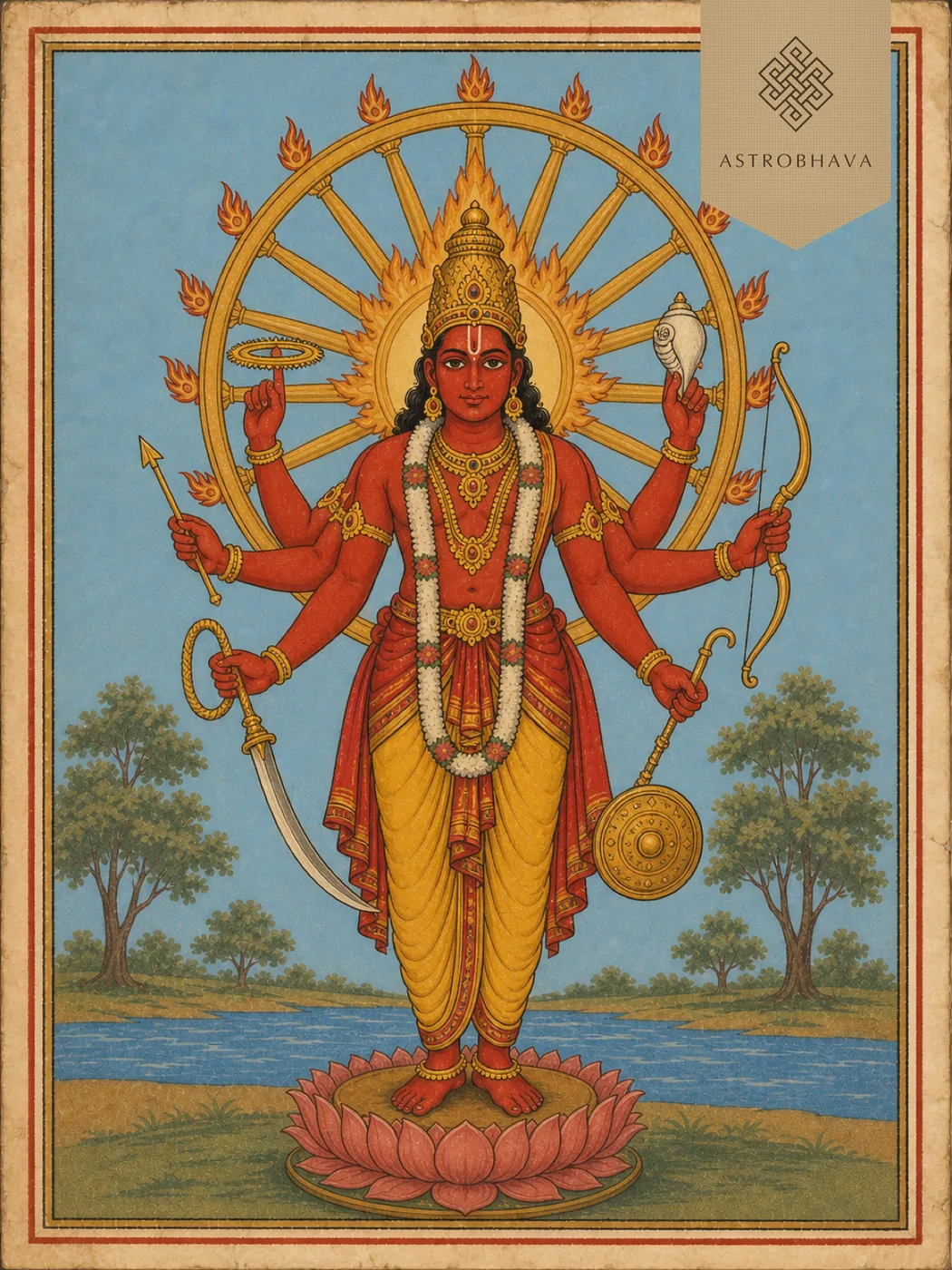 The Sudarshana Homa, performed for youBook →
What the Vishnu Chalisa is
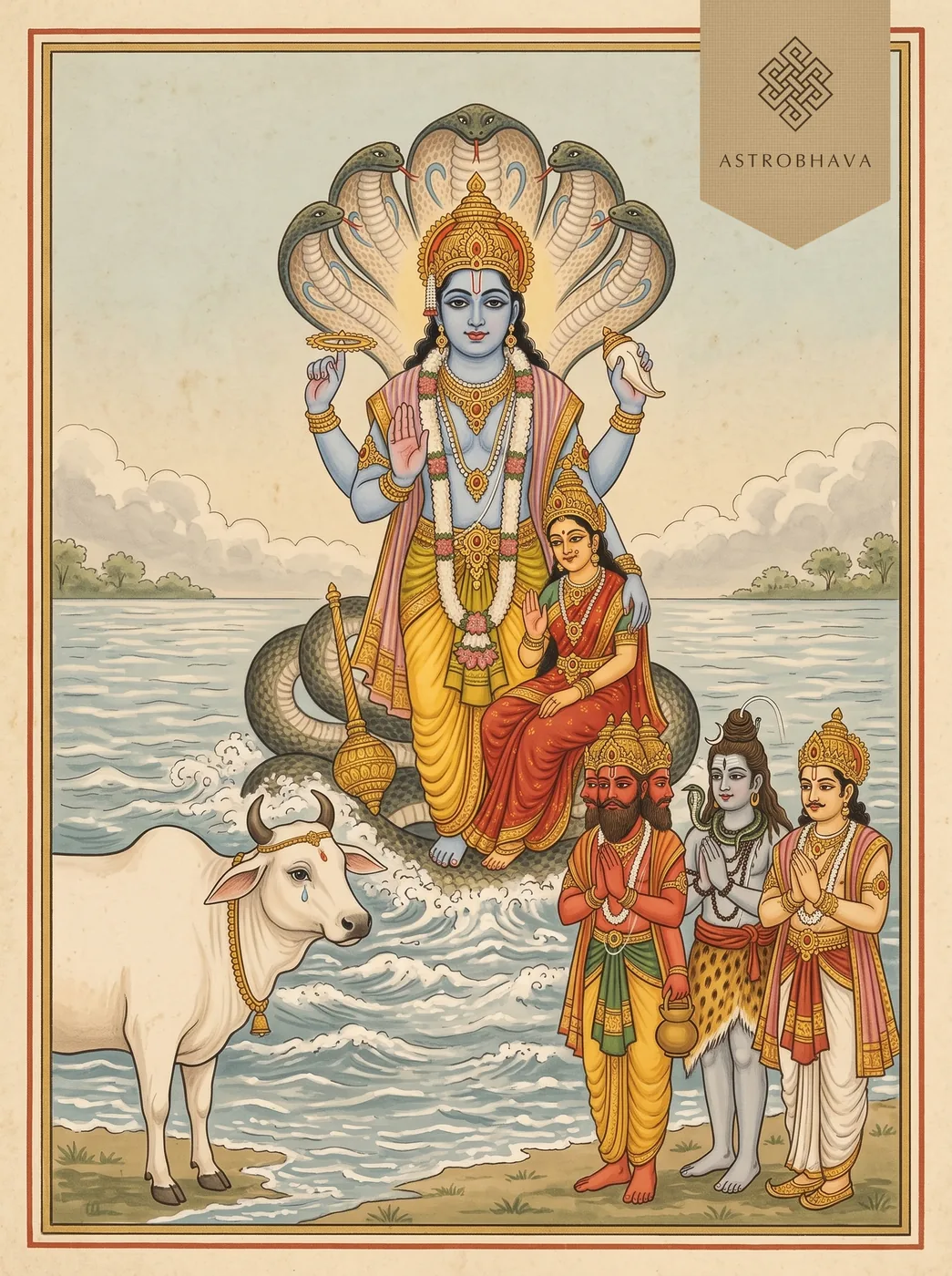
The Vishnu Chalisa that opens 'Vishnu suniye vinaya' is a Hindi prayer of forty chaupais addressed to Vishnu as Hari, Madhusudana and Kharari, the slayer of Khara. No poet signs it and no printing names an author; it has travelled in the small chalisa booklets of Hindi-speaking households, in a plain idiom coloured by Awadhi. A single doha asks Vishnu to listen and to grant the understanding needed to describe him. Chaupais 1 to 9 picture the yellow-robed Lord with the Vaijayanti garland, conch, discus and mace. Chaupais 10 to 28 then recount what he has done: Rama answering the Earth's plea, Varaha, the fish, the tortoise beneath Mount Mandara, Mohini, the rescue of Shiva from Bhasmasura, the Jalandhara episode, and the saving of Dhruva, Prahlada, Ajamila and a courtesan. The last twelve turn to the singer, who confesses not knowing how to worship at all and asks only to be accepted as Vishnu's own.
Vrinda, Jalandhara and the borrowed form
Six chaupais of this chalisa, 21 to 26, compress a story that the Shiva Purana tells at length and that the Padma and Skanda Puranas carry in their own versions. Jalandhara, an asura who in the Shiva Purana's account was born when the fire of Shiva's third eye fell into the ocean, could not be defeated while his wife Vrinda kept her vow of fidelity. During his war with Shiva he took on Shiva's appearance and went to Parvati, who saw through the disguise and withdrew. The chalisa's 'Shivarani' then remembers Vishnu: in the Purana, Parvati asks him to break Vrinda's vow, since the asura cannot be killed in any other way. Vishnu came to Vrinda as an ascetic, and through illusion she saw her husband slain and then seemingly restored to life. She embraced the restored figure, her vow was counted broken, and only then could Shiva kill Jalandhara. The chalisa stops there. The Purana continues: Vrinda, discovering the deception, cursed Vishnu that his own wife would one day be taken by trickery and that he would wander in distress seeking the help of monkeys, a curse later read as fulfilled in the Ramayana. In the tulasi tradition she returns as the tulasi plant, and each Kartika she is married to Vishnu as the shaligrama stone.
The mantra, in six scripts
- विष्णु
- viṣṇu — O Vishnu
- सुनिए
- sunie — please hear
- विनय
- vinaya — the humble plea
- सेवक
- sevaka — servant
- की
- kī — of (your)
- चितलाय
- citalāya — with attentive mind
- कीरत
- kīrata — glory
- कुछ
- kucha — something of
- वर्णन
- varṇana — description
- करूँ
- karūṃ — may I make
- दीजै
- dījai — grant
- ज्ञान
- jñāna — understanding
- बताय
- batāya — by showing (me)
Vishnu Chalisa lyrics in full
One opening doha and forty chaupais, ending at the fortieth chaupai as in most printed collections.
All 41 verses, in Hindi, Tamil, Telugu, Kannada, Malayalam and English, each with its meaning. Choose a script:
Download the Vishnu Chalisa PDFAll 41 verses with their meanings, in Hindi. Free to print and keep.
विष्णु सुनिए विनय, सेवक की चितलाय ।
कीरत कुछ वर्णन करूँ, दीजै ज्ञान बताय ॥
விஷ்ணு ஸுநிஏ விநய, ஸேவக கீ சிதலாய ।
கீரத குச வர்ணந கரூம், தீஜை ஜ்ஞாந பதாய ॥
విష్ణు సునిఏ వినయ, సేవక కీ చితలాయ ।
కీరత కుఛ వర్ణన కరూఁ, దీజై జ్ఞాన బతాయ ॥
ವಿಷ್ಣು ಸುನಿಏ ವಿನಯ, ಸೇವಕ ಕೀ ಚಿತಲಾಯ ।
ಕೀರತ ಕುಛ ವರ್ಣನ ಕರೂಁ, ದೀಜೈ ಜ್ಞಾನ ಬತಾಯ ॥
വിഷ്ണു സുനിഏ വിനയ, സേവക കീ ചിതലായ ।
കീരത കുഛ വര്ണന കരൂഁ, ദീജൈ ജ്ഞാന ബതായ ॥
viṣṇu sunie vinaya, sevaka kī citalāya |
kīrata kucha varṇana karūṃ, dījai jñāna batāya ||
O Vishnu, listen with an attentive heart to the humble plea of your servant. I wish to describe something of your glory; grant me the understanding to do so.
नमो विष्णु भगवान खरारी ।
कष्ट नशावन अखिल बिहारी ॥
நமோ விஷ்ணு பகவாந கராரீ ।
கஷ்ட நஶாவந அகில பிஹாரீ ॥
నమో విష్ణు భగవాన ఖరారీ ।
కష్ట నశావన అఖిల బిహారీ ॥
ನಮೋ ವಿಷ್ಣು ಭಗವಾನ ಖರಾರೀ ।
ಕಷ್ಟ ನಶಾವನ ಅಖಿಲ ಬಿಹಾರೀ ॥
നമോ വിഷ്ണു ഭഗവാന ഖരാരീ ।
കഷ്ട നശാവന അഖില ബിഹാരീ ॥
namo viṣṇu bhagavāna kharārī |
kaṣṭa naśāvana akhila bihārī ||
Salutations to Lord Vishnu, slayer of the demon Khara, who destroys suffering and moves through the whole universe.
प्रबल जगत में शक्ति तुम्हारी ।
त्रिभुवन फैल रही उजियारी ॥
ப்ரபல ஜகத மேம் ஶக்தி தும்ஹாரீ ।
த்ரிபுவந பைல ரஹீ உஜியாரீ ॥
ప్రబల జగత మేం శక్తి తుమ్హారీ ।
త్రిభువన ఫైల రహీ ఉజియారీ ॥
ಪ್ರಬಲ ಜಗತ ಮೇಂ ಶಕ್ತಿ ತುಮ್ಹಾರೀ ।
ತ್ರಿಭುವನ ಫೈಲ ರಹೀ ಉಜಿಯಾರೀ ॥
പ്രബല ജഗത മേം ശക്തി തുമ്ഹാരീ ।
ത്രിഭുവന ഫൈല രഹീ ഉജിയാരീ ॥
prabala jagata meṃ śakti tumhārī |
tribhuvana phaila rahī ujiyārī ||
Your power is supreme in the world, and your radiance spreads across the three worlds.
सुन्दर रूप मनोहर सूरत ।
सरल स्वभाव मोहनी मूरत ॥
ஸுந்தர ரூப மநோஹர ஸூரத ।
ஸரல ஸ்வபாவ மோஹநீ மூரத ॥
సున్దర రూప మనోహర సూరత ।
సరల స్వభావ మోహనీ మూరత ॥
ಸುನ್ದರ ರೂಪ ಮನೋಹರ ಸೂರತ ।
ಸರಲ ಸ್ವಭಾವ ಮೋಹನೀ ಮೂರತ ॥
സുന്ദര രൂപ മനോഹര സൂരത ।
സരല സ്വഭാവ മോഹനീ മൂരത ॥
sundara rūpa manohara sūrata |
sarala svabhāva mohanī mūrata ||
Your form is beautiful and your face captivating; your nature is gentle and your image enchanting.
तन पर पीताम्बर अति सोहत ।
बैजन्ती माला मन मोहत ॥
தந பர பீதாம்பர அதி ஸோஹத ।
பைஜந்தீ மாலா மந மோஹத ॥
తన పర పీతామ్బర అతి సోహత ।
బైజన్తీ మాలా మన మోహత ॥
ತನ ಪರ ಪೀತಾಮ್ಬರ ಅತಿ ಸೋಹತ ।
ಬೈಜನ್ತೀ ಮಾಲಾ ಮನ ಮೋಹತ ॥
തന പര പീതാമ്ബര അതി സോഹത ।
ബൈജന്തീ മാലാ മന മോഹത ॥
tana para pītāmbara ati sohata |
baijantī mālā mana mohata ||
A yellow silk garment shines on your body, and the Vaijayanti garland charms the mind.
शंख चक्र कर गदा बिराजे ।
देखत दैत्य असुर दल भाजे ॥
ஶம்க சக்ர கர கதா பிராஜே ।
தேகத தைத்ய அஸுர தல பாஜே ॥
శంఖ చక్ర కర గదా బిరాజే ।
దేఖత దైత్య అసుర దల భాజే ॥
ಶಂಖ ಚಕ್ರ ಕರ ಗದಾ ಬಿರಾಜೇ ।
ದೇಖತ ದೈತ್ಯ ಅಸುರ ದಲ ಭಾಜೇ ॥
ശംഖ ചക്ര കര ഗദാ ബിരാജേ ।
ദേഖത ദൈത്യ അസുര ദല ഭാജേ ॥
śaṃkha cakra kara gadā birāje |
dekhata daitya asura dala bhāje ||
The conch, discus and mace adorn your hands; seeing them, the armies of demons and asuras flee.
सत्य धर्म मद लोभ न गाजे ।
काम क्रोध मद लोभ न छाजे ॥
ஸத்ய தர்ம மத லோப ந காஜே ।
காம க்ரோத மத லோப ந சாஜே ॥
సత్య ధర్మ మద లోభ న గాజే ।
కామ క్రోధ మద లోభ న ఛాజే ॥
ಸತ್ಯ ಧರ್ಮ ಮದ ಲೋಭ ನ ಗಾಜೇ ।
ಕಾಮ ಕ್ರೋಧ ಮದ ಲೋಭ ನ ಛಾಜೇ ॥
സത്യ ധര്മ മദ ലോഭ ന ഗാജേ ।
കാമ ക്രോധ മദ ലോഭ ന ഛാജേ ॥
satya dharma mada lobha na gāje |
kāma krodha mada lobha na chāje ||
Truth and dharma are with you, and pride and greed do not roar near you; desire, anger, pride and greed do not touch you.
सन्तभक्त सज्जन मनरंजन ।
दनुज असुर दुष्टन दल गंजन ॥
ஸந்தபக்த ஸஜ்ஜந மநரம்ஜந ।
தநுஜ அஸுர துஷ்டந தல கம்ஜந ॥
సన్తభక్త సజ్జన మనరంజన ।
దనుజ అసుర దుష్టన దల గంజన ॥
ಸನ್ತಭಕ್ತ ಸಜ್ಜನ ಮನರಂಜನ ।
ದನುಜ ಅಸುರ ದುಷ್ಟನ ದಲ ಗಂಜನ ॥
സന്തഭക്ത സജ്ജന മനരംജന ।
ദനുജ അസുര ദുഷ്ടന ദല ഗംജന ॥
santabhakta sajjana manaraṃjana |
danuja asura duṣṭana dala gaṃjana ||
You delight saints, devotees and good people, and you crush the hosts of demons and the wicked.
सुख उपजाय कष्ट सब भंजन ।
दोष मिटाय करत जन सज्जन ॥
ஸுக உபஜாய கஷ்ட ஸப பம்ஜந ।
தோஷ மிடாய கரத ஜந ஸஜ்ஜந ॥
సుఖ ఉపజాయ కష్ట సబ భంజన ।
దోష మిటాయ కరత జన సజ్జన ॥
ಸುಖ ಉಪಜಾಯ ಕಷ್ಟ ಸಬ ಭಂಜನ ।
ದೋಷ ಮಿಟಾಯ ಕರತ ಜನ ಸಜ್ಜನ ॥
സുഖ ഉപജായ കഷ്ട സബ ഭംജന ।
ദോഷ മിടായ കരത ജന സജ്ജന ॥
sukha upajāya kaṣṭa saba bhaṃjana |
doṣa miṭāya karata jana sajjana ||
You bring forth happiness and break every sorrow; removing their faults, you make people good.
पाप काट भव सिन्धु उतारण ।
कष्ट नाशकर भक्त उबारण ॥
பாப காட பவ ஸிந்து உதாரண ।
கஷ்ட நாஶகர பக்த உபாரண ॥
పాప కాట భవ సిన్ధు ఉతారణ ।
కష్ట నాశకర భక్త ఉబారణ ॥
ಪಾಪ ಕಾಟ ಭವ ಸಿನ್ಧು ಉತಾರಣ ।
ಕಷ್ಟ ನಾಶಕರ ಭಕ್ತ ಉಬಾರಣ ॥
പാപ കാട ഭവ സിന്ധു ഉതാരണ ।
കഷ്ട നാശകര ഭക്ത ഉബാരണ ॥
pāpa kāṭa bhava sindhu utāraṇa |
kaṣṭa nāśakara bhakta ubāraṇa ||
You cut away sin and carry devotees across the ocean of worldly existence; you destroy suffering and rescue your devotees.
करत अनेक रूप प्रभु धारण ।
केवल आप भक्ति के कारण ॥
கரத அநேக ரூப ப்ரபு தாரண ।
கேவல ஆப பக்தி கே காரண ॥
కరత అనేక రూప ప్రభు ధారణ ।
కేవల ఆప భక్తి కే కారణ ॥
ಕರತ ಅನೇಕ ರೂಪ ಪ್ರಭು ಧಾರಣ ।
ಕೇವಲ ಆಪ ಭಕ್ತಿ ಕೇ ಕಾರಣ ॥
കരത അനേക രൂപ പ്രഭു ധാരണ ।
കേവല ആപ ഭക്തി കേ കാരണ ॥
karata aneka rūpa prabhu dhāraṇa |
kevala āpa bhakti ke kāraṇa ||
Lord, you take many forms, and you do so only for the sake of devotion.
धरणि धेनु बन तुमहिं पुकारा ।
तब तुम रूप राम का धारा ॥
தரணி தேநு பந துமஹிம் புகாரா ।
தப தும ரூப ராம கா தாரா ॥
ధరణి ధేను బన తుమహిం పుకారా ।
తబ తుమ రూప రామ కా ధారా ॥
ಧರಣಿ ಧೇನು ಬನ ತುಮಹಿಂ ಪುಕಾರಾ ।
ತಬ ತುಮ ರೂಪ ರಾಮ ಕಾ ಧಾರಾ ॥
ധരണി ധേനു ബന തുമഹിം പുകാരാ ।
തബ തുമ രൂപ രാമ കാ ധാരാ ॥
dharaṇi dhenu bana tumahiṃ pukārā |
taba tuma rūpa rāma kā dhārā ||
When the Earth, taking the form of a cow, called out to you, you took the form of Rama.
भार उतार असुर दल मारा ।
रावण आदिक को संहारा ॥
பார உதார அஸுர தல மாரா ।
ராவண ஆதிக கோ ஸம்ஹாரா ॥
భార ఉతార అసుర దల మారా ।
రావణ ఆదిక కో సంహారా ॥
ಭಾರ ಉತಾರ ಅಸುರ ದಲ ಮಾರಾ ।
ರಾವಣ ಆದಿಕ ಕೋ ಸಂಹಾರಾ ॥
ഭാര ഉതാര അസുര ദല മാരാ ।
രാവണ ആദിക കോ സംഹാരാ ॥
bhāra utāra asura dala mārā |
rāvaṇa ādika ko saṃhārā ||
You lifted her burden, destroyed the armies of demons and slew Ravana and others like him.
आप वाराह रूप बनाया ।
हिरण्याक्ष को मार गिराया ॥
ஆப வாராஹ ரூப பநாயா ।
ஹிரண்யாக்ஷ கோ மார கிராயா ॥
ఆప వారాహ రూప బనాయా ।
హిరణ్యాక్ష కో మార గిరాయా ॥
ಆಪ ವಾರಾಹ ರೂಪ ಬನಾಯಾ ।
ಹಿರಣ್ಯಾಕ್ಷ ಕೋ ಮಾರ ಗಿರಾಯಾ ॥
ആപ വാരാഹ രൂപ ബനായാ ।
ഹിരണ്യാക്ഷ കോ മാര ഗിരായാ ॥
āpa vārāha rūpa banāyā |
hiraṇyākṣa ko māra girāyā ||
You took the form of the boar Varaha and struck down Hiranyaksha.
धर मत्स्य तन सिन्धु बनाया ।
चौदह रतनन को निकलाया ॥
தர மத்ஸ்ய தந ஸிந்து பநாயா ।
சௌதஹ ரதநந கோ நிகலாயா ॥
ధర మత్స్య తన సిన్ధు బనాయా ।
చౌదహ రతనన కో నికలాయా ॥
ಧರ ಮತ್ಸ್ಯ ತನ ಸಿನ್ಧು ಬನಾಯಾ ।
ಚೌದಹ ರತನನ ಕೋ ನಿಕಲಾಯಾ ॥
ധര മത്സ്യ തന സിന്ധു ബനായാ ।
ചൌദഹ രതനന കോ നികലായാ ॥
dhara matsya tana sindhu banāyā |
caudaha ratanana ko nikalāyā ||
Taking the body of a fish, you made the ocean your home; and you caused the fourteen jewels to be drawn out of it.
अमिलख असुरन द्वन्द मचाया ।
रूप मोहनी आप दिखाया ॥
அமிலக அஸுரந த்வந்த மசாயா ।
ரூப மோஹநீ ஆப திகாயா ॥
అమిలఖ అసురన ద్వన్ద మచాయా ।
రూప మోహనీ ఆప దిఖాయా ॥
ಅಮಿಲಖ ಅಸುರನ ದ್ವನ್ದ ಮಚಾಯಾ ।
ರೂಪ ಮೋಹನೀ ಆಪ ದಿಖಾಯಾ ॥
അമിലഖ അസുരന ദ്വന്ദ മചായാ ।
രൂപ മോഹനീ ആപ ദിഖായാ ॥
amilakha asurana dvanda macāyā |
rūpa mohanī āpa dikhāyā ||
When countless demons stirred up strife, you showed yourself as the enchantress Mohini.
देवन को अमृत पान कराया ।
असुरन को छबि से बहलाया ॥
தேவந கோ அம்ருத பாந கராயா ।
அஸுரந கோ சபி ஸே பஹலாயா ॥
దేవన కో అమృత పాన కరాయా ।
అసురన కో ఛబి సే బహలాయా ॥
ದೇವನ ಕೋ ಅಮೃತ ಪಾನ ಕರಾಯಾ ।
ಅಸುರನ ಕೋ ಛಬಿ ಸೇ ಬಹಲಾಯಾ ॥
ദേവന കോ അമൃത പാന കരായാ ।
അസുരന കോ ഛബി സേ ബഹലായാ ॥
devana ko amṛta pāna karāyā |
asurana ko chabi se bahalāyā ||
You had the gods drink the nectar of immortality and beguiled the demons with your beauty.
कूर्म रूप धर सिन्धु मझाया ।
मन्द्राचल गिरि तुरत उठाया ॥
கூர்ம ரூப தர ஸிந்து மசாயா ।
மந்த்ராசல கிரி துரத உடாயா ॥
కూర్మ రూప ధర సిన్ధు మఝాయా ।
మన్ద్రాచల గిరి తురత ఉఠాయా ॥
ಕೂರ್ಮ ರೂಪ ಧರ ಸಿನ್ಧು ಮಝಾಯಾ ।
ಮನ್ದ್ರಾಚಲ ಗಿರಿ ತುರತ ಉಠಾಯಾ ॥
കൂര്മ രൂപ ധര സിന്ധു മഝായാ ।
മന്ദ്രാചല ഗിരി തുരത ഉഠായാ ॥
kūrma rūpa dhara sindhu majhāyā |
mandrācala giri turata uṭhāyā ||
Taking the form of the tortoise Kurma, you held up the churning of the ocean and at once bore Mount Mandara.
शंकर का तुम फन्द छुड़ाया ।
भस्मासुर को रूप दिखाया ॥
ஶம்கர கா தும பந்த சுடாயா ।
பஸ்மாஸுர கோ ரூப திகாயா ॥
శంకర కా తుమ ఫన్ద ఛుడాయా ।
భస్మాసుర కో రూప దిఖాయా ॥
ಶಂಕರ ಕಾ ತುಮ ಫನ್ದ ಛುಡಾಯಾ ।
ಭಸ್ಮಾಸುರ ಕೋ ರೂಪ ದಿಖಾಯಾ ॥
ശംകര കാ തുമ ഫന്ദ ഛുഡായാ ।
ഭസ്മാസുര കോ രൂപ ദിഖായാ ॥
śaṃkara kā tuma phanda chuṛāyā |
bhasmāsura ko rūpa dikhāyā ||
You freed Shankara from his trap, showing your enchanting form to the demon Bhasmasura.
वेदन को जब असुर डुबाया ।
कर प्रबन्ध उन्हें ढुँढवाया ॥
வேதந கோ ஜப அஸுர டுபாயா ।
கர ப்ரபந்த உந்ஹேம் டும்டவாயா ॥
వేదన కో జబ అసుర డుబాయా ।
కర ప్రబన్ధ ఉన్హేం ఢుఁఢవాయా ॥
ವೇದನ ಕೋ ಜಬ ಅಸುರ ಡುಬಾಯಾ ।
ಕರ ಪ್ರಬನ್ಧ ಉನ್ಹೇಂ ಢುಁಢವಾಯಾ ॥
വേദന കോ ജബ അസുര ഡുബായാ ।
കര പ്രബന്ധ ഉന്ഹേം ഢുഁഢവായാ ॥
vedana ko jaba asura ḍubāyā |
kara prabandha unheṃ ḍhuṃḍhavāyā ||
When a demon sank the Vedas into the waters, you arranged for them to be searched out and recovered.
मोहित बनकर खलहि नचाया ।
उसही कर से भस्म कराया ॥
மோஹித பநகர கலஹி நசாயா ।
உஸஹீ கர ஸே பஸ்ம கராயா ॥
మోహిత బనకర ఖలహి నచాయా ।
ఉసహీ కర సే భస్మ కరాయా ॥
ಮೋಹಿತ ಬನಕರ ಖಲಹಿ ನಚಾಯಾ ।
ಉಸಹೀ ಕರ ಸೇ ಭಸ್ಮ ಕರಾಯಾ ॥
മോഹിത ബനകര ഖലഹി നചായാ ।
ഉസഹീ കര സേ ഭസ്മ കരായാ ॥
mohita banakara khalahi nacāyā |
usahī kara se bhasma karāyā ||
Taking an enchanting form, you made the wicked one dance, and by his own hand had him burned to ash.
असुर जलंधर अति बलदाई ।
शंकर से उन कीन्ह लड़ाई ॥
அஸுர ஜலம்தர அதி பலதாஈ ।
ஶம்கர ஸே உந கீந்ஹ லடாஈ ॥
అసుర జలంధర అతి బలదాఈ ।
శంకర సే ఉన కీన్హ లడాఈ ॥
ಅಸುರ ಜಲಂಧರ ಅತಿ ಬಲದಾಈ ।
ಶಂಕರ ಸೇ ಉನ ಕೀನ್ಹ ಲಡಾಈ ॥
അസുര ജലംധര അതി ബലദാഈ ।
ശംകര സേ ഉന കീന്ഹ ലഡാഈ ॥
asura jalaṃdhara ati baladāī |
śaṃkara se una kīnha laṛāī ||
The demon Jalandhara, of very great strength, fought a battle with Shankara.
हार पार शिव सकल बनाई ।
कीन सती से छल खल जाई ॥
ஹார பார ஶிவ ஸகல பநாஈ ।
கீந ஸதீ ஸே சல கல ஜாஈ ॥
హార పార శివ సకల బనాఈ ।
కీన సతీ సే ఛల ఖల జాఈ ॥
ಹಾರ ಪಾರ ಶಿವ ಸಕಲ ಬನಾಈ ।
ಕೀನ ಸತೀ ಸೇ ಛಲ ಖಲ ಜಾಈ ॥
ഹാര പാര ശിവ സകല ബനാഈ ।
കീന സതീ സേ ഛല ഖല ജാഈ ॥
hāra pāra śiva sakala banāī |
kīna satī se chala khala jāī ||
Though Shiva tried every means, he could not prevail; the wicked one went off to deceive Sati by trickery.
सुमिरन कीन तुम्हें शिवरानी ।
बतलाई सब विपत कहानी ॥
ஸுமிரந கீந தும்ஹேம் ஶிவராநீ ।
பதலாஈ ஸப விபத கஹாநீ ॥
సుమిరన కీన తుమ్హేం శివరానీ ।
బతలాఈ సబ విపత కహానీ ॥
ಸುಮಿರನ ಕೀನ ತುಮ್ಹೇಂ ಶಿವರಾನೀ ।
ಬತಲಾಈ ಸಬ ವಿಪತ ಕಹಾನೀ ॥
സുമിരന കീന തുമ്ഹേം ശിവരാനീ ।
ബതലാഈ സബ വിപത കഹാനീ ॥
sumirana kīna tumheṃ śivarānī |
batalāī saba vipata kahānī ||
Shiva's consort then remembered you and told you the whole tale of her distress.
तब तुम बने मुनीश्वर ज्ञानी ।
वृन्दा की सब सुरति भुलानी ॥
தப தும பநே முநீஶ்வர ஜ்ஞாநீ ।
வ்ருந்தா கீ ஸப ஸுரதி புலாநீ ॥
తబ తుమ బనే మునీశ్వర జ్ఞానీ ।
వృన్దా కీ సబ సురతి భులానీ ॥
ತಬ ತುಮ ಬನೇ ಮುನೀಶ್ವರ ಜ್ಞಾನೀ ।
ವೃನ್ದಾ ಕೀ ಸಬ ಸುರತಿ ಭುಲಾನೀ ॥
തബ തുമ ബനേ മുനീശ്വര ജ്ഞാനീ ।
വൃന്ദാ കീ സബ സുരതി ഭുലാനീ ॥
taba tuma bane munīśvara jñānī |
vṛndā kī saba surati bhulānī ||
Then you became a wise sage and made Vrinda forget all her awareness.
देखत तीन दनुज शैतानी ।
वृन्दा आय तुम्हें लपटानी ॥
தேகத தீந தநுஜ ஶைதாநீ ।
வ்ருந்தா ஆய தும்ஹேம் லபடாநீ ॥
దేఖత తీన దనుజ శైతానీ ।
వృన్దా ఆయ తుమ్హేం లపటానీ ॥
ದೇಖತ ತೀನ ದನುಜ ಶೈತಾನೀ ।
ವೃನ್ದಾ ಆಯ ತುಮ್ಹೇಂ ಲಪಟಾನೀ ॥
ദേഖത തീന ദനുജ ശൈതാനീ ।
വൃന്ദാ ആയ തുമ്ഹേം ലപടാനീ ॥
dekhata tīna danuja śaitānī |
vṛndā āya tumheṃ lapaṭānī ||
Seeing the three demonic forms, Vrinda came and clung to you.
हो स्पर्श धर्म क्षति मानी ।
हना असुर उर शिव शैतानी ॥
ஹோ ஸ்பர்ஶ தர்ம க்ஷதி மாநீ ।
ஹநா அஸுர உர ஶிவ ஶைதாநீ ॥
హో స్పర్శ ధర్మ క్షతి మానీ ।
హనా అసుర ఉర శివ శైతానీ ॥
ಹೋ ಸ್ಪರ್ಶ ಧರ್ಮ ಕ್ಷತಿ ಮಾನೀ ।
ಹನಾ ಅಸುರ ಉರ ಶಿವ ಶೈತಾನೀ ॥
ഹോ സ്പര്ശ ധര്മ ക്ഷതി മാനീ ।
ഹനാ അസുര ഉര ശിവ ശൈതാനീ ॥
ho sparśa dharma kṣati mānī |
hanā asura ura śiva śaitānī ||
At that touch her vow of virtue was held broken, and Shiva struck the demon in the chest.
तुमने धुरू प्रहलाद उबारे ।
हिरणाकुश आदिक खल मारे ॥
துமநே துரூ ப்ரஹலாத உபாரே ।
ஹிரணாகுஶ ஆதிக கல மாரே ॥
తుమనే ధురూ ప్రహలాద ఉబారే ।
హిరణాకుశ ఆదిక ఖల మారే ॥
ತುಮನೇ ಧುರೂ ಪ್ರಹಲಾದ ಉಬಾರೇ ।
ಹಿರಣಾಕುಶ ಆದಿಕ ಖಲ ಮಾರೇ ॥
തുമനേ ധുരൂ പ്രഹലാദ ഉബാരേ ।
ഹിരണാകുശ ആദിക ഖല മാരേ ॥
tumane dhurū prahalāda ubāre |
hiraṇākuśa ādika khala māre ||
You saved Dhruva and Prahlada and slew wicked ones such as Hiranyakashipu.
गणिका और अजामिल तारे ।
बहुत भक्त भव सिन्धु उतारे ॥
கணிகா ஔர அஜாமில தாரே ।
பஹுத பக்த பவ ஸிந்து உதாரே ॥
గణికా ఔర అజామిల తారే ।
బహుత భక్త భవ సిన్ధు ఉతారే ॥
ಗಣಿಕಾ ಔರ ಅಜಾಮಿಲ ತಾರೇ ।
ಬಹುತ ಭಕ್ತ ಭವ ಸಿನ್ಧು ಉತಾರೇ ॥
ഗണികാ ഔര അജാമില താരേ ।
ബഹുത ഭക്ത ഭവ സിന്ധു ഉതാരേ ॥
gaṇikā aura ajāmila tāre |
bahuta bhakta bhava sindhu utāre ||
You saved the courtesan and Ajamila, and carried many devotees across the ocean of existence.
हरहु सकल संताप हमारे ।
कृपा करहु हरि सिरजन हारे ॥
ஹரஹு ஸகல ஸம்தாப ஹமாரே ।
க்ருபா கரஹு ஹரி ஸிரஜந ஹாரே ॥
హరహు సకల సంతాప హమారే ।
కృపా కరహు హరి సిరజన హారే ॥
ಹರಹು ಸಕಲ ಸಂತಾಪ ಹಮಾರೇ ।
ಕೃಪಾ ಕರಹು ಹರಿ ಸಿರಜನ ಹಾರೇ ॥
ഹരഹു സകല സംതാപ ഹമാരേ ।
കൃപാ കരഹു ഹരി സിരജന ഹാരേ ॥
harahu sakala saṃtāpa hamāre |
kṛpā karahu hari sirajana hāre ||
Remove all our afflictions; show mercy, O Hari, creator of all.
देखहुँ मैं निज दरश तुम्हारे ।
दीन बन्धु भक्तन हितकारे ॥
தேகஹும் மைம் நிஜ தரஶ தும்ஹாரே ।
தீந பந்து பக்தந ஹிதகாரே ॥
దేఖహుఁ మైం నిజ దరశ తుమ్హారే ।
దీన బన్ధు భక్తన హితకారే ॥
ದೇಖಹುಁ ಮೈಂ ನಿಜ ದರಶ ತುಮ್ಹಾರೇ ।
ದೀನ ಬನ್ಧು ಭಕ್ತನ ಹಿತಕಾರೇ ॥
ദേഖഹുഁ മൈം നിജ ദരശ തുമ്ഹാരേ ।
ദീന ബന്ധു ഭക്തന ഹിതകാരേ ॥
dekhahuṃ maiṃ nija daraśa tumhāre |
dīna bandhu bhaktana hitakāre ||
Let me behold your own vision, O friend of the humble and benefactor of devotees.
चहत आपका सेवक दर्शन ।
करहु दया अपनी मधुसूदन ॥
சஹத ஆபகா ஸேவக தர்ஶந ।
கரஹு தயா அபநீ மதுஸூதந ॥
చహత ఆపకా సేవక దర్శన ।
కరహు దయా అపనీ మధుసూదన ॥
ಚಹತ ಆಪಕಾ ಸೇವಕ ದರ್ಶನ ।
ಕರಹು ದಯಾ ಅಪನೀ ಮಧುಸೂದನ ॥
ചഹത ആപകാ സേവക ദര്ശന ।
കരഹു ദയാ അപനീ മധുസൂദന ॥
cahata āpakā sevaka darśana |
karahu dayā apanī madhusūdana ||
Your servant longs for your darshan; show your compassion, O Madhusudana.
जानूं नहीं योग्य जप पूजन ।
होय यज्ञ स्तुति अनुमोदन ॥
ஜாநூம் நஹீம் யோக்ய ஜப பூஜந ।
ஹோய யஜ்ஞ ஸ்துதி அநுமோதந ॥
జానూం నహీం యోగ్య జప పూజన ।
హోయ యజ్ఞ స్తుతి అనుమోదన ॥
ಜಾನೂಂ ನಹೀಂ ಯೋಗ್ಯ ಜಪ ಪೂಜನ ।
ಹೋಯ ಯಜ್ಞ ಸ್ತುತಿ ಅನುಮೋದನ ॥
ജാനൂം നഹീം യോഗ്യ ജപ പൂജന ।
ഹോയ യജ്ഞ സ്തുതി അനുമോദന ॥
jānūṃ nahīṃ yogya japa pūjana |
hoya yajña stuti anumodana ||
I do not know the proper way of chanting or worship; may you approve this as my sacrifice and hymn of praise.
शीलदया सन्तोष सुलक्षण ।
विदित नहीं व्रतबोध विलक्षण ॥
ஶீலதயா ஸந்தோஷ ஸுலக்ஷண ।
விதித நஹீம் வ்ரதபோத விலக்ஷண ॥
శీలదయా సన్తోష సులక్షణ ।
విదిత నహీం వ్రతబోధ విలక్షణ ॥
ಶೀಲದಯಾ ಸನ್ತೋಷ ಸುಲಕ್ಷಣ ।
ವಿದಿತ ನಹೀಂ ವ್ರತಬೋಧ ವಿಲಕ್ಷಣ ॥
ശീലദയാ സന്തോഷ സുലക്ഷണ ।
വിദിത നഹീം വ്രതബോധ വിലക്ഷണ ॥
śīladayā santoṣa sulakṣaṇa |
vidita nahīṃ vratabodha vilakṣaṇa ||
I know nothing of good conduct, compassion, contentment or good qualities, nor of the rare knowledge of vows.
करहुँ आपका किस विधि पूजन ।
कुमति विलोक होत दुख भीषण ॥
கரஹும் ஆபகா கிஸ விதி பூஜந ।
குமதி விலோக ஹோத துக பீஷண ॥
కరహుఁ ఆపకా కిస విధి పూజన ।
కుమతి విలోక హోత దుఖ భీషణ ॥
ಕರಹುಁ ಆಪಕಾ ಕಿಸ ವಿಧಿ ಪೂಜನ ।
ಕುಮತಿ ವಿಲೋಕ ಹೋತ ದುಖ ಭೀಷಣ ॥
കരഹുഁ ആപകാ കിസ വിധി പൂജന ।
കുമതി വിലോക ഹോത ദുഖ ഭീഷണ ॥
karahuṃ āpakā kisa vidhi pūjana |
kumati viloka hota dukha bhīṣaṇa ||
In what way should I worship you? Seeing my poor understanding brings me deep sorrow.
करहुँ प्रणाम कौन विधिसुमिरण ।
कौन भाँति मैं करहुँ समर्पण ॥
கரஹும் ப்ரணாம கௌந விதிஸுமிரண ।
கௌந பாம்தி மைம் கரஹும் ஸமர்பண ॥
కరహుఁ ప్రణామ కౌన విధిసుమిరణ ।
కౌన భాఁతి మైం కరహుఁ సమర్పణ ॥
ಕರಹುಁ ಪ್ರಣಾಮ ಕೌನ ವಿಧಿಸುಮಿರಣ ।
ಕೌನ ಭಾಁತಿ ಮೈಂ ಕರಹುಁ ಸಮರ್ಪಣ ॥
കരഹുഁ പ്രണാമ കൌന വിധിസുമിരണ ।
കൌന ഭാഁതി മൈം കരഹുഁ സമര്പണ ॥
karahuṃ praṇāma kauna vidhisumiraṇa |
kauna bhāṃti maiṃ karahuṃ samarpaṇa ||
How should I bow to you and how should I remember you? In what manner should I offer myself?
सुर मुनि करत सदा सिवकाई ।
हर्षित रहत परम गति पाई ॥
ஸுர முநி கரத ஸதா ஸிவகாஈ ।
ஹர்ஷித ரஹத பரம கதி பாஈ ॥
సుర ముని కరత సదా సివకాఈ ।
హర్షిత రహత పరమ గతి పాఈ ॥
ಸುರ ಮುನಿ ಕರತ ಸದಾ ಸಿವಕಾಈ ।
ಹರ್ಷಿತ ರಹತ ಪರಮ ಗತಿ ಪಾಈ ॥
സുര മുനി കരത സദാ സിവകാഈ ।
ഹര്ഷിത രഹത പരമ ഗതി പാഈ ॥
sura muni karata sadā sivakāī |
harṣita rahata parama gati pāī ||
Gods and sages always serve you; they live in joy and attain the highest state.
दीन दुखिन पर सदा सहाई ।
निज जन जान लेव अपनाई ॥
தீந துகிந பர ஸதா ஸஹாஈ ।
நிஜ ஜந ஜாந லேவ அபநாஈ ॥
దీన దుఖిన పర సదా సహాఈ ।
నిజ జన జాన లేవ అపనాఈ ॥
ದೀನ ದುಖಿನ ಪರ ಸದಾ ಸಹಾಈ ।
ನಿಜ ಜನ ಜಾನ ಲೇವ ಅಪನಾಈ ॥
ദീന ദുഖിന പര സദാ സഹാഈ ।
നിജ ജന ജാന ലേവ അപനാഈ ॥
dīna dukhina para sadā sahāī |
nija jana jāna leva apanāī ||
You are always the helper of the poor and the suffering; know me as your own and accept me.
पाप दोष संताप नशाओ ।
भव बन्धन से मुक्त कराओ ॥
பாப தோஷ ஸம்தாப நஶாஓ ।
பவ பந்தந ஸே முக்த கராஓ ॥
పాప దోష సంతాప నశాఓ ।
భవ బన్ధన సే ముక్త కరాఓ ॥
ಪಾಪ ದೋಷ ಸಂತಾಪ ನಶಾಓ ।
ಭವ ಬನ್ಧನ ಸೇ ಮುಕ್ತ ಕರಾಓ ॥
പാപ ദോഷ സംതാപ നശാഓ ।
ഭവ ബന്ധന സേ മുക്ത കരാഓ ॥
pāpa doṣa saṃtāpa naśāo |
bhava bandhana se mukta karāo ||
Destroy my sins, faults and afflictions, and free me from the bonds of worldly existence.
सुत सम्पति दे सुख उपजाओ ।
निज चरनन का दास बनाओ ॥
ஸுத ஸம்பதி தே ஸுக உபஜாஓ ।
நிஜ சரநந கா தாஸ பநாஓ ॥
సుత సమ్పతి దే సుఖ ఉపజాఓ ।
నిజ చరనన కా దాస బనాఓ ॥
ಸುತ ಸಮ್ಪತಿ ದೇ ಸುಖ ಉಪಜಾಓ ।
ನಿಜ ಚರನನ ಕಾ ದಾಸ ಬನಾಓ ॥
സുത സമ്പതി ദേ സുഖ ഉപജാഓ ।
നിജ ചരനന കാ ദാസ ബനാഓ ॥
suta sampati de sukha upajāo |
nija caranana kā dāsa banāo ||
Grant children and wealth, bring forth happiness, and make me a servant of your feet.
निगम सदा ये विनय सुनावै ।
पढ़ै सुनै सो जन सुख पावै ॥
நிகம ஸதா யே விநய ஸுநாவை ।
படை ஸுநை ஸோ ஜந ஸுக பாவை ॥
నిగమ సదా యే వినయ సునావై ।
పఢై సునై సో జన సుఖ పావై ॥
ನಿಗಮ ಸದಾ ಯೇ ವಿನಯ ಸುನಾವೈ ।
ಪಢೈ ಸುನೈ ಸೋ ಜನ ಸುಖ ಪಾವೈ ॥
നിഗമ സദാ യേ വിനയ സുനാവൈ ।
പഢൈ സുനൈ സോ ജന സുഖ പാവൈ ॥
nigama sadā ye vinaya sunāvai |
paṛhai sunai so jana sukha pāvai ||
The Vedas always proclaim this prayer. The verse says that whoever reads or hears it attains happiness.
The syllable people get wrong
The first chaupai calls Vishnu kharārī, Khara plus ari, 'enemy of Khara', and it is often flattened into 'karari'; keep the breath on the kh and lengthen both a sounds, kha-RAA-ree.
When the Vishnu Chalisa is chanted
Weekday. Thursday
Festival. Ekadashi and Thursdays
Questions
Have your chart read before you decide
Chanting is yours to do, and free. But which deity your situation calls for — and whether a mantra alone is the right response — depends on your chart. Sometimes it is; sometimes it is not.
- Over 30 years in the Guru–Sishya Parampara, from the age of five
- He reads every chart himself — 60 minutes, one to one, never delegated
- Charts are read only between sunrise and sunset, following tradition
