
Vishnu Shatpadi Stotram
अविनयमपनय विष्णो दमय मनः शमय विषयमृगतृष्णाम् । भूतदयां विस्तारय तारय संसारसागरतः ॥Also known as Avinayam Apanaya Vishno
In Devanagari, Tamil, Telugu, Kannada, Malayalam and English — with the meaning of every word, and the one syllable most people pronounce wrongly.
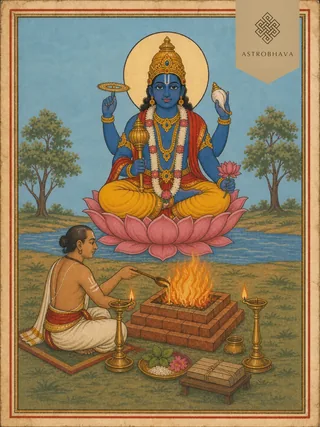 The Narayana Sukta Homam, performed for youBook →
What the Vishnu Shatpadi Stotram is
The Vishnu Shatpadi, in full the Vishnu Shatpadi Stotram, is a short Sanskrit prayer to Vishnu traditionally attributed to Adi Shankaracharya, and its printed closing line names him as author. Shatpadi means 'six-footed', which counts the six verses and also names the bee; a seventh verse closes the hymn. All seven are in the Arya metre, with quarters of 12, 18, 12 and 15 beats. The sequence begins with the speaker's faults and ends in shelter. Verse 1 asks for the removal of pride and of the mirage-thirst for sense objects. Verse 2 bows to the feet of Shripati, husband of Shri. Verse 3 sets out the wave and the ocean. Verse 4 addresses him as lifter of the mountain and younger brother of Indra, and verse 5 recalls the avataras from Matsya onward. Verse 6 calls on Damodara and Govinda to take fear away, and verse 7 seeks refuge at Narayana's two feet.
A bee in the lotus of the mouth
The printings give no occasion for this hymn. They offer a closing line naming Shankara, and a collected print of hymns under his name carried it by 1910, so its setting has to be read from the verses themselves. Verse 2 draws a flower: Vishnu's feet are the lotus, the divine river Ganga is its nectar, and being, consciousness and bliss are the fragrance to be enjoyed. Verse 7 then speaks the hymn's own name, iti shatpadi, 'thus the six-footed one'. The word means a six-verse poem and a bee, and the speaker asks it to live always in the lotus of their own mouth. Read side by side, the two verses give the poem two flowers, the one it praises and the one that recites it. That double sense runs through the whole text. Verse 4 is a chain in which each word returns with a new meaning, a figure Sanskrit poetics calls yamaka: naga, mountain, comes twice, then danuja, demon, then mitra, where the enemy of the demon clans turns into Mitra, the sun. Verse 1 rings vistaraya, widen, against taraya, carry across, and verse 6 makes Vishnu himself the Mandara mountain, churning the ocean of worldly existence.
The mantra, in six scripts
- अविनयमपनय
- avinayamapanaya — take away lack of humility
- विष्णो
- viṣṇo — O Vishnu
- दमय
- damaya — subdue
- मनः
- manaḥ — the mind
- शमय
- śamaya — quiet
- विषयमृगतृष्णाम्
- viṣayamṛgatṛṣṇām — the mirage-thirst for sense objects
- भूतदयां
- bhūtadayāṃ — compassion for all beings
- विस्तारय
- vistāraya — widen
- तारय
- tāraya — carry across
- संसारसागरतः
- saṃsārasāgarataḥ — from the ocean of worldly existence
Vishnu Shatpadi Stotram lyrics in full
Six verses and a seventh closing verse, as the traditional numbering has them. The printed closing line is given at the end.
All 8 verses, in Sanskrit, Tamil, Telugu, Kannada, Malayalam and English, each with its meaning. Choose a script:
Download the Vishnu Shatpadi Stotram PDFAll 8 verses with their meanings, in Sanskrit. Free to print and keep.
अविनयमपनय विष्णो दमय मनः शमय विषयमृगतृष्णाम् ।
भूतदयां विस्तारय तारय संसारसागरतः ॥
அவிநயமபநய விஷ்ணோ தமய மநஃ ஶமய விஷயம்ருகத்ருஷ்ணாம் ।
பூததயாம் விஸ்தாரய தாரய ஸம்ஸாரஸாகரதஃ ॥
అవినయమపనయ విష్ణో దమయ మనః శమయ విషయమృగతృష్ణామ్ ।
భూతదయాం విస్తారయ తారయ సంసారసాగరతః ॥
ಅವಿನಯಮಪನಯ ವಿಷ್ಣೋ ದಮಯ ಮನಃ ಶಮಯ ವಿಷಯಮೃಗತೃಷ್ಣಾಮ್ ।
ಭೂತದಯಾಂ ವಿಸ್ತಾರಯ ತಾರಯ ಸಂಸಾರಸಾಗರತಃ ॥
അവിനയമപനയ വിഷ്ണോ ദമയ മനഃ ശമയ വിഷയമൃഗതൃഷ്ണാമ് ।
ഭൂതദയാം വിസ്താരയ താരയ സംസാരസാഗരതഃ ॥
avinayamapanaya viṣṇo damaya manaḥ śamaya viṣayamṛgatṛṣṇām |
bhūtadayāṃ vistāraya tāraya saṃsārasāgarataḥ ||
O Vishnu, take away my lack of humility, subdue my mind and quiet the mirage-like thirst for the objects of the senses. Widen my compassion for all beings and carry me across the ocean of worldly existence.
दिव्यधुनीमकरन्दे परिमलपरिभोगसच्चिदानन्दे ।
श्रीपतिपदारविन्दे भवभयखेदच्छिदे वन्दे ॥
திவ்யதுநீமகரந்தே பரிமலபரிபோகஸச்சிதாநந்தே ।
ஶ்ரீபதிபதாரவிந்தே பவபயகேதச்சிதே வந்தே ॥
దివ్యధునీమకరన్దే పరిమలపరిభోగసచ్చిదానన్దే ।
శ్రీపతిపదారవిన్దే భవభయఖేదచ్ఛిదే వన్దే ॥
ದಿವ್ಯಧುನೀಮಕರನ್ದೇ ಪರಿಮಲಪರಿಭೋಗಸಚ್ಚಿದಾನನ್ದೇ ।
ಶ್ರೀಪತಿಪದಾರವಿನ್ದೇ ಭವಭಯಖೇದಚ್ಛಿದೇ ವನ್ದೇ ॥
ദിവ്യധുനീമകരന്ദേ പരിമലപരിഭോഗസച്ചിദാനന്ദേ ।
ശ്രീപതിപദാരവിന്ദേ ഭവഭയഖേദച്ഛിദേ വന്ദേ ॥
divyadhunīmakarande parimalaparibhogasaccidānande |
śrīpatipadāravinde bhavabhayakhedacchide vande ||
I bow to the lotus feet of the Lord of Shri, whose nectar is the divine river, whose fragrance to be enjoyed is being, consciousness and bliss, and which cut away the fear and weariness of worldly existence.
सत्यपि भेदापगमे नाथ तवाहं न मामकीनस्त्वम् ।
सामुद्रो हि तरङ्गः क्वचन समुद्रो न तारङ्गः ॥
ஸத்யபி பேதாபகமே நாத தவாஹம் ந மாமகீநஸ்த்வம் ।
ஸாமுத்ரோ ஹி தரங்கஃ க்வசந ஸமுத்ரோ ந தாரங்கஃ ॥
సత్యపి భేదాపగమే నాథ తవాహం న మామకీనస్త్వమ్ ।
సాముద్రో హి తరఙ్గః క్వచన సముద్రో న తారఙ్గః ॥
ಸತ್ಯಪಿ ಭೇದಾಪಗಮೇ ನಾಥ ತವಾಹಂ ನ ಮಾಮಕೀನಸ್ತ್ವಮ್ ।
ಸಾಮುದ್ರೋ ಹಿ ತರಙ್ಗಃ ಕ್ವಚನ ಸಮುದ್ರೋ ನ ತಾರಙ್ಗಃ ॥
സത്യപി ഭേദാപഗമേ നാഥ തവാഹം ന മാമകീനസ്ത്വമ് ।
സാമുദ്രോ ഹി തരങ്ഗഃ ക്വചന സമുദ്രോ ന താരങ്ഗഃ ॥
satyapi bhedāpagame nātha tavāhaṃ na māmakīnastvam |
sāmudro hi taraṅgaḥ kvacana samudro na tāraṅgaḥ ||
Even when all difference has gone, O Lord, I am yours; you are not mine. The wave belongs to the ocean; nowhere does the ocean belong to the wave.
उद्धृतनग नगभिदनुज दनुजकुलामित्र मित्रशशिदृष्टे ।
दृष्टे भवति प्रभवति न भवति किं भवतिरस्कारः ॥
உத்த்ருதநக நகபிதநுஜ தநுஜகுலாமித்ர மித்ரஶஶித்ருஷ்டே ।
த்ருஷ்டே பவதி ப்ரபவதி ந பவதி கிம் பவதிரஸ்காரஃ ॥
ఉద్ధృతనగ నగభిదనుజ దనుజకులామిత్ర మిత్రశశిదృష్టే ।
దృష్టే భవతి ప్రభవతి న భవతి కిం భవతిరస్కారః ॥
ಉದ್ಧೃತನಗ ನಗಭಿದನುಜ ದನುಜಕುಲಾಮಿತ್ರ ಮಿತ್ರಶಶಿದೃಷ್ಟೇ ।
ದೃಷ್ಟೇ ಭವತಿ ಪ್ರಭವತಿ ನ ಭವತಿ ಕಿಂ ಭವತಿರಸ್ಕಾರಃ ॥
ഉദ്ധൃതനഗ നഗഭിദനുജ ദനുജകുലാമിത്ര മിത്രശശിദൃഷ്ടേ ।
ദൃഷ്ടേ ഭവതി പ്രഭവതി ന ഭവതി കിം ഭവതിരസ്കാരഃ ॥
uddhṛtanaga nagabhidanuja danujakulāmitra mitraśaśidṛṣṭe |
dṛṣṭe bhavati prabhavati na bhavati kiṃ bhavatiraskāraḥ ||
O lifter of the mountain, younger brother of Indra the mountain-splitter, enemy of the demon clans, you whose eyes are the sun and the moon! When you are seen, is the overcoming of worldly existence not brought about?
मत्स्यादिभिरवतारैरवतारवताऽवता सदा वसुधाम् ।
परमेश्वर परिपाल्यो भवता भवतापभीतोऽहम् ॥
மத்ஸ்யாதிபிரவதாரைரவதாரவதாவதா ஸதா வஸுதாம் ।
பரமேஶ்வர பரிபால்யோ பவதா பவதாபபீதோஹம் ॥
మత్స్యాదిభిరవతారైరవతారవతాఽవతా సదా వసుధామ్ ।
పరమేశ్వర పరిపాల్యో భవతా భవతాపభీతోఽహమ్ ॥
ಮತ್ಸ್ಯಾದಿಭಿರವತಾರೈರವತಾರವತಾಽವತಾ ಸದಾ ವಸುಧಾಮ್ ।
ಪರಮೇಶ್ವರ ಪರಿಪಾಲ್ಯೋ ಭವತಾ ಭವತಾಪಭೀತೋಽಹಮ್ ॥
മത്സ്യാദിഭിരവതാരൈരവതാരവതാഽവതാ സദാ വസുധാമ് ।
പരമേശ്വര പരിപാല്യോ ഭവതാ ഭവതാപഭീതോഽഹമ് ॥
matsyādibhiravatārairavatāravatā'vatā sadā vasudhām |
parameśvara paripālyo bhavatā bhavatāpabhīto'ham ||
You take birth in avataras beginning with Matsya and always protect the earth. O Supreme Lord, I am afraid of the burning pain of worldly existence, and you must protect me.
दामोदर गुणमन्दिर सुन्दरवदनारविन्द गोविन्द ।
भवजलधिमथनमन्दर परमं दरमपनय त्वं मे ॥
தாமோதர குணமந்திர ஸுந்தரவதநாரவிந்த கோவிந்த ।
பவஜலதிமதநமந்தர பரமம் தரமபநய த்வம் மே ॥
దామోదర గుణమన్దిర సున్దరవదనారవిన్ద గోవిన్ద ।
భవజలధిమథనమన్దర పరమం దరమపనయ త్వం మే ॥
ದಾಮೋದರ ಗುಣಮನ್ದಿರ ಸುನ್ದರವದನಾರವಿನ್ದ ಗೋವಿನ್ದ ।
ಭವಜಲಧಿಮಥನಮನ್ದರ ಪರಮಂ ದರಮಪನಯ ತ್ವಂ ಮೇ ॥
ദാമോദര ഗുണമന്ദിര സുന്ദരവദനാരവിന്ദ ഗോവിന്ദ ।
ഭവജലധിമഥനമന്ദര പരമം ദരമപനയ ത്വം മേ ॥
dāmodara guṇamandira sundaravadanāravinda govinda |
bhavajaladhimathanamandara paramaṃ daramapanaya tvaṃ me ||
O Damodara, abode of virtues, Govinda of the beautiful lotus face, Mandara mountain that churns the ocean of worldly existence, take away my great fear.
नारायण करुणामय शरणं करवाणि तावकौ चरणौ ।
इति षट्पदी मदीये वदनसरोजे सदा वसतु ॥
நாராயண கருணாமய ஶரணம் கரவாணி தாவகௌ சரணௌ ।
இதி ஷட்பதீ மதீயே வதநஸரோஜே ஸதா வஸது ॥
నారాయణ కరుణామయ శరణం కరవాణి తావకౌ చరణౌ ।
ఇతి షట్పదీ మదీయే వదనసరోజే సదా వసతు ॥
ನಾರಾಯಣ ಕರುಣಾಮಯ ಶರಣಂ ಕರವಾಣಿ ತಾವಕೌ ಚರಣೌ ।
ಇತಿ ಷಟ್ಪದೀ ಮದೀಯೇ ವದನಸರೋಜೇ ಸದಾ ವಸತು ॥
നാരായണ കരുണാമയ ശരണം കരവാണി താവകൌ ചരണൌ ।
ഇതി ഷട്പദീ മദീയേ വദനസരോജേ സദാ വസതു ॥
nārāyaṇa karuṇāmaya śaraṇaṃ karavāṇi tāvakau caraṇau |
iti ṣaṭpadī madīye vadanasaroje sadā vasatu ||
O Narayana, full of compassion, let me take refuge at your two feet. May this six-verse hymn dwell always in the lotus of my mouth. The word for six-verse hymn also means a bee, which lives in a lotus.
॥ इति श्रीमद् शङ्कराचार्यविरचितं विष्णुषट्पदीस्तोत्रं सम्पूर्णम् ॥
॥ இதி ஶ்ரீமத் ஶங்கராசார்யவிரசிதம் விஷ்ணுஷட்பதீஸ்தோத்ரம் ஸம்பூர்ணம் ॥
॥ ఇతి శ్రీమద్ శఙ్కరాచార్యవిరచితం విష్ణుషట్పదీస్తోత్రం సమ్పూర్ణమ్ ॥
॥ ಇತಿ ಶ್ರೀಮದ್ ಶಙ್ಕರಾಚಾರ್ಯವಿರಚಿತಂ ವಿಷ್ಣುಷಟ್ಪದೀಸ್ತೋತ್ರಂ ಸಮ್ಪೂರ್ಣಮ್ ॥
॥ ഇതി ശ്രീമദ് ശങ്കരാചാര്യവിരചിതം വിഷ്ണുഷട്പദീസ്തോത്രം സമ്പൂര്ണമ് ॥
|| iti śrīmad śaṅkarācāryaviracitaṃ viṣṇuṣaṭpadīstotraṃ sampūrṇam ||
Thus ends the Vishnu Shatpadi Stotram composed by the revered Shankaracharya.
The syllable people get wrong
Verse 3 sets taraṅgaḥ, 'wave', against tāraṅgaḥ, 'belonging to the wave', and the argument of the line rests on that one long ā. Hold the first syllable of tāraṅgaḥ for two beats; flatten it to a short a and the line loses its point.
When the Vishnu Shatpadi Stotram is chanted
Weekday. Thursday
Questions
Have your chart read before you decide
Chanting is yours to do, and free. But which deity your situation calls for — and whether a mantra alone is the right response — depends on your chart. Sometimes it is; sometimes it is not.
- Over 30 years in the Guru–Sishya Parampara, from the age of five
- He reads every chart himself — 60 minutes, one to one, never delegated
- Charts are read only between sunrise and sunset, following tradition
