The Conch Shell Abhishegam at our Yagna Ashram, performed in the open ritual space and telecast live to the devotee who commissioned it.
Aradhana · Abhisheka through the shankha
Conch Shell Abhishegam
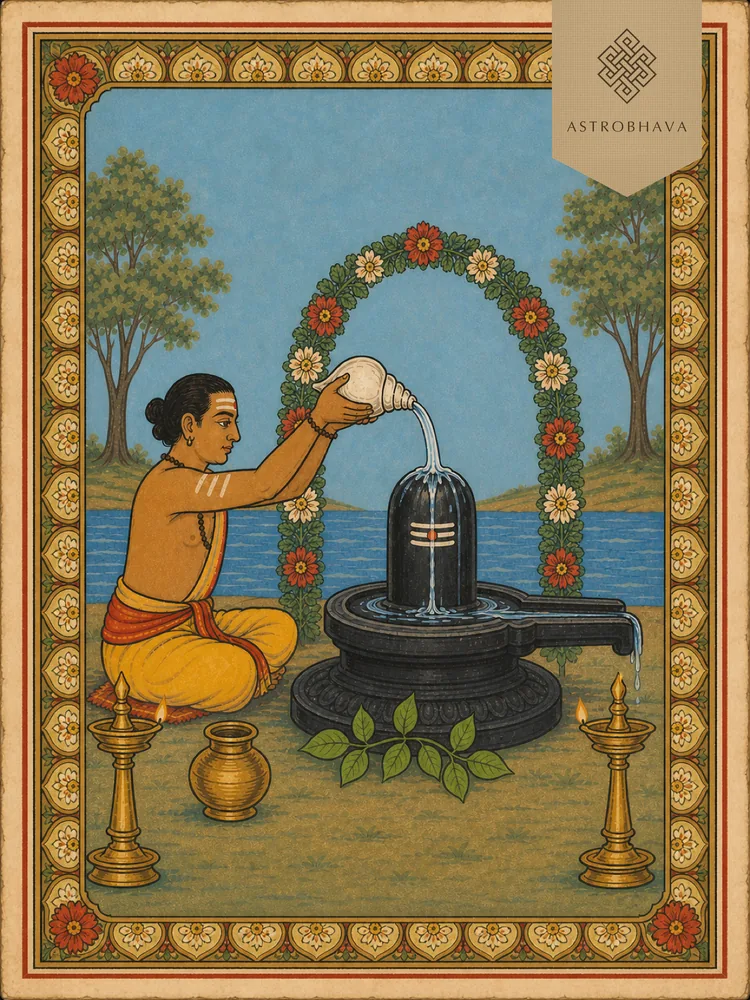
The bathing of the lingam with water from 108 sacred conches, poured one after another — the conch is the vessel the tradition reserves for its highest abhisheka, and the sound with which the rite opens.
3Vedic priests
2 hrsOf abhisheka
108Shankhas poured
ShivaThe deity invoked
$1,289All-inclusive · nothing added at checkout
Your personal sankalpa — name, gotra, nakshatra and rasi; never a shared ritual
Telecast live from our Yagna Ashram; your viewing link arrives the day before
Prasadam from your aradhana, shipped free worldwide
Not sure the Conch Shell Abhishegam is the right rite for you? Get a free ritual suggestion.
Send your name, date, time and place of birth and your concern; our astrologers tell you which rite to perform, from your chart (by Prashna if your birth time is unknown). We do not answer questions about the future, such as marriage or jobs. Reply within 24–48 hours.
Abhisheka is the bathing of the deity, and the tradition is precise about what it is poured from. The shankha — the conch — is the vessel it reserves for the highest form of that offering: it is itself held sacred, it announces the rite when it is sounded, and what passes through it is held to be changed by the passage. Here it is offered in its fullest form: 108 shankhas, each filled with water and consecrated with mantra, are poured over the lingam one after another.
The rite here is offered to Lord Shiva, whose worship the tradition places at the centre of abhisheka: the lingam is bathed before it is adorned. Your name, gotra, nakshatra and rasi open the rite in the sankalpa, and every offering that follows is made on your behalf alone.
Like every aradhana we perform, it takes place in the open ritual space of our own Yagna Ashram, never inside a temple sanctum, and every moment of it is telecast live.
The Procedure
How the Conch Shell Abhishegam is conducted
The rite as it unfolds at the ashram, step by step — the eight stages from the sankalpa to the packing of your prasadam.
Recorded live telecast
A Conch Shell Abhishegam as it was telecast live — the sankalpa, the pouring through the shankha, the alankaram and the aarti.
SankalpaYour purpose, name, gotra and intention declared — the rite is bound to you from its first words.
AvahanaThe deity invited with the mantras that belong to the invocation.
The abhishekaWater filled into 108 shankhas and poured over the lingam, one conch after another — the central act of the rite.
Mantra japaThe Vedic mantras of the abhisheka chanted through the pouring.
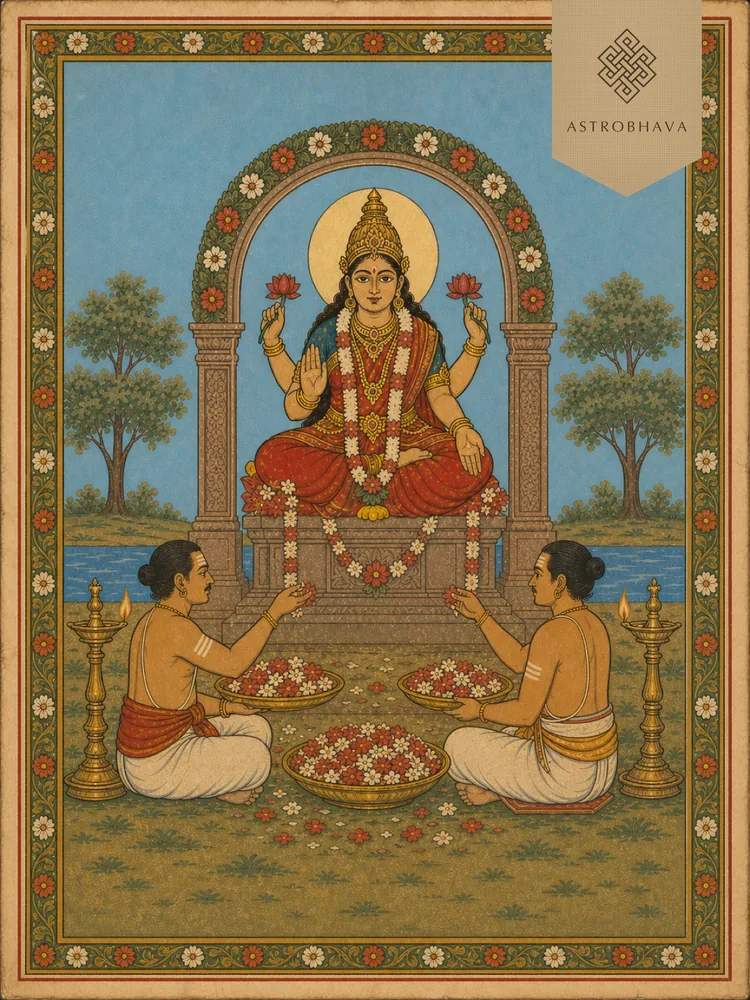
AlankaramThe lingam adorned with flowers, sandal and fresh cloth after the bathing.
NaivedyamSattvic food offered and afterwards received back as prasadam.
Your prayers, remotelyYou join in prayer through the live telecast, from wherever in the world you are.
Aarti and pradakshinaCamphor aarti offered and circumambulation made; gratitude expressed and the rite closed.
From booking to prasadam
After you book
01
Book & share birth details
Your name, date and place of birth — gotra if you know it, Kashyapa by tradition if you don’t. You may include up to four family members in the sankalpa.
02
Your muhurta is fixed
Our astrologers calculate the auspicious date from your chart and confirm it by email within 24–48 working hours.
03
The rite is performed, live
The rite is performed at our Yagna Ashram at your muhurta. You watch it live; your link arrives the day before.
04
Prasadam reaches you
Your prasadam is packed after the rite concludes and shipped free, wherever in the world you are.
Why it is performed
What devotees seek from the Conch Shell Abhishegam
The abhisheka is prescribed where what is wanted is purification — of a person, of a house, of a run of events that has turned.
Purification
The first purpose of an abhisheka: the washing of what has accumulated, in a person or in a household.
Protection
Shiva invoked as Rudra — for shelter, and for the holding of what has been rebuilt.
Peace of mind
For minds under weight; the rite is quiet, and that is part of its prescription.
Health & vitality
Performed alongside treatment, never in place of it — for strength and recovery.
Obstacle removal
For paths that will not clear, where the obstruction is felt as heaviness rather than opposition.
Harmony in relationships
For households in friction, and for relations that have cooled without a cause anyone can name.
Is the Conch Shell Abhishegam the right rite for you?
It is a serious undertaking, and it is not the prescription for every situation. Describe your circumstance to Nirnaya, our free ritual guide — or book a consultation with our astrologers, who will read your chart before you commit to a rite.
The Conch Shell Abhishegam, or Shankhabhishekam, is the ritual bathing of Lord Shiva's lingam with water poured from 108 shankhas, the sacred conches. Abhisheka, the bathing of the deity, is the worship Shiva's tradition places at the centre: the lingam is bathed before it is adorned, and it is in that bathing that he is approached. Its significance lies in joining that worship to the vessel the tradition reserves for its highest abhisheka. Your name, gotra, nakshatra and rasi open the rite in the sankalpa, and every offering that follows is made on your behalf alone, at our Yagna Ashram, while you watch live.
Devotees traditionally seek the Conch Shell Abhishegam for purification — of a person, of a household, or of a run of events that has turned — which is the first purpose of any abhisheka. It is also offered for protection, with Shiva invoked as Rudra for shelter; for peace of mind when the mind is under weight; for the removal of obstacles felt as heaviness rather than opposition; and for harmony where a household is in friction or relations have cooled. For health and strength it is offered alongside medical treatment, never in place of it. It is offered as prayer.
The Conch Shell Abhishegam suits devotees of Lord Shiva who seek purification for themselves or their household: those who feel something has accumulated and needs washing away, families in friction, relations that have cooled without a cause anyone can name, and anyone whose affairs have turned and feel heavy. The rite is quiet, and that quietness is part of its prescription for a mind under weight. You can book it from anywhere in the world. If you are unsure whether it is the right rite for you, describe your circumstance to Nirnaya, our free ritual guide, or book a consultation with our astrologers.
Our priests perform the Conch Shell Abhishegam at our Yagna Ashram in eight stages, and the sound of the conch opens the rite. Your sankalpa is declared with your name, gotra and intention, and the deity is invited with the mantras of the invocation. Then comes the central act: water filled into 108 shankhas and poured over the lingam one after another, while the Vedic mantras of the abhisheka are chanted. Nothing else is added. The lingam is then adorned with flowers, sandal and fresh cloth, sattvic food is offered as naivedyam, and the rite closes with camphor aarti and pradakshina. You watch it all on live telecast.
The Conch Shell Abhishegam takes about two hours, performed by three Vedic priests at the muhurta our astrologers fix from your birth chart. Those two hours hold the whole rite, from the sankalpa and the invocation, through the pouring of the abhisheka and the alankaram, to the closing aarti and pradakshina. The telecast covers all of it, and your viewing link arrives the day before, so you can plan to watch it through.
You do not need to wait for an auspicious day. Whenever you book, our astrologers calculate the muhurta from your own birth chart — a date chosen for you personally, which tradition regards as more precise than a calendar date chosen for everyone. Our Panchang shows the tithi and nakshatra for any date.
Yes: the sankalpa names you and, if you wish, up to four family members, and no one else. Your Conch Shell Abhishegam is one private aradhana: it is never combined with another devotee's booking and never made a shared rite. Your names open the rite in the sankalpa, so every offering that follows, from the first of the 108 shankhas to the closing aarti, is made for your household alone.
You can book the Conch Shell Abhishegam online, on this page, from any country. Straight after payment, the "Your sankalpa" box asks for your name, date and place of birth, your gotra (Kashyapa by tradition if you do not know it), up to four family members if you wish to include them, and your prayer. Our astrologers calculate your muhurta and confirm the date by email within 24–48 working hours, and your live telecast link arrives the day before. Afterwards your prasadam is packed and shipped free worldwide, usually reaching you in 1–2 weeks within India and 2–4 weeks internationally from the aradhana’s completion.
Your Conch Shell Abhishegam is performed in full at its appointed muhurta whether you are watching or not — its completeness does not depend on your presence. A recording is made available to you afterwards. Join in prayer through the live telecast for as much of it as you can; the recording holds the rest.
A conch is used because the tradition reserves the shankha for the highest form of abhisheka. The conch is itself held sacred; it announces the rite when it is sounded at the opening; and what passes through it is held to be changed by the passage. So the water poured over the lingam is offered through the most honoured vessel the tradition knows. It is offered with 108 conches because the tradition holds 108 to be complete, the count of a full mala of japa, so the abhisheka is made whole rather than token. The shankha is the vessel of this rite; the offering itself is made to Lord Shiva.
 ॐ
 ॐ
 ॐ
 ॐ