Abhirami Anthathi
தார் அமர் கொன்றையும் சண்பக மாலையும் சாத்தும் தில்லை ஊரர்தம் பாகத்து உமை மைந்தனே உலகு ஏழும் பெற்றAlso known as Udikkindra Sengathir
In Tamil and English — with the meaning of every word, and the one sound most people pronounce wrongly.
What the Abhirami Anthathi is
The Abhirami Anthathi is a Tamil poem of one hundred verses to Abhirami, the Goddess of the Shiva temple at Thirukkadaiyur, composed by the temple priest Subramaniya Iyer, remembered as Abhirami Bhattar, in the 18th century. It opens with a Kappu verse asking Ganapati, son of Uma, to keep the poem in the poet's mind, and closes with a nool payan verse after the hundredth. The hundred are bound in the anthathi form, in which the last word of each verse becomes the first word of the next: Verse 1 ends on tunaiye, 'support', and Verse 2 begins tunaiyum. Verse 1 pictures her form in red things, from the rising sun to the pomegranate bud and saffron paste, and Verse 2 names her Tripura Sundari, holding flower arrows, sugarcane bow, noose and goad. Across the sequence the poet calls her his mother, confesses his failings, sings her play with Shiva and returns again and again to her mercy.
A new moon that became a full moon
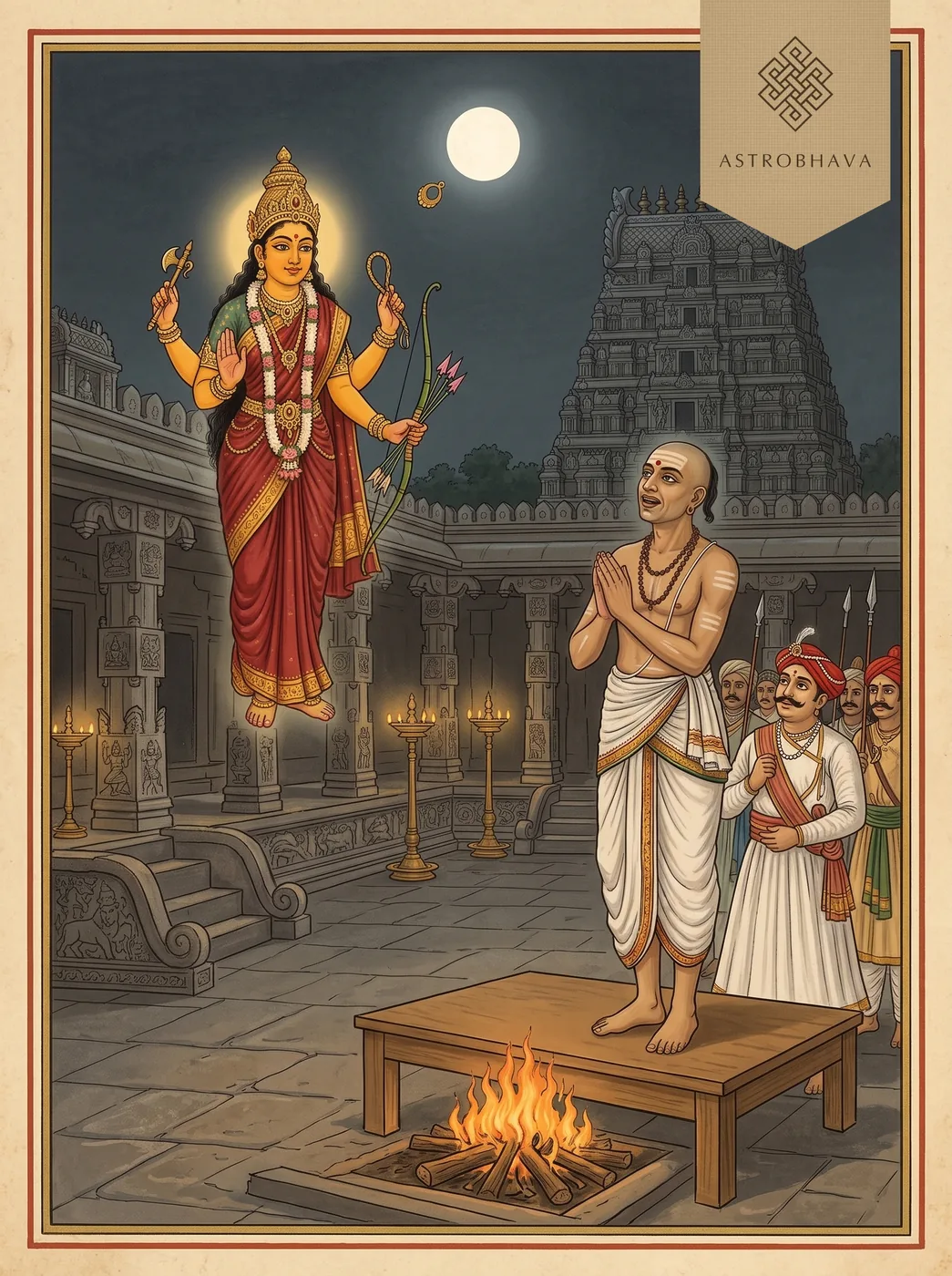
According to tradition, Subramaniya Iyer, son of Amirthalinga Iyer, served at the Thirukkadaiyur temple and was so absorbed in the Goddess that he worshipped her in every woman. When the king of Thanjavur, usually named as Serfoji I, visited the shrine, he asked the priest what the day's tithi was. It was the new moon of the month of Thai, but the priest, seeing only the moon-like face of Abhirami, answered that it was the full moon. One account says he had been worshipping the Goddess that day in her full-moon aspect within the Sri Chakra rite. The king ordered that he burn unless the moon rose that night. Tellings differ on the details: in one he stands on a fire platform under sentence, in another he hangs a hundred ropes over the flames and resolves to cut one with each verse he sings. As he finished the seventy-ninth, which begins vizhikke arul undu, 'there is grace in her eyes', Abhirami is said to have appeared and flung one of her earrings, the tatanka, into the sky, where it shone as a full moon. He went on to complete twenty-one more verses, and the king gave him the name Abhirami Bhattar, priest of Abhirami. The temple marks the story every year on Thai Amavasai with a recital of the poem.
The opening lines, in Tamil and English
- உதிக்கின்ற
- utikkiṉṟa — rising
- செங்கதிர்
- ceṅkatir — red sun
- உச்சித்
- uccit — of the crown of the head
- திலகம்
- tilakam — vermilion mark
- உணர்வுடையோர்
- uṇarvuṭaiyōr — the wise
- மதிக்கின்ற
- matikkiṉṟa — prize
- மாணிக்கம்
- māṇikkam — ruby
- மாதுளம்போது
- mātuḷampōtu — pomegranate bud
- மலர்க்கமலை
- malarkkamalai — Lakshmi of the lotus
- துதிக்கின்ற
- tutikkiṉṟa — praise
- மின்
- miṉ — lightning
- கொடி
- koṭi — creeper
- மென்
- meṉ — soft
- கடிக்
- kaṭik — fragrant
- குங்கும
- kuṅkuma — saffron
- தோயம்
- tōyam — paste
- என்ன
- eṉṉa — like
- விதிக்கின்ற
- vitikkiṉṟa — that is set forth
- மேனி
- mēṉi — form
- அபிராமி
- apirāmi — Abhirami
- என்றன்
- eṉṟaṉ — my
- விழுத்
- viḻut — sure, excellent
- துணையே
- tuṇaiyē — support, companion
Abhirami Anthathi lyrics in full
The Kappu to Ganapati, the hundred linked verses and the closing nool payan, in Tamil with a line-by-line meaning.
All 408 lines, in Tamil and English, each with its meaning. Choose a script:
Download the Abhirami Anthathi PDFAll 408 lines with their meanings, in Tamil. Free to print and keep.
தார் அமர் கொன்றையும் சண்பக மாலையும் சாத்தும் தில்லை
ஊரர்தம் பாகத்து உமை மைந்தனே உலகு ஏழும் பெற்ற
சீர் அபிராமி அந்தாதி எப்போதும் என் சிந்தையுள்ளே
கார் அமர் மேனிக் கணபதியே நிற்கக் கட்டுரையே
tār amar koṉṟaiyum caṇpaka mālaiyum cāttum tillai
ūrartam pākattu umai maintaṉē ulaku ēḻum peṟṟa
cīr apirāmi antāti eppōtum eṉ cintaiyuḷḷē
kār amar mēṉik kaṇapatiyē niṟkak kaṭṭuraiyē
O Ganapati of rain-cloud hue, son of Uma who shares the body of the Lord of Thillai, the Lord who wears garlands of konrai and shenbagam flowers: may this Anthathi on glorious Abhirami, who gave birth to the seven worlds, stay ever in my mind. Grant it, I pray.
உதிக்கின்ற செங்கதிர் உச்சித் திலகம் உணர்வுடையோர்
மதிக்கின்ற மாணிக்கம் மாதுளம்போது மலர்க்கமலை
துதிக்கின்ற மின் கொடி மென் கடிக் குங்கும தோயம் என்ன
விதிக்கின்ற மேனி அபிராமி என்றன் விழுத் துணையே
utikkiṉṟa ceṅkatir uccit tilakam uṇarvuṭaiyōr
matikkiṉṟa māṇikkam mātuḷampōtu malarkkamalai
tutikkiṉṟa miṉ koṭi meṉ kaṭik kuṅkuma tōyam eṉṉa
vitikkiṉṟa mēṉi apirāmi eṉṟaṉ viḻut tuṇaiyē
Like the rising red sun, the vermilion mark on the crown of the head, the ruby prized by the wise, the pomegranate bud, the lightning-creeper praised by Lakshmi of the lotus, and fragrant saffron paste - such is the form of Abhirami, my sure support.
துணையும் தொழும் தெய்வமும் பெற்ற தாயும் சுருதிகளின்
பணையும் கொழுந்தும் பதிகொண்ட வேரும் பனி மலர்ப்பூங்
கணையும் கருப்புச் சிலையும் மென் பாசாங்குசமும் கையில்
அணையும் திரிபுர சுந்தரி ஆவது அறிந்தனமே
tuṇaiyum toḻum teyvamum peṟṟa tāyum curutikaḷiṉ
paṇaiyum koḻuntum patikoṇṭa vērum paṉi malarppūṅ
kaṇaiyum karuppuc cilaiyum meṉ pācāṅkucamum kaiyil
aṇaiyum tiripura cuntari āvatu aṟintaṉamē
We have come to know that Tripura Sundari is our companion, the god we worship and the mother who bore us. She is the branches, the tender shoots and the deep root of the Vedas, and her hands hold the cool flower arrows, the sugarcane bow, the noose and the goad.
அறிந்தேன் எவரும் அறியா மறையை அறிந்துகொண்டு
செறிந்தேன் உனது திருவடிக்கே திருவே வெருவிப்
பிறிந்தேன் நின் அன்பர் பெருமை எண்ணாத கரும நெஞ்சால்
மறிந்தே விழு நரகுக்கு உறவாய மனிதரையே
aṟintēṉ evarum aṟiyā maṟaiyai aṟintukoṇṭu
ceṟintēṉ uṉatu tiruvaṭikkē tiruvē veruvip
piṟintēṉ niṉ aṉpar perumai eṇṇāta karuma neñcāl
maṟintē viḻu narakukku uṟavāya maṉitaraiyē
I have known the secret that no one knows, and knowing it I have clung to your holy feet, O Shri. In fear I have parted from people whose dark hearts never weighed the greatness of your devotees, and who are bound for the hell into which they topple and fall.
மனிதரும் தேவரும் மாயா முனிவரும் வந்து சென்னி
குனிதரும் சேவடிக் கோமளமே கொன்றை வார்சடைமேல்
பனிதரும் திங்களும் பாம்பும் பகீரதியும் படைத்த
புனிதரும் நீயும் என் புந்தி எந்நாளும் பொருந்துகவே
maṉitarum tēvarum māyā muṉivarum vantu ceṉṉi
kuṉitarum cēvaṭik kōmaḷamē koṉṟai vārcaṭaimēl
paṉitarum tiṅkaḷum pāmpum pakīratiyum paṭaitta
puṉitarum nīyum eṉ punti ennāḷum poruntukavē
O tender one, at whose red feet humans, gods and undying sages bow their heads: may you and the holy Lord who carries the cool moon, the serpent and the Ganga on his long konrai-decked matted hair abide in my mind every day.
பொருந்திய முப்புரை செப்பு உரைசெய்யும் புணர் முலையால்
வருந்திய வஞ்சி மருங்குல் மனோன்மணி வார் சடையோன்
அருந்திய நஞ்சு அமுது ஆக்கிய அம்பிகை அம்புயமேல்
திருந்திய சுந்தரி அந்தரி பாதம் என் சென்னியதே
poruntiya muppurai ceppu uraiceyyum puṇar mulaiyāl
varuntiya vañci maruṅkul maṉōṉmaṇi vār caṭaiyōṉ
aruntiya nañcu amutu ākkiya ampikai ampuyamēl
tiruntiya cuntari antari pātam eṉ ceṉṉiyatē
The threefold Tripura, whose paired breasts outshine golden caskets and weigh on her slender creeper-like waist; Manonmani; Ambika, who turned to nectar the poison drunk by the Lord of the long matted hair; the beautiful Sundari and Antari seated on the lotus - her feet rest on my head.
சென்னியது உன் பொன் திருவடித் தாமரை சிந்தையுள்ளே
மன்னியது உன் திரு மந்திரம் சிந்துர வண்ணப் பெண்ணே
முன்னியநின் அடியாருடன் கூடி முறை முறையே
பன்னியது என்றும் உன்றன் பரமாகம பத்ததியே
ceṉṉiyatu uṉ poṉ tiruvaṭit tāmarai cintaiyuḷḷē
maṉṉiyatu uṉ tiru mantiram cintura vaṇṇap peṇṇē
muṉṉiyaniṉ aṭiyāruṭaṉ kūṭi muṟai muṟaiyē
paṉṉiyatu eṉṟum uṉṟaṉ paramākama pattatiyē
On my head are your golden lotus feet; within my mind abides your holy mantra, O lady of vermilion hue. Joining the devotees who seek you, what I recite in due order every day is the method of your supreme Agama.
ததியுறு மத்திற் சுழலும் என் ஆவி தளர்வு இலது ஓர்
கதியுறுவண்ணம் கருது கண்டாய் கமலாலயனும்
மதியுறுவேணி மகிழ்நனும் மாலும் வணங்கி என்றும்
துதியுறு சேவடியாய் சிந்துரானன சுந்தரியே
tatiyuṟu mattiṟ cuḻalum eṉ āvi taḷarvu ilatu ōr
katiyuṟuvaṇṇam karutu kaṇṭāy kamalālayaṉum
matiyuṟuvēṇi makiḻnaṉum mālum vaṇaṅki eṉṟum
tutiyuṟu cēvaṭiyāy cinturāṉaṉa cuntariyē
My soul spins like a churning rod in curd; look upon it and grant it a state that never falters, O vermilion-faced Sundari, whose red feet are praised forever by Brahma of the lotus, by the Lord with the moon in his hair, and by Vishnu.
சுந்தரி எந்தை துணைவி என் பாசத்தொடரை எல்லாம்
வந்து அரி சிந்துர வண்ணத்தினாள் மகிடன் தலைமேல்
அந்தரி நீலி அழியாத கன்னிகை ஆரணத்தோன்
கம் தரி கைத்தலத்தாள் மலர்த்தாள் என் கருத்தனவே
cuntari entai tuṇaivi eṉ pācattoṭarai ellām
vantu ari cintura vaṇṇattiṉāḷ makiṭaṉ talaimēl
antari nīli aḻiyāta kaṉṉikai āraṇattōṉ
kam tari kaittalattāḷ malarttāḷ eṉ karuttaṉavē
Sundari, consort of my Father, who comes and cuts away all the chains of my bondage; she of vermilion hue, who stood on the head of Mahisha; Antari, Nili, the undying maiden, who holds in her hand the head of the Vedic Brahma - her flower feet are in my thought.
கருத்தன எந்தைதன் கண்ணன வண்ணக் கனகவெற்பிற்
பெருத்தன பால் அழும் பிள்ளைக்கு நல்கின பேர் அருள்கூர்
திருத்தன பாரமும் ஆரமும் செங்கைச் சிலையும் அம்பும்
முருத்தன மூரலும் நீயும் அம்மே வந்து என்முன் நிற்கவே
karuttaṉa entaitaṉ kaṇṇaṉa vaṇṇak kaṉakaveṟpiṟ
peruttaṉa pāl aḻum piḷḷaikku nalkiṉa pēr aruḷkūr
tiruttaṉa pāramum āramum ceṅkaic cilaiyum ampum
muruttaṉa mūralum nīyum ammē vantu eṉmuṉ niṟkavē
The breasts my Father holds in his thought and in his eyes, swelling like the golden mountain, that gave milk to the crying child, full of grace, with their pearl chain, together with the bow and arrows in your red hands and your gentle smile - Mother, come with all these and stand before me.
நின்றும் இருந்தும் கிடந்தும் நடந்தும் நினைப்பது உன்னை
என்றும் வணங்குவது உன் மலர்த் தாள் எழுதாமறையின்
ஒன்றும் அரும்பொருளே அருளே உமையே இமயத்து
அன்றும் பிறந்தவளே அழியா முத்தி ஆனந்தமே
niṉṟum iruntum kiṭantum naṭantum niṉaippatu uṉṉai
eṉṟum vaṇaṅkuvatu uṉ malart tāḷ eḻutāmaṟaiyiṉ
oṉṟum arumporuḷē aruḷē umaiyē imayattu
aṉṟum piṟantavaḷē aḻiyā mutti āṉantamē
Standing, sitting, lying down or walking, it is you I think of; it is your flower feet I always worship. O rare meaning of the unwritten Veda, O grace, O Uma, who was born of the Himalaya long ago, O undying bliss of liberation.
ஆனந்தமாய் என் அறிவாய் நிறைந்த அமுதமுமாய்
வான் அந்தமான வடிவு உடையாள் மறை நான்கினுக்கும்
தான் அந்தமான சரணாரவிந்தம் தவள நிறக்
கானம் தம் ஆடரங்கு ஆம் எம்பிரான் முடிக் கண்ணியதே
āṉantamāy eṉ aṟivāy niṟainta amutamumāy
vāṉ antamāṉa vaṭivu uṭaiyāḷ maṟai nāṉkiṉukkum
tāṉ antamāṉa caraṇāravintam tavaḷa niṟak
kāṉam tam āṭaraṅku ām empirāṉ muṭik kaṇṇiyatē
Bliss, my knowledge, the nectar that fills all, with a form whose limit is the sky: your lotus feet, which are the end of the four Vedas, have become the crest-wreath on the head of our Lord whose dance-stage is the ash-white cremation ground.
கண்ணியது உன் புகழ் கற்பது உன் நாமம் கசிந்து பத்தி
பண்ணியது உன் இரு பாதாம்புயத்தில் பகல் இரவா
நண்ணியது உன்னை நயந்தோர் அவையத்து நான் முன்செய்த
புண்ணியம் ஏது என் அம்மே புவி ஏழையும் பூத்தவளே
kaṇṇiyatu uṉ pukaḻ kaṟpatu uṉ nāmam kacintu patti
paṇṇiyatu uṉ iru pātāmpuyattil pakal iravā
naṇṇiyatu uṉṉai nayantōr avaiyattu nāṉ muṉceyta
puṇṇiyam ētu eṉ ammē puvi ēḻaiyum pūttavaḷē
What I wear in mind is your fame; what I learn is your name; my melting devotion is offered at your two lotus feet; day and night I keep the company of those who love you. What merit did I earn before, Mother, who gave birth to the seven worlds?
பூத்தவளே புவனம் பதினான்கையும் பூத்தவண்ணம்
காத்தவளே பின் கரந்தவளே கறைக்கண்டனுக்கு
மூத்தவளே என்றும் மூவா முகுந்தற்கு இளையவளே
மாத்தவளே உன்னை அன்றி மற்று ஓர் தெய்வம் வந்திப்பதே
pūttavaḷē puvaṉam patiṉāṉkaiyum pūttavaṇṇam
kāttavaḷē piṉ karantavaḷē kaṟaikkaṇṭaṉukku
mūttavaḷē eṉṟum mūvā mukuntaṟku iḷaiyavaḷē
māttavaḷē uṉṉai aṉṟi maṟṟu ōr teyvam vantippatē
You gave birth to the fourteen worlds, kept them as you made them, and later withdrew them; elder to the Lord with the stained throat, younger sister of the ever-young Vishnu, great ascetic - why should I worship any god other than you?
வந்திப்பவர் உன்னை வானவர் தானவர் ஆனவர்கள்
சிந்திப்பவர் நல்திசைமுகர் நாரணர் சிந்தையுள்ளே
பந்திப்பவர் அழியாப் பரமானந்தர் பாரில் உன்னைச்
சந்திப்பவர்க்கு எளிதாம் எம்பிராட்டி நின் தண்ணளியே
vantippavar uṉṉai vāṉavar tāṉavar āṉavarkaḷ
cintippavar nalticaimukar nāraṇar cintaiyuḷḷē
pantippavar aḻiyāp paramāṉantar pāril uṉṉaic
cantippavarkku eḷitām empirāṭṭi niṉ taṇṇaḷiyē
Those who worship you are the gods, the demons and all others; those who meditate on you are four-faced Brahma and Vishnu; those who hold you fast in their minds are the sages of undying bliss. Yet your cool grace, our Empress, is easy for those who meet you here on earth.
தண்ணளிக்கு என்று முன்னே பல கோடி தவங்கள் செய்வார்
மண் அளிக்கும் செல்வமோ பெறுவார் மதி வானவர் தம்
விண் அளிக்கும் செல்வமும் அழியா முத்தி வீடும் அன்றோ
பண் அளிக்கும் சொல் பரிமள யாமளைப் பைங்கிளியே
taṇṇaḷikku eṉṟu muṉṉē pala kōṭi tavaṅkaḷ ceyvār
maṇ aḷikkum celvamō peṟuvār mati vāṉavar tam
viṇ aḷikkum celvamum aḻiyā mutti vīṭum aṉṟō
paṇ aḷikkum col parimaḷa yāmaḷaip paiṅkiḷiyē
Those who have done crores of penances for your cool grace - do they receive only the wealth the earth gives? Do they not also gain the wealth of heaven given to the gods, and undying liberation? O green parrot, fragrant Yamala, whose speech gives music.
கிளியே கிளைஞர் மனத்தே கிடந்து கிளர்ந்து ஒளிரும்
ஒளியே ஒளிரும் ஒளிக்கு இடமே எண்ணில் ஒன்றும் இல்லா
வெளியே வெளி முதல் பூதங்கள் ஆகி விரிந்த அம்மே
அளியேன் அறிவு அளவிற்கு அளவானது அதிசயமே
kiḷiyē kiḷaiñar maṉattē kiṭantu kiḷarntu oḷirum
oḷiyē oḷirum oḷikku iṭamē eṇṇil oṉṟum illā
veḷiyē veḷi mutal pūtaṅkaḷ āki virinta ammē
aḷiyēṉ aṟivu aḷaviṟku aḷavāṉatu aticayamē
O parrot; light that lies and shines in the minds of your kin; abode of every shining light; space where nothing can be counted; Mother who spread out as the elements beginning with space - that you fit within the measure of my poor knowledge is a wonder.
அதிசயம் ஆன வடிவு உடையாள் அரவிந்தம் எல்லாம்
துதி சய ஆனன சுந்தரவல்லி துணை இரதி
பதி சயமானது அபசயம் ஆக முன் பார்த்தவர்தம்
மதி சயம் ஆக அன்றோ வாம பாகத்தை வவ்வியதே
aticayam āṉa vaṭivu uṭaiyāḷ aravintam ellām
tuti caya āṉaṉa cuntaravalli tuṇai irati
pati cayamāṉatu apacayam āka muṉ pārttavartam
mati cayam āka aṉṟō vāma pākattai vavviyatē
She of wondrous form, the beautiful creeper whose face triumphs over every lotus: Shiva, who once by his glance turned the victory of Kama, Rati's husband, into defeat, had his own mind won over - is that not how she came to take the left half of his body?
வவ்விய பாகத்து இறைவரும் நீயும் மகிழ்ந்திருக்கும்
செவ்வியும் உங்கள் திருமணக் கோலமும் சிந்தையுள்ளே
அவ்வியம் தீர்த்து என்னை ஆண்டபொற் பாதமும் ஆகிவந்து
வெவ்விய காலன் என்மேல் வரும்போது வெளி நிற்கவே
vavviya pākattu iṟaivarum nīyum makiḻntirukkum
cevviyum uṅkaḷ tirumaṇak kōlamum cintaiyuḷḷē
avviyam tīrttu eṉṉai āṇṭapoṟ pātamum ākivantu
vevviya kālaṉ eṉmēl varumpōtu veḷi niṟkavē
May the Lord whose half you took and you, the beauty of your joy together, your wedding form, and the golden feet that removed my faults and claimed me, all come into my mind and appear before me when cruel Death comes for me.
வெளிநின்ற நின்திருமேனியைப் பார்த்து என் விழியும் நெஞ்சும்
களிநின்ற வெள்ளம் கரைகண்டது இல்லை கருத்தினுள்ளே
தெளிநின்ற ஞானம் திகழ்கின்றது என்ன திருவுளமோ
ஒளிநின்ற கோணங்கள் ஒன்பதும் மேவி உறைபவளே
veḷiniṉṟa niṉtirumēṉiyaip pārttu eṉ viḻiyum neñcum
kaḷiniṉṟa veḷḷam karaikaṇṭatu illai karuttiṉuḷḷē
teḷiniṉṟa ñāṉam tikaḻkiṉṟatu eṉṉa tiruvuḷamō
oḷiniṉṟa kōṇaṅkaḷ oṉpatum mēvi uṟaipavaḷē
Seeing your holy form revealed before me, the flood of joy in my eyes and heart has found no shore, and a clear knowledge shines within my mind. What grace is this, O you who dwell within the nine triangles?
உறைகின்ற நின் திருக்கோயில் நின் கேள்வர் ஒரு பக்கமோ
அறைகின்ற நான் மறையின் அடியோ முடியோ அமுதம்
நிறைகின்ற வெண் திங்களோ கஞ்சமோ என்றன் நெஞ்சகமோ
மறைகின்ற வாரிதியோ பூரணாசல மங்கலையே
uṟaikiṉṟa niṉ tirukkōyil niṉ kēḷvar oru pakkamō
aṟaikiṉṟa nāṉ maṟaiyiṉ aṭiyō muṭiyō amutam
niṟaikiṉṟa veṇ tiṅkaḷō kañcamō eṉṟaṉ neñcakamō
maṟaikiṉṟa vāritiyō pūraṇācala maṅkalaiyē
Where is your holy temple - one side of your consort? The root or the crown of the four Vedas that proclaim you? The white moon full of nectar? The lotus? My heart? The hidden ocean? O auspicious one of the full mountain.
மங்கலை செங்கலசம் முலையாள் மலையாள் வருணச்
சங்கு அலை செங்கைச் சகல கலாமயில் தாவு கங்கை
பொங்கு அலை தங்கும் புரிசடையோன் புடையாள் உடையாள்
பிங்கலை நீலி செய்யாள் வெளியாள் பசும் பெண்கொடியே
maṅkalai ceṅkalacam mulaiyāḷ malaiyāḷ varuṇac
caṅku alai ceṅkaic cakala kalāmayil tāvu kaṅkai
poṅku alai taṅkum puricaṭaiyōṉ puṭaiyāḷ uṭaiyāḷ
piṅkalai nīli ceyyāḷ veḷiyāḷ pacum peṇkoṭiyē
Auspicious one, with breasts like red pots, daughter of the mountain, whose red hand bears bright conch bangles, peacock of all the arts, consort of the Lord whose curled matted hair holds the rising waves of the leaping Ganga, owner of all; Pingala, Nili, the red one, the white one, green young creeper.
கொடியே இளவஞ்சிக் கொம்பே எனக்கு வம்பே பழுத்த
படியே மறையின் பரிமளமே பனி மால் இமயப்
பிடியே பிரமன் முதலாய தேவரைப் பெற்ற அம்மே
அடியேன் இறந்து இங்கு இனிப் பிறவாமல் வந்து ஆண்டு கொள்ளே
koṭiyē iḷavañcik kompē eṉakku vampē paḻutta
paṭiyē maṟaiyiṉ parimaḷamē paṉi māl imayap
piṭiyē piramaṉ mutalāya tēvaraip peṟṟa ammē
aṭiyēṉ iṟantu iṅku iṉip piṟavāmal vantu āṇṭu koḷḷē
O creeper, young vanji twig, form ripe with ever-new fragrance for me, fragrance of the Vedas, young she-elephant of the snowy Himalaya, Mother who bore Brahma and all the gods: come and claim me, so that I, your servant, do not die and be born here again.
கொள்ளேன் மனத்தில் நின் கோலம் அல்லாது அன்பர் கூட்டந்தன்னை
விள்ளேன் பரசமயம் விரும்பேன் வியன் மூவுலகுக்கு
உள்ளே அனைத்தினுக்கும் புறம்பே உள்ளத்தே விளைந்த
கள்ளே களிக்கும் களியே அளிய என் கண்மணியே
koḷḷēṉ maṉattil niṉ kōlam allātu aṉpar kūṭṭantaṉṉai
viḷḷēṉ paracamayam virumpēṉ viyaṉ mūvulakukku
uḷḷē aṉaittiṉukkum puṟampē uḷḷattē viḷainta
kaḷḷē kaḷikkum kaḷiyē aḷiya eṉ kaṇmaṇiyē
I will not hold in my mind any form but yours; I will not leave the company of your devotees; I will not desire other creeds. O nectar that grew in my heart, within the three worlds and beyond them all; O delight that rejoices; O gracious apple of my eye.
மணியே மணியின் ஒளியே ஒளிரும் மணி புனைந்த
அணியே அணியும் அணிக்கு அழகே அணுகாதவர்க்குப்
பிணியே பிணிக்கு மருந்தே அமரர் பெரு விருந்தே
பணியேன் ஒருவரை நின் பத்ம பாதம் பணிந்தபின்னே
maṇiyē maṇiyiṉ oḷiyē oḷirum maṇi puṉainta
aṇiyē aṇiyum aṇikku aḻakē aṇukātavarkkup
piṇiyē piṇikku maruntē amarar peru viruntē
paṇiyēṉ oruvarai niṉ patma pātam paṇintapiṉṉē
O gem, light of the gem, ornament set with shining gems, beauty of all ornaments, affliction to those who keep away, medicine for that affliction, great feast of the immortals: having bowed to your lotus feet, I will bow to no one else.
பின்னே திரிந்து உன் அடியாரைப் பேணிப் பிறப்பு அறுக்க
முன்னே தவங்கள் முயன்று கொண்டேன் முதல் மூவருக்கும்
அன்னே உலகுக்கு அபிராமி என்னும் அருமருந்தே
என்னே இனி உன்னை யான் மறவாமல் நின்று ஏத்துவனே
piṉṉē tirintu uṉ aṭiyāraip pēṇip piṟappu aṟukka
muṉṉē tavaṅkaḷ muyaṉṟu koṇṭēṉ mutal mūvarukkum
aṉṉē ulakukku apirāmi eṉṉum arumaruntē
eṉṉē iṉi uṉṉai yāṉ maṟavāmal niṉṟu ēttuvaṉē
To follow your devotees and serve them, so as to cut off rebirth, I strove in penance before. O Mother of the first three gods, rare medicine named Abhirami for the world - what wonder! I will never forget you, and I will stand and praise you.
ஏத்தும் அடியவர் ஈரேழ் உலகினையும் படைத்தும்
காத்தும் அழித்தும் திரிபவராம் கமழ்பூங்கடம்பு
சாத்தும் குழல் அணங்கே மணம் நாறும் நின் தாளிணைக்கு என்
நாத் தங்கு புன்மொழி ஏறியவாறு நகையுடைத்தே
ēttum aṭiyavar īrēḻ ulakiṉaiyum paṭaittum
kāttum aḻittum tiripavarām kamaḻpūṅkaṭampu
cāttum kuḻal aṇaṅkē maṇam nāṟum niṉ tāḷiṇaikku eṉ
nāt taṅku puṉmoḻi ēṟiyavāṟu nakaiyuṭaittē
Those who praise you create, protect and destroy the fourteen worlds. O goddess whose hair wears fragrant kadamba flowers: that my lowly words from my tongue have climbed to your fragrant feet is a thing to laugh at.
உடைத்தனை வஞ்சப் பிறவியை உள்ளம் உருகும் அன்பு
படைத்தனை பத்ம பதயுகம் சூடும் பணி எனக்கே
அடைத்தனை நெஞ்சத்து அழுக்கையெல்லாம் நின் அருட்புனலால்
துடைத்தனை சுந்தரி நின் அருள் ஏதென்று சொல்லுவதே
uṭaittaṉai vañcap piṟaviyai uḷḷam urukum aṉpu
paṭaittaṉai patma patayukam cūṭum paṇi eṉakkē
aṭaittaṉai neñcattu aḻukkaiyellām niṉ aruṭpuṉalāl
tuṭaittaṉai cuntari niṉ aruḷ ēteṉṟu colluvatē
You broke my deceitful birth; you gave me a love that melts the heart; you assigned me the task of wearing your lotus feet; you washed away all the dirt of my mind with the flood of your grace. Sundari, how can I describe your grace?
சொல்லும் பொருளும் என நடம் ஆடும் துணைவருடன்
புல்லும் பரிமளப் பூங்கொடியே நின் புதுமலர்த் தாள்
அல்லும் பகலும் தொழுமவர்க்கே அழியா அரசும்
செல்லும் தவநெறியும் சிவலோகமும் சித்திக்குமே
collum poruḷum eṉa naṭam āṭum tuṇaivaruṭaṉ
pullum parimaḷap pūṅkoṭiyē niṉ putumalart tāḷ
allum pakalum toḻumavarkkē aḻiyā aracum
cellum tavaneṟiyum civalōkamum cittikkumē
O fragrant flower-creeper who embraces your consort, the two of you dancing as word and meaning: the verse says that those who worship your fresh flower feet night and day attain undying kingship, the path of penance, and Shiva's world.
சித்தியும் சித்தி தரும் தெய்வம் ஆகித் திகழும் பரா
சத்தியும் சத்தி தழைக்கும் சிவமும் தவம் முயல்வார்
முத்தியும் முத்திக்கு வித்தும் வித்து ஆகி முளைத்து எழுந்த
புத்தியும் புத்தியினுள்ளே புரக்கும் புரத்தை அன்றே
cittiyum citti tarum teyvam ākit tikaḻum parā
cattiyum catti taḻaikkum civamum tavam muyalvār
muttiyum muttikku vittum vittu āki muḷaittu eḻunta
puttiyum puttiyiṉuḷḷē purakkum purattai aṉṟē
The powers, the goddess who grants them, the supreme Shakti, Shiva in whom Shakti flourishes, the liberation of those who strive in penance, the seed of liberation, the wisdom that sprouts from that seed, and the one who protects within wisdom - all these are Tripura herself.
அன்றே தடுத்து என்னை ஆண்டுகொண்டாய் கொண்டது அல்ல என்கை
நன்றே உனக்கு இனி நான் என் செயினும் நடுக்கடலுள்
சென்றே விழினும் கரையேற்றுகை நின் திருவுளமே
ஒன்றே பல உருவே அருவே என் உமையவளே
aṉṟē taṭuttu eṉṉai āṇṭukoṇṭāy koṇṭatu alla eṉkai
naṉṟē uṉakku iṉi nāṉ eṉ ceyiṉum naṭukkaṭaluḷ
ceṉṟē viḻiṉum karaiyēṟṟukai niṉ tiruvuḷamē
oṉṟē pala uruvē aruvē eṉ umaiyavaḷē
That very day you stopped me and took me as yours; is it right for you now to deny it? Whatever I do from now on, even if I fall into the middle of the ocean, lifting me to the shore is your will. O One, O many forms, O formless one, my Uma.
உமையும் உமையொருபாகனும் ஏக உருவில் வந்து இங்கு
எமையும் தமக்கு அன்பு செய்யவைத்தார் இனி எண்ணுதற்குச்
சமயங்களும் இல்லை ஈன்றெடுப்பாள் ஒரு தாயும் இல்லை
அமையும் அமையுறு தோளியர்மேல் வைத்த ஆசையுமே
umaiyum umaiyorupākaṉum ēka uruvil vantu iṅku
emaiyum tamakku aṉpu ceyyavaittār iṉi eṇṇutaṟkuc
camayaṅkaḷum illai īṉṟeṭuppāḷ oru tāyum illai
amaiyum amaiyuṟu tōḷiyarmēl vaitta ācaiyumē
Uma and the Lord who shares her came here in one form and made even me love them. Now there are no other creeds to think about, no mother to bear me again, and no desire for women with bamboo-like shoulders.
ஆசைக் கடலில் அகப்பட்டு அருளற்ற அந்தகன் கைப்
பாசத்தில் அல்லற்பட இருந்தேனை நின் பாதம் என்னும்
வாசக் கமலம் தலைமேல் வலிய வைத்து ஆண்டு கொண்ட
நேசத்தை என் சொல்லுவேன் ஈசர் பாகத்து நேரிழையே
ācaik kaṭalil akappaṭṭu aruḷaṟṟa antakaṉ kaip
pācattil allaṟpaṭa iruntēṉai niṉ pātam eṉṉum
vācak kamalam talaimēl valiya vaittu āṇṭu koṇṭa
nēcattai eṉ colluvēṉ īcar pākattu nēriḻaiyē
I was caught in the sea of desire, suffering in the noose of merciless Death. How can I describe the love with which you set your fragrant lotus feet on my head unasked and took me as yours, O jewel-adorned one at the side of Shiva?
இழைக்கும் வினைவழியே அடும் காலன் எனை நடுங்க
அழைக்கும் பொழுது வந்து அஞ்சல் என்பாய் அத்தர் சித்தம் எல்லாம்
குழைக்கும் களபக் குவிமுலை யாமளைக் கோமளமே
உழைக்கும் பொழுது உன்னையே அன்னையே என்பன் ஓடிவந்தே
iḻaikkum viṉaivaḻiyē aṭum kālaṉ eṉai naṭuṅka
aḻaikkum poḻutu vantu añcal eṉpāy attar cittam ellām
kuḻaikkum kaḷapak kuvimulai yāmaḷaik kōmaḷamē
uḻaikkum poḻutu uṉṉaiyē aṉṉaiyē eṉpaṉ ōṭivantē
When Death, who strikes along the path of karma, calls me so that I tremble, you will come and say 'Do not fear'. O tender Yamala, whose sandal-smeared breasts melt the Lord's whole mind: in my distress I will run to you crying 'Mother'.
வந்தே சரணம் புகும் அடியாருக்கு வானுலகம்
தந்தே பரிவொடு தான் போய் இருக்கும் சதுர்முகமும்
பைந் தேன் அலங்கல் பரு மணி ஆகமும் பாகமும் பொற்
செந் தேன் மலரும் அலர் கதிர் ஞாயிறும் திங்களுமே
vantē caraṇam pukum aṭiyārukku vāṉulakam
tantē parivoṭu tāṉ pōy irukkum caturmukamum
pain tēṉ alaṅkal paru maṇi ākamum pākamum poṟ
cen tēṉ malarum alar katir ñāyiṟum tiṅkaḷumē
Having given heaven to the devotees who come to her for refuge, she lovingly goes and dwells in these places: the four-faced Brahma, Vishnu's chest with its garland of honeyed flowers and great gems, the half of Shiva, the golden red lotus full of honey, the radiant sun, and the moon.
திங்கட் பகவின் மணம் நாறும் சீறடி சென்னி வைக்க
எங்கட்கு ஒரு தவம் எய்தியவா எண் இறந்த விண்ணோர்
தங்கட்கும் இந்தத் தவம் எய்துமோ தரங்கக் கடலுள்
வெங் கண் பணி அணைமேல் துயில்கூரும் விழுப்பொருளே
tiṅkaṭ pakaviṉ maṇam nāṟum cīṟaṭi ceṉṉi vaikka
eṅkaṭku oru tavam eytiyavā eṇ iṟanta viṇṇōr
taṅkaṭkum intat tavam eytumō taraṅkak kaṭaluḷ
veṅ kaṇ paṇi aṇaimēl tuyilkūrum viḻupporuḷē
That your small feet, fragrant like the crescent moon, were placed on our heads - what penance we attained! Will even the countless gods attain such penance? O precious one, who sleeps on the fierce-eyed serpent in the ocean of waves.
பொருளே பொருள் முடிக்கும் போகமே அரும் போகம் செய்யும்
மருளே மருளில் வரும் தெருளே என் மனத்து வஞ்சத்து
இருள் ஏதும் இன்றி ஒளி வெளி ஆகி இருக்கும் உன்றன்
அருள் ஏது அறிகின்றிலேன் அம்புயாதனத்து அம்பிகையே
poruḷē poruḷ muṭikkum pōkamē arum pōkam ceyyum
maruḷē maruḷil varum teruḷē eṉ maṉattu vañcattu
iruḷ ētum iṉṟi oḷi veḷi āki irukkum uṉṟaṉ
aruḷ ētu aṟikiṉṟilēṉ ampuyātaṉattu ampikaiyē
O wealth; enjoyment that fulfils wealth; delusion that brings rare enjoyment; clarity that comes out of delusion: I do not understand your grace, which stands as pure light in my deceitful mind without any darkness, O Ambika seated on the lotus.
கைக்கே அணிவது கன்னலும் பூவும் கமலம் அன்ன
மெய்க்கே அணிவது வெண் முத்துமாலை விட அரவின்
பைக்கே அணிவது பன்மணிக் கோவையும் பட்டும் எட்டுத்
திக்கே அணியும் திரு உடையானிடம் சேர்பவளே
kaikkē aṇivatu kaṉṉalum pūvum kamalam aṉṉa
meykkē aṇivatu veṇ muttumālai viṭa araviṉ
paikkē aṇivatu paṉmaṇik kōvaiyum paṭṭum eṭṭut
tikkē aṇiyum tiru uṭaiyāṉiṭam cērpavaḷē
On her hands she wears sugarcane and flowers; on her lotus-like body, a garland of white pearls; on her hips, shaped like a cobra's hood, a girdle of many gems and silk. She has joined the side of the Lord who wears the eight directions.
பவளக் கொடியில் பழுத்த செவ்வாயும் பனிமுறுவல்
தவளத் திரு நகையும் துணையா எங்கள் சங்கரனைத்
துவளப் பொருது துடியிடை சாய்க்கும் துணை முலையாள்
அவளைப் பணிமின் கண்டீர் அமராவதி ஆளுகைக்கே
pavaḷak koṭiyil paḻutta cevvāyum paṉimuṟuval
tavaḷat tiru nakaiyum tuṇaiyā eṅkaḷ caṅkaraṉait
tuvaḷap porutu tuṭiyiṭai cāykkum tuṇai mulaiyāḷ
avaḷaip paṇimiṉ kaṇṭīr amarāvati āḷukaikkē
With red lips like ripe coral fruit and a cool, pure white smile as her allies, she with the slender waist and twin breasts fought our Shankara until he yielded. Worship her, and you shall rule Amaravati, the city of the gods.
ஆளுகைக்கு உன்றன் அடித்தாமரைகள் உண்டு அந்தகன்பால்
மீளுகைக்கு உன்றன் விழியின் கடை உண்டு மேல் இவற்றின்
மூளுகைக்கு என் குறை நின் குறையே அன்று முப்புரங்கள்
மாளுகைக்கு அம்பு தொடுத்த வில்லான் பங்கில் வாணுதலே
āḷukaikku uṉṟaṉ aṭittāmaraikaḷ uṇṭu antakaṉpāl
mīḷukaikku uṉṟaṉ viḻiyiṉ kaṭai uṇṭu mēl ivaṟṟiṉ
mūḷukaikku eṉ kuṟai niṉ kuṟaiyē aṉṟu muppuraṅkaḷ
māḷukaikku ampu toṭutta villāṉ paṅkil vāṇutalē
To rule, there are your lotus feet; to escape Death, there is the corner of your eye. If these do not take hold, the fault is mine and not yours, O lady of the radiant brow, beside the bowman who strung the arrow that destroyed the three cities.
வாள் நுதல் கண்ணியை விண்ணவர் யாவரும் வந்து இறைஞ்சிப்
பேணுதற்கு எண்ணிய எம்பெருமாட்டியைப் பேதை நெஞ்சில்
காணுதற்கு அண்ணியள் அல்லாத கன்னியைக் காணும் அன்பு
பூணுதற்கு எண்ணிய எண்ணம் அன்றோ முன் செய் புண்ணியமே
vāḷ nutal kaṇṇiyai viṇṇavar yāvarum vantu iṟaiñcip
pēṇutaṟku eṇṇiya emperumāṭṭiyaip pētai neñcil
kāṇutaṟku aṇṇiyaḷ allāta kaṉṉiyaik kāṇum aṉpu
pūṇutaṟku eṇṇiya eṇṇam aṉṟō muṉ cey puṇṇiyamē
The maiden of the radiant brow, the Empress whom all the gods come to worship, the virgin who is hard to see for foolish hearts - is not the very thought of loving her the fruit of merit done before?
புண்ணியம் செய்தனமே மனமே புதுப் பூங் குவளைக்
கண்ணியும் செய்ய கணவரும் கூடி நம் காரணத்தால்
நண்ணி இங்கே வந்து தம் அடியார்கள் நடு இருக்கப்
பண்ணி நம் சென்னியின் மேல் பத்ம பாதம் பதித்திடவே
puṇṇiyam ceytaṉamē maṉamē putup pūṅ kuvaḷaik
kaṇṇiyum ceyya kaṇavarum kūṭi nam kāraṇattāl
naṇṇi iṅkē vantu tam aṭiyārkaḷ naṭu irukkap
paṇṇi nam ceṉṉiyiṉ mēl patma pātam patittiṭavē
O mind, we have done merit! The Mother with eyes like fresh blue lilies and her red consort came together for our sake, came here, placed us among their devotees, and set their lotus feet upon our heads.
இடங்கொண்டு விம்மி இணைகொண்டு இறுகி இளகி முத்து
வடங்கொண்ட கொங்கை மலைகொண்டு இறைவர் வலிய நெஞ்சை
நடங்கொண்ட கொள்கை நலம் கொண்ட நாயகி நல் அரவின்
படம் கொண்ட அல்குல் பனிமொழி வேதப் பரிபுரையே
iṭaṅkoṇṭu vimmi iṇaikoṇṭu iṟuki iḷaki muttu
vaṭaṅkoṇṭa koṅkai malaikoṇṭu iṟaivar valiya neñcai
naṭaṅkoṇṭa koḷkai nalam koṇṭa nāyaki nal araviṉ
paṭam koṇṭa alkul paṉimoḻi vētap paripuraiyē
With breasts that swell, press close and soften under the pearl chain, she conquered the strong heart of the Lord and made it dance. She is the lady of grace and goodness, with hips like a cobra's hood, of cool speech, the Paripura of the Vedas.
பரிபுரச் சீறடிப் பாசாங்குசை பஞ்சபாணி இன்சொல்
திரிபுர சுந்தரி சிந்துர மேனியள் தீமை நெஞ்சில்
புரிபுர வஞ்சரை அஞ்சக் குனி பொருப்புச்சிலைக் கை
எரி புரை மேனி இறைவர் செம்பாகத்து இருந்தவளே
paripurac cīṟaṭip pācāṅkucai pañcapāṇi iṉcol
tiripura cuntari cintura mēṉiyaḷ tīmai neñcil
puripura vañcarai añcak kuṉi poruppuccilaik kai
eri purai mēṉi iṟaivar cempākattu iruntavaḷē
She of anklets on small feet, holder of noose and goad, bearer of five arrows, of sweet speech, Tripura Sundari of vermilion body, sits in the red half of the fire-bright Lord, who bent the mountain bow in his hand to terrify the wicked of evil hearts.
தவளே இவள் எங்கள் சங்கரனார் மனை மங்கலமாம்
அவளே அவர்தமக்கு அன்னையும் ஆயினள் ஆகையினால்
இவளே கடவுளர் யாவர்க்கும் மேலை இறைவியும் ஆம்
துவளேன் இனி ஒரு தெய்வம் உண்டாக மெய்த் தொண்டு செய்தே
tavaḷē ivaḷ eṅkaḷ caṅkaraṉār maṉai maṅkalamām
avaḷē avartamakku aṉṉaiyum āyiṉaḷ ākaiyiṉāl
ivaḷē kaṭavuḷar yāvarkkum mēlai iṟaiviyum ām
tuvaḷēṉ iṉi oru teyvam uṇṭāka meyt toṇṭu ceytē
She is the auspicious wife in the house of our Shankara; she is also his mother; therefore she is the supreme goddess above all gods. Having served her in truth, I will not waver now as if there were another god.
தொண்டு செய்யாதுநின் பாதம் தொழாது துணிந்து இச்சையே
பண்டு செய்தார் உளரோ இலரோ அப் பரிசு அடியேன்
கண்டு செய்தால் அது கைதவமோ அன்றிச் செய்தவமோ
மிண்டு செய்தாலும் பொறுக்கை நன்றே பின் வெறுக்கை அன்றே
toṇṭu ceyyātuniṉ pātam toḻātu tuṇintu iccaiyē
paṇṭu ceytār uḷarō ilarō ap paricu aṭiyēṉ
kaṇṭu ceytāl atu kaitavamō aṉṟic ceytavamō
miṇṭu ceytālum poṟukkai naṉṟē piṉ veṟukkai aṉṟē
Were there any in the past who, without serving you or worshipping your feet, did as they pleased? Whether there were or not, if I see that and do the same, is it deceit or penance? Even if I act wrongly, it is good of you to bear with me, not to turn me away.
வெறுக்கும் தகைமைகள் செய்யினும் தம் அடியாரை மிக்கோர்
பொறுக்கும் தகைமை புதியது அன்றே புது நஞ்சை உண்டு
கறுக்கும் திருமிடற்றான் இடப்பாகம் கலந்த பொன்னே
மறுக்கும் தகைமைகள் செய்யினும் யானுன்னை வாழ்த்துவனே
veṟukkum takaimaikaḷ ceyyiṉum tam aṭiyārai mikkōr
poṟukkum takaimai putiyatu aṉṟē putu nañcai uṇṭu
kaṟukkum tirumiṭaṟṟāṉ iṭappākam kalanta poṉṉē
maṟukkum takaimaikaḷ ceyyiṉum yāṉuṉṉai vāḻttuvaṉē
The great bear with their devotees even when they do hateful things; this is nothing new. O golden one who shares the left side of the Lord whose throat darkened from the poison he drank: even if I do things you would reject, I will praise you.
வாழும்படி ஒன்று கண்டு கொண்டேன் மனத்தே ஒருவர்
வீழும்படி அன்று விள்ளும்படி அன்று வேலை நிலம்
ஏழும் பரு வரை எட்டும் எட்டாமல் இரவு பகல்
சூழும் சுடர்க்கு நடுவே கிடந்து சுடர்கின்றதே
vāḻumpaṭi oṉṟu kaṇṭu koṇṭēṉ maṉattē oruvar
vīḻumpaṭi aṉṟu viḷḷumpaṭi aṉṟu vēlai nilam
ēḻum paru varai eṭṭum eṭṭāmal iravu pakal
cūḻum cuṭarkku naṭuvē kiṭantu cuṭarkiṉṟatē
I have found a way to live: a light that neither falls into anyone's mind nor can be put into words, beyond the reach of the seven seas and lands and the eight great mountains, lying in the midst of the lights that circle day and night, and shining.
சுடரும் கலைமதி துன்றும் சடைமுடிக் குன்றில் ஒன்றிப்
படரும் பரிமளப் பச்சைக் கொடியைப் பதித்து நெஞ்சில்
இடரும் தவிர்த்து இமைப்போது இருப்பார் பின்னும் எய்துவரோ
குடரும் கொழுவும் குருதியும் தோயும் குரம்பையிலே
cuṭarum kalaimati tuṉṟum caṭaimuṭik kuṉṟil oṉṟip
paṭarum parimaḷap paccaik koṭiyaip patittu neñcil
iṭarum tavirttu imaippōtu iruppār piṉṉum eytuvarō
kuṭarum koḻuvum kurutiyum tōyum kurampaiyilē
Those who fix in their hearts, removing all distress, the green fragrant creeper that clings to the mountain of matted hair where the bright moon dwells, and meditate even for the blink of an eye - will they again enter this hut of a body steeped in entrails, fat and blood?
குரம்பை அடுத்துக் குடிபுக்க ஆவி வெங் கூற்றுக்கு இட்ட
வரம்பை அடுத்து மறுகும் அப்போது வளைக்கை அமைத்து
அரம்பை அடுத்த அரிவையர் சூழ வந்து அஞ்சல் என்பாய்
நரம்பை அடுத்த இசை வடிவாய் நின்ற நாயகியே
kurampai aṭuttuk kuṭipukka āvi veṅ kūṟṟukku iṭṭa
varampai aṭuttu maṟukum appōtu vaḷaikkai amaittu
arampai aṭutta arivaiyar cūḻa vantu añcal eṉpāy
narampai aṭutta icai vaṭivāy niṉṟa nāyakiyē
When the soul that lives in the body nears the limit set by cruel Death and is in turmoil, you will come with your bangled hand, surrounded by maidens like celestial dancers, and say 'Do not fear', O Lady who stands as the form of music born of strings.
நாயகி நான்முகி நாராயணி கை நளின பஞ்ச
சாயகி சாம்பவி சங்கரி சாமளை சாதி நச்சு
வாய் அகி மாலினி வாராகி சூலினி மாதங்கி என்று
ஆய கியாதி உடையாள் சரணம் அரண் நமக்கே
nāyaki nāṉmuki nārāyaṇi kai naḷiṉa pañca
cāyaki cāmpavi caṅkari cāmaḷai cāti naccu
vāy aki māliṉi vārāki cūliṉi mātaṅki eṉṟu
āya kiyāti uṭaiyāḷ caraṇam araṇ namakkē
Nayaki, Brahmi of four faces, Narayani, she who holds five lotus arrows in her hand, Shambhavi, Shankari, Shyamala, she who wears the venomous serpent, Malini, Varahi, Shulini, Matangi - the feet of the one who bears such fame are our refuge and shield.
அரணம் பொருள் என்று அருள் ஒன்று இலாத அசுரர் தங்கள்
முரண் அன்று அழிய முனிந்த பெம்மானும் முகுந்தனுமே
சரணம் சரணம் என நின்ற நாயகி தன் அடியார்
மரணம் பிறவி இரண்டும் எய்தார் இந்த வையகத்தே
araṇam poruḷ eṉṟu aruḷ oṉṟu ilāta acurar taṅkaḷ
muraṇ aṉṟu aḻiya muṉinta pemmāṉum mukuntaṉumē
caraṇam caraṇam eṉa niṉṟa nāyaki taṉ aṭiyār
maraṇam piṟavi iraṇṭum eytār inta vaiyakattē
Shiva, who in anger destroyed the strength of the merciless asuras who took their fortresses for the real thing, and Vishnu stand before her crying 'Refuge, refuge'. The verse says that her devotees will not meet death and birth in this world.
வையம் துரகம் மதகரி மா மகுடம் சிவிகை
பெய்யும் கனகம் பெருவிலை ஆரம் பிறை முடித்த
ஐயன் திருமனையாள் அடித் தாமரைக்கு அன்பு முன்பு
செய்யும் தவமுடையார்க்கு உளவாகிய சின்னங்களே
vaiyam turakam matakari mā makuṭam civikai
peyyum kaṉakam peruvilai āram piṟai muṭitta
aiyaṉ tirumaṉaiyāḷ aṭit tāmaraikku aṉpu muṉpu
ceyyum tavamuṭaiyārkku uḷavākiya ciṉṉaṅkaḷē
Chariots, horses, rutting elephants, great crowns, palanquins, showering gold and priceless necklaces - the verse says these are the signs of those who did penance of love long ago at the lotus feet of the wife of the crescent-crowned Lord.
சின்னஞ் சிறிய மருங்கினில் சாத்திய செய்ய பட்டும்
பென்னம் பெரிய முலையும் முத்தாரமும் பிச்சி மொய்த்த
கன்னங்கரிய குழலும் கண் மூன்றும் கருத்தில் வைத்துத்
தன்னந்தனி இருப்பார்க்கு இது போலும் தவம் இல்லையே
ciṉṉañ ciṟiya maruṅkiṉil cāttiya ceyya paṭṭum
peṉṉam periya mulaiyum muttāramum picci moytta
kaṉṉaṅkariya kuḻalum kaṇ mūṉṟum karuttil vaittut
taṉṉantaṉi iruppārkku itu pōlum tavam illaiyē
Keeping in mind the red silk on her tiny waist, her full breasts, the pearl necklace, the jet-black hair swarmed by jasmine, and her three eyes, those who sit in solitude - for them there is no penance like this.
இல்லாமை சொல்லி ஒருவர் தம்பால் சென்று இழிவுபட்டு
நில்லாமை நெஞ்சில் நினைகுவிரேல் நித்தம் நீடு தவம்
கல்லாமை கற்ற கயவர் தம்பால் ஒரு காலத்திலும்
செல்லாமை வைத்த திரிபுரை பாதங்கள் சேர்மின்களே
illāmai colli oruvar tampāl ceṉṟu iḻivupaṭṭu
nillāmai neñcil niṉaikuvirēl nittam nīṭu tavam
kallāmai kaṟṟa kayavar tampāl oru kālattilum
cellāmai vaitta tiripurai pātaṅkaḷ cērmiṉkaḷē
If you wish never again to tell your want to another, go to him and be shamed, then join the feet of Tripura, who keeps her devotees from ever going to the base people who have learned only to never learn lasting penance.
மின் ஆயிரம் ஒரு மெய் வடிவு ஆகி விளங்குகின்றது
அன்னாள் அகமகிழ் ஆனந்தவல்லி அருமறைக்கு
முன்னாய் நடு எங்கும் ஆய் முடிவு ஆய முதல்விதன்னை
உன்னாது ஒழியினும் உன்னினும் வேண்டுவது ஒன்று இல்லையே
miṉ āyiram oru mey vaṭivu āki viḷaṅkukiṉṟatu
aṉṉāḷ akamakiḻ āṉantavalli arumaṟaikku
muṉṉāy naṭu eṅkum āy muṭivu āya mutalvitaṉṉai
uṉṉātu oḻiyiṉum uṉṉiṉum vēṇṭuvatu oṉṟu illaiyē
She shines as one true form made of a thousand lightnings; she is the joy-creeper who delights the heart; she is the first lady who is before, in the middle and at the end of the Vedas. Whether one thinks of her or not, she wants nothing.
ஒன்றாய் அரும்பிப் பலவாய் விரிந்து இவ் உலகு எங்குமாய்
நின்றாள் அனைத்தையும் நீங்கி நிற்பாள் என்றன் நெஞ்சினுள்ளே
பொன்றாது நின்று புரிகின்றவா இப் பொருள் அறிவார்
அன்று ஆலிலையில் துயின்ற பெம்மானும் என் ஐயனுமே
oṉṟāy arumpip palavāy virintu iv ulaku eṅkumāy
niṉṟāḷ aṉaittaiyum nīṅki niṟpāḷ eṉṟaṉ neñciṉuḷḷē
poṉṟātu niṉṟu purikiṉṟavā ip poruḷ aṟivār
aṉṟu ālilaiyil tuyiṉṟa pemmāṉum eṉ aiyaṉumē
She budded as one, spread as many, and stands filling this world; she also stands apart from it all. How she dwells undying in my heart and acts there, only Vishnu who slept on the banyan leaf and my Lord Shiva know.
ஐயன் அளந்தபடி இரு நாழி கொண்டு அண்டம் எல்லாம்
உய்ய அறம் செயும் உன்னையும் போற்றி ஒருவர் தம்பால்
செய்ய பசுந்தமிழ்ப் பாமாலையும் கொண்டு சென்று பொய்யும்
மெய்யும் இயம்பவைத்தாய் இதுவோ உன்றன் மெய்யருளே
aiyaṉ aḷantapaṭi iru nāḻi koṇṭu aṇṭam ellām
uyya aṟam ceyum uṉṉaiyum pōṟṟi oruvar tampāl
ceyya pacuntamiḻp pāmālaiyum koṇṭu ceṉṟu poyyum
meyyum iyampavaittāy ituvō uṉṟaṉ meyyaruḷē
With two measures of grain from the Lord, you do charity that saves all the worlds; yet you made me take a garland of fine Tamil verse to a person and speak both false and true. Is this your true grace?
அருணாம்புயத்தும் என் சித்தாம்புயத்தும் அமர்ந்திருக்கும்
தருணாம்புயமுலைத் தையல் நல்லாள் தகை சேர் நயனக்
கருணாம்புயமும் வதனாம்புயமும் கராம்புயமும்
சரணாம்புயமும் அல்லால் கண்டிலேன் ஒரு தஞ்சமுமே
aruṇāmpuyattum eṉ cittāmpuyattum amarntirukkum
taruṇāmpuyamulait taiyal nallāḷ takai cēr nayaṉak
karuṇāmpuyamum vataṉāmpuyamum karāmpuyamum
caraṇāmpuyamum allāl kaṇṭilēṉ oru tañcamumē
Other than the lotus eyes of compassion, the lotus face, the lotus hands and the lotus feet of the young lady with lotus-bud breasts, who dwells in the red lotus and in the lotus of my mind, I see no refuge.
தஞ்சம் பிறிது இல்லை ஈது அல்லது என்று உன் தவநெறிக்கே
நெஞ்சம் பயில நினைக்கின்றிலேன் ஒற்றை நீள்சிலையும்
அஞ்சு அம்பும் இக்கு அலராக நின்றாய் அறியார் எனினும்
பஞ்சு அஞ்சும் மெல் அடியார் அடியார் பெற்ற பாலரையே
tañcam piṟitu illai ītu allatu eṉṟu uṉ tavaneṟikkē
neñcam payila niṉaikkiṉṟilēṉ oṟṟai nīḷcilaiyum
añcu ampum ikku alarāka niṉṟāy aṟiyār eṉiṉum
pañcu añcum mel aṭiyār aṭiyār peṟṟa pālaraiyē
Though there is no refuge but this, I have not thought to train my heart in your path of penance. You stand holding the one long bow of sugarcane and the five flower arrows. Even when children know nothing, would mothers whose feet are softer than cotton reject the children they bore?
பாலினும் சொல் இனியாய் பனி மா மலர்ப் பாதம் வைக்க
மாலினும் தேவர் வணங்க நின்றோன் கொன்றை வார் சடையின்
மேலினும் கீழ்நின்று வேதங்கள் பாடும் மெய்ப் பீடம் ஒரு
நாலினும் சால நன்றோ அடியேன் முடை நாய்த் தலையே
pāliṉum col iṉiyāy paṉi mā malarp pātam vaikka
māliṉum tēvar vaṇaṅka niṉṟōṉ koṉṟai vār caṭaiyiṉ
mēliṉum kīḻniṉṟu vētaṅkaḷ pāṭum meyp pīṭam oru
nāliṉum cāla naṉṟō aṭiyēṉ muṭai nāyt talaiyē
O you whose speech is sweeter than milk: to place your cool great flower feet, was my foul dog-like head better than Vishnu, than the gods, than the konrai-decked matted hair of the Lord, and than the true seat of the four Vedas that sing below?
நாயேனையும் இங்கு ஒரு பொருளாக நயந்து வந்து
நீயே நினைவின்றி ஆண்டு கொண்டாய் நின்னை உள்ளவண்ணம்
பேயேன் அறியும் அறிவு தந்தாய் என்ன பேறு பெற்றேன்
தாயே மலைமகளே செங்கண் மால் திருத் தங்கைச்சியே
nāyēṉaiyum iṅku oru poruḷāka nayantu vantu
nīyē niṉaiviṉṟi āṇṭu koṇṭāy niṉṉai uḷḷavaṇṇam
pēyēṉ aṟiyum aṟivu tantāy eṉṉa pēṟu peṟṟēṉ
tāyē malaimakaḷē ceṅkaṇ māl tirut taṅkaicciyē
You lovingly came and took even me, a dog, as something worthy, without my asking; you gave me, a fool, the knowledge to know you as you are. What fortune I have gained! Mother, daughter of the mountain, sister of red-eyed Vishnu.
தங்கச் சிலை கொண்டு தானவர் முப்புரம் சாய்த்து மத
வெங் கண் கரி உரி போர்த்த செஞ்சேவகன் மெய்யடையக்
கொங்கைக் குரும்பைக் குறியிட்ட நாயகி கோகனகச்
செங் கைக் கரும்பும் மலரும் எப்போதும் என் சிந்தையதே
taṅkac cilai koṇṭu tāṉavar muppuram cāyttu mata
veṅ kaṇ kari uri pōrtta ceñcēvakaṉ meyyaṭaiyak
koṅkaik kurumpaik kuṟiyiṭṭa nāyaki kōkaṉakac
ceṅ kaik karumpum malarum eppōtum eṉ cintaiyatē
O Lady who left the mark of her bud-like breasts on the body of the red warrior, who with the golden bow destroyed the three cities of the asuras and wore the hide of the fierce elephant: the sugarcane and the flowers in your red hand are always in my mind.
தேறும்படி சில ஏதுவும் காட்டி முன் செல்கதிக்குக்
கூறும் பொருள் குன்றில் கொட்டும் தறி குறிக்கும் சமயம்
ஆறும் தலைவி இவளாய் இருப்பது அறிந்திருந்தும்
வேறும் சமயம் உண்டு என்று கொண்டாடிய வீணருக்கே
tēṟumpaṭi cila ētuvum kāṭṭi muṉ celkatikkuk
kūṟum poruḷ kuṉṟil koṭṭum taṟi kuṟikkum camayam
āṟum talaivi ivaḷāy iruppatu aṟintiruntum
vēṟum camayam uṇṭu eṉṟu koṇṭāṭiya vīṇarukkē
Explaining the path ahead to those fools who, though shown proofs and knowing that she is the head of all six creeds, still celebrate other creeds, is like driving a peg into a rock.
வீணே பலி கவர் தெய்வங்கள்பால் சென்று மிக்க அன்பு
பூணேன் உனக்கு அன்பு பூண்டுகொண்டேன் நின்புகழ்ச்சி அன்றிப்
பேணேன் ஒரு பொழுதும் திருமேனி ப்ரகாசம் அன்றிக்
காணேன் இரு நிலமும் திசை நான்கும் ககனமுமே
vīṇē pali kavar teyvaṅkaḷpāl ceṉṟu mikka aṉpu
pūṇēṉ uṉakku aṉpu pūṇṭukoṇṭēṉ niṉpukaḻcci aṉṟip
pēṇēṉ oru poḻutum tirumēṉi prakācam aṉṟik
kāṇēṉ iru nilamum ticai nāṉkum kakaṉamumē
I will not give great love to useless gods who take offerings; I have given my love to you; I will value nothing but your praise. At no moment do I see the wide earth, the four directions or the sky without the radiance of your holy form.
ககனமும் வானும் புவனமும் காண விற் காமன் அங்கம்
தகனம் முன் செய்த தவப் பெருமாற்குத் தடக்கையும் செம்
முகனும் முந்நான்கு இருமூன்று எனத் தோன்றிய மூதறிவின்
மகனும் உண்டாயது அன்றோ வல்லி நீ செய்த வல்லபமே
kakaṉamum vāṉum puvaṉamum kāṇa viṟ kāmaṉ aṅkam
takaṉam muṉ ceyta tavap perumāṟkut taṭakkaiyum cem
mukaṉum munnāṉku irumūṉṟu eṉat tōṉṟiya mūtaṟiviṉ
makaṉum uṇṭāyatu aṉṟō valli nī ceyta vallapamē
To the great ascetic Shiva, who burned the body of Kama before the eyes of the sky, heaven and earth, a son of ancient wisdom was born with twelve arms and six faces. Is that not your power, O creeper?
வல்லபம் ஒன்று அறியேன் சிறியேன் நின் மலரடிச் செம்
பல்லவம் அல்லது பற்று ஒன்று இலேன் பசும் பொற் பொருப்பு
வில்லவர் தம்முடன் வீற்றிருப்பாய் வினையேன் தொடுத்த
சொல் அவமாயினும் நின் திரு நாமங்கள் தோத்திரமே
vallapam oṉṟu aṟiyēṉ ciṟiyēṉ niṉ malaraṭic cem
pallavam allatu paṟṟu oṉṟu ilēṉ pacum poṟ poruppu
villavar tammuṭaṉ vīṟṟiruppāy viṉaiyēṉ toṭutta
col avamāyiṉum niṉ tiru nāmaṅkaḷ tōttiramē
I know no power; I am small; I hold to nothing but the red tender feet of your flowers. You sit with the Lord whose bow is the green-gold mountain. Though the words strung by me, a sinner, are worthless, because they hold your holy names they are hymns.
தோத்திரம் செய்து தொழுது மின் போலும் நின் தோற்றம் ஒரு
மாத்திரைப் போதும் மனத்தில் வையாதவர் வண்மை குலம்
கோத்திரம் கல்வி குணம் குன்றி நாளும் குடில்கள் தொறும்
பாத்திரம் கொண்டு பலிக்கு உழலாநிற்பர் பார் எங்குமே
tōttiram ceytu toḻutu miṉ pōlum niṉ tōṟṟam oru
māttiraip pōtum maṉattil vaiyātavar vaṇmai kulam
kōttiram kalvi kuṇam kuṉṟi nāḷum kuṭilkaḷ toṟum
pāttiram koṇṭu palikku uḻalāniṟpar pār eṅkumē
Those who do not praise you, bow to you and hold your lightning-like form in mind even for a moment lose generosity, family, lineage, learning and character, and wander every day with a begging bowl from hut to hut all over the world.
பாரும் புனலும் கனலும் வெங் காலும் படர் விசும்பும்
ஊரும் முருகு சுவை ஒளி ஊறு ஒலி ஒன்றுபடச்
சேரும் தலைவி சிவகாம சுந்தரி சீறடிக்கே
சாரும் தவம் உடையார் படையாத தனம் இல்லையே
pārum puṉalum kaṉalum veṅ kālum paṭar vicumpum
ūrum muruku cuvai oḷi ūṟu oli oṉṟupaṭac
cērum talaivi civakāma cuntari cīṟaṭikkē
cārum tavam uṭaiyār paṭaiyāta taṉam illaiyē
The verse says that those who have the penance to reach the small feet of Shivakami Sundari, the Lady who unites earth, water, fire, wind and spreading space with smell, taste, light, touch and sound, will lack no wealth.
தனம் தரும் கல்வி தரும் ஒருநாளும் தளர்வு அறியா
மனம் தரும் தெய்வ வடிவும் தரும் நெஞ்சில் வஞ்சம் இல்லா
இனம் தரும் நல்லன எல்லாம் தரும் அன்பர் என்பவர்க்கே
கனம் தரும் பூங் குழலாள் அபிராமி கடைக்கண்களே
taṉam tarum kalvi tarum orunāḷum taḷarvu aṟiyā
maṉam tarum teyva vaṭivum tarum neñcil vañcam illā
iṉam tarum nallaṉa ellām tarum aṉpar eṉpavarkkē
kaṉam tarum pūṅ kuḻalāḷ apirāmi kaṭaikkaṇkaḷē
The verse says that the side-glances of Abhirami, whose hair is dense with flowers, give to those called her devotees wealth, learning, a mind that never wearies, a divine form, friends without deceit, and every good thing.
கண்களிக்கும்படி கண்டுகொண்டேன் கடம்பாடவியில்
பண் களிக்கும் குரல் வீணையும் கையும் பயோதரமும்
மண் களிக்கும் பச்சை வண்ணமும் ஆகி மதங்கர்குலப்
பெண்களில் தோன்றிய எம்பெருமாட்டிதன் பேரழகே
kaṇkaḷikkumpaṭi kaṇṭukoṇṭēṉ kaṭampāṭaviyil
paṇ kaḷikkum kural vīṇaiyum kaiyum payōtaramum
maṇ kaḷikkum paccai vaṇṇamum āki mataṅkarkulap
peṇkaḷil tōṉṟiya emperumāṭṭitaṉ pēraḻakē
In the kadamba forest I saw, to my eyes' delight, the great beauty of our Lady born among the Matanga clan: the veena with its music-loving tone, her hands, her breasts, and her green colour that gladdens the earth.
அழகுக்கு ஒருவரும் ஒவ்வாத வல்லி அரு மறைகள்
பழகிச் சிவந்த பதாம்புயத்தாள் பனி மா மதியின்
குழவித் திருமுடிக் கோமளயாமளைக் கொம்பு இருக்க
இழவுற்று நின்ற நெஞ்சே இரங்கேல் உனக்கு என் குறையே
aḻakukku oruvarum ovvāta valli aru maṟaikaḷ
paḻakic civanta patāmpuyattāḷ paṉi mā matiyiṉ
kuḻavit tirumuṭik kōmaḷayāmaḷaik kompu irukka
iḻavuṟṟu niṉṟa neñcē iraṅkēl uṉakku eṉ kuṟaiyē
While there stands the creeper whom none equals in beauty, whose lotus feet are reddened by walking with the Vedas, the tender Shyamala whose crown bears the young crescent moon - O heart standing in loss, do not grieve. What do you lack?
என் குறை தீரநின்று ஏத்துகின்றேன் இனி யான் பிறக்கின்
நின் குறையே அன்றி யார் குறை காண் இரு நீள் விசும்பின்
மின் குறை காட்டி மெலிகின்ற நேர் இடை மெல்லியலாய்
தன் குறை தீர எம்கோன் சடை மேல் வைத்த தாமரையே
eṉ kuṟai tīraniṉṟu ēttukiṉṟēṉ iṉi yāṉ piṟakkiṉ
niṉ kuṟaiyē aṉṟi yār kuṟai kāṇ iru nīḷ vicumpiṉ
miṉ kuṟai kāṭṭi melikiṉṟa nēr iṭai melliyalāy
taṉ kuṟai tīra emkōṉ caṭai mēl vaitta tāmaraiyē
I stand and praise you to end my want; if I am born again, the fault is yours and no one else's. O gentle one whose waist puts the lightning of the wide sky to shame; O lotus that our Lord placed on his matted hair to end his own fault.
தாமம் கடம்பு படை பஞ்ச பாணம் தனுக் கரும்பு
யாமம் வயிரவர் ஏத்தும் பொழுது எமக்கு என்று வைத்த
சேமம் திருவடி செங்கைகள் நான்கு ஒளி செம்மை அம்மை
நாமம் திரிபுரை ஒன்றோடு இரண்டு நயனங்களே
tāmam kaṭampu paṭai pañca pāṇam taṉuk karumpu
yāmam vayiravar ēttum poḻutu emakku eṉṟu vaitta
cēmam tiruvaṭi ceṅkaikaḷ nāṉku oḷi cemmai ammai
nāmam tiripurai oṉṟōṭu iraṇṭu nayaṉaṅkaḷē
Her garland is kadamba; her weapon, the five flower arrows; her bow, sugarcane; her hour, midnight when the Bhairavas worship; the safe keep she has set for us, her holy feet; her red hands, four; her colour, red; her name, Tripura; her eyes, one and two.
நயனங்கள் மூன்றுடை நாதனும் வேதமும் நாரணனும்
அயனும் பரவும் அபிராம வல்லி அடி இணையைப்
பயன் என்று கொண்டவர் பாவையர் ஆடவும் பாடவும் பொன்
சயனம் பொருந்து தமனியக் காவினில் தங்குவரே
nayaṉaṅkaḷ mūṉṟuṭai nātaṉum vētamum nāraṇaṉum
ayaṉum paravum apirāma valli aṭi iṇaiyaip
payaṉ eṉṟu koṇṭavar pāvaiyar āṭavum pāṭavum poṉ
cayaṉam poruntu tamaṉiyak kāviṉil taṅkuvarē
The verse says that those who hold as their goal the feet of Abhirami Valli, praised by the three-eyed Lord, the Vedas, Vishnu and Brahma, will rest in the golden grove of heaven on golden beds, as celestial maidens dance and sing.
தங்குவர் கற்பக தாருவின் நீழலில் தாயர் இன்றி
மங்குவர் மண்ணில் வழுவாப் பிறவியை மால் வரையும்
பொங்கு உவர் ஆழியும் ஈரேழ் புவனமும் பூத்த உந்திக்
கொங்கு இவர் பூங்குழலாள் திருமேனி குறித்தவரே
taṅkuvar kaṟpaka tāruviṉ nīḻalil tāyar iṉṟi
maṅkuvar maṇṇil vaḻuvāp piṟaviyai māl varaiyum
poṅku uvar āḻiyum īrēḻ puvaṉamum pūtta untik
koṅku ivar pūṅkuḻalāḷ tirumēṉi kuṟittavarē
The verse says that those who meditate on the holy form of the Lady with fragrant flowered hair, who bore from her navel the great mountains, the salt ocean and the fourteen worlds, will rest in the shade of the kalpaka tree and will end the unfailing round of birth on earth through a mother.
குறித்தேன் மனத்தில் நின் கோலம் எல்லாம் நின் குறிப்பு அறிந்து
மறித்தேன் மறலி வருகின்ற நேர்வழி வண்டு கிண்டி
வெறித்தேன் அவிழ் கொன்றை வேணிப் பிரான் ஒரு கூற்றை மெய்யில்
பறித்தே குடிபுகுதும் பஞ்ச பாண பயிரவியே
kuṟittēṉ maṉattil niṉ kōlam ellām niṉ kuṟippu aṟintu
maṟittēṉ maṟali varukiṉṟa nērvaḻi vaṇṭu kiṇṭi
veṟittēṉ aviḻ koṉṟai vēṇip pirāṉ oru kūṟṟai meyyil
paṟittē kuṭipukutum pañca pāṇa payiraviyē
I fixed in my mind your whole form; knowing your will, I blocked the straight road by which Death comes. O Bhairavi of the five arrows, who took for herself one half of the Lord whose hair holds konrai flowers stirred by bees and dripping with honey, and dwells there.
பயிரவி பஞ்சமி பாசாங்குசை பஞ்ச பாணி வஞ்சர்
உயிர் அவி உண்ணும் உயர் சண்டி காளி ஒளிரும் கலா
வயிரவி மண்டலி மாலினி சூலி வராகி என்றே
செயிர் அவி நான்மறை சேர் திருநாமங்கள் செப்புவரே
payiravi pañcami pācāṅkucai pañca pāṇi vañcar
uyir avi uṇṇum uyar caṇṭi kāḷi oḷirum kalā
vayiravi maṇṭali māliṉi cūli varāki eṉṟē
ceyir avi nāṉmaṟai cēr tirunāmaṅkaḷ ceppuvarē
Bhairavi, Panchami, holder of noose and goad, bearer of five arrows, the high Chandi who devours the life of the wicked, Kali, the shining Kala Bhairavi, Mandali, Malini, Shuli, Varahi - so the faultless four Vedas recite her holy names.
செப்பும் கனக கலசமும் போலும் திருமுலைமேல்
அப்பும் களப அபிராம வல்லி அணி தரளக்
கொப்பும் வயிரக் குழையும் விழியின் கொழுங்கடையும்
துப்பும் நிலவும் எழுதிவைத்தேன் என் துணை விழிக்கே
ceppum kaṉaka kalacamum pōlum tirumulaimēl
appum kaḷapa apirāma valli aṇi taraḷak
koppum vayirak kuḻaiyum viḻiyiṉ koḻuṅkaṭaiyum
tuppum nilavum eḻutivaittēṉ eṉ tuṇai viḻikkē
Abhirami Valli, with sandal paste on breasts like golden pots and caskets: your pearl ear-stud, your diamond earrings, the rich corner of your eyes, your coral lips and moonlit smile - I have painted them on my eyes.
விழிக்கே அருள் உண்டு அபிராம வல்லிக்கு வேதம் சொன்ன
வழிக்கே வழிபட நெஞ்சு உண்டு எமக்கு அவ்வழி கிடக்கப்
பழிக்கே சுழன்று வெம் பாவங்களே செய்து பாழ் நரகக்
குழிக்கே அழுந்தும் கயவர் தம்மோடு என்ன கூட்டு இனியே
viḻikkē aruḷ uṇṭu apirāma vallikku vētam coṉṉa
vaḻikkē vaḻipaṭa neñcu uṇṭu emakku avvaḻi kiṭakkap
paḻikkē cuḻaṉṟu vem pāvaṅkaḷē ceytu pāḻ narakak
kuḻikkē aḻuntum kayavar tammōṭu eṉṉa kūṭṭu iṉiyē
There is grace in her eyes; I have a heart to follow the way the Vedas taught for Abhirami Valli. While that way lies before us, what company is there now with the wicked who spin toward blame, do cruel sins and sink into the pit of ruinous hell?
கூட்டியவா என்னைத் தன் அடியாரில் கொடிய வினை
ஓட்டியவா என்கண் ஓடியவா தன்னை உள்ளவண்ணம்
காட்டியவா கண்ட கண்ணும் மனமும் களிக்கின்றவா
ஆட்டியவா நடம் ஆடகத் தாமரை ஆரணங்கே
kūṭṭiyavā eṉṉait taṉ aṭiyāril koṭiya viṉai
ōṭṭiyavā eṉkaṇ ōṭiyavā taṉṉai uḷḷavaṇṇam
kāṭṭiyavā kaṇṭa kaṇṇum maṉamum kaḷikkiṉṟavā
āṭṭiyavā naṭam āṭakat tāmarai āraṇaṅkē
How you joined me among your devotees, drove away cruel karma, ran to me, showed yourself as you are, how my eyes and mind rejoice at the sight, how you made me dance - O goddess who dances on the golden lotus.
அணங்கே அணங்குகள் நின் பரிவாரங்கள் ஆகையினால்
வணங்கேன் ஒருவரை வாழ்த்துகிலேன் நெஞ்சில் வஞ்சகரோடு
இணங்கேன் எனது உனது என்றிருப்பார் சிலர் யாவரொடும்
பிணங்கேன் அறிவு ஒன்று இலேன் என்கண் நீ வைத்தபேர் அளியே
aṇaṅkē aṇaṅkukaḷ niṉ parivāraṅkaḷ ākaiyiṉāl
vaṇaṅkēṉ oruvarai vāḻttukilēṉ neñcil vañcakarōṭu
iṇaṅkēṉ eṉatu uṉatu eṉṟiruppār cilar yāvaroṭum
piṇaṅkēṉ aṟivu oṉṟu ilēṉ eṉkaṇ nī vaittapēr aḷiyē
O goddess, since goddesses are your attendants, I will bow to no one and praise no one; I will not mix with the deceitful; I will not quarrel with those who live by 'mine and yours'. I have no knowledge, O great grace you have set upon me.
அளி ஆர் கமலத்தில் ஆரணங்கே அகிலாண்டமும் நின்
ஒளியாக நின்ற ஒளிர் திருமேனியை உள்ளுதொறும்
களி ஆகி அந்தக்கரணங்கள் விம்மிக் கரைபுரண்டு
வெளியாய்விடின் எங்ஙனே மறப்பேன் நின் விரகினையே
aḷi ār kamalattil āraṇaṅkē akilāṇṭamum niṉ
oḷiyāka niṉṟa oḷir tirumēṉiyai uḷḷutoṟum
kaḷi āki antakkaraṇaṅkaḷ vimmik karaipuraṇṭu
veḷiyāyviṭiṉ eṅṅaṉē maṟappēṉ niṉ virakiṉaiyē
O goddess on the bee-filled lotus: whenever I think of your shining form, which stands as the light of all the worlds, my inner faculties swell with joy, overflow and become open space. How then can I forget your gracious skill?
விரவும் புது மலர் இட்டு நின் பாத விரைக்கமலம்
இரவும் பகலும் இறைஞ்ச வல்லார் இமையோர் எவரும்
பரவும் பதமும் அயிராவதமும் பகீரதியும்
உரவும் குலிசமும் கற்பகக் காவும் உடையவரே
viravum putu malar iṭṭu niṉ pāta viraikkamalam
iravum pakalum iṟaiñca vallār imaiyōr evarum
paravum patamum ayirāvatamum pakīratiyum
uravum kulicamum kaṟpakak kāvum uṭaiyavarē
The verse says that those who can worship your fragrant lotus feet with fresh flowers night and day will possess the rank praised by all the gods, Airavata, the Ganga, the mighty thunderbolt and the kalpaka grove.
உடையாளை ஒல்கு செம்பட்டுடையாளை ஒளிர்மதிச் செஞ்
சடையாளை வஞ்சகர் நெஞ்சு அடையாளைத் தயங்கும் நுண்ணூல்
இடையாளை எங்கள் பெம்மான் இடையாளை இங்கு என்னை இனிப்
படையாளை உங்களையும் படையாவண்ணம் பார்த்திருமே
uṭaiyāḷai olku cempaṭṭuṭaiyāḷai oḷirmatic ceñ
caṭaiyāḷai vañcakar neñcu aṭaiyāḷait tayaṅkum nuṇṇūl
iṭaiyāḷai eṅkaḷ pemmāṉ iṭaiyāḷai iṅku eṉṉai iṉip
paṭaiyāḷai uṅkaḷaiyum paṭaiyāvaṇṇam pārttirumē
She is the owner of all; she wears swaying red silk; she has the moon on her red matted hair; she shuts herself from the hearts of the deceitful; she has a waist slender as a shining thread; she shares the body of our Lord; she will not create me again here. Watch her, so that she does not create you again either.
பார்க்கும் திசைதொறும் பாசாங்குசமும் பனிச் சிறை வண்டு
ஆர்க்கும் புதுமலர் ஐந்தும் கரும்பும் என் அல்லல் எல்லாம்
தீர்க்கும் திரிபுரையாள் திரு மேனியும் சிற்றிடையும்
வார்க் குங்கும முலையும் முலைமேல் முத்து மாலையுமே
pārkkum ticaitoṟum pācāṅkucamum paṉic ciṟai vaṇṭu
ārkkum putumalar aintum karumpum eṉ allal ellām
tīrkkum tiripuraiyāḷ tiru mēṉiyum ciṟṟiṭaiyum
vārk kuṅkuma mulaiyum mulaimēl muttu mālaiyumē
Wherever I look I see the noose and goad, the five fresh flowers buzzing with cool-winged bees, the sugarcane, and the holy form of Tripura who ends all my sorrow, her slender waist, her saffron-smeared breasts, and the pearl necklace upon them.
மால் அயன் தேட மறை தேட வானவர் தேட நின்ற
காலையும் சூடகக் கையையும் கொண்டு கதித்த கப்பு
வேலை வெங் காலன் என்மேல் விடும்போது வெளி நில் கண்டாய்
பாலையும் தேனையும் பாகையும் போலும் பணிமொழியே
māl ayaṉ tēṭa maṟai tēṭa vāṉavar tēṭa niṉṟa
kālaiyum cūṭakak kaiyaiyum koṇṭu katitta kappu
vēlai veṅ kālaṉ eṉmēl viṭumpōtu veḷi nil kaṇṭāy
pālaiyum tēṉaiyum pākaiyum pōlum paṇimoḻiyē
O you of speech sweet as milk, honey and syrup: when cruel Death hurls his spear at me, appear before me with the feet that Vishnu, Brahma, the Vedas and the gods searched for, and with your bangled hand.
மொழிக்கும் நினைவுக்கும் எட்டாத நின் திருமூர்த்தி என்றன்
விழிக்கும் வினைக்கும் வெளிநின்றதால் விழியால் மதனை
அழிக்கும் தலைவர் அழியா விரதத்தை அண்டம் எல்லாம்
பழிக்கும்படி ஒரு பாகம் கொண்டு ஆளும் பராபரையே
moḻikkum niṉaivukkum eṭṭāta niṉ tirumūrtti eṉṟaṉ
viḻikkum viṉaikkum veḷiniṉṟatāl viḻiyāl mataṉai
aḻikkum talaivar aḻiyā viratattai aṇṭam ellām
paḻikkumpaṭi oru pākam koṇṭu āḷum parāparaiyē
Your holy form, beyond word and thought, has appeared to my eyes and my deeds. O Paraparai, who took half the body of the Lord who destroyed Kama with his eye, so that the universe mocks his unbroken vow.
பரம் என்று உனை அடைந்தேன் தமியேனும் உன் பத்தருக்குள்
தரம் அன்று இவன் என்று தள்ளத் தகாது தரியலர்தம்
புரம் அன்று எரியப் பொருப்புவில் வாங்கிய போதில் அயன்
சிரம் ஒன்று செற்ற கையான் இடப் பாகம் சிறந்தவளே
param eṉṟu uṉai aṭaintēṉ tamiyēṉum uṉ pattarukkuḷ
taram aṉṟu ivaṉ eṉṟu taḷḷat takātu tariyalartam
puram aṉṟu eriyap poruppuvil vāṅkiya pōtil ayaṉ
ciram oṉṟu ceṟṟa kaiyāṉ iṭap pākam ciṟantavaḷē
I came to you, alone, as my refuge; it is not right to push me away as unworthy among your devotees. O you who shine as the left half of the Lord who bent the mountain bow to burn the cities of his enemies and cut off one of Brahma's heads.
சிறக்கும் கமலத் திருவே நின்சேவடி சென்னி வைக்கத்
துறக்கம் தரும் நின் துணைவரும் நீயும் துரியம் அற்ற
உறக்கம் தர வந்து உடம்போடு உயிர் உறவு அற்று அறிவு
மறக்கும் பொழுது என் முன்னே வரல் வேண்டும் வருந்தியுமே
ciṟakkum kamalat tiruvē niṉcēvaṭi ceṉṉi vaikkat
tuṟakkam tarum niṉ tuṇaivarum nīyum turiyam aṟṟa
uṟakkam tara vantu uṭampōṭu uyir uṟavu aṟṟu aṟivu
maṟakkum poḻutu eṉ muṉṉē varal vēṇṭum varuntiyumē
O Lakshmi of the glorious lotus: you and your consort, who give heaven to those who place your red feet on their heads, must come before me with care when my life parts from my body and knowledge fades, granting me the sleep beyond the fourth state.
வருந்தாவகை என் மனத்தாமரையினில் வந்து புகுந்து
இருந்தாள் பழைய இருப்பிடமாக இனி எனக்குப்
பொருந்தாது ஒரு பொருள் இல்லை விண் மேவும் புலவருக்கு
விருந்தாக வேலை மருந்தானதை நல்கும் மெல்லியலே
varuntāvakai eṉ maṉattāmaraiyiṉil vantu pukuntu
iruntāḷ paḻaiya iruppiṭamāka iṉi eṉakkup
poruntātu oru poruḷ illai viṇ mēvum pulavarukku
viruntāka vēlai maruntāṉatai nalkum melliyalē
So that I would not suffer, she came into the lotus of my mind and stayed as in her old abode. Now there is nothing I lack. She is the gentle one who gave the ocean's nectar as a feast to the gods of heaven.
மெல்லிய நுண் இடை மின் அனையாளை விரிசடையோன்
புல்லிய மென் முலை பொன் அனையாளைப் புகழ்ந்து மறை
சொல்லியவண்ணம் தொழும் அடியாரைத் தொழுமவர்க்குப்
பல்லியம் ஆர்த்து எழ வெண் பகடு ஊரும் பதம் தருமே
melliya nuṇ iṭai miṉ aṉaiyāḷai viricaṭaiyōṉ
pulliya meṉ mulai poṉ aṉaiyāḷaip pukaḻntu maṟai
colliyavaṇṇam toḻum aṭiyārait toḻumavarkkup
palliyam ārttu eḻa veṇ pakaṭu ūrum patam tarumē
The verse says that to those who worship the devotees who worship, as the Vedas teach, the lady with a lightning-slender waist, the golden lady whose soft breasts the Lord embraced, she grants the rank of riding the white elephant to the sound of many instruments.
பதத்தே உருகி நின் பாதத்திலே மனம் பற்றி உன்றன்
இதத்தே ஒழுக அடிமை கொண்டாய் இனி யான் ஒருவர்
மதத்தே மதி மயங்கேன் அவர் போன வழியும் செல்லேன்
முதல் தேவர் மூவரும் யாவரும் போற்றும்முகிழ் நகையே
patattē uruki niṉ pātattilē maṉam paṟṟi uṉṟaṉ
itattē oḻuka aṭimai koṇṭāy iṉi yāṉ oruvar
matattē mati mayaṅkēṉ avar pōṉa vaḻiyum cellēṉ
mutal tēvar mūvarum yāvarum pōṟṟummukiḻ nakaiyē
My heart melting, held to your feet and flowing in your sweetness, you took me as your servant. Now I will not be confused by others' creeds or follow their paths, O you of budding smile praised by the first three gods and by all.
நகையே இஃது இந்த ஞாலம் எல்லாம் பெற்ற நாயகிக்கு
முகையே முகிழ் முலை மானே முது கண் முடிவில் அந்த
வகையே பிறவியும் வம்பே மலைமகள் என்பது நாம்
மிகையே இவள்தன் தகைமையை நாடி விரும்புவதே
nakaiyē iḵtu inta ñālam ellām peṟṟa nāyakikku
mukaiyē mukiḻ mulai māṉē mutu kaṇ muṭivil anta
vakaiyē piṟaviyum vampē malaimakaḷ eṉpatu nām
mikaiyē ivaḷtaṉ takaimaiyai nāṭi virumpuvatē
It is laughable: to say that the Mother who bore this whole world has bud-like breasts, is a doe, has ancient eyes, has birth and end, or is the daughter of the mountain is idle talk. Our seeking to describe her greatness is too much for us.
விரும்பித் தொழும் அடியார் விழிநீர் மல்கி மெய் புளகம்
அரும்பித் ததும்பிய ஆனந்தம் ஆகி அறிவு இழந்து
சுரும்பிற் களித்து மொழி தடுமாறி முன் சொன்ன எல்லாம்
தரும் பித்தர் ஆவர் என்றால் அபிராமி சமயம் நன்றே
virumpit toḻum aṭiyār viḻinīr malki mey puḷakam
arumpit tatumpiya āṉantam āki aṟivu iḻantu
curumpiṟ kaḷittu moḻi taṭumāṟi muṉ coṉṉa ellām
tarum pittar āvar eṉṟāl apirāmi camayam naṉṟē
If her devotees, worshipping her with love, eyes overflowing with tears, body thrilling, brimming with bliss, losing awareness, intoxicated like bees, stammering, become madmen who speak whatever they once said - then Abhirami's way is good.
நன்றே வருகினும் தீதே விளைகினும் நான் அறிவது
ஒன்றேயும் இல்லை உனக்கே பரம் எனக்கு உள்ள எல்லாம்
அன்றே உனது என்று அளித்து விட்டேன் அழியாத குணக்
குன்றே அருட்கடலே இமவான் பெற்ற கோமளமே
naṉṟē varukiṉum tītē viḷaikiṉum nāṉ aṟivatu
oṉṟēyum illai uṉakkē param eṉakku uḷḷa ellām
aṉṟē uṉatu eṉṟu aḷittu viṭṭēṉ aḻiyāta kuṇak
kuṉṟē aruṭkaṭalē imavāṉ peṟṟa kōmaḷamē
Whether good comes or evil arises, I know nothing; the burden is yours. That very day I gave you all that is mine, saying it is yours. O mountain of undying virtue, ocean of grace, tender daughter of Himavan.
கோமளவல்லியை அல்லியந் தாமரைக் கோயில் வைகும்
யாமள வல்லியை ஏதம் இலாளை எழுதரிய
சாமள மேனிச் சகலகலா மயில்தன்னைத் தம்மால்
ஆமளவும் தொழுவார் எழு பாருக்கும் ஆதிபரே
kōmaḷavalliyai alliyan tāmaraik kōyil vaikum
yāmaḷa valliyai ētam ilāḷai eḻutariya
cāmaḷa mēṉic cakalakalā mayiltaṉṉait tammāl
āmaḷavum toḻuvār eḻu pārukkum ātiparē
The verse says that those who worship as much as they are able Komala Valli, Yamala Valli who dwells in the temple of the lotus, the faultless one, the peacock of all the arts whose dark form cannot be painted, will be lords of the seven worlds.
ஆதித்தன் அம்புலி அங்கி குபேரன் அமரர்தம் கோன்
போதிற் பிரமன் புராரி முராரி பொதியமுனி
காதிப் பொருபடைக் கந்தன் கணபதி காமன் முதல்
சாதித்த புண்ணியர் எண்ணிலர் போற்றுவர் தையலையே
ātittaṉ ampuli aṅki kupēraṉ amarartam kōṉ
pōtiṟ piramaṉ purāri murāri potiyamuṉi
kātip porupaṭaik kantaṉ kaṇapati kāmaṉ mutal
cātitta puṇṇiyar eṇṇilar pōṟṟuvar taiyalaiyē
The sun, the moon, fire, Kubera, the king of the gods, Brahma of the lotus, Shiva, Vishnu, the sage of the Podhigai hills, Skanda with his battle spear, Ganapati, Kama and countless meritorious beings praise the Lady.
தைவந்து நின் அடித் தாமரை சூடிய சங்கரற்குக்
கைவந்த தீயும் தலை வந்த ஆறும் கரந்தது எங்கே
மெய் வந்த நெஞ்சின் அல்லால் ஒருகாலும் விரகர் தங்கள்
பொய்வந்த நெஞ்சில் புகல் அறியா மடப் பூங் குயிலே
taivantu niṉ aṭit tāmarai cūṭiya caṅkaraṟkuk
kaivanta tīyum talai vanta āṟum karantatu eṅkē
mey vanta neñciṉ allāl orukālum virakar taṅkaḷ
poyvanta neñcil pukal aṟiyā maṭap pūṅ kuyilē
When Shankara caressed your lotus feet and wore them on his head, where did the fire in his hand and the river on his head hide? O young flower-cuckoo who never enters deceitful hearts, but only hearts filled with truth.
குயிலாய் இருக்கும் கடம்பாடவியிடைக் கோல இயல்
மயிலாய் இருக்கும் இமயாசலத்திடை வந்து உதித்த
வெயிலாய் இருக்கும் விசும்பில் கமலத்தின்மீது அன்னமாம்
கயிலாயருக்கு அன்று இமவான் அளித்த கனங்குழையே
kuyilāy irukkum kaṭampāṭaviyiṭaik kōla iyal
mayilāy irukkum imayācalattiṭai vantu utitta
veyilāy irukkum vicumpil kamalattiṉmītu aṉṉamām
kayilāyarukku aṉṟu imavāṉ aḷitta kaṉaṅkuḻaiyē
She of the heavy earrings, given in marriage long ago by Himavan to the Lord of Kailasa, is a cuckoo in the kadamba forest, a graceful peacock on the Himalaya, the sun risen in the sky, and a swan on the lotus.
குழையைத் தழுவிய கொன்றையந் தார் கமழ் கொங்கைவல்லி
கழையைப் பொருத திருநெடுந் தோளும் கருப்பு வில்லும்
விழையப் பொரு திறல் வேரியம் பாணமும் வெண் நகையும்
உழையைப் பொருகண்ணும் நெஞ்சில் எப்போதும் உதிக்கின்றவே
kuḻaiyait taḻuviya koṉṟaiyan tār kamaḻ koṅkaivalli
kaḻaiyaip poruta tiruneṭun tōḷum karuppu villum
viḻaiyap poru tiṟal vēriyam pāṇamum veṇ nakaiyum
uḻaiyaip porukaṇṇum neñcil eppōtum utikkiṉṟavē
Her bosom fragrant with the konrai garland of the Lord she embraced, her tall shoulders that rival bamboo, her sugarcane bow, her honeyed flower arrows that stir desire, her white smile and her eyes that rival the doe's - these always rise in my heart.
ஆத்தாளை எங்கள் அபிராம வல்லியை அண்டம் எல்லாம்
பூத்தாளை மாதுளம் பூ நிறத்தாளைப் புவி அடங்கக்
காத்தாளை ஐங்கணை பாசாங்குசமும் கரும்பும் அங்கை
சேர்த்தாளை முக்கண்ணியைத் தொழுவார்க்கு ஒரு தீங்கு இல்லையே
āttāḷai eṅkaḷ apirāma valliyai aṇṭam ellām
pūttāḷai mātuḷam pū niṟattāḷaip puvi aṭaṅkak
kāttāḷai aiṅkaṇai pācāṅkucamum karumpum aṅkai
cērttāḷai mukkaṇṇiyait toḻuvārkku oru tīṅku illaiyē
Our Mother, Abhirami Valli, who gave birth to all the worlds, whose colour is that of the pomegranate flower, who protects the whole earth, who holds in her lovely hands the five arrows, the noose, the goad and the sugarcane, the three-eyed one: the verse says no harm comes to those who worship her.
The syllable people get wrong
The word அந்தாதி, which names the poem in the Kappu, is written antāti in strict transliteration, but Tamil voices a t that follows a nasal or falls between vowels, so it is said an-DHAA-dhi, with soft dh sounds, not 'an-taa-ti'. That spoken sound is why the title appears in English as both Anthathi and Andhadhi.
When the Abhirami Anthathi is chanted
Weekday. Friday
Festival. Thai Amavasai at Thirukkadaiyur
Questions
Have your chart read before you decide
Chanting is yours to do, and free. But which deity your situation calls for — and whether a mantra alone is the right response — depends on your chart. Sometimes it is; sometimes it is not.
- Over 30 years in the Guru–Sishya Parampara, from the age of five
- He reads every chart himself — 60 minutes, one to one, never delegated
- Charts are read only between sunrise and sunset, following tradition