Lalitha Sahasranamam
सिन्दूरारुणविग्रहां त्रिनयनां माणिक्यमौलिस्फुरत्तारानायकशेखरां स्मितमुखीमापीनवक्षोरुहाम् । पाणिभ्यामलिपूर्णरत्नचषकं रक्तोत्पलं बिभ्रतीं सौम्यां रत्नघटस्थरक्तचरणां ध्यायेत्परामम्बिकाम् ॥Also known as Lalita Sahasranama
In Devanagari, Tamil, Telugu, Kannada, Malayalam and English — with the meaning of every word, and the one syllable most people pronounce wrongly.
What the Lalitha Sahasranamam is
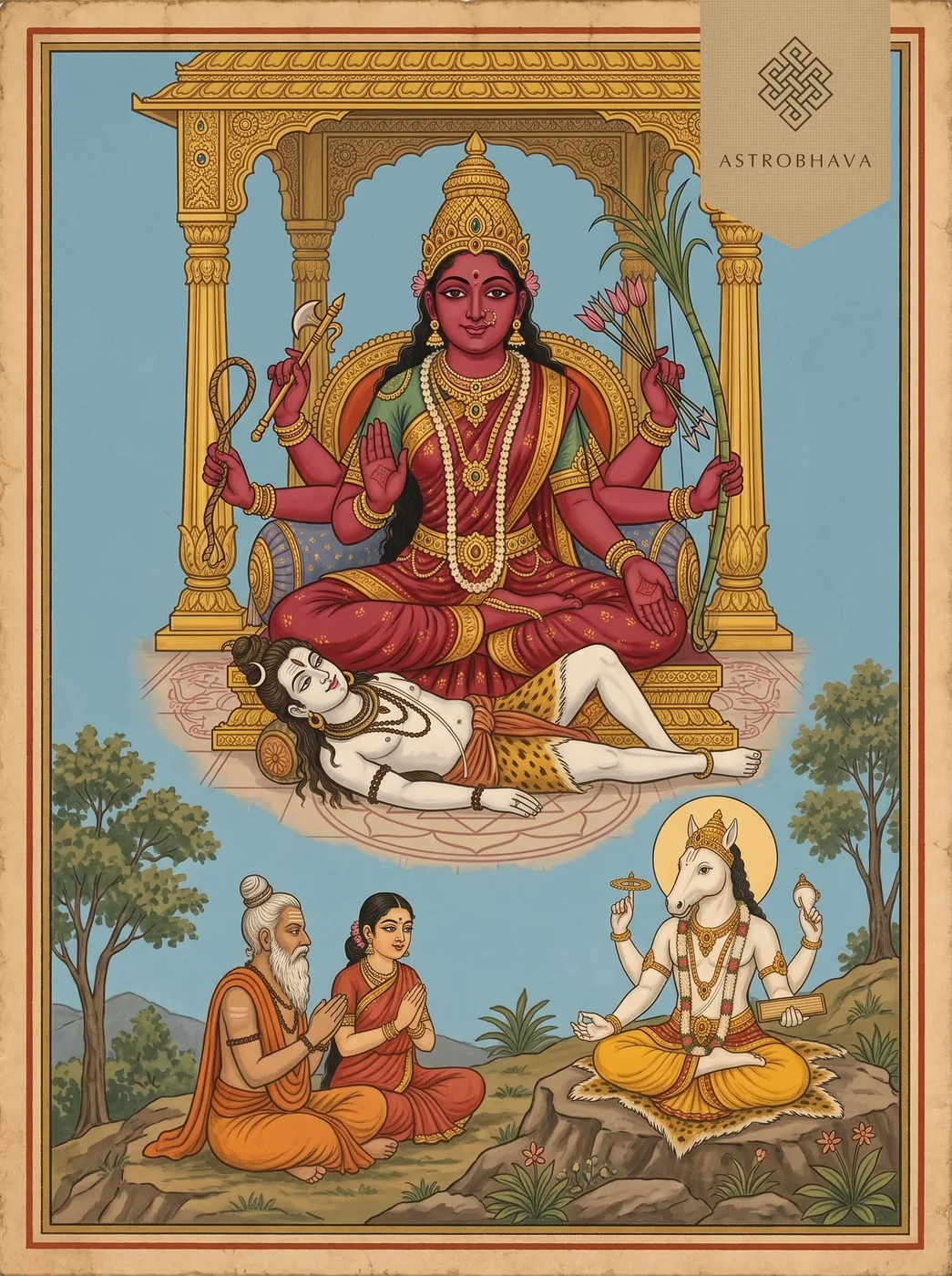
The Lalitha Sahasranamam addresses Lalita Tripurasundari, the goddess of the Sri Vidya tradition, through a thousand names. It stands in the Lalitopakhyana, the Lalita narrative in the Uttara-khanda of the Brahmanda Purana, as part of a dialogue in which Hayagriva instructs the sage Agastya. The text on this page has four dhyana verses for visualising her, then 183 verses in the anushtubh metre that resolve into exactly 1,000 names. The verses move in a deliberate order. Verse 1 has her rise from the fire-pit of consciousness for the work of the gods. Verses 4 to 20 describe her from the flowers in her hair to the anklets on her feet. Verses 24 to 33 retell her war against Bhandasura. Verses 34 to 36 map her body onto the three sections of her root mantra, and verses 38 to 40 trace her rise through the chakras. The rest move between her qualities and her formless nature, ending on the name Lalitambika.
Names composed for a goddess's own court
The Brahmanda Purana frames the hymn as a teaching withheld and then given. Hayagriva, the horse-headed form of Vishnu, had already told Agastya the long account of Lalita and many of her names. According to the text's opening section, he held back the thousand names because Sri Vidya is not to be taught to one who has not asked for it. When Agastya asked why he had been passed over, Hayagriva agreed to teach it. He then explains where the names came from. Lalita herself called the eight Vagdevis, the goddesses of speech named Vasini, Kameshvari, Aruna, Vimala, Jayini, Modini, Sarveshvari and Kaulini, and asked them to compose a hymn of her names. They recited it in her court, with the gods assembled before her throne, so the hymn is presented as her own commission rather than a poet's work. Sources differ on where Agastya heard it. Accounts of the Purana place the dialogue at Kanchipuram, while the temple tradition of Tirumeeyachur in Tiruvarur district, where Lalita is worshipped as Lalithambigai beside Shiva as Meganathar, holds that Agastya received it there. The best-known commentary, Bhaskararaya's Saubhagya Bhaskara, settles how the verses divide into names; its author completed it in 1728 on Ashvina Shukla Navami, during the autumn Navaratri.
The mantra, in six scripts
- श्रीमाता
- śrīmātā — the holy Mother
- श्रीमहाराज्ञी
- śrīmahārājñī — the great Empress
- श्रीमत्सिंहासनेश्वरी
- śrīmatsiṃhāsaneśvarī — queen of the glorious lion-throne
- चिदग्निकुण्डसम्भूता
- cidagnikuṇḍasambhūtā — risen from the fire-pit of consciousness
- देवकार्यसमुद्यता
- devakāryasamudyatā — intent on the work of the gods
Lalitha Sahasranamam lyrics in full
All 187 verses, in Sanskrit, Tamil, Telugu, Kannada, Malayalam and English, each with its meaning. Choose a script:
Download the Lalitha Sahasranamam PDFAll 187 verses with their meanings, in Sanskrit. Free to print and keep.
सिन्दूरारुणविग्रहां त्रिनयनां माणिक्यमौलिस्फुरत्तारानायकशेखरां स्मितमुखीमापीनवक्षोरुहाम् ।
पाणिभ्यामलिपूर्णरत्नचषकं रक्तोत्पलं बिभ्रतीं सौम्यां रत्नघटस्थरक्तचरणां ध्यायेत्परामम्बिकाम् ॥
ஸிந்தூராருணவிக்ரஹாம் த்ரிநயநாம் மாணிக்யமௌலிஸ்புரத்தாராநாயகஶேகராம் ஸ்மிதமுகீமாபீநவக்ஷோருஹாம் ।
பாணிப்யாமலிபூர்ணரத்நசஷகம் ரக்தோத்பலம் பிப்ரதீம் ஸௌம்யாம் ரத்நகடஸ்தரக்தசரணாம் த்யாயேத்பராமம்பிகாம் ॥
సిన్దూరారుణవిగ్రహాం త్రినయనాం మాణిక్యమౌలిస్ఫురత్తారానాయకశేఖరాం స్మితముఖీమాపీనవక్షోరుహామ్ ।
పాణిభ్యామలిపూర్ణరత్నచషకం రక్తోత్పలం బిభ్రతీం సౌమ్యాం రత్నఘటస్థరక్తచరణాం ధ్యాయేత్పరామమ్బికామ్ ॥
ಸಿನ್ದೂರಾರುಣವಿಗ್ರಹಾಂ ತ್ರಿನಯನಾಂ ಮಾಣಿಕ್ಯಮೌಲಿಸ್ಫುರತ್ತಾರಾನಾಯಕಶೇಖರಾಂ ಸ್ಮಿತಮುಖೀಮಾಪೀನವಕ್ಷೋರುಹಾಮ್ ।
ಪಾಣಿಭ್ಯಾಮಲಿಪೂರ್ಣರತ್ನಚಷಕಂ ರಕ್ತೋತ್ಪಲಂ ಬಿಭ್ರತೀಂ ಸೌಮ್ಯಾಂ ರತ್ನಘಟಸ್ಥರಕ್ತಚರಣಾಂ ಧ್ಯಾಯೇತ್ಪರಾಮಮ್ಬಿಕಾಮ್ ॥
സിന്ദൂരാരുണവിഗ്രഹാം ത്രിനയനാം മാണിക്യമൌലിസ്ഫുരത്താരാനായകശേഖരാം സ്മിതമുഖീമാപീനവക്ഷോരുഹാമ് ।
പാണിഭ്യാമലിപൂര്ണരത്നചഷകം രക്തോത്പലം ബിഭ്രതീം സൌമ്യാം രത്നഘടസ്ഥരക്തചരണാം ധ്യായേത്പരാമമ്ബികാമ് ॥
sindūrāruṇavigrahāṃ trinayanāṃ māṇikyamaulisphurattārānāyakaśekharāṃ smitamukhīmāpīnavakṣoruhām |
pāṇibhyāmalipūrṇaratnacaṣakaṃ raktotpalaṃ bibhratīṃ saumyāṃ ratnaghaṭastharaktacaraṇāṃ dhyāyetparāmambikām ||
One should meditate on the supreme Mother: her body is red like vermilion, she has three eyes and a ruby crown on which the crescent moon shines; she is smiling and full-breasted. In her hands she holds a jewelled cup filled with honey-wine and a red lotus, and her gentle feet rest on a jewelled pot.
अरुणां करुणातरङ्गिताक्षीं धृतपाशाङ्कुशपुष्पबाणचापाम् ।
अणिमादिभिरावृतां मयूखैरहमित्येव विभावये भवानीम् ॥
அருணாம் கருணாதரங்கிதாக்ஷீம் த்ருதபாஶாங்குஶபுஷ்பபாணசாபாம் ।
அணிமாதிபிராவ்ருதாம் மயூகைரஹமித்யேவ விபாவயே பவாநீம் ॥
అరుణాం కరుణాతరఙ్గితాక్షీం ధృతపాశాఙ్కుశపుష్పబాణచాపామ్ ।
అణిమాదిభిరావృతాం మయూఖైరహమిత్యేవ విభావయే భవానీమ్ ॥
ಅರುಣಾಂ ಕರುಣಾತರಙ್ಗಿತಾಕ್ಷೀಂ ಧೃತಪಾಶಾಙ್ಕುಶಪುಷ್ಪಬಾಣಚಾಪಾಮ್ ।
ಅಣಿಮಾದಿಭಿರಾವೃತಾಂ ಮಯೂಖೈರಹಮಿತ್ಯೇವ ವಿಭಾವಯೇ ಭವಾನೀಮ್ ॥
അരുണാം കരുണാതരങ്ഗിതാക്ഷീം ധൃതപാശാങ്കുശപുഷ്പബാണചാപാമ് ।
അണിമാദിഭിരാവൃതാം മയൂഖൈരഹമിത്യേവ വിഭാവയേ ഭവാനീമ് ॥
aruṇāṃ karuṇātaraṅgitākṣīṃ dhṛtapāśāṅkuśapuṣpabāṇacāpām |
aṇimādibhirāvṛtāṃ mayūkhairahamityeva vibhāvaye bhavānīm ||
I contemplate Bhavani, red in colour, whose eyes ripple with waves of compassion, who holds the noose, the goad, the flower arrows and the bow, and who is surrounded by the powers beginning with Anima as by rays of light; I contemplate her as 'I am she'.
ध्यायेत्पद्मासनस्थां विकसितवदनां पद्मपत्रायताक्षीं हेमाभां पीतवस्त्रां करकलितलसद्धेमपद्मां वराङ्गीम् ।
सर्वालङ्कारयुक्तां सततमभयदां भक्तनम्रां भवानीं श्रीविद्यां शान्तमूर्तिं सकलसुरनुतां सर्वसम्पत्प्रदात्रीम् ॥
த்யாயேத்பத்மாஸநஸ்தாம் விகஸிதவதநாம் பத்மபத்ராயதாக்ஷீம் ஹேமாபாம் பீதவஸ்த்ராம் கரகலிதலஸத்தேமபத்மாம் வராங்கீம் ।
ஸர்வாலங்காரயுக்தாம் ஸததமபயதாம் பக்தநம்ராம் பவாநீம் ஶ்ரீவித்யாம் ஶாந்தமூர்திம் ஸகலஸுரநுதாம் ஸர்வஸம்பத்ப்ரதாத்ரீம் ॥
ధ్యాయేత్పద్మాసనస్థాం వికసితవదనాం పద్మపత్రాయతాక్షీం హేమాభాం పీతవస్త్రాం కరకలితలసద్ధేమపద్మాం వరాఙ్గీమ్ ।
సర్వాలఙ్కారయుక్తాం సతతమభయదాం భక్తనమ్రాం భవానీం శ్రీవిద్యాం శాన్తమూర్తిం సకలసురనుతాం సర్వసమ్పత్ప్రదాత్రీమ్ ॥
ಧ್ಯಾಯೇತ್ಪದ್ಮಾಸನಸ್ಥಾಂ ವಿಕಸಿತವದನಾಂ ಪದ್ಮಪತ್ರಾಯತಾಕ್ಷೀಂ ಹೇಮಾಭಾಂ ಪೀತವಸ್ತ್ರಾಂ ಕರಕಲಿತಲಸದ್ಧೇಮಪದ್ಮಾಂ ವರಾಙ್ಗೀಮ್ ।
ಸರ್ವಾಲಙ್ಕಾರಯುಕ್ತಾಂ ಸತತಮಭಯದಾಂ ಭಕ್ತನಮ್ರಾಂ ಭವಾನೀಂ ಶ್ರೀವಿದ್ಯಾಂ ಶಾನ್ತಮೂರ್ತಿಂ ಸಕಲಸುರನುತಾಂ ಸರ್ವಸಮ್ಪತ್ಪ್ರದಾತ್ರೀಮ್ ॥
ധ്യായേത്പദ്മാസനസ്ഥാം വികസിതവദനാം പദ്മപത്രായതാക്ഷീം ഹേമാഭാം പീതവസ്ത്രാം കരകലിതലസദ്ധേമപദ്മാം വരാങ്ഗീമ് ।
സര്വാലങ്കാരയുക്താം സതതമഭയദാം ഭക്തനമ്രാം ഭവാനീം ശ്രീവിദ്യാം ശാന്തമൂര്തിം സകലസുരനുതാം സര്വസമ്പത്പ്രദാത്രീമ് ॥
dhyāyetpadmāsanasthāṃ vikasitavadanāṃ padmapatrāyatākṣīṃ hemābhāṃ pītavastrāṃ karakalitalasaddhemapadmāṃ varāṅgīm |
sarvālaṅkārayuktāṃ satatamabhayadāṃ bhaktanamrāṃ bhavānīṃ śrīvidyāṃ śāntamūrtiṃ sakalasuranutāṃ sarvasampatpradātrīm ||
One should meditate on Bhavani seated on a lotus, with a radiant face and eyes long like lotus petals, golden in hue, dressed in yellow, holding a shining golden lotus, beautiful of limb and wearing every ornament. She ever grants freedom from fear, bends towards her devotees, is Sri Vidya itself, peace embodied, praised by all the gods, and the giver of every kind of wealth.
सकुङ्कुमविलेपनामलिकचुम्बिकस्तूरिकां समन्दहसितेक्षणां सशरचापपाशाङ्कुशाम् ।
अशेषजनमोहिनीमरुणमाल्यभूषाम्बरां जपाकुसुमभासुरां जपविधौ स्मरेदम्बिकाम् ॥
ஸகுங்குமவிலேபநாமலிகசும்பிகஸ்தூரிகாம் ஸமந்தஹஸிதேக்ஷணாம் ஸஶரசாபபாஶாங்குஶாம் ।
அஶேஷஜநமோஹிநீமருணமால்யபூஷாம்பராம் ஜபாகுஸுமபாஸுராம் ஜபவிதௌ ஸ்மரேதம்பிகாம் ॥
సకుఙ్కుమవిలేపనామలికచుమ్బికస్తూరికాం సమన్దహసితేక్షణాం సశరచాపపాశాఙ్కుశామ్ ।
అశేషజనమోహినీమరుణమాల్యభూషామ్బరాం జపాకుసుమభాసురాం జపవిధౌ స్మరేదమ్బికామ్ ॥
ಸಕುಙ್ಕುಮವಿಲೇಪನಾಮಲಿಕಚುಮ್ಬಿಕಸ್ತೂರಿಕಾಂ ಸಮನ್ದಹಸಿತೇಕ್ಷಣಾಂ ಸಶರಚಾಪಪಾಶಾಙ್ಕುಶಾಮ್ ।
ಅಶೇಷಜನಮೋಹಿನೀಮರುಣಮಾಲ್ಯಭೂಷಾಮ್ಬರಾಂ ಜಪಾಕುಸುಮಭಾಸುರಾಂ ಜಪವಿಧೌ ಸ್ಮರೇದಮ್ಬಿಕಾಮ್ ॥
സകുങ്കുമവിലേപനാമലികചുമ്ബികസ്തൂരികാം സമന്ദഹസിതേക്ഷണാം സശരചാപപാശാങ്കുശാമ് ।
അശേഷജനമോഹിനീമരുണമാല്യഭൂഷാമ്ബരാം ജപാകുസുമഭാസുരാം ജപവിധൌ സ്മരേദമ്ബികാമ് ॥
sakuṅkumavilepanāmalikacumbikastūrikāṃ samandahasitekṣaṇāṃ saśaracāpapāśāṅkuśām |
aśeṣajanamohinīmaruṇamālyabhūṣāmbarāṃ japākusumabhāsurāṃ japavidhau smaredambikām ||
At the time of japa one should remember the Mother anointed with kumkuma, with musk touching her forehead, her eyes gently smiling, holding the arrows, bow, noose and goad. She enchants all beings, wears red garlands, ornaments and garments, and glows like the red japa (hibiscus) flower.
श्रीमाता श्रीमहाराज्ञी श्रीमत्सिंहासनेश्वरी ।
चिदग्निकुण्डसम्भूता देवकार्यसमुद्यता ॥
ஶ்ரீமாதா ஶ்ரீமஹாராஜ்ஞீ ஶ்ரீமத்ஸிம்ஹாஸநேஶ்வரீ ।
சிதக்நிகுண்டஸம்பூதா தேவகார்யஸமுத்யதா ॥
శ్రీమాతా శ్రీమహారాజ్ఞీ శ్రీమత్సింహాసనేశ్వరీ ।
చిదగ్నికుణ్డసమ్భూతా దేవకార్యసముద్యతా ॥
ಶ್ರೀಮಾತಾ ಶ್ರೀಮಹಾರಾಜ್ಞೀ ಶ್ರೀಮತ್ಸಿಂಹಾಸನೇಶ್ವರೀ ।
ಚಿದಗ್ನಿಕುಣ್ಡಸಮ್ಭೂತಾ ದೇವಕಾರ್ಯಸಮುದ್ಯತಾ ॥
ശ്രീമാതാ ശ്രീമഹാരാജ്ഞീ ശ്രീമത്സിംഹാസനേശ്വരീ ।
ചിദഗ്നികുണ്ഡസമ്ഭൂതാ ദേവകാര്യസമുദ്യതാ ॥
śrīmātā śrīmahārājñī śrīmatsiṃhāsaneśvarī |
cidagnikuṇḍasambhūtā devakāryasamudyatā ||
She is the holy Mother, the great Empress, the queen of the glorious lion-throne. She arose from the fire-pit of pure consciousness, intent on accomplishing the work of the gods.
उद्यद्भानुसहस्राभा चतुर्बाहुसमन्विता ।
रागस्वरूपपाशाढ्या क्रोधाकाराङ्कुशोज्ज्वला ॥
உத்யத்பாநுஸஹஸ்ராபா சதுர்பாஹுஸமந்விதா ।
ராகஸ்வரூபபாஶாட்யா க்ரோதாகாராங்குஶோஜ்ஜ்வலா ॥
ఉద్యద్భానుసహస్రాభా చతుర్బాహుసమన్వితా ।
రాగస్వరూపపాశాఢ్యా క్రోధాకారాఙ్కుశోజ్జ్వలా ॥
ಉದ್ಯದ್ಭಾನುಸಹಸ್ರಾಭಾ ಚತುರ್ಬಾಹುಸಮನ್ವಿತಾ ।
ರಾಗಸ್ವರೂಪಪಾಶಾಢ್ಯಾ ಕ್ರೋಧಾಕಾರಾಙ್ಕುಶೋಜ್ಜ್ವಲಾ ॥
ഉദ്യദ്ഭാനുസഹസ്രാഭാ ചതുര്ബാഹുസമന്വിതാ ।
രാഗസ്വരൂപപാശാഢ്യാ ക്രോധാകാരാങ്കുശോജ്ജ്വലാ ॥
udyadbhānusahasrābhā caturbāhusamanvitā |
rāgasvarūpapāśāḍhyā krodhākārāṅkuśojjvalā ||
She shines like a thousand rising suns and has four arms. She holds the noose, which is the form of desire, and blazes with the goad, which is the form of anger.
मनोरूपेक्षुकोदण्डा पञ्चतन्मात्रसायका ।
निजारुणप्रभापूरमज्जद्ब्रह्माण्डमण्डला ॥
மநோரூபேக்ஷுகோதண்டா பஞ்சதந்மாத்ரஸாயகா ।
நிஜாருணப்ரபாபூரமஜ்ஜத்ப்ரஹ்மாண்டமண்டலா ॥
మనోరూపేక్షుకోదణ్డా పఞ్చతన్మాత్రసాయకా ।
నిజారుణప్రభాపూరమజ్జద్బ్రహ్మాణ్డమణ్డలా ॥
ಮನೋರೂಪೇಕ್ಷುಕೋದಣ್ಡಾ ಪಞ್ಚತನ್ಮಾತ್ರಸಾಯಕಾ ।
ನಿಜಾರುಣಪ್ರಭಾಪೂರಮಜ್ಜದ್ಬ್ರಹ್ಮಾಣ್ಡಮಣ್ಡಲಾ ॥
മനോരൂപേക്ഷുകോദണ്ഡാ പഞ്ചതന്മാത്രസായകാ ।
നിജാരുണപ്രഭാപൂരമജ്ജദ്ബ്രഹ്മാണ്ഡമണ്ഡലാ ॥
manorūpekṣukodaṇḍā pañcatanmātrasāyakā |
nijāruṇaprabhāpūramajjadbrahmāṇḍamaṇḍalā ||
Her sugarcane bow is the mind and her arrows are the five subtle elements. The whole universe is immersed in the flood of her rosy radiance.
चम्पकाशोकपुन्नागसौगन्धिकलसत्कचा ।
कुरुविन्दमणिश्रेणीकनत्कोटीरमण्डिता ॥
சம்பகாஶோகபுந்நாகஸௌகந்திகலஸத்கசா ।
குருவிந்தமணிஶ்ரேணீகநத்கோடீரமண்டிதா ॥
చమ్పకాశోకపున్నాగసౌగన్ధికలసత్కచా ।
కురువిన్దమణిశ్రేణీకనత్కోటీరమణ్డితా ॥
ಚಮ್ಪಕಾಶೋಕಪುನ್ನಾಗಸೌಗನ್ಧಿಕಲಸತ್ಕಚಾ ।
ಕುರುವಿನ್ದಮಣಿಶ್ರೇಣೀಕನತ್ಕೋಟೀರಮಣ್ಡಿತಾ ॥
ചമ്പകാശോകപുന്നാഗസൌഗന്ധികലസത്കചാ ।
കുരുവിന്ദമണിശ്രേണീകനത്കോടീരമണ്ഡിതാ ॥
campakāśokapunnāgasaugandhikalasatkacā |
kuruvindamaṇiśreṇīkanatkoṭīramaṇḍitā ||
Her hair is fragrant with champaka, ashoka, punnaga and saugandhika flowers. She is adorned with a crown that sparkles with rows of kuruvinda gems.
अष्टमीचन्द्रविभ्राजदलिकस्थलशोभिता ।
मुखचन्द्रकलङ्काभमृगनाभिविशेषका ॥
அஷ்டமீசந்த்ரவிப்ராஜதலிகஸ்தலஶோபிதா ।
முகசந்த்ரகலங்காபம்ருகநாபிவிஶேஷகா ॥
అష్టమీచన్ద్రవిభ్రాజదలికస్థలశోభితా ।
ముఖచన్ద్రకలఙ్కాభమృగనాభివిశేషకా ॥
ಅಷ್ಟಮೀಚನ್ದ್ರವಿಭ್ರಾಜದಲಿಕಸ್ಥಲಶೋಭಿತಾ ।
ಮುಖಚನ್ದ್ರಕಲಙ್ಕಾಭಮೃಗನಾಭಿವಿಶೇಷಕಾ ॥
അഷ്ടമീചന്ദ്രവിഭ്രാജദലികസ്ഥലശോഭിതാ ।
മുഖചന്ദ്രകലങ്കാഭമൃഗനാഭിവിശേഷകാ ॥
aṣṭamīcandravibhrājadalikasthalaśobhitā |
mukhacandrakalaṅkābhamṛganābhiviśeṣakā ||
Her forehead shines like the moon on the eighth lunar day. The musk mark on her brow looks like the dark spot on the moon of her face.
वदनस्मरमाङ्गल्यगृहतोरणचिल्लिका ।
वक्त्रलक्ष्मीपरीवाहचलन्मीनाभलोचना ॥
வதநஸ்மரமாங்கல்யக்ருஹதோரணசில்லிகா ।
வக்த்ரலக்ஷ்மீபரீவாஹசலந்மீநாபலோசநா ॥
వదనస్మరమాఙ్గల్యగృహతోరణచిల్లికా ।
వక్త్రలక్ష్మీపరీవాహచలన్మీనాభలోచనా ॥
ವದನಸ್ಮರಮಾಙ್ಗಲ್ಯಗೃಹತೋರಣಚಿಲ್ಲಿಕಾ ।
ವಕ್ತ್ರಲಕ್ಷ್ಮೀಪರೀವಾಹಚಲನ್ಮೀನಾಭಲೋಚನಾ ॥
വദനസ്മരമാങ്ഗല്യഗൃഹതോരണചില്ലികാ ।
വക്ത്രലക്ഷ്മീപരീവാഹചലന്മീനാഭലോചനാ ॥
vadanasmaramāṅgalyagṛhatoraṇacillikā |
vaktralakṣmīparīvāhacalanmīnābhalocanā ||
Her eyebrows are like the arched gateway to the house of Kama, the god of love, which is her face. Her eyes are like fish darting in the stream of beauty that flows from her face.
नवचम्पकपुष्पाभनासादण्डविराजिता ।
ताराकान्तितिरस्कारिनासाभरणभासुरा ॥
நவசம்பகபுஷ்பாபநாஸாதண்டவிராஜிதா ।
தாராகாந்திதிரஸ்காரிநாஸாபரணபாஸுரா ॥
నవచమ్పకపుష్పాభనాసాదణ్డవిరాజితా ।
తారాకాన్తితిరస్కారినాసాభరణభాసురా ॥
ನವಚಮ್ಪಕಪುಷ್ಪಾಭನಾಸಾದಣ್ಡವಿರಾಜಿತಾ ।
ತಾರಾಕಾನ್ತಿತಿರಸ್ಕಾರಿನಾಸಾಭರಣಭಾಸುರಾ ॥
നവചമ്പകപുഷ്പാഭനാസാദണ്ഡവിരാജിതാ ।
താരാകാന്തിതിരസ്കാരിനാസാഭരണഭാസുരാ ॥
navacampakapuṣpābhanāsādaṇḍavirājitā |
tārākāntitiraskārināsābharaṇabhāsurā ||
Her nose is graceful like a fresh champaka bud. Her nose ornament outshines the brilliance of the stars.
कदम्बमञ्जरीकॢप्तकर्णपूरमनोहरा ।
ताटङ्कयुगलीभूततपनोडुपमण्डला ॥
கதம்பமஞ்ஜரீக்லுப்தகர்ணபூரமநோஹரா ।
தாடங்கயுகலீபூததபநோடுபமண்டலா ॥
కదమ్బమఞ్జరీకౢప్తకర్ణపూరమనోహరా ।
తాటఙ్కయుగలీభూతతపనోడుపమణ్డలా ॥
ಕದಮ್ಬಮಞ್ಜರೀಕೢಪ್ತಕರ್ಣಪೂರಮನೋಹರಾ ।
ತಾಟಙ್ಕಯುಗಲೀಭೂತತಪನೋಡುಪಮಣ್ಡಲಾ ॥
കദമ്ബമഞ്ജരീകൢപ്തകര്ണപൂരമനോഹരാ ।
താടങ്കയുഗലീഭൂതതപനോഡുപമണ്ഡലാ ॥
kadambamañjarīkḷptakarṇapūramanoharā |
tāṭaṅkayugalībhūtatapanoḍupamaṇḍalā ||
She is lovely with ear ornaments made of kadamba flower clusters. The sun and the moon are her pair of earrings.
पद्मरागशिलादर्शपरिभाविकपोलभूः ।
नवविद्रुमबिम्बश्रीन्यक्कारिरदनच्छदा ॥
பத்மராகஶிலாதர்ஶபரிபாவிகபோலபூஃ ।
நவவித்ருமபிம்பஶ்ரீந்யக்காரிரதநச்சதா ॥
పద్మరాగశిలాదర్శపరిభావికపోలభూః ।
నవవిద్రుమబిమ్బశ్రీన్యక్కారిరదనచ్ఛదా ॥
ಪದ್ಮರಾಗಶಿಲಾದರ್ಶಪರಿಭಾವಿಕಪೋಲಭೂಃ ।
ನವವಿದ್ರುಮಬಿಮ್ಬಶ್ರೀನ್ಯಕ್ಕಾರಿರದನಚ್ಛದಾ ॥
പദ്മരാഗശിലാദര്ശപരിഭാവികപോലഭൂഃ ।
നവവിദ്രുമബിമ്ബശ്രീന്യക്കാരിരദനച്ഛദാ ॥
padmarāgaśilādarśaparibhāvikapolabhūḥ |
navavidrumabimbaśrīnyakkāriradanacchadā ||
Her cheeks surpass mirrors of ruby. Her lips put to shame fresh coral and the bimba fruit.
शुद्धविद्याङ्कुराकारद्विजपङ्क्तिद्वयोज्ज्वला ।
कर्पूरवीटिकामोदसमाकर्षिदिगन्तरा ॥
ஶுத்தவித்யாங்குராகாரத்விஜபங்க்தித்வயோஜ்ஜ்வலா ।
கர்பூரவீடிகாமோதஸமாகர்ஷிதிகந்தரா ॥
శుద్ధవిద్యాఙ్కురాకారద్విజపఙ్క్తిద్వయోజ్జ్వలా ।
కర్పూరవీటికామోదసమాకర్షిదిగన్తరా ॥
ಶುದ್ಧವಿದ್ಯಾಙ್ಕುರಾಕಾರದ್ವಿಜಪಙ್ಕ್ತಿದ್ವಯೋಜ್ಜ್ವಲಾ ।
ಕರ್ಪೂರವೀಟಿಕಾಮೋದಸಮಾಕರ್ಷಿದಿಗನ್ತರಾ ॥
ശുദ്ധവിദ്യാങ്കുരാകാരദ്വിജപങ്ക്തിദ്വയോജ്ജ്വലാ ।
കര്പൂരവീടികാമോദസമാകര്ഷിദിഗന്തരാ ॥
śuddhavidyāṅkurākāradvijapaṅktidvayojjvalā |
karpūravīṭikāmodasamākarṣidigantarā ||
Her two rows of teeth shine like sprouts of pure knowledge (Shuddha Vidya). The fragrance of the camphor betel she chews draws in all directions.
निजसल्लापमाधुर्यविनिर्भर्त्सितकच्छपी ।
मन्दस्मितप्रभापूरमज्जत्कामेशमानसा ॥
நிஜஸல்லாபமாதுர்யவிநிர்பர்த்ஸிதகச்சபீ ।
மந்தஸ்மிதப்ரபாபூரமஜ்ஜத்காமேஶமாநஸா ॥
నిజసల్లాపమాధుర్యవినిర్భర్త్సితకచ్ఛపీ ।
మన్దస్మితప్రభాపూరమజ్జత్కామేశమానసా ॥
ನಿಜಸಲ್ಲಾಪಮಾಧುರ್ಯವಿನಿರ್ಭರ್ತ್ಸಿತಕಚ್ಛಪೀ ।
ಮನ್ದಸ್ಮಿತಪ್ರಭಾಪೂರಮಜ್ಜತ್ಕಾಮೇಶಮಾನಸಾ ॥
നിജസല്ലാപമാധുര്യവിനിര്ഭര്ത്സിതകച്ഛപീ ।
മന്ദസ്മിതപ്രഭാപൂരമജ്ജത്കാമേശമാനസാ ॥
nijasallāpamādhuryavinirbhartsitakacchapī |
mandasmitaprabhāpūramajjatkāmeśamānasā ||
The sweetness of her speech outdoes the sound of the vina of Sarasvati (the kacchapi). The mind of Kamesha, her Lord, is immersed in the radiance of her gentle smile.
अनाकलितसादृश्यचिबुकश्रीविराजिता ।
कामेशबद्धमाङ्गल्यसूत्रशोभितकन्धरा ॥
அநாகலிதஸாத்ருஶ்யசிபுகஶ்ரீவிராஜிதா ।
காமேஶபத்தமாங்கல்யஸூத்ரஶோபிதகந்தரா ॥
అనాకలితసాదృశ్యచిబుకశ్రీవిరాజితా ।
కామేశబద్ధమాఙ్గల్యసూత్రశోభితకన్ధరా ॥
ಅನಾಕಲಿತಸಾದೃಶ್ಯಚಿಬುಕಶ್ರೀವಿರಾಜಿತಾ ।
ಕಾಮೇಶಬದ್ಧಮಾಙ್ಗಲ್ಯಸೂತ್ರಶೋಭಿತಕನ್ಧರಾ ॥
അനാകലിതസാദൃശ്യചിബുകശ്രീവിരാജിതാ ।
കാമേശബദ്ധമാങ്ഗല്യസൂത്രശോഭിതകന്ധരാ ॥
anākalitasādṛśyacibukaśrīvirājitā |
kāmeśabaddhamāṅgalyasūtraśobhitakandharā ||
The beauty of her chin is beyond compare. Her neck is adorned with the auspicious thread tied by Kamesha.
कनकाङ्गदकेयूरकमनीयभुजान्विता ।
रत्नग्रैवेयचिन्ताकलोलमुक्ताफलान्विता ॥
கநகாங்கதகேயூரகமநீயபுஜாந்விதா ।
ரத்நக்ரைவேயசிந்தாகலோலமுக்தாபலாந்விதா ॥
కనకాఙ్గదకేయూరకమనీయభుజాన్వితా ।
రత్నగ్రైవేయచిన్తాకలోలముక్తాఫలాన్వితా ॥
ಕನಕಾಙ್ಗದಕೇಯೂರಕಮನೀಯಭುಜಾನ್ವಿತಾ ।
ರತ್ನಗ್ರೈವೇಯಚಿನ್ತಾಕಲೋಲಮುಕ್ತಾಫಲಾನ್ವಿತಾ ॥
കനകാങ്ഗദകേയൂരകമനീയഭുജാന്വിതാ ।
രത്നഗ്രൈവേയചിന്താകലോലമുക്താഫലാന്വിതാ ॥
kanakāṅgadakeyūrakamanīyabhujānvitā |
ratnagraiveyacintākalolamuktāphalānvitā ||
Her arms are lovely with golden armlets and bracelets. She wears a jewelled necklace with a swinging pendant of pearls.
कामेश्वरप्रेमरत्नमणिप्रतिपणस्तनी ।
नाभ्यालवालरोमालिलताफलकुचद्वयी ॥
காமேஶ்வரப்ரேமரத்நமணிப்ரதிபணஸ்தநீ ।
நாப்யாலவாலரோமாலிலதாபலகுசத்வயீ ॥
కామేశ్వరప్రేమరత్నమణిప్రతిపణస్తనీ ।
నాభ్యాలవాలరోమాలిలతాఫలకుచద్వయీ ॥
ಕಾಮೇಶ್ವರಪ್ರೇಮರತ್ನಮಣಿಪ್ರತಿಪಣಸ್ತನೀ ।
ನಾಭ್ಯಾಲವಾಲರೋಮಾಲಿಲತಾಫಲಕುಚದ್ವಯೀ ॥
കാമേശ്വരപ്രേമരത്നമണിപ്രതിപണസ്തനീ ।
നാഭ്യാലവാലരോമാലിലതാഫലകുചദ്വയീ ॥
kāmeśvarapremaratnamaṇipratipaṇastanī |
nābhyālavālaromālilatāphalakucadvayī ||
She gives her breasts as the price for the jewel of Kameshvara's love. Her breasts are like the fruits of the creeper of fine hair that rises from the basin of her navel.
लक्ष्यरोमलताधारतासमुन्नेयमध्यमा ।
स्तनभारदलन्मध्यपट्टबन्धवलित्रया ॥
லக்ஷ்யரோமலதாதாரதாஸமுந்நேயமத்யமா ।
ஸ்தநபாரதலந்மத்யபட்டபந்தவலித்ரயா ॥
లక్ష్యరోమలతాధారతాసమున్నేయమధ్యమా ।
స్తనభారదలన్మధ్యపట్టబన్ధవలిత్రయా ॥
ಲಕ್ಷ್ಯರೋಮಲತಾಧಾರತಾಸಮುನ್ನೇಯಮಧ್ಯಮಾ ।
ಸ್ತನಭಾರದಲನ್ಮಧ್ಯಪಟ್ಟಬನ್ಧವಲಿತ್ರಯಾ ॥
ലക്ഷ്യരോമലതാധാരതാസമുന്നേയമധ്യമാ ।
സ്തനഭാരദലന്മധ്യപട്ടബന്ധവലിത്രയാ ॥
lakṣyaromalatādhāratāsamunneyamadhyamā |
stanabhāradalanmadhyapaṭṭabandhavalitrayā ||
Her slender waist can only be inferred from that creeper of hair. Three folds mark her waist, as if bands to support it under the weight of her breasts.
अरुणारुणकौसुम्भवस्त्रभास्वत्कटीतटी ।
रत्नकिङ्किणिकारम्यरशनादामभूषिता ॥
அருணாருணகௌஸும்பவஸ்த்ரபாஸ்வத்கடீதடீ ।
ரத்நகிங்கிணிகாரம்யரஶநாதாமபூஷிதா ॥
అరుణారుణకౌసుమ్భవస్త్రభాస్వత్కటీతటీ ।
రత్నకిఙ్కిణికారమ్యరశనాదామభూషితా ॥
ಅರುಣಾರುಣಕೌಸುಮ್ಭವಸ್ತ್ರಭಾಸ್ವತ್ಕಟೀತಟೀ ।
ರತ್ನಕಿಙ್ಕಿಣಿಕಾರಮ್ಯರಶನಾದಾಮಭೂಷಿತಾ ॥
അരുണാരുണകൌസുമ്ഭവസ്ത്രഭാസ്വത്കടീതടീ ।
രത്നകിങ്കിണികാരമ്യരശനാദാമഭൂഷിതാ ॥
aruṇāruṇakausumbhavastrabhāsvatkaṭītaṭī |
ratnakiṅkiṇikāramyaraśanādāmabhūṣitā ||
Her hips shine in a garment of deep red safflower colour. She is adorned with a girdle hung with lovely little jewelled bells.
कामेशज्ञातसौभाग्यमार्दवोरुद्वयान्विता ।
माणिक्यमुकुटाकारजानुद्वयविराजिता ॥
காமேஶஜ்ஞாதஸௌபாக்யமார்தவோருத்வயாந்விதா ।
மாணிக்யமுகுடாகாரஜாநுத்வயவிராஜிதா ॥
కామేశజ్ఞాతసౌభాగ్యమార్దవోరుద్వయాన్వితా ।
మాణిక్యముకుటాకారజానుద్వయవిరాజితా ॥
ಕಾಮೇಶಜ್ಞಾತಸೌಭಾಗ್ಯಮಾರ್ದವೋರುದ್ವಯಾನ್ವಿತಾ ।
ಮಾಣಿಕ್ಯಮುಕುಟಾಕಾರಜಾನುದ್ವಯವಿರಾಜಿತಾ ॥
കാമേശജ്ഞാതസൌഭാഗ്യമാര്ദവോരുദ്വയാന്വിതാ ।
മാണിക്യമുകുടാകാരജാനുദ്വയവിരാജിതാ ॥
kāmeśajñātasaubhāgyamārdavorudvayānvitā |
māṇikyamukuṭākārajānudvayavirājitā ||
Her thighs are soft and graceful, their charm known only to Kamesha. Her knees shine like crowns of ruby.
इन्द्रगोपपरिक्षिप्तस्मरतूणाभजङ्घिका ।
गूढगुल्फा कूर्मपृष्ठजयिष्णुप्रपदान्विता ॥
இந்த்ரகோபபரிக்ஷிப்தஸ்மரதூணாபஜங்கிகா ।
கூடகுல்பா கூர்மப்ருஷ்டஜயிஷ்ணுப்ரபதாந்விதா ॥
ఇన్ద్రగోపపరిక్షిప్తస్మరతూణాభజఙ్ఘికా ।
గూఢగుల్ఫా కూర్మపృష్ఠజయిష్ణుప్రపదాన్వితా ॥
ಇನ್ದ್ರಗೋಪಪರಿಕ್ಷಿಪ್ತಸ್ಮರತೂಣಾಭಜಙ್ಘಿಕಾ ।
ಗೂಢಗುಲ್ಫಾ ಕೂರ್ಮಪೃಷ್ಠಜಯಿಷ್ಣುಪ್ರಪದಾನ್ವಿತಾ ॥
ഇന്ദ്രഗോപപരിക്ഷിപ്തസ്മരതൂണാഭജങ്ഘികാ ।
ഗൂഢഗുല്ഫാ കൂര്മപൃഷ്ഠജയിഷ്ണുപ്രപദാന്വിതാ ॥
indragopaparikṣiptasmaratūṇābhajaṅghikā |
gūḍhagulphā kūrmapṛṣṭhajayiṣṇuprapadānvitā ||
Her calves are like the quivers of Kama, flecked with red indragopa insects. Her ankles are rounded and hidden, and the arches of her feet surpass the back of a tortoise.
नखदीधितिसञ्छन्ननमज्जनतमोगुणा ।
पदद्वयप्रभाजालपराकृतसरोरुहा ॥
நகதீதிதிஸஞ்சந்நநமஜ்ஜநதமோகுணா ।
பதத்வயப்ரபாஜாலபராக்ருதஸரோருஹா ॥
నఖదీధితిసఞ్ఛన్ననమజ్జనతమోగుణా ।
పదద్వయప్రభాజాలపరాకృతసరోరుహా ॥
ನಖದೀಧಿತಿಸಞ್ಛನ್ನನಮಜ್ಜನತಮೋಗುಣಾ ।
ಪದದ್ವಯಪ್ರಭಾಜಾಲಪರಾಕೃತಸರೋರುಹಾ ॥
നഖദീധിതിസഞ്ഛന്നനമജ്ജനതമോഗുണാ ।
പദദ്വയപ്രഭാജാലപരാകൃതസരോരുഹാ ॥
nakhadīdhitisañchannanamajjanatamoguṇā |
padadvayaprabhājālaparākṛtasaroruhā ||
The radiance of her toenails dispels the darkness in those who bow to her. The splendour of her two feet defeats the lotus.
सिञ्जानमणिमञ्जीरमण्डितश्रीपदाम्बुजा ।
मरालीमन्दगमना महालावण्यशेवधिः ॥
ஸிஞ்ஜாநமணிமஞ்ஜீரமண்டிதஶ்ரீபதாம்புஜா ।
மராலீமந்தகமநா மஹாலாவண்யஶேவதிஃ ॥
సిఞ్జానమణిమఞ్జీరమణ్డితశ్రీపదామ్బుజా ।
మరాలీమన్దగమనా మహాలావణ్యశేవధిః ॥
ಸಿಞ್ಜಾನಮಣಿಮಞ್ಜೀರಮಣ್ಡಿತಶ್ರೀಪದಾಮ್ಬುಜಾ ।
ಮರಾಲೀಮನ್ದಗಮನಾ ಮಹಾಲಾವಣ್ಯಶೇವಧಿಃ ॥
സിഞ്ജാനമണിമഞ്ജീരമണ്ഡിതശ്രീപദാമ്ബുജാ ।
മരാലീമന്ദഗമനാ മഹാലാവണ്യശേവധിഃ ॥
siñjānamaṇimañjīramaṇḍitaśrīpadāmbujā |
marālīmandagamanā mahālāvaṇyaśevadhiḥ ||
Her lotus feet are adorned with jingling jewelled anklets. She walks slowly like a swan, and she is a treasure-house of beauty.
सर्वारुणाऽनवद्याङ्गी सर्वाभरणभूषिता ।
शिवकामेश्वराङ्कस्था शिवा स्वाधीनवल्लभा ॥
ஸர்வாருணாநவத்யாங்கீ ஸர்வாபரணபூஷிதா ।
ஶிவகாமேஶ்வராங்கஸ்தா ஶிவா ஸ்வாதீநவல்லபா ॥
సర్వారుణాఽనవద్యాఙ్గీ సర్వాభరణభూషితా ।
శివకామేశ్వరాఙ్కస్థా శివా స్వాధీనవల్లభా ॥
ಸರ್ವಾರುಣಾಽನವದ್ಯಾಙ್ಗೀ ಸರ್ವಾಭರಣಭೂಷಿತಾ ।
ಶಿವಕಾಮೇಶ್ವರಾಙ್ಕಸ್ಥಾ ಶಿವಾ ಸ್ವಾಧೀನವಲ್ಲಭಾ ॥
സര്വാരുണാഽനവദ്യാങ്ഗീ സര്വാഭരണഭൂഷിതാ ।
ശിവകാമേശ്വരാങ്കസ്ഥാ ശിവാ സ്വാധീനവല്ലഭാ ॥
sarvāruṇā'navadyāṅgī sarvābharaṇabhūṣitā |
śivakāmeśvarāṅkasthā śivā svādhīnavallabhā ||
She is all red, flawless in every limb and adorned with every ornament. She sits on the lap of Shiva Kameshvara; she is Shiva herself, and her Lord is devoted to her.
सुमेरुमध्यशृङ्गस्था श्रीमन्नगरनायिका ।
चिन्तामणिगृहान्तस्था पञ्चब्रह्मासनस्थिता ॥
ஸுமேருமத்யஶ்ருங்கஸ்தா ஶ்ரீமந்நகரநாயிகா ।
சிந்தாமணிக்ருஹாந்தஸ்தா பஞ்சப்ரஹ்மாஸநஸ்திதா ॥
సుమేరుమధ్యశృఙ్గస్థా శ్రీమన్నగరనాయికా ।
చిన్తామణిగృహాన్తస్థా పఞ్చబ్రహ్మాసనస్థితా ॥
ಸುಮೇರುಮಧ್ಯಶೃಙ್ಗಸ್ಥಾ ಶ್ರೀಮನ್ನಗರನಾಯಿಕಾ ।
ಚಿನ್ತಾಮಣಿಗೃಹಾನ್ತಸ್ಥಾ ಪಞ್ಚಬ್ರಹ್ಮಾಸನಸ್ಥಿತಾ ॥
സുമേരുമധ്യശൃങ്ഗസ്ഥാ ശ്രീമന്നഗരനായികാ ।
ചിന്താമണിഗൃഹാന്തസ്ഥാ പഞ്ചബ്രഹ്മാസനസ്ഥിതാ ॥
sumerumadhyaśṛṅgasthā śrīmannagaranāyikā |
cintāmaṇigṛhāntasthā pañcabrahmāsanasthitā ||
She dwells on the middle peak of Mount Meru and is the queen of the city of Sri Nagara. She lives in the house of chintamani gems and sits on the seat formed by the five Brahmas.
महापद्माटवीसंस्था कदम्बवनवासिनी ।
सुधासागरमध्यस्था कामाक्षी कामदायिनी ॥
மஹாபத்மாடவீஸம்ஸ்தா கதம்பவநவாஸிநீ ।
ஸுதாஸாகரமத்யஸ்தா காமாக்ஷீ காமதாயிநீ ॥
మహాపద్మాటవీసంస్థా కదమ్బవనవాసినీ ।
సుధాసాగరమధ్యస్థా కామాక్షీ కామదాయినీ ॥
ಮಹಾಪದ್ಮಾಟವೀಸಂಸ್ಥಾ ಕದಮ್ಬವನವಾಸಿನೀ ।
ಸುಧಾಸಾಗರಮಧ್ಯಸ್ಥಾ ಕಾಮಾಕ್ಷೀ ಕಾಮದಾಯಿನೀ ॥
മഹാപദ്മാടവീസംസ്ഥാ കദമ്ബവനവാസിനീ ।
സുധാസാഗരമധ്യസ്ഥാ കാമാക്ഷീ കാമദായിനീ ॥
mahāpadmāṭavīsaṃsthā kadambavanavāsinī |
sudhāsāgaramadhyasthā kāmākṣī kāmadāyinī ||
She abides in the great lotus forest and dwells in the kadamba grove. She lives in the middle of the ocean of nectar; she is Kamakshi, the one with loving eyes, who grants desires.
देवर्षिगणसङ्घातस्तूयमानात्मवैभवा ।
भण्डासुरवधोद्युक्तशक्तिसेनासमन्विता ॥
தேவர்ஷிகணஸங்காதஸ்தூயமாநாத்மவைபவா ।
பண்டாஸுரவதோத்யுக்தஶக்திஸேநாஸமந்விதா ॥
దేవర్షిగణసఙ్ఘాతస్తూయమానాత్మవైభవా ।
భణ్డాసురవధోద్యుక్తశక్తిసేనాసమన్వితా ॥
ದೇವರ್ಷಿಗಣಸಙ್ಘಾತಸ್ತೂಯಮಾನಾತ್ಮವೈಭವಾ ।
ಭಣ್ಡಾಸುರವಧೋದ್ಯುಕ್ತಶಕ್ತಿಸೇನಾಸಮನ್ವಿತಾ ॥
ദേവര്ഷിഗണസങ്ഘാതസ്തൂയമാനാത്മവൈഭവാ ।
ഭണ്ഡാസുരവധോദ്യുക്തശക്തിസേനാസമന്വിതാ ॥
devarṣigaṇasaṅghātastūyamānātmavaibhavā |
bhaṇḍāsuravadhodyuktaśaktisenāsamanvitā ||
Her glory is praised by hosts of gods and sages. She is accompanied by an army of Shaktis ready to slay the demon Bhandasura.
सम्पत्करीसमारूढसिन्धुरव्रजसेविता ।
अश्वारूढाधिष्ठिताश्वकोटिकोटिभिरावृता ॥
ஸம்பத்கரீஸமாரூடஸிந்துரவ்ரஜஸேவிதா ।
அஶ்வாரூடாதிஷ்டிதாஶ்வகோடிகோடிபிராவ்ருதா ॥
సమ్పత్కరీసమారూఢసిన్ధురవ్రజసేవితా ।
అశ్వారూఢాధిష్ఠితాశ్వకోటికోటిభిరావృతా ॥
ಸಮ್ಪತ್ಕರೀಸಮಾರೂಢಸಿನ್ಧುರವ್ರಜಸೇವಿತಾ ।
ಅಶ್ವಾರೂಢಾಧಿಷ್ಠಿತಾಶ್ವಕೋಟಿಕೋಟಿಭಿರಾವೃತಾ ॥
സമ്പത്കരീസമാരൂഢസിന്ധുരവ്രജസേവിതാ ।
അശ്വാരൂഢാധിഷ്ഠിതാശ്വകോടികോടിഭിരാവൃതാ ॥
sampatkarīsamārūḍhasindhuravrajasevitā |
aśvārūḍhādhiṣṭhitāśvakoṭikoṭibhirāvṛtā ||
She is attended by a herd of elephants ridden by Sampatkari. She is surrounded by countless millions of horses led by Ashvarudha.
चक्रराजरथारूढसर्वायुधपरिष्कृता ।
गेयचक्ररथारूढमन्त्रिणीपरिसेविता ॥
சக்ரராஜரதாரூடஸர்வாயுதபரிஷ்க்ருதா ।
கேயசக்ரரதாரூடமந்த்ரிணீபரிஸேவிதா ॥
చక్రరాజరథారూఢసర్వాయుధపరిష్కృతా ।
గేయచక్రరథారూఢమన్త్రిణీపరిసేవితా ॥
ಚಕ್ರರಾಜರಥಾರೂಢಸರ್ವಾಯುಧಪರಿಷ್ಕೃತಾ ।
ಗೇಯಚಕ್ರರಥಾರೂಢಮನ್ತ್ರಿಣೀಪರಿಸೇವಿತಾ ॥
ചക്രരാജരഥാരൂഢസര്വായുധപരിഷ്കൃതാ ।
ഗേയചക്രരഥാരൂഢമന്ത്രിണീപരിസേവിതാ ॥
cakrarājarathārūḍhasarvāyudhapariṣkṛtā |
geyacakrarathārūḍhamantriṇīparisevitā ||
She is seated in the chariot Chakraraja, equipped with every weapon. She is served by Mantrini seated in the chariot Geyachakra.
किरिचक्ररथारूढदण्डनाथापुरस्कृता ।
ज्वालामालिनिकाक्षिप्तवह्निप्राकारमध्यगा ॥
கிரிசக்ரரதாரூடதண்டநாதாபுரஸ்க்ருதா ।
ஜ்வாலாமாலிநிகாக்ஷிப்தவஹ்நிப்ராகாரமத்யகா ॥
కిరిచక్రరథారూఢదణ్డనాథాపురస్కృతా ।
జ్వాలామాలినికాక్షిప్తవహ్నిప్రాకారమధ్యగా ॥
ಕಿರಿಚಕ್ರರಥಾರೂಢದಣ್ಡನಾಥಾಪುರಸ್ಕೃತಾ ।
ಜ್ವಾಲಾಮಾಲಿನಿಕಾಕ್ಷಿಪ್ತವಹ್ನಿಪ್ರಾಕಾರಮಧ್ಯಗಾ ॥
കിരിചക്രരഥാരൂഢദണ്ഡനാഥാപുരസ്കൃതാ ।
ജ്വാലാമാലിനികാക്ഷിപ്തവഹ്നിപ്രാകാരമധ്യഗാ ॥
kiricakrarathārūḍhadaṇḍanāthāpuraskṛtā |
jvālāmālinikākṣiptavahniprākāramadhyagā ||
Dandanatha, seated in the chariot Kirichakra, goes before her. She stands within the wall of fire raised by Jvalamalini.
भण्डसैन्यवधोद्युक्तशक्तिविक्रमहर्षिता ।
नित्यापराक्रमाटोपनिरीक्षणसमुत्सुका ॥
பண்டஸைந்யவதோத்யுக்தஶக்திவிக்ரமஹர்ஷிதா ।
நித்யாபராக்ரமாடோபநிரீக்ஷணஸமுத்ஸுகா ॥
భణ్డసైన్యవధోద్యుక్తశక్తివిక్రమహర్షితా ।
నిత్యాపరాక్రమాటోపనిరీక్షణసముత్సుకా ॥
ಭಣ್ಡಸೈನ್ಯವಧೋದ್ಯುಕ್ತಶಕ್ತಿವಿಕ್ರಮಹರ್ಷಿತಾ ।
ನಿತ್ಯಾಪರಾಕ್ರಮಾಟೋಪನಿರೀಕ್ಷಣಸಮುತ್ಸುಕಾ ॥
ഭണ്ഡസൈന്യവധോദ്യുക്തശക്തിവിക്രമഹര്ഷിതാ ।
നിത്യാപരാക്രമാടോപനിരീക്ഷണസമുത്സുകാ ॥
bhaṇḍasainyavadhodyuktaśaktivikramaharṣitā |
nityāparākramāṭopanirīkṣaṇasamutsukā ||
She rejoices in the valour of the Shaktis bent on destroying Bhanda's army. She is eager to watch the bold heroism of the Nitya goddesses.
भण्डपुत्रवधोद्युक्तबालाविक्रमनन्दिता ।
मन्त्रिण्यम्बाविरचितविषङ्गवधतोषिता ॥
பண்டபுத்ரவதோத்யுக்தபாலாவிக்ரமநந்திதா ।
மந்த்ரிண்யம்பாவிரசிதவிஷங்கவததோஷிதா ॥
భణ్డపుత్రవధోద్యుక్తబాలావిక్రమనన్దితా ।
మన్త్రిణ్యమ్బావిరచితవిషఙ్గవధతోషితా ॥
ಭಣ್ಡಪುತ್ರವಧೋದ್ಯುಕ್ತಬಾಲಾವಿಕ್ರಮನನ್ದಿತಾ ।
ಮನ್ತ್ರಿಣ್ಯಮ್ಬಾವಿರಚಿತವಿಷಙ್ಗವಧತೋಷಿತಾ ॥
ഭണ്ഡപുത്രവധോദ്യുക്തബാലാവിക്രമനന്ദിതാ ।
മന്ത്രിണ്യമ്ബാവിരചിതവിഷങ്ഗവധതോഷിതാ ॥
bhaṇḍaputravadhodyuktabālāvikramananditā |
mantriṇyambāviracitaviṣaṅgavadhatoṣitā ||
She is delighted by the valour of Bala, who set out to slay the sons of Bhanda. She is pleased that Mantrini killed the demon Vishanga.
विशुक्रप्राणहरणवाराहीवीर्यनन्दिता ।
कामेश्वरमुखालोककल्पितश्रीगणेश्वरा ॥
விஶுக்ரப்ராணஹரணவாராஹீவீர்யநந்திதா ।
காமேஶ்வரமுகாலோககல்பிதஶ்ரீகணேஶ்வரா ॥
విశుక్రప్రాణహరణవారాహీవీర్యనన్దితా ।
కామేశ్వరముఖాలోకకల్పితశ్రీగణేశ్వరా ॥
ವಿಶುಕ್ರಪ್ರಾಣಹರಣವಾರಾಹೀವೀರ್ಯನನ್ದಿತಾ ।
ಕಾಮೇಶ್ವರಮುಖಾಲೋಕಕಲ್ಪಿತಶ್ರೀಗಣೇಶ್ವರಾ ॥
വിശുക്രപ്രാണഹരണവാരാഹീവീര്യനന്ദിതാ ।
കാമേശ്വരമുഖാലോകകല്പിതശ്രീഗണേശ്വരാ ॥
viśukraprāṇaharaṇavārāhīvīryananditā |
kāmeśvaramukhālokakalpitaśrīgaṇeśvarā ||
She is pleased by the prowess of Varahi, who took the life of Vishukra. She brought forth Ganesha by a glance at the face of Kameshvara.
महागणेशनिर्भिन्नविघ्नयन्त्रप्रहर्षिता ।
भण्डासुरेन्द्रनिर्मुक्तशस्त्रप्रत्यस्त्रवर्षिणी ॥
மஹாகணேஶநிர்பிந்நவிக்நயந்த்ரப்ரஹர்ஷிதா ।
பண்டாஸுரேந்த்ரநிர்முக்தஶஸ்த்ரப்ரத்யஸ்த்ரவர்ஷிணீ ॥
మహాగణేశనిర్భిన్నవిఘ్నయన్త్రప్రహర్షితా ।
భణ్డాసురేన్ద్రనిర్ముక్తశస్త్రప్రత్యస్త్రవర్షిణీ ॥
ಮಹಾಗಣೇಶನಿರ್ಭಿನ್ನವಿಘ್ನಯನ್ತ್ರಪ್ರಹರ್ಷಿತಾ ।
ಭಣ್ಡಾಸುರೇನ್ದ್ರನಿರ್ಮುಕ್ತಶಸ್ತ್ರಪ್ರತ್ಯಸ್ತ್ರವರ್ಷಿಣೀ ॥
മഹാഗണേശനിര്ഭിന്നവിഘ്നയന്ത്രപ്രഹര്ഷിതാ ।
ഭണ്ഡാസുരേന്ദ്രനിര്മുക്തശസ്ത്രപ്രത്യസ്ത്രവര്ഷിണീ ॥
mahāgaṇeśanirbhinnavighnayantrapraharṣitā |
bhaṇḍāsurendranirmuktaśastrapratyastravarṣiṇī ||
She rejoices when Mahaganesha shatters the obstacle-device of the demons. She answers each weapon released by Bhandasura with a counter-weapon.
कराङ्गुलिनखोत्पन्ननारायणदशाकृतिः ।
महापाशुपतास्त्राग्निनिर्दग्धासुरसैनिका ॥
கராங்குலிநகோத்பந்நநாராயணதஶாக்ருதிஃ ।
மஹாபாஶுபதாஸ்த்ராக்நிநிர்தக்தாஸுரஸைநிகா ॥
కరాఙ్గులినఖోత్పన్ననారాయణదశాకృతిః ।
మహాపాశుపతాస్త్రాగ్నినిర్దగ్ధాసురసైనికా ॥
ಕರಾಙ್ಗುಲಿನಖೋತ್ಪನ್ನನಾರಾಯಣದಶಾಕೃತಿಃ ।
ಮಹಾಪಾಶುಪತಾಸ್ತ್ರಾಗ್ನಿನಿರ್ದಗ್ಧಾಸುರಸೈನಿಕಾ ॥
കരാങ്ഗുലിനഖോത്പന്നനാരായണദശാകൃതിഃ ।
മഹാപാശുപതാസ്ത്രാഗ്നിനിര്ദഗ്ധാസുരസൈനികാ ॥
karāṅgulinakhotpannanārāyaṇadaśākṛtiḥ |
mahāpāśupatāstrāgninirdagdhāsurasainikā ||
From her fingernails she brought forth the ten incarnations of Narayana. She burned up the demon army with the fire of the great Pashupata weapon.
कामेश्वरास्त्रनिर्दग्धसभण्डासुरशून्यका ।
ब्रह्मोपेन्द्रमहेन्द्रादिदेवसंस्तुतवैभवा ॥
காமேஶ்வராஸ்த்ரநிர்தக்தஸபண்டாஸுரஶூந்யகா ।
ப்ரஹ்மோபேந்த்ரமஹேந்த்ராதிதேவஸம்ஸ்துதவைபவா ॥
కామేశ్వరాస్త్రనిర్దగ్ధసభణ్డాసురశూన్యకా ।
బ్రహ్మోపేన్ద్రమహేన్ద్రాదిదేవసంస్తుతవైభవా ॥
ಕಾಮೇಶ್ವರಾಸ್ತ್ರನಿರ್ದಗ್ಧಸಭಣ್ಡಾಸುರಶೂನ್ಯಕಾ ।
ಬ್ರಹ್ಮೋಪೇನ್ದ್ರಮಹೇನ್ದ್ರಾದಿದೇವಸಂಸ್ತುತವೈಭವಾ ॥
കാമേശ്വരാസ്ത്രനിര്ദഗ്ധസഭണ്ഡാസുരശൂന്യകാ ।
ബ്രഹ്മോപേന്ദ്രമഹേന്ദ്രാദിദേവസംസ്തുതവൈഭവാ ॥
kāmeśvarāstranirdagdhasabhaṇḍāsuraśūnyakā |
brahmopendramahendrādidevasaṃstutavaibhavā ||
With the Kameshvara weapon she burned Bhandasura together with his city of Shunyaka. Her glory is praised by Brahma, Vishnu, Indra and the other gods.
हरनेत्राग्निसन्दग्धकामसञ्जीवनौषधिः ।
श्रीमद्वाग्भवकूटैकस्वरूपमुखपङ्कजा ॥
ஹரநேத்ராக்நிஸந்தக்தகாமஸஞ்ஜீவநௌஷதிஃ ।
ஶ்ரீமத்வாக்பவகூடைகஸ்வரூபமுகபங்கஜா ॥
హరనేత్రాగ్నిసన్దగ్ధకామసఞ్జీవనౌషధిః ।
శ్రీమద్వాగ్భవకూటైకస్వరూపముఖపఙ్కజా ॥
ಹರನೇತ್ರಾಗ್ನಿಸನ್ದಗ್ಧಕಾಮಸಞ್ಜೀವನೌಷಧಿಃ ।
ಶ್ರೀಮದ್ವಾಗ್ಭವಕೂಟೈಕಸ್ವರೂಪಮುಖಪಙ್ಕಜಾ ॥
ഹരനേത്രാഗ്നിസന്ദഗ്ധകാമസഞ്ജീവനൌഷധിഃ ।
ശ്രീമദ്വാഗ്ഭവകൂടൈകസ്വരൂപമുഖപങ്കജാ ॥
haranetrāgnisandagdhakāmasañjīvanauṣadhiḥ |
śrīmadvāgbhavakūṭaikasvarūpamukhapaṅkajā ||
She is the life-giving herb that revived Kama after he was burned by the fire of Shiva's eye. Her lotus face is the sacred Vagbhava-kuta of her mantra.
कण्ठाधःकटिपर्यन्तमध्यकूटस्वरूपिणी ।
शक्तिकूटैकतापन्नकट्यधोभागधारिणी ॥
கண்டாதஃகடிபர்யந்தமத்யகூடஸ்வரூபிணீ ।
ஶக்திகூடைகதாபந்நகட்யதோபாகதாரிணீ ॥
కణ్ఠాధఃకటిపర్యన్తమధ్యకూటస్వరూపిణీ ।
శక్తికూటైకతాపన్నకట్యధోభాగధారిణీ ॥
ಕಣ್ಠಾಧಃಕಟಿಪರ್ಯನ್ತಮಧ್ಯಕೂಟಸ್ವರೂಪಿಣೀ ।
ಶಕ್ತಿಕೂಟೈಕತಾಪನ್ನಕಟ್ಯಧೋಭಾಗಧಾರಿಣೀ ॥
കണ്ഠാധഃകടിപര്യന്തമധ്യകൂടസ്വരൂപിണീ ।
ശക്തികൂടൈകതാപന്നകട്യധോഭാഗധാരിണീ ॥
kaṇṭhādhaḥkaṭiparyantamadhyakūṭasvarūpiṇī |
śaktikūṭaikatāpannakaṭyadhobhāgadhāriṇī ||
From neck to waist she is the middle kuta of the mantra. Below the waist she is the Shakti-kuta.
मूलमन्त्रात्मिका मूलकूटत्रयकलेवरा ।
कुलामृतैकरसिका कुलसङ्केतपालिनी ॥
மூலமந்த்ராத்மிகா மூலகூடத்ரயகலேவரா ।
குலாம்ருதைகரஸிகா குலஸங்கேதபாலிநீ ॥
మూలమన్త్రాత్మికా మూలకూటత్రయకలేవరా ।
కులామృతైకరసికా కులసఙ్కేతపాలినీ ॥
ಮೂಲಮನ್ತ್ರಾತ್ಮಿಕಾ ಮೂಲಕೂಟತ್ರಯಕಲೇವರಾ ।
ಕುಲಾಮೃತೈಕರಸಿಕಾ ಕುಲಸಙ್ಕೇತಪಾಲಿನೀ ॥
മൂലമന്ത്രാത്മികാ മൂലകൂടത്രയകലേവരാ ।
കുലാമൃതൈകരസികാ കുലസങ്കേതപാലിനീ ॥
mūlamantrātmikā mūlakūṭatrayakalevarā |
kulāmṛtaikarasikā kulasaṅketapālinī ||
She is the root mantra itself, and her body is its three kutas. She delights in the one nectar of Kula and guards the secrets of the Kula path.
कुलाङ्गना कुलान्तस्था कौलिनी कुलयोगिनी ।
अकुला समयान्तस्था समयाचारतत्परा ॥
குலாங்கநா குலாந்தஸ்தா கௌலிநீ குலயோகிநீ ।
அகுலா ஸமயாந்தஸ்தா ஸமயாசாரதத்பரா ॥
కులాఙ్గనా కులాన్తస్థా కౌలినీ కులయోగినీ ।
అకులా సమయాన్తస్థా సమయాచారతత్పరా ॥
ಕುಲಾಙ್ಗನಾ ಕುಲಾನ್ತಸ್ಥಾ ಕೌಲಿನೀ ಕುಲಯೋಗಿನೀ ।
ಅಕುಲಾ ಸಮಯಾನ್ತಸ್ಥಾ ಸಮಯಾಚಾರತತ್ಪರಾ ॥
കുലാങ്ഗനാ കുലാന്തസ്ഥാ കൌലിനീ കുലയോഗിനീ ।
അകുലാ സമയാന്തസ്ഥാ സമയാചാരതത്പരാ ॥
kulāṅganā kulāntasthā kaulinī kulayoginī |
akulā samayāntasthā samayācāratatparā ||
She is the noble lady of the Kula tradition, dwelling within it, the Kaulini and the Kula yogini. She is also beyond Kula, dwells within the Samaya path and is devoted to its practice.
मूलाधारैकनिलया ब्रह्मग्रन्थिविभेदिनी ।
मणिपूरान्तरुदिता विष्णुग्रन्थिविभेदिनी ॥
மூலாதாரைகநிலயா ப்ரஹ்மக்ரந்திவிபேதிநீ ।
மணிபூராந்தருதிதா விஷ்ணுக்ரந்திவிபேதிநீ ॥
మూలాధారైకనిలయా బ్రహ్మగ్రన్థివిభేదినీ ।
మణిపూరాన్తరుదితా విష్ణుగ్రన్థివిభేదినీ ॥
ಮೂಲಾಧಾರೈಕನಿಲಯಾ ಬ್ರಹ್ಮಗ್ರನ್ಥಿವಿಭೇದಿನೀ ।
ಮಣಿಪೂರಾನ್ತರುದಿತಾ ವಿಷ್ಣುಗ್ರನ್ಥಿವಿಭೇದಿನೀ ॥
മൂലാധാരൈകനിലയാ ബ്രഹ്മഗ്രന്ഥിവിഭേദിനീ ।
മണിപൂരാന്തരുദിതാ വിഷ്ണുഗ്രന്ഥിവിഭേദിനീ ॥
mūlādhāraikanilayā brahmagranthivibhedinī |
maṇipūrāntaruditā viṣṇugranthivibhedinī ||
She dwells in the Muladhara and pierces the knot of Brahma. She rises within the Manipura and pierces the knot of Vishnu.
आज्ञाचक्रान्तरालस्था रुद्रग्रन्थिविभेदिनी ।
सहस्राराम्बुजारूढा सुधासाराभिवर्षिणी ॥
ஆஜ்ஞாசக்ராந்தராலஸ்தா ருத்ரக்ரந்திவிபேதிநீ ।
ஸஹஸ்ராராம்புஜாரூடா ஸுதாஸாராபிவர்ஷிணீ ॥
ఆజ్ఞాచక్రాన్తరాలస్థా రుద్రగ్రన్థివిభేదినీ ।
సహస్రారామ్బుజారూఢా సుధాసారాభివర్షిణీ ॥
ಆಜ್ಞಾಚಕ್ರಾನ್ತರಾಲಸ್ಥಾ ರುದ್ರಗ್ರನ್ಥಿವಿಭೇದಿನೀ ।
ಸಹಸ್ರಾರಾಮ್ಬುಜಾರೂಢಾ ಸುಧಾಸಾರಾಭಿವರ್ಷಿಣೀ ॥
ആജ്ഞാചക്രാന്തരാലസ്ഥാ രുദ്രഗ്രന്ഥിവിഭേദിനീ ।
സഹസ്രാരാമ്ബുജാരൂഢാ സുധാസാരാഭിവര്ഷിണീ ॥
ājñācakrāntarālasthā rudragranthivibhedinī |
sahasrārāmbujārūḍhā sudhāsārābhivarṣiṇī ||
She abides in the Ajna chakra and pierces the knot of Rudra. She ascends to the thousand-petalled lotus and pours down showers of nectar.
तडिल्लतासमरुचिः षट्चक्रोपरिसंस्थिता ।
महासक्तिः कुण्डलिनी बिसतन्तुतनीयसी ॥
தடில்லதாஸமருசிஃ ஷட்சக்ரோபரிஸம்ஸ்திதா ।
மஹாஸக்திஃ குண்டலிநீ பிஸதந்துதநீயஸீ ॥
తడిల్లతాసమరుచిః షట్చక్రోపరిసంస్థితా ।
మహాసక్తిః కుణ్డలినీ బిసతన్తుతనీయసీ ॥
ತಡಿಲ್ಲತಾಸಮರುಚಿಃ ಷಟ್ಚಕ್ರೋಪರಿಸಂಸ್ಥಿತಾ ।
ಮಹಾಸಕ್ತಿಃ ಕುಣ್ಡಲಿನೀ ಬಿಸತನ್ತುತನೀಯಸೀ ॥
തഡില്ലതാസമരുചിഃ ഷട്ചക്രോപരിസംസ്ഥിതാ ।
മഹാസക്തിഃ കുണ്ഡലിനീ ബിസതന്തുതനീയസീ ॥
taḍillatāsamaruciḥ ṣaṭcakroparisaṃsthitā |
mahāsaktiḥ kuṇḍalinī bisatantutanīyasī ||
She shines like a streak of lightning and rests above the six chakras. She is Mahasakti, wholly given to the great festival of the union of Shiva and Shakti; she is Kundalini, finer than the fibre of a lotus stalk.
भवानी भावनागम्या भवारण्यकुठारिका ।
भद्रप्रिया भद्रमूर्तिर्भक्तसौभाग्यदायिनी ॥
பவாநீ பாவநாகம்யா பவாரண்யகுடாரிகா ।
பத்ரப்ரியா பத்ரமூர்திர்பக்தஸௌபாக்யதாயிநீ ॥
భవానీ భావనాగమ్యా భవారణ్యకుఠారికా ।
భద్రప్రియా భద్రమూర్తిర్భక్తసౌభాగ్యదాయినీ ॥
ಭವಾನೀ ಭಾವನಾಗಮ್ಯಾ ಭವಾರಣ್ಯಕುಠಾರಿಕಾ ।
ಭದ್ರಪ್ರಿಯಾ ಭದ್ರಮೂರ್ತಿರ್ಭಕ್ತಸೌಭಾಗ್ಯದಾಯಿನೀ ॥
ഭവാനീ ഭാവനാഗമ്യാ ഭവാരണ്യകുഠാരികാ ।
ഭദ്രപ്രിയാ ഭദ്രമൂര്തിര്ഭക്തസൌഭാഗ്യദായിനീ ॥
bhavānī bhāvanāgamyā bhavāraṇyakuṭhārikā |
bhadrapriyā bhadramūrtirbhaktasaubhāgyadāyinī ||
She is Bhavani, reached by contemplation, the axe that clears the forest of worldly existence. She loves what is auspicious, is auspiciousness embodied, and grants good fortune to her devotees.
भक्तिप्रिया भक्तिगम्या भक्तिवश्या भयापहा ।
शाम्भवी शारदाराध्या शर्वाणी शर्मदायिनी ॥
பக்திப்ரியா பக்திகம்யா பக்திவஶ்யா பயாபஹா ।
ஶாம்பவீ ஶாரதாராத்யா ஶர்வாணீ ஶர்மதாயிநீ ॥
భక్తిప్రియా భక్తిగమ్యా భక్తివశ్యా భయాపహా ।
శామ్భవీ శారదారాధ్యా శర్వాణీ శర్మదాయినీ ॥
ಭಕ್ತಿಪ್ರಿಯಾ ಭಕ್ತಿಗಮ್ಯಾ ಭಕ್ತಿವಶ್ಯಾ ಭಯಾಪಹಾ ।
ಶಾಮ್ಭವೀ ಶಾರದಾರಾಧ್ಯಾ ಶರ್ವಾಣೀ ಶರ್ಮದಾಯಿನೀ ॥
ഭക്തിപ്രിയാ ഭക്തിഗമ്യാ ഭക്തിവശ്യാ ഭയാപഹാ ।
ശാമ്ഭവീ ശാരദാരാധ്യാ ശര്വാണീ ശര്മദായിനീ ॥
bhaktipriyā bhaktigamyā bhaktivaśyā bhayāpahā |
śāmbhavī śāradārādhyā śarvāṇī śarmadāyinī ||
She loves devotion, is reached by devotion and is won over by devotion; she removes fear. She is Shambhavi, worshipped by Sarada, she is Sharvani and the giver of joy.
शाङ्करी श्रीकरी साध्वी शरच्चन्द्रनिभानना ।
शातोदरी शान्तिमती निराधारा निरञ्जना ॥
ஶாங்கரீ ஶ்ரீகரீ ஸாத்வீ ஶரச்சந்த்ரநிபாநநா ।
ஶாதோதரீ ஶாந்திமதீ நிராதாரா நிரஞ்ஜநா ॥
శాఙ్కరీ శ్రీకరీ సాధ్వీ శరచ్చన్ద్రనిభాననా ।
శాతోదరీ శాన్తిమతీ నిరాధారా నిరఞ్జనా ॥
ಶಾಙ್ಕರೀ ಶ್ರೀಕರೀ ಸಾಧ್ವೀ ಶರಚ್ಚನ್ದ್ರನಿಭಾನನಾ ।
ಶಾತೋದರೀ ಶಾನ್ತಿಮತೀ ನಿರಾಧಾರಾ ನಿರಞ್ಜನಾ ॥
ശാങ്കരീ ശ്രീകരീ സാധ്വീ ശരച്ചന്ദ്രനിഭാനനാ ।
ശാതോദരീ ശാന്തിമതീ നിരാധാരാ നിരഞ്ജനാ ॥
śāṅkarī śrīkarī sādhvī śaraccandranibhānanā |
śātodarī śāntimatī nirādhārā nirañjanā ||
She is Shankari, the bringer of prosperity, the virtuous one, with a face like the autumn moon. She is slender-waisted, full of peace, without support and without stain.
निर्लेपा निर्मला नित्या निराकारा निराकुला ।
निर्गुणा निष्कला शान्ता निष्कामा निरुपप्लवा ॥
நிர்லேபா நிர்மலா நித்யா நிராகாரா நிராகுலா ।
நிர்குணா நிஷ்கலா ஶாந்தா நிஷ்காமா நிருபப்லவா ॥
నిర్లేపా నిర్మలా నిత్యా నిరాకారా నిరాకులా ।
నిర్గుణా నిష్కలా శాన్తా నిష్కామా నిరుపప్లవా ॥
ನಿರ್ಲೇಪಾ ನಿರ್ಮಲಾ ನಿತ್ಯಾ ನಿರಾಕಾರಾ ನಿರಾಕುಲಾ ।
ನಿರ್ಗುಣಾ ನಿಷ್ಕಲಾ ಶಾನ್ತಾ ನಿಷ್ಕಾಮಾ ನಿರುಪಪ್ಲವಾ ॥
നിര്ലേപാ നിര്മലാ നിത്യാ നിരാകാരാ നിരാകുലാ ।
നിര്ഗുണാ നിഷ്കലാ ശാന്താ നിഷ്കാമാ നിരുപപ്ലവാ ॥
nirlepā nirmalā nityā nirākārā nirākulā |
nirguṇā niṣkalā śāntā niṣkāmā nirupaplavā ||
She is untouched, pure, eternal, formless and untroubled. She is without attributes, without parts, peaceful, without desire and beyond all calamity.
नित्यमुक्ता निर्विकारा निष्प्रपञ्चा निराश्रया ।
नित्यशुद्धा नित्यबुद्धा निरवद्या निरन्तरा ॥
நித்யமுக்தா நிர்விகாரா நிஷ்ப்ரபஞ்சா நிராஶ்ரயா ।
நித்யஶுத்தா நித்யபுத்தா நிரவத்யா நிரந்தரா ॥
నిత్యముక్తా నిర్వికారా నిష్ప్రపఞ్చా నిరాశ్రయా ।
నిత్యశుద్ధా నిత్యబుద్ధా నిరవద్యా నిరన్తరా ॥
ನಿತ್ಯಮುಕ್ತಾ ನಿರ್ವಿಕಾರಾ ನಿಷ್ಪ್ರಪಞ್ಚಾ ನಿರಾಶ್ರಯಾ ।
ನಿತ್ಯಶುದ್ಧಾ ನಿತ್ಯಬುದ್ಧಾ ನಿರವದ್ಯಾ ನಿರನ್ತರಾ ॥
നിത്യമുക്താ നിര്വികാരാ നിഷ്പ്രപഞ്ചാ നിരാശ്രയാ ।
നിത്യശുദ്ധാ നിത്യബുദ്ധാ നിരവദ്യാ നിരന്തരാ ॥
nityamuktā nirvikārā niṣprapañcā nirāśrayā |
nityaśuddhā nityabuddhā niravadyā nirantarā ||
She is ever free, changeless, beyond the world of appearances and dependent on nothing. She is ever pure, ever awake, blameless and without any gap.
निष्कारणा निष्कलङ्का निरुपाधिर्निरीश्वरा ।
नीरागा रागमथनी निर्मदा मदनाशिनी ॥
நிஷ்காரணா நிஷ்கலங்கா நிருபாதிர்நிரீஶ்வரா ।
நீராகா ராகமதநீ நிர்மதா மதநாஶிநீ ॥
నిష్కారణా నిష్కలఙ్కా నిరుపాధిర్నిరీశ్వరా ।
నీరాగా రాగమథనీ నిర్మదా మదనాశినీ ॥
ನಿಷ್ಕಾರಣಾ ನಿಷ್ಕಲಙ್ಕಾ ನಿರುಪಾಧಿರ್ನಿರೀಶ್ವರಾ ।
ನೀರಾಗಾ ರಾಗಮಥನೀ ನಿರ್ಮದಾ ಮದನಾಶಿನೀ ॥
നിഷ്കാരണാ നിഷ്കലങ്കാ നിരുപാധിര്നിരീശ്വരാ ।
നീരാഗാ രാഗമഥനീ നിര്മദാ മദനാശിനീ ॥
niṣkāraṇā niṣkalaṅkā nirupādhirnirīśvarā |
nīrāgā rāgamathanī nirmadā madanāśinī ||
She is uncaused, spotless, without limiting adjuncts and has no lord over her. She is without passion yet destroys passion, without pride yet destroys pride.
निश्चिन्ता निरहङ्कारा निर्मोहा मोहनाशिनी ।
निर्ममा ममताहन्त्री निष्पापा पापनाशिनी ॥
நிஶ்சிந்தா நிரஹங்காரா நிர்மோஹா மோஹநாஶிநீ ।
நிர்மமா மமதாஹந்த்ரீ நிஷ்பாபா பாபநாஶிநீ ॥
నిశ్చిన్తా నిరహఙ్కారా నిర్మోహా మోహనాశినీ ।
నిర్మమా మమతాహన్త్రీ నిష్పాపా పాపనాశినీ ॥
ನಿಶ್ಚಿನ್ತಾ ನಿರಹಙ್ಕಾರಾ ನಿರ್ಮೋಹಾ ಮೋಹನಾಶಿನೀ ।
ನಿರ್ಮಮಾ ಮಮತಾಹನ್ತ್ರೀ ನಿಷ್ಪಾಪಾ ಪಾಪನಾಶಿನೀ ॥
നിശ്ചിന്താ നിരഹങ്കാരാ നിര്മോഹാ മോഹനാശിനീ ।
നിര്മമാ മമതാഹന്ത്രീ നിഷ്പാപാ പാപനാശിനീ ॥
niścintā nirahaṅkārā nirmohā mohanāśinī |
nirmamā mamatāhantrī niṣpāpā pāpanāśinī ||
She is free of worry, without ego, without delusion and destroys delusion. She is without the sense of mine and ends it; she is sinless and destroys sin.
निष्क्रोधा क्रोधशमनी निर्लोभा लोभनाशिनी ।
निःसंशया संशयघ्नी निर्भवा भवनाशिनी ॥
நிஷ்க்ரோதா க்ரோதஶமநீ நிர்லோபா லோபநாஶிநீ ।
நிஃஸம்ஶயா ஸம்ஶயக்நீ நிர்பவா பவநாஶிநீ ॥
నిష్క్రోధా క్రోధశమనీ నిర్లోభా లోభనాశినీ ।
నిఃసంశయా సంశయఘ్నీ నిర్భవా భవనాశినీ ॥
ನಿಷ್ಕ್ರೋಧಾ ಕ್ರೋಧಶಮನೀ ನಿರ್ಲೋಭಾ ಲೋಭನಾಶಿನೀ ।
ನಿಃಸಂಶಯಾ ಸಂಶಯಘ್ನೀ ನಿರ್ಭವಾ ಭವನಾಶಿನೀ ॥
നിഷ്ക്രോധാ ക്രോധശമനീ നിര്ലോഭാ ലോഭനാശിനീ ।
നിഃസംശയാ സംശയഘ്നീ നിര്ഭവാ ഭവനാശിനീ ॥
niṣkrodhā krodhaśamanī nirlobhā lobhanāśinī |
niḥsaṃśayā saṃśayaghnī nirbhavā bhavanāśinī ||
She is free of anger and calms anger; free of greed and destroys greed. She is free of doubt and destroys doubt; she is unborn and ends the cycle of birth.
निर्विकल्पा निराबाधा निर्भेदा भेदनाशिनी ।
निर्नाशा मृत्युमथनी निष्क्रिया निष्परिग्रहा ॥
நிர்விகல்பா நிராபாதா நிர்பேதா பேதநாஶிநீ ।
நிர்நாஶா ம்ருத்யுமதநீ நிஷ்க்ரியா நிஷ்பரிக்ரஹா ॥
నిర్వికల్పా నిరాబాధా నిర్భేదా భేదనాశినీ ।
నిర్నాశా మృత్యుమథనీ నిష్క్రియా నిష్పరిగ్రహా ॥
ನಿರ್ವಿಕಲ್ಪಾ ನಿರಾಬಾಧಾ ನಿರ್ಭೇದಾ ಭೇದನಾಶಿನೀ ।
ನಿರ್ನಾಶಾ ಮೃತ್ಯುಮಥನೀ ನಿಷ್ಕ್ರಿಯಾ ನಿಷ್ಪರಿಗ್ರಹಾ ॥
നിര്വികല്പാ നിരാബാധാ നിര്ഭേദാ ഭേദനാശിനീ ।
നിര്നാശാ മൃത്യുമഥനീ നിഷ്ക്രിയാ നിഷ്പരിഗ്രഹാ ॥
nirvikalpā nirābādhā nirbhedā bhedanāśinī |
nirnāśā mṛtyumathanī niṣkriyā niṣparigrahā ||
She is beyond thought-forms, beyond hindrance, beyond division, and ends all division. She is indestructible and overcomes death; she is free of action and owns nothing.
निस्तुला नीलचिकुरा निरपाया निरत्यया ।
दुर्लभा दुर्गमा दुर्गा दुःखहन्त्री सुखप्रदा ॥
நிஸ்துலா நீலசிகுரா நிரபாயா நிரத்யயா ।
துர்லபா துர்கமா துர்கா துஃகஹந்த்ரீ ஸுகப்ரதா ॥
నిస్తులా నీలచికురా నిరపాయా నిరత్యయా ।
దుర్లభా దుర్గమా దుర్గా దుఃఖహన్త్రీ సుఖప్రదా ॥
ನಿಸ್ತುಲಾ ನೀಲಚಿಕುರಾ ನಿರಪಾಯಾ ನಿರತ್ಯಯಾ ।
ದುರ್ಲಭಾ ದುರ್ಗಮಾ ದುರ್ಗಾ ದುಃಖಹನ್ತ್ರೀ ಸುಖಪ್ರದಾ ॥
നിസ്തുലാ നീലചികുരാ നിരപായാ നിരത്യയാ ।
ദുര്ലഭാ ദുര്ഗമാ ദുര്ഗാ ദുഃഖഹന്ത്രീ സുഖപ്രദാ ॥
nistulā nīlacikurā nirapāyā niratyayā |
durlabhā durgamā durgā duḥkhahantrī sukhapradā ||
She is incomparable, with dark blue-black hair, imperishable and unfailing. She is hard to attain and hard to approach; she is Durga, who ends sorrow and gives happiness.
दुष्टदूरा दुराचारशमनी दोषवर्जिता ।
सर्वज्ञा सान्द्रकरुणा समानाधिकवर्जिता ॥
துஷ்டதூரா துராசாரஶமநீ தோஷவர்ஜிதா ।
ஸர்வஜ்ஞா ஸாந்த்ரகருணா ஸமாநாதிகவர்ஜிதா ॥
దుష్టదూరా దురాచారశమనీ దోషవర్జితా ।
సర్వజ్ఞా సాన్ద్రకరుణా సమానాధికవర్జితా ॥
ದುಷ್ಟದೂರಾ ದುರಾಚಾರಶಮನೀ ದೋಷವರ್ಜಿತಾ ।
ಸರ್ವಜ್ಞಾ ಸಾನ್ದ್ರಕರುಣಾ ಸಮಾನಾಧಿಕವರ್ಜಿತಾ ॥
ദുഷ്ടദൂരാ ദുരാചാരശമനീ ദോഷവര്ജിതാ ।
സര്വജ്ഞാ സാന്ദ്രകരുണാ സമാനാധികവര്ജിതാ ॥
duṣṭadūrā durācāraśamanī doṣavarjitā |
sarvajñā sāndrakaruṇā samānādhikavarjitā ||
She keeps far from the wicked and ends wrong conduct; she is free of every fault. She knows all, her compassion is deep, and none is her equal or superior.
सर्वशक्तिमयी सर्वमङ्गला सद्गतिप्रदा ।
सर्वेश्वरी सर्वमयी सर्वमन्त्रस्वरूपिणी ॥
ஸர்வஶக்திமயீ ஸர்வமங்கலா ஸத்கதிப்ரதா ।
ஸர்வேஶ்வரீ ஸர்வமயீ ஸர்வமந்த்ரஸ்வரூபிணீ ॥
సర్వశక్తిమయీ సర్వమఙ్గలా సద్గతిప్రదా ।
సర్వేశ్వరీ సర్వమయీ సర్వమన్త్రస్వరూపిణీ ॥
ಸರ್ವಶಕ್ತಿಮಯೀ ಸರ್ವಮಙ್ಗಲಾ ಸದ್ಗತಿಪ್ರದಾ ।
ಸರ್ವೇಶ್ವರೀ ಸರ್ವಮಯೀ ಸರ್ವಮನ್ತ್ರಸ್ವರೂಪಿಣೀ ॥
സര്വശക്തിമയീ സര്വമങ്ഗലാ സദ്ഗതിപ്രദാ ।
സര്വേശ്വരീ സര്വമയീ സര്വമന്ത്രസ്വരൂപിണീ ॥
sarvaśaktimayī sarvamaṅgalā sadgatipradā |
sarveśvarī sarvamayī sarvamantrasvarūpiṇī ||
She is full of every power and all auspiciousness, and grants the good destination. She is the ruler of all, present in all, and the form of every mantra.
सर्वयन्त्रात्मिका सर्वतन्त्ररूपा मनोन्मनी ।
माहेश्वरी महादेवी महालक्ष्मीर्मृडप्रिया ॥
ஸர்வயந்த்ராத்மிகா ஸர்வதந்த்ரரூபா மநோந்மநீ ।
மாஹேஶ்வரீ மஹாதேவீ மஹாலக்ஷ்மீர்ம்ருடப்ரியா ॥
సర్వయన్త్రాత్మికా సర్వతన్త్రరూపా మనోన్మనీ ।
మాహేశ్వరీ మహాదేవీ మహాలక్ష్మీర్మృడప్రియా ॥
ಸರ್ವಯನ್ತ್ರಾತ್ಮಿಕಾ ಸರ್ವತನ್ತ್ರರೂಪಾ ಮನೋನ್ಮನೀ ।
ಮಾಹೇಶ್ವರೀ ಮಹಾದೇವೀ ಮಹಾಲಕ್ಷ್ಮೀರ್ಮೃಡಪ್ರಿಯಾ ॥
സര്വയന്ത്രാത്മികാ സര്വതന്ത്രരൂപാ മനോന്മനീ ।
മാഹേശ്വരീ മഹാദേവീ മഹാലക്ഷ്മീര്മൃഡപ്രിയാ ॥
sarvayantrātmikā sarvatantrarūpā manonmanī |
māheśvarī mahādevī mahālakṣmīrmṛḍapriyā ||
She is the soul of every yantra and the form of every tantra, the state beyond mind. She is Maheshvari, the great Goddess, Mahalakshmi, the beloved of Shiva.
महारूपा महापूज्या महापातकनाशिनी ।
महामाया महासत्त्वा महाशक्तिर्महारतिः ॥
மஹாரூபா மஹாபூஜ்யா மஹாபாதகநாஶிநீ ।
மஹாமாயா மஹாஸத்த்வா மஹாஶக்திர்மஹாரதிஃ ॥
మహారూపా మహాపూజ్యా మహాపాతకనాశినీ ।
మహామాయా మహాసత్త్వా మహాశక్తిర్మహారతిః ॥
ಮಹಾರೂಪಾ ಮಹಾಪೂಜ್ಯಾ ಮಹಾಪಾತಕನಾಶಿನೀ ।
ಮಹಾಮಾಯಾ ಮಹಾಸತ್ತ್ವಾ ಮಹಾಶಕ್ತಿರ್ಮಹಾರತಿಃ ॥
മഹാരൂപാ മഹാപൂജ്യാ മഹാപാതകനാശിനീ ।
മഹാമായാ മഹാസത്ത്വാ മഹാശക്തിര്മഹാരതിഃ ॥
mahārūpā mahāpūjyā mahāpātakanāśinī |
mahāmāyā mahāsattvā mahāśaktirmahāratiḥ ||
Her form is vast and she is supremely worthy of worship; she destroys even the gravest sins. She is the great Maya, of great being, great power and great delight.
महाभोगा महैश्वर्या महावीर्या महाबला ।
महाबुद्धिर्महासिद्धिर्महायोगेश्वरेश्वरी ॥
மஹாபோகா மஹைஶ்வர்யா மஹாவீர்யா மஹாபலா ।
மஹாபுத்திர்மஹாஸித்திர்மஹாயோகேஶ்வரேஶ்வரீ ॥
మహాభోగా మహైశ్వర్యా మహావీర్యా మహాబలా ।
మహాబుద్ధిర్మహాసిద్ధిర్మహాయోగేశ్వరేశ్వరీ ॥
ಮಹಾಭೋಗಾ ಮಹೈಶ್ವರ್ಯಾ ಮಹಾವೀರ್ಯಾ ಮಹಾಬಲಾ ।
ಮಹಾಬುದ್ಧಿರ್ಮಹಾಸಿದ್ಧಿರ್ಮಹಾಯೋಗೇಶ್ವರೇಶ್ವರೀ ॥
മഹാഭോഗാ മഹൈശ്വര്യാ മഹാവീര്യാ മഹാബലാ ।
മഹാബുദ്ധിര്മഹാസിദ്ധിര്മഹായോഗേശ്വരേശ്വരീ ॥
mahābhogā mahaiśvaryā mahāvīryā mahābalā |
mahābuddhirmahāsiddhirmahāyogeśvareśvarī ||
Great are her enjoyments, her sovereignty, her valour and her strength. Great are her understanding and her attainments; she is the ruler of the great lords of yoga.
महातन्त्रा महामन्त्रा महायन्त्रा महासना ।
महायागक्रमाराध्या महाभैरवपूजिता ॥
மஹாதந்த்ரா மஹாமந்த்ரா மஹாயந்த்ரா மஹாஸநா ।
மஹாயாகக்ரமாராத்யா மஹாபைரவபூஜிதா ॥
మహాతన్త్రా మహామన్త్రా మహాయన్త్రా మహాసనా ।
మహాయాగక్రమారాధ్యా మహాభైరవపూజితా ॥
ಮಹಾತನ್ತ್ರಾ ಮಹಾಮನ್ತ್ರಾ ಮಹಾಯನ್ತ್ರಾ ಮಹಾಸನಾ ।
ಮಹಾಯಾಗಕ್ರಮಾರಾಧ್ಯಾ ಮಹಾಭೈರವಪೂಜಿತಾ ॥
മഹാതന്ത്രാ മഹാമന്ത്രാ മഹായന്ത്രാ മഹാസനാ ।
മഹായാഗക്രമാരാധ്യാ മഹാഭൈരവപൂജിതാ ॥
mahātantrā mahāmantrā mahāyantrā mahāsanā |
mahāyāgakramārādhyā mahābhairavapūjitā ||
Hers is the great tantra, mantra, yantra and seat. She is worshipped by the order of the great sacrifice and adored by Mahabhairava.
महेश्वरमहाकल्पमहाताण्डवसाक्षिणी ।
महाकामेशमहिषी महात्रिपुरसुन्दरी ॥
மஹேஶ்வரமஹாகல்பமஹாதாண்டவஸாக்ஷிணீ ।
மஹாகாமேஶமஹிஷீ மஹாத்ரிபுரஸுந்தரீ ॥
మహేశ్వరమహాకల్పమహాతాణ్డవసాక్షిణీ ।
మహాకామేశమహిషీ మహాత్రిపురసున్దరీ ॥
ಮಹೇಶ್ವರಮಹಾಕಲ್ಪಮಹಾತಾಣ್ಡವಸಾಕ್ಷಿಣೀ ।
ಮಹಾಕಾಮೇಶಮಹಿಷೀ ಮಹಾತ್ರಿಪುರಸುನ್ದರೀ ॥
മഹേശ്വരമഹാകല്പമഹാതാണ്ഡവസാക്ഷിണീ ।
മഹാകാമേശമഹിഷീ മഹാത്രിപുരസുന്ദരീ ॥
maheśvaramahākalpamahātāṇḍavasākṣiṇī |
mahākāmeśamahiṣī mahātripurasundarī ||
She is the witness of the great dance of Maheshvara at the great dissolution. She is the queen of Mahakamesha, the great Tripurasundari.
चतुःषष्ट्युपचाराढ्या चतुःषष्टिकलामयी ।
महाचतुःषष्टिकोटियोगिनीगणसेविता ॥
சதுஃஷஷ்ட்யுபசாராட்யா சதுஃஷஷ்டிகலாமயீ ।
மஹாசதுஃஷஷ்டிகோடியோகிநீகணஸேவிதா ॥
చతుఃషష్ట్యుపచారాఢ్యా చతుఃషష్టికలామయీ ।
మహాచతుఃషష్టికోటియోగినీగణసేవితా ॥
ಚತುಃಷಷ್ಟ್ಯುಪಚಾರಾಢ್ಯಾ ಚತುಃಷಷ್ಟಿಕಲಾಮಯೀ ।
ಮಹಾಚತುಃಷಷ್ಟಿಕೋಟಿಯೋಗಿನೀಗಣಸೇವಿತಾ ॥
ചതുഃഷഷ്ട്യുപചാരാഢ്യാ ചതുഃഷഷ്ടികലാമയീ ।
മഹാചതുഃഷഷ്ടികോടിയോഗിനീഗണസേവിതാ ॥
catuḥṣaṣṭyupacārāḍhyā catuḥṣaṣṭikalāmayī |
mahācatuḥṣaṣṭikoṭiyoginīgaṇasevitā ||
She is honoured with the sixty-four offerings of worship and embodies the sixty-four arts. She is served by the sixty-four crore hosts of yoginis.
मनुविद्या चन्द्रविद्या चन्द्रमण्डलमध्यगा ।
चारुरूपा चारुहासा चारुचन्द्रकलाधरा ॥
மநுவித்யா சந்த்ரவித்யா சந்த்ரமண்டலமத்யகா ।
சாருரூபா சாருஹாஸா சாருசந்த்ரகலாதரா ॥
మనువిద్యా చన్ద్రవిద్యా చన్ద్రమణ్డలమధ్యగా ।
చారురూపా చారుహాసా చారుచన్ద్రకలాధరా ॥
ಮನುವಿದ್ಯಾ ಚನ್ದ್ರವಿದ್ಯಾ ಚನ್ದ್ರಮಣ್ಡಲಮಧ್ಯಗಾ ।
ಚಾರುರೂಪಾ ಚಾರುಹಾಸಾ ಚಾರುಚನ್ದ್ರಕಲಾಧರಾ ॥
മനുവിദ്യാ ചന്ദ്രവിദ്യാ ചന്ദ്രമണ്ഡലമധ്യഗാ ।
ചാരുരൂപാ ചാരുഹാസാ ചാരുചന്ദ്രകലാധരാ ॥
manuvidyā candravidyā candramaṇḍalamadhyagā |
cārurūpā cāruhāsā cārucandrakalādharā ||
She is the Manu-vidya and the Chandra-vidya and dwells in the middle of the lunar orb. Her form and her smile are lovely, and she bears the beautiful crescent moon.
चराचरजगन्नाथा चक्रराजनिकेतना ।
पार्वती पद्मनयना पद्मरागसमप्रभा ॥
சராசரஜகந்நாதா சக்ரராஜநிகேதநா ।
பார்வதீ பத்மநயநா பத்மராகஸமப்ரபா ॥
చరాచరజగన్నాథా చక్రరాజనికేతనా ।
పార్వతీ పద్మనయనా పద్మరాగసమప్రభా ॥
ಚರಾಚರಜಗನ್ನಾಥಾ ಚಕ್ರರಾಜನಿಕೇತನಾ ।
ಪಾರ್ವತೀ ಪದ್ಮನಯನಾ ಪದ್ಮರಾಗಸಮಪ್ರಭಾ ॥
ചരാചരജഗന്നാഥാ ചക്രരാജനികേതനാ ।
പാര്വതീ പദ്മനയനാ പദ്മരാഗസമപ്രഭാ ॥
carācarajagannāthā cakrarājaniketanā |
pārvatī padmanayanā padmarāgasamaprabhā ||
She is the ruler of the moving and unmoving world and dwells in the Sri Chakra. She is Parvati, lotus-eyed, and shines like a ruby.
पञ्चप्रेतासनासीना पञ्चब्रह्मस्वरूपिणी ।
चिन्मयी परमानन्दा विज्ञानघनरूपिणी ॥
பஞ்சப்ரேதாஸநாஸீநா பஞ்சப்ரஹ்மஸ்வரூபிணீ ।
சிந்மயீ பரமாநந்தா விஜ்ஞாநகநரூபிணீ ॥
పఞ్చప్రేతాసనాసీనా పఞ్చబ్రహ్మస్వరూపిణీ ।
చిన్మయీ పరమానన్దా విజ్ఞానఘనరూపిణీ ॥
ಪಞ್ಚಪ್ರೇತಾಸನಾಸೀನಾ ಪಞ್ಚಬ್ರಹ್ಮಸ್ವರೂಪಿಣೀ ।
ಚಿನ್ಮಯೀ ಪರಮಾನನ್ದಾ ವಿಜ್ಞಾನಘನರೂಪಿಣೀ ॥
പഞ്ചപ്രേതാസനാസീനാ പഞ്ചബ്രഹ്മസ്വരൂപിണീ ।
ചിന്മയീ പരമാനന്ദാ വിജ്ഞാനഘനരൂപിണീ ॥
pañcapretāsanāsīnā pañcabrahmasvarūpiṇī |
cinmayī paramānandā vijñānaghanarūpiṇī ||
She sits on the seat of the five Pretas and is the form of the five Brahmas. She is pure consciousness, supreme bliss, and wisdom in solid form.
ध्यानध्यातृध्येयरूपा धर्माधर्मविवर्जिता ।
विश्वरूपा जागरिणी स्वपन्ती तैजसात्मिका ॥
த்யாநத்யாத்ருத்யேயரூபா தர்மாதர்மவிவர்ஜிதா ।
விஶ்வரூபா ஜாகரிணீ ஸ்வபந்தீ தைஜஸாத்மிகா ॥
ధ్యానధ్యాతృధ్యేయరూపా ధర్మాధర్మవివర్జితా ।
విశ్వరూపా జాగరిణీ స్వపన్తీ తైజసాత్మికా ॥
ಧ್ಯಾನಧ್ಯಾತೃಧ್ಯೇಯರೂಪಾ ಧರ್ಮಾಧರ್ಮವಿವರ್ಜಿತಾ ।
ವಿಶ್ವರೂಪಾ ಜಾಗರಿಣೀ ಸ್ವಪನ್ತೀ ತೈಜಸಾತ್ಮಿಕಾ ॥
ധ്യാനധ്യാതൃധ്യേയരൂപാ ധര്മാധര്മവിവര്ജിതാ ।
വിശ്വരൂപാ ജാഗരിണീ സ്വപന്തീ തൈജസാത്മികാ ॥
dhyānadhyātṛdhyeyarūpā dharmādharmavivarjitā |
viśvarūpā jāgariṇī svapantī taijasātmikā ||
She is meditation, the meditator and the object of meditation, beyond merit and demerit. She is the universal form, the waking one, the dreaming one, and Taijasa, the soul of dream.
सुप्ता प्राज्ञात्मिका तुर्या सर्वावस्थाविवर्जिता ।
सृष्टिकर्त्री ब्रह्मरूपा गोप्त्री गोविन्दरूपिणी ॥
ஸுப்தா ப்ராஜ்ஞாத்மிகா துர்யா ஸர்வாவஸ்தாவிவர்ஜிதா ।
ஸ்ருஷ்டிகர்த்ரீ ப்ரஹ்மரூபா கோப்த்ரீ கோவிந்தரூபிணீ ॥
సుప్తా ప్రాజ్ఞాత్మికా తుర్యా సర్వావస్థావివర్జితా ।
సృష్టికర్త్రీ బ్రహ్మరూపా గోప్త్రీ గోవిన్దరూపిణీ ॥
ಸುಪ್ತಾ ಪ್ರಾಜ್ಞಾತ್ಮಿಕಾ ತುರ್ಯಾ ಸರ್ವಾವಸ್ಥಾವಿವರ್ಜಿತಾ ।
ಸೃಷ್ಟಿಕರ್ತ್ರೀ ಬ್ರಹ್ಮರೂಪಾ ಗೋಪ್ತ್ರೀ ಗೋವಿನ್ದರೂಪಿಣೀ ॥
സുപ്താ പ്രാജ്ഞാത്മികാ തുര്യാ സര്വാവസ്ഥാവിവര്ജിതാ ।
സൃഷ്ടികര്ത്രീ ബ്രഹ്മരൂപാ ഗോപ്ത്രീ ഗോവിന്ദരൂപിണീ ॥
suptā prājñātmikā turyā sarvāvasthāvivarjitā |
sṛṣṭikartrī brahmarūpā goptrī govindarūpiṇī ||
She is the sleeping one, Prajna, the soul of deep sleep, the fourth state (Turiya) and beyond all states. She is the creator in the form of Brahma and the protector in the form of Govinda.
संहारिणी रुद्ररूपा तिरोधानकरीश्वरी ।
सदाशिवाऽनुग्रहदा पञ्चकृत्यपरायणा ॥
ஸம்ஹாரிணீ ருத்ரரூபா திரோதாநகரீஶ்வரீ ।
ஸதாஶிவாநுக்ரஹதா பஞ்சக்ருத்யபராயணா ॥
సంహారిణీ రుద్రరూపా తిరోధానకరీశ్వరీ ।
సదాశివాఽనుగ్రహదా పఞ్చకృత్యపరాయణా ॥
ಸಂಹಾರಿಣೀ ರುದ್ರರೂಪಾ ತಿರೋಧಾನಕರೀಶ್ವರೀ ।
ಸದಾಶಿವಾಽನುಗ್ರಹದಾ ಪಞ್ಚಕೃತ್ಯಪರಾಯಣಾ ॥
സംഹാരിണീ രുദ്രരൂപാ തിരോധാനകരീശ്വരീ ।
സദാശിവാഽനുഗ്രഹദാ പഞ്ചകൃത്യപരായണാ ॥
saṃhāriṇī rudrarūpā tirodhānakarīśvarī |
sadāśivā'nugrahadā pañcakṛtyaparāyaṇā ||
She is the destroyer in the form of Rudra and the ruler who brings about concealment. She is Sadashiva who grants grace, devoted to the five cosmic acts.
भानुमण्डलमध्यस्था भैरवी भगमालिनी ।
पद्मासना भगवती पद्मनाभसहोदरी ॥
பாநுமண்டலமத்யஸ்தா பைரவீ பகமாலிநீ ।
பத்மாஸநா பகவதீ பத்மநாபஸஹோதரீ ॥
భానుమణ్డలమధ్యస్థా భైరవీ భగమాలినీ ।
పద్మాసనా భగవతీ పద్మనాభసహోదరీ ॥
ಭಾನುಮಣ್ಡಲಮಧ್ಯಸ್ಥಾ ಭೈರವೀ ಭಗಮಾಲಿನೀ ।
ಪದ್ಮಾಸನಾ ಭಗವತೀ ಪದ್ಮನಾಭಸಹೋದರೀ ॥
ഭാനുമണ്ഡലമധ്യസ്ഥാ ഭൈരവീ ഭഗമാലിനീ ।
പദ്മാസനാ ഭഗവതീ പദ്മനാഭസഹോദരീ ॥
bhānumaṇḍalamadhyasthā bhairavī bhagamālinī |
padmāsanā bhagavatī padmanābhasahodarī ||
She dwells in the middle of the sun's orb; she is Bhairavi and Bhagamalini. She is seated on a lotus, the blessed Goddess, the sister of Vishnu.
उन्मेषनिमिषोत्पन्नविपन्नभुवनावली ।
सहस्रशीर्षवदना सहस्राक्षी सहस्रपात् ॥
உந்மேஷநிமிஷோத்பந்நவிபந்நபுவநாவலீ ।
ஸஹஸ்ரஶீர்ஷவதநா ஸஹஸ்ராக்ஷீ ஸஹஸ்ரபாத் ॥
ఉన్మేషనిమిషోత్పన్నవిపన్నభువనావలీ ।
సహస్రశీర్షవదనా సహస్రాక్షీ సహస్రపాత్ ॥
ಉನ್ಮೇಷನಿಮಿಷೋತ್ಪನ್ನವಿಪನ್ನಭುವನಾವಲೀ ।
ಸಹಸ್ರಶೀರ್ಷವದನಾ ಸಹಸ್ರಾಕ್ಷೀ ಸಹಸ್ರಪಾತ್ ॥
ഉന്മേഷനിമിഷോത്പന്നവിപന്നഭുവനാവലീ ।
സഹസ്രശീര്ഷവദനാ സഹസ്രാക്ഷീ സഹസ്രപാത് ॥
unmeṣanimiṣotpannavipannabhuvanāvalī |
sahasraśīrṣavadanā sahasrākṣī sahasrapāt ||
Worlds arise and vanish as she opens and closes her eyes. She has a thousand heads and faces, a thousand eyes and a thousand feet.
आब्रह्मकीटजननी वर्णाश्रमविधायिनी ।
निजाज्ञारूपनिगमा पुण्यापुण्यफलप्रदा ॥
ஆப்ரஹ்மகீடஜநநீ வர்ணாஶ்ரமவிதாயிநீ ।
நிஜாஜ்ஞாரூபநிகமா புண்யாபுண்யபலப்ரதா ॥
ఆబ్రహ్మకీటజననీ వర్ణాశ్రమవిధాయినీ ।
నిజాజ్ఞారూపనిగమా పుణ్యాపుణ్యఫలప్రదా ॥
ಆಬ್ರಹ್ಮಕೀಟಜನನೀ ವರ್ಣಾಶ್ರಮವಿಧಾಯಿನೀ ।
ನಿಜಾಜ್ಞಾರೂಪನಿಗಮಾ ಪುಣ್ಯಾಪುಣ್ಯಫಲಪ್ರದಾ ॥
ആബ്രഹ്മകീടജനനീ വര്ണാശ്രമവിധായിനീ ।
നിജാജ്ഞാരൂപനിഗമാ പുണ്യാപുണ്യഫലപ്രദാ ॥
ābrahmakīṭajananī varṇāśramavidhāyinī |
nijājñārūpanigamā puṇyāpuṇyaphalapradā ||
She is the mother of all, from Brahma down to the insect, and she ordains the order of classes and stages of life. The Vedas are her command, and she gives the fruits of merit and demerit.
श्रुतिसीमन्तसिन्दूरीकृतपादाब्जधूलिका ।
सकलागमसन्दोहशुक्तिसम्पुटमौक्तिका ॥
ஶ்ருதிஸீமந்தஸிந்தூரீக்ருதபாதாப்ஜதூலிகா ।
ஸகலாகமஸந்தோஹஶுக்திஸம்புடமௌக்திகா ॥
శ్రుతిసీమన్తసిన్దూరీకృతపాదాబ్జధూలికా ।
సకలాగమసన్దోహశుక్తిసమ్పుటమౌక్తికా ॥
ಶ್ರುತಿಸೀಮನ್ತಸಿನ್ದೂರೀಕೃತಪಾದಾಬ್ಜಧೂಲಿಕಾ ।
ಸಕಲಾಗಮಸನ್ದೋಹಶುಕ್ತಿಸಮ್ಪುಟಮೌಕ್ತಿಕಾ ॥
ശ്രുതിസീമന്തസിന്ദൂരീകൃതപാദാബ്ജധൂലികാ ।
സകലാഗമസന്ദോഹശുക്തിസമ്പുടമൌക്തികാ ॥
śrutisīmantasindūrīkṛtapādābjadhūlikā |
sakalāgamasandohaśuktisampuṭamauktikā ||
The dust of her lotus feet is the vermilion in the parting of the hair of the Upanishads. She is the pearl in the shell formed by all the scriptures.
पुरुषार्थप्रदा पूर्णा भोगिनी भुवनेश्वरी ।
अम्बिकाऽनादिनिधना हरिब्रह्मेन्द्रसेविता ॥
புருஷார்தப்ரதா பூர்ணா போகிநீ புவநேஶ்வரீ ।
அம்பிகாநாதிநிதநா ஹரிப்ரஹ்மேந்த்ரஸேவிதா ॥
పురుషార్థప్రదా పూర్ణా భోగినీ భువనేశ్వరీ ।
అమ్బికాఽనాదినిధనా హరిబ్రహ్మేన్ద్రసేవితా ॥
ಪುರುಷಾರ್ಥಪ್ರದಾ ಪೂರ್ಣಾ ಭೋಗಿನೀ ಭುವನೇಶ್ವರೀ ।
ಅಮ್ಬಿಕಾಽನಾದಿನಿಧನಾ ಹರಿಬ್ರಹ್ಮೇನ್ದ್ರಸೇವಿತಾ ॥
പുരുഷാര്ഥപ്രദാ പൂര്ണാ ഭോഗിനീ ഭുവനേശ്വരീ ।
അമ്ബികാഽനാദിനിധനാ ഹരിബ്രഹ്മേന്ദ്രസേവിതാ ॥
puruṣārthapradā pūrṇā bhoginī bhuvaneśvarī |
ambikā'nādinidhanā haribrahmendrasevitā ||
She grants the four aims of life and is complete in herself; she is the enjoyer and the ruler of the worlds. She is Ambika, without beginning or end, served by Vishnu, Brahma and Indra.
नारायणी नादरूपा नामरूपविवर्जिता ।
ह्रीङ्कारी ह्रीमती हृद्या हेयोपादेयवर्जिता ॥
நாராயணீ நாதரூபா நாமரூபவிவர்ஜிதா ।
ஹ்ரீங்காரீ ஹ்ரீமதீ ஹ்ருத்யா ஹேயோபாதேயவர்ஜிதா ॥
నారాయణీ నాదరూపా నామరూపవివర్జితా ।
హ్రీఙ్కారీ హ్రీమతీ హృద్యా హేయోపాదేయవర్జితా ॥
ನಾರಾಯಣೀ ನಾದರೂಪಾ ನಾಮರೂಪವಿವರ್ಜಿತಾ ।
ಹ್ರೀಙ್ಕಾರೀ ಹ್ರೀಮತೀ ಹೃದ್ಯಾ ಹೇಯೋಪಾದೇಯವರ್ಜಿತಾ ॥
നാരായണീ നാദരൂപാ നാമരൂപവിവര്ജിതാ ।
ഹ്രീങ്കാരീ ഹ്രീമതീ ഹൃദ്യാ ഹേയോപാദേയവര്ജിതാ ॥
nārāyaṇī nādarūpā nāmarūpavivarjitā |
hrīṅkārī hrīmatī hṛdyā heyopādeyavarjitā ||
She is Narayani, the form of primal sound, beyond name and form. She is the syllable Hrim, modest, dear to the heart, and beyond what is to be shunned or embraced.
राजराजार्चिता राज्ञी रम्या राजीवलोचना ।
रञ्जनी रमणी रस्या रणत्किङ्किणिमेखला ॥
ராஜராஜார்சிதா ராஜ்ஞீ ரம்யா ராஜீவலோசநா ।
ரஞ்ஜநீ ரமணீ ரஸ்யா ரணத்கிங்கிணிமேகலா ॥
రాజరాజార్చితా రాజ్ఞీ రమ్యా రాజీవలోచనా ।
రఞ్జనీ రమణీ రస్యా రణత్కిఙ్కిణిమేఖలా ॥
ರಾಜರಾಜಾರ್ಚಿತಾ ರಾಜ್ಞೀ ರಮ್ಯಾ ರಾಜೀವಲೋಚನಾ ।
ರಞ್ಜನೀ ರಮಣೀ ರಸ್ಯಾ ರಣತ್ಕಿಙ್ಕಿಣಿಮೇಖಲಾ ॥
രാജരാജാര്ചിതാ രാജ്ഞീ രമ്യാ രാജീവലോചനാ ।
രഞ്ജനീ രമണീ രസ്യാ രണത്കിങ്കിണിമേഖലാ ॥
rājarājārcitā rājñī ramyā rājīvalocanā |
rañjanī ramaṇī rasyā raṇatkiṅkiṇimekhalā ||
She is worshipped by Kubera, the king of kings; she is the Queen, lovely and lotus-eyed. She delights, she charms, she is the essence of joy, and her girdle tinkles with little bells.
रमा राकेन्दुवदना रतिरूपा रतिप्रिया ।
रक्षाकरी राक्षसघ्नी रामा रमणलम्पटा ॥
ரமா ராகேந்துவதநா ரதிரூபா ரதிப்ரியா ।
ரக்ஷாகரீ ராக்ஷஸக்நீ ராமா ரமணலம்படா ॥
రమా రాకేన్దువదనా రతిరూపా రతిప్రియా ।
రక్షాకరీ రాక్షసఘ్నీ రామా రమణలమ్పటా ॥
ರಮಾ ರಾಕೇನ್ದುವದನಾ ರತಿರೂಪಾ ರತಿಪ್ರಿಯಾ ।
ರಕ್ಷಾಕರೀ ರಾಕ್ಷಸಘ್ನೀ ರಾಮಾ ರಮಣಲಮ್ಪಟಾ ॥
രമാ രാകേന്ദുവദനാ രതിരൂപാ രതിപ്രിയാ ।
രക്ഷാകരീ രാക്ഷസഘ്നീ രാമാ രമണലമ്പടാ ॥
ramā rākenduvadanā ratirūpā ratipriyā |
rakṣākarī rākṣasaghnī rāmā ramaṇalampaṭā ||
She is Rama (Lakshmi), with a face like the full moon, the form of Rati and dear to Rati. She protects, slays demons, is beautiful, and is devoted to her beloved.
काम्या कामकलारूपा कदम्बकुसुमप्रिया ।
कल्याणी जगतीकन्दा करुणारससागरा ॥
காம்யா காமகலாரூபா கதம்பகுஸுமப்ரியா ।
கல்யாணீ ஜகதீகந்தா கருணாரஸஸாகரா ॥
కామ్యా కామకలారూపా కదమ్బకుసుమప్రియా ।
కల్యాణీ జగతీకన్దా కరుణారససాగరా ॥
ಕಾಮ್ಯಾ ಕಾಮಕಲಾರೂಪಾ ಕದಮ್ಬಕುಸುಮಪ್ರಿಯಾ ।
ಕಲ್ಯಾಣೀ ಜಗತೀಕನ್ದಾ ಕರುಣಾರಸಸಾಗರಾ ॥
കാമ്യാ കാമകലാരൂപാ കദമ്ബകുസുമപ്രിയാ ।
കല്യാണീ ജഗതീകന്ദാ കരുണാരസസാഗരാ ॥
kāmyā kāmakalārūpā kadambakusumapriyā |
kalyāṇī jagatīkandā karuṇārasasāgarā ||
She is desirable and the form of Kamakala, and she loves kadamba blossoms. She is auspicious, the root of the world, and an ocean of compassion.
कलावती कलालापा कान्ता कादम्बरीप्रिया ।
वरदा वामनयना वारुणीमदविह्वला ॥
கலாவதீ கலாலாபா காந்தா காதம்பரீப்ரியா ।
வரதா வாமநயநா வாருணீமதவிஹ்வலா ॥
కలావతీ కలాలాపా కాన్తా కాదమ్బరీప్రియా ।
వరదా వామనయనా వారుణీమదవిహ్వలా ॥
ಕಲಾವತೀ ಕಲಾಲಾಪಾ ಕಾನ್ತಾ ಕಾದಮ್ಬರೀಪ್ರಿಯಾ ।
ವರದಾ ವಾಮನಯನಾ ವಾರುಣೀಮದವಿಹ್ವಲಾ ॥
കലാവതീ കലാലാപാ കാന്താ കാദമ്ബരീപ്രിയാ ।
വരദാ വാമനയനാ വാരുണീമദവിഹ്വലാ ॥
kalāvatī kalālāpā kāntā kādambarīpriyā |
varadā vāmanayanā vāruṇīmadavihvalā ||
She is skilled in the arts, sweet of speech, lovely, and fond of kadambari. She grants boons, has beautiful eyes, and is overwhelmed by the intoxication of Varuni.
विश्वाधिका वेदवेद्या विन्ध्याचलनिवासिनी ।
विधात्री वेदजननी विष्णुमाया विलासिनी ॥
விஶ்வாதிகா வேதவேத்யா விந்த்யாசலநிவாஸிநீ ।
விதாத்ரீ வேதஜநநீ விஷ்ணுமாயா விலாஸிநீ ॥
విశ్వాధికా వేదవేద్యా విన్ధ్యాచలనివాసినీ ।
విధాత్రీ వేదజననీ విష్ణుమాయా విలాసినీ ॥
ವಿಶ್ವಾಧಿಕಾ ವೇದವೇದ್ಯಾ ವಿನ್ಧ್ಯಾಚಲನಿವಾಸಿನೀ ।
ವಿಧಾತ್ರೀ ವೇದಜನನೀ ವಿಷ್ಣುಮಾಯಾ ವಿಲಾಸಿನೀ ॥
വിശ്വാധികാ വേദവേദ്യാ വിന്ധ്യാചലനിവാസിനീ ।
വിധാത്രീ വേദജനനീ വിഷ്ണുമായാ വിലാസിനീ ॥
viśvādhikā vedavedyā vindhyācalanivāsinī |
vidhātrī vedajananī viṣṇumāyā vilāsinī ||
She transcends the universe, is known through the Vedas, and dwells on the Vindhya mountains. She is the sustainer, the mother of the Vedas, the Maya of Vishnu and the playful one.
क्षेत्रस्वरूपा क्षेत्रेशी क्षेत्रक्षेत्रज्ञपालिनी ।
क्षयवृद्धिविनिर्मुक्ता क्षेत्रपालसमर्चिता ॥
க்ஷேத்ரஸ்வரூபா க்ஷேத்ரேஶீ க்ஷேத்ரக்ஷேத்ரஜ்ஞபாலிநீ ।
க்ஷயவ்ருத்திவிநிர்முக்தா க்ஷேத்ரபாலஸமர்சிதா ॥
క్షేత్రస్వరూపా క్షేత్రేశీ క్షేత్రక్షేత్రజ్ఞపాలినీ ।
క్షయవృద్ధివినిర్ముక్తా క్షేత్రపాలసమర్చితా ॥
ಕ್ಷೇತ್ರಸ್ವರೂಪಾ ಕ್ಷೇತ್ರೇಶೀ ಕ್ಷೇತ್ರಕ್ಷೇತ್ರಜ್ಞಪಾಲಿನೀ ।
ಕ್ಷಯವೃದ್ಧಿವಿನಿರ್ಮುಕ್ತಾ ಕ್ಷೇತ್ರಪಾಲಸಮರ್ಚಿತಾ ॥
ക്ഷേത്രസ്വരൂപാ ക്ഷേത്രേശീ ക്ഷേത്രക്ഷേത്രജ്ഞപാലിനീ ।
ക്ഷയവൃദ്ധിവിനിര്മുക്താ ക്ഷേത്രപാലസമര്ചിതാ ॥
kṣetrasvarūpā kṣetreśī kṣetrakṣetrajñapālinī |
kṣayavṛddhivinirmuktā kṣetrapālasamarcitā ||
She is the field (the body) and the ruler of the field, protecting both the field and its knower. She is free from decline and growth and is worshipped by Kshetrapala.
विजया विमला वन्द्या वन्दारुजनवत्सला ।
वाग्वादिनी वामकेशी वह्निमण्डलवासिनी ॥
விஜயா விமலா வந்த்யா வந்தாருஜநவத்ஸலா ।
வாக்வாதிநீ வாமகேஶீ வஹ்நிமண்டலவாஸிநீ ॥
విజయా విమలా వన్ద్యా వన్దారుజనవత్సలా ।
వాగ్వాదినీ వామకేశీ వహ్నిమణ్డలవాసినీ ॥
ವಿಜಯಾ ವಿಮಲಾ ವನ್ದ್ಯಾ ವನ್ದಾರುಜನವತ್ಸಲಾ ।
ವಾಗ್ವಾದಿನೀ ವಾಮಕೇಶೀ ವಹ್ನಿಮಣ್ಡಲವಾಸಿನೀ ॥
വിജയാ വിമലാ വന്ദ്യാ വന്ദാരുജനവത്സലാ ।
വാഗ്വാദിനീ വാമകേശീ വഹ്നിമണ്ഡലവാസിനീ ॥
vijayā vimalā vandyā vandārujanavatsalā |
vāgvādinī vāmakeśī vahnimaṇḍalavāsinī ||
She is victorious, spotless, adorable and loving to those who bow to her. She is the source of speech, she is Vamakeshi, and she dwells in the circle of fire.
भक्तिमत्कल्पलतिका पशुपाशविमोचिनी ।
संहृताशेषपाषण्डा सदाचारप्रवर्तिका ॥
பக்திமத்கல்பலதிகா பஶுபாஶவிமோசிநீ ।
ஸம்ஹ்ருதாஶேஷபாஷண்டா ஸதாசாரப்ரவர்திகா ॥
భక్తిమత్కల్పలతికా పశుపాశవిమోచినీ ।
సంహృతాశేషపాషణ్డా సదాచారప్రవర్తికా ॥
ಭಕ್ತಿಮತ್ಕಲ್ಪಲತಿಕಾ ಪಶುಪಾಶವಿಮೋಚಿನೀ ।
ಸಂಹೃತಾಶೇಷಪಾಷಣ್ಡಾ ಸದಾಚಾರಪ್ರವರ್ತಿಕಾ ॥
ഭക്തിമത്കല്പലതികാ പശുപാശവിമോചിനീ ।
സംഹൃതാശേഷപാഷണ്ഡാ സദാചാരപ്രവര്തികാ ॥
bhaktimatkalpalatikā paśupāśavimocinī |
saṃhṛtāśeṣapāṣaṇḍā sadācārapravartikā ||
She is the wish-fulfilling creeper for the devout and frees souls from the bonds of bondage. She destroys all heresy and establishes right conduct.
तापत्रयाग्निसन्तप्तसमाह्लादनचन्द्रिका ।
तरुणी तापसाराध्या तनुमध्या तमोऽपहा ॥
தாபத்ரயாக்நிஸந்தப்தஸமாஹ்லாதநசந்த்ரிகா ।
தருணீ தாபஸாராத்யா தநுமத்யா தமோபஹா ॥
తాపత్రయాగ్నిసన్తప్తసమాహ్లాదనచన్ద్రికా ।
తరుణీ తాపసారాధ్యా తనుమధ్యా తమోఽపహా ॥
ತಾಪತ್ರಯಾಗ್ನಿಸನ್ತಪ್ತಸಮಾಹ್ಲಾದನಚನ್ದ್ರಿಕಾ ।
ತರುಣೀ ತಾಪಸಾರಾಧ್ಯಾ ತನುಮಧ್ಯಾ ತಮೋಽಪಹಾ ॥
താപത്രയാഗ്നിസന്തപ്തസമാഹ്ലാദനചന്ദ്രികാ ।
തരുണീ താപസാരാധ്യാ തനുമധ്യാ തമോഽപഹാ ॥
tāpatrayāgnisantaptasamāhlādanacandrikā |
taruṇī tāpasārādhyā tanumadhyā tamo'pahā ||
She is the cooling moonlight for those scorched by the fire of the three afflictions. She is ever young, worshipped by ascetics, slender-waisted, and removes darkness.
चितिस्तत्पदलक्ष्यार्था चिदेकरसरूपिणी ।
स्वात्मानन्दलवीभूतब्रह्माद्यानन्दसन्ततिः ॥
சிதிஸ்தத்பதலக்ஷ்யார்தா சிதேகரஸரூபிணீ ।
ஸ்வாத்மாநந்தலவீபூதப்ரஹ்மாத்யாநந்தஸந்ததிஃ ॥
చితిస్తత్పదలక్ష్యార్థా చిదేకరసరూపిణీ ।
స్వాత్మానన్దలవీభూతబ్రహ్మాద్యానన్దసన్తతిః ॥
ಚಿತಿಸ್ತತ್ಪದಲಕ್ಷ್ಯಾರ್ಥಾ ಚಿದೇಕರಸರೂಪಿಣೀ ।
ಸ್ವಾತ್ಮಾನನ್ದಲವೀಭೂತಬ್ರಹ್ಮಾದ್ಯಾನನ್ದಸನ್ತತಿಃ ॥
ചിതിസ്തത്പദലക്ഷ്യാര്ഥാ ചിദേകരസരൂപിണീ ।
സ്വാത്മാനന്ദലവീഭൂതബ്രഹ്മാദ്യാനന്ദസന്തതിഃ ॥
citistatpadalakṣyārthā cidekarasarūpiṇī |
svātmānandalavībhūtabrahmādyānandasantatiḥ ||
She is pure awareness, the meaning pointed to by the word 'That' (tat), and her nature is consciousness alone. The bliss of Brahma and the other gods is only a drop of her own bliss.
परा प्रत्यक्चितीरूपा पश्यन्ती परदेवता ।
मध्यमा वैखरीरूपा भक्तमानसहंसिका ॥
பரா ப்ரத்யக்சிதீரூபா பஶ்யந்தீ பரதேவதா ।
மத்யமா வைகரீரூபா பக்தமாநஸஹம்ஸிகா ॥
పరా ప్రత్యక్చితీరూపా పశ్యన్తీ పరదేవతా ।
మధ్యమా వైఖరీరూపా భక్తమానసహంసికా ॥
ಪರಾ ಪ್ರತ್ಯಕ್ಚಿತೀರೂಪಾ ಪಶ್ಯನ್ತೀ ಪರದೇವತಾ ।
ಮಧ್ಯಮಾ ವೈಖರೀರೂಪಾ ಭಕ್ತಮಾನಸಹಂಸಿಕಾ ॥
പരാ പ്രത്യക്ചിതീരൂപാ പശ്യന്തീ പരദേവതാ ।
മധ്യമാ വൈഖരീരൂപാ ഭക്തമാനസഹംസികാ ॥
parā pratyakcitīrūpā paśyantī paradevatā |
madhyamā vaikharīrūpā bhaktamānasahaṃsikā ||
She is Para, the supreme, inner consciousness, Pashyanti and the supreme deity. She is Madhyama and Vaikhari, and the swan in the minds of her devotees.
कामेश्वरप्राणनाडी कृतज्ञा कामपूजिता ।
शृङ्गाररससम्पूर्णा जया जालन्धरस्थिता ॥
காமேஶ்வரப்ராணநாடீ க்ருதஜ்ஞா காமபூஜிதா ।
ஶ்ருங்காரரஸஸம்பூர்ணா ஜயா ஜாலந்தரஸ்திதா ॥
కామేశ్వరప్రాణనాడీ కృతజ్ఞా కామపూజితా ।
శృఙ్గారరససమ్పూర్ణా జయా జాలన్ధరస్థితా ॥
ಕಾಮೇಶ್ವರಪ್ರಾಣನಾಡೀ ಕೃತಜ್ಞಾ ಕಾಮಪೂಜಿತಾ ।
ಶೃಙ್ಗಾರರಸಸಮ್ಪೂರ್ಣಾ ಜಯಾ ಜಾಲನ್ಧರಸ್ಥಿತಾ ॥
കാമേശ്വരപ്രാണനാഡീ കൃതജ്ഞാ കാമപൂജിതാ ।
ശൃങ്ഗാരരസസമ്പൂര്ണാ ജയാ ജാലന്ധരസ്ഥിതാ ॥
kāmeśvaraprāṇanāḍī kṛtajñā kāmapūjitā |
śṛṅgārarasasampūrṇā jayā jālandharasthitā ||
She is the life-breath of Kameshvara, she remembers every service, and is worshipped by Kama. She is full of the mood of love, she is Jaya, and she dwells at Jalandhara.
ओड्याणपीठनिलया बिन्दुमण्डलवासिनी ।
रहोयागक्रमाराध्या रहस्तर्पणतर्पिता ॥
ஓட்யாணபீடநிலயா பிந்துமண்டலவாஸிநீ ।
ரஹோயாகக்ரமாராத்யா ரஹஸ்தர்பணதர்பிதா ॥
ఓడ్యాణపీఠనిలయా బిన్దుమణ్డలవాసినీ ।
రహోయాగక్రమారాధ్యా రహస్తర్పణతర్పితా ॥
ಓಡ್ಯಾಣಪೀಠನಿಲಯಾ ಬಿನ್ದುಮಣ್ಡಲವಾಸಿನೀ ।
ರಹೋಯಾಗಕ್ರಮಾರಾಧ್ಯಾ ರಹಸ್ತರ್ಪಣತರ್ಪಿತಾ ॥
ഓഡ്യാണപീഠനിലയാ ബിന്ദുമണ്ഡലവാസിനീ ।
രഹോയാഗക്രമാരാധ്യാ രഹസ്തര്പണതര്പിതാ ॥
oḍyāṇapīṭhanilayā bindumaṇḍalavāsinī |
rahoyāgakramārādhyā rahastarpaṇatarpitā ||
She dwells in the Odyana seat and in the circle of the bindu. She is worshipped through secret rites and is satisfied by secret offerings.
सद्यःप्रसादिनी विश्वसाक्षिणी साक्षिवर्जिता ।
षडङ्गदेवतायुक्ता षाड्गुण्यपरिपूरिता ॥
ஸத்யஃப்ரஸாதிநீ விஶ்வஸாக்ஷிணீ ஸாக்ஷிவர்ஜிதா ।
ஷடங்கதேவதாயுக்தா ஷாட்குண்யபரிபூரிதா ॥
సద్యఃప్రసాదినీ విశ్వసాక్షిణీ సాక్షివర్జితా ।
షడఙ్గదేవతాయుక్తా షాడ్గుణ్యపరిపూరితా ॥
ಸದ್ಯಃಪ್ರಸಾದಿನೀ ವಿಶ್ವಸಾಕ್ಷಿಣೀ ಸಾಕ್ಷಿವರ್ಜಿತಾ ।
ಷಡಙ್ಗದೇವತಾಯುಕ್ತಾ ಷಾಡ್ಗುಣ್ಯಪರಿಪೂರಿತಾ ॥
സദ്യഃപ്രസാദിനീ വിശ്വസാക്ഷിണീ സാക്ഷിവര്ജിതാ ।
ഷഡങ്ഗദേവതായുക്താ ഷാഡ്ഗുണ്യപരിപൂരിതാ ॥
sadyaḥprasādinī viśvasākṣiṇī sākṣivarjitā |
ṣaḍaṅgadevatāyuktā ṣāḍguṇyaparipūritā ||
She grants grace at once; she is the witness of the universe with no witness of her own. She is attended by the deities of the six limbs and is full of the six divine excellences.
नित्यक्लिन्ना निरुपमा निर्वाणसुखदायिनी ।
नित्याषोडशिकारूपा श्रीकण्ठार्धशरीरिणी ॥
நித்யக்லிந்நா நிருபமா நிர்வாணஸுகதாயிநீ ।
நித்யாஷோடஶிகாரூபா ஶ்ரீகண்டார்தஶரீரிணீ ॥
నిత్యక్లిన్నా నిరుపమా నిర్వాణసుఖదాయినీ ।
నిత్యాషోడశికారూపా శ్రీకణ్ఠార్ధశరీరిణీ ॥
ನಿತ್ಯಕ್ಲಿನ್ನಾ ನಿರುಪಮಾ ನಿರ್ವಾಣಸುಖದಾಯಿನೀ ।
ನಿತ್ಯಾಷೋಡಶಿಕಾರೂಪಾ ಶ್ರೀಕಣ್ಠಾರ್ಧಶರೀರಿಣೀ ॥
നിത്യക്ലിന്നാ നിരുപമാ നിര്വാണസുഖദായിനീ ।
നിത്യാഷോഡശികാരൂപാ ശ്രീകണ്ഠാര്ധശരീരിണീ ॥
nityaklinnā nirupamā nirvāṇasukhadāyinī |
nityāṣoḍaśikārūpā śrīkaṇṭhārdhaśarīriṇī ||
She is ever compassionate, incomparable, and grants the bliss of liberation. She is in the form of the Nityas and of Shodashi, and she is half the body of Shiva.
प्रभावती प्रभारूपा प्रसिद्धा परमेश्वरी ।
मूलप्रकृतिरव्यक्ता व्यक्ताव्यक्तस्वरूपिणी ॥
ப்ரபாவதீ ப்ரபாரூபா ப்ரஸித்தா பரமேஶ்வரீ ।
மூலப்ரக்ருதிரவ்யக்தா வ்யக்தாவ்யக்தஸ்வரூபிணீ ॥
ప్రభావతీ ప్రభారూపా ప్రసిద్ధా పరమేశ్వరీ ।
మూలప్రకృతిరవ్యక్తా వ్యక్తావ్యక్తస్వరూపిణీ ॥
ಪ್ರಭಾವತೀ ಪ್ರಭಾರೂಪಾ ಪ್ರಸಿದ್ಧಾ ಪರಮೇಶ್ವರೀ ।
ಮೂಲಪ್ರಕೃತಿರವ್ಯಕ್ತಾ ವ್ಯಕ್ತಾವ್ಯಕ್ತಸ್ವರೂಪಿಣೀ ॥
പ്രഭാവതീ പ്രഭാരൂപാ പ്രസിദ്ധാ പരമേശ്വരീ ।
മൂലപ്രകൃതിരവ്യക്താ വ്യക്താവ്യക്തസ്വരൂപിണീ ॥
prabhāvatī prabhārūpā prasiddhā parameśvarī |
mūlaprakṛtiravyaktā vyaktāvyaktasvarūpiṇī ||
She is radiant, radiance itself, renowned, and the supreme ruler. She is the root of nature, the unmanifest, and the form of both the manifest and the unmanifest.
व्यापिनी विविधाकारा विद्याविद्यास्वरूपिणी ।
महाकामेशनयनकुमुदाह्लादकौमुदी ॥
வ்யாபிநீ விவிதாகாரா வித்யாவித்யாஸ்வரூபிணீ ।
மஹாகாமேஶநயநகுமுதாஹ்லாதகௌமுதீ ॥
వ్యాపినీ వివిధాకారా విద్యావిద్యాస్వరూపిణీ ।
మహాకామేశనయనకుముదాహ్లాదకౌముదీ ॥
ವ್ಯಾಪಿನೀ ವಿವಿಧಾಕಾರಾ ವಿದ್ಯಾವಿದ್ಯಾಸ್ವರೂಪಿಣೀ ।
ಮಹಾಕಾಮೇಶನಯನಕುಮುದಾಹ್ಲಾದಕೌಮುದೀ ॥
വ്യാപിനീ വിവിധാകാരാ വിദ്യാവിദ്യാസ്വരൂപിണീ ।
മഹാകാമേശനയനകുമുദാഹ്ലാദകൌമുദീ ॥
vyāpinī vividhākārā vidyāvidyāsvarūpiṇī |
mahākāmeśanayanakumudāhlādakaumudī ||
She pervades all, takes many forms, and is the form of both knowledge and ignorance. She is the moonlight that gladdens the lily-like eyes of Mahakamesha.
भक्तहार्दतमोभेदभानुमद्भानुसन्ततिः ।
शिवदूती शिवाराध्या शिवमूर्तिः शिवङ्करी ॥
பக்தஹார்ததமோபேதபாநுமத்பாநுஸந்ததிஃ ।
ஶிவதூதீ ஶிவாராத்யா ஶிவமூர்திஃ ஶிவங்கரீ ॥
భక్తహార్దతమోభేదభానుమద్భానుసన్తతిః ।
శివదూతీ శివారాధ్యా శివమూర్తిః శివఙ్కరీ ॥
ಭಕ್ತಹಾರ್ದತಮೋಭೇದಭಾನುಮದ್ಭಾನುಸನ್ತತಿಃ ।
ಶಿವದೂತೀ ಶಿವಾರಾಧ್ಯಾ ಶಿವಮೂರ್ತಿಃ ಶಿವಙ್ಕರೀ ॥
ഭക്തഹാര്ദതമോഭേദഭാനുമദ്ഭാനുസന്തതിഃ ।
ശിവദൂതീ ശിവാരാധ്യാ ശിവമൂര്തിഃ ശിവങ്കരീ ॥
bhaktahārdatamobhedabhānumadbhānusantatiḥ |
śivadūtī śivārādhyā śivamūrtiḥ śivaṅkarī ||
She is the sun's rays that dispel the darkness in her devotees' hearts. She is Shivaduti, worshipped by Shiva, Shiva's very form, and the giver of good.
शिवप्रिया शिवपरा शिष्टेष्टा शिष्टपूजिता ।
अप्रमेया स्वप्रकाशा मनोवाचामगोचरा ॥
ஶிவப்ரியா ஶிவபரா ஶிஷ்டேஷ்டா ஶிஷ்டபூஜிதா ।
அப்ரமேயா ஸ்வப்ரகாஶா மநோவாசாமகோசரா ॥
శివప్రియా శివపరా శిష్టేష్టా శిష్టపూజితా ।
అప్రమేయా స్వప్రకాశా మనోవాచామగోచరా ॥
ಶಿವಪ್ರಿಯಾ ಶಿವಪರಾ ಶಿಷ್ಟೇಷ್ಟಾ ಶಿಷ್ಟಪೂಜಿತಾ ।
ಅಪ್ರಮೇಯಾ ಸ್ವಪ್ರಕಾಶಾ ಮನೋವಾಚಾಮಗೋಚರಾ ॥
ശിവപ്രിയാ ശിവപരാ ശിഷ്ടേഷ്ടാ ശിഷ്ടപൂജിതാ ।
അപ്രമേയാ സ്വപ്രകാശാ മനോവാചാമഗോചരാ ॥
śivapriyā śivaparā śiṣṭeṣṭā śiṣṭapūjitā |
aprameyā svaprakāśā manovācāmagocarā ||
She is dear to Shiva and devoted to Shiva, loved and worshipped by the good. She is immeasurable, self-luminous, and beyond the reach of mind and speech.
चिच्छक्तिश्चेतनारूपा जडशक्तिर्जडात्मिका ।
गायत्री व्याहृतिः सन्ध्या द्विजवृन्दनिषेविता ॥
சிச்சக்திஶ்சேதநாரூபா ஜடஶக்திர்ஜடாத்மிகா ।
காயத்ரீ வ்யாஹ்ருதிஃ ஸந்த்யா த்விஜவ்ருந்தநிஷேவிதா ॥
చిచ్ఛక్తిశ్చేతనారూపా జడశక్తిర్జడాత్మికా ।
గాయత్రీ వ్యాహృతిః సన్ధ్యా ద్విజవృన్దనిషేవితా ॥
ಚಿಚ್ಛಕ್ತಿಶ್ಚೇತನಾರೂಪಾ ಜಡಶಕ್ತಿರ್ಜಡಾತ್ಮಿಕಾ ।
ಗಾಯತ್ರೀ ವ್ಯಾಹೃತಿಃ ಸನ್ಧ್ಯಾ ದ್ವಿಜವೃನ್ದನಿಷೇವಿತಾ ॥
ചിച്ഛക്തിശ്ചേതനാരൂപാ ജഡശക്തിര്ജഡാത്മികാ ।
ഗായത്രീ വ്യാഹൃതിഃ സന്ധ്യാ ദ്വിജവൃന്ദനിഷേവിതാ ॥
cicchaktiścetanārūpā jaḍaśaktirjaḍātmikā |
gāyatrī vyāhṛtiḥ sandhyā dvijavṛndaniṣevitā ||
She is the power of consciousness, consciousness itself, and also the inert power and the inert world. She is Gayatri, the Vyahritis and Sandhya, and is worshipped by the twice-born.
तत्त्वासना तत्त्वमयी पञ्चकोशान्तरस्थिता ।
निःसीममहिमा नित्ययौवना मदशालिनी ॥
தத்த்வாஸநா தத்த்வமயீ பஞ்சகோஶாந்தரஸ்திதா ।
நிஃஸீமமஹிமா நித்யயௌவநா மதஶாலிநீ ॥
తత్త్వాసనా తత్త్వమయీ పఞ్చకోశాన్తరస్థితా ।
నిఃసీమమహిమా నిత్యయౌవనా మదశాలినీ ॥
ತತ್ತ್ವಾಸನಾ ತತ್ತ್ವಮಯೀ ಪಞ್ಚಕೋಶಾನ್ತರಸ್ಥಿತಾ ।
ನಿಃಸೀಮಮಹಿಮಾ ನಿತ್ಯಯೌವನಾ ಮದಶಾಲಿನೀ ॥
തത്ത്വാസനാ തത്ത്വമയീ പഞ്ചകോശാന്തരസ്ഥിതാ ।
നിഃസീമമഹിമാ നിത്യയൌവനാ മദശാലിനീ ॥
tattvāsanā tattvamayī pañcakośāntarasthitā |
niḥsīmamahimā nityayauvanā madaśālinī ||
Her seat is the tattvas, she is made of them, and she dwells within the five sheaths. Her glory is boundless; she is ever youthful and radiant with joy.
मदघूर्णितरक्ताक्षी मदपाटलगण्डभूः ।
चन्दनद्रवदिग्धाङ्गी चाम्पेयकुसुमप्रिया ॥
மதகூர்ணிதரக்தாக்ஷீ மதபாடலகண்டபூஃ ।
சந்தநத்ரவதிக்தாங்கீ சாம்பேயகுஸுமப்ரியா ॥
మదఘూర్ణితరక్తాక్షీ మదపాటలగణ్డభూః ।
చన్దనద్రవదిగ్ధాఙ్గీ చామ్పేయకుసుమప్రియా ॥
ಮದಘೂರ್ಣಿತರಕ್ತಾಕ್ಷೀ ಮದಪಾಟಲಗಣ್ಡಭೂಃ ।
ಚನ್ದನದ್ರವದಿಗ್ಧಾಙ್ಗೀ ಚಾಮ್ಪೇಯಕುಸುಮಪ್ರಿಯಾ ॥
മദഘൂര്ണിതരക്താക്ഷീ മദപാടലഗണ്ഡഭൂഃ ।
ചന്ദനദ്രവദിഗ്ധാങ്ഗീ ചാമ്പേയകുസുമപ്രിയാ ॥
madaghūrṇitaraktākṣī madapāṭalagaṇḍabhūḥ |
candanadravadigdhāṅgī cāmpeyakusumapriyā ||
Her eyes are reddened and rolling with divine rapture, and her cheeks are flushed rose with it. Her limbs are smeared with liquid sandal paste, and she loves the champaka flower.
कुशला कोमलाकारा कुरुकुल्ला कुलेश्वरी ।
कुलकुण्डालया कौलमार्गतत्परसेविता ॥
குஶலா கோமலாகாரா குருகுல்லா குலேஶ்வரீ ।
குலகுண்டாலயா கௌலமார்கதத்பரஸேவிதா ॥
కుశలా కోమలాకారా కురుకుల్లా కులేశ్వరీ ।
కులకుణ్డాలయా కౌలమార్గతత్పరసేవితా ॥
ಕುಶಲಾ ಕೋಮಲಾಕಾರಾ ಕುರುಕುಲ್ಲಾ ಕುಲೇಶ್ವರೀ ।
ಕುಲಕುಣ್ಡಾಲಯಾ ಕೌಲಮಾರ್ಗತತ್ಪರಸೇವಿತಾ ॥
കുശലാ കോമലാകാരാ കുരുകുല്ലാ കുലേശ്വരീ ।
കുലകുണ്ഡാലയാ കൌലമാര്ഗതത്പരസേവിതാ ॥
kuśalā komalākārā kurukullā kuleśvarī |
kulakuṇḍālayā kaulamārgatatparasevitā ||
She is skilful, tender in form, the goddess Kurukulla and the ruler of the Kula path. She dwells in the Kulakunda at the base of the spine and is served by those devoted to the Kaula way.
कुमारगणनाथाम्बा तुष्टिः पुष्टिर्मतिर्धृतिः ।
शान्तिः स्वस्तिमती कान्तिर्नन्दिनी विघ्ननाशिनी ॥
குமாரகணநாதாம்பா துஷ்டிஃ புஷ்டிர்மதிர்த்ருதிஃ ।
ஶாந்திஃ ஸ்வஸ்திமதீ காந்திர்நந்திநீ விக்நநாஶிநீ ॥
కుమారగణనాథామ్బా తుష్టిః పుష్టిర్మతిర్ధృతిః ।
శాన్తిః స్వస్తిమతీ కాన్తిర్నన్దినీ విఘ్ననాశినీ ॥
ಕುಮಾರಗಣನಾಥಾಮ್ಬಾ ತುಷ್ಟಿಃ ಪುಷ್ಟಿರ್ಮತಿರ್ಧೃತಿಃ ।
ಶಾನ್ತಿಃ ಸ್ವಸ್ತಿಮತೀ ಕಾನ್ತಿರ್ನನ್ದಿನೀ ವಿಘ್ನನಾಶಿನೀ ॥
കുമാരഗണനാഥാമ്ബാ തുഷ്ടിഃ പുഷ്ടിര്മതിര്ധൃതിഃ ।
ശാന്തിഃ സ്വസ്തിമതീ കാന്തിര്നന്ദിനീ വിഘ്നനാശിനീ ॥
kumāragaṇanāthāmbā tuṣṭiḥ puṣṭirmatirdhṛtiḥ |
śāntiḥ svastimatī kāntirnandinī vighnanāśinī ||
She is the mother of Kumara and of Ganesha; she is contentment, nourishment, intellect and steadiness. She is peace, full of well-being, radiance and delight, and the destroyer of obstacles.
तेजोवती त्रिनयना लोलाक्षीकामरूपिणी ।
मालिनी हंसिनी माता मलयाचलवासिनी ॥
தேஜோவதீ த்ரிநயநா லோலாக்ஷீகாமரூபிணீ ।
மாலிநீ ஹம்ஸிநீ மாதா மலயாசலவாஸிநீ ॥
తేజోవతీ త్రినయనా లోలాక్షీకామరూపిణీ ।
మాలినీ హంసినీ మాతా మలయాచలవాసినీ ॥
ತೇಜೋವತೀ ತ್ರಿನಯನಾ ಲೋಲಾಕ್ಷೀಕಾಮರೂಪಿಣೀ ।
ಮಾಲಿನೀ ಹಂಸಿನೀ ಮಾತಾ ಮಲಯಾಚಲವಾಸಿನೀ ॥
തേജോവതീ ത്രിനയനാ ലോലാക്ഷീകാമരൂപിണീ ।
മാലിനീ ഹംസിനീ മാതാ മലയാചലവാസിനീ ॥
tejovatī trinayanā lolākṣīkāmarūpiṇī |
mālinī haṃsinī mātā malayācalavāsinī ||
She is full of splendour and three-eyed, with restless eyes, taking any form she wills. She wears garlands, she is the swan of the spirit, the Mother, dwelling on the Malaya mountain.
सुमुखी नलिनी सुभ्रूः शोभना सुरनायिका ।
कालकण्ठी कान्तिमती क्षोभिणी सूक्ष्मरूपिणी ॥
ஸுமுகீ நலிநீ ஸுப்ரூஃ ஶோபநா ஸுரநாயிகா ।
காலகண்டீ காந்திமதீ க்ஷோபிணீ ஸூக்ஷ்மரூபிணீ ॥
సుముఖీ నలినీ సుభ్రూః శోభనా సురనాయికా ।
కాలకణ్ఠీ కాన్తిమతీ క్షోభిణీ సూక్ష్మరూపిణీ ॥
ಸುಮುಖೀ ನಲಿನೀ ಸುಭ್ರೂಃ ಶೋಭನಾ ಸುರನಾಯಿಕಾ ।
ಕಾಲಕಣ್ಠೀ ಕಾನ್ತಿಮತೀ ಕ್ಷೋಭಿಣೀ ಸೂಕ್ಷ್ಮರೂಪಿಣೀ ॥
സുമുഖീ നലിനീ സുഭ്രൂഃ ശോഭനാ സുരനായികാ ।
കാലകണ്ഠീ കാന്തിമതീ ക്ഷോഭിണീ സൂക്ഷ്മരൂപിണീ ॥
sumukhī nalinī subhrūḥ śobhanā suranāyikā |
kālakaṇṭhī kāntimatī kṣobhiṇī sūkṣmarūpiṇī ||
She has a lovely face, is lotus-like, with fine brows, beautiful and leader of the gods. She has a dark throat, is lustrous, stirs creation into motion and has a subtle form.
वज्रेश्वरी वामदेवी वयोऽवस्थाविवर्जिता ।
सिद्धेश्वरी सिद्धविद्या सिद्धमाता यशस्विनी ॥
வஜ்ரேஶ்வரீ வாமதேவீ வயோவஸ்தாவிவர்ஜிதா ।
ஸித்தேஶ்வரீ ஸித்தவித்யா ஸித்தமாதா யஶஸ்விநீ ॥
వజ్రేశ్వరీ వామదేవీ వయోఽవస్థావివర్జితా ।
సిద్ధేశ్వరీ సిద్ధవిద్యా సిద్ధమాతా యశస్వినీ ॥
ವಜ್ರೇಶ್ವರೀ ವಾಮದೇವೀ ವಯೋಽವಸ್ಥಾವಿವರ್ಜಿತಾ ।
ಸಿದ್ಧೇಶ್ವರೀ ಸಿದ್ಧವಿದ್ಯಾ ಸಿದ್ಧಮಾತಾ ಯಶಸ್ವಿನೀ ॥
വജ്രേശ്വരീ വാമദേവീ വയോഽവസ്ഥാവിവര്ജിതാ ।
സിദ്ധേശ്വരീ സിദ്ധവിദ്യാ സിദ്ധമാതാ യശസ്വിനീ ॥
vajreśvarī vāmadevī vayo'vasthāvivarjitā |
siddheśvarī siddhavidyā siddhamātā yaśasvinī ||
She is Vajreshvari and Vamadevi, untouched by the stages of age. She is queen of the perfected, the knowledge that perfects, mother of the perfected, and glorious.
विशुद्धिचक्रनिलयाऽऽरक्तवर्णा त्रिलोचना ।
खट्वाङ्गादिप्रहरणा वदनैकसमन्विता ॥
விஶுத்திசக்ரநிலயாரக்தவர்ணா த்ரிலோசநா ।
கட்வாங்காதிப்ரஹரணா வதநைகஸமந்விதா ॥
విశుద్ధిచక్రనిలయాఽఽరక్తవర్ణా త్రిలోచనా ।
ఖట్వాఙ్గాదిప్రహరణా వదనైకసమన్వితా ॥
ವಿಶುದ್ಧಿಚಕ್ರನಿಲಯಾಽಽರಕ್ತವರ್ಣಾ ತ್ರಿಲೋಚನಾ ।
ಖಟ್ವಾಙ್ಗಾದಿಪ್ರಹರಣಾ ವದನೈಕಸಮನ್ವಿತಾ ॥
വിശുദ്ധിചക്രനിലയാഽഽരക്തവര്ണാ ത്രിലോചനാ ।
ഖട്വാങ്ഗാദിപ്രഹരണാ വദനൈകസമന്വിതാ ॥
viśuddhicakranilayā''raktavarṇā trilocanā |
khaṭvāṅgādipraharaṇā vadanaikasamanvitā ||
She dwells in the Vishuddhi chakra at the throat, rose-red in colour and three-eyed. She bears the khatvanga staff and other weapons and has a single face.
पायसान्नप्रिया त्वक्स्था पशुलोकभयङ्करी ।
अमृतादिमहाशक्तिसंवृता डाकिनीश्वरी ॥
பாயஸாந்நப்ரியா த்வக்ஸ்தா பஶுலோகபயங்கரீ ।
அம்ருதாதிமஹாஶக்திஸம்வ்ருதா டாகிநீஶ்வரீ ॥
పాయసాన్నప్రియా త్వక్స్థా పశులోకభయఙ్కరీ ।
అమృతాదిమహాశక్తిసంవృతా డాకినీశ్వరీ ॥
ಪಾಯಸಾನ್ನಪ್ರಿಯಾ ತ್ವಕ್ಸ್ಥಾ ಪಶುಲೋಕಭಯಙ್ಕರೀ ।
ಅಮೃತಾದಿಮಹಾಶಕ್ತಿಸಂವೃತಾ ಡಾಕಿನೀಶ್ವರೀ ॥
പായസാന്നപ്രിയാ ത്വക്സ്ഥാ പശുലോകഭയങ്കരീ ।
അമൃതാദിമഹാശക്തിസംവൃതാ ഡാകിനീശ്വരീ ॥
pāyasānnapriyā tvaksthā paśulokabhayaṅkarī |
amṛtādimahāśaktisaṃvṛtā ḍākinīśvarī ||
She loves rice cooked in milk and presides over the skin, striking fear into worldly-minded beings. Surrounded by Amrita and the other great powers, she is Dakini, the queen.
अनाहताब्जनिलया श्यामाभा वदनद्वया ।
दंष्ट्रोज्ज्वलाऽक्षमालादिधरा रुधिरसंस्थिता ॥
அநாஹதாப்ஜநிலயா ஶ்யாமாபா வதநத்வயா ।
தம்ஷ்ட்ரோஜ்ஜ்வலாக்ஷமாலாதிதரா ருதிரஸம்ஸ்திதா ॥
అనాహతాబ్జనిలయా శ్యామాభా వదనద్వయా ।
దంష్ట్రోజ్జ్వలాఽక్షమాలాదిధరా రుధిరసంస్థితా ॥
ಅನಾಹತಾಬ್ಜನಿಲಯಾ ಶ್ಯಾಮಾಭಾ ವದನದ್ವಯಾ ।
ದಂಷ್ಟ್ರೋಜ್ಜ್ವಲಾಽಕ್ಷಮಾಲಾದಿಧರಾ ರುಧಿರಸಂಸ್ಥಿತಾ ॥
അനാഹതാബ്ജനിലയാ ശ്യാമാഭാ വദനദ്വയാ ।
ദംഷ്ട്രോജ്ജ്വലാഽക്ഷമാലാദിധരാ രുധിരസംസ്ഥിതാ ॥
anāhatābjanilayā śyāmābhā vadanadvayā |
daṃṣṭrojjvalā'kṣamālādidharā rudhirasaṃsthitā ||
She dwells in the lotus of the Anahata chakra at the heart, dark in hue and two-faced. She shines with tusks, holds a rosary and other emblems, and presides over the blood.
कालरात्र्यादिशक्त्यौघवृता स्निग्धौदनप्रिया ।
महावीरेन्द्रवरदा राकिण्यम्बास्वरूपिणी ॥
காலராத்ர்யாதிஶக்த்யௌகவ்ருதா ஸ்நிக்தௌதநப்ரியா ।
மஹாவீரேந்த்ரவரதா ராகிண்யம்பாஸ்வரூபிணீ ॥
కాలరాత్ర్యాదిశక్త్యౌఘవృతా స్నిగ్ధౌదనప్రియా ।
మహావీరేన్ద్రవరదా రాకిణ్యమ్బాస్వరూపిణీ ॥
ಕಾಲರಾತ್ರ್ಯಾದಿಶಕ್ತ್ಯೌಘವೃತಾ ಸ್ನಿಗ್ಧೌದನಪ್ರಿಯಾ ।
ಮಹಾವೀರೇನ್ದ್ರವರದಾ ರಾಕಿಣ್ಯಮ್ಬಾಸ್ವರೂಪಿಣೀ ॥
കാലരാത്ര്യാദിശക്ത്യൌഘവൃതാ സ്നിഗ്ധൌദനപ്രിയാ ।
മഹാവീരേന്ദ്രവരദാ രാകിണ്യമ്ബാസ്വരൂപിണീ ॥
kālarātryādiśaktyaughavṛtā snigdhaudanapriyā |
mahāvīrendravaradā rākiṇyambāsvarūpiṇī ||
She is surrounded by Kalaratri and a host of other powers and loves rice cooked with ghee. She grants boons to great heroes and takes the form of Rakini.
मणिपूराब्जनिलया वदनत्रयसंयुता ।
वज्रादिकायुधोपेता डामर्यादिभिरावृता ॥
மணிபூராப்ஜநிலயா வதநத்ரயஸம்யுதா ।
வஜ்ராதிகாயுதோபேதா டாமர்யாதிபிராவ்ருதா ॥
మణిపూరాబ్జనిలయా వదనత్రయసంయుతా ।
వజ్రాదికాయుధోపేతా డామర్యాదిభిరావృతా ॥
ಮಣಿಪೂರಾಬ್ಜನಿಲಯಾ ವದನತ್ರಯಸಂಯುತಾ ।
ವಜ್ರಾದಿಕಾಯುಧೋಪೇತಾ ಡಾಮರ್ಯಾದಿಭಿರಾವೃತಾ ॥
മണിപൂരാബ്ജനിലയാ വദനത്രയസംയുതാ ।
വജ്രാദികായുധോപേതാ ഡാമര്യാദിഭിരാവൃതാ ॥
maṇipūrābjanilayā vadanatrayasaṃyutā |
vajrādikāyudhopetā ḍāmaryādibhirāvṛtā ||
She dwells in the lotus of the Manipura chakra, possessed of three faces. She holds the thunderbolt and other weapons and is attended by Damari and other powers.
रक्तवर्णा मांसनिष्ठा गुडान्नप्रीतमानसा ।
समस्तभक्तसुखदा लाकिन्यम्बास्वरूपिणी ॥
ரக்தவர்ணா மாம்ஸநிஷ்டா குடாந்நப்ரீதமாநஸா ।
ஸமஸ்தபக்தஸுகதா லாகிந்யம்பாஸ்வரூபிணீ ॥
రక్తవర్ణా మాంసనిష్ఠా గుడాన్నప్రీతమానసా ।
సమస్తభక్తసుఖదా లాకిన్యమ్బాస్వరూపిణీ ॥
ರಕ್ತವರ್ಣಾ ಮಾಂಸನಿಷ್ಠಾ ಗುಡಾನ್ನಪ್ರೀತಮಾನಸಾ ।
ಸಮಸ್ತಭಕ್ತಸುಖದಾ ಲಾಕಿನ್ಯಮ್ಬಾಸ್ವರೂಪಿಣೀ ॥
രക്തവര്ണാ മാംസനിഷ്ഠാ ഗുഡാന്നപ്രീതമാനസാ ।
സമസ്തഭക്തസുഖദാ ലാകിന്യമ്ബാസ്വരൂപിണീ ॥
raktavarṇā māṃsaniṣṭhā guḍānnaprītamānasā |
samastabhaktasukhadā lākinyambāsvarūpiṇī ||
She is red in colour, presides over the flesh and is pleased with rice sweetened with jaggery. She gives happiness to all devotees and takes the form of Lakini.
स्वाधिष्ठानाम्बुजगता चतुर्वक्त्रमनोहरा ।
शूलाद्यायुधसम्पन्ना पीतवर्णाऽतिगर्विता ॥
ஸ்வாதிஷ்டாநாம்புஜகதா சதுர்வக்த்ரமநோஹரா ।
ஶூலாத்யாயுதஸம்பந்நா பீதவர்ணாதிகர்விதா ॥
స్వాధిష్ఠానామ్బుజగతా చతుర్వక్త్రమనోహరా ।
శూలాద్యాయుధసమ్పన్నా పీతవర్ణాఽతిగర్వితా ॥
ಸ್ವಾಧಿಷ್ಠಾನಾಮ್ಬುಜಗತಾ ಚತುರ್ವಕ್ತ್ರಮನೋಹರಾ ।
ಶೂಲಾದ್ಯಾಯುಧಸಮ್ಪನ್ನಾ ಪೀತವರ್ಣಾಽತಿಗರ್ವಿತಾ ॥
സ്വാധിഷ്ഠാനാമ്ബുജഗതാ ചതുര്വക്ത്രമനോഹരാ ।
ശൂലാദ്യായുധസമ്പന്നാ പീതവര്ണാഽതിഗര്വിതാ ॥
svādhiṣṭhānāmbujagatā caturvaktramanoharā |
śūlādyāyudhasampannā pītavarṇā'tigarvitā ||
She dwells in the Svadhishthana lotus, charming with four faces. She holds the trident and other weapons, is yellow in colour and supremely proud.
मेदोनिष्ठा मधुप्रीता बन्धिन्यादिसमन्विता ।
दध्यन्नासक्तहृदया काकिनीरूपधारिणी ॥
மேதோநிஷ்டா மதுப்ரீதா பந்திந்யாதிஸமந்விதா ।
தத்யந்நாஸக்தஹ்ருதயா காகிநீரூபதாரிணீ ॥
మేదోనిష్ఠా మధుప్రీతా బన్ధిన్యాదిసమన్వితా ।
దధ్యన్నాసక్తహృదయా కాకినీరూపధారిణీ ॥
ಮೇದೋನಿಷ್ಠಾ ಮಧುಪ್ರೀತಾ ಬನ್ಧಿನ್ಯಾದಿಸಮನ್ವಿತಾ ।
ದಧ್ಯನ್ನಾಸಕ್ತಹೃದಯಾ ಕಾಕಿನೀರೂಪಧಾರಿಣೀ ॥
മേദോനിഷ്ഠാ മധുപ്രീതാ ബന്ധിന്യാദിസമന്വിതാ ।
ദധ്യന്നാസക്തഹൃദയാ കാകിനീരൂപധാരിണീ ॥
medoniṣṭhā madhuprītā bandhinyādisamanvitā |
dadhyannāsaktahṛdayā kākinīrūpadhāriṇī ||
She presides over the fat of the body, loves honey and is attended by Bandhini and other powers. Her heart delights in rice with curd, and she takes the form of Kakini.
मूलाधाराम्बुजारूढा पञ्चवक्त्राऽस्थिसंस्थिता ।
अङ्कुशादिप्रहरणा वरदादिनिषेविता ॥
மூலாதாராம்புஜாரூடா பஞ்சவக்த்ராஸ்திஸம்ஸ்திதா ।
அங்குஶாதிப்ரஹரணா வரதாதிநிஷேவிதா ॥
మూలాధారామ్బుజారూఢా పఞ్చవక్త్రాఽస్థిసంస్థితా ।
అఙ్కుశాదిప్రహరణా వరదాదినిషేవితా ॥
ಮೂಲಾಧಾರಾಮ್ಬುಜಾರೂಢಾ ಪಞ್ಚವಕ್ತ್ರಾಽಸ್ಥಿಸಂಸ್ಥಿತಾ ।
ಅಙ್ಕುಶಾದಿಪ್ರಹರಣಾ ವರದಾದಿನಿಷೇವಿತಾ ॥
മൂലാധാരാമ്ബുജാരൂഢാ പഞ്ചവക്ത്രാഽസ്ഥിസംസ്ഥിതാ ।
അങ്കുശാദിപ്രഹരണാ വരദാദിനിഷേവിതാ ॥
mūlādhārāmbujārūḍhā pañcavaktrā'sthisaṃsthitā |
aṅkuśādipraharaṇā varadādiniṣevitā ||
She is seated on the Muladhara lotus, five-faced, presiding over the bones. She holds the goad and other weapons and is attended by Varada and other powers.
मुद्गौदनासक्तचित्ता साकिन्यम्बास्वरूपिणी ।
आज्ञाचक्राब्जनिलया शुक्लवर्णा षडानना ॥
முத்கௌதநாஸக்தசித்தா ஸாகிந்யம்பாஸ்வரூபிணீ ।
ஆஜ்ஞாசக்ராப்ஜநிலயா ஶுக்லவர்ணா ஷடாநநா ॥
ముద్గౌదనాసక్తచిత్తా సాకిన్యమ్బాస్వరూపిణీ ।
ఆజ్ఞాచక్రాబ్జనిలయా శుక్లవర్ణా షడాననా ॥
ಮುದ್ಗೌದನಾಸಕ್ತಚಿತ್ತಾ ಸಾಕಿನ್ಯಮ್ಬಾಸ್ವರೂಪಿಣೀ ।
ಆಜ್ಞಾಚಕ್ರಾಬ್ಜನಿಲಯಾ ಶುಕ್ಲವರ್ಣಾ ಷಡಾನನಾ ॥
മുദ്ഗൌദനാസക്തചിത്താ സാകിന്യമ്ബാസ്വരൂപിണീ ।
ആജ്ഞാചക്രാബ്ജനിലയാ ശുക്ലവര്ണാ ഷഡാനനാ ॥
mudgaudanāsaktacittā sākinyambāsvarūpiṇī |
ājñācakrābjanilayā śuklavarṇā ṣaḍānanā ||
Her mind delights in rice cooked with green gram, and she takes the form of Sakini. She dwells in the lotus of the Ajna chakra, white in colour and six-faced.
मज्जासंस्था हंसवतीमुख्यशक्तिसमन्विता ।
हरिद्रान्नैकरसिका हाकिनीरूपधारिणी ॥
மஜ்ஜாஸம்ஸ்தா ஹம்ஸவதீமுக்யஶக்திஸமந்விதா ।
ஹரித்ராந்நைகரஸிகா ஹாகிநீரூபதாரிணீ ॥
మజ్జాసంస్థా హంసవతీముఖ్యశక్తిసమన్వితా ।
హరిద్రాన్నైకరసికా హాకినీరూపధారిణీ ॥
ಮಜ್ಜಾಸಂಸ್ಥಾ ಹಂಸವತೀಮುಖ್ಯಶಕ್ತಿಸಮನ್ವಿತಾ ।
ಹರಿದ್ರಾನ್ನೈಕರಸಿಕಾ ಹಾಕಿನೀರೂಪಧಾರಿಣೀ ॥
മജ്ജാസംസ്ഥാ ഹംസവതീമുഖ്യശക്തിസമന്വിതാ ।
ഹരിദ്രാന്നൈകരസികാ ഹാകിനീരൂപധാരിണീ ॥
majjāsaṃsthā haṃsavatīmukhyaśaktisamanvitā |
haridrānnaikarasikā hākinīrūpadhāriṇī ||
She presides over the marrow and is attended by Hamsavati and other chief powers. She delights in rice flavoured with turmeric and takes the form of Hakini.
सहस्रदलपद्मस्था सर्ववर्णोपशोभिता ।
सर्वायुधधरा शुक्लसंस्थिता सर्वतोमुखी ॥
ஸஹஸ்ரதலபத்மஸ்தா ஸர்வவர்ணோபஶோபிதா ।
ஸர்வாயுததரா ஶுக்லஸம்ஸ்திதா ஸர்வதோமுகீ ॥
సహస్రదలపద్మస్థా సర్వవర్ణోపశోభితా ।
సర్వాయుధధరా శుక్లసంస్థితా సర్వతోముఖీ ॥
ಸಹಸ್ರದಲಪದ್ಮಸ್ಥಾ ಸರ್ವವರ್ಣೋಪಶೋಭಿತಾ ।
ಸರ್ವಾಯುಧಧರಾ ಶುಕ್ಲಸಂಸ್ಥಿತಾ ಸರ್ವತೋಮುಖೀ ॥
സഹസ്രദലപദ്മസ്ഥാ സര്വവര്ണോപശോഭിതാ ।
സര്വായുധധരാ ശുക്ലസംസ്ഥിതാ സര്വതോമുഖീ ॥
sahasradalapadmasthā sarvavarṇopaśobhitā |
sarvāyudhadharā śuklasaṃsthitā sarvatomukhī ||
She dwells in the thousand-petalled lotus, adorned with all colours. She holds all weapons, presides over the vital seed and faces every direction.
सर्वौदनप्रीतचित्ता याकिन्यम्बास्वरूपिणी ।
स्वाहा स्वधाऽमतिर्मेधा श्रुतिः स्मृतिरनुत्तमा ॥
ஸர்வௌதநப்ரீதசித்தா யாகிந்யம்பாஸ்வரூபிணீ ।
ஸ்வாஹா ஸ்வதாமதிர்மேதா ஶ்ருதிஃ ஸ்ம்ருதிரநுத்தமா ॥
సర్వౌదనప్రీతచిత్తా యాకిన్యమ్బాస్వరూపిణీ ।
స్వాహా స్వధాఽమతిర్మేధా శ్రుతిః స్మృతిరనుత్తమా ॥
ಸರ್ವೌದನಪ್ರೀತಚಿತ್ತಾ ಯಾಕಿನ್ಯಮ್ಬಾಸ್ವರೂಪಿಣೀ ।
ಸ್ವಾಹಾ ಸ್ವಧಾಽಮತಿರ್ಮೇಧಾ ಶ್ರುತಿಃ ಸ್ಮೃತಿರನುತ್ತಮಾ ॥
സര്വൌദനപ്രീതചിത്താ യാകിന്യമ്ബാസ്വരൂപിണീ ।
സ്വാഹാ സ്വധാഽമതിര്മേധാ ശ്രുതിഃ സ്മൃതിരനുത്തമാ ॥
sarvaudanaprītacittā yākinyambāsvarūpiṇī |
svāhā svadhā'matirmedhā śrutiḥ smṛtiranuttamā ||
She is pleased with every kind of food and takes the form of Yakini. She is Svaha and Svadha, she is beyond thought and is wisdom itself; she is the Veda, the tradition and the unsurpassed.
पुण्यकीर्तिः पुण्यलभ्या पुण्यश्रवणकीर्तना ।
पुलोमजार्चिता बन्धमोचनी बर्बरालका ॥
புண்யகீர்திஃ புண்யலப்யா புண்யஶ்ரவணகீர்தநா ।
புலோமஜார்சிதா பந்தமோசநீ பர்பராலகா ॥
పుణ్యకీర్తిః పుణ్యలభ్యా పుణ్యశ్రవణకీర్తనా ।
పులోమజార్చితా బన్ధమోచనీ బర్బరాలకా ॥
ಪುಣ್ಯಕೀರ್ತಿಃ ಪುಣ್ಯಲಭ್ಯಾ ಪುಣ್ಯಶ್ರವಣಕೀರ್ತನಾ ।
ಪುಲೋಮಜಾರ್ಚಿತಾ ಬನ್ಧಮೋಚನೀ ಬರ್ಬರಾಲಕಾ ॥
പുണ്യകീര്തിഃ പുണ്യലഭ്യാ പുണ്യശ്രവണകീര്തനാ ।
പുലോമജാര്ചിതാ ബന്ധമോചനീ ബര്ബരാലകാ ॥
puṇyakīrtiḥ puṇyalabhyā puṇyaśravaṇakīrtanā |
pulomajārcitā bandhamocanī barbarālakā ||
Her fame is holy and she is reached through merit; to hear of her and sing of her is itself holy. She is worshipped by Indrani, she releases from bondage, and her locks are thick and curling.
विमर्शरूपिणी विद्या वियदादिजगत्प्रसूः ।
सर्वव्याधिप्रशमनी सर्वमृत्युनिवारिणी ॥
விமர்ஶரூபிணீ வித்யா வியதாதிஜகத்ப்ரஸூஃ ।
ஸர்வவ்யாதிப்ரஶமநீ ஸர்வம்ருத்யுநிவாரிணீ ॥
విమర్శరూపిణీ విద్యా వియదాదిజగత్ప్రసూః ।
సర్వవ్యాధిప్రశమనీ సర్వమృత్యునివారిణీ ॥
ವಿಮರ್ಶರೂಪಿಣೀ ವಿದ್ಯಾ ವಿಯದಾದಿಜಗತ್ಪ್ರಸೂಃ ।
ಸರ್ವವ್ಯಾಧಿಪ್ರಶಮನೀ ಸರ್ವಮೃತ್ಯುನಿವಾರಿಣೀ ॥
വിമര്ശരൂപിണീ വിദ്യാ വിയദാദിജഗത്പ്രസൂഃ ।
സര്വവ്യാധിപ്രശമനീ സര്വമൃത്യുനിവാരിണീ ॥
vimarśarūpiṇī vidyā viyadādijagatprasūḥ |
sarvavyādhipraśamanī sarvamṛtyunivāriṇī ||
She is reflective awareness, she is knowledge, and she gives birth to the universe beginning with space. She calms all diseases and wards off every kind of death.
अग्रगण्याऽचिन्त्यरूपा कलिकल्मषनाशिनी ।
कात्यायनी कालहन्त्री कमलाक्षनिषेविता ॥
அக்ரகண்யாசிந்த்யரூபா கலிகல்மஷநாஶிநீ ।
காத்யாயநீ காலஹந்த்ரீ கமலாக்ஷநிஷேவிதா ॥
అగ్రగణ్యాఽచిన్త్యరూపా కలికల్మషనాశినీ ।
కాత్యాయనీ కాలహన్త్రీ కమలాక్షనిషేవితా ॥
ಅಗ್ರಗಣ್ಯಾಽಚಿನ್ತ್ಯರೂಪಾ ಕಲಿಕಲ್ಮಷನಾಶಿನೀ ।
ಕಾತ್ಯಾಯನೀ ಕಾಲಹನ್ತ್ರೀ ಕಮಲಾಕ್ಷನಿಷೇವಿತಾ ॥
അഗ്രഗണ്യാഽചിന്ത്യരൂപാ കലികല്മഷനാശിനീ ।
കാത്യായനീ കാലഹന്ത്രീ കമലാക്ഷനിഷേവിതാ ॥
agragaṇyā'cintyarūpā kalikalmaṣanāśinī |
kātyāyanī kālahantrī kamalākṣaniṣevitā ||
She is foremost, of unthinkable form, the destroyer of the taint of the Kali age. She is Katyayani, the destroyer of time, and is worshipped by the lotus-eyed Vishnu.
ताम्बूलपूरितमुखी दाडिमीकुसुमप्रभा ।
मृगाक्षी मोहिनी मुख्या मृडानी मित्ररूपिणी ॥
தாம்பூலபூரிதமுகீ தாடிமீகுஸுமப்ரபா ।
ம்ருகாக்ஷீ மோஹிநீ முக்யா ம்ருடாநீ மித்ரரூபிணீ ॥
తామ్బూలపూరితముఖీ దాడిమీకుసుమప్రభా ।
మృగాక్షీ మోహినీ ముఖ్యా మృడానీ మిత్రరూపిణీ ॥
ತಾಮ್ಬೂಲಪೂರಿತಮುಖೀ ದಾಡಿಮೀಕುಸುಮಪ್ರಭಾ ।
ಮೃಗಾಕ್ಷೀ ಮೋಹಿನೀ ಮುಖ್ಯಾ ಮೃಡಾನೀ ಮಿತ್ರರೂಪಿಣೀ ॥
താമ്ബൂലപൂരിതമുഖീ ദാഡിമീകുസുമപ്രഭാ ।
മൃഗാക്ഷീ മോഹിനീ മുഖ്യാ മൃഡാനീ മിത്രരൂപിണീ ॥
tāmbūlapūritamukhī dāḍimīkusumaprabhā |
mṛgākṣī mohinī mukhyā mṛḍānī mitrarūpiṇī ||
Her mouth is filled with betel, and she glows like the pomegranate flower. She is doe-eyed, enchanting, the chief one, Mridani the consort of Shiva, and a friend to all.
नित्यतृप्ता भक्तनिधिर्नियन्त्री निखिलेश्वरी ।
मैत्र्यादिवासनालभ्या महाप्रलयसाक्षिणी ॥
நித்யத்ருப்தா பக்தநிதிர்நியந்த்ரீ நிகிலேஶ்வரீ ।
மைத்ர்யாதிவாஸநாலப்யா மஹாப்ரலயஸாக்ஷிணீ ॥
నిత్యతృప్తా భక్తనిధిర్నియన్త్రీ నిఖిలేశ్వరీ ।
మైత్ర్యాదివాసనాలభ్యా మహాప్రలయసాక్షిణీ ॥
ನಿತ್ಯತೃಪ್ತಾ ಭಕ್ತನಿಧಿರ್ನಿಯನ್ತ್ರೀ ನಿಖಿಲೇಶ್ವರೀ ।
ಮೈತ್ರ್ಯಾದಿವಾಸನಾಲಭ್ಯಾ ಮಹಾಪ್ರಲಯಸಾಕ್ಷಿಣೀ ॥
നിത്യതൃപ്താ ഭക്തനിധിര്നിയന്ത്രീ നിഖിലേശ്വരീ ।
മൈത്ര്യാദിവാസനാലഭ്യാ മഹാപ്രലയസാക്ഷിണീ ॥
nityatṛptā bhaktanidhirniyantrī nikhileśvarī |
maitryādivāsanālabhyā mahāpralayasākṣiṇī ||
She is ever content, the treasure of devotees, the controller and ruler of all. She is attained through friendliness and similar virtues, and is the witness of the great dissolution.
पराशक्तिः परानिष्ठा प्रज्ञानघनरूपिणी ।
माध्वीपानालसा मत्ता मातृकावर्णरूपिणी ॥
பராஶக்திஃ பராநிஷ்டா ப்ரஜ்ஞாநகநரூபிணீ ।
மாத்வீபாநாலஸா மத்தா மாத்ருகாவர்ணரூபிணீ ॥
పరాశక్తిః పరానిష్ఠా ప్రజ్ఞానఘనరూపిణీ ।
మాధ్వీపానాలసా మత్తా మాతృకావర్ణరూపిణీ ॥
ಪರಾಶಕ್ತಿಃ ಪರಾನಿಷ್ಠಾ ಪ್ರಜ್ಞಾನಘನರೂಪಿಣೀ ।
ಮಾಧ್ವೀಪಾನಾಲಸಾ ಮತ್ತಾ ಮಾತೃಕಾವರ್ಣರೂಪಿಣೀ ॥
പരാശക്തിഃ പരാനിഷ്ഠാ പ്രജ്ഞാനഘനരൂപിണീ ।
മാധ്വീപാനാലസാ മത്താ മാതൃകാവര്ണരൂപിണീ ॥
parāśaktiḥ parāniṣṭhā prajñānaghanarūpiṇī |
mādhvīpānālasā mattā mātṛkāvarṇarūpiṇī ||
She is the supreme power and the supreme goal, of the form of pure dense consciousness. She is languid and joyous with the drink of divine bliss, and her form is the letters of the alphabet.
महाकैलासनिलया मृणालमृदुदोर्लता ।
महनीया दयामूर्तिर्महासाम्राज्यशालिनी ॥
மஹாகைலாஸநிலயா ம்ருணாலம்ருதுதோர்லதா ।
மஹநீயா தயாமூர்திர்மஹாஸாம்ராஜ்யஶாலிநீ ॥
మహాకైలాసనిలయా మృణాలమృదుదోర్లతా ।
మహనీయా దయామూర్తిర్మహాసామ్రాజ్యశాలినీ ॥
ಮಹಾಕೈಲಾಸನಿಲಯಾ ಮೃಣಾಲಮೃದುದೋರ್ಲತಾ ।
ಮಹನೀಯಾ ದಯಾಮೂರ್ತಿರ್ಮಹಾಸಾಮ್ರಾಜ್ಯಶಾಲಿನೀ ॥
മഹാകൈലാസനിലയാ മൃണാലമൃദുദോര്ലതാ ।
മഹനീയാ ദയാമൂര്തിര്മഹാസാമ്രാജ്യശാലിനീ ॥
mahākailāsanilayā mṛṇālamṛdudorlatā |
mahanīyā dayāmūrtirmahāsāmrājyaśālinī ||
She dwells on great Kailasa, and her arms are as soft as lotus stalks. She is worthy of reverence, compassion in form, and rules a great empire.
आत्मविद्या महाविद्या श्रीविद्या कामसेविता ।
श्रीषोडशाक्षरीविद्या त्रिकूटा कामकोटिका ॥
ஆத்மவித்யா மஹாவித்யா ஶ்ரீவித்யா காமஸேவிதா ।
ஶ்ரீஷோடஶாக்ஷரீவித்யா த்ரிகூடா காமகோடிகா ॥
ఆత్మవిద్యా మహావిద్యా శ్రీవిద్యా కామసేవితా ।
శ్రీషోడశాక్షరీవిద్యా త్రికూటా కామకోటికా ॥
ಆತ್ಮವಿದ್ಯಾ ಮಹಾವಿದ್ಯಾ ಶ್ರೀವಿದ್ಯಾ ಕಾಮಸೇವಿತಾ ।
ಶ್ರೀಷೋಡಶಾಕ್ಷರೀವಿದ್ಯಾ ತ್ರಿಕೂಟಾ ಕಾಮಕೋಟಿಕಾ ॥
ആത്മവിദ്യാ മഹാവിദ്യാ ശ്രീവിദ്യാ കാമസേവിതാ ।
ശ്രീഷോഡശാക്ഷരീവിദ്യാ ത്രികൂടാ കാമകോടികാ ॥
ātmavidyā mahāvidyā śrīvidyā kāmasevitā |
śrīṣoḍaśākṣarīvidyā trikūṭā kāmakoṭikā ||
She is the knowledge of the Self, the great knowledge, Srividya, worshipped by Kama. She is the sixteen-syllable Sri mantra, threefold in its divisions, and the abode of Kama's fulfilment.
कटाक्षकिङ्करीभूतकमलाकोटिसेविता ।
शिरःस्थिता चन्द्रनिभा भालस्थेन्द्रधनुःप्रभा ॥
கடாக்ஷகிங்கரீபூதகமலாகோடிஸேவிதா ।
ஶிரஃஸ்திதா சந்த்ரநிபா பாலஸ்தேந்த்ரதநுஃப்ரபா ॥
కటాక్షకిఙ్కరీభూతకమలాకోటిసేవితా ।
శిరఃస్థితా చన్ద్రనిభా భాలస్థేన్ద్రధనుఃప్రభా ॥
ಕಟಾಕ್ಷಕಿಙ್ಕರೀಭೂತಕಮಲಾಕೋಟಿಸೇವಿತಾ ।
ಶಿರಃಸ್ಥಿತಾ ಚನ್ದ್ರನಿಭಾ ಭಾಲಸ್ಥೇನ್ದ್ರಧನುಃಪ್ರಭಾ ॥
കടാക്ഷകിങ്കരീഭൂതകമലാകോടിസേവിതാ ।
ശിരഃസ്ഥിതാ ചന്ദ്രനിഭാ ഭാലസ്ഥേന്ദ്രധനുഃപ്രഭാ ॥
kaṭākṣakiṅkarībhūtakamalākoṭisevitā |
śiraḥsthitā candranibhā bhālasthendradhanuḥprabhā ||
She is served by millions of Lakshmis who have become her handmaids at a glance of her eye. She shines like the moon on the crown of the head and like a rainbow at the forehead.
हृदयस्था रविप्रख्या त्रिकोणान्तरदीपिका ।
दाक्षायणी दैत्यहन्त्री दक्षयज्ञविनाशिनी ॥
ஹ்ருதயஸ்தா ரவிப்ரக்யா த்ரிகோணாந்தரதீபிகா ।
தாக்ஷாயணீ தைத்யஹந்த்ரீ தக்ஷயஜ்ஞவிநாஶிநீ ॥
హృదయస్థా రవిప్రఖ్యా త్రికోణాన్తరదీపికా ।
దాక్షాయణీ దైత్యహన్త్రీ దక్షయజ్ఞవినాశినీ ॥
ಹೃದಯಸ್ಥಾ ರವಿಪ್ರಖ್ಯಾ ತ್ರಿಕೋಣಾನ್ತರದೀಪಿಕಾ ।
ದಾಕ್ಷಾಯಣೀ ದೈತ್ಯಹನ್ತ್ರೀ ದಕ್ಷಯಜ್ಞವಿನಾಶಿನೀ ॥
ഹൃദയസ്ഥാ രവിപ്രഖ്യാ ത്രികോണാന്തരദീപികാ ।
ദാക്ഷായണീ ദൈത്യഹന്ത്രീ ദക്ഷയജ്ഞവിനാശിനീ ॥
hṛdayasthā raviprakhyā trikoṇāntaradīpikā |
dākṣāyaṇī daityahantrī dakṣayajñavināśinī ||
She dwells in the heart, radiant as the sun, a light within the triangle. She is Dakshayani, slayer of demons and destroyer of Daksha's sacrifice.
दरान्दोलितदीर्घाक्षी दरहासोज्ज्वलन्मुखी ।
गुरुमूर्तिर्गुणनिधिर्गोमाता गुहजन्मभूः ॥
தராந்தோலிததீர்காக்ஷீ தரஹாஸோஜ்ஜ்வலந்முகீ ।
குருமூர்திர்குணநிதிர்கோமாதா குஹஜந்மபூஃ ॥
దరాన్దోలితదీర్ఘాక్షీ దరహాసోజ్జ్వలన్ముఖీ ।
గురుమూర్తిర్గుణనిధిర్గోమాతా గుహజన్మభూః ॥
ದರಾನ್ದೋಲಿತದೀರ್ಘಾಕ್ಷೀ ದರಹಾಸೋಜ್ಜ್ವಲನ್ಮುಖೀ ।
ಗುರುಮೂರ್ತಿರ್ಗುಣನಿಧಿರ್ಗೋಮಾತಾ ಗುಹಜನ್ಮಭೂಃ ॥
ദരാന്ദോലിതദീര്ഘാക്ഷീ ദരഹാസോജ്ജ്വലന്മുഖീ ।
ഗുരുമൂര്തിര്ഗുണനിധിര്ഗോമാതാ ഗുഹജന്മഭൂഃ ॥
darāndolitadīrghākṣī darahāsojjvalanmukhī |
gurumūrtirguṇanidhirgomātā guhajanmabhūḥ ||
Her long eyes move gently, and her face glows with a soft smile. She is the Guru in form, a treasury of virtues, mother of the cows and birthplace of Guha.
देवेशी दण्डनीतिस्था दहराकाशरूपिणी ।
प्रतिपन्मुख्यराकान्ततिथिमण्डलपूजिता ॥
தேவேஶீ தண்டநீதிஸ்தா தஹராகாஶரூபிணீ ।
ப்ரதிபந்முக்யராகாந்ததிதிமண்டலபூஜிதா ॥
దేవేశీ దణ్డనీతిస్థా దహరాకాశరూపిణీ ।
ప్రతిపన్ముఖ్యరాకాన్తతిథిమణ్డలపూజితా ॥
ದೇವೇಶೀ ದಣ್ಡನೀತಿಸ್ಥಾ ದಹರಾಕಾಶರೂಪಿಣೀ ।
ಪ್ರತಿಪನ್ಮುಖ್ಯರಾಕಾನ್ತತಿಥಿಮಣ್ಡಲಪೂಜಿತಾ ॥
ദേവേശീ ദണ്ഡനീതിസ്ഥാ ദഹരാകാശരൂപിണീ ।
പ്രതിപന്മുഖ്യരാകാന്തതിഥിമണ്ഡലപൂജിതാ ॥
deveśī daṇḍanītisthā daharākāśarūpiṇī |
pratipanmukhyarākāntatithimaṇḍalapūjitā ||
She is the queen of the gods, upholder of just rule, the subtle space within the heart. She is worshipped through the cycle of lunar days from the first to the full moon.
कलात्मिका कलानाथा काव्यालापविनोदिनी ।
सचामररमावाणीसव्यदक्षिणसेविता ॥
கலாத்மிகா கலாநாதா காவ்யாலாபவிநோதிநீ ।
ஸசாமரரமாவாணீஸவ்யதக்ஷிணஸேவிதா ॥
కలాత్మికా కలానాథా కావ్యాలాపవినోదినీ ।
సచామరరమావాణీసవ్యదక్షిణసేవితా ॥
ಕಲಾತ್ಮಿಕಾ ಕಲಾನಾಥಾ ಕಾವ್ಯಾಲಾಪವಿನೋದಿನೀ ।
ಸಚಾಮರರಮಾವಾಣೀಸವ್ಯದಕ್ಷಿಣಸೇವಿತಾ ॥
കലാത്മികാ കലാനാഥാ കാവ്യാലാപവിനോദിനീ ।
സചാമരരമാവാണീസവ്യദക്ഷിണസേവിതാ ॥
kalātmikā kalānāthā kāvyālāpavinodinī |
sacāmararamāvāṇīsavyadakṣiṇasevitā ||
She is the essence of the arts, the lord of the arts, delighting in poetic discourse. She is attended on her left and right by Lakshmi and Sarasvati bearing whisks.
आदिशक्तिरमेयात्मा परमा पावनाकृतिः ।
अनेककोटिब्रह्माण्डजननी दिव्यविग्रहा ॥
ஆதிஶக்திரமேயாத்மா பரமா பாவநாக்ருதிஃ ।
அநேககோடிப்ரஹ்மாண்டஜநநீ திவ்யவிக்ரஹா ॥
ఆదిశక్తిరమేయాత్మా పరమా పావనాకృతిః ।
అనేకకోటిబ్రహ్మాణ్డజననీ దివ్యవిగ్రహా ॥
ಆದಿಶಕ್ತಿರಮೇಯಾತ್ಮಾ ಪರಮಾ ಪಾವನಾಕೃತಿಃ ।
ಅನೇಕಕೋಟಿಬ್ರಹ್ಮಾಣ್ಡಜನನೀ ದಿವ್ಯವಿಗ್ರಹಾ ॥
ആദിശക്തിരമേയാത്മാ പരമാ പാവനാകൃതിഃ ।
അനേകകോടിബ്രഹ്മാണ്ഡജനനീ ദിവ്യവിഗ്രഹാ ॥
ādiśaktirameyātmā paramā pāvanākṛtiḥ |
anekakoṭibrahmāṇḍajananī divyavigrahā ||
She is the primal power, immeasurable, the Self, the supreme one of purifying form. She is the mother of countless millions of universes, with a divine body.
क्लीङ्कारी केवला गुह्या कैवल्यपददायिनी ।
त्रिपुरा त्रिजगद्वन्द्या त्रिमूर्तिस्त्रिदशेश्वरी ॥
க்லீங்காரீ கேவலா குஹ்யா கைவல்யபததாயிநீ ।
த்ரிபுரா த்ரிஜகத்வந்த்யா த்ரிமூர்திஸ்த்ரிதஶேஶ்வரீ ॥
క్లీఙ్కారీ కేవలా గుహ్యా కైవల్యపదదాయినీ ।
త్రిపురా త్రిజగద్వన్ద్యా త్రిమూర్తిస్త్రిదశేశ్వరీ ॥
ಕ್ಲೀಙ್ಕಾರೀ ಕೇವಲಾ ಗುಹ್ಯಾ ಕೈವಲ್ಯಪದದಾಯಿನೀ ।
ತ್ರಿಪುರಾ ತ್ರಿಜಗದ್ವನ್ದ್ಯಾ ತ್ರಿಮೂರ್ತಿಸ್ತ್ರಿದಶೇಶ್ವರೀ ॥
ക്ലീങ്കാരീ കേവലാ ഗുഹ്യാ കൈവല്യപദദായിനീ ।
ത്രിപുരാ ത്രിജഗദ്വന്ദ്യാ ത്രിമൂര്തിസ്ത്രിദശേശ്വരീ ॥
klīṅkārī kevalā guhyā kaivalyapadadāyinī |
tripurā trijagadvandyā trimūrtistridaśeśvarī ||
She is the syllable klim, the absolute, the hidden, and she grants the state of liberation. She is Tripura, adored in the three worlds, the Trinity itself and the ruler of the gods.
त्र्यक्षरी दिव्यगन्धाढ्या सिन्दूरतिलकाञ्चिता ।
उमा शैलेन्द्रतनया गौरी गन्धर्वसेविता ॥
த்ர்யக்ஷரீ திவ்யகந்தாட்யா ஸிந்தூரதிலகாஞ்சிதா ।
உமா ஶைலேந்த்ரதநயா கௌரீ கந்தர்வஸேவிதா ॥
త్ర్యక్షరీ దివ్యగన్ధాఢ్యా సిన్దూరతిలకాఞ్చితా ।
ఉమా శైలేన్ద్రతనయా గౌరీ గన్ధర్వసేవితా ॥
ತ್ರ್ಯಕ್ಷರೀ ದಿವ್ಯಗನ್ಧಾಢ್ಯಾ ಸಿನ್ದೂರತಿಲಕಾಞ್ಚಿತಾ ।
ಉಮಾ ಶೈಲೇನ್ದ್ರತನಯಾ ಗೌರೀ ಗನ್ಧರ್ವಸೇವಿತಾ ॥
ത്ര്യക്ഷരീ ദിവ്യഗന്ധാഢ്യാ സിന്ദൂരതിലകാഞ്ചിതാ ।
ഉമാ ശൈലേന്ദ്രതനയാ ഗൌരീ ഗന്ധര്വസേവിതാ ॥
tryakṣarī divyagandhāḍhyā sindūratilakāñcitā |
umā śailendratanayā gaurī gandharvasevitā ||
She is the three-syllabled one, rich in divine fragrance, marked with a vermilion tilaka. She is Uma, daughter of the king of mountains, Gauri, and is served by the gandharvas.
विश्वगर्भा स्वर्णगर्भाऽवरदा वागधीश्वरी ।
ध्यानगम्याऽपरिच्छेद्या ज्ञानदा ज्ञानविग्रहा ॥
விஶ்வகர்பா ஸ்வர்ணகர்பாவரதா வாகதீஶ்வரீ ।
த்யாநகம்யாபரிச்சேத்யா ஜ்ஞாநதா ஜ்ஞாநவிக்ரஹா ॥
విశ్వగర్భా స్వర్ణగర్భాఽవరదా వాగధీశ్వరీ ।
ధ్యానగమ్యాఽపరిచ్ఛేద్యా జ్ఞానదా జ్ఞానవిగ్రహా ॥
ವಿಶ್ವಗರ್ಭಾ ಸ್ವರ್ಣಗರ್ಭಾಽವರದಾ ವಾಗಧೀಶ್ವರೀ ।
ಧ್ಯಾನಗಮ್ಯಾಽಪರಿಚ್ಛೇದ್ಯಾ ಜ್ಞಾನದಾ ಜ್ಞಾನವಿಗ್ರಹಾ ॥
വിശ്വഗര്ഭാ സ്വര്ണഗര്ഭാഽവരദാ വാഗധീശ്വരീ ।
ധ്യാനഗമ്യാഽപരിച്ഛേദ്യാ ജ്ഞാനദാ ജ്ഞാനവിഗ്രഹാ ॥
viśvagarbhā svarṇagarbhā'varadā vāgadhīśvarī |
dhyānagamyā'paricchedyā jñānadā jñānavigrahā ||
The universe is in her womb, as is the golden egg; she is beyond all boon-givers and the queen of speech. She is reached by meditation, boundless, the giver of knowledge and knowledge embodied.
सर्ववेदान्तसंवेद्या सत्यानन्दस्वरूपिणी ।
लोपामुद्रार्चिता लीलाकॢप्तब्रह्माण्डमण्डला ॥
ஸர்வவேதாந்தஸம்வேத்யா ஸத்யாநந்தஸ்வரூபிணீ ।
லோபாமுத்ரார்சிதா லீலாக்லுப்தப்ரஹ்மாண்டமண்டலா ॥
సర్వవేదాన్తసంవేద్యా సత్యానన్దస్వరూపిణీ ।
లోపాముద్రార్చితా లీలాకౢప్తబ్రహ్మాణ్డమణ్డలా ॥
ಸರ್ವವೇದಾನ್ತಸಂವೇದ್ಯಾ ಸತ್ಯಾನನ್ದಸ್ವರೂಪಿಣೀ ।
ಲೋಪಾಮುದ್ರಾರ್ಚಿತಾ ಲೀಲಾಕೢಪ್ತಬ್ರಹ್ಮಾಣ್ಡಮಣ್ಡಲಾ ॥
സര്വവേദാന്തസംവേദ്യാ സത്യാനന്ദസ്വരൂപിണീ ।
ലോപാമുദ്രാര്ചിതാ ലീലാകൢപ്തബ്രഹ്മാണ്ഡമണ്ഡലാ ॥
sarvavedāntasaṃvedyā satyānandasvarūpiṇī |
lopāmudrārcitā līlākḷptabrahmāṇḍamaṇḍalā ||
She is known through all the Upanishads and is of the nature of truth and bliss. She is worshipped by Lopamudra, and the spheres of the universes are her play.
अदृश्या दृश्यरहिता विज्ञात्री वेद्यवर्जिता ।
योगिनी योगदा योग्या योगानन्दा युगन्धरा ॥
அத்ருஶ்யா த்ருஶ்யரஹிதா விஜ்ஞாத்ரீ வேத்யவர்ஜிதா ।
யோகிநீ யோகதா யோக்யா யோகாநந்தா யுகந்தரா ॥
అదృశ్యా దృశ్యరహితా విజ్ఞాత్రీ వేద్యవర్జితా ।
యోగినీ యోగదా యోగ్యా యోగానన్దా యుగన్ధరా ॥
ಅದೃಶ್ಯಾ ದೃಶ್ಯರಹಿತಾ ವಿಜ್ಞಾತ್ರೀ ವೇದ್ಯವರ್ಜಿತಾ ।
ಯೋಗಿನೀ ಯೋಗದಾ ಯೋಗ್ಯಾ ಯೋಗಾನನ್ದಾ ಯುಗನ್ಧರಾ ॥
അദൃശ്യാ ദൃശ്യരഹിതാ വിജ്ഞാത്രീ വേദ്യവര്ജിതാ ।
യോഗിനീ യോഗദാ യോഗ്യാ യോഗാനന്ദാ യുഗന്ധരാ ॥
adṛśyā dṛśyarahitā vijñātrī vedyavarjitā |
yoginī yogadā yogyā yogānandā yugandharā ||
She is invisible and beyond the visible, the knower with nothing to be known. She is the yogini, giver of yoga, attained through yoga, the bliss of yoga and the bearer of the ages.
इच्छाशक्तिज्ञानशक्तिक्रियाशक्तिस्वरूपिणी ।
सर्वाधारा सुप्रतिष्ठा सदसद्रूपधारिणी ॥
இச்சாஶக்திஜ்ஞாநஶக்திக்ரியாஶக்திஸ்வரூபிணீ ।
ஸர்வாதாரா ஸுப்ரதிஷ்டா ஸதஸத்ரூபதாரிணீ ॥
ఇచ్ఛాశక్తిజ్ఞానశక్తిక్రియాశక్తిస్వరూపిణీ ।
సర్వాధారా సుప్రతిష్ఠా సదసద్రూపధారిణీ ॥
ಇಚ್ಛಾಶಕ್ತಿಜ್ಞಾನಶಕ್ತಿಕ್ರಿಯಾಶಕ್ತಿಸ್ವರೂಪಿಣೀ ।
ಸರ್ವಾಧಾರಾ ಸುಪ್ರತಿಷ್ಠಾ ಸದಸದ್ರೂಪಧಾರಿಣೀ ॥
ഇച്ഛാശക്തിജ്ഞാനശക്തിക്രിയാശക്തിസ്വരൂപിണീ ।
സര്വാധാരാ സുപ്രതിഷ്ഠാ സദസദ്രൂപധാരിണീ ॥
icchāśaktijñānaśaktikriyāśaktisvarūpiṇī |
sarvādhārā supratiṣṭhā sadasadrūpadhāriṇī ||
She is the power of will, the power of knowledge and the power of action. She is the support of all, firmly established, holding the forms of both being and non-being.
अष्टमूर्तिरजाजैत्री लोकयात्राविधायिनी ।
एकाकिनी भूमरूपा निर्द्वैता द्वैतवर्जिता ॥
அஷ்டமூர்திரஜாஜைத்ரீ லோகயாத்ராவிதாயிநீ ।
ஏகாகிநீ பூமரூபா நிர்த்வைதா த்வைதவர்ஜிதா ॥
అష్టమూర్తిరజాజైత్రీ లోకయాత్రావిధాయినీ ।
ఏకాకినీ భూమరూపా నిర్ద్వైతా ద్వైతవర్జితా ॥
ಅಷ್ಟಮೂರ್ತಿರಜಾಜೈತ್ರೀ ಲೋಕಯಾತ್ರಾವಿಧಾಯಿನೀ ।
ಏಕಾಕಿನೀ ಭೂಮರೂಪಾ ನಿರ್ದ್ವೈತಾ ದ್ವೈತವರ್ಜಿತಾ ॥
അഷ്ടമൂര്തിരജാജൈത്രീ ലോകയാത്രാവിധായിനീ ।
ഏകാകിനീ ഭൂമരൂപാ നിര്ദ്വൈതാ ദ്വൈതവര്ജിതാ ॥
aṣṭamūrtirajājaitrī lokayātrāvidhāyinī |
ekākinī bhūmarūpā nirdvaitā dvaitavarjitā ||
She has eight forms, conquers ignorance and directs the course of the world. She is the one alone, the whole in form, non-dual and beyond duality.
अन्नदा वसुदा वृद्धा ब्रह्मात्मैक्यस्वरूपिणी ।
बृहती ब्राह्मणी ब्राह्मी ब्रह्मानन्दा बलिप्रिया ॥
அந்நதா வஸுதா வ்ருத்தா ப்ரஹ்மாத்மைக்யஸ்வரூபிணீ ।
ப்ருஹதீ ப்ராஹ்மணீ ப்ராஹ்மீ ப்ரஹ்மாநந்தா பலிப்ரியா ॥
అన్నదా వసుదా వృద్ధా బ్రహ్మాత్మైక్యస్వరూపిణీ ।
బృహతీ బ్రాహ్మణీ బ్రాహ్మీ బ్రహ్మానన్దా బలిప్రియా ॥
ಅನ್ನದಾ ವಸುದಾ ವೃದ್ಧಾ ಬ್ರಹ್ಮಾತ್ಮೈಕ್ಯಸ್ವರೂಪಿಣೀ ।
ಬೃಹತೀ ಬ್ರಾಹ್ಮಣೀ ಬ್ರಾಹ್ಮೀ ಬ್ರಹ್ಮಾನನ್ದಾ ಬಲಿಪ್ರಿಯಾ ॥
അന്നദാ വസുദാ വൃദ്ധാ ബ്രഹ്മാത്മൈക്യസ്വരൂപിണീ ।
ബൃഹതീ ബ്രാഹ്മണീ ബ്രാഹ്മീ ബ്രഹ്മാനന്ദാ ബലിപ്രിയാ ॥
annadā vasudā vṛddhā brahmātmaikyasvarūpiṇī |
bṛhatī brāhmaṇī brāhmī brahmānandā balipriyā ||
She gives food and wealth, she is ancient, and she is the oneness of Brahman and the Self. She is vast, the Brahmani, Brahmi, the bliss of Brahman, and she loves offerings.
भाषारूपा बृहत्सेना भावाभावविवर्जिता ।
सुखाराध्या शुभकरी शोभना सुलभा गतिः ॥
பாஷாரூபா ப்ருஹத்ஸேநா பாவாபாவவிவர்ஜிதா ।
ஸுகாராத்யா ஶுபகரீ ஶோபநா ஸுலபா கதிஃ ॥
భాషారూపా బృహత్సేనా భావాభావవివర్జితా ।
సుఖారాధ్యా శుభకరీ శోభనా సులభా గతిః ॥
ಭಾಷಾರೂಪಾ ಬೃಹತ್ಸೇನಾ ಭಾವಾಭಾವವಿವರ್ಜಿತಾ ।
ಸುಖಾರಾಧ್ಯಾ ಶುಭಕರೀ ಶೋಭನಾ ಸುಲಭಾ ಗತಿಃ ॥
ഭാഷാരൂപാ ബൃഹത്സേനാ ഭാവാഭാവവിവര്ജിതാ ।
സുഖാരാധ്യാ ശുഭകരീ ശോഭനാ സുലഭാ ഗതിഃ ॥
bhāṣārūpā bṛhatsenā bhāvābhāvavivarjitā |
sukhārādhyā śubhakarī śobhanā sulabhā gatiḥ ||
She is the form of language, with a vast army, beyond being and non-being. She is easily worshipped, a doer of good, beautiful, easy to reach, and the final refuge.
राजराजेश्वरी राज्यदायिनी राज्यवल्लभा ।
राजत्कृपा राजपीठनिवेशितनिजाश्रिता ॥
ராஜராஜேஶ்வரீ ராஜ்யதாயிநீ ராஜ்யவல்லபா ।
ராஜத்க்ருபா ராஜபீடநிவேஶிதநிஜாஶ்ரிதா ॥
రాజరాజేశ్వరీ రాజ్యదాయినీ రాజ్యవల్లభా ।
రాజత్కృపా రాజపీఠనివేశితనిజాశ్రితా ॥
ರಾಜರಾಜೇಶ್ವರೀ ರಾಜ್ಯದಾಯಿನೀ ರಾಜ್ಯವಲ್ಲಭಾ ।
ರಾಜತ್ಕೃಪಾ ರಾಜಪೀಠನಿವೇಶಿತನಿಜಾಶ್ರಿತಾ ॥
രാജരാജേശ്വരീ രാജ്യദായിനീ രാജ്യവല്ലഭാ ।
രാജത്കൃപാ രാജപീഠനിവേശിതനിജാശ്രിതാ ॥
rājarājeśvarī rājyadāyinī rājyavallabhā |
rājatkṛpā rājapīṭhaniveśitanijāśritā ||
She is queen of the king of kings, giver of kingdoms and beloved of them. Her grace shines, and she seats those who take refuge in her on royal thrones.
राज्यलक्ष्मीः कोशनाथा चतुरङ्गबलेश्वरी ।
साम्राज्यदायिनी सत्यसन्धा सागरमेखला ॥
ராஜ்யலக்ஷ்மீஃ கோஶநாதா சதுரங்கபலேஶ்வரீ ।
ஸாம்ராஜ்யதாயிநீ ஸத்யஸந்தா ஸாகரமேகலா ॥
రాజ్యలక్ష్మీః కోశనాథా చతురఙ్గబలేశ్వరీ ।
సామ్రాజ్యదాయినీ సత్యసన్ధా సాగరమేఖలా ॥
ರಾಜ್ಯಲಕ್ಷ್ಮೀಃ ಕೋಶನಾಥಾ ಚತುರಙ್ಗಬಲೇಶ್ವರೀ ।
ಸಾಮ್ರಾಜ್ಯದಾಯಿನೀ ಸತ್ಯಸನ್ಧಾ ಸಾಗರಮೇಖಲಾ ॥
രാജ്യലക്ഷ്മീഃ കോശനാഥാ ചതുരങ്ഗബലേശ്വരീ ।
സാമ്രാജ്യദായിനീ സത്യസന്ധാ സാഗരമേഖലാ ॥
rājyalakṣmīḥ kośanāthā caturaṅgabaleśvarī |
sāmrājyadāyinī satyasandhā sāgaramekhalā ||
She is the Lakshmi of the kingdom, lord of the treasury, ruler of the fourfold army. She grants empire, keeps her word, and wears the ocean as her girdle.
दीक्षिता दैत्यशमनी सर्वलोकवशङ्करी ।
सर्वार्थदात्री सावित्री सच्चिदानन्दरूपिणी ॥
தீக்ஷிதா தைத்யஶமநீ ஸர்வலோகவஶங்கரீ ।
ஸர்வார்ததாத்ரீ ஸாவித்ரீ ஸச்சிதாநந்தரூபிணீ ॥
దీక్షితా దైత్యశమనీ సర్వలోకవశఙ్కరీ ।
సర్వార్థదాత్రీ సావిత్రీ సచ్చిదానన్దరూపిణీ ॥
ದೀಕ್ಷಿತಾ ದೈತ್ಯಶಮನೀ ಸರ್ವಲೋಕವಶಙ್ಕರೀ ।
ಸರ್ವಾರ್ಥದಾತ್ರೀ ಸಾವಿತ್ರೀ ಸಚ್ಚಿದಾನನ್ದರೂಪಿಣೀ ॥
ദീക്ഷിതാ ദൈത്യശമനീ സര്വലോകവശങ്കരീ ।
സര്വാര്ഥദാത്രീ സാവിത്രീ സച്ചിദാനന്ദരൂപിണീ ॥
dīkṣitā daityaśamanī sarvalokavaśaṅkarī |
sarvārthadātrī sāvitrī saccidānandarūpiṇī ||
She is consecrated, the queller of demons, who brings all worlds under her sway. She grants all aims, she is Savitri, and she is existence, consciousness and bliss.
देशकालापरिच्छिन्ना सर्वगा सर्वमोहिनी ।
सरस्वती शास्त्रमयी गुहाम्बा गुह्यरूपिणी ॥
தேஶகாலாபரிச்சிந்நா ஸர்வகா ஸர்வமோஹிநீ ।
ஸரஸ்வதீ ஶாஸ்த்ரமயீ குஹாம்பா குஹ்யரூபிணீ ॥
దేశకాలాపరిచ్ఛిన్నా సర్వగా సర్వమోహినీ ।
సరస్వతీ శాస్త్రమయీ గుహామ్బా గుహ్యరూపిణీ ॥
ದೇಶಕಾಲಾಪರಿಚ್ಛಿನ್ನಾ ಸರ್ವಗಾ ಸರ್ವಮೋಹಿನೀ ।
ಸರಸ್ವತೀ ಶಾಸ್ತ್ರಮಯೀ ಗುಹಾಮ್ಬಾ ಗುಹ್ಯರೂಪಿಣೀ ॥
ദേശകാലാപരിച്ഛിന്നാ സര്വഗാ സര്വമോഹിനീ ।
സരസ്വതീ ശാസ്ത്രമയീ ഗുഹാമ്ബാ ഗുഹ്യരൂപിണീ ॥
deśakālāparicchinnā sarvagā sarvamohinī |
sarasvatī śāstramayī guhāmbā guhyarūpiṇī ||
She is not limited by place or time, all-pervading and enchanting all. She is Sarasvati, full of the scriptures, mother of Guha, and of hidden form.
सर्वोपाधिविनिर्मुक्ता सदाशिवपतिव्रता ।
सम्प्रदायेश्वरी साध्वी गुरुमण्डलरूपिणी ॥
ஸர்வோபாதிவிநிர்முக்தா ஸதாஶிவபதிவ்ரதா ।
ஸம்ப்ரதாயேஶ்வரீ ஸாத்வீ குருமண்டலரூபிணீ ॥
సర్వోపాధివినిర్ముక్తా సదాశివపతివ్రతా ।
సమ్ప్రదాయేశ్వరీ సాధ్వీ గురుమణ్డలరూపిణీ ॥
ಸರ್ವೋಪಾಧಿವಿನಿರ್ಮುಕ್ತಾ ಸದಾಶಿವಪತಿವ್ರತಾ ।
ಸಮ್ಪ್ರದಾಯೇಶ್ವರೀ ಸಾಧ್ವೀ ಗುರುಮಣ್ಡಲರೂಪಿಣೀ ॥
സര്വോപാധിവിനിര്മുക്താ സദാശിവപതിവ്രതാ ।
സമ്പ്രദായേശ്വരീ സാധ്വീ ഗുരുമണ്ഡലരൂപിണീ ॥
sarvopādhivinirmuktā sadāśivapativratā |
sampradāyeśvarī sādhvī gurumaṇḍalarūpiṇī ||
She is free of all limiting conditions, the devoted wife of Sadashiva. She rules the sacred traditions, is virtuous, and is embodied in the line of Gurus.
कुलोत्तीर्णा भगाराध्या माया मधुमती मही ।
गणाम्बा गुह्यकाराध्या कोमलाङ्गी गुरुप्रिया ॥
குலோத்தீர்ணா பகாராத்யா மாயா மதுமதீ மஹீ ।
கணாம்பா குஹ்யகாராத்யா கோமலாங்கீ குருப்ரியா ॥
కులోత్తీర్ణా భగారాధ్యా మాయా మధుమతీ మహీ ।
గణామ్బా గుహ్యకారాధ్యా కోమలాఙ్గీ గురుప్రియా ॥
ಕುಲೋತ್ತೀರ್ಣಾ ಭಗಾರಾಧ್ಯಾ ಮಾಯಾ ಮಧುಮತೀ ಮಹೀ ।
ಗಣಾಮ್ಬಾ ಗುಹ್ಯಕಾರಾಧ್ಯಾ ಕೋಮಲಾಙ್ಗೀ ಗುರುಪ್ರಿಯಾ ॥
കുലോത്തീര്ണാ ഭഗാരാധ്യാ മായാ മധുമതീ മഹീ ।
ഗണാമ്ബാ ഗുഹ്യകാരാധ്യാ കോമലാങ്ഗീ ഗുരുപ്രിയാ ॥
kulottīrṇā bhagārādhyā māyā madhumatī mahī |
gaṇāmbā guhyakārādhyā komalāṅgī gurupriyā ||
She transcends the senses, is worshipped in the yoni form, is Maya, Madhumati and the earth. She is mother of the ganas, worshipped by the guhyakas, soft of limb and fond of the Guru.
स्वतन्त्रा सर्वतन्त्रेशी दक्षिणामूर्तिरूपिणी ।
सनकादिसमाराध्या शिवज्ञानप्रदायिनी ॥
ஸ்வதந்த்ரா ஸர்வதந்த்ரேஶீ தக்ஷிணாமூர்திரூபிணீ ।
ஸநகாதிஸமாராத்யா ஶிவஜ்ஞாநப்ரதாயிநீ ॥
స్వతన్త్రా సర్వతన్త్రేశీ దక్షిణామూర్తిరూపిణీ ।
సనకాదిసమారాధ్యా శివజ్ఞానప్రదాయినీ ॥
ಸ್ವತನ್ತ್ರಾ ಸರ್ವತನ್ತ್ರೇಶೀ ದಕ್ಷಿಣಾಮೂರ್ತಿರೂಪಿಣೀ ।
ಸನಕಾದಿಸಮಾರಾಧ್ಯಾ ಶಿವಜ್ಞಾನಪ್ರದಾಯಿನೀ ॥
സ്വതന്ത്രാ സര്വതന്ത്രേശീ ദക്ഷിണാമൂര്തിരൂപിണീ ।
സനകാദിസമാരാധ്യാ ശിവജ്ഞാനപ്രദായിനീ ॥
svatantrā sarvatantreśī dakṣiṇāmūrtirūpiṇī |
sanakādisamārādhyā śivajñānapradāyinī ||
She is independent, ruler of all tantras, in the form of Dakshinamurti. She is worshipped by Sanaka and the other sages and grants the knowledge of Shiva.
चित्कलाऽऽनन्दकलिका प्रेमरूपा प्रियङ्करी ।
नामपारायणप्रीता नन्दिविद्या नटेश्वरी ॥
சித்கலாநந்தகலிகா ப்ரேமரூபா ப்ரியங்கரீ ।
நாமபாராயணப்ரீதா நந்திவித்யா நடேஶ்வரீ ॥
చిత్కలాఽఽనన్దకలికా ప్రేమరూపా ప్రియఙ్కరీ ।
నామపారాయణప్రీతా నన్దివిద్యా నటేశ్వరీ ॥
ಚಿತ್ಕಲಾಽಽನನ್ದಕಲಿಕಾ ಪ್ರೇಮರೂಪಾ ಪ್ರಿಯಙ್ಕರೀ ।
ನಾಮಪಾರಾಯಣಪ್ರೀತಾ ನನ್ದಿವಿದ್ಯಾ ನಟೇಶ್ವರೀ ॥
ചിത്കലാഽഽനന്ദകലികാ പ്രേമരൂപാ പ്രിയങ്കരീ ।
നാമപാരായണപ്രീതാ നന്ദിവിദ്യാ നടേശ്വരീ ॥
citkalā''nandakalikā premarūpā priyaṅkarī |
nāmapārāyaṇaprītā nandividyā naṭeśvarī ||
She is the spark of consciousness and the bud of bliss, love itself, the doer of what is dear. She is pleased by the recitation of her names, is the Nandi-vidya and the queen of dancers.
मिथ्याजगदधिष्ठाना मुक्तिदा मुक्तिरूपिणी ।
लास्यप्रिया लयकरी लज्जा रम्भादिवन्दिता ॥
மித்யாஜகததிஷ்டாநா முக்திதா முக்திரூபிணீ ।
லாஸ்யப்ரியா லயகரீ லஜ்ஜா ரம்பாதிவந்திதா ॥
మిథ్యాజగదధిష్ఠానా ముక్తిదా ముక్తిరూపిణీ ।
లాస్యప్రియా లయకరీ లజ్జా రమ్భాదివన్దితా ॥
ಮಿಥ್ಯಾಜಗದಧಿಷ್ಠಾನಾ ಮುಕ್ತಿದಾ ಮುಕ್ತಿರೂಪಿಣೀ ।
ಲಾಸ್ಯಪ್ರಿಯಾ ಲಯಕರೀ ಲಜ್ಜಾ ರಮ್ಭಾದಿವನ್ದಿತಾ ॥
മിഥ്യാജഗദധിഷ്ഠാനാ മുക്തിദാ മുക്തിരൂപിണീ ।
ലാസ്യപ്രിയാ ലയകരീ ലജ്ജാ രമ്ഭാദിവന്ദിതാ ॥
mithyājagadadhiṣṭhānā muktidā muktirūpiṇī |
lāsyapriyā layakarī lajjā rambhādivanditā ||
She is the ground of the illusory world, the giver of liberation and liberation itself. She loves the lasya dance, brings about dissolution, is modesty itself and is adored by Rambha and other nymphs.
भवदावसुधावृष्टिः पापारण्यदवानला ।
दौर्भाग्यतूलवातूला जराध्वान्तरविप्रभा ॥
பவதாவஸுதாவ்ருஷ்டிஃ பாபாரண்யதவாநலா ।
தௌர்பாக்யதூலவாதூலா ஜராத்வாந்தரவிப்ரபா ॥
భవదావసుధావృష్టిః పాపారణ్యదవానలా ।
దౌర్భాగ్యతూలవాతూలా జరాధ్వాన్తరవిప్రభా ॥
ಭವದಾವಸುಧಾವೃಷ್ಟಿಃ ಪಾಪಾರಣ್ಯದವಾನಲಾ ।
ದೌರ್ಭಾಗ್ಯತೂಲವಾತೂಲಾ ಜರಾಧ್ವಾನ್ತರವಿಪ್ರಭಾ ॥
ഭവദാവസുധാവൃഷ്ടിഃ പാപാരണ്യദവാനലാ ।
ദൌര്ഭാഗ്യതൂലവാതൂലാ ജരാധ്വാന്തരവിപ്രഭാ ॥
bhavadāvasudhāvṛṣṭiḥ pāpāraṇyadavānalā |
daurbhāgyatūlavātūlā jarādhvāntaraviprabhā ||
She is a rain of nectar on the forest-fire of worldly existence and a wildfire to the forest of sin. She is a whirlwind to the cotton-wool of misfortune and sunlight to the darkness of old age.
भाग्याब्धिचन्द्रिका भक्तचित्तकेकिघनाघना ।
रोगपर्वतदम्भोलिर्मृत्युदारुकुठारिका ॥
பாக்யாப்திசந்த்ரிகா பக்தசித்தகேகிகநாகநா ।
ரோகபர்வததம்போலிர்ம்ருத்யுதாருகுடாரிகா ॥
భాగ్యాబ్ధిచన్ద్రికా భక్తచిత్తకేకిఘనాఘనా ।
రోగపర్వతదమ్భోలిర్మృత్యుదారుకుఠారికా ॥
ಭಾಗ್ಯಾಬ್ಧಿಚನ್ದ್ರಿಕಾ ಭಕ್ತಚಿತ್ತಕೇಕಿಘನಾಘನಾ ।
ರೋಗಪರ್ವತದಮ್ಭೋಲಿರ್ಮೃತ್ಯುದಾರುಕುಠಾರಿಕಾ ॥
ഭാഗ്യാബ്ധിചന്ദ്രികാ ഭക്തചിത്തകേകിഘനാഘനാ ।
രോഗപര്വതദമ്ഭോലിര്മൃത്യുദാരുകുഠാരികാ ॥
bhāgyābdhicandrikā bhaktacittakekighanāghanā |
rogaparvatadambholirmṛtyudārukuṭhārikā ||
She is moonlight to the ocean of good fortune and a rain-cloud to the peacock of the devotee's heart. She is a thunderbolt to the mountain of disease and an axe to the tree of death.
महेश्वरी महाकाली महाग्रासा महाशना ।
अपर्णा चण्डिका चण्डमुण्डासुरनिषूदिनी ॥
மஹேஶ்வரீ மஹாகாலீ மஹாக்ராஸா மஹாஶநா ।
அபர்ணா சண்டிகா சண்டமுண்டாஸுரநிஷூதிநீ ॥
మహేశ్వరీ మహాకాలీ మహాగ్రాసా మహాశనా ।
అపర్ణా చణ్డికా చణ్డముణ్డాసురనిషూదినీ ॥
ಮಹೇಶ್ವರೀ ಮಹಾಕಾಲೀ ಮಹಾಗ್ರಾಸಾ ಮಹಾಶನಾ ।
ಅಪರ್ಣಾ ಚಣ್ಡಿಕಾ ಚಣ್ಡಮುಣ್ಡಾಸುರನಿಷೂದಿನೀ ॥
മഹേശ്വരീ മഹാകാലീ മഹാഗ്രാസാ മഹാശനാ ।
അപര്ണാ ചണ്ഡികാ ചണ്ഡമുണ്ഡാസുരനിഷൂദിനീ ॥
maheśvarī mahākālī mahāgrāsā mahāśanā |
aparṇā caṇḍikā caṇḍamuṇḍāsuraniṣūdinī ||
She is the great goddess, Mahakali, the great devourer and great eater of all. She is Aparna, Chandika, the slayer of the demons Chanda and Munda.
क्षराक्षरात्मिका सर्वलोकेशी विश्वधारिणी ।
त्रिवर्गदात्री सुभगा त्र्यम्बका त्रिगुणात्मिका ॥
க்ஷராக்ஷராத்மிகா ஸர்வலோகேஶீ விஶ்வதாரிணீ ।
த்ரிவர்கதாத்ரீ ஸுபகா த்ர்யம்பகா த்ரிகுணாத்மிகா ॥
క్షరాక్షరాత్మికా సర్వలోకేశీ విశ్వధారిణీ ।
త్రివర్గదాత్రీ సుభగా త్ర్యమ్బకా త్రిగుణాత్మికా ॥
ಕ್ಷರಾಕ್ಷರಾತ್ಮಿಕಾ ಸರ್ವಲೋಕೇಶೀ ವಿಶ್ವಧಾರಿಣೀ ।
ತ್ರಿವರ್ಗದಾತ್ರೀ ಸುಭಗಾ ತ್ರ್ಯಮ್ಬಕಾ ತ್ರಿಗುಣಾತ್ಮಿಕಾ ॥
ക്ഷരാക്ഷരാത്മികാ സര്വലോകേശീ വിശ്വധാരിണീ ।
ത്രിവര്ഗദാത്രീ സുഭഗാ ത്ര്യമ്ബകാ ത്രിഗുണാത്മികാ ॥
kṣarākṣarātmikā sarvalokeśī viśvadhāriṇī |
trivargadātrī subhagā tryambakā triguṇātmikā ||
She is both the perishable and the imperishable, ruler of all worlds, sustainer of the universe. She grants the three aims of life, is auspicious, three-eyed, and the soul of the three gunas.
स्वर्गापवर्गदा शुद्धा जपापुष्पनिभाकृतिः ।
ओजोवती द्युतिधरा यज्ञरूपा प्रियव्रता ॥
ஸ்வர்காபவர்கதா ஶுத்தா ஜபாபுஷ்பநிபாக்ருதிஃ ।
ஓஜோவதீ த்யுதிதரா யஜ்ஞரூபா ப்ரியவ்ரதா ॥
స్వర్గాపవర్గదా శుద్ధా జపాపుష్పనిభాకృతిః ।
ఓజోవతీ ద్యుతిధరా యజ్ఞరూపా ప్రియవ్రతా ॥
ಸ್ವರ್ಗಾಪವರ್ಗದಾ ಶುದ್ಧಾ ಜಪಾಪುಷ್ಪನಿಭಾಕೃತಿಃ ।
ಓಜೋವತೀ ದ್ಯುತಿಧರಾ ಯಜ್ಞರೂಪಾ ಪ್ರಿಯವ್ರತಾ ॥
സ്വര്ഗാപവര്ഗദാ ശുദ്ധാ ജപാപുഷ്പനിഭാകൃതിഃ ।
ഓജോവതീ ദ്യുതിധരാ യജ്ഞരൂപാ പ്രിയവ്രതാ ॥
svargāpavargadā śuddhā japāpuṣpanibhākṛtiḥ |
ojovatī dyutidharā yajñarūpā priyavratā ||
She grants heaven and liberation, is pure, and glows like the hibiscus flower. She is full of vigour, radiant, the very form of sacrifice, and fond of vows.
दुराराध्या दुराधर्षा पाटलीकुसुमप्रिया ।
महती मेरुनिलया मन्दारकुसुमप्रिया ॥
துராராத்யா துராதர்ஷா பாடலீகுஸுமப்ரியா ।
மஹதீ மேருநிலயா மந்தாரகுஸுமப்ரியா ॥
దురారాధ్యా దురాధర్షా పాటలీకుసుమప్రియా ।
మహతీ మేరునిలయా మన్దారకుసుమప్రియా ॥
ದುರಾರಾಧ್ಯಾ ದುರಾಧರ್ಷಾ ಪಾಟಲೀಕುಸುಮಪ್ರಿಯಾ ।
ಮಹತೀ ಮೇರುನಿಲಯಾ ಮನ್ದಾರಕುಸುಮಪ್ರಿಯಾ ॥
ദുരാരാധ്യാ ദുരാധര്ഷാ പാടലീകുസുമപ്രിയാ ।
മഹതീ മേരുനിലയാ മന്ദാരകുസുമപ്രിയാ ॥
durārādhyā durādharṣā pāṭalīkusumapriyā |
mahatī merunilayā mandārakusumapriyā ||
She is hard to worship for the undisciplined and invincible, fond of the patali flower. She is great, dwells on Mount Meru and loves the mandara flower.
वीराराध्या विराड्रूपा विरजा विश्वतोमुखी ।
प्रत्यग्रूपा पराकाशा प्राणदा प्राणरूपिणी ॥
வீராராத்யா விராட்ரூபா விரஜா விஶ்வதோமுகீ ।
ப்ரத்யக்ரூபா பராகாஶா ப்ராணதா ப்ராணரூபிணீ ॥
వీరారాధ్యా విరాడ్రూపా విరజా విశ్వతోముఖీ ।
ప్రత్యగ్రూపా పరాకాశా ప్రాణదా ప్రాణరూపిణీ ॥
ವೀರಾರಾಧ್ಯಾ ವಿರಾಡ್ರೂಪಾ ವಿರಜಾ ವಿಶ್ವತೋಮುಖೀ ।
ಪ್ರತ್ಯಗ್ರೂಪಾ ಪರಾಕಾಶಾ ಪ್ರಾಣದಾ ಪ್ರಾಣರೂಪಿಣೀ ॥
വീരാരാധ്യാ വിരാഡ്രൂപാ വിരജാ വിശ്വതോമുഖീ ।
പ്രത്യഗ്രൂപാ പരാകാശാ പ്രാണദാ പ്രാണരൂപിണീ ॥
vīrārādhyā virāḍrūpā virajā viśvatomukhī |
pratyagrūpā parākāśā prāṇadā prāṇarūpiṇī ||
She is worshipped by heroes, is the cosmic form, free of passion, facing all directions. She is the inner Self, the supreme space, giver of life and life itself.
मार्ताण्डभैरवाराध्या मन्त्रिणीन्यस्तराज्यधूः ।
त्रिपुरेशी जयत्सेना निस्त्रैगुण्या परापरा ॥
மார்தாண்டபைரவாராத்யா மந்த்ரிணீந்யஸ்தராஜ்யதூஃ ।
த்ரிபுரேஶீ ஜயத்ஸேநா நிஸ்த்ரைகுண்யா பராபரா ॥
మార్తాణ్డభైరవారాధ్యా మన్త్రిణీన్యస్తరాజ్యధూః ।
త్రిపురేశీ జయత్సేనా నిస్త్రైగుణ్యా పరాపరా ॥
ಮಾರ್ತಾಣ್ಡಭೈರವಾರಾಧ್ಯಾ ಮನ್ತ್ರಿಣೀನ್ಯಸ್ತರಾಜ್ಯಧೂಃ ।
ತ್ರಿಪುರೇಶೀ ಜಯತ್ಸೇನಾ ನಿಸ್ತ್ರೈಗುಣ್ಯಾ ಪರಾಪರಾ ॥
മാര്താണ്ഡഭൈരവാരാധ്യാ മന്ത്രിണീന്യസ്തരാജ്യധൂഃ ।
ത്രിപുരേശീ ജയത്സേനാ നിസ്ത്രൈഗുണ്യാ പരാപരാ ॥
mārtāṇḍabhairavārādhyā mantriṇīnyastarājyadhūḥ |
tripureśī jayatsenā nistraiguṇyā parāparā ||
She is worshipped by Martanda Bhairava and has entrusted the burden of rule to her minister. She is Tripureshi, whose army is victorious, beyond the three gunas, both higher and lower.
सत्यज्ञानानन्दरूपा सामरस्यपरायणा ।
कपर्दिनी कलामाला कामधुक्कामरूपिणी ॥
ஸத்யஜ்ஞாநாநந்தரூபா ஸாமரஸ்யபராயணா ।
கபர்திநீ கலாமாலா காமதுக்காமரூபிணீ ॥
సత్యజ్ఞానానన్దరూపా సామరస్యపరాయణా ।
కపర్దినీ కలామాలా కామధుక్కామరూపిణీ ॥
ಸತ್ಯಜ್ಞಾನಾನನ್ದರೂಪಾ ಸಾಮರಸ್ಯಪರಾಯಣಾ ।
ಕಪರ್ದಿನೀ ಕಲಾಮಾಲಾ ಕಾಮಧುಕ್ಕಾಮರೂಪಿಣೀ ॥
സത്യജ്ഞാനാനന്ദരൂപാ സാമരസ്യപരായണാ ।
കപര്ദിനീ കലാമാലാ കാമധുക്കാമരൂപിണീ ॥
satyajñānānandarūpā sāmarasyaparāyaṇā |
kapardinī kalāmālā kāmadhukkāmarūpiṇī ||
She is truth, knowledge and bliss, intent on the perfect union of Shiva and Shakti. She is Kapardini, garlanded with the arts, the wish-yielding cow, taking any form she wills.
कलानिधिः काव्यकला रसज्ञा रसशेवधिः ।
पुष्टा पुरातना पूज्या पुष्करा पुष्करेक्षणा ॥
கலாநிதிஃ காவ்யகலா ரஸஜ்ஞா ரஸஶேவதிஃ ।
புஷ்டா புராதநா பூஜ்யா புஷ்கரா புஷ்கரேக்ஷணா ॥
కలానిధిః కావ్యకలా రసజ్ఞా రసశేవధిః ।
పుష్టా పురాతనా పూజ్యా పుష్కరా పుష్కరేక్షణా ॥
ಕಲಾನಿಧಿಃ ಕಾವ್ಯಕಲಾ ರಸಜ್ಞಾ ರಸಶೇವಧಿಃ ।
ಪುಷ್ಟಾ ಪುರಾತನಾ ಪೂಜ್ಯಾ ಪುಷ್ಕರಾ ಪುಷ್ಕರೇಕ್ಷಣಾ ॥
കലാനിധിഃ കാവ്യകലാ രസജ്ഞാ രസശേവധിഃ ।
പുഷ്ടാ പുരാതനാ പൂജ്യാ പുഷ്കരാ പുഷ്കരേക്ഷണാ ॥
kalānidhiḥ kāvyakalā rasajñā rasaśevadhiḥ |
puṣṭā purātanā pūjyā puṣkarā puṣkarekṣaṇā ||
She is the treasury of the arts, the art of poetry, knower and storehouse of rasa. She is nourished, ancient, worthy of worship, the lotus and the lotus-eyed.
परञ्ज्योतिः परन्धाम परमाणुः परात्परा ।
पाशहस्ता पाशहन्त्री परमन्त्रविभेदिनी ॥
பரஞ்ஜ்யோதிஃ பரந்தாம பரமாணுஃ பராத்பரா ।
பாஶஹஸ்தா பாஶஹந்த்ரீ பரமந்த்ரவிபேதிநீ ॥
పరఞ్జ్యోతిః పరన్ధామ పరమాణుః పరాత్పరా ।
పాశహస్తా పాశహన్త్రీ పరమన్త్రవిభేదినీ ॥
ಪರಞ್ಜ್ಯೋತಿಃ ಪರನ್ಧಾಮ ಪರಮಾಣುಃ ಪರಾತ್ಪರಾ ।
ಪಾಶಹಸ್ತಾ ಪಾಶಹನ್ತ್ರೀ ಪರಮನ್ತ್ರವಿಭೇದಿನೀ ॥
പരഞ്ജ്യോതിഃ പരന്ധാമ പരമാണുഃ പരാത്പരാ ।
പാശഹസ്താ പാശഹന്ത്രീ പരമന്ത്രവിഭേദിനീ ॥
parañjyotiḥ parandhāma paramāṇuḥ parātparā |
pāśahastā pāśahantrī paramantravibhedinī ||
She is the supreme light, the supreme abode, the subtlest atom, higher than the highest. She holds the noose, destroys the bonds, and breaks the spells of others.
मूर्ताऽमूर्ताऽनित्यतृप्ता मुनिमानसहंसिका ।
सत्यव्रता सत्यरूपा सर्वान्तर्यामिणी सती ॥
மூர்தாமூர்தாநித்யத்ருப்தா முநிமாநஸஹம்ஸிகா ।
ஸத்யவ்ரதா ஸத்யரூபா ஸர்வாந்தர்யாமிணீ ஸதீ ॥
మూర్తాఽమూర్తాఽనిత్యతృప్తా మునిమానసహంసికా ।
సత్యవ్రతా సత్యరూపా సర్వాన్తర్యామిణీ సతీ ॥
ಮೂರ್ತಾಽಮೂರ್ತಾಽನಿತ್ಯತೃಪ್ತಾ ಮುನಿಮಾನಸಹಂಸಿಕಾ ।
ಸತ್ಯವ್ರತಾ ಸತ್ಯರೂಪಾ ಸರ್ವಾನ್ತರ್ಯಾಮಿಣೀ ಸತೀ ॥
മൂര്താഽമൂര്താഽനിത്യതൃപ്താ മുനിമാനസഹംസികാ ।
സത്യവ്രതാ സത്യരൂപാ സര്വാന്തര്യാമിണീ സതീ ॥
mūrtā'mūrtā'nityatṛptā munimānasahaṃsikā |
satyavratā satyarūpā sarvāntaryāmiṇī satī ||
She is with form and without form, content with the ephemeral, the swan in the minds of sages. She is true to her vows, truth itself, the indweller of all, and Sati.
ब्रह्माणी ब्रह्मजननी बहुरूपा बुधार्चिता ।
प्रसवित्री प्रचण्डाऽऽज्ञा प्रतिष्ठा प्रकटाकृतिः ॥
ப்ரஹ்மாணீ ப்ரஹ்மஜநநீ பஹுரூபா புதார்சிதா ।
ப்ரஸவித்ரீ ப்ரசண்டாஜ்ஞா ப்ரதிஷ்டா ப்ரகடாக்ருதிஃ ॥
బ్రహ్మాణీ బ్రహ్మజననీ బహురూపా బుధార్చితా ।
ప్రసవిత్రీ ప్రచణ్డాఽఽజ్ఞా ప్రతిష్ఠా ప్రకటాకృతిః ॥
ಬ್ರಹ್ಮಾಣೀ ಬ್ರಹ್ಮಜನನೀ ಬಹುರೂಪಾ ಬುಧಾರ್ಚಿತಾ ।
ಪ್ರಸವಿತ್ರೀ ಪ್ರಚಣ್ಡಾಽಽಜ್ಞಾ ಪ್ರತಿಷ್ಠಾ ಪ್ರಕಟಾಕೃತಿಃ ॥
ബ്രഹ്മാണീ ബ്രഹ്മജനനീ ബഹുരൂപാ ബുധാര്ചിതാ ।
പ്രസവിത്രീ പ്രചണ്ഡാഽഽജ്ഞാ പ്രതിഷ്ഠാ പ്രകടാകൃതിഃ ॥
brahmāṇī brahmajananī bahurūpā budhārcitā |
prasavitrī pracaṇḍā''jñā pratiṣṭhā prakaṭākṛtiḥ ||
She is Brahmani, mother of Brahma, many-formed and worshipped by the wise. She gives birth to all, her command is fierce, she is the foundation and manifest in form.
प्राणेश्वरी प्राणदात्री पञ्चाशत्पीठरूपिणी ।
विशृङ्खला विविक्तस्था वीरमाता वियत्प्रसूः ॥
ப்ராணேஶ்வரீ ப்ராணதாத்ரீ பஞ்சாஶத்பீடரூபிணீ ।
விஶ்ருங்கலா விவிக்தஸ்தா வீரமாதா வியத்ப்ரஸூஃ ॥
ప్రాణేశ్వరీ ప్రాణదాత్రీ పఞ్చాశత్పీఠరూపిణీ ।
విశృఙ్ఖలా వివిక్తస్థా వీరమాతా వియత్ప్రసూః ॥
ಪ್ರಾಣೇಶ್ವರೀ ಪ್ರಾಣದಾತ್ರೀ ಪಞ್ಚಾಶತ್ಪೀಠರೂಪಿಣೀ ।
ವಿಶೃಙ್ಖಲಾ ವಿವಿಕ್ತಸ್ಥಾ ವೀರಮಾತಾ ವಿಯತ್ಪ್ರಸೂಃ ॥
പ്രാണേശ്വരീ പ്രാണദാത്രീ പഞ്ചാശത്പീഠരൂപിണീ ।
വിശൃങ്ഖലാ വിവിക്തസ്ഥാ വീരമാതാ വിയത്പ്രസൂഃ ॥
prāṇeśvarī prāṇadātrī pañcāśatpīṭharūpiṇī |
viśṛṅkhalā viviktasthā vīramātā viyatprasūḥ ||
She is queen and giver of life breath, embodied in the fifty sacred seats. She is unfettered, dwells in solitude, mother of heroes and source of the sky.
मुकुन्दा मुक्तिनिलया मूलविग्रहरूपिणी ।
भावज्ञा भवरोगघ्नी भवचक्रप्रवर्तिनी ॥
முகுந்தா முக்திநிலயா மூலவிக்ரஹரூபிணீ ।
பாவஜ்ஞா பவரோகக்நீ பவசக்ரப்ரவர்திநீ ॥
ముకున్దా ముక్తినిలయా మూలవిగ్రహరూపిణీ ।
భావజ్ఞా భవరోగఘ్నీ భవచక్రప్రవర్తినీ ॥
ಮುಕುನ್ದಾ ಮುಕ್ತಿನಿಲಯಾ ಮೂಲವಿಗ್ರಹರೂಪಿಣೀ ।
ಭಾವಜ್ಞಾ ಭವರೋಗಘ್ನೀ ಭವಚಕ್ರಪ್ರವರ್ತಿನೀ ॥
മുകുന്ദാ മുക്തിനിലയാ മൂലവിഗ്രഹരൂപിണീ ।
ഭാവജ്ഞാ ഭവരോഗഘ്നീ ഭവചക്രപ്രവര്തിനീ ॥
mukundā muktinilayā mūlavigraharūpiṇī |
bhāvajñā bhavarogaghnī bhavacakrapravartinī ||
She gives liberation, is its abode, and is the root form of all. She knows every thought, cures the disease of worldly life, and turns the wheel of existence.
छन्दःसारा शास्त्रसारा मन्त्रसारा तलोदरी ।
उदारकीर्तिरुद्दामवैभवा वर्णरूपिणी ॥
சந்தஃஸாரா ஶாஸ்த்ரஸாரா மந்த்ரஸாரா தலோதரீ ।
உதாரகீர்திருத்தாமவைபவா வர்ணரூபிணீ ॥
ఛన్దఃసారా శాస్త్రసారా మన్త్రసారా తలోదరీ ।
ఉదారకీర్తిరుద్దామవైభవా వర్ణరూపిణీ ॥
ಛನ್ದಃಸಾರಾ ಶಾಸ್ತ್ರಸಾರಾ ಮನ್ತ್ರಸಾರಾ ತಲೋದರೀ ।
ಉದಾರಕೀರ್ತಿರುದ್ದಾಮವೈಭವಾ ವರ್ಣರೂಪಿಣೀ ॥
ഛന്ദഃസാരാ ശാസ്ത്രസാരാ മന്ത്രസാരാ തലോദരീ ।
ഉദാരകീര്തിരുദ്ദാമവൈഭവാ വര്ണരൂപിണീ ॥
chandaḥsārā śāstrasārā mantrasārā talodarī |
udārakīrtiruddāmavaibhavā varṇarūpiṇī ||
She is the essence of the metres, the scriptures and the mantras, slender-waisted. Her fame is noble, her glory unbounded, and her form is the letters of speech.
जन्ममृत्युजरातप्तजनविश्रान्तिदायिनी ।
सर्वोपनिषदुद्घुष्टा शान्त्यतीतकलात्मिका ॥
ஜந்மம்ருத்யுஜராதப்தஜநவிஶ்ராந்திதாயிநீ ।
ஸர்வோபநிஷதுத்குஷ்டா ஶாந்த்யதீதகலாத்மிகா ॥
జన్మమృత్యుజరాతప్తజనవిశ్రాన్తిదాయినీ ।
సర్వోపనిషదుద్ఘుష్టా శాన్త్యతీతకలాత్మికా ॥
ಜನ್ಮಮೃತ್ಯುಜರಾತಪ್ತಜನವಿಶ್ರಾನ್ತಿದಾಯಿನೀ ।
ಸರ್ವೋಪನಿಷದುದ್ಘುಷ್ಟಾ ಶಾನ್ತ್ಯತೀತಕಲಾತ್ಮಿಕಾ ॥
ജന്മമൃത്യുജരാതപ്തജനവിശ്രാന്തിദായിനീ ।
സര്വോപനിഷദുദ്ഘുഷ്ടാ ശാന്ത്യതീതകലാത്മികാ ॥
janmamṛtyujarātaptajanaviśrāntidāyinī |
sarvopaniṣadudghuṣṭā śāntyatītakalātmikā ||
She gives rest to people burnt by birth, death and old age. She is proclaimed by all the Upanishads and is the state beyond peace.
गम्भीरा गगनान्तस्था गर्विता गानलोलुपा ।
कल्पनारहिता काष्ठाऽकान्ता कान्तार्धविग्रहा ॥
கம்பீரா ககநாந்தஸ்தா கர்விதா காநலோலுபா ।
கல்பநாரஹிதா காஷ்டாகாந்தா காந்தார்தவிக்ரஹா ॥
గమ్భీరా గగనాన్తస్థా గర్వితా గానలోలుపా ।
కల్పనారహితా కాష్ఠాఽకాన్తా కాన్తార్ధవిగ్రహా ॥
ಗಮ್ಭೀರಾ ಗಗನಾನ್ತಸ್ಥಾ ಗರ್ವಿತಾ ಗಾನಲೋಲುಪಾ ।
ಕಲ್ಪನಾರಹಿತಾ ಕಾಷ್ಠಾಽಕಾನ್ತಾ ಕಾನ್ತಾರ್ಧವಿಗ್ರಹಾ ॥
ഗമ്ഭീരാ ഗഗനാന്തസ്ഥാ ഗര്വിതാ ഗാനലോലുപാ ।
കല്പനാരഹിതാ കാഷ്ഠാഽകാന്താ കാന്താര്ധവിഗ്രഹാ ॥
gambhīrā gaganāntasthā garvitā gānalolupā |
kalpanārahitā kāṣṭhā'kāntā kāntārdhavigrahā ||
She is profound, dwells in the sky, is proud and delights in music. She is free of imagining, the final goal, beyond desire, and has her beloved Shiva as half her body.
कार्यकारणनिर्मुक्ता कामकेलितरङ्गिता ।
कनत्कनकताटङ्का लीलाविग्रहधारिणी ॥
கார்யகாரணநிர்முக்தா காமகேலிதரங்கிதா ।
கநத்கநகதாடங்கா லீலாவிக்ரஹதாரிணீ ॥
కార్యకారణనిర్ముక్తా కామకేలితరఙ్గితా ।
కనత్కనకతాటఙ్కా లీలావిగ్రహధారిణీ ॥
ಕಾರ್ಯಕಾರಣನಿರ್ಮುಕ್ತಾ ಕಾಮಕೇಲಿತರಙ್ಗಿತಾ ।
ಕನತ್ಕನಕತಾಟಙ್ಕಾ ಲೀಲಾವಿಗ್ರಹಧಾರಿಣೀ ॥
കാര്യകാരണനിര്മുക്താ കാമകേലിതരങ്ഗിതാ ।
കനത്കനകതാടങ്കാ ലീലാവിഗ്രഹധാരിണീ ॥
kāryakāraṇanirmuktā kāmakelitaraṅgitā |
kanatkanakatāṭaṅkā līlāvigrahadhāriṇī ||
She is free of cause and effect, rippling with the play of love. Her golden ear-ornaments glitter, and she takes on bodies in play.
अजा क्षयविनिर्मुक्ता मुग्धा क्षिप्रप्रसादिनी ।
अन्तर्मुखसमाराध्या बहिर्मुखसुदुर्लभा ॥
அஜா க்ஷயவிநிர்முக்தா முக்தா க்ஷிப்ரப்ரஸாதிநீ ।
அந்தர்முகஸமாராத்யா பஹிர்முகஸுதுர்லபா ॥
అజా క్షయవినిర్ముక్తా ముగ్ధా క్షిప్రప్రసాదినీ ।
అన్తర్ముఖసమారాధ్యా బహిర్ముఖసుదుర్లభా ॥
ಅಜಾ ಕ್ಷಯವಿನಿರ್ಮುಕ್ತಾ ಮುಗ್ಧಾ ಕ್ಷಿಪ್ರಪ್ರಸಾದಿನೀ ।
ಅನ್ತರ್ಮುಖಸಮಾರಾಧ್ಯಾ ಬಹಿರ್ಮುಖಸುದುರ್ಲಭಾ ॥
അജാ ക്ഷയവിനിര്മുക്താ മുഗ്ധാ ക്ഷിപ്രപ്രസാദിനീ ।
അന്തര്മുഖസമാരാധ്യാ ബഹിര്മുഖസുദുര്ലഭാ ॥
ajā kṣayavinirmuktā mugdhā kṣipraprasādinī |
antarmukhasamārādhyā bahirmukhasudurlabhā ||
She is unborn, free of decay, innocent, and quick to grant grace. She is worshipped by those who turn inward and very hard to reach for those who look outward.
त्रयी त्रिवर्गनिलया त्रिस्था त्रिपुरमालिनी ।
निरामया निरालम्बा स्वात्मारामा सुधासृतिः ॥
த்ரயீ த்ரிவர்கநிலயா த்ரிஸ்தா த்ரிபுரமாலிநீ ।
நிராமயா நிராலம்பா ஸ்வாத்மாராமா ஸுதாஸ்ருதிஃ ॥
త్రయీ త్రివర్గనిలయా త్రిస్థా త్రిపురమాలినీ ।
నిరామయా నిరాలమ్బా స్వాత్మారామా సుధాసృతిః ॥
ತ್ರಯೀ ತ್ರಿವರ್ಗನಿಲಯಾ ತ್ರಿಸ್ಥಾ ತ್ರಿಪುರಮಾಲಿನೀ ।
ನಿರಾಮಯಾ ನಿರಾಲಮ್ಬಾ ಸ್ವಾತ್ಮಾರಾಮಾ ಸುಧಾಸೃತಿಃ ॥
ത്രയീ ത്രിവര്ഗനിലയാ ത്രിസ്ഥാ ത്രിപുരമാലിനീ ।
നിരാമയാ നിരാലമ്ബാ സ്വാത്മാരാമാ സുധാസൃതിഃ ॥
trayī trivarganilayā tristhā tripuramālinī |
nirāmayā nirālambā svātmārāmā sudhāsṛtiḥ ||
She is the three Vedas, home of the three aims of life, dwelling in the three worlds, garlanded with the three cities. She is free of illness, without support, delighting in her own Self, and a stream of nectar.
संसारपङ्कनिर्मग्नसमुद्धरणपण्डिता ।
यज्ञप्रिया यज्ञकर्त्री यजमानस्वरूपिणी ॥
ஸம்ஸாரபங்கநிர்மக்நஸமுத்தரணபண்டிதா ।
யஜ்ஞப்ரியா யஜ்ஞகர்த்ரீ யஜமாநஸ்வரூபிணீ ॥
సంసారపఙ్కనిర్మగ్నసముద్ధరణపణ్డితా ।
యజ్ఞప్రియా యజ్ఞకర్త్రీ యజమానస్వరూపిణీ ॥
ಸಂಸಾರಪಙ್ಕನಿರ್ಮಗ್ನಸಮುದ್ಧರಣಪಣ್ಡಿತಾ ।
ಯಜ್ಞಪ್ರಿಯಾ ಯಜ್ಞಕರ್ತ್ರೀ ಯಜಮಾನಸ್ವರೂಪಿಣೀ ॥
സംസാരപങ്കനിര്മഗ്നസമുദ്ധരണപണ്ഡിതാ ।
യജ്ഞപ്രിയാ യജ്ഞകര്ത്രീ യജമാനസ്വരൂപിണീ ॥
saṃsārapaṅkanirmagnasamuddharaṇapaṇḍitā |
yajñapriyā yajñakartrī yajamānasvarūpiṇī ||
She is skilled in lifting out those sunk in the mire of worldly life. She loves sacrifice, performs it, and is herself the one who offers it.
धर्माधारा धनाध्यक्षा धनधान्यविवर्धिनी ।
विप्रप्रिया विप्ररूपा विश्वभ्रमणकारिणी ॥
தர்மாதாரா தநாத்யக்ஷா தநதாந்யவிவர்திநீ ।
விப்ரப்ரியா விப்ரரூபா விஶ்வப்ரமணகாரிணீ ॥
ధర్మాధారా ధనాధ్యక్షా ధనధాన్యవివర్ధినీ ।
విప్రప్రియా విప్రరూపా విశ్వభ్రమణకారిణీ ॥
ಧರ್ಮಾಧಾರಾ ಧನಾಧ್ಯಕ್ಷಾ ಧನಧಾನ್ಯವಿವರ್ಧಿನೀ ।
ವಿಪ್ರಪ್ರಿಯಾ ವಿಪ್ರರೂಪಾ ವಿಶ್ವಭ್ರಮಣಕಾರಿಣೀ ॥
ധര്മാധാരാ ധനാധ്യക്ഷാ ധനധാന്യവിവര്ധിനീ ।
വിപ്രപ്രിയാ വിപ്രരൂപാ വിശ്വഭ്രമണകാരിണീ ॥
dharmādhārā dhanādhyakṣā dhanadhānyavivardhinī |
viprapriyā viprarūpā viśvabhramaṇakāriṇī ||
She is the support of dharma, lord of wealth, who increases riches and grain. She loves the learned, takes their form, and makes the universe revolve.
विश्वग्रासा विद्रुमाभा वैष्णवी विष्णुरूपिणी ।
अयोनिर्योनिनिलया कूटस्था कुलरूपिणी ॥
விஶ்வக்ராஸா வித்ருமாபா வைஷ்ணவீ விஷ்ணுரூபிணீ ।
அயோநிர்யோநிநிலயா கூடஸ்தா குலரூபிணீ ॥
విశ్వగ్రాసా విద్రుమాభా వైష్ణవీ విష్ణురూపిణీ ।
అయోనిర్యోనినిలయా కూటస్థా కులరూపిణీ ॥
ವಿಶ್ವಗ್ರಾಸಾ ವಿದ್ರುಮಾಭಾ ವೈಷ್ಣವೀ ವಿಷ್ಣುರೂಪಿಣೀ ।
ಅಯೋನಿರ್ಯೋನಿನಿಲಯಾ ಕೂಟಸ್ಥಾ ಕುಲರೂಪಿಣೀ ॥
വിശ്വഗ്രാസാ വിദ്രുമാഭാ വൈഷ്ണവീ വിഷ്ണുരൂപിണീ ।
അയോനിര്യോനിനിലയാ കൂടസ്ഥാ കുലരൂപിണീ ॥
viśvagrāsā vidrumābhā vaiṣṇavī viṣṇurūpiṇī |
ayoniryoninilayā kūṭasthā kularūpiṇī ||
She swallows the universe, glows like coral, is Vaishnavi and the form of Vishnu. She is without origin yet the origin of all, unchanging, and the form of the Kula.
वीरगोष्ठीप्रिया वीरा नैष्कर्म्या नादरूपिणी ।
विज्ञानकलना कल्या विदग्धा बैन्दवासना ॥
வீரகோஷ்டீப்ரியா வீரா நைஷ்கர்ம்யா நாதரூபிணீ ।
விஜ்ஞாநகலநா கல்யா விதக்தா பைந்தவாஸநா ॥
వీరగోష్ఠీప్రియా వీరా నైష్కర్మ్యా నాదరూపిణీ ।
విజ్ఞానకలనా కల్యా విదగ్ధా బైన్దవాసనా ॥
ವೀರಗೋಷ್ಠೀಪ್ರಿಯಾ ವೀರಾ ನೈಷ್ಕರ್ಮ್ಯಾ ನಾದರೂಪಿಣೀ ।
ವಿಜ್ಞಾನಕಲನಾ ಕಲ್ಯಾ ವಿದಗ್ಧಾ ಬೈನ್ದವಾಸನಾ ॥
വീരഗോഷ്ഠീപ്രിയാ വീരാ നൈഷ്കര്മ്യാ നാദരൂപിണീ ।
വിജ്ഞാനകലനാ കല്യാ വിദഗ്ധാ ബൈന്ദവാസനാ ॥
vīragoṣṭhīpriyā vīrā naiṣkarmyā nādarūpiṇī |
vijñānakalanā kalyā vidagdhā baindavāsanā ||
She loves the company of heroes, is heroic herself, beyond action, the form of primal sound. She is the reach of true knowledge, capable, wise, and seated in the Bindu.
तत्त्वाधिका तत्त्वमयी तत्त्वमर्थस्वरूपिणी ।
सामगानप्रिया सौम्या सदाशिवकुटुम्बिनी ॥
தத்த்வாதிகா தத்த்வமயீ தத்த்வமர்தஸ்வரூபிணீ ।
ஸாமகாநப்ரியா ஸௌம்யா ஸதாஶிவகுடும்பிநீ ॥
తత్త్వాధికా తత్త్వమయీ తత్త్వమర్థస్వరూపిణీ ।
సామగానప్రియా సౌమ్యా సదాశివకుటుమ్బినీ ॥
ತತ್ತ್ವಾಧಿಕಾ ತತ್ತ್ವಮಯೀ ತತ್ತ್ವಮರ್ಥಸ್ವರೂಪಿಣೀ ।
ಸಾಮಗಾನಪ್ರಿಯಾ ಸೌಮ್ಯಾ ಸದಾಶಿವಕುಟುಮ್ಬಿನೀ ॥
തത്ത്വാധികാ തത്ത്വമയീ തത്ത്വമര്ഥസ്വരൂപിണീ ।
സാമഗാനപ്രിയാ സൌമ്യാ സദാശിവകുടുമ്ബിനീ ॥
tattvādhikā tattvamayī tattvamarthasvarūpiṇī |
sāmagānapriyā saumyā sadāśivakuṭumbinī ||
She is beyond all principles, made of them, and the meaning of 'that thou art'. She loves Sama chants, is gentle, and is the consort of Sadashiva.
सव्यापसव्यमार्गस्था सर्वापद्विनिवारिणी ।
स्वस्था स्वभावमधुरा धीरा धीरसमर्चिता ॥
ஸவ்யாபஸவ்யமார்கஸ்தா ஸர்வாபத்விநிவாரிணீ ।
ஸ்வஸ்தா ஸ்வபாவமதுரா தீரா தீரஸமர்சிதா ॥
సవ్యాపసవ్యమార్గస్థా సర్వాపద్వినివారిణీ ।
స్వస్థా స్వభావమధురా ధీరా ధీరసమర్చితా ॥
ಸವ್ಯಾಪಸವ್ಯಮಾರ್ಗಸ್ಥಾ ಸರ್ವಾಪದ್ವಿನಿವಾರಿಣೀ ।
ಸ್ವಸ್ಥಾ ಸ್ವಭಾವಮಧುರಾ ಧೀರಾ ಧೀರಸಮರ್ಚಿತಾ ॥
സവ്യാപസവ്യമാര്ഗസ്ഥാ സര്വാപദ്വിനിവാരിണീ ।
സ്വസ്ഥാ സ്വഭാവമധുരാ ധീരാ ധീരസമര്ചിതാ ॥
savyāpasavyamārgasthā sarvāpadvinivāriṇī |
svasthā svabhāvamadhurā dhīrā dhīrasamarcitā ||
She stands on both the right-hand and left-hand paths and wards off all dangers. She is self-abiding, sweet by nature, steadfast and worshipped by the steadfast.
चैतन्यार्घ्यसमाराध्या चैतन्यकुसुमप्रिया ।
सदोदिता सदातुष्टा तरुणादित्यपाटला ॥
சைதந்யார்க்யஸமாராத்யா சைதந்யகுஸுமப்ரியா ।
ஸதோதிதா ஸதாதுஷ்டா தருணாதித்யபாடலா ॥
చైతన్యార్ఘ్యసమారాధ్యా చైతన్యకుసుమప్రియా ।
సదోదితా సదాతుష్టా తరుణాదిత్యపాటలా ॥
ಚೈತನ್ಯಾರ್ಘ್ಯಸಮಾರಾಧ್ಯಾ ಚೈತನ್ಯಕುಸುಮಪ್ರಿಯಾ ।
ಸದೋದಿತಾ ಸದಾತುಷ್ಟಾ ತರುಣಾದಿತ್ಯಪಾಟಲಾ ॥
ചൈതന്യാര്ഘ്യസമാരാധ്യാ ചൈതന്യകുസുമപ്രിയാ ।
സദോദിതാ സദാതുഷ്ടാ തരുണാദിത്യപാടലാ ॥
caitanyārghyasamārādhyā caitanyakusumapriyā |
sadoditā sadātuṣṭā taruṇādityapāṭalā ||
She is worshipped with consciousness as the offering and loves the flower of awareness. She is ever risen, ever content, rosy like the rising sun.
दक्षिणादक्षिणाराध्या दरस्मेरमुखाम्बुजा ।
कौलिनीकेवलाऽनर्घ्यकैवल्यपददायिनी ॥
தக்ஷிணாதக்ஷிணாராத்யா தரஸ்மேரமுகாம்புஜா ।
கௌலிநீகேவலாநர்க்யகைவல்யபததாயிநீ ॥
దక్షిణాదక్షిణారాధ్యా దరస్మేరముఖామ్బుజా ।
కౌలినీకేవలాఽనర్ఘ్యకైవల్యపదదాయినీ ॥
ದಕ್ಷಿಣಾದಕ್ಷಿಣಾರಾಧ್ಯಾ ದರಸ್ಮೇರಮುಖಾಮ್ಬುಜಾ ।
ಕೌಲಿನೀಕೇವಲಾಽನರ್ಘ್ಯಕೈವಲ್ಯಪದದಾಯಿನೀ ॥
ദക്ഷിണാദക്ഷിണാരാധ്യാ ദരസ്മേരമുഖാമ്ബുജാ ।
കൌലിനീകേവലാഽനര്ഘ്യകൈവല്യപദദായിനീ ॥
dakṣiṇādakṣiṇārādhyā darasmeramukhāmbujā |
kaulinīkevalā'narghyakaivalyapadadāyinī ||
She is worshipped by the learned and the unlearned alike, her lotus face lit with a gentle smile. She is the Kaulini and the absolute, granting the priceless state of liberation.
स्तोत्रप्रिया स्तुतिमती श्रुतिसंस्तुतवैभवा ।
मनस्विनी मानवती महेशी मङ्गलाकृतिः ॥
ஸ்தோத்ரப்ரியா ஸ்துதிமதீ ஶ்ருதிஸம்ஸ்துதவைபவா ।
மநஸ்விநீ மாநவதீ மஹேஶீ மங்கலாக்ருதிஃ ॥
స్తోత్రప్రియా స్తుతిమతీ శ్రుతిసంస్తుతవైభవా ।
మనస్వినీ మానవతీ మహేశీ మఙ్గలాకృతిః ॥
ಸ್ತೋತ್ರಪ್ರಿಯಾ ಸ್ತುತಿಮತೀ ಶ್ರುತಿಸಂಸ್ತುತವೈಭವಾ ।
ಮನಸ್ವಿನೀ ಮಾನವತೀ ಮಹೇಶೀ ಮಙ್ಗಲಾಕೃತಿಃ ॥
സ്തോത്രപ്രിയാ സ്തുതിമതീ ശ്രുതിസംസ്തുതവൈഭവാ ।
മനസ്വിനീ മാനവതീ മഹേശീ മങ്ഗലാകൃതിഃ ॥
stotrapriyā stutimatī śrutisaṃstutavaibhavā |
manasvinī mānavatī maheśī maṅgalākṛtiḥ ||
She loves hymns of praise, is the object of praise, her glory praised by the Vedas. She is high-minded, honoured, the great queen, and auspicious in form.
विश्वमाता जगद्धात्री विशालाक्षी विरागिणी ।
प्रगल्भा परमोदारा परामोदा मनोमयी ॥
விஶ்வமாதா ஜகத்தாத்ரீ விஶாலாக்ஷீ விராகிணீ ।
ப்ரகல்பா பரமோதாரா பராமோதா மநோமயீ ॥
విశ్వమాతా జగద్ధాత్రీ విశాలాక్షీ విరాగిణీ ।
ప్రగల్భా పరమోదారా పరామోదా మనోమయీ ॥
ವಿಶ್ವಮಾತಾ ಜಗದ್ಧಾತ್ರೀ ವಿಶಾಲಾಕ್ಷೀ ವಿರಾಗಿಣೀ ।
ಪ್ರಗಲ್ಭಾ ಪರಮೋದಾರಾ ಪರಾಮೋದಾ ಮನೋಮಯೀ ॥
വിശ്വമാതാ ജഗദ്ധാത്രീ വിശാലാക്ഷീ വിരാഗിണീ ।
പ്രഗല്ഭാ പരമോദാരാ പരാമോദാ മനോമയീ ॥
viśvamātā jagaddhātrī viśālākṣī virāgiṇī |
pragalbhā paramodārā parāmodā manomayī ||
She is mother of the universe, its sustainer, large-eyed and free of passion. She is bold, supremely generous, supreme delight, and made of mind.
व्योमकेशी विमानस्था वज्रिणी वामकेश्वरी ।
पञ्चयज्ञप्रिया पञ्चप्रेतमञ्चाधिशायिनी ॥
வ்யோமகேஶீ விமாநஸ்தா வஜ்ரிணீ வாமகேஶ்வரீ ।
பஞ்சயஜ்ஞப்ரியா பஞ்சப்ரேதமஞ்சாதிஶாயிநீ ॥
వ్యోమకేశీ విమానస్థా వజ్రిణీ వామకేశ్వరీ ।
పఞ్చయజ్ఞప్రియా పఞ్చప్రేతమఞ్చాధిశాయినీ ॥
ವ್ಯೋಮಕೇಶೀ ವಿಮಾನಸ್ಥಾ ವಜ್ರಿಣೀ ವಾಮಕೇಶ್ವರೀ ।
ಪಞ್ಚಯಜ್ಞಪ್ರಿಯಾ ಪಞ್ಚಪ್ರೇತಮಞ್ಚಾಧಿಶಾಯಿನೀ ॥
വ്യോമകേശീ വിമാനസ്ഥാ വജ്രിണീ വാമകേശ്വരീ ।
പഞ്ചയജ്ഞപ്രിയാ പഞ്ചപ്രേതമഞ്ചാധിശായിനീ ॥
vyomakeśī vimānasthā vajriṇī vāmakeśvarī |
pañcayajñapriyā pañcapretamañcādhiśāyinī ||
She has the sky as her hair, dwells in a celestial car, holds the thunderbolt and is Vamakeshvari. She loves the five sacrifices and reclines on a couch formed of five lifeless deities.
पञ्चमी पञ्चभूतेशी पञ्चसङ्ख्योपचारिणी ।
शाश्वती शाश्वतैश्वर्या शर्मदा शम्भुमोहिनी ॥
பஞ்சமீ பஞ்சபூதேஶீ பஞ்சஸங்க்யோபசாரிணீ ।
ஶாஶ்வதீ ஶாஶ்வதைஶ்வர்யா ஶர்மதா ஶம்புமோஹிநீ ॥
పఞ్చమీ పఞ్చభూతేశీ పఞ్చసఙ్ఖ్యోపచారిణీ ।
శాశ్వతీ శాశ్వతైశ్వర్యా శర్మదా శమ్భుమోహినీ ॥
ಪಞ್ಚಮೀ ಪಞ್ಚಭೂತೇಶೀ ಪಞ್ಚಸಙ್ಖ್ಯೋಪಚಾರಿಣೀ ।
ಶಾಶ್ವತೀ ಶಾಶ್ವತೈಶ್ವರ್ಯಾ ಶರ್ಮದಾ ಶಮ್ಭುಮೋಹಿನೀ ॥
പഞ്ചമീ പഞ്ചഭൂതേശീ പഞ്ചസങ്ഖ്യോപചാരിണീ ।
ശാശ്വതീ ശാശ്വതൈശ്വര്യാ ശര്മദാ ശമ്ഭുമോഹിനീ ॥
pañcamī pañcabhūteśī pañcasaṅkhyopacāriṇī |
śāśvatī śāśvataiśvaryā śarmadā śambhumohinī ||
She is the fifth, ruler of the five elements, worshipped with five offerings. She is eternal, of eternal sovereignty, giver of happiness and enchantress of Shambhu.
धराधरसुता धन्या धर्मिणी धर्मवर्धिनी ।
लोकातीता गुणातीता सर्वातीता शमात्मिका ॥
தராதரஸுதா தந்யா தர்மிணீ தர்மவர்திநீ ।
லோகாதீதா குணாதீதா ஸர்வாதீதா ஶமாத்மிகா ॥
ధరాధరసుతా ధన్యా ధర్మిణీ ధర్మవర్ధినీ ।
లోకాతీతా గుణాతీతా సర్వాతీతా శమాత్మికా ॥
ಧರಾಧರಸುತಾ ಧನ್ಯಾ ಧರ್ಮಿಣೀ ಧರ್ಮವರ್ಧಿನೀ ।
ಲೋಕಾತೀತಾ ಗುಣಾತೀತಾ ಸರ್ವಾತೀತಾ ಶಮಾತ್ಮಿಕಾ ॥
ധരാധരസുതാ ധന്യാ ധര്മിണീ ധര്മവര്ധിനീ ।
ലോകാതീതാ ഗുണാതീതാ സര്വാതീതാ ശമാത്മികാ ॥
dharādharasutā dhanyā dharmiṇī dharmavardhinī |
lokātītā guṇātītā sarvātītā śamātmikā ||
She is the earth and the daughter of the mountain, blessed, righteous, the increaser of dharma. She is beyond the worlds, beyond the gunas, beyond everything, and peace itself.
बन्धूककुसुमप्रख्या बाला लीलाविनोदिनी ।
सुमङ्गली सुखकरी सुवेषाढ्या सुवासिनी ॥
பந்தூககுஸுமப்ரக்யா பாலா லீலாவிநோதிநீ ।
ஸுமங்கலீ ஸுககரீ ஸுவேஷாட்யா ஸுவாஸிநீ ॥
బన్ధూకకుసుమప్రఖ్యా బాలా లీలావినోదినీ ।
సుమఙ్గలీ సుఖకరీ సువేషాఢ్యా సువాసినీ ॥
ಬನ್ಧೂಕಕುಸುಮಪ್ರಖ್ಯಾ ಬಾಲಾ ಲೀಲಾವಿನೋದಿನೀ ।
ಸುಮಙ್ಗಲೀ ಸುಖಕರೀ ಸುವೇಷಾಢ್ಯಾ ಸುವಾಸಿನೀ ॥
ബന്ധൂകകുസുമപ്രഖ്യാ ബാലാ ലീലാവിനോദിനീ ।
സുമങ്ഗലീ സുഖകരീ സുവേഷാഢ്യാ സുവാസിനീ ॥
bandhūkakusumaprakhyā bālā līlāvinodinī |
sumaṅgalī sukhakarī suveṣāḍhyā suvāsinī ||
She shines like the bandhuka flower, she is the young girl, delighting in play. She is auspicious, gives happiness, is beautifully dressed and a married woman of blessed estate.
सुवासिन्यर्चनप्रीताऽऽशोभना शुद्धमानसा ।
बिन्दुतर्पणसन्तुष्टा पूर्वजा त्रिपुराम्बिका ॥
ஸுவாஸிந்யர்சநப்ரீதாஶோபநா ஶுத்தமாநஸா ।
பிந்துதர்பணஸந்துஷ்டா பூர்வஜா த்ரிபுராம்பிகா ॥
సువాసిన్యర్చనప్రీతాఽఽశోభనా శుద్ధమానసా ।
బిన్దుతర్పణసన్తుష్టా పూర్వజా త్రిపురామ్బికా ॥
ಸುವಾಸಿನ್ಯರ್ಚನಪ್ರೀತಾಽಽಶೋಭನಾ ಶುದ್ಧಮಾನಸಾ ।
ಬಿನ್ದುತರ್ಪಣಸನ್ತುಷ್ಟಾ ಪೂರ್ವಜಾ ತ್ರಿಪುರಾಮ್ಬಿಕಾ ॥
സുവാസിന്യര്ചനപ്രീതാഽഽശോഭനാ ശുദ്ധമാനസാ ।
ബിന്ദുതര്പണസന്തുഷ്ടാ പൂര്വജാ ത്രിപുരാമ്ബികാ ॥
suvāsinyarcanaprītā''śobhanā śuddhamānasā |
bindutarpaṇasantuṣṭā pūrvajā tripurāmbikā ||
She is pleased by worship offered to married women, ever radiant and pure of mind. She is pleased by offerings to the Bindu, the first-born, mother of the three cities.
दशमुद्रासमाराध्या त्रिपुराश्रीवशङ्करी ।
ज्ञानमुद्रा ज्ञानगम्या ज्ञानज्ञेयस्वरूपिणी ॥
தஶமுத்ராஸமாராத்யா த்ரிபுராஶ்ரீவஶங்கரீ ।
ஜ்ஞாநமுத்ரா ஜ்ஞாநகம்யா ஜ்ஞாநஜ்ஞேயஸ்வரூபிணீ ॥
దశముద్రాసమారాధ్యా త్రిపురాశ్రీవశఙ్కరీ ।
జ్ఞానముద్రా జ్ఞానగమ్యా జ్ఞానజ్ఞేయస్వరూపిణీ ॥
ದಶಮುದ್ರಾಸಮಾರಾಧ್ಯಾ ತ್ರಿಪುರಾಶ್ರೀವಶಙ್ಕರೀ ।
ಜ್ಞಾನಮುದ್ರಾ ಜ್ಞಾನಗಮ್ಯಾ ಜ್ಞಾನಜ್ಞೇಯಸ್ವರೂಪಿಣೀ ॥
ദശമുദ്രാസമാരാധ്യാ ത്രിപുരാശ്രീവശങ്കരീ ।
ജ്ഞാനമുദ്രാ ജ്ഞാനഗമ്യാ ജ്ഞാനജ്ഞേയസ്വരൂപിണീ ॥
daśamudrāsamārādhyā tripurāśrīvaśaṅkarī |
jñānamudrā jñānagamyā jñānajñeyasvarūpiṇī ||
She is worshipped with the ten mudras and holds the goddess Tripurashri under her sway. She is the gesture of knowledge, reached through knowledge, both knowledge and the known.
योनिमुद्रा त्रिखण्डेशी त्रिगुणाम्बा त्रिकोणगा ।
अनघाऽद्भुतचारित्रा वाञ्छितार्थप्रदायिनी ॥
யோநிமுத்ரா த்ரிகண்டேஶீ த்ரிகுணாம்பா த்ரிகோணகா ।
அநகாத்புதசாரித்ரா வாஞ்சிதார்தப்ரதாயிநீ ॥
యోనిముద్రా త్రిఖణ్డేశీ త్రిగుణామ్బా త్రికోణగా ।
అనఘాఽద్భుతచారిత్రా వాఞ్ఛితార్థప్రదాయినీ ॥
ಯೋನಿಮುದ್ರಾ ತ್ರಿಖಣ್ಡೇಶೀ ತ್ರಿಗುಣಾಮ್ಬಾ ತ್ರಿಕೋಣಗಾ ।
ಅನಘಾಽದ್ಭುತಚಾರಿತ್ರಾ ವಾಞ್ಛಿತಾರ್ಥಪ್ರದಾಯಿನೀ ॥
യോനിമുദ്രാ ത്രിഖണ്ഡേശീ ത്രിഗുണാമ്ബാ ത്രികോണഗാ ।
അനഘാഽദ്ഭുതചാരിത്രാ വാഞ്ഛിതാര്ഥപ്രദായിനീ ॥
yonimudrā trikhaṇḍeśī triguṇāmbā trikoṇagā |
anaghā'dbhutacāritrā vāñchitārthapradāyinī ||
She is the yoni mudra, ruler of the three divisions, mother of the three gunas, dwelling in the triangle. She is sinless, of wondrous deeds, and grants what is desired.
अभ्यासातिशयज्ञाता षडध्वातीतरूपिणी ।
अव्याजकरुणामूर्तिरज्ञानध्वान्तदीपिका ॥
அப்யாஸாதிஶயஜ்ஞாதா ஷடத்வாதீதரூபிணீ ।
அவ்யாஜகருணாமூர்திரஜ்ஞாநத்வாந்ததீபிகா ॥
అభ్యాసాతిశయజ్ఞాతా షడధ్వాతీతరూపిణీ ।
అవ్యాజకరుణామూర్తిరజ్ఞానధ్వాన్తదీపికా ॥
ಅಭ್ಯಾಸಾತಿಶಯಜ್ಞಾತಾ ಷಡಧ್ವಾತೀತರೂಪಿಣೀ ।
ಅವ್ಯಾಜಕರುಣಾಮೂರ್ತಿರಜ್ಞಾನಧ್ವಾನ್ತದೀಪಿಕಾ ॥
അഭ്യാസാതിശയജ്ഞാതാ ഷഡധ്വാതീതരൂപിണീ ।
അവ്യാജകരുണാമൂര്തിരജ്ഞാനധ്വാന്തദീപികാ ॥
abhyāsātiśayajñātā ṣaḍadhvātītarūpiṇī |
avyājakaruṇāmūrtirajñānadhvāntadīpikā ||
She is known through intense practice and is beyond the six paths. She is compassion without motive and a lamp in the darkness of ignorance.
आबालगोपविदिता सर्वानुल्लङ्घ्यशासना ।
श्रीचक्रराजनिलया श्रीमत्त्रिपुरसुन्दरी ॥
ஆபாலகோபவிதிதா ஸர்வாநுல்லங்க்யஶாஸநா ।
ஶ்ரீசக்ரராஜநிலயா ஶ்ரீமத்த்ரிபுரஸுந்தரீ ॥
ఆబాలగోపవిదితా సర్వానుల్లఙ్ఘ్యశాసనా ।
శ్రీచక్రరాజనిలయా శ్రీమత్త్రిపురసున్దరీ ॥
ಆಬಾಲಗೋಪವಿದಿತಾ ಸರ್ವಾನುಲ್ಲಙ್ಘ್ಯಶಾಸನಾ ।
ಶ್ರೀಚಕ್ರರಾಜನಿಲಯಾ ಶ್ರೀಮತ್ತ್ರಿಪುರಸುನ್ದರೀ ॥
ആബാലഗോപവിദിതാ സര്വാനുല്ലങ്ഘ്യശാസനാ ।
ശ്രീചക്രരാജനിലയാ ശ്രീമത്ത്രിപുരസുന്ദരീ ॥
ābālagopaviditā sarvānullaṅghyaśāsanā |
śrīcakrarājanilayā śrīmattripurasundarī ||
She is known to all, from children to cowherds, and her command none can transgress. She dwells in the Sri Chakra and is the glorious Tripurasundari.
श्रीशिवा शिवशक्त्यैक्यरूपिणी ललिताम्बिका ॥
ஶ்ரீஶிவா ஶிவஶக்த்யைக்யரூபிணீ லலிதாம்பிகா ॥
శ్రీశివా శివశక్త్యైక్యరూపిణీ లలితామ్బికా ॥
ಶ್ರೀಶಿವಾ ಶಿವಶಕ್ತ್ಯೈಕ್ಯರೂಪಿಣೀ ಲಲಿತಾಮ್ಬಿಕಾ ॥
ശ്രീശിവാ ശിവശക്ത്യൈക്യരൂപിണീ ലലിതാമ്ബികാ ॥
śrīśivā śivaśaktyaikyarūpiṇī lalitāmbikā ||
She is the auspicious one, the very form of the union of Shiva and Shakti, Lalitambika, the Mother Lalita.
The syllable people get wrong
In śrīmahārājñī, the second name of verse 1, the cluster jñ is one sound, j fused with the palatal nasal ñ, heard in South Indian recitation as 'gny' and in the north closer to 'gy': say shree-ma-haa-RAA-gnyee, with long aa and a long final ee. The common slip 'maha-rag-ni' shortens both vowels and splits the cluster into two syllables.
When the Lalitha Sahasranamam is chanted
Weekday. Friday
Festival. Navaratri, especially Lalita Panchami on Ashvina Shukla Panchami
Questions
Have your chart read before you decide
Chanting is yours to do, and free. But which deity your situation calls for — and whether a mantra alone is the right response — depends on your chart. Sometimes it is; sometimes it is not.
- Over 30 years in the Guru–Sishya Parampara, from the age of five
- He reads every chart himself — 60 minutes, one to one, never delegated
- Charts are read only between sunrise and sunset, following tradition