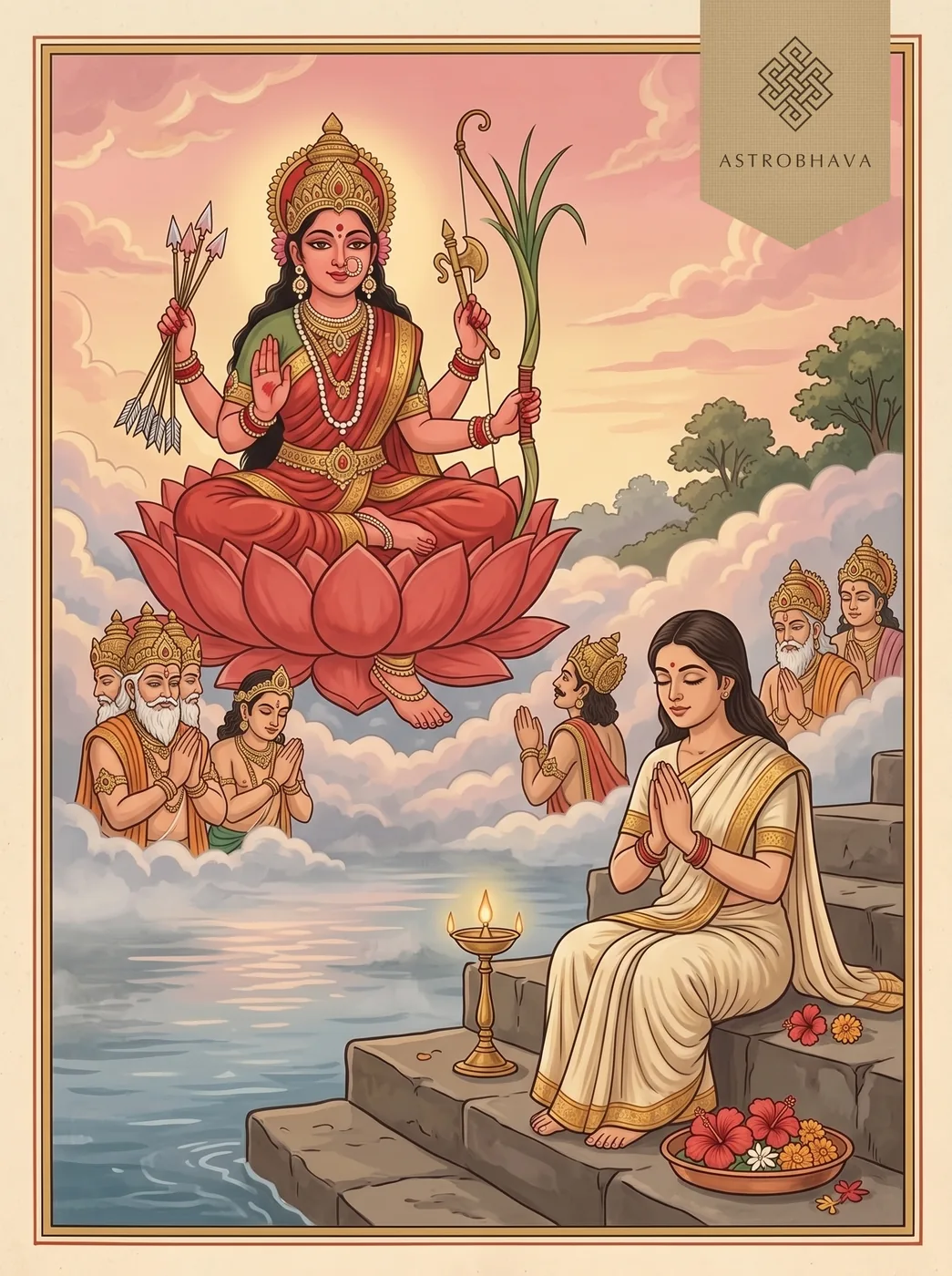
Lalita Pancharatnam
प्रातः स्मरामि ललितावदनारविन्दं बिम्बाधरं पृथुलमौक्तिकशोभिनासम् । आकर्णदीर्घनयनं मणिकुण्डलाढ्यं मन्दस्मितं मृगमदोज्ज्वलफालदेशम् ॥Also known as Pratah Smarami Lalita Vadanaravindam
In Devanagari, Tamil, Telugu, Kannada, Malayalam and English — with the meaning of every word, and the one syllable most people pronounce wrongly.
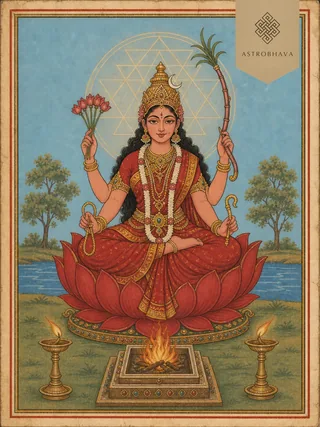 The Tripura Sundari Homam, performed for youBook →
What the Lalita Pancharatnam is
The Lalitha Pancharatnam, printed in Sanskrit as the Lalita Pancharatnam and also called the Lalita Panchakam, is a dawn hymn of five 'gem' verses to Lalita Tripurasundari, worshipped at the centre of Sri Vidya practice. Its colophon names Shankara Bhagavatpada, disciple of Govinda Bhagavatpada, as the author. Every verse opens on the word pratah, at dawn, and each uses a different verb, so the five read as steps. Verse 1 remembers (smarami) her face, from lips red as the bimba fruit to the musk glowing on her forehead. Verse 2 worships (bhajami) her arms, which hold the sugarcane bow, the flower arrows and the goad. Verse 3 bows (namami) to her feet, marked with the lotus, goad, banner and discus. Verse 4 praises (stuve) her as the cause of creation, sustenance and dissolution, known through the Upanishads yet beyond speech and mind. Verse 5 speaks (vadami) eight of her names aloud. A sixth verse states the fruit of reading the five at daybreak.
Shankara's morning pattern given a face
No legend of composition is told about the Lalita Pancharatnam; its setting is the hour it names. It belongs to the pratah-smarana form, verses said on waking, and the hymns ascribed to Shankara include a three-verse Pratah Smarana Stotram on the Self. That earlier hymn opens its verses with 'pratah smarami', 'pratar bhajami' and 'pratar namami', a sequence the tradition reads as offering mind, speech and body to the Supreme before the day begins. The Lalita hymn keeps those three openings word for word and adds two more, 'pratah stuve' and 'pratar vadami'. Where the older hymn remembers a formless witness of waking, dream and sleep, this one remembers a goddess with a face, hands and feet, and only in Verse 4 rises to the same language of a reality beyond scripture, speech and mind. The images come from the Sri Vidya picture of Lalita, whose Sahasranama calls her sugarcane bow the mind and her five flower arrows the five subtle elements. Verse 2 puts the bow, the arrows and the goad in her hands but leaves out the noose she usually carries. Verse 5 gathers into one goddess Kamala, a name of Lakshmi, and Vagdevata, the goddess of speech, beside Kameshvari, consort of Kameshvara, and Shambhavi, wife of Shambhu. The closing verse fixes the hour once more with the word prabhate, at daybreak.
The mantra, in six scripts
- प्रातः
- prātaḥ — at dawn
- स्मरामि
- smarāmi — I remember
- ललितावदनारविन्दं
- lalitāvadanāravindaṃ — Lalita's lotus face
- बिम्बाधरं
- bimbādharaṃ — with lips red as the bimba fruit
- पृथुलमौक्तिकशोभिनासम्
- pṛthulamauktikaśobhināsam — nose graced by a large pearl
- आकर्णदीर्घनयनं
- ākarṇadīrghanayanaṃ — eyes long to the ears
- मणिकुण्डलाढ्यं
- maṇikuṇḍalāḍhyaṃ — rich with jewelled earrings
- मन्दस्मितं
- mandasmitaṃ — gently smiling
- मृगमदोज्ज्वलफालदेशम्
- mṛgamadojjvalaphāladeśam — forehead glowing with musk
Lalitha Pancharatnam lyrics in full
Five verses greeting Lalita at dawn, followed by the verse that names the fruit of reading them.
All 7 verses, in Sanskrit, Tamil, Telugu, Kannada, Malayalam and English, each with its meaning. Choose a script:
Download the Lalitha Pancharatnam PDFAll 7 verses with their meanings, in Sanskrit. Free to print and keep.
प्रातः स्मरामि ललितावदनारविन्दं बिम्बाधरं पृथुलमौक्तिकशोभिनासम् ।
आकर्णदीर्घनयनं मणिकुण्डलाढ्यं मन्दस्मितं मृगमदोज्ज्वलफालदेशम् ॥
ப்ராதஃ ஸ்மராமி லலிதாவதநாரவிந்தம் பிம்பாதரம் ப்ருதுலமௌக்திகஶோபிநாஸம் ।
ஆகர்ணதீர்கநயநம் மணிகுண்டலாட்யம் மந்தஸ்மிதம் ம்ருகமதோஜ்ஜ்வலபாலதேஶம் ॥
ప్రాతః స్మరామి లలితావదనారవిన్దం బిమ్బాధరం పృథులమౌక్తికశోభినాసమ్ ।
ఆకర్ణదీర్ఘనయనం మణికుణ్డలాఢ్యం మన్దస్మితం మృగమదోజ్జ్వలఫాలదేశమ్ ॥
ಪ್ರಾತಃ ಸ್ಮರಾಮಿ ಲಲಿತಾವದನಾರವಿನ್ದಂ ಬಿಮ್ಬಾಧರಂ ಪೃಥುಲಮೌಕ್ತಿಕಶೋಭಿನಾಸಮ್ ।
ಆಕರ್ಣದೀರ್ಘನಯನಂ ಮಣಿಕುಣ್ಡಲಾಢ್ಯಂ ಮನ್ದಸ್ಮಿತಂ ಮೃಗಮದೋಜ್ಜ್ವಲಫಾಲದೇಶಮ್ ॥
പ്രാതഃ സ്മരാമി ലലിതാവദനാരവിന്ദം ബിമ്ബാധരം പൃഥുലമൌക്തികശോഭിനാസമ് ।
ആകര്ണദീര്ഘനയനം മണികുണ്ഡലാഢ്യം മന്ദസ്മിതം മൃഗമദോജ്ജ്വലഫാലദേശമ് ॥
prātaḥ smarāmi lalitāvadanāravindaṃ bimbādharaṃ pṛthulamauktikaśobhināsam |
ākarṇadīrghanayanaṃ maṇikuṇḍalāḍhyaṃ mandasmitaṃ mṛgamadojjvalaphāladeśam ||
At dawn I remember the lotus face of Lalita, with lips red as the bimba fruit and a nose graced by a large pearl. Her long eyes reach toward her ears, she is adorned with jewelled earrings, she smiles gently, and her forehead glows with musk.
प्रातर्भजामि ललिताभुजकल्पवल्लीं रक्ताङ्गुलीयलसदङ्गुलिपल्लवाढ्याम् ।
माणिक्यहेमवलयाङ्गदशोभमानां पुण्ड्रेक्षुचापकुसुमेषुसृणीर्दधानाम् ॥
ப்ராதர்பஜாமி லலிதாபுஜகல்பவல்லீம் ரக்தாங்குலீயலஸதங்குலிபல்லவாட்யாம் ।
மாணிக்யஹேமவலயாங்கதஶோபமாநாம் புண்ட்ரேக்ஷுசாபகுஸுமேஷுஸ்ருணீர்ததாநாம் ॥
ప్రాతర్భజామి లలితాభుజకల్పవల్లీం రక్తాఙ్గులీయలసదఙ్గులిపల్లవాఢ్యామ్ ।
మాణిక్యహేమవలయాఙ్గదశోభమానాం పుణ్డ్రేక్షుచాపకుసుమేషుసృణీర్దధానామ్ ॥
ಪ್ರಾತರ್ಭಜಾಮಿ ಲಲಿತಾಭುಜಕಲ್ಪವಲ್ಲೀಂ ರಕ್ತಾಙ್ಗುಲೀಯಲಸದಙ್ಗುಲಿಪಲ್ಲವಾಢ್ಯಾಮ್ ।
ಮಾಣಿಕ್ಯಹೇಮವಲಯಾಙ್ಗದಶೋಭಮಾನಾಂ ಪುಣ್ಡ್ರೇಕ್ಷುಚಾಪಕುಸುಮೇಷುಸೃಣೀರ್ದಧಾನಾಮ್ ॥
പ്രാതര്ഭജാമി ലലിതാഭുജകല്പവല്ലീം രക്താങ്ഗുലീയലസദങ്ഗുലിപല്ലവാഢ്യാമ് ।
മാണിക്യഹേമവലയാങ്ഗദശോഭമാനാം പുണ്ഡ്രേക്ഷുചാപകുസുമേഷുസൃണീര്ദധാനാമ് ॥
prātarbhajāmi lalitābhujakalpavallīṃ raktāṅgulīyalasadaṅgulipallavāḍhyām |
māṇikyahemavalayāṅgadaśobhamānāṃ puṇḍrekṣucāpakusumeṣusṛṇīrdadhānām ||
At dawn I worship the arms of Lalita, which are like wish-granting creepers, their tender finger-shoots shining with red rings. They gleam with bracelets and armlets of ruby and gold, and hold the sugarcane bow, the flower arrows and the goad.
प्रातर्नमामि ललिताचरणारविन्दं भक्तेष्टदाननिरतं भवसिन्धुपोतम् ।
पद्मासनादिसुरनायकपूजनीयं पद्माङ्कुशध्वजसुदर्शनलाञ्छनाढ्यम् ॥
ப்ராதர்நமாமி லலிதாசரணாரவிந்தம் பக்தேஷ்டதாநநிரதம் பவஸிந்துபோதம் ।
பத்மாஸநாதிஸுரநாயகபூஜநீயம் பத்மாங்குஶத்வஜஸுதர்ஶநலாஞ்சநாட்யம் ॥
ప్రాతర్నమామి లలితాచరణారవిన్దం భక్తేష్టదాననిరతం భవసిన్ధుపోతమ్ ।
పద్మాసనాదిసురనాయకపూజనీయం పద్మాఙ్కుశధ్వజసుదర్శనలాఞ్ఛనాఢ్యమ్ ॥
ಪ್ರಾತರ್ನಮಾಮಿ ಲಲಿತಾಚರಣಾರವಿನ್ದಂ ಭಕ್ತೇಷ್ಟದಾನನಿರತಂ ಭವಸಿನ್ಧುಪೋತಮ್ ।
ಪದ್ಮಾಸನಾದಿಸುರನಾಯಕಪೂಜನೀಯಂ ಪದ್ಮಾಙ್ಕುಶಧ್ವಜಸುದರ್ಶನಲಾಞ್ಛನಾಢ್ಯಮ್ ॥
പ്രാതര്നമാമി ലലിതാചരണാരവിന്ദം ഭക്തേഷ്ടദാനനിരതം ഭവസിന്ധുപോതമ് ।
പദ്മാസനാദിസുരനായകപൂജനീയം പദ്മാങ്കുശധ്വജസുദര്ശനലാഞ്ഛനാഢ്യമ് ॥
prātarnamāmi lalitācaraṇāravindaṃ bhakteṣṭadānanirataṃ bhavasindhupotam |
padmāsanādisuranāyakapūjanīyaṃ padmāṅkuśadhvajasudarśanalāñchanāḍhyam ||
At dawn I bow to the lotus feet of Lalita, ever intent on granting the wishes of devotees, a boat across the ocean of worldly life. They are worshipped by Brahma and the other lords of the gods, and bear the marks of the lotus, the goad, the banner and the discus.
प्रातः स्तुवे परशिवां ललितां भवानीं त्रय्यन्तवेद्यविभवां करुणानवद्याम् ।
विश्वस्य सृष्टिविलयस्थितिहेतुभूतां विद्येश्वरीं निगमवाङ्मनसातिदूराम् ॥
ப்ராதஃ ஸ்துவே பரஶிவாம் லலிதாம் பவாநீம் த்ரய்யந்தவேத்யவிபவாம் கருணாநவத்யாம் ।
விஶ்வஸ்ய ஸ்ருஷ்டிவிலயஸ்திதிஹேதுபூதாம் வித்யேஶ்வரீம் நிகமவாங்மநஸாதிதூராம் ॥
ప్రాతః స్తువే పరశివాం లలితాం భవానీం త్రయ్యన్తవేద్యవిభవాం కరుణానవద్యామ్ ।
విశ్వస్య సృష్టివిలయస్థితిహేతుభూతాం విద్యేశ్వరీం నిగమవాఙ్మనసాతిదూరామ్ ॥
ಪ್ರಾತಃ ಸ್ತುವೇ ಪರಶಿವಾಂ ಲಲಿತಾಂ ಭವಾನೀಂ ತ್ರಯ್ಯನ್ತವೇದ್ಯವಿಭವಾಂ ಕರುಣಾನವದ್ಯಾಮ್ ।
ವಿಶ್ವಸ್ಯ ಸೃಷ್ಟಿವಿಲಯಸ್ಥಿತಿಹೇತುಭೂತಾಂ ವಿದ್ಯೇಶ್ವರೀಂ ನಿಗಮವಾಙ್ಮನಸಾತಿದೂರಾಮ್ ॥
പ്രാതഃ സ്തുവേ പരശിവാം ലലിതാം ഭവാനീം ത്രയ്യന്തവേദ്യവിഭവാം കരുണാനവദ്യാമ് ।
വിശ്വസ്യ സൃഷ്ടിവിലയസ്ഥിതിഹേതുഭൂതാം വിദ്യേശ്വരീം നിഗമവാങ്മനസാതിദൂരാമ് ॥
prātaḥ stuve paraśivāṃ lalitāṃ bhavānīṃ trayyantavedyavibhavāṃ karuṇānavadyām |
viśvasya sṛṣṭivilayasthitihetubhūtāṃ vidyeśvarīṃ nigamavāṅmanasātidūrām ||
At dawn I praise Lalita, Bhavani, the supreme auspicious one, whose glory is known through the Upanishads and who is flawless in her compassion. She is the cause of the creation, dissolution and sustenance of the universe, the sovereign of knowledge, far beyond the reach of scripture, speech and mind.
प्रातर्वदामि ललिते तव पुण्यनाम कामेश्वरीति कमलेति महेश्वरीति ।
श्रीशाम्भवीति जगतां जननी परेति वाग्देवतेति वचसा त्रिपुरेश्वरीति ॥
ப்ராதர்வதாமி லலிதே தவ புண்யநாம காமேஶ்வரீதி கமலேதி மஹேஶ்வரீதி ।
ஶ்ரீஶாம்பவீதி ஜகதாம் ஜநநீ பரேதி வாக்தேவதேதி வசஸா த்ரிபுரேஶ்வரீதி ॥
ప్రాతర్వదామి లలితే తవ పుణ్యనామ కామేశ్వరీతి కమలేతి మహేశ్వరీతి ।
శ్రీశామ్భవీతి జగతాం జననీ పరేతి వాగ్దేవతేతి వచసా త్రిపురేశ్వరీతి ॥
ಪ್ರಾತರ್ವದಾಮಿ ಲಲಿತೇ ತವ ಪುಣ್ಯನಾಮ ಕಾಮೇಶ್ವರೀತಿ ಕಮಲೇತಿ ಮಹೇಶ್ವರೀತಿ ।
ಶ್ರೀಶಾಮ್ಭವೀತಿ ಜಗತಾಂ ಜನನೀ ಪರೇತಿ ವಾಗ್ದೇವತೇತಿ ವಚಸಾ ತ್ರಿಪುರೇಶ್ವರೀತಿ ॥
പ്രാതര്വദാമി ലലിതേ തവ പുണ്യനാമ കാമേശ്വരീതി കമലേതി മഹേശ്വരീതി ।
ശ്രീശാമ്ഭവീതി ജഗതാം ജനനീ പരേതി വാഗ്ദേവതേതി വചസാ ത്രിപുരേശ്വരീതി ॥
prātarvadāmi lalite tava puṇyanāma kāmeśvarīti kamaleti maheśvarīti |
śrīśāmbhavīti jagatāṃ jananī pareti vāgdevateti vacasā tripureśvarīti ||
At dawn, O Lalita, I speak aloud your sacred names: Kameshvari, Kamala, Maheshvari, Shri Shambhavi, Mother of the worlds, the Supreme, Goddess of Speech, and Tripureshvari.
यः श्लोकपञ्चकमिदं ललिताम्बिकायाः सौभाग्यदं सुललितं पठति प्रभाते ।
तस्मै ददाति ललिता झटिति प्रसन्ना विद्यां श्रियं विमलसौख्यमनन्तकीर्तिम् ॥
யஃ ஶ்லோகபஞ்சகமிதம் லலிதாம்பிகாயாஃ ஸௌபாக்யதம் ஸுலலிதம் படதி ப்ரபாதே ।
தஸ்மை ததாதி லலிதா சடிதி ப்ரஸந்நா வித்யாம் ஶ்ரியம் விமலஸௌக்யமநந்தகீர்திம் ॥
యః శ్లోకపఞ్చకమిదం లలితామ్బికాయాః సౌభాగ్యదం సులలితం పఠతి ప్రభాతే ।
తస్మై దదాతి లలితా ఝటితి ప్రసన్నా విద్యాం శ్రియం విమలసౌఖ్యమనన్తకీర్తిమ్ ॥
ಯಃ ಶ್ಲೋಕಪಞ್ಚಕಮಿದಂ ಲಲಿತಾಮ್ಬಿಕಾಯಾಃ ಸೌಭಾಗ್ಯದಂ ಸುಲಲಿತಂ ಪಠತಿ ಪ್ರಭಾತೇ ।
ತಸ್ಮೈ ದದಾತಿ ಲಲಿತಾ ಝಟಿತಿ ಪ್ರಸನ್ನಾ ವಿದ್ಯಾಂ ಶ್ರಿಯಂ ವಿಮಲಸೌಖ್ಯಮನನ್ತಕೀರ್ತಿಮ್ ॥
യഃ ശ്ലോകപഞ്ചകമിദം ലലിതാമ്ബികായാഃ സൌഭാഗ്യദം സുലലിതം പഠതി പ്രഭാതേ ।
തസ്മൈ ദദാതി ലലിതാ ഝടിതി പ്രസന്നാ വിദ്യാം ശ്രിയം വിമലസൌഖ്യമനന്തകീര്തിമ് ॥
yaḥ ślokapañcakamidaṃ lalitāmbikāyāḥ saubhāgyadaṃ sulalitaṃ paṭhati prabhāte |
tasmai dadāti lalitā jhaṭiti prasannā vidyāṃ śriyaṃ vimalasaukhyamanantakīrtim ||
The verse says that whoever recites at daybreak these five graceful verses on Mother Lalita, which bestow good fortune, is quickly blessed by a pleased Lalita with knowledge, prosperity, pure happiness and endless renown.
इति श्रीमत्परमहंसपरिव्राजकाचार्यस्य श्रीगोविन्दभगवत्पूज्यपादशिष्यस्य श्रीमच्छङ्करभगवतः कृतौ श्रीललितापञ्चरत्नं सम्पूर्णम् ॥
இதி ஶ்ரீமத்பரமஹம்ஸபரிவ்ராஜகாசார்யஸ்ய ஶ்ரீகோவிந்தபகவத்பூஜ்யபாதஶிஷ்யஸ்ய ஶ்ரீமச்சங்கரபகவதஃ க்ருதௌ ஶ்ரீலலிதாபஞ்சரத்நம் ஸம்பூர்ணம் ॥
ఇతి శ్రీమత్పరమహంసపరివ్రాజకాచార్యస్య శ్రీగోవిన్దభగవత్పూజ్యపాదశిష్యస్య శ్రీమచ్ఛఙ్కరభగవతః కృతౌ శ్రీలలితాపఞ్చరత్నం సమ్పూర్ణమ్ ॥
ಇತಿ ಶ್ರೀಮತ್ಪರಮಹಂಸಪರಿವ್ರಾಜಕಾಚಾರ್ಯಸ್ಯ ಶ್ರೀಗೋವಿನ್ದಭಗವತ್ಪೂಜ್ಯಪಾದಶಿಷ್ಯಸ್ಯ ಶ್ರೀಮಚ್ಛಙ್ಕರಭಗವತಃ ಕೃತೌ ಶ್ರೀಲಲಿತಾಪಞ್ಚರತ್ನಂ ಸಮ್ಪೂರ್ಣಮ್ ॥
ഇതി ശ്രീമത്പരമഹംസപരിവ്രാജകാചാര്യസ്യ ശ്രീഗോവിന്ദഭഗവത്പൂജ്യപാദശിഷ്യസ്യ ശ്രീമച്ഛങ്കരഭഗവതഃ കൃതൌ ശ്രീലലിതാപഞ്ചരത്നം സമ്പൂര്ണമ് ॥
iti śrīmatparamahaṃsaparivrājakācāryasya śrīgovindabhagavatpūjyapādaśiṣyasya śrīmacchaṅkarabhagavataḥ kṛtau śrīlalitāpañcaratnaṃ sampūrṇam ||
Thus ends the Lalita Pancharatnam, a work of the revered Shri Shankara, the renunciate teacher of the highest order and disciple of the revered Shri Govinda Bhagavatpada.
The syllable people get wrong
In the closing verse, jhaṭiti ('swiftly') is often said as 'jatiti'; it begins with the breathy jh, a j followed by a puff of air, and its middle ṭ is a retroflex t, struck with the tongue turned up behind the teeth ridge: JHA-ti-ti.
When the Lalita Pancharatnam is chanted
Weekday. Friday
Festival. Lalita Panchami, in Sharad Navaratri
Questions
Have your chart read before you decide
Chanting is yours to do, and free. But which deity your situation calls for — and whether a mantra alone is the right response — depends on your chart. Sometimes it is; sometimes it is not.
- Over 30 years in the Guru–Sishya Parampara, from the age of five
- He reads every chart himself — 60 minutes, one to one, never delegated
- Charts are read only between sunrise and sunset, following tradition
