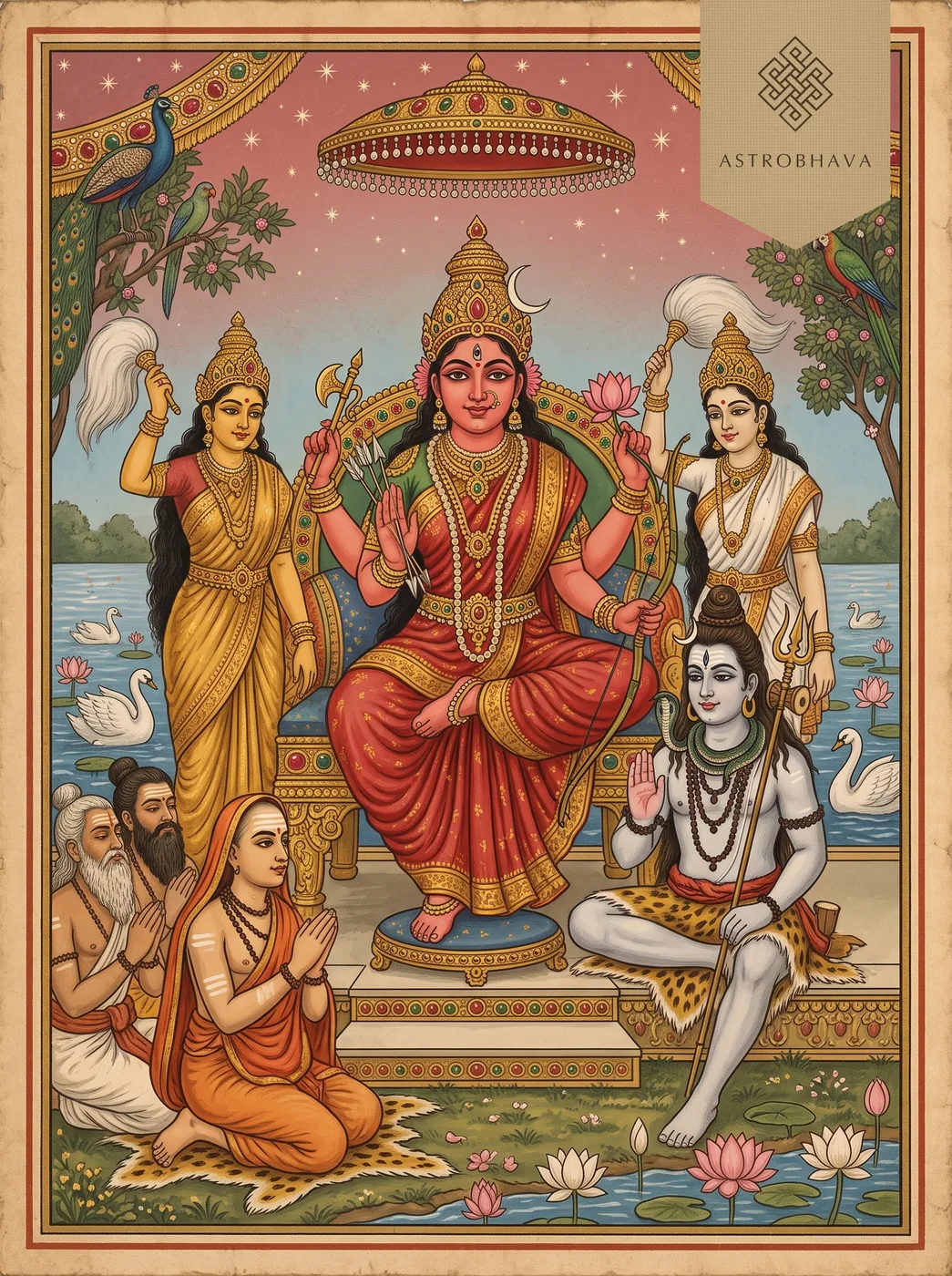
Rajarajeshwari Ashtakam
अम्बा शाम्भवि चन्द्रमौलिरबलाऽपर्णा उमा पार्वती काली हैमवती शिवा त्रिनयनी कात्यायनी भैरवी । सावित्री नवयौवना शुभकरी साम्राज्यलक्ष्मीप्रदा चिद्रूपी परदेवता भगवती श्रीराजराजेश्वरी ॥Also known as Ambashtakam
In Devanagari, Tamil, Telugu, Kannada, Malayalam and English — with the meaning of every word, and the one syllable most people pronounce wrongly.
 The Tripura Sundari Homa, performed for youBook →
What the Rajarajeshwari Ashtakam is
The Rajarajeshwari Ashtakam, also called the Ambashtakam because every verse opens on the word amba, 'Mother', is an eight-verse Sanskrit hymn to Sri Rajarajeshwari, the 'sovereign of the king of kings', the name under which Sri Vidya worships Lalita Tripurasundari. Each verse is a long Shardulavikridita line packed with names, and each closes on the same refrain naming her pure consciousness and the supreme deity. The order is deliberate. Verse 1 calls her by the familiar names of Parvati, from Aparna and Uma to Katyayani. Verse 2 makes her an enchantress who loves the flute, and verse 3 dresses her in anklets, armlets and garlands, seated in the hero's posture. Verses 4 and 5 turn fierce: Bhadrakali, Bagala, Jvalamukhi, Chamunda, Varahi, holder of trident, bow, noose and goad. Verses 6 and 7 lift her to Gayatri, the syllable Om and the mother of all beings. Verse 8 is the phala shruti.
A queen's hymn with two claimed authors
No account survives of when or why the Ambashtakam was composed. Popular devotion credits it to Adi Shankaracharya, and many recordings and prayer books carry his name, yet most printed editions of the Sanskrit name no author at all. One recension, which adds four further verses that circulate in varying order, closes with a colophon calling the work the composition of Bhaktaraja. That name is worth noticing, because the word bhaktaraja, 'king among devotees', stands inside verse 8 itself, in the line about the devotee whom the Mother protects. Whether it began as a poet's signature or was later read as one cannot now be settled, so the hymn is best described as traditional, with the Shankara attribution held by custom. The goddess it addresses is older than the hymn. Rajarajeshwari opens verse 134 of the Lalitha Sahasranamam, where she is queen of the king of kings and giver of kingdoms. In South India the name belongs above all to the last day of the autumn Navaratri. On Vijayadashami the Kanaka Durga temple at Vijayawada dresses the goddess as Sri Rajarajeshwari, in a green sari, and the Ashtakam is widely sung in homes and temples through those days.
The mantra, in six scripts
- अम्बा
- ambā — Mother
- शाम्भवि
- śāmbhavi — consort of Shambhu
- चन्द्रमौलिरबलाऽपर्णा
- candramaulirabalā'parṇā — moon-crested, young, Aparna
- उमा
- umā — Uma
- पार्वती
- pārvatī — daughter of the mountain
- काली
- kālī — Kali
- हैमवती
- haimavatī — daughter of Himavan
- शिवा
- śivā — the auspicious one
- त्रिनयनी
- trinayanī — three-eyed
- कात्यायनी
- kātyāyanī — Katyayani
- भैरवी
- bhairavī — the awesome one
Rajarajeshwari Ashtakam lyrics in full
The eight verses as commonly sung, the last of them carrying the phala shruti.
All 8 verses, in Sanskrit, Tamil, Telugu, Kannada, Malayalam and English, each with its meaning. Choose a script:
Download the Rajarajeshwari Ashtakam PDFAll 8 verses with their meanings, in Sanskrit. Free to print and keep.
अम्बा शाम्भवि चन्द्रमौलिरबलाऽपर्णा उमा पार्वती काली हैमवती शिवा त्रिनयनी कात्यायनी भैरवी ।
सावित्री नवयौवना शुभकरी साम्राज्यलक्ष्मीप्रदा चिद्रूपी परदेवता भगवती श्रीराजराजेश्वरी ॥
அம்பா ஶாம்பவி சந்த்ரமௌலிரபலாபர்ணா உமா பார்வதீ காலீ ஹைமவதீ ஶிவா த்ரிநயநீ காத்யாயநீ பைரவீ ।
ஸாவித்ரீ நவயௌவநா ஶுபகரீ ஸாம்ராஜ்யலக்ஷ்மீப்ரதா சித்ரூபீ பரதேவதா பகவதீ ஶ்ரீராஜராஜேஶ்வரீ ॥
అమ్బా శామ్భవి చన్ద్రమౌలిరబలాఽపర్ణా ఉమా పార్వతీ కాలీ హైమవతీ శివా త్రినయనీ కాత్యాయనీ భైరవీ ।
సావిత్రీ నవయౌవనా శుభకరీ సామ్రాజ్యలక్ష్మీప్రదా చిద్రూపీ పరదేవతా భగవతీ శ్రీరాజరాజేశ్వరీ ॥
ಅಮ್ಬಾ ಶಾಮ್ಭವಿ ಚನ್ದ್ರಮೌಲಿರಬಲಾಽಪರ್ಣಾ ಉಮಾ ಪಾರ್ವತೀ ಕಾಲೀ ಹೈಮವತೀ ಶಿವಾ ತ್ರಿನಯನೀ ಕಾತ್ಯಾಯನೀ ಭೈರವೀ ।
ಸಾವಿತ್ರೀ ನವಯೌವನಾ ಶುಭಕರೀ ಸಾಮ್ರಾಜ್ಯಲಕ್ಷ್ಮೀಪ್ರದಾ ಚಿದ್ರೂಪೀ ಪರದೇವತಾ ಭಗವತೀ ಶ್ರೀರಾಜರಾಜೇಶ್ವರೀ ॥
അമ്ബാ ശാമ്ഭവി ചന്ദ്രമൌലിരബലാഽപര്ണാ ഉമാ പാര്വതീ കാലീ ഹൈമവതീ ശിവാ ത്രിനയനീ കാത്യായനീ ഭൈരവീ ।
സാവിത്രീ നവയൌവനാ ശുഭകരീ സാമ്രാജ്യലക്ഷ്മീപ്രദാ ചിദ്രൂപീ പരദേവതാ ഭഗവതീ ശ്രീരാജരാജേശ്വരീ ॥
ambā śāmbhavi candramaulirabalā'parṇā umā pārvatī kālī haimavatī śivā trinayanī kātyāyanī bhairavī |
sāvitrī navayauvanā śubhakarī sāmrājyalakṣmīpradā cidrūpī paradevatā bhagavatī śrīrājarājeśvarī ||
Mother, consort of Shambhu, she whose crest bears the moon, the young one, Aparna, Uma, Parvati, Kali, daughter of Himavan, Shiva, the three-eyed one, Katyayani, Bhairavi. Savitri, ever young, the giver of good, bestower of sovereign prosperity: she is pure consciousness, the supreme deity, the blessed Sri Rajarajeshwari.
अम्बा मोहिनि देवता त्रिभुवनी आनन्दसन्दायिनी वाणी पल्लवपाणि वेणुमुरलीगानप्रिया लोलिनी ।
कल्याणी उडुराजबिम्बवदना धूम्राक्षसंहारिणी चिद्रूपी परदेवता भगवती श्रीराजराजेश्वरी ॥
அம்பா மோஹிநி தேவதா த்ரிபுவநீ ஆநந்தஸந்தாயிநீ வாணீ பல்லவபாணி வேணுமுரலீகாநப்ரியா லோலிநீ ।
கல்யாணீ உடுராஜபிம்பவதநா தூம்ராக்ஷஸம்ஹாரிணீ சித்ரூபீ பரதேவதா பகவதீ ஶ்ரீராஜராஜேஶ்வரீ ॥
అమ్బా మోహిని దేవతా త్రిభువనీ ఆనన్దసన్దాయినీ వాణీ పల్లవపాణి వేణుమురలీగానప్రియా లోలినీ ।
కల్యాణీ ఉడురాజబిమ్బవదనా ధూమ్రాక్షసంహారిణీ చిద్రూపీ పరదేవతా భగవతీ శ్రీరాజరాజేశ్వరీ ॥
ಅಮ್ಬಾ ಮೋಹಿನಿ ದೇವತಾ ತ್ರಿಭುವನೀ ಆನನ್ದಸನ್ದಾಯಿನೀ ವಾಣೀ ಪಲ್ಲವಪಾಣಿ ವೇಣುಮುರಲೀಗಾನಪ್ರಿಯಾ ಲೋಲಿನೀ ।
ಕಲ್ಯಾಣೀ ಉಡುರಾಜಬಿಮ್ಬವದನಾ ಧೂಮ್ರಾಕ್ಷಸಂಹಾರಿಣೀ ಚಿದ್ರೂಪೀ ಪರದೇವತಾ ಭಗವತೀ ಶ್ರೀರಾಜರಾಜೇಶ್ವರೀ ॥
അമ്ബാ മോഹിനി ദേവതാ ത്രിഭുവനീ ആനന്ദസന്ദായിനീ വാണീ പല്ലവപാണി വേണുമുരലീഗാനപ്രിയാ ലോലിനീ ।
കല്യാണീ ഉഡുരാജബിമ്ബവദനാ ധൂമ്രാക്ഷസംഹാരിണീ ചിദ്രൂപീ പരദേവതാ ഭഗവതീ ശ്രീരാജരാജേശ്വരീ ॥
ambā mohini devatā tribhuvanī ānandasandāyinī vāṇī pallavapāṇi veṇumuralīgānapriyā lolinī |
kalyāṇī uḍurājabimbavadanā dhūmrākṣasaṃhāriṇī cidrūpī paradevatā bhagavatī śrīrājarājeśvarī ||
Mother, the enchanting goddess of the three worlds who grants bliss; she is speech itself, with hands soft as tender leaves, delighting in the music of flute and pipe, playful. Auspicious, her face like the disc of the moon, slayer of the demon Dhumraksha: she is pure consciousness, the supreme deity, the blessed Sri Rajarajeshwari.
अम्बा नूपुररत्नकङ्कणधरी केयूरहारावली जातीचम्पकवैजयन्तिलहरी ग्रैवेयकैराजिता ।
वीणावेणुविनोदमण्डितकरा वीरासने संस्थिता चिद्रूपी परदेवता भगवती श्रीराजराजेश्वरी ॥
அம்பா நூபுரரத்நகங்கணதரீ கேயூரஹாராவலீ ஜாதீசம்பகவைஜயந்திலஹரீ க்ரைவேயகைராஜிதா ।
வீணாவேணுவிநோதமண்டிதகரா வீராஸநே ஸம்ஸ்திதா சித்ரூபீ பரதேவதா பகவதீ ஶ்ரீராஜராஜேஶ்வரீ ॥
అమ్బా నూపురరత్నకఙ్కణధరీ కేయూరహారావలీ జాతీచమ్పకవైజయన్తిలహరీ గ్రైవేయకైరాజితా ।
వీణావేణువినోదమణ్డితకరా వీరాసనే సంస్థితా చిద్రూపీ పరదేవతా భగవతీ శ్రీరాజరాజేశ్వరీ ॥
ಅಮ್ಬಾ ನೂಪುರರತ್ನಕಙ್ಕಣಧರೀ ಕೇಯೂರಹಾರಾವಲೀ ಜಾತೀಚಮ್ಪಕವೈಜಯನ್ತಿಲಹರೀ ಗ್ರೈವೇಯಕೈರಾಜಿತಾ ।
ವೀಣಾವೇಣುವಿನೋದಮಣ್ಡಿತಕರಾ ವೀರಾಸನೇ ಸಂಸ್ಥಿತಾ ಚಿದ್ರೂಪೀ ಪರದೇವತಾ ಭಗವತೀ ಶ್ರೀರಾಜರಾಜೇಶ್ವರೀ ॥
അമ്ബാ നൂപുരരത്നകങ്കണധരീ കേയൂരഹാരാവലീ ജാതീചമ്പകവൈജയന്തിലഹരീ ഗ്രൈവേയകൈരാജിതാ ।
വീണാവേണുവിനോദമണ്ഡിതകരാ വീരാസനേ സംസ്ഥിതാ ചിദ്രൂപീ പരദേവതാ ഭഗവതീ ശ്രീരാജരാജേശ്വരീ ॥
ambā nūpuraratnakaṅkaṇadharī keyūrahārāvalī jātīcampakavaijayantilaharī graiveyakairājitā |
vīṇāveṇuvinodamaṇḍitakarā vīrāsane saṃsthitā cidrūpī paradevatā bhagavatī śrīrājarājeśvarī ||
Mother, wearing anklets and jewelled bracelets, armlets and strings of necklaces, with waves of jasmine, champaka and vaijayanti garlands, shining with ornaments at the neck. Her hands are adorned with the veena and flute she plays for delight, and she is seated in the hero's posture: she is pure consciousness, the supreme deity, the blessed Sri Rajarajeshwari.
अम्बा रौद्रिणि भद्रकालि बगला ज्वालामुखी वैष्णवी ब्रह्माणी त्रिपुरान्तकी सुरनुता देदीप्यमानोज्ज्वला ।
चामुण्डा श्रितरक्षपोषजननी दाक्षायणी वल्लवी चिद्रूपी परदेवता भगवती श्रीराजराजेश्वरी ॥
அம்பா ரௌத்ரிணி பத்ரகாலி பகலா ஜ்வாலாமுகீ வைஷ்ணவீ ப்ரஹ்மாணீ த்ரிபுராந்தகீ ஸுரநுதா தேதீப்யமாநோஜ்ஜ்வலா ।
சாமுண்டா ஶ்ரிதரக்ஷபோஷஜநநீ தாக்ஷாயணீ வல்லவீ சித்ரூபீ பரதேவதா பகவதீ ஶ்ரீராஜராஜேஶ்வரீ ॥
అమ్బా రౌద్రిణి భద్రకాలి బగలా జ్వాలాముఖీ వైష్ణవీ బ్రహ్మాణీ త్రిపురాన్తకీ సురనుతా దేదీప్యమానోజ్జ్వలా ।
చాముణ్డా శ్రితరక్షపోషజననీ దాక్షాయణీ వల్లవీ చిద్రూపీ పరదేవతా భగవతీ శ్రీరాజరాజేశ్వరీ ॥
ಅಮ್ಬಾ ರೌದ್ರಿಣಿ ಭದ್ರಕಾಲಿ ಬಗಲಾ ಜ್ವಾಲಾಮುಖೀ ವೈಷ್ಣವೀ ಬ್ರಹ್ಮಾಣೀ ತ್ರಿಪುರಾನ್ತಕೀ ಸುರನುತಾ ದೇದೀಪ್ಯಮಾನೋಜ್ಜ್ವಲಾ ।
ಚಾಮುಣ್ಡಾ ಶ್ರಿತರಕ್ಷಪೋಷಜನನೀ ದಾಕ್ಷಾಯಣೀ ವಲ್ಲವೀ ಚಿದ್ರೂಪೀ ಪರದೇವತಾ ಭಗವತೀ ಶ್ರೀರಾಜರಾಜೇಶ್ವರೀ ॥
അമ്ബാ രൌദ്രിണി ഭദ്രകാലി ബഗലാ ജ്വാലാമുഖീ വൈഷ്ണവീ ബ്രഹ്മാണീ ത്രിപുരാന്തകീ സുരനുതാ ദേദീപ്യമാനോജ്ജ്വലാ ।
ചാമുണ്ഡാ ശ്രിതരക്ഷപോഷജനനീ ദാക്ഷായണീ വല്ലവീ ചിദ്രൂപീ പരദേവതാ ഭഗവതീ ശ്രീരാജരാജേശ്വരീ ॥
ambā raudriṇi bhadrakāli bagalā jvālāmukhī vaiṣṇavī brahmāṇī tripurāntakī suranutā dedīpyamānojjvalā |
cāmuṇḍā śritarakṣapoṣajananī dākṣāyaṇī vallavī cidrūpī paradevatā bhagavatī śrīrājarājeśvarī ||
Mother, the fierce one, Bhadrakali, Bagala, Jvalamukhi, Vaishnavi, Brahmani, destroyer of the three cities, praised by the gods, blazing with radiance. Chamunda, the mother who protects and nourishes those who take refuge in her, Dakshayani, the cowherd maiden: she is pure consciousness, the supreme deity, the blessed Sri Rajarajeshwari.
अम्बा शूल धनुः कुशाङ्कुशधरी अर्धेन्दुबिम्बाधरी वाराही मधुकैटभप्रशमनी वाणीरमासेविता ।
मल्लद्यासुरमूकदैत्यमथनी माहेश्वरी अम्बिका चिद्रूपी परदेवता भगवती श्रीराजराजेश्वरी ॥
அம்பா ஶூல தநுஃ குஶாங்குஶதரீ அர்தேந்துபிம்பாதரீ வாராஹீ மதுகைடபப்ரஶமநீ வாணீரமாஸேவிதா ।
மல்லத்யாஸுரமூகதைத்யமதநீ மாஹேஶ்வரீ அம்பிகா சித்ரூபீ பரதேவதா பகவதீ ஶ்ரீராஜராஜேஶ்வரீ ॥
అమ్బా శూల ధనుః కుశాఙ్కుశధరీ అర్ధేన్దుబిమ్బాధరీ వారాహీ మధుకైటభప్రశమనీ వాణీరమాసేవితా ।
మల్లద్యాసురమూకదైత్యమథనీ మాహేశ్వరీ అమ్బికా చిద్రూపీ పరదేవతా భగవతీ శ్రీరాజరాజేశ్వరీ ॥
ಅಮ್ಬಾ ಶೂಲ ಧನುಃ ಕುಶಾಙ್ಕುಶಧರೀ ಅರ್ಧೇನ್ದುಬಿಮ್ಬಾಧರೀ ವಾರಾಹೀ ಮಧುಕೈಟಭಪ್ರಶಮನೀ ವಾಣೀರಮಾಸೇವಿತಾ ।
ಮಲ್ಲದ್ಯಾಸುರಮೂಕದೈತ್ಯಮಥನೀ ಮಾಹೇಶ್ವರೀ ಅಮ್ಬಿಕಾ ಚಿದ್ರೂಪೀ ಪರದೇವತಾ ಭಗವತೀ ಶ್ರೀರಾಜರಾಜೇಶ್ವರೀ ॥
അമ്ബാ ശൂല ധനുഃ കുശാങ്കുശധരീ അര്ധേന്ദുബിമ്ബാധരീ വാരാഹീ മധുകൈടഭപ്രശമനീ വാണീരമാസേവിതാ ।
മല്ലദ്യാസുരമൂകദൈത്യമഥനീ മാഹേശ്വരീ അമ്ബികാ ചിദ്രൂപീ പരദേവതാ ഭഗവതീ ശ്രീരാജരാജേശ്വരീ ॥
ambā śūla dhanuḥ kuśāṅkuśadharī ardhendubimbādharī vārāhī madhukaiṭabhapraśamanī vāṇīramāsevitā |
malladyāsuramūkadaityamathanī māheśvarī ambikā cidrūpī paradevatā bhagavatī śrīrājarājeśvarī ||
Mother, holding the trident, the bow, the noose and the goad, bearing the half-moon disc; Varahi, who subdued Madhu and Kaitabha, served by Sarasvati and Lakshmi. Destroyer of demons such as Malla and Muka, Maheshvari, Ambika: she is pure consciousness, the supreme deity, the blessed Sri Rajarajeshwari.
अम्बा सृष्टिविनाशपालनकरी आर्या विसंशोभिता गायत्री प्रणवाक्षरामृतरसः पूर्णानुसन्धीकृता ।
ओङ्कारी विनुतासुतार्चितपदा उद्दण्डदैत्यापहा चिद्रूपी परदेवता भगवती श्रीराजराजेश्वरी ॥
அம்பா ஸ்ருஷ்டிவிநாஶபாலநகரீ ஆர்யா விஸம்ஶோபிதா காயத்ரீ ப்ரணவாக்ஷராம்ருதரஸஃ பூர்ணாநுஸந்தீக்ருதா ।
ஓங்காரீ விநுதாஸுதார்சிதபதா உத்தண்டதைத்யாபஹா சித்ரூபீ பரதேவதா பகவதீ ஶ்ரீராஜராஜேஶ்வரீ ॥
అమ్బా సృష్టివినాశపాలనకరీ ఆర్యా విసంశోభితా గాయత్రీ ప్రణవాక్షరామృతరసః పూర్ణానుసన్ధీకృతా ।
ఓఙ్కారీ వినుతాసుతార్చితపదా ఉద్దణ్డదైత్యాపహా చిద్రూపీ పరదేవతా భగవతీ శ్రీరాజరాజేశ్వరీ ॥
ಅಮ್ಬಾ ಸೃಷ್ಟಿವಿನಾಶಪಾಲನಕರೀ ಆರ್ಯಾ ವಿಸಂಶೋಭಿತಾ ಗಾಯತ್ರೀ ಪ್ರಣವಾಕ್ಷರಾಮೃತರಸಃ ಪೂರ್ಣಾನುಸನ್ಧೀಕೃತಾ ।
ಓಙ್ಕಾರೀ ವಿನುತಾಸುತಾರ್ಚಿತಪದಾ ಉದ್ದಣ್ಡದೈತ್ಯಾಪಹಾ ಚಿದ್ರೂಪೀ ಪರದೇವತಾ ಭಗವತೀ ಶ್ರೀರಾಜರಾಜೇಶ್ವರೀ ॥
അമ്ബാ സൃഷ്ടിവിനാശപാലനകരീ ആര്യാ വിസംശോഭിതാ ഗായത്രീ പ്രണവാക്ഷരാമൃതരസഃ പൂര്ണാനുസന്ധീകൃതാ ।
ഓങ്കാരീ വിനുതാസുതാര്ചിതപദാ ഉദ്ദണ്ഡദൈത്യാപഹാ ചിദ്രൂപീ പരദേവതാ ഭഗവതീ ശ്രീരാജരാജേശ്വരീ ॥
ambā sṛṣṭivināśapālanakarī āryā visaṃśobhitā gāyatrī praṇavākṣarāmṛtarasaḥ pūrṇānusandhīkṛtā |
oṅkārī vinutāsutārcitapadā uddaṇḍadaityāpahā cidrūpī paradevatā bhagavatī śrīrājarājeśvarī ||
Mother, who creates, preserves and dissolves, the noble one, shining in splendour; Gayatri, the nectar-essence of the syllable Om, realised in complete contemplation. She is the form of Om, her feet praised and worshipped, remover of arrogant demons: she is pure consciousness, the supreme deity, the blessed Sri Rajarajeshwari.
अम्बा शाश्वत आगमादिविनुता आर्या महादेवता या ब्रह्मादिपिपीलिकान्तजननी या वै जगन्मोहिनी ।
या पञ्चप्रणवादिरेफजननी या चित्कलामालिनी चिद्रूपी परदेवता भगवती श्रीराजराजेश्वरी ॥
அம்பா ஶாஶ்வத ஆகமாதிவிநுதா ஆர்யா மஹாதேவதா யா ப்ரஹ்மாதிபிபீலிகாந்தஜநநீ யா வை ஜகந்மோஹிநீ ।
யா பஞ்சப்ரணவாதிரேபஜநநீ யா சித்கலாமாலிநீ சித்ரூபீ பரதேவதா பகவதீ ஶ்ரீராஜராஜேஶ்வரீ ॥
అమ్బా శాశ్వత ఆగమాదివినుతా ఆర్యా మహాదేవతా యా బ్రహ్మాదిపిపీలికాన్తజననీ యా వై జగన్మోహినీ ।
యా పఞ్చప్రణవాదిరేఫజననీ యా చిత్కలామాలినీ చిద్రూపీ పరదేవతా భగవతీ శ్రీరాజరాజేశ్వరీ ॥
ಅಮ್ಬಾ ಶಾಶ್ವತ ಆಗಮಾದಿವಿನುತಾ ಆರ್ಯಾ ಮಹಾದೇವತಾ ಯಾ ಬ್ರಹ್ಮಾದಿಪಿಪೀಲಿಕಾನ್ತಜನನೀ ಯಾ ವೈ ಜಗನ್ಮೋಹಿನೀ ।
ಯಾ ಪಞ್ಚಪ್ರಣವಾದಿರೇಫಜನನೀ ಯಾ ಚಿತ್ಕಲಾಮಾಲಿನೀ ಚಿದ್ರೂಪೀ ಪರದೇವತಾ ಭಗವತೀ ಶ್ರೀರಾಜರಾಜೇಶ್ವರೀ ॥
അമ്ബാ ശാശ്വത ആഗമാദിവിനുതാ ആര്യാ മഹാദേവതാ യാ ബ്രഹ്മാദിപിപീലികാന്തജനനീ യാ വൈ ജഗന്മോഹിനീ ।
യാ പഞ്ചപ്രണവാദിരേഫജനനീ യാ ചിത്കലാമാലിനീ ചിദ്രൂപീ പരദേവതാ ഭഗവതീ ശ്രീരാജരാജേശ്വരീ ॥
ambā śāśvata āgamādivinutā āryā mahādevatā yā brahmādipipīlikāntajananī yā vai jaganmohinī |
yā pañcapraṇavādirephajananī yā citkalāmālinī cidrūpī paradevatā bhagavatī śrīrājarājeśvarī ||
Mother, eternally praised by the scriptures, the noble one, the great goddess; she who gives birth to all, from Brahma down to the ant, she who enchants the world. She who is the source of the five pranavas and the sacred syllables, she who wears a garland of rays of consciousness: she is pure consciousness, the supreme deity, the blessed Sri Rajarajeshwari.
अम्बापालितभक्तराजदनिशं अम्बाष्टकं यः पठेत् अम्बालोककटाक्षवीक्ष ललितं चैश्वर्यमव्याहतम् ।
अम्बा पावनमन्त्रराजपठनादन्ते च मोक्षप्रदा चिद्रूपी परदेवता भगवती श्रीराजराजेश्वरी ॥
அம்பாபாலிதபக்தராஜதநிஶம் அம்பாஷ்டகம் யஃ படேத் அம்பாலோககடாக்ஷவீக்ஷ லலிதம் சைஶ்வர்யமவ்யாஹதம் ।
அம்பா பாவநமந்த்ரராஜபடநாதந்தே ச மோக்ஷப்ரதா சித்ரூபீ பரதேவதா பகவதீ ஶ்ரீராஜராஜேஶ்வரீ ॥
అమ్బాపాలితభక్తరాజదనిశం అమ్బాష్టకం యః పఠేత్ అమ్బాలోకకటాక్షవీక్ష లలితం చైశ్వర్యమవ్యాహతమ్ ।
అమ్బా పావనమన్త్రరాజపఠనాదన్తే చ మోక్షప్రదా చిద్రూపీ పరదేవతా భగవతీ శ్రీరాజరాజేశ్వరీ ॥
ಅಮ್ಬಾಪಾಲಿತಭಕ್ತರಾಜದನಿಶಂ ಅಮ್ಬಾಷ್ಟಕಂ ಯಃ ಪಠೇತ್ ಅಮ್ಬಾಲೋಕಕಟಾಕ್ಷವೀಕ್ಷ ಲಲಿತಂ ಚೈಶ್ವರ್ಯಮವ್ಯಾಹತಮ್ ।
ಅಮ್ಬಾ ಪಾವನಮನ್ತ್ರರಾಜಪಠನಾದನ್ತೇ ಚ ಮೋಕ್ಷಪ್ರದಾ ಚಿದ್ರೂಪೀ ಪರದೇವತಾ ಭಗವತೀ ಶ್ರೀರಾಜರಾಜೇಶ್ವರೀ ॥
അമ്ബാപാലിതഭക്തരാജദനിശം അമ്ബാഷ്ടകം യഃ പഠേത് അമ്ബാലോകകടാക്ഷവീക്ഷ ലലിതം ചൈശ്വര്യമവ്യാഹതമ് ।
അമ്ബാ പാവനമന്ത്രരാജപഠനാദന്തേ ച മോക്ഷപ്രദാ ചിദ്രൂപീ പരദേവതാ ഭഗവതീ ശ്രീരാജരാജേശ്വരീ ॥
ambāpālitabhaktarājadaniśaṃ ambāṣṭakaṃ yaḥ paṭhet ambālokakaṭākṣavīkṣa lalitaṃ caiśvaryamavyāhatam |
ambā pāvanamantrarājapaṭhanādante ca mokṣapradā cidrūpī paradevatā bhagavatī śrīrājarājeśvarī ||
The verse says that the devotee protected by the Mother who recites this Ambashtakam every day receives her gracious glance and unbroken prosperity. Through reciting this purifying king of mantras, the Mother grants liberation at the end: she is pure consciousness, the supreme deity, the blessed Sri Rajarajeshwari.
The syllable people get wrong
The refrain's last word, śrīrājarājeśvarī, is often said 'Rajarajeswari' with a hissing s, as the common English spelling suggests. The ś is a soft 'sh' and both ā vowels are long: 'shree-raa-ja-raa-jaysh-va-ree', with the v said lightly, close to a w.
When the Rajarajeshwari Ashtakam is chanted
Weekday. Friday
Festival. Vijayadashami, the Rajarajeshwari day of Navaratri
Questions
Have your chart read before you decide
Chanting is yours to do, and free. But which deity your situation calls for — and whether a mantra alone is the right response — depends on your chart. Sometimes it is; sometimes it is not.
- Over 30 years in the Guru–Sishya Parampara, from the age of five
- He reads every chart himself — 60 minutes, one to one, never delegated
- Charts are read only between sunrise and sunset, following tradition
