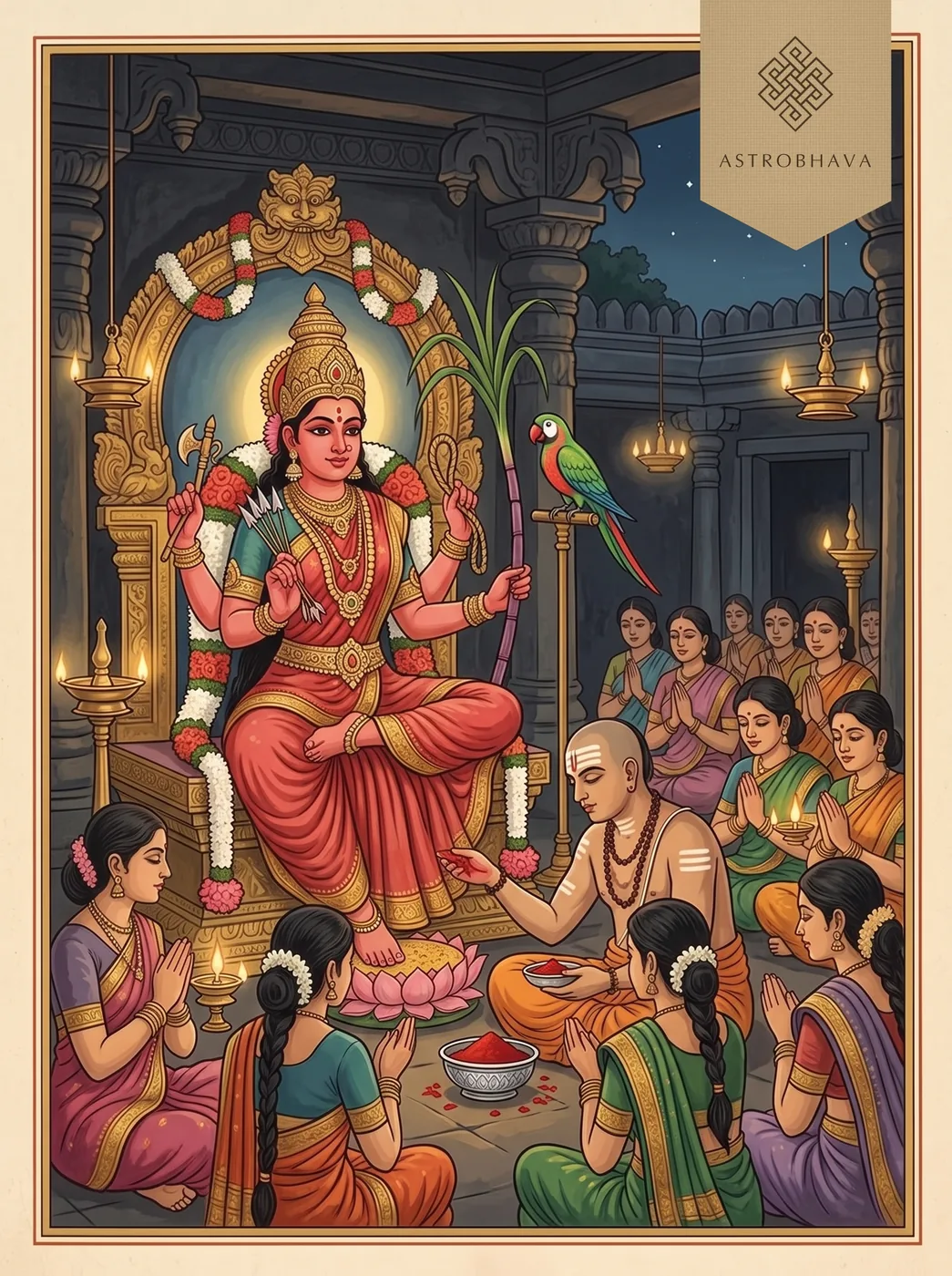
Lalitha Trishati
अतिमधुरचापहस्तामपरिमितामोदबाणसौभाग्याम् । अरुणामतिशयकरुणामभिनवकुलसुन्दरीं वन्दे ॥Also known as Kakararupa Kalyani
In Devanagari, Tamil, Telugu, Kannada, Malayalam and English — with the meaning of every word, and the one syllable most people pronounce wrongly.
 The Tripura Sundari Homa, performed for youBook →
What the Lalitha Trishati is
The Lalitha Trishati, printed as the Sri Lalitha Trishati Stotram, is a hymn of 300 names of Lalita Tripurasundari, the goddess at the centre of Sri Vidya worship. It belongs to the Lalitopakhyana part of the Brahmanda Purana's Uttara Khanda, where Hayagriva teaches it to the sage Agastya after the thousand names. A meditation verse first pictures her rosy red, holding a sugarcane bow and flower arrows. Then come 59 verses in the anushtubh metre whose order follows the fifteen syllables of her Panchadashi mantra: twenty names open with each syllable, beginning with Ka in verse 1. The mantra falls into three groups that each close on Hrim, so three runs of names are built on that syllable. The last run, verses 54 to 59, places her inside Hrim as a pearl in its oyster, a lamp in its courtyard, a sword in its sheath. Verses 47 to 50 are given wholly to her bond with Kameshvara, her consort.
Three years of silence before the names
The Purva Pithika, the 28-verse introduction printed before the hymn in most editions, opens just after Agastya has received the thousand names. He tells Hayagriva that he has heard everything worth hearing, yet his mind is still unsatisfied, and asks for the full meaning and whatever remains to be known. Hayagriva, remembering an instruction from Lalita, will not answer. According to the text, teacher and pupil stay in that standoff for three years while onlookers marvel at it. Lalita then appears with Kameshvara. She recalls that her sixteen-syllable vidya must not be handed out lightly, but she names Agastya and his wife Lopamudra as her devotees and commands that the names be revealed. Hayagriva raises Agastya up and declares that no devotee of Lalita in the three worlds equals him. He calls the coming hymn more secret than the thousand names, says its 300 names are arranged by the syllables of the fifteen-syllable mantra beginning with Ka, and asks Agastya to listen with a one-pointed mind, since every name is both a name and a mantra. Within the hymn, verse 50 calls her Kamakotinilaya, the one who dwells in Kamakoti, the seat of the goddess at Kanchipuram.
The mantra, in six scripts
- ककाररूपा
- kakārarūpā — form of the syllable Ka
- कल्याणी
- kalyāṇī — the auspicious one
- कल्याणगुणशालिनी
- kalyāṇaguṇaśālinī — rich in auspicious qualities
- कल्याणशैलनिलया
- kalyāṇaśailanilayā — dwelling on the auspicious mountain, Meru
- कमनीया
- kamanīyā — lovely to behold
- कलावती
- kalāvatī — full of the arts
Lalitha Trishati lyrics in full
The meditation verse and the 59 verses of the 300 names, as usually recited, without the introductory and closing chapters of the Purana.
All 60 verses, in Sanskrit, Tamil, Telugu, Kannada, Malayalam and English, each with its meaning. Choose a script:
Download the Lalitha Trishati PDFAll 60 verses with their meanings, in Sanskrit. Free to print and keep.
अतिमधुरचापहस्तामपरिमितामोदबाणसौभाग्याम् ।
अरुणामतिशयकरुणामभिनवकुलसुन्दरीं वन्दे ॥
அதிமதுரசாபஹஸ்தாமபரிமிதாமோதபாணஸௌபாக்யாம் ।
அருணாமதிஶயகருணாமபிநவகுலஸுந்தரீம் வந்தே ॥
అతిమధురచాపహస్తామపరిమితామోదబాణసౌభాగ్యామ్ ।
అరుణామతిశయకరుణామభినవకులసున్దరీం వన్దే ॥
ಅತಿಮಧುರಚಾಪಹಸ್ತಾಮಪರಿಮಿತಾಮೋದಬಾಣಸೌಭಾಗ್ಯಾಮ್ ।
ಅರುಣಾಮತಿಶಯಕರುಣಾಮಭಿನವಕುಲಸುನ್ದರೀಂ ವನ್ದೇ ॥
അതിമധുരചാപഹസ്താമപരിമിതാമോദബാണസൌഭാഗ്യാമ് ।
അരുണാമതിശയകരുണാമഭിനവകുലസുന്ദരീം വന്ദേ ॥
atimadhuracāpahastāmaparimitāmodabāṇasaubhāgyām |
aruṇāmatiśayakaruṇāmabhinavakulasundarīṃ vande ||
I bow to the Goddess who holds a very sweet bow of sugarcane and arrows of flowers whose fragrance and grace are beyond measure. She is rosy red in colour, overflowing with compassion, ever-young, the beauty of the Kula tradition.
ककाररूपा कल्याणी कल्याणगुणशालिनी ।
कल्याणशैलनिलया कमनीया कलावती ॥
ககாரரூபா கல்யாணீ கல்யாணகுணஶாலிநீ ।
கல்யாணஶைலநிலயா கமநீயா கலாவதீ ॥
కకారరూపా కల్యాణీ కల్యాణగుణశాలినీ ।
కల్యాణశైలనిలయా కమనీయా కలావతీ ॥
ಕಕಾರರೂಪಾ ಕಲ್ಯಾಣೀ ಕಲ್ಯಾಣಗುಣಶಾಲಿನೀ ।
ಕಲ್ಯಾಣಶೈಲನಿಲಯಾ ಕಮನೀಯಾ ಕಲಾವತೀ ॥
കകാരരൂപാ കല്യാണീ കല്യാണഗുണശാലിനീ ।
കല്യാണശൈലനിലയാ കമനീയാ കലാവതീ ॥
kakārarūpā kalyāṇī kalyāṇaguṇaśālinī |
kalyāṇaśailanilayā kamanīyā kalāvatī ||
She is the form of the syllable Ka, the auspicious one, rich in auspicious qualities. She dwells on the auspicious mountain (Meru), is lovely to behold, and is full of the arts.
कमलाक्षी कल्मषघ्नी करुणामृतसागरा ।
कदम्बकाननावासा कदम्बकुसुमप्रिया ॥
கமலாக்ஷீ கல்மஷக்நீ கருணாம்ருதஸாகரா ।
கதம்பகாநநாவாஸா கதம்பகுஸுமப்ரியா ॥
కమలాక్షీ కల్మషఘ్నీ కరుణామృతసాగరా ।
కదమ్బకాననావాసా కదమ్బకుసుమప్రియా ॥
ಕಮಲಾಕ್ಷೀ ಕಲ್ಮಷಘ್ನೀ ಕರುಣಾಮೃತಸಾಗರಾ ।
ಕದಮ್ಬಕಾನನಾವಾಸಾ ಕದಮ್ಬಕುಸುಮಪ್ರಿಯಾ ॥
കമലാക്ഷീ കല്മഷഘ്നീ കരുണാമൃതസാഗരാ ।
കദമ്ബകാനനാവാസാ കദമ്ബകുസുമപ്രിയാ ॥
kamalākṣī kalmaṣaghnī karuṇāmṛtasāgarā |
kadambakānanāvāsā kadambakusumapriyā ||
She is lotus-eyed and destroys impurity; she is an ocean of the nectar of compassion. She lives in a forest of kadamba trees and loves the kadamba flower.
कन्दर्पविद्या कन्दर्पजनकापाङ्गवीक्षणा ।
कर्पूरवीटीसौरभ्यकल्लोलितककुप्तटा ॥
கந்தர்பவித்யா கந்தர்பஜநகாபாங்கவீக்ஷணா ।
கர்பூரவீடீஸௌரப்யகல்லோலிதககுப்தடா ॥
కన్దర్పవిద్యా కన్దర్పజనకాపాఙ్గవీక్షణా ।
కర్పూరవీటీసౌరభ్యకల్లోలితకకుప్తటా ॥
ಕನ್ದರ್ಪವಿದ್ಯಾ ಕನ್ದರ್ಪಜನಕಾಪಾಙ್ಗವೀಕ್ಷಣಾ ।
ಕರ್ಪೂರವೀಟೀಸೌರಭ್ಯಕಲ್ಲೋಲಿತಕಕುಪ್ತಟಾ ॥
കന്ദര്പവിദ്യാ കന്ദര്പജനകാപാങ്ഗവീക്ഷണാ ।
കര്പൂരവീടീസൌരഭ്യകല്ലോലിതകകുപ്തടാ ॥
kandarpavidyā kandarpajanakāpāṅgavīkṣaṇā |
karpūravīṭīsaurabhyakallolitakakuptaṭā ||
She is the secret knowledge of Kama, and her side glance gave birth to Kama again. The fragrance of the camphor betel she chews spreads in waves to the ends of the directions.
कलिदोषहरा कञ्जलोचना कम्रविग्रहा ।
कर्मादिसाक्षिणी कारयित्री कर्मफलप्रदा ॥
கலிதோஷஹரா கஞ்ஜலோசநா கம்ரவிக்ரஹா ।
கர்மாதிஸாக்ஷிணீ காரயித்ரீ கர்மபலப்ரதா ॥
కలిదోషహరా కఞ్జలోచనా కమ్రవిగ్రహా ।
కర్మాదిసాక్షిణీ కారయిత్రీ కర్మఫలప్రదా ॥
ಕಲಿದೋಷಹರಾ ಕಞ್ಜಲೋಚನಾ ಕಮ್ರವಿಗ್ರಹಾ ।
ಕರ್ಮಾದಿಸಾಕ್ಷಿಣೀ ಕಾರಯಿತ್ರೀ ಕರ್ಮಫಲಪ್ರದಾ ॥
കലിദോഷഹരാ കഞ്ജലോചനാ കമ്രവിഗ്രഹാ ।
കര്മാദിസാക്ഷിണീ കാരയിത്രീ കര്മഫലപ്രദാ ॥
kalidoṣaharā kañjalocanā kamravigrahā |
karmādisākṣiṇī kārayitrī karmaphalapradā ||
She removes the faults of the Kali age; her eyes are like lotuses and her form is graceful. She witnesses every action from its start, prompts beings to act, and gives the fruit of actions.
एकाररूपा चैकाक्षर्येकानेकाक्षराकृतिः ।
एतत्तदित्यनिर्देश्या चैकानन्दचिदाकृतिः ॥
ஏகாரரூபா சைகாக்ஷர்யேகாநேகாக்ஷராக்ருதிஃ ।
ஏதத்ததித்யநிர்தேஶ்யா சைகாநந்தசிதாக்ருதிஃ ॥
ఏకారరూపా చైకాక్షర్యేకానేకాక్షరాకృతిః ।
ఏతత్తదిత్యనిర్దేశ్యా చైకానన్దచిదాకృతిః ॥
ಏಕಾರರೂಪಾ ಚೈಕಾಕ್ಷರ್ಯೇಕಾನೇಕಾಕ್ಷರಾಕೃತಿಃ ।
ಏತತ್ತದಿತ್ಯನಿರ್ದೇಶ್ಯಾ ಚೈಕಾನನ್ದಚಿದಾಕೃತಿಃ ॥
ഏകാരരൂപാ ചൈകാക്ഷര്യേകാനേകാക്ഷരാകൃതിഃ ।
ഏതത്തദിത്യനിര്ദേശ്യാ ചൈകാനന്ദചിദാകൃതിഃ ॥
ekārarūpā caikākṣaryekānekākṣarākṛtiḥ |
etattadityanirdeśyā caikānandacidākṛtiḥ ||
She is the form of the syllable E; she is the one-syllabled mantra and also takes the form of mantras of one and of many syllables. She cannot be pointed out as 'this' or 'that', and her form is the one bliss of consciousness.
एवमित्यागमाबोध्या चैकभक्तिमदर्चिता ।
एकाग्रचित्तनिर्ध्याता चैषणारहितादृता ॥
ஏவமித்யாகமாபோத்யா சைகபக்திமதர்சிதா ।
ஏகாக்ரசித்தநிர்த்யாதா சைஷணாரஹிதாத்ருதா ॥
ఏవమిత్యాగమాబోధ్యా చైకభక్తిమదర్చితా ।
ఏకాగ్రచిత్తనిర్ధ్యాతా చైషణారహితాదృతా ॥
ಏವಮಿತ್ಯಾಗಮಾಬೋಧ್ಯಾ ಚೈಕಭಕ್ತಿಮದರ್ಚಿತಾ ।
ಏಕಾಗ್ರಚಿತ್ತನಿರ್ಧ್ಯಾತಾ ಚೈಷಣಾರಹಿತಾದೃತಾ ॥
ഏവമിത്യാഗമാബോധ്യാ ചൈകഭക്തിമദര്ചിതാ ।
ഏകാഗ്രചിത്തനിര്ധ്യാതാ ചൈഷണാരഹിതാദൃതാ ॥
evamityāgamābodhyā caikabhaktimadarcitā |
ekāgracittanirdhyātā caiṣaṇārahitādṛtā ||
Scripture cannot fully convey her even by saying 'thus'; she is worshipped by those whose devotion is single-pointed. She is meditated on by the one-pointed mind and honoured by those free from cravings.
एलासुगन्धिचिकुरा चैनःकूटविनाशिनी ।
एकभोगा चैकरसा चैकैश्वर्यप्रदायिनी ॥
ஏலாஸுகந்திசிகுரா சைநஃகூடவிநாஶிநீ ।
ஏகபோகா சைகரஸா சைகைஶ்வர்யப்ரதாயிநீ ॥
ఏలాసుగన్ధిచికురా చైనఃకూటవినాశినీ ।
ఏకభోగా చైకరసా చైకైశ్వర్యప్రదాయినీ ॥
ಏಲಾಸುಗನ್ಧಿಚಿಕುರಾ ಚೈನಃಕೂಟವಿನಾಶಿನೀ ।
ಏಕಭೋಗಾ ಚೈಕರಸಾ ಚೈಕೈಶ್ವರ್ಯಪ್ರದಾಯಿನೀ ॥
ഏലാസുഗന്ധിചികുരാ ചൈനഃകൂടവിനാശിനീ ।
ഏകഭോഗാ ചൈകരസാ ചൈകൈശ്വര്യപ്രദായിനീ ॥
elāsugandhicikurā cainaḥkūṭavināśinī |
ekabhogā caikarasā caikaiśvaryapradāyinī ||
Her hair has the scent of cardamom and she destroys heaps of sin. She is the one enjoyer and the one essence, and she grants sole sovereignty.
एकातपत्रसाम्राज्यप्रदा चैकान्तपूजिता ।
एधमानप्रभा चैजदनेकजगदीश्वरी ॥
ஏகாதபத்ரஸாம்ராஜ்யப்ரதா சைகாந்தபூஜிதா ।
ஏதமாநப்ரபா சைஜதநேகஜகதீஶ்வரீ ॥
ఏకాతపత్రసామ్రాజ్యప్రదా చైకాన్తపూజితా ।
ఏధమానప్రభా చైజదనేకజగదీశ్వరీ ॥
ಏಕಾತಪತ್ರಸಾಮ್ರಾಜ್ಯಪ್ರದಾ ಚೈಕಾನ್ತಪೂಜಿತಾ ।
ಏಧಮಾನಪ್ರಭಾ ಚೈಜದನೇಕಜಗದೀಶ್ವರೀ ॥
ഏകാതപത്രസാമ്രാജ്യപ്രദാ ചൈകാന്തപൂജിതാ ।
ഏധമാനപ്രഭാ ചൈജദനേകജഗദീശ്വരീ ॥
ekātapatrasāmrājyapradā caikāntapūjitā |
edhamānaprabhā caijadanekajagadīśvarī ||
She grants an empire under a single royal umbrella and is worshipped in solitude. Her radiance keeps growing, and she rules the many moving worlds.
एकवीरादिसंसेव्या चैकप्राभवशालिनी ।
ईकाररूपा चेशित्री चेप्सितार्थप्रदायिनी ॥
ஏகவீராதிஸம்ஸேவ்யா சைகப்ராபவஶாலிநீ ।
ஈகாரரூபா சேஶித்ரீ சேப்ஸிதார்தப்ரதாயிநீ ॥
ఏకవీరాదిసంసేవ్యా చైకప్రాభవశాలినీ ।
ఈకారరూపా చేశిత్రీ చేప్సితార్థప్రదాయినీ ॥
ಏಕವೀರಾದಿಸಂಸೇವ್ಯಾ ಚೈಕಪ್ರಾಭವಶಾಲಿನೀ ।
ಈಕಾರರೂಪಾ ಚೇಶಿತ್ರೀ ಚೇಪ್ಸಿತಾರ್ಥಪ್ರದಾಯಿನೀ ॥
ഏകവീരാദിസംസേവ്യാ ചൈകപ്രാഭവശാലിനീ ।
ഈകാരരൂപാ ചേശിത്രീ ചേപ്സിതാര്ഥപ്രദായിനീ ॥
ekavīrādisaṃsevyā caikaprābhavaśālinī |
īkārarūpā ceśitrī cepsitārthapradāyinī ||
She is served by Ekavira and other deities and has unrivalled power. She is the form of the syllable I, the ruler, who grants what is desired.
ईदृगित्यविनिर्देश्या चेश्वरत्वविधायिनी ।
ईशानादिब्रह्ममयी चेशित्वाद्यष्टसिद्धिदा ॥
ஈத்ருகித்யவிநிர்தேஶ்யா சேஶ்வரத்வவிதாயிநீ ।
ஈஶாநாதிப்ரஹ்மமயீ சேஶித்வாத்யஷ்டஸித்திதா ॥
ఈదృగిత్యవినిర్దేశ్యా చేశ్వరత్వవిధాయినీ ।
ఈశానాదిబ్రహ్మమయీ చేశిత్వాద్యష్టసిద్ధిదా ॥
ಈದೃಗಿತ್ಯವಿನಿರ್ದೇಶ್ಯಾ ಚೇಶ್ವರತ್ವವಿಧಾಯಿನೀ ।
ಈಶಾನಾದಿಬ್ರಹ್ಮಮಯೀ ಚೇಶಿತ್ವಾದ್ಯಷ್ಟಸಿದ್ಧಿದಾ ॥
ഈദൃഗിത്യവിനിര്ദേശ്യാ ചേശ്വരത്വവിധായിനീ ।
ഈശാനാദിബ്രഹ്മമയീ ചേശിത്വാദ്യഷ്ടസിദ്ധിദാ ॥
īdṛgityavinirdeśyā ceśvaratvavidhāyinī |
īśānādibrahmamayī ceśitvādyaṣṭasiddhidā ||
She cannot be described as 'such and such', and she confers lordship. She is made of the five Brahmas beginning with Ishana, and grants the eight powers beginning with mastery.
ईक्षित्रीक्षणसृष्टाण्डकोटिरीश्वरवल्लभा ।
ईडिता चेश्वरार्धाङ्गशरीरेशाधिदेवता ॥
ஈக்ஷித்ரீக்ஷணஸ்ருஷ்டாண்டகோடிரீஶ்வரவல்லபா ।
ஈடிதா சேஶ்வரார்தாங்கஶரீரேஶாதிதேவதா ॥
ఈక్షిత్రీక్షణసృష్టాణ్డకోటిరీశ్వరవల్లభా ।
ఈడితా చేశ్వరార్ధాఙ్గశరీరేశాధిదేవతా ॥
ಈಕ್ಷಿತ್ರೀಕ್ಷಣಸೃಷ್ಟಾಣ್ಡಕೋಟಿರೀಶ್ವರವಲ್ಲಭಾ ।
ಈಡಿತಾ ಚೇಶ್ವರಾರ್ಧಾಙ್ಗಶರೀರೇಶಾಧಿದೇವತಾ ॥
ഈക്ഷിത്രീക്ഷണസൃഷ്ടാണ്ഡകോടിരീശ്വരവല്ലഭാ ।
ഈഡിതാ ചേശ്വരാര്ധാങ്ഗശരീരേശാധിദേവതാ ॥
īkṣitrīkṣaṇasṛṣṭāṇḍakoṭirīśvaravallabhā |
īḍitā ceśvarārdhāṅgaśarīreśādhidevatā ||
By her mere glance she creates millions of universes, and she is the beloved of the Lord (Shiva). She is praised, and is the presiding deity of the body that is half Shiva.
ईश्वरप्रेरणकरी चेशताण्डवसाक्षिणी ।
ईश्वरोत्सङ्गनिलया चेतिबाधाविनाशिनी ॥
ஈஶ்வரப்ரேரணகரீ சேஶதாண்டவஸாக்ஷிணீ ।
ஈஶ்வரோத்ஸங்கநிலயா சேதிபாதாவிநாஶிநீ ॥
ఈశ్వరప్రేరణకరీ చేశతాణ్డవసాక్షిణీ ।
ఈశ్వరోత్సఙ్గనిలయా చేతిబాధావినాశినీ ॥
ಈಶ್ವರಪ್ರೇರಣಕರೀ ಚೇಶತಾಣ್ಡವಸಾಕ್ಷಿಣೀ ।
ಈಶ್ವರೋತ್ಸಙ್ಗನಿಲಯಾ ಚೇತಿಬಾಧಾವಿನಾಶಿನೀ ॥
ഈശ്വരപ്രേരണകരീ ചേശതാണ്ഡവസാക്ഷിണീ ।
ഈശ്വരോത്സങ്ഗനിലയാ ചേതിബാധാവിനാശിനീ ॥
īśvarapreraṇakarī ceśatāṇḍavasākṣiṇī |
īśvarotsaṅganilayā cetibādhāvināśinī ||
She moves Shiva to act and witnesses his cosmic dance. She sits on Shiva's lap and removes calamities.
ईहाविरहिता चेशशक्तिरीषत्स्मितानना ।
लकाररूपा ललिता लक्ष्मीवाणीनिषेविता ॥
ஈஹாவிரஹிதா சேஶஶக்திரீஷத்ஸ்மிதாநநா ।
லகாரரூபா லலிதா லக்ஷ்மீவாணீநிஷேவிதா ॥
ఈహావిరహితా చేశశక్తిరీషత్స్మితాననా ।
లకారరూపా లలితా లక్ష్మీవాణీనిషేవితా ॥
ಈಹಾವಿರಹಿತಾ ಚೇಶಶಕ್ತಿರೀಷತ್ಸ್ಮಿತಾನನಾ ।
ಲಕಾರರೂಪಾ ಲಲಿತಾ ಲಕ್ಷ್ಮೀವಾಣೀನಿಷೇವಿತಾ ॥
ഈഹാവിരഹിതാ ചേശശക്തിരീഷത്സ്മിതാനനാ ।
ലകാരരൂപാ ലലിതാ ലക്ഷ്മീവാണീനിഷേവിതാ ॥
īhāvirahitā ceśaśaktirīṣatsmitānanā |
lakārarūpā lalitā lakṣmīvāṇīniṣevitā ||
She is free of desire, the power of the Lord, with a gently smiling face. She is the form of the syllable La; she is Lalita, attended by Lakshmi and Saraswati.
लाकिनी ललनारूपा लसद्दाडिमपाटला ।
ललन्तिकालसत्फाला ललाटनयनार्चिता ॥
லாகிநீ லலநாரூபா லஸத்தாடிமபாடலா ।
லலந்திகாலஸத்பாலா லலாடநயநார்சிதா ॥
లాకినీ లలనారూపా లసద్దాడిమపాటలా ।
లలన్తికాలసత్ఫాలా లలాటనయనార్చితా ॥
ಲಾಕಿನೀ ಲಲನಾರೂಪಾ ಲಸದ್ದಾಡಿಮಪಾಟಲಾ ।
ಲಲನ್ತಿಕಾಲಸತ್ಫಾಲಾ ಲಲಾಟನಯನಾರ್ಚಿತಾ ॥
ലാകിനീ ലലനാരൂപാ ലസദ്ദാഡിമപാടലാ ।
ലലന്തികാലസത്ഫാലാ ലലാടനയനാര്ചിതാ ॥
lākinī lalanārūpā lasaddāḍimapāṭalā |
lalantikālasatphālā lalāṭanayanārcitā ||
She is Lakini, a woman in form, rosy as a bright pomegranate flower. Her forehead shines with an ornament, and she is worshipped by Shiva with an eye on his forehead.
लक्षणोज्ज्वलदिव्याङ्गी लक्षकोट्यण्डनायिका ।
लक्ष्यार्था लक्षणागम्या लब्धकामा लतातनुः ॥
லக்ஷணோஜ்ஜ்வலதிவ்யாங்கீ லக்ஷகோட்யண்டநாயிகா ।
லக்ஷ்யார்தா லக்ஷணாகம்யா லப்தகாமா லதாதநுஃ ॥
లక్షణోజ్జ్వలదివ్యాఙ్గీ లక్షకోట్యణ్డనాయికా ।
లక్ష్యార్థా లక్షణాగమ్యా లబ్ధకామా లతాతనుః ॥
ಲಕ್ಷಣೋಜ್ಜ್ವಲದಿವ್ಯಾಙ್ಗೀ ಲಕ್ಷಕೋಟ್ಯಣ್ಡನಾಯಿಕಾ ।
ಲಕ್ಷ್ಯಾರ್ಥಾ ಲಕ್ಷಣಾಗಮ್ಯಾ ಲಬ್ಧಕಾಮಾ ಲತಾತನುಃ ॥
ലക്ഷണോജ്ജ്വലദിവ്യാങ്ഗീ ലക്ഷകോട്യണ്ഡനായികാ ।
ലക്ഷ്യാര്ഥാ ലക്ഷണാഗമ്യാ ലബ്ധകാമാ ലതാതനുഃ ॥
lakṣaṇojjvaladivyāṅgī lakṣakoṭyaṇḍanāyikā |
lakṣyārthā lakṣaṇāgamyā labdhakāmā latātanuḥ ||
Her divine limbs glow with every auspicious mark; she rules over countless universes. She is the meaning to be indicated, reached only by indication, one whose desires are fulfilled, slender as a creeper.
ललामराजदलिका लम्बिमुक्तालताञ्चिता ।
लम्बोदरप्रसूर्लभ्या लज्जाढ्या लयवर्जिता ॥
லலாமராஜதலிகா லம்பிமுக்தாலதாஞ்சிதா ।
லம்போதரப்ரஸூர்லப்யா லஜ்ஜாட்யா லயவர்ஜிதா ॥
లలామరాజదలికా లమ్బిముక్తాలతాఞ్చితా ।
లమ్బోదరప్రసూర్లభ్యా లజ్జాఢ్యా లయవర్జితా ॥
ಲಲಾಮರಾಜದಲಿಕಾ ಲಮ್ಬಿಮುಕ್ತಾಲತಾಞ್ಚಿತಾ ।
ಲಮ್ಬೋದರಪ್ರಸೂರ್ಲಭ್ಯಾ ಲಜ್ಜಾಢ್ಯಾ ಲಯವರ್ಜಿತಾ ॥
ലലാമരാജദലികാ ലമ്ബിമുക്താലതാഞ്ചിതാ ।
ലമ്ബോദരപ്രസൂര്ലഭ്യാ ലജ്ജാഢ്യാ ലയവര്ജിതാ ॥
lalāmarājadalikā lambimuktālatāñcitā |
lambodaraprasūrlabhyā lajjāḍhyā layavarjitā ||
Her forehead is adorned with a fine mark and she wears long strings of pearls. She is the mother of Ganesha, attainable by devotion, full of modesty, and beyond dissolution.
ह्रींकाररूपा ह्रींकारनिलया ह्रींपदप्रिया ।
ह्रींकारबीजा ह्रींकारमन्त्रा ह्रींकारलक्षणा ॥
ஹ்ரீம்காரரூபா ஹ்ரீம்காரநிலயா ஹ்ரீம்பதப்ரியா ।
ஹ்ரீம்காரபீஜா ஹ்ரீம்காரமந்த்ரா ஹ்ரீம்காரலக்ஷணா ॥
హ్రీంకారరూపా హ్రీంకారనిలయా హ్రీంపదప్రియా ।
హ్రీంకారబీజా హ్రీంకారమన్త్రా హ్రీంకారలక్షణా ॥
ಹ್ರೀಂಕಾರರೂಪಾ ಹ್ರೀಂಕಾರನಿಲಯಾ ಹ್ರೀಂಪದಪ್ರಿಯಾ ।
ಹ್ರೀಂಕಾರಬೀಜಾ ಹ್ರೀಂಕಾರಮನ್ತ್ರಾ ಹ್ರೀಂಕಾರಲಕ್ಷಣಾ ॥
ഹ്രീംകാരരൂപാ ഹ്രീംകാരനിലയാ ഹ്രീംപദപ്രിയാ ।
ഹ്രീംകാരബീജാ ഹ്രീംകാരമന്ത്രാ ഹ്രീംകാരലക്ഷണാ ॥
hrīṃkārarūpā hrīṃkāranilayā hrīṃpadapriyā |
hrīṃkārabījā hrīṃkāramantrā hrīṃkāralakṣaṇā ||
She is the form of the syllable Hrim, dwells in Hrim and loves the word Hrim. Hrim is her seed, her mantra and her sign.
ह्रींकारजपसुप्रीता ह्रींमती ह्रींविभूषणा ।
ह्रींशीला ह्रींपदाराध्या ह्रींगर्भा ह्रींपदाभिधा ॥
ஹ்ரீம்காரஜபஸுப்ரீதா ஹ்ரீம்மதீ ஹ்ரீம்விபூஷணா ।
ஹ்ரீம்ஶீலா ஹ்ரீம்பதாராத்யா ஹ்ரீம்கர்பா ஹ்ரீம்பதாபிதா ॥
హ్రీంకారజపసుప్రీతా హ్రీంమతీ హ్రీంవిభూషణా ।
హ్రీంశీలా హ్రీంపదారాధ్యా హ్రీంగర్భా హ్రీంపదాభిధా ॥
ಹ್ರೀಂಕಾರಜಪಸುಪ್ರೀತಾ ಹ್ರೀಂಮತೀ ಹ್ರೀಂವಿಭೂಷಣಾ ।
ಹ್ರೀಂಶೀಲಾ ಹ್ರೀಂಪದಾರಾಧ್ಯಾ ಹ್ರೀಂಗರ್ಭಾ ಹ್ರೀಂಪದಾಭಿಧಾ ॥
ഹ്രീംകാരജപസുപ്രീതാ ഹ്രീംമതീ ഹ്രീംവിഭൂഷണാ ।
ഹ്രീംശീലാ ഹ്രീംപദാരാധ്യാ ഹ്രീംഗര്ഭാ ഹ്രീംപദാഭിധാ ॥
hrīṃkārajapasuprītā hrīṃmatī hrīṃvibhūṣaṇā |
hrīṃśīlā hrīṃpadārādhyā hrīṃgarbhā hrīṃpadābhidhā ||
She is pleased by the japa of Hrim, possesses Hrim and is adorned by Hrim. Hrim is her nature; she is worshipped through Hrim, holds Hrim within her and is named by Hrim.
ह्रींकारवाच्या ह्रींकारपूज्या ह्रींकारपीठिका ।
ह्रींकारवेद्या ह्रींकारचिन्त्या ह्रीं ह्रींशरीरिणी ॥
ஹ்ரீம்காரவாச்யா ஹ்ரீம்காரபூஜ்யா ஹ்ரீம்காரபீடிகா ।
ஹ்ரீம்காரவேத்யா ஹ்ரீம்காரசிந்த்யா ஹ்ரீம் ஹ்ரீம்ஶரீரிணீ ॥
హ్రీంకారవాచ్యా హ్రీంకారపూజ్యా హ్రీంకారపీఠికా ।
హ్రీంకారవేద్యా హ్రీంకారచిన్త్యా హ్రీం హ్రీంశరీరిణీ ॥
ಹ್ರೀಂಕಾರವಾಚ್ಯಾ ಹ್ರೀಂಕಾರಪೂಜ್ಯಾ ಹ್ರೀಂಕಾರಪೀಠಿಕಾ ।
ಹ್ರೀಂಕಾರವೇದ್ಯಾ ಹ್ರೀಂಕಾರಚಿನ್ತ್ಯಾ ಹ್ರೀಂ ಹ್ರೀಂಶರೀರಿಣೀ ॥
ഹ്രീംകാരവാച്യാ ഹ്രീംകാരപൂജ്യാ ഹ്രീംകാരപീഠികാ ।
ഹ്രീംകാരവേദ്യാ ഹ്രീംകാരചിന്ത്യാ ഹ്രീം ഹ്രീംശരീരിണീ ॥
hrīṃkāravācyā hrīṃkārapūjyā hrīṃkārapīṭhikā |
hrīṃkāravedyā hrīṃkāracintyā hrīṃ hrīṃśarīriṇī ||
She is expressed, worshipped and seated in Hrim. She is known and meditated upon through Hrim; she is Hrim itself and has Hrim for her body.
हकाररूपा हलधृत्पूजिता हरिणेक्षणा ।
हरप्रिया हराराध्या हरिब्रह्मेन्द्रवन्दिता ॥
ஹகாரரூபா ஹலத்ருத்பூஜிதா ஹரிணேக்ஷணா ।
ஹரப்ரியா ஹராராத்யா ஹரிப்ரஹ்மேந்த்ரவந்திதா ॥
హకారరూపా హలధృత్పూజితా హరిణేక్షణా ।
హరప్రియా హరారాధ్యా హరిబ్రహ్మేన్ద్రవన్దితా ॥
ಹಕಾರರೂಪಾ ಹಲಧೃತ್ಪೂಜಿತಾ ಹರಿಣೇಕ್ಷಣಾ ।
ಹರಪ್ರಿಯಾ ಹರಾರಾಧ್ಯಾ ಹರಿಬ್ರಹ್ಮೇನ್ದ್ರವನ್ದಿತಾ ॥
ഹകാരരൂപാ ഹലധൃത്പൂജിതാ ഹരിണേക്ഷണാ ।
ഹരപ്രിയാ ഹരാരാധ്യാ ഹരിബ്രഹ്മേന്ദ്രവന്ദിതാ ॥
hakārarūpā haladhṛtpūjitā hariṇekṣaṇā |
harapriyā harārādhyā haribrahmendravanditā ||
She is the form of the syllable Ha, worshipped by the plough-bearer (Balarama), with eyes like a doe. She is dear to Shiva, worshipped by him, and saluted by Vishnu, Brahma and Indra.
हयारूढासेविताङ्घ्रिर्हयमेधसमर्चिता ।
हर्यक्षवाहना हंसवाहना हतदानवा ॥
ஹயாரூடாஸேவிதாங்க்ரிர்ஹயமேதஸமர்சிதா ।
ஹர்யக்ஷவாஹநா ஹம்ஸவாஹநா ஹததாநவா ॥
హయారూఢాసేవితాఙ్ఘ్రిర్హయమేధసమర్చితా ।
హర్యక్షవాహనా హంసవాహనా హతదానవా ॥
ಹಯಾರೂಢಾಸೇವಿತಾಙ್ಘ್ರಿರ್ಹಯಮೇಧಸಮರ್ಚಿತಾ ।
ಹರ್ಯಕ್ಷವಾಹನಾ ಹಂಸವಾಹನಾ ಹತದಾನವಾ ॥
ഹയാരൂഢാസേവിതാങ്ഘ്രിര്ഹയമേധസമര്ചിതാ ।
ഹര്യക്ഷവാഹനാ ഹംസവാഹനാ ഹതദാനവാ ॥
hayārūḍhāsevitāṅghrirhayamedhasamarcitā |
haryakṣavāhanā haṃsavāhanā hatadānavā ||
Her feet are served by those who ride horses, and she is worshipped with the horse sacrifice. She rides the lion and the swan, and she has slain the demons.
हत्यादिपापशमनी हरिदश्वादिसेविता ।
हस्तिकुम्भोत्तुङ्गकुचा हस्तिकृत्तिप्रियाङ्गना ॥
ஹத்யாதிபாபஶமநீ ஹரிதஶ்வாதிஸேவிதா ।
ஹஸ்திகும்போத்துங்ககுசா ஹஸ்திக்ருத்திப்ரியாங்கநா ॥
హత్యాదిపాపశమనీ హరిదశ్వాదిసేవితా ।
హస్తికుమ్భోత్తుఙ్గకుచా హస్తికృత్తిప్రియాఙ్గనా ॥
ಹತ್ಯಾದಿಪಾಪಶಮನೀ ಹರಿದಶ್ವಾದಿಸೇವಿತಾ ।
ಹಸ್ತಿಕುಮ್ಭೋತ್ತುಙ್ಗಕುಚಾ ಹಸ್ತಿಕೃತ್ತಿಪ್ರಿಯಾಙ್ಗನಾ ॥
ഹത്യാദിപാപശമനീ ഹരിദശ്വാദിസേവിതാ ।
ഹസ്തികുമ്ഭോത്തുങ്ഗകുചാ ഹസ്തികൃത്തിപ്രിയാങ്ഗനാ ॥
hatyādipāpaśamanī haridaśvādisevitā |
hastikumbhottuṅgakucā hastikṛttipriyāṅganā ||
She removes sins such as killing, and is served by the Sun and others. She is the consort of Shiva, who wears the elephant hide.
हरिद्राकुङ्कुमादिग्धा हर्यश्वाद्यमरार्चिता ।
हरिकेशसखी हादिविद्या हालामदालसा ॥
ஹரித்ராகுங்குமாதிக்தா ஹர்யஶ்வாத்யமரார்சிதா ।
ஹரிகேஶஸகீ ஹாதிவித்யா ஹாலாமதாலஸா ॥
హరిద్రాకుఙ్కుమాదిగ్ధా హర్యశ్వాద్యమరార్చితా ।
హరికేశసఖీ హాదివిద్యా హాలామదాలసా ॥
ಹರಿದ್ರಾಕುಙ್ಕುಮಾದಿಗ್ಧಾ ಹರ್ಯಶ್ವಾದ್ಯಮರಾರ್ಚಿತಾ ।
ಹರಿಕೇಶಸಖೀ ಹಾದಿವಿದ್ಯಾ ಹಾಲಾಮದಾಲಸಾ ॥
ഹരിദ്രാകുങ്കുമാദിഗ്ധാ ഹര്യശ്വാദ്യമരാര്ചിതാ ।
ഹരികേശസഖീ ഹാദിവിദ്യാ ഹാലാമദാലസാ ॥
haridrākuṅkumādigdhā haryaśvādyamarārcitā |
harikeśasakhī hādividyā hālāmadālasā ||
She is anointed with turmeric and kumkum and worshipped by Indra and the other gods. She is the friend of Vishnu, the Hadi Vidya (the mantra beginning with Ha), and languid with divine bliss.
सकाररूपा सर्वज्ञा सर्वेशी सर्वमङ्गला ।
सर्वकर्त्री सर्वभर्त्री सर्वहन्त्री सनातना ॥
ஸகாரரூபா ஸர்வஜ்ஞா ஸர்வேஶீ ஸர்வமங்கலா ।
ஸர்வகர்த்ரீ ஸர்வபர்த்ரீ ஸர்வஹந்த்ரீ ஸநாதநா ॥
సకారరూపా సర్వజ్ఞా సర్వేశీ సర్వమఙ్గలా ।
సర్వకర్త్రీ సర్వభర్త్రీ సర్వహన్త్రీ సనాతనా ॥
ಸಕಾರರೂಪಾ ಸರ್ವಜ್ಞಾ ಸರ್ವೇಶೀ ಸರ್ವಮಙ್ಗಲಾ ।
ಸರ್ವಕರ್ತ್ರೀ ಸರ್ವಭರ್ತ್ರೀ ಸರ್ವಹನ್ತ್ರೀ ಸನಾತನಾ ॥
സകാരരൂപാ സര്വജ്ഞാ സര്വേശീ സര്വമങ്ഗലാ ।
സര്വകര്ത്രീ സര്വഭര്ത്രീ സര്വഹന്ത്രീ സനാതനാ ॥
sakārarūpā sarvajñā sarveśī sarvamaṅgalā |
sarvakartrī sarvabhartrī sarvahantrī sanātanā ||
She is the form of the syllable Sa; she knows all, rules all and is wholly auspicious. She creates, sustains and withdraws all, and is eternal.
सर्वानवद्या सर्वाङ्गसुन्दरी सर्वसाक्षिणी ।
सर्वात्मिका सर्वसौख्यदात्री सर्वविमोहिनी ॥
ஸர்வாநவத்யா ஸர்வாங்கஸுந்தரீ ஸர்வஸாக்ஷிணீ ।
ஸர்வாத்மிகா ஸர்வஸௌக்யதாத்ரீ ஸர்வவிமோஹிநீ ॥
సర్వానవద్యా సర్వాఙ్గసున్దరీ సర్వసాక్షిణీ ।
సర్వాత్మికా సర్వసౌఖ్యదాత్రీ సర్వవిమోహినీ ॥
ಸರ್ವಾನವದ್ಯಾ ಸರ್ವಾಙ್ಗಸುನ್ದರೀ ಸರ್ವಸಾಕ್ಷಿಣೀ ।
ಸರ್ವಾತ್ಮಿಕಾ ಸರ್ವಸೌಖ್ಯದಾತ್ರೀ ಸರ್ವವಿಮೋಹಿನೀ ॥
സര്വാനവദ്യാ സര്വാങ്ഗസുന്ദരീ സര്വസാക്ഷിണീ ।
സര്വാത്മികാ സര്വസൌഖ്യദാത്രീ സര്വവിമോഹിനീ ॥
sarvānavadyā sarvāṅgasundarī sarvasākṣiṇī |
sarvātmikā sarvasaukhyadātrī sarvavimohinī ||
She is wholly faultless, beautiful in every limb, and the witness of all. She is the self of all, gives every happiness and enchants all.
सर्वाधारा सर्वगता सर्वावगुणवर्जिता ।
सर्वारुणा सर्वमाता सर्वभूषणभूषिता ॥
ஸர்வாதாரா ஸர்வகதா ஸர்வாவகுணவர்ஜிதா ।
ஸர்வாருணா ஸர்வமாதா ஸர்வபூஷணபூஷிதா ॥
సర్వాధారా సర్వగతా సర్వావగుణవర్జితా ।
సర్వారుణా సర్వమాతా సర్వభూషణభూషితా ॥
ಸರ್ವಾಧಾರಾ ಸರ್ವಗತಾ ಸರ್ವಾವಗುಣವರ್ಜಿತಾ ।
ಸರ್ವಾರುಣಾ ಸರ್ವಮಾತಾ ಸರ್ವಭೂಷಣಭೂಷಿತಾ ॥
സര്വാധാരാ സര്വഗതാ സര്വാവഗുണവര്ജിതാ ।
സര്വാരുണാ സര്വമാതാ സര്വഭൂഷണഭൂഷിതാ ॥
sarvādhārā sarvagatā sarvāvaguṇavarjitā |
sarvāruṇā sarvamātā sarvabhūṣaṇabhūṣitā ||
She is the support of all, present everywhere and free of every flaw. She is entirely red in hue, the mother of all, adorned with every ornament.
ककारार्था कालहन्त्री कामेशी कामितार्थदा ।
कामसञ्जीविनी कल्या कठिनस्तनमण्डला ॥
ககாரார்தா காலஹந்த்ரீ காமேஶீ காமிதார்ததா ।
காமஸஞ்ஜீவிநீ கல்யா கடிநஸ்தநமண்டலா ॥
కకారార్థా కాలహన్త్రీ కామేశీ కామితార్థదా ।
కామసఞ్జీవినీ కల్యా కఠినస్తనమణ్డలా ॥
ಕಕಾರಾರ್ಥಾ ಕಾಲಹನ್ತ್ರೀ ಕಾಮೇಶೀ ಕಾಮಿತಾರ್ಥದಾ ।
ಕಾಮಸಞ್ಜೀವಿನೀ ಕಲ್ಯಾ ಕಠಿನಸ್ತನಮಣ್ಡಲಾ ॥
കകാരാര്ഥാ കാലഹന്ത്രീ കാമേശീ കാമിതാര്ഥദാ ।
കാമസഞ്ജീവിനീ കല്യാ കഠിനസ്തനമണ്ഡലാ ॥
kakārārthā kālahantrī kāmeśī kāmitārthadā |
kāmasañjīvinī kalyā kaṭhinastanamaṇḍalā ||
She is the meaning of the syllable Ka, destroyer of time (death), the consort of Kameshvara, granting what is wished for. She revived Kama, she is fit to be worshipped, and her bosom is firm.
करभोरुः कलानाथमुखी कचजिताम्बुदा ।
कटाक्षस्यन्दिकरुणा कपालिप्राणनायिका ॥
கரபோருஃ கலாநாதமுகீ கசஜிதாம்புதா ।
கடாக்ஷஸ்யந்திகருணா கபாலிப்ராணநாயிகா ॥
కరభోరుః కలానాథముఖీ కచజితామ్బుదా ।
కటాక్షస్యన్దికరుణా కపాలిప్రాణనాయికా ॥
ಕರಭೋರುಃ ಕಲಾನಾಥಮುಖೀ ಕಚಜಿತಾಮ್ಬುದಾ ।
ಕಟಾಕ್ಷಸ್ಯನ್ದಿಕರುಣಾ ಕಪಾಲಿಪ್ರಾಣನಾಯಿಕಾ ॥
കരഭോരുഃ കലാനാഥമുഖീ കചജിതാമ്ബുദാ ।
കടാക്ഷസ്യന്ദികരുണാ കപാലിപ്രാണനായികാ ॥
karabhoruḥ kalānāthamukhī kacajitāmbudā |
kaṭākṣasyandikaruṇā kapāliprāṇanāyikā ||
Her thighs are shapely, her face is like the moon, and her hair outshines the rain clouds. Compassion flows from her side glance, and she is the life-partner of Shiva who holds the skull.
कारुण्यविग्रहा कान्ता कान्तिधूतजपावलिः ।
कलालापा कम्बुकण्ठी करनिर्जितपल्लवा ॥
காருண்யவிக்ரஹா காந்தா காந்திதூதஜபாவலிஃ ।
கலாலாபா கம்புகண்டீ கரநிர்ஜிதபல்லவா ॥
కారుణ్యవిగ్రహా కాన్తా కాన్తిధూతజపావలిః ।
కలాలాపా కమ్బుకణ్ఠీ కరనిర్జితపల్లవా ॥
ಕಾರುಣ್ಯವಿಗ್ರಹಾ ಕಾನ್ತಾ ಕಾನ್ತಿಧೂತಜಪಾವಲಿಃ ।
ಕಲಾಲಾಪಾ ಕಮ್ಬುಕಣ್ಠೀ ಕರನಿರ್ಜಿತಪಲ್ಲವಾ ॥
കാരുണ്യവിഗ്രഹാ കാന്താ കാന്തിധൂതജപാവലിഃ ।
കലാലാപാ കമ്ബുകണ്ഠീ കരനിര്ജിതപല്ലവാ ॥
kāruṇyavigrahā kāntā kāntidhūtajapāvaliḥ |
kalālāpā kambukaṇṭhī karanirjitapallavā ||
She is compassion in bodily form, beloved and lovely, her radiance surpassing hibiscus flowers. Her speech is sweet, her neck is shaped like a conch, and her hands put fresh leaves to shame.
कल्पवल्लीसमभुजा कस्तूरीतिलकाञ्चिता ।
हकारार्था हंसगतिर्हाटकाभरणोज्ज्वला ॥
கல்பவல்லீஸமபுஜா கஸ்தூரீதிலகாஞ்சிதா ।
ஹகாரார்தா ஹம்ஸகதிர்ஹாடகாபரணோஜ்ஜ்வலா ॥
కల్పవల్లీసమభుజా కస్తూరీతిలకాఞ్చితా ।
హకారార్థా హంసగతిర్హాటకాభరణోజ్జ్వలా ॥
ಕಲ್ಪವಲ್ಲೀಸಮಭುಜಾ ಕಸ್ತೂರೀತಿಲಕಾಞ್ಚಿತಾ ।
ಹಕಾರಾರ್ಥಾ ಹಂಸಗತಿರ್ಹಾಟಕಾಭರಣೋಜ್ಜ್ವಲಾ ॥
കല്പവല്ലീസമഭുജാ കസ്തൂരീതിലകാഞ്ചിതാ ।
ഹകാരാര്ഥാ ഹംസഗതിര്ഹാടകാഭരണോജ്ജ്വലാ ॥
kalpavallīsamabhujā kastūrītilakāñcitā |
hakārārthā haṃsagatirhāṭakābharaṇojjvalā ||
Her arms are like wish-fulfilling creepers and she bears a musk mark on her brow. She is the meaning of the syllable Ha, with the gait of a swan, shining with golden ornaments.
हारहारिकुचाभोगा हाकिनी हल्यवर्जिता ।
हरित्पतिसमाराध्या हठात्कारहतासुरा ॥
ஹாரஹாரிகுசாபோகா ஹாகிநீ ஹல்யவர்ஜிதா ।
ஹரித்பதிஸமாராத்யா ஹடாத்காரஹதாஸுரா ॥
హారహారికుచాభోగా హాకినీ హల్యవర్జితా ।
హరిత్పతిసమారాధ్యా హఠాత్కారహతాసురా ॥
ಹಾರಹಾರಿಕುಚಾಭೋಗಾ ಹಾಕಿನೀ ಹಲ್ಯವರ್ಜಿತಾ ।
ಹರಿತ್ಪತಿಸಮಾರಾಧ್ಯಾ ಹಠಾತ್ಕಾರಹತಾಸುರಾ ॥
ഹാരഹാരികുചാഭോഗാ ഹാകിനീ ഹല്യവര്ജിതാ ।
ഹരിത്പതിസമാരാധ്യാ ഹഠാത്കാരഹതാസുരാ ॥
hārahārikucābhogā hākinī halyavarjitā |
haritpatisamārādhyā haṭhātkārahatāsurā ||
Her bosom is lovely with necklaces; she is Hakini and is free of every blemish. She is worshipped by the guardians of the directions and slew demons by force.
हर्षप्रदा हविर्भोक्त्री हार्दसन्तमसापहा ।
हल्लीसलास्यसन्तुष्टा हंसमन्त्रार्थरूपिणी ॥
ஹர்ஷப்ரதா ஹவிர்போக்த்ரீ ஹார்தஸந்தமஸாபஹா ।
ஹல்லீஸலாஸ்யஸந்துஷ்டா ஹம்ஸமந்த்ரார்தரூபிணீ ॥
హర్షప్రదా హవిర్భోక్త్రీ హార్దసన్తమసాపహా ।
హల్లీసలాస్యసన్తుష్టా హంసమన్త్రార్థరూపిణీ ॥
ಹರ್ಷಪ್ರದಾ ಹವಿರ್ಭೋಕ್ತ್ರೀ ಹಾರ್ದಸನ್ತಮಸಾಪಹಾ ।
ಹಲ್ಲೀಸಲಾಸ್ಯಸನ್ತುಷ್ಟಾ ಹಂಸಮನ್ತ್ರಾರ್ಥರೂಪಿಣೀ ॥
ഹര്ഷപ്രദാ ഹവിര്ഭോക്ത്രീ ഹാര്ദസന്തമസാപഹാ ।
ഹല്ലീസലാസ്യസന്തുഷ്ടാ ഹംസമന്ത്രാര്ഥരൂപിണീ ॥
harṣapradā havirbhoktrī hārdasantamasāpahā |
hallīsalāsyasantuṣṭā haṃsamantrārtharūpiṇī ||
She grants joy, receives the sacrificial offerings, and removes the darkness of the heart. She delights in the circular dance and is the meaning of the Hamsa mantra.
हानोपादाननिर्मुक्ता हर्षिणी हरिसोदरी ।
हाहाहूहूमुखस्तुत्या हानिवृद्धिविवर्जिता ॥
ஹாநோபாதாநநிர்முக்தா ஹர்ஷிணீ ஹரிஸோதரீ ।
ஹாஹாஹூஹூமுகஸ்துத்யா ஹாநிவ்ருத்திவிவர்ஜிதா ॥
హానోపాదాననిర్ముక్తా హర్షిణీ హరిసోదరీ ।
హాహాహూహూముఖస్తుత్యా హానివృద్ధివివర్జితా ॥
ಹಾನೋಪಾದಾನನಿರ್ಮುಕ್ತಾ ಹರ್ಷಿಣೀ ಹರಿಸೋದರೀ ।
ಹಾಹಾಹೂಹೂಮುಖಸ್ತುತ್ಯಾ ಹಾನಿವೃದ್ಧಿವಿವರ್ಜಿತಾ ॥
ഹാനോപാദാനനിര്മുക്താ ഹര്ഷിണീ ഹരിസോദരീ ।
ഹാഹാഹൂഹൂമുഖസ്തുത്യാ ഹാനിവൃദ്ധിവിവര്ജിതാ ॥
hānopādānanirmuktā harṣiṇī harisodarī |
hāhāhūhūmukhastutyā hānivṛddhivivarjitā ||
She is free of rejecting and accepting, joyful, and the sister of Vishnu. She is praised by the celestial singers Haha and Huhu, and she is beyond decrease and increase.
हय्यङ्गवीनहृदया हरिगोपारुणांशुका ।
लकाराख्या लतापूज्या लयस्थित्युद्भवेश्वरी ॥
ஹய்யங்கவீநஹ்ருதயா ஹரிகோபாருணாம்ஶுகா ।
லகாராக்யா லதாபூஜ்யா லயஸ்தித்யுத்பவேஶ்வரீ ॥
హయ్యఙ్గవీనహృదయా హరిగోపారుణాంశుకా ।
లకారాఖ్యా లతాపూజ్యా లయస్థిత్యుద్భవేశ్వరీ ॥
ಹಯ್ಯಙ್ಗವೀನಹೃದಯಾ ಹರಿಗೋಪಾರುಣಾಂಶುಕಾ ।
ಲಕಾರಾಖ್ಯಾ ಲತಾಪೂಜ್ಯಾ ಲಯಸ್ಥಿತ್ಯುದ್ಭವೇಶ್ವರೀ ॥
ഹയ്യങ്ഗവീനഹൃദയാ ഹരിഗോപാരുണാംശുകാ ।
ലകാരാഖ്യാ ലതാപൂജ്യാ ലയസ്ഥിത്യുദ്ഭവേശ്വരീ ॥
hayyaṅgavīnahṛdayā harigopāruṇāṃśukā |
lakārākhyā latāpūjyā layasthityudbhaveśvarī ||
Her heart is soft like fresh butter, and her garment is red as the indragopa (cochineal) insect. She is the meaning of the syllable La, worshipped with creepers, the ruler of dissolution, preservation and creation.
लास्यदर्शनसन्तुष्टा लाभालाभविवर्जिता ।
लङ्घ्येतराज्ञा लावण्यशालिनी लघुसिद्धिदा ॥
லாஸ்யதர்ஶநஸந்துஷ்டா லாபாலாபவிவர்ஜிதா ।
லங்க்யேதராஜ்ஞா லாவண்யஶாலிநீ லகுஸித்திதா ॥
లాస్యదర్శనసన్తుష్టా లాభాలాభవివర్జితా ।
లఙ్ఘ్యేతరాజ్ఞా లావణ్యశాలినీ లఘుసిద్ధిదా ॥
ಲಾಸ್ಯದರ್ಶನಸನ್ತುಷ್ಟಾ ಲಾಭಾಲಾಭವಿವರ್ಜಿತಾ ।
ಲಙ್ಘ್ಯೇತರಾಜ್ಞಾ ಲಾವಣ್ಯಶಾಲಿನೀ ಲಘುಸಿದ್ಧಿದಾ ॥
ലാസ്യദര്ശനസന്തുഷ്ടാ ലാഭാലാഭവിവര്ജിതാ ।
ലങ്ഘ്യേതരാജ്ഞാ ലാവണ്യശാലിനീ ലഘുസിദ്ധിദാ ॥
lāsyadarśanasantuṣṭā lābhālābhavivarjitā |
laṅghyetarājñā lāvaṇyaśālinī laghusiddhidā ||
She delights in watching dance and is beyond gain and loss. Her command cannot be crossed; she is full of loveliness and grants success easily.
लाक्षारससवर्णाभा लक्ष्मणाग्रजपूजिता ।
लभ्येतरा लब्धभक्तिसुलभा लाङ्गलायुधा ॥
லாக்ஷாரஸஸவர்ணாபா லக்ஷ்மணாக்ரஜபூஜிதா ।
லப்யேதரா லப்தபக்திஸுலபா லாங்கலாயுதா ॥
లాక్షారససవర్ణాభా లక్ష్మణాగ్రజపూజితా ।
లభ్యేతరా లబ్ధభక్తిసులభా లాఙ్గలాయుధా ॥
ಲಾಕ್ಷಾರಸಸವರ್ಣಾಭಾ ಲಕ್ಷ್ಮಣಾಗ್ರಜಪೂಜಿತಾ ।
ಲಭ್ಯೇತರಾ ಲಬ್ಧಭಕ್ತಿಸುಲಭಾ ಲಾಙ್ಗಲಾಯುಧಾ ॥
ലാക്ഷാരസസവര്ണാഭാ ലക്ഷ്മണാഗ്രജപൂജിതാ ।
ലഭ്യേതരാ ലബ്ധഭക്തിസുലഭാ ലാങ്ഗലായുധാ ॥
lākṣārasasavarṇābhā lakṣmaṇāgrajapūjitā |
labhyetarā labdhabhaktisulabhā lāṅgalāyudhā ||
Her complexion is the colour of lac dye and she was worshipped by Rama, the elder brother of Lakshmana. She cannot be obtained otherwise, is easily reached by those with devotion, and holds the plough as a weapon.
लग्नचामरहस्तश्रीशारदापरिवीजिता ।
लज्जापदसमाराध्या लम्पटा लकुलेश्वरी ॥
லக்நசாமரஹஸ்தஶ்ரீஶாரதாபரிவீஜிதா ।
லஜ்ஜாபதஸமாராத்யா லம்படா லகுலேஶ்வரீ ॥
లగ్నచామరహస్తశ్రీశారదాపరివీజితా ।
లజ్జాపదసమారాధ్యా లమ్పటా లకులేశ్వరీ ॥
ಲಗ್ನಚಾಮರಹಸ್ತಶ್ರೀಶಾರದಾಪರಿವೀಜಿತಾ ।
ಲಜ್ಜಾಪದಸಮಾರಾಧ್ಯಾ ಲಮ್ಪಟಾ ಲಕುಲೇಶ್ವರೀ ॥
ലഗ്നചാമരഹസ്തശ്രീശാരദാപരിവീജിതാ ।
ലജ്ജാപദസമാരാധ്യാ ലമ്പടാ ലകുലേശ്വരീ ॥
lagnacāmarahastaśrīśāradāparivījitā |
lajjāpadasamārādhyā lampaṭā lakuleśvarī ||
She is fanned by Lakshmi and Saraswati holding chowries in their hands. She is worshipped with the syllable of modesty (Hrim), she is ardent, and she is the ruler of Lakula.
लब्धमाना लब्धरसा लब्धसम्पत्समुन्नतिः ।
ह्रींकारिणी ह्रींकाराद्या ह्रींमध्या ह्रींशिखामणिः ॥
லப்தமாநா லப்தரஸா லப்தஸம்பத்ஸமுந்நதிஃ ।
ஹ்ரீம்காரிணீ ஹ்ரீம்காராத்யா ஹ்ரீம்மத்யா ஹ்ரீம்ஶிகாமணிஃ ॥
లబ్ధమానా లబ్ధరసా లబ్ధసమ్పత్సమున్నతిః ।
హ్రీంకారిణీ హ్రీంకారాద్యా హ్రీంమధ్యా హ్రీంశిఖామణిః ॥
ಲಬ್ಧಮಾನಾ ಲಬ್ಧರಸಾ ಲಬ್ಧಸಮ್ಪತ್ಸಮುನ್ನತಿಃ ।
ಹ್ರೀಂಕಾರಿಣೀ ಹ್ರೀಂಕಾರಾದ್ಯಾ ಹ್ರೀಂಮಧ್ಯಾ ಹ್ರೀಂಶಿಖಾಮಣಿಃ ॥
ലബ്ധമാനാ ലബ്ധരസാ ലബ്ധസമ്പത്സമുന്നതിഃ ।
ഹ്രീംകാരിണീ ഹ്രീംകാരാദ്യാ ഹ്രീംമധ്യാ ഹ്രീംശിഖാമണിഃ ॥
labdhamānā labdharasā labdhasampatsamunnatiḥ |
hrīṃkāriṇī hrīṃkārādyā hrīṃmadhyā hrīṃśikhāmaṇiḥ ||
She is honoured, has tasted bliss, and has gained abundance and elevation. She is the maker of Hrim, begins with Hrim, has Hrim at her centre and is the crest jewel of Hrim.
ह्रींकारकुण्डाग्निशिखा ह्रींकारशशिचन्द्रिका ।
ह्रींकारभास्कररुचिर्ह्रींकाराम्भोदचञ्चला ॥
ஹ்ரீம்காரகுண்டாக்நிஶிகா ஹ்ரீம்காரஶஶிசந்த்ரிகா ।
ஹ்ரீம்காரபாஸ்கரருசிர்ஹ்ரீம்காராம்போதசஞ்சலா ॥
హ్రీంకారకుణ్డాగ్నిశిఖా హ్రీంకారశశిచన్ద్రికా ।
హ్రీంకారభాస్కరరుచిర్హ్రీంకారామ్భోదచఞ్చలా ॥
ಹ್ರೀಂಕಾರಕುಣ್ಡಾಗ್ನಿಶಿಖಾ ಹ್ರೀಂಕಾರಶಶಿಚನ್ದ್ರಿಕಾ ।
ಹ್ರೀಂಕಾರಭಾಸ್ಕರರುಚಿರ್ಹ್ರೀಂಕಾರಾಮ್ಭೋದಚಞ್ಚಲಾ ॥
ഹ്രീംകാരകുണ്ഡാഗ്നിശിഖാ ഹ്രീംകാരശശിചന്ദ്രികാ ।
ഹ്രീംകാരഭാസ്കരരുചിര്ഹ്രീംകാരാമ്ഭോദചഞ്ചലാ ॥
hrīṃkārakuṇḍāgniśikhā hrīṃkāraśaśicandrikā |
hrīṃkārabhāskararucirhrīṃkārāmbhodacañcalā ||
She is the flame in the fire-pit of Hrim and the moonlight of the moon of Hrim. She is the radiance of the sun of Hrim and the lightning in the cloud of Hrim.
ह्रींकारकन्दाङ्कुरिका ह्रींकारैकपरायणा ।
ह्रींकारदीर्घिकाहंसी ह्रींकारोद्यानकेकिनी ॥
ஹ்ரீம்காரகந்தாங்குரிகா ஹ்ரீம்காரைகபராயணா ।
ஹ்ரீம்காரதீர்கிகாஹம்ஸீ ஹ்ரீம்காரோத்யாநகேகிநீ ॥
హ్రీంకారకన్దాఙ్కురికా హ్రీంకారైకపరాయణా ।
హ్రీంకారదీర్ఘికాహంసీ హ్రీంకారోద్యానకేకినీ ॥
ಹ್ರೀಂಕಾರಕನ್ದಾಙ್ಕುರಿಕಾ ಹ್ರೀಂಕಾರೈಕಪರಾಯಣಾ ।
ಹ್ರೀಂಕಾರದೀರ್ಘಿಕಾಹಂಸೀ ಹ್ರೀಂಕಾರೋದ್ಯಾನಕೇಕಿನೀ ॥
ഹ്രീംകാരകന്ദാങ്കുരികാ ഹ്രീംകാരൈകപരായണാ ।
ഹ്രീംകാരദീര്ഘികാഹംസീ ഹ്രീംകാരോദ്യാനകേകിനീ ॥
hrīṃkārakandāṅkurikā hrīṃkāraikaparāyaṇā |
hrīṃkāradīrghikāhaṃsī hrīṃkārodyānakekinī ||
She is the sprout of the bulb of Hrim and is devoted to Hrim alone. She is the swan in the lake of Hrim and the peacock in the garden of Hrim.
ह्रींकारारण्यहरिणी ह्रींकारावालवल्लरी ।
ह्रींकारपञ्जरशुकी ह्रींकाराङ्गणदीपिका ॥
ஹ்ரீம்காராரண்யஹரிணீ ஹ்ரீம்காராவாலவல்லரீ ।
ஹ்ரீம்காரபஞ்ஜரஶுகீ ஹ்ரீம்காராங்கணதீபிகா ॥
హ్రీంకారారణ్యహరిణీ హ్రీంకారావాలవల్లరీ ।
హ్రీంకారపఞ్జరశుకీ హ్రీంకారాఙ్గణదీపికా ॥
ಹ್ರೀಂಕಾರಾರಣ್ಯಹರಿಣೀ ಹ್ರೀಂಕಾರಾವಾಲವಲ್ಲರೀ ।
ಹ್ರೀಂಕಾರಪಞ್ಜರಶುಕೀ ಹ್ರೀಂಕಾರಾಙ್ಗಣದೀಪಿಕಾ ॥
ഹ്രീംകാരാരണ്യഹരിണീ ഹ്രീംകാരാവാലവല്ലരീ ।
ഹ്രീംകാരപഞ്ജരശുകീ ഹ്രീംകാരാങ്ഗണദീപികാ ॥
hrīṃkārāraṇyahariṇī hrīṃkārāvālavallarī |
hrīṃkārapañjaraśukī hrīṃkārāṅgaṇadīpikā ||
She is the deer in the forest of Hrim and the creeper in the basin of Hrim. She is the parrot in the cage of Hrim and the lamp in the courtyard of Hrim.
ह्रींकारकन्दरासिंही ह्रींकाराम्भोजभृङ्गिका ।
ह्रींकारसुमनोमाध्वी ह्रींकारतरुमञ्जरी ॥
ஹ்ரீம்காரகந்தராஸிம்ஹீ ஹ்ரீம்காராம்போஜப்ருங்கிகா ।
ஹ்ரீம்காரஸுமநோமாத்வீ ஹ்ரீம்காரதருமஞ்ஜரீ ॥
హ్రీంకారకన్దరాసింహీ హ్రీంకారామ్భోజభృఙ్గికా ।
హ్రీంకారసుమనోమాధ్వీ హ్రీంకారతరుమఞ్జరీ ॥
ಹ್ರೀಂಕಾರಕನ್ದರಾಸಿಂಹೀ ಹ್ರೀಂಕಾರಾಮ್ಭೋಜಭೃಙ್ಗಿಕಾ ।
ಹ್ರೀಂಕಾರಸುಮನೋಮಾಧ್ವೀ ಹ್ರೀಂಕಾರತರುಮಞ್ಜರೀ ॥
ഹ്രീംകാരകന്ദരാസിംഹീ ഹ്രീംകാരാമ്ഭോജഭൃങ്ഗികാ ।
ഹ്രീംകാരസുമനോമാധ്വീ ഹ്രീംകാരതരുമഞ്ജരീ ॥
hrīṃkārakandarāsiṃhī hrīṃkārāmbhojabhṛṅgikā |
hrīṃkārasumanomādhvī hrīṃkāratarumañjarī ||
She is the lioness in the cave of Hrim and the bee on the lotus of Hrim. She is the honey of the flower of Hrim and the blossom of the tree of Hrim.
सकाराख्या समरसा सकलागमसंस्तुता ।
सर्ववेदान्ततात्पर्यभूमिः सदसदाश्रया ॥
ஸகாராக்யா ஸமரஸா ஸகலாகமஸம்ஸ்துதா ।
ஸர்வவேதாந்ததாத்பர்யபூமிஃ ஸதஸதாஶ்ரயா ॥
సకారాఖ్యా సమరసా సకలాగమసంస్తుతా ।
సర్వవేదాన్తతాత్పర్యభూమిః సదసదాశ్రయా ॥
ಸಕಾರಾಖ್ಯಾ ಸಮರಸಾ ಸಕಲಾಗಮಸಂಸ್ತುತಾ ।
ಸರ್ವವೇದಾನ್ತತಾತ್ಪರ್ಯಭೂಮಿಃ ಸದಸದಾಶ್ರಯಾ ॥
സകാരാഖ്യാ സമരസാ സകലാഗമസംസ്തുതാ ।
സര്വവേദാന്തതാത്പര്യഭൂമിഃ സദസദാശ്രയാ ॥
sakārākhyā samarasā sakalāgamasaṃstutā |
sarvavedāntatātparyabhūmiḥ sadasadāśrayā ||
She is named by the syllable Sa, of one even essence, praised by all the scriptures. She is the true import of all the Vedanta, and the support of both the real and the unreal.
सकला सच्चिदानन्दा साध्या सद्गतिदायिनी ।
सनकादिमुनिध्येया सदाशिवकुटुम्बिनी ॥
ஸகலா ஸச்சிதாநந்தா ஸாத்யா ஸத்கதிதாயிநீ ।
ஸநகாதிமுநித்யேயா ஸதாஶிவகுடும்பிநீ ॥
సకలా సచ్చిదానన్దా సాధ్యా సద్గతిదాయినీ ।
సనకాదిమునిధ్యేయా సదాశివకుటుమ్బినీ ॥
ಸಕಲಾ ಸಚ್ಚಿದಾನನ್ದಾ ಸಾಧ್ಯಾ ಸದ್ಗತಿದಾಯಿನೀ ।
ಸನಕಾದಿಮುನಿಧ್ಯೇಯಾ ಸದಾಶಿವಕುಟುಮ್ಬಿನೀ ॥
സകലാ സച്ചിദാനന്ദാ സാധ്യാ സദ്ഗതിദായിനീ ।
സനകാദിമുനിധ്യേയാ സദാശിവകുടുമ്ബിനീ ॥
sakalā saccidānandā sādhyā sadgatidāyinī |
sanakādimunidhyeyā sadāśivakuṭumbinī ||
She is the whole, existence-consciousness-bliss, the goal to be attained, the giver of the good destination. She is meditated on by Sanaka and the other sages and is the wife of Sadashiva.
सकलाधिष्ठानरूपा सत्यरूपा समाकृतिः ।
सर्वप्रपञ्चनिर्मात्री समानाधिकवर्जिता ॥
ஸகலாதிஷ்டாநரூபா ஸத்யரூபா ஸமாக்ருதிஃ ।
ஸர்வப்ரபஞ்சநிர்மாத்ரீ ஸமாநாதிகவர்ஜிதா ॥
సకలాధిష్ఠానరూపా సత్యరూపా సమాకృతిః ।
సర్వప్రపఞ్చనిర్మాత్రీ సమానాధికవర్జితా ॥
ಸಕಲಾಧಿಷ್ಠಾನರೂಪಾ ಸತ್ಯರೂಪಾ ಸಮಾಕೃತಿಃ ।
ಸರ್ವಪ್ರಪಞ್ಚನಿರ್ಮಾತ್ರೀ ಸಮಾನಾಧಿಕವರ್ಜಿತಾ ॥
സകലാധിഷ്ഠാനരൂപാ സത്യരൂപാ സമാകൃതിഃ ।
സര്വപ്രപഞ്ചനിര്മാത്രീ സമാനാധികവര്ജിതാ ॥
sakalādhiṣṭhānarūpā satyarūpā samākṛtiḥ |
sarvaprapañcanirmātrī samānādhikavarjitā ||
She is the ground on which everything rests, truth itself, of even form. She creates the whole universe and has neither equal nor superior.
सर्वोत्तुङ्गा सङ्गहीना सगुणा सकलेष्टदा ।
ककारिणी काव्यलोला कामेश्वरमनोहरा ॥
ஸர்வோத்துங்கா ஸங்கஹீநா ஸகுணா ஸகலேஷ்டதா ।
ககாரிணீ காவ்யலோலா காமேஶ்வரமநோஹரா ॥
సర్వోత్తుఙ్గా సఙ్గహీనా సగుణా సకలేష్టదా ।
కకారిణీ కావ్యలోలా కామేశ్వరమనోహరా ॥
ಸರ್ವೋತ್ತುಙ್ಗಾ ಸಙ್ಗಹೀನಾ ಸಗುಣಾ ಸಕಲೇಷ್ಟದಾ ।
ಕಕಾರಿಣೀ ಕಾವ್ಯಲೋಲಾ ಕಾಮೇಶ್ವರಮನೋಹರಾ ॥
സര്വോത്തുങ്ഗാ സങ്ഗഹീനാ സഗുണാ സകലേഷ്ടദാ ।
കകാരിണീ കാവ്യലോലാ കാമേശ്വരമനോഹരാ ॥
sarvottuṅgā saṅgahīnā saguṇā sakaleṣṭadā |
kakāriṇī kāvyalolā kāmeśvaramanoharā ||
She is the highest of all, free of attachment, possessed of qualities, granting every wish. She is the maker of the syllable Ka, delights in poetry, and captivates the heart of Kameshvara.
कामेश्वरप्राणनाडी कामेशोत्सङ्गवासिनी ।
कामेश्वरालिङ्गिताङ्गी कामेश्वरसुखप्रदा ॥
காமேஶ்வரப்ராணநாடீ காமேஶோத்ஸங்கவாஸிநீ ।
காமேஶ்வராலிங்கிதாங்கீ காமேஶ்வரஸுகப்ரதா ॥
కామేశ్వరప్రాణనాడీ కామేశోత్సఙ్గవాసినీ ।
కామేశ్వరాలిఙ్గితాఙ్గీ కామేశ్వరసుఖప్రదా ॥
ಕಾಮೇಶ್ವರಪ್ರಾಣನಾಡೀ ಕಾಮೇಶೋತ್ಸಙ್ಗವಾಸಿನೀ ।
ಕಾಮೇಶ್ವರಾಲಿಙ್ಗಿತಾಙ್ಗೀ ಕಾಮೇಶ್ವರಸುಖಪ್ರದಾ ॥
കാമേശ്വരപ്രാണനാഡീ കാമേശോത്സങ്ഗവാസിനീ ।
കാമേശ്വരാലിങ്ഗിതാങ്ഗീ കാമേശ്വരസുഖപ്രദാ ॥
kāmeśvaraprāṇanāḍī kāmeśotsaṅgavāsinī |
kāmeśvarāliṅgitāṅgī kāmeśvarasukhapradā ||
She is the life-breath of Kameshvara and dwells on his lap. Kameshvara embraces her, and she gives him joy.
कामेश्वरप्रणयिनी कामेश्वरविलासिनी ।
कामेश्वरतपःसिद्धिः कामेश्वरमनःप्रिया ॥
காமேஶ்வரப்ரணயிநீ காமேஶ்வரவிலாஸிநீ ।
காமேஶ்வரதபஃஸித்திஃ காமேஶ்வரமநஃப்ரியா ॥
కామేశ్వరప్రణయినీ కామేశ్వరవిలాసినీ ।
కామేశ్వరతపఃసిద్ధిః కామేశ్వరమనఃప్రియా ॥
ಕಾಮೇಶ್ವರಪ್ರಣಯಿನೀ ಕಾಮೇಶ್ವರವಿಲಾಸಿನೀ ।
ಕಾಮೇಶ್ವರತಪಃಸಿದ್ಧಿಃ ಕಾಮೇಶ್ವರಮನಃಪ್ರಿಯಾ ॥
കാമേശ്വരപ്രണയിനീ കാമേശ്വരവിലാസിനീ ।
കാമേശ്വരതപഃസിദ്ധിഃ കാമേശ്വരമനഃപ്രിയാ ॥
kāmeśvarapraṇayinī kāmeśvaravilāsinī |
kāmeśvaratapaḥsiddhiḥ kāmeśvaramanaḥpriyā ||
She is the beloved of Kameshvara and his playful companion. She is the fruit of Kameshvara's austerity and dear to his heart.
कामेश्वरप्राणनाथा कामेश्वरविमोहिनी ।
कामेश्वरब्रह्मविद्या कामेश्वरगृहेश्वरी ॥
காமேஶ்வரப்ராணநாதா காமேஶ்வரவிமோஹிநீ ।
காமேஶ்வரப்ரஹ்மவித்யா காமேஶ்வரக்ருஹேஶ்வரீ ॥
కామేశ్వరప్రాణనాథా కామేశ్వరవిమోహినీ ।
కామేశ్వరబ్రహ్మవిద్యా కామేశ్వరగృహేశ్వరీ ॥
ಕಾಮೇಶ್ವರಪ್ರಾಣನಾಥಾ ಕಾಮೇಶ್ವರವಿಮೋಹಿನೀ ।
ಕಾಮೇಶ್ವರಬ್ರಹ್ಮವಿದ್ಯಾ ಕಾಮೇಶ್ವರಗೃಹೇಶ್ವರೀ ॥
കാമേശ്വരപ്രാണനാഥാ കാമേശ്വരവിമോഹിനീ ।
കാമേശ്വരബ്രഹ്മവിദ്യാ കാമേശ്വരഗൃഹേശ്വരീ ॥
kāmeśvaraprāṇanāthā kāmeśvaravimohinī |
kāmeśvarabrahmavidyā kāmeśvaragṛheśvarī ||
She is the lord of Kameshvara's life and enchants him. She is Kameshvara's knowledge of Brahman and the mistress of his home.
कामेश्वराह्लादकरी कामेश्वरमहेश्वरी ।
कामेश्वरी कामकोटिनिलया काङ्क्षितार्थदा ॥
காமேஶ்வராஹ்லாதகரீ காமேஶ்வரமஹேஶ்வரீ ।
காமேஶ்வரீ காமகோடிநிலயா காங்க்ஷிதார்ததா ॥
కామేశ్వరాహ్లాదకరీ కామేశ్వరమహేశ్వరీ ।
కామేశ్వరీ కామకోటినిలయా కాఙ్క్షితార్థదా ॥
ಕಾಮೇಶ್ವರಾಹ್ಲಾದಕರೀ ಕಾಮೇಶ್ವರಮಹೇಶ್ವರೀ ।
ಕಾಮೇಶ್ವರೀ ಕಾಮಕೋಟಿನಿಲಯಾ ಕಾಙ್ಕ್ಷಿತಾರ್ಥದಾ ॥
കാമേശ്വരാഹ്ലാദകരീ കാമേശ്വരമഹേശ്വരീ ।
കാമേശ്വരീ കാമകോടിനിലയാ കാങ്ക്ഷിതാര്ഥദാ ॥
kāmeśvarāhlādakarī kāmeśvaramaheśvarī |
kāmeśvarī kāmakoṭinilayā kāṅkṣitārthadā ||
She delights Kameshvara and is his great sovereign. She is Kameshvari, who dwells in Kamakoti (Kanchi) and grants what is longed for.
लकारिणी लब्धरूपा लब्धधीर्लब्धवाञ्छिता ।
लब्धपापमनोदूरा लब्धाहङ्कारदुर्गमा ॥
லகாரிணீ லப்தரூபா லப்ததீர்லப்தவாஞ்சிதா ।
லப்தபாபமநோதூரா லப்தாஹங்காரதுர்கமா ॥
లకారిణీ లబ్ధరూపా లబ్ధధీర్లబ్ధవాఞ్ఛితా ।
లబ్ధపాపమనోదూరా లబ్ధాహఙ్కారదుర్గమా ॥
ಲಕಾರಿಣೀ ಲಬ್ಧರೂಪಾ ಲಬ್ಧಧೀರ್ಲಬ್ಧವಾಞ್ಛಿತಾ ।
ಲಬ್ಧಪಾಪಮನೋದೂರಾ ಲಬ್ಧಾಹಙ್ಕಾರದುರ್ಗಮಾ ॥
ലകാരിണീ ലബ്ധരൂപാ ലബ്ധധീര്ലബ്ധവാഞ്ഛിതാ ।
ലബ്ധപാപമനോദൂരാ ലബ്ധാഹങ്കാരദുര്ഗമാ ॥
lakāriṇī labdharūpā labdhadhīrlabdhavāñchitā |
labdhapāpamanodūrā labdhāhaṅkāradurgamā ||
She is the maker of the syllable La; she has taken form, gained wisdom and attained her wishes. She is far from minds that have gained sin, and hard to reach for those who have gained pride.
लब्धशक्तिर्लब्धदेहा लब्धैश्वर्यसमुन्नतिः ।
लब्धवृद्धिर्लब्धलीला लब्धयौवनशालिनी ॥
லப்தஶக்திர்லப்ததேஹா லப்தைஶ்வர்யஸமுந்நதிஃ ।
லப்தவ்ருத்திர்லப்தலீலா லப்தயௌவநஶாலிநீ ॥
లబ్ధశక్తిర్లబ్ధదేహా లబ్ధైశ్వర్యసమున్నతిః ।
లబ్ధవృద్ధిర్లబ్ధలీలా లబ్ధయౌవనశాలినీ ॥
ಲಬ್ಧಶಕ್ತಿರ್ಲಬ್ಧದೇಹಾ ಲಬ್ಧೈಶ್ವರ್ಯಸಮುನ್ನತಿಃ ।
ಲಬ್ಧವೃದ್ಧಿರ್ಲಬ್ಧಲೀಲಾ ಲಬ್ಧಯೌವನಶಾಲಿನೀ ॥
ലബ്ധശക്തിര്ലബ്ധദേഹാ ലബ്ധൈശ്വര്യസമുന്നതിഃ ।
ലബ്ധവൃദ്ധിര്ലബ്ധലീലാ ലബ്ധയൌവനശാലിനീ ॥
labdhaśaktirlabdhadehā labdhaiśvaryasamunnatiḥ |
labdhavṛddhirlabdhalīlā labdhayauvanaśālinī ||
She has gained power and a body, and has risen in sovereignty. She has gained growth, play and youthful beauty.
लब्धातिशयसर्वाङ्गसौन्दर्या लब्धविभ्रमा ।
लब्धरागा लब्धपतिर्लब्धनानागमस्थितिः ॥
லப்தாதிஶயஸர்வாங்கஸௌந்தர்யா லப்தவிப்ரமா ।
லப்தராகா லப்தபதிர்லப்தநாநாகமஸ்திதிஃ ॥
లబ్ధాతిశయసర్వాఙ్గసౌన్దర్యా లబ్ధవిభ్రమా ।
లబ్ధరాగా లబ్ధపతిర్లబ్ధనానాగమస్థితిః ॥
ಲಬ್ಧಾತಿಶಯಸರ್ವಾಙ್ಗಸೌನ್ದರ್ಯಾ ಲಬ್ಧವಿಭ್ರಮಾ ।
ಲಬ್ಧರಾಗಾ ಲಬ್ಧಪತಿರ್ಲಬ್ಧನಾನಾಗಮಸ್ಥಿತಿಃ ॥
ലബ്ധാതിശയസര്വാങ്ഗസൌന്ദര്യാ ലബ്ധവിഭ്രമാ ।
ലബ്ധരാഗാ ലബ്ധപതിര്ലബ്ധനാനാഗമസ്ഥിതിഃ ॥
labdhātiśayasarvāṅgasaundaryā labdhavibhramā |
labdharāgā labdhapatirlabdhanānāgamasthitiḥ ||
She has gained surpassing beauty in every limb and graceful charm. She has gained love, has gained her Lord, and abides in the many scriptures.
लब्धभोगा लब्धसुखा लब्धहर्षाभिपूरिता ।
ह्रींकारमूर्तिर्ह्रींकारसौधशृङ्गकपोतिका ॥
லப்தபோகா லப்தஸுகா லப்தஹர்ஷாபிபூரிதா ।
ஹ்ரீம்காரமூர்திர்ஹ்ரீம்காரஸௌதஶ்ருங்ககபோதிகா ॥
లబ్ధభోగా లబ్ధసుఖా లబ్ధహర్షాభిపూరితా ।
హ్రీంకారమూర్తిర్హ్రీంకారసౌధశృఙ్గకపోతికా ॥
ಲಬ್ಧಭೋಗಾ ಲಬ್ಧಸುಖಾ ಲಬ್ಧಹರ್ಷಾಭಿಪೂರಿತಾ ।
ಹ್ರೀಂಕಾರಮೂರ್ತಿರ್ಹ್ರೀಂಕಾರಸೌಧಶೃಙ್ಗಕಪೋತಿಕಾ ॥
ലബ്ധഭോഗാ ലബ്ധസുഖാ ലബ്ധഹര്ഷാഭിപൂരിതാ ।
ഹ്രീംകാരമൂര്തിര്ഹ്രീംകാരസൌധശൃങ്ഗകപോതികാ ॥
labdhabhogā labdhasukhā labdhaharṣābhipūritā |
hrīṃkāramūrtirhrīṃkārasaudhaśṛṅgakapotikā ||
She has gained enjoyment and happiness and is filled with joy. She is the form of Hrim, the dove on the rooftop of the mansion of Hrim.
ह्रींकारदुग्धाब्धिसुधा ह्रींकारकमलेन्दिरा ।
ह्रींकारमणिदीपार्चिर्ह्रींकारतरुशारिका ॥
ஹ்ரீம்காரதுக்தாப்திஸுதா ஹ்ரீம்காரகமலேந்திரா ।
ஹ்ரீம்காரமணிதீபார்சிர்ஹ்ரீம்காரதருஶாரிகா ॥
హ్రీంకారదుగ్ధాబ్ధిసుధా హ్రీంకారకమలేన్దిరా ।
హ్రీంకారమణిదీపార్చిర్హ్రీంకారతరుశారికా ॥
ಹ್ರೀಂಕಾರದುಗ್ಧಾಬ್ಧಿಸುಧಾ ಹ್ರೀಂಕಾರಕಮಲೇನ್ದಿರಾ ।
ಹ್ರೀಂಕಾರಮಣಿದೀಪಾರ್ಚಿರ್ಹ್ರೀಂಕಾರತರುಶಾರಿಕಾ ॥
ഹ്രീംകാരദുഗ്ധാബ്ധിസുധാ ഹ്രീംകാരകമലേന്ദിരാ ।
ഹ്രീംകാരമണിദീപാര്ചിര്ഹ്രീംകാരതരുശാരികാ ॥
hrīṃkāradugdhābdhisudhā hrīṃkārakamalendirā |
hrīṃkāramaṇidīpārcirhrīṃkārataruśārikā ||
She is the nectar of the milk-ocean of Hrim and Lakshmi in the lotus of Hrim. She is the flame of the jewel-lamp of Hrim and the myna bird on the tree of Hrim.
ह्रींकारपेटकमणिर्ह्रींकारादर्शबिम्बिता ।
ह्रींकारकोशासिलता ह्रींकारास्थाननर्तकी ॥
ஹ்ரீம்காரபேடகமணிர்ஹ்ரீம்காராதர்ஶபிம்பிதா ।
ஹ்ரீம்காரகோஶாஸிலதா ஹ்ரீம்காராஸ்தாநநர்தகீ ॥
హ్రీంకారపేటకమణిర్హ్రీంకారాదర్శబిమ్బితా ।
హ్రీంకారకోశాసిలతా హ్రీంకారాస్థాననర్తకీ ॥
ಹ್ರೀಂಕಾರಪೇಟಕಮಣಿರ್ಹ್ರೀಂಕಾರಾದರ್ಶಬಿಮ್ಬಿತಾ ।
ಹ್ರೀಂಕಾರಕೋಶಾಸಿಲತಾ ಹ್ರೀಂಕಾರಾಸ್ಥಾನನರ್ತಕೀ ॥
ഹ്രീംകാരപേടകമണിര്ഹ്രീംകാരാദര്ശബിമ്ബിതാ ।
ഹ്രീംകാരകോശാസിലതാ ഹ്രീംകാരാസ്ഥാനനര്തകീ ॥
hrīṃkārapeṭakamaṇirhrīṃkārādarśabimbitā |
hrīṃkārakośāsilatā hrīṃkārāsthānanartakī ||
She is the gem in the casket of Hrim and the image reflected in the mirror of Hrim. She is the sword in the sheath of Hrim and the dancer in the hall of Hrim.
ह्रींकारशुक्तिकामुक्तामणिर्ह्रींकारबोधिता ।
ह्रींकारमयसौवर्णस्तम्भविद्रुमपुत्रिका ॥
ஹ்ரீம்காரஶுக்திகாமுக்தாமணிர்ஹ்ரீம்காரபோதிதா ।
ஹ்ரீம்காரமயஸௌவர்ணஸ்தம்பவித்ருமபுத்ரிகா ॥
హ్రీంకారశుక్తికాముక్తామణిర్హ్రీంకారబోధితా ।
హ్రీంకారమయసౌవర్ణస్తమ్భవిద్రుమపుత్రికా ॥
ಹ್ರೀಂಕಾರಶುಕ್ತಿಕಾಮುಕ್ತಾಮಣಿರ್ಹ್ರೀಂಕಾರಬೋಧಿತಾ ।
ಹ್ರೀಂಕಾರಮಯಸೌವರ್ಣಸ್ತಮ್ಭವಿದ್ರುಮಪುತ್ರಿಕಾ ॥
ഹ്രീംകാരശുക്തികാമുക്താമണിര്ഹ്രീംകാരബോധിതാ ।
ഹ്രീംകാരമയസൌവര്ണസ്തമ്ഭവിദ്രുമപുത്രികാ ॥
hrīṃkāraśuktikāmuktāmaṇirhrīṃkārabodhitā |
hrīṃkāramayasauvarṇastambhavidrumaputrikā ||
She is the pearl in the oyster of Hrim and is awakened by Hrim. She is the coral figure on the golden pillar made of Hrim.
ह्रींकारवेदोपनिषद् ह्रींकाराध्वरदक्षिणा ।
ह्रींकारनन्दनारामनवकल्पकवल्लरी ॥
ஹ்ரீம்காரவேதோபநிஷத் ஹ்ரீம்காராத்வரதக்ஷிணா ।
ஹ்ரீம்காரநந்தநாராமநவகல்பகவல்லரீ ॥
హ్రీంకారవేదోపనిషద్ హ్రీంకారాధ్వరదక్షిణా ।
హ్రీంకారనన్దనారామనవకల్పకవల్లరీ ॥
ಹ್ರೀಂಕಾರವೇದೋಪನಿಷದ್ ಹ್ರೀಂಕಾರಾಧ್ವರದಕ್ಷಿಣಾ ।
ಹ್ರೀಂಕಾರನನ್ದನಾರಾಮನವಕಲ್ಪಕವಲ್ಲರೀ ॥
ഹ്രീംകാരവേദോപനിഷദ് ഹ്രീംകാരാധ്വരദക്ഷിണാ ।
ഹ്രീംകാരനന്ദനാരാമനവകല്പകവല്ലരീ ॥
hrīṃkāravedopaniṣad hrīṃkārādhvaradakṣiṇā |
hrīṃkāranandanārāmanavakalpakavallarī ||
She is the Vedas and Upanishads of Hrim and the sacrificial fee of the rite of Hrim. She is the new wish-granting creeper in the Nandana garden of Hrim.
ह्रींकारहिमवद्गङ्गा ह्रींकारार्णवकौस्तुभा ।
ह्रींकारमन्त्रसर्वस्वा ह्रींकारपरसौख्यदा ॥
ஹ்ரீம்காரஹிமவத்கங்கா ஹ்ரீம்காரார்ணவகௌஸ்துபா ।
ஹ்ரீம்காரமந்த்ரஸர்வஸ்வா ஹ்ரீம்காரபரஸௌக்யதா ॥
హ్రీంకారహిమవద్గఙ్గా హ్రీంకారార్ణవకౌస్తుభా ।
హ్రీంకారమన్త్రసర్వస్వా హ్రీంకారపరసౌఖ్యదా ॥
ಹ್ರೀಂಕಾರಹಿಮವದ್ಗಙ್ಗಾ ಹ್ರೀಂಕಾರಾರ್ಣವಕೌಸ್ತುಭಾ ।
ಹ್ರೀಂಕಾರಮನ್ತ್ರಸರ್ವಸ್ವಾ ಹ್ರೀಂಕಾರಪರಸೌಖ್ಯದಾ ॥
ഹ്രീംകാരഹിമവദ്ഗങ്ഗാ ഹ്രീംകാരാര്ണവകൌസ്തുഭാ ।
ഹ്രീംകാരമന്ത്രസര്വസ്വാ ഹ്രീംകാരപരസൌഖ്യദാ ॥
hrīṃkārahimavadgaṅgā hrīṃkārārṇavakaustubhā |
hrīṃkāramantrasarvasvā hrīṃkāraparasaukhyadā ||
She is the Ganga flowing from the Himalaya of Hrim and the Kaustubha gem from the ocean of Hrim. She is the whole wealth of the Hrim mantra and grants the supreme happiness of Hrim.
The syllable people get wrong
In hrīṃkāra, which opens verse 17 and nearly every line of verses 39 to 42 and 55 to 59, the h is breathed before the r as one cluster, and the nasal of hrīṃ shades into 'ng' before the k: say hreeng-KAA-ra. The common slip 'reem-kara' drops the h and shortens the long aa.
When the Lalitha Trishati is chanted
Weekday. Friday
Festival. Navaratri archana of Lalita
Questions
Have your chart read before you decide
Chanting is yours to do, and free. But which deity your situation calls for — and whether a mantra alone is the right response — depends on your chart. Sometimes it is; sometimes it is not.
- Over 30 years in the Guru–Sishya Parampara, from the age of five
- He reads every chart himself — 60 minutes, one to one, never delegated
- Charts are read only between sunrise and sunset, following tradition
