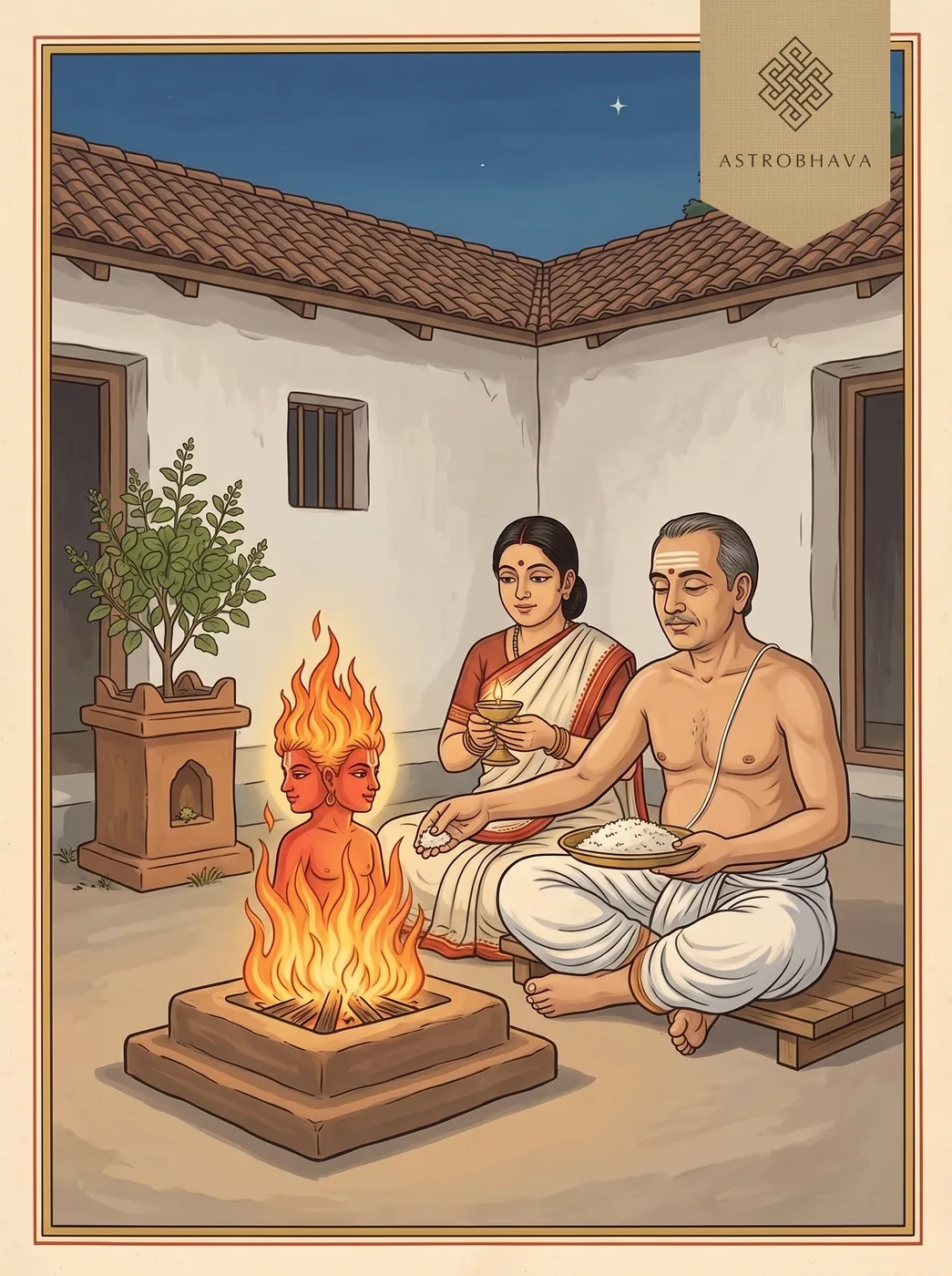
Agni Mantra
ॐ महाज्वालाय विद्महे अग्नि मध्याय धीमहि । तन्नो अग्निः प्रचोदयात् ॥Also known as Agni Gayatri Mantra
In Devanagari, Tamil, Telugu, Kannada, Malayalam and English — with the meaning of every word, and the one syllable most people pronounce wrongly.
 The Navagraha Homam, performed for youBook →
What the Agni Mantra is
The Agni Mantra is not one text but a small set of prayers to Agni, the Vedic deity of fire, and four of them are printed here. Mantra 1 is the popular Agni Gayatri, which names the one of the great flame and the one at the heart of the fire; devotional printings carry it without naming a scripture. Mantra 2 is the Vedic Agni Gayatri of the Mahanarayana Upanishad, the tenth prapathaka of the Taittiriya Aranyaka, where it greets Agni as Vaishvanara, the fire in all beings. Mantra 3, Om Agnaye Namah, is the bare name mantra, a salutation built on the dative of the name, and it also stands as an entry in a printed list of Agni's 108 names. Verse 1 is Rigveda 4.58.3, a riddle of a bull with four horns, three feet, two heads and seven hands, which the fire rites apply to Agni. The first three pray or salute; the last describes.
The Riddle of the Four-Horned Bull
Hymn 58 of the fourth book of the Rigveda is credited to the rishi Vamadeva Gautama. Its eleven verses celebrate ghee, the clarified butter poured into the sacred fire, and its deity is given in the alternative: Agni, the sun, the waters, the cows, or the praise of ghee itself. In the third verse the hymn turns to a puzzle. A creature with an impossible body, bound in three ways, bellows, and a great god enters mortals. Yaska took up the verse in the Nirukta (13.7) and read the horns as the Vedas. Sayana, commenting centuries later, follows that line for the sacrificial fire: the four horns are the four Vedas, the three feet the three pressing rites, the two heads the Brahmaudana and Pravargya rites, the three bonds mantra, Brahmana and ritual manual. He then gives a second reading in which the bull is the sun, its horns the four directions and its feet the three Vedas. The verse never left the ritual. The Ashvalayana manual of the domestic fire rite, as digests of the Dharma Sindhu report it, has the householder say it as a dhyana when the fire is tended, and the same verse returns in the Vaishvadeva offering of cooked food.
The mantra, in six scripts
- ॐ
- oṃ — the sacred syllable
- महाज्वालाय
- mahājvālāya — to the one of the great flame
- विद्महे
- vidmahe — may we know
- अग्नि
- agni — fire
- मध्याय
- madhyāya — to the one at the heart of
- धीमहि
- dhīmahi — let us meditate
- तन्नो
- tanno — therefore us
- अग्निः
- agniḥ — Agni
- प्रचोदयात्
- pracodayāt — may inspire
Agni Mantra lyrics in full
Three short mantras and one Rigveda verse, each complete in itself. The Vedic items are printed without accent marks; chanting them with the svaras is learned from a teacher.
All 4 verses, in Sanskrit, Tamil, Telugu, Kannada, Malayalam and English, each with its meaning. Choose a script:
Download the Agni Mantra PDFAll 4 verses with their meanings, in Sanskrit. Free to print and keep.
ॐ महाज्वालाय विद्महे अग्नि मध्याय धीमहि ।
तन्नो अग्निः प्रचोदयात् ॥
ௐ மஹாஜ்வாலாய வித்மஹே அக்நி மத்யாய தீமஹி ।
தந்நோ அக்நிஃ ப்ரசோதயாத் ॥
ఓం మహాజ్వాలాయ విద్మహే అగ్ని మధ్యాయ ధీమహి ।
తన్నో అగ్నిః ప్రచోదయాత్ ॥
ಓಂ ಮಹಾಜ್ವಾಲಾಯ ವಿದ್ಮಹೇ ಅಗ್ನಿ ಮಧ್ಯಾಯ ಧೀಮಹಿ ।
ತನ್ನೋ ಅಗ್ನಿಃ ಪ್ರಚೋದಯಾತ್ ॥
ഓം മഹാജ്വാലായ വിദ്മഹേ അഗ്നി മധ്യായ ധീമഹി ।
തന്നോ അഗ്നിഃ പ്രചോദയാത് ॥
oṃ mahājvālāya vidmahe agni madhyāya dhīmahi |
tanno agniḥ pracodayāt ||
Om. May we know the one of the great flame; let us meditate on the one at the heart of the fire. May Agni inspire us.
वैश्वानराय विद्महे लालीलाय धीमहि ।
तन्नो अग्निः प्रचोदयात् ॥
வைஶ்வாநராய வித்மஹே லாலீலாய தீமஹி ।
தந்நோ அக்நிஃ ப்ரசோதயாத் ॥
వైశ్వానరాయ విద్మహే లాలీలాయ ధీమహి ।
తన్నో అగ్నిః ప్రచోదయాత్ ॥
ವೈಶ್ವಾನರಾಯ ವಿದ್ಮಹೇ ಲಾಲೀಲಾಯ ಧೀಮಹಿ ।
ತನ್ನೋ ಅಗ್ನಿಃ ಪ್ರಚೋದಯಾತ್ ॥
വൈശ്വാനരായ വിദ്മഹേ ലാലീലായ ധീമഹി ।
തന്നോ അഗ്നിഃ പ്രചോദയാത് ॥
vaiśvānarāya vidmahe lālīlāya dhīmahi |
tanno agniḥ pracodayāt ||
May we know Vaishvanara, the fire in all beings; let us meditate on the blazing one. May Agni inspire us.
ॐ अग्नये नमः ॥
ௐ அக்நயே நமஃ ॥
ఓం అగ్నయే నమః ॥
ಓಂ ಅಗ್ನಯೇ ನಮಃ ॥
ഓം അഗ്നയേ നമഃ ॥
oṃ agnaye namaḥ ||
Om. Salutations to Agni.
चत्वारि शृङ्गा त्रयो अस्य पादा द्वे शीर्षे सप्त हस्तासो अस्य ।
त्रिधा बद्धो वृषभो रोरवीति महो देवो मर्त्याँ आ विवेश ॥
சத்வாரி ஶ்ருங்கா த்ரயோ அஸ்ய பாதா த்வே ஶீர்ஷே ஸப்த ஹஸ்தாஸோ அஸ்ய ।
த்ரிதா பத்தோ வ்ருஷபோ ரோரவீதி மஹோ தேவோ மர்த்யாம் ஆ விவேஶ ॥
చత్వారి శృఙ్గా త్రయో అస్య పాదా ద్వే శీర్షే సప్త హస్తాసో అస్య ।
త్రిధా బద్ధో వృషభో రోరవీతి మహో దేవో మర్త్యాఁ ఆ వివేశ ॥
ಚತ್ವಾರಿ ಶೃಙ್ಗಾ ತ್ರಯೋ ಅಸ್ಯ ಪಾದಾ ದ್ವೇ ಶೀರ್ಷೇ ಸಪ್ತ ಹಸ್ತಾಸೋ ಅಸ್ಯ ।
ತ್ರಿಧಾ ಬದ್ಧೋ ವೃಷಭೋ ರೋರವೀತಿ ಮಹೋ ದೇವೋ ಮರ್ತ್ಯಾಁ ಆ ವಿವೇಶ ॥
ചത്വാരി ശൃങ്ഗാ ത്രയോ അസ്യ പാദാ ദ്വേ ശീര്ഷേ സപ്ത ഹസ്താസോ അസ്യ ।
ത്രിധാ ബദ്ധോ വൃഷഭോ രോരവീതി മഹോ ദേവോ മര്ത്യാഁ ആ വിവേശ ॥
catvāri śṛṅgā trayo asya pādā dve śīrṣe sapta hastāso asya |
tridhā baddho vṛṣabho roravīti maho devo martyāṃ ā viveśa ||
Four horns, three feet, two heads and seven hands has he. Bound in three ways, the bull roars aloud; the great god has entered into mortals.
The syllable people get wrong
In Mantra 2, vaiśvānarāya is often flattened to "vaishvanaraya" with every vowel short. Say vaish-VAA-na-RAA-ya: the ś is the soft palatal sh, and the long ā of -rāya is what makes the word mean "to Vaishvanara", so it cannot be clipped.
Questions
Have your chart read before you decide
Chanting is yours to do, and free. But which deity your situation calls for — and whether a mantra alone is the right response — depends on your chart. Sometimes it is; sometimes it is not.
- Over 30 years in the Guru–Sishya Parampara, from the age of five
- He reads every chart himself — 60 minutes, one to one, never delegated
- Charts are read only between sunrise and sunset, following tradition
