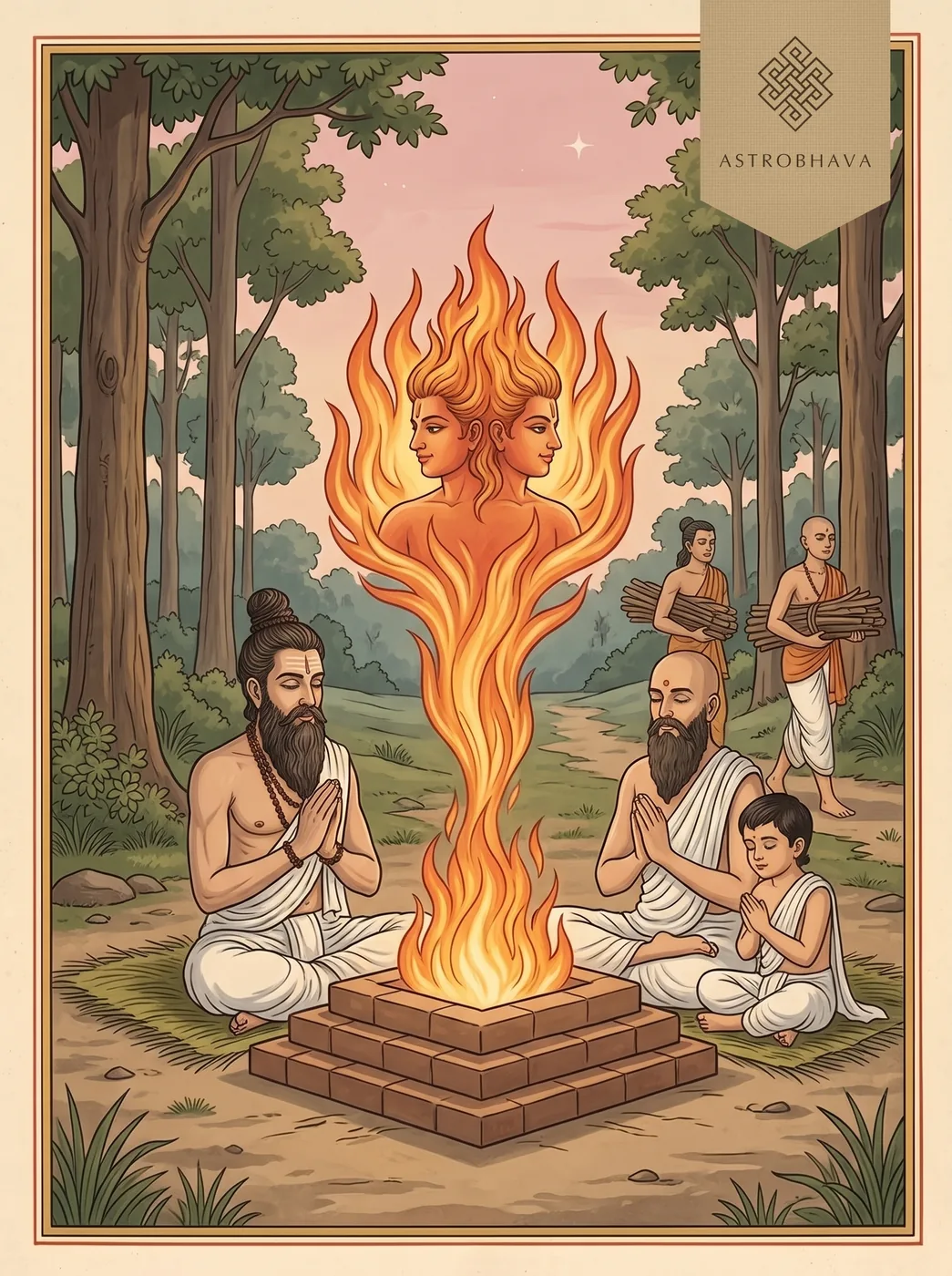
Agni Suktam
अग्निमीळे पुरोहितं यज्ञस्य देवमृत्विजम् । होतारं रत्नधातमम् ॥Also known as Agnimile Purohitam
In Devanagari, Tamil, Telugu, Kannada, Malayalam and English — with the meaning of every word, and the one syllable most people pronounce wrongly.
 The Navagraha Homam, performed for youBook →
What the Agni Suktam is
The Agni Suktam is the first hymn of the Rigveda: Mandala 1, Sukta 1 of the Shakala Samhita, nine verses addressed to Agni, the sacred fire. Its seer is Madhuchchhandas Vaishvamitra, son of Vishvamitra, credited with the ten hymns that open the book. The metre is Gayatri, three lines of eight syllables. Verse 1 names Agni by his offices: the priest placed in front, the officiant, the invoker. Verse 2 sets the seers of old beside those of the present and asks him to bring the gods. Verse 3 speaks of wealth gained through him, and verse 4 of the sacrifice he surrounds, which alone reaches the gods. Verse 5 calls him to come, and verse 6 addresses him as Angiras. Verses 7 to 9 turn to the worshippers, who approach him day after day and ask him to be as easy to reach as a father is to a son. This page prints them without accent marks; chanting with the svaras is learned from a teacher.
A Son of Vishvamitra Opens the Veda
The hymn tells no tale of its own, so what tradition remembers is the family of its seer. The Aitareya Brahmana (7.13-18) relates the legend of Shunahshepa, the boy bound as the victim at King Harishchandra's rite. Vishvamitra, one of the priests present, took him as his eldest son and named him Devarata, 'given by the gods'. That choice divided Vishvamitra's own sons. Those older than Devarata refused to rank beneath him, and their descendants were cursed with exile; the younger ones accepted him. The Brahmana counts Madhuchchhandas as the fifty-first son, which sets him among the younger group. The Bhagavata Purana retells the quarrel with a different count and uses his name for the whole band of brothers. Ten hymns later, the Rigveda passes to his son Jetri, who is given hymn 1.11. The ritual notes carried with the commentary of Sayana show how widely the hymn was used. It belongs to the Prataranuvaka, the morning litany. Verse 1 serves as an offering verse in the Pavamana rite, verse 3 as an invitatory verse when the fires are first established, verses 4 to 6 in the Abhiplava Shadaha, and verses 7 to 9 at the carrying forward of Agni and Soma. The Devi Bhagavata, Book 11, sets mantras opening 'Agnimile' first in its list for the daily Veda recitation called Brahmayajna.
The mantra, in six scripts
- अग्निमीळे
- agnimīḷe — I praise Agni
- पुरोहितं
- purohitaṃ — the priest placed in front
- यज्ञस्य
- yajñasya — of the sacrifice
- देवमृत्विजम्
- devamṛtvijam — the divine officiant
- होतारं
- hotāraṃ — the invoker
- रत्नधातमम्
- ratnadhātamam — greatest bestower of treasures
Agni Suktam lyrics in full
All nine verses of Rigveda 1.1. The Om that some chanters place before verse 1 is a recitation prefix, not a word of the Samhita, and is not printed.
All 9 verses, in Sanskrit, Tamil, Telugu, Kannada, Malayalam and English, each with its meaning. Choose a script:
Download the Agni Suktam PDFAll 9 verses with their meanings, in Sanskrit. Free to print and keep.
अग्निमीळे पुरोहितं यज्ञस्य देवमृत्विजम् ।
होतारं रत्नधातमम् ॥
அக்நிமீளே புரோஹிதம் யஜ்ஞஸ்ய தேவம்ருத்விஜம் ।
ஹோதாரம் ரத்நதாதமம் ॥
అగ్నిమీళే పురోహితం యజ్ఞస్య దేవమృత్విజమ్ ।
హోతారం రత్నధాతమమ్ ॥
ಅಗ್ನಿಮೀಳೇ ಪುರೋಹಿತಂ ಯಜ್ಞಸ್ಯ ದೇವಮೃತ್ವಿಜಮ್ ।
ಹೋತಾರಂ ರತ್ನಧಾತಮಮ್ ॥
അഗ്നിമീളേ പുരോഹിതം യജ്ഞസ്യ ദേവമൃത്വിജമ് ।
ഹോതാരം രത്നധാതമമ് ॥
agnimīḷe purohitaṃ yajñasya devamṛtvijam |
hotāraṃ ratnadhātamam ||
I praise Agni, the priest placed at the front, the divine officiant of the sacrifice. He is the invoker of the gods and the greatest bestower of treasures.
अग्निः पूर्वेभिर्ऋषिभिरीड्यो नूतनैरुत ।
स देवाँ एह वक्षति ॥
அக்நிஃ பூர்வேபிர்ருஷிபிரீட்யோ நூதநைருத ।
ஸ தேவாம் ஏஹ வக்ஷதி ॥
అగ్నిః పూర్వేభిర్ఋషిభిరీడ్యో నూతనైరుత ।
స దేవాఁ ఏహ వక్షతి ॥
ಅಗ್ನಿಃ ಪೂರ್ವೇಭಿರ್ಋಷಿಭಿರೀಡ್ಯೋ ನೂತನೈರುತ ।
ಸ ದೇವಾಁ ಏಹ ವಕ್ಷತಿ ॥
അഗ്നിഃ പൂര്വേഭിര്ഋഷിഭിരീഡ്യോ നൂതനൈരുത ।
സ ദേവാഁ ഏഹ വക്ഷതി ॥
agniḥ pūrvebhirṛṣibhirīḍyo nūtanairuta |
sa devāṃ eha vakṣati ||
Agni was worthy of praise by the seers of old and is worthy of it by those of today. May he bring the gods here.
अग्निना रयिमश्नवत्पोषमेव दिवेदिवे ।
यशसं वीरवत्तमम् ॥
அக்நிநா ரயிமஶ்நவத்போஷமேவ திவேதிவே ।
யஶஸம் வீரவத்தமம் ॥
అగ్నినా రయిమశ్నవత్పోషమేవ దివేదివే ।
యశసం వీరవత్తమమ్ ॥
ಅಗ್ನಿನಾ ರಯಿಮಶ್ನವತ್ಪೋಷಮೇವ ದಿವೇದಿವೇ ।
ಯಶಸಂ ವೀರವತ್ತಮಮ್ ॥
അഗ്നിനാ രയിമശ്നവത്പോഷമേവ ദിവേദിവേ ।
യശസം വീരവത്തമമ് ॥
agninā rayimaśnavatpoṣameva divedive |
yaśasaṃ vīravattamam ||
The verse says that through Agni a person gains wealth, a prosperity that grows day by day, glorious and rich in brave sons.
अग्ने यं यज्ञमध्वरं विश्वतः परिभूरसि ।
स इद्देवेषु गच्छति ॥
அக்நே யம் யஜ்ஞமத்வரம் விஶ்வதஃ பரிபூரஸி ।
ஸ இத்தேவேஷு கச்சதி ॥
అగ్నే యం యజ్ఞమధ్వరం విశ్వతః పరిభూరసి ।
స ఇద్దేవేషు గచ్ఛతి ॥
ಅಗ್ನೇ ಯಂ ಯಜ್ಞಮಧ್ವರಂ ವಿಶ್ವತಃ ಪರಿಭೂರಸಿ ।
ಸ ಇದ್ದೇವೇಷು ಗಚ್ಛತಿ ॥
അഗ്നേ യം യജ്ഞമധ്വരം വിശ്വതഃ പരിഭൂരസി ।
സ ഇദ്ദേവേഷു ഗച്ഛതി ॥
agne yaṃ yajñamadhvaraṃ viśvataḥ paribhūrasi |
sa iddeveṣu gacchati ||
O Agni, the unharmed sacrifice that you surround on every side, that alone goes to the gods.
अग्निर्होता कविक्रतुः सत्यश्चित्रश्रवस्तमः ।
देवो देवेभिरा गमत् ॥
அக்நிர்ஹோதா கவிக்ரதுஃ ஸத்யஶ்சித்ரஶ்ரவஸ்தமஃ ।
தேவோ தேவேபிரா கமத் ॥
అగ్నిర్హోతా కవిక్రతుః సత్యశ్చిత్రశ్రవస్తమః ।
దేవో దేవేభిరా గమత్ ॥
ಅಗ್ನಿರ್ಹೋತಾ ಕವಿಕ್ರತುಃ ಸತ್ಯಶ್ಚಿತ್ರಶ್ರವಸ್ತಮಃ ।
ದೇವೋ ದೇವೇಭಿರಾ ಗಮತ್ ॥
അഗ്നിര്ഹോതാ കവിക്രതുഃ സത്യശ്ചിത്രശ്രവസ്തമഃ ।
ദേവോ ദേവേഭിരാ ഗമത് ॥
agnirhotā kavikratuḥ satyaścitraśravastamaḥ |
devo devebhirā gamat ||
Agni, the invoker with a seer's insight, the true one of most wondrous fame: may that god come here together with the gods.
यदङ्ग दाशुषे त्वमग्ने भद्रं करिष्यसि ।
तवेत्तत्सत्यमङ्गिरः ॥
யதங்க தாஶுஷே த்வமக்நே பத்ரம் கரிஷ்யஸி ।
தவேத்தத்ஸத்யமங்கிரஃ ॥
యదఙ్గ దాశుషే త్వమగ్నే భద్రం కరిష్యసి ।
తవేత్తత్సత్యమఙ్గిరః ॥
ಯದಙ್ಗ ದಾಶುಷೇ ತ್ವಮಗ್ನೇ ಭದ್ರಂ ಕರಿಷ್ಯಸಿ ।
ತವೇತ್ತತ್ಸತ್ಯಮಙ್ಗಿರಃ ॥
യദങ്ഗ ദാശുഷേ ത്വമഗ്നേ ഭദ്രം കരിഷ്യസി ।
തവേത്തത്സത്യമങ്ഗിരഃ ॥
yadaṅga dāśuṣe tvamagne bhadraṃ kariṣyasi |
tavettatsatyamaṅgiraḥ ||
O Agni, whatever good you will do for the one who gives offerings, that indeed is your own truth, O Angiras.
उप त्वाग्ने दिवेदिवे दोषावस्तर्धिया वयम् ।
नमो भरन्त एमसि ॥
உப த்வாக்நே திவேதிவே தோஷாவஸ்தர்தியா வயம் ।
நமோ பரந்த ஏமஸி ॥
ఉప త్వాగ్నే దివేదివే దోషావస్తర్ధియా వయమ్ ।
నమో భరన్త ఏమసి ॥
ಉಪ ತ್ವಾಗ್ನೇ ದಿವೇದಿವೇ ದೋಷಾವಸ್ತರ್ಧಿಯಾ ವಯಮ್ ।
ನಮೋ ಭರನ್ತ ಏಮಸಿ ॥
ഉപ ത്വാഗ്നേ ദിവേദിവേ ദോഷാവസ്തര്ധിയാ വയമ് ।
നമോ ഭരന്ത ഏമസി ॥
upa tvāgne divedive doṣāvastardhiyā vayam |
namo bharanta emasi ||
To you, O Agni, day after day, O illuminer of the dark, we come with our thought, bearing homage.
राजन्तमध्वराणां गोपामृतस्य दीदिविम् ।
वर्धमानं स्वे दमे ॥
ராஜந்தமத்வராணாம் கோபாம்ருதஸ்ய தீதிவிம் ।
வர்தமாநம் ஸ்வே தமே ॥
రాజన్తమధ్వరాణాం గోపామృతస్య దీదివిమ్ ।
వర్ధమానం స్వే దమే ॥
ರಾಜನ್ತಮಧ್ವರಾಣಾಂ ಗೋಪಾಮೃತಸ್ಯ ದೀದಿವಿಮ್ ।
ವರ್ಧಮಾನಂ ಸ್ವೇ ದಮೇ ॥
രാജന്തമധ്വരാണാം ഗോപാമൃതസ്യ ദീദിവിമ് ।
വര്ധമാനം സ്വേ ദമേ ॥
rājantamadhvarāṇāṃ gopāmṛtasya dīdivim |
vardhamānaṃ sve dame ||
We come to you, the ruler of sacrifices, the shining guardian of cosmic order, growing in your own home.
स नः पितेव सूनवेऽग्ने सूपायनो भव ।
सचस्वा नः स्वस्तये ॥
ஸ நஃ பிதேவ ஸூநவேக்நே ஸூபாயநோ பவ ।
ஸசஸ்வா நஃ ஸ்வஸ்தயே ॥
స నః పితేవ సూనవేఽగ్నే సూపాయనో భవ ।
సచస్వా నః స్వస్తయే ॥
ಸ ನಃ ಪಿತೇವ ಸೂನವೇಽಗ್ನೇ ಸೂಪಾಯನೋ ಭವ ।
ಸಚಸ್ವಾ ನಃ ಸ್ವಸ್ತಯೇ ॥
സ നഃ പിതേവ സൂനവേഽഗ്നേ സൂപായനോ ഭവ ।
സചസ്വാ നഃ സ്വസ്തയേ ॥
sa naḥ piteva sūnave'gne sūpāyano bhava |
sacasvā naḥ svastaye ||
So, O Agni, be easy for us to approach, as a father is to his son. Stay with us for our well-being.
The syllable people get wrong
In agnimīḷe the ḷ is not an English l: curl the tongue back to touch the roof of the mouth, and hold the ī long. It is the Vedic form that ḍ takes between vowels, which is why the same root shows ḍ in īḍyo in Verse 2.
Questions
Have your chart read before you decide
Chanting is yours to do, and free. But which deity your situation calls for — and whether a mantra alone is the right response — depends on your chart. Sometimes it is; sometimes it is not.
- Over 30 years in the Guru–Sishya Parampara, from the age of five
- He reads every chart himself — 60 minutes, one to one, never delegated
- Charts are read only between sunrise and sunset, following tradition
