Akshaya Tritiya Mantra
स्नानं दानं जपो होमः स्वाध्यायः पितृतर्पणम् । यदस्यां क्रियते किञ्चित्सर्वं स्यात्तदिहाक्षयम् ॥Also known as Esha Dharmaghato Datto
In Devanagari, Tamil, Telugu, Kannada, Malayalam and English — with the meaning of every word, and the one syllable most people pronounce wrongly.
 The Lakshmi Narayana Homam, performed for youBook →
What the Akshaya Tritiya Mantra is
The Akshaya Tritiya mantra is not a single hymn but a set of ten Sanskrit lines tied to Vaishakha Shukla Tritiya, the third lunar day of the bright fortnight of Vaishakha (April-May). Verses 1-3 come from the Bhavishya Purana, Uttara Parva 30.2, 30.3 and 30.19, where Krishna describes the day to Yudhishthira. Verses 4-7 are Matsya Purana 65.1-3 and 65.7, spoken by Shiva, who introduces it as one more third-day vow after others. Together they list what the day is for: bathing, giving, japa, fire offering, study and water for the ancestors, all of which the verses call undecaying, and Verse 7 turns to the worship of Janardana. Mantras 1-3 are said when a water pot, the dharmaghata or udakumbha, is given, in the form printed in the Nirnayasindhu of Kamalakara Bhatta and the Dharmasindhu of Kashinatha Upadhyaya; Mantras 2 and 3 offer it to the ancestors. The same tithi is kept in many regions as Parashurama Jayanti, which none of these verses mentions.
The Merchant Dharma of Shakala
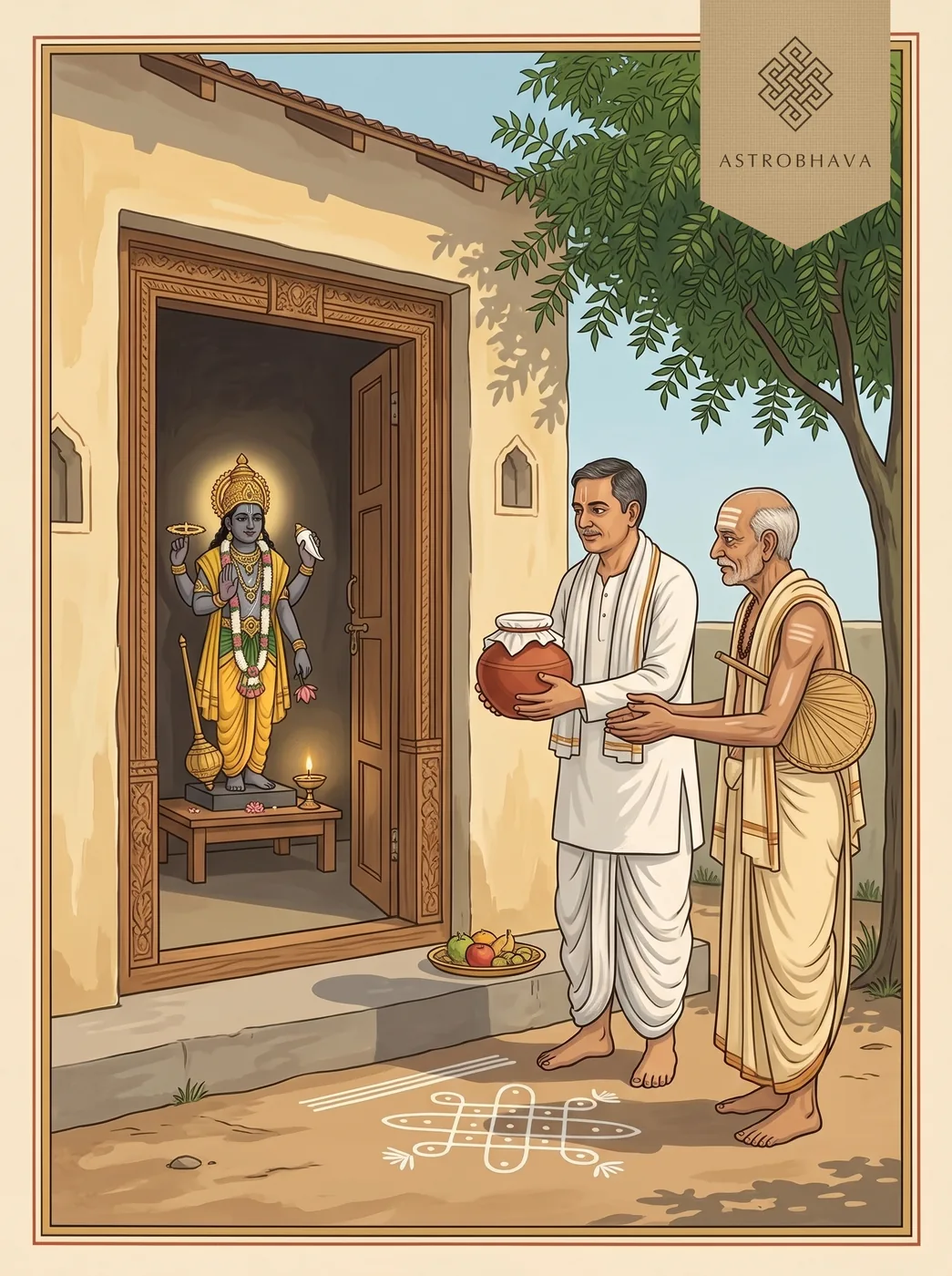
The Bhavishya Purana tells the day's example story in the lines between Verses 2 and 3 of this page. In the town of Shakala lived a merchant named Dharma, gentle in speech, devoted to truth and to the worship of the gods and Brahmins. He once heard a reading which said that the third day of Vaishakha, falling with the Rohini star on a Wednesday, bore great fruit, and that whatever was given on it would not waste away. He bathed in the Ganga, offered water to the ancestors and the gods, and went home to give away water jars with food, pots filled to the brim, barley, wheat, chickpeas, barley flour, curd-rice, sugarcane and milk sweets, as much as he was able. His wife, anxious for the household, tried to stop him; he went on giving, reasoning that all of it would perish in any case. Long afterwards he died with Vasudeva in his thoughts and was born a Kshatriya king at Kushavati. As king he performed great sacrifices and gave cows and land day and night, yet, the chapter says, what he had never ran down. Krishna then names the gifts that suit this summer day, from water pots and seasonal grain to umbrellas and sandals, and closes with Verse 3, explaining why the sages call the tithi Akshaya.
The mantra, in six scripts
- स्नानं
- snānaṃ — bathing
- दानं
- dānaṃ — giving
- जपो
- japo — japa, repeating a mantra
- होमः
- homaḥ — fire offering
- स्वाध्यायः
- svādhyāyaḥ — study of scripture
- पितृतर्पणम्
- pitṛtarpaṇam — water offered to the ancestors
- यदस्यां
- yadasyāṃ — whatever on this (day)
- क्रियते
- kriyate — is done
- किञ्चित्सर्वं
- kiñcitsarvaṃ — anything, all of it
- स्यात्तदिहाक्षयम्
- syāttadihākṣayam — that becomes imperishable here
Akshaya Tritiya Mantra lyrics in full
Seven Puranic verses on the day, followed by the three mantras said when the water pot is given.
All 10 verses, in Sanskrit, Tamil, Telugu, Kannada, Malayalam and English, each with its meaning. Choose a script:
Download the Akshaya Tritiya Mantra PDFAll 10 verses with their meanings, in Sanskrit. Free to print and keep.
स्नानं दानं जपो होमः स्वाध्यायः पितृतर्पणम् ।
यदस्यां क्रियते किञ्चित्सर्वं स्यात्तदिहाक्षयम् ॥
ஸ்நாநம் தாநம் ஜபோ ஹோமஃ ஸ்வாத்யாயஃ பித்ருதர்பணம் ।
யதஸ்யாம் க்ரியதே கிஞ்சித்ஸர்வம் ஸ்யாத்ததிஹாக்ஷயம் ॥
స్నానం దానం జపో హోమః స్వాధ్యాయః పితృతర్పణమ్ ।
యదస్యాం క్రియతే కిఞ్చిత్సర్వం స్యాత్తదిహాక్షయమ్ ॥
ಸ್ನಾನಂ ದಾನಂ ಜಪೋ ಹೋಮಃ ಸ್ವಾಧ್ಯಾಯಃ ಪಿತೃತರ್ಪಣಮ್ ।
ಯದಸ್ಯಾಂ ಕ್ರಿಯತೇ ಕಿಞ್ಚಿತ್ಸರ್ವಂ ಸ್ಯಾತ್ತದಿಹಾಕ್ಷಯಮ್ ॥
സ്നാനം ദാനം ജപോ ഹോമഃ സ്വാധ്യായഃ പിതൃതര്പണമ് ।
യദസ്യാം ക്രിയതേ കിഞ്ചിത്സര്വം സ്യാത്തദിഹാക്ഷയമ് ॥
snānaṃ dānaṃ japo homaḥ svādhyāyaḥ pitṛtarpaṇam |
yadasyāṃ kriyate kiñcitsarvaṃ syāttadihākṣayam ||
Bathing, giving, japa, fire offering, study of scripture and offering water to the ancestors: the verse says whatever is done on this day becomes imperishable here.
आदौ कृतयुगस्येयं युगादिस्तेन कथ्यते ।
सर्वपापप्रशमनी सर्वसौख्यप्रदायिनी ॥
ஆதௌ க்ருதயுகஸ்யேயம் யுகாதிஸ்தேந கத்யதே ।
ஸர்வபாபப்ரஶமநீ ஸர்வஸௌக்யப்ரதாயிநீ ॥
ఆదౌ కృతయుగస్యేయం యుగాదిస్తేన కథ్యతే ।
సర్వపాపప్రశమనీ సర్వసౌఖ్యప్రదాయినీ ॥
ಆದೌ ಕೃತಯುಗಸ್ಯೇಯಂ ಯುಗಾದಿಸ್ತೇನ ಕಥ್ಯತೇ ।
ಸರ್ವಪಾಪಪ್ರಶಮನೀ ಸರ್ವಸೌಖ್ಯಪ್ರದಾಯಿನೀ ॥
ആദൌ കൃതയുഗസ്യേയം യുഗാദിസ്തേന കഥ്യതേ ।
സര്വപാപപ്രശമനീ സര്വസൌഖ്യപ്രദായിനീ ॥
ādau kṛtayugasyeyaṃ yugādistena kathyate |
sarvapāpapraśamanī sarvasaukhyapradāyinī ||
This day stood at the beginning of the Krita age, so it is called Yugadi, the start of an age. The verse says it quiets every sin and gives every happiness.
अस्यां तिथौ क्षयमुपैति हुतं न दत्तं तेनाक्षया च मुनिभिः कथिता तृतीया ।
उद्दिश्य यत्सुरपितॄन्क्रियते मनुष्यैस्तच्चाक्षयं भवति भारत सर्वमेव ॥
அஸ்யாம் திதௌ க்ஷயமுபைதி ஹுதம் ந தத்தம் தேநாக்ஷயா ச முநிபிஃ கதிதா த்ருதீயா ।
உத்திஶ்ய யத்ஸுரபித்ரூந்க்ரியதே மநுஷ்யைஸ்தச்சாக்ஷயம் பவதி பாரத ஸர்வமேவ ॥
అస్యాం తిథౌ క్షయముపైతి హుతం న దత్తం తేనాక్షయా చ మునిభిః కథితా తృతీయా ।
ఉద్దిశ్య యత్సురపితౄన్క్రియతే మనుష్యైస్తచ్చాక్షయం భవతి భారత సర్వమేవ ॥
ಅಸ್ಯಾಂ ತಿಥೌ ಕ್ಷಯಮುಪೈತಿ ಹುತಂ ನ ದತ್ತಂ ತೇನಾಕ್ಷಯಾ ಚ ಮುನಿಭಿಃ ಕಥಿತಾ ತೃತೀಯಾ ।
ಉದ್ದಿಶ್ಯ ಯತ್ಸುರಪಿತೄನ್ಕ್ರಿಯತೇ ಮನುಷ್ಯೈಸ್ತಚ್ಚಾಕ್ಷಯಂ ಭವತಿ ಭಾರತ ಸರ್ವಮೇವ ॥
അസ്യാം തിഥൌ ക്ഷയമുപൈതി ഹുതം ന ദത്തം തേനാക്ഷയാ ച മുനിഭിഃ കഥിതാ തൃതീയാ ।
ഉദ്ദിശ്യ യത്സുരപിതൄന്ക്രിയതേ മനുഷ്യൈസ്തച്ചാക്ഷയം ഭവതി ഭാരത സര്വമേവ ॥
asyāṃ tithau kṣayamupaiti hutaṃ na dattaṃ tenākṣayā ca munibhiḥ kathitā tṛtīyā |
uddiśya yatsurapitṝnkriyate manuṣyaistaccākṣayaṃ bhavati bhārata sarvameva ||
The verse says that on this lunar day nothing offered in the fire or given away wastes away, and so the sages named this third day Akshaya, the undecaying. Krishna tells Yudhishthira that whatever people do for the gods and the ancestors on it all becomes imperishable.
अथान्यामपि वक्ष्यामि तृतीयां सर्वकामदाम् ।
यस्यां दत्तं हुतं जप्तं सर्वं भवति चाक्षयम् ॥
அதாந்யாமபி வக்ஷ்யாமி த்ருதீயாம் ஸர்வகாமதாம் ।
யஸ்யாம் தத்தம் ஹுதம் ஜப்தம் ஸர்வம் பவதி சாக்ஷயம் ॥
అథాన్యామపి వక్ష్యామి తృతీయాం సర్వకామదామ్ ।
యస్యాం దత్తం హుతం జప్తం సర్వం భవతి చాక్షయమ్ ॥
ಅಥಾನ್ಯಾಮಪಿ ವಕ್ಷ್ಯಾಮಿ ತೃತೀಯಾಂ ಸರ್ವಕಾಮದಾಮ್ ।
ಯಸ್ಯಾಂ ದತ್ತಂ ಹುತಂ ಜಪ್ತಂ ಸರ್ವಂ ಭವತಿ ಚಾಕ್ಷಯಮ್ ॥
അഥാന്യാമപി വക്ഷ്യാമി തൃതീയാം സര്വകാമദാമ് ।
യസ്യാം ദത്തം ഹുതം ജപ്തം സര്വം ഭവതി ചാക്ഷയമ് ॥
athānyāmapi vakṣyāmi tṛtīyāṃ sarvakāmadām |
yasyāṃ dattaṃ hutaṃ japtaṃ sarvaṃ bhavati cākṣayam ||
Shiva says: Now I will tell of another third lunar day, one that grants every wish, on which all that is given, offered in the fire or recited becomes imperishable.
वैशाखशुक्लपक्षे तु तृतीया यैरुपोषिता ।
अक्षयं फलमाप्नोति सर्वस्य सुकृतस्य च ॥
வைஶாகஶுக்லபக்ஷே து த்ருதீயா யைருபோஷிதா ।
அக்ஷயம் பலமாப்நோதி ஸர்வஸ்ய ஸுக்ருதஸ்ய ச ॥
వైశాఖశుక్లపక్షే తు తృతీయా యైరుపోషితా ।
అక్షయం ఫలమాప్నోతి సర్వస్య సుకృతస్య చ ॥
ವೈಶಾಖಶುಕ್ಲಪಕ್ಷೇ ತು ತೃತೀಯಾ ಯೈರುಪೋಷಿತಾ ।
ಅಕ್ಷಯಂ ಫಲಮಾಪ್ನೋತಿ ಸರ್ವಸ್ಯ ಸುಕೃತಸ್ಯ ಚ ॥
വൈശാഖശുക്ലപക്ഷേ തു തൃതീയാ യൈരുപോഷിതാ ।
അക്ഷയം ഫലമാപ്നോതി സര്വസ്യ സുകൃതസ്യ ച ॥
vaiśākhaśuklapakṣe tu tṛtīyā yairupoṣitā |
akṣayaṃ phalamāpnoti sarvasya sukṛtasya ca ||
Those who fast on the third day of the bright fortnight of Vaishakha, the verse says, gain the undying fruit of all their good deeds.
सा तथा कृत्तिकोपेता विशेषेण सुपूजिता ।
तत्र दत्तं हुतं जप्तं सर्वमक्षयमुच्यते ॥
ஸா ததா க்ருத்திகோபேதா விஶேஷேண ஸுபூஜிதா ।
தத்ர தத்தம் ஹுதம் ஜப்தம் ஸர்வமக்ஷயமுச்யதே ॥
సా తథా కృత్తికోపేతా విశేషేణ సుపూజితా ।
తత్ర దత్తం హుతం జప్తం సర్వమక్షయముచ్యతే ॥
ಸಾ ತಥಾ ಕೃತ್ತಿಕೋಪೇತಾ ವಿಶೇಷೇಣ ಸುಪೂಜಿತಾ ।
ತತ್ರ ದತ್ತಂ ಹುತಂ ಜಪ್ತಂ ಸರ್ವಮಕ್ಷಯಮುಚ್ಯತೇ ॥
സാ തഥാ കൃത്തികോപേതാ വിശേഷേണ സുപൂജിതാ ।
തത്ര ദത്തം ഹുതം ജപ്തം സര്വമക്ഷയമുച്യതേ ॥
sā tathā kṛttikopetā viśeṣeṇa supūjitā |
tatra dattaṃ hutaṃ japtaṃ sarvamakṣayamucyate ||
When that day falls with the Krittika star it is honoured all the more. The verse says whatever is given, offered in the fire or recited then is imperishable.
तृतीयायां समभ्यर्च्य सोपवासो जनार्दनम् ।
राजसूयफलं प्राप्य गतिमग्र्यां च विन्दति ॥
த்ருதீயாயாம் ஸமப்யர்ச்ய ஸோபவாஸோ ஜநார்தநம் ।
ராஜஸூயபலம் ப்ராப்ய கதிமக்ர்யாம் ச விந்ததி ॥
తృతీయాయాం సమభ్యర్చ్య సోపవాసో జనార్దనమ్ ।
రాజసూయఫలం ప్రాప్య గతిమగ్ర్యాం చ విన్దతి ॥
ತೃತೀಯಾಯಾಂ ಸಮಭ್ಯರ್ಚ್ಯ ಸೋಪವಾಸೋ ಜನಾರ್ದನಮ್ ।
ರಾಜಸೂಯಫಲಂ ಪ್ರಾಪ್ಯ ಗತಿಮಗ್ರ್ಯಾಂ ಚ ವಿನ್ದತಿ ॥
തൃതീയായാം സമഭ്യര്ച്യ സോപവാസോ ജനാര്ദനമ് ।
രാജസൂയഫലം പ്രാപ്യ ഗതിമഗ്ര്യാം ച വിന്ദതി ॥
tṛtīyāyāṃ samabhyarcya sopavāso janārdanam |
rājasūyaphalaṃ prāpya gatimagryāṃ ca vindati ||
One who fasts on this third day and worships Janardana (Vishnu) well, the verse says, gains the fruit of a Rajasuya sacrifice and reaches the highest state.
एष धर्मघटो दत्तो ब्रह्मविष्णुशिवात्मकः ।
अस्य प्रदानात्सकला मम सन्तु मनोरथाः ॥
ஏஷ தர்மகடோ தத்தோ ப்ரஹ்மவிஷ்ணுஶிவாத்மகஃ ।
அஸ்ய ப்ரதாநாத்ஸகலா மம ஸந்து மநோரதாஃ ॥
ఏష ధర్మఘటో దత్తో బ్రహ్మవిష్ణుశివాత్మకః ।
అస్య ప్రదానాత్సకలా మమ సన్తు మనోరథాః ॥
ಏಷ ಧರ್ಮಘಟೋ ದತ್ತೋ ಬ್ರಹ್ಮವಿಷ್ಣುಶಿವಾತ್ಮಕಃ ।
ಅಸ್ಯ ಪ್ರದಾನಾತ್ಸಕಲಾ ಮಮ ಸನ್ತು ಮನೋರಥಾಃ ॥
ഏഷ ധര്മഘടോ ദത്തോ ബ്രഹ്മവിഷ്ണുശിവാത്മകഃ ।
അസ്യ പ്രദാനാത്സകലാ മമ സന്തു മനോരഥാഃ ॥
eṣa dharmaghaṭo datto brahmaviṣṇuśivātmakaḥ |
asya pradānātsakalā mama santu manorathāḥ ||
This pot of dharma, filled with water and holding Brahma, Vishnu and Shiva, is given. By this gift may all my wishes come to be.
एष धर्मघटो दत्तो ब्रह्मविष्णुशिवात्मकः ।
अस्य प्रदानात्तृप्यन्तु पितरोऽपि पितामहाः ॥
ஏஷ தர்மகடோ தத்தோ ப்ரஹ்மவிஷ்ணுஶிவாத்மகஃ ।
அஸ்ய ப்ரதாநாத்த்ருப்யந்து பிதரோபி பிதாமஹாஃ ॥
ఏష ధర్మఘటో దత్తో బ్రహ్మవిష్ణుశివాత్మకః ।
అస్య ప్రదానాత్తృప్యన్తు పితరోఽపి పితామహాః ॥
ಏಷ ಧರ್ಮಘಟೋ ದತ್ತೋ ಬ್ರಹ್ಮವಿಷ್ಣುಶಿವಾತ್ಮಕಃ ।
ಅಸ್ಯ ಪ್ರದಾನಾತ್ತೃಪ್ಯನ್ತು ಪಿತರೋಽಪಿ ಪಿತಾಮಹಾಃ ॥
ഏഷ ധര്മഘടോ ദത്തോ ബ്രഹ്മവിഷ്ണുശിവാത്മകഃ ।
അസ്യ പ്രദാനാത്തൃപ്യന്തു പിതരോഽപി പിതാമഹാഃ ॥
eṣa dharmaghaṭo datto brahmaviṣṇuśivātmakaḥ |
asya pradānāttṛpyantu pitaro'pi pitāmahāḥ ||
This pot of dharma, holding Brahma, Vishnu and Shiva, is given. By this gift may my fathers and grandfathers be satisfied.
गन्धोदकतिलैर्मिश्रं सान्नं कुम्भं फलान्वितम् ।
पितृभ्यः संप्रदास्यामि अक्षय्यमुपतिष्ठतु ॥
கந்தோதகதிலைர்மிஶ்ரம் ஸாந்நம் கும்பம் பலாந்விதம் ।
பித்ருப்யஃ ஸம்ப்ரதாஸ்யாமி அக்ஷய்யமுபதிஷ்டது ॥
గన్ధోదకతిలైర్మిశ్రం సాన్నం కుమ్భం ఫలాన్వితమ్ ।
పితృభ్యః సంప్రదాస్యామి అక్షయ్యముపతిష్ఠతు ॥
ಗನ್ಧೋದಕತಿಲೈರ್ಮಿಶ್ರಂ ಸಾನ್ನಂ ಕುಮ್ಭಂ ಫಲಾನ್ವಿತಮ್ ।
ಪಿತೃಭ್ಯಃ ಸಂಪ್ರದಾಸ್ಯಾಮಿ ಅಕ್ಷಯ್ಯಮುಪತಿಷ್ಠತು ॥
ഗന്ധോദകതിലൈര്മിശ്രം സാന്നം കുമ്ഭം ഫലാന്വിതമ് ।
പിതൃഭ്യഃ സംപ്രദാസ്യാമി അക്ഷയ്യമുപതിഷ്ഠതു ॥
gandhodakatilairmiśraṃ sānnaṃ kumbhaṃ phalānvitam |
pitṛbhyaḥ saṃpradāsyāmi akṣayyamupatiṣṭhatu ||
I give to the ancestors this pot of water mixed with fragrance and sesame, with food and fruit. May it reach them and never run out.
The syllable people get wrong
In akṣayaṃ (Verse 5, and inside tadihākṣayam in Verse 1) the kṣ is a k followed by the retroflex ṣ, so say 'ak-sha-yam' with a clear k before the sh; the everyday 'Akshay' also drops the final -am that the Sanskrit keeps.
When the Akshaya Tritiya Mantra is chanted
Weekday. Thursday
Festival. Akshaya Tritiya (Vaishakha Shukla Tritiya)
Questions
Have your chart read before you decide
Chanting is yours to do, and free. But which deity your situation calls for — and whether a mantra alone is the right response — depends on your chart. Sometimes it is; sometimes it is not.
- Over 30 years in the Guru–Sishya Parampara, from the age of five
- He reads every chart himself — 60 minutes, one to one, never delegated
- Charts are read only between sunrise and sunset, following tradition