Anjaneya Dandakam
श्री आंजनेयं प्रसन्नांजनेयं प्रभादिव्यकायं प्रकीर्ति प्रदायं । भजे वायुपुत्रं भजे वालगात्रं भजेऽहं पवित्रं भजे सूर्यमित्रं भजे रुद्ररूपं भजे ब्रह्मतेजं ॥Also known as Sri Anjaneyam Prasannanjaneyam
In Devanagari, Tamil, Telugu, Kannada, Malayalam and English — with the meaning of every word, and the one syllable most people pronounce wrongly.
 The Hanuman Homam, performed for youBook →
What the Anjaneya Dandakam is
The Anjaneya Dandakam is a Telugu hymn to Hanuman, known by its first words, Sri Anjaneyam Prasannanjaneyam, and handed down in Telugu-speaking households from Andhra Pradesh and Telangana outward. No author's name is attached to it, and anonymous printed booklets carried the same text by the early 1920s. A dandakam is rhythmic prose with no stanza breaks, so the whole piece runs on as one unbroken chant. Its opening is Sanskrit: a string of 'bhaje' lines saluting the son of Vayu, the friend of the Sun, the one of Rudra's form. With the word 'batancun', meaning 'saying so', the language turns to Telugu, and the poet states the purpose plainly: after singing Hanuman's names morning and evening, they resolved to make a dandakam on him. The middle retells the Ramayana from Kishkindha to Rama's coronation. The close turns to protection, naming planets, ghosts and spirits that Hanuman's tail and fists drive off, and ends in a row of salutations to the son of Vayu.
From Kishkindha to Ayodhya in one breath
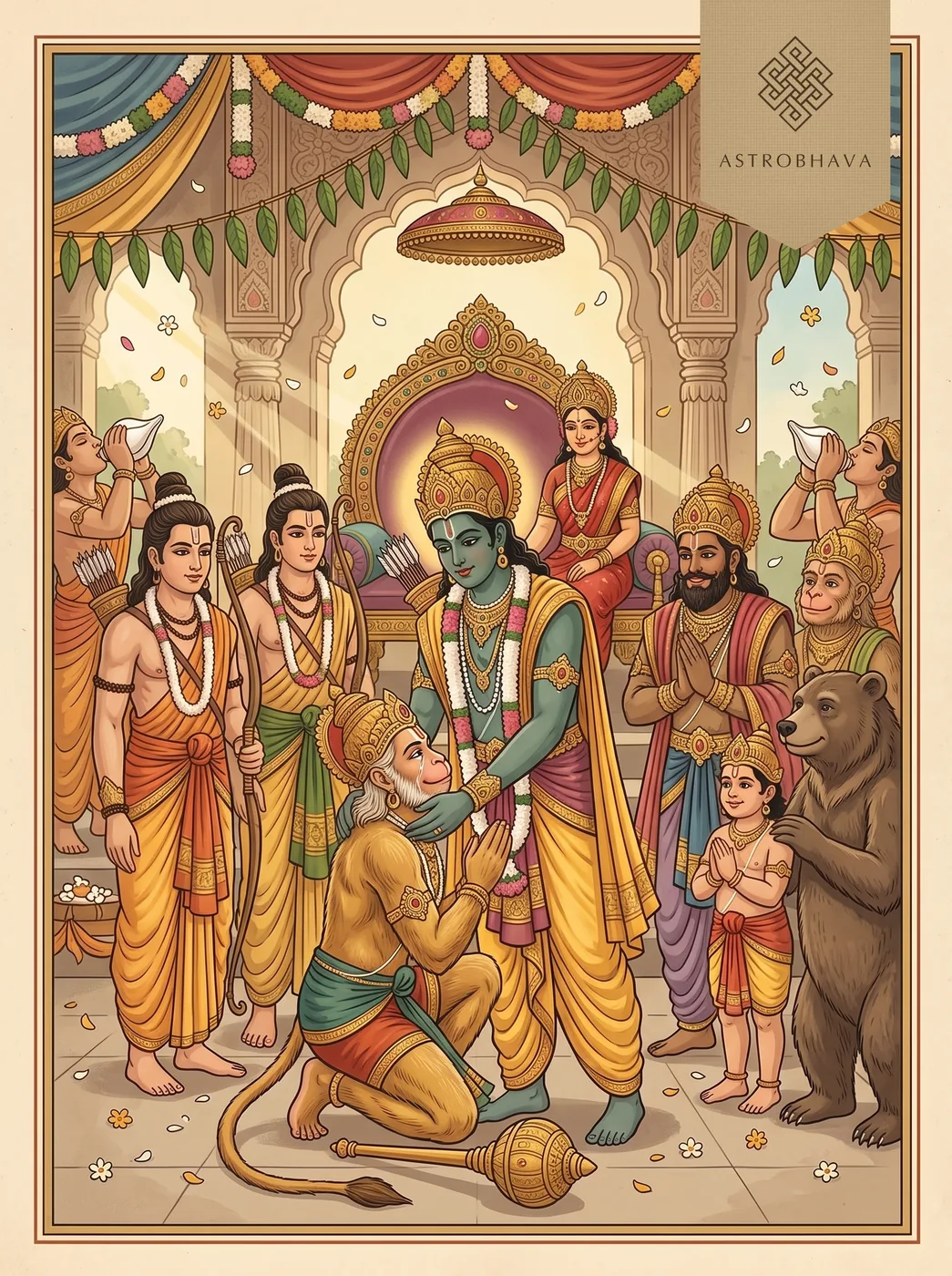
The dandakam says nothing about how it came to be written; instead it tells Hanuman's own story in the order of the Ramayana, compressed into a few long breaths. It begins with the word 'tolli', long ago, when Hanuman served Sugriva as minister. Sent on his master's errand, he met Rama and Lakshmana, questioned them, and brought Sugriva into Rama's service; Vali fell, and Rama's kind glance rested on the messenger. For Rama's cause he reached Lanka, killed Lankini, the guardian of the city, and set the city alight. He found Sita, the daughter of the Earth, gave her Rama's ring and carried her jewel back to a gladdened Rama. With Sugriva, Angada and Jambavan he crossed the bridge to Lanka. When Ravana hurled a great weapon and Lakshmana fell senseless, Hanuman brought the Sanjivini herb and restored him. After Rama's arrows had finished Kumbhakarna and Ravana, Hanuman led Vibhishana to his coronation, brought Sita back to Rama and travelled with them to Ayodhya. The narrative ends on a single remembered sentence: in the bustle of Rama's own coronation, Rama honours Hanuman by saying that no one is dearer to him. Only after that line does the poet turn from story to prayer.
The mantra, in six scripts
- శ్రీ
- śrī — revered
- ఆంజనేయం
- āṁjanēyaṁ — Anjaneya, son of Anjana
- ప్రసన్నాంజనేయం
- prasannāṁjanēyaṁ — the gracious Anjaneya
- ప్రభాదివ్యకాయం
- prabhādivyakāyaṁ — whose divine body shines
- ప్రకీర్తి
- prakīrti — great renown
- ప్రదాయం
- pradāyaṁ — the giver of
- భజే
- bhajē — I worship
- వాయుపుత్రం
- vāyuputraṁ — the son of Vayu
- భజే
- bhajē — I worship
- వాలగాత్రం
- vālagātraṁ — the one with the mighty tail
- భజేఽహం
- bhajē'haṁ — I worship
- పవిత్రం
- pavitraṁ — the pure one
- భజే
- bhajē — I worship
- సూర్యమిత్రం
- sūryamitraṁ — the friend of the Sun
- భజే
- bhajē — I worship
- రుద్రరూపం
- rudrarūpaṁ — the one of Rudra's form
- భజే
- bhajē — I worship
- బ్రహ్మతేజం
- brahmatējaṁ — the one with Brahma's splendour
Anjaneya Dandakam lyrics in full
The complete dandakam, one continuous prose-poem, set out in fifteen sense-units with an English meaning for each.
All 15 verses, in Sanskrit, Tamil, Telugu, Kannada, Malayalam and English, each with its meaning. Choose a script:
Download the Anjaneya Dandakam PDFAll 15 verses with their meanings, in Sanskrit. Free to print and keep.
श्री आंजनेयं प्रसन्नांजनेयं प्रभादिव्यकायं प्रकीर्ति प्रदायं ।
भजे वायुपुत्रं भजे वालगात्रं भजेऽहं पवित्रं भजे सूर्यमित्रं भजे रुद्ररूपं भजे ब्रह्मतेजं ॥
ஶ்ரீ ஆம்ஜநேயம் ப்ரஸந்நாம்ஜநேயம் ப்ரபாதிவ்யகாயம் ப்ரகீர்தி ப்ரதாயம் ।
பஜே வாயுபுத்ரம் பஜே வாலகாத்ரம் பஜேஹம் பவித்ரம் பஜே ஸூர்யமித்ரம் பஜே ருத்ரரூபம் பஜே ப்ரஹ்மதேஜம் ॥
శ్రీ ఆంజనేయం ప్రసన్నాంజనేయం ప్రభాదివ్యకాయం ప్రకీర్తి ప్రదాయం ।
భజే వాయుపుత్రం భజే వాలగాత్రం భజేఽహం పవిత్రం భజే సూర్యమిత్రం భజే రుద్రరూపం భజే బ్రహ్మతేజం ॥
ಶ್ರೀ ಆಂಜನೇಯಂ ಪ್ರಸನ್ನಾಂಜನೇಯಂ ಪ್ರಭಾದಿವ್ಯಕಾಯಂ ಪ್ರಕೀರ್ತಿ ಪ್ರದಾಯಂ ।
ಭಜೇ ವಾಯುಪುತ್ರಂ ಭಜೇ ವಾಲಗಾತ್ರಂ ಭಜೇಽಹಂ ಪವಿತ್ರಂ ಭಜೇ ಸೂರ್ಯಮಿತ್ರಂ ಭಜೇ ರುದ್ರರೂಪಂ ಭಜೇ ಬ್ರಹ್ಮತೇಜಂ ॥
ശ്രീ ആംജനേയം പ്രസന്നാംജനേയം പ്രഭാദിവ്യകായം പ്രകീര്തി പ്രദായം ।
ഭജേ വായുപുത്രം ഭജേ വാലഗാത്രം ഭജേഽഹം പവിത്രം ഭജേ സൂര്യമിത്രം ഭജേ രുദ്രരൂപം ഭജേ ബ്രഹ്മതേജം ॥
śrī āṃjaneyaṃ prasannāṃjaneyaṃ prabhādivyakāyaṃ prakīrti pradāyaṃ |
bhaje vāyuputraṃ bhaje vālagātraṃ bhaje'haṃ pavitraṃ bhaje sūryamitraṃ bhaje rudrarūpaṃ bhaje brahmatejaṃ ||
Glory to Sri Anjaneya, the gracious Anjaneya, whose divine body shines with radiance and who grants great renown. I worship the son of Vayu, the one with the mighty tail; I worship the pure one, the friend of the Sun, the one of Rudra's form, the one with Brahma's splendour.
बटंचुन् प्रभातंबु सायंत्रंबु नी नामसंकीर्तनल् जेसि नी रूपु वर्णिंचि नीमीद ने दंडकं बोक्कटिंजेय नूहिंचि ।
नी मूर्तिनिं गांचि नी सुंदरं बेंचि नी दासदासुंडनै रामभक्तुंडनै निन्नु ने गोल्चेदन् ॥
படம்சுந் ப்ரபாதம்பு ஸாயம்த்ரம்பு நீ நாமஸம்கீர்தநல் ஜேஸி நீ ரூபு வர்ணிம்சி நீமீத நே தம்டகம் போக்கடிம்ஜேய நூஹிம்சி ।
நீ மூர்திநிம் காம்சி நீ ஸும்தரம் பேம்சி நீ தாஸதாஸும்டநை ராமபக்தும்டநை நிந்நு நே கோல்சேதந் ॥
బటంచున్ ప్రభాతంబు సాయంత్రంబు నీ నామసంకీర్తనల్ జేసి నీ రూపు వర్ణించి నీమీద నే దండకం బొక్కటింజేయ నూహించి ।
నీ మూర్తినిం గాంచి నీ సుందరం బెంచి నీ దాసదాసుండనై రామభక్తుండనై నిన్ను నే గొల్చెదన్ ॥
ಬಟಂಚುನ್ ಪ್ರಭಾತಂಬು ಸಾಯಂತ್ರಂಬು ನೀ ನಾಮಸಂಕೀರ್ತನಲ್ ಜೇಸಿ ನೀ ರೂಪು ವರ್ಣಿಂಚಿ ನೀಮೀದ ನೇ ದಂಡಕಂ ಬೋಕ್ಕಟಿಂಜೇಯ ನೂಹಿಂಚಿ ।
ನೀ ಮೂರ್ತಿನಿಂ ಗಾಂಚಿ ನೀ ಸುಂದರಂ ಬೇಂಚಿ ನೀ ದಾಸದಾಸುಂಡನೈ ರಾಮಭಕ್ತುಂಡನೈ ನಿನ್ನು ನೇ ಗೋಲ್ಚೇದನ್ ॥
ബടംചുന് പ്രഭാതംബു സായംത്രംബു നീ നാമസംകീര്തനല് ജേസി നീ രൂപു വര്ണിംചി നീമീദ നേ ദംഡകം ബോക്കടിംജേയ നൂഹിംചി ।
നീ മൂര്തിനിം ഗാംചി നീ സുംദരം ബേംചി നീ ദാസദാസുംഡനൈ രാമഭക്തുംഡനൈ നിന്നു നേ ഗോല്ചേദന് ॥
baṭaṃcun prabhātaṃbu sāyaṃtraṃbu nī nāmasaṃkīrtanal jesi nī rūpu varṇiṃci nīmīda ne daṃḍakaṃ bokkaṭiṃjeya nūhiṃci |
nī mūrtiniṃ gāṃci nī suṃdaraṃ beṃci nī dāsadāsuṃḍanai rāmabhaktuṃḍanai ninnu ne golcedan ||
Saying this, morning and evening I sing your names, describe your form, and have resolved to compose this dandakam on you. Beholding your image and admiring your beauty, as the servant of your servants and a devotee of Rama, I worship you.
नी कटाक्षंबुनन् जूचिते वेडुकल् जेसिते ना मोरालिंचिते नन्नु रक्षिंचिते ।
अंजनादेवि गर्भान्वया देव निन्नेंच नेनेंतवाडन् दयाशालिवै चूचिते दातवै ब्रोचिते दग्गरन् निल्चिते ॥
நீ கடாக்ஷம்புநந் ஜூசிதே வேடுகல் ஜேஸிதே நா மோராலிம்சிதே நந்நு ரக்ஷிம்சிதே ।
அம்ஜநாதேவி கர்பாந்வயா தேவ நிந்நேம்ச நேநேம்தவாடந் தயாஶாலிவை சூசிதே தாதவை ப்ரோசிதே தக்கரந் நில்சிதே ॥
నీ కటాక్షంబునన్ జూచితే వేడుకల్ జేసితే నా మొరాలించితే నన్ను రక్షించితే ।
అంజనాదేవి గర్భాన్వయా దేవ నిన్నెంచ నేనెంతవాడన్ దయాశాలివై చూచితే దాతవై బ్రోచితే దగ్గరన్ నిల్చితే ॥
ನೀ ಕಟಾಕ್ಷಂಬುನನ್ ಜೂಚಿತೇ ವೇಡುಕಲ್ ಜೇಸಿತೇ ನಾ ಮೋರಾಲಿಂಚಿತೇ ನನ್ನು ರಕ್ಷಿಂಚಿತೇ ।
ಅಂಜನಾದೇವಿ ಗರ್ಭಾನ್ವಯಾ ದೇವ ನಿನ್ನೇಂಚ ನೇನೇಂತವಾಡನ್ ದಯಾಶಾಲಿವೈ ಚೂಚಿತೇ ದಾತವೈ ಬ್ರೋಚಿತೇ ದಗ್ಗರನ್ ನಿಲ್ಚಿತೇ ॥
നീ കടാക്ഷംബുനന് ജൂചിതേ വേഡുകല് ജേസിതേ നാ മോരാലിംചിതേ നന്നു രക്ഷിംചിതേ ।
അംജനാദേവി ഗര്ഭാന്വയാ ദേവ നിന്നേംച നേനേംതവാഡന് ദയാശാലിവൈ ചൂചിതേ ദാതവൈ ബ്രോചിതേ ദഗ്ഗരന് നില്ചിതേ ॥
nī kaṭākṣaṃbunan jūcite veḍukal jesite nā morāliṃcite nannu rakṣiṃcite |
aṃjanādevi garbhānvayā deva ninneṃca neneṃtavāḍan dayāśālivai cūcite dātavai brocite daggaran nilcite ||
If you look on me with your gracious glance, take delight in me, hear my plea and protect me... O lord born of Anjana Devi, who am I to measure your greatness? If you look on me as the compassionate one, save me as the generous giver and stand close beside me...
तोल्लि सुग्रीवुकुन् मंत्रिवै स्वामि कार्यार्थमै येगि श्रीराम सौमित्रुलं जूचि वारिन्विचारिंचि ।
सर्वेशु पूजिंचि यब्बानुजुन् बंटु गाविंचि यव्वालिनिन् जंपि काकुत्स्थतिलकुन् दयादृष्टि वीक्षिंचि किष्किंधकेतेंचि ॥
தோல்லி ஸுக்ரீவுகுந் மம்த்ரிவை ஸ்வாமி கார்யார்தமை யேகி ஶ்ரீராம ஸௌமித்ருலம் ஜூசி வாரிந்விசாரிம்சி ।
ஸர்வேஶு பூஜிம்சி யப்பாநுஜுந் பம்டு காவிம்சி யவ்வாலிநிந் ஜம்பி காகுத்ஸ்ததிலகுந் தயாத்ருஷ்டி வீக்ஷிம்சி கிஷ்கிம்தகேதேம்சி ॥
తొల్లి సుగ్రీవుకున్ మంత్రివై స్వామి కార్యార్థమై యేగి శ్రీరామ సౌమిత్రులం జూచి వారిన్విచారించి ।
సర్వేశు పూజించి యబ్బానుజున్ బంటు గావించి యవ్వాలినిన్ జంపి కాకుత్స్థతిలకున్ దయాదృష్టి వీక్షించి కిష్కింధకేతెంచి ॥
ತೋಲ್ಲಿ ಸುಗ್ರೀವುಕುನ್ ಮಂತ್ರಿವೈ ಸ್ವಾಮಿ ಕಾರ್ಯಾರ್ಥಮೈ ಯೇಗಿ ಶ್ರೀರಾಮ ಸೌಮಿತ್ರುಲಂ ಜೂಚಿ ವಾರಿನ್ವಿಚಾರಿಂಚಿ ।
ಸರ್ವೇಶು ಪೂಜಿಂಚಿ ಯಬ್ಬಾನುಜುನ್ ಬಂಟು ಗಾವಿಂಚಿ ಯವ್ವಾಲಿನಿನ್ ಜಂಪಿ ಕಾಕುತ್ಸ್ಥತಿಲಕುನ್ ದಯಾದೃಷ್ಟಿ ವೀಕ್ಷಿಂಚಿ ಕಿಷ್ಕಿಂಧಕೇತೇಂಚಿ ॥
തോല്ലി സുഗ്രീവുകുന് മംത്രിവൈ സ്വാമി കാര്യാര്ഥമൈ യേഗി ശ്രീരാമ സൌമിത്രുലം ജൂചി വാരിന്വിചാരിംചി ।
സര്വേശു പൂജിംചി യബ്ബാനുജുന് ബംടു ഗാവിംചി യവ്വാലിനിന് ജംപി കാകുത്സ്ഥതിലകുന് ദയാദൃഷ്ടി വീക്ഷിംചി കിഷ്കിംധകേതേംചി ॥
tolli sugrīvukun maṃtrivai svāmi kāryārthamai yegi śrīrāma saumitrulaṃ jūci vārinvicāriṃci |
sarveśu pūjiṃci yabbānujun baṃṭu gāviṃci yavvālinin jaṃpi kākutsthatilakun dayādṛṣṭi vīkṣiṃci kiṣkiṃdhaketeṃci ||
Long ago, as minister to Sugriva, you went forth on your master's errand, met Rama and Lakshmana and questioned them. You worshipped the Lord, made the son of the Sun (Sugriva) His servant, saw Vali slain, received the kind glance of the jewel of the Kakutstha line (Rama), and came to Kishkindha.
श्रीराम कार्यार्थमै लंक केतेंचियुन् लंकिणिन् जंपियुन् लंकयुन् गाल्चियुन् ।
भूमिजन् जूचि यानंदमुप्पोंग यायुंगरंबिच्चि यारत्नमुन् देच्चि श्रीरामुनकुन्निच्चि संतोषुनिन् जेसि ॥
ஶ்ரீராம கார்யார்தமை லம்க கேதேம்சியுந் லம்கிணிந் ஜம்பியுந் லம்கயுந் கால்சியுந் ।
பூமிஜந் ஜூசி யாநம்தமுப்போம்க யாயும்கரம்பிச்சி யாரத்நமுந் தேச்சி ஶ்ரீராமுநகுந்நிச்சி ஸம்தோஷுநிந் ஜேஸி ॥
శ్రీరామ కార్యార్థమై లంక కేతెంచియున్ లంకిణిన్ జంపియున్ లంకయున్ గాల్చియున్ ।
భూమిజన్ జూచి యానందముప్పొంగ యాయుంగరంబిచ్చి యారత్నమున్ దెచ్చి శ్రీరామునకున్నిచ్చి సంతోషునిన్ జేసి ॥
ಶ್ರೀರಾಮ ಕಾರ್ಯಾರ್ಥಮೈ ಲಂಕ ಕೇತೇಂಚಿಯುನ್ ಲಂಕಿಣಿನ್ ಜಂಪಿಯುನ್ ಲಂಕಯುನ್ ಗಾಲ್ಚಿಯುನ್ ।
ಭೂಮಿಜನ್ ಜೂಚಿ ಯಾನಂದಮುಪ್ಪೋಂಗ ಯಾಯುಂಗರಂಬಿಚ್ಚಿ ಯಾರತ್ನಮುನ್ ದೇಚ್ಚಿ ಶ್ರೀರಾಮುನಕುನ್ನಿಚ್ಚಿ ಸಂತೋಷುನಿನ್ ಜೇಸಿ ॥
ശ്രീരാമ കാര്യാര്ഥമൈ ലംക കേതേംചിയുന് ലംകിണിന് ജംപിയുന് ലംകയുന് ഗാല്ചിയുന് ।
ഭൂമിജന് ജൂചി യാനംദമുപ്പോംഗ യായുംഗരംബിച്ചി യാരത്നമുന് ദേച്ചി ശ്രീരാമുനകുന്നിച്ചി സംതോഷുനിന് ജേസി ॥
śrīrāma kāryārthamai laṃka keteṃciyun laṃkiṇin jaṃpiyun laṃkayun gālciyun |
bhūmijan jūci yānaṃdamuppoṃga yāyuṃgaraṃbicci yāratnamun decci śrīrāmunakunnicci saṃtoṣunin jesi ||
For Rama's cause you reached Lanka, slew Lankini and set Lanka ablaze. You found Sita, the daughter of the Earth, and in overflowing joy gave her the ring, brought back her jewel, handed it to Rama and made him glad.
सुग्रीवुडा यंगदा जांबवंतादि वीरादुलन् गूडि यासेतुवुन् दाटि वानरानीकमुल् पेन्मूकलै दैत्युलन् द्रुंचगा ।
रावणुंडंत कालाग्नि रूपोग्रुडै कोरि ब्रह्मांडमैनट्टि या शक्तिनिन् वेसि या लक्ष्मणुन् मूर्छनोंदिंपगा नप्पुडे नीवु संजीविनिन् देच्चि सौमित्रिकिन्निच्चि प्राणंबु रक्षिंपगा ॥
ஸுக்ரீவுடா யம்கதா ஜாம்பவம்தாதி வீராதுலந் கூடி யாஸேதுவுந் தாடி வாநராநீகமுல் பேந்மூகலை தைத்யுலந் த்ரும்சகா ।
ராவணும்டம்த காலாக்நி ரூபோக்ருடை கோரி ப்ரஹ்மாம்டமைநட்டி யா ஶக்திநிந் வேஸி யா லக்ஷ்மணுந் மூர்சநோம்திம்பகா நப்புடே நீவு ஸம்ஜீவிநிந் தேச்சி ஸௌமித்ரிகிந்நிச்சி ப்ராணம்பு ரக்ஷிம்பகா ॥
సుగ్రీవుడా యంగదా జాంబవంతాది వీరాదులన్ గూడి యాసేతువున్ దాటి వానరానీకముల్ పెన్మూకలై దైత్యులన్ ద్రుంచగా ।
రావణుండంత కాలాగ్ని రూపోగ్రుడై కోరి బ్రహ్మాండమైనట్టి యా శక్తినిన్ వేసి యా లక్ష్మణున్ మూర్ఛనొందింపగా నప్పుడే నీవు సంజీవినిన్ దెచ్చి సౌమిత్రికిన్నిచ్చి ప్రాణంబు రక్షింపగా ॥
ಸುಗ್ರೀವುಡಾ ಯಂಗದಾ ಜಾಂಬವಂತಾದಿ ವೀರಾದುಲನ್ ಗೂಡಿ ಯಾಸೇತುವುನ್ ದಾಟಿ ವಾನರಾನೀಕಮುಲ್ ಪೇನ್ಮೂಕಲೈ ದೈತ್ಯುಲನ್ ದ್ರುಂಚಗಾ ।
ರಾವಣುಂಡಂತ ಕಾಲಾಗ್ನಿ ರೂಪೋಗ್ರುಡೈ ಕೋರಿ ಬ್ರಹ್ಮಾಂಡಮೈನಟ್ಟಿ ಯಾ ಶಕ್ತಿನಿನ್ ವೇಸಿ ಯಾ ಲಕ್ಷ್ಮಣುನ್ ಮೂರ್ಛನೋಂದಿಂಪಗಾ ನಪ್ಪುಡೇ ನೀವು ಸಂಜೀವಿನಿನ್ ದೇಚ್ಚಿ ಸೌಮಿತ್ರಿಕಿನ್ನಿಚ್ಚಿ ಪ್ರಾಣಂಬು ರಕ್ಷಿಂಪಗಾ ॥
സുഗ്രീവുഡാ യംഗദാ ജാംബവംതാദി വീരാദുലന് ഗൂഡി യാസേതുവുന് ദാടി വാനരാനീകമുല് പേന്മൂകലൈ ദൈത്യുലന് ദ്രുംചഗാ ।
രാവണുംഡംത കാലാഗ്നി രൂപോഗ്രുഡൈ കോരി ബ്രഹ്മാംഡമൈനട്ടി യാ ശക്തിനിന് വേസി യാ ലക്ഷ്മണുന് മൂര്ഛനോംദിംപഗാ നപ്പുഡേ നീവു സംജീവിനിന് ദേച്ചി സൌമിത്രികിന്നിച്ചി പ്രാണംബു രക്ഷിംപഗാ ॥
sugrīvuḍā yaṃgadā jāṃbavaṃtādi vīrādulan gūḍi yāsetuvun dāṭi vānarānīkamul penmūkalai daityulan druṃcagā |
rāvaṇuṃḍaṃta kālāgni rūpogruḍai kori brahmāṃḍamainaṭṭi yā śaktinin vesi yā lakṣmaṇun mūrchanoṃdiṃpagā nappuḍe nīvu saṃjīvinin decci saumitrikinnicci prāṇaṃbu rakṣiṃpagā ||
With Sugriva, Angada, Jambavan and the other heroes you crossed the bridge, and the monkey armies in vast throngs crushed the demons. Then Ravana, fierce as the fire of doom, hurled his mighty weapon and struck Lakshmana down in a swoon; at once you brought the Sanjivini herb, gave it to Lakshmana and saved his life.
कुंभकर्णादुलन्वीरुलन् बोरि श्रीराम बाणाग्नि वारंदरिन् रावणुन् जंपगा नंत लोकंबुलानंदमै युंड ।
नव्वेळलंदुन् विभीषणुन् वेडुकन् दोडुकन् वच्चि पट्टाभिषेकंबु चेयिंचि ॥
கும்பகர்ணாதுலந்வீருலந் போரி ஶ்ரீராம பாணாக்நி வாரம்தரிந் ராவணுந் ஜம்பகா நம்த லோகம்புலாநம்தமை யும்ட ।
நவ்வேளலம்துந் விபீஷணுந் வேடுகந் தோடுகந் வச்சி பட்டாபிஷேகம்பு சேயிம்சி ॥
కుంభకర్ణాదులన్వీరులన్ బోరి శ్రీరామ బాణాగ్ని వారందరిన్ రావణున్ జంపగా నంత లోకంబులానందమై యుండ ।
నవ్వేళలందున్ విభీషణున్ వేడుకన్ దోడుకన్ వచ్చి పట్టాభిషేకంబు చేయించి ॥
ಕುಂಭಕರ್ಣಾದುಲನ್ವೀರುಲನ್ ಬೋರಿ ಶ್ರೀರಾಮ ಬಾಣಾಗ್ನಿ ವಾರಂದರಿನ್ ರಾವಣುನ್ ಜಂಪಗಾ ನಂತ ಲೋಕಂಬುಲಾನಂದಮೈ ಯುಂಡ ।
ನವ್ವೇಳಲಂದುನ್ ವಿಭೀಷಣುನ್ ವೇಡುಕನ್ ದೋಡುಕನ್ ವಚ್ಚಿ ಪಟ್ಟಾಭಿಷೇಕಂಬು ಚೇಯಿಂಚಿ ॥
കുംഭകര്ണാദുലന്വീരുലന് ബോരി ശ്രീരാമ ബാണാഗ്നി വാരംദരിന് രാവണുന് ജംപഗാ നംത ലോകംബുലാനംദമൈ യുംഡ ।
നവ്വേളലംദുന് വിഭീഷണുന് വേഡുകന് ദോഡുകന് വച്ചി പട്ടാഭിഷേകംബു ചേയിംചി ॥
kuṃbhakarṇādulanvīrulan bori śrīrāma bāṇāgni vāraṃdarin rāvaṇun jaṃpagā naṃta lokaṃbulānaṃdamai yuṃḍa |
navveḷalaṃdun vibhīṣaṇun veḍukan doḍukan vacci paṭṭābhiṣekaṃbu ceyiṃci ||
When the heroes led by Kumbhakarna fought and the fire of Rama's arrows slew them all and Ravana, every world rejoiced. At that time you gladly brought Vibhishana and had him crowned.
सीतामहादेविनिन् देच्चि श्रीरामुतोजेर्चि अय्योध्यकुन् वच्चि पट्टाभिषेकंबु संरंभमैयुन्न ।
नीकन्न नाकेव्वरुन् गूर्मि लेरंचु मन्निंचिनन् ॥
ஸீதாமஹாதேவிநிந் தேச்சி ஶ்ரீராமுதோஜேர்சி அய்யோத்யகுந் வச்சி பட்டாபிஷேகம்பு ஸம்ரம்பமையுந்ந ।
நீகந்ந நாகேவ்வருந் கூர்மி லேரம்சு மந்நிம்சிநந் ॥
సీతామహాదేవినిన్ దెచ్చి శ్రీరాముతోజేర్చి అయ్యోధ్యకున్ వచ్చి పట్టాభిషేకంబు సంరంభమైయున్న ।
నీకన్న నాకెవ్వరున్ గూర్మి లేరంచు మన్నించినన్ ॥
ಸೀತಾಮಹಾದೇವಿನಿನ್ ದೇಚ್ಚಿ ಶ್ರೀರಾಮುತೋಜೇರ್ಚಿ ಅಯ್ಯೋಧ್ಯಕುನ್ ವಚ್ಚಿ ಪಟ್ಟಾಭಿಷೇಕಂಬು ಸಂರಂಭಮೈಯುನ್ನ ।
ನೀಕನ್ನ ನಾಕೇವ್ವರುನ್ ಗೂರ್ಮಿ ಲೇರಂಚು ಮನ್ನಿಂಚಿನನ್ ॥
സീതാമഹാദേവിനിന് ദേച്ചി ശ്രീരാമുതോജേര്ചി അയ്യോധ്യകുന് വച്ചി പട്ടാഭിഷേകംബു സംരംഭമൈയുന്ന ।
നീകന്ന നാകേവ്വരുന് ഗൂര്മി ലേരംചു മന്നിംചിനന് ॥
sītāmahādevinin decci śrīrāmutojerci ayyodhyakun vacci paṭṭābhiṣekaṃbu saṃraṃbhamaiyunna |
nīkanna nākevvarun gūrmi leraṃcu manniṃcinan ||
You brought the great goddess Sita and reunited her with Rama, and came to Ayodhya; in the joyous bustle of the coronation, Rama honoured you, saying that no one was dearer to him than you.
श्रीरामभक्ति प्रशस्तंबुगा निन्नु सेविंचि नी नामकीर्तनल् जेसिते ।
पापमुल्बायुने भयमुलुन् दीरुने भाग्यमुल् गल्गुने सकल साम्राज्यमुल् सकल संपत्तुलुन् गल्गुने ॥
ஶ்ரீராமபக்தி ப்ரஶஸ்தம்புகா நிந்நு ஸேவிம்சி நீ நாமகீர்தநல் ஜேஸிதே ।
பாபமுல்பாயுநே பயமுலுந் தீருநே பாக்யமுல் கல்குநே ஸகல ஸாம்ராஜ்யமுல் ஸகல ஸம்பத்துலுந் கல்குநே ॥
శ్రీరామభక్తి ప్రశస్తంబుగా నిన్ను సేవించి నీ నామకీర్తనల్ జేసితే ।
పాపముల్బాయునే భయములున్ దీరునే భాగ్యముల్ గల్గునే సకల సామ్రాజ్యముల్ సకల సంపత్తులున్ గల్గునే ॥
ಶ್ರೀರಾಮಭಕ್ತಿ ಪ್ರಶಸ್ತಂಬುಗಾ ನಿನ್ನು ಸೇವಿಂಚಿ ನೀ ನಾಮಕೀರ್ತನಲ್ ಜೇಸಿತೇ ।
ಪಾಪಮುಲ್ಬಾಯುನೇ ಭಯಮುಲುನ್ ದೀರುನೇ ಭಾಗ್ಯಮುಲ್ ಗಲ್ಗುನೇ ಸಕಲ ಸಾಮ್ರಾಜ್ಯಮುಲ್ ಸಕಲ ಸಂಪತ್ತುಲುನ್ ಗಲ್ಗುನೇ ॥
ശ്രീരാമഭക്തി പ്രശസ്തംബുഗാ നിന്നു സേവിംചി നീ നാമകീര്തനല് ജേസിതേ ।
പാപമുല്ബായുനേ ഭയമുലുന് ദീരുനേ ഭാഗ്യമുല് ഗല്ഗുനേ സകല സാമ്രാജ്യമുല് സകല സംപത്തുലുന് ഗല്ഗുനേ ॥
śrīrāmabhakti praśastaṃbugā ninnu seviṃci nī nāmakīrtanal jesite |
pāpamulbāyune bhayamulun dīrune bhāgyamul galgune sakala sāmrājyamul sakala saṃpattulun galgune ||
For one who serves you, foremost in devotion to Rama, and sings your names, will sins not fall away, will fears not end, will good fortune not come, will every kingdom and every wealth not be gained? The verse says all these follow.
वानराकार यो भक्तमंदार यो पुण्यसंचार यो धीर यो वीर ।
नीवे समस्तंबु नीवे महाफलमुगा वेलसि ॥
வாநராகார யோ பக்தமம்தார யோ புண்யஸம்சார யோ தீர யோ வீர ।
நீவே ஸமஸ்தம்பு நீவே மஹாபலமுகா வேலஸி ॥
వానరాకార యో భక్తమందార యో పుణ్యసంచార యో ధీర యో వీర ।
నీవే సమస్తంబు నీవే మహాఫలముగా వెలసి ॥
ವಾನರಾಕಾರ ಯೋ ಭಕ್ತಮಂದಾರ ಯೋ ಪುಣ್ಯಸಂಚಾರ ಯೋ ಧೀರ ಯೋ ವೀರ ।
ನೀವೇ ಸಮಸ್ತಂಬು ನೀವೇ ಮಹಾಫಲಮುಗಾ ವೇಲಸಿ ॥
വാനരാകാര യോ ഭക്തമംദാര യോ പുണ്യസംചാര യോ ധീര യോ വീര ।
നീവേ സമസ്തംബു നീവേ മഹാഫലമുഗാ വേലസി ॥
vānarākāra yo bhaktamaṃdāra yo puṇyasaṃcāra yo dhīra yo vīra |
nīve samastaṃbu nīve mahāphalamugā velasi ||
O you of monkey form, wish-fulfilling tree of your devotees, you whose every movement is holy, O steadfast one, O hero! You alone are everything; you alone shine forth as the great reward.
या तारक ब्रह्ममंत्रंबु संधानमुन् जेयुचुन् स्थिरमुगा वज्रदेहंबुनुन् दाल्चि ।
श्रीराम श्रीराम यंचुन् मनःपूतमैन येप्पुडुन् तप्पकन् तलतु ना जिह्वयंदुंडियुन् ॥
யா தாரக ப்ரஹ்மமம்த்ரம்பு ஸம்தாநமுந் ஜேயுசுந் ஸ்திரமுகா வஜ்ரதேஹம்புநுந் தால்சி ।
ஶ்ரீராம ஶ்ரீராம யம்சுந் மநஃபூதமைந யேப்புடுந் தப்பகந் தலது நா ஜிஹ்வயம்தும்டியுந் ॥
యా తారక బ్రహ్మమంత్రంబు సంధానమున్ జేయుచున్ స్థిరముగా వజ్రదేహంబునున్ దాల్చి ।
శ్రీరామ శ్రీరామ యంచున్ మనఃపూతమైన యెప్పుడున్ తప్పకన్ తలతు నా జిహ్వయందుండియున్ ॥
ಯಾ ತಾರಕ ಬ್ರಹ್ಮಮಂತ್ರಂಬು ಸಂಧಾನಮುನ್ ಜೇಯುಚುನ್ ಸ್ಥಿರಮುಗಾ ವಜ್ರದೇಹಂಬುನುನ್ ದಾಲ್ಚಿ ।
ಶ್ರೀರಾಮ ಶ್ರೀರಾಮ ಯಂಚುನ್ ಮನಃಪೂತಮೈನ ಯೇಪ್ಪುಡುನ್ ತಪ್ಪಕನ್ ತಲತು ನಾ ಜಿಹ್ವಯಂದುಂಡಿಯುನ್ ॥
യാ താരക ബ്രഹ്മമംത്രംബു സംധാനമുന് ജേയുചുന് സ്ഥിരമുഗാ വജ്രദേഹംബുനുന് ദാല്ചി ।
ശ്രീരാമ ശ്രീരാമ യംചുന് മനഃപൂതമൈന യേപ്പുഡുന് തപ്പകന് തലതു നാ ജിഹ്വയംദുംഡിയുന് ॥
yā tāraka brahmamaṃtraṃbu saṃdhānamun jeyucun sthiramugā vajradehaṃbunun dālci |
śrīrāma śrīrāma yaṃcun manaḥpūtamaina yeppuḍun tappakan talatu nā jihvayaṃduṃḍiyun ||
Ever absorbed in the Taraka Brahma mantra, steadfast, wearing a body as hard as diamond, chanting 'Sri Rama, Sri Rama' with a purified mind, always and without fail, I hold you in my thoughts, dwelling upon my tongue.
दीर्घदेहंबु त्रैलोक्य संचारिवै राम नामांकितध्यानिवै ब्रह्मवै ब्रह्मतेजंबुनन् ।
रौद्र नी ज्वाल कल्लोल हा वीरहनुमंत ओंकार शब्दंबुलन् ॥
தீர்கதேஹம்பு த்ரைலோக்ய ஸம்சாரிவை ராம நாமாம்கிதத்யாநிவை ப்ரஹ்மவை ப்ரஹ்மதேஜம்புநந் ।
ரௌத்ர நீ ஜ்வால கல்லோல ஹா வீரஹநுமம்த ஓம்கார ஶப்தம்புலந் ॥
దీర్ఘదేహంబు త్రైలోక్య సంచారివై రామ నామాంకితధ్యానివై బ్రహ్మవై బ్రహ్మతేజంబునన్ ।
రౌద్ర నీ జ్వాల కల్లోల హా వీరహనుమంత ఓంకార శబ్దంబులన్ ॥
ದೀರ್ಘದೇಹಂಬು ತ್ರೈಲೋಕ್ಯ ಸಂಚಾರಿವೈ ರಾಮ ನಾಮಾಂಕಿತಧ್ಯಾನಿವೈ ಬ್ರಹ್ಮವೈ ಬ್ರಹ್ಮತೇಜಂಬುನನ್ ।
ರೌದ್ರ ನೀ ಜ್ವಾಲ ಕಲ್ಲೋಲ ಹಾ ವೀರಹನುಮಂತ ಓಂಕಾರ ಶಬ್ದಂಬುಲನ್ ॥
ദീര്ഘദേഹംബു ത്രൈലോക്യ സംചാരിവൈ രാമ നാമാംകിതധ്യാനിവൈ ബ്രഹ്മവൈ ബ്രഹ്മതേജംബുനന് ।
രൌദ്ര നീ ജ്വാല കല്ലോല ഹാ വീരഹനുമംത ഓംകാര ശബ്ദംബുലന് ॥
dīrghadehaṃbu trailokya saṃcārivai rāma nāmāṃkitadhyānivai brahmavai brahmatejaṃbunan |
raudra nī jvāla kallola hā vīrahanumaṃta oṃkāra śabdaṃbulan ||
With your vast body you roam the three worlds, rapt in meditation on Rama's name; you are Brahma himself, shining with Brahma's splendour. O heroic Hanuman, with the surging flames of your fierce wrath and the sound of Omkara...
क्रूरसर्वग्रहानीकमुन् भूत प्रेतंबुलन् पिशाच शाकिनी ढाकिनी मोहिनी गालिदय्यंबुलन् ।
नीदु वालंबुनन् जुट्टि नेलन् बडन् गोट्टि नीमुष्टि घातंबुलन् बाहुदंडंबुलन् रोमखंडंबुलन् द्रुंचि ॥
க்ரூரஸர்வக்ரஹாநீகமுந் பூத ப்ரேதம்புலந் பிஶாச ஶாகிநீ டாகிநீ மோஹிநீ காலிதய்யம்புலந் ।
நீது வாலம்புநந் ஜுட்டி நேலந் படந் கோட்டி நீமுஷ்டி காதம்புலந் பாஹுதம்டம்புலந் ரோமகம்டம்புலந் த்ரும்சி ॥
క్రూరసర్వగ్రహానీకమున్ భూత ప్రేతంబులన్ పిశాచ శాకినీ ఢాకినీ మోహినీ గాలిదయ్యంబులన్ ।
నీదు వాలంబునన్ జుట్టి నేలన్ బడన్ గొట్టి నీముష్టి ఘాతంబులన్ బాహుదండంబులన్ రోమఖండంబులన్ ద్రుంచి ॥
ಕ್ರೂರಸರ್ವಗ್ರಹಾನೀಕಮುನ್ ಭೂತ ಪ್ರೇತಂಬುಲನ್ ಪಿಶಾಚ ಶಾಕಿನೀ ಢಾಕಿನೀ ಮೋಹಿನೀ ಗಾಲಿದಯ್ಯಂಬುಲನ್ ।
ನೀದು ವಾಲಂಬುನನ್ ಜುಟ್ಟಿ ನೇಲನ್ ಬಡನ್ ಗೋಟ್ಟಿ ನೀಮುಷ್ಟಿ ಘಾತಂಬುಲನ್ ಬಾಹುದಂಡಂಬುಲನ್ ರೋಮಖಂಡಂಬುಲನ್ ದ್ರುಂಚಿ ॥
ക്രൂരസര്വഗ്രഹാനീകമുന് ഭൂത പ്രേതംബുലന് പിശാച ശാകിനീ ഢാകിനീ മോഹിനീ ഗാലിദയ്യംബുലന് ।
നീദു വാലംബുനന് ജുട്ടി നേലന് ബഡന് ഗോട്ടി നീമുഷ്ടി ഘാതംബുലന് ബാഹുദംഡംബുലന് രോമഖംഡംബുലന് ദ്രുംചി ॥
krūrasarvagrahānīkamun bhūta pretaṃbulan piśāca śākinī ḍhākinī mohinī gālidayyaṃbulan |
nīdu vālaṃbunan juṭṭi nelan baḍan goṭṭi nīmuṣṭi ghātaṃbulan bāhudaṃḍaṃbulan romakhaṃḍaṃbulan druṃci ||
...all the hosts of cruel planets, ghosts and spirits, Pishachas, Shakinis, Dakinis, Mohinis and evil spirits of the air, you wrap in your tail, dash to the ground, and crush with the blows of your fist, your mighty arms and the very hairs of your body.
कालाग्निरुद्रुंडवै ब्रह्मप्रभाभासितंबैन नीदिव्य तेजंबुनुन् जूचि ।
रारोरि ना मुद्दु नरसिंह यनुचुन् दयादृष्टि वीक्षिंचि नन्नेलु नास्वामि यो आंजनेया ॥
காலாக்நிருத்ரும்டவை ப்ரஹ்மப்ரபாபாஸிதம்பைந நீதிவ்ய தேஜம்புநுந் ஜூசி ।
ராரோரி நா முத்து நரஸிம்ஹ யநுசுந் தயாத்ருஷ்டி வீக்ஷிம்சி நந்நேலு நாஸ்வாமி யோ ஆம்ஜநேயா ॥
కాలాగ్నిరుద్రుండవై బ్రహ్మప్రభాభాసితంబైన నీదివ్య తేజంబునున్ జూచి ।
రారోరి నా ముద్దు నరసింహ యనుచున్ దయాదృష్టి వీక్షించి నన్నేలు నాస్వామి యో ఆంజనేయా ॥
ಕಾಲಾಗ್ನಿರುದ್ರುಂಡವೈ ಬ್ರಹ್ಮಪ್ರಭಾಭಾಸಿತಂಬೈನ ನೀದಿವ್ಯ ತೇಜಂಬುನುನ್ ಜೂಚಿ ।
ರಾರೋರಿ ನಾ ಮುದ್ದು ನರಸಿಂಹ ಯನುಚುನ್ ದಯಾದೃಷ್ಟಿ ವೀಕ್ಷಿಂಚಿ ನನ್ನೇಲು ನಾಸ್ವಾಮಿ ಯೋ ಆಂಜನೇಯಾ ॥
കാലാഗ്നിരുദ്രുംഡവൈ ബ്രഹ്മപ്രഭാഭാസിതംബൈന നീദിവ്യ തേജംബുനുന് ജൂചി ।
രാരോരി നാ മുദ്ദു നരസിംഹ യനുചുന് ദയാദൃഷ്ടി വീക്ഷിംചി നന്നേലു നാസ്വാമി യോ ആംജനേയാ ॥
kālāgnirudruṃḍavai brahmaprabhābhāsitaṃbaina nīdivya tejaṃbunun jūci |
rārori nā muddu narasiṃha yanucun dayādṛṣṭi vīkṣiṃci nannelu nāsvāmi yo āṃjaneyā ||
You become like Kalagni Rudra, the fire of dissolution; beholding your divine radiance, shining with the light of Brahma, I call out, 'Come, come, my beloved lion among men!' Look on me with compassion and rule over me, my lord, O Anjaneya.
नमस्ते सदा ब्रह्मचारी ।
नमो वायुपुत्रा नमस्ते नमस्ते नमः ॥
நமஸ்தே ஸதா ப்ரஹ்மசாரீ ।
நமோ வாயுபுத்ரா நமஸ்தே நமஸ்தே நமஃ ॥
నమస్తే సదా బ్రహ్మచారీ ।
నమో వాయుపుత్రా నమస్తే నమస్తే నమః ॥
ನಮಸ್ತೇ ಸದಾ ಬ್ರಹ್ಮಚಾರೀ ।
ನಮೋ ವಾಯುಪುತ್ರಾ ನಮಸ್ತೇ ನಮಸ್ತೇ ನಮಃ ॥
നമസ്തേ സദാ ബ്രഹ്മചാരീ ।
നമോ വായുപുത്രാ നമസ്തേ നമസ്തേ നമഃ ॥
namaste sadā brahmacārī |
namo vāyuputrā namaste namaste namaḥ ||
Salutations to you, the eternal brahmachari; salutations, O son of Vayu; salutations, salutations to you.
The syllable people get wrong
In prasannāṃjaneyaṃ the two words prasanna and āṃjaneyaṃ fuse, so the final a of prasanna and the opening ā of āñjaneya merge into one long ā: say pra-san-NAAN-ja-nay-yam without a break, not 'prasanna anjaneyam' with a pause and two separate vowels.
When the Anjaneya Dandakam is chanted
Weekday. Tuesday
Festival. Hanuman Jayanti in the Telugu states (Vaishakha Bahula Dashami)
Questions
Have your chart read before you decide
Chanting is yours to do, and free. But which deity your situation calls for — and whether a mantra alone is the right response — depends on your chart. Sometimes it is; sometimes it is not.
- Over 30 years in the Guru–Sishya Parampara, from the age of five
- He reads every chart himself — 60 minutes, one to one, never delegated
- Charts are read only between sunrise and sunset, following tradition
