Chandrasekhara Ashtakam
चन्द्रशेखर चन्द्रशेखर चन्द्रशेखर पाहि माम् । चन्द्रशेखर चन्द्रशेखर चन्द्रशेखर रक्ष माम् ॥Also known as Chandrashekhar Ashtakam
In Devanagari, Tamil, Telugu, Kannada, Malayalam and English — with the meaning of every word, and the one syllable most people pronounce wrongly.
 The Chandrasekhara Ashtakam Homam, performed for youBook →
What the Chandrasekhara Ashtakam is
The Chandrasekhara Ashtakam is a hymn of eight verses to Shiva as the one who wears the crescent moon, attributed to the sage Markandeya and known by its refrain, "Chandrashekhara, Chandrashekhara, Chandrashekhara, pahi mam." The standard printed edition places it in the fourth part of the Shiva Rahasya, chapter 14, and also records it at Padma Purana chapter 236, verses 75 to 82. Each verse is one long chain of titles closing on the same line: "I take refuge in Chandrashekhara; what can Yama do to me?" The titles move through Shiva's deeds: the three cities burned, Manmatha burned by the forehead eye, the elephant hide worn as a garment, the poison held in the throat, Andhaka ended, Daksha's sacrifice destroyed. Verse 5 reaches the title the hymn turns on, Shamanantaka, the ender of Death. Verses 7 and 8 widen to Shiva as moon, earth, fire, wind and sky, and as maker, keeper and withdrawer of the universe. One phala verse follows.
Why every verse ends by naming Yama
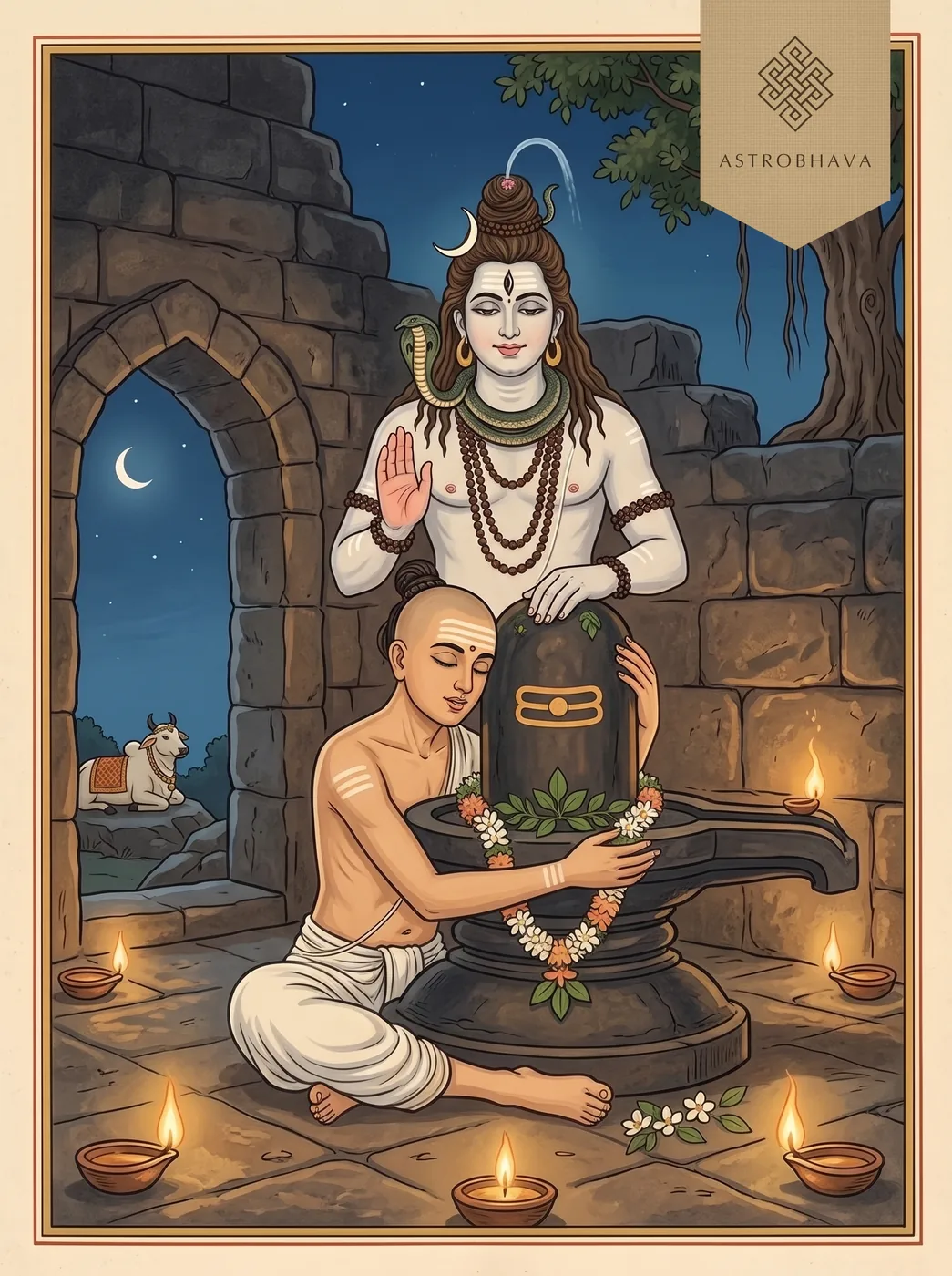
According to tradition, the sage Mrikandu and his wife had no child and prayed to Shiva, who put a choice before them: a son of long life and little worth, or a virtuous son who would see only sixteen years. They took the second. As that term closed, the young Markandeya was at worship before a Shivalinga. Yama's messengers could not take him, so Yama came in person, and his noose fell across the linga as well as the boy. Shiva came out of the stone and struck Yama down. The Shiva Rahasya chapter that carries this hymn is framed around exactly these matters: Markandeya's austerity, the restraint of Kala and the boon that followed. Accounts part ways on the hymn's moment. Its own phala verse says the son of Mrikanda made it in Shiva's presence while afraid of death, which sets it before the rescue; some retellings have it sung afterwards. Some add that the earth grew burdened with nobody dying, so Shiva revived Yama with a touch of his foot, and that Markandeya stayed sixteen. Thirukkadaiyur in Tamil Nadu claims the event, with a separate shrine to Shiva as Kalasamharamurti, while the temple at Thrikkadavoor in Kerala places it there.
The mantra, in six scripts
- रत्नसानुशरासनं
- ratnasānuśarāsanaṃ — whose bow is Meru, the jewelled peak
- रजताद्रिशृङ्गनिकेतनं
- rajatādriśṛṅganiketanaṃ — whose home is the summit of the silver mountain
- शिञ्जिनीकृतपन्नगेश्वरमच्युतानलसायकम्
- śiñjinīkṛtapannageśvaramacyutānalasāyakam — who made the serpent king his bowstring, with Vishnu and Fire as his arrow
- क्षिप्रदग्धपुरत्रयं
- kṣipradagdhapuratrayaṃ — who swiftly burned the three cities
- त्रिदिवालयैरभिवन्दितं
- tridivālayairabhivanditaṃ — bowed to by the dwellers of heaven
- चन्द्रशेखरमाश्रये
- candraśekharamāśraye — I take refuge in Chandrashekhara
- मम
- mama — my, to me
- किं
- kiṃ — what
- करिष्यति
- kariṣyati — will do
- वै
- vai — indeed
- यमः
- yamaḥ — Yama
Chandrasekhara Ashtakam lyrics in full
Eight verses with the refrain printed once at the opening, followed by the phala shruti. The printed closing line is given at the end.
All 11 verses, in Sanskrit, Tamil, Telugu, Kannada, Malayalam and English, each with its meaning. Choose a script:
Download the Chandrasekhara Ashtakam PDFAll 11 verses with their meanings, in Sanskrit. Free to print and keep.
चन्द्रशेखर चन्द्रशेखर चन्द्रशेखर पाहि माम् ।
चन्द्रशेखर चन्द्रशेखर चन्द्रशेखर रक्ष माम् ॥
சந்த்ரஶேகர சந்த்ரஶேகர சந்த்ரஶேகர பாஹி மாம் ।
சந்த்ரஶேகர சந்த்ரஶேகர சந்த்ரஶேகர ரக்ஷ மாம் ॥
చన్ద్రశేఖర చన్ద్రశేఖర చన్ద్రశేఖర పాహి మామ్ ।
చన్ద్రశేఖర చన్ద్రశేఖర చన్ద్రశేఖర రక్ష మామ్ ॥
ಚನ್ದ್ರಶೇಖರ ಚನ್ದ್ರಶೇಖರ ಚನ್ದ್ರಶೇಖರ ಪಾಹಿ ಮಾಮ್ ।
ಚನ್ದ್ರಶೇಖರ ಚನ್ದ್ರಶೇಖರ ಚನ್ದ್ರಶೇಖರ ರಕ್ಷ ಮಾಮ್ ॥
ചന്ദ്രശേഖര ചന്ദ്രശേഖര ചന്ദ്രശേഖര പാഹി മാമ് ।
ചന്ദ്രശേഖര ചന്ദ്രശേഖര ചന്ദ്രശേഖര രക്ഷ മാമ് ॥
candraśekhara candraśekhara candraśekhara pāhi mām |
candraśekhara candraśekhara candraśekhara rakṣa mām ||
O Chandrashekhara, the moon-crested one, protect me. O Chandrashekhara, guard me.
रत्नसानुशरासनं रजताद्रिशृङ्गनिकेतनं शिञ्जिनीकृतपन्नगेश्वरमच्युतानलसायकम् ।
क्षिप्रदग्धपुरत्रयं त्रिदिवालयैरभिवन्दितं चन्द्रशेखरमाश्रये मम किं करिष्यति वै यमः ॥
ரத்நஸாநுஶராஸநம் ரஜதாத்ரிஶ்ருங்கநிகேதநம் ஶிஞ்ஜிநீக்ருதபந்நகேஶ்வரமச்யுதாநலஸாயகம் ।
க்ஷிப்ரதக்தபுரத்ரயம் த்ரிதிவாலயைரபிவந்திதம் சந்த்ரஶேகரமாஶ்ரயே மம கிம் கரிஷ்யதி வை யமஃ ॥
రత్నసానుశరాసనం రజతాద్రిశృఙ్గనికేతనం శిఞ్జినీకృతపన్నగేశ్వరమచ్యుతానలసాయకమ్ ।
క్షిప్రదగ్ధపురత్రయం త్రిదివాలయైరభివన్దితం చన్ద్రశేఖరమాశ్రయే మమ కిం కరిష్యతి వై యమః ॥
ರತ್ನಸಾನುಶರಾಸನಂ ರಜತಾದ್ರಿಶೃಙ್ಗನಿಕೇತನಂ ಶಿಞ್ಜಿನೀಕೃತಪನ್ನಗೇಶ್ವರಮಚ್ಯುತಾನಲಸಾಯಕಮ್ ।
ಕ್ಷಿಪ್ರದಗ್ಧಪುರತ್ರಯಂ ತ್ರಿದಿವಾಲಯೈರಭಿವನ್ದಿತಂ ಚನ್ದ್ರಶೇಖರಮಾಶ್ರಯೇ ಮಮ ಕಿಂ ಕರಿಷ್ಯತಿ ವೈ ಯಮಃ ॥
രത്നസാനുശരാസനം രജതാദ്രിശൃങ്ഗനികേതനം ശിഞ്ജിനീകൃതപന്നഗേശ്വരമച്യുതാനലസായകമ് ।
ക്ഷിപ്രദഗ്ധപുരത്രയം ത്രിദിവാലയൈരഭിവന്ദിതം ചന്ദ്രശേഖരമാശ്രയേ മമ കിം കരിഷ്യതി വൈ യമഃ ॥
ratnasānuśarāsanaṃ rajatādriśṛṅganiketanaṃ śiñjinīkṛtapannageśvaramacyutānalasāyakam |
kṣipradagdhapuratrayaṃ tridivālayairabhivanditaṃ candraśekharamāśraye mama kiṃ kariṣyati vai yamaḥ ||
His bow is Meru, the jewelled peak; his home is on the summit of the silver mountain; the lord of serpents is his bowstring and Vishnu and Fire are his arrow. He swiftly burned the three cities and the dwellers of heaven bow to him. I take refuge in Chandrashekhara: what can Yama do to me?
पञ्चपादपपुष्पगन्धपदाम्बुजद्वयशोभितं भाललोचनजातपावकदग्धमन्मथविग्रहम् ।
भस्मदिग्धकलेवरं भवनाशनं भवमव्ययं चन्द्रशेखरमाश्रये मम किं करिष्यति वै यमः ॥
பஞ்சபாதபபுஷ்பகந்தபதாம்புஜத்வயஶோபிதம் பாலலோசநஜாதபாவகதக்தமந்மதவிக்ரஹம் ।
பஸ்மதிக்தகலேவரம் பவநாஶநம் பவமவ்யயம் சந்த்ரஶேகரமாஶ்ரயே மம கிம் கரிஷ்யதி வை யமஃ ॥
పఞ్చపాదపపుష్పగన్ధపదామ్బుజద్వయశోభితం భాలలోచనజాతపావకదగ్ధమన్మథవిగ్రహమ్ ।
భస్మదిగ్ధకలేవరం భవనాశనం భవమవ్యయం చన్ద్రశేఖరమాశ్రయే మమ కిం కరిష్యతి వై యమః ॥
ಪಞ್ಚಪಾದಪಪುಷ್ಪಗನ್ಧಪದಾಮ್ಬುಜದ್ವಯಶೋಭಿತಂ ಭಾಲಲೋಚನಜಾತಪಾವಕದಗ್ಧಮನ್ಮಥವಿಗ್ರಹಮ್ ।
ಭಸ್ಮದಿಗ್ಧಕಲೇವರಂ ಭವನಾಶನಂ ಭವಮವ್ಯಯಂ ಚನ್ದ್ರಶೇಖರಮಾಶ್ರಯೇ ಮಮ ಕಿಂ ಕರಿಷ್ಯತಿ ವೈ ಯಮಃ ॥
പഞ്ചപാദപപുഷ്പഗന്ധപദാമ്ബുജദ്വയശോഭിതം ഭാലലോചനജാതപാവകദഗ്ധമന്മഥവിഗ്രഹമ് ।
ഭസ്മദിഗ്ധകലേവരം ഭവനാശനം ഭവമവ്യയം ചന്ദ്രശേഖരമാശ്രയേ മമ കിം കരിഷ്യതി വൈ യമഃ ॥
pañcapādapapuṣpagandhapadāmbujadvayaśobhitaṃ bhālalocanajātapāvakadagdhamanmathavigraham |
bhasmadigdhakalevaraṃ bhavanāśanaṃ bhavamavyayaṃ candraśekharamāśraye mama kiṃ kariṣyati vai yamaḥ ||
His two lotus feet shine, fragrant with the flowers of the five celestial trees; the fire born of his forehead eye burned the body of Manmatha. His body is smeared with ash; he ends worldly existence and is undying Bhava. I take refuge in Chandrashekhara: what can Yama do to me?
मत्तवारणमुख्यचर्मकृतोत्तरीयमनोहरं पङ्कजासनपद्मलोचनपूजिताङ्घ्रिसरोरुहम् ।
देवसिन्धुतरङ्गशीकरसिक्तशुभ्रजटाधरं चन्द्रशेखरमाश्रये मम किं करिष्यति वै यमः ॥
மத்தவாரணமுக்யசர்மக்ருதோத்தரீயமநோஹரம் பங்கஜாஸநபத்மலோசநபூஜிதாங்க்ரிஸரோருஹம் ।
தேவஸிந்துதரங்கஶீகரஸிக்தஶுப்ரஜடாதரம் சந்த்ரஶேகரமாஶ்ரயே மம கிம் கரிஷ்யதி வை யமஃ ॥
మత్తవారణముఖ్యచర్మకృతోత్తరీయమనోహరం పఙ్కజాసనపద్మలోచనపూజితాఙ్ఘ్రిసరోరుహమ్ ।
దేవసిన్ధుతరఙ్గశీకరసిక్తశుభ్రజటాధరం చన్ద్రశేఖరమాశ్రయే మమ కిం కరిష్యతి వై యమః ॥
ಮತ್ತವಾರಣಮುಖ್ಯಚರ್ಮಕೃತೋತ್ತರೀಯಮನೋಹರಂ ಪಙ್ಕಜಾಸನಪದ್ಮಲೋಚನಪೂಜಿತಾಙ್ಘ್ರಿಸರೋರುಹಮ್ ।
ದೇವಸಿನ್ಧುತರಙ್ಗಶೀಕರಸಿಕ್ತಶುಭ್ರಜಟಾಧರಂ ಚನ್ದ್ರಶೇಖರಮಾಶ್ರಯೇ ಮಮ ಕಿಂ ಕರಿಷ್ಯತಿ ವೈ ಯಮಃ ॥
മത്തവാരണമുഖ്യചര്മകൃതോത്തരീയമനോഹരം പങ്കജാസനപദ്മലോചനപൂജിതാങ്ഘ്രിസരോരുഹമ് ।
ദേവസിന്ധുതരങ്ഗശീകരസിക്തശുഭ്രജടാധരം ചന്ദ്രശേഖരമാശ്രയേ മമ കിം കരിഷ്യതി വൈ യമഃ ॥
mattavāraṇamukhyacarmakṛtottarīyamanoharaṃ paṅkajāsanapadmalocanapūjitāṅghrisaroruham |
devasindhutaraṅgaśīkarasiktaśubhrajaṭādharaṃ candraśekharamāśraye mama kiṃ kariṣyati vai yamaḥ ||
He is handsome in an upper garment made from the hide of the chief of maddened elephants; Brahma and Vishnu worship his lotus feet. His matted locks, white, are sprinkled by the spray of the waves of the divine river. I take refuge in Chandrashekhara: what can Yama do to me?
यक्षराजसखं भगाक्षहरं भुजङ्गविभूषणं शैलराजसुतापरिष्कृतचारुवामकलेवरम् ।
क्ष्वेडनीलगलं परश्वधधारिणं मृगधारिणं चन्द्रशेखरमाश्रये मम किं करिष्यति वै यमः ॥
யக்ஷராஜஸகம் பகாக்ஷஹரம் புஜங்கவிபூஷணம் ஶைலராஜஸுதாபரிஷ்க்ருதசாருவாமகலேவரம் ।
க்ஷ்வேடநீலகலம் பரஶ்வததாரிணம் ம்ருகதாரிணம் சந்த்ரஶேகரமாஶ்ரயே மம கிம் கரிஷ்யதி வை யமஃ ॥
యక్షరాజసఖం భగాక్షహరం భుజఙ్గవిభూషణం శైలరాజసుతాపరిష్కృతచారువామకలేవరమ్ ।
క్ష్వేడనీలగలం పరశ్వధధారిణం మృగధారిణం చన్ద్రశేఖరమాశ్రయే మమ కిం కరిష్యతి వై యమః ॥
ಯಕ್ಷರಾಜಸಖಂ ಭಗಾಕ್ಷಹರಂ ಭುಜಙ್ಗವಿಭೂಷಣಂ ಶೈಲರಾಜಸುತಾಪರಿಷ್ಕೃತಚಾರುವಾಮಕಲೇವರಮ್ ।
ಕ್ಷ್ವೇಡನೀಲಗಲಂ ಪರಶ್ವಧಧಾರಿಣಂ ಮೃಗಧಾರಿಣಂ ಚನ್ದ್ರಶೇಖರಮಾಶ್ರಯೇ ಮಮ ಕಿಂ ಕರಿಷ್ಯತಿ ವೈ ಯಮಃ ॥
യക്ഷരാജസഖം ഭഗാക്ഷഹരം ഭുജങ്ഗവിഭൂഷണം ശൈലരാജസുതാപരിഷ്കൃതചാരുവാമകലേവരമ് ।
ക്ഷ്വേഡനീലഗലം പരശ്വധധാരിണം മൃഗധാരിണം ചന്ദ്രശേഖരമാശ്രയേ മമ കിം കരിഷ്യതി വൈ യമഃ ॥
yakṣarājasakhaṃ bhagākṣaharaṃ bhujaṅgavibhūṣaṇaṃ śailarājasutāpariṣkṛtacāruvāmakalevaram |
kṣveḍanīlagalaṃ paraśvadhadhāriṇaṃ mṛgadhāriṇaṃ candraśekharamāśraye mama kiṃ kariṣyati vai yamaḥ ||
He is the friend of Kubera, the one who took away Bhaga's eyes, and his ornaments are serpents; the daughter of the mountain king adorns the beautiful left side of his body. His throat is blue with poison, and he holds the axe and the deer. I take refuge in Chandrashekhara: what can Yama do to me?
कुण्डलीकृतकुण्डलेश्वरकुण्डलं वृषवाहनं नारदादिमुनीश्वरस्तुतवैभवं भुवनेश्वरम् ।
अन्धकान्तकमाश्रितामरपादपं शमनान्तकं चन्द्रशेखरमाश्रये मम किं करिष्यति वै यमः ॥
குண்டலீக்ருதகுண்டலேஶ்வரகுண்டலம் வ்ருஷவாஹநம் நாரதாதிமுநீஶ்வரஸ்துதவைபவம் புவநேஶ்வரம் ।
அந்தகாந்தகமாஶ்ரிதாமரபாதபம் ஶமநாந்தகம் சந்த்ரஶேகரமாஶ்ரயே மம கிம் கரிஷ்யதி வை யமஃ ॥
కుణ్డలీకృతకుణ్డలేశ్వరకుణ్డలం వృషవాహనం నారదాదిమునీశ్వరస్తుతవైభవం భువనేశ్వరమ్ ।
అన్ధకాన్తకమాశ్రితామరపాదపం శమనాన్తకం చన్ద్రశేఖరమాశ్రయే మమ కిం కరిష్యతి వై యమః ॥
ಕುಣ್ಡಲೀಕೃತಕುಣ್ಡಲೇಶ್ವರಕುಣ್ಡಲಂ ವೃಷವಾಹನಂ ನಾರದಾದಿಮುನೀಶ್ವರಸ್ತುತವೈಭವಂ ಭುವನೇಶ್ವರಮ್ ।
ಅನ್ಧಕಾನ್ತಕಮಾಶ್ರಿತಾಮರಪಾದಪಂ ಶಮನಾನ್ತಕಂ ಚನ್ದ್ರಶೇಖರಮಾಶ್ರಯೇ ಮಮ ಕಿಂ ಕರಿಷ್ಯತಿ ವೈ ಯಮಃ ॥
കുണ്ഡലീകൃതകുണ്ഡലേശ്വരകുണ്ഡലം വൃഷവാഹനം നാരദാദിമുനീശ്വരസ്തുതവൈഭവം ഭുവനേശ്വരമ് ।
അന്ധകാന്തകമാശ്രിതാമരപാദപം ശമനാന്തകം ചന്ദ്രശേഖരമാശ്രയേ മമ കിം കരിഷ്യതി വൈ യമഃ ॥
kuṇḍalīkṛtakuṇḍaleśvarakuṇḍalaṃ vṛṣavāhanaṃ nāradādimunīśvarastutavaibhavaṃ bhuvaneśvaram |
andhakāntakamāśritāmarapādapaṃ śamanāntakaṃ candraśekharamāśraye mama kiṃ kariṣyati vai yamaḥ ||
He wears the coiled lord of serpents as an earring and rides the bull; Narada and the great sages praise his glory, and he is lord of the worlds. He ended Andhaka, he is the wish-granting tree for those who come to him, and he ended Death himself. I take refuge in Chandrashekhara: what can Yama do to me?
भेषजं भवरोगिणामखिलापदामपहारिणं दक्षयज्ञविनाशनं त्रिगुणात्मकं त्रिविलोचनम् ।
भुक्तिमुक्तिफलप्रदं सकलाघसङ्घनिबर्हणं चन्द्रशेखरमाश्रये मम किं करिष्यति वै यमः ॥
பேஷஜம் பவரோகிணாமகிலாபதாமபஹாரிணம் தக்ஷயஜ்ஞவிநாஶநம் த்ரிகுணாத்மகம் த்ரிவிலோசநம் ।
புக்திமுக்திபலப்ரதம் ஸகலாகஸங்கநிபர்ஹணம் சந்த்ரஶேகரமாஶ்ரயே மம கிம் கரிஷ்யதி வை யமஃ ॥
భేషజం భవరోగిణామఖిలాపదామపహారిణం దక్షయజ్ఞవినాశనం త్రిగుణాత్మకం త్రివిలోచనమ్ ।
భుక్తిముక్తిఫలప్రదం సకలాఘసఙ్ఘనిబర్హణం చన్ద్రశేఖరమాశ్రయే మమ కిం కరిష్యతి వై యమః ॥
ಭೇಷಜಂ ಭವರೋಗಿಣಾಮಖಿಲಾಪದಾಮಪಹಾರಿಣಂ ದಕ್ಷಯಜ್ಞವಿನಾಶನಂ ತ್ರಿಗುಣಾತ್ಮಕಂ ತ್ರಿವಿಲೋಚನಮ್ ।
ಭುಕ್ತಿಮುಕ್ತಿಫಲಪ್ರದಂ ಸಕಲಾಘಸಙ್ಘನಿಬರ್ಹಣಂ ಚನ್ದ್ರಶೇಖರಮಾಶ್ರಯೇ ಮಮ ಕಿಂ ಕರಿಷ್ಯತಿ ವೈ ಯಮಃ ॥
ഭേഷജം ഭവരോഗിണാമഖിലാപദാമപഹാരിണം ദക്ഷയജ്ഞവിനാശനം ത്രിഗുണാത്മകം ത്രിവിലോചനമ് ।
ഭുക്തിമുക്തിഫലപ്രദം സകലാഘസങ്ഘനിബര്ഹണം ചന്ദ്രശേഖരമാശ്രയേ മമ കിം കരിഷ്യതി വൈ യമഃ ॥
bheṣajaṃ bhavarogiṇāmakhilāpadāmapahāriṇaṃ dakṣayajñavināśanaṃ triguṇātmakaṃ trivilocanam |
bhuktimuktiphalapradaṃ sakalāghasaṅghanibarhaṇaṃ candraśekharamāśraye mama kiṃ kariṣyati vai yamaḥ ||
He is the medicine for those sick with worldly existence and the remover of every calamity; he destroyed Daksha's sacrifice, he embodies the three gunas, and he has three eyes. He gives enjoyment and liberation and wipes out the whole mass of sins. I take refuge in Chandrashekhara: what can Yama do to me?
भक्तवत्सलमर्चितं निधिमक्षयं हरिदम्बरं सर्वभूतपतिं परात्परमप्रमेयमनुत्तमम् ।
सोमवारिदभूहुताशनसोमपानिलखाकृतिं चन्द्रशेखरमाश्रये मम किं करिष्यति वै यमः ॥
பக்தவத்ஸலமர்சிதம் நிதிமக்ஷயம் ஹரிதம்பரம் ஸர்வபூதபதிம் பராத்பரமப்ரமேயமநுத்தமம் ।
ஸோமவாரிதபூஹுதாஶநஸோமபாநிலகாக்ருதிம் சந்த்ரஶேகரமாஶ்ரயே மம கிம் கரிஷ்யதி வை யமஃ ॥
భక్తవత్సలమర్చితం నిధిమక్షయం హరిదమ్బరం సర్వభూతపతిం పరాత్పరమప్రమేయమనుత్తమమ్ ।
సోమవారిదభూహుతాశనసోమపానిలఖాకృతిం చన్ద్రశేఖరమాశ్రయే మమ కిం కరిష్యతి వై యమః ॥
ಭಕ್ತವತ್ಸಲಮರ್ಚಿತಂ ನಿಧಿಮಕ್ಷಯಂ ಹರಿದಮ್ಬರಂ ಸರ್ವಭೂತಪತಿಂ ಪರಾತ್ಪರಮಪ್ರಮೇಯಮನುತ್ತಮಮ್ ।
ಸೋಮವಾರಿದಭೂಹುತಾಶನಸೋಮಪಾನಿಲಖಾಕೃತಿಂ ಚನ್ದ್ರಶೇಖರಮಾಶ್ರಯೇ ಮಮ ಕಿಂ ಕರಿಷ್ಯತಿ ವೈ ಯಮಃ ॥
ഭക്തവത്സലമര്ചിതം നിധിമക്ഷയം ഹരിദമ്ബരം സര്വഭൂതപതിം പരാത്പരമപ്രമേയമനുത്തമമ് ।
സോമവാരിദഭൂഹുതാശനസോമപാനിലഖാകൃതിം ചന്ദ്രശേഖരമാശ്രയേ മമ കിം കരിഷ്യതി വൈ യമഃ ॥
bhaktavatsalamarcitaṃ nidhimakṣayaṃ haridambaraṃ sarvabhūtapatiṃ parātparamaprameyamanuttamam |
somavāridabhūhutāśanasomapānilakhākṛtiṃ candraśekharamāśraye mama kiṃ kariṣyati vai yamaḥ ||
He is tender to his devotees, worshipped, an unfailing treasure, clad in the directions; he is lord of all beings, beyond the highest, immeasurable and unsurpassed. His forms are the moon, the water-giver, earth, fire, the soma-drinking sacrificer, wind and sky. I take refuge in Chandrashekhara: what can Yama do to me?
विश्वसृष्टिविधायिनं पुनरेव पालनतत्परं संहरन्तमपि प्रपञ्चमशेषलोकनिवासिनम् ।
क्रीडयन्तमहर्निशं गणनाथयूथसमन्वितं चन्द्रशेखरमाश्रये मम किं करिष्यति वै यमः ॥
விஶ்வஸ்ருஷ்டிவிதாயிநம் புநரேவ பாலநதத்பரம் ஸம்ஹரந்தமபி ப்ரபஞ்சமஶேஷலோகநிவாஸிநம் ।
க்ரீடயந்தமஹர்நிஶம் கணநாதயூதஸமந்விதம் சந்த்ரஶேகரமாஶ்ரயே மம கிம் கரிஷ்யதி வை யமஃ ॥
విశ్వసృష్టివిధాయినం పునరేవ పాలనతత్పరం సంహరన్తమపి ప్రపఞ్చమశేషలోకనివాసినమ్ ।
క్రీడయన్తమహర్నిశం గణనాథయూథసమన్వితం చన్ద్రశేఖరమాశ్రయే మమ కిం కరిష్యతి వై యమః ॥
ವಿಶ್ವಸೃಷ್ಟಿವಿಧಾಯಿನಂ ಪುನರೇವ ಪಾಲನತತ್ಪರಂ ಸಂಹರನ್ತಮಪಿ ಪ್ರಪಞ್ಚಮಶೇಷಲೋಕನಿವಾಸಿನಮ್ ।
ಕ್ರೀಡಯನ್ತಮಹರ್ನಿಶಂ ಗಣನಾಥಯೂಥಸಮನ್ವಿತಂ ಚನ್ದ್ರಶೇಖರಮಾಶ್ರಯೇ ಮಮ ಕಿಂ ಕರಿಷ್ಯತಿ ವೈ ಯಮಃ ॥
വിശ്വസൃഷ്ടിവിധായിനം പുനരേവ പാലനതത്പരം സംഹരന്തമപി പ്രപഞ്ചമശേഷലോകനിവാസിനമ് ।
ക്രീഡയന്തമഹര്നിശം ഗണനാഥയൂഥസമന്വിതം ചന്ദ്രശേഖരമാശ്രയേ മമ കിം കരിഷ്യതി വൈ യമഃ ॥
viśvasṛṣṭividhāyinaṃ punareva pālanatatparaṃ saṃharantamapi prapañcamaśeṣalokanivāsinam |
krīḍayantamaharniśaṃ gaṇanāthayūthasamanvitaṃ candraśekharamāśraye mama kiṃ kariṣyati vai yamaḥ ||
He brings the universe into being, then is intent on preserving it, and also withdraws the whole of it; he dwells in all the worlds. Day and night he sports, surrounded by the troops of the Gana leaders. I take refuge in Chandrashekhara: what can Yama do to me?
मृत्युभीतमृकण्डसूनुकृतस्तवं शिवसन्निधौ यत्र कुत्र च यः पठेन्न हि तस्य मृत्युभयं भवेत् ।
पूर्णमायुररोगितामखिलार्थसम्पदमादरं चन्द्रशेखर एव तस्य ददाति मुक्तिमयत्नतः ॥
ம்ருத்யுபீதம்ருகண்டஸூநுக்ருதஸ்தவம் ஶிவஸந்நிதௌ யத்ர குத்ர ச யஃ படேந்ந ஹி தஸ்ய ம்ருத்யுபயம் பவேத் ।
பூர்ணமாயுரரோகிதாமகிலார்தஸம்பதமாதரம் சந்த்ரஶேகர ஏவ தஸ்ய ததாதி முக்திமயத்நதஃ ॥
మృత్యుభీతమృకణ్డసూనుకృతస్తవం శివసన్నిధౌ యత్ర కుత్ర చ యః పఠేన్న హి తస్య మృత్యుభయం భవేత్ ।
పూర్ణమాయురరోగితామఖిలార్థసమ్పదమాదరం చన్ద్రశేఖర ఏవ తస్య దదాతి ముక్తిమయత్నతః ॥
ಮೃತ್ಯುಭೀತಮೃಕಣ್ಡಸೂನುಕೃತಸ್ತವಂ ಶಿವಸನ್ನಿಧೌ ಯತ್ರ ಕುತ್ರ ಚ ಯಃ ಪಠೇನ್ನ ಹಿ ತಸ್ಯ ಮೃತ್ಯುಭಯಂ ಭವೇತ್ ।
ಪೂರ್ಣಮಾಯುರರೋಗಿತಾಮಖಿಲಾರ್ಥಸಮ್ಪದಮಾದರಂ ಚನ್ದ್ರಶೇಖರ ಏವ ತಸ್ಯ ದದಾತಿ ಮುಕ್ತಿಮಯತ್ನತಃ ॥
മൃത്യുഭീതമൃകണ്ഡസൂനുകൃതസ്തവം ശിവസന്നിധൌ യത്ര കുത്ര ച യഃ പഠേന്ന ഹി തസ്യ മൃത്യുഭയം ഭവേത് ।
പൂര്ണമായുരരോഗിതാമഖിലാര്ഥസമ്പദമാദരം ചന്ദ്രശേഖര ഏവ തസ്യ ദദാതി മുക്തിമയത്നതഃ ॥
mṛtyubhītamṛkaṇḍasūnukṛtastavaṃ śivasannidhau yatra kutra ca yaḥ paṭhenna hi tasya mṛtyubhayaṃ bhavet |
pūrṇamāyurarogitāmakhilārthasampadamādaraṃ candraśekhara eva tasya dadāti muktimayatnataḥ ||
This hymn was made in Shiva's presence by the son of Mrikanda when he feared death. The verse says that whoever recites it, wherever it may be, has no fear of death, and that Chandrashekhara himself gives that person a full life, health, every kind of wealth and, without effort, liberation.
॥ इति श्रीशिवरहस्यान्तर्गते शिवाख्ये मार्कण्डेयकृतं श्रीचन्द्रशेखराष्टकं सम्पूर्णम् ॥
॥ இதி ஶ்ரீஶிவரஹஸ்யாந்தர்கதே ஶிவாக்யே மார்கண்டேயக்ருதம் ஶ்ரீசந்த்ரஶேகராஷ்டகம் ஸம்பூர்ணம் ॥
॥ ఇతి శ్రీశివరహస్యాన్తర్గతే శివాఖ్యే మార్కణ్డేయకృతం శ్రీచన్ద్రశేఖరాష్టకం సమ్పూర్ణమ్ ॥
॥ ಇತಿ ಶ್ರೀಶಿವರಹಸ್ಯಾನ್ತರ್ಗತೇ ಶಿವಾಖ್ಯೇ ಮಾರ್ಕಣ್ಡೇಯಕೃತಂ ಶ್ರೀಚನ್ದ್ರಶೇಖರಾಷ್ಟಕಂ ಸಮ್ಪೂರ್ಣಮ್ ॥
॥ ഇതി ശ്രീശിവരഹസ്യാന്തര്ഗതേ ശിവാഖ്യേ മാര്കണ്ഡേയകൃതം ശ്രീചന്ദ്രശേഖരാഷ്ടകം സമ്പൂര്ണമ് ॥
|| iti śrīśivarahasyāntargate śivākhye mārkaṇḍeyakṛtaṃ śrīcandraśekharāṣṭakaṃ sampūrṇam ||
Thus ends the Sri Chandrashekhara Ashtakam composed by Markandeya, found in the Shiva section of the Shiva Rahasya.
The syllable people get wrong
In candraśekhara the kh is aspirated, a k with a breath of air after it, and the e is long, so say "shay-khuh-ruh" and not "shekar". The Sanskrit ś is also why the name appears spelled both Chandrasekhara and Chandrashekhara.
When the Chandrasekhara Ashtakam is chanted
Weekday. Monday
Questions
Have your chart read before you decide
Chanting is yours to do, and free. But which deity your situation calls for — and whether a mantra alone is the right response — depends on your chart. Sometimes it is; sometimes it is not.
- Over 30 years in the Guru–Sishya Parampara, from the age of five
- He reads every chart himself — 60 minutes, one to one, never delegated
- Charts are read only between sunrise and sunset, following tradition
