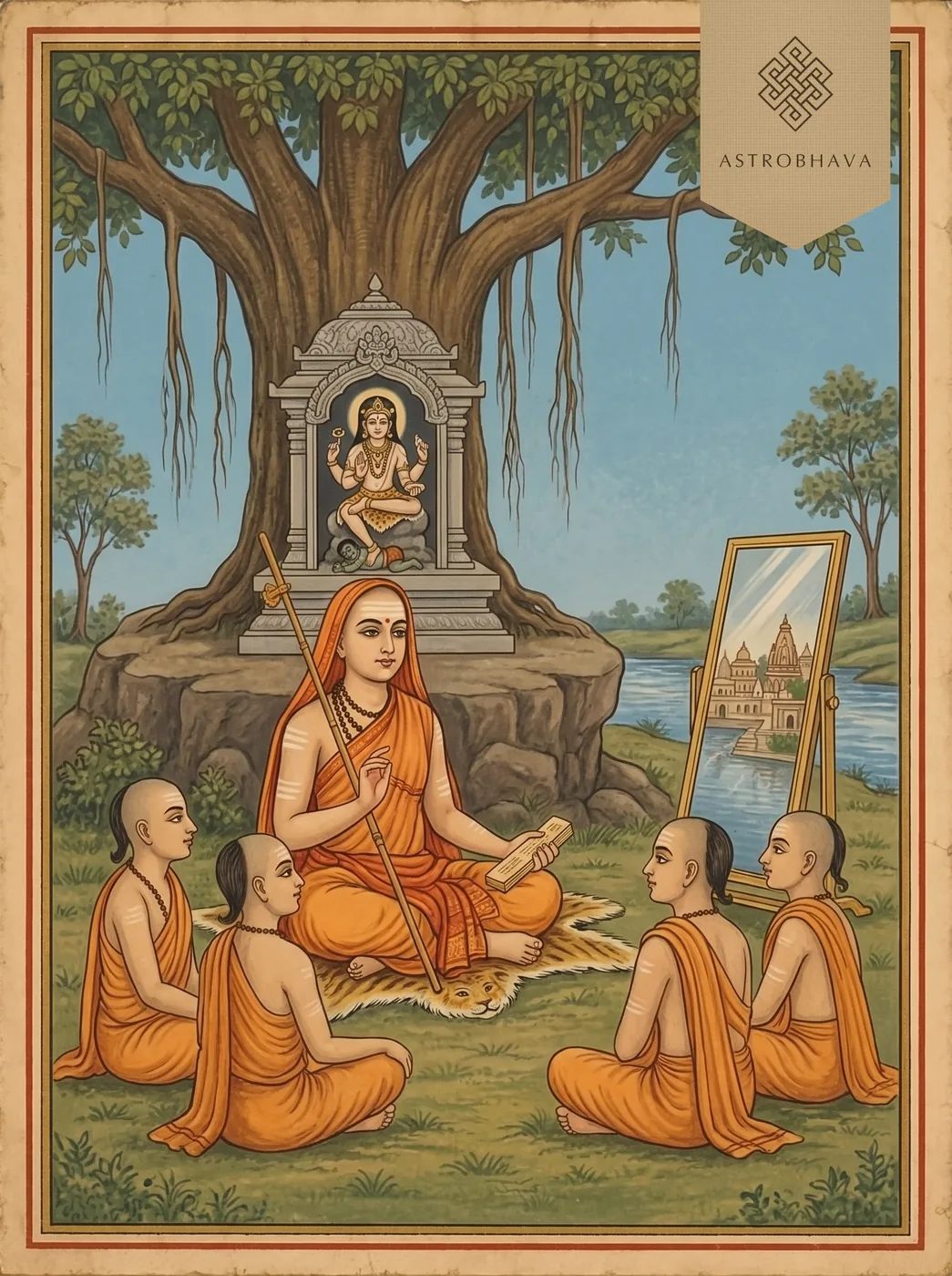
Dakshinamurthy Stotram
विश्वं दर्पणदृश्यमाननगरीतुल्यं निजान्तर्गतं पश्यन्नात्मनि मायया बहिरिवोद्भूतं यथा निद्रया । यः साक्षात्कुरुते प्रबोधसमये स्वात्मानमेवाद्वयं तस्मै श्रीगुरुमूर्तये नम इदं श्रीदक्षिणामूर्तये ॥Also known as Dakshinamoorthy Stotram
In Devanagari, Tamil, Telugu, Kannada, Malayalam and English — with the meaning of every word, and the one syllable most people pronounce wrongly.
What the Dakshinamurthy Stotram is
The Dakshinamurthy Stotram is addressed to Shiva as Dakshinamurti, the teacher who faces south, yet it describes him through ideas rather than through his appearance. Tradition attributes it to Adi Shankaracharya. Nine of its ten verses close on the same line, tasmai shri-gurumurtaye nama idam shri-dakshinamurtaye, which is why it is also called the Dakshinamurtyashtakam. Each verse takes up one argument of Advaita Vedanta: the world seen within oneself like a city in a mirror (verse 1), the world lying latent like a sprout in a seed (2), the Vedic sentence 'That thou art' (3), a lamp shining through a pot pierced with holes (4), mistaken ideas of what the 'I' is (5), deep sleep compared to an eclipse (6), the 'I' that stays the same through childhood, age, waking and dream (7), and the divisions of cause and effect, teacher and disciple (8). Verse 9 names the eight forms of Shiva, and verse 10 says what hearing and reflecting on the hymn leads to.
A ten-verse hymn that needed a commentary
No legend of composition is attached to this hymn the way stories are told of some of Shankara's other stotras. Its history is instead a history of explanation. Tradition holds that the text was found difficult even in Shankara's own time, and that his disciple Sureshvara wrote a commentary on it called the Manasollasa, a title usually rendered as 'that which delights the mind'. Sureshvara is remembered as the head Shankara placed over the Sringeri Sharada Peetham, and his Manasollasa is read side by side with a second classical commentary, Svayamprakasha's Tattvasudha. Teachers in the Vedanta schools have long treated the ten verses as a compact syllabus rather than as a prayer for beginners; Swami Chinmayananda described them as discussions meant for students who have already studied the scriptures. In the twentieth century Ramana Maharshi rendered the hymn into Tamil verse, and Arthur Osborne put that Tamil version into English. The Sri Ramanasramam archive prints the Sanskrit with a closing salutation to the line of teachers that begins with Dakshinamurti, has Shankara in the middle and Ramana at the end. Many reciters also prefix a set of meditation verses, such as the one beginning mauna vyakhya; these are separate from the ten verses given on this page.
The mantra, in six scripts
- विश्वं
- viśvaṃ — the universe
- दर्पणदृश्यमाननगरीतुल्यं
- darpaṇadṛśyamānanagarītulyaṃ — like a city seen in a mirror
- निजान्तर्गतं
- nijāntargataṃ — lying within oneself
- पश्यन्नात्मनि
- paśyannātmani — seeing, in the Self
- मायया
- māyayā — through maya
- बहिरिवोद्भूतं
- bahirivodbhūtaṃ — as if arisen outside
- यथा
- yathā — just as
- निद्रया
- nidrayā — in sleep (dream)
Dakshinamurthy Stotram lyrics in full
All 10 verses, in Sanskrit, Tamil, Telugu, Kannada, Malayalam and English, each with its meaning. Choose a script:
Download the Dakshinamurthy Stotram PDFAll 10 verses with their meanings, in Sanskrit. Free to print and keep.
विश्वं दर्पणदृश्यमाननगरीतुल्यं निजान्तर्गतं पश्यन्नात्मनि मायया बहिरिवोद्भूतं यथा निद्रया ।
यः साक्षात्कुरुते प्रबोधसमये स्वात्मानमेवाद्वयं तस्मै श्रीगुरुमूर्तये नम इदं श्रीदक्षिणामूर्तये ॥
விஶ்வம் தர்பணத்ருஶ்யமாநநகரீதுல்யம் நிஜாந்தர்கதம் பஶ்யந்நாத்மநி மாயயா பஹிரிவோத்பூதம் யதா நித்ரயா ।
யஃ ஸாக்ஷாத்குருதே ப்ரபோதஸமயே ஸ்வாத்மாநமேவாத்வயம் தஸ்மை ஶ்ரீகுருமூர்தயே நம இதம் ஶ்ரீதக்ஷிணாமூர்தயே ॥
విశ్వం దర్పణదృశ్యమాననగరీతుల్యం నిజాన్తర్గతం పశ్యన్నాత్మని మాయయా బహిరివోద్భూతం యథా నిద్రయా ।
యః సాక్షాత్కురుతే ప్రబోధసమయే స్వాత్మానమేవాద్వయం తస్మై శ్రీగురుమూర్తయే నమ ఇదం శ్రీదక్షిణామూర్తయే ॥
ವಿಶ್ವಂ ದರ್ಪಣದೃಶ್ಯಮಾನನಗರೀತುಲ್ಯಂ ನಿಜಾನ್ತರ್ಗತಂ ಪಶ್ಯನ್ನಾತ್ಮನಿ ಮಾಯಯಾ ಬಹಿರಿವೋದ್ಭೂತಂ ಯಥಾ ನಿದ್ರಯಾ ।
ಯಃ ಸಾಕ್ಷಾತ್ಕುರುತೇ ಪ್ರಬೋಧಸಮಯೇ ಸ್ವಾತ್ಮಾನಮೇವಾದ್ವಯಂ ತಸ್ಮೈ ಶ್ರೀಗುರುಮೂರ್ತಯೇ ನಮ ಇದಂ ಶ್ರೀದಕ್ಷಿಣಾಮೂರ್ತಯೇ ॥
വിശ്വം ദര്പണദൃശ്യമാനനഗരീതുല്യം നിജാന്തര്ഗതം പശ്യന്നാത്മനി മായയാ ബഹിരിവോദ്ഭൂതം യഥാ നിദ്രയാ ।
യഃ സാക്ഷാത്കുരുതേ പ്രബോധസമയേ സ്വാത്മാനമേവാദ്വയം തസ്മൈ ശ്രീഗുരുമൂര്തയേ നമ ഇദം ശ്രീദക്ഷിണാമൂര്തയേ ॥
viśvaṃ darpaṇadṛśyamānanagarītulyaṃ nijāntargataṃ paśyannātmani māyayā bahirivodbhūtaṃ yathā nidrayā |
yaḥ sākṣātkurute prabodhasamaye svātmānamevādvayaṃ tasmai śrīgurumūrtaye nama idaṃ śrīdakṣiṇāmūrtaye ||
He who, through maya, sees the universe lying within himself as if it had arisen outside, like a city seen in a mirror, as one sees things in a dream, and who on waking directly knows his own Self as one without a second: to him, Sri Dakshinamurti in the form of the Guru, is this salutation.
बीजस्यान्तरिवाङ्कुरो जगदिदं प्राङ्निर्विकल्पं पुनः मायाकल्पितदेशकालकलनावैचित्र्यचित्रीकृतम् ।
मायावीव विजृम्भयत्यपि महायोगीव यः स्वेच्छया तस्मै श्रीगुरुमूर्तये नम इदं श्रीदक्षिणामूर्तये ॥
பீஜஸ்யாந்தரிவாங்குரோ ஜகதிதம் ப்ராங்நிர்விகல்பம் புநஃ மாயாகல்பிததேஶகாலகலநாவைசித்ர்யசித்ரீக்ருதம் ।
மாயாவீவ விஜ்ரும்பயத்யபி மஹாயோகீவ யஃ ஸ்வேச்சயா தஸ்மை ஶ்ரீகுருமூர்தயே நம இதம் ஶ்ரீதக்ஷிணாமூர்தயே ॥
బీజస్యాన్తరివాఙ్కురో జగదిదం ప్రాఙ్నిర్వికల్పం పునః మాయాకల్పితదేశకాలకలనావైచిత్ర్యచిత్రీకృతమ్ ।
మాయావీవ విజృమ్భయత్యపి మహాయోగీవ యః స్వేచ్ఛయా తస్మై శ్రీగురుమూర్తయే నమ ఇదం శ్రీదక్షిణామూర్తయే ॥
ಬೀಜಸ್ಯಾನ್ತರಿವಾಙ್ಕುರೋ ಜಗದಿದಂ ಪ್ರಾಙ್ನಿರ್ವಿಕಲ್ಪಂ ಪುನಃ ಮಾಯಾಕಲ್ಪಿತದೇಶಕಾಲಕಲನಾವೈಚಿತ್ರ್ಯಚಿತ್ರೀಕೃತಮ್ ।
ಮಾಯಾವೀವ ವಿಜೃಮ್ಭಯತ್ಯಪಿ ಮಹಾಯೋಗೀವ ಯಃ ಸ್ವೇಚ್ಛಯಾ ತಸ್ಮೈ ಶ್ರೀಗುರುಮೂರ್ತಯೇ ನಮ ಇದಂ ಶ್ರೀದಕ್ಷಿಣಾಮೂರ್ತಯೇ ॥
ബീജസ്യാന്തരിവാങ്കുരോ ജഗദിദം പ്രാങ്നിര്വികല്പം പുനഃ മായാകല്പിതദേശകാലകലനാവൈചിത്ര്യചിത്രീകൃതമ് ।
മായാവീവ വിജൃമ്ഭയത്യപി മഹായോഗീവ യഃ സ്വേച്ഛയാ തസ്മൈ ശ്രീഗുരുമൂര്തയേ നമ ഇദം ശ്രീദക്ഷിണാമൂര്തയേ ॥
bījasyāntarivāṅkuro jagadidaṃ prāṅnirvikalpaṃ punaḥ māyākalpitadeśakālakalanāvaicitryacitrīkṛtam |
māyāvīva vijṛmbhayatyapi mahāyogīva yaḥ svecchayā tasmai śrīgurumūrtaye nama idaṃ śrīdakṣiṇāmūrtaye ||
This world at first lies undivided, like the sprout within a seed, and is then made manifold by the space, time and variety that maya projects. He who unfolds it by his own will, like a magician or a great yogi: to him, Sri Dakshinamurti in the form of the Guru, is this salutation.
यस्यैव स्फुरणं सदात्मकमसत्कल्पार्थकं भासते साक्षात्तत्त्वमसीति वेदवचसा यो बोधयत्याश्रितान् ।
यत्साक्षात्करणाद्भवेन्न पुनरावृत्तिर्भवाम्भोनिधौ तस्मै श्रीगुरुमूर्तये नम इदं श्रीदक्षिणामूर्तये ॥
யஸ்யைவ ஸ்புரணம் ஸதாத்மகமஸத்கல்பார்தகம் பாஸதே ஸாக்ஷாத்தத்த்வமஸீதி வேதவசஸா யோ போதயத்யாஶ்ரிதாந் ।
யத்ஸாக்ஷாத்கரணாத்பவேந்ந புநராவ்ருத்திர்பவாம்போநிதௌ தஸ்மை ஶ்ரீகுருமூர்தயே நம இதம் ஶ்ரீதக்ஷிணாமூர்தயே ॥
యస్యైవ స్ఫురణం సదాత్మకమసత్కల్పార్థకం భాసతే సాక్షాత్తత్త్వమసీతి వేదవచసా యో బోధయత్యాశ్రితాన్ ।
యత్సాక్షాత్కరణాద్భవేన్న పునరావృత్తిర్భవామ్భోనిధౌ తస్మై శ్రీగురుమూర్తయే నమ ఇదం శ్రీదక్షిణామూర్తయే ॥
ಯಸ್ಯೈವ ಸ್ಫುರಣಂ ಸದಾತ್ಮಕಮಸತ್ಕಲ್ಪಾರ್ಥಕಂ ಭಾಸತೇ ಸಾಕ್ಷಾತ್ತತ್ತ್ವಮಸೀತಿ ವೇದವಚಸಾ ಯೋ ಬೋಧಯತ್ಯಾಶ್ರಿತಾನ್ ।
ಯತ್ಸಾಕ್ಷಾತ್ಕರಣಾದ್ಭವೇನ್ನ ಪುನರಾವೃತ್ತಿರ್ಭವಾಮ್ಭೋನಿಧೌ ತಸ್ಮೈ ಶ್ರೀಗುರುಮೂರ್ತಯೇ ನಮ ಇದಂ ಶ್ರೀದಕ್ಷಿಣಾಮೂರ್ತಯೇ ॥
യസ്യൈവ സ്ഫുരണം സദാത്മകമസത്കല്പാര്ഥകം ഭാസതേ സാക്ഷാത്തത്ത്വമസീതി വേദവചസാ യോ ബോധയത്യാശ്രിതാന് ।
യത്സാക്ഷാത്കരണാദ്ഭവേന്ന പുനരാവൃത്തിര്ഭവാമ്ഭോനിധൌ തസ്മൈ ശ്രീഗുരുമൂര്തയേ നമ ഇദം ശ്രീദക്ഷിണാമൂര്തയേ ॥
yasyaiva sphuraṇaṃ sadātmakamasatkalpārthakaṃ bhāsate sākṣāttattvamasīti vedavacasā yo bodhayatyāśritān |
yatsākṣātkaraṇādbhavenna punarāvṛttirbhavāmbhonidhau tasmai śrīgurumūrtaye nama idaṃ śrīdakṣiṇāmūrtaye ||
His shining alone, which is pure existence, appears as the world of objects that are next to unreal. He teaches those who come to him through the Vedic words 'That thou art', and once he is directly realised there is no return to the ocean of birth and death: to him, Sri Dakshinamurti in the form of the Guru, is this salutation.
नानाच्छिद्रघटोदरस्थितमहादीपप्रभाभास्वरं ज्ञानं यस्य तु चक्षुरादिकरणद्वारा बहिः स्पन्दते ।
जानामीति तमेव भान्तमनुभात्येतत्समस्तं जगत् तस्मै श्रीगुरुमूर्तये नम इदं श्रीदक्षिणामूर्तये ॥
நாநாச்சித்ரகடோதரஸ்திதமஹாதீபப்ரபாபாஸ்வரம் ஜ்ஞாநம் யஸ்ய து சக்ஷுராதிகரணத்வாரா பஹிஃ ஸ்பந்ததே ।
ஜாநாமீதி தமேவ பாந்தமநுபாத்யேதத்ஸமஸ்தம் ஜகத் தஸ்மை ஶ்ரீகுருமூர்தயே நம இதம் ஶ்ரீதக்ஷிணாமூர்தயே ॥
నానాచ్ఛిద్రఘటోదరస్థితమహాదీపప్రభాభాస్వరం జ్ఞానం యస్య తు చక్షురాదికరణద్వారా బహిః స్పన్దతే ।
జానామీతి తమేవ భాన్తమనుభాత్యేతత్సమస్తం జగత్ తస్మై శ్రీగురుమూర్తయే నమ ఇదం శ్రీదక్షిణామూర్తయే ॥
ನಾನಾಚ್ಛಿದ್ರಘಟೋದರಸ್ಥಿತಮಹಾದೀಪಪ್ರಭಾಭಾಸ್ವರಂ ಜ್ಞಾನಂ ಯಸ್ಯ ತು ಚಕ್ಷುರಾದಿಕರಣದ್ವಾರಾ ಬಹಿಃ ಸ್ಪನ್ದತೇ ।
ಜಾನಾಮೀತಿ ತಮೇವ ಭಾನ್ತಮನುಭಾತ್ಯೇತತ್ಸಮಸ್ತಂ ಜಗತ್ ತಸ್ಮೈ ಶ್ರೀಗುರುಮೂರ್ತಯೇ ನಮ ಇದಂ ಶ್ರೀದಕ್ಷಿಣಾಮೂರ್ತಯೇ ॥
നാനാച്ഛിദ്രഘടോദരസ്ഥിതമഹാദീപപ്രഭാഭാസ്വരം ജ്ഞാനം യസ്യ തു ചക്ഷുരാദികരണദ്വാരാ ബഹിഃ സ്പന്ദതേ ।
ജാനാമീതി തമേവ ഭാന്തമനുഭാത്യേതത്സമസ്തം ജഗത് തസ്മൈ ശ്രീഗുരുമൂര്തയേ നമ ഇദം ശ്രീദക്ഷിണാമൂര്തയേ ॥
nānācchidraghaṭodarasthitamahādīpaprabhābhāsvaraṃ jñānaṃ yasya tu cakṣurādikaraṇadvārā bahiḥ spandate |
jānāmīti tameva bhāntamanubhātyetatsamastaṃ jagat tasmai śrīgurumūrtaye nama idaṃ śrīdakṣiṇāmūrtaye ||
Like the light of a great lamp set inside a pot pierced with many holes, his knowledge streams outward through the eyes and the other senses. Only as he shines as 'I know' does this whole world shine after him: to him, Sri Dakshinamurti in the form of the Guru, is this salutation.
देहं प्राणमपीन्द्रियाण्यपि चलां बुद्धिं च शून्यं विदुः स्त्रीबालान्धजडोपमास्त्वहमिति भ्रान्ता भृशं वादिनः ।
मायाशक्तिविलासकल्पितमहाव्यामोहसंहारिणे तस्मै श्रीगुरुमूर्तये नम इदं श्रीदक्षिणामूर्तये ॥
தேஹம் ப்ராணமபீந்த்ரியாண்யபி சலாம் புத்திம் ச ஶூந்யம் விதுஃ ஸ்த்ரீபாலாந்தஜடோபமாஸ்த்வஹமிதி ப்ராந்தா ப்ருஶம் வாதிநஃ ।
மாயாஶக்திவிலாஸகல்பிதமஹாவ்யாமோஹஸம்ஹாரிணே தஸ்மை ஶ்ரீகுருமூர்தயே நம இதம் ஶ்ரீதக்ஷிணாமூர்தயே ॥
దేహం ప్రాణమపీన్ద్రియాణ్యపి చలాం బుద్ధిం చ శూన్యం విదుః స్త్రీబాలాన్ధజడోపమాస్త్వహమితి భ్రాన్తా భృశం వాదినః ।
మాయాశక్తివిలాసకల్పితమహావ్యామోహసంహారిణే తస్మై శ్రీగురుమూర్తయే నమ ఇదం శ్రీదక్షిణామూర్తయే ॥
ದೇಹಂ ಪ್ರಾಣಮಪೀನ್ದ್ರಿಯಾಣ್ಯಪಿ ಚಲಾಂ ಬುದ್ಧಿಂ ಚ ಶೂನ್ಯಂ ವಿದುಃ ಸ್ತ್ರೀಬಾಲಾನ್ಧಜಡೋಪಮಾಸ್ತ್ವಹಮಿತಿ ಭ್ರಾನ್ತಾ ಭೃಶಂ ವಾದಿನಃ ।
ಮಾಯಾಶಕ್ತಿವಿಲಾಸಕಲ್ಪಿತಮಹಾವ್ಯಾಮೋಹಸಂಹಾರಿಣೇ ತಸ್ಮೈ ಶ್ರೀಗುರುಮೂರ್ತಯೇ ನಮ ಇದಂ ಶ್ರೀದಕ್ಷಿಣಾಮೂರ್ತಯೇ ॥
ദേഹം പ്രാണമപീന്ദ്രിയാണ്യപി ചലാം ബുദ്ധിം ച ശൂന്യം വിദുഃ സ്ത്രീബാലാന്ധജഡോപമാസ്ത്വഹമിതി ഭ്രാന്താ ഭൃശം വാദിനഃ ।
മായാശക്തിവിലാസകല്പിതമഹാവ്യാമോഹസംഹാരിണേ തസ്മൈ ശ്രീഗുരുമൂര്തയേ നമ ഇദം ശ്രീദക്ഷിണാമൂര്തയേ ॥
dehaṃ prāṇamapīndriyāṇyapi calāṃ buddhiṃ ca śūnyaṃ viduḥ strībālāndhajaḍopamāstvahamiti bhrāntā bhṛśaṃ vādinaḥ |
māyāśaktivilāsakalpitamahāvyāmohasaṃhāriṇe tasmai śrīgurumūrtaye nama idaṃ śrīdakṣiṇāmūrtaye ||
Some take the body, the breath, the senses, the restless intellect or the void to be the 'I'; such disputers are deeply confused, like the young, the blind and the dull. To him who destroys this great delusion raised by the play of maya's power, Sri Dakshinamurti in the form of the Guru, is this salutation.
राहुग्रस्तदिवाकरेन्दुसदृशो मायासमाच्छादनात् सन्मात्रः करणोपसंहरणतो योऽभूत्सुषुप्तः पुमान् ।
प्रागस्वाप्समिति प्रबोधसमये यः प्रत्यभिज्ञायते तस्मै श्रीगुरुमूर्तये नम इदं श्रीदक्षिणामूर्तये ॥
ராஹுக்ரஸ்ததிவாகரேந்துஸத்ருஶோ மாயாஸமாச்சாதநாத் ஸந்மாத்ரஃ கரணோபஸம்ஹரணதோ யோபூத்ஸுஷுப்தஃ புமாந் ।
ப்ராகஸ்வாப்ஸமிதி ப்ரபோதஸமயே யஃ ப்ரத்யபிஜ்ஞாயதே தஸ்மை ஶ்ரீகுருமூர்தயே நம இதம் ஶ்ரீதக்ஷிணாமூர்தயே ॥
రాహుగ్రస్తదివాకరేన్దుసదృశో మాయాసమాచ్ఛాదనాత్ సన్మాత్రః కరణోపసంహరణతో యోఽభూత్సుషుప్తః పుమాన్ ।
ప్రాగస్వాప్సమితి ప్రబోధసమయే యః ప్రత్యభిజ్ఞాయతే తస్మై శ్రీగురుమూర్తయే నమ ఇదం శ్రీదక్షిణామూర్తయే ॥
ರಾಹುಗ್ರಸ್ತದಿವಾಕರೇನ್ದುಸದೃಶೋ ಮಾಯಾಸಮಾಚ್ಛಾದನಾತ್ ಸನ್ಮಾತ್ರಃ ಕರಣೋಪಸಂಹರಣತೋ ಯೋಽಭೂತ್ಸುಷುಪ್ತಃ ಪುಮಾನ್ ।
ಪ್ರಾಗಸ್ವಾಪ್ಸಮಿತಿ ಪ್ರಬೋಧಸಮಯೇ ಯಃ ಪ್ರತ್ಯಭಿಜ್ಞಾಯತೇ ತಸ್ಮೈ ಶ್ರೀಗುರುಮೂರ್ತಯೇ ನಮ ಇದಂ ಶ್ರೀದಕ್ಷಿಣಾಮೂರ್ತಯೇ ॥
രാഹുഗ്രസ്തദിവാകരേന്ദുസദൃശോ മായാസമാച്ഛാദനാത് സന്മാത്രഃ കരണോപസംഹരണതോ യോഽഭൂത്സുഷുപ്തഃ പുമാന് ।
പ്രാഗസ്വാപ്സമിതി പ്രബോധസമയേ യഃ പ്രത്യഭിജ്ഞായതേ തസ്മൈ ശ്രീഗുരുമൂര്തയേ നമ ഇദം ശ്രീദക്ഷിണാമൂര്തയേ ॥
rāhugrastadivākarendusadṛśo māyāsamācchādanāt sanmātraḥ karaṇopasaṃharaṇato yo'bhūtsuṣuptaḥ pumān |
prāgasvāpsamiti prabodhasamaye yaḥ pratyabhijñāyate tasmai śrīgurumūrtaye nama idaṃ śrīdakṣiṇāmūrtaye ||
In deep sleep, with the senses withdrawn and covered by maya like the sun or moon seized in eclipse, the person remains as pure existence alone; on waking he recognises himself, thinking 'I was asleep'. To him, Sri Dakshinamurti in the form of the Guru, is this salutation.
बाल्यादिष्वपि जाग्रदादिषु तथा सर्वास्ववस्थास्वपि व्यावृत्तास्वनुवर्तमानमहमित्यन्तः स्फुरन्तं सदा ।
स्वात्मानं प्रकटीकरोति भजतां यो मुद्रया भद्रया तस्मै श्रीगुरुमूर्तये नम इदं श्रीदक्षिणामूर्तये ॥
பால்யாதிஷ்வபி ஜாக்ரதாதிஷு ததா ஸர்வாஸ்வவஸ்தாஸ்வபி வ்யாவ்ருத்தாஸ்வநுவர்தமாநமஹமித்யந்தஃ ஸ்புரந்தம் ஸதா ।
ஸ்வாத்மாநம் ப்ரகடீகரோதி பஜதாம் யோ முத்ரயா பத்ரயா தஸ்மை ஶ்ரீகுருமூர்தயே நம இதம் ஶ்ரீதக்ஷிணாமூர்தயே ॥
బాల్యాదిష్వపి జాగ్రదాదిషు తథా సర్వాస్వవస్థాస్వపి వ్యావృత్తాస్వనువర్తమానమహమిత్యన్తః స్ఫురన్తం సదా ।
స్వాత్మానం ప్రకటీకరోతి భజతాం యో ముద్రయా భద్రయా తస్మై శ్రీగురుమూర్తయే నమ ఇదం శ్రీదక్షిణామూర్తయే ॥
ಬಾಲ್ಯಾದಿಷ್ವಪಿ ಜಾಗ್ರದಾದಿಷು ತಥಾ ಸರ್ವಾಸ್ವವಸ್ಥಾಸ್ವಪಿ ವ್ಯಾವೃತ್ತಾಸ್ವನುವರ್ತಮಾನಮಹಮಿತ್ಯನ್ತಃ ಸ್ಫುರನ್ತಂ ಸದಾ ।
ಸ್ವಾತ್ಮಾನಂ ಪ್ರಕಟೀಕರೋತಿ ಭಜತಾಂ ಯೋ ಮುದ್ರಯಾ ಭದ್ರಯಾ ತಸ್ಮೈ ಶ್ರೀಗುರುಮೂರ್ತಯೇ ನಮ ಇದಂ ಶ್ರೀದಕ್ಷಿಣಾಮೂರ್ತಯೇ ॥
ബാല്യാദിഷ്വപി ജാഗ്രദാദിഷു തഥാ സര്വാസ്വവസ്ഥാസ്വപി വ്യാവൃത്താസ്വനുവര്തമാനമഹമിത്യന്തഃ സ്ഫുരന്തം സദാ ।
സ്വാത്മാനം പ്രകടീകരോതി ഭജതാം യോ മുദ്രയാ ഭദ്രയാ തസ്മൈ ശ്രീഗുരുമൂര്തയേ നമ ഇദം ശ്രീദക്ഷിണാമൂര്തയേ ॥
bālyādiṣvapi jāgradādiṣu tathā sarvāsvavasthāsvapi vyāvṛttāsvanuvartamānamahamityantaḥ sphurantaṃ sadā |
svātmānaṃ prakaṭīkaroti bhajatāṃ yo mudrayā bhadrayā tasmai śrīgurumūrtaye nama idaṃ śrīdakṣiṇāmūrtaye ||
Through childhood and the other ages, and through waking and the other states, all of which come and go, the Self continues, always shining within as 'I'. He who reveals this Self to his worshippers by the auspicious hand gesture: to him, Sri Dakshinamurti in the form of the Guru, is this salutation.
विश्वं पश्यति कार्यकारणतया स्वस्वामिसम्बन्धतः शिष्याचार्यतया तथैव पितृपुत्राद्यात्मना भेदतः ।
स्वप्ने जाग्रति वा य एष पुरुषो मायापरिभ्रामितः तस्मै श्रीगुरुमूर्तये नम इदं श्रीदक्षिणामूर्तये ॥
விஶ்வம் பஶ்யதி கார்யகாரணதயா ஸ்வஸ்வாமிஸம்பந்ததஃ ஶிஷ்யாசார்யதயா ததைவ பித்ருபுத்ராத்யாத்மநா பேததஃ ।
ஸ்வப்நே ஜாக்ரதி வா ய ஏஷ புருஷோ மாயாபரிப்ராமிதஃ தஸ்மை ஶ்ரீகுருமூர்தயே நம இதம் ஶ்ரீதக்ஷிணாமூர்தயே ॥
విశ్వం పశ్యతి కార్యకారణతయా స్వస్వామిసమ్బన్ధతః శిష్యాచార్యతయా తథైవ పితృపుత్రాద్యాత్మనా భేదతః ।
స్వప్నే జాగ్రతి వా య ఏష పురుషో మాయాపరిభ్రామితః తస్మై శ్రీగురుమూర్తయే నమ ఇదం శ్రీదక్షిణామూర్తయే ॥
ವಿಶ್ವಂ ಪಶ್ಯತಿ ಕಾರ್ಯಕಾರಣತಯಾ ಸ್ವಸ್ವಾಮಿಸಮ್ಬನ್ಧತಃ ಶಿಷ್ಯಾಚಾರ್ಯತಯಾ ತಥೈವ ಪಿತೃಪುತ್ರಾದ್ಯಾತ್ಮನಾ ಭೇದತಃ ।
ಸ್ವಪ್ನೇ ಜಾಗ್ರತಿ ವಾ ಯ ಏಷ ಪುರುಷೋ ಮಾಯಾಪರಿಭ್ರಾಮಿತಃ ತಸ್ಮೈ ಶ್ರೀಗುರುಮೂರ್ತಯೇ ನಮ ಇದಂ ಶ್ರೀದಕ್ಷಿಣಾಮೂರ್ತಯೇ ॥
വിശ്വം പശ്യതി കാര്യകാരണതയാ സ്വസ്വാമിസമ്ബന്ധതഃ ശിഷ്യാചാര്യതയാ തഥൈവ പിതൃപുത്രാദ്യാത്മനാ ഭേദതഃ ।
സ്വപ്നേ ജാഗ്രതി വാ യ ഏഷ പുരുഷോ മായാപരിഭ്രാമിതഃ തസ്മൈ ശ്രീഗുരുമൂര്തയേ നമ ഇദം ശ്രീദക്ഷിണാമൂര്തയേ ॥
viśvaṃ paśyati kāryakāraṇatayā svasvāmisambandhataḥ śiṣyācāryatayā tathaiva pitṛputrādyātmanā bhedataḥ |
svapne jāgrati vā ya eṣa puruṣo māyāparibhrāmitaḥ tasmai śrīgurumūrtaye nama idaṃ śrīdakṣiṇāmūrtaye ||
Whirled about by maya, in dream or in waking, the person sees the world in divisions: cause and effect, owner and owned, disciple and teacher, father and son. To him, Sri Dakshinamurti in the form of the Guru, is this salutation.
भूरम्भांस्यनलोऽनिलोऽम्बरमहर्नाथो हिमांशुः पुमान् इत्याभाति चराचरात्मकमिदं यस्यैव मूर्त्यष्टकम् ।
नान्यत्किञ्चन विद्यते विमृशतां यस्मात्परस्माद्विभोः तस्मै श्रीगुरुमूर्तये नम इदं श्रीदक्षिणामूर्तये ॥
பூரம்பாம்ஸ்யநலோநிலோம்பரமஹர்நாதோ ஹிமாம்ஶுஃ புமாந் இத்யாபாதி சராசராத்மகமிதம் யஸ்யைவ மூர்த்யஷ்டகம் ।
நாந்யத்கிஞ்சந வித்யதே விம்ருஶதாம் யஸ்மாத்பரஸ்மாத்விபோஃ தஸ்மை ஶ்ரீகுருமூர்தயே நம இதம் ஶ்ரீதக்ஷிணாமூர்தயே ॥
భూరమ్భాంస్యనలోఽనిలోఽమ్బరమహర్నాథో హిమాంశుః పుమాన్ ఇత్యాభాతి చరాచరాత్మకమిదం యస్యైవ మూర్త్యష్టకమ్ ।
నాన్యత్కిఞ్చన విద్యతే విమృశతాం యస్మాత్పరస్మాద్విభోః తస్మై శ్రీగురుమూర్తయే నమ ఇదం శ్రీదక్షిణామూర్తయే ॥
ಭೂರಮ್ಭಾಂಸ್ಯನಲೋಽನಿಲೋಽಮ್ಬರಮಹರ್ನಾಥೋ ಹಿಮಾಂಶುಃ ಪುಮಾನ್ ಇತ್ಯಾಭಾತಿ ಚರಾಚರಾತ್ಮಕಮಿದಂ ಯಸ್ಯೈವ ಮೂರ್ತ್ಯಷ್ಟಕಮ್ ।
ನಾನ್ಯತ್ಕಿಞ್ಚನ ವಿದ್ಯತೇ ವಿಮೃಶತಾಂ ಯಸ್ಮಾತ್ಪರಸ್ಮಾದ್ವಿಭೋಃ ತಸ್ಮೈ ಶ್ರೀಗುರುಮೂರ್ತಯೇ ನಮ ಇದಂ ಶ್ರೀದಕ್ಷಿಣಾಮೂರ್ತಯೇ ॥
ഭൂരമ്ഭാംസ്യനലോഽനിലോഽമ്ബരമഹര്നാഥോ ഹിമാംശുഃ പുമാന് ഇത്യാഭാതി ചരാചരാത്മകമിദം യസ്യൈവ മൂര്ത്യഷ്ടകമ് ।
നാന്യത്കിഞ്ചന വിദ്യതേ വിമൃശതാം യസ്മാത്പരസ്മാദ്വിഭോഃ തസ്മൈ ശ്രീഗുരുമൂര്തയേ നമ ഇദം ശ്രീദക്ഷിണാമൂര്തയേ ॥
bhūrambhāṃsyanalo'nilo'mbaramaharnātho himāṃśuḥ pumān ityābhāti carācarātmakamidaṃ yasyaiva mūrtyaṣṭakam |
nānyatkiñcana vidyate vimṛśatāṃ yasmātparasmādvibhoḥ tasmai śrīgurumūrtaye nama idaṃ śrīdakṣiṇāmūrtaye ||
Earth, water, fire, air, space, the sun, the moon and the individual soul: this moving and unmoving world appears as his eightfold form. For those who enquire, nothing exists apart from him, the supreme, all-pervading Lord: to him, Sri Dakshinamurti in the form of the Guru, is this salutation.
सर्वात्मत्वमिति स्फुटीकृतमिदं यस्मादमुष्मिन् स्तवे तेनास्य श्रवणात्तदर्थमननाद्ध्यानाच्च सङ्कीर्तनात् ।
सर्वात्मत्वमहाविभूतिसहितं स्यादीश्वरत्वं स्वतः सिद्ध्येत्तत्पुनरष्टधा परिणतं चैश्वर्यमव्याहतम् ॥
ஸர்வாத்மத்வமிதி ஸ்புடீக்ருதமிதம் யஸ்மாதமுஷ்மிந் ஸ்தவே தேநாஸ்ய ஶ்ரவணாத்ததர்தமநநாத்த்யாநாச்ச ஸங்கீர்தநாத் ।
ஸர்வாத்மத்வமஹாவிபூதிஸஹிதம் ஸ்யாதீஶ்வரத்வம் ஸ்வதஃ ஸித்த்யேத்தத்புநரஷ்டதா பரிணதம் சைஶ்வர்யமவ்யாஹதம் ॥
సర్వాత్మత్వమితి స్ఫుటీకృతమిదం యస్మాదముష్మిన్ స్తవే తేనాస్య శ్రవణాత్తదర్థమననాద్ధ్యానాచ్చ సఙ్కీర్తనాత్ ।
సర్వాత్మత్వమహావిభూతిసహితం స్యాదీశ్వరత్వం స్వతః సిద్ధ్యేత్తత్పునరష్టధా పరిణతం చైశ్వర్యమవ్యాహతమ్ ॥
ಸರ್ವಾತ್ಮತ್ವಮಿತಿ ಸ್ಫುಟೀಕೃತಮಿದಂ ಯಸ್ಮಾದಮುಷ್ಮಿನ್ ಸ್ತವೇ ತೇನಾಸ್ಯ ಶ್ರವಣಾತ್ತದರ್ಥಮನನಾದ್ಧ್ಯಾನಾಚ್ಚ ಸಙ್ಕೀರ್ತನಾತ್ ।
ಸರ್ವಾತ್ಮತ್ವಮಹಾವಿಭೂತಿಸಹಿತಂ ಸ್ಯಾದೀಶ್ವರತ್ವಂ ಸ್ವತಃ ಸಿದ್ಧ್ಯೇತ್ತತ್ಪುನರಷ್ಟಧಾ ಪರಿಣತಂ ಚೈಶ್ವರ್ಯಮವ್ಯಾಹತಮ್ ॥
സര്വാത്മത്വമിതി സ്ഫുടീകൃതമിദം യസ്മാദമുഷ്മിന് സ്തവേ തേനാസ്യ ശ്രവണാത്തദര്ഥമനനാദ്ധ്യാനാച്ച സങ്കീര്തനാത് ।
സര്വാത്മത്വമഹാവിഭൂതിസഹിതം സ്യാദീശ്വരത്വം സ്വതഃ സിദ്ധ്യേത്തത്പുനരഷ്ടധാ പരിണതം ചൈശ്വര്യമവ്യാഹതമ് ॥
sarvātmatvamiti sphuṭīkṛtamidaṃ yasmādamuṣmin stave tenāsya śravaṇāttadarthamananāddhyānācca saṅkīrtanāt |
sarvātmatvamahāvibhūtisahitaṃ syādīśvaratvaṃ svataḥ siddhyettatpunaraṣṭadhā pariṇataṃ caiśvaryamavyāhatam ||
Because this hymn makes plain that the Self is all, the verse says that by hearing it, reflecting on its meaning, meditating on it and chanting it, lordship comes of itself, together with the great glory of being the Self of all, and also unobstructed power in its eightfold form.
The syllable people get wrong
In verse 6 the sleeper's waking thought prāgasvāpsam ('earlier I slept') is two words, prāk + asvāpsam, so it is said praa-gas-VAAP-sam with the g running into the a; splitting it as 'praga-swapsam' or dropping the long ā of svāp hides the verb the whole verse depends on.
When the Dakshinamurthy Stotram is chanted
Weekday. Monday
Festival. Guru Purnima, the full moon on which teachers are honoured
Questions
Have your chart read before you decide
Chanting is yours to do, and free. But which deity your situation calls for — and whether a mantra alone is the right response — depends on your chart. Sometimes it is; sometimes it is not.
- Over 30 years in the Guru–Sishya Parampara, from the age of five
- He reads every chart himself — 60 minutes, one to one, never delegated
- Charts are read only between sunrise and sunset, following tradition