Devi Aparadha Kshamapana Stotram
न मन्त्रं नो यन्त्रं तदपि च न जाने स्तुतिमहो न चाह्वानं ध्यानं तदपि च न जाने स्तुतिकथाः । न जाने मुद्रास्ते तदपि च न जाने विलपनं परं जाने मातस्त्वदनुसरणं क्लेशहरणम् ॥Also known as Na Mantram No Yantram
In Devanagari, Tamil, Telugu, Kannada, Malayalam and English — with the meaning of every word, and the one syllable most people pronounce wrongly.
 The Chandi Homa, performed for youBook →
What the Devi Aparadha Kshamapana Stotram is
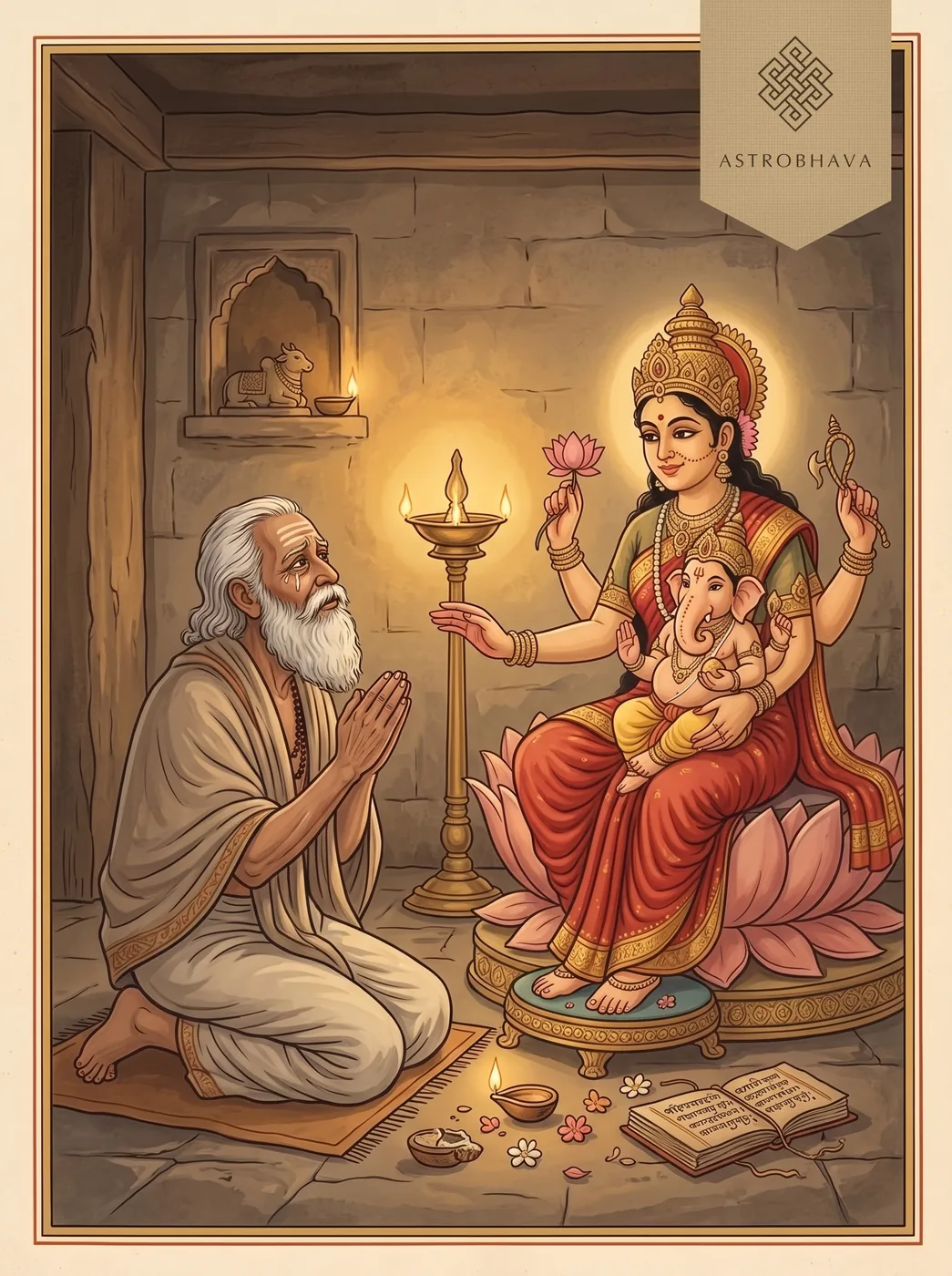
The Devi Aparadha Kshamapana Stotram, literally the hymn asking the Goddess to pardon offences, is a twelve-verse Sanskrit prayer that its closing line ascribes to Adi Shankaracharya and that opens with the words na mantram no yantram. It is a confession, not a hymn of praise. Verse 1 lists what the speaker does not know: mantra, yantra, invocation, meditation, mudra. Verses 2 to 4 name the causes of their neglect, ignorance of the rules, lack of money, laziness, and each ends on the same line: a bad son may be born, but never a bad mother. Verse 5 turns to old age and asks the mother of Lambodara where else to go. Verses 6 and 7 pause to praise her, through the power of her mantra's letters and the rank Shiva gained by marrying her. Verse 8 asks for nothing, not even liberation. The first eight verses run in one long seventeen-syllable line; verses 9 to 12 are shorter, ending on a two-line plea.
A prayer spoken past eighty-five
No legend of composition comes down with this hymn, and the text supplies its own setting instead. The colophon at the end of most printed editions reads that it was made by Shankaracharya. Yet verse 5 has the speaker say they have left the other gods behind, tired of their many demands, now that more than eighty-five years have gone by. Tradition holds that Adi Shankara left the world at Kedarnath at about thirty-two, so the two do not sit easily together. Some readers take the old age as a persona, the voice of any devotee at the end of a long life. Others think the hymn belongs to a later holder of the Shankaracharya title, and one modern suggestion names a medieval head of the order who held office for decades; no manuscript evidence has settled the question. What is settled is its use. Because verse 1 confesses the very slips a worshipper can make, a mantra half-remembered, a mudra not known, it has long been recited at the close of worship of the Goddess as a plea for pardon. Many printed books of the Durga Saptashati place it among the closing prayers. Arthur Avalon included an English rendering in Hymns to the Goddess (1913) under the title May the Devi Grant Me Pardon.
The mantra, in six scripts
- न
- na — not
- मन्त्रं
- mantraṃ — mantra
- नो
- no — nor
- यन्त्रं
- yantraṃ — yantra
- तदपि
- tadapi — that too
- च
- ca — and
- न
- na — not
- जाने
- jāne — I know
- स्तुतिमहो
- stutimaho — hymn of praise, alas
- न
- na — not
- चाह्वानं
- cāhvānaṃ — and invocation
- ध्यानं
- dhyānaṃ — meditation
- तदपि
- tadapi — that too
- च
- ca — and
- न
- na — not
- जाने
- jāne — I know
- स्तुतिकथाः
- stutikathāḥ — stories of praise
Devi Aparadha Kshamapana Stotram lyrics in full
The twelve verses, from na mantram no yantram to the closing couplet matsamah pataki nasti.
All 12 verses, in Sanskrit, Tamil, Telugu, Kannada, Malayalam and English, each with its meaning. Choose a script:
Download the Devi Aparadha Kshamapana Stotram PDFAll 12 verses with their meanings, in Sanskrit. Free to print and keep.
न मन्त्रं नो यन्त्रं तदपि च न जाने स्तुतिमहो न चाह्वानं ध्यानं तदपि च न जाने स्तुतिकथाः ।
न जाने मुद्रास्ते तदपि च न जाने विलपनं परं जाने मातस्त्वदनुसरणं क्लेशहरणम् ॥
ந மந்த்ரம் நோ யந்த்ரம் ததபி ச ந ஜாநே ஸ்துதிமஹோ ந சாஹ்வாநம் த்யாநம் ததபி ச ந ஜாநே ஸ்துதிகதாஃ ।
ந ஜாநே முத்ராஸ்தே ததபி ச ந ஜாநே விலபநம் பரம் ஜாநே மாதஸ்த்வதநுஸரணம் க்லேஶஹரணம் ॥
న మన్త్రం నో యన్త్రం తదపి చ న జానే స్తుతిమహో న చాహ్వానం ధ్యానం తదపి చ న జానే స్తుతికథాః ।
న జానే ముద్రాస్తే తదపి చ న జానే విలపనం పరం జానే మాతస్త్వదనుసరణం క్లేశహరణమ్ ॥
ನ ಮನ್ತ್ರಂ ನೋ ಯನ್ತ್ರಂ ತದಪಿ ಚ ನ ಜಾನೇ ಸ್ತುತಿಮಹೋ ನ ಚಾಹ್ವಾನಂ ಧ್ಯಾನಂ ತದಪಿ ಚ ನ ಜಾನೇ ಸ್ತುತಿಕಥಾಃ ।
ನ ಜಾನೇ ಮುದ್ರಾಸ್ತೇ ತದಪಿ ಚ ನ ಜಾನೇ ವಿಲಪನಂ ಪರಂ ಜಾನೇ ಮಾತಸ್ತ್ವದನುಸರಣಂ ಕ್ಲೇಶಹರಣಮ್ ॥
ന മന്ത്രം നോ യന്ത്രം തദപി ച ന ജാനേ സ്തുതിമഹോ ന ചാഹ്വാനം ധ്യാനം തദപി ച ന ജാനേ സ്തുതികഥാഃ ।
ന ജാനേ മുദ്രാസ്തേ തദപി ച ന ജാനേ വിലപനം പരം ജാനേ മാതസ്ത്വദനുസരണം ക്ലേശഹരണമ് ॥
na mantraṃ no yantraṃ tadapi ca na jāne stutimaho na cāhvānaṃ dhyānaṃ tadapi ca na jāne stutikathāḥ |
na jāne mudrāste tadapi ca na jāne vilapanaṃ paraṃ jāne mātastvadanusaraṇaṃ kleśaharaṇam ||
I know no mantra and no yantra, alas, nor any hymn of praise; I know neither how to invoke you nor how to meditate on you, nor the stories told in your praise. I do not know your mudras, nor even how to cry out to you; but this I know, Mother: following you takes away all distress.
विधेरज्ञानेन द्रविणविरहेणालसतया विधेयाशक्यत्वात्तव चरणयोर्या च्युतिरभूत् ।
तदेतत् क्षन्तव्यं जननि सकलोद्धारिणि शिवे कुपुत्रो जायेत क्वचिदपि कुमाता न भवति ॥
விதேரஜ்ஞாநேந த்ரவிணவிரஹேணாலஸதயா விதேயாஶக்யத்வாத்தவ சரணயோர்யா ச்யுதிரபூத் ।
ததேதத் க்ஷந்தவ்யம் ஜநநி ஸகலோத்தாரிணி ஶிவே குபுத்ரோ ஜாயேத க்வசிதபி குமாதா ந பவதி ॥
విధేరజ్ఞానేన ద్రవిణవిరహేణాలసతయా విధేయాశక్యత్వాత్తవ చరణయోర్యా చ్యుతిరభూత్ ।
తదేతత్ క్షన్తవ్యం జనని సకలోద్ధారిణి శివే కుపుత్రో జాయేత క్వచిదపి కుమాతా న భవతి ॥
ವಿಧೇರಜ್ಞಾನೇನ ದ್ರವಿಣವಿರಹೇಣಾಲಸತಯಾ ವಿಧೇಯಾಶಕ್ಯತ್ವಾತ್ತವ ಚರಣಯೋರ್ಯಾ ಚ್ಯುತಿರಭೂತ್ ।
ತದೇತತ್ ಕ್ಷನ್ತವ್ಯಂ ಜನನಿ ಸಕಲೋದ್ಧಾರಿಣಿ ಶಿವೇ ಕುಪುತ್ರೋ ಜಾಯೇತ ಕ್ವಚಿದಪಿ ಕುಮಾತಾ ನ ಭವತಿ ॥
വിധേരജ്ഞാനേന ദ്രവിണവിരഹേണാലസതയാ വിധേയാശക്യത്വാത്തവ ചരണയോര്യാ ച്യുതിരഭൂത് ।
തദേതത് ക്ഷന്തവ്യം ജനനി സകലോദ്ധാരിണി ശിവേ കുപുത്രോ ജായേത ക്വചിദപി കുമാതാ ന ഭവതി ॥
vidherajñānena draviṇaviraheṇālasatayā vidheyāśakyatvāttava caraṇayoryā cyutirabhūt |
tadetat kṣantavyaṃ janani sakaloddhāriṇi śive kuputro jāyeta kvacidapi kumātā na bhavati ||
Through ignorance of the rules, through lack of wealth, through laziness, and because I could not do what was prescribed, I have fallen away from your feet. Forgive this, Mother, auspicious Shiva who uplifts all; a bad son may sometimes be born, but there is never a bad mother.
पृथिव्यां पुत्रास्ते जननि बहवः सन्ति सरलाः परं तेषां मध्ये विरलतरलोऽहं तव सुतः ।
मदीयोऽयं त्यागः समुचितमिदं नो तव शिवे कुपुत्रो जायेत क्वचिदपि कुमाता न भवति ॥
ப்ருதிவ்யாம் புத்ராஸ்தே ஜநநி பஹவஃ ஸந்தி ஸரலாஃ பரம் தேஷாம் மத்யே விரலதரலோஹம் தவ ஸுதஃ ।
மதீயோயம் த்யாகஃ ஸமுசிதமிதம் நோ தவ ஶிவே குபுத்ரோ ஜாயேத க்வசிதபி குமாதா ந பவதி ॥
పృథివ్యాం పుత్రాస్తే జనని బహవః సన్తి సరలాః పరం తేషాం మధ్యే విరలతరలోఽహం తవ సుతః ।
మదీయోఽయం త్యాగః సముచితమిదం నో తవ శివే కుపుత్రో జాయేత క్వచిదపి కుమాతా న భవతి ॥
ಪೃಥಿವ್ಯಾಂ ಪುತ್ರಾಸ್ತೇ ಜನನಿ ಬಹವಃ ಸನ್ತಿ ಸರಲಾಃ ಪರಂ ತೇಷಾಂ ಮಧ್ಯೇ ವಿರಲತರಲೋಽಹಂ ತವ ಸುತಃ ।
ಮದೀಯೋಽಯಂ ತ್ಯಾಗಃ ಸಮುಚಿತಮಿದಂ ನೋ ತವ ಶಿವೇ ಕುಪುತ್ರೋ ಜಾಯೇತ ಕ್ವಚಿದಪಿ ಕುಮಾತಾ ನ ಭವತಿ ॥
പൃഥിവ്യാം പുത്രാസ്തേ ജനനി ബഹവഃ സന്തി സരലാഃ പരം തേഷാം മധ്യേ വിരലതരലോഽഹം തവ സുതഃ ।
മദീയോഽയം ത്യാഗഃ സമുചിതമിദം നോ തവ ശിവേ കുപുത്രോ ജായേത ക്വചിദപി കുമാതാ ന ഭവതി ॥
pṛthivyāṃ putrāste janani bahavaḥ santi saralāḥ paraṃ teṣāṃ madhye viralataralo'haṃ tava sutaḥ |
madīyo'yaṃ tyāgaḥ samucitamidaṃ no tava śive kuputro jāyeta kvacidapi kumātā na bhavati ||
Mother, on this earth you have many sons who are simple and upright, but among them I, your son, am rare in my restlessness. Yet it is not fitting, auspicious one, that you should abandon me; a bad son may sometimes be born, but there is never a bad mother.
जगन्मातर्मातस्तव चरणसेवा न रचिता न वा दत्तं देवि द्रविणमपि भूयस्तव मया ।
तथापि त्वं स्नेहं मयि निरुपमं यत्प्रकुरुषे कुपुत्रो जायेत क्वचिदपि कुमाता न भवति ॥
ஜகந்மாதர்மாதஸ்தவ சரணஸேவா ந ரசிதா ந வா தத்தம் தேவி த்ரவிணமபி பூயஸ்தவ மயா ।
ததாபி த்வம் ஸ்நேஹம் மயி நிருபமம் யத்ப்ரகுருஷே குபுத்ரோ ஜாயேத க்வசிதபி குமாதா ந பவதி ॥
జగన్మాతర్మాతస్తవ చరణసేవా న రచితా న వా దత్తం దేవి ద్రవిణమపి భూయస్తవ మయా ।
తథాపి త్వం స్నేహం మయి నిరుపమం యత్ప్రకురుషే కుపుత్రో జాయేత క్వచిదపి కుమాతా న భవతి ॥
ಜಗನ್ಮಾತರ್ಮಾತಸ್ತವ ಚರಣಸೇವಾ ನ ರಚಿತಾ ನ ವಾ ದತ್ತಂ ದೇವಿ ದ್ರವಿಣಮಪಿ ಭೂಯಸ್ತವ ಮಯಾ ।
ತಥಾಪಿ ತ್ವಂ ಸ್ನೇಹಂ ಮಯಿ ನಿರುಪಮಂ ಯತ್ಪ್ರಕುರುಷೇ ಕುಪುತ್ರೋ ಜಾಯೇತ ಕ್ವಚಿದಪಿ ಕುಮಾತಾ ನ ಭವತಿ ॥
ജഗന്മാതര്മാതസ്തവ ചരണസേവാ ന രചിതാ ന വാ ദത്തം ദേവി ദ്രവിണമപി ഭൂയസ്തവ മയാ ।
തഥാപി ത്വം സ്നേഹം മയി നിരുപമം യത്പ്രകുരുഷേ കുപുത്രോ ജായേത ക്വചിദപി കുമാതാ ന ഭവതി ॥
jaganmātarmātastava caraṇasevā na racitā na vā dattaṃ devi draviṇamapi bhūyastava mayā |
tathāpi tvaṃ snehaṃ mayi nirupamaṃ yatprakuruṣe kuputro jāyeta kvacidapi kumātā na bhavati ||
Mother of the world, I have not served your feet, nor have I offered you much wealth, O Goddess. Yet you bestow on me a love beyond compare; a bad son may sometimes be born, but there is never a bad mother.
परित्यक्ता देवा विविधविधसेवाकुलतया मया पञ्चाशीतेरधिकमपनीते तु वयसि ।
इदानीं चेन्मातस्तव यदि कृपा नापि भविता निरालम्बो लम्बोदरजननि कं यामि शरणम् ॥
பரித்யக்தா தேவா விவிதவிதஸேவாகுலதயா மயா பஞ்சாஶீதேரதிகமபநீதே து வயஸி ।
இதாநீம் சேந்மாதஸ்தவ யதி க்ருபா நாபி பவிதா நிராலம்போ லம்போதரஜநநி கம் யாமி ஶரணம் ॥
పరిత్యక్తా దేవా వివిధవిధసేవాకులతయా మయా పఞ్చాశీతేరధికమపనీతే తు వయసి ।
ఇదానీం చేన్మాతస్తవ యది కృపా నాపి భవితా నిరాలమ్బో లమ్బోదరజనని కం యామి శరణమ్ ॥
ಪರಿತ್ಯಕ್ತಾ ದೇವಾ ವಿವಿಧವಿಧಸೇವಾಕುಲತಯಾ ಮಯಾ ಪಞ್ಚಾಶೀತೇರಧಿಕಮಪನೀತೇ ತು ವಯಸಿ ।
ಇದಾನೀಂ ಚೇನ್ಮಾತಸ್ತವ ಯದಿ ಕೃಪಾ ನಾಪಿ ಭವಿತಾ ನಿರಾಲಮ್ಬೋ ಲಮ್ಬೋದರಜನನಿ ಕಂ ಯಾಮಿ ಶರಣಮ್ ॥
പരിത്യക്താ ദേവാ വിവിധവിധസേവാകുലതയാ മയാ പഞ്ചാശീതേരധികമപനീതേ തു വയസി ।
ഇദാനീം ചേന്മാതസ്തവ യദി കൃപാ നാപി ഭവിതാ നിരാലമ്ബോ ലമ്ബോദരജനനി കം യാമി ശരണമ് ॥
parityaktā devā vividhavidhasevākulatayā mayā pañcāśīteradhikamapanīte tu vayasi |
idānīṃ cenmātastava yadi kṛpā nāpi bhavitā nirālambo lambodarajanani kaṃ yāmi śaraṇam ||
Bewildered by the many kinds of service they demand, I have given up the other gods, now that I am past eighty-five years. If even now, Mother, your grace does not come to me, then, mother of Lambodara (Ganesha), where can I, who have no other support, go for refuge?
श्वपाको जल्पाको भवति मधुपाकोपमगिरा निरातङ्को रङ्को विहरति चिरं कोटिकनकैः ।
तवापर्णे कर्णे विशति मनुवर्णे फलमिदं जनः को जानीते जननि जपनीयं जपविधौ ॥
ஶ்வபாகோ ஜல்பாகோ பவதி மதுபாகோபமகிரா நிராதங்கோ ரங்கோ விஹரதி சிரம் கோடிகநகைஃ ।
தவாபர்ணே கர்ணே விஶதி மநுவர்ணே பலமிதம் ஜநஃ கோ ஜாநீதே ஜநநி ஜபநீயம் ஜபவிதௌ ॥
శ్వపాకో జల్పాకో భవతి మధుపాకోపమగిరా నిరాతఙ్కో రఙ్కో విహరతి చిరం కోటికనకైః ।
తవాపర్ణే కర్ణే విశతి మనువర్ణే ఫలమిదం జనః కో జానీతే జనని జపనీయం జపవిధౌ ॥
ಶ್ವಪಾಕೋ ಜಲ್ಪಾಕೋ ಭವತಿ ಮಧುಪಾಕೋಪಮಗಿರಾ ನಿರಾತಙ್ಕೋ ರಙ್ಕೋ ವಿಹರತಿ ಚಿರಂ ಕೋಟಿಕನಕೈಃ ।
ತವಾಪರ್ಣೇ ಕರ್ಣೇ ವಿಶತಿ ಮನುವರ್ಣೇ ಫಲಮಿದಂ ಜನಃ ಕೋ ಜಾನೀತೇ ಜನನಿ ಜಪನೀಯಂ ಜಪವಿಧೌ ॥
ശ്വപാകോ ജല്പാകോ ഭവതി മധുപാകോപമഗിരാ നിരാതങ്കോ രങ്കോ വിഹരതി ചിരം കോടികനകൈഃ ।
തവാപര്ണേ കര്ണേ വിശതി മനുവര്ണേ ഫലമിദം ജനഃ കോ ജാനീതേ ജനനി ജപനീയം ജപവിധൌ ॥
śvapāko jalpāko bhavati madhupākopamagirā nirātaṅko raṅko viharati ciraṃ koṭikanakaiḥ |
tavāparṇe karṇe viśati manuvarṇe phalamidaṃ janaḥ ko jānīte janani japanīyaṃ japavidhau ||
Aparna, when the letters of your mantra fall on his ear, an outcaste becomes eloquent with speech as sweet as honey, and a pauper roams without fear for a long time with millions in gold. If that is the fruit of merely hearing it, Mother, who can know what comes to one who chants it by the proper rite?
चिताभस्मालेपो गरलमशनं दिक्पटधरो जटाधारी कण्ठे भुजगपतिहारी पशुपतिः ।
कपाली भूतेशो भजति जगदीशैकपदवीं भवानि त्वत्पाणिग्रहणपरिपाटीफलमिदम् ॥
சிதாபஸ்மாலேபோ கரலமஶநம் திக்படதரோ ஜடாதாரீ கண்டே புஜகபதிஹாரீ பஶுபதிஃ ।
கபாலீ பூதேஶோ பஜதி ஜகதீஶைகபதவீம் பவாநி த்வத்பாணிக்ரஹணபரிபாடீபலமிதம் ॥
చితాభస్మాలేపో గరలమశనం దిక్పటధరో జటాధారీ కణ్ఠే భుజగపతిహారీ పశుపతిః ।
కపాలీ భూతేశో భజతి జగదీశైకపదవీం భవాని త్వత్పాణిగ్రహణపరిపాటీఫలమిదమ్ ॥
ಚಿತಾಭಸ್ಮಾಲೇಪೋ ಗರಲಮಶನಂ ದಿಕ್ಪಟಧರೋ ಜಟಾಧಾರೀ ಕಣ್ಠೇ ಭುಜಗಪತಿಹಾರೀ ಪಶುಪತಿಃ ।
ಕಪಾಲೀ ಭೂತೇಶೋ ಭಜತಿ ಜಗದೀಶೈಕಪದವೀಂ ಭವಾನಿ ತ್ವತ್ಪಾಣಿಗ್ರಹಣಪರಿಪಾಟೀಫಲಮಿದಮ್ ॥
ചിതാഭസ്മാലേപോ ഗരലമശനം ദിക്പടധരോ ജടാധാരീ കണ്ഠേ ഭുജഗപതിഹാരീ പശുപതിഃ ।
കപാലീ ഭൂതേശോ ഭജതി ജഗദീശൈകപദവീം ഭവാനി ത്വത്പാണിഗ്രഹണപരിപാടീഫലമിദമ് ॥
citābhasmālepo garalamaśanaṃ dikpaṭadharo jaṭādhārī kaṇṭhe bhujagapatihārī paśupatiḥ |
kapālī bhūteśo bhajati jagadīśaikapadavīṃ bhavāni tvatpāṇigrahaṇaparipāṭīphalamidam ||
Smeared with the ash of the pyre, with poison for food and the directions for his garment, wearing matted locks and the king of serpents as a garland at his throat, the skull-bearing lord of ghosts, Pashupati, holds the unique rank of Lord of the world. Bhavani, this is the fruit of his taking your hand in marriage.
न मोक्षस्याकाङ्क्षा भवविभववाञ्छापि च न मे न विज्ञानापेक्षा शशिमुखि सुखेच्छापि न पुनः ।
अतस्त्वां संयाचे जननि जननं यातु मम वै मृडानी रुद्राणी शिव शिव भवानीति जपतः ॥
ந மோக்ஷஸ்யாகாங்க்ஷா பவவிபவவாஞ்சாபி ச ந மே ந விஜ்ஞாநாபேக்ஷா ஶஶிமுகி ஸுகேச்சாபி ந புநஃ ।
அதஸ்த்வாம் ஸம்யாசே ஜநநி ஜநநம் யாது மம வை ம்ருடாநீ ருத்ராணீ ஶிவ ஶிவ பவாநீதி ஜபதஃ ॥
న మోక్షస్యాకాఙ్క్షా భవవిభవవాఞ్ఛాపి చ న మే న విజ్ఞానాపేక్షా శశిముఖి సుఖేచ్ఛాపి న పునః ।
అతస్త్వాం సంయాచే జనని జననం యాతు మమ వై మృడానీ రుద్రాణీ శివ శివ భవానీతి జపతః ॥
ನ ಮೋಕ್ಷಸ್ಯಾಕಾಙ್ಕ್ಷಾ ಭವವಿಭವವಾಞ್ಛಾಪಿ ಚ ನ ಮೇ ನ ವಿಜ್ಞಾನಾಪೇಕ್ಷಾ ಶಶಿಮುಖಿ ಸುಖೇಚ್ಛಾಪಿ ನ ಪುನಃ ।
ಅತಸ್ತ್ವಾಂ ಸಂಯಾಚೇ ಜನನಿ ಜನನಂ ಯಾತು ಮಮ ವೈ ಮೃಡಾನೀ ರುದ್ರಾಣೀ ಶಿವ ಶಿವ ಭವಾನೀತಿ ಜಪತಃ ॥
ന മോക്ഷസ്യാകാങ്ക്ഷാ ഭവവിഭവവാഞ്ഛാപി ച ന മേ ന വിജ്ഞാനാപേക്ഷാ ശശിമുഖി സുഖേച്ഛാപി ന പുനഃ ।
അതസ്ത്വാം സംയാചേ ജനനി ജനനം യാതു മമ വൈ മൃഡാനീ രുദ്രാണീ ശിവ ശിവ ഭവാനീതി ജപതഃ ॥
na mokṣasyākāṅkṣā bhavavibhavavāñchāpi ca na me na vijñānāpekṣā śaśimukhi sukhecchāpi na punaḥ |
atastvāṃ saṃyāce janani jananaṃ yātu mama vai mṛḍānī rudrāṇī śiva śiva bhavānīti japataḥ ||
I have no longing for liberation, nor any wish for worldly wealth; I have no desire for knowledge, moon-faced one, nor again for pleasure. So I ask this of you, Mother: let my life pass as I chant 'Mridani, Rudrani, Shiva, Shiva, Bhavani'.
नाराधितासि विधिना विविधोपचारैः किं रुक्षचिन्तनपरैर्न कृतं वचोभिः ।
श्यामे त्वमेव यदि किञ्चन मय्यनाथे धत्से कृपामुचितमम्ब परं तवैव ॥
நாராதிதாஸி விதிநா விவிதோபசாரைஃ கிம் ருக்ஷசிந்தநபரைர்ந க்ருதம் வசோபிஃ ।
ஶ்யாமே த்வமேவ யதி கிஞ்சந மய்யநாதே தத்ஸே க்ருபாமுசிதமம்ப பரம் தவைவ ॥
నారాధితాసి విధినా వివిధోపచారైః కిం రుక్షచిన్తనపరైర్న కృతం వచోభిః ।
శ్యామే త్వమేవ యది కిఞ్చన మయ్యనాథే ధత్సే కృపాముచితమమ్బ పరం తవైవ ॥
ನಾರಾಧಿತಾಸಿ ವಿಧಿನಾ ವಿವಿಧೋಪಚಾರೈಃ ಕಿಂ ರುಕ್ಷಚಿನ್ತನಪರೈರ್ನ ಕೃತಂ ವಚೋಭಿಃ ।
ಶ್ಯಾಮೇ ತ್ವಮೇವ ಯದಿ ಕಿಞ್ಚನ ಮಯ್ಯನಾಥೇ ಧತ್ಸೇ ಕೃಪಾಮುಚಿತಮಮ್ಬ ಪರಂ ತವೈವ ॥
നാരാധിതാസി വിധിനാ വിവിധോപചാരൈഃ കിം രുക്ഷചിന്തനപരൈര്ന കൃതം വചോഭിഃ ।
ശ്യാമേ ത്വമേവ യദി കിഞ്ചന മയ്യനാഥേ ധത്സേ കൃപാമുചിതമമ്ബ പരം തവൈവ ॥
nārādhitāsi vidhinā vividhopacāraiḥ kiṃ rukṣacintanaparairna kṛtaṃ vacobhiḥ |
śyāme tvameva yadi kiñcana mayyanāthe dhatse kṛpāmucitamamba paraṃ tavaiva ||
I have not worshipped you by the rules with the many kinds of offerings, and what wrong have I not done with words given to harsh thoughts? Dark one (Shyama), if you still show some kindness to me, who have no protector, that is fitting for you alone, Mother.
आपत्सु मग्नः स्मरणं त्वदीयं करोमि दुर्गे करुणार्णवेशि ।
नैतच्छठत्वं मम भावयेथाः क्षुधातृषार्ता जननीं स्मरन्ति ॥
ஆபத்ஸு மக்நஃ ஸ்மரணம் த்வதீயம் கரோமி துர்கே கருணார்ணவேஶி ।
நைதச்சடத்வம் மம பாவயேதாஃ க்ஷுதாத்ருஷார்தா ஜநநீம் ஸ்மரந்தி ॥
ఆపత్సు మగ్నః స్మరణం త్వదీయం కరోమి దుర్గే కరుణార్ణవేశి ।
నైతచ్ఛఠత్వం మమ భావయేథాః క్షుధాతృషార్తా జననీం స్మరన్తి ॥
ಆಪತ್ಸು ಮಗ್ನಃ ಸ್ಮರಣಂ ತ್ವದೀಯಂ ಕರೋಮಿ ದುರ್ಗೇ ಕರುಣಾರ್ಣವೇಶಿ ।
ನೈತಚ್ಛಠತ್ವಂ ಮಮ ಭಾವಯೇಥಾಃ ಕ್ಷುಧಾತೃಷಾರ್ತಾ ಜನನೀಂ ಸ್ಮರನ್ತಿ ॥
ആപത്സു മഗ്നഃ സ്മരണം ത്വദീയം കരോമി ദുര്ഗേ കരുണാര്ണവേശി ।
നൈതച്ഛഠത്വം മമ ഭാവയേഥാഃ ക്ഷുധാതൃഷാര്താ ജനനീം സ്മരന്തി ॥
āpatsu magnaḥ smaraṇaṃ tvadīyaṃ karomi durge karuṇārṇaveśi |
naitacchaṭhatvaṃ mama bhāvayethāḥ kṣudhātṛṣārtā jananīṃ smaranti ||
Sunk in misfortune, I remember you, Durga, sovereign ocean of compassion. Do not take this for cunning on my part; those tormented by hunger and thirst think of their mother.
जगदम्ब विचित्रमत्र किं परिपूर्णा करुणास्ति चेन्मयि ।
अपराधपरम्परापरं न हि माता समुपेक्षते सुतम् ॥
ஜகதம்ப விசித்ரமத்ர கிம் பரிபூர்ணா கருணாஸ்தி சேந்மயி ।
அபராதபரம்பராபரம் ந ஹி மாதா ஸமுபேக்ஷதே ஸுதம் ॥
జగదమ్బ విచిత్రమత్ర కిం పరిపూర్ణా కరుణాస్తి చేన్మయి ।
అపరాధపరమ్పరాపరం న హి మాతా సముపేక్షతే సుతమ్ ॥
ಜಗದಮ್ಬ ವಿಚಿತ್ರಮತ್ರ ಕಿಂ ಪರಿಪೂರ್ಣಾ ಕರುಣಾಸ್ತಿ ಚೇನ್ಮಯಿ ।
ಅಪರಾಧಪರಮ್ಪರಾಪರಂ ನ ಹಿ ಮಾತಾ ಸಮುಪೇಕ್ಷತೇ ಸುತಮ್ ॥
ജഗദമ്ബ വിചിത്രമത്ര കിം പരിപൂര്ണാ കരുണാസ്തി ചേന്മയി ।
അപരാധപരമ്പരാപരം ന ഹി മാതാ സമുപേക്ഷതേ സുതമ് ॥
jagadamba vicitramatra kiṃ paripūrṇā karuṇāsti cenmayi |
aparādhaparamparāparaṃ na hi mātā samupekṣate sutam ||
Mother of the world, what wonder is there if your compassion toward me is complete? A mother does not forsake her son even when he commits offence after offence.
मत्समः पातकी नास्ति पापघ्नी त्वत्समा न हि ।
एवं ज्ञात्वा महादेवि यथायोग्यं तथा कुरु ॥
மத்ஸமஃ பாதகீ நாஸ்தி பாபக்நீ த்வத்ஸமா ந ஹி ।
ஏவம் ஜ்ஞாத்வா மஹாதேவி யதாயோக்யம் ததா குரு ॥
మత్సమః పాతకీ నాస్తి పాపఘ్నీ త్వత్సమా న హి ।
ఏవం జ్ఞాత్వా మహాదేవి యథాయోగ్యం తథా కురు ॥
ಮತ್ಸಮಃ ಪಾತಕೀ ನಾಸ್ತಿ ಪಾಪಘ್ನೀ ತ್ವತ್ಸಮಾ ನ ಹಿ ।
ಏವಂ ಜ್ಞಾತ್ವಾ ಮಹಾದೇವಿ ಯಥಾಯೋಗ್ಯಂ ತಥಾ ಕುರು ॥
മത്സമഃ പാതകീ നാസ്തി പാപഘ്നീ ത്വത്സമാ ന ഹി ।
ഏവം ജ്ഞാത്വാ മഹാദേവി യഥായോഗ്യം തഥാ കുരു ॥
matsamaḥ pātakī nāsti pāpaghnī tvatsamā na hi |
evaṃ jñātvā mahādevi yathāyogyaṃ tathā kuru ||
There is no sinner equal to me, and no remover of sin equal to you. Knowing this, Great Goddess, do as you see fit.
The syllable people get wrong
In verse 2, kṣantavyaṃ (क्षन्तव्यं, 'must be forgiven') opens on the cluster kṣ, a k gliding straight into a retroflex sh; say KSHAN-tuv-yum, keeping both the v and the y, not 'shantavyam' or 'kantavyam'.
When the Devi Aparadha Kshamapana Stotram is chanted
Weekday. Friday
Festival. Navaratri
Questions
Have your chart read before you decide
Chanting is yours to do, and free. But which deity your situation calls for — and whether a mantra alone is the right response — depends on your chart. Sometimes it is; sometimes it is not.
- Over 30 years in the Guru–Sishya Parampara, from the age of five
- He reads every chart himself — 60 minutes, one to one, never delegated
- Charts are read only between sunrise and sunset, following tradition
