Devi Kavacham
ॐ नमश्चण्डिकायै ॥Also known as Durga Kavacham
In Devanagari, Tamil, Telugu, Kannada, Malayalam and English — with the meaning of every word, and the one syllable most people pronounce wrongly.
What the Devi Kavacham is
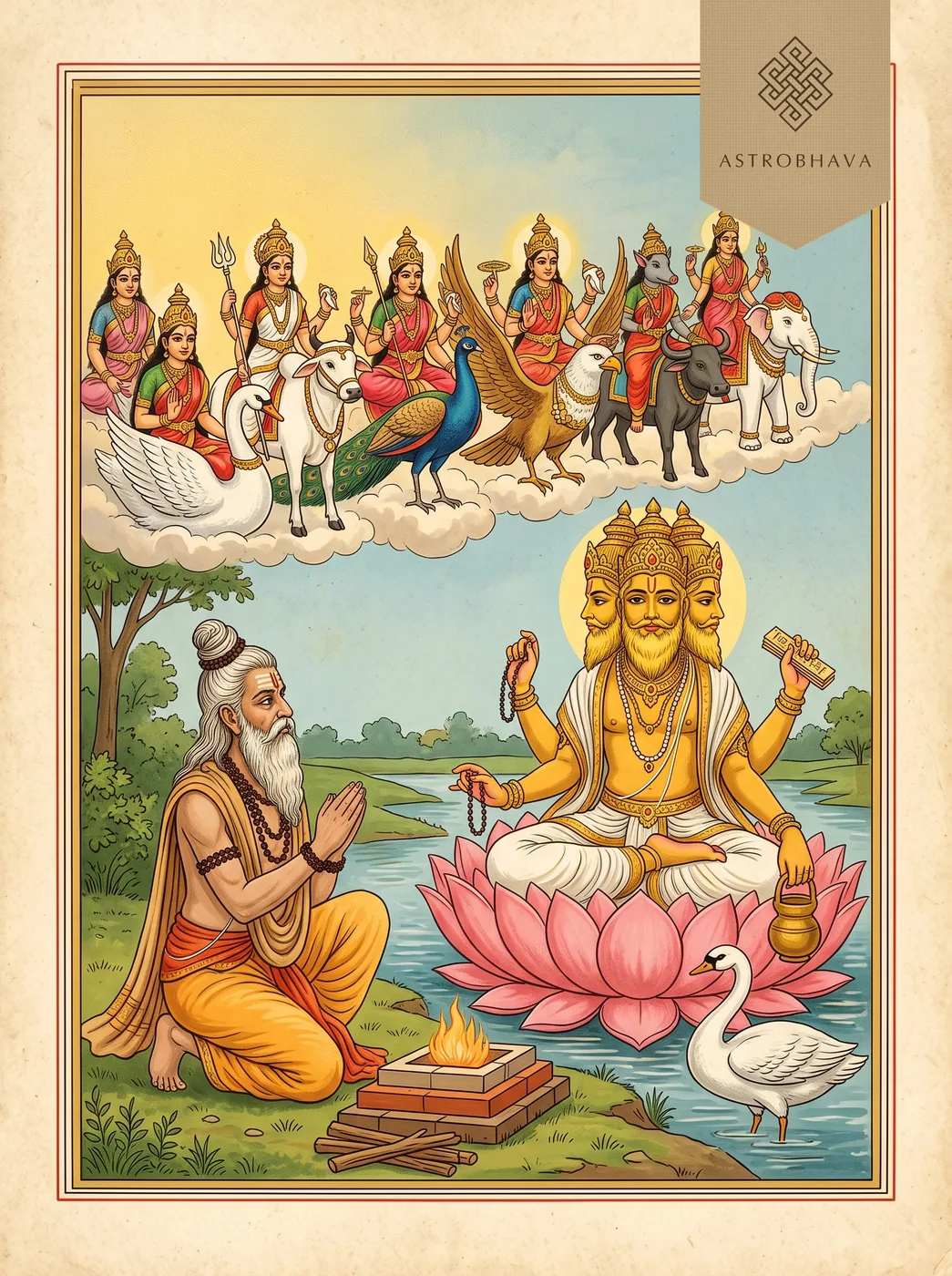
The Devi Kavacham, the 'armour of the Goddess' and often called the Durga Kavacham, is the protective hymn read before the Durga Saptashati. In the Gita Press form it opens with a salutation to Chandika and runs to 56 verses in the anushtubh metre; its viniyoga names Brahma as the seer and Chamunda as the deity. The text is a dialogue in which the sage Markandeya asks Brahma for a hidden means of protection and Brahma answers. Verses 3 to 5 name the nine Durgas, from Shailaputri to Siddhidatri, and verses 9 to 15 describe the Mothers on their mounts and the weapons they hold. From verse 17 the hymn becomes the armour itself: a goddess is placed at each of the ten directions, then at each part of the body from the crown-lock to the soles, and then over the breaths, senses, family and road. Verse 42 asks Jayanti to guard any place left unnamed, and verses 43 to 56 are the phala shruti.
The secret Markandeya asked Brahma for
The hymn supplies its own setting. Markandeya addresses Brahma as Pitamaha, the Grandfather, and asks for the one thing in the world that protects people in every way and has never been told to anyone. Brahma calls it the most secret thing of all, beneficial to every being, and names it the Goddess's kavacha. Before he places a single guardian, though, he recites a roll of names: the nine Durgas, which verse 5 says Brahma himself proclaimed. He then pictures the Mothers riding to war, Chamunda on a corpse, Varahi on a buffalo, Brahmi on a swan, before assigning them their posts around and within the reciter. Where the text comes from is answered differently in print. One recension closes with a colophon placing it in the Varaha Purana and calling it the composition of Hari, Hara and Brahma, and that recension differs from the Gita Press text in about twenty-five readings. The Gita Press Durga Saptashati prints no source line at all and simply sets the hymn among the preliminaries of the Saptashati reading. The text also fixes its own place in worship: verse 53 directs that the Saptashati to Chandi be recited after this armour has first been recited.
The mantra, in six scripts
- ॐ
- oṃ — Om
- यद्गुह्यं
- yadguhyaṃ — that which is secret
- परमं
- paramaṃ — supreme, utmost
- लोके
- loke — in the world
- सर्वरक्षाकरं
- sarvarakṣākaraṃ — giving every protection
- नृणाम्
- nṛṇām — to people
- यन्न
- yanna — which not
- कस्यचिदाख्यातं
- kasyacidākhyātaṃ — told to anyone
- तन्मे
- tanme — that, to me
- ब्रूहि
- brūhi — tell
- पितामह
- pitāmaha — O Grandfather (Brahma)
Durga Kavacham lyrics in full
The Gita Press form: a salutation to Chandika, then 56 verses, the last of them a single half-verse.
All 57 verses, in Sanskrit, Tamil, Telugu, Kannada, Malayalam and English, each with its meaning. Choose a script:
Download the Durga Kavacham PDFAll 57 verses with their meanings, in Sanskrit. Free to print and keep.
ॐ नमश्चण्डिकायै ॥
ௐ நமஶ்சண்டிகாயை ॥
ఓం నమశ్చణ్డికాయై ॥
ಓಂ ನಮಶ್ಚಣ್ಡಿಕಾಯೈ ॥
ഓം നമശ്ചണ്ഡികായൈ ॥
oṃ namaścaṇḍikāyai ||
Om, salutations to Chandika.
ॐ यद्गुह्यं परमं लोके सर्वरक्षाकरं नृणाम् ।
यन्न कस्यचिदाख्यातं तन्मे ब्रूहि पितामह ॥
ௐ யத்குஹ்யம் பரமம் லோகே ஸர்வரக்ஷாகரம் ந்ருணாம் ।
யந்ந கஸ்யசிதாக்யாதம் தந்மே ப்ரூஹி பிதாமஹ ॥
ఓం యద్గుహ్యం పరమం లోకే సర్వరక్షాకరం నృణామ్ ।
యన్న కస్యచిదాఖ్యాతం తన్మే బ్రూహి పితామహ ॥
ಓಂ ಯದ್ಗುಹ್ಯಂ ಪರಮಂ ಲೋಕೇ ಸರ್ವರಕ್ಷಾಕರಂ ನೃಣಾಮ್ ।
ಯನ್ನ ಕಸ್ಯಚಿದಾಖ್ಯಾತಂ ತನ್ಮೇ ಬ್ರೂಹಿ ಪಿತಾಮಹ ॥
ഓം യദ്ഗുഹ്യം പരമം ലോകേ സര്വരക്ഷാകരം നൃണാമ് ।
യന്ന കസ്യചിദാഖ്യാതം തന്മേ ബ്രൂഹി പിതാമഹ ॥
oṃ yadguhyaṃ paramaṃ loke sarvarakṣākaraṃ nṛṇām |
yanna kasyacidākhyātaṃ tanme brūhi pitāmaha ||
Markandeya said: O Grandfather (Brahma), tell me that which is most secret in the world, which gives every kind of protection to people, and which you have not yet revealed to anyone.
अस्ति गुह्यतमं विप्र सर्वभूतोपकारकम् ।
देव्यास्तु कवचं पुण्यं तच्छृणुष्व महामुने ॥
அஸ்தி குஹ்யதமம் விப்ர ஸர்வபூதோபகாரகம் ।
தேவ்யாஸ்து கவசம் புண்யம் தச்ச்ருணுஷ்வ மஹாமுநே ॥
అస్తి గుహ్యతమం విప్ర సర్వభూతోపకారకమ్ ।
దేవ్యాస్తు కవచం పుణ్యం తచ్ఛృణుష్వ మహామునే ॥
ಅಸ್ತಿ ಗುಹ್ಯತಮಂ ವಿಪ್ರ ಸರ್ವಭೂತೋಪಕಾರಕಮ್ ।
ದೇವ್ಯಾಸ್ತು ಕವಚಂ ಪುಣ್ಯಂ ತಚ್ಛೃಣುಷ್ವ ಮಹಾಮುನೇ ॥
അസ്തി ഗുഹ്യതമം വിപ്ര സര്വഭൂതോപകാരകമ് ।
ദേവ്യാസ്തു കവചം പുണ്യം തച്ഛൃണുഷ്വ മഹാമുനേ ॥
asti guhyatamaṃ vipra sarvabhūtopakārakam |
devyāstu kavacaṃ puṇyaṃ tacchṛṇuṣva mahāmune ||
Brahma said: O sage, there is a most secret thing that benefits all beings, the sacred armour (kavacha) of the Goddess. Listen to it, great sage.
प्रथमं शैलपुत्री च द्वितीयं ब्रह्मचारिणी ।
तृतीयं चन्द्रघण्टेति कूष्माण्डेति चतुर्थकम् ॥
ப்ரதமம் ஶைலபுத்ரீ ச த்விதீயம் ப்ரஹ்மசாரிணீ ।
த்ருதீயம் சந்த்ரகண்டேதி கூஷ்மாண்டேதி சதுர்தகம் ॥
ప్రథమం శైలపుత్రీ చ ద్వితీయం బ్రహ్మచారిణీ ।
తృతీయం చన్ద్రఘణ్టేతి కూష్మాణ్డేతి చతుర్థకమ్ ॥
ಪ್ರಥಮಂ ಶೈಲಪುತ್ರೀ ಚ ದ್ವಿತೀಯಂ ಬ್ರಹ್ಮಚಾರಿಣೀ ।
ತೃತೀಯಂ ಚನ್ದ್ರಘಣ್ಟೇತಿ ಕೂಷ್ಮಾಣ್ಡೇತಿ ಚತುರ್ಥಕಮ್ ॥
പ്രഥമം ശൈലപുത്രീ ച ദ്വിതീയം ബ്രഹ്മചാരിണീ ।
തൃതീയം ചന്ദ്രഘണ്ടേതി കൂഷ്മാണ്ഡേതി ചതുര്ഥകമ് ॥
prathamaṃ śailaputrī ca dvitīyaṃ brahmacāriṇī |
tṛtīyaṃ candraghaṇṭeti kūṣmāṇḍeti caturthakam ||
The first is called Shailaputri, the second Brahmacharini, the third Chandraghanta and the fourth Kushmanda.
पञ्चमं स्कन्दमातेति षष्ठं कात्यायनीति च ।
सप्तमं कालरात्रीति महागौरीति चाष्टमम् ॥
பஞ்சமம் ஸ்கந்தமாதேதி ஷஷ்டம் காத்யாயநீதி ச ।
ஸப்தமம் காலராத்ரீதி மஹாகௌரீதி சாஷ்டமம் ॥
పఞ్చమం స్కన్దమాతేతి షష్ఠం కాత్యాయనీతి చ ।
సప్తమం కాలరాత్రీతి మహాగౌరీతి చాష్టమమ్ ॥
ಪಞ್ಚಮಂ ಸ್ಕನ್ದಮಾತೇತಿ ಷಷ್ಠಂ ಕಾತ್ಯಾಯನೀತಿ ಚ ।
ಸಪ್ತಮಂ ಕಾಲರಾತ್ರೀತಿ ಮಹಾಗೌರೀತಿ ಚಾಷ್ಟಮಮ್ ॥
പഞ്ചമം സ്കന്ദമാതേതി ഷഷ്ഠം കാത്യായനീതി ച ।
സപ്തമം കാലരാത്രീതി മഹാഗൌരീതി ചാഷ്ടമമ് ॥
pañcamaṃ skandamāteti ṣaṣṭhaṃ kātyāyanīti ca |
saptamaṃ kālarātrīti mahāgaurīti cāṣṭamam ||
The fifth is Skandamata, the sixth Katyayani, the seventh Kalaratri and the eighth Mahagauri.
नवमं सिद्धिदात्री च नवदुर्गाः प्रकीर्तिताः ।
उक्तान्येतानि नामानि ब्रह्मणैव महात्मना ॥
நவமம் ஸித்திதாத்ரீ ச நவதுர்காஃ ப்ரகீர்திதாஃ ।
உக்தாந்யேதாநி நாமாநி ப்ரஹ்மணைவ மஹாத்மநா ॥
నవమం సిద్ధిదాత్రీ చ నవదుర్గాః ప్రకీర్తితాః ।
ఉక్తాన్యేతాని నామాని బ్రహ్మణైవ మహాత్మనా ॥
ನವಮಂ ಸಿದ್ಧಿದಾತ್ರೀ ಚ ನವದುರ್ಗಾಃ ಪ್ರಕೀರ್ತಿತಾಃ ।
ಉಕ್ತಾನ್ಯೇತಾನಿ ನಾಮಾನಿ ಬ್ರಹ್ಮಣೈವ ಮಹಾತ್ಮನಾ ॥
നവമം സിദ്ധിദാത്രീ ച നവദുര്ഗാഃ പ്രകീര്തിതാഃ ।
ഉക്താന്യേതാനി നാമാനി ബ്രഹ്മണൈവ മഹാത്മനാ ॥
navamaṃ siddhidātrī ca navadurgāḥ prakīrtitāḥ |
uktānyetāni nāmāni brahmaṇaiva mahātmanā ||
The ninth is Siddhidatri. These are proclaimed as the nine Durgas; these names were declared by the great-souled Brahma himself.
अग्निना दह्यमानस्तु शत्रुमध्ये गतो रणे ।
विषमे दुर्गमे चैव भयार्ताः शरणं गताः ॥
அக்நிநா தஹ்யமாநஸ்து ஶத்ருமத்யே கதோ ரணே ।
விஷமே துர்கமே சைவ பயார்தாஃ ஶரணம் கதாஃ ॥
అగ్నినా దహ్యమానస్తు శత్రుమధ్యే గతో రణే ।
విషమే దుర్గమే చైవ భయార్తాః శరణం గతాః ॥
ಅಗ್ನಿನಾ ದಹ್ಯಮಾನಸ್ತು ಶತ್ರುಮಧ್ಯೇ ಗತೋ ರಣೇ ।
ವಿಷಮೇ ದುರ್ಗಮೇ ಚೈವ ಭಯಾರ್ತಾಃ ಶರಣಂ ಗತಾಃ ॥
അഗ്നിനാ ദഹ്യമാനസ്തു ശത്രുമധ്യേ ഗതോ രണേ ।
വിഷമേ ദുര്ഗമേ ചൈവ ഭയാര്താഃ ശരണം ഗതാഃ ॥
agninā dahyamānastu śatrumadhye gato raṇe |
viṣame durgame caiva bhayārtāḥ śaraṇaṃ gatāḥ ||
Those who are burning in fire, who are surrounded by enemies on the battlefield, or who are caught in hard and dangerous straits, and who in fear take refuge in her -
न तेषां जायते किंचिदशुभं रणसंकटे ।
नापदं तस्य पश्यामि शोकदुःखभयं न हि ॥
ந தேஷாம் ஜாயதே கிம்சிதஶுபம் ரணஸம்கடே ।
நாபதம் தஸ்ய பஶ்யாமி ஶோகதுஃகபயம் ந ஹி ॥
న తేషాం జాయతే కించిదశుభం రణసంకటే ।
నాపదం తస్య పశ్యామి శోకదుఃఖభయం న హి ॥
ನ ತೇಷಾಂ ಜಾಯತೇ ಕಿಂಚಿದಶುಭಂ ರಣಸಂಕಟೇ ।
ನಾಪದಂ ತಸ್ಯ ಪಶ್ಯಾಮಿ ಶೋಕದುಃಖಭಯಂ ನ ಹಿ ॥
ന തേഷാം ജായതേ കിംചിദശുഭം രണസംകടേ ।
നാപദം തസ്യ പശ്യാമി ശോകദുഃഖഭയം ന ഹി ॥
na teṣāṃ jāyate kiṃcidaśubhaṃ raṇasaṃkaṭe |
nāpadaṃ tasya paśyāmi śokaduḥkhabhayaṃ na hi ||
- no misfortune befalls them in the crisis of battle. I see no calamity for such a person, and no sorrow, pain or fear.
यैस्तु भक्त्या स्मृता नूनं तेषां वृद्धिः प्रजायते ।
ये त्वां स्मरन्ति देवेशि रक्षसे तान्न संशयः ॥
யைஸ்து பக்த்யா ஸ்ம்ருதா நூநம் தேஷாம் வ்ருத்திஃ ப்ரஜாயதே ।
யே த்வாம் ஸ்மரந்தி தேவேஶி ரக்ஷஸே தாந்ந ஸம்ஶயஃ ॥
యైస్తు భక్త్యా స్మృతా నూనం తేషాం వృద్ధిః ప్రజాయతే ।
యే త్వాం స్మరన్తి దేవేశి రక్షసే తాన్న సంశయః ॥
ಯೈಸ್ತು ಭಕ್ತ್ಯಾ ಸ್ಮೃತಾ ನೂನಂ ತೇಷಾಂ ವೃದ್ಧಿಃ ಪ್ರಜಾಯತೇ ।
ಯೇ ತ್ವಾಂ ಸ್ಮರನ್ತಿ ದೇವೇಶಿ ರಕ್ಷಸೇ ತಾನ್ನ ಸಂಶಯಃ ॥
യൈസ്തു ഭക്ത്യാ സ്മൃതാ നൂനം തേഷാം വൃദ്ധിഃ പ്രജായതേ ।
യേ ത്വാം സ്മരന്തി ദേവേശി രക്ഷസേ താന്ന സംശയഃ ॥
yaistu bhaktyā smṛtā nūnaṃ teṣāṃ vṛddhiḥ prajāyate |
ye tvāṃ smaranti deveśi rakṣase tānna saṃśayaḥ ||
Those who remember her with devotion surely prosper. O Queen of the gods, you protect those who remember you; of this there is no doubt.
प्रेतसंस्था तु चामुण्डा वाराही महिषासना ।
ऐन्द्री गजसमारूढा वैष्णवी गरुडासना ॥
ப்ரேதஸம்ஸ்தா து சாமுண்டா வாராஹீ மஹிஷாஸநா ।
ஐந்த்ரீ கஜஸமாரூடா வைஷ்ணவீ கருடாஸநா ॥
ప్రేతసంస్థా తు చాముణ్డా వారాహీ మహిషాసనా ।
ఐన్ద్రీ గజసమారూఢా వైష్ణవీ గరుడాసనా ॥
ಪ್ರೇತಸಂಸ್ಥಾ ತು ಚಾಮುಣ್ಡಾ ವಾರಾಹೀ ಮಹಿಷಾಸನಾ ।
ಐನ್ದ್ರೀ ಗಜಸಮಾರೂಢಾ ವೈಷ್ಣವೀ ಗರುಡಾಸನಾ ॥
പ്രേതസംസ്ഥാ തു ചാമുണ്ഡാ വാരാഹീ മഹിഷാസനാ ।
ഐന്ദ്രീ ഗജസമാരൂഢാ വൈഷ്ണവീ ഗരുഡാസനാ ॥
pretasaṃsthā tu cāmuṇḍā vārāhī mahiṣāsanā |
aindrī gajasamārūḍhā vaiṣṇavī garuḍāsanā ||
Chamunda is seated on a corpse, Varahi rides a buffalo, Aindri is mounted on an elephant and Vaishnavi sits on Garuda.
माहेश्वरी वृषारूढा कौमारी शिखिवाहना ।
लक्ष्मीः पद्मासना देवी पद्महस्ता हरिप्रिया ॥
மாஹேஶ்வரீ வ்ருஷாரூடா கௌமாரீ ஶிகிவாஹநா ।
லக்ஷ்மீஃ பத்மாஸநா தேவீ பத்மஹஸ்தா ஹரிப்ரியா ॥
మాహేశ్వరీ వృషారూఢా కౌమారీ శిఖివాహనా ।
లక్ష్మీః పద్మాసనా దేవీ పద్మహస్తా హరిప్రియా ॥
ಮಾಹೇಶ್ವರೀ ವೃಷಾರೂಢಾ ಕೌಮಾರೀ ಶಿಖಿವಾಹನಾ ।
ಲಕ್ಷ್ಮೀಃ ಪದ್ಮಾಸನಾ ದೇವೀ ಪದ್ಮಹಸ್ತಾ ಹರಿಪ್ರಿಯಾ ॥
മാഹേശ്വരീ വൃഷാരൂഢാ കൌമാരീ ശിഖിവാഹനാ ।
ലക്ഷ്മീഃ പദ്മാസനാ ദേവീ പദ്മഹസ്താ ഹരിപ്രിയാ ॥
māheśvarī vṛṣārūḍhā kaumārī śikhivāhanā |
lakṣmīḥ padmāsanā devī padmahastā haripriyā ||
Maheshvari rides a bull, Kaumari has the peacock as her mount, and Lakshmi, beloved of Hari, sits on a lotus with a lotus in her hand.
श्वेतरूपधरा देवी ईश्वरी वृषवाहना ।
ब्राह्मी हंससमारूढा सर्वाभरणभूषिता ॥
ஶ்வேதரூபதரா தேவீ ஈஶ்வரீ வ்ருஷவாஹநா ।
ப்ராஹ்மீ ஹம்ஸஸமாரூடா ஸர்வாபரணபூஷிதா ॥
శ్వేతరూపధరా దేవీ ఈశ్వరీ వృషవాహనా ।
బ్రాహ్మీ హంససమారూఢా సర్వాభరణభూషితా ॥
ಶ್ವೇತರೂಪಧರಾ ದೇವೀ ಈಶ್ವರೀ ವೃಷವಾಹನಾ ।
ಬ್ರಾಹ್ಮೀ ಹಂಸಸಮಾರೂಢಾ ಸರ್ವಾಭರಣಭೂಷಿತಾ ॥
ശ്വേതരൂപധരാ ദേവീ ഈശ്വരീ വൃഷവാഹനാ ।
ബ്രാഹ്മീ ഹംസസമാരൂഢാ സര്വാഭരണഭൂഷിതാ ॥
śvetarūpadharā devī īśvarī vṛṣavāhanā |
brāhmī haṃsasamārūḍhā sarvābharaṇabhūṣitā ||
Ishvari, of white form, rides a bull, and Brahmi, adorned with every ornament, is mounted on a swan.
इत्येता मातरः सर्वाः सर्वयोगसमन्विताः ।
नानाभरणशोभाढ्या नानारत्नोपशोभिताः ॥
இத்யேதா மாதரஃ ஸர்வாஃ ஸர்வயோகஸமந்விதாஃ ।
நாநாபரணஶோபாட்யா நாநாரத்நோபஶோபிதாஃ ॥
ఇత్యేతా మాతరః సర్వాః సర్వయోగసమన్వితాః ।
నానాభరణశోభాఢ్యా నానారత్నోపశోభితాః ॥
ಇತ್ಯೇತಾ ಮಾತರಃ ಸರ್ವಾಃ ಸರ್ವಯೋಗಸಮನ್ವಿತಾಃ ।
ನಾನಾಭರಣಶೋಭಾಢ್ಯಾ ನಾನಾರತ್ನೋಪಶೋಭಿತಾಃ ॥
ഇത്യേതാ മാതരഃ സര്വാഃ സര്വയോഗസമന്വിതാഃ ।
നാനാഭരണശോഭാഢ്യാ നാനാരത്നോപശോഭിതാഃ ॥
ityetā mātaraḥ sarvāḥ sarvayogasamanvitāḥ |
nānābharaṇaśobhāḍhyā nānāratnopaśobhitāḥ ||
All these Mothers are endowed with every yogic power, splendid with many ornaments and shining with many jewels.
दृश्यन्ते रथमारूढा देव्यः क्रोधसमाकुलाः ।
शङ्खं चक्रं गदां शक्तिं हलं च मुसलायुधम् ॥
த்ருஶ்யந்தே ரதமாரூடா தேவ்யஃ க்ரோதஸமாகுலாஃ ।
ஶங்கம் சக்ரம் கதாம் ஶக்திம் ஹலம் ச முஸலாயுதம் ॥
దృశ్యన్తే రథమారూఢా దేవ్యః క్రోధసమాకులాః ।
శఙ్ఖం చక్రం గదాం శక్తిం హలం చ ముసలాయుధమ్ ॥
ದೃಶ್ಯನ್ತೇ ರಥಮಾರೂಢಾ ದೇವ್ಯಃ ಕ್ರೋಧಸಮಾಕುಲಾಃ ।
ಶಙ್ಖಂ ಚಕ್ರಂ ಗದಾಂ ಶಕ್ತಿಂ ಹಲಂ ಚ ಮುಸಲಾಯುಧಮ್ ॥
ദൃശ്യന്തേ രഥമാരൂഢാ ദേവ്യഃ ക്രോധസമാകുലാഃ ।
ശങ്ഖം ചക്രം ഗദാം ശക്തിം ഹലം ച മുസലായുധമ് ॥
dṛśyante rathamārūḍhā devyaḥ krodhasamākulāḥ |
śaṅkhaṃ cakraṃ gadāṃ śaktiṃ halaṃ ca musalāyudham ||
The goddesses are seen mounted on chariots, filled with wrath, holding the conch, discus, mace, spear, plough and the pestle as a weapon,
खेटकं तोमरं चैव परशुं पाशमेव च ।
कुन्तायुधं त्रिशूलं च शार्ङ्गमायुधमुत्तमम् ॥
கேடகம் தோமரம் சைவ பரஶும் பாஶமேவ ச ।
குந்தாயுதம் த்ரிஶூலம் ச ஶார்ங்கமாயுதமுத்தமம் ॥
ఖేటకం తోమరం చైవ పరశుం పాశమేవ చ ।
కున్తాయుధం త్రిశూలం చ శార్ఙ్గమాయుధముత్తమమ్ ॥
ಖೇಟಕಂ ತೋಮರಂ ಚೈವ ಪರಶುಂ ಪಾಶಮೇವ ಚ ।
ಕುನ್ತಾಯುಧಂ ತ್ರಿಶೂಲಂ ಚ ಶಾರ್ಙ್ಗಮಾಯುಧಮುತ್ತಮಮ್ ॥
ഖേടകം തോമരം ചൈവ പരശും പാശമേവ ച ।
കുന്തായുധം ത്രിശൂലം ച ശാര്ങ്ഗമായുധമുത്തമമ് ॥
kheṭakaṃ tomaraṃ caiva paraśuṃ pāśameva ca |
kuntāyudhaṃ triśūlaṃ ca śārṅgamāyudhamuttamam ||
the shield, the lance, the axe and the noose, the javelin, the trident and the excellent bow Sharnga.
दैत्यानां देहनाशाय भक्तानामभयाय च ।
धारयन्त्यायुधानीत्थं देवानां च हिताय वै ॥
தைத்யாநாம் தேஹநாஶாய பக்தாநாமபயாய ச ।
தாரயந்த்யாயுதாநீத்தம் தேவாநாம் ச ஹிதாய வை ॥
దైత్యానాం దేహనాశాయ భక్తానామభయాయ చ ।
ధారయన్త్యాయుధానీత్థం దేవానాం చ హితాయ వై ॥
ದೈತ್ಯಾನಾಂ ದೇಹನಾಶಾಯ ಭಕ್ತಾನಾಮಭಯಾಯ ಚ ।
ಧಾರಯನ್ತ್ಯಾಯುಧಾನೀತ್ಥಂ ದೇವಾನಾಂ ಚ ಹಿತಾಯ ವೈ ॥
ദൈത്യാനാം ദേഹനാശായ ഭക്താനാമഭയായ ച ।
ധാരയന്ത്യായുധാനീത്ഥം ദേവാനാം ച ഹിതായ വൈ ॥
daityānāṃ dehanāśāya bhaktānāmabhayāya ca |
dhārayantyāyudhānītthaṃ devānāṃ ca hitāya vai ||
They bear these weapons to destroy the bodies of the demons, to give fearlessness to the devotees and for the good of the gods.
नमस्तेऽस्तु महारौद्रे महाघोरपराक्रमे ।
महाबले महोत्साहे महाभयविनाशिनि ॥
நமஸ்தேஸ்து மஹாரௌத்ரே மஹாகோரபராக்ரமே ।
மஹாபலே மஹோத்ஸாஹே மஹாபயவிநாஶிநி ॥
నమస్తేఽస్తు మహారౌద్రే మహాఘోరపరాక్రమే ।
మహాబలే మహోత్సాహే మహాభయవినాశిని ॥
ನಮಸ್ತೇಽಸ್ತು ಮಹಾರೌದ್ರೇ ಮಹಾಘೋರಪರಾಕ್ರಮೇ ।
ಮಹಾಬಲೇ ಮಹೋತ್ಸಾಹೇ ಮಹಾಭಯವಿನಾಶಿನಿ ॥
നമസ്തേഽസ്തു മഹാരൌദ്രേ മഹാഘോരപരാക്രമേ ।
മഹാബലേ മഹോത്സാഹേ മഹാഭയവിനാശിനി ॥
namaste'stu mahāraudre mahāghoraparākrame |
mahābale mahotsāhe mahābhayavināśini ||
Salutations to you, O greatly fierce one of terrible valour, of great strength and great energy, destroyer of great fear.
त्राहि मां देवि दुष्प्रेक्ष्ये शत्रूणां भयवर्धिनि ।
प्राच्यां रक्षतु मामैन्द्री आग्नेय्यामग्निदेवता ॥
த்ராஹி மாம் தேவி துஷ்ப்ரேக்ஷ்யே ஶத்ரூணாம் பயவர்திநி ।
ப்ராச்யாம் ரக்ஷது மாமைந்த்ரீ ஆக்நேய்யாமக்நிதேவதா ॥
త్రాహి మాం దేవి దుష్ప్రేక్ష్యే శత్రూణాం భయవర్ధిని ।
ప్రాచ్యాం రక్షతు మామైన్ద్రీ ఆగ్నేయ్యామగ్నిదేవతా ॥
ತ್ರಾಹಿ ಮಾಂ ದೇವಿ ದುಷ್ಪ್ರೇಕ್ಷ್ಯೇ ಶತ್ರೂಣಾಂ ಭಯವರ್ಧಿನಿ ।
ಪ್ರಾಚ್ಯಾಂ ರಕ್ಷತು ಮಾಮೈನ್ದ್ರೀ ಆಗ್ನೇಯ್ಯಾಮಗ್ನಿದೇವತಾ ॥
ത്രാഹി മാം ദേവി ദുഷ്പ്രേക്ഷ്യേ ശത്രൂണാം ഭയവര്ധിനി ।
പ്രാച്യാം രക്ഷതു മാമൈന്ദ്രീ ആഗ്നേയ്യാമഗ്നിദേവതാ ॥
trāhi māṃ devi duṣprekṣye śatrūṇāṃ bhayavardhini |
prācyāṃ rakṣatu māmaindrī āgneyyāmagnidevatā ||
Save me, O Goddess hard to look upon, who increases the fear of enemies. May Aindri protect me in the east and the fire-goddess (Agni's power) in the south-east.
दक्षिणेऽवतु वाराही नैर्ऋत्यां खड्गधारिणी ।
प्रतीच्यां वारुणी रक्षेद् वायव्यां मृगवाहिनी ॥
தக்ஷிணேவது வாராஹீ நைர்ருத்யாம் கட்கதாரிணீ ।
ப்ரதீச்யாம் வாருணீ ரக்ஷேத் வாயவ்யாம் ம்ருகவாஹிநீ ॥
దక్షిణేఽవతు వారాహీ నైర్ఋత్యాం ఖడ్గధారిణీ ।
ప్రతీచ్యాం వారుణీ రక్షేద్ వాయవ్యాం మృగవాహినీ ॥
ದಕ್ಷಿಣೇಽವತು ವಾರಾಹೀ ನೈರ್ಋತ್ಯಾಂ ಖಡ್ಗಧಾರಿಣೀ ।
ಪ್ರತೀಚ್ಯಾಂ ವಾರುಣೀ ರಕ್ಷೇದ್ ವಾಯವ್ಯಾಂ ಮೃಗವಾಹಿನೀ ॥
ദക്ഷിണേഽവതു വാരാഹീ നൈര്ഋത്യാം ഖഡ്ഗധാരിണീ ।
പ്രതീച്യാം വാരുണീ രക്ഷേദ് വായവ്യാം മൃഗവാഹിനീ ॥
dakṣiṇe'vatu vārāhī nairṛtyāṃ khaḍgadhāriṇī |
pratīcyāṃ vāruṇī rakṣed vāyavyāṃ mṛgavāhinī ||
May Varahi guard me in the south and the sword-bearer in the south-west; may Varuni protect me in the west and the deer-rider in the north-west.
उदीच्यां पातु कौमारी ऐशान्यां शूलधारिणी ।
ऊर्ध्वं ब्रह्माणि मे रक्षेदधस्ताद् वैष्णवी तथा ॥
உதீச்யாம் பாது கௌமாரீ ஐஶாந்யாம் ஶூலதாரிணீ ।
ஊர்த்வம் ப்ரஹ்மாணி மே ரக்ஷேததஸ்தாத் வைஷ்ணவீ ததா ॥
ఉదీచ్యాం పాతు కౌమారీ ఐశాన్యాం శూలధారిణీ ।
ఊర్ధ్వం బ్రహ్మాణి మే రక్షేదధస్తాద్ వైష్ణవీ తథా ॥
ಉದೀಚ್ಯಾಂ ಪಾತು ಕೌಮಾರೀ ಐಶಾನ್ಯಾಂ ಶೂಲಧಾರಿಣೀ ।
ಊರ್ಧ್ವಂ ಬ್ರಹ್ಮಾಣಿ ಮೇ ರಕ್ಷೇದಧಸ್ತಾದ್ ವೈಷ್ಣವೀ ತಥಾ ॥
ഉദീച്യാം പാതു കൌമാരീ ഐശാന്യാം ശൂലധാരിണീ ।
ഊര്ധ്വം ബ്രഹ്മാണി മേ രക്ഷേദധസ്താദ് വൈഷ്ണവീ തഥാ ॥
udīcyāṃ pātu kaumārī aiśānyāṃ śūladhāriṇī |
ūrdhvaṃ brahmāṇi me rakṣedadhastād vaiṣṇavī tathā ||
May Kaumari guard me in the north and the trident-bearer in the north-east; may Brahmani protect me above and Vaishnavi below.
एवं दश दिशो रक्षेच्चामुण्डा शववाहना ।
जया मे चाग्रतः पातु विजया पातु पृष्ठतः ॥
ஏவம் தஶ திஶோ ரக்ஷேச்சாமுண்டா ஶவவாஹநா ।
ஜயா மே சாக்ரதஃ பாது விஜயா பாது ப்ருஷ்டதஃ ॥
ఏవం దశ దిశో రక్షేచ్చాముణ్డా శవవాహనా ।
జయా మే చాగ్రతః పాతు విజయా పాతు పృష్ఠతః ॥
ಏವಂ ದಶ ದಿಶೋ ರಕ್ಷೇಚ್ಚಾಮುಣ್ಡಾ ಶವವಾಹನಾ ।
ಜಯಾ ಮೇ ಚಾಗ್ರತಃ ಪಾತು ವಿಜಯಾ ಪಾತು ಪೃಷ್ಠತಃ ॥
ഏവം ദശ ദിശോ രക്ഷേച്ചാമുണ്ഡാ ശവവാഹനാ ।
ജയാ മേ ചാഗ്രതഃ പാതു വിജയാ പാതു പൃഷ്ഠതഃ ॥
evaṃ daśa diśo rakṣeccāmuṇḍā śavavāhanā |
jayā me cāgrataḥ pātu vijayā pātu pṛṣṭhataḥ ||
Thus may Chamunda, who rides a corpse, protect the ten directions. May Jaya guard me in front and Vijaya behind.
अजिता वामपार्श्वे तु दक्षिणे चापराजिता ।
शिखामुद्योतिनी रक्षेदुमा मूर्ध्नि व्यवस्थिता ॥
அஜிதா வாமபார்ஶ்வே து தக்ஷிணே சாபராஜிதா ।
ஶிகாமுத்யோதிநீ ரக்ஷேதுமா மூர்த்நி வ்யவஸ்திதா ॥
అజితా వామపార్శ్వే తు దక్షిణే చాపరాజితా ।
శిఖాముద్యోతినీ రక్షేదుమా మూర్ధ్ని వ్యవస్థితా ॥
ಅಜಿತಾ ವಾಮಪಾರ್ಶ್ವೇ ತು ದಕ್ಷಿಣೇ ಚಾಪರಾಜಿತಾ ।
ಶಿಖಾಮುದ್ಯೋತಿನೀ ರಕ್ಷೇದುಮಾ ಮೂರ್ಧ್ನಿ ವ್ಯವಸ್ಥಿತಾ ॥
അജിതാ വാമപാര്ശ്വേ തു ദക്ഷിണേ ചാപരാജിതാ ।
ശിഖാമുദ്യോതിനീ രക്ഷേദുമാ മൂര്ധ്നി വ്യവസ്ഥിതാ ॥
ajitā vāmapārśve tu dakṣiṇe cāparājitā |
śikhāmudyotinī rakṣedumā mūrdhni vyavasthitā ||
May Ajita guard my left side and Aparajita my right. May Udyotini protect the crown-lock of my hair and Uma, seated on my head.
मालाधरी ललाटे च भ्रुवौ रक्षेद् यशस्विनी ।
त्रिनेत्रा च भ्रुवोर्मध्ये यमघण्टा च नासिके ॥
மாலாதரீ லலாடே ச ப்ருவௌ ரக்ஷேத் யஶஸ்விநீ ।
த்ரிநேத்ரா ச ப்ருவோர்மத்யே யமகண்டா ச நாஸிகே ॥
మాలాధరీ లలాటే చ భ్రువౌ రక్షేద్ యశస్వినీ ।
త్రినేత్రా చ భ్రువోర్మధ్యే యమఘణ్టా చ నాసికే ॥
ಮಾಲಾಧರೀ ಲಲಾಟೇ ಚ ಭ್ರುವೌ ರಕ್ಷೇದ್ ಯಶಸ್ವಿನೀ ।
ತ್ರಿನೇತ್ರಾ ಚ ಭ್ರುವೋರ್ಮಧ್ಯೇ ಯಮಘಣ್ಟಾ ಚ ನಾಸಿಕೇ ॥
മാലാധരീ ലലാടേ ച ഭ്രുവൌ രക്ഷേദ് യശസ്വിനീ ।
ത്രിനേത്രാ ച ഭ്രുവോര്മധ്യേ യമഘണ്ടാ ച നാസികേ ॥
mālādharī lalāṭe ca bhruvau rakṣed yaśasvinī |
trinetrā ca bhruvormadhye yamaghaṇṭā ca nāsike ||
May Maladhari protect my forehead and Yashasvini my eyebrows; Trinetra the space between the brows and Yamaghanta the nose.
शङ्खिनी चक्षुषोर्मध्ये श्रोत्रयोर्द्वारवासिनी ।
कपोलौ कालिका रक्षेत्कर्णमूले तु शांकरी ॥
ஶங்கிநீ சக்ஷுஷோர்மத்யே ஶ்ரோத்ரயோர்த்வாரவாஸிநீ ।
கபோலௌ காலிகா ரக்ஷேத்கர்ணமூலே து ஶாம்கரீ ॥
శఙ్ఖినీ చక్షుషోర్మధ్యే శ్రోత్రయోర్ద్వారవాసినీ ।
కపోలౌ కాలికా రక్షేత్కర్ణమూలే తు శాంకరీ ॥
ಶಙ್ಖಿನೀ ಚಕ್ಷುಷೋರ್ಮಧ್ಯೇ ಶ್ರೋತ್ರಯೋರ್ದ್ವಾರವಾಸಿನೀ ।
ಕಪೋಲೌ ಕಾಲಿಕಾ ರಕ್ಷೇತ್ಕರ್ಣಮೂಲೇ ತು ಶಾಂಕರೀ ॥
ശങ്ഖിനീ ചക്ഷുഷോര്മധ്യേ ശ്രോത്രയോര്ദ്വാരവാസിനീ ।
കപോലൌ കാലികാ രക്ഷേത്കര്ണമൂലേ തു ശാംകരീ ॥
śaṅkhinī cakṣuṣormadhye śrotrayordvāravāsinī |
kapolau kālikā rakṣetkarṇamūle tu śāṃkarī ||
May Shankhini protect the space between the eyes and Dvaravasini the ears; may Kalika guard the cheeks and Shankari the roots of the ears.
नासिकायां सुगन्धा च उत्तरोष्ठे च चर्चिका ।
अधरे चामृतकला जिह्वायां च सरस्वती ॥
நாஸிகாயாம் ஸுகந்தா ச உத்தரோஷ்டே ச சர்சிகா ।
அதரே சாம்ருதகலா ஜிஹ்வாயாம் ச ஸரஸ்வதீ ॥
నాసికాయాం సుగన్ధా చ ఉత్తరోష్ఠే చ చర్చికా ।
అధరే చామృతకలా జిహ్వాయాం చ సరస్వతీ ॥
ನಾಸಿಕಾಯಾಂ ಸುಗನ್ಧಾ ಚ ಉತ್ತರೋಷ್ಠೇ ಚ ಚರ್ಚಿಕಾ ।
ಅಧರೇ ಚಾಮೃತಕಲಾ ಜಿಹ್ವಾಯಾಂ ಚ ಸರಸ್ವತೀ ॥
നാസികായാം സുഗന്ധാ ച ഉത്തരോഷ്ഠേ ച ചര്ചികാ ।
അധരേ ചാമൃതകലാ ജിഹ്വായാം ച സരസ്വതീ ॥
nāsikāyāṃ sugandhā ca uttaroṣṭhe ca carcikā |
adhare cāmṛtakalā jihvāyāṃ ca sarasvatī ||
May Sugandha protect the nostrils, Charchika the upper lip, Amritakala the lower lip and Sarasvati the tongue.
दन्तान् रक्षतु कौमारी कण्ठदेशे तु चण्डिका ।
घण्टिकां चित्रघण्टा च महामाया च तालुके ॥
தந்தாந் ரக்ஷது கௌமாரீ கண்டதேஶே து சண்டிகா ।
கண்டிகாம் சித்ரகண்டா ச மஹாமாயா ச தாலுகே ॥
దన్తాన్ రక్షతు కౌమారీ కణ్ఠదేశే తు చణ్డికా ।
ఘణ్టికాం చిత్రఘణ్టా చ మహామాయా చ తాలుకే ॥
ದನ್ತಾನ್ ರಕ್ಷತು ಕೌಮಾರೀ ಕಣ್ಠದೇಶೇ ತು ಚಣ್ಡಿಕಾ ।
ಘಣ್ಟಿಕಾಂ ಚಿತ್ರಘಣ್ಟಾ ಚ ಮಹಾಮಾಯಾ ಚ ತಾಲುಕೇ ॥
ദന്താന് രക്ഷതു കൌമാരീ കണ്ഠദേശേ തു ചണ്ഡികാ ।
ഘണ്ടികാം ചിത്രഘണ്ടാ ച മഹാമായാ ച താലുകേ ॥
dantān rakṣatu kaumārī kaṇṭhadeśe tu caṇḍikā |
ghaṇṭikāṃ citraghaṇṭā ca mahāmāyā ca tāluke ||
May Kaumari protect the teeth and Chandika the throat; Chitraghanta the uvula and Mahamaya the palate.
कामाक्षी चिबुकं रक्षेद् वाचं मे सर्वमङ्गला ।
ग्रीवायां भद्रकाली च पृष्ठवंशे धनुर्धरी ॥
காமாக்ஷீ சிபுகம் ரக்ஷேத் வாசம் மே ஸர்வமங்கலா ।
க்ரீவாயாம் பத்ரகாலீ ச ப்ருஷ்டவம்ஶே தநுர்தரீ ॥
కామాక్షీ చిబుకం రక్షేద్ వాచం మే సర్వమఙ్గలా ।
గ్రీవాయాం భద్రకాలీ చ పృష్ఠవంశే ధనుర్ధరీ ॥
ಕಾಮಾಕ್ಷೀ ಚಿಬುಕಂ ರಕ್ಷೇದ್ ವಾಚಂ ಮೇ ಸರ್ವಮಙ್ಗಲಾ ।
ಗ್ರೀವಾಯಾಂ ಭದ್ರಕಾಲೀ ಚ ಪೃಷ್ಠವಂಶೇ ಧನುರ್ಧರೀ ॥
കാമാക്ഷീ ചിബുകം രക്ഷേദ് വാചം മേ സര്വമങ്ഗലാ ।
ഗ്രീവായാം ഭദ്രകാലീ ച പൃഷ്ഠവംശേ ധനുര്ധരീ ॥
kāmākṣī cibukaṃ rakṣed vācaṃ me sarvamaṅgalā |
grīvāyāṃ bhadrakālī ca pṛṣṭhavaṃśe dhanurdharī ||
May Kamakshi protect the chin and Sarvamangala my speech; Bhadrakali the neck and Dhanurdhari the spine.
नीलग्रीवा बहिःकण्ठे नलिकां नलकूबरी ।
स्कन्धयोः खड्गिनी रक्षेद् बाहू मे वज्रधारिणी ॥
நீலக்ரீவா பஹிஃகண்டே நலிகாம் நலகூபரீ ।
ஸ்கந்தயோஃ கட்கிநீ ரக்ஷேத் பாஹூ மே வஜ்ரதாரிணீ ॥
నీలగ్రీవా బహిఃకణ్ఠే నలికాం నలకూబరీ ।
స్కన్ధయోః ఖడ్గినీ రక్షేద్ బాహూ మే వజ్రధారిణీ ॥
ನೀಲಗ್ರೀವಾ ಬಹಿಃಕಣ್ಠೇ ನಲಿಕಾಂ ನಲಕೂಬರೀ ।
ಸ್ಕನ್ಧಯೋಃ ಖಡ್ಗಿನೀ ರಕ್ಷೇದ್ ಬಾಹೂ ಮೇ ವಜ್ರಧಾರಿಣೀ ॥
നീലഗ്രീവാ ബഹിഃകണ്ഠേ നലികാം നലകൂബരീ ।
സ്കന്ധയോഃ ഖഡ്ഗിനീ രക്ഷേദ് ബാഹൂ മേ വജ്രധാരിണീ ॥
nīlagrīvā bahiḥkaṇṭhe nalikāṃ nalakūbarī |
skandhayoḥ khaḍginī rakṣed bāhū me vajradhāriṇī ||
May Nilagriva protect the outer throat and Nalakubari the windpipe; may Khadgini guard the shoulders and Vajradharini my arms.
हस्तयोर्दण्डिनी रक्षेदम्बिका चाङ्गुलीषु च ।
नखाञ्छूलेश्वरी रक्षेत्कुक्षौ रक्षेत्कुलेश्वरी ॥
ஹஸ்தயோர்தண்டிநீ ரக்ஷேதம்பிகா சாங்குலீஷு ச ।
நகாஞ்சூலேஶ்வரீ ரக்ஷேத்குக்ஷௌ ரக்ஷேத்குலேஶ்வரீ ॥
హస్తయోర్దణ్డినీ రక్షేదమ్బికా చాఙ్గులీషు చ ।
నఖాఞ్ఛూలేశ్వరీ రక్షేత్కుక్షౌ రక్షేత్కులేశ్వరీ ॥
ಹಸ್ತಯೋರ್ದಣ್ಡಿನೀ ರಕ್ಷೇದಮ್ಬಿಕಾ ಚಾಙ್ಗುಲೀಷು ಚ ।
ನಖಾಞ್ಛೂಲೇಶ್ವರೀ ರಕ್ಷೇತ್ಕುಕ್ಷೌ ರಕ್ಷೇತ್ಕುಲೇಶ್ವರೀ ॥
ഹസ്തയോര്ദണ്ഡിനീ രക്ഷേദമ്ബികാ ചാങ്ഗുലീഷു ച ।
നഖാഞ്ഛൂലേശ്വരീ രക്ഷേത്കുക്ഷൌ രക്ഷേത്കുലേശ്വരീ ॥
hastayordaṇḍinī rakṣedambikā cāṅgulīṣu ca |
nakhāñchūleśvarī rakṣetkukṣau rakṣetkuleśvarī ||
May Dandini protect the hands and Ambika the fingers; may Shuleshvari guard the nails and Kuleshvari the belly.
स्तनौ रक्षेन्महादेवी मनः शोकविनाशिनी ।
हृदये ललिता देवी उदरे शूलधारिणी ॥
ஸ்தநௌ ரக்ஷேந்மஹாதேவீ மநஃ ஶோகவிநாஶிநீ ।
ஹ்ருதயே லலிதா தேவீ உதரே ஶூலதாரிணீ ॥
స్తనౌ రక్షేన్మహాదేవీ మనః శోకవినాశినీ ।
హృదయే లలితా దేవీ ఉదరే శూలధారిణీ ॥
ಸ್ತನೌ ರಕ್ಷೇನ್ಮಹಾದೇವೀ ಮನಃ ಶೋಕವಿನಾಶಿನೀ ।
ಹೃದಯೇ ಲಲಿತಾ ದೇವೀ ಉದರೇ ಶೂಲಧಾರಿಣೀ ॥
സ്തനൌ രക്ഷേന്മഹാദേവീ മനഃ ശോകവിനാശിനീ ।
ഹൃദയേ ലലിതാ ദേവീ ഉദരേ ശൂലധാരിണീ ॥
stanau rakṣenmahādevī manaḥ śokavināśinī |
hṛdaye lalitā devī udare śūladhāriṇī ||
May Mahadevi protect the breasts and Shokavinashini the mind; Lalita Devi the heart and Shuladharini the abdomen.
नाभौ च कामिनी रक्षेद् गुह्यं गुह्येश्वरी तथा ।
पूतना कामिका मेढ्रं गुदे महिषवाहिनी ॥
நாபௌ ச காமிநீ ரக்ஷேத் குஹ்யம் குஹ்யேஶ்வரீ ததா ।
பூதநா காமிகா மேட்ரம் குதே மஹிஷவாஹிநீ ॥
నాభౌ చ కామినీ రక్షేద్ గుహ్యం గుహ్యేశ్వరీ తథా ।
పూతనా కామికా మేఢ్రం గుదే మహిషవాహినీ ॥
ನಾಭೌ ಚ ಕಾಮಿನೀ ರಕ್ಷೇದ್ ಗುಹ್ಯಂ ಗುಹ್ಯೇಶ್ವರೀ ತಥಾ ।
ಪೂತನಾ ಕಾಮಿಕಾ ಮೇಢ್ರಂ ಗುದೇ ಮಹಿಷವಾಹಿನೀ ॥
നാഭൌ ച കാമിനീ രക്ഷേദ് ഗുഹ്യം ഗുഹ്യേശ്വരീ തഥാ ।
പൂതനാ കാമികാ മേഢ്രം ഗുദേ മഹിഷവാഹിനീ ॥
nābhau ca kāminī rakṣed guhyaṃ guhyeśvarī tathā |
pūtanā kāmikā meḍhraṃ gude mahiṣavāhinī ||
May Kamini protect the navel and Guhyeshvari the private parts; may Putana and Kamika guard the generative organ and Mahishavahini the anus.
कट्यां भगवती रक्षेज्जानुनी विन्ध्यवासिनी ।
जङ्घे महाबला रक्षेत्सर्वकामप्रदायिनी ॥
கட்யாம் பகவதீ ரக்ஷேஜ்ஜாநுநீ விந்த்யவாஸிநீ ।
ஜங்கே மஹாபலா ரக்ஷேத்ஸர்வகாமப்ரதாயிநீ ॥
కట్యాం భగవతీ రక్షేజ్జానునీ విన్ధ్యవాసినీ ।
జఙ్ఘే మహాబలా రక్షేత్సర్వకామప్రదాయినీ ॥
ಕಟ್ಯಾಂ ಭಗವತೀ ರಕ್ಷೇಜ್ಜಾನುನೀ ವಿನ್ಧ್ಯವಾಸಿನೀ ।
ಜಙ್ಘೇ ಮಹಾಬಲಾ ರಕ್ಷೇತ್ಸರ್ವಕಾಮಪ್ರದಾಯಿನೀ ॥
കട്യാം ഭഗവതീ രക്ഷേജ്ജാനുനീ വിന്ധ്യവാസിനീ ।
ജങ്ഘേ മഹാബലാ രക്ഷേത്സര്വകാമപ്രദായിനീ ॥
kaṭyāṃ bhagavatī rakṣejjānunī vindhyavāsinī |
jaṅghe mahābalā rakṣetsarvakāmapradāyinī ||
May Bhagavati protect the waist and Vindhyavasini the knees; may Mahabala, the giver of all desires, guard the shanks.
गुल्फयोर्नारसिंही च पादपृष्ठे तु तैजसी ।
पादाङ्गुलीषु श्री रक्षेत्पादाधस्तलवासिनी ॥
குல்பயோர்நாரஸிம்ஹீ ச பாதப்ருஷ்டே து தைஜஸீ ।
பாதாங்குலீஷு ஶ்ரீ ரக்ஷேத்பாதாதஸ்தலவாஸிநீ ॥
గుల్ఫయోర్నారసింహీ చ పాదపృష్ఠే తు తైజసీ ।
పాదాఙ్గులీషు శ్రీ రక్షేత్పాదాధస్తలవాసినీ ॥
ಗುಲ್ಫಯೋರ್ನಾರಸಿಂಹೀ ಚ ಪಾದಪೃಷ್ಠೇ ತು ತೈಜಸೀ ।
ಪಾದಾಙ್ಗುಲೀಷು ಶ್ರೀ ರಕ್ಷೇತ್ಪಾದಾಧಸ್ತಲವಾಸಿನೀ ॥
ഗുല്ഫയോര്നാരസിംഹീ ച പാദപൃഷ്ഠേ തു തൈജസീ ।
പാദാങ്ഗുലീഷു ശ്രീ രക്ഷേത്പാദാധസ്തലവാസിനീ ॥
gulphayornārasiṃhī ca pādapṛṣṭhe tu taijasī |
pādāṅgulīṣu śrī rakṣetpādādhastalavāsinī ||
May Narasimhi protect the ankles and Taijasi the upper feet; may Shri guard the toes and Talavasini the soles.
नखान् दंष्ट्राकराली च केशांश्चैवोर्ध्वकेशिनी ।
रोमकूपेषु कौबेरी त्वचं वागीश्वरी तथा ॥
நகாந் தம்ஷ்ட்ராகராலீ ச கேஶாம்ஶ்சைவோர்த்வகேஶிநீ ।
ரோமகூபேஷு கௌபேரீ த்வசம் வாகீஶ்வரீ ததா ॥
నఖాన్ దంష్ట్రాకరాలీ చ కేశాంశ్చైవోర్ధ్వకేశినీ ।
రోమకూపేషు కౌబేరీ త్వచం వాగీశ్వరీ తథా ॥
ನಖಾನ್ ದಂಷ್ಟ್ರಾಕರಾಲೀ ಚ ಕೇಶಾಂಶ್ಚೈವೋರ್ಧ್ವಕೇಶಿನೀ ।
ರೋಮಕೂಪೇಷು ಕೌಬೇರೀ ತ್ವಚಂ ವಾಗೀಶ್ವರೀ ತಥಾ ॥
നഖാന് ദംഷ്ട്രാകരാലീ ച കേശാംശ്ചൈവോര്ധ്വകേശിനീ ।
രോമകൂപേഷു കൌബേരീ ത്വചം വാഗീശ്വരീ തഥാ ॥
nakhān daṃṣṭrākarālī ca keśāṃścaivordhvakeśinī |
romakūpeṣu kauberī tvacaṃ vāgīśvarī tathā ||
May Damshtrakarali protect the nails and Urdhvakeshini the hair; Kauberi the pores of the skin and Vagishvari the skin.
रक्तमज्जावसामांसान्यस्थिमेदांसि पार्वती ।
अन्त्राणि कालरात्रिश्च पित्तं च मुकुटेश्वरी ॥
ரக்தமஜ்ஜாவஸாமாம்ஸாந்யஸ்திமேதாம்ஸி பார்வதீ ।
அந்த்ராணி காலராத்ரிஶ்ச பித்தம் ச முகுடேஶ்வரீ ॥
రక్తమజ్జావసామాంసాన్యస్థిమేదాంసి పార్వతీ ।
అన్త్రాణి కాలరాత్రిశ్చ పిత్తం చ ముకుటేశ్వరీ ॥
ರಕ್ತಮಜ್ಜಾವಸಾಮಾಂಸಾನ್ಯಸ್ಥಿಮೇದಾಂಸಿ ಪಾರ್ವತೀ ।
ಅನ್ತ್ರಾಣಿ ಕಾಲರಾತ್ರಿಶ್ಚ ಪಿತ್ತಂ ಚ ಮುಕುಟೇಶ್ವರೀ ॥
രക്തമജ്ജാവസാമാംസാന്യസ്ഥിമേദാംസി പാര്വതീ ।
അന്ത്രാണി കാലരാത്രിശ്ച പിത്തം ച മുകുടേശ്വരീ ॥
raktamajjāvasāmāṃsānyasthimedāṃsi pārvatī |
antrāṇi kālarātriśca pittaṃ ca mukuṭeśvarī ||
May Parvati protect blood, marrow, fat, flesh, bone and fat-tissue; Kalaratri the intestines and Mukuteshvari the bile.
पद्मावती पद्मकोशे कफे चूडामणिस्तथा ।
ज्वालामुखी नखज्वालामभेद्या सर्वसंधिषु ॥
பத்மாவதீ பத்மகோஶே கபே சூடாமணிஸ்ததா ।
ஜ்வாலாமுகீ நகஜ்வாலாமபேத்யா ஸர்வஸம்திஷு ॥
పద్మావతీ పద్మకోశే కఫే చూడామణిస్తథా ।
జ్వాలాముఖీ నఖజ్వాలామభేద్యా సర్వసంధిషు ॥
ಪದ್ಮಾವತೀ ಪದ್ಮಕೋಶೇ ಕಫೇ ಚೂಡಾಮಣಿಸ್ತಥಾ ।
ಜ್ವಾಲಾಮುಖೀ ನಖಜ್ವಾಲಾಮಭೇದ್ಯಾ ಸರ್ವಸಂಧಿಷು ॥
പദ്മാവതീ പദ്മകോശേ കഫേ ചൂഡാമണിസ്തഥാ ।
ജ്വാലാമുഖീ നഖജ്വാലാമഭേദ്യാ സര്വസംധിഷു ॥
padmāvatī padmakośe kaphe cūḍāmaṇistathā |
jvālāmukhī nakhajvālāmabhedyā sarvasaṃdhiṣu ||
May Padmavati protect the lotus-like inner centres and Chudamani the phlegm; Jvalamukhi the lustre of the nails, and Abhedya all the joints.
शुक्रं ब्रह्माणि मे रक्षेच्छायां छत्रेश्वरी तथा ।
अहंकारं मनो बुद्धिं रक्षेन्मे धर्मधारिणी ॥
ஶுக்ரம் ப்ரஹ்மாணி மே ரக்ஷேச்சாயாம் சத்ரேஶ்வரீ ததா ।
அஹம்காரம் மநோ புத்திம் ரக்ஷேந்மே தர்மதாரிணீ ॥
శుక్రం బ్రహ్మాణి మే రక్షేచ్ఛాయాం ఛత్రేశ్వరీ తథా ।
అహంకారం మనో బుద్ధిం రక్షేన్మే ధర్మధారిణీ ॥
ಶುಕ್ರಂ ಬ್ರಹ್ಮಾಣಿ ಮೇ ರಕ್ಷೇಚ್ಛಾಯಾಂ ಛತ್ರೇಶ್ವರೀ ತಥಾ ।
ಅಹಂಕಾರಂ ಮನೋ ಬುದ್ಧಿಂ ರಕ್ಷೇನ್ಮೇ ಧರ್ಮಧಾರಿಣೀ ॥
ശുക്രം ബ്രഹ്മാണി മേ രക്ഷേച്ഛായാം ഛത്രേശ്വരീ തഥാ ।
അഹംകാരം മനോ ബുദ്ധിം രക്ഷേന്മേ ധര്മധാരിണീ ॥
śukraṃ brahmāṇi me rakṣecchāyāṃ chatreśvarī tathā |
ahaṃkāraṃ mano buddhiṃ rakṣenme dharmadhāriṇī ||
May Brahmani protect my semen and Chhatreshvari my shadow; may Dharmadharini protect my ego, mind and intellect.
प्राणापानौ तथा व्यानमुदानं च समानकम् ।
वज्रहस्ता च मे रक्षेत्प्राणं कल्याणशोभना ॥
ப்ராணாபாநௌ ததா வ்யாநமுதாநம் ச ஸமாநகம் ।
வஜ்ரஹஸ்தா ச மே ரக்ஷேத்ப்ராணம் கல்யாணஶோபநா ॥
ప్రాణాపానౌ తథా వ్యానముదానం చ సమానకమ్ ।
వజ్రహస్తా చ మే రక్షేత్ప్రాణం కల్యాణశోభనా ॥
ಪ್ರಾಣಾಪಾನೌ ತಥಾ ವ್ಯಾನಮುದಾನಂ ಚ ಸಮಾನಕಮ್ ।
ವಜ್ರಹಸ್ತಾ ಚ ಮೇ ರಕ್ಷೇತ್ಪ್ರಾಣಂ ಕಲ್ಯಾಣಶೋಭನಾ ॥
പ്രാണാപാനൌ തഥാ വ്യാനമുദാനം ച സമാനകമ് ।
വജ്രഹസ്താ ച മേ രക്ഷേത്പ്രാണം കല്യാണശോഭനാ ॥
prāṇāpānau tathā vyānamudānaṃ ca samānakam |
vajrahastā ca me rakṣetprāṇaṃ kalyāṇaśobhanā ||
May Vajrahasta protect my vital breaths prana, apana, vyana, udana and samana, and may Kalyanashobhana protect my life.
रसे रूपे च गन्धे च शब्दे स्पर्शे च योगिनी ।
सत्त्वं रजस्तमश्चैव रक्षेन्नारायणी सदा ॥
ரஸே ரூபே ச கந்தே ச ஶப்தே ஸ்பர்ஶே ச யோகிநீ ।
ஸத்த்வம் ரஜஸ்தமஶ்சைவ ரக்ஷேந்நாராயணீ ஸதா ॥
రసే రూపే చ గన్ధే చ శబ్దే స్పర్శే చ యోగినీ ।
సత్త్వం రజస్తమశ్చైవ రక్షేన్నారాయణీ సదా ॥
ರಸೇ ರೂಪೇ ಚ ಗನ್ಧೇ ಚ ಶಬ್ದೇ ಸ್ಪರ್ಶೇ ಚ ಯೋಗಿನೀ ।
ಸತ್ತ್ವಂ ರಜಸ್ತಮಶ್ಚೈವ ರಕ್ಷೇನ್ನಾರಾಯಣೀ ಸದಾ ॥
രസേ രൂപേ ച ഗന്ധേ ച ശബ്ദേ സ്പര്ശേ ച യോഗിനീ ।
സത്ത്വം രജസ്തമശ്ചൈവ രക്ഷേന്നാരായണീ സദാ ॥
rase rūpe ca gandhe ca śabde sparśe ca yoginī |
sattvaṃ rajastamaścaiva rakṣennārāyaṇī sadā ||
May Yogini protect taste, form, smell, sound and touch, and may Narayani always guard sattva, rajas and tamas.
आयू रक्षतु वाराही धर्मं रक्षतु वैष्णवी ।
यशः कीर्तिं च लक्ष्मीं च धनं विद्यां च चक्रिणी ॥
ஆயூ ரக்ஷது வாராஹீ தர்மம் ரக்ஷது வைஷ்ணவீ ।
யஶஃ கீர்திம் ச லக்ஷ்மீம் ச தநம் வித்யாம் ச சக்ரிணீ ॥
ఆయూ రక్షతు వారాహీ ధర్మం రక్షతు వైష్ణవీ ।
యశః కీర్తిం చ లక్ష్మీం చ ధనం విద్యాం చ చక్రిణీ ॥
ಆಯೂ ರಕ್ಷತು ವಾರಾಹೀ ಧರ್ಮಂ ರಕ್ಷತು ವೈಷ್ಣವೀ ।
ಯಶಃ ಕೀರ್ತಿಂ ಚ ಲಕ್ಷ್ಮೀಂ ಚ ಧನಂ ವಿದ್ಯಾಂ ಚ ಚಕ್ರಿಣೀ ॥
ആയൂ രക്ഷതു വാരാഹീ ധര്മം രക്ഷതു വൈഷ്ണവീ ।
യശഃ കീര്തിം ച ലക്ഷ്മീം ച ധനം വിദ്യാം ച ചക്രിണീ ॥
āyū rakṣatu vārāhī dharmaṃ rakṣatu vaiṣṇavī |
yaśaḥ kīrtiṃ ca lakṣmīṃ ca dhanaṃ vidyāṃ ca cakriṇī ||
May Varahi protect my life span and Vaishnavi my dharma; may Chakrini guard my fame, renown, fortune, wealth and learning.
गोत्रमिन्द्राणि मे रक्षेत्पशून्मे रक्ष चण्डिके ।
पुत्रान् रक्षेन्महालक्ष्मीर्भार्यां रक्षतु भैरवी ॥
கோத்ரமிந்த்ராணி மே ரக்ஷேத்பஶூந்மே ரக்ஷ சண்டிகே ।
புத்ராந் ரக்ஷேந்மஹாலக்ஷ்மீர்பார்யாம் ரக்ஷது பைரவீ ॥
గోత్రమిన్ద్రాణి మే రక్షేత్పశూన్మే రక్ష చణ్డికే ।
పుత్రాన్ రక్షేన్మహాలక్ష్మీర్భార్యాం రక్షతు భైరవీ ॥
ಗೋತ್ರಮಿನ್ದ್ರಾಣಿ ಮೇ ರಕ್ಷೇತ್ಪಶೂನ್ಮೇ ರಕ್ಷ ಚಣ್ಡಿಕೇ ।
ಪುತ್ರಾನ್ ರಕ್ಷೇನ್ಮಹಾಲಕ್ಷ್ಮೀರ್ಭಾರ್ಯಾಂ ರಕ್ಷತು ಭೈರವೀ ॥
ഗോത്രമിന്ദ്രാണി മേ രക്ഷേത്പശൂന്മേ രക്ഷ ചണ്ഡികേ ।
പുത്രാന് രക്ഷേന്മഹാലക്ഷ്മീര്ഭാര്യാം രക്ഷതു ഭൈരവീ ॥
gotramindrāṇi me rakṣetpaśūnme rakṣa caṇḍike |
putrān rakṣenmahālakṣmīrbhāryāṃ rakṣatu bhairavī ||
May Indrani protect my family line; O Chandika, protect my cattle. May Mahalakshmi guard my children and Bhairavi my wife.
पन्थानं सुपथा रक्षेन्मार्गं क्षेमकरी तथा ।
राजद्वारे महालक्ष्मीर्विजया सर्वतः स्थिता ॥
பந்தாநம் ஸுபதா ரக்ஷேந்மார்கம் க்ஷேமகரீ ததா ।
ராஜத்வாரே மஹாலக்ஷ்மீர்விஜயா ஸர்வதஃ ஸ்திதா ॥
పన్థానం సుపథా రక్షేన్మార్గం క్షేమకరీ తథా ।
రాజద్వారే మహాలక్ష్మీర్విజయా సర్వతః స్థితా ॥
ಪನ್ಥಾನಂ ಸುಪಥಾ ರಕ್ಷೇನ್ಮಾರ್ಗಂ ಕ್ಷೇಮಕರೀ ತಥಾ ।
ರಾಜದ್ವಾರೇ ಮಹಾಲಕ್ಷ್ಮೀರ್ವಿಜಯಾ ಸರ್ವತಃ ಸ್ಥಿತಾ ॥
പന്ഥാനം സുപഥാ രക്ഷേന്മാര്ഗം ക്ഷേമകരീ തഥാ ।
രാജദ്വാരേ മഹാലക്ഷ്മീര്വിജയാ സര്വതഃ സ്ഥിതാ ॥
panthānaṃ supathā rakṣenmārgaṃ kṣemakarī tathā |
rājadvāre mahālakṣmīrvijayā sarvataḥ sthitā ||
May Supatha protect my journey and Kshemakari my road; may Mahalakshmi protect me at the king's court, and Vijaya, present everywhere, on all sides.
रक्षाहीनं तु यत्स्थानं वर्जितं कवचेन तु ।
तत्सर्वं रक्ष मे देवि जयन्ती पापनाशिनी ॥
ரக்ஷாஹீநம் து யத்ஸ்தாநம் வர்ஜிதம் கவசேந து ।
தத்ஸர்வம் ரக்ஷ மே தேவி ஜயந்தீ பாபநாஶிநீ ॥
రక్షాహీనం తు యత్స్థానం వర్జితం కవచేన తు ।
తత్సర్వం రక్ష మే దేవి జయన్తీ పాపనాశినీ ॥
ರಕ್ಷಾಹೀನಂ ತು ಯತ್ಸ್ಥಾನಂ ವರ್ಜಿತಂ ಕವಚೇನ ತು ।
ತತ್ಸರ್ವಂ ರಕ್ಷ ಮೇ ದೇವಿ ಜಯನ್ತೀ ಪಾಪನಾಶಿನೀ ॥
രക്ഷാഹീനം തു യത്സ്ഥാനം വര്ജിതം കവചേന തു ।
തത്സര്വം രക്ഷ മേ ദേവി ജയന്തീ പാപനാശിനീ ॥
rakṣāhīnaṃ tu yatsthānaṃ varjitaṃ kavacena tu |
tatsarvaṃ rakṣa me devi jayantī pāpanāśinī ||
Whatever place is left unguarded and not covered by this armour, protect all of it for me, O Goddess Jayanti, destroyer of sin.
पदमेकं न गच्छेत्तु यदीच्छेच्छुभमात्मनः ।
कवचेनावृतो नित्यं यत्र यत्रैव गच्छति ॥
பதமேகம் ந கச்சேத்து யதீச்சேச்சுபமாத்மநஃ ।
கவசேநாவ்ருதோ நித்யம் யத்ர யத்ரைவ கச்சதி ॥
పదమేకం న గచ్ఛేత్తు యదీచ్ఛేచ్ఛుభమాత్మనః ।
కవచేనావృతో నిత్యం యత్ర యత్రైవ గచ్ఛతి ॥
ಪದಮೇಕಂ ನ ಗಚ್ಛೇತ್ತು ಯದೀಚ್ಛೇಚ್ಛುಭಮಾತ್ಮನಃ ।
ಕವಚೇನಾವೃತೋ ನಿತ್ಯಂ ಯತ್ರ ಯತ್ರೈವ ಗಚ್ಛತಿ ॥
പദമേകം ന ഗച്ഛേത്തു യദീച്ഛേച്ഛുഭമാത്മനഃ ।
കവചേനാവൃതോ നിത്യം യത്ര യത്രൈവ ഗച്ഛതി ॥
padamekaṃ na gacchettu yadīcchecchubhamātmanaḥ |
kavacenāvṛto nityaṃ yatra yatraiva gacchati ||
One who wishes himself well should not take a single step without this armour. Wherever a person goes, always covered by the armour,
तत्र तत्रार्थलाभश्च विजयः सार्वकामिकः ।
यं यं चिन्तयते कामं तं तं प्राप्नोति निश्चितम् ।
परमैश्वर्यमतुलं प्राप्स्यते भूतले पुमान् ॥
தத்ர தத்ரார்தலாபஶ்ச விஜயஃ ஸார்வகாமிகஃ ।
யம் யம் சிந்தயதே காமம் தம் தம் ப்ராப்நோதி நிஶ்சிதம் ।
பரமைஶ்வர்யமதுலம் ப்ராப்ஸ்யதே பூதலே புமாந் ॥
తత్ర తత్రార్థలాభశ్చ విజయః సార్వకామికః ।
యం యం చిన్తయతే కామం తం తం ప్రాప్నోతి నిశ్చితమ్ ।
పరమైశ్వర్యమతులం ప్రాప్స్యతే భూతలే పుమాన్ ॥
ತತ್ರ ತತ್ರಾರ್ಥಲಾಭಶ್ಚ ವಿಜಯಃ ಸಾರ್ವಕಾಮಿಕಃ ।
ಯಂ ಯಂ ಚಿನ್ತಯತೇ ಕಾಮಂ ತಂ ತಂ ಪ್ರಾಪ್ನೋತಿ ನಿಶ್ಚಿತಮ್ ।
ಪರಮೈಶ್ವರ್ಯಮತುಲಂ ಪ್ರಾಪ್ಸ್ಯತೇ ಭೂತಲೇ ಪುಮಾನ್ ॥
തത്ര തത്രാര്ഥലാഭശ്ച വിജയഃ സാര്വകാമികഃ ।
യം യം ചിന്തയതേ കാമം തം തം പ്രാപ്നോതി നിശ്ചിതമ് ।
പരമൈശ്വര്യമതുലം പ്രാപ്സ്യതേ ഭൂതലേ പുമാന് ॥
tatra tatrārthalābhaśca vijayaḥ sārvakāmikaḥ |
yaṃ yaṃ cintayate kāmaṃ taṃ taṃ prāpnoti niścitam |
paramaiśvaryamatulaṃ prāpsyate bhūtale pumān ||
there he gains his aims and victory that fulfils every wish. The verse says that whatever desire he thinks of he surely obtains, and he gains incomparable supreme prosperity on earth.
निर्भयो जायते मर्त्यः संग्रामेष्वपराजितः ।
त्रैलोक्ये तु भवेत्पूज्यः कवचेनावृतः पुमान् ॥
நிர்பயோ ஜாயதே மர்த்யஃ ஸம்க்ராமேஷ்வபராஜிதஃ ।
த்ரைலோக்யே து பவேத்பூஜ்யஃ கவசேநாவ்ருதஃ புமாந் ॥
నిర్భయో జాయతే మర్త్యః సంగ్రామేష్వపరాజితః ।
త్రైలోక్యే తు భవేత్పూజ్యః కవచేనావృతః పుమాన్ ॥
ನಿರ್ಭಯೋ ಜಾಯತೇ ಮರ್ತ್ಯಃ ಸಂಗ್ರಾಮೇಷ್ವಪರಾಜಿತಃ ।
ತ್ರೈಲೋಕ್ಯೇ ತು ಭವೇತ್ಪೂಜ್ಯಃ ಕವಚೇನಾವೃತಃ ಪುಮಾನ್ ॥
നിര്ഭയോ ജായതേ മര്ത്യഃ സംഗ്രാമേഷ്വപരാജിതഃ ।
ത്രൈലോക്യേ തു ഭവേത്പൂജ്യഃ കവചേനാവൃതഃ പുമാന് ॥
nirbhayo jāyate martyaḥ saṃgrāmeṣvaparājitaḥ |
trailokye tu bhavetpūjyaḥ kavacenāvṛtaḥ pumān ||
The verse says that a mortal covered by this armour becomes fearless, is not defeated in battles and is honoured in the three worlds.
इदं तु देव्याः कवचं देवानामपि दुर्लभम् ।
यः पठेत्प्रयतो नित्यं त्रिसन्ध्यं श्रद्धयान्वितः ॥
இதம் து தேவ்யாஃ கவசம் தேவாநாமபி துர்லபம் ।
யஃ படேத்ப்ரயதோ நித்யம் த்ரிஸந்த்யம் ஶ்ரத்தயாந்விதஃ ॥
ఇదం తు దేవ్యాః కవచం దేవానామపి దుర్లభమ్ ।
యః పఠేత్ప్రయతో నిత్యం త్రిసన్ధ్యం శ్రద్ధయాన్వితః ॥
ಇದಂ ತು ದೇವ್ಯಾಃ ಕವಚಂ ದೇವಾನಾಮಪಿ ದುರ್ಲಭಮ್ ।
ಯಃ ಪಠೇತ್ಪ್ರಯತೋ ನಿತ್ಯಂ ತ್ರಿಸನ್ಧ್ಯಂ ಶ್ರದ್ಧಯಾನ್ವಿತಃ ॥
ഇദം തു ദേവ്യാഃ കവചം ദേവാനാമപി ദുര്ലഭമ് ।
യഃ പഠേത്പ്രയതോ നിത്യം ത്രിസന്ധ്യം ശ്രദ്ധയാന്വിതഃ ॥
idaṃ tu devyāḥ kavacaṃ devānāmapi durlabham |
yaḥ paṭhetprayato nityaṃ trisandhyaṃ śraddhayānvitaḥ ||
This armour of the Goddess is hard to obtain even for the gods. Whoever recites it daily with care and faith at the three junctions of the day -
दैवी कला भवेत्तस्य त्रैलोक्येष्वपराजितः ।
जीवेद् वर्षशतं साग्रमपमृत्युविवर्जितः ॥
தைவீ கலா பவேத்தஸ்ய த்ரைலோக்யேஷ்வபராஜிதஃ ।
ஜீவேத் வர்ஷஶதம் ஸாக்ரமபம்ருத்யுவிவர்ஜிதஃ ॥
దైవీ కలా భవేత్తస్య త్రైలోక్యేష్వపరాజితః ।
జీవేద్ వర్షశతం సాగ్రమపమృత్యువివర్జితః ॥
ದೈವೀ ಕಲಾ ಭವೇತ್ತಸ್ಯ ತ್ರೈಲೋಕ್ಯೇಷ್ವಪರಾಜಿತಃ ।
ಜೀವೇದ್ ವರ್ಷಶತಂ ಸಾಗ್ರಮಪಮೃತ್ಯುವಿವರ್ಜಿತಃ ॥
ദൈവീ കലാ ഭവേത്തസ്യ ത്രൈലോക്യേഷ്വപരാജിതഃ ।
ജീവേദ് വര്ഷശതം സാഗ്രമപമൃത്യുവിവര്ജിതഃ ॥
daivī kalā bhavettasya trailokyeṣvaparājitaḥ |
jīved varṣaśataṃ sāgramapamṛtyuvivarjitaḥ ||
- the verse says he gains a divine grace, is undefeated in the three worlds, and lives a full hundred years and more, free from untimely death.
नश्यन्ति व्याधयः सर्वे लूताविस्फोटकादयः ।
स्थावरं जङ्गमं चैव कृत्रिमं चापि यद्विषम् ॥
நஶ்யந்தி வ்யாதயஃ ஸர்வே லூதாவிஸ்போடகாதயஃ ।
ஸ்தாவரம் ஜங்கமம் சைவ க்ருத்ரிமம் சாபி யத்விஷம் ॥
నశ్యన్తి వ్యాధయః సర్వే లూతావిస్ఫోటకాదయః ।
స్థావరం జఙ్గమం చైవ కృత్రిమం చాపి యద్విషమ్ ॥
ನಶ್ಯನ್ತಿ ವ್ಯಾಧಯಃ ಸರ್ವೇ ಲೂತಾವಿಸ್ಫೋಟಕಾದಯಃ ।
ಸ್ಥಾವರಂ ಜಙ್ಗಮಂ ಚೈವ ಕೃತ್ರಿಮಂ ಚಾಪಿ ಯದ್ವಿಷಮ್ ॥
നശ്യന്തി വ്യാധയഃ സര്വേ ലൂതാവിസ്ഫോടകാദയഃ ।
സ്ഥാവരം ജങ്ഗമം ചൈവ കൃത്രിമം ചാപി യദ്വിഷമ് ॥
naśyanti vyādhayaḥ sarve lūtāvisphoṭakādayaḥ |
sthāvaraṃ jaṅgamaṃ caiva kṛtrimaṃ cāpi yadviṣam ||
The verse says that all diseases, such as spider-bite rashes and boils, are destroyed, along with poison of any kind, from plants, from creatures or prepared by people.
अभिचाराणि सर्वाणि मन्त्रयन्त्राणि भूतले ।
भूचराः खेचराश्चैव जलजाश्चोपदेशिकाः ॥
அபிசாராணி ஸர்வாணி மந்த்ரயந்த்ராணி பூதலே ।
பூசராஃ கேசராஶ்சைவ ஜலஜாஶ்சோபதேஶிகாஃ ॥
అభిచారాణి సర్వాణి మన్త్రయన్త్రాణి భూతలే ।
భూచరాః ఖేచరాశ్చైవ జలజాశ్చోపదేశికాః ॥
ಅಭಿಚಾರಾಣಿ ಸರ್ವಾಣಿ ಮನ್ತ್ರಯನ್ತ್ರಾಣಿ ಭೂತಲೇ ।
ಭೂಚರಾಃ ಖೇಚರಾಶ್ಚೈವ ಜಲಜಾಶ್ಚೋಪದೇಶಿಕಾಃ ॥
അഭിചാരാണി സര്വാണി മന്ത്രയന്ത്രാണി ഭൂതലേ ।
ഭൂചരാഃ ഖേചരാശ്ചൈവ ജലജാശ്ചോപദേശികാഃ ॥
abhicārāṇi sarvāṇi mantrayantrāṇi bhūtale |
bhūcarāḥ khecarāścaiva jalajāścopadeśikāḥ ||
All hostile rites and spells and charms on earth, beings that move on land, in the sky and in the water, and those sent by instruction,
सहजा कुलजा माला डाकिनी शाकिनी तथा ।
अन्तरिक्षचरा घोरा डाकिन्यश्च महाबलाः ॥
ஸஹஜா குலஜா மாலா டாகிநீ ஶாகிநீ ததா ।
அந்தரிக்ஷசரா கோரா டாகிந்யஶ்ச மஹாபலாஃ ॥
సహజా కులజా మాలా డాకినీ శాకినీ తథా ।
అన్తరిక్షచరా ఘోరా డాకిన్యశ్చ మహాబలాః ॥
ಸಹಜಾ ಕುಲಜಾ ಮಾಲಾ ಡಾಕಿನೀ ಶಾಕಿನೀ ತಥಾ ।
ಅನ್ತರಿಕ್ಷಚರಾ ಘೋರಾ ಡಾಕಿನ್ಯಶ್ಚ ಮಹಾಬಲಾಃ ॥
സഹജാ കുലജാ മാലാ ഡാകിനീ ശാകിനീ തഥാ ।
അന്തരിക്ഷചരാ ഘോരാ ഡാകിന്യശ്ച മഹാബലാഃ ॥
sahajā kulajā mālā ḍākinī śākinī tathā |
antarikṣacarā ghorā ḍākinyaśca mahābalāḥ ||
spirits born with one or arising in the family, the Mala, Dakini and Shakini spirits, and the fierce and mighty Dakinis that move in the air,
ग्रहभूतपिशाचाश्च यक्षगन्धर्वराक्षसाः ।
ब्रह्मराक्षसवेतालाः कूष्माण्डा भैरवादयः ॥
க்ரஹபூதபிஶாசாஶ்ச யக்ஷகந்தர்வராக்ஷஸாஃ ।
ப்ரஹ்மராக்ஷஸவேதாலாஃ கூஷ்மாண்டா பைரவாதயஃ ॥
గ్రహభూతపిశాచాశ్చ యక్షగన్ధర్వరాక్షసాః ।
బ్రహ్మరాక్షసవేతాలాః కూష్మాణ్డా భైరవాదయః ॥
ಗ್ರಹಭೂತಪಿಶಾಚಾಶ್ಚ ಯಕ್ಷಗನ್ಧರ್ವರಾಕ್ಷಸಾಃ ।
ಬ್ರಹ್ಮರಾಕ್ಷಸವೇತಾಲಾಃ ಕೂಷ್ಮಾಣ್ಡಾ ಭೈರವಾದಯಃ ॥
ഗ്രഹഭൂതപിശാചാശ്ച യക്ഷഗന്ധര്വരാക്ഷസാഃ ।
ബ്രഹ്മരാക്ഷസവേതാലാഃ കൂഷ്മാണ്ഡാ ഭൈരവാദയഃ ॥
grahabhūtapiśācāśca yakṣagandharvarākṣasāḥ |
brahmarākṣasavetālāḥ kūṣmāṇḍā bhairavādayaḥ ||
planetary afflictions, ghosts, pishachas, yakshas, gandharvas, rakshasas, brahma-rakshasas, vetalas, kushmandas, bhairavas and the like -
नश्यन्ति दर्शनात्तस्य कवचे हृदि संस्थिते ।
मानोन्नतिर्भवेद् राज्ञस्तेजोवृद्धिकरं परम् ॥
நஶ்யந்தி தர்ஶநாத்தஸ்ய கவசே ஹ்ருதி ஸம்ஸ்திதே ।
மாநோந்நதிர்பவேத் ராஜ்ஞஸ்தேஜோவ்ருத்திகரம் பரம் ॥
నశ్యన్తి దర్శనాత్తస్య కవచే హృది సంస్థితే ।
మానోన్నతిర్భవేద్ రాజ్ఞస్తేజోవృద్ధికరం పరమ్ ॥
ನಶ್ಯನ್ತಿ ದರ್ಶನಾತ್ತಸ್ಯ ಕವಚೇ ಹೃದಿ ಸಂಸ್ಥಿತೇ ।
ಮಾನೋನ್ನತಿರ್ಭವೇದ್ ರಾಜ್ಞಸ್ತೇಜೋವೃದ್ಧಿಕರಂ ಪರಮ್ ॥
നശ്യന്തി ദര്ശനാത്തസ്യ കവചേ ഹൃദി സംസ്ഥിതേ ।
മാനോന്നതിര്ഭവേദ് രാജ്ഞസ്തേജോവൃദ്ധികരം പരമ് ॥
naśyanti darśanāttasya kavace hṛdi saṃsthite |
mānonnatirbhaved rājñastejovṛddhikaraṃ param ||
- the verse says they all perish at the very sight of one who holds this armour in his heart. It brings honour from the king and greatly increases one's radiance.
यशसा वर्धते सोऽपि कीर्तिमण्डितभूतले ।
जपेत्सप्तशतीं चण्डीं कृत्वा तु कवचं पुरा ॥
யஶஸா வர்ததே ஸோபி கீர்திமண்டிதபூதலே ।
ஜபேத்ஸப்தஶதீம் சண்டீம் க்ருத்வா து கவசம் புரா ॥
యశసా వర్ధతే సోఽపి కీర్తిమణ్డితభూతలే ।
జపేత్సప్తశతీం చణ్డీం కృత్వా తు కవచం పురా ॥
ಯಶಸಾ ವರ್ಧತೇ ಸೋಽಪಿ ಕೀರ್ತಿಮಣ್ಡಿತಭೂತಲೇ ।
ಜಪೇತ್ಸಪ್ತಶತೀಂ ಚಣ್ಡೀಂ ಕೃತ್ವಾ ತು ಕವಚಂ ಪುರಾ ॥
യശസാ വര്ധതേ സോഽപി കീര്തിമണ്ഡിതഭൂതലേ ।
ജപേത്സപ്തശതീം ചണ്ഡീം കൃത്വാ തു കവചം പുരാ ॥
yaśasā vardhate so'pi kīrtimaṇḍitabhūtale |
japetsaptaśatīṃ caṇḍīṃ kṛtvā tu kavacaṃ purā ||
He grows in fame on an earth adorned with his renown. One should recite the Saptashati to Chandi after first reciting this armour.
यावद्भूमण्डलं धत्ते सशैलवनकाननम् ।
तावत्तिष्ठति मेदिन्यां संततिः पुत्रपौत्रिकी ॥
யாவத்பூமண்டலம் தத்தே ஸஶைலவநகாநநம் ।
தாவத்திஷ்டதி மேதிந்யாம் ஸம்ததிஃ புத்ரபௌத்ரிகீ ॥
యావద్భూమణ్డలం ధత్తే సశైలవనకాననమ్ ।
తావత్తిష్ఠతి మేదిన్యాం సంతతిః పుత్రపౌత్రికీ ॥
ಯಾವದ್ಭೂಮಣ್ಡಲಂ ಧತ್ತೇ ಸಶೈಲವನಕಾನನಮ್ ।
ತಾವತ್ತಿಷ್ಠತಿ ಮೇದಿನ್ಯಾಂ ಸಂತತಿಃ ಪುತ್ರಪೌತ್ರಿಕೀ ॥
യാവദ്ഭൂമണ്ഡലം ധത്തേ സശൈലവനകാനനമ് ।
താവത്തിഷ്ഠതി മേദിന്യാം സംതതിഃ പുത്രപൌത്രികീ ॥
yāvadbhūmaṇḍalaṃ dhatte saśailavanakānanam |
tāvattiṣṭhati medinyāṃ saṃtatiḥ putrapautrikī ||
The verse says that as long as the earth stands with its mountains, woods and forests, so long his line of sons and grandsons endures on earth.
देहान्ते परमं स्थानं यत्सुरैरपि दुर्लभम् ।
प्राप्नोति पुरुषो नित्यं महामायाप्रसादतः ॥
தேஹாந்தே பரமம் ஸ்தாநம் யத்ஸுரைரபி துர்லபம் ।
ப்ராப்நோதி புருஷோ நித்யம் மஹாமாயாப்ரஸாததஃ ॥
దేహాన్తే పరమం స్థానం యత్సురైరపి దుర్లభమ్ ।
ప్రాప్నోతి పురుషో నిత్యం మహామాయాప్రసాదతః ॥
ದೇಹಾನ್ತೇ ಪರಮಂ ಸ್ಥಾನಂ ಯತ್ಸುರೈರಪಿ ದುರ್ಲಭಮ್ ।
ಪ್ರಾಪ್ನೋತಿ ಪುರುಷೋ ನಿತ್ಯಂ ಮಹಾಮಾಯಾಪ್ರಸಾದತಃ ॥
ദേഹാന്തേ പരമം സ്ഥാനം യത്സുരൈരപി ദുര്ലഭമ് ।
പ്രാപ്നോതി പുരുഷോ നിത്യം മഹാമായാപ്രസാദതഃ ॥
dehānte paramaṃ sthānaṃ yatsurairapi durlabham |
prāpnoti puruṣo nityaṃ mahāmāyāprasādataḥ ||
At the end of the body, by the grace of Mahamaya, the person attains the supreme abode that is hard to reach even for the gods.
लभते परमं रूपं शिवेन सह मोदते ॥
லபதே பரமம் ரூபம் ஶிவேந ஸஹ மோததே ॥
లభతే పరమం రూపం శివేన సహ మోదతే ॥
ಲಭತೇ ಪರಮಂ ರೂಪಂ ಶಿವೇನ ಸಹ ಮೋದತೇ ॥
ലഭതേ പരമം രൂപം ശിവേന സഹ മോദതേ ॥
labhate paramaṃ rūpaṃ śivena saha modate ||
He attains the supreme form and rejoices together with Shiva.
The syllable people get wrong
In verse 3 kūṣmāṇḍeti names the fourth Durga, Kūṣmāṇḍā, and the same word returns in verse 51 as kūṣmāṇḍā, a class of spirit the armour wards off. Say it KOOSH-maan-daa, with long ū and ā, a retroflex ṣ, and ṇḍ spoken with the tongue curled back, not a short 'kush-man-da'.
When the Devi Kavacham is chanted
Weekday. Friday
Festival. Navaratri, before the Chandi Patha
Questions
Have your chart read before you decide
Chanting is yours to do, and free. But which deity your situation calls for — and whether a mantra alone is the right response — depends on your chart. Sometimes it is; sometimes it is not.
- Over 30 years in the Guru–Sishya Parampara, from the age of five
- He reads every chart himself — 60 minutes, one to one, never delegated
- Charts are read only between sunrise and sunset, following tradition