Dwadasha Jyotirlinga Stotram
सौराष्ट्रे सोमनाथं च श्रीशैले मल्लिकार्जुनम् । उज्जयिन्यां महाकालमोङ्कारममलेश्वरम् ॥Also known as Saurashtre Somanatham
In Devanagari, Tamil, Telugu, Kannada, Malayalam and English — with the meaning of every word, and the one syllable most people pronounce wrongly.
What the Dwadasha Jyotirlinga Stotram is
The 12 jyotirlinga mantra most people look for is the short Dwadasha Jyotirlinga Smaranam, a 'remembrance' that names each of Shiva's twelve shrines of light with its place, and here it is followed by the longer Dwadasha Jyotirlinga Stotram ascribed to Adi Shankaracharya. The Smaranam is anonymous. Three verses pair each name with a region, from Somanatha in Saurashtra to Ghushmesha at Shivalaya, and a fourth states the fruit of reciting the list; a closely related list stands in the Kotirudra Samhita of the Shiva Purana. The Stotram gives every shrine a whole verse. Twelve verses describe a setting, from the meeting of the Kaveri and the Narmada at Mandhata to the Forest of Bliss at Varanasi, and the thirteenth names the hymn and its reward. Its sequence is not the Smaranam's: Kedara comes seventh and Rameshvara ninth, and the closing verse says the twelve were told in order.
Ghushma and the lake called Shivalaya
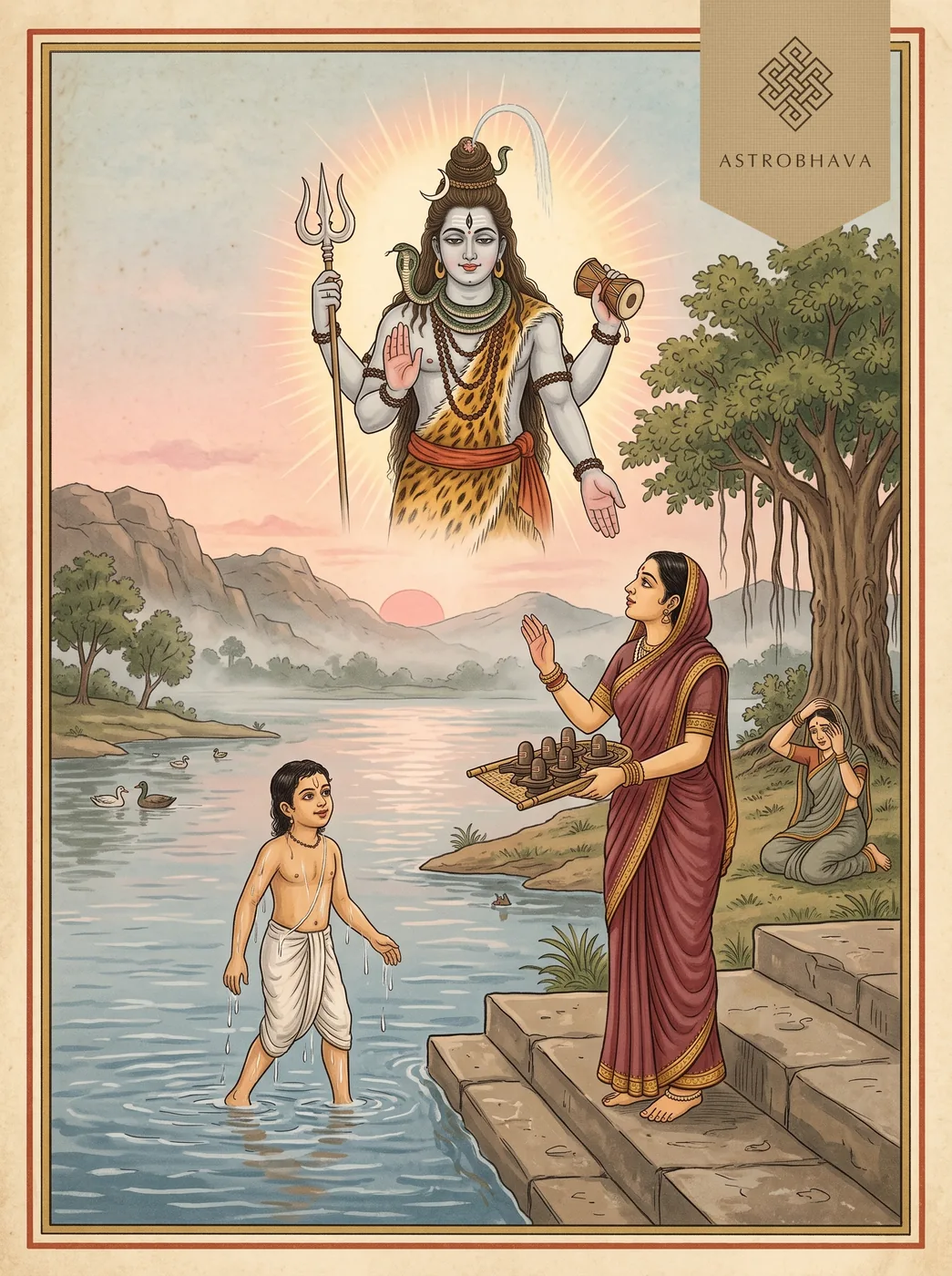
The Smaranam ends its list with a word that reads like a common noun: Ghushmesha 'at Shivalaya', the abode of Shiva. The Shiva Purana explains it with a story set near Devagiri in the Deccan. A Brahmin named Sudharma and his wife Sudeha had no child, and Sudeha persuaded him to marry her younger sister Ghushma. Ghushma worshipped Shiva every day in lingas shaped from earth and then gave them to the waters of a nearby lake. A son was born to her, and as he grew, Sudeha's jealousy grew with him, until one night she killed the boy and threw his body into that same lake. Ghushma did not break off her worship. When she went down to the water with the day's lingas, the Purana relates, her son came back to her alive, and Shiva appeared, ready to punish Sudeha. Ghushma asked instead that her sister be spared, and that Shiva stay at that place. He agreed to remain there in her name as Ghushmesha, and the lake was called Shivalaya. Tradition identifies the shrine with Grishneshwar at Verul, about a kilometre and a half from the Ellora caves, whose present temple took its form in 1729 under Gautama Bai Holkar of Indore. The Stotram's twelfth verse calls the town Ilapura and the lord Ghrishneshvara, whose nature is 'supremely generous'.
The mantra, in six scripts
- सौराष्ट्रे
- saurāṣṭre — in Saurashtra
- सोमनाथं
- somanāthaṃ — Somanatha
- च
- ca — and
- श्रीशैले
- śrīśaile — on Srishaila
- मल्लिकार्जुनम्
- mallikārjunam — Mallikarjuna
- उज्जयिन्यां
- ujjayinyāṃ — in Ujjayini
- महाकालमोङ्कारममलेश्वरम्
- mahākālamoṅkāramamaleśvaram — Mahakala; Omkara at Amaleshvara
Dwadasha Jyotirlinga Stotram lyrics in full
The four-verse Smaranam that names the twelve shrines, followed by the thirteen verses of the Stotram, one for each Jyotirlinga and a closing verse.
All 17 verses, in Sanskrit, Tamil, Telugu, Kannada, Malayalam and English, each with its meaning. Choose a script:
Download the Dwadasha Jyotirlinga Stotram PDFAll 17 verses with their meanings, in Sanskrit. Free to print and keep.
सौराष्ट्रे सोमनाथं च श्रीशैले मल्लिकार्जुनम् ।
उज्जयिन्यां महाकालमोङ्कारममलेश्वरम् ॥
ஸௌராஷ்ட்ரே ஸோமநாதம் ச ஶ்ரீஶைலே மல்லிகார்ஜுநம் ।
உஜ்ஜயிந்யாம் மஹாகாலமோங்காரமமலேஶ்வரம் ॥
సౌరాష్ట్రే సోమనాథం చ శ్రీశైలే మల్లికార్జునమ్ ।
ఉజ్జయిన్యాం మహాకాలమోఙ్కారమమలేశ్వరమ్ ॥
ಸೌರಾಷ್ಟ್ರೇ ಸೋಮನಾಥಂ ಚ ಶ್ರೀಶೈಲೇ ಮಲ್ಲಿಕಾರ್ಜುನಮ್ ।
ಉಜ್ಜಯಿನ್ಯಾಂ ಮಹಾಕಾಲಮೋಙ್ಕಾರಮಮಲೇಶ್ವರಮ್ ॥
സൌരാഷ്ട്രേ സോമനാഥം ച ശ്രീശൈലേ മല്ലികാര്ജുനമ് ।
ഉജ്ജയിന്യാം മഹാകാലമോങ്കാരമമലേശ്വരമ് ॥
saurāṣṭre somanāthaṃ ca śrīśaile mallikārjunam |
ujjayinyāṃ mahākālamoṅkāramamaleśvaram ||
Somanatha in Saurashtra and Mallikarjuna on Srishaila; Mahakala in Ujjayini, and Omkara at Amaleshvara.
परल्यां वैद्यनाथं च डाकिन्यां भीमशङ्करम् ।
सेतुबन्धे तु रामेशं नागेशं दारुकावने ॥
பரல்யாம் வைத்யநாதம் ச டாகிந்யாம் பீமஶங்கரம் ।
ஸேதுபந்தே து ராமேஶம் நாகேஶம் தாருகாவநே ॥
పరల్యాం వైద్యనాథం చ డాకిన్యాం భీమశఙ్కరమ్ ।
సేతుబన్ధే తు రామేశం నాగేశం దారుకావనే ॥
ಪರಲ್ಯಾಂ ವೈದ್ಯನಾಥಂ ಚ ಡಾಕಿನ್ಯಾಂ ಭೀಮಶಙ್ಕರಮ್ ।
ಸೇತುಬನ್ಧೇ ತು ರಾಮೇಶಂ ನಾಗೇಶಂ ದಾರುಕಾವನೇ ॥
പരല്യാം വൈദ്യനാഥം ച ഡാകിന്യാം ഭീമശങ്കരമ് ।
സേതുബന്ധേ തു രാമേശം നാഗേശം ദാരുകാവനേ ॥
paralyāṃ vaidyanāthaṃ ca ḍākinyāṃ bhīmaśaṅkaram |
setubandhe tu rāmeśaṃ nāgeśaṃ dārukāvane ||
Vaidyanatha at Parali and Bhimashankara in Dakini; Ramesha at Setubandha, and Nagesha in the Daruka forest.
वाराणस्यां तु विश्वेशं त्र्यम्बकं गौतमीतटे ।
हिमालये तु केदारं घुश्मेशं च शिवालये ॥
வாராணஸ்யாம் து விஶ்வேஶம் த்ர்யம்பகம் கௌதமீதடே ।
ஹிமாலயே து கேதாரம் குஶ்மேஶம் ச ஶிவாலயே ॥
వారాణస్యాం తు విశ్వేశం త్ర్యమ్బకం గౌతమీతటే ।
హిమాలయే తు కేదారం ఘుశ్మేశం చ శివాలయే ॥
ವಾರಾಣಸ್ಯಾಂ ತು ವಿಶ್ವೇಶಂ ತ್ರ್ಯಮ್ಬಕಂ ಗೌತಮೀತಟೇ ।
ಹಿಮಾಲಯೇ ತು ಕೇದಾರಂ ಘುಶ್ಮೇಶಂ ಚ ಶಿವಾಲಯೇ ॥
വാരാണസ്യാം തു വിശ്വേശം ത്ര്യമ്ബകം ഗൌതമീതടേ ।
ഹിമാലയേ തു കേദാരം ഘുശ്മേശം ച ശിവാലയേ ॥
vārāṇasyāṃ tu viśveśaṃ tryambakaṃ gautamītaṭe |
himālaye tu kedāraṃ ghuśmeśaṃ ca śivālaye ||
Vishvesha at Varanasi and Tryambaka on the bank of the Gautami (Godavari); Kedara in the Himalaya, and Ghushmesha at Shivalaya.
एतानि ज्योतिर्लिङ्गानि सायं प्रातः पठेन्नरः ।
सप्तजन्मकृतं पापं स्मरणेन विनश्यति ॥
ஏதாநி ஜ்யோதிர்லிங்காநி ஸாயம் ப்ராதஃ படேந்நரஃ ।
ஸப்தஜந்மக்ருதம் பாபம் ஸ்மரணேந விநஶ்யதி ॥
ఏతాని జ్యోతిర్లిఙ్గాని సాయం ప్రాతః పఠేన్నరః ।
సప్తజన్మకృతం పాపం స్మరణేన వినశ్యతి ॥
ಏತಾನಿ ಜ್ಯೋತಿರ್ಲಿಙ್ಗಾನಿ ಸಾಯಂ ಪ್ರಾತಃ ಪಠೇನ್ನರಃ ।
ಸಪ್ತಜನ್ಮಕೃತಂ ಪಾಪಂ ಸ್ಮರಣೇನ ವಿನಶ್ಯತಿ ॥
ഏതാനി ജ്യോതിര്ലിങ്ഗാനി സായം പ്രാതഃ പഠേന്നരഃ ।
സപ്തജന്മകൃതം പാപം സ്മരണേന വിനശ്യതി ॥
etāni jyotirliṅgāni sāyaṃ prātaḥ paṭhennaraḥ |
saptajanmakṛtaṃ pāpaṃ smaraṇena vinaśyati ||
One should recite these Jyotirlingas evening and morning. The verse says that by this remembrance the sin committed over seven births is destroyed.
सौराष्ट्रदेशे विशदेऽतिरम्ये ज्योतिर्मयं चन्द्रकलावतंसम् ।
भक्तिप्रदानाय कृपावतीर्णं तं सोमनाथं शरणं प्रपद्ये ॥
ஸௌராஷ்ட்ரதேஶே விஶதேதிரம்யே ஜ்யோதிர்மயம் சந்த்ரகலாவதம்ஸம் ।
பக்திப்ரதாநாய க்ருபாவதீர்ணம் தம் ஸோமநாதம் ஶரணம் ப்ரபத்யே ॥
సౌరాష్ట్రదేశే విశదేఽతిరమ్యే జ్యోతిర్మయం చన్ద్రకలావతంసమ్ ।
భక్తిప్రదానాయ కృపావతీర్ణం తం సోమనాథం శరణం ప్రపద్యే ॥
ಸೌರಾಷ್ಟ್ರದೇಶೇ ವಿಶದೇಽತಿರಮ್ಯೇ ಜ್ಯೋತಿರ್ಮಯಂ ಚನ್ದ್ರಕಲಾವತಂಸಮ್ ।
ಭಕ್ತಿಪ್ರದಾನಾಯ ಕೃಪಾವತೀರ್ಣಂ ತಂ ಸೋಮನಾಥಂ ಶರಣಂ ಪ್ರಪದ್ಯೇ ॥
സൌരാഷ്ട്രദേശേ വിശദേഽതിരമ്യേ ജ്യോതിര്മയം ചന്ദ്രകലാവതംസമ് ।
ഭക്തിപ്രദാനായ കൃപാവതീര്ണം തം സോമനാഥം ശരണം പ്രപദ്യേ ॥
saurāṣṭradeśe viśade'tiramye jyotirmayaṃ candrakalāvataṃsam |
bhaktipradānāya kṛpāvatīrṇaṃ taṃ somanāthaṃ śaraṇaṃ prapadye ||
In the clear and most lovely land of Saurashtra dwells the one made of light, who wears the crescent moon as an ornament. I take refuge in that Somanatha, who descended out of compassion to grant devotion.
श्रीशैलशृङ्गे विविधप्रसङ्गे शेषाद्रिशृङ्गेऽपि सदा वसन्तम् ।
तमर्जुनं मल्लिकपूर्वमेनं नमामि संसारसमुद्रसेतुम् ॥
ஶ்ரீஶைலஶ்ருங்கே விவிதப்ரஸங்கே ஶேஷாத்ரிஶ்ருங்கேபி ஸதா வஸந்தம் ।
தமர்ஜுநம் மல்லிகபூர்வமேநம் நமாமி ஸம்ஸாரஸமுத்ரஸேதும் ॥
శ్రీశైలశృఙ్గే వివిధప్రసఙ్గే శేషాద్రిశృఙ్గేఽపి సదా వసన్తమ్ ।
తమర్జునం మల్లికపూర్వమేనం నమామి సంసారసముద్రసేతుమ్ ॥
ಶ್ರೀಶೈಲಶೃಙ್ಗೇ ವಿವಿಧಪ್ರಸಙ್ಗೇ ಶೇಷಾದ್ರಿಶೃಙ್ಗೇಽಪಿ ಸದಾ ವಸನ್ತಮ್ ।
ತಮರ್ಜುನಂ ಮಲ್ಲಿಕಪೂರ್ವಮೇನಂ ನಮಾಮಿ ಸಂಸಾರಸಮುದ್ರಸೇತುಮ್ ॥
ശ്രീശൈലശൃങ്ഗേ വിവിധപ്രസങ്ഗേ ശേഷാദ്രിശൃങ്ഗേഽപി സദാ വസന്തമ് ।
തമര്ജുനം മല്ലികപൂര്വമേനം നമാമി സംസാരസമുദ്രസേതുമ് ॥
śrīśailaśṛṅge vividhaprasaṅge śeṣādriśṛṅge'pi sadā vasantam |
tamarjunaṃ mallikapūrvamenaṃ namāmi saṃsārasamudrasetum ||
He dwells always on the peak of Srisailam, a place of many sacred associations, and on the peak of Sheshadri too. I bow to him, Arjuna with Mallika before his name (Mallikarjuna), the bridge across the ocean of worldly existence.
अवन्तिकायां विहितावतारं मुक्तिप्रदानाय च सज्जनानाम् ।
अकालमृत्योः परिरक्षणार्थं वन्दे महाकालमहासुरेशम् ॥
அவந்திகாயாம் விஹிதாவதாரம் முக்திப்ரதாநாய ச ஸஜ்ஜநாநாம் ।
அகாலம்ருத்யோஃ பரிரக்ஷணார்தம் வந்தே மஹாகாலமஹாஸுரேஶம் ॥
అవన్తికాయాం విహితావతారం ముక్తిప్రదానాయ చ సజ్జనానామ్ ।
అకాలమృత్యోః పరిరక్షణార్థం వన్దే మహాకాలమహాసురేశమ్ ॥
ಅವನ್ತಿಕಾಯಾಂ ವಿಹಿತಾವತಾರಂ ಮುಕ್ತಿಪ್ರದಾನಾಯ ಚ ಸಜ್ಜನಾನಾಮ್ ।
ಅಕಾಲಮೃತ್ಯೋಃ ಪರಿರಕ್ಷಣಾರ್ಥಂ ವನ್ದೇ ಮಹಾಕಾಲಮಹಾಸುರೇಶಮ್ ॥
അവന്തികായാം വിഹിതാവതാരം മുക്തിപ്രദാനായ ച സജ്ജനാനാമ് ।
അകാലമൃത്യോഃ പരിരക്ഷണാര്ഥം വന്ദേ മഹാകാലമഹാസുരേശമ് ॥
avantikāyāṃ vihitāvatāraṃ muktipradānāya ca sajjanānām |
akālamṛtyoḥ parirakṣaṇārthaṃ vande mahākālamahāsureśam ||
He took form at Avantika to grant liberation to the good and to protect them from untimely death. I salute Mahakala, the great lord of the gods.
कावेरिकानर्मदयोः पवित्रे समागमे सज्जनतारणाय ।
सदैव मान्धातृपुरे वसन्तमोङ्कारमीशं शिवमेकमीडे ॥
காவேரிகாநர்மதயோஃ பவித்ரே ஸமாகமே ஸஜ்ஜநதாரணாய ।
ஸதைவ மாந்தாத்ருபுரே வஸந்தமோங்காரமீஶம் ஶிவமேகமீடே ॥
కావేరికానర్మదయోః పవిత్రే సమాగమే సజ్జనతారణాయ ।
సదైవ మాన్ధాతృపురే వసన్తమోఙ్కారమీశం శివమేకమీడే ॥
ಕಾವೇರಿಕಾನರ್ಮದಯೋಃ ಪವಿತ್ರೇ ಸಮಾಗಮೇ ಸಜ್ಜನತಾರಣಾಯ ।
ಸದೈವ ಮಾನ್ಧಾತೃಪುರೇ ವಸನ್ತಮೋಙ್ಕಾರಮೀಶಂ ಶಿವಮೇಕಮೀಡೇ ॥
കാവേരികാനര്മദയോഃ പവിത്രേ സമാഗമേ സജ്ജനതാരണായ ।
സദൈവ മാന്ധാതൃപുരേ വസന്തമോങ്കാരമീശം ശിവമേകമീഡേ ॥
kāverikānarmadayoḥ pavitre samāgame sajjanatāraṇāya |
sadaiva māndhātṛpure vasantamoṅkāramīśaṃ śivamekamīḍe ||
At the holy meeting of the Kaveri and the Narmada, to carry the good across, he ever dwells in the city of Mandhata. I praise the Lord Omkara, the one Shiva.
पूर्वोत्तरे प्रज्वलिकानिधाने सदा वसन्तं गिरिजासमेतम् ।
सुरासुराराधितपादपद्मं श्रीवैद्यनाथं तमहं नमामि ॥
பூர்வோத்தரே ப்ரஜ்வலிகாநிதாநே ஸதா வஸந்தம் கிரிஜாஸமேதம் ।
ஸுராஸுராராதிதபாதபத்மம் ஶ்ரீவைத்யநாதம் தமஹம் நமாமி ॥
పూర్వోత్తరే ప్రజ్వలికానిధానే సదా వసన్తం గిరిజాసమేతమ్ ।
సురాసురారాధితపాదపద్మం శ్రీవైద్యనాథం తమహం నమామి ॥
ಪೂರ್ವೋತ್ತರೇ ಪ್ರಜ್ವಲಿಕಾನಿಧಾನೇ ಸದಾ ವಸನ್ತಂ ಗಿರಿಜಾಸಮೇತಮ್ ।
ಸುರಾಸುರಾರಾಧಿತಪಾದಪದ್ಮಂ ಶ್ರೀವೈದ್ಯನಾಥಂ ತಮಹಂ ನಮಾಮಿ ॥
പൂര്വോത്തരേ പ്രജ്വലികാനിധാനേ സദാ വസന്തം ഗിരിജാസമേതമ് ।
സുരാസുരാരാധിതപാദപദ്മം ശ്രീവൈദ്യനാഥം തമഹം നമാമി ॥
pūrvottare prajvalikānidhāne sadā vasantaṃ girijāsametam |
surāsurārādhitapādapadmaṃ śrīvaidyanāthaṃ tamahaṃ namāmi ||
In the north-east, at the place called Prajvalika, he ever dwells together with Girija (Parvati). I bow to that Sri Vaidyanatha, whose lotus feet are worshipped by gods and demons alike.
याम्ये सदङ्गे नगरेऽतिरम्ये विभूषिताङ्गं विविधैश्च भोगैः ।
सद्भक्तिमुक्तिप्रदमीशमेकं श्रीनागनाथं शरणं प्रपद्ये ॥
யாம்யே ஸதங்கே நகரேதிரம்யே விபூஷிதாங்கம் விவிதைஶ்ச போகைஃ ।
ஸத்பக்திமுக்திப்ரதமீஶமேகம் ஶ்ரீநாகநாதம் ஶரணம் ப்ரபத்யே ॥
యామ్యే సదఙ్గే నగరేఽతిరమ్యే విభూషితాఙ్గం వివిధైశ్చ భోగైః ।
సద్భక్తిముక్తిప్రదమీశమేకం శ్రీనాగనాథం శరణం ప్రపద్యే ॥
ಯಾಮ್ಯೇ ಸದಙ್ಗೇ ನಗರೇಽತಿರಮ್ಯೇ ವಿಭೂಷಿತಾಙ್ಗಂ ವಿವಿಧೈಶ್ಚ ಭೋಗೈಃ ।
ಸದ್ಭಕ್ತಿಮುಕ್ತಿಪ್ರದಮೀಶಮೇಕಂ ಶ್ರೀನಾಗನಾಥಂ ಶರಣಂ ಪ್ರಪದ್ಯೇ ॥
യാമ്യേ സദങ്ഗേ നഗരേഽതിരമ്യേ വിഭൂഷിതാങ്ഗം വിവിധൈശ്ച ഭോഗൈഃ ।
സദ്ഭക്തിമുക്തിപ്രദമീശമേകം ശ്രീനാഗനാഥം ശരണം പ്രപദ്യേ ॥
yāmye sadaṅge nagare'tiramye vibhūṣitāṅgaṃ vividhaiśca bhogaiḥ |
sadbhaktimuktipradamīśamekaṃ śrīnāganāthaṃ śaraṇaṃ prapadye ||
In the south, in the most beautiful town of Sadanga, his body is adorned with many splendours. I take refuge in Sri Naganatha, the one Lord who gives true devotion and liberation.
महाद्रिपार्श्वे च तटे रमन्तं सम्पूज्यमानं सततं मुनीन्द्रैः ।
सुरासुरैर्यक्षमहोरगाद्यैः केदारमीशं शिवमेकमीडे ॥
மஹாத்ரிபார்ஶ்வே ச தடே ரமந்தம் ஸம்பூஜ்யமாநம் ஸததம் முநீந்த்ரைஃ ।
ஸுராஸுரைர்யக்ஷமஹோரகாத்யைஃ கேதாரமீஶம் ஶிவமேகமீடே ॥
మహాద్రిపార్శ్వే చ తటే రమన్తం సమ్పూజ్యమానం సతతం మునీన్ద్రైః ।
సురాసురైర్యక్షమహోరగాద్యైః కేదారమీశం శివమేకమీడే ॥
ಮಹಾದ್ರಿಪಾರ್ಶ್ವೇ ಚ ತಟೇ ರಮನ್ತಂ ಸಮ್ಪೂಜ್ಯಮಾನಂ ಸತತಂ ಮುನೀನ್ದ್ರೈಃ ।
ಸುರಾಸುರೈರ್ಯಕ್ಷಮಹೋರಗಾದ್ಯೈಃ ಕೇದಾರಮೀಶಂ ಶಿವಮೇಕಮೀಡೇ ॥
മഹാദ്രിപാര്ശ്വേ ച തടേ രമന്തം സമ്പൂജ്യമാനം സതതം മുനീന്ദ്രൈഃ ।
സുരാസുരൈര്യക്ഷമഹോരഗാദ്യൈഃ കേദാരമീശം ശിവമേകമീഡേ ॥
mahādripārśve ca taṭe ramantaṃ sampūjyamānaṃ satataṃ munīndraiḥ |
surāsurairyakṣamahoragādyaiḥ kedāramīśaṃ śivamekamīḍe ||
He delights on the slope of the great mountain, beside the river, ever worshipped by the foremost sages and by gods, demons, yakshas, great serpents and others. I praise the Lord Kedara, the one Shiva.
सह्याद्रिशीर्षे विमले वसन्तं गोदावरीतीरपवित्रदेशे ।
यद्दर्शनात्पातकमाशु नाशं प्रयाति तं त्र्यम्बकमीशमीडे ॥
ஸஹ்யாத்ரிஶீர்ஷே விமலே வஸந்தம் கோதாவரீதீரபவித்ரதேஶே ।
யத்தர்ஶநாத்பாதகமாஶு நாஶம் ப்ரயாதி தம் த்ர்யம்பகமீஶமீடே ॥
సహ్యాద్రిశీర్షే విమలే వసన్తం గోదావరీతీరపవిత్రదేశే ।
యద్దర్శనాత్పాతకమాశు నాశం ప్రయాతి తం త్ర్యమ్బకమీశమీడే ॥
ಸಹ್ಯಾದ್ರಿಶೀರ್ಷೇ ವಿಮಲೇ ವಸನ್ತಂ ಗೋದಾವರೀತೀರಪವಿತ್ರದೇಶೇ ।
ಯದ್ದರ್ಶನಾತ್ಪಾತಕಮಾಶು ನಾಶಂ ಪ್ರಯಾತಿ ತಂ ತ್ರ್ಯಮ್ಬಕಮೀಶಮೀಡೇ ॥
സഹ്യാദ്രിശീര്ഷേ വിമലേ വസന്തം ഗോദാവരീതീരപവിത്രദേശേ ।
യദ്ദര്ശനാത്പാതകമാശു നാശം പ്രയാതി തം ത്ര്യമ്ബകമീശമീഡേ ॥
sahyādriśīrṣe vimale vasantaṃ godāvarītīrapavitradeśe |
yaddarśanātpātakamāśu nāśaṃ prayāti taṃ tryambakamīśamīḍe ||
He dwells on the pure summit of the Sahyadri, in the holy land on the bank of the Godavari. The verse says that by seeing him sin is quickly destroyed; I praise that Lord Tryambaka.
सुताम्रपर्णीजलराशियोगे निबध्य सेतुं विशिखैरसंख्यैः ।
श्रीरामचन्द्रेण समर्पितं तं रामेश्वराख्यं नियतं नमामि ॥
ஸுதாம்ரபர்ணீஜலராஶியோகே நிபத்ய ஸேதும் விஶிகைரஸம்க்யைஃ ।
ஶ்ரீராமசந்த்ரேண ஸமர்பிதம் தம் ராமேஶ்வராக்யம் நியதம் நமாமி ॥
సుతామ్రపర్ణీజలరాశియోగే నిబధ్య సేతుం విశిఖైరసంఖ్యైః ।
శ్రీరామచన్ద్రేణ సమర్పితం తం రామేశ్వరాఖ్యం నియతం నమామి ॥
ಸುತಾಮ್ರಪರ್ಣೀಜಲರಾಶಿಯೋಗೇ ನಿಬಧ್ಯ ಸೇತುಂ ವಿಶಿಖೈರಸಂಖ್ಯೈಃ ।
ಶ್ರೀರಾಮಚನ್ದ್ರೇಣ ಸಮರ್ಪಿತಂ ತಂ ರಾಮೇಶ್ವರಾಖ್ಯಂ ನಿಯತಂ ನಮಾಮಿ ॥
സുതാമ്രപര്ണീജലരാശിയോഗേ നിബധ്യ സേതും വിശിഖൈരസംഖ്യൈഃ ।
ശ്രീരാമചന്ദ്രേണ സമര്പിതം തം രാമേശ്വരാഖ്യം നിയതം നമാമി ॥
sutāmraparṇījalarāśiyoge nibadhya setuṃ viśikhairasaṃkhyaiḥ |
śrīrāmacandreṇa samarpitaṃ taṃ rāmeśvarākhyaṃ niyataṃ namāmi ||
Where the Tamraparni meets the ocean, Sri Ramachandra built a bridge with countless arrows and installed him. I constantly bow to that Lord named Rameshvara.
यं डाकिनीशाकिनिकासमाजे निषेव्यमाणं पिशिताशनैश्च ।
सदैव भीमादिपदप्रसिद्धं तं शङ्करं भक्तहितं नमामि ॥
யம் டாகிநீஶாகிநிகாஸமாஜே நிஷேவ்யமாணம் பிஶிதாஶநைஶ்ச ।
ஸதைவ பீமாதிபதப்ரஸித்தம் தம் ஶங்கரம் பக்தஹிதம் நமாமி ॥
యం డాకినీశాకినికాసమాజే నిషేవ్యమాణం పిశితాశనైశ్చ ।
సదైవ భీమాదిపదప్రసిద్ధం తం శఙ్కరం భక్తహితం నమామి ॥
ಯಂ ಡಾಕಿನೀಶಾಕಿನಿಕಾಸಮಾಜೇ ನಿಷೇವ್ಯಮಾಣಂ ಪಿಶಿತಾಶನೈಶ್ಚ ।
ಸದೈವ ಭೀಮಾದಿಪದಪ್ರಸಿದ್ಧಂ ತಂ ಶಙ್ಕರಂ ಭಕ್ತಹಿತಂ ನಮಾಮಿ ॥
യം ഡാകിനീശാകിനികാസമാജേ നിഷേവ്യമാണം പിശിതാശനൈശ്ച ।
സദൈവ ഭീമാദിപദപ്രസിദ്ധം തം ശങ്കരം ഭക്തഹിതം നമാമി ॥
yaṃ ḍākinīśākinikāsamāje niṣevyamāṇaṃ piśitāśanaiśca |
sadaiva bhīmādipadaprasiddhaṃ taṃ śaṅkaraṃ bhaktahitaṃ namāmi ||
He is served amid the company of dakinis and shakinis and by flesh-eating spirits, and is ever renowned by the name beginning with Bhima. I bow to that Shankara (Bhimashankara), who is kind to his devotees.
सानन्दमानन्दवने वसन्तमानन्दकन्दं हतपापबृन्दम् ।
वाराणसीनाथमनाथनाथं श्रीविश्वनाथं शरणं प्रपद्ये ॥
ஸாநந்தமாநந்தவநே வஸந்தமாநந்தகந்தம் ஹதபாபப்ருந்தம் ।
வாராணஸீநாதமநாதநாதம் ஶ்ரீவிஶ்வநாதம் ஶரணம் ப்ரபத்யே ॥
సానన్దమానన్దవనే వసన్తమానన్దకన్దం హతపాపబృన్దమ్ ।
వారాణసీనాథమనాథనాథం శ్రీవిశ్వనాథం శరణం ప్రపద్యే ॥
ಸಾನನ್ದಮಾನನ್ದವನೇ ವಸನ್ತಮಾನನ್ದಕನ್ದಂ ಹತಪಾಪಬೃನ್ದಮ್ ।
ವಾರಾಣಸೀನಾಥಮನಾಥನಾಥಂ ಶ್ರೀವಿಶ್ವನಾಥಂ ಶರಣಂ ಪ್ರಪದ್ಯೇ ॥
സാനന്ദമാനന്ദവനേ വസന്തമാനന്ദകന്ദം ഹതപാപബൃന്ദമ് ।
വാരാണസീനാഥമനാഥനാഥം ശ്രീവിശ്വനാഥം ശരണം പ്രപദ്യേ ॥
sānandamānandavane vasantamānandakandaṃ hatapāpabṛndam |
vārāṇasīnāthamanāthanāthaṃ śrīviśvanāthaṃ śaraṇaṃ prapadye ||
He dwells joyfully in the Forest of Bliss, the root of bliss, the destroyer of the mass of sins. I take refuge in Sri Vishvanatha, Lord of Varanasi, protector of the unprotected.
इलापुरे रम्यविशालकेऽस्मिन्समुल्लसन्तं च जगद्वरेण्यम् ।
वन्दे महोदारतरस्वभावं घृष्णेश्वराख्यं शरणं प्रपद्ये ॥
இலாபுரே ரம்யவிஶாலகேஸ்மிந்ஸமுல்லஸந்தம் ச ஜகத்வரேண்யம் ।
வந்தே மஹோதாரதரஸ்வபாவம் க்ருஷ்ணேஶ்வராக்யம் ஶரணம் ப்ரபத்யே ॥
ఇలాపురే రమ్యవిశాలకేఽస్మిన్సముల్లసన్తం చ జగద్వరేణ్యమ్ ।
వన్దే మహోదారతరస్వభావం ఘృష్ణేశ్వరాఖ్యం శరణం ప్రపద్యే ॥
ಇಲಾಪುರೇ ರಮ್ಯವಿಶಾಲಕೇಽಸ್ಮಿನ್ಸಮುಲ್ಲಸನ್ತಂ ಚ ಜಗದ್ವರೇಣ್ಯಮ್ ।
ವನ್ದೇ ಮಹೋದಾರತರಸ್ವಭಾವಂ ಘೃಷ್ಣೇಶ್ವರಾಖ್ಯಂ ಶರಣಂ ಪ್ರಪದ್ಯೇ ॥
ഇലാപുരേ രമ്യവിശാലകേഽസ്മിന്സമുല്ലസന്തം ച ജഗദ്വരേണ്യമ് ।
വന്ദേ മഹോദാരതരസ്വഭാവം ഘൃഷ്ണേശ്വരാഖ്യം ശരണം പ്രപദ്യേ ॥
ilāpure ramyaviśālake'sminsamullasantaṃ ca jagadvareṇyam |
vande mahodāratarasvabhāvaṃ ghṛṣṇeśvarākhyaṃ śaraṇaṃ prapadye ||
He shines forth in this lovely and spacious Ilapura, the most worthy in the world. I salute him whose nature is supremely generous, and take refuge in the Lord named Ghrishneshvara.
ज्योतिर्मयद्वादशलिङ्गकानां शिवात्मनां प्रोक्तमिदं क्रमेण ।
स्तोत्रं पठित्वा मनुजोऽतिभक्त्या फलं तदालोक्य निजं भजेच्च ॥
ஜ்யோதிர்மயத்வாதஶலிங்ககாநாம் ஶிவாத்மநாம் ப்ரோக்தமிதம் க்ரமேண ।
ஸ்தோத்ரம் படித்வா மநுஜோதிபக்த்யா பலம் ததாலோக்ய நிஜம் பஜேச்ச ॥
జ్యోతిర్మయద్వాదశలిఙ్గకానాం శివాత్మనాం ప్రోక్తమిదం క్రమేణ ।
స్తోత్రం పఠిత్వా మనుజోఽతిభక్త్యా ఫలం తదాలోక్య నిజం భజేచ్చ ॥
ಜ್ಯೋತಿರ್ಮಯದ್ವಾದಶಲಿಙ್ಗಕಾನಾಂ ಶಿವಾತ್ಮನಾಂ ಪ್ರೋಕ್ತಮಿದಂ ಕ್ರಮೇಣ ।
ಸ್ತೋತ್ರಂ ಪಠಿತ್ವಾ ಮನುಜೋಽತಿಭಕ್ತ್ಯಾ ಫಲಂ ತದಾಲೋಕ್ಯ ನಿಜಂ ಭಜೇಚ್ಚ ॥
ജ്യോതിര്മയദ്വാദശലിങ്ഗകാനാം ശിവാത്മനാം പ്രോക്തമിദം ക്രമേണ ।
സ്തോത്രം പഠിത്വാ മനുജോഽതിഭക്ത്യാ ഫലം തദാലോക്യ നിജം ഭജേച്ച ॥
jyotirmayadvādaśaliṅgakānāṃ śivātmanāṃ proktamidaṃ krameṇa |
stotraṃ paṭhitvā manujo'tibhaktyā phalaṃ tadālokya nijaṃ bhajecca ||
This hymn on the twelve luminous Lingas, which are Shiva himself, has been told in order. The verse says that a person who recites it with great devotion will see its fruit and attain it as his own.
The syllable people get wrong
Tryambakaṃ (त्र्यम्बकं), the lord on the bank of the Gautami, opens with the cluster try-: say it in three syllables, TRYAM-ba-kam, rather than 'tri-AM-bak' or the everyday place-name Trimbak.
When the Dwadasha Jyotirlinga Stotram is chanted
Weekday. Monday
Questions
Have your chart read before you decide
Chanting is yours to do, and free. But which deity your situation calls for — and whether a mantra alone is the right response — depends on your chart. Sometimes it is; sometimes it is not.
- Over 30 years in the Guru–Sishya Parampara, from the age of five
- He reads every chart himself — 60 minutes, one to one, never delegated
- Charts are read only between sunrise and sunset, following tradition