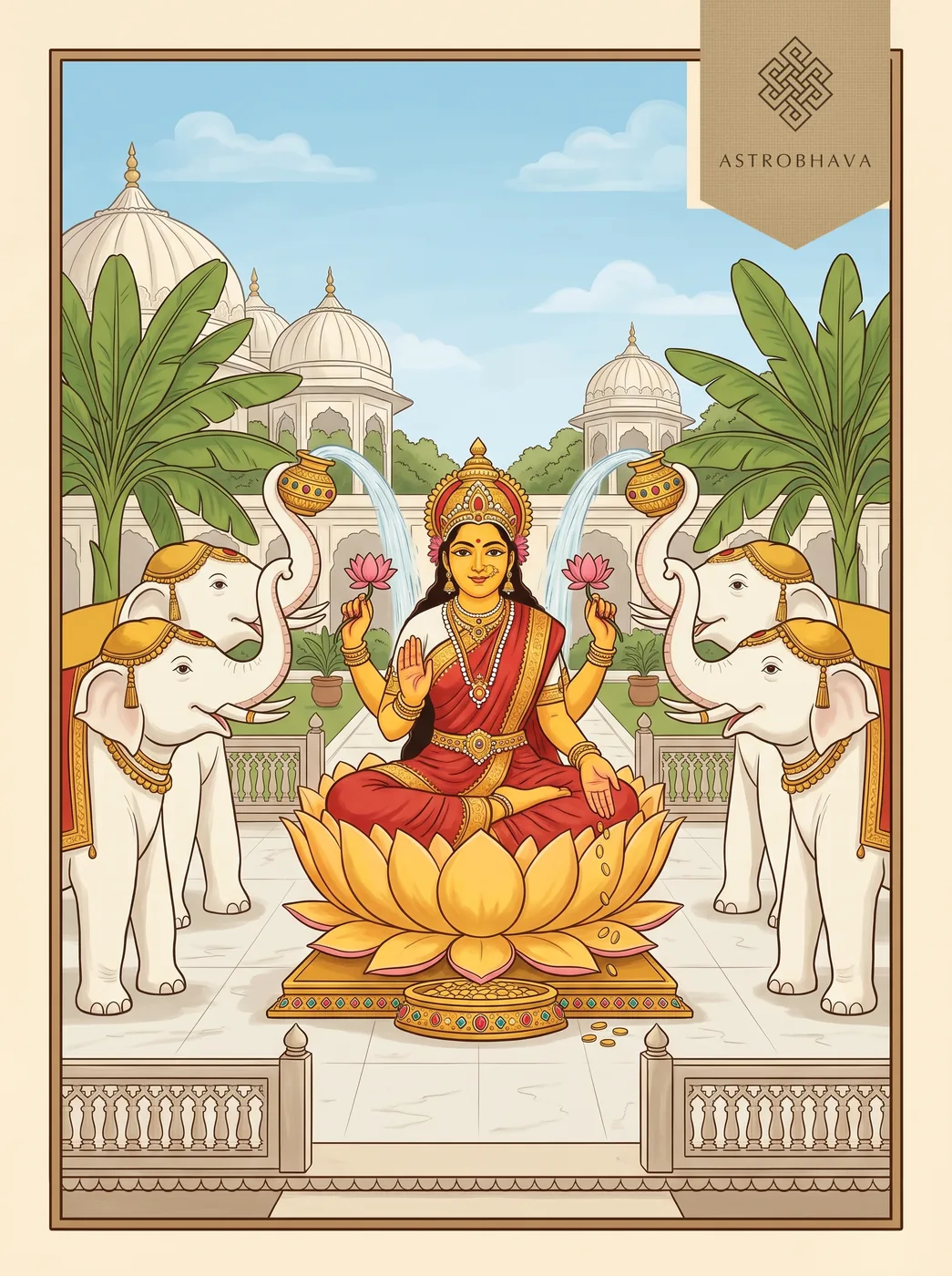
Gaja Lakshmi Mantra
अश्वपूर्वां रथमध्यां हस्तिनादप्रबोधिनीम् । श्रियं देवीमुपह्वये श्रीर्मा देवी जुषताम् ॥Also known as Gajalakshmi Dhyanam
In Devanagari, Tamil, Telugu, Kannada, Malayalam and English — with the meaning of every word, and the one syllable most people pronounce wrongly.
 The Gaja Lakshmi Homam, performed for youBook →
What the Gaja Lakshmi Mantra is
The Gaja Lakshmi mantra is the name people give to verses that show Lakshmi attended by elephants, and this page prints four of them, each a separate text. Verse 1 is the third verse of the Shri Suktam, the Vedic khila hymn to Shri, where the goddess rides in the middle of a chariot with horses ahead and is woken by the trumpeting of elephants; the whole hymn is printed on our Sri Suktam page. Dhyanam 1, beginning ya sa padmasanastha, is an anonymous meditation verse in the long sragdhara metre, chanted after the Shri Suktam. In it divine elephants bathe her from gem-set golden pots, and it ends with the wish that she live in the home. Dhyanams 2 and 3 come from chapter 8 of the Sharada Tilaka of Lakshmana Desika, a Tantric manual of about the eleventh century. Verse 8.4 is the meditation for the one-syllable mantra of Shri, and verse 8.31 for a mantra of four seed syllables. In both, four elephants pour water over her.
From a chariot procession to four elephants
The elephants enter Lakshmi's worship as sound before they become an image. In the third verse of the Shri Suktam the goddess arrives like a royal progress: horses go before her, she sits at the centre of the chariot, and the trumpeting of elephants rouses her. The chanted texts read prabodhinim, woken by that sound, while the khila edition of the Rigveda reads pramodinim, delighting in it. Sculptors turned the sound into a scene. Railing reliefs at Bharhut, from about 125 to 100 BCE, show a woman on a lotus with elephants pouring water over her, and in the first century BCE the Indo-Scythian king Azilises put the same figure on his coins. The scene is a consecration, the abhisheka by which a ruler was installed, and an old piece of elephant lore adds rain to it: elephants once had wings and travelled with the clouds until a sage's curse grounded them. The verse ya sa padmasanastha brings the bathing into the chanting of the Shri Suktam. About the eleventh century the Sharada Tilaka fixed the number at four, white as snow mountains, in two meditations of its chapter on the mantras of Shri. By then it was carved over temple doorways in Odisha as the guardian figure of the lintel, and it had travelled as far as the Banteay Srei temple in Cambodia.
The mantra, in six scripts
- अश्वपूर्वां
- aśvapūrvāṃ — with horses in front
- रथमध्यां
- rathamadhyāṃ — in the middle of the chariot
- हस्तिनादप्रबोधिनीम्
- hastinādaprabodhinīm — woken by elephants' trumpeting
- श्रियं
- śriyaṃ — Shri
- देवीमुपह्वये
- devīmupahvaye — the goddess, I call on
- श्रीर्मा
- śrīrmā — may Shri, me
- देवी
- devī — the goddess
- जुषताम्
- juṣatām — be pleased with
Gaja Lakshmi Mantra lyrics in full
The Shri Suktam's elephant verse comes first, followed by three meditation verses in which elephants bathe the goddess.
All 4 verses, in Sanskrit, Tamil, Telugu, Kannada, Malayalam and English, each with its meaning. Choose a script:
Download the Gaja Lakshmi Mantra PDFAll 4 verses with their meanings, in Sanskrit. Free to print and keep.
अश्वपूर्वां रथमध्यां हस्तिनादप्रबोधिनीम् ।
श्रियं देवीमुपह्वये श्रीर्मा देवी जुषताम् ॥
அஶ்வபூர்வாம் ரதமத்யாம் ஹஸ்திநாதப்ரபோதிநீம் ।
ஶ்ரியம் தேவீமுபஹ்வயே ஶ்ரீர்மா தேவீ ஜுஷதாம் ॥
అశ్వపూర్వాం రథమధ్యాం హస్తినాదప్రబోధినీమ్ ।
శ్రియం దేవీముపహ్వయే శ్రీర్మా దేవీ జుషతామ్ ॥
ಅಶ್ವಪೂರ್ವಾಂ ರಥಮಧ್ಯಾಂ ಹಸ್ತಿನಾದಪ್ರಬೋಧಿನೀಮ್ ।
ಶ್ರಿಯಂ ದೇವೀಮುಪಹ್ವಯೇ ಶ್ರೀರ್ಮಾ ದೇವೀ ಜುಷತಾಮ್ ॥
അശ്വപൂര്വാം രഥമധ്യാം ഹസ്തിനാദപ്രബോധിനീമ് ।
ശ്രിയം ദേവീമുപഹ്വയേ ശ്രീര്മാ ദേവീ ജുഷതാമ് ॥
aśvapūrvāṃ rathamadhyāṃ hastinādaprabodhinīm |
śriyaṃ devīmupahvaye śrīrmā devī juṣatām ||
I call on the goddess Shri, who comes with horses in front and rides in the middle of the chariot, and who is woken by the trumpeting of elephants. May the goddess Shri be pleased with me.
या सा पद्मासनस्था विपुलकटितटी पद्मपत्रायताक्षी गम्भीरावर्तनाभिः स्तनभर नमिता शुभ्र वस्त्रोत्तरीया ।
लक्ष्मीर्दिव्यैर्गजेन्द्रैर्मणिगणखचितैः स्नापिता हेमकुम्भैः नित्यं सा पद्महस्ता मम वसतु गृहे सर्वमाङ्गल्ययुक्ता ॥
யா ஸா பத்மாஸநஸ்தா விபுலகடிதடீ பத்மபத்ராயதாக்ஷீ கம்பீராவர்தநாபிஃ ஸ்தநபர நமிதா ஶுப்ர வஸ்த்ரோத்தரீயா ।
லக்ஷ்மீர்திவ்யைர்கஜேந்த்ரைர்மணிகணகசிதைஃ ஸ்நாபிதா ஹேமகும்பைஃ நித்யம் ஸா பத்மஹஸ்தா மம வஸது க்ருஹே ஸர்வமாங்கல்யயுக்தா ॥
యా సా పద్మాసనస్థా విపులకటితటీ పద్మపత్రాయతాక్షీ గమ్భీరావర్తనాభిః స్తనభర నమితా శుభ్ర వస్త్రోత్తరీయా ।
లక్ష్మీర్దివ్యైర్గజేన్ద్రైర్మణిగణఖచితైః స్నాపితా హేమకుమ్భైః నిత్యం సా పద్మహస్తా మమ వసతు గృహే సర్వమాఙ్గల్యయుక్తా ॥
ಯಾ ಸಾ ಪದ್ಮಾಸನಸ್ಥಾ ವಿಪುಲಕಟಿತಟೀ ಪದ್ಮಪತ್ರಾಯತಾಕ್ಷೀ ಗಮ್ಭೀರಾವರ್ತನಾಭಿಃ ಸ್ತನಭರ ನಮಿತಾ ಶುಭ್ರ ವಸ್ತ್ರೋತ್ತರೀಯಾ ।
ಲಕ್ಷ್ಮೀರ್ದಿವ್ಯೈರ್ಗಜೇನ್ದ್ರೈರ್ಮಣಿಗಣಖಚಿತೈಃ ಸ್ನಾಪಿತಾ ಹೇಮಕುಮ್ಭೈಃ ನಿತ್ಯಂ ಸಾ ಪದ್ಮಹಸ್ತಾ ಮಮ ವಸತು ಗೃಹೇ ಸರ್ವಮಾಙ್ಗಲ್ಯಯುಕ್ತಾ ॥
യാ സാ പദ്മാസനസ്ഥാ വിപുലകടിതടീ പദ്മപത്രായതാക്ഷീ ഗമ്ഭീരാവര്തനാഭിഃ സ്തനഭര നമിതാ ശുഭ്ര വസ്ത്രോത്തരീയാ ।
ലക്ഷ്മീര്ദിവ്യൈര്ഗജേന്ദ്രൈര്മണിഗണഖചിതൈഃ സ്നാപിതാ ഹേമകുമ്ഭൈഃ നിത്യം സാ പദ്മഹസ്താ മമ വസതു ഗൃഹേ സര്വമാങ്ഗല്യയുക്താ ॥
yā sā padmāsanasthā vipulakaṭitaṭī padmapatrāyatākṣī gambhīrāvartanābhiḥ stanabhara namitā śubhra vastrottarīyā |
lakṣmīrdivyairgajendrairmaṇigaṇakhacitaiḥ snāpitā hemakumbhaiḥ nityaṃ sā padmahastā mama vasatu gṛhe sarvamāṅgalyayuktā ||
Lakshmi sits on a lotus, broad of hip, with eyes long like lotus petals and a navel deep as an eddy, bending under the weight of her breasts and wearing a white upper cloth. Divine lordly elephants bathe her from golden pots set with clusters of gems. May she, lotus in hand and full of every blessing, always live in my home.
कान्त्या काञ्चनसन्निभां हिमगिरिप्रख्यैश्चतुर्भिर्गजैर्हस्तोत्क्षिप्तहिरण्मयामृतघटैरासिच्यमानां श्रियम् ।
बिभ्राणां वरमब्जयुग्ममभयं हस्तैः किरीटोज्ज्वलां क्षौमाबद्धनितम्बबिम्बलसितां वन्देऽरविन्दस्थिताम् ॥
காந்த்யா காஞ்சநஸந்நிபாம் ஹிமகிரிப்ரக்யைஶ்சதுர்பிர்கஜைர்ஹஸ்தோத்க்ஷிப்தஹிரண்மயாம்ருதகடைராஸிச்யமாநாம் ஶ்ரியம் ।
பிப்ராணாம் வரமப்ஜயுக்மமபயம் ஹஸ்தைஃ கிரீடோஜ்ஜ்வலாம் க்ஷௌமாபத்தநிதம்பபிம்பலஸிதாம் வந்தேரவிந்தஸ்திதாம் ॥
కాన్త్యా కాఞ్చనసన్నిభాం హిమగిరిప్రఖ్యైశ్చతుర్భిర్గజైర్హస్తోత్క్షిప్తహిరణ్మయామృతఘటైరాసిచ్యమానాం శ్రియమ్ ।
బిభ్రాణాం వరమబ్జయుగ్మమభయం హస్తైః కిరీటోజ్జ్వలాం క్షౌమాబద్ధనితమ్బబిమ్బలసితాం వన్దేఽరవిన్దస్థితామ్ ॥
ಕಾನ್ತ್ಯಾ ಕಾಞ್ಚನಸನ್ನಿಭಾಂ ಹಿಮಗಿರಿಪ್ರಖ್ಯೈಶ್ಚತುರ್ಭಿರ್ಗಜೈರ್ಹಸ್ತೋತ್ಕ್ಷಿಪ್ತಹಿರಣ್ಮಯಾಮೃತಘಟೈರಾಸಿಚ್ಯಮಾನಾಂ ಶ್ರಿಯಮ್ ।
ಬಿಭ್ರಾಣಾಂ ವರಮಬ್ಜಯುಗ್ಮಮಭಯಂ ಹಸ್ತೈಃ ಕಿರೀಟೋಜ್ಜ್ವಲಾಂ ಕ್ಷೌಮಾಬದ್ಧನಿತಮ್ಬಬಿಮ್ಬಲಸಿತಾಂ ವನ್ದೇಽರವಿನ್ದಸ್ಥಿತಾಮ್ ॥
കാന്ത്യാ കാഞ്ചനസന്നിഭാം ഹിമഗിരിപ്രഖ്യൈശ്ചതുര്ഭിര്ഗജൈര്ഹസ്തോത്ക്ഷിപ്തഹിരണ്മയാമൃതഘടൈരാസിച്യമാനാം ശ്രിയമ് ।
ബിഭ്രാണാം വരമബ്ജയുഗ്മമഭയം ഹസ്തൈഃ കിരീടോജ്ജ്വലാം ക്ഷൌമാബദ്ധനിതമ്ബബിമ്ബലസിതാം വന്ദേഽരവിന്ദസ്ഥിതാമ് ॥
kāntyā kāñcanasannibhāṃ himagiriprakhyaiścaturbhirgajairhastotkṣiptahiraṇmayāmṛtaghaṭairāsicyamānāṃ śriyam |
bibhrāṇāṃ varamabjayugmamabhayaṃ hastaiḥ kirīṭojjvalāṃ kṣaumābaddhanitambabimbalasitāṃ vande'ravindasthitām ||
I bow to Shri, who shines like gold and is bathed with nectar by four elephants as large as snowy mountains, lifting golden pots in their trunks. In her hands she holds the boon gesture, a pair of lotuses and the gesture of fearlessness; she is bright with a crown, lovely in silk tied about her rounded hips, and she stands on a lotus.
माणिक्यप्रतिमप्रभां हिमनिभैस्तुङ्गैश्चतुर्भिर्गजैर्हस्ताग्राहितरत्नकुम्भसलिलैरासिच्यमानां मुदा ।
हस्ताब्जैर्वरदानमम्बुजयुगाभीतीर्दधानां हरेः कान्तां काङ्क्षितपारिजातलतिकां वन्दे सरोजासनाम् ॥
மாணிக்யப்ரதிமப்ரபாம் ஹிமநிபைஸ்துங்கைஶ்சதுர்பிர்கஜைர்ஹஸ்தாக்ராஹிதரத்நகும்பஸலிலைராஸிச்யமாநாம் முதா ।
ஹஸ்தாப்ஜைர்வரதாநமம்புஜயுகாபீதீர்ததாநாம் ஹரேஃ காந்தாம் காங்க்ஷிதபாரிஜாதலதிகாம் வந்தே ஸரோஜாஸநாம் ॥
మాణిక్యప్రతిమప్రభాం హిమనిభైస్తుఙ్గైశ్చతుర్భిర్గజైర్హస్తాగ్రాహితరత్నకుమ్భసలిలైరాసిచ్యమానాం ముదా ।
హస్తాబ్జైర్వరదానమమ్బుజయుగాభీతీర్దధానాం హరేః కాన్తాం కాఙ్క్షితపారిజాతలతికాం వన్దే సరోజాసనామ్ ॥
ಮಾಣಿಕ್ಯಪ್ರತಿಮಪ್ರಭಾಂ ಹಿಮನಿಭೈಸ್ತುಙ್ಗೈಶ್ಚತುರ್ಭಿರ್ಗಜೈರ್ಹಸ್ತಾಗ್ರಾಹಿತರತ್ನಕುಮ್ಭಸಲಿಲೈರಾಸಿಚ್ಯಮಾನಾಂ ಮುದಾ ।
ಹಸ್ತಾಬ್ಜೈರ್ವರದಾನಮಮ್ಬುಜಯುಗಾಭೀತೀರ್ದಧಾನಾಂ ಹರೇಃ ಕಾನ್ತಾಂ ಕಾಙ್ಕ್ಷಿತಪಾರಿಜಾತಲತಿಕಾಂ ವನ್ದೇ ಸರೋಜಾಸನಾಮ್ ॥
മാണിക്യപ്രതിമപ്രഭാം ഹിമനിഭൈസ്തുങ്ഗൈശ്ചതുര്ഭിര്ഗജൈര്ഹസ്താഗ്രാഹിതരത്നകുമ്ഭസലിലൈരാസിച്യമാനാം മുദാ ।
ഹസ്താബ്ജൈര്വരദാനമമ്ബുജയുഗാഭീതീര്ദധാനാം ഹരേഃ കാന്താം കാങ്ക്ഷിതപാരിജാതലതികാം വന്ദേ സരോജാസനാമ് ॥
māṇikyapratimaprabhāṃ himanibhaistuṅgaiścaturbhirgajairhastāgrāhitaratnakumbhasalilairāsicyamānāṃ mudā |
hastābjairvaradānamambujayugābhītīrdadhānāṃ hareḥ kāntāṃ kāṅkṣitapārijātalatikāṃ vande sarojāsanām ||
I bow to the lotus-seated beloved of Hari (Vishnu), whose glow is like a ruby, joyfully bathed by four tall snow-white elephants with water from jewelled pots held at the tips of their trunks. With her lotus hands she grants boons and holds two lotuses and the sign of fearlessness; she is like a wish-fulfilling Parijata vine for what devotees long for.
The syllable people get wrong
In verse 1, upahvaye ('I call on') is often said 'upa-ha-vaye', with an extra vowel, or 'upavhaye', with the sounds swapped. The h comes first and runs straight into the v in one cluster: u-pah-VA-ye, with the a after hv short.
When the Gaja Lakshmi Mantra is chanted
Weekday. Friday
Festival. Gaja Lakshmi Puja on Kumar Purnima in Odisha
Questions
Have your chart read before you decide
Chanting is yours to do, and free. But which deity your situation calls for — and whether a mantra alone is the right response — depends on your chart. Sometimes it is; sometimes it is not.
- Over 30 years in the Guru–Sishya Parampara, from the age of five
- He reads every chart himself — 60 minutes, one to one, never delegated
- Charts are read only between sunrise and sunset, following tradition
