Lakshmi Kubera Mantra
ॐ ह्रीं श्रीं क्रीं श्रीं कुबेराय अष्टलक्ष्मी मम गृहे धनं पूरय पूरय नमः ॥Also known as Kubera Ashta Lakshmi Mantra
In Devanagari, Tamil, Telugu, Kannada, Malayalam and English — with the meaning of every word, and the one syllable most people pronounce wrongly.
 The Lakshmi Kubera Homa, performed for youBook →
What the Lakshmi Kubera Mantra is
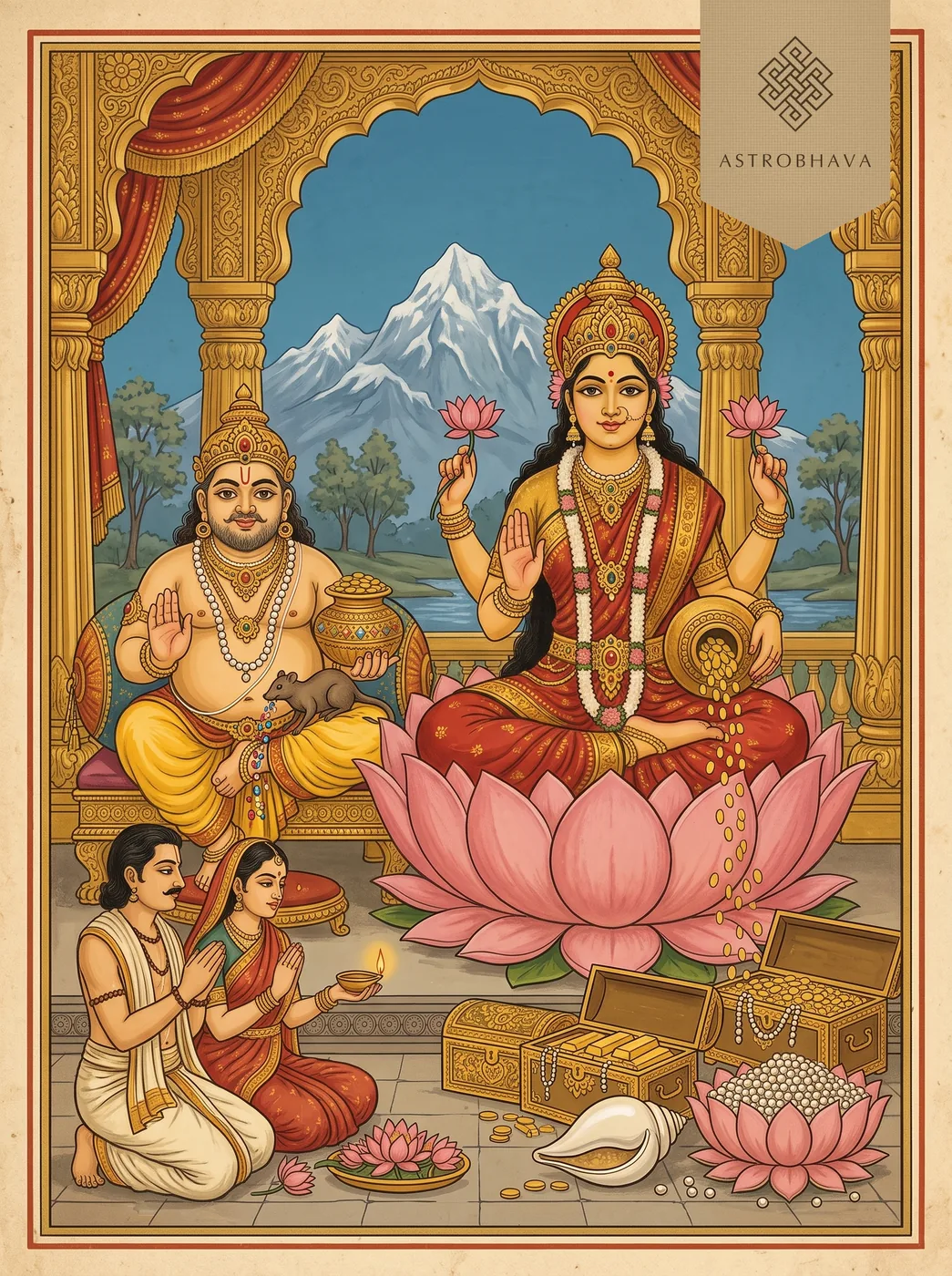
The Lakshmi Kubera mantra, as North Indian puja manuals print it, is not a single formula but a small family of four, given here in sequence. Mantra 1 is a seed-syllable mantra of no known author that sets Kubera beside Ashtalakshmi, the eight forms of Lakshmi, and asks them to fill the house with wealth. Mantra 2 is the Kubera mantra of 35 syllables, counted without its opening Om, recorded in Mahidhara's Mantramahodadhi, a Sanskrit digest of mantras completed in Varanasi in 1589; that text names Vishravas as its rishi and Brihati as its metre. Mantra 3 is the Kubera Gayatri, cast in the three steps of the Vedic Gayatri: we know him, we meditate on him, may he inspire us. Mantra 4 is the oldest, a Vedic verse from the Taittiriya Aranyaka of the Krishna Yajurveda (1.31.6), recited as the close of the Mantrapushpam when flowers are offered at the end of a puja.
The exiled king of Lanka who kept the treasury
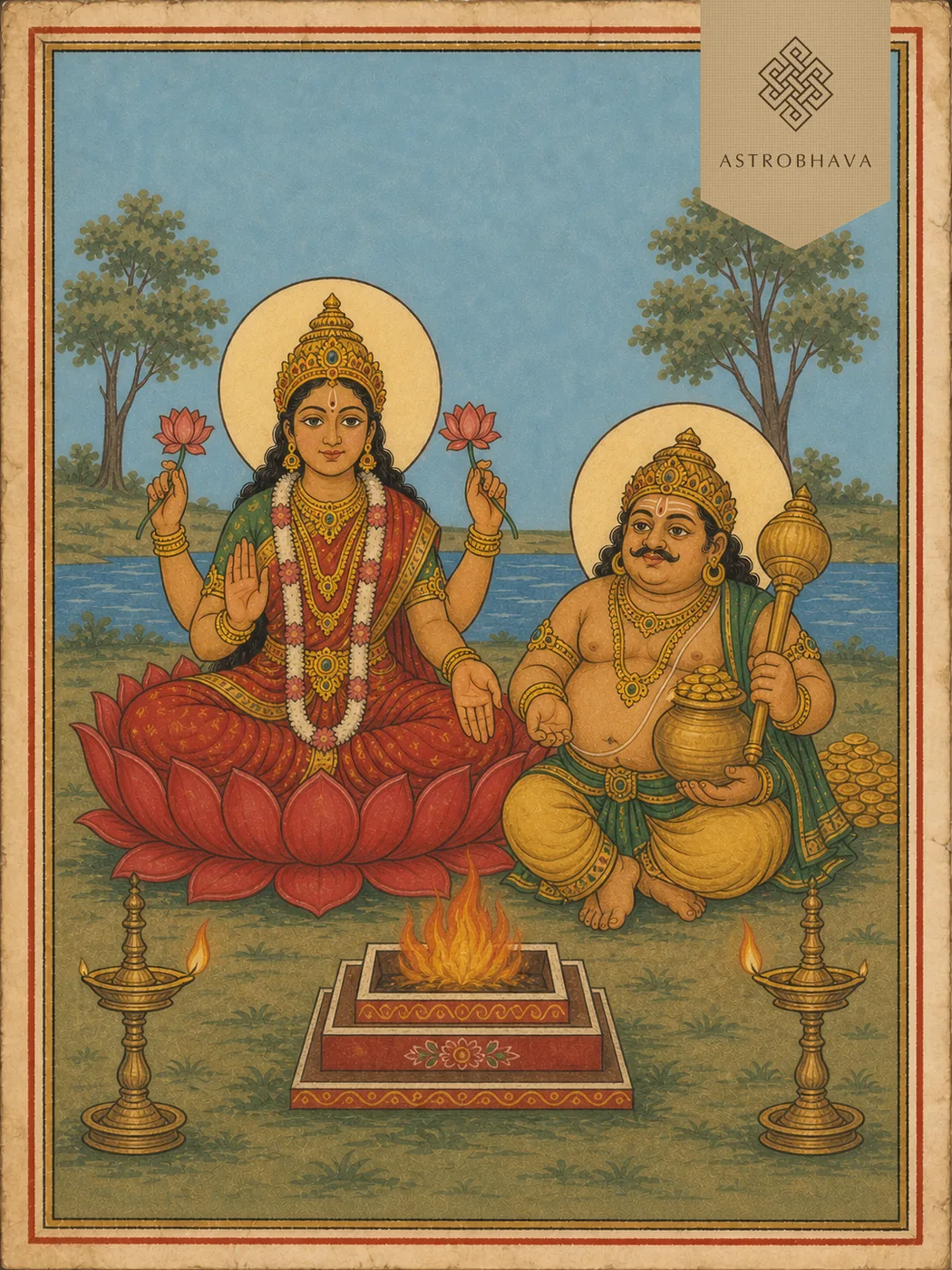
Kubera's standing in these mantras rests on a long change of fortune. In the Atharvaveda and the Shatapatha Brahmana he is a chief of the spirits of darkness, but by the epics he has become a royal figure. The Ramayana relates that Vaishravana, son of the sage Vishravas and his wife Ilavida and grandson of Pulastya, carried out severe austerities until Brahma granted him equality with the gods, the treasures of the world and the flying chariot Pushpaka. He ruled from the golden city of Lanka until his half-brother Ravana, armed with a boon of his own, drove him out and took the Pushpaka. Kubera withdrew to the Himalaya and settled near Kailasa, in the city called Alaka. His closeness to Shiva entered his titles: the meditation verse of the Mantramahodadhi calls him Shivamitra, Shiva's friend, and pictures him on a vimana, blue as sapphire, holding a mace, with one hand in the gesture of granting. The Vedic verse in Mantra 4 keeps the royal memory, saluting him as king of kings and great king. The pairing with Lakshmi belongs to worship rather than story. Tradition holds that Lakshmi bestows wealth while Kubera administers it, and the two are honoured together in the Lakshmi-Kubera puja of Dhanteras and the Diwali Lakshmi puja. At Rathinamangalam, near Vandalur south of Chennai, a temple is dedicated to Lakshmi Kuberar.
The mantra, in six scripts
- ॐ
- oṃ — Om
- ह्रीं
- hrīṃ — seed syllable hrim
- श्रीं
- śrīṃ — seed syllable shrim
- क्रीं
- krīṃ — seed syllable krim
- श्रीं
- śrīṃ — seed syllable shrim
- कुबेराय
- kuberāya — to Kubera
- अष्टलक्ष्मी
- aṣṭalakṣmī — eight forms of Lakshmi
- मम
- mama — my
- गृहे
- gṛhe — in the home
- धनं
- dhanaṃ — wealth
- पूरय
- pūraya — fill
- पूरय
- pūraya — fill
- नमः
- namaḥ — salutation
Lakshmi Kubera Mantra lyrics in full
Four mantras, from a seed-syllable puja mantra to the Vedic verse that closes the Mantrapushpam, printed without Vedic accent marks.
All 4 verses, in Sanskrit, Tamil, Telugu, Kannada, Malayalam and English, each with its meaning. Choose a script:
Download the Lakshmi Kubera Mantra PDFAll 4 verses with their meanings, in Sanskrit. Free to print and keep.
ॐ ह्रीं श्रीं क्रीं श्रीं कुबेराय अष्टलक्ष्मी मम गृहे धनं पूरय पूरय नमः ॥
ௐ ஹ்ரீம் ஶ்ரீம் க்ரீம் ஶ்ரீம் குபேராய அஷ்டலக்ஷ்மீ மம க்ருஹே தநம் பூரய பூரய நமஃ ॥
ఓం హ్రీం శ్రీం క్రీం శ్రీం కుబేరాయ అష్టలక్ష్మీ మమ గృహే ధనం పూరయ పూరయ నమః ॥
ಓಂ ಹ್ರೀಂ ಶ್ರೀಂ ಕ್ರೀಂ ಶ್ರೀಂ ಕುಬೇರಾಯ ಅಷ್ಟಲಕ್ಷ್ಮೀ ಮಮ ಗೃಹೇ ಧನಂ ಪೂರಯ ಪೂರಯ ನಮಃ ॥
ഓം ഹ്രീം ശ്രീം ക്രീം ശ്രീം കുബേരായ അഷ്ടലക്ഷ്മീ മമ ഗൃഹേ ധനം പൂരയ പൂരയ നമഃ ॥
oṃ hrīṃ śrīṃ krīṃ śrīṃ kuberāya aṣṭalakṣmī mama gṛhe dhanaṃ pūraya pūraya namaḥ ||
Om, with the seed syllables hrim, shrim, krim, shrim: to Kubera and to the eight forms of Lakshmi, fill my home with wealth, fill it; salutation.
ॐ यक्षाय कुबेराय वैश्रवणाय धनधान्याधिपतये ।
धनधान्यसमृद्धिं मे देहि दापय स्वाहा ॥
ௐ யக்ஷாய குபேராய வைஶ்ரவணாய தநதாந்யாதிபதயே ।
தநதாந்யஸம்ருத்திம் மே தேஹி தாபய ஸ்வாஹா ॥
ఓం యక్షాయ కుబేరాయ వైశ్రవణాయ ధనధాన్యాధిపతయే ।
ధనధాన్యసమృద్ధిం మే దేహి దాపయ స్వాహా ॥
ಓಂ ಯಕ್ಷಾಯ ಕುಬೇರಾಯ ವೈಶ್ರವಣಾಯ ಧನಧಾನ್ಯಾಧಿಪತಯೇ ।
ಧನಧಾನ್ಯಸಮೃದ್ಧಿಂ ಮೇ ದೇಹಿ ದಾಪಯ ಸ್ವಾಹಾ ॥
ഓം യക്ഷായ കുബേരായ വൈശ്രവണായ ധനധാന്യാധിപതയേ ।
ധനധാന്യസമൃദ്ധിം മേ ദേഹി ദാപയ സ്വാഹാ ॥
oṃ yakṣāya kuberāya vaiśravaṇāya dhanadhānyādhipataye |
dhanadhānyasamṛddhiṃ me dehi dāpaya svāhā ||
Om, to the Yaksha Kubera, son of Vishravas, lord of wealth and grain: give me abundance of wealth and grain, and cause it to be given to me. Svaha.
ॐ यक्षराजाय विद्महे ।
वैश्रवणाय धीमहि ।
तन्नो कुबेरः प्रचोदयात् ॥
ௐ யக்ஷராஜாய வித்மஹே ।
வைஶ்ரவணாய தீமஹி ।
தந்நோ குபேரஃ ப்ரசோதயாத் ॥
ఓం యక్షరాజాయ విద్మహే ।
వైశ్రవణాయ ధీమహి ।
తన్నో కుబేరః ప్రచోదయాత్ ॥
ಓಂ ಯಕ್ಷರಾಜಾಯ ವಿದ್ಮಹೇ ।
ವೈಶ್ರವಣಾಯ ಧೀಮಹಿ ।
ತನ್ನೋ ಕುಬೇರಃ ಪ್ರಚೋದಯಾತ್ ॥
ഓം യക്ഷരാജായ വിദ്മഹേ ।
വൈശ്രവണായ ധീമഹി ।
തന്നോ കുബേരഃ പ്രചോദയാത് ॥
oṃ yakṣarājāya vidmahe |
vaiśravaṇāya dhīmahi |
tanno kuberaḥ pracodayāt ||
Om, we come to know the king of the Yakshas; we meditate on Vaishravana, son of Vishravas. May that Kubera inspire and guide us.
राजाधिराजाय प्रसह्यसाहिने ।
नमो वयं वैश्रवणाय कुर्महे ।
स मे कामान्कामकामाय मह्यम् ।
कामेश्वरो वैश्रवणो ददातु ।
कुबेराय वैश्रवणाय ।
महाराजाय नमः ॥
ராஜாதிராஜாய ப்ரஸஹ்யஸாஹிநே ।
நமோ வயம் வைஶ்ரவணாய குர்மஹே ।
ஸ மே காமாந்காமகாமாய மஹ்யம் ।
காமேஶ்வரோ வைஶ்ரவணோ ததாது ।
குபேராய வைஶ்ரவணாய ।
மஹாராஜாய நமஃ ॥
రాజాధిరాజాయ ప్రసహ్యసాహినే ।
నమో వయం వైశ్రవణాయ కుర్మహే ।
స మే కామాన్కామకామాయ మహ్యమ్ ।
కామేశ్వరో వైశ్రవణో దదాతు ।
కుబేరాయ వైశ్రవణాయ ।
మహారాజాయ నమః ॥
ರಾಜಾಧಿರಾಜಾಯ ಪ್ರಸಹ್ಯಸಾಹಿನೇ ।
ನಮೋ ವಯಂ ವೈಶ್ರವಣಾಯ ಕುರ್ಮಹೇ ।
ಸ ಮೇ ಕಾಮಾನ್ಕಾಮಕಾಮಾಯ ಮಹ್ಯಮ್ ।
ಕಾಮೇಶ್ವರೋ ವೈಶ್ರವಣೋ ದದಾತು ।
ಕುಬೇರಾಯ ವೈಶ್ರವಣಾಯ ।
ಮಹಾರಾಜಾಯ ನಮಃ ॥
രാജാധിരാജായ പ്രസഹ്യസാഹിനേ ।
നമോ വയം വൈശ്രവണായ കുര്മഹേ ।
സ മേ കാമാന്കാമകാമായ മഹ്യമ് ।
കാമേശ്വരോ വൈശ്രവണോ ദദാതു ।
കുബേരായ വൈശ്രവണായ ।
മഹാരാജായ നമഃ ॥
rājādhirājāya prasahyasāhine |
namo vayaṃ vaiśravaṇāya kurmahe |
sa me kāmānkāmakāmāya mahyam |
kāmeśvaro vaiśravaṇo dadātu |
kuberāya vaiśravaṇāya |
mahārājāya namaḥ ||
To the king of kings, who prevails by his might, we offer our salutation, to Vaishravana. May Vaishravana, lord of desires, grant my wishes to me who seek them. To Kubera, son of Vishravas, the great king, salutation.
The syllable people get wrong
वैश्रवणाय (vaiśravaṇāya), in Mantras 2 and 3, is often shortened to 'Vishravanaya', which turns the son's name back into the father's. The first syllable is 'vai', rhyming with 'vie', the ś is a soft 'sh', and the ṇ is retroflex, said with the tongue curled back: vaish-ra-va-ṇaa-ya.
When the Lakshmi Kubera Mantra is chanted
Weekday. Friday
Festival. Dhanteras and the Diwali Lakshmi Puja
Questions
Have your chart read before you decide
Chanting is yours to do, and free. But which deity your situation calls for — and whether a mantra alone is the right response — depends on your chart. Sometimes it is; sometimes it is not.
- Over 30 years in the Guru–Sishya Parampara, from the age of five
- He reads every chart himself — 60 minutes, one to one, never delegated
- Charts are read only between sunrise and sunset, following tradition
