Ganesha Sahasranama
कथं नाम्नां सहस्रं तं गणेश उपदिष्टवान् । शिवदं तन्ममाचक्ष्व लोकानुग्रहतत्पर ॥Also known as Mahaganapati Sahasranama Stotram
In Devanagari, Tamil, Telugu, Kannada, Malayalam and English — with the meaning of every word, and the one syllable most people pronounce wrongly.
 The Ashta Dravya Maha Ganapathi Homa, performed for youBook →
What the Ganesha Sahasranama is
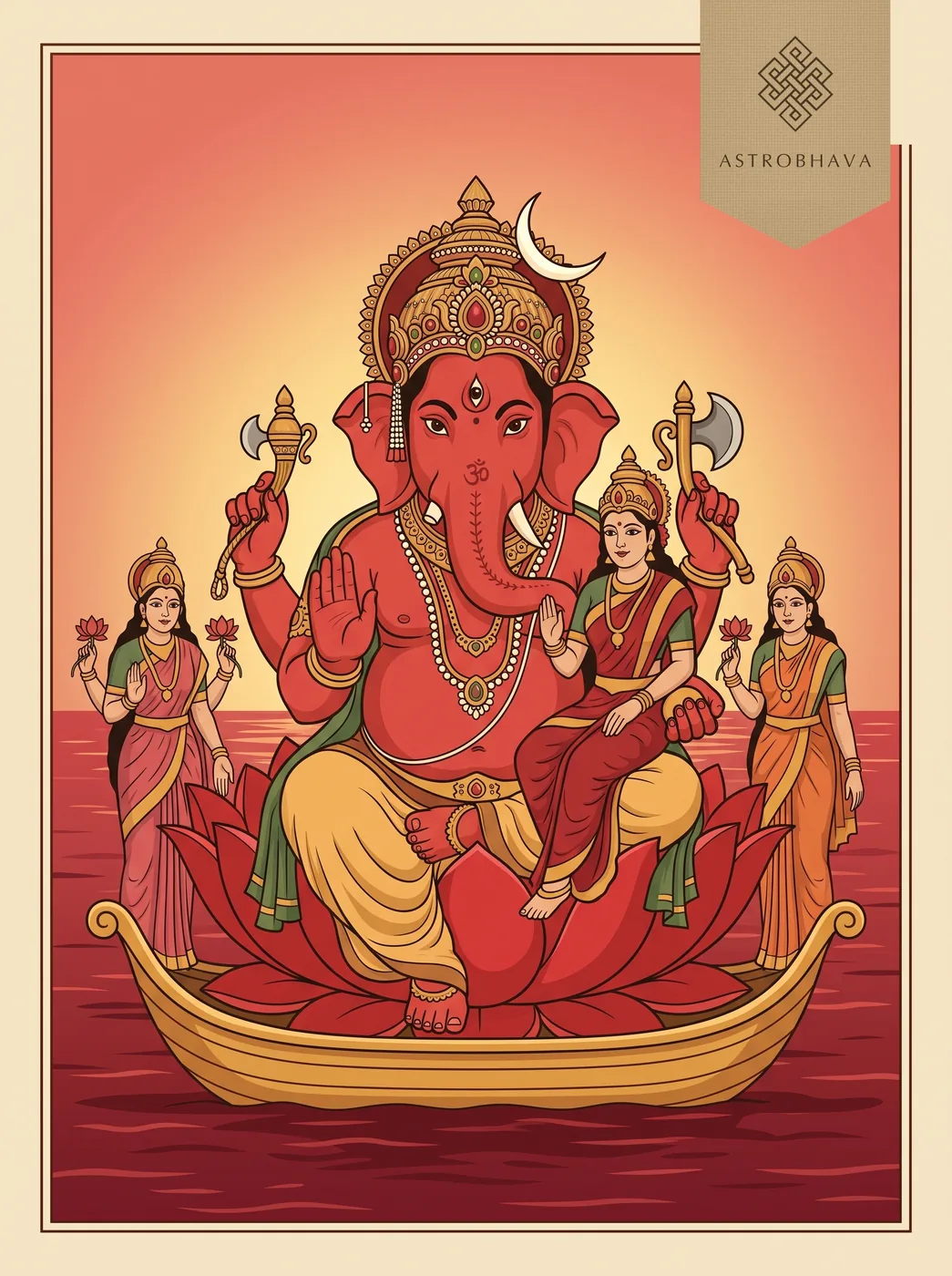
The Ganesha Sahasranamam, printed as the Sri Mahaganapati Sahasranama Stotram, is the thousand-name hymn that Ganesha speaks about himself in the Ganesha Purana, Upasana Khanda, chapter 46. Vyasa asks how the names were taught, and Brahma answers in five verses. Two meditation verses then picture Mahaganapati red and three-eyed, seated on a red lotus in a boat on a red ocean, with Siddhi and Buddhi beside him. The names open with Ganeshvara and the ganas, then widen into a cosmic body: the planets and stars are his teeth, the rivers his arms, Mount Meru his back. Later verses make him every measure of time from the instant to the kalpa, the planets from Rahu to the Sun, and every school from Sankhya and Pancharatra to the Pashupatas and the Jainas. From Verse 134 the names climb through the numbers, one to a thousand. Closing verses list the fruits and add twenty-one shorter names.
The names that armed Shiva against Tripura
The Ganesha Purana builds up to these names over ten chapters. The sage Gritsamada, a devotee of Ganesha, sneezes one day and sees before him a fierce red child, whom he raises as his son. The boy performs austerities, and Ganesha grants him three cities, of iron, silver and gold, with one condition: he will meet his end only when Shiva pierces the cities with a single arrow. Called Tripura, he drives Indra from heaven and in battle shatters thousands of Shiva's own weapons. Narada then visits the defeated Shiva, and according to the Purana Shiva sees that the obstacle came from setting out without remembering Ganesha. He turns to austerity, and Ganesha appears; Shiva praises him with all five faces, and Brahma, at Shiva's word, gives the god the name Ganesha, lord of the ganas. Ganesha tells Shiva to charge one arrow with his seed syllable, then speaks this thousand of his names, telling him to recite them when the battle begins. Shiva installs an image of Mahaganesha in a temple at a place the Purana calls Manipura. In chapter 47 Shiva dances, roars and rides out to burn the three cities. Temple tradition at Ranjangaon, one of the eight Ashtavinayaka shrines near Pune, identifies that place as its own former name, Manipur.
The mantra, in six scripts
- कथं
- kathaṃ — how
- नाम्नां
- nāmnāṃ — of names
- सहस्रं
- sahasraṃ — the thousand
- तं
- taṃ — that
- गणेश
- gaṇeśa — Ganesha
- उपदिष्टवान्
- upadiṣṭavān — taught
- शिवदं
- śivadaṃ — granting what is auspicious
- तन्ममाचक्ष्व
- tanmamācakṣva — tell me that
- लोकानुग्रहतत्पर
- lokānugrahatatpara — O you intent on the good of the worlds
Ganesha Sahasranama lyrics in full
Vyasa's question and Brahma's answer, two meditation verses, the names in 170 verses, and the closing verses of fruits with the twenty-one names and two short hymns.
All 223 verses, in Sanskrit, Tamil, Telugu, Kannada, Malayalam and English, each with its meaning. Choose a script:
Download the Ganesha Sahasranama PDFAll 223 verses with their meanings, in Sanskrit. Free to print and keep.
कथं नाम्नां सहस्रं तं गणेश उपदिष्टवान् ।
शिवदं तन्ममाचक्ष्व लोकानुग्रहतत्पर ॥
கதம் நாம்நாம் ஸஹஸ்ரம் தம் கணேஶ உபதிஷ்டவாந் ।
ஶிவதம் தந்மமாசக்ஷ்வ லோகாநுக்ரஹதத்பர ॥
కథం నామ్నాం సహస్రం తం గణేశ ఉపదిష్టవాన్ ।
శివదం తన్మమాచక్ష్వ లోకానుగ్రహతత్పర ॥
ಕಥಂ ನಾಮ್ನಾಂ ಸಹಸ್ರಂ ತಂ ಗಣೇಶ ಉಪದಿಷ್ಟವಾನ್ ।
ಶಿವದಂ ತನ್ಮಮಾಚಕ್ಷ್ವ ಲೋಕಾನುಗ್ರಹತತ್ಪರ ॥
കഥം നാമ്നാം സഹസ്രം തം ഗണേശ ഉപദിഷ്ടവാന് ।
ശിവദം തന്മമാചക്ഷ്വ ലോകാനുഗ്രഹതത്പര ॥
kathaṃ nāmnāṃ sahasraṃ taṃ gaṇeśa upadiṣṭavān |
śivadaṃ tanmamācakṣva lokānugrahatatpara ||
The sage asked: How did Ganesha teach those thousand names, which grant what is auspicious? You who are intent on the good of the worlds, tell me this.
देवः पूर्वं पुरारातिः पुरत्रयजयोद्यमे ।
अनर्चनाद्गणेशस्य जातो विघ्नाकुलः किल ॥
தேவஃ பூர்வம் புராராதிஃ புரத்ரயஜயோத்யமே ।
அநர்சநாத்கணேஶஸ்ய ஜாதோ விக்நாகுலஃ கில ॥
దేవః పూర్వం పురారాతిః పురత్రయజయోద్యమే ।
అనర్చనాద్గణేశస్య జాతో విఘ్నాకులః కిల ॥
ದೇವಃ ಪೂರ್ವಂ ಪುರಾರಾತಿಃ ಪುರತ್ರಯಜಯೋದ್ಯಮೇ ।
ಅನರ್ಚನಾದ್ಗಣೇಶಸ್ಯ ಜಾತೋ ವಿಘ್ನಾಕುಲಃ ಕಿಲ ॥
ദേവഃ പൂര്വം പുരാരാതിഃ പുരത്രയജയോദ്യമേ ।
അനര്ചനാദ്ഗണേശസ്യ ജാതോ വിഘ്നാകുലഃ കില ॥
devaḥ pūrvaṃ purārātiḥ puratrayajayodyame |
anarcanādgaṇeśasya jāto vighnākulaḥ kila ||
Brahma said: Long ago Shiva, the foe of the cities, set out to conquer the three cities, and because he had not first worshipped Ganesha he was beset by obstacles.
मनसा स विनिर्धार्य ददृशे विघ्नकारणम् ।
महागणपतिं भक्त्या समभ्यर्च्य यथाविधि ॥
மநஸா ஸ விநிர்தார்ய தத்ருஶே விக்நகாரணம் ।
மஹாகணபதிம் பக்த்யா ஸமப்யர்ச்ய யதாவிதி ॥
మనసా స వినిర్ధార్య దదృశే విఘ్నకారణమ్ ।
మహాగణపతిం భక్త్యా సమభ్యర్చ్య యథావిధి ॥
ಮನಸಾ ಸ ವಿನಿರ್ಧಾರ್ಯ ದದೃಶೇ ವಿಘ್ನಕಾರಣಮ್ ।
ಮಹಾಗಣಪತಿಂ ಭಕ್ತ್ಯಾ ಸಮಭ್ಯರ್ಚ್ಯ ಯಥಾವಿಧಿ ॥
മനസാ സ വിനിര്ധാര്യ ദദൃശേ വിഘ്നകാരണമ് ।
മഹാഗണപതിം ഭക്ത്യാ സമഭ്യര്ച്യ യഥാവിധി ॥
manasā sa vinirdhārya dadṛśe vighnakāraṇam |
mahāgaṇapatiṃ bhaktyā samabhyarcya yathāvidhi ||
Reflecting in his mind, he saw the cause of the obstacles, and he worshipped Mahaganapati with devotion according to the rite.
विघ्नप्रशमनोपायमपृच्छदपरिश्रमम् ।
सन्तुष्टः पूजया शम्भोर्महागणपतिः स्वयम् ॥
விக்நப்ரஶமநோபாயமப்ருச்சதபரிஶ்ரமம் ।
ஸந்துஷ்டஃ பூஜயா ஶம்போர்மஹாகணபதிஃ ஸ்வயம் ॥
విఘ్నప్రశమనోపాయమపృచ్ఛదపరిశ్రమమ్ ।
సన్తుష్టః పూజయా శమ్భోర్మహాగణపతిః స్వయమ్ ॥
ವಿಘ್ನಪ್ರಶಮನೋಪಾಯಮಪೃಚ್ಛದಪರಿಶ್ರಮಮ್ ।
ಸನ್ತುಷ್ಟಃ ಪೂಜಯಾ ಶಮ್ಭೋರ್ಮಹಾಗಣಪತಿಃ ಸ್ವಯಮ್ ॥
വിഘ്നപ്രശമനോപായമപൃച്ഛദപരിശ്രമമ് ।
സന്തുഷ്ടഃ പൂജയാ ശമ്ഭോര്മഹാഗണപതിഃ സ്വയമ് ॥
vighnapraśamanopāyamapṛcchadapariśramam |
santuṣṭaḥ pūjayā śambhormahāgaṇapatiḥ svayam ||
He asked for an effortless means to quell the obstacles. Pleased by Shiva's worship, Mahaganapati himself responded.
सर्वविघ्नप्रशमनं सर्वकामफलप्रदम् ।
ततस्तस्मै स्वयं नाम्नां सहस्रमिदमब्रवीत् ॥
ஸர்வவிக்நப்ரஶமநம் ஸர்வகாமபலப்ரதம் ।
ததஸ்தஸ்மை ஸ்வயம் நாம்நாம் ஸஹஸ்ரமிதமப்ரவீத் ॥
సర్వవిఘ్నప్రశమనం సర్వకామఫలప్రదమ్ ।
తతస్తస్మై స్వయం నామ్నాం సహస్రమిదమబ్రవీత్ ॥
ಸರ್ವವಿಘ್ನಪ್ರಶಮನಂ ಸರ್ವಕಾಮಫಲಪ್ರದಮ್ ।
ತತಸ್ತಸ್ಮೈ ಸ್ವಯಂ ನಾಮ್ನಾಂ ಸಹಸ್ರಮಿದಮಬ್ರವೀತ್ ॥
സര്വവിഘ്നപ്രശമനം സര്വകാമഫലപ്രദമ് ।
തതസ്തസ്മൈ സ്വയം നാമ്നാം സഹസ്രമിദമബ്രവീത് ॥
sarvavighnapraśamanaṃ sarvakāmaphalapradam |
tatastasmai svayaṃ nāmnāṃ sahasramidamabravīt ||
Then he himself spoke to Shiva this thousand of his names, which quells every obstacle and grants the fruit of every wish.
गजवदनमचिन्त्यं तीक्ष्णदंष्ट्रं त्रिनेत्रं बृहदुदरमशेषं भूतिराजं पुराणम् ।
अमरवरसुपूज्यं रक्तवर्णं सुरेशं पशुपतिसुतमीशं विघ्नराजं नमामि ॥
கஜவதநமசிந்த்யம் தீக்ஷ்ணதம்ஷ்ட்ரம் த்ரிநேத்ரம் ப்ருஹதுதரமஶேஷம் பூதிராஜம் புராணம் ।
அமரவரஸுபூஜ்யம் ரக்தவர்ணம் ஸுரேஶம் பஶுபதிஸுதமீஶம் விக்நராஜம் நமாமி ॥
గజవదనమచిన్త్యం తీక్ష్ణదంష్ట్రం త్రినేత్రం బృహదుదరమశేషం భూతిరాజం పురాణమ్ ।
అమరవరసుపూజ్యం రక్తవర్ణం సురేశం పశుపతిసుతమీశం విఘ్నరాజం నమామి ॥
ಗಜವದನಮಚಿನ್ತ್ಯಂ ತೀಕ್ಷ್ಣದಂಷ್ಟ್ರಂ ತ್ರಿನೇತ್ರಂ ಬೃಹದುದರಮಶೇಷಂ ಭೂತಿರಾಜಂ ಪುರಾಣಮ್ ।
ಅಮರವರಸುಪೂಜ್ಯಂ ರಕ್ತವರ್ಣಂ ಸುರೇಶಂ ಪಶುಪತಿಸುತಮೀಶಂ ವಿಘ್ನರಾಜಂ ನಮಾಮಿ ॥
ഗജവദനമചിന്ത്യം തീക്ഷ്ണദംഷ്ട്രം ത്രിനേത്രം ബൃഹദുദരമശേഷം ഭൂതിരാജം പുരാണമ് ।
അമരവരസുപൂജ്യം രക്തവര്ണം സുരേശം പശുപതിസുതമീശം വിഘ്നരാജം നമാമി ॥
gajavadanamacintyaṃ tīkṣṇadaṃṣṭraṃ trinetraṃ bṛhadudaramaśeṣaṃ bhūtirājaṃ purāṇam |
amaravarasupūjyaṃ raktavarṇaṃ sureśaṃ paśupatisutamīśaṃ vighnarājaṃ namāmi ||
I bow to Vighnaraja, the elephant-faced and unfathomable one with sharp tusk and three eyes, large-bellied, complete, the ancient lord of beings. He is worshipped by the best of the gods, red in colour, lord of the gods, the son of Pashupati (Shiva), the Lord.
रक्ताम्भोधिस्थपोतोल्लसदरुणसरोजाधिरूढं त्रिनेत्रं पाशं चैवाङ्कुशाख्यं परशुमभयदं बाहुभिर्धारयन्तम् ।
शक्त्या युक्तं गजास्यं पृथुतरजठरं सिद्धिबुद्धीसमेतं रक्तं चन्द्रार्धमौलिं सकलभयहरं विघ्नराजं नमामि ॥
ரக்தாம்போதிஸ்தபோதோல்லஸதருணஸரோஜாதிரூடம் த்ரிநேத்ரம் பாஶம் சைவாங்குஶாக்யம் பரஶுமபயதம் பாஹுபிர்தாரயந்தம் ।
ஶக்த்யா யுக்தம் கஜாஸ்யம் ப்ருதுதரஜடரம் ஸித்திபுத்தீஸமேதம் ரக்தம் சந்த்ரார்தமௌலிம் ஸகலபயஹரம் விக்நராஜம் நமாமி ॥
రక్తామ్భోధిస్థపోతోల్లసదరుణసరోజాధిరూఢం త్రినేత్రం పాశం చైవాఙ్కుశాఖ్యం పరశుమభయదం బాహుభిర్ధారయన్తమ్ ।
శక్త్యా యుక్తం గజాస్యం పృథుతరజఠరం సిద్ధిబుద్ధీసమేతం రక్తం చన్ద్రార్ధమౌలిం సకలభయహరం విఘ్నరాజం నమామి ॥
ರಕ್ತಾಮ್ಭೋಧಿಸ್ಥಪೋತೋಲ್ಲಸದರುಣಸರೋಜಾಧಿರೂಢಂ ತ್ರಿನೇತ್ರಂ ಪಾಶಂ ಚೈವಾಙ್ಕುಶಾಖ್ಯಂ ಪರಶುಮಭಯದಂ ಬಾಹುಭಿರ್ಧಾರಯನ್ತಮ್ ।
ಶಕ್ತ್ಯಾ ಯುಕ್ತಂ ಗಜಾಸ್ಯಂ ಪೃಥುತರಜಠರಂ ಸಿದ್ಧಿಬುದ್ಧೀಸಮೇತಂ ರಕ್ತಂ ಚನ್ದ್ರಾರ್ಧಮೌಲಿಂ ಸಕಲಭಯಹರಂ ವಿಘ್ನರಾಜಂ ನಮಾಮಿ ॥
രക്താമ്ഭോധിസ്ഥപോതോല്ലസദരുണസരോജാധിരൂഢം ത്രിനേത്രം പാശം ചൈവാങ്കുശാഖ്യം പരശുമഭയദം ബാഹുഭിര്ധാരയന്തമ് ।
ശക്ത്യാ യുക്തം ഗജാസ്യം പൃഥുതരജഠരം സിദ്ധിബുദ്ധീസമേതം രക്തം ചന്ദ്രാര്ധമൌലിം സകലഭയഹരം വിഘ്നരാജം നമാമി ॥
raktāmbhodhisthapotollasadaruṇasarojādhirūḍhaṃ trinetraṃ pāśaṃ caivāṅkuśākhyaṃ paraśumabhayadaṃ bāhubhirdhārayantam |
śaktyā yuktaṃ gajāsyaṃ pṛthutarajaṭharaṃ siddhibuddhīsametaṃ raktaṃ candrārdhamauliṃ sakalabhayaharaṃ vighnarājaṃ namāmi ||
I bow to Vighnaraja, three-eyed, seated on a red lotus that shines on a boat in an ocean of red, holding in his hands the noose, the goad, the axe and the gesture of fearlessness. Elephant-faced, with a very large belly, joined by his Shakti and by Siddhi and Buddhi, red, with the half moon on his crown, he removes all fear.
ॐ गणेश्वरो गणक्रीडो गणनाथो गणाधिपः ।
एकदन्तो वक्रतुण्डो गजवक्त्रो महोदरः ॥
ௐ கணேஶ்வரோ கணக்ரீடோ கணநாதோ கணாதிபஃ ।
ஏகதந்தோ வக்ரதுண்டோ கஜவக்த்ரோ மஹோதரஃ ॥
ఓం గణేశ్వరో గణక్రీడో గణనాథో గణాధిపః ।
ఏకదన్తో వక్రతుణ్డో గజవక్త్రో మహోదరః ॥
ಓಂ ಗಣೇಶ್ವರೋ ಗಣಕ್ರೀಡೋ ಗಣನಾಥೋ ಗಣಾಧಿಪಃ ।
ಏಕದನ್ತೋ ವಕ್ರತುಣ್ಡೋ ಗಜವಕ್ತ್ರೋ ಮಹೋದರಃ ॥
ഓം ഗണേശ്വരോ ഗണക്രീഡോ ഗണനാഥോ ഗണാധിപഃ ।
ഏകദന്തോ വക്രതുണ്ഡോ ഗജവക്ത്രോ മഹോദരഃ ॥
oṃ gaṇeśvaro gaṇakrīḍo gaṇanātho gaṇādhipaḥ |
ekadanto vakratuṇḍo gajavaktro mahodaraḥ ||
Lord of the ganas, who sports with the ganas, protector and master of the ganas; the one-tusked, the curved-trunked, the elephant-faced, the great-bellied.
लम्बोदरो धूम्रवर्णो विकटो विघ्ननाशनः ।
सुमुखो दुर्मुखो बुद्धो विघ्नराजो गजाननः ॥
லம்போதரோ தூம்ரவர்ணோ விகடோ விக்நநாஶநஃ ।
ஸுமுகோ துர்முகோ புத்தோ விக்நராஜோ கஜாநநஃ ॥
లమ్బోదరో ధూమ్రవర్ణో వికటో విఘ్ననాశనః ।
సుముఖో దుర్ముఖో బుద్ధో విఘ్నరాజో గజాననః ॥
ಲಮ್ಬೋದರೋ ಧೂಮ್ರವರ್ಣೋ ವಿಕಟೋ ವಿಘ್ನನಾಶನಃ ।
ಸುಮುಖೋ ದುರ್ಮುಖೋ ಬುದ್ಧೋ ವಿಘ್ನರಾಜೋ ಗಜಾನನಃ ॥
ലമ്ബോദരോ ധൂമ്രവര്ണോ വികടോ വിഘ്നനാശനഃ ।
സുമുഖോ ദുര്മുഖോ ബുദ്ധോ വിഘ്നരാജോ ഗജാനനഃ ॥
lambodaro dhūmravarṇo vikaṭo vighnanāśanaḥ |
sumukho durmukho buddho vighnarājo gajānanaḥ ||
The pot-bellied, the smoke-coloured, the formidable one, destroyer of obstacles; the fair-faced, the fierce-faced to the wicked, the wise one, king of obstacles, the elephant-faced.
भीमः प्रमोद आमोदः सुरानन्दो मदोत्कटः ।
हेरम्बः शम्बरः शम्भुर्लम्बकर्णो महाबलः ॥
பீமஃ ப்ரமோத ஆமோதஃ ஸுராநந்தோ மதோத்கடஃ ।
ஹேரம்பஃ ஶம்பரஃ ஶம்புர்லம்பகர்ணோ மஹாபலஃ ॥
భీమః ప్రమోద ఆమోదః సురానన్దో మదోత్కటః ।
హేరమ్బః శమ్బరః శమ్భుర్లమ్బకర్ణో మహాబలః ॥
ಭೀಮಃ ಪ್ರಮೋದ ಆಮೋದಃ ಸುರಾನನ್ದೋ ಮದೋತ್ಕಟಃ ।
ಹೇರಮ್ಬಃ ಶಮ್ಬರಃ ಶಮ್ಭುರ್ಲಮ್ಬಕರ್ಣೋ ಮಹಾಬಲಃ ॥
ഭീമഃ പ്രമോദ ആമോദഃ സുരാനന്ദോ മദോത്കടഃ ।
ഹേരമ്ബഃ ശമ്ബരഃ ശമ്ഭുര്ലമ്ബകര്ണോ മഹാബലഃ ॥
bhīmaḥ pramoda āmodaḥ surānando madotkaṭaḥ |
herambaḥ śambaraḥ śambhurlambakarṇo mahābalaḥ ||
The terrible one, Pramoda and Amoda (joy and delight), the bliss of the gods, intoxicated with might; Heramba, Shambara, Shambhu, the long-eared, the mighty.
नन्दनोऽलम्पटोऽभीरुर्मेघनादो गणञ्जयः ।
विनायको विरूपाक्षो वीरः शूरवरप्रदः ॥
நந்தநோலம்படோபீருர்மேகநாதோ கணஞ்ஜயஃ ।
விநாயகோ விரூபாக்ஷோ வீரஃ ஶூரவரப்ரதஃ ॥
నన్దనోఽలమ్పటోఽభీరుర్మేఘనాదో గణఞ్జయః ।
వినాయకో విరూపాక్షో వీరః శూరవరప్రదః ॥
ನನ್ದನೋಽಲಮ್ಪಟೋಽಭೀರುರ್ಮೇಘನಾದೋ ಗಣಞ್ಜಯಃ ।
ವಿನಾಯಕೋ ವಿರೂಪಾಕ್ಷೋ ವೀರಃ ಶೂರವರಪ್ರದಃ ॥
നന്ദനോഽലമ്പടോഽഭീരുര്മേഘനാദോ ഗണഞ്ജയഃ ।
വിനായകോ വിരൂപാക്ഷോ വീരഃ ശൂരവരപ്രദഃ ॥
nandano'lampaṭo'bhīrurmeghanādo gaṇañjayaḥ |
vināyako virūpākṣo vīraḥ śūravarapradaḥ ||
The delighter, free from greed, the fearless, roaring like the thunder-cloud, conqueror of hosts; Vinayaka, the one with unusual eyes, the hero, the valiant giver of boons.
महागणपतिर्बुद्धिप्रियः क्षिप्रप्रसादनः ।
रुद्रप्रियो गणाध्यक्ष उमापुत्रोऽघनाशनः ॥
மஹாகணபதிர்புத்திப்ரியஃ க்ஷிப்ரப்ரஸாதநஃ ।
ருத்ரப்ரியோ கணாத்யக்ஷ உமாபுத்ரோகநாஶநஃ ॥
మహాగణపతిర్బుద్ధిప్రియః క్షిప్రప్రసాదనః ।
రుద్రప్రియో గణాధ్యక్ష ఉమాపుత్రోఽఘనాశనః ॥
ಮಹಾಗಣಪತಿರ್ಬುದ್ಧಿಪ್ರಿಯಃ ಕ್ಷಿಪ್ರಪ್ರಸಾದನಃ ।
ರುದ್ರಪ್ರಿಯೋ ಗಣಾಧ್ಯಕ್ಷ ಉಮಾಪುತ್ರೋಽಘನಾಶನಃ ॥
മഹാഗണപതിര്ബുദ്ധിപ്രിയഃ ക്ഷിപ്രപ്രസാദനഃ ।
രുദ്രപ്രിയോ ഗണാധ്യക്ഷ ഉമാപുത്രോഽഘനാശനഃ ॥
mahāgaṇapatirbuddhipriyaḥ kṣipraprasādanaḥ |
rudrapriyo gaṇādhyakṣa umāputro'ghanāśanaḥ ||
Mahaganapati, fond of wisdom, quickly pleased; dear to Rudra, chief of the ganas, son of Uma, destroyer of sin.
कुमारगुरुरीशानपुत्रो मूषकवाहनः ।
सिद्धिप्रियः सिद्धिपतिः सिद्धः सिद्धिविनायकः ॥
குமாரகுருரீஶாநபுத்ரோ மூஷகவாஹநஃ ।
ஸித்திப்ரியஃ ஸித்திபதிஃ ஸித்தஃ ஸித்திவிநாயகஃ ॥
కుమారగురురీశానపుత్రో మూషకవాహనః ।
సిద్ధిప్రియః సిద్ధిపతిః సిద్ధః సిద్ధివినాయకః ॥
ಕುಮಾರಗುರುರೀಶಾನಪುತ್ರೋ ಮೂಷಕವಾಹನಃ ।
ಸಿದ್ಧಿಪ್ರಿಯಃ ಸಿದ್ಧಿಪತಿಃ ಸಿದ್ಧಃ ಸಿದ್ಧಿವಿನಾಯಕಃ ॥
കുമാരഗുരുരീശാനപുത്രോ മൂഷകവാഹനഃ ।
സിദ്ധിപ്രിയഃ സിദ്ധിപതിഃ സിദ്ധഃ സിദ്ധിവിനായകഃ ॥
kumāragururīśānaputro mūṣakavāhanaḥ |
siddhipriyaḥ siddhipatiḥ siddhaḥ siddhivināyakaḥ ||
The teacher of Kumara (Skanda), son of Ishana (Shiva), who rides the mouse; fond of Siddhi, lord of Siddhi, the perfected one, Siddhivinayaka.
अविघ्नस्तुम्बुरुः सिंहवाहनो मोहिनीप्रियः ।
कटङ्कटो राजपुत्रः शाकलः सम्मितोऽमितः ॥
அவிக்நஸ்தும்புருஃ ஸிம்ஹவாஹநோ மோஹிநீப்ரியஃ ।
கடங்கடோ ராஜபுத்ரஃ ஶாகலஃ ஸம்மிதோமிதஃ ॥
అవిఘ్నస్తుమ్బురుః సింహవాహనో మోహినీప్రియః ।
కటఙ్కటో రాజపుత్రః శాకలః సమ్మితోఽమితః ॥
ಅವಿಘ್ನಸ್ತುಮ್ಬುರುಃ ಸಿಂಹವಾಹನೋ ಮೋಹಿನೀಪ್ರಿಯಃ ।
ಕಟಙ್ಕಟೋ ರಾಜಪುತ್ರಃ ಶಾಕಲಃ ಸಮ್ಮಿತೋಽಮಿತಃ ॥
അവിഘ്നസ്തുമ്ബുരുഃ സിംഹവാഹനോ മോഹിനീപ്രിയഃ ।
കടങ്കടോ രാജപുത്രഃ ശാകലഃ സമ്മിതോഽമിതഃ ॥
avighnastumburuḥ siṃhavāhano mohinīpriyaḥ |
kaṭaṅkaṭo rājaputraḥ śākalaḥ sammito'mitaḥ ||
Free of obstacles, Tumburu, who rides a lion, beloved of Mohini; Katankata, the prince, Shakala, the measured and the measureless.
कूष्माण्डसामसम्भूतिर्दुर्जयो धूर्जयो जयः ।
भूपतिर्भुवनपतिर्भूतानां पतिरव्ययः ॥
கூஷ்மாண்டஸாமஸம்பூதிர்துர்ஜயோ தூர்ஜயோ ஜயஃ ।
பூபதிர்புவநபதிர்பூதாநாம் பதிரவ்யயஃ ॥
కూష్మాణ్డసామసమ్భూతిర్దుర్జయో ధూర్జయో జయః ।
భూపతిర్భువనపతిర్భూతానాం పతిరవ్యయః ॥
ಕೂಷ್ಮಾಣ್ಡಸಾಮಸಮ್ಭೂತಿರ್ದುರ್ಜಯೋ ಧೂರ್ಜಯೋ ಜಯಃ ।
ಭೂಪತಿರ್ಭುವನಪತಿರ್ಭೂತಾನಾಂ ಪತಿರವ್ಯಯಃ ॥
കൂഷ്മാണ്ഡസാമസമ്ഭൂതിര്ദുര്ജയോ ധൂര്ജയോ ജയഃ ।
ഭൂപതിര്ഭുവനപതിര്ഭൂതാനാം പതിരവ്യയഃ ॥
kūṣmāṇḍasāmasambhūtirdurjayo dhūrjayo jayaḥ |
bhūpatirbhuvanapatirbhūtānāṃ patiravyayaḥ ||
Born of the Kushmanda chant of the Sama Veda, hard to conquer, conqueror of burdens, victory itself; lord of the earth, lord of the worlds, the imperishable lord of beings.
विश्वकर्ता विश्वमुखो विश्वरूपो निधिर्गुणः ।
कविः कवीनामृषभो ब्रह्मण्यो ब्रह्मवित्प्रियः ॥
விஶ்வகர்தா விஶ்வமுகோ விஶ்வரூபோ நிதிர்குணஃ ।
கவிஃ கவீநாம்ருஷபோ ப்ரஹ்மண்யோ ப்ரஹ்மவித்ப்ரியஃ ॥
విశ్వకర్తా విశ్వముఖో విశ్వరూపో నిధిర్గుణః ।
కవిః కవీనామృషభో బ్రహ్మణ్యో బ్రహ్మవిత్ప్రియః ॥
ವಿಶ್ವಕರ್ತಾ ವಿಶ್ವಮುಖೋ ವಿಶ್ವರೂಪೋ ನಿಧಿರ್ಗುಣಃ ।
ಕವಿಃ ಕವೀನಾಮೃಷಭೋ ಬ್ರಹ್ಮಣ್ಯೋ ಬ್ರಹ್ಮವಿತ್ಪ್ರಿಯಃ ॥
വിശ്വകര്താ വിശ്വമുഖോ വിശ്വരൂപോ നിധിര്ഗുണഃ ।
കവിഃ കവീനാമൃഷഭോ ബ്രഹ്മണ്യോ ബ്രഹ്മവിത്പ്രിയഃ ॥
viśvakartā viśvamukho viśvarūpo nidhirguṇaḥ |
kaviḥ kavīnāmṛṣabho brahmaṇyo brahmavitpriyaḥ ||
Maker of the universe, whose face is the universe, whose form is the universe, the treasure, the possessor of virtues; the poet, the foremost of poets, devoted to Brahman, dear to the knowers of Brahman.
ज्येष्ठराजो निधिपतिर्निधिप्रियपतिप्रियः ।
हिरण्मयपुरान्तःस्थः सूर्यमण्डलमध्यगः ॥
ஜ்யேஷ்டராஜோ நிதிபதிர்நிதிப்ரியபதிப்ரியஃ ।
ஹிரண்மயபுராந்தஃஸ்தஃ ஸூர்யமண்டலமத்யகஃ ॥
జ్యేష్ఠరాజో నిధిపతిర్నిధిప్రియపతిప్రియః ।
హిరణ్మయపురాన్తఃస్థః సూర్యమణ్డలమధ్యగః ॥
ಜ್ಯೇಷ್ಠರಾಜೋ ನಿಧಿಪತಿರ್ನಿಧಿಪ್ರಿಯಪತಿಪ್ರಿಯಃ ।
ಹಿರಣ್ಮಯಪುರಾನ್ತಃಸ್ಥಃ ಸೂರ್ಯಮಣ್ಡಲಮಧ್ಯಗಃ ॥
ജ്യേഷ്ഠരാജോ നിധിപതിര്നിധിപ്രിയപതിപ്രിയഃ ।
ഹിരണ്മയപുരാന്തഃസ്ഥഃ സൂര്യമണ്ഡലമധ്യഗഃ ॥
jyeṣṭharājo nidhipatirnidhipriyapatipriyaḥ |
hiraṇmayapurāntaḥsthaḥ sūryamaṇḍalamadhyagaḥ ||
The eldest king, lord of treasures, dear to the lord who loves treasures; who dwells within the golden city and in the centre of the sun's orb.
कराहतिध्वस्तसिन्धुसलिलः पूषदन्तभित् ।
उमाङ्ककेलिकुतुकी मुक्तिदः कुलपावनः ॥
கராஹதித்வஸ்தஸிந்துஸலிலஃ பூஷதந்தபித் ।
உமாங்ககேலிகுதுகீ முக்திதஃ குலபாவநஃ ॥
కరాహతిధ్వస్తసిన్ధుసలిలః పూషదన్తభిత్ ।
ఉమాఙ్కకేలికుతుకీ ముక్తిదః కులపావనః ॥
ಕರಾಹತಿಧ್ವಸ್ತಸಿನ್ಧುಸಲಿಲಃ ಪೂಷದನ್ತಭಿತ್ ।
ಉಮಾಙ್ಕಕೇಲಿಕುತುಕೀ ಮುಕ್ತಿದಃ ಕುಲಪಾವನಃ ॥
കരാഹതിധ്വസ്തസിന്ധുസലിലഃ പൂഷദന്തഭിത് ।
ഉമാങ്കകേലികുതുകീ മുക്തിദഃ കുലപാവനഃ ॥
karāhatidhvastasindhusalilaḥ pūṣadantabhit |
umāṅkakelikutukī muktidaḥ kulapāvanaḥ ||
Who scattered the waters of the ocean with a blow of his hand, who broke the teeth of Pushan; who delights in playing on Uma's lap, giver of liberation, purifier of the family.
किरीटी कुण्डली हारी वनमाली मनोमयः ।
वैमुख्यहतदैत्यश्रीः पादाहतिजितक्षितिः ॥
கிரீடீ குண்டலீ ஹாரீ வநமாலீ மநோமயஃ ।
வைமுக்யஹததைத்யஶ்ரீஃ பாதாஹதிஜிதக்ஷிதிஃ ॥
కిరీటీ కుణ్డలీ హారీ వనమాలీ మనోమయః ।
వైముఖ్యహతదైత్యశ్రీః పాదాహతిజితక్షితిః ॥
ಕಿರೀಟೀ ಕುಣ್ಡಲೀ ಹಾರೀ ವನಮಾಲೀ ಮನೋಮಯಃ ।
ವೈಮುಖ್ಯಹತದೈತ್ಯಶ್ರೀಃ ಪಾದಾಹತಿಜಿತಕ್ಷಿತಿಃ ॥
കിരീടീ കുണ്ഡലീ ഹാരീ വനമാലീ മനോമയഃ ।
വൈമുഖ്യഹതദൈത്യശ്രീഃ പാദാഹതിജിതക്ഷിതിഃ ॥
kirīṭī kuṇḍalī hārī vanamālī manomayaḥ |
vaimukhyahatadaityaśrīḥ pādāhatijitakṣitiḥ ||
Wearing a crown, earrings, a necklace and a garland of forest flowers, made of mind; who strips the demons' fortune by turning away from them, who conquered the earth with a stroke of his foot.
सद्योजातः स्वर्णमुञ्जमेखली दुर्निमित्तहृत् ।
दुःस्वप्नहृत्प्रसहनो गुणी नादप्रतिष्ठितः ॥
ஸத்யோஜாதஃ ஸ்வர்ணமுஞ்ஜமேகலீ துர்நிமித்தஹ்ருத் ।
துஃஸ்வப்நஹ்ருத்ப்ரஸஹநோ குணீ நாதப்ரதிஷ்டிதஃ ॥
సద్యోజాతః స్వర్ణముఞ్జమేఖలీ దుర్నిమిత్తహృత్ ।
దుఃస్వప్నహృత్ప్రసహనో గుణీ నాదప్రతిష్ఠితః ॥
ಸದ್ಯೋಜಾತಃ ಸ್ವರ್ಣಮುಞ್ಜಮೇಖಲೀ ದುರ್ನಿಮಿತ್ತಹೃತ್ ।
ದುಃಸ್ವಪ್ನಹೃತ್ಪ್ರಸಹನೋ ಗುಣೀ ನಾದಪ್ರತಿಷ್ಠಿತಃ ॥
സദ്യോജാതഃ സ്വര്ണമുഞ്ജമേഖലീ ദുര്നിമിത്തഹൃത് ।
ദുഃസ്വപ്നഹൃത്പ്രസഹനോ ഗുണീ നാദപ്രതിഷ്ഠിതഃ ॥
sadyojātaḥ svarṇamuñjamekhalī durnimittahṛt |
duḥsvapnahṛtprasahano guṇī nādapratiṣṭhitaḥ ||
Sadyojata, wearing a golden girdle of munja grass, remover of bad omens; destroyer of bad dreams, the forbearing one, possessor of virtues, established in sacred sound.
सुरूपः सर्वनेत्राधिवासो वीरासनाश्रयः ।
पीताम्बरः खण्डरदः खण्डवैशाखसंस्थितः ॥
ஸுரூபஃ ஸர்வநேத்ராதிவாஸோ வீராஸநாஶ்ரயஃ ।
பீதாம்பரஃ கண்டரதஃ கண்டவைஶாகஸம்ஸ்திதஃ ॥
సురూపః సర్వనేత్రాధివాసో వీరాసనాశ్రయః ।
పీతామ్బరః ఖణ్డరదః ఖణ్డవైశాఖసంస్థితః ॥
ಸುರೂಪಃ ಸರ್ವನೇತ್ರಾಧಿವಾಸೋ ವೀರಾಸನಾಶ್ರಯಃ ।
ಪೀತಾಮ್ಬರಃ ಖಣ್ಡರದಃ ಖಣ್ಡವೈಶಾಖಸಂಸ್ಥಿತಃ ॥
സുരൂപഃ സര്വനേത്രാധിവാസോ വീരാസനാശ്രയഃ ।
പീതാമ്ബരഃ ഖണ്ഡരദഃ ഖണ്ഡവൈശാഖസംസ്ഥിതഃ ॥
surūpaḥ sarvanetrādhivāso vīrāsanāśrayaḥ |
pītāmbaraḥ khaṇḍaradaḥ khaṇḍavaiśākhasaṃsthitaḥ ||
The handsome one, who dwells in every eye, seated in the hero's posture; clad in yellow, with a broken tusk, abiding in the Khanda and Vaishakha forms.
चित्राङ्गः श्यामदशनो भालचन्द्रो हविर्भुजः ।
योगाधिपस्तारकस्थः पुरुषो गजकर्णकः ॥
சித்ராங்கஃ ஶ்யாமதஶநோ பாலசந்த்ரோ ஹவிர்புஜஃ ।
யோகாதிபஸ்தாரகஸ்தஃ புருஷோ கஜகர்ணகஃ ॥
చిత్రాఙ్గః శ్యామదశనో భాలచన్ద్రో హవిర్భుజః ।
యోగాధిపస్తారకస్థః పురుషో గజకర్ణకః ॥
ಚಿತ್ರಾಙ್ಗಃ ಶ್ಯಾಮದಶನೋ ಭಾಲಚನ್ದ್ರೋ ಹವಿರ್ಭುಜಃ ।
ಯೋಗಾಧಿಪಸ್ತಾರಕಸ್ಥಃ ಪುರುಷೋ ಗಜಕರ್ಣಕಃ ॥
ചിത്രാങ്ഗഃ ശ്യാമദശനോ ഭാലചന്ദ്രോ ഹവിര്ഭുജഃ ।
യോഗാധിപസ്താരകസ്ഥഃ പുരുഷോ ഗജകര്ണകഃ ॥
citrāṅgaḥ śyāmadaśano bhālacandro havirbhujaḥ |
yogādhipastārakasthaḥ puruṣo gajakarṇakaḥ ||
With a bright and varied body and dark teeth, with the moon on his forehead, who partakes of offerings; lord of yoga, abiding in the Taraka mantra, the Person, the elephant-eared.
गणाधिराजो विजयः स्थिरो गजपतिर्ध्वजी ।
देवदेवः स्मरः प्राणदीपको वायुकीलकः ॥
கணாதிராஜோ விஜயஃ ஸ்திரோ கஜபதிர்த்வஜீ ।
தேவதேவஃ ஸ்மரஃ ப்ராணதீபகோ வாயுகீலகஃ ॥
గణాధిరాజో విజయః స్థిరో గజపతిర్ధ్వజీ ।
దేవదేవః స్మరః ప్రాణదీపకో వాయుకీలకః ॥
ಗಣಾಧಿರಾಜೋ ವಿಜಯಃ ಸ್ಥಿರೋ ಗಜಪತಿರ್ಧ್ವಜೀ ।
ದೇವದೇವಃ ಸ್ಮರಃ ಪ್ರಾಣದೀಪಕೋ ವಾಯುಕೀಲಕಃ ॥
ഗണാധിരാജോ വിജയഃ സ്ഥിരോ ഗജപതിര്ധ്വജീ ।
ദേവദേവഃ സ്മരഃ പ്രാണദീപകോ വായുകീലകഃ ॥
gaṇādhirājo vijayaḥ sthiro gajapatirdhvajī |
devadevaḥ smaraḥ prāṇadīpako vāyukīlakaḥ ||
King of the ganas, the victorious, the steady, lord of elephants, bearing the banner; god of gods, Smara (love), the lamp of life, the binding pin of the wind.
विपश्चिद्वरदो नादो नादभिन्नमहाचलः ।
वराहरदनो मृत्युञ्जयो व्याघ्राजिनाम्बरः ॥
விபஶ்சித்வரதோ நாதோ நாதபிந்நமஹாசலஃ ।
வராஹரதநோ ம்ருத்யுஞ்ஜயோ வ்யாக்ராஜிநாம்பரஃ ॥
విపశ్చిద్వరదో నాదో నాదభిన్నమహాచలః ।
వరాహరదనో మృత్యుఞ్జయో వ్యాఘ్రాజినామ్బరః ॥
ವಿಪಶ್ಚಿದ್ವರದೋ ನಾದೋ ನಾದಭಿನ್ನಮಹಾಚಲಃ ।
ವರಾಹರದನೋ ಮೃತ್ಯುಞ್ಜಯೋ ವ್ಯಾಘ್ರಾಜಿನಾಮ್ಬರಃ ॥
വിപശ്ചിദ്വരദോ നാദോ നാദഭിന്നമഹാചലഃ ।
വരാഹരദനോ മൃത്യുഞ്ജയോ വ്യാഘ്രാജിനാമ്ബരഃ ॥
vipaścidvarado nādo nādabhinnamahācalaḥ |
varāharadano mṛtyuñjayo vyāghrājināmbaraḥ ||
The wise one, giver of boons, sacred sound itself, who split the great mountain with his roar; with the tusk of the boar, conqueror of death, clad in tiger skin.
इच्छाशक्तिभवो देवत्राता दैत्यविमर्दनः ।
शम्भुवक्त्रोद्भवः शम्भुकोपहा शम्भुहास्यभूः ॥
இச்சாஶக்திபவோ தேவத்ராதா தைத்யவிமர்தநஃ ।
ஶம்புவக்த்ரோத்பவஃ ஶம்புகோபஹா ஶம்புஹாஸ்யபூஃ ॥
ఇచ్ఛాశక్తిభవో దేవత్రాతా దైత్యవిమర్దనః ।
శమ్భువక్త్రోద్భవః శమ్భుకోపహా శమ్భుహాస్యభూః ॥
ಇಚ್ಛಾಶಕ್ತಿಭವೋ ದೇವತ್ರಾತಾ ದೈತ್ಯವಿಮರ್ದನಃ ।
ಶಮ್ಭುವಕ್ತ್ರೋದ್ಭವಃ ಶಮ್ಭುಕೋಪಹಾ ಶಮ್ಭುಹಾಸ್ಯಭೂಃ ॥
ഇച്ഛാശക്തിഭവോ ദേവത്രാതാ ദൈത്യവിമര്ദനഃ ।
ശമ്ഭുവക്ത്രോദ്ഭവഃ ശമ്ഭുകോപഹാ ശമ്ഭുഹാസ്യഭൂഃ ॥
icchāśaktibhavo devatrātā daityavimardanaḥ |
śambhuvaktrodbhavaḥ śambhukopahā śambhuhāsyabhūḥ ||
Born of the power of will, protector of the gods, crusher of demons; born from Shambhu's face, who removes Shambhu's anger, born of Shambhu's laughter.
शम्भुतेजाः शिवाशोकहारी गौरीसुखावहः ।
उमाङ्गमलजो गौरीतेजोभूः स्वर्धुनीभवः ॥
ஶம்புதேஜாஃ ஶிவாஶோகஹாரீ கௌரீஸுகாவஹஃ ।
உமாங்கமலஜோ கௌரீதேஜோபூஃ ஸ்வர்துநீபவஃ ॥
శమ్భుతేజాః శివాశోకహారీ గౌరీసుఖావహః ।
ఉమాఙ్గమలజో గౌరీతేజోభూః స్వర్ధునీభవః ॥
ಶಮ್ಭುತೇಜಾಃ ಶಿವಾಶೋಕಹಾರೀ ಗೌರೀಸುಖಾವಹಃ ।
ಉಮಾಙ್ಗಮಲಜೋ ಗೌರೀತೇಜೋಭೂಃ ಸ್ವರ್ಧುನೀಭವಃ ॥
ശമ്ഭുതേജാഃ ശിവാശോകഹാരീ ഗൌരീസുഖാവഹഃ ।
ഉമാങ്ഗമലജോ ഗൌരീതേജോഭൂഃ സ്വര്ധുനീഭവഃ ॥
śambhutejāḥ śivāśokahārī gaurīsukhāvahaḥ |
umāṅgamalajo gaurītejobhūḥ svardhunībhavaḥ ||
Bearing Shambhu's radiance, who removes Shiva's grief, who brings joy to Gauri; born of the fragrance of Uma's body, born of Gauri's radiance, born of the heavenly river Ganga.
यज्ञकायो महानादो गिरिवर्ष्मा शुभाननः ।
सर्वात्मा सर्वदेवात्मा ब्रह्ममूर्धा ककुप्श्रुतिः ॥
யஜ்ஞகாயோ மஹாநாதோ கிரிவர்ஷ்மா ஶுபாநநஃ ।
ஸர்வாத்மா ஸர்வதேவாத்மா ப்ரஹ்மமூர்தா ககுப்ஶ்ருதிஃ ॥
యజ్ఞకాయో మహానాదో గిరివర్ష్మా శుభాననః ।
సర్వాత్మా సర్వదేవాత్మా బ్రహ్మమూర్ధా కకుప్శ్రుతిః ॥
ಯಜ್ಞಕಾಯೋ ಮಹಾನಾದೋ ಗಿರಿವರ್ಷ್ಮಾ ಶುಭಾನನಃ ।
ಸರ್ವಾತ್ಮಾ ಸರ್ವದೇವಾತ್ಮಾ ಬ್ರಹ್ಮಮೂರ್ಧಾ ಕಕುಪ್ಶ್ರುತಿಃ ॥
യജ്ഞകായോ മഹാനാദോ ഗിരിവര്ഷ്മാ ശുഭാനനഃ ।
സര്വാത്മാ സര്വദേവാത്മാ ബ്രഹ്മമൂര്ധാ കകുപ്ശ്രുതിഃ ॥
yajñakāyo mahānādo girivarṣmā śubhānanaḥ |
sarvātmā sarvadevātmā brahmamūrdhā kakupśrutiḥ ||
Whose body is the sacrifice, the great sound, with a body like a mountain, of auspicious face; the self of all, the self of all gods, whose head is Brahman, whose ears are the directions.
ब्रह्माण्डकुम्भश्चिद्व्योमभालःसत्यशिरोरुहः ।
जगज्जन्मलयोन्मेषनिमेषोऽग्न्यर्कसोमदृक् ॥
ப்ரஹ்மாண்டகும்பஶ்சித்வ்யோமபாலஃஸத்யஶிரோருஹஃ ।
ஜகஜ்ஜந்மலயோந்மேஷநிமேஷோக்ந்யர்கஸோமத்ருக் ॥
బ్రహ్మాణ్డకుమ్భశ్చిద్వ్యోమభాలఃసత్యశిరోరుహః ।
జగజ్జన్మలయోన్మేషనిమేషోఽగ్న్యర్కసోమదృక్ ॥
ಬ್ರಹ್ಮಾಣ್ಡಕುಮ್ಭಶ್ಚಿದ್ವ್ಯೋಮಭಾಲಃಸತ್ಯಶಿರೋರುಹಃ ।
ಜಗಜ್ಜನ್ಮಲಯೋನ್ಮೇಷನಿಮೇಷೋಽಗ್ನ್ಯರ್ಕಸೋಮದೃಕ್ ॥
ബ്രഹ്മാണ്ഡകുമ്ഭശ്ചിദ്വ്യോമഭാലഃസത്യശിരോരുഹഃ ।
ജഗജ്ജന്മലയോന്മേഷനിമേഷോഽഗ്ന്യര്കസോമദൃക് ॥
brahmāṇḍakumbhaścidvyomabhālaḥsatyaśiroruhaḥ |
jagajjanmalayonmeṣanimeṣo'gnyarkasomadṛk ||
Whose skull is the cosmic egg, whose forehead is the sky of consciousness, whose hair is Truth; whose opening and closing of the eyes are the birth and dissolution of the world, whose eyes are fire, sun and moon.
गिरीन्द्रैकरदो धर्माधर्मोष्ठः सामबृंहितः ।
ग्रहर्क्षदशनो वाणीजिह्वो वासवनासिकः ॥
கிரீந்த்ரைகரதோ தர்மாதர்மோஷ்டஃ ஸாமப்ரும்ஹிதஃ ।
க்ரஹர்க்ஷதஶநோ வாணீஜிஹ்வோ வாஸவநாஸிகஃ ॥
గిరీన్ద్రైకరదో ధర్మాధర్మోష్ఠః సామబృంహితః ।
గ్రహర్క్షదశనో వాణీజిహ్వో వాసవనాసికః ॥
ಗಿರೀನ್ದ್ರೈಕರದೋ ಧರ್ಮಾಧರ್ಮೋಷ್ಠಃ ಸಾಮಬೃಂಹಿತಃ ।
ಗ್ರಹರ್ಕ್ಷದಶನೋ ವಾಣೀಜಿಹ್ವೋ ವಾಸವನಾಸಿಕಃ ॥
ഗിരീന്ദ്രൈകരദോ ധര്മാധര്മോഷ്ഠഃ സാമബൃംഹിതഃ ।
ഗ്രഹര്ക്ഷദശനോ വാണീജിഹ്വോ വാസവനാസികഃ ॥
girīndraikarado dharmādharmoṣṭhaḥ sāmabṛṃhitaḥ |
graharkṣadaśano vāṇījihvo vāsavanāsikaḥ ||
Whose single tusk is the king of mountains, whose lips are dharma and adharma, extolled by the Sama chants; whose teeth are the planets and stars, whose tongue is Speech, whose nose is Indra.
भ्रूमध्यसंस्थितकरो ब्रह्मविद्यामदोदकः ।
कुलाचलांसः सोमार्कघण्टो रुद्रशिरोधरः ॥
ப்ரூமத்யஸம்ஸ்திதகரோ ப்ரஹ்மவித்யாமதோதகஃ ।
குலாசலாம்ஸஃ ஸோமார்ககண்டோ ருத்ரஶிரோதரஃ ॥
భ్రూమధ్యసంస్థితకరో బ్రహ్మవిద్యామదోదకః ।
కులాచలాంసః సోమార్కఘణ్టో రుద్రశిరోధరః ॥
ಭ್ರೂಮಧ್ಯಸಂಸ್ಥಿತಕರೋ ಬ್ರಹ್ಮವಿದ್ಯಾಮದೋದಕಃ ।
ಕುಲಾಚಲಾಂಸಃ ಸೋಮಾರ್ಕಘಣ್ಟೋ ರುದ್ರಶಿರೋಧರಃ ॥
ഭ്രൂമധ്യസംസ്ഥിതകരോ ബ്രഹ്മവിദ്യാമദോദകഃ ।
കുലാചലാംസഃ സോമാര്കഘണ്ടോ രുദ്രശിരോധരഃ ॥
bhrūmadhyasaṃsthitakaro brahmavidyāmadodakaḥ |
kulācalāṃsaḥ somārkaghaṇṭo rudraśirodharaḥ ||
Whose hand rests between the brows, whose ichor is the knowledge of Brahman; whose shoulders are the great mountain ranges, whose bells are the sun and moon, whose neck is Rudra.
नदीनदभुजः सर्पाङ्गुलीकस्तारकानखः ।
व्योमनाभिः श्रीहृदयो मेरुपृष्ठोऽर्णवोदरः ॥
நதீநதபுஜஃ ஸர்பாங்குலீகஸ்தாரகாநகஃ ।
வ்யோமநாபிஃ ஶ்ரீஹ்ருதயோ மேருப்ருஷ்டோர்ணவோதரஃ ॥
నదీనదభుజః సర్పాఙ్గులీకస్తారకానఖః ।
వ్యోమనాభిః శ్రీహృదయో మేరుపృష్ఠోఽర్ణవోదరః ॥
ನದೀನದಭುಜಃ ಸರ್ಪಾಙ್ಗುಲೀಕಸ್ತಾರಕಾನಖಃ ।
ವ್ಯೋಮನಾಭಿಃ ಶ್ರೀಹೃದಯೋ ಮೇರುಪೃಷ್ಠೋಽರ್ಣವೋದರಃ ॥
നദീനദഭുജഃ സര്പാങ്ഗുലീകസ്താരകാനഖഃ ।
വ്യോമനാഭിഃ ശ്രീഹൃദയോ മേരുപൃഷ്ഠോഽര്ണവോദരഃ ॥
nadīnadabhujaḥ sarpāṅgulīkastārakānakhaḥ |
vyomanābhiḥ śrīhṛdayo merupṛṣṭho'rṇavodaraḥ ||
Whose arms are the rivers, whose fingers are serpents, whose nails are the stars; whose navel is the sky, whose heart is Lakshmi, whose back is Mount Meru, whose belly is the ocean.
कुक्षिस्थयक्षगन्धर्वरक्षःकिन्नरमानुषः ।
पृथ्वीकटिः सृष्टिलिङ्गः शैलोरुर्दस्रजानुकः ॥
குக்ஷிஸ்தயக்ஷகந்தர்வரக்ஷஃகிந்நரமாநுஷஃ ।
ப்ருத்வீகடிஃ ஸ்ருஷ்டிலிங்கஃ ஶைலோருர்தஸ்ரஜாநுகஃ ॥
కుక్షిస్థయక్షగన్ధర్వరక్షఃకిన్నరమానుషః ।
పృథ్వీకటిః సృష్టిలిఙ్గః శైలోరుర్దస్రజానుకః ॥
ಕುಕ್ಷಿಸ್ಥಯಕ್ಷಗನ್ಧರ್ವರಕ್ಷಃಕಿನ್ನರಮಾನುಷಃ ।
ಪೃಥ್ವೀಕಟಿಃ ಸೃಷ್ಟಿಲಿಙ್ಗಃ ಶೈಲೋರುರ್ದಸ್ರಜಾನುಕಃ ॥
കുക്ഷിസ്ഥയക്ഷഗന്ധര്വരക്ഷഃകിന്നരമാനുഷഃ ।
പൃഥ്വീകടിഃ സൃഷ്ടിലിങ്ഗഃ ശൈലോരുര്ദസ്രജാനുകഃ ॥
kukṣisthayakṣagandharvarakṣaḥkinnaramānuṣaḥ |
pṛthvīkaṭiḥ sṛṣṭiliṅgaḥ śailorurdasrajānukaḥ ||
In whose belly dwell yakshas, gandharvas, rakshasas, kinnaras and humans; whose hips are the earth, whose organ is creation, whose thighs are the mountains, whose knees are the Ashvins.
पातालजङ्घो मुनिपात्कालाङ्गुष्ठस्त्रयीतनुः ।
ज्योतिर्मण्डललाङ्गूलो हृदयालाननिश्चलः ॥
பாதாலஜங்கோ முநிபாத்காலாங்குஷ்டஸ்த்ரயீதநுஃ ।
ஜ்யோதிர்மண்டலலாங்கூலோ ஹ்ருதயாலாநநிஶ்சலஃ ॥
పాతాలజఙ్ఘో మునిపాత్కాలాఙ్గుష్ఠస్త్రయీతనుః ।
జ్యోతిర్మణ్డలలాఙ్గూలో హృదయాలాననిశ్చలః ॥
ಪಾತಾಲಜಙ್ಘೋ ಮುನಿಪಾತ್ಕಾಲಾಙ್ಗುಷ್ಠಸ್ತ್ರಯೀತನುಃ ।
ಜ್ಯೋತಿರ್ಮಣ್ಡಲಲಾಙ್ಗೂಲೋ ಹೃದಯಾಲಾನನಿಶ್ಚಲಃ ॥
പാതാലജങ്ഘോ മുനിപാത്കാലാങ്ഗുഷ്ഠസ്ത്രയീതനുഃ ।
ജ്യോതിര്മണ്ഡലലാങ്ഗൂലോ ഹൃദയാലാനനിശ്ചലഃ ॥
pātālajaṅgho munipātkālāṅguṣṭhastrayītanuḥ |
jyotirmaṇḍalalāṅgūlo hṛdayālānaniścalaḥ ||
Whose shanks are the netherworld, whose feet are the sages, whose great toe is Time, whose body is the three Vedas; whose tail is the circle of lights, held still by the post of the heart.
हृत्पद्मकर्णिकाशाली वियत्केलिसरोवरः ।
सद्भक्तध्याननिगडः पूजावारिनिवारितः ॥
ஹ்ருத்பத்மகர்ணிகாஶாலீ வியத்கேலிஸரோவரஃ ।
ஸத்பக்தத்யாநநிகடஃ பூஜாவாரிநிவாரிதஃ ॥
హృత్పద్మకర్ణికాశాలీ వియత్కేలిసరోవరః ।
సద్భక్తధ్యాననిగడః పూజావారినివారితః ॥
ಹೃತ್ಪದ್ಮಕರ್ಣಿಕಾಶಾಲೀ ವಿಯತ್ಕೇಲಿಸರೋವರಃ ।
ಸದ್ಭಕ್ತಧ್ಯಾನನಿಗಡಃ ಪೂಜಾವಾರಿನಿವಾರಿತಃ ॥
ഹൃത്പദ്മകര്ണികാശാലീ വിയത്കേലിസരോവരഃ ।
സദ്ഭക്തധ്യാനനിഗഡഃ പൂജാവാരിനിവാരിതഃ ॥
hṛtpadmakarṇikāśālī viyatkelisarovaraḥ |
sadbhaktadhyānanigaḍaḥ pūjāvārinivāritaḥ ||
Who shines in the pericarp of the heart-lotus, whose pleasure lake is the sky; bound by the meditation of true devotees as by a chain, held back only by the water of worship.
प्रतापी काश्यपो मन्ता गणको विष्टपी बली ।
यशस्वी धार्मिको जेता प्रथमः प्रमथेश्वरः ॥
ப்ரதாபீ காஶ்யபோ மந்தா கணகோ விஷ்டபீ பலீ ।
யஶஸ்வீ தார்மிகோ ஜேதா ப்ரதமஃ ப்ரமதேஶ்வரஃ ॥
ప్రతాపీ కాశ్యపో మన్తా గణకో విష్టపీ బలీ ।
యశస్వీ ధార్మికో జేతా ప్రథమః ప్రమథేశ్వరః ॥
ಪ್ರತಾಪೀ ಕಾಶ್ಯಪೋ ಮನ್ತಾ ಗಣಕೋ ವಿಷ್ಟಪೀ ಬಲೀ ।
ಯಶಸ್ವೀ ಧಾರ್ಮಿಕೋ ಜೇತಾ ಪ್ರಥಮಃ ಪ್ರಮಥೇಶ್ವರಃ ॥
പ്രതാപീ കാശ്യപോ മന്താ ഗണകോ വിഷ്ടപീ ബലീ ।
യശസ്വീ ധാര്മികോ ജേതാ പ്രഥമഃ പ്രമഥേശ്വരഃ ॥
pratāpī kāśyapo mantā gaṇako viṣṭapī balī |
yaśasvī dhārmiko jetā prathamaḥ pramatheśvaraḥ ||
The glorious one, son of Kashyapa, the thinker, the reckoner, lord of the worlds, the strong; the famous, the righteous, the victor, the first, lord of the Pramathas.
चिन्तामणिर्द्वीपपतिः कल्पद्रुमवनालयः ।
रत्नमण्डपमध्यस्थो रत्नसिंहासनाश्रयः ॥
சிந்தாமணிர்த்வீபபதிஃ கல்பத்ருமவநாலயஃ ।
ரத்நமண்டபமத்யஸ்தோ ரத்நஸிம்ஹாஸநாஶ்ரயஃ ॥
చిన్తామణిర్ద్వీపపతిః కల్పద్రుమవనాలయః ।
రత్నమణ్డపమధ్యస్థో రత్నసింహాసనాశ్రయః ॥
ಚಿನ್ತಾಮಣಿರ್ದ್ವೀಪಪತಿಃ ಕಲ್ಪದ್ರುಮವನಾಲಯಃ ।
ರತ್ನಮಣ್ಡಪಮಧ್ಯಸ್ಥೋ ರತ್ನಸಿಂಹಾಸನಾಶ್ರಯಃ ॥
ചിന്താമണിര്ദ്വീപപതിഃ കല്പദ്രുമവനാലയഃ ।
രത്നമണ്ഡപമധ്യസ്ഥോ രത്നസിംഹാസനാശ്രയഃ ॥
cintāmaṇirdvīpapatiḥ kalpadrumavanālayaḥ |
ratnamaṇḍapamadhyastho ratnasiṃhāsanāśrayaḥ ||
Chintamani, lord of the island, who dwells in the forest of wish-fulfilling trees; who sits in the centre of the jewelled pavilion, on the jewelled lion-throne.
तीव्राशिरोद्धृतपदो ज्वालिनीमौलिलालितः ।
नन्दानन्दितपीठश्रीर्भोगदो भूषितासनः ॥
தீவ்ராஶிரோத்த்ருதபதோ ஜ்வாலிநீமௌலிலாலிதஃ ।
நந்தாநந்திதபீடஶ்ரீர்போகதோ பூஷிதாஸநஃ ॥
తీవ్రాశిరోద్ధృతపదో జ్వాలినీమౌలిలాలితః ।
నన్దానన్దితపీఠశ్రీర్భోగదో భూషితాసనః ॥
ತೀವ್ರಾಶಿರೋದ್ಧೃತಪದೋ ಜ್ವಾಲಿನೀಮೌಲಿಲಾಲಿತಃ ।
ನನ್ದಾನನ್ದಿತಪೀಠಶ್ರೀರ್ಭೋಗದೋ ಭೂಷಿತಾಸನಃ ॥
തീവ്രാശിരോദ്ധൃതപദോ ജ്വാലിനീമൌലിലാലിതഃ ।
നന്ദാനന്ദിതപീഠശ്രീര്ഭോഗദോ ഭൂഷിതാസനഃ ॥
tīvrāśiroddhṛtapado jvālinīmaulilālitaḥ |
nandānanditapīṭhaśrīrbhogado bhūṣitāsanaḥ ||
Whose feet are held on the head of the Shakti Tivra, who is caressed by Jvalini's crown; whose seat is graced by Nanda, the giver of enjoyment, whose throne is adorned.
सकामदायिनीपीठः स्फुरदुग्रासनाश्रयः ।
तेजोवतीशिरोरत्नं सत्यानित्यावतंसितः ॥
ஸகாமதாயிநீபீடஃ ஸ்புரதுக்ராஸநாஶ்ரயஃ ।
தேஜோவதீஶிரோரத்நம் ஸத்யாநித்யாவதம்ஸிதஃ ॥
సకామదాయినీపీఠః స్ఫురదుగ్రాసనాశ్రయః ।
తేజోవతీశిరోరత్నం సత్యానిత్యావతంసితః ॥
ಸಕಾಮದಾಯಿನೀಪೀಠಃ ಸ್ಫುರದುಗ್ರಾಸನಾಶ್ರಯಃ ।
ತೇಜೋವತೀಶಿರೋರತ್ನಂ ಸತ್ಯಾನಿತ್ಯಾವತಂಸಿತಃ ॥
സകാമദായിനീപീഠഃ സ്ഫുരദുഗ്രാസനാശ്രയഃ ।
തേജോവതീശിരോരത്നം സത്യാനിത്യാവതംസിതഃ ॥
sakāmadāyinīpīṭhaḥ sphuradugrāsanāśrayaḥ |
tejovatīśiroratnaṃ satyānityāvataṃsitaḥ ||
Whose seat is Kamadayini, who rests on the throne of Sphuradugra; whose crest-jewel is Tejovati, who is crowned by Satya and Nitya.
सविघ्ननाशिनीपीठः सर्वशक्त्यम्बुजालयः ।
लिपिपद्मासनाधारो वह्निधामत्रयालयः ॥
ஸவிக்நநாஶிநீபீடஃ ஸர்வஶக்த்யம்புஜாலயஃ ।
லிபிபத்மாஸநாதாரோ வஹ்நிதாமத்ரயாலயஃ ॥
సవిఘ్ననాశినీపీఠః సర్వశక్త్యమ్బుజాలయః ।
లిపిపద్మాసనాధారో వహ్నిధామత్రయాలయః ॥
ಸವಿಘ್ನನಾಶಿನೀಪೀಠಃ ಸರ್ವಶಕ್ತ್ಯಮ್ಬುಜಾಲಯಃ ।
ಲಿಪಿಪದ್ಮಾಸನಾಧಾರೋ ವಹ್ನಿಧಾಮತ್ರಯಾಲಯಃ ॥
സവിഘ്നനാശിനീപീഠഃ സര്വശക്ത്യമ്ബുജാലയഃ ।
ലിപിപദ്മാസനാധാരോ വഹ്നിധാമത്രയാലയഃ ॥
savighnanāśinīpīṭhaḥ sarvaśaktyambujālayaḥ |
lipipadmāsanādhāro vahnidhāmatrayālayaḥ ||
Whose seat is Vighnanashini, who dwells in the lotus of Sarvashakti; whose support is the lotus seat of letters, who dwells in the three abodes of fire.
उन्नतप्रपदो गूढगुल्फः संवृतपार्ष्णिकः ।
पीनजङ्घः श्लिष्टजानुः स्थूलोरुः प्रोन्नमत्कटिः ॥
உந்நதப்ரபதோ கூடகுல்பஃ ஸம்வ்ருதபார்ஷ்ணிகஃ ।
பீநஜங்கஃ ஶ்லிஷ்டஜாநுஃ ஸ்தூலோருஃ ப்ரோந்நமத்கடிஃ ॥
ఉన్నతప్రపదో గూఢగుల్ఫః సంవృతపార్ష్ణికః ।
పీనజఙ్ఘః శ్లిష్టజానుః స్థూలోరుః ప్రోన్నమత్కటిః ॥
ಉನ್ನತಪ್ರಪದೋ ಗೂಢಗುಲ್ಫಃ ಸಂವೃತಪಾರ್ಷ್ಣಿಕಃ ।
ಪೀನಜಙ್ಘಃ ಶ್ಲಿಷ್ಟಜಾನುಃ ಸ್ಥೂಲೋರುಃ ಪ್ರೋನ್ನಮತ್ಕಟಿಃ ॥
ഉന്നതപ്രപദോ ഗൂഢഗുല്ഫഃ സംവൃതപാര്ഷ്ണികഃ ।
പീനജങ്ഘഃ ശ്ലിഷ്ടജാനുഃ സ്ഥൂലോരുഃ പ്രോന്നമത്കടിഃ ॥
unnataprapado gūḍhagulphaḥ saṃvṛtapārṣṇikaḥ |
pīnajaṅghaḥ śliṣṭajānuḥ sthūloruḥ pronnamatkaṭiḥ ||
With high insteps, hidden ankles and rounded heels; with stout shanks, close-set knees, broad thighs and raised hips.
निम्ननाभिः स्थूलकुक्षिः पीनवक्षा बृहद्भुजः ।
पीनस्कन्धः कम्बुकण्ठो लम्बोष्ठो लम्बनासिकः ॥
நிம்நநாபிஃ ஸ்தூலகுக்ஷிஃ பீநவக்ஷா ப்ருஹத்புஜஃ ।
பீநஸ்கந்தஃ கம்புகண்டோ லம்போஷ்டோ லம்பநாஸிகஃ ॥
నిమ్ననాభిః స్థూలకుక్షిః పీనవక్షా బృహద్భుజః ।
పీనస్కన్ధః కమ్బుకణ్ఠో లమ్బోష్ఠో లమ్బనాసికః ॥
ನಿಮ್ನನಾಭಿಃ ಸ್ಥೂಲಕುಕ್ಷಿಃ ಪೀನವಕ್ಷಾ ಬೃಹದ್ಭುಜಃ ।
ಪೀನಸ್ಕನ್ಧಃ ಕಮ್ಬುಕಣ್ಠೋ ಲಮ್ಬೋಷ್ಠೋ ಲಮ್ಬನಾಸಿಕಃ ॥
നിമ്നനാഭിഃ സ്ഥൂലകുക്ഷിഃ പീനവക്ഷാ ബൃഹദ്ഭുജഃ ।
പീനസ്കന്ധഃ കമ്ബുകണ്ഠോ ലമ്ബോഷ്ഠോ ലമ്ബനാസികഃ ॥
nimnanābhiḥ sthūlakukṣiḥ pīnavakṣā bṛhadbhujaḥ |
pīnaskandhaḥ kambukaṇṭho lamboṣṭho lambanāsikaḥ ||
With a deep navel, a large belly, a broad chest and great arms; with stout shoulders, a neck like a conch, long lips and a long trunk.
भग्नवामरदस्तुङ्गसव्यदन्तो महाहनुः ।
ह्रस्वनेत्रत्रयः शूर्पकर्णो निबिडमस्तकः ॥
பக்நவாமரதஸ்துங்கஸவ்யதந்தோ மஹாஹநுஃ ।
ஹ்ரஸ்வநேத்ரத்ரயஃ ஶூர்பகர்ணோ நிபிடமஸ்தகஃ ॥
భగ్నవామరదస్తుఙ్గసవ్యదన్తో మహాహనుః ।
హ్రస్వనేత్రత్రయః శూర్పకర్ణో నిబిడమస్తకః ॥
ಭಗ್ನವಾಮರದಸ್ತುಙ್ಗಸವ್ಯದನ್ತೋ ಮಹಾಹನುಃ ।
ಹ್ರಸ್ವನೇತ್ರತ್ರಯಃ ಶೂರ್ಪಕರ್ಣೋ ನಿಬಿಡಮಸ್ತಕಃ ॥
ഭഗ്നവാമരദസ്തുങ്ഗസവ്യദന്തോ മഹാഹനുഃ ।
ഹ്രസ്വനേത്രത്രയഃ ശൂര്പകര്ണോ നിബിഡമസ്തകഃ ॥
bhagnavāmaradastuṅgasavyadanto mahāhanuḥ |
hrasvanetratrayaḥ śūrpakarṇo nibiḍamastakaḥ ||
Whose left tusk is broken and right tusk high, with a mighty jaw; with three small eyes, ears like winnowing fans and a dense, solid head.
स्तबकाकारकुम्भाग्रो रत्नमौलिर्निरङ्कुशः ।
सर्पहारकटीसूत्रः सर्पयज्ञोपवीतवान् ॥
ஸ்தபகாகாரகும்பாக்ரோ ரத்நமௌலிர்நிரங்குஶஃ ।
ஸர்பஹாரகடீஸூத்ரஃ ஸர்பயஜ்ஞோபவீதவாந் ॥
స్తబకాకారకుమ్భాగ్రో రత్నమౌలిర్నిరఙ్కుశః ।
సర్పహారకటీసూత్రః సర్పయజ్ఞోపవీతవాన్ ॥
ಸ್ತಬಕಾಕಾರಕುಮ್ಭಾಗ್ರೋ ರತ್ನಮೌಲಿರ್ನಿರಙ್ಕುಶಃ ।
ಸರ್ಪಹಾರಕಟೀಸೂತ್ರಃ ಸರ್ಪಯಜ್ಞೋಪವೀತವಾನ್ ॥
സ്തബകാകാരകുമ്ഭാഗ്രോ രത്നമൌലിര്നിരങ്കുശഃ ।
സര്പഹാരകടീസൂത്രഃ സര്പയജ്ഞോപവീതവാന് ॥
stabakākārakumbhāgro ratnamaulirniraṅkuśaḥ |
sarpahārakaṭīsūtraḥ sarpayajñopavītavān ||
With the tops of his temples shaped like clusters of flowers, with a jewelled crown, free from all restraint; with serpents for necklace and waist-band, wearing a serpent as the sacred thread.
सर्पकोटीरकटकः सर्पग्रैवेयकाङ्गदः ।
सर्पकक्षोदराबन्धः सर्पराजोत्तरच्छदः ॥
ஸர்பகோடீரகடகஃ ஸர்பக்ரைவேயகாங்கதஃ ।
ஸர்பகக்ஷோதராபந்தஃ ஸர்பராஜோத்தரச்சதஃ ॥
సర్పకోటీరకటకః సర్పగ్రైవేయకాఙ్గదః ।
సర్పకక్షోదరాబన్ధః సర్పరాజోత్తరచ్ఛదః ॥
ಸರ್ಪಕೋಟೀರಕಟಕಃ ಸರ್ಪಗ್ರೈವೇಯಕಾಙ್ಗದಃ ।
ಸರ್ಪಕಕ್ಷೋದರಾಬನ್ಧಃ ಸರ್ಪರಾಜೋತ್ತರಚ್ಛದಃ ॥
സര്പകോടീരകടകഃ സര്പഗ്രൈവേയകാങ്ഗദഃ ।
സര്പകക്ഷോദരാബന്ധഃ സര്പരാജോത്തരച്ഛദഃ ॥
sarpakoṭīrakaṭakaḥ sarpagraiveyakāṅgadaḥ |
sarpakakṣodarābandhaḥ sarparājottaracchadaḥ ||
With serpents as his crown and bracelets, with serpents for neck-ring and armlets; with a serpent binding his belly, with the king of serpents as his upper cloth.
रक्तो रक्ताम्बरधरो रक्तमालाविभूषणः ।
रक्तेक्षणो रक्तकरो रक्तताल्वोष्ठपल्लवः ॥
ரக்தோ ரக்தாம்பரதரோ ரக்தமாலாவிபூஷணஃ ।
ரக்தேக்ஷணோ ரக்தகரோ ரக்ததால்வோஷ்டபல்லவஃ ॥
రక్తో రక్తామ్బరధరో రక్తమాలావిభూషణః ।
రక్తేక్షణో రక్తకరో రక్తతాల్వోష్ఠపల్లవః ॥
ರಕ್ತೋ ರಕ್ತಾಮ್ಬರಧರೋ ರಕ್ತಮಾಲಾವಿಭೂಷಣಃ ।
ರಕ್ತೇಕ್ಷಣೋ ರಕ್ತಕರೋ ರಕ್ತತಾಲ್ವೋಷ್ಠಪಲ್ಲವಃ ॥
രക്തോ രക്താമ്ബരധരോ രക്തമാലാവിഭൂഷണഃ ।
രക്തേക്ഷണോ രക്തകരോ രക്തതാല്വോഷ്ഠപല്ലവഃ ॥
rakto raktāmbaradharo raktamālāvibhūṣaṇaḥ |
raktekṣaṇo raktakaro raktatālvoṣṭhapallavaḥ ||
Red, clad in red, adorned with red garlands; with red eyes, red hands, and red palate and lips like tender shoots.
श्वेतः श्वेताम्बरधरः श्वेतमालाविभूषणः ।
श्वेतातपत्ररुचिरः श्वेतचामरवीजितः ॥
ஶ்வேதஃ ஶ்வேதாம்பரதரஃ ஶ்வேதமாலாவிபூஷணஃ ।
ஶ்வேதாதபத்ரருசிரஃ ஶ்வேதசாமரவீஜிதஃ ॥
శ్వేతః శ్వేతామ్బరధరః శ్వేతమాలావిభూషణః ।
శ్వేతాతపత్రరుచిరః శ్వేతచామరవీజితః ॥
ಶ್ವೇತಃ ಶ್ವೇತಾಮ್ಬರಧರಃ ಶ್ವೇತಮಾಲಾವಿಭೂಷಣಃ ।
ಶ್ವೇತಾತಪತ್ರರುಚಿರಃ ಶ್ವೇತಚಾಮರವೀಜಿತಃ ॥
ശ്വേതഃ ശ്വേതാമ്ബരധരഃ ശ്വേതമാലാവിഭൂഷണഃ ।
ശ്വേതാതപത്രരുചിരഃ ശ്വേതചാമരവീജിതഃ ॥
śvetaḥ śvetāmbaradharaḥ śvetamālāvibhūṣaṇaḥ |
śvetātapatraruciraḥ śvetacāmaravījitaḥ ||
White, clad in white, adorned with white garlands; handsome under a white parasol, fanned with white whisks.
सर्वावयवसम्पूर्णः सर्वलक्षणलक्षितः ।
सर्वाभरणशोभाढ्यः सर्वशोभासमन्वितः ॥
ஸர்வாவயவஸம்பூர்ணஃ ஸர்வலக்ஷணலக்ஷிதஃ ।
ஸர்வாபரணஶோபாட்யஃ ஸர்வஶோபாஸமந்விதஃ ॥
సర్వావయవసమ్పూర్ణః సర్వలక్షణలక్షితః ।
సర్వాభరణశోభాఢ్యః సర్వశోభాసమన్వితః ॥
ಸರ್ವಾವಯವಸಮ್ಪೂರ್ಣಃ ಸರ್ವಲಕ್ಷಣಲಕ್ಷಿತಃ ।
ಸರ್ವಾಭರಣಶೋಭಾಢ್ಯಃ ಸರ್ವಶೋಭಾಸಮನ್ವಿತಃ ॥
സര്വാവയവസമ്പൂര്ണഃ സര്വലക്ഷണലക്ഷിതഃ ।
സര്വാഭരണശോഭാഢ്യഃ സര്വശോഭാസമന്വിതഃ ॥
sarvāvayavasampūrṇaḥ sarvalakṣaṇalakṣitaḥ |
sarvābharaṇaśobhāḍhyaḥ sarvaśobhāsamanvitaḥ ||
Complete in every limb, marked with every auspicious sign; rich in the splendour of every ornament, endowed with every beauty.
सर्वमङ्गलमाङ्गल्यः सर्वकारणकारणम् ।
सर्वदेववरः शार्ङ्गी बीजपूरी गदाधरः ॥
ஸர்வமங்கலமாங்கல்யஃ ஸர்வகாரணகாரணம் ।
ஸர்வதேவவரஃ ஶார்ங்கீ பீஜபூரீ கதாதரஃ ॥
సర్వమఙ్గలమాఙ్గల్యః సర్వకారణకారణమ్ ।
సర్వదేవవరః శార్ఙ్గీ బీజపూరీ గదాధరః ॥
ಸರ್ವಮಙ್ಗಲಮಾಙ್ಗಲ್ಯಃ ಸರ್ವಕಾರಣಕಾರಣಮ್ ।
ಸರ್ವದೇವವರಃ ಶಾರ್ಙ್ಗೀ ಬೀಜಪೂರೀ ಗದಾಧರಃ ॥
സര്വമങ്ഗലമാങ്ഗല്യഃ സര്വകാരണകാരണമ് ।
സര്വദേവവരഃ ശാര്ങ്ഗീ ബീജപൂരീ ഗദാധരഃ ॥
sarvamaṅgalamāṅgalyaḥ sarvakāraṇakāraṇam |
sarvadevavaraḥ śārṅgī bījapūrī gadādharaḥ ||
The auspiciousness of all that is auspicious, the cause of all causes; the best of all gods, bearer of the bow Sharnga, holder of the citron and the mace.
शुभाङ्गो लोकसारङ्गः सुतन्तुस्तन्तुवर्धनः ।
किरीटी कुण्डली हारी वनमाली शुभाङ्गदः ॥
ஶுபாங்கோ லோகஸாரங்கஃ ஸுதந்துஸ்தந்துவர்தநஃ ।
கிரீடீ குண்டலீ ஹாரீ வநமாலீ ஶுபாங்கதஃ ॥
శుభాఙ్గో లోకసారఙ్గః సుతన్తుస్తన్తువర్ధనః ।
కిరీటీ కుణ్డలీ హారీ వనమాలీ శుభాఙ్గదః ॥
ಶುಭಾಙ್ಗೋ ಲೋಕಸಾರಙ್ಗಃ ಸುತನ್ತುಸ್ತನ್ತುವರ್ಧನಃ ।
ಕಿರೀಟೀ ಕುಣ್ಡಲೀ ಹಾರೀ ವನಮಾಲೀ ಶುಭಾಙ್ಗದಃ ॥
ശുഭാങ്ഗോ ലോകസാരങ്ഗഃ സുതന്തുസ്തന്തുവര്ധനഃ ।
കിരീടീ കുണ്ഡലീ ഹാരീ വനമാലീ ശുഭാങ്ഗദഃ ॥
śubhāṅgo lokasāraṅgaḥ sutantustantuvardhanaḥ |
kirīṭī kuṇḍalī hārī vanamālī śubhāṅgadaḥ ||
Of auspicious body, the essence of the world, the good thread who extends the thread of lineage; wearing a crown, earrings, a necklace, a forest garland and fine armlets.
इक्षुचापधरः शूली चक्रपाणिः सरोजभृत् ।
पाशी धृतोत्पलः शालिमञ्जरीभृत्स्वदन्तभृत् ॥
இக்ஷுசாபதரஃ ஶூலீ சக்ரபாணிஃ ஸரோஜப்ருத் ।
பாஶீ த்ருதோத்பலஃ ஶாலிமஞ்ஜரீப்ருத்ஸ்வதந்தப்ருத் ॥
ఇక్షుచాపధరః శూలీ చక్రపాణిః సరోజభృత్ ।
పాశీ ధృతోత్పలః శాలిమఞ్జరీభృత్స్వదన్తభృత్ ॥
ಇಕ್ಷುಚಾಪಧರಃ ಶೂಲೀ ಚಕ್ರಪಾಣಿಃ ಸರೋಜಭೃತ್ ।
ಪಾಶೀ ಧೃತೋತ್ಪಲಃ ಶಾಲಿಮಞ್ಜರೀಭೃತ್ಸ್ವದನ್ತಭೃತ್ ॥
ഇക്ഷുചാപധരഃ ശൂലീ ചക്രപാണിഃ സരോജഭൃത് ।
പാശീ ധൃതോത്പലഃ ശാലിമഞ്ജരീഭൃത്സ്വദന്തഭൃത് ॥
ikṣucāpadharaḥ śūlī cakrapāṇiḥ sarojabhṛt |
pāśī dhṛtotpalaḥ śālimañjarībhṛtsvadantabhṛt ||
Holding the sugarcane bow, the trident, the discus and the lotus; holding the noose, the water lily, a sheaf of rice and his own tusk.
कल्पवल्लीधरो विश्वाभयदैककरो वशी ।
अक्षमालाधरो ज्ञानमुद्रावान् मुद्गरायुधः ॥
கல்பவல்லீதரோ விஶ்வாபயதைககரோ வஶீ ।
அக்ஷமாலாதரோ ஜ்ஞாநமுத்ராவாந் முத்கராயுதஃ ॥
కల్పవల్లీధరో విశ్వాభయదైకకరో వశీ ।
అక్షమాలాధరో జ్ఞానముద్రావాన్ ముద్గరాయుధః ॥
ಕಲ್ಪವಲ್ಲೀಧರೋ ವಿಶ್ವಾಭಯದೈಕಕರೋ ವಶೀ ।
ಅಕ್ಷಮಾಲಾಧರೋ ಜ್ಞಾನಮುದ್ರಾವಾನ್ ಮುದ್ಗರಾಯುಧಃ ॥
കല്പവല്ലീധരോ വിശ്വാഭയദൈകകരോ വശീ ।
അക്ഷമാലാധരോ ജ്ഞാനമുദ്രാവാന് മുദ്ഗരായുധഃ ॥
kalpavallīdharo viśvābhayadaikakaro vaśī |
akṣamālādharo jñānamudrāvān mudgarāyudhaḥ ||
Holding the wish-fulfilling creeper, with one hand granting fearlessness to the universe, the self-controlled; holding the rosary, showing the gesture of knowledge, armed with the mallet.
पूर्णपात्री कम्बुधरो विधृताङ्कुशमूलकः ।
करस्थाम्रफलश्चूतकलिकाभृत्कुठारवान् ॥
பூர்ணபாத்ரீ கம்புதரோ வித்ருதாங்குஶமூலகஃ ।
கரஸ்தாம்ரபலஶ்சூதகலிகாப்ருத்குடாரவாந் ॥
పూర్ణపాత్రీ కమ్బుధరో విధృతాఙ్కుశమూలకః ।
కరస్థామ్రఫలశ్చూతకలికాభృత్కుఠారవాన్ ॥
ಪೂರ್ಣಪಾತ್ರೀ ಕಮ್ಬುಧರೋ ವಿಧೃತಾಙ್ಕುಶಮೂಲಕಃ ।
ಕರಸ್ಥಾಮ್ರಫಲಶ್ಚೂತಕಲಿಕಾಭೃತ್ಕುಠಾರವಾನ್ ॥
പൂര്ണപാത്രീ കമ്ബുധരോ വിധൃതാങ്കുശമൂലകഃ ।
കരസ്ഥാമ്രഫലശ്ചൂതകലികാഭൃത്കുഠാരവാന് ॥
pūrṇapātrī kambudharo vidhṛtāṅkuśamūlakaḥ |
karasthāmraphalaścūtakalikābhṛtkuṭhāravān ||
Holding a full vessel and a conch, grasping the goad at its base; with a mango fruit in hand, holding a mango blossom and an axe.
पुष्करस्थस्वर्णघटीपूर्णरत्नाभिवर्षकः ।
भारतीसुन्दरीनाथो विनायकरतिप्रियः ॥
புஷ்கரஸ்தஸ்வர்ணகடீபூர்ணரத்நாபிவர்ஷகஃ ।
பாரதீஸுந்தரீநாதோ விநாயகரதிப்ரியஃ ॥
పుష్కరస్థస్వర్ణఘటీపూర్ణరత్నాభివర్షకః ।
భారతీసున్దరీనాథో వినాయకరతిప్రియః ॥
ಪುಷ್ಕರಸ್ಥಸ್ವರ್ಣಘಟೀಪೂರ್ಣರತ್ನಾಭಿವರ್ಷಕಃ ।
ಭಾರತೀಸುನ್ದರೀನಾಥೋ ವಿನಾಯಕರತಿಪ್ರಿಯಃ ॥
പുഷ്കരസ്ഥസ്വര്ണഘടീപൂര്ണരത്നാഭിവര്ഷകഃ ।
ഭാരതീസുന്ദരീനാഥോ വിനായകരതിപ്രിയഃ ॥
puṣkarasthasvarṇaghaṭīpūrṇaratnābhivarṣakaḥ |
bhāratīsundarīnātho vināyakaratipriyaḥ ||
Who showers jewels from the golden pot held in his trunk; lord of the beautiful Bharati, and dear to Vinayaki and Rati.
महालक्ष्मीप्रियतमः सिद्धलक्ष्मीमनोरमः ।
रमारमेशपूर्वाङ्गो दक्षिणोमामहेश्वरः ॥
மஹாலக்ஷ்மீப்ரியதமஃ ஸித்தலக்ஷ்மீமநோரமஃ ।
ரமாரமேஶபூர்வாங்கோ தக்ஷிணோமாமஹேஶ்வரஃ ॥
మహాలక్ష్మీప్రియతమః సిద్ధలక్ష్మీమనోరమః ।
రమారమేశపూర్వాఙ్గో దక్షిణోమామహేశ్వరః ॥
ಮಹಾಲಕ್ಷ್ಮೀಪ್ರಿಯತಮಃ ಸಿದ್ಧಲಕ್ಷ್ಮೀಮನೋರಮಃ ।
ರಮಾರಮೇಶಪೂರ್ವಾಙ್ಗೋ ದಕ್ಷಿಣೋಮಾಮಹೇಶ್ವರಃ ॥
മഹാലക്ഷ്മീപ്രിയതമഃ സിദ്ധലക്ഷ്മീമനോരമഃ ।
രമാരമേശപൂര്വാങ്ഗോ ദക്ഷിണോമാമഹേശ്വരഃ ॥
mahālakṣmīpriyatamaḥ siddhalakṣmīmanoramaḥ |
ramārameśapūrvāṅgo dakṣiṇomāmaheśvaraḥ ||
Most beloved of Mahalakshmi, delight of Siddhalakshmi; with Rama and Vishnu in front of him and Uma and Shiva to his right.
महीवराहवामाङ्गो रतिकन्दर्पपश्चिमः ।
आमोदमोदजननः सम्प्रमोदप्रमोदनः ॥
மஹீவராஹவாமாங்கோ ரதிகந்தர்பபஶ்சிமஃ ।
ஆமோதமோதஜநநஃ ஸம்ப்ரமோதப்ரமோதநஃ ॥
మహీవరాహవామాఙ్గో రతికన్దర్పపశ్చిమః ।
ఆమోదమోదజననః సమ్ప్రమోదప్రమోదనః ॥
ಮಹೀವರಾಹವಾಮಾಙ್ಗೋ ರತಿಕನ್ದರ್ಪಪಶ್ಚಿಮಃ ।
ಆಮೋದಮೋದಜನನಃ ಸಮ್ಪ್ರಮೋದಪ್ರಮೋದನಃ ॥
മഹീവരാഹവാമാങ്ഗോ രതികന്ദര്പപശ്ചിമഃ ।
ആമോദമോദജനനഃ സമ്പ്രമോദപ്രമോദനഃ ॥
mahīvarāhavāmāṅgo ratikandarpapaścimaḥ |
āmodamodajananaḥ sampramodapramodanaḥ ||
With Bhudevi and Varaha to his left and Rati and Kama behind him; who begets Amoda and Moda, and gladdens Sampramoda and Pramoda.
संवर्धितमहावृद्धिरृद्धिसिद्धिप्रवर्धनः ।
दन्तसौमुख्यसुमुखः कान्तिकन्दलिताश्रयः ॥
ஸம்வர்திதமஹாவ்ருத்திர்ருத்திஸித்திப்ரவர்தநஃ ।
தந்தஸௌமுக்யஸுமுகஃ காந்திகந்தலிதாஶ்ரயஃ ॥
సంవర్ధితమహావృద్ధిరృద్ధిసిద్ధిప్రవర్ధనః ।
దన్తసౌముఖ్యసుముఖః కాన్తికన్దలితాశ్రయః ॥
ಸಂವರ್ಧಿತಮಹಾವೃದ್ಧಿರೃದ್ಧಿಸಿದ್ಧಿಪ್ರವರ್ಧನಃ ।
ದನ್ತಸೌಮುಖ್ಯಸುಮುಖಃ ಕಾನ್ತಿಕನ್ದಲಿತಾಶ್ರಯಃ ॥
സംവര്ധിതമഹാവൃദ്ധിരൃദ്ധിസിദ്ധിപ്രവര്ധനഃ ।
ദന്തസൌമുഖ്യസുമുഖഃ കാന്തികന്ദലിതാശ്രയഃ ॥
saṃvardhitamahāvṛddhirṛddhisiddhipravardhanaḥ |
dantasaumukhyasumukhaḥ kāntikandalitāśrayaḥ ||
Who has increased great prosperity and furthers Riddhi and Siddhi; fair-faced through the grace of his tusk, the shelter in which beauty blossoms.
मदनावत्याश्रिताङ्घ्रिः कृतवैमुख्यदुर्मुखः ।
विघ्नसम्पल्लवः पद्मः सर्वोन्नतमदद्रवः ॥
மதநாவத்யாஶ்ரிதாங்க்ரிஃ க்ருதவைமுக்யதுர்முகஃ ।
விக்நஸம்பல்லவஃ பத்மஃ ஸர்வோந்நதமதத்ரவஃ ॥
మదనావత్యాశ్రితాఙ్ఘ్రిః కృతవైముఖ్యదుర్ముఖః ।
విఘ్నసమ్పల్లవః పద్మః సర్వోన్నతమదద్రవః ॥
ಮದನಾವತ್ಯಾಶ್ರಿತಾಙ್ಘ್ರಿಃ ಕೃತವೈಮುಖ್ಯದುರ್ಮುಖಃ ।
ವಿಘ್ನಸಮ್ಪಲ್ಲವಃ ಪದ್ಮಃ ಸರ್ವೋನ್ನತಮದದ್ರವಃ ॥
മദനാവത്യാശ്രിതാങ്ഘ്രിഃ കൃതവൈമുഖ്യദുര്മുഖഃ ।
വിഘ്നസമ്പല്ലവഃ പദ്മഃ സര്വോന്നതമദദ്രവഃ ॥
madanāvatyāśritāṅghriḥ kṛtavaimukhyadurmukhaḥ |
vighnasampallavaḥ padmaḥ sarvonnatamadadravaḥ ||
Whose feet are held by Madanavati, who turns a fierce face on those who turn away; who cuts off the sprouts of obstacles, the lotus, whose ichor flows high above all.
विघ्नकृन्निम्नचरणो द्राविणीशक्तिसत्कृतः ।
तीव्राप्रसन्ननयनो ज्वालिनीपालितैकदृक् ॥
விக்நக்ருந்நிம்நசரணோ த்ராவிணீஶக்திஸத்க்ருதஃ ।
தீவ்ராப்ரஸந்நநயநோ ஜ்வாலிநீபாலிதைகத்ருக் ॥
విఘ్నకృన్నిమ్నచరణో ద్రావిణీశక్తిసత్కృతః ।
తీవ్రాప్రసన్ననయనో జ్వాలినీపాలితైకదృక్ ॥
ವಿಘ್ನಕೃನ್ನಿಮ್ನಚರಣೋ ದ್ರಾವಿಣೀಶಕ್ತಿಸತ್ಕೃತಃ ।
ತೀವ್ರಾಪ್ರಸನ್ನನಯನೋ ಜ್ವಾಲಿನೀಪಾಲಿತೈಕದೃಕ್ ॥
വിഘ്നകൃന്നിമ്നചരണോ ദ്രാവിണീശക്തിസത്കൃതഃ ।
തീവ്രാപ്രസന്നനയനോ ജ്വാലിനീപാലിതൈകദൃക് ॥
vighnakṛnnimnacaraṇo drāviṇīśaktisatkṛtaḥ |
tīvrāprasannanayano jvālinīpālitaikadṛk ||
Whose feet crush the makers of obstacles, honoured by the Shakti Dravini; whose eyes are gracious to Tivra, whose single gaze is guarded by Jvalini.
मोहिनीमोहनो भोगदायिनीकान्तिमण्डनः ।
कामिनीकान्तवक्त्रश्रीरधिष्ठितवसुन्धरः ॥
மோஹிநீமோஹநோ போகதாயிநீகாந்திமண்டநஃ ।
காமிநீகாந்தவக்த்ரஶ்ரீரதிஷ்டிதவஸுந்தரஃ ॥
మోహినీమోహనో భోగదాయినీకాన్తిమణ్డనః ।
కామినీకాన్తవక్త్రశ్రీరధిష్ఠితవసున్ధరః ॥
ಮೋಹಿನೀಮೋಹನೋ ಭೋಗದಾಯಿನೀಕಾನ್ತಿಮಣ್ಡನಃ ।
ಕಾಮಿನೀಕಾನ್ತವಕ್ತ್ರಶ್ರೀರಧಿಷ್ಠಿತವಸುನ್ಧರಃ ॥
മോഹിനീമോഹനോ ഭോഗദായിനീകാന്തിമണ്ഡനഃ ।
കാമിനീകാന്തവക്ത്രശ്രീരധിഷ്ഠിതവസുന്ധരഃ ॥
mohinīmohano bhogadāyinīkāntimaṇḍanaḥ |
kāminīkāntavaktraśrīradhiṣṭhitavasundharaḥ ||
Who enchants Mohini, adorned with the beauty of Bhogadayini; whose face is lovely to Kamini, who presides over the earth.
वसुधारामदोन्नादो महाशङ्खनिधिप्रियः ।
नमद्वसुमतीमाली महापद्मनिधिः प्रभुः ॥
வஸுதாராமதோந்நாதோ மஹாஶங்கநிதிப்ரியஃ ।
நமத்வஸுமதீமாலீ மஹாபத்மநிதிஃ ப்ரபுஃ ॥
వసుధారామదోన్నాదో మహాశఙ్ఖనిధిప్రియః ।
నమద్వసుమతీమాలీ మహాపద్మనిధిః ప్రభుః ॥
ವಸುಧಾರಾಮದೋನ್ನಾದೋ ಮಹಾಶಙ್ಖನಿಧಿಪ್ರಿಯಃ ।
ನಮದ್ವಸುಮತೀಮಾಲೀ ಮಹಾಪದ್ಮನಿಧಿಃ ಪ್ರಭುಃ ॥
വസുധാരാമദോന്നാദോ മഹാശങ്ഖനിധിപ്രിയഃ ।
നമദ്വസുമതീമാലീ മഹാപദ്മനിധിഃ പ്രഭുഃ ॥
vasudhārāmadonnādo mahāśaṅkhanidhipriyaḥ |
namadvasumatīmālī mahāpadmanidhiḥ prabhuḥ ||
Who roars in the joy of Vasudhara, fond of the great Shankha treasure; garlanded by the bowing earth, the great Padma treasure itself, the lord.
सर्वसद्गुरुसंसेव्यः शोचिष्केशहृदाश्रयः ।
ईशानमूर्धा देवेन्द्रशिखः पवननन्दनः ॥
ஸர்வஸத்குருஸம்ஸேவ்யஃ ஶோசிஷ்கேஶஹ்ருதாஶ்ரயஃ ।
ஈஶாநமூர்தா தேவேந்த்ரஶிகஃ பவநநந்தநஃ ॥
సర్వసద్గురుసంసేవ్యః శోచిష్కేశహృదాశ్రయః ।
ఈశానమూర్ధా దేవేన్ద్రశిఖః పవననన్దనః ॥
ಸರ್ವಸದ್ಗುರುಸಂಸೇವ್ಯಃ ಶೋಚಿಷ್ಕೇಶಹೃದಾಶ್ರಯಃ ।
ಈಶಾನಮೂರ್ಧಾ ದೇವೇನ್ದ್ರಶಿಖಃ ಪವನನನ್ದನಃ ॥
സര്വസദ്ഗുരുസംസേവ്യഃ ശോചിഷ്കേശഹൃദാശ്രയഃ ।
ഈശാനമൂര്ധാ ദേവേന്ദ്രശിഖഃ പവനനന്ദനഃ ॥
sarvasadgurusaṃsevyaḥ śociṣkeśahṛdāśrayaḥ |
īśānamūrdhā devendraśikhaḥ pavananandanaḥ ||
Served by all true teachers, dwelling in the heart of fire; whose head is Ishana, whose topknot is Indra, son of the wind (as Hanuman).
प्रत्युग्रनयनो दिव्यो दिव्यास्त्रशतपर्वधृक् ।
ऐरावतादिसर्वाशावारणो वारणप्रियः ॥
ப்ரத்யுக்ரநயநோ திவ்யோ திவ்யாஸ்த்ரஶதபர்வத்ருக் ।
ஐராவதாதிஸர்வாஶாவாரணோ வாரணப்ரியஃ ॥
ప్రత్యుగ్రనయనో దివ్యో దివ్యాస్త్రశతపర్వధృక్ ।
ఐరావతాదిసర్వాశావారణో వారణప్రియః ॥
ಪ್ರತ್ಯುಗ್ರನಯನೋ ದಿವ್ಯೋ ದಿವ್ಯಾಸ್ತ್ರಶತಪರ್ವಧೃಕ್ ।
ಐರಾವತಾದಿಸರ್ವಾಶಾವಾರಣೋ ವಾರಣಪ್ರಿಯಃ ॥
പ്രത്യുഗ്രനയനോ ദിവ്യോ ദിവ്യാസ്ത്രശതപര്വധൃക് ।
ഐരാവതാദിസര്വാശാവാരണോ വാരണപ്രിയഃ ॥
pratyugranayano divyo divyāstraśataparvadhṛk |
airāvatādisarvāśāvāraṇo vāraṇapriyaḥ ||
Of fierce eyes, the divine one, bearing hundreds of divine weapons; attended by Airavata and all the elephants of the quarters, fond of elephants.
वज्राद्यस्त्रपरीवारो गणचण्डसमाश्रयः ।
जयाजयपरिकरो विजयाविजयावहः ॥
வஜ்ராத்யஸ்த்ரபரீவாரோ கணசண்டஸமாஶ்ரயஃ ।
ஜயாஜயபரிகரோ விஜயாவிஜயாவஹஃ ॥
వజ్రాద్యస్త్రపరీవారో గణచణ్డసమాశ్రయః ।
జయాజయపరికరో విజయావిజయావహః ॥
ವಜ್ರಾದ್ಯಸ್ತ್ರಪರೀವಾರೋ ಗಣಚಣ್ಡಸಮಾಶ್ರಯಃ ।
ಜಯಾಜಯಪರಿಕರೋ ವಿಜಯಾವಿಜಯಾವಹಃ ॥
വജ്രാദ്യസ്ത്രപരീവാരോ ഗണചണ്ഡസമാശ്രയഃ ।
ജയാജയപരികരോ വിജയാവിജയാവഹഃ ॥
vajrādyastraparīvāro gaṇacaṇḍasamāśrayaḥ |
jayājayaparikaro vijayāvijayāvahaḥ ||
Surrounded by weapons such as the thunderbolt, the refuge of Ganachanda; attended by Jaya and Ajaya, bringer of victory to Vijaya and Avijaya.
अजयार्चितपादाब्जो नित्यानन्दवनस्थितः ।
विलासिनीकृतोल्लासः शौण्डी सौन्दर्यमण्डितः ॥
அஜயார்சிதபாதாப்ஜோ நித்யாநந்தவநஸ்திதஃ ।
விலாஸிநீக்ருதோல்லாஸஃ ஶௌண்டீ ஸௌந்தர்யமண்டிதஃ ॥
అజయార్చితపాదాబ్జో నిత్యానన్దవనస్థితః ।
విలాసినీకృతోల్లాసః శౌణ్డీ సౌన్దర్యమణ్డితః ॥
ಅಜಯಾರ್ಚಿತಪಾದಾಬ್ಜೋ ನಿತ್ಯಾನನ್ದವನಸ್ಥಿತಃ ।
ವಿಲಾಸಿನೀಕೃತೋಲ್ಲಾಸಃ ಶೌಣ್ಡೀ ಸೌನ್ದರ್ಯಮಣ್ಡಿತಃ ॥
അജയാര്ചിതപാദാബ്ജോ നിത്യാനന്ദവനസ്ഥിതഃ ।
വിലാസിനീകൃതോല്ലാസഃ ശൌണ്ഡീ സൌന്ദര്യമണ്ഡിതഃ ॥
ajayārcitapādābjo nityānandavanasthitaḥ |
vilāsinīkṛtollāsaḥ śauṇḍī saundaryamaṇḍitaḥ ||
Whose lotus feet are worshipped by Ajaya, abiding in the grove of eternal bliss; delighted by Vilasini, bold, adorned with beauty.
अनन्तानन्तसुखदः सुमङ्गलसुमङ्गलः ।
ज्ञानाश्रयः क्रियाधार इच्छाशक्तिनिषेवितः ॥
அநந்தாநந்தஸுகதஃ ஸுமங்கலஸுமங்கலஃ ।
ஜ்ஞாநாஶ்ரயஃ க்ரியாதார இச்சாஶக்திநிஷேவிதஃ ॥
అనన్తానన్తసుఖదః సుమఙ్గలసుమఙ్గలః ।
జ్ఞానాశ్రయః క్రియాధార ఇచ్ఛాశక్తినిషేవితః ॥
ಅನನ್ತಾನನ್ತಸುಖದಃ ಸುಮಙ್ಗಲಸುಮಙ್ಗಲಃ ।
ಜ್ಞಾನಾಶ್ರಯಃ ಕ್ರಿಯಾಧಾರ ಇಚ್ಛಾಶಕ್ತಿನಿಷೇವಿತಃ ॥
അനന്താനന്തസുഖദഃ സുമങ്ഗലസുമങ്ഗലഃ ।
ജ്ഞാനാശ്രയഃ ക്രിയാധാര ഇച്ഛാശക്തിനിഷേവിതഃ ॥
anantānantasukhadaḥ sumaṅgalasumaṅgalaḥ |
jñānāśrayaḥ kriyādhāra icchāśaktiniṣevitaḥ ||
Giver of endless happiness, the most auspicious of the auspicious; the abode of knowledge, the support of action, served by the power of will.
सुभगासंश्रितपदो ललिताललिताश्रयः ।
कामिनीपालनः कामकामिनीकेलिलालितः ॥
ஸுபகாஸம்ஶ்ரிதபதோ லலிதாலலிதாஶ்ரயஃ ।
காமிநீபாலநஃ காமகாமிநீகேலிலாலிதஃ ॥
సుభగాసంశ్రితపదో లలితాలలితాశ్రయః ।
కామినీపాలనః కామకామినీకేలిలాలితః ॥
ಸುಭಗಾಸಂಶ್ರಿತಪದೋ ಲಲಿತಾಲಲಿತಾಶ್ರಯಃ ।
ಕಾಮಿನೀಪಾಲನಃ ಕಾಮಕಾಮಿನೀಕೇಲಿಲಾಲಿತಃ ॥
സുഭഗാസംശ്രിതപദോ ലലിതാലലിതാശ്രയഃ ।
കാമിനീപാലനഃ കാമകാമിനീകേലിലാലിതഃ ॥
subhagāsaṃśritapado lalitālalitāśrayaḥ |
kāminīpālanaḥ kāmakāminīkelilālitaḥ ||
Whose feet are the refuge of Subhaga, the shelter of Lalita and the beautiful; protector of Kamini, caressed in the play of Kamakamini.
सरस्वत्याश्रयो गौरीनन्दनः श्रीनिकेतनः ।
गुरुगुप्तपदो वाचासिद्धो वागीश्वरीपतिः ॥
ஸரஸ்வத்யாஶ்ரயோ கௌரீநந்தநஃ ஶ்ரீநிகேதநஃ ।
குருகுப்தபதோ வாசாஸித்தோ வாகீஶ்வரீபதிஃ ॥
సరస్వత్యాశ్రయో గౌరీనన్దనః శ్రీనికేతనః ।
గురుగుప్తపదో వాచాసిద్ధో వాగీశ్వరీపతిః ॥
ಸರಸ್ವತ್ಯಾಶ್ರಯೋ ಗೌರೀನನ್ದನಃ ಶ್ರೀನಿಕೇತನಃ ।
ಗುರುಗುಪ್ತಪದೋ ವಾಚಾಸಿದ್ಧೋ ವಾಗೀಶ್ವರೀಪತಿಃ ॥
സരസ്വത്യാശ്രയോ ഗൌരീനന്ദനഃ ശ്രീനികേതനഃ ।
ഗുരുഗുപ്തപദോ വാചാസിദ്ധോ വാഗീശ്വരീപതിഃ ॥
sarasvatyāśrayo gaurīnandanaḥ śrīniketanaḥ |
guruguptapado vācāsiddho vāgīśvarīpatiḥ ||
The refuge of Sarasvati, the joy of Gauri, the abode of Lakshmi; whose feet are guarded by the teachers, perfect in speech, lord of the goddess of speech.
नलिनीकामुको वामारामो ज्येष्ठामनोरमः ।
रौद्रीमुद्रितपादाब्जो हुम्बीजस्तुङ्गशक्तिकः ॥
நலிநீகாமுகோ வாமாராமோ ஜ்யேஷ்டாமநோரமஃ ।
ரௌத்ரீமுத்ரிதபாதாப்ஜோ ஹும்பீஜஸ்துங்கஶக்திகஃ ॥
నలినీకాముకో వామారామో జ్యేష్ఠామనోరమః ।
రౌద్రీముద్రితపాదాబ్జో హుమ్బీజస్తుఙ్గశక్తికః ॥
ನಲಿನೀಕಾಮುಕೋ ವಾಮಾರಾಮೋ ಜ್ಯೇಷ್ಠಾಮನೋರಮಃ ।
ರೌದ್ರೀಮುದ್ರಿತಪಾದಾಬ್ಜೋ ಹುಮ್ಬೀಜಸ್ತುಙ್ಗಶಕ್ತಿಕಃ ॥
നലിനീകാമുകോ വാമാരാമോ ജ്യേഷ്ഠാമനോരമഃ ।
രൌദ്രീമുദ്രിതപാദാബ്ജോ ഹുമ്ബീജസ്തുങ്ഗശക്തികഃ ॥
nalinīkāmuko vāmārāmo jyeṣṭhāmanoramaḥ |
raudrīmudritapādābjo humbījastuṅgaśaktikaḥ ||
Lover of Nalini, delighting in Vama, dear to the heart of Jyeshtha; whose lotus feet are sealed by Raudri, whose seed syllable is Hum and whose Shakti is Tunga.
विश्वादिजननत्राणः स्वाहाशक्तिः सकीलकः ।
अमृताब्धिकृतावासो मदघूर्णितलोचनः ॥
விஶ்வாதிஜநநத்ராணஃ ஸ்வாஹாஶக்திஃ ஸகீலகஃ ।
அம்ருதாப்திக்ருதாவாஸோ மதகூர்ணிதலோசநஃ ॥
విశ్వాదిజననత్రాణః స్వాహాశక్తిః సకీలకః ।
అమృతాబ్ధికృతావాసో మదఘూర్ణితలోచనః ॥
ವಿಶ್ವಾದಿಜನನತ್ರಾಣಃ ಸ್ವಾಹಾಶಕ್ತಿಃ ಸಕೀಲಕಃ ।
ಅಮೃತಾಬ್ಧಿಕೃತಾವಾಸೋ ಮದಘೂರ್ಣಿತಲೋಚನಃ ॥
വിശ്വാദിജനനത്രാണഃ സ്വാഹാശക്തിഃ സകീലകഃ ।
അമൃതാബ്ധികൃതാവാസോ മദഘൂര്ണിതലോചനഃ ॥
viśvādijananatrāṇaḥ svāhāśaktiḥ sakīlakaḥ |
amṛtābdhikṛtāvāso madaghūrṇitalocanaḥ ||
Protector of the universe from its birth, whose Shakti is Svaha, with its binding key; who dwells in the ocean of nectar, with eyes rolling in ecstasy.
उच्छिष्टोच्छिष्टगणको गणेशो गणनायकः ।
सार्वकालिकसंसिद्धिर्नित्यसेव्यो दिगम्बरः ॥
உச்சிஷ்டோச்சிஷ்டகணகோ கணேஶோ கணநாயகஃ ।
ஸார்வகாலிகஸம்ஸித்திர்நித்யஸேவ்யோ திகம்பரஃ ॥
ఉచ్ఛిష్టోచ్ఛిష్టగణకో గణేశో గణనాయకః ।
సార్వకాలికసంసిద్ధిర్నిత్యసేవ్యో దిగమ్బరః ॥
ಉಚ್ಛಿಷ್ಟೋಚ್ಛಿಷ್ಟಗಣಕೋ ಗಣೇಶೋ ಗಣನಾಯಕಃ ।
ಸಾರ್ವಕಾಲಿಕಸಂಸಿದ್ಧಿರ್ನಿತ್ಯಸೇವ್ಯೋ ದಿಗಮ್ಬರಃ ॥
ഉച്ഛിഷ്ടോച്ഛിഷ്ടഗണകോ ഗണേശോ ഗണനായകഃ ।
സാര്വകാലികസംസിദ്ധിര്നിത്യസേവ്യോ ദിഗമ്ബരഃ ॥
ucchiṣṭocchiṣṭagaṇako gaṇeśo gaṇanāyakaḥ |
sārvakālikasaṃsiddhirnityasevyo digambaraḥ ||
Ucchishta Ganapati, Ganesha, leader of the ganas; ever perfected at all times, to be served always, clad in the directions.
अनपायोऽनन्तदृष्टिरप्रमेयोऽजरामरः ।
अनाविलोऽप्रतिहतिरच्युतोऽमृतमक्षरः ॥
அநபாயோநந்தத்ருஷ்டிரப்ரமேயோஜராமரஃ ।
அநாவிலோப்ரதிஹதிரச்யுதோம்ருதமக்ஷரஃ ॥
అనపాయోఽనన్తదృష్టిరప్రమేయోఽజరామరః ।
అనావిలోఽప్రతిహతిరచ్యుతోఽమృతమక్షరః ॥
ಅನಪಾಯೋಽನನ್ತದೃಷ್ಟಿರಪ್ರಮೇಯೋಽಜರಾಮರಃ ।
ಅನಾವಿಲೋಽಪ್ರತಿಹತಿರಚ್ಯುತೋಽಮೃತಮಕ್ಷರಃ ॥
അനപായോഽനന്തദൃഷ്ടിരപ്രമേയോഽജരാമരഃ ।
അനാവിലോഽപ്രതിഹതിരച്യുതോഽമൃതമക്ഷരഃ ॥
anapāyo'nantadṛṣṭiraprameyo'jarāmaraḥ |
anāvilo'pratihatiracyuto'mṛtamakṣaraḥ ||
Imperishable, of endless vision, immeasurable, ageless and deathless; unclouded, unobstructed, unfallen, the nectar, the imperishable.
अप्रतर्क्योऽक्षयोऽजय्योऽनाधारोऽनामयोऽमलः ।
अमेयसिद्धिरद्वैतमघोरोऽग्निसमाननः ॥
அப்ரதர்க்யோக்ஷயோஜய்யோநாதாரோநாமயோமலஃ ।
அமேயஸித்திரத்வைதமகோரோக்நிஸமாநநஃ ॥
అప్రతర్క్యోఽక్షయోఽజయ్యోఽనాధారోఽనామయోఽమలః ।
అమేయసిద్ధిరద్వైతమఘోరోఽగ్నిసమాననః ॥
ಅಪ್ರತರ್ಕ್ಯೋಽಕ್ಷಯೋಽಜಯ್ಯೋಽನಾಧಾರೋಽನಾಮಯೋಽಮಲಃ ।
ಅಮೇಯಸಿದ್ಧಿರದ್ವೈತಮಘೋರೋಽಗ್ನಿಸಮಾನನಃ ॥
അപ്രതര്ക്യോഽക്ഷയോഽജയ്യോഽനാധാരോഽനാമയോഽമലഃ ।
അമേയസിദ്ധിരദ്വൈതമഘോരോഽഗ്നിസമാനനഃ ॥
apratarkyo'kṣayo'jayyo'nādhāro'nāmayo'malaḥ |
ameyasiddhiradvaitamaghoro'gnisamānanaḥ ||
Beyond reasoning, undecaying, unconquerable, without support, free from disease, stainless; of unfailing power, the non-dual, the gentle, whose face is like fire.
अनाकारोऽब्धिभूम्यग्निबलघ्नोऽव्यक्तलक्षणः ।
आधारपीठमाधार आधाराधेयवर्जितः ॥
அநாகாரோப்திபூம்யக்நிபலக்நோவ்யக்தலக்ஷணஃ ।
ஆதாரபீடமாதார ஆதாராதேயவர்ஜிதஃ ॥
అనాకారోఽబ్ధిభూమ్యగ్నిబలఘ్నోఽవ్యక్తలక్షణః ।
ఆధారపీఠమాధార ఆధారాధేయవర్జితః ॥
ಅನಾಕಾರೋಽಬ್ಧಿಭೂಮ್ಯಗ್ನಿಬಲಘ್ನೋಽವ್ಯಕ್ತಲಕ್ಷಣಃ ।
ಆಧಾರಪೀಠಮಾಧಾರ ಆಧಾರಾಧೇಯವರ್ಜಿತಃ ॥
അനാകാരോഽബ്ധിഭൂമ്യഗ്നിബലഘ്നോഽവ്യക്തലക്ഷണഃ ।
ആധാരപീഠമാധാര ആധാരാധേയവര്ജിതഃ ॥
anākāro'bdhibhūmyagnibalaghno'vyaktalakṣaṇaḥ |
ādhārapīṭhamādhāra ādhārādheyavarjitaḥ ||
Formless, who destroys the might of ocean, earth and fire, whose marks are unmanifest; the seat that is the support, the support itself, beyond support and supported.
आखुकेतन आशापूरक आखुमहारथः ।
इक्षुसागरमध्यस्थ इक्षुभक्षणलालसः ॥
ஆகுகேதந ஆஶாபூரக ஆகுமஹாரதஃ ।
இக்ஷுஸாகரமத்யஸ்த இக்ஷுபக்ஷணலாலஸஃ ॥
ఆఖుకేతన ఆశాపూరక ఆఖుమహారథః ।
ఇక్షుసాగరమధ్యస్థ ఇక్షుభక్షణలాలసః ॥
ಆಖುಕೇತನ ಆಶಾಪೂರಕ ಆಖುಮಹಾರಥಃ ।
ಇಕ್ಷುಸಾಗರಮಧ್ಯಸ್ಥ ಇಕ್ಷುಭಕ್ಷಣಲಾಲಸಃ ॥
ആഖുകേതന ആശാപൂരക ആഖുമഹാരഥഃ ।
ഇക്ഷുസാഗരമധ്യസ്ഥ ഇക്ഷുഭക്ഷണലാലസഃ ॥
ākhuketana āśāpūraka ākhumahārathaḥ |
ikṣusāgaramadhyastha ikṣubhakṣaṇalālasaḥ ||
Whose banner is the mouse, fulfiller of hopes, whose great chariot is the mouse; who dwells in the middle of the ocean of sugarcane juice and loves to eat sugarcane.
इक्षुचापातिरेकश्रीरिक्षुचापनिषेवितः ।
इन्द्रगोपसमानश्रीरिन्द्रनीलसमद्युतिः ॥
இக்ஷுசாபாதிரேகஶ்ரீரிக்ஷுசாபநிஷேவிதஃ ।
இந்த்ரகோபஸமாநஶ்ரீரிந்த்ரநீலஸமத்யுதிஃ ॥
ఇక్షుచాపాతిరేకశ్రీరిక్షుచాపనిషేవితః ।
ఇన్ద్రగోపసమానశ్రీరిన్ద్రనీలసమద్యుతిః ॥
ಇಕ್ಷುಚಾಪಾತಿರೇಕಶ್ರೀರಿಕ್ಷುಚಾಪನಿಷೇವಿತಃ ।
ಇನ್ದ್ರಗೋಪಸಮಾನಶ್ರೀರಿನ್ದ್ರನೀಲಸಮದ್ಯುತಿಃ ॥
ഇക്ഷുചാപാതിരേകശ്രീരിക്ഷുചാപനിഷേവിതഃ ।
ഇന്ദ്രഗോപസമാനശ്രീരിന്ദ്രനീലസമദ്യുതിഃ ॥
ikṣucāpātirekaśrīrikṣucāpaniṣevitaḥ |
indragopasamānaśrīrindranīlasamadyutiḥ ||
Whose glory surpasses the sugarcane bow, served by the sugarcane bow; whose glow is like the red indragopa insect and like sapphire.
इन्दीवरदलश्याम इन्दुमण्डलमण्डितः ।
इध्मप्रिय इडाभाग इडावानिन्दिराप्रियः ॥
இந்தீவரதலஶ்யாம இந்துமண்டலமண்டிதஃ ।
இத்மப்ரிய இடாபாக இடாவாநிந்திராப்ரியஃ ॥
ఇన్దీవరదలశ్యామ ఇన్దుమణ్డలమణ్డితః ।
ఇధ్మప్రియ ఇడాభాగ ఇడావానిన్దిరాప్రియః ॥
ಇನ್ದೀವರದಲಶ್ಯಾಮ ಇನ್ದುಮಣ್ಡಲಮಣ್ಡಿತಃ ।
ಇಧ್ಮಪ್ರಿಯ ಇಡಾಭಾಗ ಇಡಾವಾನಿನ್ದಿರಾಪ್ರಿಯಃ ॥
ഇന്ദീവരദലശ്യാമ ഇന്ദുമണ്ഡലമണ്ഡിതഃ ।
ഇധ്മപ്രിയ ഇഡാഭാഗ ഇഡാവാനിന്ദിരാപ്രിയഃ ॥
indīvaradalaśyāma indumaṇḍalamaṇḍitaḥ |
idhmapriya iḍābhāga iḍāvānindirāpriyaḥ ||
Dark like a blue lotus petal, adorned with the moon's orb; fond of sacrificial fuel, whose share is the Ida offering, rich in offerings, dear to Lakshmi.
इक्ष्वाकुविघ्नविध्वंसी इतिकर्तव्यतेप्सितः ।
ईशानमौलिरीशान ईशानप्रिय ईतिहा ॥
இக்ஷ்வாகுவிக்நவித்வம்ஸீ இதிகர்தவ்யதேப்ஸிதஃ ।
ஈஶாநமௌலிரீஶாந ஈஶாநப்ரிய ஈதிஹா ॥
ఇక్ష్వాకువిఘ్నవిధ్వంసీ ఇతికర్తవ్యతేప్సితః ।
ఈశానమౌలిరీశాన ఈశానప్రియ ఈతిహా ॥
ಇಕ್ಷ್ವಾಕುವಿಘ್ನವಿಧ್ವಂಸೀ ಇತಿಕರ್ತವ್ಯತೇಪ್ಸಿತಃ ।
ಈಶಾನಮೌಲಿರೀಶಾನ ಈಶಾನಪ್ರಿಯ ಈತಿಹಾ ॥
ഇക്ഷ്വാകുവിഘ്നവിധ്വംസീ ഇതികര്തവ്യതേപ്സിതഃ ।
ഈശാനമൌലിരീശാന ഈശാനപ്രിയ ഈതിഹാ ॥
ikṣvākuvighnavidhvaṃsī itikartavyatepsitaḥ |
īśānamaulirīśāna īśānapriya ītihā ||
Destroyer of the obstacles of the Ikshvaku line, the goal of all that ought to be done; Ishana's crest, Ishana, dear to Ishana, remover of calamities.
ईषणात्रयकल्पान्त ईहामात्रविवर्जितः ।
उपेन्द्र उडुभृन्मौलिरुडुनाथकरप्रियः ॥
ஈஷணாத்ரயகல்பாந்த ஈஹாமாத்ரவிவர்ஜிதஃ ।
உபேந்த்ர உடுப்ருந்மௌலிருடுநாதகரப்ரியஃ ॥
ఈషణాత్రయకల్పాన్త ఈహామాత్రవివర్జితః ।
ఉపేన్ద్ర ఉడుభృన్మౌలిరుడునాథకరప్రియః ॥
ಈಷಣಾತ್ರಯಕಲ್ಪಾನ್ತ ಈಹಾಮಾತ್ರವಿವರ್ಜಿತಃ ।
ಉಪೇನ್ದ್ರ ಉಡುಭೃನ್ಮೌಲಿರುಡುನಾಥಕರಪ್ರಿಯಃ ॥
ഈഷണാത്രയകല്പാന്ത ഈഹാമാത്രവിവര്ജിതഃ ।
ഉപേന്ദ്ര ഉഡുഭൃന്മൌലിരുഡുനാഥകരപ്രിയഃ ॥
īṣaṇātrayakalpānta īhāmātravivarjitaḥ |
upendra uḍubhṛnmauliruḍunāthakarapriyaḥ ||
The end of the three desires, free from mere craving; Upendra, who wears the moon on his crown and is dear to the rays of the lord of stars.
उन्नतानन उत्तुङ्ग उदारस्त्रिदशाग्रणीः ।
ऊर्जस्वानूष्मलमद ऊहापोहदुरासदः ॥
உந்நதாநந உத்துங்க உதாரஸ்த்ரிதஶாக்ரணீஃ ।
ஊர்ஜஸ்வாநூஷ்மலமத ஊஹாபோஹதுராஸதஃ ॥
ఉన్నతానన ఉత్తుఙ్గ ఉదారస్త్రిదశాగ్రణీః ।
ఊర్జస్వానూష్మలమద ఊహాపోహదురాసదః ॥
ಉನ್ನತಾನನ ಉತ್ತುಙ್ಗ ಉದಾರಸ್ತ್ರಿದಶಾಗ್ರಣೀಃ ।
ಊರ್ಜಸ್ವಾನೂಷ್ಮಲಮದ ಊಹಾಪೋಹದುರಾಸದಃ ॥
ഉന്നതാനന ഉത്തുങ്ഗ ഉദാരസ്ത്രിദശാഗ്രണീഃ ।
ഊര്ജസ്വാനൂഷ്മലമദ ഊഹാപോഹദുരാസദഃ ॥
unnatānana uttuṅga udārastridaśāgraṇīḥ |
ūrjasvānūṣmalamada ūhāpohadurāsadaḥ ||
Of lofty face, the exalted, the generous, foremost of the gods; the vigorous, with ichor warm with energy, beyond reach of argument and counter-argument.
ऋग्यजुःसामनयन ऋद्धिसिद्धिसमर्पकः ।
ऋजुचित्तैकसुलभो ऋणत्रयविमोचनः ॥
ருக்யஜுஃஸாமநயந ருத்திஸித்திஸமர்பகஃ ।
ருஜுசித்தைகஸுலபோ ருணத்ரயவிமோசநஃ ॥
ఋగ్యజుఃసామనయన ఋద్ధిసిద్ధిసమర్పకః ।
ఋజుచిత్తైకసులభో ఋణత్రయవిమోచనః ॥
ಋಗ್ಯಜುಃಸಾಮನಯನ ಋದ್ಧಿಸಿದ್ಧಿಸಮರ್ಪಕಃ ।
ಋಜುಚಿತ್ತೈಕಸುಲಭೋ ಋಣತ್ರಯವಿಮೋಚನಃ ॥
ഋഗ്യജുഃസാമനയന ഋദ്ധിസിദ്ധിസമര്പകഃ ।
ഋജുചിത്തൈകസുലഭോ ഋണത്രയവിമോചനഃ ॥
ṛgyajuḥsāmanayana ṛddhisiddhisamarpakaḥ |
ṛjucittaikasulabho ṛṇatrayavimocanaḥ ||
Whose eyes are the Rig, Yajur and Sama Vedas, who grants Riddhi and Siddhi; easily reached by the upright mind, who frees from the three debts.
लुप्तविघ्नः स्वभक्तानां लुप्तशक्तिः सुरद्विषाम् ।
लुप्तश्रीर्विमुखार्चानां लूताविस्फोटनाशनः ॥
லுப்தவிக்நஃ ஸ்வபக்தாநாம் லுப்தஶக்திஃ ஸுரத்விஷாம் ।
லுப்தஶ்ரீர்விமுகார்சாநாம் லூதாவிஸ்போடநாஶநஃ ॥
లుప్తవిఘ్నః స్వభక్తానాం లుప్తశక్తిః సురద్విషామ్ ।
లుప్తశ్రీర్విముఖార్చానాం లూతావిస్ఫోటనాశనః ॥
ಲುಪ್ತವಿಘ್ನಃ ಸ್ವಭಕ್ತಾನಾಂ ಲುಪ್ತಶಕ್ತಿಃ ಸುರದ್ವಿಷಾಮ್ ।
ಲುಪ್ತಶ್ರೀರ್ವಿಮುಖಾರ್ಚಾನಾಂ ಲೂತಾವಿಸ್ಫೋಟನಾಶನಃ ॥
ലുപ്തവിഘ്നഃ സ്വഭക്താനാം ലുപ്തശക്തിഃ സുരദ്വിഷാമ് ।
ലുപ്തശ്രീര്വിമുഖാര്ചാനാം ലൂതാവിസ്ഫോടനാശനഃ ॥
luptavighnaḥ svabhaktānāṃ luptaśaktiḥ suradviṣām |
luptaśrīrvimukhārcānāṃ lūtāvisphoṭanāśanaḥ ||
Who removes obstacles for his devotees and removes the power of the gods' enemies; who removes the fortune of those who turn from worship, who destroys spider-pox and boils.
एकारपीठमध्यस्थ एकपादकृतासनः ।
एजिताखिलदैत्यश्रीरेधिताखिलसंश्रयः ॥
ஏகாரபீடமத்யஸ்த ஏகபாதக்ருதாஸநஃ ।
ஏஜிதாகிலதைத்யஶ்ரீரேதிதாகிலஸம்ஶ்ரயஃ ॥
ఏకారపీఠమధ్యస్థ ఏకపాదకృతాసనః ।
ఏజితాఖిలదైత్యశ్రీరేధితాఖిలసంశ్రయః ॥
ಏಕಾರಪೀಠಮಧ್ಯಸ್ಥ ಏಕಪಾದಕೃತಾಸನಃ ।
ಏಜಿತಾಖಿಲದೈತ್ಯಶ್ರೀರೇಧಿತಾಖಿಲಸಂಶ್ರಯಃ ॥
ഏകാരപീഠമധ്യസ്ഥ ഏകപാദകൃതാസനഃ ।
ഏജിതാഖിലദൈത്യശ്രീരേധിതാഖിലസംശ്രയഃ ॥
ekārapīṭhamadhyastha ekapādakṛtāsanaḥ |
ejitākhiladaityaśrīredhitākhilasaṃśrayaḥ ||
Who dwells in the centre of the seat of the letter E, who sits on one foot; who shook the fortune of all demons and makes all who take refuge in him prosper.
ऐश्वर्यनिधिरैश्वर्यमैहिकामुष्मिकप्रदः ।
ऐरम्मदसमोन्मेष ऐरावतसमाननः ॥
ஐஶ்வர்யநிதிரைஶ்வர்யமைஹிகாமுஷ்மிகப்ரதஃ ।
ஐரம்மதஸமோந்மேஷ ஐராவதஸமாநநஃ ॥
ఐశ్వర్యనిధిరైశ్వర్యమైహికాముష్మికప్రదః ।
ఐరమ్మదసమోన్మేష ఐరావతసమాననః ॥
ಐಶ್ವರ್ಯನಿಧಿರೈಶ್ವರ್ಯಮೈಹಿಕಾಮುಷ್ಮಿಕಪ್ರದಃ ।
ಐರಮ್ಮದಸಮೋನ್ಮೇಷ ಐರಾವತಸಮಾನನಃ ॥
ഐശ്വര്യനിധിരൈശ്വര്യമൈഹികാമുഷ്മികപ്രദഃ ।
ഐരമ്മദസമോന്മേഷ ഐരാവതസമാനനഃ ॥
aiśvaryanidhiraiśvaryamaihikāmuṣmikapradaḥ |
airammadasamonmeṣa airāvatasamānanaḥ ||
The treasure of sovereignty, sovereignty itself, giver of what is of this world and the next; flashing like lightning, with a face like Airavata.
ओङ्कारवाच्य ओङ्कार ओजस्वानोषधीपतिः ।
औदार्यनिधिरौद्धत्यधैर्य औन्नत्यनिःसमः ॥
ஓங்காரவாச்ய ஓங்கார ஓஜஸ்வாநோஷதீபதிஃ ।
ஔதார்யநிதிரௌத்தத்யதைர்ய ஔந்நத்யநிஃஸமஃ ॥
ఓఙ్కారవాచ్య ఓఙ్కార ఓజస్వానోషధీపతిః ।
ఔదార్యనిధిరౌద్ధత్యధైర్య ఔన్నత్యనిఃసమః ॥
ಓಙ್ಕಾರವಾಚ್ಯ ಓಙ್ಕಾರ ಓಜಸ್ವಾನೋಷಧೀಪತಿಃ ।
ಔದಾರ್ಯನಿಧಿರೌದ್ಧತ್ಯಧೈರ್ಯ ಔನ್ನತ್ಯನಿಃಸಮಃ ॥
ഓങ്കാരവാച്യ ഓങ്കാര ഓജസ്വാനോഷധീപതിഃ ।
ഔദാര്യനിധിരൌദ്ധത്യധൈര്യ ഔന്നത്യനിഃസമഃ ॥
oṅkāravācya oṅkāra ojasvānoṣadhīpatiḥ |
audāryanidhirauddhatyadhairya aunnatyaniḥsamaḥ ||
The one named by Om, Om itself, the radiant lord of herbs; the treasure of generosity, firm against arrogance, unequalled in loftiness.
अङ्कुशः सुरनागानामङ्कुशाकारसंस्थितः ।
अः समस्तविसर्गान्तपदेषु परिकीर्तितः ॥
அங்குஶஃ ஸுரநாகாநாமங்குஶாகாரஸம்ஸ்திதஃ ।
அஃ ஸமஸ்தவிஸர்காந்தபதேஷு பரிகீர்திதஃ ॥
అఙ్కుశః సురనాగానామఙ్కుశాకారసంస్థితః ।
అః సమస్తవిసర్గాన్తపదేషు పరికీర్తితః ॥
ಅಙ್ಕುಶಃ ಸುರನಾಗಾನಾಮಙ್ಕುಶಾಕಾರಸಂಸ್ಥಿತಃ ।
ಅಃ ಸಮಸ್ತವಿಸರ್ಗಾನ್ತಪದೇಷು ಪರಿಕೀರ್ತಿತಃ ॥
അങ്കുശഃ സുരനാഗാനാമങ്കുശാകാരസംസ്ഥിതഃ ।
അഃ സമസ്തവിസര്ഗാന്തപദേഷു പരികീര്തിതഃ ॥
aṅkuśaḥ suranāgānāmaṅkuśākārasaṃsthitaḥ |
aḥ samastavisargāntapadeṣu parikīrtitaḥ ||
The goad to the gods and nagas, abiding in the shape of the goad; the letter Ah, proclaimed in all words that end in visarga.
कमण्डलुधरः कल्पः कपर्दी कलभाननः ।
कर्मसाक्षी कर्मकर्ता कर्माकर्मफलप्रदः ॥
கமண்டலுதரஃ கல்பஃ கபர்தீ கலபாநநஃ ।
கர்மஸாக்ஷீ கர்மகர்தா கர்மாகர்மபலப்ரதஃ ॥
కమణ్డలుధరః కల్పః కపర్దీ కలభాననః ।
కర్మసాక్షీ కర్మకర్తా కర్మాకర్మఫలప్రదః ॥
ಕಮಣ್ಡಲುಧರಃ ಕಲ್ಪಃ ಕಪರ್ದೀ ಕಲಭಾನನಃ ।
ಕರ್ಮಸಾಕ್ಷೀ ಕರ್ಮಕರ್ತಾ ಕರ್ಮಾಕರ್ಮಫಲಪ್ರದಃ ॥
കമണ്ഡലുധരഃ കല്പഃ കപര്ദീ കലഭാനനഃ ।
കര്മസാക്ഷീ കര്മകര്താ കര്മാകര്മഫലപ്രദഃ ॥
kamaṇḍaludharaḥ kalpaḥ kapardī kalabhānanaḥ |
karmasākṣī karmakartā karmākarmaphalapradaḥ ||
Bearing the water pot, the one fit for every act, with matted hair, with the face of a young elephant; witness of action, doer of action, giver of the fruit of action and non-action.
कदम्बगोलकाकारः कूष्माण्डगणनायकः ।
कारुण्यदेहः कपिलः कथकः कटिसूत्रभृत् ॥
கதம்பகோலகாகாரஃ கூஷ்மாண்டகணநாயகஃ ।
காருண்யதேஹஃ கபிலஃ கதகஃ கடிஸூத்ரப்ருத் ॥
కదమ్బగోలకాకారః కూష్మాణ్డగణనాయకః ।
కారుణ్యదేహః కపిలః కథకః కటిసూత్రభృత్ ॥
ಕದಮ್ಬಗೋಲಕಾಕಾರಃ ಕೂಷ್ಮಾಣ್ಡಗಣನಾಯಕಃ ।
ಕಾರುಣ್ಯದೇಹಃ ಕಪಿಲಃ ಕಥಕಃ ಕಟಿಸೂತ್ರಭೃತ್ ॥
കദമ്ബഗോലകാകാരഃ കൂഷ്മാണ്ഡഗണനായകഃ ।
കാരുണ്യദേഹഃ കപിലഃ കഥകഃ കടിസൂത്രഭൃത് ॥
kadambagolakākāraḥ kūṣmāṇḍagaṇanāyakaḥ |
kāruṇyadehaḥ kapilaḥ kathakaḥ kaṭisūtrabhṛt ||
Round like a kadamba blossom, leader of the Kushmanda ganas; whose body is compassion, tawny-coloured, the storyteller, wearing a waist-thread.
खर्वः खड्गप्रियः खड्गः खान्तान्तःस्थः खनिर्मलः ।
खल्वाटशृङ्गनिलयः खट्वाङ्गी खदुरासदः ॥
கர்வஃ கட்கப்ரியஃ கட்கஃ காந்தாந்தஃஸ்தஃ கநிர்மலஃ ।
கல்வாடஶ்ருங்கநிலயஃ கட்வாங்கீ கதுராஸதஃ ॥
ఖర్వః ఖడ్గప్రియః ఖడ్గః ఖాన్తాన్తఃస్థః ఖనిర్మలః ।
ఖల్వాటశృఙ్గనిలయః ఖట్వాఙ్గీ ఖదురాసదః ॥
ಖರ್ವಃ ಖಡ್ಗಪ್ರಿಯಃ ಖಡ್ಗಃ ಖಾನ್ತಾನ್ತಃಸ್ಥಃ ಖನಿರ್ಮಲಃ ।
ಖಲ್ವಾಟಶೃಙ್ಗನಿಲಯಃ ಖಟ್ವಾಙ್ಗೀ ಖದುರಾಸದಃ ॥
ഖര്വഃ ഖഡ്ഗപ്രിയഃ ഖഡ്ഗഃ ഖാന്താന്തഃസ്ഥഃ ഖനിര്മലഃ ।
ഖല്വാടശൃങ്ഗനിലയഃ ഖട്വാങ്ഗീ ഖദുരാസദഃ ॥
kharvaḥ khaḍgapriyaḥ khaḍgaḥ khāntāntaḥsthaḥ khanirmalaḥ |
khalvāṭaśṛṅganilayaḥ khaṭvāṅgī khadurāsadaḥ ||
The short one, fond of the sword, the sword itself, dwelling within the sky, pure as the sky; dwelling on the peak of a bare mountain, bearing the skull-staff, hard to reach even for the sky-dwellers.
गुणाढ्यो गहनो गद्यो गद्यपद्यसुधार्णवः ।
गद्यगानप्रियो गर्जो गीतगीर्वाणपूर्वजः ॥
குணாட்யோ கஹநோ கத்யோ கத்யபத்யஸுதார்ணவஃ ।
கத்யகாநப்ரியோ கர்ஜோ கீதகீர்வாணபூர்வஜஃ ॥
గుణాఢ్యో గహనో గద్యో గద్యపద్యసుధార్ణవః ।
గద్యగానప్రియో గర్జో గీతగీర్వాణపూర్వజః ॥
ಗುಣಾಢ್ಯೋ ಗಹನೋ ಗದ್ಯೋ ಗದ್ಯಪದ್ಯಸುಧಾರ್ಣವಃ ।
ಗದ್ಯಗಾನಪ್ರಿಯೋ ಗರ್ಜೋ ಗೀತಗೀರ್ವಾಣಪೂರ್ವಜಃ ॥
ഗുണാഢ്യോ ഗഹനോ ഗദ്യോ ഗദ്യപദ്യസുധാര്ണവഃ ।
ഗദ്യഗാനപ്രിയോ ഗര്ജോ ഗീതഗീര്വാണപൂര്വജഃ ॥
guṇāḍhyo gahano gadyo gadyapadyasudhārṇavaḥ |
gadyagānapriyo garjo gītagīrvāṇapūrvajaḥ ||
Rich in virtues, the deep, the speakable, an ocean of the nectar of prose and verse; fond of prose and song, the thunderer, elder of the gods praised in song.
गुह्याचाररतो गुह्यो गुह्यागमनिरूपितः ।
गुहाशयो गुडाब्धिस्थो गुरुगम्यो गुरुर्गुरुः ॥
குஹ்யாசாரரதோ குஹ்யோ குஹ்யாகமநிரூபிதஃ ।
குஹாஶயோ குடாப்திஸ்தோ குருகம்யோ குருர்குருஃ ॥
గుహ్యాచారరతో గుహ్యో గుహ్యాగమనిరూపితః ।
గుహాశయో గుడాబ్ధిస్థో గురుగమ్యో గురుర్గురుః ॥
ಗುಹ್ಯಾಚಾರರತೋ ಗುಹ್ಯೋ ಗುಹ್ಯಾಗಮನಿರೂಪಿತಃ ।
ಗುಹಾಶಯೋ ಗುಡಾಬ್ಧಿಸ್ಥೋ ಗುರುಗಮ್ಯೋ ಗುರುರ್ಗುರುಃ ॥
ഗുഹ്യാചാരരതോ ഗുഹ്യോ ഗുഹ്യാഗമനിരൂപിതഃ ।
ഗുഹാശയോ ഗുഡാബ്ധിസ്ഥോ ഗുരുഗമ്യോ ഗുരുര്ഗുരുഃ ॥
guhyācārarato guhyo guhyāgamanirūpitaḥ |
guhāśayo guḍābdhistho gurugamyo gururguruḥ ||
Delighting in secret practice, the secret, revealed in secret scriptures; dwelling in the cave of the heart, abiding in the ocean of jaggery, reached through the teacher, the teacher of teachers.
घण्टाघर्घरिकामाली घटकुम्भो घटोदरः ।
ङकारवाच्यो ङाकारो ङकाराकारशुण्डभृत् ॥
கண்டாகர்கரிகாமாலீ கடகும்போ கடோதரஃ ।
ஙகாரவாச்யோ ஙாகாரோ ஙகாராகாரஶுண்டப்ருத் ॥
ఘణ్టాఘర్ఘరికామాలీ ఘటకుమ్భో ఘటోదరః ।
ఙకారవాచ్యో ఙాకారో ఙకారాకారశుణ్డభృత్ ॥
ಘಣ್ಟಾಘರ್ಘರಿಕಾಮಾಲೀ ಘಟಕುಮ್ಭೋ ಘಟೋದರಃ ।
ಙಕಾರವಾಚ್ಯೋ ಙಾಕಾರೋ ಙಕಾರಾಕಾರಶುಣ್ಡಭೃತ್ ॥
ഘണ്ടാഘര്ഘരികാമാലീ ഘടകുമ്ഭോ ഘടോദരഃ ।
ങകാരവാച്യോ ങാകാരോ ങകാരാകാരശുണ്ഡഭൃത് ॥
ghaṇṭāghargharikāmālī ghaṭakumbho ghaṭodaraḥ |
ṅakāravācyo ṅākāro ṅakārākāraśuṇḍabhṛt ||
Garlanded with tinkling bells, with temples like pots and a pot-like belly; named by the letter Nga, the letter Nga itself, with a trunk shaped like the letter Nga.
चण्डश्चण्डेश्वरश्चण्डी चण्डेशश्चण्डविक्रमः ।
चराचरपिता चिन्तामणिश्चर्वणलालसः ॥
சண்டஶ்சண்டேஶ்வரஶ்சண்டீ சண்டேஶஶ்சண்டவிக்ரமஃ ।
சராசரபிதா சிந்தாமணிஶ்சர்வணலாலஸஃ ॥
చణ్డశ్చణ్డేశ్వరశ్చణ్డీ చణ్డేశశ్చణ్డవిక్రమః ।
చరాచరపితా చిన్తామణిశ్చర్వణలాలసః ॥
ಚಣ್ಡಶ್ಚಣ್ಡೇಶ್ವರಶ್ಚಣ್ಡೀ ಚಣ್ಡೇಶಶ್ಚಣ್ಡವಿಕ್ರಮಃ ।
ಚರಾಚರಪಿತಾ ಚಿನ್ತಾಮಣಿಶ್ಚರ್ವಣಲಾಲಸಃ ॥
ചണ്ഡശ്ചണ്ഡേശ്വരശ്ചണ്ഡീ ചണ്ഡേശശ്ചണ്ഡവിക്രമഃ ।
ചരാചരപിതാ ചിന്താമണിശ്ചര്വണലാലസഃ ॥
caṇḍaścaṇḍeśvaraścaṇḍī caṇḍeśaścaṇḍavikramaḥ |
carācarapitā cintāmaṇiścarvaṇalālasaḥ ||
The fierce, lord of the fierce, the wrathful, lord of Chandi, of fierce valour; father of all that moves and stands still, the wish-fulfilling gem, fond of chewing.
छन्दश्छन्दोद्भवश्छन्दो दुर्लक्ष्यश्छन्दविग्रहः ।
जगद्योनिर्जगत्साक्षी जगदीशो जगन्मयः ॥
சந்தஶ்சந்தோத்பவஶ்சந்தோ துர்லக்ஷ்யஶ்சந்தவிக்ரஹஃ ।
ஜகத்யோநிர்ஜகத்ஸாக்ஷீ ஜகதீஶோ ஜகந்மயஃ ॥
ఛన్దశ్ఛన్దోద్భవశ్ఛన్దో దుర్లక్ష్యశ్ఛన్దవిగ్రహః ।
జగద్యోనిర్జగత్సాక్షీ జగదీశో జగన్మయః ॥
ಛನ್ದಶ್ಛನ್ದೋದ್ಭವಶ್ಛನ್ದೋ ದುರ್ಲಕ್ಷ್ಯಶ್ಛನ್ದವಿಗ್ರಹಃ ।
ಜಗದ್ಯೋನಿರ್ಜಗತ್ಸಾಕ್ಷೀ ಜಗದೀಶೋ ಜಗನ್ಮಯಃ ॥
ഛന്ദശ്ഛന്ദോദ്ഭവശ്ഛന്ദോ ദുര്ലക്ഷ്യശ്ഛന്ദവിഗ്രഹഃ ।
ജഗദ്യോനിര്ജഗത്സാക്ഷീ ജഗദീശോ ജഗന്മയഃ ॥
chandaśchandodbhavaśchando durlakṣyaśchandavigrahaḥ |
jagadyonirjagatsākṣī jagadīśo jaganmayaḥ ||
The metre, born of the metres, the Veda, hard to perceive, whose form is the metres; the womb of the world, witness of the world, lord of the world, pervading the world.
जप्यो जपपरो जाप्यो जिह्वासिंहासनप्रभुः ।
स्रवद्गण्डोल्लसद्धानझङ्कारिभ्रमराकुलः ॥
ஜப்யோ ஜபபரோ ஜாப்யோ ஜிஹ்வாஸிம்ஹாஸநப்ரபுஃ ।
ஸ்ரவத்கண்டோல்லஸத்தாநசங்காரிப்ரமராகுலஃ ॥
జప్యో జపపరో జాప్యో జిహ్వాసింహాసనప్రభుః ।
స్రవద్గణ్డోల్లసద్ధానఝఙ్కారిభ్రమరాకులః ॥
ಜಪ್ಯೋ ಜಪಪರೋ ಜಾಪ್ಯೋ ಜಿಹ್ವಾಸಿಂಹಾಸನಪ್ರಭುಃ ।
ಸ್ರವದ್ಗಣ್ಡೋಲ್ಲಸದ್ಧಾನಝಙ್ಕಾರಿಭ್ರಮರಾಕುಲಃ ॥
ജപ്യോ ജപപരോ ജാപ്യോ ജിഹ്വാസിംഹാസനപ്രഭുഃ ।
സ്രവദ്ഗണ്ഡോല്ലസദ്ധാനഝങ്കാരിഭ്രമരാകുലഃ ॥
japyo japaparo jāpyo jihvāsiṃhāsanaprabhuḥ |
sravadgaṇḍollasaddhānajhaṅkāribhramarākulaḥ ||
To be chanted, devoted to chanting, the object of chanting, lord of the throne of the tongue; thronged by humming bees drawn to the ichor that flows on his temples.
टङ्कारस्फारसंरावष्टङ्कारमणिनूपुरः ।
ठद्वयीपल्लवान्तस्थसर्वमन्त्रेषु सिद्धिदः ॥
டங்காரஸ்பாரஸம்ராவஷ்டங்காரமணிநூபுரஃ ।
டத்வயீபல்லவாந்தஸ்தஸர்வமந்த்ரேஷு ஸித்திதஃ ॥
టఙ్కారస్ఫారసంరావష్టఙ్కారమణినూపురః ।
ఠద్వయీపల్లవాన్తస్థసర్వమన్త్రేషు సిద్ధిదః ॥
ಟಙ್ಕಾರಸ್ಫಾರಸಂರಾವಷ್ಟಙ್ಕಾರಮಣಿನೂಪುರಃ ।
ಠದ್ವಯೀಪಲ್ಲವಾನ್ತಸ್ಥಸರ್ವಮನ್ತ್ರೇಷು ಸಿದ್ಧಿದಃ ॥
ടങ്കാരസ്ഫാരസംരാവഷ്ടങ്കാരമണിനൂപുരഃ ।
ഠദ്വയീപല്ലവാന്തസ്ഥസര്വമന്ത്രേഷു സിദ്ധിദഃ ॥
ṭaṅkārasphārasaṃrāvaṣṭaṅkāramaṇinūpuraḥ |
ṭhadvayīpallavāntasthasarvamantreṣu siddhidaḥ ||
Whose jewelled anklets ring with a spreading tinkling sound; who grants success in all mantras that end in the two syllables Tha (svaha).
डिण्डिमुण्डो डाकिनीशो डामरो डिण्डिमप्रियः ।
ढक्कानिनादमुदितो ढौङ्को ढुण्ढिविनायकः ॥
டிண்டிமுண்டோ டாகிநீஶோ டாமரோ டிண்டிமப்ரியஃ ।
டக்காநிநாதமுதிதோ டௌங்கோ டுண்டிவிநாயகஃ ॥
డిణ్డిముణ్డో డాకినీశో డామరో డిణ్డిమప్రియః ।
ఢక్కానినాదముదితో ఢౌఙ్కో ఢుణ్ఢివినాయకః ॥
ಡಿಣ್ಡಿಮುಣ್ಡೋ ಡಾಕಿನೀಶೋ ಡಾಮರೋ ಡಿಣ್ಡಿಮಪ್ರಿಯಃ ।
ಢಕ್ಕಾನಿನಾದಮುದಿತೋ ಢೌಙ್ಕೋ ಢುಣ್ಢಿವಿನಾಯಕಃ ॥
ഡിണ്ഡിമുണ്ഡോ ഡാകിനീശോ ഡാമരോ ഡിണ്ഡിമപ്രിയഃ ।
ഢക്കാനിനാദമുദിതോ ഢൌങ്കോ ഢുണ്ഢിവിനായകഃ ॥
ḍiṇḍimuṇḍo ḍākinīśo ḍāmaro ḍiṇḍimapriyaḥ |
ḍhakkāninādamudito ḍhauṅko ḍhuṇḍhivināyakaḥ ||
Dindimunda, lord of the Dakinis, Damara, fond of the dindima drum; delighted by the sound of the dhakka drum, Dhaunka, Dhundhi Vinayaka.
तत्त्वानां प्रकृतिस्तत्त्वं तत्त्वम्पदनिरूपितः ।
तारकान्तरसंस्थानस्तारकस्तारकान्तकः ॥
தத்த்வாநாம் ப்ரக்ருதிஸ்தத்த்வம் தத்த்வம்பதநிரூபிதஃ ।
தாரகாந்தரஸம்ஸ்தாநஸ்தாரகஸ்தாரகாந்தகஃ ॥
తత్త్వానాం ప్రకృతిస్తత్త్వం తత్త్వమ్పదనిరూపితః ।
తారకాన్తరసంస్థానస్తారకస్తారకాన్తకః ॥
ತತ್ತ್ವಾನಾಂ ಪ್ರಕೃತಿಸ್ತತ್ತ್ವಂ ತತ್ತ್ವಮ್ಪದನಿರೂಪಿತಃ ।
ತಾರಕಾನ್ತರಸಂಸ್ಥಾನಸ್ತಾರಕಸ್ತಾರಕಾನ್ತಕಃ ॥
തത്ത്വാനാം പ്രകൃതിസ്തത്ത്വം തത്ത്വമ്പദനിരൂപിതഃ ।
താരകാന്തരസംസ്ഥാനസ്താരകസ്താരകാന്തകഃ ॥
tattvānāṃ prakṛtistattvaṃ tattvampadanirūpitaḥ |
tārakāntarasaṃsthānastārakastārakāntakaḥ ||
The nature and the truth of all principles, described by the word 'That' and 'thou'; abiding within the Taraka mantra, the saviour, the slayer of Taraka.
स्थाणुः स्थाणुप्रियः स्थाता स्थावरं जङ्गमं जगत् ।
दक्षयज्ञप्रमथनो दाता दानं दमो दया ॥
ஸ்தாணுஃ ஸ்தாணுப்ரியஃ ஸ்தாதா ஸ்தாவரம் ஜங்கமம் ஜகத் ।
தக்ஷயஜ்ஞப்ரமதநோ தாதா தாநம் தமோ தயா ॥
స్థాణుః స్థాణుప్రియః స్థాతా స్థావరం జఙ్గమం జగత్ ।
దక్షయజ్ఞప్రమథనో దాతా దానం దమో దయా ॥
ಸ್ಥಾಣುಃ ಸ್ಥಾಣುಪ್ರಿಯಃ ಸ್ಥಾತಾ ಸ್ಥಾವರಂ ಜಙ್ಗಮಂ ಜಗತ್ ।
ದಕ್ಷಯಜ್ಞಪ್ರಮಥನೋ ದಾತಾ ದಾನಂ ದಮೋ ದಯಾ ॥
സ്ഥാണുഃ സ്ഥാണുപ്രിയഃ സ്ഥാതാ സ്ഥാവരം ജങ്ഗമം ജഗത് ।
ദക്ഷയജ്ഞപ്രമഥനോ ദാതാ ദാനം ദമോ ദയാ ॥
sthāṇuḥ sthāṇupriyaḥ sthātā sthāvaraṃ jaṅgamaṃ jagat |
dakṣayajñapramathano dātā dānaṃ damo dayā ||
The firm pillar, dear to Sthanu (Shiva), the abiding one, the world that is still and moving; destroyer of Daksha's sacrifice, the giver, the gift, self-restraint and compassion.
दयावान्दिव्यविभवो दण्डभृद्दण्डनायकः ।
दन्तप्रभिन्नाभ्रमालो दैत्यवारणदारणः ॥
தயாவாந்திவ்யவிபவோ தண்டப்ருத்தண்டநாயகஃ ।
தந்தப்ரபிந்நாப்ரமாலோ தைத்யவாரணதாரணஃ ॥
దయావాన్దివ్యవిభవో దణ్డభృద్దణ్డనాయకః ।
దన్తప్రభిన్నాభ్రమాలో దైత్యవారణదారణః ॥
ದಯಾವಾನ್ದಿವ್ಯವಿಭವೋ ದಣ್ಡಭೃದ್ದಣ್ಡನಾಯಕಃ ।
ದನ್ತಪ್ರಭಿನ್ನಾಭ್ರಮಾಲೋ ದೈತ್ಯವಾರಣದಾರಣಃ ॥
ദയാവാന്ദിവ്യവിഭവോ ദണ്ഡഭൃദ്ദണ്ഡനായകഃ ।
ദന്തപ്രഭിന്നാഭ്രമാലോ ദൈത്യവാരണദാരണഃ ॥
dayāvāndivyavibhavo daṇḍabhṛddaṇḍanāyakaḥ |
dantaprabhinnābhramālo daityavāraṇadāraṇaḥ ||
The compassionate, of divine splendour, bearer of the rod, leader of armies; who pierced rows of clouds with his tusk, who tore apart the demons' elephants.
दंष्ट्रालग्नद्वीपघटो देवार्थनृगजाकृतिः ।
धनं धनपतेर्बन्धुर्धनदो धरणीधरः ॥
தம்ஷ்ட்ராலக்நத்வீபகடோ தேவார்தந்ருகஜாக்ருதிஃ ।
தநம் தநபதேர்பந்துர்தநதோ தரணீதரஃ ॥
దంష్ట్రాలగ్నద్వీపఘటో దేవార్థనృగజాకృతిః ।
ధనం ధనపతేర్బన్ధుర్ధనదో ధరణీధరః ॥
ದಂಷ್ಟ್ರಾಲಗ್ನದ್ವೀಪಘಟೋ ದೇವಾರ್ಥನೃಗಜಾಕೃತಿಃ ।
ಧನಂ ಧನಪತೇರ್ಬನ್ಧುರ್ಧನದೋ ಧರಣೀಧರಃ ॥
ദംഷ്ട്രാലഗ്നദ്വീപഘടോ ദേവാര്ഥനൃഗജാകൃതിഃ ।
ധനം ധനപതേര്ബന്ധുര്ധനദോ ധരണീധരഃ ॥
daṃṣṭrālagnadvīpaghaṭo devārthanṛgajākṛtiḥ |
dhanaṃ dhanapaterbandhurdhanado dharaṇīdharaḥ ||
On whose tusk the island-continents cling, who took a human-elephant form for the sake of the gods; wealth itself, friend of the lord of wealth, giver of wealth, upholder of the earth.
ध्यानैकप्रकटो ध्येयो ध्यानं ध्यानपरायणः ।
ध्वनिप्रकृतिचीत्कारो ब्रह्माण्डावलिमेखलः ॥
த்யாநைகப்ரகடோ த்யேயோ த்யாநம் த்யாநபராயணஃ ।
த்வநிப்ரக்ருதிசீத்காரோ ப்ரஹ்மாண்டாவலிமேகலஃ ॥
ధ్యానైకప్రకటో ధ్యేయో ధ్యానం ధ్యానపరాయణః ।
ధ్వనిప్రకృతిచీత్కారో బ్రహ్మాణ్డావలిమేఖలః ॥
ಧ್ಯಾನೈಕಪ್ರಕಟೋ ಧ್ಯೇಯೋ ಧ್ಯಾನಂ ಧ್ಯಾನಪರಾಯಣಃ ।
ಧ್ವನಿಪ್ರಕೃತಿಚೀತ್ಕಾರೋ ಬ್ರಹ್ಮಾಣ್ಡಾವಲಿಮೇಖಲಃ ॥
ധ്യാനൈകപ്രകടോ ധ്യേയോ ധ്യാനം ധ്യാനപരായണഃ ।
ധ്വനിപ്രകൃതിചീത്കാരോ ബ്രഹ്മാണ്ഡാവലിമേഖലഃ ॥
dhyānaikaprakaṭo dhyeyo dhyānaṃ dhyānaparāyaṇaḥ |
dhvaniprakṛticītkāro brahmāṇḍāvalimekhalaḥ ||
Revealed through meditation alone, the object, the act and the devotee of meditation; the trumpeting sound that is the nature of sound, girdled by the rows of cosmic eggs.
नन्द्यो नन्दिप्रियो नादो नादमध्यप्रतिष्ठितः ।
निष्कलो निर्मलो नित्यो नित्यानित्यो निरामयः ॥
நந்த்யோ நந்திப்ரியோ நாதோ நாதமத்யப்ரதிஷ்டிதஃ ।
நிஷ்கலோ நிர்மலோ நித்யோ நித்யாநித்யோ நிராமயஃ ॥
నన్ద్యో నన్దిప్రియో నాదో నాదమధ్యప్రతిష్ఠితః ।
నిష్కలో నిర్మలో నిత్యో నిత్యానిత్యో నిరామయః ॥
ನನ್ದ್ಯೋ ನನ್ದಿಪ್ರಿಯೋ ನಾದೋ ನಾದಮಧ್ಯಪ್ರತಿಷ್ಠಿತಃ ।
ನಿಷ್ಕಲೋ ನಿರ್ಮಲೋ ನಿತ್ಯೋ ನಿತ್ಯಾನಿತ್ಯೋ ನಿರಾಮಯಃ ॥
നന്ദ്യോ നന്ദിപ്രിയോ നാദോ നാദമധ്യപ്രതിഷ്ഠിതഃ ।
നിഷ്കലോ നിര്മലോ നിത്യോ നിത്യാനിത്യോ നിരാമയഃ ॥
nandyo nandipriyo nādo nādamadhyapratiṣṭhitaḥ |
niṣkalo nirmalo nityo nityānityo nirāmayaḥ ||
Worthy of joy, dear to Nandi, sound itself, established in the middle of sound; partless, stainless, eternal, both eternal and transient, free of illness.
परं व्योम परं धाम परमात्मा परं पदम् ॥
பரம் வ்யோம பரம் தாம பரமாத்மா பரம் பதம் ॥
పరం వ్యోమ పరం ధామ పరమాత్మా పరం పదమ్ ॥
ಪರಂ ವ್ಯೋಮ ಪರಂ ಧಾಮ ಪರಮಾತ್ಮಾ ಪರಂ ಪದಮ್ ॥
പരം വ്യോമ പരം ധാമ പരമാത്മാ പരം പദമ് ॥
paraṃ vyoma paraṃ dhāma paramātmā paraṃ padam ||
The supreme sky, the supreme abode, the supreme Self, the supreme state.
परात्परः पशुपतिः पशुपाशविमोचनः ।
पूर्णानन्दः परानन्दः पुराणपुरुषोत्तमः ॥
பராத்பரஃ பஶுபதிஃ பஶுபாஶவிமோசநஃ ।
பூர்ணாநந்தஃ பராநந்தஃ புராணபுருஷோத்தமஃ ॥
పరాత్పరః పశుపతిః పశుపాశవిమోచనః ।
పూర్ణానన్దః పరానన్దః పురాణపురుషోత్తమః ॥
ಪರಾತ್ಪರಃ ಪಶುಪತಿಃ ಪಶುಪಾಶವಿಮೋಚನಃ ।
ಪೂರ್ಣಾನನ್ದಃ ಪರಾನನ್ದಃ ಪುರಾಣಪುರುಷೋತ್ತಮಃ ॥
പരാത്പരഃ പശുപതിഃ പശുപാശവിമോചനഃ ।
പൂര്ണാനന്ദഃ പരാനന്ദഃ പുരാണപുരുഷോത്തമഃ ॥
parātparaḥ paśupatiḥ paśupāśavimocanaḥ |
pūrṇānandaḥ parānandaḥ purāṇapuruṣottamaḥ ||
Higher than the highest, lord of creatures, who frees creatures from their bonds; full bliss, supreme bliss, the ancient Supreme Person.
पद्मप्रसन्नवदनः प्रणताज्ञाननाशनः ।
प्रमाणप्रत्ययातीतः प्रणतार्तिनिवारणः ॥
பத்மப்ரஸந்நவதநஃ ப்ரணதாஜ்ஞாநநாஶநஃ ।
ப்ரமாணப்ரத்யயாதீதஃ ப்ரணதார்திநிவாரணஃ ॥
పద్మప్రసన్నవదనః ప్రణతాజ్ఞాననాశనః ।
ప్రమాణప్రత్యయాతీతః ప్రణతార్తినివారణః ॥
ಪದ್ಮಪ್ರಸನ್ನವದನಃ ಪ್ರಣತಾಜ್ಞಾನನಾಶನಃ ।
ಪ್ರಮಾಣಪ್ರತ್ಯಯಾತೀತಃ ಪ್ರಣತಾರ್ತಿನಿವಾರಣಃ ॥
പദ്മപ്രസന്നവദനഃ പ്രണതാജ്ഞാനനാശനഃ ।
പ്രമാണപ്രത്യയാതീതഃ പ്രണതാര്തിനിവാരണഃ ॥
padmaprasannavadanaḥ praṇatājñānanāśanaḥ |
pramāṇapratyayātītaḥ praṇatārtinivāraṇaḥ ||
Whose face is bright as a lotus, who destroys the ignorance of those who bow; beyond proof and inference, who removes the distress of those who bow.
फणिहस्तः फणिपतिः फूत्कारः फणितप्रियः ।
बाणार्चिताङ्घ्रियुगलो बालकेलिकुतूहली ।
ब्रह्म ब्रह्मार्चितपदो ब्रह्मचारी बृहस्पतिः ॥
பணிஹஸ்தஃ பணிபதிஃ பூத்காரஃ பணிதப்ரியஃ ।
பாணார்சிதாங்க்ரியுகலோ பாலகேலிகுதூஹலீ ।
ப்ரஹ்ம ப்ரஹ்மார்சிதபதோ ப்ரஹ்மசாரீ ப்ருஹஸ்பதிஃ ॥
ఫణిహస్తః ఫణిపతిః ఫూత్కారః ఫణితప్రియః ।
బాణార్చితాఙ్ఘ్రియుగలో బాలకేలికుతూహలీ ।
బ్రహ్మ బ్రహ్మార్చితపదో బ్రహ్మచారీ బృహస్పతిః ॥
ಫಣಿಹಸ್ತಃ ಫಣಿಪತಿಃ ಫೂತ್ಕಾರಃ ಫಣಿತಪ್ರಿಯಃ ।
ಬಾಣಾರ್ಚಿತಾಙ್ಘ್ರಿಯುಗಲೋ ಬಾಲಕೇಲಿಕುತೂಹಲೀ ।
ಬ್ರಹ್ಮ ಬ್ರಹ್ಮಾರ್ಚಿತಪದೋ ಬ್ರಹ್ಮಚಾರೀ ಬೃಹಸ್ಪತಿಃ ॥
ഫണിഹസ്തഃ ഫണിപതിഃ ഫൂത്കാരഃ ഫണിതപ്രിയഃ ।
ബാണാര്ചിതാങ്ഘ്രിയുഗലോ ബാലകേലികുതൂഹലീ ।
ബ്രഹ്മ ബ്രഹ്മാര്ചിതപദോ ബ്രഹ്മചാരീ ബൃഹസ്പതിഃ ॥
phaṇihastaḥ phaṇipatiḥ phūtkāraḥ phaṇitapriyaḥ |
bāṇārcitāṅghriyugalo bālakelikutūhalī |
brahma brahmārcitapado brahmacārī bṛhaspatiḥ ||
With a serpent in his hand, lord of serpents, the hissing sound, fond of molasses; whose pair of feet were worshipped by Bana, delighting in child's play; Brahman itself, whose feet are worshipped by Brahma, the celibate, Brihaspati.
बृहत्तमो ब्रह्मपरो ब्रह्मण्यो ब्रह्मवित्प्रियः ।
बृहन्नादाग्र्यचीत्कारो ब्रह्माण्डावलिमेखलः ॥
ப்ருஹத்தமோ ப்ரஹ்மபரோ ப்ரஹ்மண்யோ ப்ரஹ்மவித்ப்ரியஃ ।
ப்ருஹந்நாதாக்ர்யசீத்காரோ ப்ரஹ்மாண்டாவலிமேகலஃ ॥
బృహత్తమో బ్రహ్మపరో బ్రహ్మణ్యో బ్రహ్మవిత్ప్రియః ।
బృహన్నాదాగ్ర్యచీత్కారో బ్రహ్మాణ్డావలిమేఖలః ॥
ಬೃಹತ್ತಮೋ ಬ್ರಹ್ಮಪರೋ ಬ್ರಹ್ಮಣ್ಯೋ ಬ್ರಹ್ಮವಿತ್ಪ್ರಿಯಃ ।
ಬೃಹನ್ನಾದಾಗ್ರ್ಯಚೀತ್ಕಾರೋ ಬ್ರಹ್ಮಾಣ್ಡಾವಲಿಮೇಖಲಃ ॥
ബൃഹത്തമോ ബ്രഹ്മപരോ ബ്രഹ്മണ്യോ ബ്രഹ്മവിത്പ്രിയഃ ।
ബൃഹന്നാദാഗ്ര്യചീത്കാരോ ബ്രഹ്മാണ്ഡാവലിമേഖലഃ ॥
bṛhattamo brahmaparo brahmaṇyo brahmavitpriyaḥ |
bṛhannādāgryacītkāro brahmāṇḍāvalimekhalaḥ ||
The greatest, devoted to Brahman, dear to Brahmins, dear to the knowers of Brahman; whose trumpeting is foremost among great sounds, girdled by the rows of cosmic eggs.
भ्रूक्षेपदत्तलक्ष्मीको भर्गो भद्रो भयापहः ।
भगवान् भक्तिसुलभो भूतिदो भूतिभूषणः ॥
ப்ரூக்ஷேபதத்தலக்ஷ்மீகோ பர்கோ பத்ரோ பயாபஹஃ ।
பகவாந் பக்திஸுலபோ பூதிதோ பூதிபூஷணஃ ॥
భ్రూక్షేపదత్తలక్ష్మీకో భర్గో భద్రో భయాపహః ।
భగవాన్ భక్తిసులభో భూతిదో భూతిభూషణః ॥
ಭ್ರೂಕ್ಷೇಪದತ್ತಲಕ್ಷ್ಮೀಕೋ ಭರ್ಗೋ ಭದ್ರೋ ಭಯಾಪಹಃ ।
ಭಗವಾನ್ ಭಕ್ತಿಸುಲಭೋ ಭೂತಿದೋ ಭೂತಿಭೂಷಣಃ ॥
ഭ്രൂക്ഷേപദത്തലക്ഷ്മീകോ ഭര്ഗോ ഭദ്രോ ഭയാപഹഃ ।
ഭഗവാന് ഭക്തിസുലഭോ ഭൂതിദോ ഭൂതിഭൂഷണഃ ॥
bhrūkṣepadattalakṣmīko bhargo bhadro bhayāpahaḥ |
bhagavān bhaktisulabho bhūtido bhūtibhūṣaṇaḥ ||
Who grants fortune with a move of his brow, the radiant, the kind, the remover of fear; the Lord, easily won by devotion, giver of prosperity, adorned with sacred ash.
भव्यो भूतालयो भोगदाता भ्रूमध्यगोचरः ।
मन्त्रो मन्त्रपतिर्मन्त्री मदमत्तो मनो मयः ॥
பவ்யோ பூதாலயோ போகதாதா ப்ரூமத்யகோசரஃ ।
மந்த்ரோ மந்த்ரபதிர்மந்த்ரீ மதமத்தோ மநோ மயஃ ॥
భవ్యో భూతాలయో భోగదాతా భ్రూమధ్యగోచరః ।
మన్త్రో మన్త్రపతిర్మన్త్రీ మదమత్తో మనో మయః ॥
ಭವ್ಯೋ ಭೂತಾಲಯೋ ಭೋಗದಾತಾ ಭ್ರೂಮಧ್ಯಗೋಚರಃ ।
ಮನ್ತ್ರೋ ಮನ್ತ್ರಪತಿರ್ಮನ್ತ್ರೀ ಮದಮತ್ತೋ ಮನೋ ಮಯಃ ॥
ഭവ്യോ ഭൂതാലയോ ഭോഗദാതാ ഭ്രൂമധ്യഗോചരഃ ।
മന്ത്രോ മന്ത്രപതിര്മന്ത്രീ മദമത്തോ മനോ മയഃ ॥
bhavyo bhūtālayo bhogadātā bhrūmadhyagocaraḥ |
mantro mantrapatirmantrī madamatto mano mayaḥ ||
The noble, the abode of beings, giver of enjoyment, perceived between the brows; the mantra, lord of mantras, the counsellor, rapt in joy, the mind itself.
मेखलाहीश्वरो मन्दगतिर्मन्दनिभेक्षणः ।
महाबलो महावीर्यो महाप्राणो महामनाः ॥
மேகலாஹீஶ்வரோ மந்தகதிர்மந்தநிபேக்ஷணஃ ।
மஹாபலோ மஹாவீர்யோ மஹாப்ராணோ மஹாமநாஃ ॥
మేఖలాహీశ్వరో మన్దగతిర్మన్దనిభేక్షణః ।
మహాబలో మహావీర్యో మహాప్రాణో మహామనాః ॥
ಮೇಖಲಾಹೀಶ್ವರೋ ಮನ್ದಗತಿರ್ಮನ್ದನಿಭೇಕ್ಷಣಃ ।
ಮಹಾಬಲೋ ಮಹಾವೀರ್ಯೋ ಮಹಾಪ್ರಾಣೋ ಮಹಾಮನಾಃ ॥
മേഖലാഹീശ്വരോ മന്ദഗതിര്മന്ദനിഭേക്ഷണഃ ।
മഹാബലോ മഹാവീര്യോ മഹാപ്രാണോ മഹാമനാഃ ॥
mekhalāhīśvaro mandagatirmandanibhekṣaṇaḥ |
mahābalo mahāvīryo mahāprāṇo mahāmanāḥ ||
Whose girdle is the lord of serpents, slow of gait, with gentle eyes; of great strength, great valour, great vital power and great mind.
यज्ञो यज्ञपतिर्यज्ञगोप्ता यज्ञफलप्रदः ।
यशस्करो योगगम्यो याज्ञिको याजकप्रियः ॥
யஜ்ஞோ யஜ்ஞபதிர்யஜ்ஞகோப்தா யஜ்ஞபலப்ரதஃ ।
யஶஸ்கரோ யோககம்யோ யாஜ்ஞிகோ யாஜகப்ரியஃ ॥
యజ్ఞో యజ్ఞపతిర్యజ్ఞగోప్తా యజ్ఞఫలప్రదః ।
యశస్కరో యోగగమ్యో యాజ్ఞికో యాజకప్రియః ॥
ಯಜ್ಞೋ ಯಜ್ಞಪತಿರ್ಯಜ್ಞಗೋಪ್ತಾ ಯಜ್ಞಫಲಪ್ರದಃ ।
ಯಶಸ್ಕರೋ ಯೋಗಗಮ್ಯೋ ಯಾಜ್ಞಿಕೋ ಯಾಜಕಪ್ರಿಯಃ ॥
യജ്ഞോ യജ്ഞപതിര്യജ്ഞഗോപ്താ യജ്ഞഫലപ്രദഃ ।
യശസ്കരോ യോഗഗമ്യോ യാജ്ഞികോ യാജകപ്രിയഃ ॥
yajño yajñapatiryajñagoptā yajñaphalapradaḥ |
yaśaskaro yogagamyo yājñiko yājakapriyaḥ ||
The sacrifice, lord of sacrifice, protector of sacrifice, giver of its fruit; giver of fame, reached through yoga, the performer of sacrifice, dear to the officiants.
रसो रसप्रियो रस्यो रञ्जको रावणार्चितः ।
राज्यरक्षाकरो रत्नगर्भो राज्यसुखप्रदः ॥
ரஸோ ரஸப்ரியோ ரஸ்யோ ரஞ்ஜகோ ராவணார்சிதஃ ।
ராஜ்யரக்ஷாகரோ ரத்நகர்போ ராஜ்யஸுகப்ரதஃ ॥
రసో రసప్రియో రస్యో రఞ్జకో రావణార్చితః ।
రాజ్యరక్షాకరో రత్నగర్భో రాజ్యసుఖప్రదః ॥
ರಸೋ ರಸಪ್ರಿಯೋ ರಸ್ಯೋ ರಞ್ಜಕೋ ರಾವಣಾರ್ಚಿತಃ ।
ರಾಜ್ಯರಕ್ಷಾಕರೋ ರತ್ನಗರ್ಭೋ ರಾಜ್ಯಸುಖಪ್ರದಃ ॥
രസോ രസപ്രിയോ രസ്യോ രഞ്ജകോ രാവണാര്ചിതഃ ।
രാജ്യരക്ഷാകരോ രത്നഗര്ഭോ രാജ്യസുഖപ്രദഃ ॥
raso rasapriyo rasyo rañjako rāvaṇārcitaḥ |
rājyarakṣākaro ratnagarbho rājyasukhapradaḥ ||
Essence itself, fond of essence, the delicious, the one who delights, worshipped by Ravana; protector of kingdoms, holding jewels within, giver of the joy of rule.
लक्षो लक्षपतिर्लक्ष्यो लयस्थो लड्डुकप्रियः ।
लासप्रियो लास्यपरो लाभकृल्लोकविश्रुतः ॥
லக்ஷோ லக்ஷபதிர்லக்ஷ்யோ லயஸ்தோ லட்டுகப்ரியஃ ।
லாஸப்ரியோ லாஸ்யபரோ லாபக்ருல்லோகவிஶ்ருதஃ ॥
లక్షో లక్షపతిర్లక్ష్యో లయస్థో లడ్డుకప్రియః ।
లాసప్రియో లాస్యపరో లాభకృల్లోకవిశ్రుతః ॥
ಲಕ್ಷೋ ಲಕ್ಷಪತಿರ್ಲಕ್ಷ್ಯೋ ಲಯಸ್ಥೋ ಲಡ್ಡುಕಪ್ರಿಯಃ ।
ಲಾಸಪ್ರಿಯೋ ಲಾಸ್ಯಪರೋ ಲಾಭಕೃಲ್ಲೋಕವಿಶ್ರುತಃ ॥
ലക്ഷോ ലക്ഷപതിര്ലക്ഷ്യോ ലയസ്ഥോ ലഡ്ഡുകപ്രിയഃ ।
ലാസപ്രിയോ ലാസ്യപരോ ലാഭകൃല്ലോകവിശ്രുതഃ ॥
lakṣo lakṣapatirlakṣyo layastho laḍḍukapriyaḥ |
lāsapriyo lāsyaparo lābhakṛllokaviśrutaḥ ||
The hundred-thousand, lord of hundreds of thousands, the goal, abiding in dissolution, fond of laddus; fond of dance, devoted to graceful dance, giver of gain, renowned in the world.
वरेण्यो वह्निवदनो वन्द्यो वेदान्तगोचरः ।
विकर्ता विश्वतश्चक्षुर्विधाता विश्वतोमुखः ॥
வரேண்யோ வஹ்நிவதநோ வந்த்யோ வேதாந்தகோசரஃ ।
விகர்தா விஶ்வதஶ்சக்ஷுர்விதாதா விஶ்வதோமுகஃ ॥
వరేణ్యో వహ్నివదనో వన్ద్యో వేదాన్తగోచరః ।
వికర్తా విశ్వతశ్చక్షుర్విధాతా విశ్వతోముఖః ॥
ವರೇಣ್ಯೋ ವಹ್ನಿವದನೋ ವನ್ದ್ಯೋ ವೇದಾನ್ತಗೋಚರಃ ।
ವಿಕರ್ತಾ ವಿಶ್ವತಶ್ಚಕ್ಷುರ್ವಿಧಾತಾ ವಿಶ್ವತೋಮುಖಃ ॥
വരേണ്യോ വഹ്നിവദനോ വന്ദ്യോ വേദാന്തഗോചരഃ ।
വികര്താ വിശ്വതശ്ചക്ഷുര്വിധാതാ വിശ്വതോമുഖഃ ॥
vareṇyo vahnivadano vandyo vedāntagocaraḥ |
vikartā viśvataścakṣurvidhātā viśvatomukhaḥ ||
The most worthy, whose mouth is fire, to be revered, known through Vedanta; the transformer, with eyes everywhere, the ordainer, with faces everywhere.
वामदेवो विश्वनेता वज्रिवज्रनिवारणः ।
विवस्वद्बन्धनो विश्वाधारो विश्वेश्वरो विभुः ॥
வாமதேவோ விஶ்வநேதா வஜ்ரிவஜ்ரநிவாரணஃ ।
விவஸ்வத்பந்தநோ விஶ்வாதாரோ விஶ்வேஶ்வரோ விபுஃ ॥
వామదేవో విశ్వనేతా వజ్రివజ్రనివారణః ।
వివస్వద్బన్ధనో విశ్వాధారో విశ్వేశ్వరో విభుః ॥
ವಾಮದೇವೋ ವಿಶ್ವನೇತಾ ವಜ್ರಿವಜ್ರನಿವಾರಣಃ ।
ವಿವಸ್ವದ್ಬನ್ಧನೋ ವಿಶ್ವಾಧಾರೋ ವಿಶ್ವೇಶ್ವರೋ ವಿಭುಃ ॥
വാമദേവോ വിശ്വനേതാ വജ്രിവജ്രനിവാരണഃ ।
വിവസ്വദ്ബന്ധനോ വിശ്വാധാരോ വിശ്വേശ്വരോ വിഭുഃ ॥
vāmadevo viśvanetā vajrivajranivāraṇaḥ |
vivasvadbandhano viśvādhāro viśveśvaro vibhuḥ ||
Vamadeva, leader of the universe, who wards off Indra's thunderbolt; binder of the sun, support of the universe, lord of the universe, the all-pervading.
शब्दब्रह्म शमप्राप्यः शम्भुशक्तिगणेश्वरः ।
शास्ता शिखाग्रनिलयः शरण्यः शम्बरेश्वरः ॥
ஶப்தப்ரஹ்ம ஶமப்ராப்யஃ ஶம்புஶக்திகணேஶ்வரஃ ।
ஶாஸ்தா ஶிகாக்ரநிலயஃ ஶரண்யஃ ஶம்பரேஶ்வரஃ ॥
శబ్దబ్రహ్మ శమప్రాప్యః శమ్భుశక్తిగణేశ్వరః ।
శాస్తా శిఖాగ్రనిలయః శరణ్యః శమ్బరేశ్వరః ॥
ಶಬ್ದಬ್ರಹ್ಮ ಶಮಪ್ರಾಪ್ಯಃ ಶಮ್ಭುಶಕ್ತಿಗಣೇಶ್ವರಃ ।
ಶಾಸ್ತಾ ಶಿಖಾಗ್ರನಿಲಯಃ ಶರಣ್ಯಃ ಶಮ್ಬರೇಶ್ವರಃ ॥
ശബ്ദബ്രഹ്മ ശമപ്രാപ്യഃ ശമ്ഭുശക്തിഗണേശ്വരഃ ।
ശാസ്താ ശിഖാഗ്രനിലയഃ ശരണ്യഃ ശമ്ബരേശ്വരഃ ॥
śabdabrahma śamaprāpyaḥ śambhuśaktigaṇeśvaraḥ |
śāstā śikhāgranilayaḥ śaraṇyaḥ śambareśvaraḥ ||
Brahman as sound, reached through calm, lord of the ganas of Shambhu's power; the ruler, dwelling at the tip of the crown, the refuge, lord of Shambara.
षडृतुकुसुमस्रग्वी षडाधारः षडक्षरः ।
संसारवैद्यः सर्वज्ञः सर्वभेषजभेषजम् ॥
ஷட்ருதுகுஸுமஸ்ரக்வீ ஷடாதாரஃ ஷடக்ஷரஃ ।
ஸம்ஸாரவைத்யஃ ஸர்வஜ்ஞஃ ஸர்வபேஷஜபேஷஜம் ॥
షడృతుకుసుమస్రగ్వీ షడాధారః షడక్షరః ।
సంసారవైద్యః సర్వజ్ఞః సర్వభేషజభేషజమ్ ॥
ಷಡೃತುಕುಸುಮಸ್ರಗ್ವೀ ಷಡಾಧಾರಃ ಷಡಕ್ಷರಃ ।
ಸಂಸಾರವೈದ್ಯಃ ಸರ್ವಜ್ಞಃ ಸರ್ವಭೇಷಜಭೇಷಜಮ್ ॥
ഷഡൃതുകുസുമസ്രഗ്വീ ഷഡാധാരഃ ഷഡക്ഷരഃ ।
സംസാരവൈദ്യഃ സര്വജ്ഞഃ സര്വഭേഷജഭേഷജമ് ॥
ṣaḍṛtukusumasragvī ṣaḍādhāraḥ ṣaḍakṣaraḥ |
saṃsāravaidyaḥ sarvajñaḥ sarvabheṣajabheṣajam ||
Garlanded with the flowers of the six seasons, the six supports, the six-syllabled; healer of worldly existence, the all-knowing, the medicine of all medicines.
सृष्टिस्थितिलयक्रीडः सुरकुञ्जरभेदकः ।
सिन्दूरितमहाकुम्भः सदसद्भक्तिदायकः ॥
ஸ்ருஷ்டிஸ்திதிலயக்ரீடஃ ஸுரகுஞ்ஜரபேதகஃ ।
ஸிந்தூரிதமஹாகும்பஃ ஸதஸத்பக்திதாயகஃ ॥
సృష్టిస్థితిలయక్రీడః సురకుఞ్జరభేదకః ।
సిన్దూరితమహాకుమ్భః సదసద్భక్తిదాయకః ॥
ಸೃಷ್ಟಿಸ್ಥಿತಿಲಯಕ್ರೀಡಃ ಸುರಕುಞ್ಜರಭೇದಕಃ ।
ಸಿನ್ದೂರಿತಮಹಾಕುಮ್ಭಃ ಸದಸದ್ಭಕ್ತಿದಾಯಕಃ ॥
സൃഷ്ടിസ്ഥിതിലയക്രീഡഃ സുരകുഞ്ജരഭേദകഃ ।
സിന്ദൂരിതമഹാകുമ്ഭഃ സദസദ്ഭക്തിദായകഃ ॥
sṛṣṭisthitilayakrīḍaḥ surakuñjarabhedakaḥ |
sindūritamahākumbhaḥ sadasadbhaktidāyakaḥ ||
Whose play is creation, preservation and dissolution, who split the elephant of the gods; whose great temples are smeared with sindura, who grants devotion to the good and the not-good.
साक्षी समुद्रमथनः स्वयंवेद्यः स्वदक्षिणः ।
स्वतन्त्रः सत्यसङ्कल्पः सामगानरतः सुखी ॥
ஸாக்ஷீ ஸமுத்ரமதநஃ ஸ்வயம்வேத்யஃ ஸ்வதக்ஷிணஃ ।
ஸ்வதந்த்ரஃ ஸத்யஸங்கல்பஃ ஸாமகாநரதஃ ஸுகீ ॥
సాక్షీ సముద్రమథనః స్వయంవేద్యః స్వదక్షిణః ।
స్వతన్త్రః సత్యసఙ్కల్పః సామగానరతః సుఖీ ॥
ಸಾಕ್ಷೀ ಸಮುದ್ರಮಥನಃ ಸ್ವಯಂವೇದ್ಯಃ ಸ್ವದಕ್ಷಿಣಃ ।
ಸ್ವತನ್ತ್ರಃ ಸತ್ಯಸಙ್ಕಲ್ಪಃ ಸಾಮಗಾನರತಃ ಸುಖೀ ॥
സാക്ഷീ സമുദ്രമഥനഃ സ്വയംവേദ്യഃ സ്വദക്ഷിണഃ ।
സ്വതന്ത്രഃ സത്യസങ്കല്പഃ സാമഗാനരതഃ സുഖീ ॥
sākṣī samudramathanaḥ svayaṃvedyaḥ svadakṣiṇaḥ |
svatantraḥ satyasaṅkalpaḥ sāmagānarataḥ sukhī ||
The witness, the churner of the ocean, known by himself, skilful; independent, true in resolve, delighting in the singing of the Sama, the happy one.
हंसो हस्तिपिशाचीशो हवनं हव्यकव्यभुक् ।
हव्यं हुतप्रियो हृष्टो हृल्लेखामन्त्रमध्यगः ॥
ஹம்ஸோ ஹஸ்திபிஶாசீஶோ ஹவநம் ஹவ்யகவ்யபுக் ।
ஹவ்யம் ஹுதப்ரியோ ஹ்ருஷ்டோ ஹ்ருல்லேகாமந்த்ரமத்யகஃ ॥
హంసో హస్తిపిశాచీశో హవనం హవ్యకవ్యభుక్ ।
హవ్యం హుతప్రియో హృష్టో హృల్లేఖామన్త్రమధ్యగః ॥
ಹಂಸೋ ಹಸ್ತಿಪಿಶಾಚೀಶೋ ಹವನಂ ಹವ್ಯಕವ್ಯಭುಕ್ ।
ಹವ್ಯಂ ಹುತಪ್ರಿಯೋ ಹೃಷ್ಟೋ ಹೃಲ್ಲೇಖಾಮನ್ತ್ರಮಧ್ಯಗಃ ॥
ഹംസോ ഹസ്തിപിശാചീശോ ഹവനം ഹവ്യകവ്യഭുക് ।
ഹവ്യം ഹുതപ്രിയോ ഹൃഷ്ടോ ഹൃല്ലേഖാമന്ത്രമധ്യഗഃ ॥
haṃso hastipiśācīśo havanaṃ havyakavyabhuk |
havyaṃ hutapriyo hṛṣṭo hṛllekhāmantramadhyagaḥ ||
The swan, lord of the elephant-goblins, the oblation, partaker of offerings to gods and ancestors; the offering, fond of oblations, the joyful, abiding within the Hrillekha mantra.
क्षेत्राधिपः क्षमाभर्ता क्षमाक्षमपरायणः ।
क्षिप्रक्षेमकरः क्षेमानन्दः क्षोणीसुरद्रुमः ॥
க்ஷேத்ராதிபஃ க்ஷமாபர்தா க்ஷமாக்ஷமபராயணஃ ।
க்ஷிப்ரக்ஷேமகரஃ க்ஷேமாநந்தஃ க்ஷோணீஸுரத்ருமஃ ॥
క్షేత్రాధిపః క్షమాభర్తా క్షమాక్షమపరాయణః ।
క్షిప్రక్షేమకరః క్షేమానన్దః క్షోణీసురద్రుమః ॥
ಕ್ಷೇತ್ರಾಧಿಪಃ ಕ್ಷಮಾಭರ್ತಾ ಕ್ಷಮಾಕ್ಷಮಪರಾಯಣಃ ।
ಕ್ಷಿಪ್ರಕ್ಷೇಮಕರಃ ಕ್ಷೇಮಾನನ್ದಃ ಕ್ಷೋಣೀಸುರದ್ರುಮಃ ॥
ക്ഷേത്രാധിപഃ ക്ഷമാഭര്താ ക്ഷമാക്ഷമപരായണഃ ।
ക്ഷിപ്രക്ഷേമകരഃ ക്ഷേമാനന്ദഃ ക്ഷോണീസുരദ്രുമഃ ॥
kṣetrādhipaḥ kṣamābhartā kṣamākṣamaparāyaṇaḥ |
kṣiprakṣemakaraḥ kṣemānandaḥ kṣoṇīsuradrumaḥ ||
Lord of the field, upholder of the earth, devoted to forbearance and its opposite; who quickly brings welfare, the bliss of welfare, the wish-granting tree for the Brahmins.
धर्मप्रदोऽर्थदः कामदाता सौभाग्यवर्धनः ।
विद्याप्रदो विभवदो भुक्तिमुक्तिफलप्रदः ॥
தர்மப்ரதோர்ததஃ காமதாதா ஸௌபாக்யவர்தநஃ ।
வித்யாப்ரதோ விபவதோ புக்திமுக்திபலப்ரதஃ ॥
ధర్మప్రదోఽర్థదః కామదాతా సౌభాగ్యవర్ధనః ।
విద్యాప్రదో విభవదో భుక్తిముక్తిఫలప్రదః ॥
ಧರ್ಮಪ್ರದೋಽರ್ಥದಃ ಕಾಮದಾತಾ ಸೌಭಾಗ್ಯವರ್ಧನಃ ।
ವಿದ್ಯಾಪ್ರದೋ ವಿಭವದೋ ಭುಕ್ತಿಮುಕ್ತಿಫಲಪ್ರದಃ ॥
ധര്മപ്രദോഽര്ഥദഃ കാമദാതാ സൌഭാഗ്യവര്ധനഃ ।
വിദ്യാപ്രദോ വിഭവദോ ഭുക്തിമുക്തിഫലപ്രദഃ ॥
dharmaprado'rthadaḥ kāmadātā saubhāgyavardhanaḥ |
vidyāprado vibhavado bhuktimuktiphalapradaḥ ||
Giver of dharma, of wealth and of desires, increaser of good fortune; giver of learning and prosperity, giver of the fruit of enjoyment and liberation.
आभिरूप्यकरो वीरश्रीप्रदो विजयप्रदः ।
सर्ववश्यकरो गर्भदोषहा पुत्रपौत्रदः ॥
ஆபிரூப்யகரோ வீரஶ்ரீப்ரதோ விஜயப்ரதஃ ।
ஸர்வவஶ்யகரோ கர்பதோஷஹா புத்ரபௌத்ரதஃ ॥
ఆభిరూప్యకరో వీరశ్రీప్రదో విజయప్రదః ।
సర్వవశ్యకరో గర్భదోషహా పుత్రపౌత్రదః ॥
ಆಭಿರೂಪ್ಯಕರೋ ವೀರಶ್ರೀಪ್ರದೋ ವಿಜಯಪ್ರದಃ ।
ಸರ್ವವಶ್ಯಕರೋ ಗರ್ಭದೋಷಹಾ ಪುತ್ರಪೌತ್ರದಃ ॥
ആഭിരൂപ്യകരോ വീരശ്രീപ്രദോ വിജയപ്രദഃ ।
സര്വവശ്യകരോ ഗര്ഭദോഷഹാ പുത്രപൌത്രദഃ ॥
ābhirūpyakaro vīraśrīprado vijayapradaḥ |
sarvavaśyakaro garbhadoṣahā putrapautradaḥ ||
Giver of beauty, of heroic glory and of victory; who brings all under influence, removes defects of the womb and grants sons and grandsons.
मेधादः कीर्तिदः शोकहारी दौर्भाग्यनाशनः ।
प्रतिवादिमुखस्तम्भो रुष्टचित्तप्रसादनः ॥
மேதாதஃ கீர்திதஃ ஶோகஹாரீ தௌர்பாக்யநாஶநஃ ।
ப்ரதிவாதிமுகஸ்தம்போ ருஷ்டசித்தப்ரஸாதநஃ ॥
మేధాదః కీర్తిదః శోకహారీ దౌర్భాగ్యనాశనః ।
ప్రతివాదిముఖస్తమ్భో రుష్టచిత్తప్రసాదనః ॥
ಮೇಧಾದಃ ಕೀರ್ತಿದಃ ಶೋಕಹಾರೀ ದೌರ್ಭಾಗ್ಯನಾಶನಃ ।
ಪ್ರತಿವಾದಿಮುಖಸ್ತಮ್ಭೋ ರುಷ್ಟಚಿತ್ತಪ್ರಸಾದನಃ ॥
മേധാദഃ കീര്തിദഃ ശോകഹാരീ ദൌര്ഭാഗ്യനാശനഃ ।
പ്രതിവാദിമുഖസ്തമ്ഭോ രുഷ്ടചിത്തപ്രസാദനഃ ॥
medhādaḥ kīrtidaḥ śokahārī daurbhāgyanāśanaḥ |
prativādimukhastambho ruṣṭacittaprasādanaḥ ||
Giver of intelligence and fame, remover of grief, destroyer of misfortune; who silences the mouths of opponents and calms angry minds.
पराभिचारशमनो दुःखहा बन्धमोक्षदः ।
लवस्त्रुटिः कला काष्ठा निमेषस्तत्परक्षणः ॥
பராபிசாரஶமநோ துஃகஹா பந்தமோக்ஷதஃ ।
லவஸ்த்ருடிஃ கலா காஷ்டா நிமேஷஸ்தத்பரக்ஷணஃ ॥
పరాభిచారశమనో దుఃఖహా బన్ధమోక్షదః ।
లవస్త్రుటిః కలా కాష్ఠా నిమేషస్తత్పరక్షణః ॥
ಪರಾಭಿಚಾರಶಮನೋ ದುಃಖಹಾ ಬನ್ಧಮೋಕ್ಷದಃ ।
ಲವಸ್ತ್ರುಟಿಃ ಕಲಾ ಕಾಷ್ಠಾ ನಿಮೇಷಸ್ತತ್ಪರಕ್ಷಣಃ ॥
പരാഭിചാരശമനോ ദുഃഖഹാ ബന്ധമോക്ഷദഃ ।
ലവസ്ത്രുടിഃ കലാ കാഷ്ഠാ നിമേഷസ്തത്പരക്ഷണഃ ॥
parābhicāraśamano duḥkhahā bandhamokṣadaḥ |
lavastruṭiḥ kalā kāṣṭhā nimeṣastatparakṣaṇaḥ ||
Who quells hostile spells, destroys sorrow and releases from bondage; he is lava, truti, kala, kashtha, nimesha and the instant that follows them (units of time).
घटी मुहूर्तः प्रहरो दिवा नक्तमहर्निशम् ।
पक्षो मासर्त्वयनाब्दयुगं कल्पो महालयः ॥
கடீ முஹூர்தஃ ப்ரஹரோ திவா நக்தமஹர்நிஶம் ।
பக்ஷோ மாஸர்த்வயநாப்தயுகம் கல்போ மஹாலயஃ ॥
ఘటీ ముహూర్తః ప్రహరో దివా నక్తమహర్నిశమ్ ।
పక్షో మాసర్త్వయనాబ్దయుగం కల్పో మహాలయః ॥
ಘಟೀ ಮುಹೂರ್ತಃ ಪ್ರಹರೋ ದಿವಾ ನಕ್ತಮಹರ್ನಿಶಮ್ ।
ಪಕ್ಷೋ ಮಾಸರ್ತ್ವಯನಾಬ್ದಯುಗಂ ಕಲ್ಪೋ ಮಹಾಲಯಃ ॥
ഘടീ മുഹൂര്തഃ പ്രഹരോ ദിവാ നക്തമഹര്നിശമ് ।
പക്ഷോ മാസര്ത്വയനാബ്ദയുഗം കല്പോ മഹാലയഃ ॥
ghaṭī muhūrtaḥ praharo divā naktamaharniśam |
pakṣo māsartvayanābdayugaṃ kalpo mahālayaḥ ||
He is the ghati, the muhurta, the watch, day and night, the day-and-night; the fortnight, month, season, half-year, year, the yuga, the kalpa and the great dissolution.
राशिस्तारा तिथिर्योगो वारः करणमंशकम् ।
लग्नं होरा कालचक्रं मेरुः सप्तर्षयो ध्रुवः ॥
ராஶிஸ்தாரா திதிர்யோகோ வாரஃ கரணமம்ஶகம் ।
லக்நம் ஹோரா காலசக்ரம் மேருஃ ஸப்தர்ஷயோ த்ருவஃ ॥
రాశిస్తారా తిథిర్యోగో వారః కరణమంశకమ్ ।
లగ్నం హోరా కాలచక్రం మేరుః సప్తర్షయో ధ్రువః ॥
ರಾಶಿಸ್ತಾರಾ ತಿಥಿರ್ಯೋಗೋ ವಾರಃ ಕರಣಮಂಶಕಮ್ ।
ಲಗ್ನಂ ಹೋರಾ ಕಾಲಚಕ್ರಂ ಮೇರುಃ ಸಪ್ತರ್ಷಯೋ ಧ್ರುವಃ ॥
രാശിസ്താരാ തിഥിര്യോഗോ വാരഃ കരണമംശകമ് ।
ലഗ്നം ഹോരാ കാലചക്രം മേരുഃ സപ്തര്ഷയോ ധ്രുവഃ ॥
rāśistārā tithiryogo vāraḥ karaṇamaṃśakam |
lagnaṃ horā kālacakraṃ meruḥ saptarṣayo dhruvaḥ ||
He is the zodiac sign, the star, the lunar day, the yoga, the weekday, the karana and the division; the ascendant, the hora, the wheel of time, Mount Meru, the seven sages and the pole star.
राहुर्मन्दः कविर्जीवो बुधो भौमः शशी रविः ।
कालः सृष्टिः स्थितिर्विश्वं स्थावरं जङ्गमं जगत् ॥
ராஹுர்மந்தஃ கவிர்ஜீவோ புதோ பௌமஃ ஶஶீ ரவிஃ ।
காலஃ ஸ்ருஷ்டிஃ ஸ்திதிர்விஶ்வம் ஸ்தாவரம் ஜங்கமம் ஜகத் ॥
రాహుర్మన్దః కవిర్జీవో బుధో భౌమః శశీ రవిః ।
కాలః సృష్టిః స్థితిర్విశ్వం స్థావరం జఙ్గమం జగత్ ॥
ರಾಹುರ್ಮನ್ದಃ ಕವಿರ್ಜೀವೋ ಬುಧೋ ಭೌಮಃ ಶಶೀ ರವಿಃ ।
ಕಾಲಃ ಸೃಷ್ಟಿಃ ಸ್ಥಿತಿರ್ವಿಶ್ವಂ ಸ್ಥಾವರಂ ಜಙ್ಗಮಂ ಜಗತ್ ॥
രാഹുര്മന്ദഃ കവിര്ജീവോ ബുധോ ഭൌമഃ ശശീ രവിഃ ।
കാലഃ സൃഷ്ടിഃ സ്ഥിതിര്വിശ്വം സ്ഥാവരം ജങ്ഗമം ജഗത് ॥
rāhurmandaḥ kavirjīvo budho bhaumaḥ śaśī raviḥ |
kālaḥ sṛṣṭiḥ sthitirviśvaṃ sthāvaraṃ jaṅgamaṃ jagat ||
He is Rahu, Saturn, Venus, Jupiter, Mercury, Mars, the moon and the sun; time, creation, preservation, the universe, the world that is still and moving.
भूरापोऽग्निर्मरुद्व्योमाहङ्कृतिः प्रकृतिः पुमान् ।
ब्रह्मा विष्णुः शिवो रुद्र ईशः शक्तिः सदाशिवः ॥
பூராபோக்நிர்மருத்வ்யோமாஹங்க்ருதிஃ ப்ரக்ருதிஃ புமாந் ।
ப்ரஹ்மா விஷ்ணுஃ ஶிவோ ருத்ர ஈஶஃ ஶக்திஃ ஸதாஶிவஃ ॥
భూరాపోఽగ్నిర్మరుద్వ్యోమాహఙ్కృతిః ప్రకృతిః పుమాన్ ।
బ్రహ్మా విష్ణుః శివో రుద్ర ఈశః శక్తిః సదాశివః ॥
ಭೂರಾಪೋಽಗ್ನಿರ್ಮರುದ್ವ್ಯೋಮಾಹಙ್ಕೃತಿಃ ಪ್ರಕೃತಿಃ ಪುಮಾನ್ ।
ಬ್ರಹ್ಮಾ ವಿಷ್ಣುಃ ಶಿವೋ ರುದ್ರ ಈಶಃ ಶಕ್ತಿಃ ಸದಾಶಿವಃ ॥
ഭൂരാപോഽഗ്നിര്മരുദ്വ്യോമാഹങ്കൃതിഃ പ്രകൃതിഃ പുമാന് ।
ബ്രഹ്മാ വിഷ്ണുഃ ശിവോ രുദ്ര ഈശഃ ശക്തിഃ സദാശിവഃ ॥
bhūrāpo'gnirmarudvyomāhaṅkṛtiḥ prakṛtiḥ pumān |
brahmā viṣṇuḥ śivo rudra īśaḥ śaktiḥ sadāśivaḥ ||
He is earth, water, fire, wind, sky, ego, nature and the Person; Brahma, Vishnu, Shiva, Rudra, Isha, Shakti and Sadashiva.
त्रिदशाः पितरः सिद्धा यक्षा रक्षांसि किन्नराः ।
सिद्धविद्याधरा भूता मनुष्याः पशवः खगाः ॥
த்ரிதஶாஃ பிதரஃ ஸித்தா யக்ஷா ரக்ஷாம்ஸி கிந்நராஃ ।
ஸித்தவித்யாதரா பூதா மநுஷ்யாஃ பஶவஃ ககாஃ ॥
త్రిదశాః పితరః సిద్ధా యక్షా రక్షాంసి కిన్నరాః ।
సిద్ధవిద్యాధరా భూతా మనుష్యాః పశవః ఖగాః ॥
ತ್ರಿದಶಾಃ ಪಿತರಃ ಸಿದ್ಧಾ ಯಕ್ಷಾ ರಕ್ಷಾಂಸಿ ಕಿನ್ನರಾಃ ।
ಸಿದ್ಧವಿದ್ಯಾಧರಾ ಭೂತಾ ಮನುಷ್ಯಾಃ ಪಶವಃ ಖಗಾಃ ॥
ത്രിദശാഃ പിതരഃ സിദ്ധാ യക്ഷാ രക്ഷാംസി കിന്നരാഃ ।
സിദ്ധവിദ്യാധരാ ഭൂതാ മനുഷ്യാഃ പശവഃ ഖഗാഃ ॥
tridaśāḥ pitaraḥ siddhā yakṣā rakṣāṃsi kinnarāḥ |
siddhavidyādharā bhūtā manuṣyāḥ paśavaḥ khagāḥ ||
He is the gods, the ancestors, the siddhas, yakshas, rakshasas and kinnaras; the siddhas and vidyadharas, the spirits, humans, animals and birds.
समुद्राः सरितः शैला भूतं भव्यं भवोद्भवः ।
साङ्ख्यं पातञ्जलं योगं पुराणानि श्रुतिः स्मृतिः ॥
ஸமுத்ராஃ ஸரிதஃ ஶைலா பூதம் பவ்யம் பவோத்பவஃ ।
ஸாங்க்யம் பாதஞ்ஜலம் யோகம் புராணாநி ஶ்ருதிஃ ஸ்ம்ருதிஃ ॥
సముద్రాః సరితః శైలా భూతం భవ్యం భవోద్భవః ।
సాఙ్ఖ్యం పాతఞ్జలం యోగం పురాణాని శ్రుతిః స్మృతిః ॥
ಸಮುದ್ರಾಃ ಸರಿತಃ ಶೈಲಾ ಭೂತಂ ಭವ್ಯಂ ಭವೋದ್ಭವಃ ।
ಸಾಙ್ಖ್ಯಂ ಪಾತಞ್ಜಲಂ ಯೋಗಂ ಪುರಾಣಾನಿ ಶ್ರುತಿಃ ಸ್ಮೃತಿಃ ॥
സമുദ്രാഃ സരിതഃ ശൈലാ ഭൂതം ഭവ്യം ഭവോദ്ഭവഃ ।
സാങ്ഖ്യം പാതഞ്ജലം യോഗം പുരാണാനി ശ്രുതിഃ സ്മൃതിഃ ॥
samudrāḥ saritaḥ śailā bhūtaṃ bhavyaṃ bhavodbhavaḥ |
sāṅkhyaṃ pātañjalaṃ yogaṃ purāṇāni śrutiḥ smṛtiḥ ||
He is the oceans, rivers and mountains, what was and what will be, the source of becoming; Sankhya, Patanjala yoga, the Puranas, Shruti and Smriti.
वेदाङ्गानि सदाचारो मीमांसा न्यायविस्तरः ।
आयुर्वेदो धनुर्वेदो गान्धर्वं काव्यनाटकम् ॥
வேதாங்காநி ஸதாசாரோ மீமாம்ஸா ந்யாயவிஸ்தரஃ ।
ஆயுர்வேதோ தநுர்வேதோ காந்தர்வம் காவ்யநாடகம் ॥
వేదాఙ్గాని సదాచారో మీమాంసా న్యాయవిస్తరః ।
ఆయుర్వేదో ధనుర్వేదో గాన్ధర్వం కావ్యనాటకమ్ ॥
ವೇದಾಙ್ಗಾನಿ ಸದಾಚಾರೋ ಮೀಮಾಂಸಾ ನ್ಯಾಯವಿಸ್ತರಃ ।
ಆಯುರ್ವೇದೋ ಧನುರ್ವೇದೋ ಗಾನ್ಧರ್ವಂ ಕಾವ್ಯನಾಟಕಮ್ ॥
വേദാങ്ഗാനി സദാചാരോ മീമാംസാ ന്യായവിസ്തരഃ ।
ആയുര്വേദോ ധനുര്വേദോ ഗാന്ധര്വം കാവ്യനാടകമ് ॥
vedāṅgāni sadācāro mīmāṃsā nyāyavistaraḥ |
āyurvedo dhanurvedo gāndharvaṃ kāvyanāṭakam ||
He is the limbs of the Veda, right conduct, Mimamsa and the breadth of Nyaya; Ayurveda, the science of archery, music, poetry and drama.
वैखानसं भागवतं मानुषं पाञ्चरात्रकम् ।
शैवं पाशुपतं कालामुखं भैरवशासनम् ॥
வைகாநஸம் பாகவதம் மாநுஷம் பாஞ்சராத்ரகம் ।
ஶைவம் பாஶுபதம் காலாமுகம் பைரவஶாஸநம் ॥
వైఖానసం భాగవతం మానుషం పాఞ్చరాత్రకమ్ ।
శైవం పాశుపతం కాలాముఖం భైరవశాసనమ్ ॥
ವೈಖಾನಸಂ ಭಾಗವತಂ ಮಾನುಷಂ ಪಾಞ್ಚರಾತ್ರಕಮ್ ।
ಶೈವಂ ಪಾಶುಪತಂ ಕಾಲಾಮುಖಂ ಭೈರವಶಾಸನಮ್ ॥
വൈഖാനസം ഭാഗവതം മാനുഷം പാഞ്ചരാത്രകമ് ।
ശൈവം പാശുപതം കാലാമുഖം ഭൈരവശാസനമ് ॥
vaikhānasaṃ bhāgavataṃ mānuṣaṃ pāñcarātrakam |
śaivaṃ pāśupataṃ kālāmukhaṃ bhairavaśāsanam ||
He is the Vaikhanasa, Bhagavata, Manusha and Pancharatra traditions; the Shaiva, Pashupata, Kalamukha and Bhairava teachings.
शाक्तं वैनायकं सौरं जैनमार्हतसंहिता ।
सदसद्व्यक्तमव्यक्तं सचेतनमचेतनम् ॥
ஶாக்தம் வைநாயகம் ஸௌரம் ஜைநமார்ஹதஸம்ஹிதா ।
ஸதஸத்வ்யக்தமவ்யக்தம் ஸசேதநமசேதநம் ॥
శాక్తం వైనాయకం సౌరం జైనమార్హతసంహితా ।
సదసద్వ్యక్తమవ్యక్తం సచేతనమచేతనమ్ ॥
ಶಾಕ್ತಂ ವೈನಾಯಕಂ ಸೌರಂ ಜೈನಮಾರ್ಹತಸಂಹಿತಾ ।
ಸದಸದ್ವ್ಯಕ್ತಮವ್ಯಕ್ತಂ ಸಚೇತನಮಚೇತನಮ್ ॥
ശാക്തം വൈനായകം സൌരം ജൈനമാര്ഹതസംഹിതാ ।
സദസദ്വ്യക്തമവ്യക്തം സചേതനമചേതനമ് ॥
śāktaṃ vaināyakaṃ sauraṃ jainamārhatasaṃhitā |
sadasadvyaktamavyaktaṃ sacetanamacetanam ||
He is the Shakta, Vainayaka, Saura and Jaina traditions and the Arhat scripture; the real and the unreal, the manifest and the unmanifest, the conscious and the unconscious.
बन्धो मोक्षः सुखं भोगो योगः सत्यमणुर्महान् ।
स्वस्ति हुं फट् स्वधा स्वाहा श्रौषड् वौषड् वषण्णमः ॥
பந்தோ மோக்ஷஃ ஸுகம் போகோ யோகஃ ஸத்யமணுர்மஹாந் ।
ஸ்வஸ்தி ஹும் பட் ஸ்வதா ஸ்வாஹா ஶ்ரௌஷட் வௌஷட் வஷண்ணமஃ ॥
బన్ధో మోక్షః సుఖం భోగో యోగః సత్యమణుర్మహాన్ ।
స్వస్తి హుం ఫట్ స్వధా స్వాహా శ్రౌషడ్ వౌషడ్ వషణ్ణమః ॥
ಬನ್ಧೋ ಮೋಕ್ಷಃ ಸುಖಂ ಭೋಗೋ ಯೋಗಃ ಸತ್ಯಮಣುರ್ಮಹಾನ್ ।
ಸ್ವಸ್ತಿ ಹುಂ ಫಟ್ ಸ್ವಧಾ ಸ್ವಾಹಾ ಶ್ರೌಷಡ್ ವೌಷಡ್ ವಷಣ್ಣಮಃ ॥
ബന്ധോ മോക്ഷഃ സുഖം ഭോഗോ യോഗഃ സത്യമണുര്മഹാന് ।
സ്വസ്തി ഹും ഫട് സ്വധാ സ്വാഹാ ശ്രൌഷഡ് വൌഷഡ് വഷണ്ണമഃ ॥
bandho mokṣaḥ sukhaṃ bhogo yogaḥ satyamaṇurmahān |
svasti huṃ phaṭ svadhā svāhā śrauṣaḍ vauṣaḍ vaṣaṇṇamaḥ ||
He is bondage and liberation, happiness, enjoyment, yoga, truth, the atom and the great; svasti, hum, phat, svadha, svaha, shraushat, vaushat, vashat and namah (the sacred ritual calls).
ज्ञानं विज्ञानमानन्दो बोधः संवित्समोऽसमः ।
एक एकाक्षराधार एकाक्षरपरायणः ॥
ஜ்ஞாநம் விஜ்ஞாநமாநந்தோ போதஃ ஸம்வித்ஸமோஸமஃ ।
ஏக ஏகாக்ஷராதார ஏகாக்ஷரபராயணஃ ॥
జ్ఞానం విజ్ఞానమానన్దో బోధః సంవిత్సమోఽసమః ।
ఏక ఏకాక్షరాధార ఏకాక్షరపరాయణః ॥
ಜ್ಞಾನಂ ವಿಜ್ಞಾನಮಾನನ್ದೋ ಬೋಧಃ ಸಂವಿತ್ಸಮೋಽಸಮಃ ।
ಏಕ ಏಕಾಕ್ಷರಾಧಾರ ಏಕಾಕ್ಷರಪರಾಯಣಃ ॥
ജ്ഞാനം വിജ്ഞാനമാനന്ദോ ബോധഃ സംവിത്സമോഽസമഃ ।
ഏക ഏകാക്ഷരാധാര ഏകാക്ഷരപരായണഃ ॥
jñānaṃ vijñānamānando bodhaḥ saṃvitsamo'samaḥ |
eka ekākṣarādhāra ekākṣaraparāyaṇaḥ ||
Knowledge, wisdom, bliss, awakening, consciousness, the equal and the unequalled; the One, the support of the single syllable, devoted to the single syllable.
एकाग्रधीरेकवीर एकोऽनेकस्वरूपधृक् ।
द्विरूपो द्विभुजो द्व्यक्षो द्विरदो द्वीपरक्षकः ॥
ஏகாக்ரதீரேகவீர ஏகோநேகஸ்வரூபத்ருக் ।
த்விரூபோ த்விபுஜோ த்வ்யக்ஷோ த்விரதோ த்வீபரக்ஷகஃ ॥
ఏకాగ్రధీరేకవీర ఏకోఽనేకస్వరూపధృక్ ।
ద్విరూపో ద్విభుజో ద్వ్యక్షో ద్విరదో ద్వీపరక్షకః ॥
ಏಕಾಗ್ರಧೀರೇಕವೀರ ಏಕೋಽನೇಕಸ್ವರೂಪಧೃಕ್ ।
ದ್ವಿರೂಪೋ ದ್ವಿಭುಜೋ ದ್ವ್ಯಕ್ಷೋ ದ್ವಿರದೋ ದ್ವೀಪರಕ್ಷಕಃ ॥
ഏകാഗ്രധീരേകവീര ഏകോഽനേകസ്വരൂപധൃക് ।
ദ്വിരൂപോ ദ്വിഭുജോ ദ്വ്യക്ഷോ ദ്വിരദോ ദ്വീപരക്ഷകഃ ॥
ekāgradhīrekavīra eko'nekasvarūpadhṛk |
dvirūpo dvibhujo dvyakṣo dvirado dvīparakṣakaḥ ||
Of one-pointed mind, the sole hero, the one who bears many forms; of two forms, two-armed, two-eyed, two-tusked, protector of the island-continents.
द्वैमातुरो द्विवदनो द्वन्द्वहीनो द्वयातिगः ।
त्रिधामा त्रिकरस्त्रेता त्रिवर्गफलदायकः ॥
த்வைமாதுரோ த்விவதநோ த்வந்த்வஹீநோ த்வயாதிகஃ ।
த்ரிதாமா த்ரிகரஸ்த்ரேதா த்ரிவர்கபலதாயகஃ ॥
ద్వైమాతురో ద్వివదనో ద్వన్ద్వహీనో ద్వయాతిగః ।
త్రిధామా త్రికరస్త్రేతా త్రివర్గఫలదాయకః ॥
ದ್ವೈಮಾತುರೋ ದ್ವಿವದನೋ ದ್ವನ್ದ್ವಹೀನೋ ದ್ವಯಾತಿಗಃ ।
ತ್ರಿಧಾಮಾ ತ್ರಿಕರಸ್ತ್ರೇತಾ ತ್ರಿವರ್ಗಫಲದಾಯಕಃ ॥
ദ്വൈമാതുരോ ദ്വിവദനോ ദ്വന്ദ്വഹീനോ ദ്വയാതിഗഃ ।
ത്രിധാമാ ത്രികരസ്ത്രേതാ ത്രിവര്ഗഫലദായകഃ ॥
dvaimāturo dvivadano dvandvahīno dvayātigaḥ |
tridhāmā trikarastretā trivargaphaladāyakaḥ ||
Son of two mothers, two-faced, free from the pairs of opposites, beyond duality; of three abodes, three-handed, the three fires, giver of the fruit of the three aims of life.
त्रिगुणात्मा त्रिलोकादिस्त्रिशक्तीशस्त्रिलोचनः ।
चतुर्विधवचोवृत्तिपरिवृत्तिप्रवर्तकः ॥
த்ரிகுணாத்மா த்ரிலோகாதிஸ்த்ரிஶக்தீஶஸ்த்ரிலோசநஃ ।
சதுர்விதவசோவ்ருத்திபரிவ்ருத்திப்ரவர்தகஃ ॥
త్రిగుణాత్మా త్రిలోకాదిస్త్రిశక్తీశస్త్రిలోచనః ।
చతుర్విధవచోవృత్తిపరివృత్తిప్రవర్తకః ॥
ತ್ರಿಗುಣಾತ್ಮಾ ತ್ರಿಲೋಕಾದಿಸ್ತ್ರಿಶಕ್ತೀಶಸ್ತ್ರಿಲೋಚನಃ ।
ಚತುರ್ವಿಧವಚೋವೃತ್ತಿಪರಿವೃತ್ತಿಪ್ರವರ್ತಕಃ ॥
ത്രിഗുണാത്മാ ത്രിലോകാദിസ്ത്രിശക്തീശസ്ത്രിലോചനഃ ।
ചതുര്വിധവചോവൃത്തിപരിവൃത്തിപ്രവര്തകഃ ॥
triguṇātmā trilokādistriśaktīśastrilocanaḥ |
caturvidhavacovṛttiparivṛttipravartakaḥ ||
Whose self is the three gunas, the origin of the three worlds, lord of the three powers, three-eyed; who sets in motion the four kinds of speech and their unfolding.
चतुर्बाहुश्चतुर्दन्तश्चतुरात्मा चतुर्भुजः ।
चतुर्विधोपायमयश्चतुर्वर्णाश्रमाश्रयः ।
चतुर्थीपूजनप्रीतश्चतुर्थीतिथिसम्भवः ॥
சதுர்பாஹுஶ்சதுர்தந்தஶ்சதுராத்மா சதுர்புஜஃ ।
சதுர்விதோபாயமயஶ்சதுர்வர்ணாஶ்ரமாஶ்ரயஃ ।
சதுர்தீபூஜநப்ரீதஶ்சதுர்தீதிதிஸம்பவஃ ॥
చతుర్బాహుశ్చతుర్దన్తశ్చతురాత్మా చతుర్భుజః ।
చతుర్విధోపాయమయశ్చతుర్వర్ణాశ్రమాశ్రయః ।
చతుర్థీపూజనప్రీతశ్చతుర్థీతిథిసమ్భవః ॥
ಚತುರ್ಬಾಹುಶ್ಚತುರ್ದನ್ತಶ್ಚತುರಾತ್ಮಾ ಚತುರ್ಭುಜಃ ।
ಚತುರ್ವಿಧೋಪಾಯಮಯಶ್ಚತುರ್ವರ್ಣಾಶ್ರಮಾಶ್ರಯಃ ।
ಚತುರ್ಥೀಪೂಜನಪ್ರೀತಶ್ಚತುರ್ಥೀತಿಥಿಸಮ್ಭವಃ ॥
ചതുര്ബാഹുശ്ചതുര്ദന്തശ്ചതുരാത്മാ ചതുര്ഭുജഃ ।
ചതുര്വിധോപായമയശ്ചതുര്വര്ണാശ്രമാശ്രയഃ ।
ചതുര്ഥീപൂജനപ്രീതശ്ചതുര്ഥീതിഥിസമ്ഭവഃ ॥
caturbāhuścaturdantaścaturātmā caturbhujaḥ |
caturvidhopāyamayaścaturvarṇāśramāśrayaḥ |
caturthīpūjanaprītaścaturthītithisambhavaḥ ||
Four-armed, four-tusked, of fourfold self, with four arms; made of the four means, the refuge of the four varnas and ashramas; pleased by worship on the fourth lunar day, born on the fourth lunar day.
पञ्चाक्षरात्मा पञ्चात्मा पञ्चास्यः पञ्चकृत्तमः ॥
பஞ்சாக்ஷராத்மா பஞ்சாத்மா பஞ்சாஸ்யஃ பஞ்சக்ருத்தமஃ ॥
పఞ్చాక్షరాత్మా పఞ్చాత్మా పఞ్చాస్యః పఞ్చకృత్తమః ॥
ಪಞ್ಚಾಕ್ಷರಾತ್ಮಾ ಪಞ್ಚಾತ್ಮಾ ಪಞ್ಚಾಸ್ಯಃ ಪಞ್ಚಕೃತ್ತಮಃ ॥
പഞ്ചാക്ഷരാത്മാ പഞ്ചാത്മാ പഞ്ചാസ്യഃ പഞ്ചകൃത്തമഃ ॥
pañcākṣarātmā pañcātmā pañcāsyaḥ pañcakṛttamaḥ ||
Whose self is the five syllables, of fivefold self, five-faced, foremost in the five acts.
पञ्चाधारः पञ्चवर्णः पञ्चाक्षरपरायणः ।
पञ्चतालः पञ्चकरः पञ्चप्रणवमातृकः ॥
பஞ்சாதாரஃ பஞ்சவர்ணஃ பஞ்சாக்ஷரபராயணஃ ।
பஞ்சதாலஃ பஞ்சகரஃ பஞ்சப்ரணவமாத்ருகஃ ॥
పఞ్చాధారః పఞ్చవర్ణః పఞ్చాక్షరపరాయణః ।
పఞ్చతాలః పఞ్చకరః పఞ్చప్రణవమాతృకః ॥
ಪಞ್ಚಾಧಾರಃ ಪಞ್ಚವರ್ಣಃ ಪಞ್ಚಾಕ್ಷರಪರಾಯಣಃ ।
ಪಞ್ಚತಾಲಃ ಪಞ್ಚಕರಃ ಪಞ್ಚಪ್ರಣವಮಾತೃಕಃ ॥
പഞ്ചാധാരഃ പഞ്ചവര്ണഃ പഞ്ചാക്ഷരപരായണഃ ।
പഞ്ചതാലഃ പഞ്ചകരഃ പഞ്ചപ്രണവമാതൃകഃ ॥
pañcādhāraḥ pañcavarṇaḥ pañcākṣaraparāyaṇaḥ |
pañcatālaḥ pañcakaraḥ pañcapraṇavamātṛkaḥ ||
The five supports, of five colours, devoted to the five syllables; of five rhythms, five-handed, the source of the five Pranava syllables.
पञ्चब्रह्ममयस्फूर्तिः पञ्चावरणवारितः ।
पञ्चभक्षप्रियः पञ्चबाणः पञ्चशिखात्मकः ॥
பஞ்சப்ரஹ்மமயஸ்பூர்திஃ பஞ்சாவரணவாரிதஃ ।
பஞ்சபக்ஷப்ரியஃ பஞ்சபாணஃ பஞ்சஶிகாத்மகஃ ॥
పఞ్చబ్రహ్మమయస్ఫూర్తిః పఞ్చావరణవారితః ।
పఞ్చభక్షప్రియః పఞ్చబాణః పఞ్చశిఖాత్మకః ॥
ಪಞ್ಚಬ್ರಹ್ಮಮಯಸ್ಫೂರ್ತಿಃ ಪಞ್ಚಾವರಣವಾರಿತಃ ।
ಪಞ್ಚಭಕ್ಷಪ್ರಿಯಃ ಪಞ್ಚಬಾಣಃ ಪಞ್ಚಶಿಖಾತ್ಮಕಃ ॥
പഞ്ചബ്രഹ്മമയസ്ഫൂര്തിഃ പഞ്ചാവരണവാരിതഃ ।
പഞ്ചഭക്ഷപ്രിയഃ പഞ്ചബാണഃ പഞ്ചശിഖാത്മകഃ ॥
pañcabrahmamayasphūrtiḥ pañcāvaraṇavāritaḥ |
pañcabhakṣapriyaḥ pañcabāṇaḥ pañcaśikhātmakaḥ ||
Shining as the five Brahma mantras, guarded by five enclosures; fond of five kinds of food, bearing the five arrows, whose self is the five flames.
षट्कोणपीठः षट्चक्रधामा षड्ग्रन्थिभेदकः ।
षडङ्गध्वान्तविध्वंसी षडङ्गुलमहाह्रदः ॥
ஷட்கோணபீடஃ ஷட்சக்ரதாமா ஷட்க்ரந்திபேதகஃ ।
ஷடங்கத்வாந்தவித்வம்ஸீ ஷடங்குலமஹாஹ்ரதஃ ॥
షట్కోణపీఠః షట్చక్రధామా షడ్గ్రన్థిభేదకః ।
షడఙ్గధ్వాన్తవిధ్వంసీ షడఙ్గులమహాహ్రదః ॥
ಷಟ್ಕೋಣಪೀಠಃ ಷಟ್ಚಕ್ರಧಾಮಾ ಷಡ್ಗ್ರನ್ಥಿಭೇದಕಃ ।
ಷಡಙ್ಗಧ್ವಾನ್ತವಿಧ್ವಂಸೀ ಷಡಙ್ಗುಲಮಹಾಹ್ರದಃ ॥
ഷട്കോണപീഠഃ ഷട്ചക്രധാമാ ഷഡ്ഗ്രന്ഥിഭേദകഃ ।
ഷഡങ്ഗധ്വാന്തവിധ്വംസീ ഷഡങ്ഗുലമഹാഹ്രദഃ ॥
ṣaṭkoṇapīṭhaḥ ṣaṭcakradhāmā ṣaḍgranthibhedakaḥ |
ṣaḍaṅgadhvāntavidhvaṃsī ṣaḍaṅgulamahāhradaḥ ||
Whose seat is the hexagon, whose abode is the six chakras, who pierces the six knots; who dispels the darkness of the six limbs, the great lake six fingers wide.
षण्मुखः षण्मुखभ्राता षट्शक्तिपरिवारितः ।
षड्वैरिवर्गविध्वंसी षडूर्मिभयभञ्जनः ॥
ஷண்முகஃ ஷண்முகப்ராதா ஷட்ஶக்திபரிவாரிதஃ ।
ஷட்வைரிவர்கவித்வம்ஸீ ஷடூர்மிபயபஞ்ஜநஃ ॥
షణ్ముఖః షణ్ముఖభ్రాతా షట్శక్తిపరివారితః ।
షడ్వైరివర్గవిధ్వంసీ షడూర్మిభయభఞ్జనః ॥
ಷಣ್ಮುಖಃ ಷಣ್ಮುಖಭ್ರಾತಾ ಷಟ್ಶಕ್ತಿಪರಿವಾರಿತಃ ।
ಷಡ್ವೈರಿವರ್ಗವಿಧ್ವಂಸೀ ಷಡೂರ್ಮಿಭಯಭಞ್ಜನಃ ॥
ഷണ്മുഖഃ ഷണ്മുഖഭ്രാതാ ഷട്ശക്തിപരിവാരിതഃ ।
ഷഡ്വൈരിവര്ഗവിധ്വംസീ ഷഡൂര്മിഭയഭഞ്ജനഃ ॥
ṣaṇmukhaḥ ṣaṇmukhabhrātā ṣaṭśaktiparivāritaḥ |
ṣaḍvairivargavidhvaṃsī ṣaḍūrmibhayabhañjanaḥ ||
Six-faced (Skanda) and brother of the six-faced, surrounded by six Shaktis; destroyer of the six inner enemies, who breaks the fear of the six waves of existence.
षट्तर्कदूरः षट्कर्मा षड्गुणः षड्रसाश्रयः ।
सप्तपातालचरणः सप्तद्वीपोरुमण्डलः ॥
ஷட்தர்கதூரஃ ஷட்கர்மா ஷட்குணஃ ஷட்ரஸாஶ்ரயஃ ।
ஸப்தபாதாலசரணஃ ஸப்தத்வீபோருமண்டலஃ ॥
షట్తర్కదూరః షట్కర్మా షడ్గుణః షడ్రసాశ్రయః ।
సప్తపాతాలచరణః సప్తద్వీపోరుమణ్డలః ॥
ಷಟ್ತರ್ಕದೂರಃ ಷಟ್ಕರ್ಮಾ ಷಡ್ಗುಣಃ ಷಡ್ರಸಾಶ್ರಯಃ ।
ಸಪ್ತಪಾತಾಲಚರಣಃ ಸಪ್ತದ್ವೀಪೋರುಮಣ್ಡಲಃ ॥
ഷട്തര്കദൂരഃ ഷട്കര്മാ ഷഡ്ഗുണഃ ഷഡ്രസാശ്രയഃ ।
സപ്തപാതാലചരണഃ സപ്തദ്വീപോരുമണ്ഡലഃ ॥
ṣaṭtarkadūraḥ ṣaṭkarmā ṣaḍguṇaḥ ṣaḍrasāśrayaḥ |
saptapātālacaraṇaḥ saptadvīporumaṇḍalaḥ ||
Beyond the six systems of logic, the six duties, the six qualities, the support of the six tastes; whose feet are the seven netherworlds, whose broad thighs are the seven continents.
सप्तस्वर्लोकमुकुटः सप्तसप्तिवरप्रदः ।
सप्ताङ्गराज्यसुखदः सप्तर्षिगणवन्दितः ॥
ஸப்தஸ்வர்லோகமுகுடஃ ஸப்தஸப்திவரப்ரதஃ ।
ஸப்தாங்கராஜ்யஸுகதஃ ஸப்தர்ஷிகணவந்திதஃ ॥
సప్తస్వర్లోకముకుటః సప్తసప్తివరప్రదః ।
సప్తాఙ్గరాజ్యసుఖదః సప్తర్షిగణవన్దితః ॥
ಸಪ್ತಸ್ವರ್ಲೋಕಮುಕುಟಃ ಸಪ್ತಸಪ್ತಿವರಪ್ರದಃ ।
ಸಪ್ತಾಙ್ಗರಾಜ್ಯಸುಖದಃ ಸಪ್ತರ್ಷಿಗಣವನ್ದಿತಃ ॥
സപ്തസ്വര്ലോകമുകുടഃ സപ്തസപ്തിവരപ്രദഃ ।
സപ്താങ്ഗരാജ്യസുഖദഃ സപ്തര്ഷിഗണവന്ദിതഃ ॥
saptasvarlokamukuṭaḥ saptasaptivarapradaḥ |
saptāṅgarājyasukhadaḥ saptarṣigaṇavanditaḥ ||
Whose crown is the seven upper worlds, who gave a boon to the seven-horsed sun; giver of the joy of a kingdom of seven limbs, revered by the seven sages.
सप्तच्छन्दोनिधिः सप्तहोत्रः सप्तस्वराश्रयः ।
सप्ताब्धिकेलिकासारः सप्तमातृनिषेवितः ॥
ஸப்தச்சந்தோநிதிஃ ஸப்தஹோத்ரஃ ஸப்தஸ்வராஶ்ரயஃ ।
ஸப்தாப்திகேலிகாஸாரஃ ஸப்தமாத்ருநிஷேவிதஃ ॥
సప్తచ్ఛన్దోనిధిః సప్తహోత్రః సప్తస్వరాశ్రయః ।
సప్తాబ్ధికేలికాసారః సప్తమాతృనిషేవితః ॥
ಸಪ್ತಚ್ಛನ್ದೋನಿಧಿಃ ಸಪ್ತಹೋತ್ರಃ ಸಪ್ತಸ್ವರಾಶ್ರಯಃ ।
ಸಪ್ತಾಬ್ಧಿಕೇಲಿಕಾಸಾರಃ ಸಪ್ತಮಾತೃನಿಷೇವಿತಃ ॥
സപ്തച്ഛന്ദോനിധിഃ സപ്തഹോത്രഃ സപ്തസ്വരാശ്രയഃ ।
സപ്താബ്ധികേലികാസാരഃ സപ്തമാതൃനിഷേവിതഃ ॥
saptacchandonidhiḥ saptahotraḥ saptasvarāśrayaḥ |
saptābdhikelikāsāraḥ saptamātṛniṣevitaḥ ||
Treasure of the seven metres, the seven sacrificial priests, the refuge of the seven notes; whose pleasure pool is the seven seas, served by the seven Mothers.
सप्तच्छन्दो मोदमदः सप्तच्छन्दो मखप्रभुः ।
अष्टमूर्तिर्ध्येयमूर्तिरष्टप्रकृतिकारणम् ॥
ஸப்தச்சந்தோ மோதமதஃ ஸப்தச்சந்தோ மகப்ரபுஃ ।
அஷ்டமூர்திர்த்யேயமூர்திரஷ்டப்ரக்ருதிகாரணம் ॥
సప్తచ్ఛన్దో మోదమదః సప్తచ్ఛన్దో మఖప్రభుః ।
అష్టమూర్తిర్ధ్యేయమూర్తిరష్టప్రకృతికారణమ్ ॥
ಸಪ್ತಚ್ಛನ್ದೋ ಮೋದಮದಃ ಸಪ್ತಚ್ಛನ್ದೋ ಮಖಪ್ರಭುಃ ।
ಅಷ್ಟಮೂರ್ತಿರ್ಧ್ಯೇಯಮೂರ್ತಿರಷ್ಟಪ್ರಕೃತಿಕಾರಣಮ್ ॥
സപ്തച്ഛന്ദോ മോദമദഃ സപ്തച്ഛന്ദോ മഖപ്രഭുഃ ।
അഷ്ടമൂര്തിര്ധ്യേയമൂര്തിരഷ്ടപ്രകൃതികാരണമ് ॥
saptacchando modamadaḥ saptacchando makhaprabhuḥ |
aṣṭamūrtirdhyeyamūrtiraṣṭaprakṛtikāraṇam ||
Rejoicing in the seven metres, lord of the sacrifice of the seven metres; of eight forms, the form to be meditated on, the cause of the eightfold nature.
अष्टाङ्गयोगफलभृदष्टपत्राम्बुजासनः ।
अष्टशक्तिसमानश्रीरष्टैश्वर्यप्रवर्धनः ॥
அஷ்டாங்கயோகபலப்ருதஷ்டபத்ராம்புஜாஸநஃ ।
அஷ்டஶக்திஸமாநஶ்ரீரஷ்டைஶ்வர்யப்ரவர்தநஃ ॥
అష్టాఙ్గయోగఫలభృదష్టపత్రామ్బుజాసనః ।
అష్టశక్తిసమానశ్రీరష్టైశ్వర్యప్రవర్ధనః ॥
ಅಷ್ಟಾಙ್ಗಯೋಗಫಲಭೃದಷ್ಟಪತ್ರಾಮ್ಬುಜಾಸನಃ ।
ಅಷ್ಟಶಕ್ತಿಸಮಾನಶ್ರೀರಷ್ಟೈಶ್ವರ್ಯಪ್ರವರ್ಧನಃ ॥
അഷ്ടാങ്ഗയോഗഫലഭൃദഷ്ടപത്രാമ്ബുജാസനഃ ।
അഷ്ടശക്തിസമാനശ്രീരഷ്ടൈശ്വര്യപ്രവര്ധനഃ ॥
aṣṭāṅgayogaphalabhṛdaṣṭapatrāmbujāsanaḥ |
aṣṭaśaktisamānaśrīraṣṭaiśvaryapravardhanaḥ ||
Bearer of the fruit of eight-limbed yoga, seated on the eight-petalled lotus; whose glory equals the eight Shaktis, who increases the eight kinds of sovereignty.
अष्टपीठोपपीठश्रीरष्टमातृसमावृतः ।
अष्टभैरवसेव्योऽष्टवसुवन्द्योऽष्टमूर्तिभृत् ॥
அஷ்டபீடோபபீடஶ்ரீரஷ்டமாத்ருஸமாவ்ருதஃ ।
அஷ்டபைரவஸேவ்யோஷ்டவஸுவந்த்யோஷ்டமூர்திப்ருத் ॥
అష్టపీఠోపపీఠశ్రీరష్టమాతృసమావృతః ।
అష్టభైరవసేవ్యోఽష్టవసువన్ద్యోఽష్టమూర్తిభృత్ ॥
ಅಷ್ಟಪೀಠೋಪಪೀಠಶ್ರೀರಷ್ಟಮಾತೃಸಮಾವೃತಃ ।
ಅಷ್ಟಭೈರವಸೇವ್ಯೋಽಷ್ಟವಸುವನ್ದ್ಯೋಽಷ್ಟಮೂರ್ತಿಭೃತ್ ॥
അഷ്ടപീഠോപപീഠശ്രീരഷ്ടമാതൃസമാവൃതഃ ।
അഷ്ടഭൈരവസേവ്യോഽഷ്ടവസുവന്ദ്യോഽഷ്ടമൂര്തിഭൃത് ॥
aṣṭapīṭhopapīṭhaśrīraṣṭamātṛsamāvṛtaḥ |
aṣṭabhairavasevyo'ṣṭavasuvandyo'ṣṭamūrtibhṛt ||
Glorious in the eight seats and sub-seats, surrounded by the eight Mothers; served by the eight Bhairavas, revered by the eight Vasus, bearing eight forms.
अष्टचक्रस्फुरन्मूर्तिरष्टद्रव्यहविःप्रियः ।
अष्टश्रीरष्टसामश्रीरष्टैश्वर्यप्रदायकः ।
नवनागासनाध्यासी नवनिध्यनुशासितः ॥
அஷ்டசக்ரஸ்புரந்மூர்திரஷ்டத்ரவ்யஹவிஃப்ரியஃ ।
அஷ்டஶ்ரீரஷ்டஸாமஶ்ரீரஷ்டைஶ்வர்யப்ரதாயகஃ ।
நவநாகாஸநாத்யாஸீ நவநித்யநுஶாஸிதஃ ॥
అష్టచక్రస్ఫురన్మూర్తిరష్టద్రవ్యహవిఃప్రియః ।
అష్టశ్రీరష్టసామశ్రీరష్టైశ్వర్యప్రదాయకః ।
నవనాగాసనాధ్యాసీ నవనిధ్యనుశాసితః ॥
ಅಷ್ಟಚಕ್ರಸ್ಫುರನ್ಮೂರ್ತಿರಷ್ಟದ್ರವ್ಯಹವಿಃಪ್ರಿಯಃ ।
ಅಷ್ಟಶ್ರೀರಷ್ಟಸಾಮಶ್ರೀರಷ್ಟೈಶ್ವರ್ಯಪ್ರದಾಯಕಃ ।
ನವನಾಗಾಸನಾಧ್ಯಾಸೀ ನವನಿಧ್ಯನುಶಾಸಿತಃ ॥
അഷ്ടചക്രസ്ഫുരന്മൂര്തിരഷ്ടദ്രവ്യഹവിഃപ്രിയഃ ।
അഷ്ടശ്രീരഷ്ടസാമശ്രീരഷ്ടൈശ്വര്യപ്രദായകഃ ।
നവനാഗാസനാധ്യാസീ നവനിധ്യനുശാസിതഃ ॥
aṣṭacakrasphuranmūrtiraṣṭadravyahaviḥpriyaḥ |
aṣṭaśrīraṣṭasāmaśrīraṣṭaiśvaryapradāyakaḥ |
navanāgāsanādhyāsī navanidhyanuśāsitaḥ ||
Whose form shines in the eight chakras, fond of oblations of the eight substances; with the eight fortunes and the eight Sama glories, giver of the eight kinds of sovereignty; seated on nine serpents, commander of the nine treasures.
नवद्वारपुरावृत्तो नवद्वारनिकेतनः ।
नवनाथमहानाथो नवनागविभूषितः ॥
நவத்வாரபுராவ்ருத்தோ நவத்வாரநிகேதநஃ ।
நவநாதமஹாநாதோ நவநாகவிபூஷிதஃ ॥
నవద్వారపురావృత్తో నవద్వారనికేతనః ।
నవనాథమహానాథో నవనాగవిభూషితః ॥
ನವದ್ವಾರಪುರಾವೃತ್ತೋ ನವದ್ವಾರನಿಕೇತನಃ ।
ನವನಾಥಮಹಾನಾಥೋ ನವನಾಗವಿಭೂಷಿತಃ ॥
നവദ്വാരപുരാവൃത്തോ നവദ്വാരനികേതനഃ ।
നവനാഥമഹാനാഥോ നവനാഗവിഭൂഷിതഃ ॥
navadvārapurāvṛtto navadvāraniketanaḥ |
navanāthamahānātho navanāgavibhūṣitaḥ ||
Enclosed in the city of nine gates, dwelling in the nine-gated house; the great lord of the nine Nathas, adorned with nine serpents.
नवनारायणस्तुल्यो नवदुर्गानिषेवितः ।
नवरत्नविचित्राङ्गो नवशक्तिशिरोद्धृतः ॥
நவநாராயணஸ்துல்யோ நவதுர்காநிஷேவிதஃ ।
நவரத்நவிசித்ராங்கோ நவஶக்திஶிரோத்த்ருதஃ ॥
నవనారాయణస్తుల్యో నవదుర్గానిషేవితః ।
నవరత్నవిచిత్రాఙ్గో నవశక్తిశిరోద్ధృతః ॥
ನವನಾರಾಯಣಸ್ತುಲ್ಯೋ ನವದುರ್ಗಾನಿಷೇವಿತಃ ।
ನವರತ್ನವಿಚಿತ್ರಾಙ್ಗೋ ನವಶಕ್ತಿಶಿರೋದ್ಧೃತಃ ॥
നവനാരായണസ്തുല്യോ നവദുര്ഗാനിഷേവിതഃ ।
നവരത്നവിചിത്രാങ്ഗോ നവശക്തിശിരോദ്ധൃതഃ ॥
navanārāyaṇastulyo navadurgāniṣevitaḥ |
navaratnavicitrāṅgo navaśaktiśiroddhṛtaḥ ||
Equal to the nine Narayanas, served by the nine Durgas; with a body bright with the nine gems, bearing the nine Shaktis on his head.
दशात्मको दशभुजो दशदिक्पतिवन्दितः ।
दशाध्यायो दशप्राणो दशेन्द्रियनियामकः ॥
தஶாத்மகோ தஶபுஜோ தஶதிக்பதிவந்திதஃ ।
தஶாத்யாயோ தஶப்ராணோ தஶேந்த்ரியநியாமகஃ ॥
దశాత్మకో దశభుజో దశదిక్పతివన్దితః ।
దశాధ్యాయో దశప్రాణో దశేన్ద్రియనియామకః ॥
ದಶಾತ್ಮಕೋ ದಶಭುಜೋ ದಶದಿಕ್ಪತಿವನ್ದಿತಃ ।
ದಶಾಧ್ಯಾಯೋ ದಶಪ್ರಾಣೋ ದಶೇನ್ದ್ರಿಯನಿಯಾಮಕಃ ॥
ദശാത്മകോ ദശഭുജോ ദശദിക്പതിവന്ദിതഃ ।
ദശാധ്യായോ ദശപ്രാണോ ദശേന്ദ്രിയനിയാമകഃ ॥
daśātmako daśabhujo daśadikpativanditaḥ |
daśādhyāyo daśaprāṇo daśendriyaniyāmakaḥ ||
Of tenfold self, ten-armed, revered by the guardians of the ten directions; the ten chapters, the ten vital breaths, ruler of the ten senses.
दशाक्षरमहामन्त्रो दशाशाव्यापिविग्रहः ।
एकादशमहारुद्रैःस्तुतश्चैकादशाक्षरः ॥
தஶாக்ஷரமஹாமந்த்ரோ தஶாஶாவ்யாபிவிக்ரஹஃ ।
ஏகாதஶமஹாருத்ரைஃஸ்துதஶ்சைகாதஶாக்ஷரஃ ॥
దశాక్షరమహామన్త్రో దశాశావ్యాపివిగ్రహః ।
ఏకాదశమహారుద్రైఃస్తుతశ్చైకాదశాక్షరః ॥
ದಶಾಕ್ಷರಮಹಾಮನ್ತ್ರೋ ದಶಾಶಾವ್ಯಾಪಿವಿಗ್ರಹಃ ।
ಏಕಾದಶಮಹಾರುದ್ರೈಃಸ್ತುತಶ್ಚೈಕಾದಶಾಕ್ಷರಃ ॥
ദശാക്ഷരമഹാമന്ത്രോ ദശാശാവ്യാപിവിഗ്രഹഃ ।
ഏകാദശമഹാരുദ്രൈഃസ്തുതശ്ചൈകാദശാക്ഷരഃ ॥
daśākṣaramahāmantro daśāśāvyāpivigrahaḥ |
ekādaśamahārudraiḥstutaścaikādaśākṣaraḥ ||
The great ten-syllabled mantra, whose body pervades the ten directions; praised by the eleven great Rudras, the eleven-syllabled.
द्वादशद्विदशाष्टादिदोर्दण्डास्त्रनिकेतनः ।
त्रयोदशभिदाभिन्नो विश्वेदेवाधिदैवतम् ॥
த்வாதஶத்விதஶாஷ்டாதிதோர்தண்டாஸ்த்ரநிகேதநஃ ।
த்ரயோதஶபிதாபிந்நோ விஶ்வேதேவாதிதைவதம் ॥
ద్వాదశద్విదశాష్టాదిదోర్దణ్డాస్త్రనికేతనః ।
త్రయోదశభిదాభిన్నో విశ్వేదేవాధిదైవతమ్ ॥
ದ್ವಾದಶದ್ವಿದಶಾಷ್ಟಾದಿದೋರ್ದಣ್ಡಾಸ್ತ್ರನಿಕೇತನಃ ।
ತ್ರಯೋದಶಭಿದಾಭಿನ್ನೋ ವಿಶ್ವೇದೇವಾಧಿದೈವತಮ್ ॥
ദ്വാദശദ്വിദശാഷ്ടാദിദോര്ദണ്ഡാസ്ത്രനികേതനഃ ।
ത്രയോദശഭിദാഭിന്നോ വിശ്വേദേവാധിദൈവതമ് ॥
dvādaśadvidaśāṣṭādidordaṇḍāstraniketanaḥ |
trayodaśabhidābhinno viśvedevādhidaivatam ||
Whose arms, twelve, twenty, eighteen and more, are the dwelling of weapons; divided in thirteen ways, the presiding deity of the Vishvedevas.
चतुर्दशेन्द्रवरदश्चतुर्दशमनुप्रभुः ।
चतुर्दशाद्यविद्याढ्यश्चतुर्दशजगत्पतिः ॥
சதுர்தஶேந்த்ரவரதஶ்சதுர்தஶமநுப்ரபுஃ ।
சதுர்தஶாத்யவித்யாட்யஶ்சதுர்தஶஜகத்பதிஃ ॥
చతుర్దశేన్ద్రవరదశ్చతుర్దశమనుప్రభుః ।
చతుర్దశాద్యవిద్యాఢ్యశ్చతుర్దశజగత్పతిః ॥
ಚತುರ್ದಶೇನ್ದ್ರವರದಶ್ಚತುರ್ದಶಮನುಪ್ರಭುಃ ।
ಚತುರ್ದಶಾದ್ಯವಿದ್ಯಾಢ್ಯಶ್ಚತುರ್ದಶಜಗತ್ಪತಿಃ ॥
ചതുര്ദശേന്ദ്രവരദശ്ചതുര്ദശമനുപ്രഭുഃ ।
ചതുര്ദശാദ്യവിദ്യാഢ്യശ്ചതുര്ദശജഗത്പതിഃ ॥
caturdaśendravaradaścaturdaśamanuprabhuḥ |
caturdaśādyavidyāḍhyaścaturdaśajagatpatiḥ ||
Giver of boons to the fourteen Indras, lord of the fourteen Manus; rich in the fourteen branches of learning, lord of the fourteen worlds.
सामपञ्चदशः पञ्चदशीशीतांशुनिर्मलः ।
तिथिपञ्चदशाकारस्तिथ्या पञ्चदशार्चितः ॥
ஸாமபஞ்சதஶஃ பஞ்சதஶீஶீதாம்ஶுநிர்மலஃ ।
திதிபஞ்சதஶாகாரஸ்தித்யா பஞ்சதஶார்சிதஃ ॥
సామపఞ్చదశః పఞ్చదశీశీతాంశునిర్మలః ।
తిథిపఞ్చదశాకారస్తిథ్యా పఞ్చదశార్చితః ॥
ಸಾಮಪಞ್ಚದಶಃ ಪಞ್ಚದಶೀಶೀತಾಂಶುನಿರ್ಮಲಃ ।
ತಿಥಿಪಞ್ಚದಶಾಕಾರಸ್ತಿಥ್ಯಾ ಪಞ್ಚದಶಾರ್ಚಿತಃ ॥
സാമപഞ്ചദശഃ പഞ്ചദശീശീതാംശുനിര്മലഃ ।
തിഥിപഞ്ചദശാകാരസ്തിഥ്യാ പഞ്ചദശാര്ചിതഃ ॥
sāmapañcadaśaḥ pañcadaśīśītāṃśunirmalaḥ |
tithipañcadaśākārastithyā pañcadaśārcitaḥ ||
The fifteen-fold Sama, pure as the moon on the fifteenth day; of the form of the fifteen lunar days, worshipped on the fifteen lunar days.
षोडशाधारनिलयः षोडशस्वरमातृकः ।
षोडशान्तपदावासः षोडशेन्दुकलात्मकः ॥
ஷோடஶாதாரநிலயஃ ஷோடஶஸ்வரமாத்ருகஃ ।
ஷோடஶாந்தபதாவாஸஃ ஷோடஶேந்துகலாத்மகஃ ॥
షోడశాధారనిలయః షోడశస్వరమాతృకః ।
షోడశాన్తపదావాసః షోడశేన్దుకలాత్మకః ॥
ಷೋಡಶಾಧಾರನಿಲಯಃ ಷೋಡಶಸ್ವರಮಾತೃಕಃ ।
ಷೋಡಶಾನ್ತಪದಾವಾಸಃ ಷೋಡಶೇನ್ದುಕಲಾತ್ಮಕಃ ॥
ഷോഡശാധാരനിലയഃ ഷോഡശസ്വരമാതൃകഃ ।
ഷോഡശാന്തപദാവാസഃ ഷോഡശേന്ദുകലാത്മകഃ ॥
ṣoḍaśādhāranilayaḥ ṣoḍaśasvaramātṛkaḥ |
ṣoḍaśāntapadāvāsaḥ ṣoḍaśendukalātmakaḥ ||
Dwelling in the sixteen supports, source of the sixteen vowels; abiding at the end of the sixteen, whose self is the sixteen digits of the moon.
कलासप्तदशी सप्तदशः सप्तदशाक्षरः ।
अष्टादशद्वीपपतिरष्टादशपुराणकृत् ॥
கலாஸப்ததஶீ ஸப்ததஶஃ ஸப்ததஶாக்ஷரஃ ।
அஷ்டாதஶத்வீபபதிரஷ்டாதஶபுராணக்ருத் ॥
కలాసప్తదశీ సప్తదశః సప్తదశాక్షరః ।
అష్టాదశద్వీపపతిరష్టాదశపురాణకృత్ ॥
ಕಲಾಸಪ್ತದಶೀ ಸಪ್ತದಶಃ ಸಪ್ತದಶಾಕ್ಷರಃ ।
ಅಷ್ಟಾದಶದ್ವೀಪಪತಿರಷ್ಟಾದಶಪುರಾಣಕೃತ್ ॥
കലാസപ്തദശീ സപ്തദശഃ സപ്തദശാക്ഷരഃ ।
അഷ്ടാദശദ്വീപപതിരഷ്ടാദശപുരാണകൃത് ॥
kalāsaptadaśī saptadaśaḥ saptadaśākṣaraḥ |
aṣṭādaśadvīpapatiraṣṭādaśapurāṇakṛt ||
The seventeenth digit, the seventeen, the seventeen-syllabled; lord of the eighteen islands, author of the eighteen Puranas.
अष्टादशौषधीसृष्टिरष्टादशविधिः स्मृतः ।
अष्टादशलिपिव्यष्टिसमष्टिज्ञानकोविदः ॥
அஷ்டாதஶௌஷதீஸ்ருஷ்டிரஷ்டாதஶவிதிஃ ஸ்ம்ருதஃ ।
அஷ்டாதஶலிபிவ்யஷ்டிஸமஷ்டிஜ்ஞாநகோவிதஃ ॥
అష్టాదశౌషధీసృష్టిరష్టాదశవిధిః స్మృతః ।
అష్టాదశలిపివ్యష్టిసమష్టిజ్ఞానకోవిదః ॥
ಅಷ್ಟಾದಶೌಷಧೀಸೃಷ್ಟಿರಷ್ಟಾದಶವಿಧಿಃ ಸ್ಮೃತಃ ।
ಅಷ್ಟಾದಶಲಿಪಿವ್ಯಷ್ಟಿಸಮಷ್ಟಿಜ್ಞಾನಕೋವಿದಃ ॥
അഷ്ടാദശൌഷധീസൃഷ്ടിരഷ്ടാദശവിധിഃ സ്മൃതഃ ।
അഷ്ടാദശലിപിവ്യഷ്ടിസമഷ്ടിജ്ഞാനകോവിദഃ ॥
aṣṭādaśauṣadhīsṛṣṭiraṣṭādaśavidhiḥ smṛtaḥ |
aṣṭādaśalipivyaṣṭisamaṣṭijñānakovidaḥ ||
Creator of the eighteen herbs, remembered as the eighteen rules; skilled in knowledge of the eighteen scripts, singly and as a whole.
अष्टादशान्नसम्पत्तिरष्टादशविजातिकृत् ।
एकविंशः पुमानेकविंशत्यङ्गुलिपल्लवः ॥
அஷ்டாதஶாந்நஸம்பத்திரஷ்டாதஶவிஜாதிக்ருத் ।
ஏகவிம்ஶஃ புமாநேகவிம்ஶத்யங்குலிபல்லவஃ ॥
అష్టాదశాన్నసమ్పత్తిరష్టాదశవిజాతికృత్ ।
ఏకవింశః పుమానేకవింశత్యఙ్గులిపల్లవః ॥
ಅಷ್ಟಾದಶಾನ್ನಸಮ್ಪತ್ತಿರಷ್ಟಾದಶವಿಜಾತಿಕೃತ್ ।
ಏಕವಿಂಶಃ ಪುಮಾನೇಕವಿಂಶತ್ಯಙ್ಗುಲಿಪಲ್ಲವಃ ॥
അഷ്ടാദശാന്നസമ്പത്തിരഷ്ടാദശവിജാതികൃത് ।
ഏകവിംശഃ പുമാനേകവിംശത്യങ്ഗുലിപല്ലവഃ ॥
aṣṭādaśānnasampattiraṣṭādaśavijātikṛt |
ekaviṃśaḥ pumānekaviṃśatyaṅgulipallavaḥ ||
The wealth of the eighteen grains, maker of the eighteen kinds of beings; the twenty-one, the Person whose fingers are twenty-one tender shoots.
चतुर्विंशतितत्त्वात्मा पञ्चविंशाख्यपूरुषः ।
सप्तविंशतितारेशः सप्तविंशतियोगकृत् ॥
சதுர்விம்ஶதிதத்த்வாத்மா பஞ்சவிம்ஶாக்யபூருஷஃ ।
ஸப்தவிம்ஶதிதாரேஶஃ ஸப்தவிம்ஶதியோகக்ருத் ॥
చతుర్వింశతితత్త్వాత్మా పఞ్చవింశాఖ్యపూరుషః ।
సప్తవింశతితారేశః సప్తవింశతియోగకృత్ ॥
ಚತುರ್ವಿಂಶತಿತತ್ತ್ವಾತ್ಮಾ ಪಞ್ಚವಿಂಶಾಖ್ಯಪೂರುಷಃ ।
ಸಪ್ತವಿಂಶತಿತಾರೇಶಃ ಸಪ್ತವಿಂಶತಿಯೋಗಕೃತ್ ॥
ചതുര്വിംശതിതത്ത്വാത്മാ പഞ്ചവിംശാഖ്യപൂരുഷഃ ।
സപ്തവിംശതിതാരേശഃ സപ്തവിംശതിയോഗകൃത് ॥
caturviṃśatitattvātmā pañcaviṃśākhyapūruṣaḥ |
saptaviṃśatitāreśaḥ saptaviṃśatiyogakṛt ||
Whose self is the twenty-four principles, the Person called the twenty-fifth; lord of the twenty-seven stars, maker of the twenty-seven yogas.
द्वात्रिंशद्भैरवाधीशश्चतुस्त्रिंशन्महाह्रदः ।
षट्त्रिंशत्तत्त्वसम्भूतिरष्टत्रिंशत्कलात्मकः ॥
த்வாத்ரிம்ஶத்பைரவாதீஶஶ்சதுஸ்த்ரிம்ஶந்மஹாஹ்ரதஃ ।
ஷட்த்ரிம்ஶத்தத்த்வஸம்பூதிரஷ்டத்ரிம்ஶத்கலாத்மகஃ ॥
ద్వాత్రింశద్భైరవాధీశశ్చతుస్త్రింశన్మహాహ్రదః ।
షట్త్రింశత్తత్త్వసమ్భూతిరష్టత్రింశత్కలాత్మకః ॥
ದ್ವಾತ್ರಿಂಶದ್ಭೈರವಾಧೀಶಶ್ಚತುಸ್ತ್ರಿಂಶನ್ಮಹಾಹ್ರದಃ ।
ಷಟ್ತ್ರಿಂಶತ್ತತ್ತ್ವಸಮ್ಭೂತಿರಷ್ಟತ್ರಿಂಶತ್ಕಲಾತ್ಮಕಃ ॥
ദ്വാത്രിംശദ്ഭൈരവാധീശശ്ചതുസ്ത്രിംശന്മഹാഹ്രദഃ ।
ഷട്ത്രിംശത്തത്ത്വസമ്ഭൂതിരഷ്ടത്രിംശത്കലാത്മകഃ ॥
dvātriṃśadbhairavādhīśaścatustriṃśanmahāhradaḥ |
ṣaṭtriṃśattattvasambhūtiraṣṭatriṃśatkalātmakaḥ ||
Lord of the thirty-two Bhairavas, the great lake of thirty-four; source of the thirty-six principles, whose self is the thirty-eight kalas.
पञ्चाशद्विष्णुशक्तीशः पञ्चाशन्मातृकालयः ।
द्विपञ्चाशद्वपुःश्रेणीत्रिषष्ट्यक्षरसंश्रयः ।
पञ्चाशदक्षरश्रेणीपञ्चाशद्रुद्रविग्रहः ॥
பஞ்சாஶத்விஷ்ணுஶக்தீஶஃ பஞ்சாஶந்மாத்ருகாலயஃ ।
த்விபஞ்சாஶத்வபுஃஶ்ரேணீத்ரிஷஷ்ட்யக்ஷரஸம்ஶ்ரயஃ ।
பஞ்சாஶதக்ஷரஶ்ரேணீபஞ்சாஶத்ருத்ரவிக்ரஹஃ ॥
పఞ్చాశద్విష్ణుశక్తీశః పఞ్చాశన్మాతృకాలయః ।
ద్విపఞ్చాశద్వపుఃశ్రేణీత్రిషష్ట్యక్షరసంశ్రయః ।
పఞ్చాశదక్షరశ్రేణీపఞ్చాశద్రుద్రవిగ్రహః ॥
ಪಞ್ಚಾಶದ್ವಿಷ್ಣುಶಕ್ತೀಶಃ ಪಞ್ಚಾಶನ್ಮಾತೃಕಾಲಯಃ ।
ದ್ವಿಪಞ್ಚಾಶದ್ವಪುಃಶ್ರೇಣೀತ್ರಿಷಷ್ಟ್ಯಕ್ಷರಸಂಶ್ರಯಃ ।
ಪಞ್ಚಾಶದಕ್ಷರಶ್ರೇಣೀಪಞ್ಚಾಶದ್ರುದ್ರವಿಗ್ರಹಃ ॥
പഞ്ചാശദ്വിഷ്ണുശക്തീശഃ പഞ്ചാശന്മാതൃകാലയഃ ।
ദ്വിപഞ്ചാശദ്വപുഃശ്രേണീത്രിഷഷ്ട്യക്ഷരസംശ്രയഃ ।
പഞ്ചാശദക്ഷരശ്രേണീപഞ്ചാശദ്രുദ്രവിഗ്രഹഃ ॥
pañcāśadviṣṇuśaktīśaḥ pañcāśanmātṛkālayaḥ |
dvipañcāśadvapuḥśreṇītriṣaṣṭyakṣarasaṃśrayaḥ |
pañcāśadakṣaraśreṇīpañcāśadrudravigrahaḥ ||
Lord of the fifty Shaktis of Vishnu, abode of the fifty letters; whose body is a row of fifty-two, the refuge of the sixty-three letters; the row of fifty letters, whose form is the fifty Rudras.
चतुःषष्टिमहासिद्धियोगिनीवृन्दवन्दितः ।
नमदेकोनपञ्चाशन्मरुद्वर्गनिरर्गलः ॥
சதுஃஷஷ்டிமஹாஸித்தியோகிநீவ்ருந்தவந்திதஃ ।
நமதேகோநபஞ்சாஶந்மருத்வர்கநிரர்கலஃ ॥
చతుఃషష్టిమహాసిద్ధియోగినీవృన్దవన్దితః ।
నమదేకోనపఞ్చాశన్మరుద్వర్గనిరర్గలః ॥
ಚತುಃಷಷ್ಟಿಮಹಾಸಿದ್ಧಿಯೋಗಿನೀವೃನ್ದವನ್ದಿತಃ ।
ನಮದೇಕೋನಪಞ್ಚಾಶನ್ಮರುದ್ವರ್ಗನಿರರ್ಗಲಃ ॥
ചതുഃഷഷ്ടിമഹാസിദ്ധിയോഗിനീവൃന്ദവന്ദിതഃ ।
നമദേകോനപഞ്ചാശന്മരുദ്വര്ഗനിരര്ഗലഃ ॥
catuḥṣaṣṭimahāsiddhiyoginīvṛndavanditaḥ |
namadekonapañcāśanmarudvarganirargalaḥ ||
Revered by the hosts of the sixty-four yoginis of great power; unhindered among the forty-nine Maruts who bow to him.
चतुःषष्ट्यर्थनिर्णेता चतुःषष्टिकलानिधिः ।
अष्टषष्टिमहातीर्थक्षेत्रभैरववन्दितः ॥
சதுஃஷஷ்ட்யர்தநிர்ணேதா சதுஃஷஷ்டிகலாநிதிஃ ।
அஷ்டஷஷ்டிமஹாதீர்தக்ஷேத்ரபைரவவந்திதஃ ॥
చతుఃషష్ట్యర్థనిర్ణేతా చతుఃషష్టికలానిధిః ।
అష్టషష్టిమహాతీర్థక్షేత్రభైరవవన్దితః ॥
ಚತುಃಷಷ್ಟ್ಯರ್ಥನಿರ್ಣೇತಾ ಚತುಃಷಷ್ಟಿಕಲಾನಿಧಿಃ ।
ಅಷ್ಟಷಷ್ಟಿಮಹಾತೀರ್ಥಕ್ಷೇತ್ರಭೈರವವನ್ದಿತಃ ॥
ചതുഃഷഷ്ട്യര്ഥനിര്ണേതാ ചതുഃഷഷ്ടികലാനിധിഃ ।
അഷ്ടഷഷ്ടിമഹാതീര്ഥക്ഷേത്രഭൈരവവന്ദിതഃ ॥
catuḥṣaṣṭyarthanirṇetā catuḥṣaṣṭikalānidhiḥ |
aṣṭaṣaṣṭimahātīrthakṣetrabhairavavanditaḥ ||
Who determines the sixty-four meanings, the treasure of the sixty-four arts; revered by the Bhairavas of the sixty-eight great holy places.
चतुर्नवतिमन्त्रात्मा षण्णवत्यधिकप्रभुः ।
शतानन्दः शतधृतिः शतपत्रायतेक्षणः ॥
சதுர்நவதிமந்த்ராத்மா ஷண்ணவத்யதிகப்ரபுஃ ।
ஶதாநந்தஃ ஶதத்ருதிஃ ஶதபத்ராயதேக்ஷணஃ ॥
చతుర్నవతిమన్త్రాత్మా షణ్ణవత్యధికప్రభుః ।
శతానన్దః శతధృతిః శతపత్రాయతేక్షణః ॥
ಚತುರ್ನವತಿಮನ್ತ್ರಾತ್ಮಾ ಷಣ್ಣವತ್ಯಧಿಕಪ್ರಭುಃ ।
ಶತಾನನ್ದಃ ಶತಧೃತಿಃ ಶತಪತ್ರಾಯತೇಕ್ಷಣಃ ॥
ചതുര്നവതിമന്ത്രാത്മാ ഷണ്ണവത്യധികപ്രഭുഃ ।
ശതാനന്ദഃ ശതധൃതിഃ ശതപത്രായതേക്ഷണഃ ॥
caturnavatimantrātmā ṣaṇṇavatyadhikaprabhuḥ |
śatānandaḥ śatadhṛtiḥ śatapatrāyatekṣaṇaḥ ||
Whose self is the ninety-four mantras, lord over more than ninety-six; Shatananda, Shatadhriti, with eyes long as a hundred-petalled lotus.
शतानीकः शतमखः शतधारावरायुधः ।
सहस्रपत्रनिलयः सहस्रफणिभूषणः ॥
ஶதாநீகஃ ஶதமகஃ ஶததாராவராயுதஃ ।
ஸஹஸ்ரபத்ரநிலயஃ ஸஹஸ்ரபணிபூஷணஃ ॥
శతానీకః శతమఖః శతధారావరాయుధః ।
సహస్రపత్రనిలయః సహస్రఫణిభూషణః ॥
ಶತಾನೀಕಃ ಶತಮಖಃ ಶತಧಾರಾವರಾಯುಧಃ ।
ಸಹಸ್ರಪತ್ರನಿಲಯಃ ಸಹಸ್ರಫಣಿಭೂಷಣಃ ॥
ശതാനീകഃ ശതമഖഃ ശതധാരാവരായുധഃ ।
സഹസ്രപത്രനിലയഃ സഹസ്രഫണിഭൂഷണഃ ॥
śatānīkaḥ śatamakhaḥ śatadhārāvarāyudhaḥ |
sahasrapatranilayaḥ sahasraphaṇibhūṣaṇaḥ ||
Shatanika, Shatamakha, bearing the hundred-edged weapon; dwelling in the thousand-petalled lotus, adorned with thousand-hooded serpents.
सहस्रशीर्षा पुरुषः सहस्राक्षः सहस्रपात् ।
सहस्रनामसंस्तुत्यः सहस्राक्षबलापहः ॥
ஸஹஸ்ரஶீர்ஷா புருஷஃ ஸஹஸ்ராக்ஷஃ ஸஹஸ்ரபாத் ।
ஸஹஸ்ரநாமஸம்ஸ்துத்யஃ ஸஹஸ்ராக்ஷபலாபஹஃ ॥
సహస్రశీర్షా పురుషః సహస్రాక్షః సహస్రపాత్ ।
సహస్రనామసంస్తుత్యః సహస్రాక్షబలాపహః ॥
ಸಹಸ್ರಶೀರ್ಷಾ ಪುರುಷಃ ಸಹಸ್ರಾಕ್ಷಃ ಸಹಸ್ರಪಾತ್ ।
ಸಹಸ್ರನಾಮಸಂಸ್ತುತ್ಯಃ ಸಹಸ್ರಾಕ್ಷಬಲಾಪಹಃ ॥
സഹസ്രശീര്ഷാ പുരുഷഃ സഹസ്രാക്ഷഃ സഹസ്രപാത് ।
സഹസ്രനാമസംസ്തുത്യഃ സഹസ്രാക്ഷബലാപഹഃ ॥
sahasraśīrṣā puruṣaḥ sahasrākṣaḥ sahasrapāt |
sahasranāmasaṃstutyaḥ sahasrākṣabalāpahaḥ ||
The Person with a thousand heads, a thousand eyes and a thousand feet; praised by a thousand names, who took away the strength of the thousand-eyed Indra.
दशसाहस्रफणिभृत्फणिराजकृतासनः ।
अष्टाशीतिसहस्राद्यमहर्षिस्तोत्रपाठितः ॥
தஶஸாஹஸ்ரபணிப்ருத்பணிராஜக்ருதாஸநஃ ।
அஷ்டாஶீதிஸஹஸ்ராத்யமஹர்ஷிஸ்தோத்ரபாடிதஃ ॥
దశసాహస్రఫణిభృత్ఫణిరాజకృతాసనః ।
అష్టాశీతిసహస్రాద్యమహర్షిస్తోత్రపాఠితః ॥
ದಶಸಾಹಸ್ರಫಣಿಭೃತ್ಫಣಿರಾಜಕೃತಾಸನಃ ।
ಅಷ್ಟಾಶೀತಿಸಹಸ್ರಾದ್ಯಮಹರ್ಷಿಸ್ತೋತ್ರಪಾಠಿತಃ ॥
ദശസാഹസ്രഫണിഭൃത്ഫണിരാജകൃതാസനഃ ।
അഷ്ടാശീതിസഹസ്രാദ്യമഹര്ഷിസ്തോത്രപാഠിതഃ ॥
daśasāhasraphaṇibhṛtphaṇirājakṛtāsanaḥ |
aṣṭāśītisahasrādyamaharṣistotrapāṭhitaḥ ||
Who bears the ten-thousand-hooded king of serpents as his seat; whose praise is recited by the eighty-eight thousand great sages.
लक्षाधारः प्रियाधारो लक्षाधारमनोमयः ।
चतुर्लक्षजपप्रीतश्चतुर्लक्षप्रकाशकः ॥
லக்ஷாதாரஃ ப்ரியாதாரோ லக்ஷாதாரமநோமயஃ ।
சதுர்லக்ஷஜபப்ரீதஶ்சதுர்லக்ஷப்ரகாஶகஃ ॥
లక్షాధారః ప్రియాధారో లక్షాధారమనోమయః ।
చతుర్లక్షజపప్రీతశ్చతుర్లక్షప్రకాశకః ॥
ಲಕ್ಷಾಧಾರಃ ಪ್ರಿಯಾಧಾರೋ ಲಕ್ಷಾಧಾರಮನೋಮಯಃ ।
ಚತುರ್ಲಕ್ಷಜಪಪ್ರೀತಶ್ಚತುರ್ಲಕ್ಷಪ್ರಕಾಶಕಃ ॥
ലക്ഷാധാരഃ പ്രിയാധാരോ ലക്ഷാധാരമനോമയഃ ।
ചതുര്ലക്ഷജപപ്രീതശ്ചതുര്ലക്ഷപ്രകാശകഃ ॥
lakṣādhāraḥ priyādhāro lakṣādhāramanomayaḥ |
caturlakṣajapaprītaścaturlakṣaprakāśakaḥ ||
The support of a hundred thousand, the beloved support, of a mind that supports a hundred thousand; pleased by four hundred thousand repetitions, revealer of the four hundred thousand.
चतुरशीतिलक्षाणां जीवानां देहसंस्थितः ।
कोटिसूर्यप्रतीकाशः कोटिचन्द्रांशुनिर्मलः ॥
சதுரஶீதிலக்ஷாணாம் ஜீவாநாம் தேஹஸம்ஸ்திதஃ ।
கோடிஸூர்யப்ரதீகாஶஃ கோடிசந்த்ராம்ஶுநிர்மலஃ ॥
చతురశీతిలక్షాణాం జీవానాం దేహసంస్థితః ।
కోటిసూర్యప్రతీకాశః కోటిచన్ద్రాంశునిర్మలః ॥
ಚತುರಶೀತಿಲಕ್ಷಾಣಾಂ ಜೀವಾನಾಂ ದೇಹಸಂಸ್ಥಿತಃ ।
ಕೋಟಿಸೂರ್ಯಪ್ರತೀಕಾಶಃ ಕೋಟಿಚನ್ದ್ರಾಂಶುನಿರ್ಮಲಃ ॥
ചതുരശീതിലക്ഷാണാം ജീവാനാം ദേഹസംസ്ഥിതഃ ।
കോടിസൂര്യപ്രതീകാശഃ കോടിചന്ദ്രാംശുനിര്മലഃ ॥
caturaśītilakṣāṇāṃ jīvānāṃ dehasaṃsthitaḥ |
koṭisūryapratīkāśaḥ koṭicandrāṃśunirmalaḥ ||
Dwelling in the bodies of the eight million four hundred thousand kinds of beings; brilliant as ten million suns, pure as the rays of ten million moons.
शिवोद्भवाद्यष्टकोटिवैनायकधुरन्धरः ।
सप्तकोटिमहामन्त्रमन्त्रितावयवद्युतिः ॥
ஶிவோத்பவாத்யஷ்டகோடிவைநாயகதுரந்தரஃ ।
ஸப்தகோடிமஹாமந்த்ரமந்த்ரிதாவயவத்யுதிஃ ॥
శివోద్భవాద్యష్టకోటివైనాయకధురన్ధరః ।
సప్తకోటిమహామన్త్రమన్త్రితావయవద్యుతిః ॥
ಶಿವೋದ್ಭವಾದ್ಯಷ್ಟಕೋಟಿವೈನಾಯಕಧುರನ್ಧರಃ ।
ಸಪ್ತಕೋಟಿಮಹಾಮನ್ತ್ರಮನ್ತ್ರಿತಾವಯವದ್ಯುತಿಃ ॥
ശിവോദ്ഭവാദ്യഷ്ടകോടിവൈനായകധുരന്ധരഃ ।
സപ്തകോടിമഹാമന്ത്രമന്ത്രിതാവയവദ്യുതിഃ ॥
śivodbhavādyaṣṭakoṭivaināyakadhurandharaḥ |
saptakoṭimahāmantramantritāvayavadyutiḥ ||
Leader of the eighty million Vinayakas who arose from Shiva; whose limbs shine, empowered by seventy million great mantras.
त्रयस्त्रिंशत्कोटिसुरश्रेणीप्रणतपादुकः ।
अनन्तदेवतासेव्यो ह्यनन्तशुभदायकः ॥
த்ரயஸ்த்ரிம்ஶத்கோடிஸுரஶ்ரேணீப்ரணதபாதுகஃ ।
அநந்ததேவதாஸேவ்யோ ஹ்யநந்தஶுபதாயகஃ ॥
త్రయస్త్రింశత్కోటిసురశ్రేణీప్రణతపాదుకః ।
అనన్తదేవతాసేవ్యో హ్యనన్తశుభదాయకః ॥
ತ್ರಯಸ್ತ್ರಿಂಶತ್ಕೋಟಿಸುರಶ್ರೇಣೀಪ್ರಣತಪಾದುಕಃ ।
ಅನನ್ತದೇವತಾಸೇವ್ಯೋ ಹ್ಯನನ್ತಶುಭದಾಯಕಃ ॥
ത്രയസ്ത്രിംശത്കോടിസുരശ്രേണീപ്രണതപാദുകഃ ।
അനന്തദേവതാസേവ്യോ ഹ്യനന്തശുഭദായകഃ ॥
trayastriṃśatkoṭisuraśreṇīpraṇatapādukaḥ |
anantadevatāsevyo hyanantaśubhadāyakaḥ ||
Whose sandals are bowed to by the ranks of the three hundred and thirty million gods; served by endless deities, giver of endless good.
अनन्तनामानन्तश्रीरनन्तोऽनन्तसौख्यदः ।
अनन्तशक्तिसहितो ह्यनन्तमुनिसंस्तुतः ॥
அநந்தநாமாநந்தஶ்ரீரநந்தோநந்தஸௌக்யதஃ ।
அநந்தஶக்திஸஹிதோ ஹ்யநந்தமுநிஸம்ஸ்துதஃ ॥
అనన్తనామానన్తశ్రీరనన్తోఽనన్తసౌఖ్యదః ।
అనన్తశక్తిసహితో హ్యనన్తమునిసంస్తుతః ॥
ಅನನ್ತನಾಮಾನನ್ತಶ್ರೀರನನ್ತೋಽನನ್ತಸೌಖ್ಯದಃ ।
ಅನನ್ತಶಕ್ತಿಸಹಿತೋ ಹ್ಯನನ್ತಮುನಿಸಂಸ್ತುತಃ ॥
അനന്തനാമാനന്തശ്രീരനന്തോഽനന്തസൌഖ്യദഃ ।
അനന്തശക്തിസഹിതോ ഹ്യനന്തമുനിസംസ്തുതഃ ॥
anantanāmānantaśrīrananto'nantasaukhyadaḥ |
anantaśaktisahito hyanantamunisaṃstutaḥ ||
Of endless names and endless glory, the endless one, giver of endless happiness; joined with endless power, praised by endless sages.
इति वैनायकं नाम्नां सहस्रमिदमीरितम् ।
इदं ब्राह्मे मुहूर्ते यः पठति प्रत्यहं नरः ॥
இதி வைநாயகம் நாம்நாம் ஸஹஸ்ரமிதமீரிதம் ।
இதம் ப்ராஹ்மே முஹூர்தே யஃ படதி ப்ரத்யஹம் நரஃ ॥
ఇతి వైనాయకం నామ్నాం సహస్రమిదమీరితమ్ ।
ఇదం బ్రాహ్మే ముహూర్తే యః పఠతి ప్రత్యహం నరః ॥
ಇತಿ ವೈನಾಯಕಂ ನಾಮ್ನಾಂ ಸಹಸ್ರಮಿದಮೀರಿತಮ್ ।
ಇದಂ ಬ್ರಾಹ್ಮೇ ಮುಹೂರ್ತೇ ಯಃ ಪಠತಿ ಪ್ರತ್ಯಹಂ ನರಃ ॥
ഇതി വൈനായകം നാമ്നാം സഹസ്രമിദമീരിതമ് ।
ഇദം ബ്രാഹ്മേ മുഹൂര്തേ യഃ പഠതി പ്രത്യഹം നരഃ ॥
iti vaināyakaṃ nāmnāṃ sahasramidamīritam |
idaṃ brāhme muhūrte yaḥ paṭhati pratyahaṃ naraḥ ||
Thus the thousand names of Vinayaka have been told. The verse says that whoever recites this daily at the Brahma muhurta, before dawn,
करस्थं तस्य सकलमैहिकामुष्मिकं सुखम् ।
आयुरारोग्यमैश्वर्यं धैर्यं शौर्यं बलं यशः ॥
கரஸ்தம் தஸ்ய ஸகலமைஹிகாமுஷ்மிகம் ஸுகம் ।
ஆயுராரோக்யமைஶ்வர்யம் தைர்யம் ஶௌர்யம் பலம் யஶஃ ॥
కరస్థం తస్య సకలమైహికాముష్మికం సుఖమ్ ।
ఆయురారోగ్యమైశ్వర్యం ధైర్యం శౌర్యం బలం యశః ॥
ಕರಸ್ಥಂ ತಸ್ಯ ಸಕಲಮೈಹಿಕಾಮುಷ್ಮಿಕಂ ಸುಖಮ್ ।
ಆಯುರಾರೋಗ್ಯಮೈಶ್ವರ್ಯಂ ಧೈರ್ಯಂ ಶೌರ್ಯಂ ಬಲಂ ಯಶಃ ॥
കരസ്ഥം തസ്യ സകലമൈഹികാമുഷ്മികം സുഖമ് ।
ആയുരാരോഗ്യമൈശ്വര്യം ധൈര്യം ശൌര്യം ബലം യശഃ ॥
karasthaṃ tasya sakalamaihikāmuṣmikaṃ sukham |
āyurārogyamaiśvaryaṃ dhairyaṃ śauryaṃ balaṃ yaśaḥ ||
holds in his hand every happiness of this world and the next, along with long life, health, prosperity, steadiness, courage, strength and fame.
मेधा प्रज्ञा धृतिः कान्तिः सौभाग्यमभिरूपता ।
सत्यं दया क्षमा शान्तिर्दाक्षिण्यं धर्मशीलता ॥
மேதா ப்ரஜ்ஞா த்ருதிஃ காந்திஃ ஸௌபாக்யமபிரூபதா ।
ஸத்யம் தயா க்ஷமா ஶாந்திர்தாக்ஷிண்யம் தர்மஶீலதா ॥
మేధా ప్రజ్ఞా ధృతిః కాన్తిః సౌభాగ్యమభిరూపతా ।
సత్యం దయా క్షమా శాన్తిర్దాక్షిణ్యం ధర్మశీలతా ॥
ಮೇಧಾ ಪ್ರಜ್ಞಾ ಧೃತಿಃ ಕಾನ್ತಿಃ ಸೌಭಾಗ್ಯಮಭಿರೂಪತಾ ।
ಸತ್ಯಂ ದಯಾ ಕ್ಷಮಾ ಶಾನ್ತಿರ್ದಾಕ್ಷಿಣ್ಯಂ ಧರ್ಮಶೀಲತಾ ॥
മേധാ പ്രജ്ഞാ ധൃതിഃ കാന്തിഃ സൌഭാഗ്യമഭിരൂപതാ ।
സത്യം ദയാ ക്ഷമാ ശാന്തിര്ദാക്ഷിണ്യം ധര്മശീലതാ ॥
medhā prajñā dhṛtiḥ kāntiḥ saubhāgyamabhirūpatā |
satyaṃ dayā kṣamā śāntirdākṣiṇyaṃ dharmaśīlatā ||
Intelligence, wisdom, resolve, radiance, good fortune, comeliness, truthfulness, compassion, patience, peace, courtesy and a righteous character,
जगत्संवननं विश्वसंवादो वेदपाटवम् ।
सभापाण्डित्यमौदार्यं गाम्भीर्यं ब्रह्मवर्चसम् ॥
ஜகத்ஸம்வநநம் விஶ்வஸம்வாதோ வேதபாடவம் ।
ஸபாபாண்டித்யமௌதார்யம் காம்பீர்யம் ப்ரஹ்மவர்சஸம் ॥
జగత్సంవననం విశ్వసంవాదో వేదపాటవమ్ ।
సభాపాణ్డిత్యమౌదార్యం గామ్భీర్యం బ్రహ్మవర్చసమ్ ॥
ಜಗತ್ಸಂವನನಂ ವಿಶ್ವಸಂವಾದೋ ವೇದಪಾಟವಮ್ ।
ಸಭಾಪಾಣ್ಡಿತ್ಯಮೌದಾರ್ಯಂ ಗಾಮ್ಭೀರ್ಯಂ ಬ್ರಹ್ಮವರ್ಚಸಮ್ ॥
ജഗത്സംവനനം വിശ്വസംവാദോ വേദപാടവമ് ।
സഭാപാണ്ഡിത്യമൌദാര്യം ഗാമ്ഭീര്യം ബ്രഹ്മവര്ചസമ് ॥
jagatsaṃvananaṃ viśvasaṃvādo vedapāṭavam |
sabhāpāṇḍityamaudāryaṃ gāmbhīryaṃ brahmavarcasam ||
the power to win the world, harmony with all, skill in the Vedas, learning in assemblies, generosity, depth and the radiance of Brahman,
ओजस्तेजः कुलं शीलं प्रतापो वीर्यमार्यता ।
ज्ञानं विज्ञानमास्तिक्यं स्थैर्यं विश्वासता तथा ॥
ஓஜஸ்தேஜஃ குலம் ஶீலம் ப்ரதாபோ வீர்யமார்யதா ।
ஜ்ஞாநம் விஜ்ஞாநமாஸ்திக்யம் ஸ்தைர்யம் விஶ்வாஸதா ததா ॥
ఓజస్తేజః కులం శీలం ప్రతాపో వీర్యమార్యతా ।
జ్ఞానం విజ్ఞానమాస్తిక్యం స్థైర్యం విశ్వాసతా తథా ॥
ಓಜಸ್ತೇಜಃ ಕುಲಂ ಶೀಲಂ ಪ್ರತಾಪೋ ವೀರ್ಯಮಾರ್ಯತಾ ।
ಜ್ಞಾನಂ ವಿಜ್ಞಾನಮಾಸ್ತಿಕ್ಯಂ ಸ್ಥೈರ್ಯಂ ವಿಶ್ವಾಸತಾ ತಥಾ ॥
ഓജസ്തേജഃ കുലം ശീലം പ്രതാപോ വീര്യമാര്യതാ ।
ജ്ഞാനം വിജ്ഞാനമാസ്തിക്യം സ്ഥൈര്യം വിശ്വാസതാ തഥാ ॥
ojastejaḥ kulaṃ śīlaṃ pratāpo vīryamāryatā |
jñānaṃ vijñānamāstikyaṃ sthairyaṃ viśvāsatā tathā ||
vigour, brilliance, good family, good conduct, renown, valour, nobility, knowledge, wisdom, faith, steadiness and trust.
धनधान्यादिवृद्धिश्च सकृदस्य जपाद्भवेत् ।
वश्यं चतुर्विधं विश्वं जपादस्य प्रजायते ॥
தநதாந்யாதிவ்ருத்திஶ்ச ஸக்ருதஸ்ய ஜபாத்பவேத் ।
வஶ்யம் சதுர்விதம் விஶ்வம் ஜபாதஸ்ய ப்ரஜாயதே ॥
ధనధాన్యాదివృద్ధిశ్చ సకృదస్య జపాద్భవేత్ ।
వశ్యం చతుర్విధం విశ్వం జపాదస్య ప్రజాయతే ॥
ಧನಧಾನ್ಯಾದಿವೃದ್ಧಿಶ್ಚ ಸಕೃದಸ್ಯ ಜಪಾದ್ಭವೇತ್ ।
ವಶ್ಯಂ ಚತುರ್ವಿಧಂ ವಿಶ್ವಂ ಜಪಾದಸ್ಯ ಪ್ರಜಾಯತೇ ॥
ധനധാന്യാദിവൃദ്ധിശ്ച സകൃദസ്യ ജപാദ്ഭവേത് ।
വശ്യം ചതുര്വിധം വിശ്വം ജപാദസ്യ പ്രജായതേ ॥
dhanadhānyādivṛddhiśca sakṛdasya japādbhavet |
vaśyaṃ caturvidhaṃ viśvaṃ japādasya prajāyate ||
The verse says that increase of wealth and grain comes from chanting it even once, and that by its chanting the fourfold world comes under one's influence.
राज्ञो राजकलत्रस्य राजपुत्रस्य मन्त्रिणः ।
जप्यते यस्य वश्यार्थे स दासस्तस्य जायते ॥
ராஜ்ஞோ ராஜகலத்ரஸ்ய ராஜபுத்ரஸ்ய மந்த்ரிணஃ ।
ஜப்யதே யஸ்ய வஶ்யார்தே ஸ தாஸஸ்தஸ்ய ஜாயதே ॥
రాజ్ఞో రాజకలత్రస్య రాజపుత్రస్య మన్త్రిణః ।
జప్యతే యస్య వశ్యార్థే స దాసస్తస్య జాయతే ॥
ರಾಜ್ಞೋ ರಾಜಕಲತ್ರಸ್ಯ ರಾಜಪುತ್ರಸ್ಯ ಮನ್ತ್ರಿಣಃ ।
ಜಪ್ಯತೇ ಯಸ್ಯ ವಶ್ಯಾರ್ಥೇ ಸ ದಾಸಸ್ತಸ್ಯ ಜಾಯತೇ ॥
രാജ്ഞോ രാജകലത്രസ്യ രാജപുത്രസ്യ മന്ത്രിണഃ ।
ജപ്യതേ യസ്യ വശ്യാര്ഥേ സ ദാസസ്തസ്യ ജായതേ ॥
rājño rājakalatrasya rājaputrasya mantriṇaḥ |
japyate yasya vaśyārthe sa dāsastasya jāyate ||
Whoever it is chanted for the sake of influencing, whether a king, a queen, a prince or a minister, becomes as a servant to the chanter.
धर्मार्थकाममोक्षाणामनायासेन साधनम् ।
शाकिनीडाकिनीरक्षोयक्षग्रहभयापहम् ॥
தர்மார்தகாமமோக்ஷாணாமநாயாஸேந ஸாதநம் ।
ஶாகிநீடாகிநீரக்ஷோயக்ஷக்ரஹபயாபஹம் ॥
ధర్మార్థకామమోక్షాణామనాయాసేన సాధనమ్ ।
శాకినీడాకినీరక్షోయక్షగ్రహభయాపహమ్ ॥
ಧರ್ಮಾರ್ಥಕಾಮಮೋಕ್ಷಾಣಾಮನಾಯಾಸೇನ ಸಾಧನಮ್ ।
ಶಾಕಿನೀಡಾಕಿನೀರಕ್ಷೋಯಕ್ಷಗ್ರಹಭಯಾಪಹಮ್ ॥
ധര്മാര്ഥകാമമോക്ഷാണാമനായാസേന സാധനമ് ।
ശാകിനീഡാകിനീരക്ഷോയക്ഷഗ്രഹഭയാപഹമ് ॥
dharmārthakāmamokṣāṇāmanāyāsena sādhanam |
śākinīḍākinīrakṣoyakṣagrahabhayāpaham ||
It is an effortless means to dharma, wealth, desire and liberation, and it removes fear of shakinis, dakinis, rakshasas, yakshas and evil planets.
साम्राज्यसुखदं सर्वसपत्नमदमर्दनम् ।
समस्तकलहध्वंसि दग्धबीजप्ररोहणम् ॥
ஸாம்ராஜ்யஸுகதம் ஸர்வஸபத்நமதமர்தநம் ।
ஸமஸ்தகலஹத்வம்ஸி தக்தபீஜப்ரரோஹணம் ॥
సామ్రాజ్యసుఖదం సర్వసపత్నమదమర్దనమ్ ।
సమస్తకలహధ్వంసి దగ్ధబీజప్రరోహణమ్ ॥
ಸಾಮ್ರಾಜ್ಯಸುಖದಂ ಸರ್ವಸಪತ್ನಮದಮರ್ದನಮ್ ।
ಸಮಸ್ತಕಲಹಧ್ವಂಸಿ ದಗ್ಧಬೀಜಪ್ರರೋಹಣಮ್ ॥
സാമ്രാജ്യസുഖദം സര്വസപത്നമദമര്ദനമ് ।
സമസ്തകലഹധ്വംസി ദഗ്ധബീജപ്രരോഹണമ് ॥
sāmrājyasukhadaṃ sarvasapatnamadamardanam |
samastakalahadhvaṃsi dagdhabījaprarohaṇam ||
It gives the joy of sovereignty, crushes the pride of all rivals, ends every quarrel and makes even burnt seed sprout again.
दुःस्वप्नशमनं क्रुद्धस्वामिचित्तप्रसादनम् ।
षड्वर्गाष्टमहासिद्धित्रिकालज्ञानकारणम् ॥
துஃஸ்வப்நஶமநம் க்ருத்தஸ்வாமிசித்தப்ரஸாதநம் ।
ஷட்வர்காஷ்டமஹாஸித்தித்ரிகாலஜ்ஞாநகாரணம் ॥
దుఃస్వప్నశమనం క్రుద్ధస్వామిచిత్తప్రసాదనమ్ ।
షడ్వర్గాష్టమహాసిద్ధిత్రికాలజ్ఞానకారణమ్ ॥
ದುಃಸ್ವಪ್ನಶಮನಂ ಕ್ರುದ್ಧಸ್ವಾಮಿಚಿತ್ತಪ್ರಸಾದನಮ್ ।
ಷಡ್ವರ್ಗಾಷ್ಟಮಹಾಸಿದ್ಧಿತ್ರಿಕಾಲಜ್ಞಾನಕಾರಣಮ್ ॥
ദുഃസ്വപ്നശമനം ക്രുദ്ധസ്വാമിചിത്തപ്രസാദനമ് ।
ഷഡ്വര്ഗാഷ്ടമഹാസിദ്ധിത്രികാലജ്ഞാനകാരണമ് ॥
duḥsvapnaśamanaṃ kruddhasvāmicittaprasādanam |
ṣaḍvargāṣṭamahāsiddhitrikālajñānakāraṇam ||
It calms bad dreams, soothes the mind of an angry master, and is the cause of the six attainments, the eight great siddhis and knowledge of the three times.
परकृत्यप्रशमनं परचक्रप्रमर्दनम् ।
सङ्ग्राममार्गे सर्वेषामिदमेकं जयावहम् ॥
பரக்ருத்யப்ரஶமநம் பரசக்ரப்ரமர்தநம் ।
ஸங்க்ராமமார்கே ஸர்வேஷாமிதமேகம் ஜயாவஹம் ॥
పరకృత్యప్రశమనం పరచక్రప్రమర్దనమ్ ।
సఙ్గ్రామమార్గే సర్వేషామిదమేకం జయావహమ్ ॥
ಪರಕೃತ್ಯಪ್ರಶಮನಂ ಪರಚಕ್ರಪ್ರಮರ್ದನಮ್ ।
ಸಙ್ಗ್ರಾಮಮಾರ್ಗೇ ಸರ್ವೇಷಾಮಿದಮೇಕಂ ಜಯಾವಹಮ್ ॥
പരകൃത്യപ്രശമനം പരചക്രപ്രമര്ദനമ് ।
സങ്ഗ്രാമമാര്ഗേ സര്വേഷാമിദമേകം ജയാവഹമ് ॥
parakṛtyapraśamanaṃ paracakrapramardanam |
saṅgrāmamārge sarveṣāmidamekaṃ jayāvaham ||
It quells the spells of others and crushes hostile armies; on the path of battle this alone brings victory to all.
सर्ववन्ध्यत्वदोषघ्नं गर्भरक्षैककारणम् ।
पठ्यते प्रत्यहं यत्र स्तोत्रं गणपतेरिदम् ॥
ஸர்வவந்த்யத்வதோஷக்நம் கர்பரக்ஷைககாரணம் ।
பட்யதே ப்ரத்யஹம் யத்ர ஸ்தோத்ரம் கணபதேரிதம் ॥
సర్వవన్ధ్యత్వదోషఘ్నం గర్భరక్షైకకారణమ్ ।
పఠ్యతే ప్రత్యహం యత్ర స్తోత్రం గణపతేరిదమ్ ॥
ಸರ್ವವನ್ಧ್ಯತ್ವದೋಷಘ್ನಂ ಗರ್ಭರಕ್ಷೈಕಕಾರಣಮ್ ।
ಪಠ್ಯತೇ ಪ್ರತ್ಯಹಂ ಯತ್ರ ಸ್ತೋತ್ರಂ ಗಣಪತೇರಿದಮ್ ॥
സര്വവന്ധ്യത്വദോഷഘ്നം ഗര്ഭരക്ഷൈകകാരണമ് ।
പഠ്യതേ പ്രത്യഹം യത്ര സ്തോത്രം ഗണപതേരിദമ് ॥
sarvavandhyatvadoṣaghnaṃ garbharakṣaikakāraṇam |
paṭhyate pratyahaṃ yatra stotraṃ gaṇapateridam ||
It removes the defect of barrenness and is the one means of protecting the womb. Wherever this hymn of Ganapati is recited daily,
देशे तत्र न दुर्भिक्षमीतयो दुरितानि च ।
न तद्गेहं जहाति श्रीर्यत्रायं जप्यते स्तवः ॥
தேஶே தத்ர ந துர்பிக்ஷமீதயோ துரிதாநி ச ।
ந தத்கேஹம் ஜஹாதி ஶ்ரீர்யத்ராயம் ஜப்யதே ஸ்தவஃ ॥
దేశే తత్ర న దుర్భిక్షమీతయో దురితాని చ ।
న తద్గేహం జహాతి శ్రీర్యత్రాయం జప్యతే స్తవః ॥
ದೇಶೇ ತತ್ರ ನ ದುರ್ಭಿಕ್ಷಮೀತಯೋ ದುರಿತಾನಿ ಚ ।
ನ ತದ್ಗೇಹಂ ಜಹಾತಿ ಶ್ರೀರ್ಯತ್ರಾಯಂ ಜಪ್ಯತೇ ಸ್ತವಃ ॥
ദേശേ തത്ര ന ദുര്ഭിക്ഷമീതയോ ദുരിതാനി ച ।
ന തദ്ഗേഹം ജഹാതി ശ്രീര്യത്രായം ജപ്യതേ സ്തവഃ ॥
deśe tatra na durbhikṣamītayo duritāni ca |
na tadgehaṃ jahāti śrīryatrāyaṃ japyate stavaḥ ||
in that land there is no famine, no plague and no misfortune; and Lakshmi does not leave the house where this hymn is chanted.
क्षयकुष्ठप्रमेहार्शभगन्दरविषूचिकाः ।
गुल्मं प्लीहानमशमानमतिसारं महोदरम् ॥
க்ஷயகுஷ்டப்ரமேஹார்ஶபகந்தரவிஷூசிகாஃ ।
குல்மம் ப்லீஹாநமஶமாநமதிஸாரம் மஹோதரம் ॥
క్షయకుష్ఠప్రమేహార్శభగన్దరవిషూచికాః ।
గుల్మం ప్లీహానమశమానమతిసారం మహోదరమ్ ॥
ಕ್ಷಯಕುಷ್ಠಪ್ರಮೇಹಾರ್ಶಭಗನ್ದರವಿಷೂಚಿಕಾಃ ।
ಗುಲ್ಮಂ ಪ್ಲೀಹಾನಮಶಮಾನಮತಿಸಾರಂ ಮಹೋದರಮ್ ॥
ക്ഷയകുഷ്ഠപ്രമേഹാര്ശഭഗന്ദരവിഷൂചികാഃ ।
ഗുല്മം പ്ലീഹാനമശമാനമതിസാരം മഹോദരമ് ॥
kṣayakuṣṭhapramehārśabhagandaraviṣūcikāḥ |
gulmaṃ plīhānamaśamānamatisāraṃ mahodaram ||
Consumption, leprosy, urinary disease, piles, fistula, cholera, abdominal tumour, enlarged spleen, stone, dysentery and dropsy,
कासं श्वासमुदावर्तं शूलं शोफामयोदरम् ।
शिरोरोगं वमिं हिक्कां गण्डमालामरोचकम् ॥
காஸம் ஶ்வாஸமுதாவர்தம் ஶூலம் ஶோபாமயோதரம் ।
ஶிரோரோகம் வமிம் ஹிக்காம் கண்டமாலாமரோசகம் ॥
కాసం శ్వాసముదావర్తం శూలం శోఫామయోదరమ్ ।
శిరోరోగం వమిం హిక్కాం గణ్డమాలామరోచకమ్ ॥
ಕಾಸಂ ಶ್ವಾಸಮುದಾವರ್ತಂ ಶೂಲಂ ಶೋಫಾಮಯೋದರಮ್ ।
ಶಿರೋರೋಗಂ ವಮಿಂ ಹಿಕ್ಕಾಂ ಗಣ್ಡಮಾಲಾಮರೋಚಕಮ್ ॥
കാസം ശ്വാസമുദാവര്തം ശൂലം ശോഫാമയോദരമ് ।
ശിരോരോഗം വമിം ഹിക്കാം ഗണ്ഡമാലാമരോചകമ് ॥
kāsaṃ śvāsamudāvartaṃ śūlaṃ śophāmayodaram |
śirorogaṃ vamiṃ hikkāṃ gaṇḍamālāmarocakam ||
cough, asthma, colic, pain, swelling and abdominal illness, headache, vomiting, hiccups, scrofula and loss of appetite,
वातपित्तकफद्वन्द्वत्रिदोषजनितज्वरम् ।
आगन्तुविषमं शीतमुष्णं चैकाहिकादिकम् ॥
வாதபித்தகபத்வந்த்வத்ரிதோஷஜநிதஜ்வரம் ।
ஆகந்துவிஷமம் ஶீதமுஷ்ணம் சைகாஹிகாதிகம் ॥
వాతపిత్తకఫద్వన్ద్వత్రిదోషజనితజ్వరమ్ ।
ఆగన్తువిషమం శీతముష్ణం చైకాహికాదికమ్ ॥
ವಾತಪಿತ್ತಕಫದ್ವನ್ದ್ವತ್ರಿದೋಷಜನಿತಜ್ವರಮ್ ।
ಆಗನ್ತುವಿಷಮಂ ಶೀತಮುಷ್ಣಂ ಚೈಕಾಹಿಕಾದಿಕಮ್ ॥
വാതപിത്തകഫദ്വന്ദ്വത്രിദോഷജനിതജ്വരമ് ।
ആഗന്തുവിഷമം ശീതമുഷ്ണം ചൈകാഹികാദികമ് ॥
vātapittakaphadvandvatridoṣajanitajvaram |
āgantuviṣamaṃ śītamuṣṇaṃ caikāhikādikam ||
fevers born of wind, bile and phlegm, singly, in pairs or all three, fevers from outside causes, irregular, cold and hot, daily and periodic fevers:
इत्याद्युक्तमनुक्तं वा रोगदोषादिसम्भवम् ।
सर्वं प्रशमयत्याशु स्तोत्रस्यास्य सकृज्जपः ॥
இத்யாத்யுக்தமநுக்தம் வா ரோகதோஷாதிஸம்பவம் ।
ஸர்வம் ப்ரஶமயத்யாஶு ஸ்தோத்ரஸ்யாஸ்ய ஸக்ருஜ்ஜபஃ ॥
ఇత్యాద్యుక్తమనుక్తం వా రోగదోషాదిసమ్భవమ్ ।
సర్వం ప్రశమయత్యాశు స్తోత్రస్యాస్య సకృజ్జపః ॥
ಇತ್ಯಾದ್ಯುಕ್ತಮನುಕ್ತಂ ವಾ ರೋಗದೋಷಾದಿಸಮ್ಭವಮ್ ।
ಸರ್ವಂ ಪ್ರಶಮಯತ್ಯಾಶು ಸ್ತೋತ್ರಸ್ಯಾಸ್ಯ ಸಕೃಜ್ಜಪಃ ॥
ഇത്യാദ്യുക്തമനുക്തം വാ രോഗദോഷാദിസമ്ഭവമ് ।
സര്വം പ്രശമയത്യാശു സ്തോത്രസ്യാസ്യ സകൃജ്ജപഃ ॥
ityādyuktamanuktaṃ vā rogadoṣādisambhavam |
sarvaṃ praśamayatyāśu stotrasyāsya sakṛjjapaḥ ||
the verse says that a single chanting of this hymn quickly quiets all these and any other ailment, named or unnamed, that arises from disease or defect.
प्राप्यतेऽस्य जपात्सिद्धिः स्त्रीशूद्रैः पतितैरपि ।
सहस्रनाममन्त्रोऽयं जपितव्यः शुभाप्तये ॥
ப்ராப்யதேஸ்ய ஜபாத்ஸித்திஃ ஸ்த்ரீஶூத்ரைஃ பதிதைரபி ।
ஸஹஸ்ரநாமமந்த்ரோயம் ஜபிதவ்யஃ ஶுபாப்தயே ॥
ప్రాప్యతేఽస్య జపాత్సిద్ధిః స్త్రీశూద్రైః పతితైరపి ।
సహస్రనామమన్త్రోఽయం జపితవ్యః శుభాప్తయే ॥
ಪ್ರಾಪ್ಯತೇಽಸ್ಯ ಜಪಾತ್ಸಿದ್ಧಿಃ ಸ್ತ್ರೀಶೂದ್ರೈಃ ಪತಿತೈರಪಿ ।
ಸಹಸ್ರನಾಮಮನ್ತ್ರೋಽಯಂ ಜಪಿತವ್ಯಃ ಶುಭಾಪ್ತಯೇ ॥
പ്രാപ്യതേഽസ്യ ജപാത്സിദ്ധിഃ സ്ത്രീശൂദ്രൈഃ പതിതൈരപി ।
സഹസ്രനാമമന്ത്രോഽയം ജപിതവ്യഃ ശുഭാപ്തയേ ॥
prāpyate'sya japātsiddhiḥ strīśūdraiḥ patitairapi |
sahasranāmamantro'yaṃ japitavyaḥ śubhāptaye ||
The verse says that success is gained by its chanting even by women, shudras and the fallen; this thousand-name mantra is to be chanted for the sake of good.
महागणपतेः स्तोत्रं सकामः प्रजपन्निदम् ।
इच्छया सकलान् भोगानुपभुज्येह पार्थिवान् ॥
மஹாகணபதேஃ ஸ்தோத்ரம் ஸகாமஃ ப்ரஜபந்நிதம் ।
இச்சயா ஸகலாந் போகாநுபபுஜ்யேஹ பார்திவாந் ॥
మహాగణపతేః స్తోత్రం సకామః ప్రజపన్నిదమ్ ।
ఇచ్ఛయా సకలాన్ భోగానుపభుజ్యేహ పార్థివాన్ ॥
ಮಹಾಗಣಪತೇಃ ಸ್ತೋತ್ರಂ ಸಕಾಮಃ ಪ್ರಜಪನ್ನಿದಮ್ ।
ಇಚ್ಛಯಾ ಸಕಲಾನ್ ಭೋಗಾನುಪಭುಜ್ಯೇಹ ಪಾರ್ಥಿವಾನ್ ॥
മഹാഗണപതേഃ സ്തോത്രം സകാമഃ പ്രജപന്നിദമ് ।
ഇച്ഛയാ സകലാന് ഭോഗാനുപഭുജ്യേഹ പാര്ഥിവാന് ॥
mahāgaṇapateḥ stotraṃ sakāmaḥ prajapannidam |
icchayā sakalān bhogānupabhujyeha pārthivān ||
One who chants this hymn of Mahaganapati with a desire enjoys here at will all the pleasures of the earth,
मनोरथफलैर्दिव्यैर्व्योमयानैर्मनोरमैः ।
चन्द्रेन्द्रभास्करोपेन्द्रब्रह्मशर्वादिसद्मसु ॥
மநோரதபலைர்திவ்யைர்வ்யோமயாநைர்மநோரமைஃ ।
சந்த்ரேந்த்ரபாஸ்கரோபேந்த்ரப்ரஹ்மஶர்வாதிஸத்மஸு ॥
మనోరథఫలైర్దివ్యైర్వ్యోమయానైర్మనోరమైః ।
చన్ద్రేన్ద్రభాస్కరోపేన్ద్రబ్రహ్మశర్వాదిసద్మసు ॥
ಮನೋರಥಫಲೈರ್ದಿವ್ಯೈರ್ವ್ಯೋಮಯಾನೈರ್ಮನೋರಮೈಃ ।
ಚನ್ದ್ರೇನ್ದ್ರಭಾಸ್ಕರೋಪೇನ್ದ್ರಬ್ರಹ್ಮಶರ್ವಾದಿಸದ್ಮಸು ॥
മനോരഥഫലൈര്ദിവ്യൈര്വ്യോമയാനൈര്മനോരമൈഃ ।
ചന്ദ്രേന്ദ്രഭാസ്കരോപേന്ദ്രബ്രഹ്മശര്വാദിസദ്മസു ॥
manorathaphalairdivyairvyomayānairmanoramaiḥ |
candrendrabhāskaropendrabrahmaśarvādisadmasu ||
and with divine fulfilment of wishes and lovely sky-chariots, in the abodes of the moon, Indra, the sun, Vishnu, Brahma, Shiva and others,
कामरूपः कामगतिः कामदः कामदेश्वरः ।
भुक्त्वा यथेप्सितान्भोगानभीष्टैः सह बन्धुभिः ॥
காமரூபஃ காமகதிஃ காமதஃ காமதேஶ்வரஃ ।
புக்த்வா யதேப்ஸிதாந்போகாநபீஷ்டைஃ ஸஹ பந்துபிஃ ॥
కామరూపః కామగతిః కామదః కామదేశ్వరః ।
భుక్త్వా యథేప్సితాన్భోగానభీష్టైః సహ బన్ధుభిః ॥
ಕಾಮರೂಪಃ ಕಾಮಗತಿಃ ಕಾಮದಃ ಕಾಮದೇಶ್ವರಃ ।
ಭುಕ್ತ್ವಾ ಯಥೇಪ್ಸಿತಾನ್ಭೋಗಾನಭೀಷ್ಟೈಃ ಸಹ ಬನ್ಧುಭಿಃ ॥
കാമരൂപഃ കാമഗതിഃ കാമദഃ കാമദേശ്വരഃ ।
ഭുക്ത്വാ യഥേപ്സിതാന്ഭോഗാനഭീഷ്ടൈഃ സഹ ബന്ധുഭിഃ ॥
kāmarūpaḥ kāmagatiḥ kāmadaḥ kāmadeśvaraḥ |
bhuktvā yathepsitānbhogānabhīṣṭaiḥ saha bandhubhiḥ ||
taking any form and going anywhere at will, a giver of desires and lord among them, enjoying the pleasures he wishes together with his dear kin,
गणेशानुचरो भूत्वा गणो गणपतिप्रियः ।
नन्दीश्वरादिसानन्दैर्नन्दितः सकलैर्गणैः ॥
கணேஶாநுசரோ பூத்வா கணோ கணபதிப்ரியஃ ।
நந்தீஶ்வராதிஸாநந்தைர்நந்திதஃ ஸகலைர்கணைஃ ॥
గణేశానుచరో భూత్వా గణో గణపతిప్రియః ।
నన్దీశ్వరాదిసానన్దైర్నన్దితః సకలైర్గణైః ॥
ಗಣೇಶಾನುಚರೋ ಭೂತ್ವಾ ಗಣೋ ಗಣಪತಿಪ್ರಿಯಃ ।
ನನ್ದೀಶ್ವರಾದಿಸಾನನ್ದೈರ್ನನ್ದಿತಃ ಸಕಲೈರ್ಗಣೈಃ ॥
ഗണേശാനുചരോ ഭൂത്വാ ഗണോ ഗണപതിപ്രിയഃ ।
നന്ദീശ്വരാദിസാനന്ദൈര്നന്ദിതഃ സകലൈര്ഗണൈഃ ॥
gaṇeśānucaro bhūtvā gaṇo gaṇapatipriyaḥ |
nandīśvarādisānandairnanditaḥ sakalairgaṇaiḥ ||
he becomes a follower of Ganesha, a gana dear to Ganapati, welcomed with joy by Nandishvara and all the ganas.
शिवाभ्यां कृपया पुत्रनिर्विशेषं च लालितः ।
शिवभक्तः पूर्णकामो गणेश्वरवरात्पुनः ॥
ஶிவாப்யாம் க்ருபயா புத்ரநிர்விஶேஷம் ச லாலிதஃ ।
ஶிவபக்தஃ பூர்ணகாமோ கணேஶ்வரவராத்புநஃ ॥
శివాభ్యాం కృపయా పుత్రనిర్విశేషం చ లాలితః ।
శివభక్తః పూర్ణకామో గణేశ్వరవరాత్పునః ॥
ಶಿವಾಭ್ಯಾಂ ಕೃಪಯಾ ಪುತ್ರನಿರ್ವಿಶೇಷಂ ಚ ಲಾಲಿತಃ ।
ಶಿವಭಕ್ತಃ ಪೂರ್ಣಕಾಮೋ ಗಣೇಶ್ವರವರಾತ್ಪುನಃ ॥
ശിവാഭ്യാം കൃപയാ പുത്രനിര്വിശേഷം ച ലാലിതഃ ।
ശിവഭക്തഃ പൂര്ണകാമോ ഗണേശ്വരവരാത്പുനഃ ॥
śivābhyāṃ kṛpayā putranirviśeṣaṃ ca lālitaḥ |
śivabhaktaḥ pūrṇakāmo gaṇeśvaravarātpunaḥ ||
Tenderly cared for by Shiva and Parvati like their own son, a devotee of Shiva with every wish fulfilled, by the boon of Ganeshvara he is born again
जातिस्मरो धर्मपरः सार्वभौमोऽभिजायते ।
निष्कामस्तु जपन्नित्यं भक्त्या विघ्नेशतत्परः ॥
ஜாதிஸ்மரோ தர்மபரஃ ஸார்வபௌமோபிஜாயதே ।
நிஷ்காமஸ்து ஜபந்நித்யம் பக்த்யா விக்நேஶதத்பரஃ ॥
జాతిస్మరో ధర్మపరః సార్వభౌమోఽభిజాయతే ।
నిష్కామస్తు జపన్నిత్యం భక్త్యా విఘ్నేశతత్పరః ॥
ಜಾತಿಸ್ಮರೋ ಧರ್ಮಪರಃ ಸಾರ್ವಭೌಮೋಽಭಿಜಾಯತೇ ।
ನಿಷ್ಕಾಮಸ್ತು ಜಪನ್ನಿತ್ಯಂ ಭಕ್ತ್ಯಾ ವಿಘ್ನೇಶತತ್ಪರಃ ॥
ജാതിസ്മരോ ധര്മപരഃ സാര്വഭൌമോഽഭിജായതേ ।
നിഷ്കാമസ്തു ജപന്നിത്യം ഭക്ത്യാ വിഘ്നേശതത്പരഃ ॥
jātismaro dharmaparaḥ sārvabhaumo'bhijāyate |
niṣkāmastu japannityaṃ bhaktyā vighneśatatparaḥ ||
remembering his past births, devoted to dharma, as a world sovereign. But one without desire, who chants it daily with devotion, intent on Ganesha,
योगसिद्धिं परां प्राप्य ज्ञानवैराग्यसंयुतः ।
निरन्तरे निराबाधे परमानन्दसञ्ज्ञिते ॥
யோகஸித்திம் பராம் ப்ராப்ய ஜ்ஞாநவைராக்யஸம்யுதஃ ।
நிரந்தரே நிராபாதே பரமாநந்தஸஞ்ஜ்ஞிதே ॥
యోగసిద్ధిం పరాం ప్రాప్య జ్ఞానవైరాగ్యసంయుతః ।
నిరన్తరే నిరాబాధే పరమానన్దసఞ్జ్ఞితే ॥
ಯೋಗಸಿದ್ಧಿಂ ಪರಾಂ ಪ್ರಾಪ್ಯ ಜ್ಞಾನವೈರಾಗ್ಯಸಂಯುತಃ ।
ನಿರನ್ತರೇ ನಿರಾಬಾಧೇ ಪರಮಾನನ್ದಸಞ್ಜ್ಞಿತೇ ॥
യോഗസിദ്ധിം പരാം പ്രാപ്യ ജ്ഞാനവൈരാഗ്യസംയുതഃ ।
നിരന്തരേ നിരാബാധേ പരമാനന്ദസഞ്ജ്ഞിതേ ॥
yogasiddhiṃ parāṃ prāpya jñānavairāgyasaṃyutaḥ |
nirantare nirābādhe paramānandasañjñite ||
attains the highest perfection of yoga, endowed with knowledge and detachment, and in that ceaseless, unobstructed state called supreme bliss,
विश्वोत्तीर्णे परे पूर्णे पुनरावृत्तिवर्जिते ।
लीनो वैनायके धाम्नि रमते नित्यनिर्वृते ॥
விஶ்வோத்தீர்ணே பரே பூர்ணே புநராவ்ருத்திவர்ஜிதே ।
லீநோ வைநாயகே தாம்நி ரமதே நித்யநிர்வ்ருதே ॥
విశ్వోత్తీర్ణే పరే పూర్ణే పునరావృత్తివర్జితే ।
లీనో వైనాయకే ధామ్ని రమతే నిత్యనిర్వృతే ॥
ವಿಶ್ವೋತ್ತೀರ್ಣೇ ಪರೇ ಪೂರ್ಣೇ ಪುನರಾವೃತ್ತಿವರ್ಜಿತೇ ।
ಲೀನೋ ವೈನಾಯಕೇ ಧಾಮ್ನಿ ರಮತೇ ನಿತ್ಯನಿರ್ವೃತೇ ॥
വിശ്വോത്തീര്ണേ പരേ പൂര്ണേ പുനരാവൃത്തിവര്ജിതേ ।
ലീനോ വൈനായകേ ധാമ്നി രമതേ നിത്യനിര്വൃതേ ॥
viśvottīrṇe pare pūrṇe punarāvṛttivarjite |
līno vaināyake dhāmni ramate nityanirvṛte ||
beyond the universe, supreme, full, free from return, he is absorbed in the abode of Vinayaka and rejoices in eternal peace.
यो नामभिर्हुतैर्दत्तैः पूजयेदर्चयेन्नरः ।
राजानो वश्यतां यान्ति रिपवो यान्ति दासताम् ॥
யோ நாமபிர்ஹுதைர்தத்தைஃ பூஜயேதர்சயேந்நரஃ ।
ராஜாநோ வஶ்யதாம் யாந்தி ரிபவோ யாந்தி தாஸதாம் ॥
యో నామభిర్హుతైర్దత్తైః పూజయేదర్చయేన్నరః ।
రాజానో వశ్యతాం యాన్తి రిపవో యాన్తి దాసతామ్ ॥
ಯೋ ನಾಮಭಿರ್ಹುತೈರ್ದತ್ತೈಃ ಪೂಜಯೇದರ್ಚಯೇನ್ನರಃ ।
ರಾಜಾನೋ ವಶ್ಯತಾಂ ಯಾನ್ತಿ ರಿಪವೋ ಯಾನ್ತಿ ದಾಸತಾಮ್ ॥
യോ നാമഭിര്ഹുതൈര്ദത്തൈഃ പൂജയേദര്ചയേന്നരഃ ।
രാജാനോ വശ്യതാം യാന്തി രിപവോ യാന്തി ദാസതാമ് ॥
yo nāmabhirhutairdattaiḥ pūjayedarcayennaraḥ |
rājāno vaśyatāṃ yānti ripavo yānti dāsatām ||
Ganesha says: whoever worships with these names through oblations and offerings, kings come under his sway and enemies become his servants.
तस्य सिध्यन्ति मन्त्राणां दुर्लभाश्चेष्टसिद्धयः ।
मूलमन्त्रादपि स्तोत्रमिदं प्रियतमं मम ॥
தஸ்ய ஸித்யந்தி மந்த்ராணாம் துர்லபாஶ்சேஷ்டஸித்தயஃ ।
மூலமந்த்ராதபி ஸ்தோத்ரமிதம் ப்ரியதமம் மம ॥
తస్య సిధ్యన్తి మన్త్రాణాం దుర్లభాశ్చేష్టసిద్ధయః ।
మూలమన్త్రాదపి స్తోత్రమిదం ప్రియతమం మమ ॥
ತಸ್ಯ ಸಿಧ್ಯನ್ತಿ ಮನ್ತ್ರಾಣಾಂ ದುರ್ಲಭಾಶ್ಚೇಷ್ಟಸಿದ್ಧಯಃ ।
ಮೂಲಮನ್ತ್ರಾದಪಿ ಸ್ತೋತ್ರಮಿದಂ ಪ್ರಿಯತಮಂ ಮಮ ॥
തസ്യ സിധ്യന്തി മന്ത്രാണാം ദുര്ലഭാശ്ചേഷ്ടസിദ്ധയഃ ।
മൂലമന്ത്രാദപി സ്തോത്രമിദം പ്രിയതമം മമ ॥
tasya sidhyanti mantrāṇāṃ durlabhāśceṣṭasiddhayaḥ |
mūlamantrādapi stotramidaṃ priyatamaṃ mama ||
For him the hard-won powers of the mantras are fulfilled. This hymn is dearer to me than even my root mantra.
नभस्ये मासि शुक्लायां चतुर्थ्यां मम जन्मनि ।
दूर्वाभिर्नामभिः पूजां तर्पणं विधिवच्चरेत् ॥
நபஸ்யே மாஸி ஶுக்லாயாம் சதுர்த்யாம் மம ஜந்மநி ।
தூர்வாபிர்நாமபிஃ பூஜாம் தர்பணம் விதிவச்சரேத் ॥
నభస్యే మాసి శుక్లాయాం చతుర్థ్యాం మమ జన్మని ।
దూర్వాభిర్నామభిః పూజాం తర్పణం విధివచ్చరేత్ ॥
ನಭಸ್ಯೇ ಮಾಸಿ ಶುಕ್ಲಾಯಾಂ ಚತುರ್ಥ್ಯಾಂ ಮಮ ಜನ್ಮನಿ ।
ದೂರ್ವಾಭಿರ್ನಾಮಭಿಃ ಪೂಜಾಂ ತರ್ಪಣಂ ವಿಧಿವಚ್ಚರೇತ್ ॥
നഭസ്യേ മാസി ശുക്ലായാം ചതുര്ഥ്യാം മമ ജന്മനി ।
ദൂര്വാഭിര്നാമഭിഃ പൂജാം തര്പണം വിധിവച്ചരേത് ॥
nabhasye māsi śuklāyāṃ caturthyāṃ mama janmani |
dūrvābhirnāmabhiḥ pūjāṃ tarpaṇaṃ vidhivaccaret ||
In the month of Bhadrapada, on the bright fourth day, my birthday, one should worship with durva grass and these names and make libations according to rule.
अष्टद्रव्यैर्विशेषेण कुर्याद्भक्तिसुसंयुतः ।
तस्येप्सितं धनं धान्यमैश्वर्यं विजयो यशः ॥
அஷ்டத்ரவ்யைர்விஶேஷேண குர்யாத்பக்திஸுஸம்யுதஃ ।
தஸ்யேப்ஸிதம் தநம் தாந்யமைஶ்வர்யம் விஜயோ யஶஃ ॥
అష్టద్రవ్యైర్విశేషేణ కుర్యాద్భక్తిసుసంయుతః ।
తస్యేప్సితం ధనం ధాన్యమైశ్వర్యం విజయో యశః ॥
ಅಷ್ಟದ್ರವ್ಯೈರ್ವಿಶೇಷೇಣ ಕುರ್ಯಾದ್ಭಕ್ತಿಸುಸಂಯುತಃ ।
ತಸ್ಯೇಪ್ಸಿತಂ ಧನಂ ಧಾನ್ಯಮೈಶ್ವರ್ಯಂ ವಿಜಯೋ ಯಶಃ ॥
അഷ്ടദ്രവ്യൈര്വിശേഷേണ കുര്യാദ്ഭക്തിസുസംയുതഃ ।
തസ്യേപ്സിതം ധനം ധാന്യമൈശ്വര്യം വിജയോ യശഃ ॥
aṣṭadravyairviśeṣeṇa kuryādbhaktisusaṃyutaḥ |
tasyepsitaṃ dhanaṃ dhānyamaiśvaryaṃ vijayo yaśaḥ ||
Especially with the eight substances, with deep devotion; the verse says that such a person gains wealth, grain, sovereignty, victory and fame,
भविष्यति न सन्देहः पुत्रपौत्रादिकं सुखम् ।
इदं प्रजपितं स्तोत्रं पठितं श्रावितं श्रुतम् ॥
பவிஷ்யதி ந ஸந்தேஹஃ புத்ரபௌத்ராதிகம் ஸுகம் ।
இதம் ப்ரஜபிதம் ஸ்தோத்ரம் படிதம் ஶ்ராவிதம் ஶ்ருதம் ॥
భవిష్యతి న సన్దేహః పుత్రపౌత్రాదికం సుఖమ్ ।
ఇదం ప్రజపితం స్తోత్రం పఠితం శ్రావితం శ్రుతమ్ ॥
ಭವಿಷ್ಯತಿ ನ ಸನ್ದೇಹಃ ಪುತ್ರಪೌತ್ರಾದಿಕಂ ಸುಖಮ್ ।
ಇದಂ ಪ್ರಜಪಿತಂ ಸ್ತೋತ್ರಂ ಪಠಿತಂ ಶ್ರಾವಿತಂ ಶ್ರುತಮ್ ॥
ഭവിഷ്യതി ന സന്ദേഹഃ പുത്രപൌത്രാദികം സുഖമ് ।
ഇദം പ്രജപിതം സ്തോത്രം പഠിതം ശ്രാവിതം ശ്രുതമ് ॥
bhaviṣyati na sandehaḥ putrapautrādikaṃ sukham |
idaṃ prajapitaṃ stotraṃ paṭhitaṃ śrāvitaṃ śrutam ||
and the happiness of sons and grandsons, without doubt. This hymn, whether chanted, read, recited for others or heard,
व्याकृतं चर्चितं ध्यातं विमृष्टमभिवन्दितम् ।
इहामुत्र च विश्वेषां विश्वैश्वर्यप्रदायकम् ॥
வ்யாக்ருதம் சர்சிதம் த்யாதம் விம்ருஷ்டமபிவந்திதம் ।
இஹாமுத்ர ச விஶ்வேஷாம் விஶ்வைஶ்வர்யப்ரதாயகம் ॥
వ్యాకృతం చర్చితం ధ్యాతం విమృష్టమభివన్దితమ్ ।
ఇహాముత్ర చ విశ్వేషాం విశ్వైశ్వర్యప్రదాయకమ్ ॥
ವ್ಯಾಕೃತಂ ಚರ್ಚಿತಂ ಧ್ಯಾತಂ ವಿಮೃಷ್ಟಮಭಿವನ್ದಿತಮ್ ।
ಇಹಾಮುತ್ರ ಚ ವಿಶ್ವೇಷಾಂ ವಿಶ್ವೈಶ್ವರ್ಯಪ್ರದಾಯಕಮ್ ॥
വ്യാകൃതം ചര്ചിതം ധ്യാതം വിമൃഷ്ടമഭിവന്ദിതമ് ।
ഇഹാമുത്ര ച വിശ്വേഷാം വിശ്വൈശ്വര്യപ്രദായകമ് ॥
vyākṛtaṃ carcitaṃ dhyātaṃ vimṛṣṭamabhivanditam |
ihāmutra ca viśveṣāṃ viśvaiśvaryapradāyakam ||
explained, discussed, meditated on, reflected upon or honoured, gives every kind of sovereignty to all, here and hereafter.
स्वच्छन्दचारिणाप्येष येन सन्धार्यते स्तवः ।
स रक्ष्यते शिवोद्भूतैर्गणैरध्यष्टकोटिभिः ॥
ஸ்வச்சந்தசாரிணாப்யேஷ யேந ஸந்தார்யதே ஸ்தவஃ ।
ஸ ரக்ஷ்யதே ஶிவோத்பூதைர்கணைரத்யஷ்டகோடிபிஃ ॥
స్వచ్ఛన్దచారిణాప్యేష యేన సన్ధార్యతే స్తవః ।
స రక్ష్యతే శివోద్భూతైర్గణైరధ్యష్టకోటిభిః ॥
ಸ್ವಚ್ಛನ್ದಚಾರಿಣಾಪ್ಯೇಷ ಯೇನ ಸನ್ಧಾರ್ಯತೇ ಸ್ತವಃ ।
ಸ ರಕ್ಷ್ಯತೇ ಶಿವೋದ್ಭೂತೈರ್ಗಣೈರಧ್ಯಷ್ಟಕೋಟಿಭಿಃ ॥
സ്വച്ഛന്ദചാരിണാപ്യേഷ യേന സന്ധാര്യതേ സ്തവഃ ।
സ രക്ഷ്യതേ ശിവോദ്ഭൂതൈര്ഗണൈരധ്യഷ്ടകോടിഭിഃ ॥
svacchandacāriṇāpyeṣa yena sandhāryate stavaḥ |
sa rakṣyate śivodbhūtairgaṇairadhyaṣṭakoṭibhiḥ ||
Even one who lives as he pleases, if he keeps this hymn, is protected by the ganas born of Shiva, eighty million strong.
लिखितं पुस्तकस्तोत्रं मन्त्रभूतं प्रपूजयेत् ।
तत्र सर्वोत्तमा लक्ष्मीः सन्निधत्ते निरन्तरम् ॥
லிகிதம் புஸ்தகஸ்தோத்ரம் மந்த்ரபூதம் ப்ரபூஜயேத் ।
தத்ர ஸர்வோத்தமா லக்ஷ்மீஃ ஸந்நிதத்தே நிரந்தரம் ॥
లిఖితం పుస్తకస్తోత్రం మన్త్రభూతం ప్రపూజయేత్ ।
తత్ర సర్వోత్తమా లక్ష్మీః సన్నిధత్తే నిరన్తరమ్ ॥
ಲಿಖಿತಂ ಪುಸ್ತಕಸ್ತೋತ್ರಂ ಮನ್ತ್ರಭೂತಂ ಪ್ರಪೂಜಯೇತ್ ।
ತತ್ರ ಸರ್ವೋತ್ತಮಾ ಲಕ್ಷ್ಮೀಃ ಸನ್ನಿಧತ್ತೇ ನಿರನ್ತರಮ್ ॥
ലിഖിതം പുസ്തകസ്തോത്രം മന്ത്രഭൂതം പ്രപൂജയേത് ।
തത്ര സര്വോത്തമാ ലക്ഷ്മീഃ സന്നിധത്തേ നിരന്തരമ് ॥
likhitaṃ pustakastotraṃ mantrabhūtaṃ prapūjayet |
tatra sarvottamā lakṣmīḥ sannidhatte nirantaram ||
One should worship this hymn written in a book as a mantra; the verse says that there the highest Lakshmi stays always.
दानैरशेषैरखिलैर्व्रतैश्च तीर्थैरशेषैरखिलैर्मखैश्च ।
न तत्फलं विन्दति यद्गणेशसहस्रनामस्मरणेन सद्यः ॥
தாநைரஶேஷைரகிலைர்வ்ரதைஶ்ச தீர்தைரஶேஷைரகிலைர்மகைஶ்ச ।
ந தத்பலம் விந்ததி யத்கணேஶஸஹஸ்ரநாமஸ்மரணேந ஸத்யஃ ॥
దానైరశేషైరఖిలైర్వ్రతైశ్చ తీర్థైరశేషైరఖిలైర్మఖైశ్చ ।
న తత్ఫలం విన్దతి యద్గణేశసహస్రనామస్మరణేన సద్యః ॥
ದಾನೈರಶೇಷೈರಖಿಲೈರ್ವ್ರತೈಶ್ಚ ತೀರ್ಥೈರಶೇಷೈರಖಿಲೈರ್ಮಖೈಶ್ಚ ।
ನ ತತ್ಫಲಂ ವಿನ್ದತಿ ಯದ್ಗಣೇಶಸಹಸ್ರನಾಮಸ್ಮರಣೇನ ಸದ್ಯಃ ॥
ദാനൈരശേഷൈരഖിലൈര്വ്രതൈശ്ച തീര്ഥൈരശേഷൈരഖിലൈര്മഖൈശ്ച ।
ന തത്ഫലം വിന്ദതി യദ്ഗണേശസഹസ്രനാമസ്മരണേന സദ്യഃ ॥
dānairaśeṣairakhilairvrataiśca tīrthairaśeṣairakhilairmakhaiśca |
na tatphalaṃ vindati yadgaṇeśasahasranāmasmaraṇena sadyaḥ ||
Not by all gifts, all vows, all holy places and all sacrifices does one gain the fruit that comes at once from remembering the thousand names of Ganesha.
एतन्नाम्नां सहस्रं पठति दिनमणौ प्रत्यहं प्रोज्जिहाने सायं मध्यन्दिने वा त्रिषवणमथवा सन्ततं वा जनो यः ।
स स्यादैश्वर्यधुर्यः प्रभवति वचसां कीर्तिमुच्चैस्तनोति दारिद्र्यं हन्ति विश्वं वशयति सुचिरं वर्धते पुत्रपौत्रैः ॥
ஏதந்நாம்நாம் ஸஹஸ்ரம் படதி திநமணௌ ப்ரத்யஹம் ப்ரோஜ்ஜிஹாநே ஸாயம் மத்யந்திநே வா த்ரிஷவணமதவா ஸந்ததம் வா ஜநோ யஃ ।
ஸ ஸ்யாதைஶ்வர்யதுர்யஃ ப்ரபவதி வசஸாம் கீர்திமுச்சைஸ்தநோதி தாரித்ர்யம் ஹந்தி விஶ்வம் வஶயதி ஸுசிரம் வர்ததே புத்ரபௌத்ரைஃ ॥
ఏతన్నామ్నాం సహస్రం పఠతి దినమణౌ ప్రత్యహం ప్రోజ్జిహానే సాయం మధ్యన్దినే వా త్రిషవణమథవా సన్తతం వా జనో యః ।
స స్యాదైశ్వర్యధుర్యః ప్రభవతి వచసాం కీర్తిముచ్చైస్తనోతి దారిద్ర్యం హన్తి విశ్వం వశయతి సుచిరం వర్ధతే పుత్రపౌత్రైః ॥
ಏತನ್ನಾಮ್ನಾಂ ಸಹಸ್ರಂ ಪಠತಿ ದಿನಮಣೌ ಪ್ರತ್ಯಹಂ ಪ್ರೋಜ್ಜಿಹಾನೇ ಸಾಯಂ ಮಧ್ಯನ್ದಿನೇ ವಾ ತ್ರಿಷವಣಮಥವಾ ಸನ್ತತಂ ವಾ ಜನೋ ಯಃ ।
ಸ ಸ್ಯಾದೈಶ್ವರ್ಯಧುರ್ಯಃ ಪ್ರಭವತಿ ವಚಸಾಂ ಕೀರ್ತಿಮುಚ್ಚೈಸ್ತನೋತಿ ದಾರಿದ್ರ್ಯಂ ಹನ್ತಿ ವಿಶ್ವಂ ವಶಯತಿ ಸುಚಿರಂ ವರ್ಧತೇ ಪುತ್ರಪೌತ್ರೈಃ ॥
ഏതന്നാമ്നാം സഹസ്രം പഠതി ദിനമണൌ പ്രത്യഹം പ്രോജ്ജിഹാനേ സായം മധ്യന്ദിനേ വാ ത്രിഷവണമഥവാ സന്തതം വാ ജനോ യഃ ।
സ സ്യാദൈശ്വര്യധുര്യഃ പ്രഭവതി വചസാം കീര്തിമുച്ചൈസ്തനോതി ദാരിദ്ര്യം ഹന്തി വിശ്വം വശയതി സുചിരം വര്ധതേ പുത്രപൌത്രൈഃ ॥
etannāmnāṃ sahasraṃ paṭhati dinamaṇau pratyahaṃ projjihāne sāyaṃ madhyandine vā triṣavaṇamathavā santataṃ vā jano yaḥ |
sa syādaiśvaryadhuryaḥ prabhavati vacasāṃ kīrtimuccaistanoti dāridryaṃ hanti viśvaṃ vaśayati suciraṃ vardhate putrapautraiḥ ||
Whoever recites these thousand names daily as the sun rises, or at evening, or at noon, or at all three times, or always, the verse says becomes foremost in sovereignty and master of speech, spreads his fame high, destroys poverty, wins over the world and long flourishes with sons and grandsons.
अकिञ्चनोऽप्येकचित्तो नियतो नियतासनः ।
प्रजपंश्चतुरो मासान् गणेशार्चनतत्परः ॥
அகிஞ்சநோப்யேகசித்தோ நியதோ நியதாஸநஃ ।
ப்ரஜபம்ஶ்சதுரோ மாஸாந் கணேஶார்சநதத்பரஃ ॥
అకిఞ్చనోఽప్యేకచిత్తో నియతో నియతాసనః ।
ప్రజపంశ్చతురో మాసాన్ గణేశార్చనతత్పరః ॥
ಅಕಿಞ್ಚನೋಽಪ್ಯೇಕಚಿತ್ತೋ ನಿಯತೋ ನಿಯತಾಸನಃ ।
ಪ್ರಜಪಂಶ್ಚತುರೋ ಮಾಸಾನ್ ಗಣೇಶಾರ್ಚನತತ್ಪರಃ ॥
അകിഞ്ചനോഽപ്യേകചിത്തോ നിയതോ നിയതാസനഃ ।
പ്രജപംശ്ചതുരോ മാസാന് ഗണേശാര്ചനതത്പരഃ ॥
akiñcano'pyekacitto niyato niyatāsanaḥ |
prajapaṃścaturo māsān gaṇeśārcanatatparaḥ ||
Even a man with nothing, single-minded, self-controlled, steady in his seat, who chants it for four months intent on the worship of Ganesha,
दरिद्रतां समुन्मूल्य सप्तजन्मानुगामपि ।
लभते महतीं लक्ष्मीमित्याज्ञा पारमेश्वरी ॥
தரித்ரதாம் ஸமுந்மூல்ய ஸப்தஜந்மாநுகாமபி ।
லபதே மஹதீம் லக்ஷ்மீமித்யாஜ்ஞா பாரமேஶ்வரீ ॥
దరిద్రతాం సమున్మూల్య సప్తజన్మానుగామపి ।
లభతే మహతీం లక్ష్మీమిత్యాజ్ఞా పారమేశ్వరీ ॥
ದರಿದ್ರತಾಂ ಸಮುನ್ಮೂಲ್ಯ ಸಪ್ತಜನ್ಮಾನುಗಾಮಪಿ ।
ಲಭತೇ ಮಹತೀಂ ಲಕ್ಷ್ಮೀಮಿತ್ಯಾಜ್ಞಾ ಪಾರಮೇಶ್ವರೀ ॥
ദരിദ്രതാം സമുന്മൂല്യ സപ്തജന്മാനുഗാമപി ।
ലഭതേ മഹതീം ലക്ഷ്മീമിത്യാജ്ഞാ പാരമേശ്വരീ ॥
daridratāṃ samunmūlya saptajanmānugāmapi |
labhate mahatīṃ lakṣmīmityājñā pārameśvarī ||
uproots poverty that has followed him for seven births and gains great wealth; this is the command of the Supreme Lord.
आयुष्यं वीतरोगं कुलमतिविमलं सम्पदश्चार्तिनाशः कीर्तिर्नित्यावदाता भवति खलु नवा कान्तिरव्याजभव्या ।
पुत्राः सन्तः कलत्रं गुणवदभिमतं यद्यदन्यच्च तत्तन् नित्यं यः स्तोत्रमेतत् पठति गणपतेस्तस्य हस्ते समस्तम् ॥
ஆயுஷ்யம் வீதரோகம் குலமதிவிமலம் ஸம்பதஶ்சார்திநாஶஃ கீர்திர்நித்யாவதாதா பவதி கலு நவா காந்திரவ்யாஜபவ்யா ।
புத்ராஃ ஸந்தஃ கலத்ரம் குணவதபிமதம் யத்யதந்யச்ச தத்தந் நித்யம் யஃ ஸ்தோத்ரமேதத் படதி கணபதேஸ்தஸ்ய ஹஸ்தே ஸமஸ்தம் ॥
ఆయుష్యం వీతరోగం కులమతివిమలం సమ్పదశ్చార్తినాశః కీర్తిర్నిత్యావదాతా భవతి ఖలు నవా కాన్తిరవ్యాజభవ్యా ।
పుత్రాః సన్తః కలత్రం గుణవదభిమతం యద్యదన్యచ్చ తత్తన్ నిత్యం యః స్తోత్రమేతత్ పఠతి గణపతేస్తస్య హస్తే సమస్తమ్ ॥
ಆಯುಷ್ಯಂ ವೀತರೋಗಂ ಕುಲಮತಿವಿಮಲಂ ಸಮ್ಪದಶ್ಚಾರ್ತಿನಾಶಃ ಕೀರ್ತಿರ್ನಿತ್ಯಾವದಾತಾ ಭವತಿ ಖಲು ನವಾ ಕಾನ್ತಿರವ್ಯಾಜಭವ್ಯಾ ।
ಪುತ್ರಾಃ ಸನ್ತಃ ಕಲತ್ರಂ ಗುಣವದಭಿಮತಂ ಯದ್ಯದನ್ಯಚ್ಚ ತತ್ತನ್ ನಿತ್ಯಂ ಯಃ ಸ್ತೋತ್ರಮೇತತ್ ಪಠತಿ ಗಣಪತೇಸ್ತಸ್ಯ ಹಸ್ತೇ ಸಮಸ್ತಮ್ ॥
ആയുഷ്യം വീതരോഗം കുലമതിവിമലം സമ്പദശ്ചാര്തിനാശഃ കീര്തിര്നിത്യാവദാതാ ഭവതി ഖലു നവാ കാന്തിരവ്യാജഭവ്യാ ।
പുത്രാഃ സന്തഃ കലത്രം ഗുണവദഭിമതം യദ്യദന്യച്ച തത്തന് നിത്യം യഃ സ്തോത്രമേതത് പഠതി ഗണപതേസ്തസ്യ ഹസ്തേ സമസ്തമ് ॥
āyuṣyaṃ vītarogaṃ kulamativimalaṃ sampadaścārtināśaḥ kīrtirnityāvadātā bhavati khalu navā kāntiravyājabhavyā |
putrāḥ santaḥ kalatraṃ guṇavadabhimataṃ yadyadanyacca tattan nityaṃ yaḥ stotrametat paṭhati gaṇapatestasya haste samastam ||
Long life, freedom from illness, a spotless family, wealth and the end of distress, ever-pure fame and new and natural radiance, good sons, a virtuous and loving spouse and whatever else is wished: the verse says all this is in the hand of one who daily recites this hymn of Ganapati.
ॐ गणञ्जयो गणपतिर्हेरम्बो धरणीधरः ।
महागणपतिर्बुद्धिप्रियः क्षिप्रप्रसादनः ॥
ௐ கணஞ்ஜயோ கணபதிர்ஹேரம்போ தரணீதரஃ ।
மஹாகணபதிர்புத்திப்ரியஃ க்ஷிப்ரப்ரஸாதநஃ ॥
ఓం గణఞ్జయో గణపతిర్హేరమ్బో ధరణీధరః ।
మహాగణపతిర్బుద్ధిప్రియః క్షిప్రప్రసాదనః ॥
ಓಂ ಗಣಞ್ಜಯೋ ಗಣಪತಿರ್ಹೇರಮ್ಬೋ ಧರಣೀಧರಃ ।
ಮಹಾಗಣಪತಿರ್ಬುದ್ಧಿಪ್ರಿಯಃ ಕ್ಷಿಪ್ರಪ್ರಸಾದನಃ ॥
ഓം ഗണഞ്ജയോ ഗണപതിര്ഹേരമ്ബോ ധരണീധരഃ ।
മഹാഗണപതിര്ബുദ്ധിപ്രിയഃ ക്ഷിപ്രപ്രസാദനഃ ॥
oṃ gaṇañjayo gaṇapatirherambo dharaṇīdharaḥ |
mahāgaṇapatirbuddhipriyaḥ kṣipraprasādanaḥ ||
Om. Ganamjaya, Ganapati, Heramba, Dharanidhara, Mahaganapati, Buddhipriya, Kshipraprasadana,
अमोघसिद्धिरमृतमन्त्रश्चिन्तामणिर्निधिः ।
सुमङ्गलो बीजमाशापूरको वरदः कलः ॥
அமோகஸித்திரம்ருதமந்த்ரஶ்சிந்தாமணிர்நிதிஃ ।
ஸுமங்கலோ பீஜமாஶாபூரகோ வரதஃ கலஃ ॥
అమోఘసిద్ధిరమృతమన్త్రశ్చిన్తామణిర్నిధిః ।
సుమఙ్గలో బీజమాశాపూరకో వరదః కలః ॥
ಅಮೋಘಸಿದ್ಧಿರಮೃತಮನ್ತ್ರಶ್ಚಿನ್ತಾಮಣಿರ್ನಿಧಿಃ ।
ಸುಮಙ್ಗಲೋ ಬೀಜಮಾಶಾಪೂರಕೋ ವರದಃ ಕಲಃ ॥
അമോഘസിദ്ധിരമൃതമന്ത്രശ്ചിന്താമണിര്നിധിഃ ।
സുമങ്ഗലോ ബീജമാശാപൂരകോ വരദഃ കലഃ ॥
amoghasiddhiramṛtamantraścintāmaṇirnidhiḥ |
sumaṅgalo bījamāśāpūrako varadaḥ kalaḥ ||
Amoghasiddhi, Amrita, Mantra, Chintamani, Nidhi, Sumangala, Bija, Ashapuraka, Varada, Kala,
काश्यपो नन्दनो वाचासिद्धो ढुण्ढिर्विनायकः ।
मोदकैरेभिरत्रैकविंशत्या नामभिः पुमान् ॥
காஶ்யபோ நந்தநோ வாசாஸித்தோ டுண்டிர்விநாயகஃ ।
மோதகைரேபிரத்ரைகவிம்ஶத்யா நாமபிஃ புமாந் ॥
కాశ్యపో నన్దనో వాచాసిద్ధో ఢుణ్ఢిర్వినాయకః ।
మోదకైరేభిరత్రైకవింశత్యా నామభిః పుమాన్ ॥
ಕಾಶ್ಯಪೋ ನನ್ದನೋ ವಾಚಾಸಿದ್ಧೋ ಢುಣ್ಢಿರ್ವಿನಾಯಕಃ ।
ಮೋದಕೈರೇಭಿರತ್ರೈಕವಿಂಶತ್ಯಾ ನಾಮಭಿಃ ಪುಮಾನ್ ॥
കാശ്യപോ നന്ദനോ വാചാസിദ്ധോ ഢുണ്ഢിര്വിനായകഃ ।
മോദകൈരേഭിരത്രൈകവിംശത്യാ നാമഭിഃ പുമാന് ॥
kāśyapo nandano vācāsiddho ḍhuṇḍhirvināyakaḥ |
modakairebhiratraikaviṃśatyā nāmabhiḥ pumān ||
Kashyapa, Nandana, Vachasiddha, Dhundhi Vinayaka: the man who, with modakas and with these twenty-one names,
उपायनं ददेद्भक्त्या मत्प्रसादं चिकीर्षति ।
वत्सरं विघ्नराजोऽस्य तथ्यमिष्टार्थसिद्धये ॥
உபாயநம் ததேத்பக்த்யா மத்ப்ரஸாதம் சிகீர்ஷதி ।
வத்ஸரம் விக்நராஜோஸ்ய தத்யமிஷ்டார்தஸித்தயே ॥
ఉపాయనం దదేద్భక్త్యా మత్ప్రసాదం చికీర్షతి ।
వత్సరం విఘ్నరాజోఽస్య తథ్యమిష్టార్థసిద్ధయే ॥
ಉಪಾಯನಂ ದದೇದ್ಭಕ್ತ್ಯಾ ಮತ್ಪ್ರಸಾದಂ ಚಿಕೀರ್ಷತಿ ।
ವತ್ಸರಂ ವಿಘ್ನರಾಜೋಽಸ್ಯ ತಥ್ಯಮಿಷ್ಟಾರ್ಥಸಿದ್ಧಯೇ ॥
ഉപായനം ദദേദ്ഭക്ത്യാ മത്പ്രസാദം ചികീര്ഷതി ।
വത്സരം വിഘ്നരാജോഽസ്യ തഥ്യമിഷ്ടാര്ഥസിദ്ധയേ ॥
upāyanaṃ dadedbhaktyā matprasādaṃ cikīrṣati |
vatsaraṃ vighnarājo'sya tathyamiṣṭārthasiddhaye ||
offers a gift with devotion, wishing for my grace, for him within a year Vighnaraja truly grants the fulfilment of his desires.
यः स्तौति मद्गतमना ममाराधनतत्परः ।
स्तुतो नाम्ना सहस्रेण तेनाहं नात्र संशयः ॥
யஃ ஸ்தௌதி மத்கதமநா மமாராதநதத்பரஃ ।
ஸ்துதோ நாம்நா ஸஹஸ்ரேண தேநாஹம் நாத்ர ஸம்ஶயஃ ॥
యః స్తౌతి మద్గతమనా మమారాధనతత్పరః ।
స్తుతో నామ్నా సహస్రేణ తేనాహం నాత్ర సంశయః ॥
ಯಃ ಸ್ತೌತಿ ಮದ್ಗತಮನಾ ಮಮಾರಾಧನತತ್ಪರಃ ।
ಸ್ತುತೋ ನಾಮ್ನಾ ಸಹಸ್ರೇಣ ತೇನಾಹಂ ನಾತ್ರ ಸಂಶಯಃ ॥
യഃ സ്തൌതി മദ്ഗതമനാ മമാരാധനതത്പരഃ ।
സ്തുതോ നാമ്നാ സഹസ്രേണ തേനാഹം നാത്ര സംശയഃ ॥
yaḥ stauti madgatamanā mamārādhanatatparaḥ |
stuto nāmnā sahasreṇa tenāhaṃ nātra saṃśayaḥ ||
Whoever praises me with his mind fixed on me, intent on my worship, I am praised by him with the thousand names; there is no doubt of this.
नमो नमः सुरवरपूजिताङ्घ्रये नमो नमो निरुपममङ्गलात्मने ।
नमो नमो विपुलदयैकसिद्धये नमो नमः करिकलभाननाय ते ॥
நமோ நமஃ ஸுரவரபூஜிதாங்க்ரயே நமோ நமோ நிருபமமங்கலாத்மநே ।
நமோ நமோ விபுலதயைகஸித்தயே நமோ நமஃ கரிகலபாநநாய தே ॥
నమో నమః సురవరపూజితాఙ్ఘ్రయే నమో నమో నిరుపమమఙ్గలాత్మనే ।
నమో నమో విపులదయైకసిద్ధయే నమో నమః కరికలభాననాయ తే ॥
ನಮೋ ನಮಃ ಸುರವರಪೂಜಿತಾಙ್ಘ್ರಯೇ ನಮೋ ನಮೋ ನಿರುಪಮಮಙ್ಗಲಾತ್ಮನೇ ।
ನಮೋ ನಮೋ ವಿಪುಲದಯೈಕಸಿದ್ಧಯೇ ನಮೋ ನಮಃ ಕರಿಕಲಭಾನನಾಯ ತೇ ॥
നമോ നമഃ സുരവരപൂജിതാങ്ഘ്രയേ നമോ നമോ നിരുപമമങ്ഗലാത്മനേ ।
നമോ നമോ വിപുലദയൈകസിദ്ധയേ നമോ നമഃ കരികലഭാനനായ തേ ॥
namo namaḥ suravarapūjitāṅghraye namo namo nirupamamaṅgalātmane |
namo namo vipuladayaikasiddhaye namo namaḥ karikalabhānanāya te ||
Salutations again and again to you whose feet are worshipped by the best of the gods; salutations to the self of matchless auspiciousness; salutations to the one perfection of vast compassion; salutations to you with the face of a young elephant.
किङ्किणीगणरचितचरणः प्रकटितगुरुमितचारुकरणः ।
मदजललहरीकलितकपोलः शमयतु दुरितं गणपतिनाम्ना ॥
கிங்கிணீகணரசிதசரணஃ ப்ரகடிதகுருமிதசாருகரணஃ ।
மதஜலலஹரீகலிதகபோலஃ ஶமயது துரிதம் கணபதிநாம்நா ॥
కిఙ్కిణీగణరచితచరణః ప్రకటితగురుమితచారుకరణః ।
మదజలలహరీకలితకపోలః శమయతు దురితం గణపతినామ్నా ॥
ಕಿಙ್ಕಿಣೀಗಣರಚಿತಚರಣಃ ಪ್ರಕಟಿತಗುರುಮಿತಚಾರುಕರಣಃ ।
ಮದಜಲಲಹರೀಕಲಿತಕಪೋಲಃ ಶಮಯತು ದುರಿತಂ ಗಣಪತಿನಾಮ್ನಾ ॥
കിങ്കിണീഗണരചിതചരണഃ പ്രകടിതഗുരുമിതചാരുകരണഃ ।
മദജലലഹരീകലിതകപോലഃ ശമയതു ദുരിതം ഗണപതിനാമ്നാ ॥
kiṅkiṇīgaṇaracitacaraṇaḥ prakaṭitagurumitacārukaraṇaḥ |
madajalalaharīkalitakapolaḥ śamayatu duritaṃ gaṇapatināmnā ||
May Ganapati, whose feet are adorned with rows of tinkling bells, whose graceful trunk is shown in measured movement, and whose cheeks are washed by waves of ichor, by his very name quell all sin.
The syllable people get wrong
Verse 89 has ṅakāravācyo ṅākāro, names built on the rare letter ṅa (ङ). It is the 'ng' sound at the end of 'sing', placed at the start of the syllable: ngaa-KAA-ro, with no hard g and never flattened to 'na'.
When the Ganesha Sahasranama is chanted
Weekday. Tuesday
Festival. Ganesh Chaturthi (Bhadrapada Shukla Chaturthi)
Questions
Have your chart read before you decide
Chanting is yours to do, and free. But which deity your situation calls for — and whether a mantra alone is the right response — depends on your chart. Sometimes it is; sometimes it is not.
- Over 30 years in the Guru–Sishya Parampara, from the age of five
- He reads every chart himself — 60 minutes, one to one, never delegated
- Charts are read only between sunrise and sunset, following tradition
