Guru Ashtakam
शरीरं सुरूपं तथा वा कलत्रं यशश्चारु चित्रं धनं मेरुतुल्यम् । मनश्चेन्न लग्नं गुरोरङ्घ्रिपद्मे ततः किं ततः किं ततः किं ततः किम् ॥Also known as Gurvashtakam
In Devanagari, Tamil, Telugu, Kannada, Malayalam and English — with the meaning of every word, and the one syllable most people pronounce wrongly.
 The Guru Ashtakam Homa, performed for youBook →
What the Guru Ashtakam is
The Guru Ashtakam, also printed as the Gurvashtakam, is a set of eight Sanskrit verses on the spiritual teacher, traditionally attributed to Adi Shankaracharya. It never describes the Guru. Each verse sets out something a person might hold or achieve, then closes on one line: if the mind is not fixed at the Guru's lotus feet, tatah kim, 'what then?', asked four times. Verses 1 and 2 list a handsome body, a wife, wealth the size of Mount Meru, children, grandchildren, a house and kin. Verse 3 adds the Vedas with their six limbs and a poet's gift; verse 4, honour abroad and a name for good conduct at home; verses 5 and 6, kings serving at one's feet and fame spread by generosity. Verses 7 and 8 turn the argument round: even a mind drawn to nothing, not pleasure, yoga, horses, the forest or the body, is still asked the same question. A ninth verse names the reward. Every line has twelve syllables in the Bhujangaprayata metre.
Signed as the disciple of Govinda
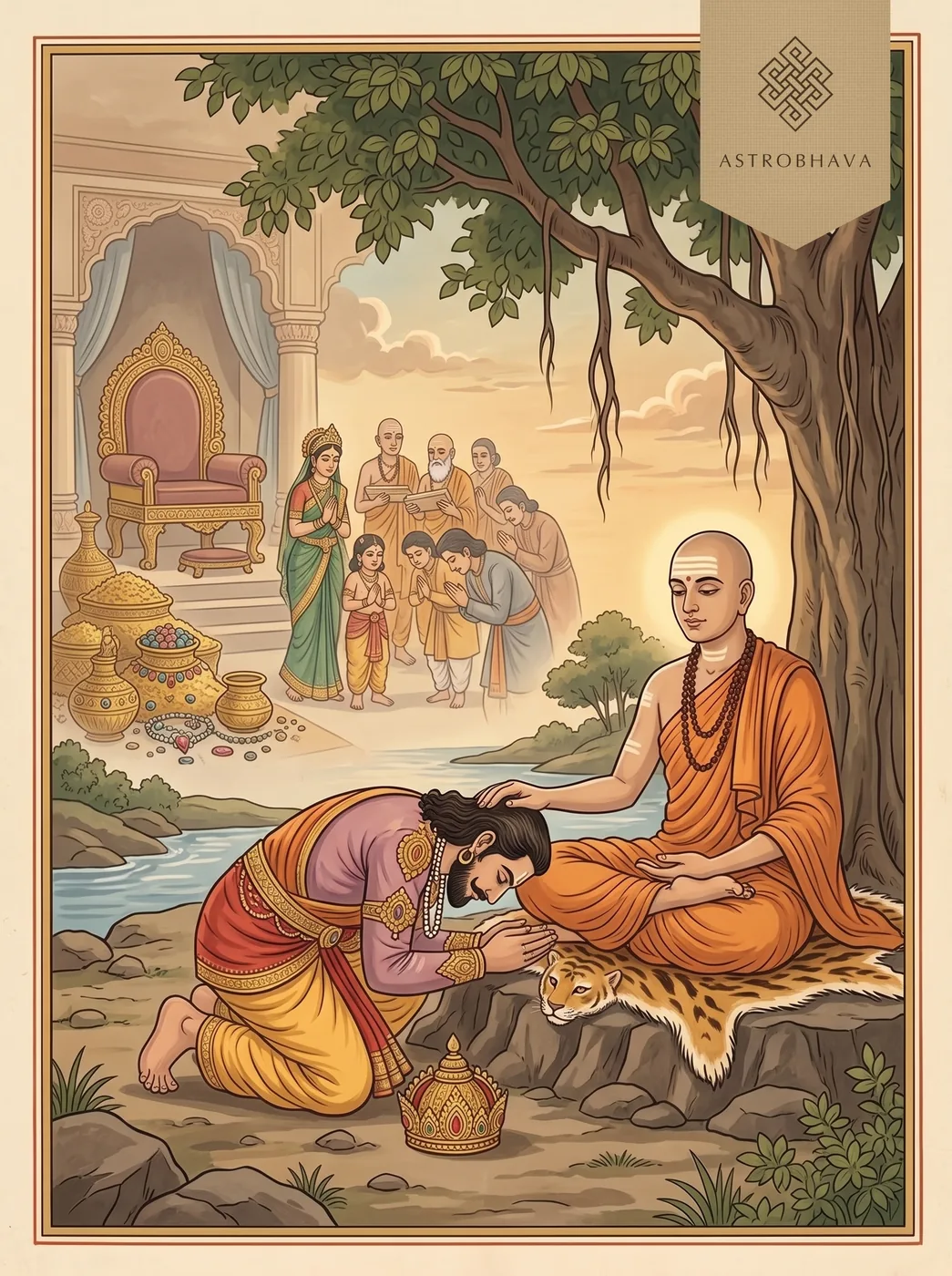
Unlike Bhaja Govindam or the Kanakadhara Stotram, the Guru Ashtakam comes with no widely told account of the day it was composed. What the printed tradition gives instead is a signature. In the second volume of Shankara's hymns issued by the Vani Vilas Press at Srirangam in 1910, the text runs over pages 152 to 154 and ends with a colophon naming it the work of Shankara Bhagavat, the paramahamsa ascetic who was the disciple of Govinda Bhagavatpada. According to Advaita tradition, then, the Guru at whose feet the refrain kneels is Govinda, himself a disciple of Gaudapada, the teacher the young Shankara sought out on the banks of the Narmada. The verses themselves never name him, and their question is put to any seeker about any teacher. The text has also travelled in more than one shape. The 1910 edition and the version kept by the Kanchi Kamakoti Peetham both begin at shariram surupam and close with the verse of benefits, which the 1910 edition numbers ninth. One modern recension places a further verse in front, beginning janmanekashataih and written in a different metre; it is not one of the eight. The reward verse is itself worth reading closely: it names four kinds of reciter, the renunciate, the king, the celibate student and the householder, so that no station of life is left outside the hymn.
The mantra, in six scripts
- शरीरं
- śarīraṃ — body
- सुरूपं
- surūpaṃ — handsome
- तथा
- tathā — likewise
- वा
- vā — or
- कलत्रं
- kalatraṃ — wife
- यशश्चारु
- yaśaścāru — fame, bright
- चित्रं
- citraṃ — varied
- धनं
- dhanaṃ — wealth
- मेरुतुल्यम्
- merutulyam — equal to Mount Meru
- मनश्चेन्न
- manaścenna — if the mind is not
- लग्नं
- lagnaṃ — fixed
- गुरोरङ्घ्रिपद्मे
- guroraṅghripadme — on the Guru's lotus feet
- ततः
- tataḥ — then
- किं
- kiṃ — what
- ततः
- tataḥ — then
- किं
- kiṃ — what
- ततः
- tataḥ — then
- किं
- kiṃ — what
- ततः
- tataḥ — then
- किम्
- kim — what
Guru Ashtakam lyrics in full
Eight verses, each closing on the refrain tatah kim, followed by the verse of benefits.
All 9 verses, in Sanskrit, Tamil, Telugu, Kannada, Malayalam and English, each with its meaning. Choose a script:
Download the Guru Ashtakam PDFAll 9 verses with their meanings, in Sanskrit. Free to print and keep.
शरीरं सुरूपं तथा वा कलत्रं यशश्चारु चित्रं धनं मेरुतुल्यम् ।
मनश्चेन्न लग्नं गुरोरङ्घ्रिपद्मे ततः किं ततः किं ततः किं ततः किम् ॥
ஶரீரம் ஸுரூபம் ததா வா கலத்ரம் யஶஶ்சாரு சித்ரம் தநம் மேருதுல்யம் ।
மநஶ்சேந்ந லக்நம் குரோரங்க்ரிபத்மே ததஃ கிம் ததஃ கிம் ததஃ கிம் ததஃ கிம் ॥
శరీరం సురూపం తథా వా కలత్రం యశశ్చారు చిత్రం ధనం మేరుతుల్యమ్ ।
మనశ్చేన్న లగ్నం గురోరఙ్ఘ్రిపద్మే తతః కిం తతః కిం తతః కిం తతః కిమ్ ॥
ಶರೀರಂ ಸುರೂಪಂ ತಥಾ ವಾ ಕಲತ್ರಂ ಯಶಶ್ಚಾರು ಚಿತ್ರಂ ಧನಂ ಮೇರುತುಲ್ಯಮ್ ।
ಮನಶ್ಚೇನ್ನ ಲಗ್ನಂ ಗುರೋರಙ್ಘ್ರಿಪದ್ಮೇ ತತಃ ಕಿಂ ತತಃ ಕಿಂ ತತಃ ಕಿಂ ತತಃ ಕಿಮ್ ॥
ശരീരം സുരൂപം തഥാ വാ കലത്രം യശശ്ചാരു ചിത്രം ധനം മേരുതുല്യമ് ।
മനശ്ചേന്ന ലഗ്നം ഗുരോരങ്ഘ്രിപദ്മേ തതഃ കിം തതഃ കിം തതഃ കിം തതഃ കിമ് ॥
śarīraṃ surūpaṃ tathā vā kalatraṃ yaśaścāru citraṃ dhanaṃ merutulyam |
manaścenna lagnaṃ guroraṅghripadme tataḥ kiṃ tataḥ kiṃ tataḥ kiṃ tataḥ kim ||
One may have a handsome body, a beautiful wife, bright and varied fame, and wealth as vast as Mount Meru. But if the mind is not fixed on the lotus feet of the Guru, what of it, what of it, what of it, what of it?
कलत्रं धनं पुत्रपौत्रादि सर्वं गृहं बान्धवाः सर्वमेतद्धि जातम् ।
मनश्चेन्न लग्नं गुरोरङ्घ्रिपद्मे ततः किं ततः किं ततः किं ततः किम् ॥
கலத்ரம் தநம் புத்ரபௌத்ராதி ஸர்வம் க்ருஹம் பாந்தவாஃ ஸர்வமேதத்தி ஜாதம் ।
மநஶ்சேந்ந லக்நம் குரோரங்க்ரிபத்மே ததஃ கிம் ததஃ கிம் ததஃ கிம் ததஃ கிம் ॥
కలత్రం ధనం పుత్రపౌత్రాది సర్వం గృహం బాన్ధవాః సర్వమేతద్ధి జాతమ్ ।
మనశ్చేన్న లగ్నం గురోరఙ్ఘ్రిపద్మే తతః కిం తతః కిం తతః కిం తతః కిమ్ ॥
ಕಲತ್ರಂ ಧನಂ ಪುತ್ರಪೌತ್ರಾದಿ ಸರ್ವಂ ಗೃಹಂ ಬಾನ್ಧವಾಃ ಸರ್ವಮೇತದ್ಧಿ ಜಾತಮ್ ।
ಮನಶ್ಚೇನ್ನ ಲಗ್ನಂ ಗುರೋರಙ್ಘ್ರಿಪದ್ಮೇ ತತಃ ಕಿಂ ತತಃ ಕಿಂ ತತಃ ಕಿಂ ತತಃ ಕಿಮ್ ॥
കലത്രം ധനം പുത്രപൌത്രാദി സര്വം ഗൃഹം ബാന്ധവാഃ സര്വമേതദ്ധി ജാതമ് ।
മനശ്ചേന്ന ലഗ്നം ഗുരോരങ്ഘ്രിപദ്മേ തതഃ കിം തതഃ കിം തതഃ കിം തതഃ കിമ് ॥
kalatraṃ dhanaṃ putrapautrādi sarvaṃ gṛhaṃ bāndhavāḥ sarvametaddhi jātam |
manaścenna lagnaṃ guroraṅghripadme tataḥ kiṃ tataḥ kiṃ tataḥ kiṃ tataḥ kim ||
Wife, wealth, sons, grandsons and all the rest, a home and relatives - all of this may have come to one. But if the mind is not fixed on the lotus feet of the Guru, what of it, what of it, what of it, what of it?
षडङ्गादिवेदो मुखे शास्त्रविद्या कवित्वादि गद्यं सुपद्यं करोति ।
मनश्चेन्न लग्नं गुरोरङ्घ्रिपद्मे ततः किं ततः किं ततः किं ततः किम् ॥
ஷடங்காதிவேதோ முகே ஶாஸ்த்ரவித்யா கவித்வாதி கத்யம் ஸுபத்யம் கரோதி ।
மநஶ்சேந்ந லக்நம் குரோரங்க்ரிபத்மே ததஃ கிம் ததஃ கிம் ததஃ கிம் ததஃ கிம் ॥
షడఙ్గాదివేదో ముఖే శాస్త్రవిద్యా కవిత్వాది గద్యం సుపద్యం కరోతి ।
మనశ్చేన్న లగ్నం గురోరఙ్ఘ్రిపద్మే తతః కిం తతః కిం తతః కిం తతః కిమ్ ॥
ಷಡಙ್ಗಾದಿವೇದೋ ಮುಖೇ ಶಾಸ್ತ್ರವಿದ್ಯಾ ಕವಿತ್ವಾದಿ ಗದ್ಯಂ ಸುಪದ್ಯಂ ಕರೋತಿ ।
ಮನಶ್ಚೇನ್ನ ಲಗ್ನಂ ಗುರೋರಙ್ಘ್ರಿಪದ್ಮೇ ತತಃ ಕಿಂ ತತಃ ಕಿಂ ತತಃ ಕಿಂ ತತಃ ಕಿಮ್ ॥
ഷഡങ്ഗാദിവേദോ മുഖേ ശാസ്ത്രവിദ്യാ കവിത്വാദി ഗദ്യം സുപദ്യം കരോതി ।
മനശ്ചേന്ന ലഗ്നം ഗുരോരങ്ഘ്രിപദ്മേ തതഃ കിം തതഃ കിം തതഃ കിം തതഃ കിമ് ॥
ṣaḍaṅgādivedo mukhe śāstravidyā kavitvādi gadyaṃ supadyaṃ karoti |
manaścenna lagnaṃ guroraṅghripadme tataḥ kiṃ tataḥ kiṃ tataḥ kiṃ tataḥ kim ||
The Vedas with their six limbs and the learning of the shastras may be on one's lips, and one may have the gift of poetry and compose fine prose and verse. But if the mind is not fixed on the lotus feet of the Guru, what of it, what of it, what of it, what of it?
विदेशेषु मान्यः स्वदेशेषु धन्यः सदाचारवृत्तेषु मत्तो न चान्यः ।
मनश्चेन्न लग्नं गुरोरङ्घ्रिपद्मे ततः किं ततः किं ततः किं ततः किम् ॥
விதேஶேஷு மாந்யஃ ஸ்வதேஶேஷு தந்யஃ ஸதாசாரவ்ருத்தேஷு மத்தோ ந சாந்யஃ ।
மநஶ்சேந்ந லக்நம் குரோரங்க்ரிபத்மே ததஃ கிம் ததஃ கிம் ததஃ கிம் ததஃ கிம் ॥
విదేశేషు మాన్యః స్వదేశేషు ధన్యః సదాచారవృత్తేషు మత్తో న చాన్యః ।
మనశ్చేన్న లగ్నం గురోరఙ్ఘ్రిపద్మే తతః కిం తతః కిం తతః కిం తతః కిమ్ ॥
ವಿದೇಶೇಷು ಮಾನ್ಯಃ ಸ್ವದೇಶೇಷು ಧನ್ಯಃ ಸದಾಚಾರವೃತ್ತೇಷು ಮತ್ತೋ ನ ಚಾನ್ಯಃ ।
ಮನಶ್ಚೇನ್ನ ಲಗ್ನಂ ಗುರೋರಙ್ಘ್ರಿಪದ್ಮೇ ತತಃ ಕಿಂ ತತಃ ಕಿಂ ತತಃ ಕಿಂ ತತಃ ಕಿಮ್ ॥
വിദേശേഷു മാന്യഃ സ്വദേശേഷു ധന്യഃ സദാചാരവൃത്തേഷു മത്തോ ന ചാന്യഃ ।
മനശ്ചേന്ന ലഗ്നം ഗുരോരങ്ഘ്രിപദ്മേ തതഃ കിം തതഃ കിം തതഃ കിം തതഃ കിമ് ॥
videśeṣu mānyaḥ svadeśeṣu dhanyaḥ sadācāravṛtteṣu matto na cānyaḥ |
manaścenna lagnaṃ guroraṅghripadme tataḥ kiṃ tataḥ kiṃ tataḥ kiṃ tataḥ kim ||
One may be honoured in foreign lands and fortunate in one's own, and think that in good conduct no one surpasses oneself. But if the mind is not fixed on the lotus feet of the Guru, what of it, what of it, what of it, what of it?
क्षमामण्डले भूपभूपालवृन्दैः सदा सेवितं यस्य पादारविन्दम् ।
मनश्चेन्न लग्नं गुरोरङ्घ्रिपद्मे ततः किं ततः किं ततः किं ततः किम् ॥
க்ஷமாமண்டலே பூபபூபாலவ்ருந்தைஃ ஸதா ஸேவிதம் யஸ்ய பாதாரவிந்தம் ।
மநஶ்சேந்ந லக்நம் குரோரங்க்ரிபத்மே ததஃ கிம் ததஃ கிம் ததஃ கிம் ததஃ கிம் ॥
క్షమామణ్డలే భూపభూపాలవృన్దైః సదా సేవితం యస్య పాదారవిన్దమ్ ।
మనశ్చేన్న లగ్నం గురోరఙ్ఘ్రిపద్మే తతః కిం తతః కిం తతః కిం తతః కిమ్ ॥
ಕ್ಷಮಾಮಣ್ಡಲೇ ಭೂಪಭೂಪಾಲವೃನ್ದೈಃ ಸದಾ ಸೇವಿತಂ ಯಸ್ಯ ಪಾದಾರವಿನ್ದಮ್ ।
ಮನಶ್ಚೇನ್ನ ಲಗ್ನಂ ಗುರೋರಙ್ಘ್ರಿಪದ್ಮೇ ತತಃ ಕಿಂ ತತಃ ಕಿಂ ತತಃ ಕಿಂ ತತಃ ಕಿಮ್ ॥
ക്ഷമാമണ്ഡലേ ഭൂപഭൂപാലവൃന്ദൈഃ സദാ സേവിതം യസ്യ പാദാരവിന്ദമ് ।
മനശ്ചേന്ന ലഗ്നം ഗുരോരങ്ഘ്രിപദ്മേ തതഃ കിം തതഃ കിം തതഃ കിം തതഃ കിമ് ॥
kṣamāmaṇḍale bhūpabhūpālavṛndaiḥ sadā sevitaṃ yasya pādāravindam |
manaścenna lagnaṃ guroraṅghripadme tataḥ kiṃ tataḥ kiṃ tataḥ kiṃ tataḥ kim ||
One's lotus feet may be served at all times by hosts of kings and rulers across the earth. But if the mind is not fixed on the lotus feet of the Guru, what of it, what of it, what of it, what of it?
यशो मे गतं दिक्षु दानप्रतापाज्जगद्वस्तु सर्वं करे यत्प्रसादात् ।
मनश्चेन्न लग्नं गुरोरङ्घ्रिपद्मे ततः किं ततः किं ततः किं ततः किम् ॥
யஶோ மே கதம் திக்ஷு தாநப்ரதாபாஜ்ஜகத்வஸ்து ஸர்வம் கரே யத்ப்ரஸாதாத் ।
மநஶ்சேந்ந லக்நம் குரோரங்க்ரிபத்மே ததஃ கிம் ததஃ கிம் ததஃ கிம் ததஃ கிம் ॥
యశో మే గతం దిక్షు దానప్రతాపాజ్జగద్వస్తు సర్వం కరే యత్ప్రసాదాత్ ।
మనశ్చేన్న లగ్నం గురోరఙ్ఘ్రిపద్మే తతః కిం తతః కిం తతః కిం తతః కిమ్ ॥
ಯಶೋ ಮೇ ಗತಂ ದಿಕ್ಷು ದಾನಪ್ರತಾಪಾಜ್ಜಗದ್ವಸ್ತು ಸರ್ವಂ ಕರೇ ಯತ್ಪ್ರಸಾದಾತ್ ।
ಮನಶ್ಚೇನ್ನ ಲಗ್ನಂ ಗುರೋರಙ್ಘ್ರಿಪದ್ಮೇ ತತಃ ಕಿಂ ತತಃ ಕಿಂ ತತಃ ಕಿಂ ತತಃ ಕಿಮ್ ॥
യശോ മേ ഗതം ദിക്ഷു ദാനപ്രതാപാജ്ജഗദ്വസ്തു സര്വം കരേ യത്പ്രസാദാത് ।
മനശ്ചേന്ന ലഗ്നം ഗുരോരങ്ഘ്രിപദ്മേ തതഃ കിം തതഃ കിം തതഃ കിം തതഃ കിമ് ॥
yaśo me gataṃ dikṣu dānapratāpājjagadvastu sarvaṃ kare yatprasādāt |
manaścenna lagnaṃ guroraṅghripadme tataḥ kiṃ tataḥ kiṃ tataḥ kiṃ tataḥ kim ||
One may say: my fame has spread in every direction through my generosity and prowess, and every thing in the world is in my hand by its favour. But if the mind is not fixed on the lotus feet of the Guru, what of it, what of it, what of it, what of it?
न भोगे न योगे न वा वाजिराजौ न कान्तामुखे नैव वित्तेषु चित्तम् ।
मनश्चेन्न लग्नं गुरोरङ्घ्रिपद्मे ततः किं ततः किं ततः किं ततः किम् ॥
ந போகே ந யோகே ந வா வாஜிராஜௌ ந காந்தாமுகே நைவ வித்தேஷு சித்தம் ।
மநஶ்சேந்ந லக்நம் குரோரங்க்ரிபத்மே ததஃ கிம் ததஃ கிம் ததஃ கிம் ததஃ கிம் ॥
న భోగే న యోగే న వా వాజిరాజౌ న కాన్తాముఖే నైవ విత్తేషు చిత్తమ్ ।
మనశ్చేన్న లగ్నం గురోరఙ్ఘ్రిపద్మే తతః కిం తతః కిం తతః కిం తతః కిమ్ ॥
ನ ಭೋಗೇ ನ ಯೋಗೇ ನ ವಾ ವಾಜಿರಾಜೌ ನ ಕಾನ್ತಾಮುಖೇ ನೈವ ವಿತ್ತೇಷು ಚಿತ್ತಮ್ ।
ಮನಶ್ಚೇನ್ನ ಲಗ್ನಂ ಗುರೋರಙ್ಘ್ರಿಪದ್ಮೇ ತತಃ ಕಿಂ ತತಃ ಕಿಂ ತತಃ ಕಿಂ ತತಃ ಕಿಮ್ ॥
ന ഭോഗേ ന യോഗേ ന വാ വാജിരാജൌ ന കാന്താമുഖേ നൈവ വിത്തേഷു ചിത്തമ് ।
മനശ്ചേന്ന ലഗ്നം ഗുരോരങ്ഘ്രിപദ്മേ തതഃ കിം തതഃ കിം തതഃ കിം തതഃ കിമ് ॥
na bhoge na yoge na vā vājirājau na kāntāmukhe naiva vitteṣu cittam |
manaścenna lagnaṃ guroraṅghripadme tataḥ kiṃ tataḥ kiṃ tataḥ kiṃ tataḥ kim ||
The mind may cling neither to pleasure nor to yoga, nor to fine horses, nor to a beloved's face, nor to riches. But if the mind is not fixed on the lotus feet of the Guru, what of it, what of it, what of it, what of it?
अरण्ये न वा स्वस्य गेहे न कार्ये न देहे मनो वर्तते मे त्वनर्घ्ये ।
मनश्चेन्न लग्नं गुरोरङ्घ्रिपद्मे ततः किं ततः किं ततः किं ततः किम् ॥
அரண்யே ந வா ஸ்வஸ்ய கேஹே ந கார்யே ந தேஹே மநோ வர்ததே மே த்வநர்க்யே ।
மநஶ்சேந்ந லக்நம் குரோரங்க்ரிபத்மே ததஃ கிம் ததஃ கிம் ததஃ கிம் ததஃ கிம் ॥
అరణ్యే న వా స్వస్య గేహే న కార్యే న దేహే మనో వర్తతే మే త్వనర్ఘ్యే ।
మనశ్చేన్న లగ్నం గురోరఙ్ఘ్రిపద్మే తతః కిం తతః కిం తతః కిం తతః కిమ్ ॥
ಅರಣ್ಯೇ ನ ವಾ ಸ್ವಸ್ಯ ಗೇಹೇ ನ ಕಾರ್ಯೇ ನ ದೇಹೇ ಮನೋ ವರ್ತತೇ ಮೇ ತ್ವನರ್ಘ್ಯೇ ।
ಮನಶ್ಚೇನ್ನ ಲಗ್ನಂ ಗುರೋರಙ್ಘ್ರಿಪದ್ಮೇ ತತಃ ಕಿಂ ತತಃ ಕಿಂ ತತಃ ಕಿಂ ತತಃ ಕಿಮ್ ॥
അരണ്യേ ന വാ സ്വസ്യ ഗേഹേ ന കാര്യേ ന ദേഹേ മനോ വര്തതേ മേ ത്വനര്ഘ്യേ ।
മനശ്ചേന്ന ലഗ്നം ഗുരോരങ്ഘ്രിപദ്മേ തതഃ കിം തതഃ കിം തതഃ കിം തതഃ കിമ് ॥
araṇye na vā svasya gehe na kārye na dehe mano vartate me tvanarghye |
manaścenna lagnaṃ guroraṅghripadme tataḥ kiṃ tataḥ kiṃ tataḥ kiṃ tataḥ kim ||
My mind may dwell neither in the forest nor in my own home, neither in work to be done nor in the body, nor in anything precious. But if the mind is not fixed on the lotus feet of the Guru, what of it, what of it, what of it, what of it?
गुरोरष्टकं यः पठेत्पुण्यदेही यतिर्भूपतिर्ब्रह्मचारी च गेही ।
लभेद्वाञ्छितार्थं पदं ब्रह्मसंज्ञं गुरोरुक्तवाक्ये मनो यस्य लग्नम् ॥
குரோரஷ்டகம் யஃ படேத்புண்யதேஹீ யதிர்பூபதிர்ப்ரஹ்மசாரீ ச கேஹீ ।
லபேத்வாஞ்சிதார்தம் பதம் ப்ரஹ்மஸம்ஜ்ஞம் குரோருக்தவாக்யே மநோ யஸ்ய லக்நம் ॥
గురోరష్టకం యః పఠేత్పుణ్యదేహీ యతిర్భూపతిర్బ్రహ్మచారీ చ గేహీ ।
లభేద్వాఞ్ఛితార్థం పదం బ్రహ్మసంజ్ఞం గురోరుక్తవాక్యే మనో యస్య లగ్నమ్ ॥
ಗುರೋರಷ್ಟಕಂ ಯಃ ಪಠೇತ್ಪುಣ್ಯದೇಹೀ ಯತಿರ್ಭೂಪತಿರ್ಬ್ರಹ್ಮಚಾರೀ ಚ ಗೇಹೀ ।
ಲಭೇದ್ವಾಞ್ಛಿತಾರ್ಥಂ ಪದಂ ಬ್ರಹ್ಮಸಂಜ್ಞಂ ಗುರೋರುಕ್ತವಾಕ್ಯೇ ಮನೋ ಯಸ್ಯ ಲಗ್ನಮ್ ॥
ഗുരോരഷ്ടകം യഃ പഠേത്പുണ്യദേഹീ യതിര്ഭൂപതിര്ബ്രഹ്മചാരീ ച ഗേഹീ ।
ലഭേദ്വാഞ്ഛിതാര്ഥം പദം ബ്രഹ്മസംജ്ഞം ഗുരോരുക്തവാക്യേ മനോ യസ്യ ലഗ്നമ് ॥
guroraṣṭakaṃ yaḥ paṭhetpuṇyadehī yatirbhūpatirbrahmacārī ca gehī |
labhedvāñchitārthaṃ padaṃ brahmasaṃjñaṃ guroruktavākye mano yasya lagnam ||
Whoever, blessed with merit, recites this octad on the Guru - whether a renunciate, a king, a celibate student or a householder - and whose mind is fixed on the words spoken by the Guru: the verse says such a person attains the desired goal, the state called Brahman.
The syllable people get wrong
In guroraṅghripadme, 'on the Guru's lotus feet', the word aṅghri (foot) has a nasal made at the back of the mouth followed by an aspirated gh, so it sounds like 'ung-ghri' with a puff of breath after the g. It is often flattened to 'angri' or 'anjri', which loses the aspiration and turns the foot into a different sound altogether.
When the Guru Ashtakam is chanted
Festival. Guru Purnima
Questions
Have your chart read before you decide
Chanting is yours to do, and free. But which deity your situation calls for — and whether a mantra alone is the right response — depends on your chart. Sometimes it is; sometimes it is not.
- Over 30 years in the Guru–Sishya Parampara, from the age of five
- He reads every chart himself — 60 minutes, one to one, never delegated
- Charts are read only between sunrise and sunset, following tradition
