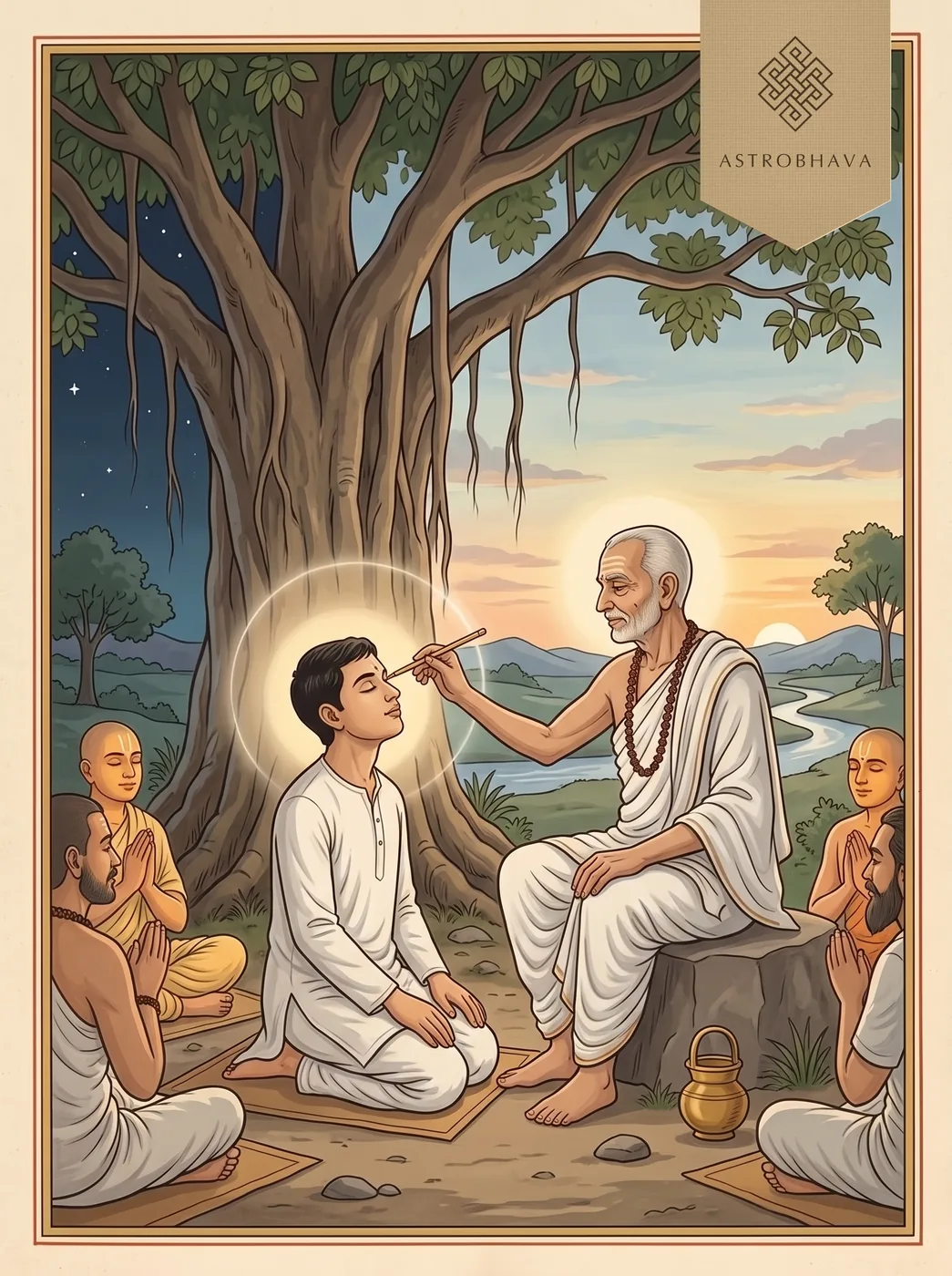
Guru Stotram
अखण्डमण्डलाकारं व्याप्तं येन चराचरम् । तत्पदं दर्शितं येन तस्मै श्रीगुरवे नमः ॥Also known as Akhanda Mandalakaram
In Devanagari, Tamil, Telugu, Kannada, Malayalam and English — with the meaning of every word, and the one syllable most people pronounce wrongly.
 A reading of your birth chartBook →
What the Guru Stotram is
The Guru Stotram, the salutation that opens 'Akhanda mandalakaram vyaptam yena characharam', is a chain of verses drawn from the Guru Gita, the passage in which Shiva answers Parvati about the spiritual teacher. Thirteen of its verses close on one refrain, tasmai shri gurave namah, 'salutations to that revered Guru', while each first line names something different the Guru shows or is. The opening verses move from vision to identity: the Guru reveals the state that pervades everything, opens eyes shut by ignorance, and is named Brahma, Vishnu and Maheshvara. The middle verses turn to Vedanta, calling the Guru the sun that opens the lotus of the Upanishads and one who stands beyond bindu, nada and kala. Verse 14, Brahmanandam, changes to a longer metre and a run of epithets ending sadgurum tam namami. The close is Tvameva Mata, a verse also chanted widely on its own, which calls the Guru mother, father, kin, friend, learning and wealth.
A garland lifted from Shiva's reply
According to tradition, the Guru Gita belongs to the Uttara Khanda of the Skanda Purana and is ascribed to Vyasa; another view places it in the Vishvasara Tantra. It is framed as a conversation between Uma and Maheshvara. Parvati asks which path brings an embodied being to Brahman, and Shiva replies that no one has put this question to him before, that the answer will serve all people, and then speaks at length about the teacher. Recensions of the Guru Gita differ widely, from about a hundred verses to more than four hundred; one printing runs to 274. The Guru Stotram is not a single passage from that reply but a selection rearranged. In the 274-verse printing, the verse on the salve of knowledge comes just before the verse on the unbroken circle, and Brahmanandam stands in the second chapter; the stotram reverses the first pair so that it opens on the vision of the whole. It also reads gurureva param brahma, 'the Guru alone is the supreme Brahman', where the Guru Gita has guruh sakshat. In Vedanta study classes the stotram is chanted before a discourse, and students learn it as the opening of every study session.
The mantra, in six scripts
- अखण्डमण्डलाकारं
- akhaṇḍamaṇḍalākāraṃ — shaped as an unbroken circle
- व्याप्तं
- vyāptaṃ — pervaded
- येन
- yena — by which
- चराचरम्
- carācaram — all that moves and does not move
- तत्पदं
- tatpadaṃ — that state
- दर्शितं
- darśitaṃ — was shown
- येन
- yena — by whom
- तस्मै
- tasmai — to that
- श्रीगुरवे
- śrīgurave — revered Guru
- नमः
- namaḥ — salutations
Guru Stotram lyrics in full
Fifteen verses: thirteen ending in the salutation to the Guru, then Brahmanandam and Tvameva Mata.
All 15 verses, in Sanskrit, Tamil, Telugu, Kannada, Malayalam and English, each with its meaning. Choose a script:
Download the Guru Stotram PDFAll 15 verses with their meanings, in Sanskrit. Free to print and keep.
अखण्डमण्डलाकारं व्याप्तं येन चराचरम् ।
तत्पदं दर्शितं येन तस्मै श्रीगुरवे नमः ॥
அகண்டமண்டலாகாரம் வ்யாப்தம் யேந சராசரம் ।
தத்பதம் தர்ஶிதம் யேந தஸ்மை ஶ்ரீகுரவே நமஃ ॥
అఖణ్డమణ్డలాకారం వ్యాప్తం యేన చరాచరమ్ ।
తత్పదం దర్శితం యేన తస్మై శ్రీగురవే నమః ॥
ಅಖಣ್ಡಮಣ್ಡಲಾಕಾರಂ ವ್ಯಾಪ್ತಂ ಯೇನ ಚರಾಚರಮ್ ।
ತತ್ಪದಂ ದರ್ಶಿತಂ ಯೇನ ತಸ್ಮೈ ಶ್ರೀಗುರವೇ ನಮಃ ॥
അഖണ്ഡമണ്ഡലാകാരം വ്യാപ്തം യേന ചരാചരമ് ।
തത്പദം ദര്ശിതം യേന തസ്മൈ ശ്രീഗുരവേ നമഃ ॥
akhaṇḍamaṇḍalākāraṃ vyāptaṃ yena carācaram |
tatpadaṃ darśitaṃ yena tasmai śrīgurave namaḥ ||
Salutations to that revered Guru who showed me that state, the undivided whole shaped like a complete circle, by which everything moving and unmoving is pervaded.
अज्ञानतिमिरान्धस्य ज्ञानाञ्जनशलाकया ।
चक्षुरुन्मीलितं येन तस्मै श्रीगुरवे नमः ॥
அஜ்ஞாநதிமிராந்தஸ்ய ஜ்ஞாநாஞ்ஜநஶலாகயா ।
சக்ஷுருந்மீலிதம் யேந தஸ்மை ஶ்ரீகுரவே நமஃ ॥
అజ్ఞానతిమిరాన్ధస్య జ్ఞానాఞ్జనశలాకయా ।
చక్షురున్మీలితం యేన తస్మై శ్రీగురవే నమః ॥
ಅಜ್ಞಾನತಿಮಿರಾನ್ಧಸ್ಯ ಜ್ಞಾನಾಞ್ಜನಶಲಾಕಯಾ ।
ಚಕ್ಷುರುನ್ಮೀಲಿತಂ ಯೇನ ತಸ್ಮೈ ಶ್ರೀಗುರವೇ ನಮಃ ॥
അജ്ഞാനതിമിരാന്ധസ്യ ജ്ഞാനാഞ്ജനശലാകയാ ।
ചക്ഷുരുന്മീലിതം യേന തസ്മൈ ശ്രീഗുരവേ നമഃ ॥
ajñānatimirāndhasya jñānāñjanaśalākayā |
cakṣurunmīlitaṃ yena tasmai śrīgurave namaḥ ||
Salutations to that revered Guru who, with the needle of the healing salve of knowledge, opened the eyes of one blinded by the darkness of ignorance.
गुरुर्ब्रह्मा गुरुर्विष्णुः गुरुर्देवो महेश्वरः ।
गुरुरेव परं ब्रह्म तस्मै श्रीगुरवे नमः ॥
குருர்ப்ரஹ்மா குருர்விஷ்ணுஃ குருர்தேவோ மஹேஶ்வரஃ ।
குருரேவ பரம் ப்ரஹ்ம தஸ்மை ஶ்ரீகுரவே நமஃ ॥
గురుర్బ్రహ్మా గురుర్విష్ణుః గురుర్దేవో మహేశ్వరః ।
గురురేవ పరం బ్రహ్మ తస్మై శ్రీగురవే నమః ॥
ಗುರುರ್ಬ್ರಹ್ಮಾ ಗುರುರ್ವಿಷ್ಣುಃ ಗುರುರ್ದೇವೋ ಮಹೇಶ್ವರಃ ।
ಗುರುರೇವ ಪರಂ ಬ್ರಹ್ಮ ತಸ್ಮೈ ಶ್ರೀಗುರವೇ ನಮಃ ॥
ഗുരുര്ബ്രഹ്മാ ഗുരുര്വിഷ്ണുഃ ഗുരുര്ദേവോ മഹേശ്വരഃ ।
ഗുരുരേവ പരം ബ്രഹ്മ തസ്മൈ ശ്രീഗുരവേ നമഃ ॥
gururbrahmā gururviṣṇuḥ gururdevo maheśvaraḥ |
gurureva paraṃ brahma tasmai śrīgurave namaḥ ||
The Guru is Brahma, the Guru is Vishnu, the Guru is the god Maheshvara (Shiva). The Guru alone is the supreme Brahman; salutations to that revered Guru.
स्थावरं जङ्गमं व्याप्तं यत्किञ्चित्सचराचरम् ।
तत्पदं दर्शितं येन तस्मै श्रीगुरवे नमः ॥
ஸ்தாவரம் ஜங்கமம் வ்யாப்தம் யத்கிஞ்சித்ஸசராசரம் ।
தத்பதம் தர்ஶிதம் யேந தஸ்மை ஶ்ரீகுரவே நமஃ ॥
స్థావరం జఙ్గమం వ్యాప్తం యత్కిఞ్చిత్సచరాచరమ్ ।
తత్పదం దర్శితం యేన తస్మై శ్రీగురవే నమః ॥
ಸ್ಥಾವರಂ ಜಙ್ಗಮಂ ವ್ಯಾಪ್ತಂ ಯತ್ಕಿಞ್ಚಿತ್ಸಚರಾಚರಮ್ ।
ತತ್ಪದಂ ದರ್ಶಿತಂ ಯೇನ ತಸ್ಮೈ ಶ್ರೀಗುರವೇ ನಮಃ ॥
സ്ഥാവരം ജങ്ഗമം വ്യാപ്തം യത്കിഞ്ചിത്സചരാചരമ് ।
തത്പദം ദര്ശിതം യേന തസ്മൈ ശ്രീഗുരവേ നമഃ ॥
sthāvaraṃ jaṅgamaṃ vyāptaṃ yatkiñcitsacarācaram |
tatpadaṃ darśitaṃ yena tasmai śrīgurave namaḥ ||
Salutations to that revered Guru who showed me that state which pervades whatever exists, the fixed and the moving, the animate and the inanimate.
चिन्मयं व्यापि यत्सर्वं त्रैलोक्यं सचराचरम् ।
तत्पदं दर्शितं येन तस्मै श्रीगुरवे नमः ॥
சிந்மயம் வ்யாபி யத்ஸர்வம் த்ரைலோக்யம் ஸசராசரம் ।
தத்பதம் தர்ஶிதம் யேந தஸ்மை ஶ்ரீகுரவே நமஃ ॥
చిన్మయం వ్యాపి యత్సర్వం త్రైలోక్యం సచరాచరమ్ ।
తత్పదం దర్శితం యేన తస్మై శ్రీగురవే నమః ॥
ಚಿನ್ಮಯಂ ವ್ಯಾಪಿ ಯತ್ಸರ್ವಂ ತ್ರೈಲೋಕ್ಯಂ ಸಚರಾಚರಮ್ ।
ತತ್ಪದಂ ದರ್ಶಿತಂ ಯೇನ ತಸ್ಮೈ ಶ್ರೀಗುರವೇ ನಮಃ ॥
ചിന്മയം വ്യാപി യത്സര്വം ത്രൈലോക്യം സചരാചരമ് ।
തത്പദം ദര്ശിതം യേന തസ്മൈ ശ്രീഗുരവേ നമഃ ॥
cinmayaṃ vyāpi yatsarvaṃ trailokyaṃ sacarācaram |
tatpadaṃ darśitaṃ yena tasmai śrīgurave namaḥ ||
Salutations to that revered Guru who showed me that state, made of pure consciousness, which pervades all three worlds with everything moving and unmoving in them.
सर्वश्रुतिशिरोरत्नविराजितपदाम्बुजः ।
वेदान्ताम्बुजसूर्यो यः तस्मै श्रीगुरवे नमः ॥
ஸர்வஶ்ருதிஶிரோரத்நவிராஜிதபதாம்புஜஃ ।
வேதாந்தாம்புஜஸூர்யோ யஃ தஸ்மை ஶ்ரீகுரவே நமஃ ॥
సర్వశ్రుతిశిరోరత్నవిరాజితపదామ్బుజః ।
వేదాన్తామ్బుజసూర్యో యః తస్మై శ్రీగురవే నమః ॥
ಸರ್ವಶ್ರುತಿಶಿರೋರತ್ನವಿರಾಜಿತಪದಾಮ್ಬುಜಃ ।
ವೇದಾನ್ತಾಮ್ಬುಜಸೂರ್ಯೋ ಯಃ ತಸ್ಮೈ ಶ್ರೀಗುರವೇ ನಮಃ ॥
സര്വശ്രുതിശിരോരത്നവിരാജിതപദാമ്ബുജഃ ।
വേദാന്താമ്ബുജസൂര്യോ യഃ തസ്മൈ ശ്രീഗുരവേ നമഃ ॥
sarvaśrutiśiroratnavirājitapadāmbujaḥ |
vedāntāmbujasūryo yaḥ tasmai śrīgurave namaḥ ||
Salutations to that revered Guru whose lotus feet shine with the crown jewels of all the scriptures (the Upanishads), and who is the sun that makes the lotus of Vedanta bloom.
चैतन्यः शाश्वतः शान्तो व्योमातीतो निरञ्जनः ।
बिन्दुनादकलातीतः तस्मै श्रीगुरवे नमः ॥
சைதந்யஃ ஶாஶ்வதஃ ஶாந்தோ வ்யோமாதீதோ நிரஞ்ஜநஃ ।
பிந்துநாதகலாதீதஃ தஸ்மை ஶ்ரீகுரவே நமஃ ॥
చైతన్యః శాశ్వతః శాన్తో వ్యోమాతీతో నిరఞ్జనః ।
బిన్దునాదకలాతీతః తస్మై శ్రీగురవే నమః ॥
ಚೈತನ್ಯಃ ಶಾಶ್ವತಃ ಶಾನ್ತೋ ವ್ಯೋಮಾತೀತೋ ನಿರಞ್ಜನಃ ।
ಬಿನ್ದುನಾದಕಲಾತೀತಃ ತಸ್ಮೈ ಶ್ರೀಗುರವೇ ನಮಃ ॥
ചൈതന്യഃ ശാശ്വതഃ ശാന്തോ വ്യോമാതീതോ നിരഞ്ജനഃ ।
ബിന്ദുനാദകലാതീതഃ തസ്മൈ ശ്രീഗുരവേ നമഃ ॥
caitanyaḥ śāśvataḥ śānto vyomātīto nirañjanaḥ |
bindunādakalātītaḥ tasmai śrīgurave namaḥ ||
Salutations to that revered Guru who is pure awareness, eternal and peaceful, beyond space and without stain, and beyond bindu, nada and kala.
ज्ञानशक्तिसमारूढः तत्त्वमालाविभूषितः ।
भुक्तिमुक्तिप्रदाता च तस्मै श्रीगुरवे नमः ॥
ஜ்ஞாநஶக்திஸமாரூடஃ தத்த்வமாலாவிபூஷிதஃ ।
புக்திமுக்திப்ரதாதா ச தஸ்மை ஶ்ரீகுரவே நமஃ ॥
జ్ఞానశక్తిసమారూఢః తత్త్వమాలావిభూషితః ।
భుక్తిముక్తిప్రదాతా చ తస్మై శ్రీగురవే నమః ॥
ಜ್ಞಾನಶಕ್ತಿಸಮಾರೂಢಃ ತತ್ತ್ವಮಾಲಾವಿಭೂಷಿತಃ ।
ಭುಕ್ತಿಮುಕ್ತಿಪ್ರದಾತಾ ಚ ತಸ್ಮೈ ಶ್ರೀಗುರವೇ ನಮಃ ॥
ജ്ഞാനശക്തിസമാരൂഢഃ തത്ത്വമാലാവിഭൂഷിതഃ ।
ഭുക്തിമുക്തിപ്രദാതാ ച തസ്മൈ ശ്രീഗുരവേ നമഃ ॥
jñānaśaktisamārūḍhaḥ tattvamālāvibhūṣitaḥ |
bhuktimuktipradātā ca tasmai śrīgurave namaḥ ||
Salutations to that revered Guru who is established in the power of knowledge, adorned with the garland of the principles of truth, and who grants both worldly enjoyment and liberation.
अनेकजन्मसम्प्राप्तकर्मबन्धविदाहिने ।
आत्मज्ञानप्रदानेन तस्मै श्रीगुरवे नमः ॥
அநேகஜந்மஸம்ப்ராப்தகர்மபந்தவிதாஹிநே ।
ஆத்மஜ்ஞாநப்ரதாநேந தஸ்மை ஶ்ரீகுரவே நமஃ ॥
అనేకజన్మసమ్ప్రాప్తకర్మబన్ధవిదాహినే ।
ఆత్మజ్ఞానప్రదానేన తస్మై శ్రీగురవే నమః ॥
ಅನೇಕಜನ್ಮಸಮ್ಪ್ರಾಪ್ತಕರ್ಮಬನ್ಧವಿದಾಹಿನೇ ।
ಆತ್ಮಜ್ಞಾನಪ್ರದಾನೇನ ತಸ್ಮೈ ಶ್ರೀಗುರವೇ ನಮಃ ॥
അനേകജന്മസമ്പ്രാപ്തകര്മബന്ധവിദാഹിനേ ।
ആത്മജ്ഞാനപ്രദാനേന തസ്മൈ ശ്രീഗുരവേ നമഃ ॥
anekajanmasamprāptakarmabandhavidāhine |
ātmajñānapradānena tasmai śrīgurave namaḥ ||
Salutations to that revered Guru who, by granting knowledge of the Self, burns away the bondage of karma gathered over many births.
शोषणं भवसिन्धोश्च ज्ञापनं सारसम्पदः ।
गुरोः पादोदकं सम्यक् तस्मै श्रीगुरवे नमः ॥
ஶோஷணம் பவஸிந்தோஶ்ச ஜ்ஞாபநம் ஸாரஸம்பதஃ ।
குரோஃ பாதோதகம் ஸம்யக் தஸ்மை ஶ்ரீகுரவே நமஃ ॥
శోషణం భవసిన్ధోశ్చ జ్ఞాపనం సారసమ్పదః ।
గురోః పాదోదకం సమ్యక్ తస్మై శ్రీగురవే నమః ॥
ಶೋಷಣಂ ಭವಸಿನ್ಧೋಶ್ಚ ಜ್ಞಾಪನಂ ಸಾರಸಮ್ಪದಃ ।
ಗುರೋಃ ಪಾದೋದಕಂ ಸಮ್ಯಕ್ ತಸ್ಮೈ ಶ್ರೀಗುರವೇ ನಮಃ ॥
ശോഷണം ഭവസിന്ധോശ്ച ജ്ഞാപനം സാരസമ്പദഃ ।
ഗുരോഃ പാദോദകം സമ്യക് തസ്മൈ ശ്രീഗുരവേ നമഃ ॥
śoṣaṇaṃ bhavasindhośca jñāpanaṃ sārasampadaḥ |
guroḥ pādodakaṃ samyak tasmai śrīgurave namaḥ ||
The water that has washed the Guru's feet dries up the ocean of worldly existence and reveals the true wealth that is the essence of all. Salutations to that revered Guru.
न गुरोरधिकं तत्त्वं न गुरोरधिकं तपः ।
तत्त्वज्ञानात् परं नास्ति तस्मै श्रीगुरवे नमः ॥
ந குரோரதிகம் தத்த்வம் ந குரோரதிகம் தபஃ ।
தத்த்வஜ்ஞாநாத் பரம் நாஸ்தி தஸ்மை ஶ்ரீகுரவே நமஃ ॥
న గురోరధికం తత్త్వం న గురోరధికం తపః ।
తత్త్వజ్ఞానాత్ పరం నాస్తి తస్మై శ్రీగురవే నమః ॥
ನ ಗುರೋರಧಿಕಂ ತತ್ತ್ವಂ ನ ಗುರೋರಧಿಕಂ ತಪಃ ।
ತತ್ತ್ವಜ್ಞಾನಾತ್ ಪರಂ ನಾಸ್ತಿ ತಸ್ಮೈ ಶ್ರೀಗುರವೇ ನಮಃ ॥
ന ഗുരോരധികം തത്ത്വം ന ഗുരോരധികം തപഃ ।
തത്ത്വജ്ഞാനാത് പരം നാസ്തി തസ്മൈ ശ്രീഗുരവേ നമഃ ॥
na guroradhikaṃ tattvaṃ na guroradhikaṃ tapaḥ |
tattvajñānāt paraṃ nāsti tasmai śrīgurave namaḥ ||
There is no truth higher than the Guru and no austerity greater than the Guru; nothing is beyond the knowledge of the truth. Salutations to that revered Guru.
मन्नाथः श्रीजगन्नाथः मद्गुरुः श्रीजगद्गुरुः ।
मदात्मा सर्वभूतात्मा तस्मै श्रीगुरवे नमः ॥
மந்நாதஃ ஶ்ரீஜகந்நாதஃ மத்குருஃ ஶ்ரீஜகத்குருஃ ।
மதாத்மா ஸர்வபூதாத்மா தஸ்மை ஶ்ரீகுரவே நமஃ ॥
మన్నాథః శ్రీజగన్నాథః మద్గురుః శ్రీజగద్గురుః ।
మదాత్మా సర్వభూతాత్మా తస్మై శ్రీగురవే నమః ॥
ಮನ್ನಾಥಃ ಶ್ರೀಜಗನ್ನಾಥಃ ಮದ್ಗುರುಃ ಶ್ರೀಜಗದ್ಗುರುಃ ।
ಮದಾತ್ಮಾ ಸರ್ವಭೂತಾತ್ಮಾ ತಸ್ಮೈ ಶ್ರೀಗುರವೇ ನಮಃ ॥
മന്നാഥഃ ശ്രീജഗന്നാഥഃ മദ്ഗുരുഃ ശ്രീജഗദ്ഗുരുഃ ।
മദാത്മാ സര്വഭൂതാത്മാ തസ്മൈ ശ്രീഗുരവേ നമഃ ॥
mannāthaḥ śrījagannāthaḥ madguruḥ śrījagadguruḥ |
madātmā sarvabhūtātmā tasmai śrīgurave namaḥ ||
My Lord is the Lord of the universe, my Guru is the Guru of the world, and my Self is the Self of all beings. Salutations to that revered Guru.
गुरुरादिरनादिश्च गुरुः परमदैवतम् ।
गुरोः परतरं नास्ति तस्मै श्रीगुरवे नमः ॥
குருராதிரநாதிஶ்ச குருஃ பரமதைவதம் ।
குரோஃ பரதரம் நாஸ்தி தஸ்மை ஶ்ரீகுரவே நமஃ ॥
గురురాదిరనాదిశ్చ గురుః పరమదైవతమ్ ।
గురోః పరతరం నాస్తి తస్మై శ్రీగురవే నమః ॥
ಗುರುರಾದಿರನಾದಿಶ್ಚ ಗುರುಃ ಪರಮದೈವತಮ್ ।
ಗುರೋಃ ಪರತರಂ ನಾಸ್ತಿ ತಸ್ಮೈ ಶ್ರೀಗುರವೇ ನಮಃ ॥
ഗുരുരാദിരനാദിശ്ച ഗുരുഃ പരമദൈവതമ് ।
ഗുരോഃ പരതരം നാസ്തി തസ്മൈ ശ്രീഗുരവേ നമഃ ॥
gururādiranādiśca guruḥ paramadaivatam |
guroḥ parataraṃ nāsti tasmai śrīgurave namaḥ ||
The Guru is the beginning and is himself without beginning; the Guru is the highest deity. There is nothing higher than the Guru; salutations to that revered Guru.
ब्रह्मानन्दं परमसुखदं केवलं ज्ञानमूर्तिं द्वन्द्वातीतं गगनसदृशं तत्त्वमस्यादिलक्ष्यम् ।
एकं नित्यं विमलमचलं सर्वधीसाक्षिभूतं भावातीतं त्रिगुणरहितं सद्गुरुं तं नमामि ॥
ப்ரஹ்மாநந்தம் பரமஸுகதம் கேவலம் ஜ்ஞாநமூர்திம் த்வந்த்வாதீதம் ககநஸத்ருஶம் தத்த்வமஸ்யாதிலக்ஷ்யம் ।
ஏகம் நித்யம் விமலமசலம் ஸர்வதீஸாக்ஷிபூதம் பாவாதீதம் த்ரிகுணரஹிதம் ஸத்குரும் தம் நமாமி ॥
బ్రహ్మానన్దం పరమసుఖదం కేవలం జ్ఞానమూర్తిం ద్వన్ద్వాతీతం గగనసదృశం తత్త్వమస్యాదిలక్ష్యమ్ ।
ఏకం నిత్యం విమలమచలం సర్వధీసాక్షిభూతం భావాతీతం త్రిగుణరహితం సద్గురుం తం నమామి ॥
ಬ್ರಹ್ಮಾನನ್ದಂ ಪರಮಸುಖದಂ ಕೇವಲಂ ಜ್ಞಾನಮೂರ್ತಿಂ ದ್ವನ್ದ್ವಾತೀತಂ ಗಗನಸದೃಶಂ ತತ್ತ್ವಮಸ್ಯಾದಿಲಕ್ಷ್ಯಮ್ ।
ಏಕಂ ನಿತ್ಯಂ ವಿಮಲಮಚಲಂ ಸರ್ವಧೀಸಾಕ್ಷಿಭೂತಂ ಭಾವಾತೀತಂ ತ್ರಿಗುಣರಹಿತಂ ಸದ್ಗುರುಂ ತಂ ನಮಾಮಿ ॥
ബ്രഹ്മാനന്ദം പരമസുഖദം കേവലം ജ്ഞാനമൂര്തിം ദ്വന്ദ്വാതീതം ഗഗനസദൃശം തത്ത്വമസ്യാദിലക്ഷ്യമ് ।
ഏകം നിത്യം വിമലമചലം സര്വധീസാക്ഷിഭൂതം ഭാവാതീതം ത്രിഗുണരഹിതം സദ്ഗുരും തം നമാമി ॥
brahmānandaṃ paramasukhadaṃ kevalaṃ jñānamūrtiṃ dvandvātītaṃ gaganasadṛśaṃ tattvamasyādilakṣyam |
ekaṃ nityaṃ vimalamacalaṃ sarvadhīsākṣibhūtaṃ bhāvātītaṃ triguṇarahitaṃ sadguruṃ taṃ namāmi ||
I bow to that true Guru who is the bliss of Brahman and the giver of the highest joy, who is absolute, knowledge in bodily form, beyond the pairs of opposites and vast like the sky, the one pointed to by sayings such as 'That thou art'. He is one, eternal, pure and unmoving, the witness of every mind, beyond all states of becoming and free of the three gunas.
त्वमेव माता च पिता त्वमेव त्वमेव बन्धुश्च सखा त्वमेव ।
त्वमेव विद्या द्रविणं त्वमेव त्वमेव सर्वं मम देवदेव ॥
த்வமேவ மாதா ச பிதா த்வமேவ த்வமேவ பந்துஶ்ச ஸகா த்வமேவ ।
த்வமேவ வித்யா த்ரவிணம் த்வமேவ த்வமேவ ஸர்வம் மம தேவதேவ ॥
త్వమేవ మాతా చ పితా త్వమేవ త్వమేవ బన్ధుశ్చ సఖా త్వమేవ ।
త్వమేవ విద్యా ద్రవిణం త్వమేవ త్వమేవ సర్వం మమ దేవదేవ ॥
ತ್ವಮೇವ ಮಾತಾ ಚ ಪಿತಾ ತ್ವಮೇವ ತ್ವಮೇವ ಬನ್ಧುಶ್ಚ ಸಖಾ ತ್ವಮೇವ ।
ತ್ವಮೇವ ವಿದ್ಯಾ ದ್ರವಿಣಂ ತ್ವಮೇವ ತ್ವಮೇವ ಸರ್ವಂ ಮಮ ದೇವದೇವ ॥
ത്വമേവ മാതാ ച പിതാ ത്വമേവ ത്വമേവ ബന്ധുശ്ച സഖാ ത്വമേവ ।
ത്വമേവ വിദ്യാ ദ്രവിണം ത്വമേവ ത്വമേവ സര്വം മമ ദേവദേവ ॥
tvameva mātā ca pitā tvameva tvameva bandhuśca sakhā tvameva |
tvameva vidyā draviṇaṃ tvameva tvameva sarvaṃ mama devadeva ||
You alone are my mother and you alone my father; you alone are my kinsman and my friend. You alone are my learning and my wealth; you are my everything, O God of gods.
The syllable people get wrong
In jñānāñjanaśalākayā (Verse 2) the compound is jñāna + añjana + śalākayā, so the two a sounds fuse into one long ā (jñā-nāñ-ja-na), and śa begins with the palatal ś, as in 'shut'. It is often clipped to 'gyanan-jana-salakaya', which shortens the vowel that joins knowledge to the salve and turns ś into a plain s.
When the Guru Stotram is chanted
Festival. Guru Purnima
Questions
Have your chart read before you decide
Chanting is yours to do, and free. But which deity your situation calls for — and whether a mantra alone is the right response — depends on your chart. Sometimes it is; sometimes it is not.
- Over 30 years in the Guru–Sishya Parampara, from the age of five
- He reads every chart himself — 60 minutes, one to one, never delegated
- Charts are read only between sunrise and sunset, following tradition
