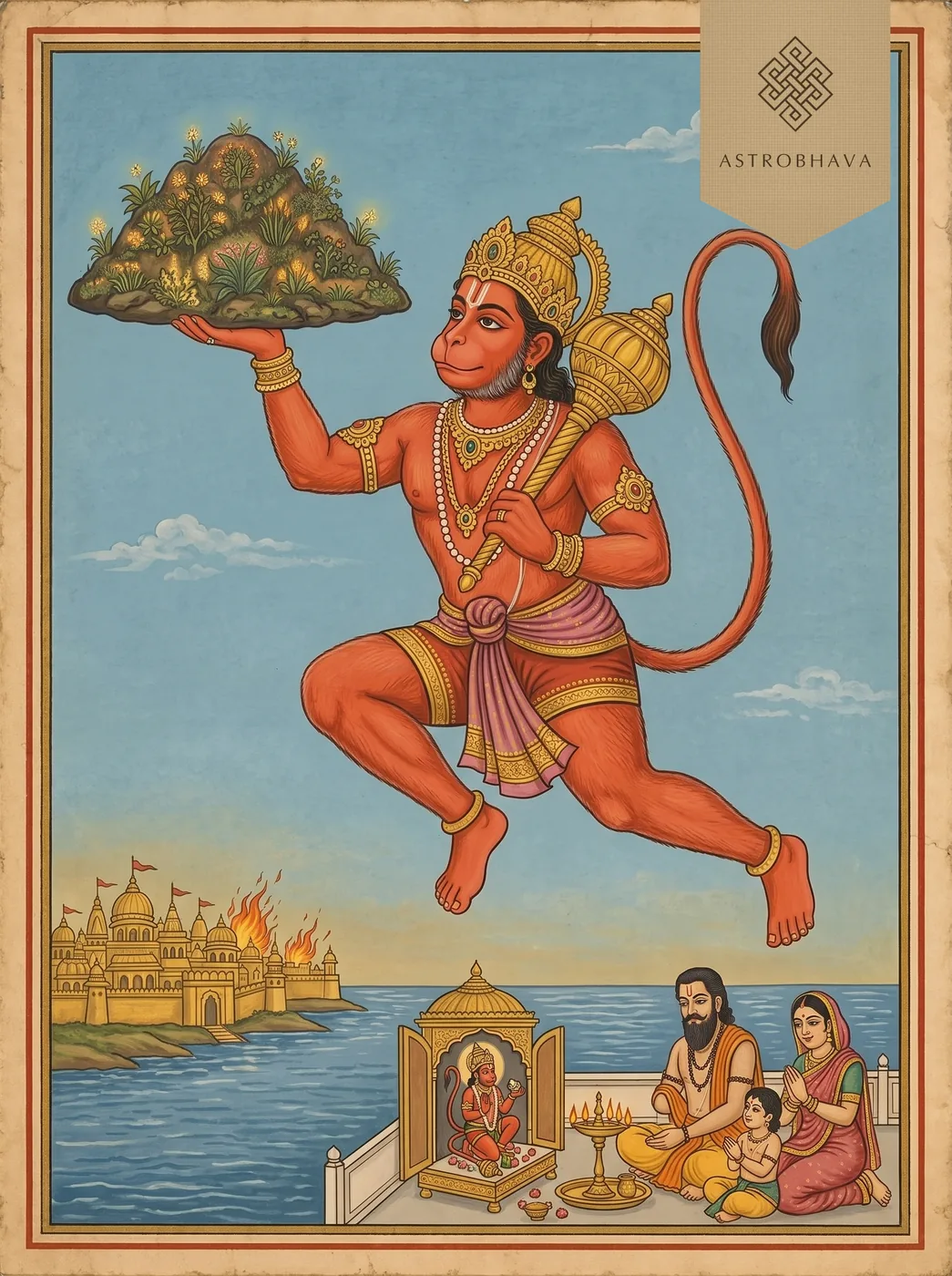
Hanuman Aarti
आरती कीजै हनुमान लला की । दुष्ट दलन रघुनाथ कला की ॥Also known as Aarti Kije Hanuman Lala Ki
In Devanagari, Tamil, Telugu, Kannada, Malayalam and English — with the meaning of every word, and the one syllable most people pronounce wrongly.
What the Hanuman Aarti is
Aarti Kije Hanuman Lala Ki is the Hanuman aarti, the song sung while a lamp is waved before Hanuman. The word aarti, from the Sanskrit aratrika, names both the act of circling the flame and the hymn that goes with it. The text is a traditional North Indian aarti in Hindi with an Awadhi and Braj colouring, and its author is unknown. It is built as a refrain and twelve rhyming couplets. The refrain calls Hanuman 'lala', an affectionate word for a beloved boy, and names him the power of Raghunatha that crushes the wicked. Couplets 1 and 2 describe his strength and his care for the saints. Couplets 3 to 8 run through his deeds in order: the commission from Rama, the burning of Lanka, the Sanjivani herb for Lakshmana and the descent to Patala against Ahiravana. Couplets 9 and 10 turn to the worship itself, ending with his mother Anjana holding the camphor plate. Couplet 11 is the phala line, and couplet 12 is a signature naming Tulsidas.
Ahiravana and the descent to Patala
Most of the deeds in this aarti come from the Ramayana as Valmiki and Tulsidas tell it, but couplet 7 points to an episode found in neither: Hanuman entering Patala, the netherworld, and tearing off the arms of Ahiravana. The fullest early telling is in the Bengali Ramayana of Krittivasa, and later regional versions, including a sixteenth-century Telugu Mairavan charitra, retell it. In this account Ahiravana, also called Mahiravana, rules Patala and is an ally of Ravana. During the war at Lanka he uses sorcery and a sleeping spell to carry Rama and Lakshmana underground, meaning to offer them to his goddess. Hanuman learns the way down from Vibhishana. At the gate of Patala he is challenged by a young guard, Makaradhwaja, who says he is Hanuman's own son, born of a drop of Hanuman's sweat that fell into the sea after Lanka burned; this part of the legend is not in Valmiki, and folk versions differ on the details. Inside, Hanuman takes a five-faced form, puts out five lamps at once and beheads Ahiravana, then crowns Makaradhwaja king of Patala. The aarti compresses all of this into one line about broken guards and torn arms.
The mantra, in six scripts
- आरती
- āratī — lamp-worship, aarti
- कीजै
- kījai — let us perform
- हनुमान
- hanumāna — of Hanuman
- लला
- lalā — beloved boy
- की
- kī — of
- दुष्ट
- duṣṭa — the wicked
- दलन
- dalana — crushing
- रघुनाथ
- raghunātha — of Rama, lord of the Raghus
- कला
- kalā — power, portion
- की
- kī — of
Hanuman Aarti lyrics in full
All 13 verses, in Hindi, Tamil, Telugu, Kannada, Malayalam and English, each with its meaning. Choose a script:
Download the Hanuman Aarti PDFAll 13 verses with their meanings, in Hindi. Free to print and keep.
आरती कीजै हनुमान लला की ।
दुष्ट दलन रघुनाथ कला की ॥
ஆரதீ கீஜை ஹநுமாந லலா கீ ।
துஷ்ட தலந ரகுநாத கலா கீ ॥
ఆరతీ కీజై హనుమాన లలా కీ ।
దుష్ట దలన రఘునాథ కలా కీ ॥
ಆರತೀ ಕೀಜೈ ಹನುಮಾನ ಲಲಾ ಕೀ ।
ದುಷ್ಟ ದಲನ ರಘುನಾಥ ಕಲಾ ಕೀ ॥
ആരതീ കീജൈ ഹനുമാന ലലാ കീ ।
ദുഷ്ട ദലന രഘുനാഥ കലാ കീ ॥
āratī kījai hanumāna lalā kī |
duṣṭa dalana raghunātha kalā kī ||
Let us wave the lamp in worship of beloved Hanuman, the power of Raghunatha (Rama) that crushes the wicked. This refrain is sung at the start and after the stanzas; it is printed once here and not repeated.
जाके बल से गिरिवर कांपे ।
रोग दोष जाके निकट न झांके ॥
ஜாகே பல ஸே கிரிவர காம்பே ।
ரோக தோஷ ஜாகே நிகட ந சாம்கே ॥
జాకే బల సే గిరివర కాంపే ।
రోగ దోష జాకే నికట న ఝాంకే ॥
ಜಾಕೇ ಬಲ ಸೇ ಗಿರಿವರ ಕಾಂಪೇ ।
ರೋಗ ದೋಷ ಜಾಕೇ ನಿಕಟ ನ ಝಾಂಕೇ ॥
ജാകേ ബല സേ ഗിരിവര കാംപേ ।
രോഗ ദോഷ ജാകേ നികട ന ഝാംകേ ॥
jāke bala se girivara kāṃpe |
roga doṣa jāke nikaṭa na jhāṃke ||
By his strength the great mountains tremble; disease and affliction dare not even peep near him.
अंजनि पुत्र महा बलदाई ।
सन्तन के प्रभु सदा सहाई ॥
அம்ஜநி புத்ர மஹா பலதாஈ ।
ஸந்தந கே ப்ரபு ஸதா ஸஹாஈ ॥
అంజని పుత్ర మహా బలదాఈ ।
సన్తన కే ప్రభు సదా సహాఈ ॥
ಅಂಜನಿ ಪುತ್ರ ಮಹಾ ಬಲದಾಈ ।
ಸನ್ತನ ಕೇ ಪ್ರಭು ಸದಾ ಸಹಾಈ ॥
അംജനി പുത്ര മഹാ ബലദാഈ ।
സന്തന കേ പ്രഭു സദാ സഹാഈ ॥
aṃjani putra mahā baladāī |
santana ke prabhu sadā sahāī ||
The son of Anjani is the giver of great strength, the lord of the saints and always their helper.
दे बीरा रघुनाथ पठाए ।
लंका जारि सिया सुधि लाए ॥
தே பீரா ரகுநாத படாஏ ।
லம்கா ஜாரி ஸியா ஸுதி லாஏ ॥
దే బీరా రఘునాథ పఠాఏ ।
లంకా జారి సియా సుధి లాఏ ॥
ದೇ ಬೀರಾ ರಘುನಾಥ ಪಠಾಏ ।
ಲಂಕಾ ಜಾರಿ ಸಿಯಾ ಸುಧಿ ಲಾಏ ॥
ദേ ബീരാ രഘുനാഥ പഠാഏ ।
ലംകാ ജാരി സിയാ സുധി ലാഏ ॥
de bīrā raghunātha paṭhāe |
laṃkā jāri siyā sudhi lāe ||
Raghunatha gave him the betel-leaf token of commission and sent him forth; he burned Lanka and brought back news of Sita.
लंका सो कोट समुद्र-सी खाई ।
जात पवनसुत बार न लाई ॥
லம்கா ஸோ கோட ஸமுத்ர-ஸீ காஈ ।
ஜாத பவநஸுத பார ந லாஈ ॥
లంకా సో కోట సముద్ర-సీ ఖాఈ ।
జాత పవనసుత బార న లాఈ ॥
ಲಂಕಾ ಸೋ ಕೋಟ ಸಮುದ್ರ-ಸೀ ಖಾಈ ।
ಜಾತ ಪವನಸುತ ಬಾರ ನ ಲಾಈ ॥
ലംകാ സോ കോട സമുദ്ര-സീ ഖാഈ ।
ജാത പവനസുത ബാര ന ലാഈ ॥
laṃkā so koṭa samudra-sī khāī |
jāta pavanasuta bāra na lāī ||
Lanka was such a fortress, with an ocean for its moat, yet the son of the Wind took no time at all in going.
लंका जारि असुर संहारे ।
सियारामजी के काज संवारे ॥
லம்கா ஜாரி அஸுர ஸம்ஹாரே ।
ஸியாராமஜீ கே காஜ ஸம்வாரே ॥
లంకా జారి అసుర సంహారే ।
సియారామజీ కే కాజ సంవారే ॥
ಲಂಕಾ ಜಾರಿ ಅಸುರ ಸಂಹಾರೇ ।
ಸಿಯಾರಾಮಜೀ ಕೇ ಕಾಜ ಸಂವಾರೇ ॥
ലംകാ ജാരി അസുര സംഹാരേ ।
സിയാരാമജീ കേ കാജ സംവാരേ ॥
laṃkā jāri asura saṃhāre |
siyārāmajī ke kāja saṃvāre ||
He burned Lanka, slew the demons and accomplished the work of Sita and Rama.
लक्ष्मण मूर्छित पड़े सकारे ।
आनि संजीवन प्राण उबारे ॥
லக்ஷ்மண மூர்சித படே ஸகாரே ।
ஆநி ஸம்ஜீவந ப்ராண உபாரே ॥
లక్ష్మణ మూర్ఛిత పడే సకారే ।
ఆని సంజీవన ప్రాణ ఉబారే ॥
ಲಕ್ಷ್ಮಣ ಮೂರ್ಛಿತ ಪಡೇ ಸಕಾರೇ ।
ಆನಿ ಸಂಜೀವನ ಪ್ರಾಣ ಉಬಾರೇ ॥
ലക്ഷ്മണ മൂര്ഛിത പഡേ സകാരേ ।
ആനി സംജീവന പ്രാണ ഉബാരേ ॥
lakṣmaṇa mūrchita paṛe sakāre |
āni saṃjīvana prāṇa ubāre ||
When Lakshmana lay unconscious, he brought the Sanjivani herb before daybreak and saved his life.
पैठि पताल तोरि जम-कारे ।
अहिरावण की भुजा उखारे ॥
பைடி பதால தோரி ஜம-காரே ।
அஹிராவண கீ புஜா உகாரே ॥
పైఠి పతాల తోరి జమ-కారే ।
అహిరావణ కీ భుజా ఉఖారే ॥
ಪೈಠಿ ಪತಾಲ ತೋರಿ ಜಮ-ಕಾರೇ ।
ಅಹಿರಾವಣ ಕೀ ಭುಜಾ ಉಖಾರೇ ॥
പൈഠി പതാല തോരി ജമ-കാരേ ।
അഹിരാവണ കീ ഭുജാ ഉഖാരേ ॥
paiṭhi patāla tori jama-kāre |
ahirāvaṇa kī bhujā ukhāre ||
Entering the netherworld, he broke through its deathly guards and tore off the arms of Ahiravana.
बाएं भुजा असुरदल मारे ।
दाहिने भुजा संतजन तारे ॥
பாஏம் புஜா அஸுரதல மாரே ।
தாஹிநே புஜா ஸம்தஜந தாரே ॥
బాఏం భుజా అసురదల మారే ।
దాహినే భుజా సంతజన తారే ॥
ಬಾಏಂ ಭುಜಾ ಅಸುರದಲ ಮಾರೇ ।
ದಾಹಿನೇ ಭುಜಾ ಸಂತಜನ ತಾರೇ ॥
ബാഏം ഭുജാ അസുരദല മാരേ ।
ദാഹിനേ ഭുജാ സംതജന താരേ ॥
bāeṃ bhujā asuradala māre |
dāhine bhujā saṃtajana tāre ||
With his left arm he struck down the demon hosts; with his right arm he carried the good across to safety.
सुर नर मुनि आरती उतारें ।
जय जय जय हनुमान उचारें ॥
ஸுர நர முநி ஆரதீ உதாரேம் ।
ஜய ஜய ஜய ஹநுமாந உசாரேம் ॥
సుర నర ముని ఆరతీ ఉతారేం ।
జయ జయ జయ హనుమాన ఉచారేం ॥
ಸುರ ನರ ಮುನಿ ಆರತೀ ಉತಾರೇಂ ।
ಜಯ ಜಯ ಜಯ ಹನುಮಾನ ಉಚಾರೇಂ ॥
സുര നര മുനി ആരതീ ഉതാരേം ।
ജയ ജയ ജയ ഹനുമാന ഉചാരേം ॥
sura nara muni āratī utāreṃ |
jaya jaya jaya hanumāna ucāreṃ ||
Gods, men and sages wave the lamp before him and cry, "Victory, victory, victory to Hanuman!"
कंचन थार कपूर लौ छाई ।
आरती करत अंजना माई ॥
கம்சந தார கபூர லௌ சாஈ ।
ஆரதீ கரத அம்ஜநா மாஈ ॥
కంచన థార కపూర లౌ ఛాఈ ।
ఆరతీ కరత అంజనా మాఈ ॥
ಕಂಚನ ಥಾರ ಕಪೂರ ಲೌ ಛಾಈ ।
ಆರತೀ ಕರತ ಅಂಜನಾ ಮಾಈ ॥
കംചന ഥാര കപൂര ലൌ ഛാഈ ।
ആരതീ കരത അംജനാ മാഈ ॥
kaṃcana thāra kapūra lau chāī |
āratī karata aṃjanā māī ||
On a golden plate the camphor flame spreads its glow, as Mother Anjana performs his aarti.
जो हनुमानजी की आरती गावे ।
बसि बैकुण्ठ परम पद पावे ॥
ஜோ ஹநுமாநஜீ கீ ஆரதீ காவே ।
பஸி பைகுண்ட பரம பத பாவே ॥
జో హనుమానజీ కీ ఆరతీ గావే ।
బసి బైకుణ్ఠ పరమ పద పావే ॥
ಜೋ ಹನುಮಾನಜೀ ಕೀ ಆರತೀ ಗಾವೇ ।
ಬಸಿ ಬೈಕುಣ್ಠ ಪರಮ ಪದ ಪಾವೇ ॥
ജോ ഹനുമാനജീ കീ ആരതീ ഗാവേ ।
ബസി ബൈകുണ്ഠ പരമ പദ പാവേ ॥
jo hanumānajī kī āratī gāve |
basi baikuṇṭha parama pada pāve ||
The verse says that whoever sings this aarti of Hanuman will dwell in Vaikuntha and attain the supreme state.
लंक विध्वंस किये रघुराई ।
तुलसीदास स्वामी कीर्ति गाई ॥
லம்க வித்வம்ஸ கியே ரகுராஈ ।
துலஸீதாஸ ஸ்வாமீ கீர்தி காஈ ॥
లంక విధ్వంస కియే రఘురాఈ ।
తులసీదాస స్వామీ కీర్తి గాఈ ॥
ಲಂಕ ವಿಧ್ವಂಸ ಕಿಯೇ ರಘುರಾಈ ।
ತುಲಸೀದಾಸ ಸ್ವಾಮೀ ಕೀರ್ತಿ ಗಾಈ ॥
ലംക വിധ്വംസ കിയേ രഘുരാഈ ।
തുലസീദാസ സ്വാമീ കീര്തി ഗാഈ ॥
laṃka vidhvaṃsa kiye raghurāī |
tulasīdāsa svāmī kīrti gāī ||
Raghurai (Rama) destroyed Lanka, and Tulsidas has sung the glory of his master. (Signature couplet: printed by most popular editions, absent from the Gita Press Aarti-Sangrah.)
The syllable people get wrong
In couplet 6, पड़े (paṛe, 'lay fallen') has the flapped ṛ written with a dot under the letter, not a plain ḍ: the tongue curls back and flicks once, so it sounds closer to 'pa-re' with a hard, quick r than to 'pa-de'.
When the Hanuman Aarti is chanted
Weekday. Tuesday
Festival. Hanuman Jayanti
Questions
Have your chart read before you decide
Chanting is yours to do, and free. But which deity your situation calls for — and whether a mantra alone is the right response — depends on your chart. Sometimes it is; sometimes it is not.
- Over 30 years in the Guru–Sishya Parampara, from the age of five
- He reads every chart himself — 60 minutes, one to one, never delegated
- Charts are read only between sunrise and sunset, following tradition