Hanuman Bahuk
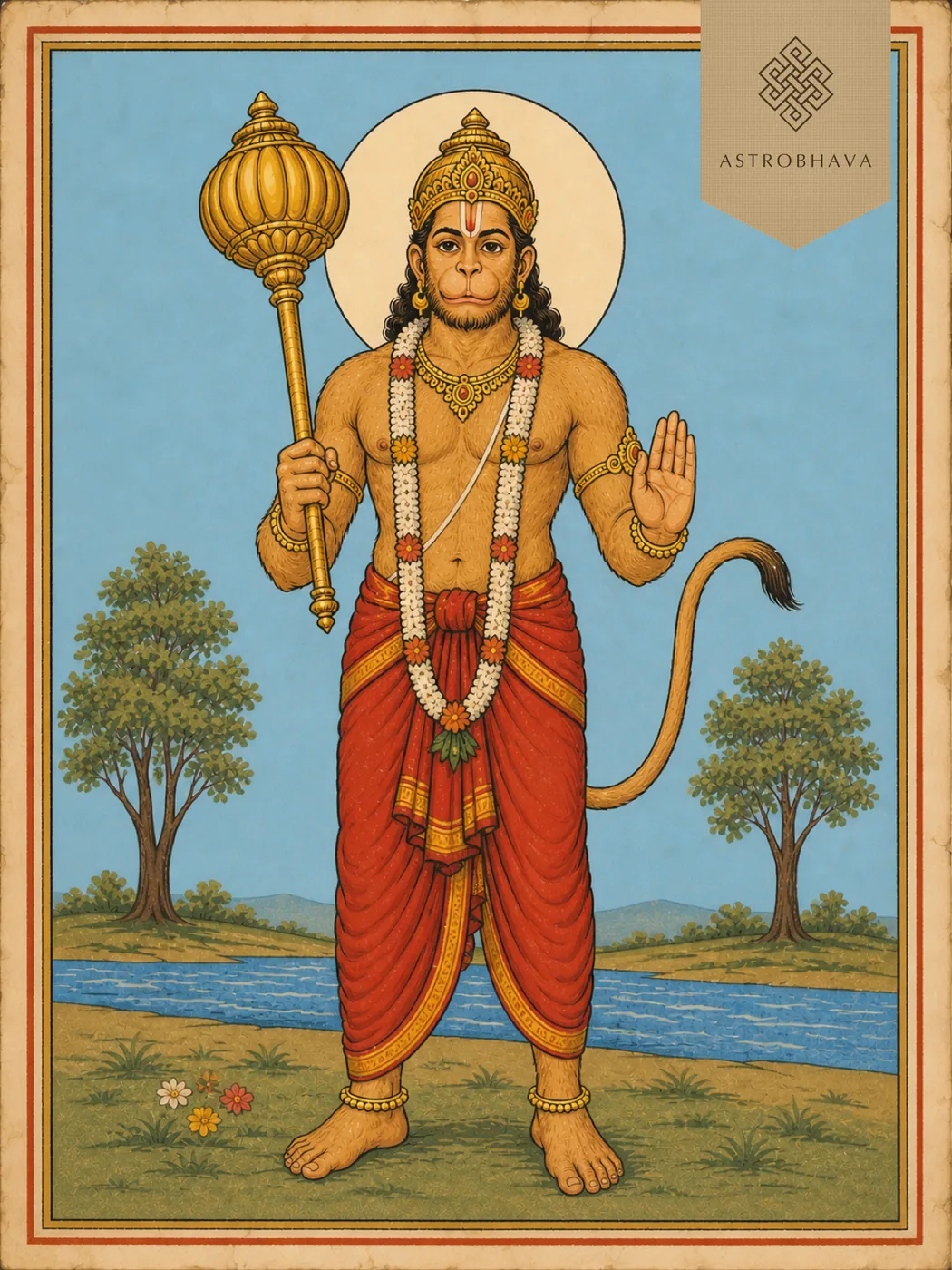
सिंधु-तरन, सिय-सोच-हरन, रबि-बालबरन-तनु । भुज बिसाल, मूरति कराल कालहुको काल जनु ॥ गहन-दहन-निरदहन-लंक निःसंक, बंक-भुव । जातुधान-बलवान-मान-मद-दवन पवनसुव ॥ कह तुलसिदास सेवत सुलभ, सेवक हित संतत निकट । गुनगनत, नमत, सुमिरत, जपत, समन सकल-संकट-बिकट ॥Also known as Sindhu Taran Siya Soch Haran
In Devanagari, Tamil, Telugu, Kannada, Malayalam and English — with the meaning of every word, and the one syllable most people pronounce wrongly.
 The Hanuman Homa, performed for youBook →
What the Hanuman Bahuk is
The Hanuman Bahuk is a sequence of 44 stanzas in Braj Bhasha that Goswami Tulsidas addressed to Hanuman when a burning pain had taken hold of his arm. The standard printed edition sets it in four metres: two chhappay, one jhoolna, five savaiya and thirty-six ghanakshari, the ghanakshari being the kavitta metre of the Kavitavali, to which the Bahuk is often treated as an appendix. The poem moves in three stages. Stanzas 1 to 14 praise Hanuman's body, deeds and reach, including stories that stand outside Tulsidas's Ramayana: learning from the Sun while walking backwards across the sky, and roaring from the banner of Arjuna's chariot in the Mahabharata war. From stanza 15 the tone turns to complaint, and stanza 20 names the arm pain for the first time; after that nearly every stanza closes by asking Hanuman to remove it. The final stanzas turn inward, weighing the poet's own faults, and speak to Rama and Shiva as well.
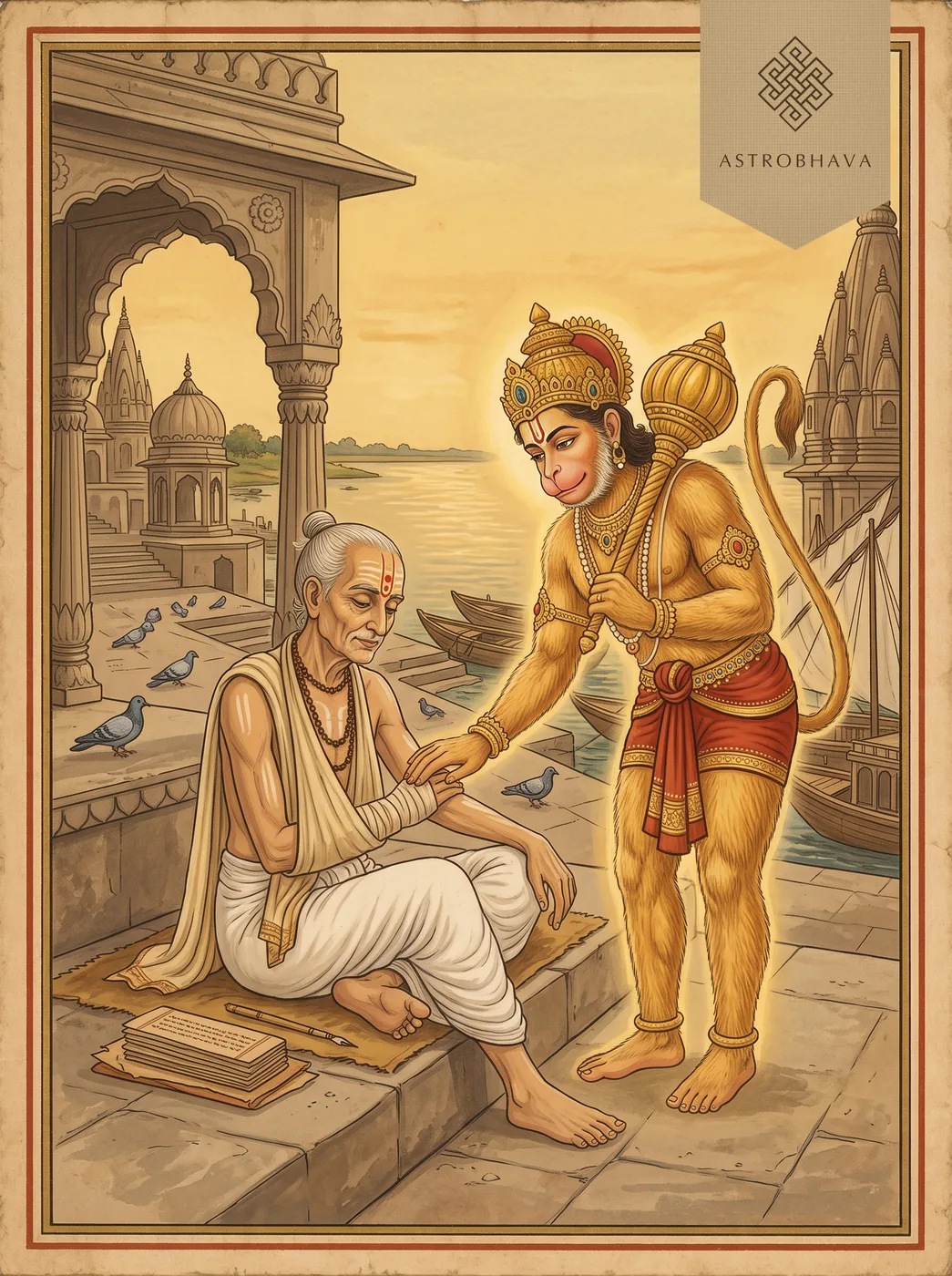
A poet's aching arm in old Kashi
The standard printed edition opens with a short preface by its commentator, dated 1933. It places the illness around Vikram Samvat 1664, about 1607 CE: a deep pain born of a wind disorder settled in Tulsidas's arms, and boils spread until his whole body ached. Medicines, yantras, mantras and charms were tried, and the pain only grew. In despair, the preface says, Tulsidas began this praise of Hanuman, and by the grace of Anjani's son the affliction left him. The stanzas record the same search for a cure in the poet's own words: stanza 30 lists the remedies and gods tried in vain, and stanza 41 reads the boils on his body as Rama's salt bursting out, the price of pride after kindness received. The scholar Philip Lutgendorf dates the illness a little later, from 1611 or 1612, the years of plague in Banaras that the closing section of the Kavitavali describes, and places the Bahuk in the poet's last decade; Tulsidas died at Assi Ghat in Varanasi in 1623. The poem itself never says the pain ended; the cure belongs to later belief. Lutgendorf also records a Banaras story that Maharaja Vibhuti Narayan Singh would first ask any aspiring Ramcharitmanas expounder whether they had memorised the Hanuman Bahuk.
The mantra, in six scripts
- सिंधु-तरन
- siṃdhu-tarana — crosser of the ocean
- सिय-सोच-हरन
- siya-soca-harana — remover of Sita's grief
- रबि-बालबरन-तनु
- rabi-bālabarana-tanu — body coloured like the rising sun
- भुज
- bhuja — arms
- बिसाल
- bisāla — long, mighty
- मूरति
- mūrati — form
- कराल
- karāla — fearsome
- कालहुको
- kālahuko — of Death himself
- काल
- kāla — death
- जनु
- janu — as if
Hanuman Bahuk lyrics in full
All 44 stanzas in the order and metres of the standard printed edition: chhappay, jhoolna, savaiya and ghanakshari.
All 44 verses, in Hindi, Tamil, Telugu, Kannada, Malayalam and English, each with its meaning. Choose a script:
Download the Hanuman Bahuk PDFAll 44 verses with their meanings, in Hindi. Free to print and keep.
सिंधु-तरन, सिय-सोच-हरन, रबि-बालबरन-तनु ।
भुज बिसाल, मूरति कराल कालहुको काल जनु ॥
गहन-दहन-निरदहन-लंक निःसंक, बंक-भुव ।
जातुधान-बलवान-मान-मद-दवन पवनसुव ॥
कह तुलसिदास सेवत सुलभ, सेवक हित संतत निकट ।
गुनगनत, नमत, सुमिरत, जपत, समन सकल-संकट-बिकट ॥
ஸிம்து-தரந, ஸிய-ஸோச-ஹரந, ரபி-பாலபரந-தநு ।
புஜ பிஸால, மூரதி கரால காலஹுகோ கால ஜநு ॥
கஹந-தஹந-நிரதஹந-லம்க நிஃஸம்க, பம்க-புவ ।
ஜாதுதாந-பலவாந-மாந-மத-தவந பவநஸுவ ॥
கஹ துலஸிதாஸ ஸேவத ஸுலப, ஸேவக ஹித ஸம்தத நிகட ।
குநகநத, நமத, ஸுமிரத, ஜபத, ஸமந ஸகல-ஸம்கட-பிகட ॥
సింధు-తరన, సియ-సోచ-హరన, రబి-బాలబరన-తను ।
భుజ బిసాల, మూరతి కరాల కాలహుకో కాల జను ॥
గహన-దహన-నిరదహన-లంక నిఃసంక, బంక-భువ ।
జాతుధాన-బలవాన-మాన-మద-దవన పవనసువ ॥
కహ తులసిదాస సేవత సులభ, సేవక హిత సంతత నికట ।
గునగనత, నమత, సుమిరత, జపత, సమన సకల-సంకట-బికట ॥
ಸಿಂಧು-ತರನ, ಸಿಯ-ಸೋಚ-ಹರನ, ರಬಿ-ಬಾಲಬರನ-ತನು ।
ಭುಜ ಬಿಸಾಲ, ಮೂರತಿ ಕರಾಲ ಕಾಲಹುಕೋ ಕಾಲ ಜನು ॥
ಗಹನ-ದಹನ-ನಿರದಹನ-ಲಂಕ ನಿಃಸಂಕ, ಬಂಕ-ಭುವ ।
ಜಾತುಧಾನ-ಬಲವಾನ-ಮಾನ-ಮದ-ದವನ ಪವನಸುವ ॥
ಕಹ ತುಲಸಿದಾಸ ಸೇವತ ಸುಲಭ, ಸೇವಕ ಹಿತ ಸಂತತ ನಿಕಟ ।
ಗುನಗನತ, ನಮತ, ಸುಮಿರತ, ಜಪತ, ಸಮನ ಸಕಲ-ಸಂಕಟ-ಬಿಕಟ ॥
സിംധു-തരന, സിയ-സോച-ഹരന, രബി-ബാലബരന-തനു ।
ഭുജ ബിസാല, മൂരതി കരാല കാലഹുകോ കാല ജനു ॥
ഗഹന-ദഹന-നിരദഹന-ലംക നിഃസംക, ബംക-ഭുവ ।
ജാതുധാന-ബലവാന-മാന-മദ-ദവന പവനസുവ ॥
കഹ തുലസിദാസ സേവത സുലഭ, സേവക ഹിത സംതത നികട ।
ഗുനഗനത, നമത, സുമിരത, ജപത, സമന സകല-സംകട-ബികട ॥
siṃdhu-tarana, siya-soca-harana, rabi-bālabarana-tanu |
bhuja bisāla, mūrati karāla kālahuko kāla janu ||
gahana-dahana-niradahana-laṃka niḥsaṃka, baṃka-bhuva |
jātudhāna-balavāna-māna-mada-davana pavanasuva ||
kaha tulasidāsa sevata sulabha, sevaka hita saṃtata nikaṭa |
gunaganata, namata, sumirata, japata, samana sakala-saṃkaṭa-bikaṭa ||
He crossed the ocean and took away Sita's grief; his body glows like the rising sun, his arms are long and his fearsome form seems the death of Death itself. Fearless, with arched brows, he burned the dense, unburnable fortress of Lanka and crushed the pride of the mighty demons. Tulsidas says the Son of the Wind is easy to reach through service, always near to help his servants, and ends every dire trouble for those who sing his virtues, bow, remember him and chant his name.
स्वर्न-सैल-संकास कोटि-रबि-तरुन-तेज-घन ।
उर बिसाल, भुजदंड चंड नख बज्र बज्रतन ॥
पिंग नयन, भृकुटी कराल रसना दसनानन ।
कपिस केस, करकस लँगूर, खल-दल बल भानन ॥
कह तुलसिदास बस जासु उर मारुतसुत मूरति बिकट ।
संताप पाप तेहि पुरुष पहिं सपनेहुँ नहिं आवत निकट ॥
ஸ்வர்ந-ஸைல-ஸம்காஸ கோடி-ரபி-தருந-தேஜ-கந ।
உர பிஸால, புஜதம்ட சம்ட நக பஜ்ர பஜ்ரதந ॥
பிம்க நயந, ப்ருகுடீ கரால ரஸநா தஸநாநந ।
கபிஸ கேஸ, கரகஸ லம்கூர, கல-தல பல பாநந ॥
கஹ துலஸிதாஸ பஸ ஜாஸு உர மாருதஸுத மூரதி பிகட ।
ஸம்தாப பாப தேஹி புருஷ பஹிம் ஸபநேஹும் நஹிம் ஆவத நிகட ॥
స్వర్న-సైల-సంకాస కోటి-రబి-తరున-తేజ-ఘన ।
ఉర బిసాల, భుజదండ చండ నఖ బజ్ర బజ్రతన ॥
పింగ నయన, భృకుటీ కరాల రసనా దసనానన ।
కపిస కేస, కరకస లఁగూర, ఖల-దల బల భానన ॥
కహ తులసిదాస బస జాసు ఉర మారుతసుత మూరతి బికట ।
సంతాప పాప తేహి పురుష పహిం సపనేహుఁ నహిం ఆవత నికట ॥
ಸ್ವರ್ನ-ಸೈಲ-ಸಂಕಾಸ ಕೋಟಿ-ರಬಿ-ತರುನ-ತೇಜ-ಘನ ।
ಉರ ಬಿಸಾಲ, ಭುಜದಂಡ ಚಂಡ ನಖ ಬಜ್ರ ಬಜ್ರತನ ॥
ಪಿಂಗ ನಯನ, ಭೃಕುಟೀ ಕರಾಲ ರಸನಾ ದಸನಾನನ ।
ಕಪಿಸ ಕೇಸ, ಕರಕಸ ಲಁಗೂರ, ಖಲ-ದಲ ಬಲ ಭಾನನ ॥
ಕಹ ತುಲಸಿದಾಸ ಬಸ ಜಾಸು ಉರ ಮಾರುತಸುತ ಮೂರತಿ ಬಿಕಟ ।
ಸಂತಾಪ ಪಾಪ ತೇಹಿ ಪುರುಷ ಪಹಿಂ ಸಪನೇಹುಁ ನಹಿಂ ಆವತ ನಿಕಟ ॥
സ്വര്ന-സൈല-സംകാസ കോടി-രബി-തരുന-തേജ-ഘന ।
ഉര ബിസാല, ഭുജദംഡ ചംഡ നഖ ബജ്ര ബജ്രതന ॥
പിംഗ നയന, ഭൃകുടീ കരാല രസനാ ദസനാനന ।
കപിസ കേസ, കരകസ ലഁഗൂര, ഖല-ദല ബല ഭാനന ॥
കഹ തുലസിദാസ ബസ ജാസു ഉര മാരുതസുത മൂരതി ബികട ।
സംതാപ പാപ തേഹി പുരുഷ പഹിം സപനേഹുഁ നഹിം ആവത നികട ॥
svarna-saila-saṃkāsa koṭi-rabi-taruna-teja-ghana |
ura bisāla, bhujadaṃḍa caṃḍa nakha bajra bajratana ||
piṃga nayana, bhṛkuṭī karāla rasanā dasanānana |
kapisa kesa, karakasa laṃgūra, khala-dala bala bhānana ||
kaha tulasidāsa basa jāsu ura mārutasuta mūrati bikaṭa |
saṃtāpa pāpa tehi puruṣa pahiṃ sapanehuṃ nahiṃ āvata nikaṭa ||
His body is like a mountain of gold, his brilliance like a million noonday suns; his chest is broad, his arms mighty, his nails and frame hard as the thunderbolt. His eyes are tawny, his brows, tongue, teeth and mouth fearsome, his hair brown and his tail stiff, and he breaks the strength of the hosts of the wicked. Tulsidas says - and the verse promises - that sorrow and sin never come near, even in dreams, the one whose heart holds this awesome form of the Wind's son.
पंचमुख-छमुख-भृगुमुख्य भट-असुर-सुर, सर्व-सरि-समर समरत्थ सूरो ।
बाँकुरो बीर बिरुदैत बिरुदावली, बेद बंदी बदत पैजपूरो ॥
जासु गुनगाथ रघुनाथ कह, जासु बल, बिपुल-जल-भरित जग-जलधि झूरो ।
दुवन-दल-दमनको कौन तुलसीस है पवनको पूत रजपूत रूरो ॥
பம்சமுக-சமுக-ப்ருகுமுக்ய பட-அஸுர-ஸுர, ஸர்வ-ஸரி-ஸமர ஸமரத்த ஸூரோ ।
பாம்குரோ பீர பிருதைத பிருதாவலீ, பேத பம்தீ பதத பைஜபூரோ ॥
ஜாஸு குநகாத ரகுநாத கஹ, ஜாஸு பல, பிபுல-ஜல-பரித ஜக-ஜலதி சூரோ ।
துவந-தல-தமநகோ கௌந துலஸீஸ ஹை பவநகோ பூத ரஜபூத ரூரோ ॥
పంచముఖ-ఛముఖ-భృగుముఖ్య భట-అసుర-సుర, సర్వ-సరి-సమర సమరత్థ సూరో ।
బాఁకురో బీర బిరుదైత బిరుదావలీ, బేద బందీ బదత పైజపూరో ॥
జాసు గునగాథ రఘునాథ కహ, జాసు బల, బిపుల-జల-భరిత జగ-జలధి ఝూరో ।
దువన-దల-దమనకో కౌన తులసీస హై పవనకో పూత రజపూత రూరో ॥
ಪಂಚಮುಖ-ಛಮುಖ-ಭೃಗುಮುಖ್ಯ ಭಟ-ಅಸುರ-ಸುರ, ಸರ್ವ-ಸರಿ-ಸಮರ ಸಮರತ್ಥ ಸೂರೋ ।
ಬಾಁಕುರೋ ಬೀರ ಬಿರುದೈತ ಬಿರುದಾವಲೀ, ಬೇದ ಬಂದೀ ಬದತ ಪೈಜಪೂರೋ ॥
ಜಾಸು ಗುನಗಾಥ ರಘುನಾಥ ಕಹ, ಜಾಸು ಬಲ, ಬಿಪುಲ-ಜಲ-ಭರಿತ ಜಗ-ಜಲಧಿ ಝೂರೋ ।
ದುವನ-ದಲ-ದಮನಕೋ ಕೌನ ತುಲಸೀಸ ಹೈ ಪವನಕೋ ಪೂತ ರಜಪೂತ ರೂರೋ ॥
പംചമുഖ-ഛമുഖ-ഭൃഗുമുഖ്യ ഭട-അസുര-സുര, സര്വ-സരി-സമര സമരത്ഥ സൂരോ ।
ബാഁകുരോ ബീര ബിരുദൈത ബിരുദാവലീ, ബേദ ബംദീ ബദത പൈജപൂരോ ॥
ജാസു ഗുനഗാഥ രഘുനാഥ കഹ, ജാസു ബല, ബിപുല-ജല-ഭരിത ജഗ-ജലധി ഝൂരോ ।
ദുവന-ദല-ദമനകോ കൌന തുലസീസ ഹൈ പവനകോ പൂത രജപൂത രൂരോ ॥
paṃcamukha-chamukha-bhṛgumukhya bhaṭa-asura-sura, sarva-sari-samara samarattha sūro |
bāṃkuro bīra birudaita birudāvalī, beda baṃdī badata paijapūro ||
jāsu gunagātha raghunātha kaha, jāsu bala, bipula-jala-bharita jaga-jaladhi jhūro |
duvana-dala-damanako kauna tulasīsa hai pavanako pūta rajapūta rūro ||
Among Shiva, the six-faced Skanda, Parashurama and the great warriors of gods and demons, he is the hero able to cross every river of battle; the Vedas, like heralds, praise his famed and fiercely kept vows. Raghunatha himself told the tale of his virtues, and by his strength the ocean of worldly existence, full of water, ran dry. Who but Tulsi's lord, the splendid warrior son of the Wind, can crush the armies of the foe?
भानुसों पढ़न हनुमान गये भानु मन-अनुमानि सिसुकेलि कियो फेरफार सो ।
पाछिले पगनि गम गगन मगन-मन, क्रमको न भ्रम, कपि बालक-बिहार सो ॥
कौतुक बिलोकि लोकपाल हरि हर बिधि लोचननि चकाचौंधी चित्तनि खभार सो ।
बल कैधौं बीररस, धीरज कै, साहस कै, तुलसी सरीर धरे सबनिको सार सो ॥
பாநுஸோம் படந ஹநுமாந கயே பாநு மந-அநுமாநி ஸிஸுகேலி கியோ பேரபார ஸோ ।
பாசிலே பகநி கம ககந மகந-மந, க்ரமகோ ந ப்ரம, கபி பாலக-பிஹார ஸோ ॥
கௌதுக பிலோகி லோகபால ஹரி ஹர பிதி லோசநநி சகாசௌம்தீ சித்தநி கபார ஸோ ।
பல கைதௌம் பீரரஸ, தீரஜ கை, ஸாஹஸ கை, துலஸீ ஸரீர தரே ஸபநிகோ ஸார ஸோ ॥
భానుసోం పఢన హనుమాన గయే భాను మన-అనుమాని సిసుకేలి కియో ఫేరఫార సో ।
పాఛిలే పగని గమ గగన మగన-మన, క్రమకో న భ్రమ, కపి బాలక-బిహార సో ॥
కౌతుక బిలోకి లోకపాల హరి హర బిధి లోచనని చకాచౌంధీ చిత్తని ఖభార సో ।
బల కైధౌం బీరరస, ధీరజ కై, సాహస కై, తులసీ సరీర ధరే సబనికో సార సో ॥
ಭಾನುಸೋಂ ಪಢನ ಹನುಮಾನ ಗಯೇ ಭಾನು ಮನ-ಅನುಮಾನಿ ಸಿಸುಕೇಲಿ ಕಿಯೋ ಫೇರಫಾರ ಸೋ ।
ಪಾಛಿಲೇ ಪಗನಿ ಗಮ ಗಗನ ಮಗನ-ಮನ, ಕ್ರಮಕೋ ನ ಭ್ರಮ, ಕಪಿ ಬಾಲಕ-ಬಿಹಾರ ಸೋ ॥
ಕೌತುಕ ಬಿಲೋಕಿ ಲೋಕಪಾಲ ಹರಿ ಹರ ಬಿಧಿ ಲೋಚನನಿ ಚಕಾಚೌಂಧೀ ಚಿತ್ತನಿ ಖಭಾರ ಸೋ ।
ಬಲ ಕೈಧೌಂ ಬೀರರಸ, ಧೀರಜ ಕೈ, ಸಾಹಸ ಕೈ, ತುಲಸೀ ಸರೀರ ಧರೇ ಸಬನಿಕೋ ಸಾರ ಸೋ ॥
ഭാനുസോം പഢന ഹനുമാന ഗയേ ഭാനു മന-അനുമാനി സിസുകേലി കിയോ ഫേരഫാര സോ ।
പാഛിലേ പഗനി ഗമ ഗഗന മഗന-മന, ക്രമകോ ന ഭ്രമ, കപി ബാലക-ബിഹാര സോ ॥
കൌതുക ബിലോകി ലോകപാല ഹരി ഹര ബിധി ലോചനനി ചകാചൌംധീ ചിത്തനി ഖഭാര സോ ।
ബല കൈധൌം ബീരരസ, ധീരജ കൈ, സാഹസ കൈ, തുലസീ സരീര ധരേ സബനികോ സാര സോ ॥
bhānusoṃ paṛhana hanumāna gaye bhānu mana-anumāni sisukeli kiyo pheraphāra so |
pāchile pagani gama gagana magana-mana, kramako na bhrama, kapi bālaka-bihāra so ||
kautuka biloki lokapāla hari hara bidhi locanani cakācauṃdhī cittani khabhāra so |
bala kaidhauṃ bīrarasa, dhīraja kai, sāhasa kai, tulasī sarīra dhare sabaniko sāra so ||
Hanuman went to the Sun to learn, and the Sun, thinking it a child's game, made an excuse; so Hanuman moved across the sky walking backwards, facing his teacher, joyful, and never lost the thread of the lessons, as easily as a child at play. Seeing this wonder, the guardians of the worlds, Vishnu, Shiva and Brahma were dazzled and shaken. Tulsi says they wondered whether this was strength, the heroic spirit, courage or daring - or the essence of them all in bodily form.
भारतमें पारथके रथकेतु कपिराज, गाज्यो सुनि कुरुराज दल हलबल भो ।
कह्यो द्रोन भीषम समीरसुत महाबीर, बीर-रस-बारि-निधि जाको बल जल भो ॥
बानर सुभाय बालकेलि भूमि भानु लागि, फलँग फलाँगहूँतें घाटि नभतल भो ।
नाइ-नाइ माथ जोरि-जोरि हाथ जोधा जोहैं, हनुमान देखे जगजीवनको फल भो ॥
பாரதமேம் பாரதகே ரதகேது கபிராஜ, காஜ்யோ ஸுநி குருராஜ தல ஹலபல போ ।
கஹ்யோ த்ரோந பீஷம ஸமீரஸுத மஹாபீர, பீர-ரஸ-பாரி-நிதி ஜாகோ பல ஜல போ ॥
பாநர ஸுபாய பாலகேலி பூமி பாநு லாகி, பலம்க பலாம்கஹூம்தேம் காடி நபதல போ ।
நாஇ-நாஇ மாத ஜோரி-ஜோரி ஹாத ஜோதா ஜோஹைம், ஹநுமாந தேகே ஜகஜீவநகோ பல போ ॥
భారతమేం పారథకే రథకేతు కపిరాజ, గాజ్యో సుని కురురాజ దల హలబల భో ।
కహ్యో ద్రోన భీషమ సమీరసుత మహాబీర, బీర-రస-బారి-నిధి జాకో బల జల భో ॥
బానర సుభాయ బాలకేలి భూమి భాను లాగి, ఫలఁగ ఫలాఁగహూఁతేం ఘాటి నభతల భో ।
నాఇ-నాఇ మాథ జోరి-జోరి హాథ జోధా జోహైం, హనుమాన దేఖే జగజీవనకో ఫల భో ॥
ಭಾರತಮೇಂ ಪಾರಥಕೇ ರಥಕೇತು ಕಪಿರಾಜ, ಗಾಜ್ಯೋ ಸುನಿ ಕುರುರಾಜ ದಲ ಹಲಬಲ ಭೋ ।
ಕಹ್ಯೋ ದ್ರೋನ ಭೀಷಮ ಸಮೀರಸುತ ಮಹಾಬೀರ, ಬೀರ-ರಸ-ಬಾರಿ-ನಿಧಿ ಜಾಕೋ ಬಲ ಜಲ ಭೋ ॥
ಬಾನರ ಸುಭಾಯ ಬಾಲಕೇಲಿ ಭೂಮಿ ಭಾನು ಲಾಗಿ, ಫಲಁಗ ಫಲಾಁಗಹೂಁತೇಂ ಘಾಟಿ ನಭತಲ ಭೋ ।
ನಾಇ-ನಾಇ ಮಾಥ ಜೋರಿ-ಜೋರಿ ಹಾಥ ಜೋಧಾ ಜೋಹೈಂ, ಹನುಮಾನ ದೇಖೇ ಜಗಜೀವನಕೋ ಫಲ ಭೋ ॥
ഭാരതമേം പാരഥകേ രഥകേതു കപിരാജ, ഗാജ്യോ സുനി കുരുരാജ ദല ഹലബല ഭോ ।
കഹ്യോ ദ്രോന ഭീഷമ സമീരസുത മഹാബീര, ബീര-രസ-ബാരി-നിധി ജാകോ ബല ജല ഭോ ॥
ബാനര സുഭായ ബാലകേലി ഭൂമി ഭാനു ലാഗി, ഫലഁഗ ഫലാഁഗഹൂഁതേം ഘാടി നഭതല ഭോ ।
നാഇ-നാഇ മാഥ ജോരി-ജോരി ഹാഥ ജോധാ ജോഹൈം, ഹനുമാന ദേഖേ ജഗജീവനകോ ഫല ഭോ ॥
bhāratameṃ pārathake rathaketu kapirāja, gājyo suni kururāja dala halabala bho |
kahyo drona bhīṣama samīrasuta mahābīra, bīra-rasa-bāri-nidhi jāko bala jala bho ||
bānara subhāya bālakeli bhūmi bhānu lāgi, phalaṃga phalāṃgahūṃteṃ ghāṭi nabhatala bho |
nāi-nāi mātha jori-jori hātha jodhā johaiṃ, hanumāna dekhe jagajīvanako phala bho ||
In the Bharata war, as the monkey-king on the banner of Arjuna's chariot, he roared, and Duryodhana's army was thrown into confusion. Drona and Bhishma said, This is the Wind's son, the great hero, whose strength is the water of the ocean of heroism. In his childhood play, his leap from the earth to the sun made the whole sky shorter than a single bound; warriors bowed their heads again and again and folded their hands, feeling that seeing Hanuman was the reward of life itself.
गोपद पयोधि करि होलिका ज्यों लाई लंक, निपट निसंक परपुर गलबल भो ।
द्रोन-सो पहार लियो ख्याल ही उखारि कर, कंदुक-ज्यों कपिखेल बेल कैसो फल भो ॥
संकटसमाज असमंजस भो रामराज काज जुग-पूगनिको करतल पल भो ।
साहसी समत्थ तुलसीको नाह जाकी बाँह, लोकपाल पालनको फिर थिर थल भो ॥
கோபத பயோதி கரி ஹோலிகா ஜ்யோம் லாஈ லம்க, நிபட நிஸம்க பரபுர கலபல போ ।
த்ரோந-ஸோ பஹார லியோ க்யால ஹீ உகாரி கர, கம்துக-ஜ்யோம் கபிகேல பேல கைஸோ பல போ ॥
ஸம்கடஸமாஜ அஸமம்ஜஸ போ ராமராஜ காஜ ஜுக-பூகநிகோ கரதல பல போ ।
ஸாஹஸீ ஸமத்த துலஸீகோ நாஹ ஜாகீ பாம்ஹ, லோகபால பாலநகோ பிர திர தல போ ॥
గోపద పయోధి కరి హోలికా జ్యోం లాఈ లంక, నిపట నిసంక పరపుర గలబల భో ।
ద్రోన-సో పహార లియో ఖ్యాల హీ ఉఖారి కర, కందుక-జ్యోం కపిఖేల బేల కైసో ఫల భో ॥
సంకటసమాజ అసమంజస భో రామరాజ కాజ జుగ-పూగనికో కరతల పల భో ।
సాహసీ సమత్థ తులసీకో నాహ జాకీ బాఁహ, లోకపాల పాలనకో ఫిర థిర థల భో ॥
ಗೋಪದ ಪಯೋಧಿ ಕರಿ ಹೋಲಿಕಾ ಜ್ಯೋಂ ಲಾಈ ಲಂಕ, ನಿಪಟ ನಿಸಂಕ ಪರಪುರ ಗಲಬಲ ಭೋ ।
ದ್ರೋನ-ಸೋ ಪಹಾರ ಲಿಯೋ ಖ್ಯಾಲ ಹೀ ಉಖಾರಿ ಕರ, ಕಂದುಕ-ಜ್ಯೋಂ ಕಪಿಖೇಲ ಬೇಲ ಕೈಸೋ ಫಲ ಭೋ ॥
ಸಂಕಟಸಮಾಜ ಅಸಮಂಜಸ ಭೋ ರಾಮರಾಜ ಕಾಜ ಜುಗ-ಪೂಗನಿಕೋ ಕರತಲ ಪಲ ಭೋ ।
ಸಾಹಸೀ ಸಮತ್ಥ ತುಲಸೀಕೋ ನಾಹ ಜಾಕೀ ಬಾಁಹ, ಲೋಕಪಾಲ ಪಾಲನಕೋ ಫಿರ ಥಿರ ಥಲ ಭೋ ॥
ഗോപദ പയോധി കരി ഹോലികാ ജ്യോം ലാഈ ലംക, നിപട നിസംക പരപുര ഗലബല ഭോ ।
ദ്രോന-സോ പഹാര ലിയോ ഖ്യാല ഹീ ഉഖാരി കര, കംദുക-ജ്യോം കപിഖേല ബേല കൈസോ ഫല ഭോ ॥
സംകടസമാജ അസമംജസ ഭോ രാമരാജ കാജ ജുഗ-പൂഗനികോ കരതല പല ഭോ ।
സാഹസീ സമത്ഥ തുലസീകോ നാഹ ജാകീ ബാഁഹ, ലോകപാല പാലനകോ ഫിര ഥിര ഥല ഭോ ॥
gopada payodhi kari holikā jyoṃ lāī laṃka, nipaṭa nisaṃka parapura galabala bho |
drona-so pahāra liyo khyāla hī ukhāri kara, kaṃduka-jyoṃ kapikhela bela kaiso phala bho ||
saṃkaṭasamāja asamaṃjasa bho rāmarāja kāja juga-pūganiko karatala pala bho |
sāhasī samattha tulasīko nāha jākī bāṃha, lokapāla pālanako phira thira thala bho ||
He made the ocean a cow's hoof-print and set Lanka ablaze like a Holi bonfire, fearless, throwing the enemy city into turmoil. He uprooted a mountain like Drona in play and tossed it like a ball, a wood-apple in a monkey's game. When crisis and dilemma struck Rama's kingdom, the work of ages was done in a moment in his hands; daring and able is the lord of Tulsi, whose arm became the firm ground where the guardians of the worlds were restored.
कमठकी पीठि जाके गोड़निकी गाड़ैं मानो नापके भाजन भरि जलनिधि-जल भो ।
जातुधान-दावन परावनको दुर्ग भयो, महामीनबास तिमि तोमनिको थल भो ॥
कुंभकर्न-रावन-पयोदनाद-ईंधनको तुलसी प्रताप जाको प्रबल अनल भो ।
भीषम कहत मेरे अनुमान हनुमान-सारिखो त्रिकाल न त्रिलोक महाबल भो ॥
கமடகீ பீடி ஜாகே கோடநிகீ காடைம் மாநோ நாபகே பாஜந பரி ஜலநிதி-ஜல போ ।
ஜாதுதாந-தாவந பராவநகோ துர்க பயோ, மஹாமீநபாஸ திமி தோமநிகோ தல போ ॥
கும்பகர்ந-ராவந-பயோதநாத-ஈம்தநகோ துலஸீ ப்ரதாப ஜாகோ ப்ரபல அநல போ ।
பீஷம கஹத மேரே அநுமாந ஹநுமாந-ஸாரிகோ த்ரிகால ந த்ரிலோக மஹாபல போ ॥
కమఠకీ పీఠి జాకే గోడనికీ గాడైం మానో నాపకే భాజన భరి జలనిధి-జల భో ।
జాతుధాన-దావన పరావనకో దుర్గ భయో, మహామీనబాస తిమి తోమనికో థల భో ॥
కుంభకర్న-రావన-పయోదనాద-ఈంధనకో తులసీ ప్రతాప జాకో ప్రబల అనల భో ।
భీషమ కహత మేరే అనుమాన హనుమాన-సారిఖో త్రికాల న త్రిలోక మహాబల భో ॥
ಕಮಠಕೀ ಪೀಠಿ ಜಾಕೇ ಗೋಡನಿಕೀ ಗಾಡೈಂ ಮಾನೋ ನಾಪಕೇ ಭಾಜನ ಭರಿ ಜಲನಿಧಿ-ಜಲ ಭೋ ।
ಜಾತುಧಾನ-ದಾವನ ಪರಾವನಕೋ ದುರ್ಗ ಭಯೋ, ಮಹಾಮೀನಬಾಸ ತಿಮಿ ತೋಮನಿಕೋ ಥಲ ಭೋ ॥
ಕುಂಭಕರ್ನ-ರಾವನ-ಪಯೋದನಾದ-ಈಂಧನಕೋ ತುಲಸೀ ಪ್ರತಾಪ ಜಾಕೋ ಪ್ರಬಲ ಅನಲ ಭೋ ।
ಭೀಷಮ ಕಹತ ಮೇರೇ ಅನುಮಾನ ಹನುಮಾನ-ಸಾರಿಖೋ ತ್ರಿಕಾಲ ನ ತ್ರಿಲೋಕ ಮಹಾಬಲ ಭೋ ॥
കമഠകീ പീഠി ജാകേ ഗോഡനികീ ഗാഡൈം മാനോ നാപകേ ഭാജന ഭരി ജലനിധി-ജല ഭോ ।
ജാതുധാന-ദാവന പരാവനകോ ദുര്ഗ ഭയോ, മഹാമീനബാസ തിമി തോമനികോ ഥല ഭോ ॥
കുംഭകര്ന-രാവന-പയോദനാദ-ഈംധനകോ തുലസീ പ്രതാപ ജാകോ പ്രബല അനല ഭോ ।
ഭീഷമ കഹത മേരേ അനുമാന ഹനുമാന-സാരിഖോ ത്രികാല ന ത്രിലോക മഹാബല ഭോ ॥
kamaṭhakī pīṭhi jāke goṛanikī gāṛaiṃ māno nāpake bhājana bhari jalanidhi-jala bho |
jātudhāna-dāvana parāvanako durga bhayo, mahāmīnabāsa timi tomaniko thala bho ||
kuṃbhakarna-rāvana-payodanāda-īṃdhanako tulasī pratāpa jāko prabala anala bho |
bhīṣama kahata mere anumāna hanumāna-sārikho trikāla na triloka mahābala bho ||
The hollows his feet pressed into the back of the cosmic tortoise became measuring vessels for the ocean's water. That ocean became a fort for the fleeing demons and a home for great fish and whales. His glory became a blazing fire for the fuel of Kumbhakarna, Ravana and Meghanada; and Bhishma says that in his reckoning no one in the three times and three worlds has been as mighty as Hanuman.
दूत रामरायको, सपूत पूत पौनको, तू अंजनीको नंदन प्रताप भूरि भानु सो ।
सीय-सोच-समन, दुरित-दोष-दमन, सरन आये अवन, लखनप्रिय प्रान सो ॥
दसमुख दुसह दरिद्र दरिबेको भयो, प्रकट तिलोक ओक तुलसी निधान सो ।
ज्ञान-गुनवान बलवान सेवा सावधान, साहेब सुजान उर आनु हनुमान सो ॥
தூத ராமராயகோ, ஸபூத பூத பௌநகோ, தூ அம்ஜநீகோ நம்தந ப்ரதாப பூரி பாநு ஸோ ।
ஸீய-ஸோச-ஸமந, துரித-தோஷ-தமந, ஸரந ஆயே அவந, லகநப்ரிய ப்ராந ஸோ ॥
தஸமுக துஸஹ தரித்ர தரிபேகோ பயோ, ப்ரகட திலோக ஓக துலஸீ நிதாந ஸோ ।
ஜ்ஞாந-குநவாந பலவாந ஸேவா ஸாவதாந, ஸாஹேப ஸுஜாந உர ஆநு ஹநுமாந ஸோ ॥
దూత రామరాయకో, సపూత పూత పౌనకో, తూ అంజనీకో నందన ప్రతాప భూరి భాను సో ।
సీయ-సోచ-సమన, దురిత-దోష-దమన, సరన ఆయే అవన, లఖనప్రియ ప్రాన సో ॥
దసముఖ దుసహ దరిద్ర దరిబేకో భయో, ప్రకట తిలోక ఓక తులసీ నిధాన సో ।
జ్ఞాన-గునవాన బలవాన సేవా సావధాన, సాహేబ సుజాన ఉర ఆను హనుమాన సో ॥
ದೂತ ರಾಮರಾಯಕೋ, ಸಪೂತ ಪೂತ ಪೌನಕೋ, ತೂ ಅಂಜನೀಕೋ ನಂದನ ಪ್ರತಾಪ ಭೂರಿ ಭಾನು ಸೋ ।
ಸೀಯ-ಸೋಚ-ಸಮನ, ದುರಿತ-ದೋಷ-ದಮನ, ಸರನ ಆಯೇ ಅವನ, ಲಖನಪ್ರಿಯ ಪ್ರಾನ ಸೋ ॥
ದಸಮುಖ ದುಸಹ ದರಿದ್ರ ದರಿಬೇಕೋ ಭಯೋ, ಪ್ರಕಟ ತಿಲೋಕ ಓಕ ತುಲಸೀ ನಿಧಾನ ಸೋ ।
ಜ್ಞಾನ-ಗುನವಾನ ಬಲವಾನ ಸೇವಾ ಸಾವಧಾನ, ಸಾಹೇಬ ಸುಜಾನ ಉರ ಆನು ಹನುಮಾನ ಸೋ ॥
ദൂത രാമരായകോ, സപൂത പൂത പൌനകോ, തൂ അംജനീകോ നംദന പ്രതാപ ഭൂരി ഭാനു സോ ।
സീയ-സോച-സമന, ദുരിത-ദോഷ-ദമന, സരന ആയേ അവന, ലഖനപ്രിയ പ്രാന സോ ॥
ദസമുഖ ദുസഹ ദരിദ്ര ദരിബേകോ ഭയോ, പ്രകട തിലോക ഓക തുലസീ നിധാന സോ ।
ജ്ഞാന-ഗുനവാന ബലവാന സേവാ സാവധാന, സാഹേബ സുജാന ഉര ആനു ഹനുമാന സോ ॥
dūta rāmarāyako, sapūta pūta paunako, tū aṃjanīko naṃdana pratāpa bhūri bhānu so |
sīya-soca-samana, durita-doṣa-damana, sarana āye avana, lakhanapriya prāna so ||
dasamukha dusaha daridra daribeko bhayo, prakaṭa tiloka oka tulasī nidhāna so |
jñāna-gunavāna balavāna sevā sāvadhāna, sāheba sujāna ura ānu hanumāna so ||
You are King Rama's messenger, the worthy son of the Wind and Anjana's darling, with glory as great as the sun. You end Sita's grief, destroy sin and fault, protect those who come for refuge, and are dear to Lakshmana as his own life. You appeared in the three worlds to break the unbearable poverty of ten-headed Ravana, a treasure-house for Tulsi; take into your heart this wise lord Hanuman, full of knowledge and virtue, strong and alert in service.
दवन-दुवन-दल भुवन-बिदित बल, बेद जस गावत बिबुध बंदीछोर को ।
पाप-ताप-तिमिर तुहिन-विघटन-पटु, सेवक-सरोरुह सुखद भानु भोरको ॥
लोक-परलोकतें बिसोक सपने न सोक, तुलसीके हिये है भरोसो एक ओरको ।
रामको दुलारो दास बामदेवको निवास, नाम कलि-कामतरु केसरी-किसोरको ॥
தவந-துவந-தல புவந-பிதித பல, பேத ஜஸ காவத பிபுத பம்தீசோர கோ ।
பாப-தாப-திமிர துஹிந-விகடந-படு, ஸேவக-ஸரோருஹ ஸுகத பாநு போரகோ ॥
லோக-பரலோகதேம் பிஸோக ஸபநே ந ஸோக, துலஸீகே ஹியே ஹை பரோஸோ ஏக ஓரகோ ।
ராமகோ துலாரோ தாஸ பாமதேவகோ நிவாஸ, நாம கலி-காமதரு கேஸரீ-கிஸோரகோ ॥
దవన-దువన-దల భువన-బిదిత బల, బేద జస గావత బిబుధ బందీఛోర కో ।
పాప-తాప-తిమిర తుహిన-విఘటన-పటు, సేవక-సరోరుహ సుఖద భాను భోరకో ॥
లోక-పరలోకతేం బిసోక సపనే న సోక, తులసీకే హియే హై భరోసో ఏక ఓరకో ।
రామకో దులారో దాస బామదేవకో నివాస, నామ కలి-కామతరు కేసరీ-కిసోరకో ॥
ದವನ-ದುವನ-ದಲ ಭುವನ-ಬಿದಿತ ಬಲ, ಬೇದ ಜಸ ಗಾವತ ಬಿಬುಧ ಬಂದೀಛೋರ ಕೋ ।
ಪಾಪ-ತಾಪ-ತಿಮಿರ ತುಹಿನ-ವಿಘಟನ-ಪಟು, ಸೇವಕ-ಸರೋರುಹ ಸುಖದ ಭಾನು ಭೋರಕೋ ॥
ಲೋಕ-ಪರಲೋಕತೇಂ ಬಿಸೋಕ ಸಪನೇ ನ ಸೋಕ, ತುಲಸೀಕೇ ಹಿಯೇ ಹೈ ಭರೋಸೋ ಏಕ ಓರಕೋ ।
ರಾಮಕೋ ದುಲಾರೋ ದಾಸ ಬಾಮದೇವಕೋ ನಿವಾಸ, ನಾಮ ಕಲಿ-ಕಾಮತರು ಕೇಸರೀ-ಕಿಸೋರಕೋ ॥
ദവന-ദുവന-ദല ഭുവന-ബിദിത ബല, ബേദ ജസ ഗാവത ബിബുധ ബംദീഛോര കോ ।
പാപ-താപ-തിമിര തുഹിന-വിഘടന-പടു, സേവക-സരോരുഹ സുഖദ ഭാനു ഭോരകോ ॥
ലോക-പരലോകതേം ബിസോക സപനേ ന സോക, തുലസീകേ ഹിയേ ഹൈ ഭരോസോ ഏക ഓരകോ ।
രാമകോ ദുലാരോ ദാസ ബാമദേവകോ നിവാസ, നാമ കലി-കാമതരു കേസരീ-കിസോരകോ ॥
davana-duvana-dala bhuvana-bidita bala, beda jasa gāvata bibudha baṃdīchora ko |
pāpa-tāpa-timira tuhina-vighaṭana-paṭu, sevaka-saroruha sukhada bhānu bhorako ||
loka-paralokateṃ bisoka sapane na soka, tulasīke hiye hai bharoso eka orako |
rāmako dulāro dāsa bāmadevako nivāsa, nāma kali-kāmataru kesarī-kisorako ||
His might in crushing the demon hosts is known to the world, and the Vedas sing of him as the one who freed the gods from prison. He is skilled at dispelling the darkness and frost of sin and suffering, and to the lotus of his devotees he is the gladdening morning sun. Tulsi's heart trusts in him alone and fears nothing in this world or the next, even in dreams; Rama's beloved servant, in whom Shiva dwells, the son of Kesari, has a name that is the wish-fulfilling tree of the Kali age.
महाबल-सीम, महाभीम, महाबानइत, महाबीर बिदित बरायो रघुबीरको ।
कुलिस-कठोरतनु जोरपरै रोर रन, करुना-कलित मन धारमिक धीरको ॥
दुर्जनको कालसो कराल पाल सज्जनको, सुमिरे हरनहार तुलसीकी पीरको ।
सीय-सुखदायक दुलारो रघुनायकको, सेवक सहायक है साहसी समीरको ॥
மஹாபல-ஸீம, மஹாபீம, மஹாபாநஇத, மஹாபீர பிதித பராயோ ரகுபீரகோ ।
குலிஸ-கடோரதநு ஜோரபரை ரோர ரந, கருநா-கலித மந தாரமிக தீரகோ ॥
துர்ஜநகோ காலஸோ கரால பால ஸஜ்ஜநகோ, ஸுமிரே ஹரநஹார துலஸீகீ பீரகோ ।
ஸீய-ஸுகதாயக துலாரோ ரகுநாயககோ, ஸேவக ஸஹாயக ஹை ஸாஹஸீ ஸமீரகோ ॥
మహాబల-సీమ, మహాభీమ, మహాబానఇత, మహాబీర బిదిత బరాయో రఘుబీరకో ।
కులిస-కఠోరతను జోరపరై రోర రన, కరునా-కలిత మన ధారమిక ధీరకో ॥
దుర్జనకో కాలసో కరాల పాల సజ్జనకో, సుమిరే హరనహార తులసీకీ పీరకో ।
సీయ-సుఖదాయక దులారో రఘునాయకకో, సేవక సహాయక హై సాహసీ సమీరకో ॥
ಮಹಾಬಲ-ಸೀಮ, ಮಹಾಭೀಮ, ಮಹಾಬಾನಇತ, ಮಹಾಬೀರ ಬಿದಿತ ಬರಾಯೋ ರಘುಬೀರಕೋ ।
ಕುಲಿಸ-ಕಠೋರತನು ಜೋರಪರೈ ರೋರ ರನ, ಕರುನಾ-ಕಲಿತ ಮನ ಧಾರಮಿಕ ಧೀರಕೋ ॥
ದುರ್ಜನಕೋ ಕಾಲಸೋ ಕರಾಲ ಪಾಲ ಸಜ್ಜನಕೋ, ಸುಮಿರೇ ಹರನಹಾರ ತುಲಸೀಕೀ ಪೀರಕೋ ।
ಸೀಯ-ಸುಖದಾಯಕ ದುಲಾರೋ ರಘುನಾಯಕಕೋ, ಸೇವಕ ಸಹಾಯಕ ಹೈ ಸಾಹಸೀ ಸಮೀರಕೋ ॥
മഹാബല-സീമ, മഹാഭീമ, മഹാബാനഇത, മഹാബീര ബിദിത ബരായോ രഘുബീരകോ ।
കുലിസ-കഠോരതനു ജോരപരൈ രോര രന, കരുനാ-കലിത മന ധാരമിക ധീരകോ ॥
ദുര്ജനകോ കാലസോ കരാല പാല സജ്ജനകോ, സുമിരേ ഹരനഹാര തുലസീകീ പീരകോ ।
സീയ-സുഖദായക ദുലാരോ രഘുനായകകോ, സേവക സഹായക ഹൈ സാഹസീ സമീരകോ ॥
mahābala-sīma, mahābhīma, mahābānaita, mahābīra bidita barāyo raghubīrako |
kulisa-kaṭhoratanu joraparai rora rana, karunā-kalita mana dhāramika dhīrako ||
durjanako kālaso karāla pāla sajjanako, sumire haranahāra tulasīkī pīrako |
sīya-sukhadāyaka dulāro raghunāyakako, sevaka sahāyaka hai sāhasī samīrako ||
He is the limit of strength, awesome, a great warrior and great hero, renowned as chosen by Raghubira. His body is hard as the thunderbolt; when he engages, battle roars; his mind is full of compassion, righteous and steady. Dreadful as death to the wicked and a protector of the good, he removes Tulsi's pain when remembered; he brings joy to Sita, is dear to Raghunatha, and is the daring helper of his servants.
रचिबेको बिधि जैसे, पालिबेको हरि, हर मीच मारिबेको, ज्याइबेको सुधापान भो ।
धरिबेको धरनि, तरनि तम दलिबेको, सोखिबे कृसानु, पोषिबेको हिम-भानु भो ॥
खल-दुख-दोषिबेको, जन-परितोषिबेको, माँगिबो मलीनताको मोदक सुदान भो ।
आरतकी आरति निवारिबेको तिहूँ पुर, तुलसीको साहेब हठीलो हनुमान भो ॥
ரசிபேகோ பிதி ஜைஸே, பாலிபேகோ ஹரி, ஹர மீச மாரிபேகோ, ஜ்யாஇபேகோ ஸுதாபாந போ ।
தரிபேகோ தரநி, தரநி தம தலிபேகோ, ஸோகிபே க்ருஸாநு, போஷிபேகோ ஹிம-பாநு போ ॥
கல-துக-தோஷிபேகோ, ஜந-பரிதோஷிபேகோ, மாம்கிபோ மலீநதாகோ மோதக ஸுதாந போ ।
ஆரதகீ ஆரதி நிவாரிபேகோ திஹூம் புர, துலஸீகோ ஸாஹேப ஹடீலோ ஹநுமாந போ ॥
రచిబేకో బిధి జైసే, పాలిబేకో హరి, హర మీచ మారిబేకో, జ్యాఇబేకో సుధాపాన భో ।
ధరిబేకో ధరని, తరని తమ దలిబేకో, సోఖిబే కృసాను, పోషిబేకో హిమ-భాను భో ॥
ఖల-దుఖ-దోషిబేకో, జన-పరితోషిబేకో, మాఁగిబో మలీనతాకో మోదక సుదాన భో ।
ఆరతకీ ఆరతి నివారిబేకో తిహూఁ పుర, తులసీకో సాహేబ హఠీలో హనుమాన భో ॥
ರಚಿಬೇಕೋ ಬಿಧಿ ಜೈಸೇ, ಪಾಲಿಬೇಕೋ ಹರಿ, ಹರ ಮೀಚ ಮಾರಿಬೇಕೋ, ಜ್ಯಾಇಬೇಕೋ ಸುಧಾಪಾನ ಭೋ ।
ಧರಿಬೇಕೋ ಧರನಿ, ತರನಿ ತಮ ದಲಿಬೇಕೋ, ಸೋಖಿಬೇ ಕೃಸಾನು, ಪೋಷಿಬೇಕೋ ಹಿಮ-ಭಾನು ಭೋ ॥
ಖಲ-ದುಖ-ದೋಷಿಬೇಕೋ, ಜನ-ಪರಿತೋಷಿಬೇಕೋ, ಮಾಁಗಿಬೋ ಮಲೀನತಾಕೋ ಮೋದಕ ಸುದಾನ ಭೋ ।
ಆರತಕೀ ಆರತಿ ನಿವಾರಿಬೇಕೋ ತಿಹೂಁ ಪುರ, ತುಲಸೀಕೋ ಸಾಹೇಬ ಹಠೀಲೋ ಹನುಮಾನ ಭೋ ॥
രചിബേകോ ബിധി ജൈസേ, പാലിബേകോ ഹരി, ഹര മീച മാരിബേകോ, ജ്യാഇബേകോ സുധാപാന ഭോ ।
ധരിബേകോ ധരനി, തരനി തമ ദലിബേകോ, സോഖിബേ കൃസാനു, പോഷിബേകോ ഹിമ-ഭാനു ഭോ ॥
ഖല-ദുഖ-ദോഷിബേകോ, ജന-പരിതോഷിബേകോ, മാഁഗിബോ മലീനതാകോ മോദക സുദാന ഭോ ।
ആരതകീ ആരതി നിവാരിബേകോ തിഹൂഁ പുര, തുലസീകോ സാഹേബ ഹഠീലോ ഹനുമാന ഭോ ॥
racibeko bidhi jaise, pālibeko hari, hara mīca māribeko, jyāibeko sudhāpāna bho |
dharibeko dharani, tarani tama dalibeko, sokhibe kṛsānu, poṣibeko hima-bhānu bho ||
khala-dukha-doṣibeko, jana-paritoṣibeko, māṃgibo malīnatāko modaka sudāna bho |
āratakī ārati nivāribeko tihūṃ pura, tulasīko sāheba haṭhīlo hanumāna bho ||
He became like Brahma in creating, Vishnu in sustaining, Shiva in slaying, and nectar in giving life back. He became the earth in bearing, the sun in destroying darkness, fire in drying up, and the moon in nourishing. He became the one who punishes the wicked and gladdens his people, the sweet that removes the stain of begging; the persistent Hanuman, Tulsi's lord, resolved to remove the distress of the afflicted in all three worlds.
सेवक स्योकाई जानि जानकीस मानै कानि, सानुकूल सूलपानि नवै नाथ नाँकको ।
देवी देव दानव दयावने ह्वै जोरैं हाथ, बापुरे बराक कहा और राजा राँकको ॥
जागत सोवत बैठे बागत बिनोद मोद, ताकै जो अनर्थ सो समर्थ एक आँकको ।
सब दिन रूरो परै पूरो जहाँ-तहाँ ताहि, जाके है भरोसो हिये हनुमान हाँकको ॥
ஸேவக ஸ்யோகாஈ ஜாநி ஜாநகீஸ மாநை காநி, ஸாநுகூல ஸூலபாநி நவை நாத நாம்ககோ ।
தேவீ தேவ தாநவ தயாவநே ஹ்வை ஜோரைம் ஹாத, பாபுரே பராக கஹா ஔர ராஜா ராம்ககோ ॥
ஜாகத ஸோவத பைடே பாகத பிநோத மோத, தாகை ஜோ அநர்த ஸோ ஸமர்த ஏக ஆம்ககோ ।
ஸப திந ரூரோ பரை பூரோ ஜஹாம்-தஹாம் தாஹி, ஜாகே ஹை பரோஸோ ஹியே ஹநுமாந ஹாம்ககோ ॥
సేవక స్యోకాఈ జాని జానకీస మానై కాని, సానుకూల సూలపాని నవై నాథ నాఁకకో ।
దేవీ దేవ దానవ దయావనే హ్వై జోరైం హాథ, బాపురే బరాక కహా ఔర రాజా రాఁకకో ॥
జాగత సోవత బైఠే బాగత బినోద మోద, తాకై జో అనర్థ సో సమర్థ ఏక ఆఁకకో ।
సబ దిన రూరో పరై పూరో జహాఁ-తహాఁ తాహి, జాకే హై భరోసో హియే హనుమాన హాఁకకో ॥
ಸೇವಕ ಸ್ಯೋಕಾಈ ಜಾನಿ ಜಾನಕೀಸ ಮಾನೈ ಕಾನಿ, ಸಾನುಕೂಲ ಸೂಲಪಾನಿ ನವೈ ನಾಥ ನಾಁಕಕೋ ।
ದೇವೀ ದೇವ ದಾನವ ದಯಾವನೇ ಹ್ವೈ ಜೋರೈಂ ಹಾಥ, ಬಾಪುರೇ ಬರಾಕ ಕಹಾ ಔರ ರಾಜಾ ರಾಁಕಕೋ ॥
ಜಾಗತ ಸೋವತ ಬೈಠೇ ಬಾಗತ ಬಿನೋದ ಮೋದ, ತಾಕೈ ಜೋ ಅನರ್ಥ ಸೋ ಸಮರ್ಥ ಏಕ ಆಁಕಕೋ ।
ಸಬ ದಿನ ರೂರೋ ಪರೈ ಪೂರೋ ಜಹಾಁ-ತಹಾಁ ತಾಹಿ, ಜಾಕೇ ಹೈ ಭರೋಸೋ ಹಿಯೇ ಹನುಮಾನ ಹಾಁಕಕೋ ॥
സേവക സ്യോകാഈ ജാനി ജാനകീസ മാനൈ കാനി, സാനുകൂല സൂലപാനി നവൈ നാഥ നാഁകകോ ।
ദേവീ ദേവ ദാനവ ദയാവനേ ഹ്വൈ ജോരൈം ഹാഥ, ബാപുരേ ബരാക കഹാ ഔര രാജാ രാഁകകോ ॥
ജാഗത സോവത ബൈഠേ ബാഗത ബിനോദ മോദ, താകൈ ജോ അനര്ഥ സോ സമര്ഥ ഏക ആഁകകോ ।
സബ ദിന രൂരോ പരൈ പൂരോ ജഹാഁ-തഹാഁ താഹി, ജാകേ ഹൈ ഭരോസോ ഹിയേ ഹനുമാന ഹാഁകകോ ॥
sevaka syokāī jāni jānakīsa mānai kāni, sānukūla sūlapāni navai nātha nāṃkako |
devī deva dānava dayāvane hvai joraiṃ hātha, bāpure barāka kahā aura rājā rāṃkako ||
jāgata sovata baiṭhe bāgata binoda moda, tākai jo anartha so samartha eka āṃkako |
saba dina rūro parai pūro jahāṃ-tahāṃ tāhi, jāke hai bharoso hiye hanumāna hāṃkako ||
Knowing his service, Sita's lord feels obliged to him, Shiva stands favourable, and Indra, lord of heaven, bows. Gods, goddesses and demons join their hands in humility, so what of poor kings and paupers? The verse says that whoever trusts in Hanuman's roar in their heart, waking, sleeping, sitting or wandering in play, no harm can touch them, and all goes well for them everywhere and always.
सानुग सगौरि सानुकूल सूलपानि ताहि, लोकपाल सकल लखन राम जानकी ।
लोक परलोकको बिसोक सो तिलोक ताहि, तुलसी तमाइ कहा काहू बीर आनकी ॥
केसरीकिसोर बंदीछोरके नेवाजे सब, कीरति बिमल कपि करुनानिधानकी ।
बालक-ज्यों पालिहैं कृपालु मुनि सिद्ध ताको, जाके हिये हुलसति हाँक हनुमानकी ॥
ஸாநுக ஸகௌரி ஸாநுகூல ஸூலபாநி தாஹி, லோகபால ஸகல லகந ராம ஜாநகீ ।
லோக பரலோககோ பிஸோக ஸோ திலோக தாஹி, துலஸீ தமாஇ கஹா காஹூ பீர ஆநகீ ॥
கேஸரீகிஸோர பம்தீசோரகே நேவாஜே ஸப, கீரதி பிமல கபி கருநாநிதாநகீ ।
பாலக-ஜ்யோம் பாலிஹைம் க்ருபாலு முநி ஸித்த தாகோ, ஜாகே ஹியே ஹுலஸதி ஹாம்க ஹநுமாநகீ ॥
సానుగ సగౌరి సానుకూల సూలపాని తాహి, లోకపాల సకల లఖన రామ జానకీ ।
లోక పరలోకకో బిసోక సో తిలోక తాహి, తులసీ తమాఇ కహా కాహూ బీర ఆనకీ ॥
కేసరీకిసోర బందీఛోరకే నేవాజే సబ, కీరతి బిమల కపి కరునానిధానకీ ।
బాలక-జ్యోం పాలిహైం కృపాలు ముని సిద్ధ తాకో, జాకే హియే హులసతి హాఁక హనుమానకీ ॥
ಸಾನುಗ ಸಗೌರಿ ಸಾನುಕೂಲ ಸೂಲಪಾನಿ ತಾಹಿ, ಲೋಕಪಾಲ ಸಕಲ ಲಖನ ರಾಮ ಜಾನಕೀ ।
ಲೋಕ ಪರಲೋಕಕೋ ಬಿಸೋಕ ಸೋ ತಿಲೋಕ ತಾಹಿ, ತುಲಸೀ ತಮಾಇ ಕಹಾ ಕಾಹೂ ಬೀರ ಆನಕೀ ॥
ಕೇಸರೀಕಿಸೋರ ಬಂದೀಛೋರಕೇ ನೇವಾಜೇ ಸಬ, ಕೀರತಿ ಬಿಮಲ ಕಪಿ ಕರುನಾನಿಧಾನಕೀ ।
ಬಾಲಕ-ಜ್ಯೋಂ ಪಾಲಿಹೈಂ ಕೃಪಾಲು ಮುನಿ ಸಿದ್ಧ ತಾಕೋ, ಜಾಕೇ ಹಿಯೇ ಹುಲಸತಿ ಹಾಁಕ ಹನುಮಾನಕೀ ॥
സാനുഗ സഗൌരി സാനുകൂല സൂലപാനി താഹി, ലോകപാല സകല ലഖന രാമ ജാനകീ ।
ലോക പരലോകകോ ബിസോക സോ തിലോക താഹി, തുലസീ തമാഇ കഹാ കാഹൂ ബീര ആനകീ ॥
കേസരീകിസോര ബംദീഛോരകേ നേവാജേ സബ, കീരതി ബിമല കപി കരുനാനിധാനകീ ।
ബാലക-ജ്യോം പാലിഹൈം കൃപാലു മുനി സിദ്ധ താകോ, ജാകേ ഹിയേ ഹുലസതി ഹാഁക ഹനുമാനകീ ॥
sānuga sagauri sānukūla sūlapāni tāhi, lokapāla sakala lakhana rāma jānakī |
loka paralokako bisoka so tiloka tāhi, tulasī tamāi kahā kāhū bīra ānakī ||
kesarīkisora baṃdīchorake nevāje saba, kīrati bimala kapi karunānidhānakī |
bālaka-jyoṃ pālihaiṃ kṛpālu muni siddha tāko, jāke hiye hulasati hāṃka hanumānakī ||
Shiva with his attendants and Gauri, all the guardians of the worlds, Lakshmana, Rama and Janaki are favourable to such a person. Free from sorrow in this world and the next, master of the three worlds, says Tulsi, why should he crave any other hero's protection? Those favoured by Kesari's son, the freer of captives, all share the pure fame of the compassionate monkey; sages and siddhas cherish like a child the one whose heart rejoices in Hanuman's roar.
करुना निधान, बलबुद्धिके निधान, मोद-महिमानिधान, गुन-ज्ञानके निधान हौ ।
बामदेव-रूप, भूप रामके सनेही, नाम लेत-देत अर्थ धर्म काम निरबान हौ ॥
आपने प्रभाव, सीतानाथके सुभाव सील, लोक-बेद-बिधिके बिदुष हनुमान हौ ।
मनकी, बचनकी, करमकी तिहूँ प्रकार, तुलसी तिहारो तुम साहेब सुजान हौ ॥
கருநா நிதாந, பலபுத்திகே நிதாந, மோத-மஹிமாநிதாந, குந-ஜ்ஞாநகே நிதாந ஹௌ ।
பாமதேவ-ரூப, பூப ராமகே ஸநேஹீ, நாம லேத-தேத அர்த தர்ம காம நிரபாந ஹௌ ॥
ஆபநே ப்ரபாவ, ஸீதாநாதகே ஸுபாவ ஸீல, லோக-பேத-பிதிகே பிதுஷ ஹநுமாந ஹௌ ।
மநகீ, பசநகீ, கரமகீ திஹூம் ப்ரகார, துலஸீ திஹாரோ தும ஸாஹேப ஸுஜாந ஹௌ ॥
కరునా నిధాన, బలబుద్ధికే నిధాన, మోద-మహిమానిధాన, గున-జ్ఞానకే నిధాన హౌ ।
బామదేవ-రూప, భూప రామకే సనేహీ, నామ లేత-దేత అర్థ ధర్మ కామ నిరబాన హౌ ॥
ఆపనే ప్రభావ, సీతానాథకే సుభావ సీల, లోక-బేద-బిధికే బిదుష హనుమాన హౌ ।
మనకీ, బచనకీ, కరమకీ తిహూఁ ప్రకార, తులసీ తిహారో తుమ సాహేబ సుజాన హౌ ॥
ಕರುನಾ ನಿಧಾನ, ಬಲಬುದ್ಧಿಕೇ ನಿಧಾನ, ಮೋದ-ಮಹಿಮಾನಿಧಾನ, ಗುನ-ಜ್ಞಾನಕೇ ನಿಧಾನ ಹೌ ।
ಬಾಮದೇವ-ರೂಪ, ಭೂಪ ರಾಮಕೇ ಸನೇಹೀ, ನಾಮ ಲೇತ-ದೇತ ಅರ್ಥ ಧರ್ಮ ಕಾಮ ನಿರಬಾನ ಹೌ ॥
ಆಪನೇ ಪ್ರಭಾವ, ಸೀತಾನಾಥಕೇ ಸುಭಾವ ಸೀಲ, ಲೋಕ-ಬೇದ-ಬಿಧಿಕೇ ಬಿದುಷ ಹನುಮಾನ ಹೌ ।
ಮನಕೀ, ಬಚನಕೀ, ಕರಮಕೀ ತಿಹೂಁ ಪ್ರಕಾರ, ತುಲಸೀ ತಿಹಾರೋ ತುಮ ಸಾಹೇಬ ಸುಜಾನ ಹೌ ॥
കരുനാ നിധാന, ബലബുദ്ധികേ നിധാന, മോദ-മഹിമാനിധാന, ഗുന-ജ്ഞാനകേ നിധാന ഹൌ ।
ബാമദേവ-രൂപ, ഭൂപ രാമകേ സനേഹീ, നാമ ലേത-ദേത അര്ഥ ധര്മ കാമ നിരബാന ഹൌ ॥
ആപനേ പ്രഭാവ, സീതാനാഥകേ സുഭാവ സീല, ലോക-ബേദ-ബിധികേ ബിദുഷ ഹനുമാന ഹൌ ।
മനകീ, ബചനകീ, കരമകീ തിഹൂഁ പ്രകാര, തുലസീ തിഹാരോ തുമ സാഹേബ സുജാന ഹൌ ॥
karunā nidhāna, balabuddhike nidhāna, moda-mahimānidhāna, guna-jñānake nidhāna hau |
bāmadeva-rūpa, bhūpa rāmake sanehī, nāma leta-deta artha dharma kāma nirabāna hau ||
āpane prabhāva, sītānāthake subhāva sīla, loka-beda-bidhike biduṣa hanumāna hau |
manakī, bacanakī, karamakī tihūṃ prakāra, tulasī tihāro tuma sāheba sujāna hau ||
You are a store of compassion, of strength and wisdom, of joy and glory, of virtue and knowledge. You are Shiva in form, dear to King Rama, and your name, taken and given, grants wealth, dharma, desire and liberation. By your own power you know Sita's lord's nature and the ways of the world and the Vedas; in mind, word and deed, Tulsi is yours and you are his wise master.
मनको अगम, तन सुगम किये कपीस, काज महाराजके समाज साज साजे हैं ।
देव-बंदीछोर रनरोर केसरीकिसोर, जुग-जुग जग तेरे बिरद बिराजे हैं ॥
बीर बरजोर, घटि जोर तुलसीकी ओर सुनि सकुचाने साधु, खलगन गाजे हैं ।
बिगरी सँवार अंजनीकुमार कीजे मोहिं, जैसे होत आये हनुमानके निवाजे हैं ॥
மநகோ அகம, தந ஸுகம கியே கபீஸ, காஜ மஹாராஜகே ஸமாஜ ஸாஜ ஸாஜே ஹைம் ।
தேவ-பம்தீசோர ரநரோர கேஸரீகிஸோர, ஜுக-ஜுக ஜக தேரே பிரத பிராஜே ஹைம் ॥
பீர பரஜோர, கடி ஜோர துலஸீகீ ஓர ஸுநி ஸகுசாநே ஸாது, கலகந காஜே ஹைம் ।
பிகரீ ஸம்வார அம்ஜநீகுமார கீஜே மோஹிம், ஜைஸே ஹோத ஆயே ஹநுமாநகே நிவாஜே ஹைம் ॥
మనకో అగమ, తన సుగమ కియే కపీస, కాజ మహారాజకే సమాజ సాజ సాజే హైం ।
దేవ-బందీఛోర రనరోర కేసరీకిసోర, జుగ-జుగ జగ తేరే బిరద బిరాజే హైం ॥
బీర బరజోర, ఘటి జోర తులసీకీ ఓర సుని సకుచానే సాధు, ఖలగన గాజే హైం ।
బిగరీ సఁవార అంజనీకుమార కీజే మోహిం, జైసే హోత ఆయే హనుమానకే నివాజే హైం ॥
ಮನಕೋ ಅಗಮ, ತನ ಸುಗಮ ಕಿಯೇ ಕಪೀಸ, ಕಾಜ ಮಹಾರಾಜಕೇ ಸಮಾಜ ಸಾಜ ಸಾಜೇ ಹೈಂ ।
ದೇವ-ಬಂದೀಛೋರ ರನರೋರ ಕೇಸರೀಕಿಸೋರ, ಜುಗ-ಜುಗ ಜಗ ತೇರೇ ಬಿರದ ಬಿರಾಜೇ ಹೈಂ ॥
ಬೀರ ಬರಜೋರ, ಘಟಿ ಜೋರ ತುಲಸೀಕೀ ಓರ ಸುನಿ ಸಕುಚಾನೇ ಸಾಧು, ಖಲಗನ ಗಾಜೇ ಹೈಂ ।
ಬಿಗರೀ ಸಁವಾರ ಅಂಜನೀಕುಮಾರ ಕೀಜೇ ಮೋಹಿಂ, ಜೈಸೇ ಹೋತ ಆಯೇ ಹನುಮಾನಕೇ ನಿವಾಜೇ ಹೈಂ ॥
മനകോ അഗമ, തന സുഗമ കിയേ കപീസ, കാജ മഹാരാജകേ സമാജ സാജ സാജേ ഹൈം ।
ദേവ-ബംദീഛോര രനരോര കേസരീകിസോര, ജുഗ-ജുഗ ജഗ തേരേ ബിരദ ബിരാജേ ഹൈം ॥
ബീര ബരജോര, ഘടി ജോര തുലസീകീ ഓര സുനി സകുചാനേ സാധു, ഖലഗന ഗാജേ ഹൈം ।
ബിഗരീ സഁവാര അംജനീകുമാര കീജേ മോഹിം, ജൈസേ ഹോത ആയേ ഹനുമാനകേ നിവാജേ ഹൈം ॥
manako agama, tana sugama kiye kapīsa, kāja mahārājake samāja sāja sāje haiṃ |
deva-baṃdīchora ranarora kesarīkisora, juga-juga jaga tere birada birāje haiṃ ||
bīra barajora, ghaṭi jora tulasīkī ora suni sakucāne sādhu, khalagana gāje haiṃ |
bigarī saṃvāra aṃjanīkumāra kīje mohiṃ, jaise hota āye hanumānake nivāje haiṃ ||
O lord of monkeys, you made easy with your body tasks the mind could not reach, and set up all the preparations for Rama's work. Freer of the gods, roaring in battle, son of Kesari, your fame shines in every age. O mighty hero, hearing that your help to Tulsi has grown weak, the good are troubled and the wicked rejoice; son of Anjana, set right my ruined state as you always have for those you favour.
जानसिरोमनि हौ हनुमान सदा जनके मन बास तिहारो ।
ढारो बिगारो मैं काको कहा केहि कारन खीझत हौं तो तिहारो ॥
साहेब सेवक नाते ते हातो कियो सो तहाँ तुलसीको न चारो ।
दोष सुनाये तें आगेहुँको होशियार ह्वै हों मन तौ हिय हारो ॥
ஜாநஸிரோமநி ஹௌ ஹநுமாந ஸதா ஜநகே மந பாஸ திஹாரோ ।
டாரோ பிகாரோ மைம் காகோ கஹா கேஹி காரந கீசத ஹௌம் தோ திஹாரோ ॥
ஸாஹேப ஸேவக நாதே தே ஹாதோ கியோ ஸோ தஹாம் துலஸீகோ ந சாரோ ।
தோஷ ஸுநாயே தேம் ஆகேஹும்கோ ஹோஶியார ஹ்வை ஹோம் மந தௌ ஹிய ஹாரோ ॥
జానసిరోమని హౌ హనుమాన సదా జనకే మన బాస తిహారో ।
ఢారో బిగారో మైం కాకో కహా కేహి కారన ఖీఝత హౌం తో తిహారో ॥
సాహేబ సేవక నాతే తే హాతో కియో సో తహాఁ తులసీకో న చారో ।
దోష సునాయే తేం ఆగేహుఁకో హోశియార హ్వై హోం మన తౌ హియ హారో ॥
ಜಾನಸಿರೋಮನಿ ಹೌ ಹನುಮಾನ ಸದಾ ಜನಕೇ ಮನ ಬಾಸ ತಿಹಾರೋ ।
ಢಾರೋ ಬಿಗಾರೋ ಮೈಂ ಕಾಕೋ ಕಹಾ ಕೇಹಿ ಕಾರನ ಖೀಝತ ಹೌಂ ತೋ ತಿಹಾರೋ ॥
ಸಾಹೇಬ ಸೇವಕ ನಾತೇ ತೇ ಹಾತೋ ಕಿಯೋ ಸೋ ತಹಾಁ ತುಲಸೀಕೋ ನ ಚಾರೋ ।
ದೋಷ ಸುನಾಯೇ ತೇಂ ಆಗೇಹುಁಕೋ ಹೋಶಿಯಾರ ಹ್ವೈ ಹೋಂ ಮನ ತೌ ಹಿಯ ಹಾರೋ ॥
ജാനസിരോമനി ഹൌ ഹനുമാന സദാ ജനകേ മന ബാസ തിഹാരോ ।
ഢാരോ ബിഗാരോ മൈം കാകോ കഹാ കേഹി കാരന ഖീഝത ഹൌം തോ തിഹാരോ ॥
സാഹേബ സേവക നാതേ തേ ഹാതോ കിയോ സോ തഹാഁ തുലസീകോ ന ചാരോ ।
ദോഷ സുനായേ തേം ആഗേഹുഁകോ ഹോശിയാര ഹ്വൈ ഹോം മന തൌ ഹിയ ഹാരോ ॥
jānasiromani hau hanumāna sadā janake mana bāsa tihāro |
ḍhāro bigāro maiṃ kāko kahā kehi kārana khījhata hauṃ to tihāro ||
sāheba sevaka nāte te hāto kiyo so tahāṃ tulasīko na cāro |
doṣa sunāye teṃ āgehuṃko hośiyāra hvai hoṃ mana tau hiya hāro ||
Hanuman, you are the crown of the wise and you always live in your servants' hearts. What harm have I done, whose ill have I caused, that you are angry, when I am yours? If you have dismissed me from the bond of master and servant, Tulsi has no recourse; but tell me my faults so I may be careful hereafter - my heart has lost hope.
तेरे थपे उथपै न महेस, थपै थिरको कपि जे घर घाले ।
तेरे निवाजे गरीबनिवाज बिराजत बैरिनके उर साले ॥
संकट सोच सबै तुलसी लिये नाम फटै मकरीके-से जाले ।
बूढ़ भये, बलि, मेरिहि बार, कि हारि परे बहुतै नत पाले ॥
தேரே தபே உதபை ந மஹேஸ, தபை திரகோ கபி ஜே கர காலே ।
தேரே நிவாஜே கரீபநிவாஜ பிராஜத பைரிநகே உர ஸாலே ॥
ஸம்கட ஸோச ஸபை துலஸீ லியே நாம படை மகரீகே-ஸே ஜாலே ।
பூட பயே, பலி, மேரிஹி பார, கி ஹாரி பரே பஹுதை நத பாலே ॥
తేరే థపే ఉథపై న మహేస, థపై థిరకో కపి జే ఘర ఘాలే ।
తేరే నివాజే గరీబనివాజ బిరాజత బైరినకే ఉర సాలే ॥
సంకట సోచ సబై తులసీ లియే నామ ఫటై మకరీకే-సే జాలే ।
బూఢ భయే, బలి, మేరిహి బార, కి హారి పరే బహుతై నత పాలే ॥
ತೇರೇ ಥಪೇ ಉಥಪೈ ನ ಮಹೇಸ, ಥಪೈ ಥಿರಕೋ ಕಪಿ ಜೇ ಘರ ಘಾಲೇ ।
ತೇರೇ ನಿವಾಜೇ ಗರೀಬನಿವಾಜ ಬಿರಾಜತ ಬೈರಿನಕೇ ಉರ ಸಾಲೇ ॥
ಸಂಕಟ ಸೋಚ ಸಬೈ ತುಲಸೀ ಲಿಯೇ ನಾಮ ಫಟೈ ಮಕರೀಕೇ-ಸೇ ಜಾಲೇ ।
ಬೂಢ ಭಯೇ, ಬಲಿ, ಮೇರಿಹಿ ಬಾರ, ಕಿ ಹಾರಿ ಪರೇ ಬಹುತೈ ನತ ಪಾಲೇ ॥
തേരേ ഥപേ ഉഥപൈ ന മഹേസ, ഥപൈ ഥിരകോ കപി ജേ ഘര ഘാലേ ।
തേരേ നിവാജേ ഗരീബനിവാജ ബിരാജത ബൈരിനകേ ഉര സാലേ ॥
സംകട സോച സബൈ തുലസീ ലിയേ നാമ ഫടൈ മകരീകേ-സേ ജാലേ ।
ബൂഢ ഭയേ, ബലി, മേരിഹി ബാര, കി ഹാരി പരേ ബഹുതൈ നത പാലേ ॥
tere thape uthapai na mahesa, thapai thirako kapi je ghara ghāle |
tere nivāje garībanivāja birājata bairinake ura sāle ||
saṃkaṭa soca sabai tulasī liye nāma phaṭai makarīke-se jāle |
būṛha bhaye, bali, merihi bāra, ki hāri pare bahutai nata pāle ||
Those you establish even Shiva cannot uproot, and no one can settle those whose homes you have destroyed. Those you favour, O friend of the poor, sit like thorns in their enemies' hearts; taking your name, says Tulsi, all troubles and worries tear like spider webs. Have you grown old just at my turn, or tired after caring for so many of the humble?
सिंधु तरे, बड़े बीर दले खल, जारे हैं लंकसे बंक मवा से ।
तैं रन-केहरि केहरिके बिदले अरि-कुंजर छैल छवा से ॥
तोसों समत्थ सुसाहेब सेइ सहै तुलसी दुख दोष दवासे ।
बानर बाज बढ़े खल-खेचर, लीजत क्यों न लपेटि लवा-से ॥
ஸிம்து தரே, படே பீர தலே கல, ஜாரே ஹைம் லம்கஸே பம்க மவா ஸே ।
தைம் ரந-கேஹரி கேஹரிகே பிதலே அரி-கும்ஜர சைல சவா ஸே ॥
தோஸோம் ஸமத்த ஸுஸாஹேப ஸேஇ ஸஹை துலஸீ துக தோஷ தவாஸே ।
பாநர பாஜ படே கல-கேசர, லீஜத க்யோம் ந லபேடி லவா-ஸே ॥
సింధు తరే, బడే బీర దలే ఖల, జారే హైం లంకసే బంక మవా సే ।
తైం రన-కేహరి కేహరికే బిదలే అరి-కుంజర ఛైల ఛవా సే ॥
తోసోం సమత్థ సుసాహేబ సేఇ సహై తులసీ దుఖ దోష దవాసే ।
బానర బాజ బఢే ఖల-ఖేచర, లీజత క్యోం న లపేటి లవా-సే ॥
ಸಿಂಧು ತರೇ, ಬಡೇ ಬೀರ ದಲೇ ಖಲ, ಜಾರೇ ಹೈಂ ಲಂಕಸೇ ಬಂಕ ಮವಾ ಸೇ ।
ತೈಂ ರನ-ಕೇಹರಿ ಕೇಹರಿಕೇ ಬಿದಲೇ ಅರಿ-ಕುಂಜರ ಛೈಲ ಛವಾ ಸೇ ॥
ತೋಸೋಂ ಸಮತ್ಥ ಸುಸಾಹೇಬ ಸೇಇ ಸಹೈ ತುಲಸೀ ದುಖ ದೋಷ ದವಾಸೇ ।
ಬಾನರ ಬಾಜ ಬಢೇ ಖಲ-ಖೇಚರ, ಲೀಜತ ಕ್ಯೋಂ ನ ಲಪೇಟಿ ಲವಾ-ಸೇ ॥
സിംധു തരേ, ബഡേ ബീര ദലേ ഖല, ജാരേ ഹൈം ലംകസേ ബംക മവാ സേ ।
തൈം രന-കേഹരി കേഹരികേ ബിദലേ അരി-കുംജര ഛൈല ഛവാ സേ ॥
തോസോം സമത്ഥ സുസാഹേബ സേഇ സഹൈ തുലസീ ദുഖ ദോഷ ദവാസേ ।
ബാനര ബാജ ബഢേ ഖല-ഖേചര, ലീജത ക്യോം ന ലപേടി ലവാ-സേ ॥
siṃdhu tare, baṛe bīra dale khala, jāre haiṃ laṃkase baṃka mavā se |
taiṃ rana-kehari keharike bidale ari-kuṃjara chaila chavā se ||
tosoṃ samattha susāheba sei sahai tulasī dukha doṣa davāse |
bānara bāja baṛhe khala-khecara, lījata kyoṃ na lapeṭi lavā-se ||
You crossed the ocean, crushed great evil warriors and burned Lanka, which sheltered them like robbers' dens; a lion in battle, you tore apart enemy elephants like cubs. Yet Tulsi, serving so mighty a master, suffers in the fire of pain and fault; the wicked birds have grown bold, so why, O hawk among monkeys, do you not seize them like quails?
अच्छ-बिमर्दन कानन-भानि दसानन आनन भा न निहारो ।
बारिदनाद अकंपन कुंभकरन्न-से कुंजर केहरि-बारो ॥
राम-प्रताप-हुतासन, कच्छ, बिपच्छ, समीर समीरदुलारो ।
पापतें, सापतें, ताप तिहूँतें सदा तुलसी कहँ सो रखवारो ॥
அச்ச-பிமர்தந காநந-பாநி தஸாநந ஆநந பா ந நிஹாரோ ।
பாரிதநாத அகம்பந கும்பகரந்ந-ஸே கும்ஜர கேஹரி-பாரோ ॥
ராம-ப்ரதாப-ஹுதாஸந, கச்ச, பிபச்ச, ஸமீர ஸமீரதுலாரோ ।
பாபதேம், ஸாபதேம், தாப திஹூம்தேம் ஸதா துலஸீ கஹம் ஸோ ரகவாரோ ॥
అచ్ఛ-బిమర్దన కానన-భాని దసానన ఆనన భా న నిహారో ।
బారిదనాద అకంపన కుంభకరన్న-సే కుంజర కేహరి-బారో ॥
రామ-ప్రతాప-హుతాసన, కచ్ఛ, బిపచ్ఛ, సమీర సమీరదులారో ।
పాపతేం, సాపతేం, తాప తిహూఁతేం సదా తులసీ కహఁ సో రఖవారో ॥
ಅಚ್ಛ-ಬಿಮರ್ದನ ಕಾನನ-ಭಾನಿ ದಸಾನನ ಆನನ ಭಾ ನ ನಿಹಾರೋ ।
ಬಾರಿದನಾದ ಅಕಂಪನ ಕುಂಭಕರನ್ನ-ಸೇ ಕುಂಜರ ಕೇಹರಿ-ಬಾರೋ ॥
ರಾಮ-ಪ್ರತಾಪ-ಹುತಾಸನ, ಕಚ್ಛ, ಬಿಪಚ್ಛ, ಸಮೀರ ಸಮೀರದುಲಾರೋ ।
ಪಾಪತೇಂ, ಸಾಪತೇಂ, ತಾಪ ತಿಹೂಁತೇಂ ಸದಾ ತುಲಸೀ ಕಹಁ ಸೋ ರಖವಾರೋ ॥
അച്ഛ-ബിമര്ദന കാനന-ഭാനി ദസാനന ആനന ഭാ ന നിഹാരോ ।
ബാരിദനാദ അകംപന കുംഭകരന്ന-സേ കുംജര കേഹരി-ബാരോ ॥
രാമ-പ്രതാപ-ഹുതാസന, കച്ഛ, ബിപച്ഛ, സമീര സമീരദുലാരോ ।
പാപതേം, സാപതേം, താപ തിഹൂഁതേം സദാ തുലസീ കഹഁ സോ രഖവാരോ ॥
accha-bimardana kānana-bhāni dasānana ānana bhā na nihāro |
bāridanāda akaṃpana kuṃbhakaranna-se kuṃjara kehari-bāro ||
rāma-pratāpa-hutāsana, kaccha, bipaccha, samīra samīradulāro |
pāpateṃ, sāpateṃ, tāpa tihūṃteṃ sadā tulasī kahaṃ so rakhavāro ||
Slayer of Aksha, destroyer of the grove, you did not even glance at Ravana's face; you were a lion to elephants like Meghanada, Akampana and Kumbhakarna. For the fire of Rama's glory, the enemy armies are dry grass and you, darling of the Wind, are the wind. You are always Tulsi's protector from sin, from curses and from the three kinds of suffering.
जानत जहान हनुमानको निवाज्यौ जन, मन अनुमानि, बलि, बोल न बिसारिये ।
सेवा-जोग तुलसी कबहुँ कहा चूक परी, साहेब सुभाव कपि साहिबी सँभारिये ॥
अपराधी जानि कीजै सासति सहस भाँति, मोदक मरै जो, ताहि माहुर न मारिये ।
साहसी समीरके दुलारे रघुबीरजूके, बाँह पीर महाबीर बेगि ही निवारिये ॥
ஜாநத ஜஹாந ஹநுமாநகோ நிவாஜ்யௌ ஜந, மந அநுமாநி, பலி, போல ந பிஸாரியே ।
ஸேவா-ஜோக துலஸீ கபஹும் கஹா சூக பரீ, ஸாஹேப ஸுபாவ கபி ஸாஹிபீ ஸம்பாரியே ॥
அபராதீ ஜாநி கீஜை ஸாஸதி ஸஹஸ பாம்தி, மோதக மரை ஜோ, தாஹி மாஹுர ந மாரியே ।
ஸாஹஸீ ஸமீரகே துலாரே ரகுபீரஜூகே, பாம்ஹ பீர மஹாபீர பேகி ஹீ நிவாரியே ॥
జానత జహాన హనుమానకో నివాజ్యౌ జన, మన అనుమాని, బలి, బోల న బిసారియే ।
సేవా-జోగ తులసీ కబహుఁ కహా చూక పరీ, సాహేబ సుభావ కపి సాహిబీ సఁభారియే ॥
అపరాధీ జాని కీజై సాసతి సహస భాఁతి, మోదక మరై జో, తాహి మాహుర న మారియే ।
సాహసీ సమీరకే దులారే రఘుబీరజూకే, బాఁహ పీర మహాబీర బేగి హీ నివారియే ॥
ಜಾನತ ಜಹಾನ ಹನುಮಾನಕೋ ನಿವಾಜ್ಯೌ ಜನ, ಮನ ಅನುಮಾನಿ, ಬಲಿ, ಬೋಲ ನ ಬಿಸಾರಿಯೇ ।
ಸೇವಾ-ಜೋಗ ತುಲಸೀ ಕಬಹುಁ ಕಹಾ ಚೂಕ ಪರೀ, ಸಾಹೇಬ ಸುಭಾವ ಕಪಿ ಸಾಹಿಬೀ ಸಁಭಾರಿಯೇ ॥
ಅಪರಾಧೀ ಜಾನಿ ಕೀಜೈ ಸಾಸತಿ ಸಹಸ ಭಾಁತಿ, ಮೋದಕ ಮರೈ ಜೋ, ತಾಹಿ ಮಾಹುರ ನ ಮಾರಿಯೇ ।
ಸಾಹಸೀ ಸಮೀರಕೇ ದುಲಾರೇ ರಘುಬೀರಜೂಕೇ, ಬಾಁಹ ಪೀರ ಮಹಾಬೀರ ಬೇಗಿ ಹೀ ನಿವಾರಿಯೇ ॥
ജാനത ജഹാന ഹനുമാനകോ നിവാജ്യൌ ജന, മന അനുമാനി, ബലി, ബോല ന ബിസാരിയേ ।
സേവാ-ജോഗ തുലസീ കബഹുഁ കഹാ ചൂക പരീ, സാഹേബ സുഭാവ കപി സാഹിബീ സഁഭാരിയേ ॥
അപരാധീ ജാനി കീജൈ സാസതി സഹസ ഭാഁതി, മോദക മരൈ ജോ, താഹി മാഹുര ന മാരിയേ ।
സാഹസീ സമീരകേ ദുലാരേ രഘുബീരജൂകേ, ബാഁഹ പീര മഹാബീര ബേഗി ഹീ നിവാരിയേ ॥
jānata jahāna hanumānako nivājyau jana, mana anumāni, bali, bola na bisāriye |
sevā-joga tulasī kabahuṃ kahā cūka parī, sāheba subhāva kapi sāhibī saṃbhāriye ||
aparādhī jāni kījai sāsati sahasa bhāṃti, modaka marai jo, tāhi māhura na māriye |
sāhasī samīrake dulāre raghubīrajūke, bāṃha pīra mahābīra begi hī nivāriye ||
The world knows that Hanuman cherishes those he has accepted; think it over and do not forget your word. What fault did Tulsi commit in service? Keep up your nature as a master: if you think me guilty, punish me a thousand ways, but do not give poison to one who would die of a sweet - darling of the Wind, dear to Raghubira, great hero, remove the pain in my arm quickly.
बालक बिलोकि, बलि, बारेतें आपनो कियो, दीनबंधु दया कीन्हीं निरुपाधि न्यारिये ।
रावरो भरोसो तुलसीके, रावरोई बल, आस रावरीयै, दास रावरो बिचारिये ॥
बड़ो बिकराल कलि, काको न बिहाल कियो, माथे पगु बलीको, निहारि सो निवारिये ।
केसरीकिसोर, रनरोर, बरजोर बीर, बाँहुपीर राहुमातु ज्यौं पछारि मारिये ॥
பாலக பிலோகி, பலி, பாரேதேம் ஆபநோ கியோ, தீநபம்து தயா கீந்ஹீம் நிருபாதி ந்யாரியே ।
ராவரோ பரோஸோ துலஸீகே, ராவரோஈ பல, ஆஸ ராவரீயை, தாஸ ராவரோ பிசாரியே ॥
படோ பிகரால கலி, காகோ ந பிஹால கியோ, மாதே பகு பலீகோ, நிஹாரி ஸோ நிவாரியே ।
கேஸரீகிஸோர, ரநரோர, பரஜோர பீர, பாம்ஹுபீர ராஹுமாது ஜ்யௌம் பசாரி மாரியே ॥
బాలక బిలోకి, బలి, బారేతేం ఆపనో కియో, దీనబంధు దయా కీన్హీం నిరుపాధి న్యారియే ।
రావరో భరోసో తులసీకే, రావరోఈ బల, ఆస రావరీయై, దాస రావరో బిచారియే ॥
బడో బికరాల కలి, కాకో న బిహాల కియో, మాథే పగు బలీకో, నిహారి సో నివారియే ।
కేసరీకిసోర, రనరోర, బరజోర బీర, బాఁహుపీర రాహుమాతు జ్యౌం పఛారి మారియే ॥
ಬಾಲಕ ಬಿಲೋಕಿ, ಬಲಿ, ಬಾರೇತೇಂ ಆಪನೋ ಕಿಯೋ, ದೀನಬಂಧು ದಯಾ ಕೀನ್ಹೀಂ ನಿರುಪಾಧಿ ನ್ಯಾರಿಯೇ ।
ರಾವರೋ ಭರೋಸೋ ತುಲಸೀಕೇ, ರಾವರೋಈ ಬಲ, ಆಸ ರಾವರೀಯೈ, ದಾಸ ರಾವರೋ ಬಿಚಾರಿಯೇ ॥
ಬಡೋ ಬಿಕರಾಲ ಕಲಿ, ಕಾಕೋ ನ ಬಿಹಾಲ ಕಿಯೋ, ಮಾಥೇ ಪಗು ಬಲೀಕೋ, ನಿಹಾರಿ ಸೋ ನಿವಾರಿಯೇ ।
ಕೇಸರೀಕಿಸೋರ, ರನರೋರ, ಬರಜೋರ ಬೀರ, ಬಾಁಹುಪೀರ ರಾಹುಮಾತು ಜ್ಯೌಂ ಪಛಾರಿ ಮಾರಿಯೇ ॥
ബാലക ബിലോകി, ബലി, ബാരേതേം ആപനോ കിയോ, ദീനബംധു ദയാ കീന്ഹീം നിരുപാധി ന്യാരിയേ ।
രാവരോ ഭരോസോ തുലസീകേ, രാവരോഈ ബല, ആസ രാവരീയൈ, ദാസ രാവരോ ബിചാരിയേ ॥
ബഡോ ബികരാല കലി, കാകോ ന ബിഹാല കിയോ, മാഥേ പഗു ബലീകോ, നിഹാരി സോ നിവാരിയേ ।
കേസരീകിസോര, രനരോര, ബരജോര ബീര, ബാഁഹുപീര രാഹുമാതു ജ്യൌം പഛാരി മാരിയേ ॥
bālaka biloki, bali, bāreteṃ āpano kiyo, dīnabaṃdhu dayā kīnhīṃ nirupādhi nyāriye |
rāvaro bharoso tulasīke, rāvaroī bala, āsa rāvarīyai, dāsa rāvaro bicāriye ||
baṛo bikarāla kali, kāko na bihāla kiyo, māthe pagu balīko, nihāri so nivāriye |
kesarīkisora, ranarora, barajora bīra, bāṃhupīra rāhumātu jyauṃ pachāri māriye ||
You saw me as a child, made me your own from childhood, and showed a rare, unconditioned kindness, O friend of the humble. Tulsi relies on you, you are his only strength and hope, so think of him as your servant. The terrible Kali age has spared no one; see that its foot is on my head and remove it, son of Kesari, roaring and mighty hero - throw down and kill this arm pain as you did Rahu's mother.
उथपे थपनथिर थपे उथपनहार, केसरीकुमार बल आपनो सँभारिये ।
रामके गुलामनिको कामतरु रामदूत, मोसे दीन दूबरेको तकिया तिहारिये ॥
साहेब समर्थ तोसों तुलसीके माथे पर, सोऊ अपराध बिनु बीर, बाँधि मारिये ।
पोखरी बिसाल बाँहु, बलि बारिचर पीर, मकरी ज्यौं पकरिकै बदन बिदारिये ॥
உதபே தபநதிர தபே உதபநஹார, கேஸரீகுமார பல ஆபநோ ஸம்பாரியே ।
ராமகே குலாமநிகோ காமதரு ராமதூத, மோஸே தீந தூபரேகோ தகியா திஹாரியே ॥
ஸாஹேப ஸமர்த தோஸோம் துலஸீகே மாதே பர, ஸோஊ அபராத பிநு பீர, பாம்தி மாரியே ।
போகரீ பிஸால பாம்ஹு, பலி பாரிசர பீர, மகரீ ஜ்யௌம் பகரிகை பதந பிதாரியே ॥
ఉథపే థపనథిర థపే ఉథపనహార, కేసరీకుమార బల ఆపనో సఁభారియే ।
రామకే గులామనికో కామతరు రామదూత, మోసే దీన దూబరేకో తకియా తిహారియే ॥
సాహేబ సమర్థ తోసోం తులసీకే మాథే పర, సోఊ అపరాధ బిను బీర, బాఁధి మారియే ।
పోఖరీ బిసాల బాఁహు, బలి బారిచర పీర, మకరీ జ్యౌం పకరికై బదన బిదారియే ॥
ಉಥಪೇ ಥಪನಥಿರ ಥಪೇ ಉಥಪನಹಾರ, ಕೇಸರೀಕುಮಾರ ಬಲ ಆಪನೋ ಸಁಭಾರಿಯೇ ।
ರಾಮಕೇ ಗುಲಾಮನಿಕೋ ಕಾಮತರು ರಾಮದೂತ, ಮೋಸೇ ದೀನ ದೂಬರೇಕೋ ತಕಿಯಾ ತಿಹಾರಿಯೇ ॥
ಸಾಹೇಬ ಸಮರ್ಥ ತೋಸೋಂ ತುಲಸೀಕೇ ಮಾಥೇ ಪರ, ಸೋಊ ಅಪರಾಧ ಬಿನು ಬೀರ, ಬಾಁಧಿ ಮಾರಿಯೇ ।
ಪೋಖರೀ ಬಿಸಾಲ ಬಾಁಹು, ಬಲಿ ಬಾರಿಚರ ಪೀರ, ಮಕರೀ ಜ್ಯೌಂ ಪಕರಿಕೈ ಬದನ ಬಿದಾರಿಯೇ ॥
ഉഥപേ ഥപനഥിര ഥപേ ഉഥപനഹാര, കേസരീകുമാര ബല ആപനോ സഁഭാരിയേ ।
രാമകേ ഗുലാമനികോ കാമതരു രാമദൂത, മോസേ ദീന ദൂബരേകോ തകിയാ തിഹാരിയേ ॥
സാഹേബ സമര്ഥ തോസോം തുലസീകേ മാഥേ പര, സോഊ അപരാധ ബിനു ബീര, ബാഁധി മാരിയേ ।
പോഖരീ ബിസാല ബാഁഹു, ബലി ബാരിചര പീര, മകരീ ജ്യൌം പകരികൈ ബദന ബിദാരിയേ ॥
uthape thapanathira thape uthapanahāra, kesarīkumāra bala āpano saṃbhāriye |
rāmake gulāmaniko kāmataru rāmadūta, mose dīna dūbareko takiyā tihāriye ||
sāheba samartha tosoṃ tulasīke māthe para, soū aparādha binu bīra, bāṃdhi māriye |
pokharī bisāla bāṃhu, bali bāricara pīra, makarī jyauṃ pakarikai badana bidāriye ||
You uproot the settled and settle the uprooted; son of Kesari, remember your strength. Rama's messenger, you are the wish-fulfilling tree for Rama's servants, and the only support of one as poor and weak as me. With a master as able as you over Tulsi's head, I am being bound and beaten for no fault; my arm is a broad pond and the pain a creature in it - seize it like the crocodile-demoness and tear its mouth apart.
रामको सनेह, राम साहस लखन सिय, रामकी भगति, सोच संकट निवारिये ।
मुद-मरकट रोग-बारिनिधि हेरि हारे, जीव-जामवंतको भरोसो तेरो भारिये ॥
कूदिये कृपाल तुलसी सुप्रेम-पब्बयतें, सुथल सुबेल भालु बैठिकै बिचारिये ।
महाबीर बाँकुरे बराकी बाँहपीर क्यों न, लंकिनी ज्यों लातघात ही मरोरि मारिये ॥
ராமகோ ஸநேஹ, ராம ஸாஹஸ லகந ஸிய, ராமகீ பகதி, ஸோச ஸம்கட நிவாரியே ।
முத-மரகட ரோக-பாரிநிதி ஹேரி ஹாரே, ஜீவ-ஜாமவம்தகோ பரோஸோ தேரோ பாரியே ॥
கூதியே க்ருபால துலஸீ ஸுப்ரேம-பப்பயதேம், ஸுதல ஸுபேல பாலு பைடிகை பிசாரியே ।
மஹாபீர பாம்குரே பராகீ பாம்ஹபீர க்யோம் ந, லம்கிநீ ஜ்யோம் லாதகாத ஹீ மரோரி மாரியே ॥
రామకో సనేహ, రామ సాహస లఖన సియ, రామకీ భగతి, సోచ సంకట నివారియే ।
ముద-మరకట రోగ-బారినిధి హేరి హారే, జీవ-జామవంతకో భరోసో తేరో భారియే ॥
కూదియే కృపాల తులసీ సుప్రేమ-పబ్బయతేం, సుథల సుబేల భాలు బైఠికై బిచారియే ।
మహాబీర బాఁకురే బరాకీ బాఁహపీర క్యోం న, లంకినీ జ్యోం లాతఘాత హీ మరోరి మారియే ॥
ರಾಮಕೋ ಸನೇಹ, ರಾಮ ಸಾಹಸ ಲಖನ ಸಿಯ, ರಾಮಕೀ ಭಗತಿ, ಸೋಚ ಸಂಕಟ ನಿವಾರಿಯೇ ।
ಮುದ-ಮರಕಟ ರೋಗ-ಬಾರಿನಿಧಿ ಹೇರಿ ಹಾರೇ, ಜೀವ-ಜಾಮವಂತಕೋ ಭರೋಸೋ ತೇರೋ ಭಾರಿಯೇ ॥
ಕೂದಿಯೇ ಕೃಪಾಲ ತುಲಸೀ ಸುಪ್ರೇಮ-ಪಬ್ಬಯತೇಂ, ಸುಥಲ ಸುಬೇಲ ಭಾಲು ಬೈಠಿಕೈ ಬಿಚಾರಿಯೇ ।
ಮಹಾಬೀರ ಬಾಁಕುರೇ ಬರಾಕೀ ಬಾಁಹಪೀರ ಕ್ಯೋಂ ನ, ಲಂಕಿನೀ ಜ್ಯೋಂ ಲಾತಘಾತ ಹೀ ಮರೋರಿ ಮಾರಿಯೇ ॥
രാമകോ സനേഹ, രാമ സാഹസ ലഖന സിയ, രാമകീ ഭഗതി, സോച സംകട നിവാരിയേ ।
മുദ-മരകട രോഗ-ബാരിനിധി ഹേരി ഹാരേ, ജീവ-ജാമവംതകോ ഭരോസോ തേരോ ഭാരിയേ ॥
കൂദിയേ കൃപാല തുലസീ സുപ്രേമ-പബ്ബയതേം, സുഥല സുബേല ഭാലു ബൈഠികൈ ബിചാരിയേ ।
മഹാബീര ബാഁകുരേ ബരാകീ ബാഁഹപീര ക്യോം ന, ലംകിനീ ജ്യോം ലാതഘാത ഹീ മരോരി മാരിയേ ॥
rāmako saneha, rāma sāhasa lakhana siya, rāmakī bhagati, soca saṃkaṭa nivāriye |
muda-marakaṭa roga-bārinidhi heri hāre, jīva-jāmavaṃtako bharoso tero bhāriye ||
kūdiye kṛpāla tulasī suprema-pabbayateṃ, suthala subela bhālu baiṭhikai bicāriye |
mahābīra bāṃkure barākī bāṃhapīra kyoṃ na, laṃkinī jyoṃ lātaghāta hī marori māriye ||
You have Rama's love and courage, Lakshmana's and Sita's, and devotion to Rama - so remove my worry and trouble. The monkeys of my joy have given up, seeing the ocean of disease; my soul, like Jambavan, trusts you greatly. Leap, merciful one, from the mountain of Tulsi's love, and consider from the good ground of Mount Subela where the bears sit; mighty hero, why not crush the wretched arm pain with a kick, as you did Lankini?
लोक-परलोकहूँ तिलोक न बिलोकियत, तोसे समरथ चष चारिहूँ निहारिये ।
कर्म, काल, लोकपाल, अग-जग जीवजाल, नाथ हाथ सब निज महिमा बिचारिये ॥
खास दास रावरो, निवास तेरो तासु उर, तुलसी सो देव दुखी देखियत भारिये ।
बात तरुमूल बाँहुसूल कपिकच्छु-बेलि, उपजी सकेलि कपिकेलि ही उखारिये ॥
லோக-பரலோகஹூம் திலோக ந பிலோகியத, தோஸே ஸமரத சஷ சாரிஹூம் நிஹாரியே ।
கர்ம, கால, லோகபால, அக-ஜக ஜீவஜால, நாத ஹாத ஸப நிஜ மஹிமா பிசாரியே ॥
காஸ தாஸ ராவரோ, நிவாஸ தேரோ தாஸு உர, துலஸீ ஸோ தேவ துகீ தேகியத பாரியே ।
பாத தருமூல பாம்ஹுஸூல கபிகச்சு-பேலி, உபஜீ ஸகேலி கபிகேலி ஹீ உகாரியே ॥
లోక-పరలోకహూఁ తిలోక న బిలోకియత, తోసే సమరథ చష చారిహూఁ నిహారియే ।
కర్మ, కాల, లోకపాల, అగ-జగ జీవజాల, నాథ హాథ సబ నిజ మహిమా బిచారియే ॥
ఖాస దాస రావరో, నివాస తేరో తాసు ఉర, తులసీ సో దేవ దుఖీ దేఖియత భారియే ।
బాత తరుమూల బాఁహుసూల కపికచ్ఛు-బేలి, ఉపజీ సకేలి కపికేలి హీ ఉఖారియే ॥
ಲೋಕ-ಪರಲೋಕಹೂಁ ತಿಲೋಕ ನ ಬಿಲೋಕಿಯತ, ತೋಸೇ ಸಮರಥ ಚಷ ಚಾರಿಹೂಁ ನಿಹಾರಿಯೇ ।
ಕರ್ಮ, ಕಾಲ, ಲೋಕಪಾಲ, ಅಗ-ಜಗ ಜೀವಜಾಲ, ನಾಥ ಹಾಥ ಸಬ ನಿಜ ಮಹಿಮಾ ಬಿಚಾರಿಯೇ ॥
ಖಾಸ ದಾಸ ರಾವರೋ, ನಿವಾಸ ತೇರೋ ತಾಸು ಉರ, ತುಲಸೀ ಸೋ ದೇವ ದುಖೀ ದೇಖಿಯತ ಭಾರಿಯೇ ।
ಬಾತ ತರುಮೂಲ ಬಾಁಹುಸೂಲ ಕಪಿಕಚ್ಛು-ಬೇಲಿ, ಉಪಜೀ ಸಕೇಲಿ ಕಪಿಕೇಲಿ ಹೀ ಉಖಾರಿಯೇ ॥
ലോക-പരലോകഹൂഁ തിലോക ന ബിലോകിയത, തോസേ സമരഥ ചഷ ചാരിഹൂഁ നിഹാരിയേ ।
കര്മ, കാല, ലോകപാല, അഗ-ജഗ ജീവജാല, നാഥ ഹാഥ സബ നിജ മഹിമാ ബിചാരിയേ ॥
ഖാസ ദാസ രാവരോ, നിവാസ തേരോ താസു ഉര, തുലസീ സോ ദേവ ദുഖീ ദേഖിയത ഭാരിയേ ।
ബാത തരുമൂല ബാഁഹുസൂല കപികച്ഛു-ബേലി, ഉപജീ സകേലി കപികേലി ഹീ ഉഖാരിയേ ॥
loka-paralokahūṃ tiloka na bilokiyata, tose samaratha caṣa cārihūṃ nihāriye |
karma, kāla, lokapāla, aga-jaga jīvajāla, nātha hātha saba nija mahimā bicāriye ||
khāsa dāsa rāvaro, nivāsa tero tāsu ura, tulasī so deva dukhī dekhiyata bhāriye |
bāta tarumūla bāṃhusūla kapikacchu-beli, upajī sakeli kapikeli hī ukhāriye ||
Looking through this world, the next and all three worlds with all four eyes, none so capable as you can be seen. Karma, time, the world-guardians and all living beings moving and still are in your hand, lord, so consider your own glory. Tulsi is your own servant and you dwell in his heart, yet he is seen to be in great pain; the arm pain is a cowhage vine grown from the root of a wind disorder - gather it up and pull it out in your monkey play.
करम-कराल-कंस भूमिपालके भरोसे, बकी बकभगिनी काहूतें कहा डरैगी ।
बड़ी बिकराल बालघातिनी न जात कहि, बाँहुबल बालक छबीले छोटे छरैगी ॥
आई है बनाइ बेष आप ही बिचारि देख, पाप जाय सबको गुनीके पाले परैगी ।
पूतना पिसाचिनी ज्यौं कपिकान्ह तुलसीकी, बाँहपीर महाबीर, तेरे मारे मरैगी ॥
கரம-கரால-கம்ஸ பூமிபாலகே பரோஸே, பகீ பகபகிநீ காஹூதேம் கஹா டரைகீ ।
படீ பிகரால பாலகாதிநீ ந ஜாத கஹி, பாம்ஹுபல பாலக சபீலே சோடே சரைகீ ॥
ஆஈ ஹை பநாஇ பேஷ ஆப ஹீ பிசாரி தேக, பாப ஜாய ஸபகோ குநீகே பாலே பரைகீ ।
பூதநா பிஸாசிநீ ஜ்யௌம் கபிகாந்ஹ துலஸீகீ, பாம்ஹபீர மஹாபீர, தேரே மாரே மரைகீ ॥
కరమ-కరాల-కంస భూమిపాలకే భరోసే, బకీ బకభగినీ కాహూతేం కహా డరైగీ ।
బడీ బికరాల బాలఘాతినీ న జాత కహి, బాఁహుబల బాలక ఛబీలే ఛోటే ఛరైగీ ॥
ఆఈ హై బనాఇ బేష ఆప హీ బిచారి దేఖ, పాప జాయ సబకో గునీకే పాలే పరైగీ ।
పూతనా పిసాచినీ జ్యౌం కపికాన్హ తులసీకీ, బాఁహపీర మహాబీర, తేరే మారే మరైగీ ॥
ಕರಮ-ಕರಾಲ-ಕಂಸ ಭೂಮಿಪಾಲಕೇ ಭರೋಸೇ, ಬಕೀ ಬಕಭಗಿನೀ ಕಾಹೂತೇಂ ಕಹಾ ಡರೈಗೀ ।
ಬಡೀ ಬಿಕರಾಲ ಬಾಲಘಾತಿನೀ ನ ಜಾತ ಕಹಿ, ಬಾಁಹುಬಲ ಬಾಲಕ ಛಬೀಲೇ ಛೋಟೇ ಛರೈಗೀ ॥
ಆಈ ಹೈ ಬನಾಇ ಬೇಷ ಆಪ ಹೀ ಬಿಚಾರಿ ದೇಖ, ಪಾಪ ಜಾಯ ಸಬಕೋ ಗುನೀಕೇ ಪಾಲೇ ಪರೈಗೀ ।
ಪೂತನಾ ಪಿಸಾಚಿನೀ ಜ್ಯೌಂ ಕಪಿಕಾನ್ಹ ತುಲಸೀಕೀ, ಬಾಁಹಪೀರ ಮಹಾಬೀರ, ತೇರೇ ಮಾರೇ ಮರೈಗೀ ॥
കരമ-കരാല-കംസ ഭൂമിപാലകേ ഭരോസേ, ബകീ ബകഭഗിനീ കാഹൂതേം കഹാ ഡരൈഗീ ।
ബഡീ ബികരാല ബാലഘാതിനീ ന ജാത കഹി, ബാഁഹുബല ബാലക ഛബീലേ ഛോടേ ഛരൈഗീ ॥
ആഈ ഹൈ ബനാഇ ബേഷ ആപ ഹീ ബിചാരി ദേഖ, പാപ ജായ സബകോ ഗുനീകേ പാലേ പരൈഗീ ।
പൂതനാ പിസാചിനീ ജ്യൌം കപികാന്ഹ തുലസീകീ, ബാഁഹപീര മഹാബീര, തേരേ മാരേ മരൈഗീ ॥
karama-karāla-kaṃsa bhūmipālake bharose, bakī bakabhaginī kāhūteṃ kahā ḍaraigī |
baṛī bikarāla bālaghātinī na jāta kahi, bāṃhubala bālaka chabīle choṭe charaigī ||
āī hai banāi beṣa āpa hī bicāri dekha, pāpa jāya sabako gunīke pāle paraigī |
pūtanā pisācinī jyauṃ kapikānha tulasīkī, bāṃhapīra mahābīra, tere māre maraigī ||
Relying on the king Kansa of cruel karma, why would Putana, Baka's sister, fear anyone? This dreadful child-killer, beyond description, will deceive and destroy lovely little children by the power of the arm; she has come in disguise, but see for yourself - if she falls into the hands of a capable one, everyone's sins go. Tulsi's arm pain is like the demoness Putana and you are the monkey-Krishna: great hero, it will die only when you kill it.
भालकी कि कालकी कि रोषकी त्रिदोषकी है, बेदन बिषम पाप-ताप छलछाँहकी ।
करमन कूटकी कि जंत्रमंत्र बूटकी, पराहि जाहि पापिनी मलीन मनमाँहकी ॥
पैहहि सजाय नत कहत बजाय तोहि, बावरी न होहि बानि जानि कपिनाँहकी ।
आन हनुमानकी दोहाई बलवानकी, सपथ महाबीरकी जो रहै पीर बाँहकी ॥
பாலகீ கி காலகீ கி ரோஷகீ த்ரிதோஷகீ ஹை, பேதந பிஷம பாப-தாப சலசாம்ஹகீ ।
கரமந கூடகீ கி ஜம்த்ரமம்த்ர பூடகீ, பராஹி ஜாஹி பாபிநீ மலீந மநமாம்ஹகீ ॥
பைஹஹி ஸஜாய நத கஹத பஜாய தோஹி, பாவரீ ந ஹோஹி பாநி ஜாநி கபிநாம்ஹகீ ।
ஆந ஹநுமாநகீ தோஹாஈ பலவாநகீ, ஸபத மஹாபீரகீ ஜோ ரஹை பீர பாம்ஹகீ ॥
భాలకీ కి కాలకీ కి రోషకీ త్రిదోషకీ హై, బేదన బిషమ పాప-తాప ఛలఛాఁహకీ ।
కరమన కూటకీ కి జంత్రమంత్ర బూటకీ, పరాహి జాహి పాపినీ మలీన మనమాఁహకీ ॥
పైహహి సజాయ నత కహత బజాయ తోహి, బావరీ న హోహి బాని జాని కపినాఁహకీ ।
ఆన హనుమానకీ దోహాఈ బలవానకీ, సపథ మహాబీరకీ జో రహై పీర బాఁహకీ ॥
ಭಾಲಕೀ ಕಿ ಕಾಲಕೀ ಕಿ ರೋಷಕೀ ತ್ರಿದೋಷಕೀ ಹೈ, ಬೇದನ ಬಿಷಮ ಪಾಪ-ತಾಪ ಛಲಛಾಁಹಕೀ ।
ಕರಮನ ಕೂಟಕೀ ಕಿ ಜಂತ್ರಮಂತ್ರ ಬೂಟಕೀ, ಪರಾಹಿ ಜಾಹಿ ಪಾಪಿನೀ ಮಲೀನ ಮನಮಾಁಹಕೀ ॥
ಪೈಹಹಿ ಸಜಾಯ ನತ ಕಹತ ಬಜಾಯ ತೋಹಿ, ಬಾವರೀ ನ ಹೋಹಿ ಬಾನಿ ಜಾನಿ ಕಪಿನಾಁಹಕೀ ।
ಆನ ಹನುಮಾನಕೀ ದೋಹಾಈ ಬಲವಾನಕೀ, ಸಪಥ ಮಹಾಬೀರಕೀ ಜೋ ರಹೈ ಪೀರ ಬಾಁಹಕೀ ॥
ഭാലകീ കി കാലകീ കി രോഷകീ ത്രിദോഷകീ ഹൈ, ബേദന ബിഷമ പാപ-താപ ഛലഛാഁഹകീ ।
കരമന കൂടകീ കി ജംത്രമംത്ര ബൂടകീ, പരാഹി ജാഹി പാപിനീ മലീന മനമാഁഹകീ ॥
പൈഹഹി സജായ നത കഹത ബജായ തോഹി, ബാവരീ ന ഹോഹി ബാനി ജാനി കപിനാഁഹകീ ।
ആന ഹനുമാനകീ ദോഹാഈ ബലവാനകീ, സപഥ മഹാബീരകീ ജോ രഹൈ പീര ബാഁഹകീ ॥
bhālakī ki kālakī ki roṣakī tridoṣakī hai, bedana biṣama pāpa-tāpa chalachāṃhakī |
karamana kūṭakī ki jaṃtramaṃtra būṭakī, parāhi jāhi pāpinī malīna manamāṃhakī ||
paihahi sajāya nata kahata bajāya tohi, bāvarī na hohi bāni jāni kapināṃhakī |
āna hanumānakī dohāī balavānakī, sapatha mahābīrakī jo rahai pīra bāṃhakī ||
Is this pain written on my forehead, sent by time, by anger or by the three humours, or is it the shadow of sin and deceit, the fruit of harmful rites, spells and charms? Go away, wicked demoness of the heart; I warn you aloud that you will be punished, so do not be foolish - know the monkey-lord's nature. By Hanuman the mighty and the great hero I swear that the arm pain will not remain.
सिंहिका सँहारि बल, सुरसा सुधारि छल, लंकिनी पछारि मारि बाटिका उजारी है ।
लंक परजारि मकरी बिदारि बारबार, जातुधान धारि धूरिधानी करि डारी है ॥
तोरि जमकातरि मदोदरि कढ़ोरि आनी, रावनकी रानी मेघनाद महँतारी है ।
भीर बाँहपीरकी निपट राखी महाबीर, कौनके सकोच तुलसीके सोच भारी है ॥
ஸிம்ஹிகா ஸம்ஹாரி பல, ஸுரஸா ஸுதாரி சல, லம்கிநீ பசாரி மாரி பாடிகா உஜாரீ ஹை ।
லம்க பரஜாரி மகரீ பிதாரி பாரபார, ஜாதுதாந தாரி தூரிதாநீ கரி டாரீ ஹை ॥
தோரி ஜமகாதரி மதோதரி கடோரி ஆநீ, ராவநகீ ராநீ மேகநாத மஹம்தாரீ ஹை ।
பீர பாம்ஹபீரகீ நிபட ராகீ மஹாபீர, கௌநகே ஸகோச துலஸீகே ஸோச பாரீ ஹை ॥
సింహికా సఁహారి బల, సురసా సుధారి ఛల, లంకినీ పఛారి మారి బాటికా ఉజారీ హై ।
లంక పరజారి మకరీ బిదారి బారబార, జాతుధాన ధారి ధూరిధానీ కరి డారీ హై ॥
తోరి జమకాతరి మదోదరి కఢోరి ఆనీ, రావనకీ రానీ మేఘనాద మహఁతారీ హై ।
భీర బాఁహపీరకీ నిపట రాఖీ మహాబీర, కౌనకే సకోచ తులసీకే సోచ భారీ హై ॥
ಸಿಂಹಿಕಾ ಸಁಹಾರಿ ಬಲ, ಸುರಸಾ ಸುಧಾರಿ ಛಲ, ಲಂಕಿನೀ ಪಛಾರಿ ಮಾರಿ ಬಾಟಿಕಾ ಉಜಾರೀ ಹೈ ।
ಲಂಕ ಪರಜಾರಿ ಮಕರೀ ಬಿದಾರಿ ಬಾರಬಾರ, ಜಾತುಧಾನ ಧಾರಿ ಧೂರಿಧಾನೀ ಕರಿ ಡಾರೀ ಹೈ ॥
ತೋರಿ ಜಮಕಾತರಿ ಮದೋದರಿ ಕಢೋರಿ ಆನೀ, ರಾವನಕೀ ರಾನೀ ಮೇಘನಾದ ಮಹಁತಾರೀ ಹೈ ।
ಭೀರ ಬಾಁಹಪೀರಕೀ ನಿಪಟ ರಾಖೀ ಮಹಾಬೀರ, ಕೌನಕೇ ಸಕೋಚ ತುಲಸೀಕೇ ಸೋಚ ಭಾರೀ ಹೈ ॥
സിംഹികാ സഁഹാരി ബല, സുരസാ സുധാരി ഛല, ലംകിനീ പഛാരി മാരി ബാടികാ ഉജാരീ ഹൈ ।
ലംക പരജാരി മകരീ ബിദാരി ബാരബാര, ജാതുധാന ധാരി ധൂരിധാനീ കരി ഡാരീ ഹൈ ॥
തോരി ജമകാതരി മദോദരി കഢോരി ആനീ, രാവനകീ രാനീ മേഘനാദ മഹഁതാരീ ഹൈ ।
ഭീര ബാഁഹപീരകീ നിപട രാഖീ മഹാബീര, കൌനകേ സകോച തുലസീകേ സോച ഭാരീ ഹൈ ॥
siṃhikā saṃhāri bala, surasā sudhāri chala, laṃkinī pachāri māri bāṭikā ujārī hai |
laṃka parajāri makarī bidāri bārabāra, jātudhāna dhāri dhūridhānī kari ḍārī hai ||
tori jamakātari madodari kaṛhori ānī, rāvanakī rānī meghanāda mahaṃtārī hai |
bhīra bāṃhapīrakī nipaṭa rākhī mahābīra, kaunake sakoca tulasīke soca bhārī hai ||
He killed Simhika by strength, defeated Surasa's trick, struck down Lankini and laid waste the Ashoka grove. He burned Lanka, tore the crocodile-demoness, and crushed the demons to dust again and again. Breaking Yama's blade, he dragged out Mandodari, Ravana's queen and Meghanada's mother; great hero, out of deference to whom have you let this arm pain stay, while Tulsi grieves so heavily?
तेरो बालकेलि बीर सुनि सहमत धीर, भूलत सरीरसुधि सक्र-रबि-राहुकी ।
तेरी बाँह बसत बिसोक लोकपाल सब, तेरो नाम लेत रहै आरति न काहुकी ॥
साम दान भेद बिधि बेदहू लबेद सिधि, हाथ कपिनाथहीके चोटी चोर साहुकी ।
आलस अनख परिहासकै सिखावन है, एते दिन रही पीर तुलसीके बाहुकी ॥
தேரோ பாலகேலி பீர ஸுநி ஸஹமத தீர, பூலத ஸரீரஸுதி ஸக்ர-ரபி-ராஹுகீ ।
தேரீ பாம்ஹ பஸத பிஸோக லோகபால ஸப, தேரோ நாம லேத ரஹை ஆரதி ந காஹுகீ ॥
ஸாம தாந பேத பிதி பேதஹூ லபேத ஸிதி, ஹாத கபிநாதஹீகே சோடீ சோர ஸாஹுகீ ।
ஆலஸ அநக பரிஹாஸகை ஸிகாவந ஹை, ஏதே திந ரஹீ பீர துலஸீகே பாஹுகீ ॥
తేరో బాలకేలి బీర సుని సహమత ధీర, భూలత సరీరసుధి సక్ర-రబి-రాహుకీ ।
తేరీ బాఁహ బసత బిసోక లోకపాల సబ, తేరో నామ లేత రహై ఆరతి న కాహుకీ ॥
సామ దాన భేద బిధి బేదహూ లబేద సిధి, హాథ కపినాథహీకే చోటీ చోర సాహుకీ ।
ఆలస అనఖ పరిహాసకై సిఖావన హై, ఏతే దిన రహీ పీర తులసీకే బాహుకీ ॥
ತೇರೋ ಬಾಲಕೇಲಿ ಬೀರ ಸುನಿ ಸಹಮತ ಧೀರ, ಭೂಲತ ಸರೀರಸುಧಿ ಸಕ್ರ-ರಬಿ-ರಾಹುಕೀ ।
ತೇರೀ ಬಾಁಹ ಬಸತ ಬಿಸೋಕ ಲೋಕಪಾಲ ಸಬ, ತೇರೋ ನಾಮ ಲೇತ ರಹೈ ಆರತಿ ನ ಕಾಹುಕೀ ॥
ಸಾಮ ದಾನ ಭೇದ ಬಿಧಿ ಬೇದಹೂ ಲಬೇದ ಸಿಧಿ, ಹಾಥ ಕಪಿನಾಥಹೀಕೇ ಚೋಟೀ ಚೋರ ಸಾಹುಕೀ ।
ಆಲಸ ಅನಖ ಪರಿಹಾಸಕೈ ಸಿಖಾವನ ಹೈ, ಏತೇ ದಿನ ರಹೀ ಪೀರ ತುಲಸೀಕೇ ಬಾಹುಕೀ ॥
തേരോ ബാലകേലി ബീര സുനി സഹമത ധീര, ഭൂലത സരീരസുധി സക്ര-രബി-രാഹുകീ ।
തേരീ ബാഁഹ ബസത ബിസോക ലോകപാല സബ, തേരോ നാമ ലേത രഹൈ ആരതി ന കാഹുകീ ॥
സാമ ദാന ഭേദ ബിധി ബേദഹൂ ലബേദ സിധി, ഹാഥ കപിനാഥഹീകേ ചോടീ ചോര സാഹുകീ ।
ആലസ അനഖ പരിഹാസകൈ സിഖാവന ഹൈ, ഏതേ ദിന രഹീ പീര തുലസീകേ ബാഹുകീ ॥
tero bālakeli bīra suni sahamata dhīra, bhūlata sarīrasudhi sakra-rabi-rāhukī |
terī bāṃha basata bisoka lokapāla saba, tero nāma leta rahai ārati na kāhukī ||
sāma dāna bheda bidhi bedahū labeda sidhi, hātha kapināthahīke coṭī cora sāhukī |
ālasa anakha parihāsakai sikhāvana hai, ete dina rahī pīra tulasīke bāhukī ||
Hearing of your childhood play, hero, even the steady tremble, and Indra, the Sun and Rahu forget their own bodies. In your arm all the world-guardians live free of sorrow, and taking your name no one suffers. Sama, dana, bheda, the Vedas and folk wisdom all agree that the topknot of thief and honest man alike is in the monkey-lord's hand; is it laziness, displeasure, jest or a lesson that the pain in Tulsi's arm has stayed so long?
टूकनिको घर-घर डोलत कँगाल बोलि, बाल ज्यों कृपाल नतपाल पालि पोसो है ।
कीन्ही है सँभार सार अंजनीकुमार बीर, आपनो बिसारिहैं न मेरेहू भरोसो है ॥
इतनो परेखो सब भाँति समरथ आजु, कपिराज साँची कहौं को तिलोक तोसो है ।
सासति सहत दास कीजे पेखि परिहास, चीरीको मरन खेल बालकनिको सो है ॥
டூகநிகோ கர-கர டோலத கம்கால போலி, பால ஜ்யோம் க்ருபால நதபால பாலி போஸோ ஹை ।
கீந்ஹீ ஹை ஸம்பார ஸார அம்ஜநீகுமார பீர, ஆபநோ பிஸாரிஹைம் ந மேரேஹூ பரோஸோ ஹை ॥
இதநோ பரேகோ ஸப பாம்தி ஸமரத ஆஜு, கபிராஜ ஸாம்சீ கஹௌம் கோ திலோக தோஸோ ஹை ।
ஸாஸதி ஸஹத தாஸ கீஜே பேகி பரிஹாஸ, சீரீகோ மரந கேல பாலகநிகோ ஸோ ஹை ॥
టూకనికో ఘర-ఘర డోలత కఁగాల బోలి, బాల జ్యోం కృపాల నతపాల పాలి పోసో హై ।
కీన్హీ హై సఁభార సార అంజనీకుమార బీర, ఆపనో బిసారిహైం న మేరేహూ భరోసో హై ॥
ఇతనో పరేఖో సబ భాఁతి సమరథ ఆజు, కపిరాజ సాఁచీ కహౌం కో తిలోక తోసో హై ।
సాసతి సహత దాస కీజే పేఖి పరిహాస, చీరీకో మరన ఖేల బాలకనికో సో హై ॥
ಟೂಕನಿಕೋ ಘರ-ಘರ ಡೋಲತ ಕಁಗಾಲ ಬೋಲಿ, ಬಾಲ ಜ್ಯೋಂ ಕೃಪಾಲ ನತಪಾಲ ಪಾಲಿ ಪೋಸೋ ಹೈ ।
ಕೀನ್ಹೀ ಹೈ ಸಁಭಾರ ಸಾರ ಅಂಜನೀಕುಮಾರ ಬೀರ, ಆಪನೋ ಬಿಸಾರಿಹೈಂ ನ ಮೇರೇಹೂ ಭರೋಸೋ ಹೈ ॥
ಇತನೋ ಪರೇಖೋ ಸಬ ಭಾಁತಿ ಸಮರಥ ಆಜು, ಕಪಿರಾಜ ಸಾಁಚೀ ಕಹೌಂ ಕೋ ತಿಲೋಕ ತೋಸೋ ಹೈ ।
ಸಾಸತಿ ಸಹತ ದಾಸ ಕೀಜೇ ಪೇಖಿ ಪರಿಹಾಸ, ಚೀರೀಕೋ ಮರನ ಖೇಲ ಬಾಲಕನಿಕೋ ಸೋ ಹೈ ॥
ടൂകനികോ ഘര-ഘര ഡോലത കഁഗാല ബോലി, ബാല ജ്യോം കൃപാല നതപാല പാലി പോസോ ഹൈ ।
കീന്ഹീ ഹൈ സഁഭാര സാര അംജനീകുമാര ബീര, ആപനോ ബിസാരിഹൈം ന മേരേഹൂ ഭരോസോ ഹൈ ॥
ഇതനോ പരേഖോ സബ ഭാഁതി സമരഥ ആജു, കപിരാജ സാഁചീ കഹൌം കോ തിലോക തോസോ ഹൈ ।
സാസതി സഹത ദാസ കീജേ പേഖി പരിഹാസ, ചീരീകോ മരന ഖേല ബാലകനികോ സോ ഹൈ ॥
ṭūkaniko ghara-ghara ḍolata kaṃgāla boli, bāla jyoṃ kṛpāla natapāla pāli poso hai |
kīnhī hai saṃbhāra sāra aṃjanīkumāra bīra, āpano bisārihaiṃ na merehū bharoso hai ||
itano parekho saba bhāṃti samaratha āju, kapirāja sāṃcī kahauṃ ko tiloka toso hai |
sāsati sahata dāsa kīje pekhi parihāsa, cīrīko marana khela bālakaniko so hai ||
I wandered from house to house for scraps, poor and calling out, and you, merciful protector of the humble, raised and fed me like a child; hero son of Anjana, you took full care of me, and I trust you will not forget your own. My one grief is that you are capable in every way - O monkey-king, I say truly, who in the three worlds is equal to you? Your servant suffers torment while you watch it as a joke, like children playing at a sparrow's death.
आपने ही पापतें त्रितापतें कि सापतें, बढ़ी है बाँहबेदन कही न सहि जाति है ।
औषध अनेक जंत्र-मंत्र-टोटकादि किये, बादि भये देवता मनाये अधिकाति है ॥
करतार, भरतार, हरतार, कर्म, काल, को है जगजाल जो न मानत इताति है ।
चेरो तेरो तुलसी तू मेरो कह्यो रामदूत, ढील तेरी बीर मोहि पीरतें पिराति है ॥
ஆபநே ஹீ பாபதேம் த்ரிதாபதேம் கி ஸாபதேம், படீ ஹை பாம்ஹபேதந கஹீ ந ஸஹி ஜாதி ஹை ।
ஔஷத அநேக ஜம்த்ர-மம்த்ர-டோடகாதி கியே, பாதி பயே தேவதா மநாயே அதிகாதி ஹை ॥
கரதார, பரதார, ஹரதார, கர்ம, கால, கோ ஹை ஜகஜால ஜோ ந மாநத இதாதி ஹை ।
சேரோ தேரோ துலஸீ தூ மேரோ கஹ்யோ ராமதூத, டீல தேரீ பீர மோஹி பீரதேம் பிராதி ஹை ॥
ఆపనే హీ పాపతేం త్రితాపతేం కి సాపతేం, బఢీ హై బాఁహబేదన కహీ న సహి జాతి హై ।
ఔషధ అనేక జంత్ర-మంత్ర-టోటకాది కియే, బాది భయే దేవతా మనాయే అధికాతి హై ॥
కరతార, భరతార, హరతార, కర్మ, కాల, కో హై జగజాల జో న మానత ఇతాతి హై ।
చేరో తేరో తులసీ తూ మేరో కహ్యో రామదూత, ఢీల తేరీ బీర మోహి పీరతేం పిరాతి హై ॥
ಆಪನೇ ಹೀ ಪಾಪತೇಂ ತ್ರಿತಾಪತೇಂ ಕಿ ಸಾಪತೇಂ, ಬಢೀ ಹೈ ಬಾಁಹಬೇದನ ಕಹೀ ನ ಸಹಿ ಜಾತಿ ಹೈ ।
ಔಷಧ ಅನೇಕ ಜಂತ್ರ-ಮಂತ್ರ-ಟೋಟಕಾದಿ ಕಿಯೇ, ಬಾದಿ ಭಯೇ ದೇವತಾ ಮನಾಯೇ ಅಧಿಕಾತಿ ಹೈ ॥
ಕರತಾರ, ಭರತಾರ, ಹರತಾರ, ಕರ್ಮ, ಕಾಲ, ಕೋ ಹೈ ಜಗಜಾಲ ಜೋ ನ ಮಾನತ ಇತಾತಿ ಹೈ ।
ಚೇರೋ ತೇರೋ ತುಲಸೀ ತೂ ಮೇರೋ ಕಹ್ಯೋ ರಾಮದೂತ, ಢೀಲ ತೇರೀ ಬೀರ ಮೋಹಿ ಪೀರತೇಂ ಪಿರಾತಿ ಹೈ ॥
ആപനേ ഹീ പാപതേം ത്രിതാപതേം കി സാപതേം, ബഢീ ഹൈ ബാഁഹബേദന കഹീ ന സഹി ജാതി ഹൈ ।
ഔഷധ അനേക ജംത്ര-മംത്ര-ടോടകാദി കിയേ, ബാദി ഭയേ ദേവതാ മനായേ അധികാതി ഹൈ ॥
കരതാര, ഭരതാര, ഹരതാര, കര്മ, കാല, കോ ഹൈ ജഗജാല ജോ ന മാനത ഇതാതി ഹൈ ।
ചേരോ തേരോ തുലസീ തൂ മേരോ കഹ്യോ രാമദൂത, ഢീല തേരീ ബീര മോഹി പീരതേം പിരാതി ഹൈ ॥
āpane hī pāpateṃ tritāpateṃ ki sāpateṃ, baṛhī hai bāṃhabedana kahī na sahi jāti hai |
auṣadha aneka jaṃtra-maṃtra-ṭoṭakādi kiye, bādi bhaye devatā manāye adhikāti hai ||
karatāra, bharatāra, haratāra, karma, kāla, ko hai jagajāla jo na mānata itāti hai |
cero tero tulasī tū mero kahyo rāmadūta, ḍhīla terī bīra mohi pīrateṃ pirāti hai ||
Whether from my own sins, the three afflictions or a curse, the pain in my arm has grown beyond bearing or telling; medicines, spells, charms and remedies were tried and gods propitiated, all in vain, and it only grows worse. Creator, sustainer, destroyer, karma and time - who in the whole world does not obey you? Rama's messenger, you called Tulsi your servant, and your delay, O hero, hurts me more than the pain itself.
दूत रामरायको, सपूत पूत बायको, समत्थ हाथ पायको सहाय असहायको ।
बाँकी बिरदावली बिदित बेद गाइयत, रावन सो भट भयो मुठिकाके घायको ॥
एते बड़े साहेब समर्थको निवाजो आज, सीदत सुसेवक बचन मन कायको ।
थोरी बाँहपीरकी बड़ी गलानि तुलसीको, कौन पाप कोप, लोप प्रगट प्रभायको ॥
தூத ராமராயகோ, ஸபூத பூத பாயகோ, ஸமத்த ஹாத பாயகோ ஸஹாய அஸஹாயகோ ।
பாம்கீ பிரதாவலீ பிதித பேத காஇயத, ராவந ஸோ பட பயோ முடிகாகே காயகோ ॥
ஏதே படே ஸாஹேப ஸமர்தகோ நிவாஜோ ஆஜ, ஸீதத ஸுஸேவக பசந மந காயகோ ।
தோரீ பாம்ஹபீரகீ படீ கலாநி துலஸீகோ, கௌந பாப கோப, லோப ப்ரகட ப்ரபாயகோ ॥
దూత రామరాయకో, సపూత పూత బాయకో, సమత్థ హాథ పాయకో సహాయ అసహాయకో ।
బాఁకీ బిరదావలీ బిదిత బేద గాఇయత, రావన సో భట భయో ముఠికాకే ఘాయకో ॥
ఏతే బడే సాహేబ సమర్థకో నివాజో ఆజ, సీదత సుసేవక బచన మన కాయకో ।
థోరీ బాఁహపీరకీ బడీ గలాని తులసీకో, కౌన పాప కోప, లోప ప్రగట ప్రభాయకో ॥
ದೂತ ರಾಮರಾಯಕೋ, ಸಪೂತ ಪೂತ ಬಾಯಕೋ, ಸಮತ್ಥ ಹಾಥ ಪಾಯಕೋ ಸಹಾಯ ಅಸಹಾಯಕೋ ।
ಬಾಁಕೀ ಬಿರದಾವಲೀ ಬಿದಿತ ಬೇದ ಗಾಇಯತ, ರಾವನ ಸೋ ಭಟ ಭಯೋ ಮುಠಿಕಾಕೇ ಘಾಯಕೋ ॥
ಏತೇ ಬಡೇ ಸಾಹೇಬ ಸಮರ್ಥಕೋ ನಿವಾಜೋ ಆಜ, ಸೀದತ ಸುಸೇವಕ ಬಚನ ಮನ ಕಾಯಕೋ ।
ಥೋರೀ ಬಾಁಹಪೀರಕೀ ಬಡೀ ಗಲಾನಿ ತುಲಸೀಕೋ, ಕೌನ ಪಾಪ ಕೋಪ, ಲೋಪ ಪ್ರಗಟ ಪ್ರಭಾಯಕೋ ॥
ദൂത രാമരായകോ, സപൂത പൂത ബായകോ, സമത്ഥ ഹാഥ പായകോ സഹായ അസഹായകോ ।
ബാഁകീ ബിരദാവലീ ബിദിത ബേദ ഗാഇയത, രാവന സോ ഭട ഭയോ മുഠികാകേ ഘായകോ ॥
ഏതേ ബഡേ സാഹേബ സമര്ഥകോ നിവാജോ ആജ, സീദത സുസേവക ബചന മന കായകോ ।
ഥോരീ ബാഁഹപീരകീ ബഡീ ഗലാനി തുലസീകോ, കൌന പാപ കോപ, ലോപ പ്രഗട പ്രഭായകോ ॥
dūta rāmarāyako, sapūta pūta bāyako, samattha hātha pāyako sahāya asahāyako |
bāṃkī biradāvalī bidita beda gāiyata, rāvana so bhaṭa bhayo muṭhikāke ghāyako ||
ete baṛe sāheba samarthako nivājo āja, sīdata susevaka bacana mana kāyako |
thorī bāṃhapīrakī baṛī galāni tulasīko, kauna pāpa kopa, lopa pragaṭa prabhāyako ||
Messenger of King Rama, worthy son of the Wind, mighty of hand and foot, helper of the helpless; your famed deeds are sung in the Vedas, and even a warrior like Ravana was felled by the blow of your fist. When so great and able a master has favoured me, your good servant suffers today in word, mind and body. This small arm pain is a great shame to Tulsi: for what sin, what anger, has your evident power vanished?
देवी देव दनुज मनुज मुनि सिद्ध नाग, छोटे बड़े जीव जेते चेतन अचेत हैं ।
पूतना पिसाची जातुधानी जातुधान बाम, रामदूतकी रजाइ माथे मानि लेत हैं ॥
घोर जंत्र मंत्र कूट कपट कुरोग जोग, हनूमान आन सुनि छाड़त निकेत हैं ।
क्रोध कीजे कर्मको प्रबोध कीजे तुलसीको, सोध कीजे तिनको जो दोष दुख देत हैं ॥
தேவீ தேவ தநுஜ மநுஜ முநி ஸித்த நாக, சோடே படே ஜீவ ஜேதே சேதந அசேத ஹைம் ।
பூதநா பிஸாசீ ஜாதுதாநீ ஜாதுதாந பாம, ராமதூதகீ ரஜாஇ மாதே மாநி லேத ஹைம் ॥
கோர ஜம்த்ர மம்த்ர கூட கபட குரோக ஜோக, ஹநூமாந ஆந ஸுநி சாடத நிகேத ஹைம் ।
க்ரோத கீஜே கர்மகோ ப்ரபோத கீஜே துலஸீகோ, ஸோத கீஜே திநகோ ஜோ தோஷ துக தேத ஹைம் ॥
దేవీ దేవ దనుజ మనుజ ముని సిద్ధ నాగ, ఛోటే బడే జీవ జేతే చేతన అచేత హైం ।
పూతనా పిసాచీ జాతుధానీ జాతుధాన బామ, రామదూతకీ రజాఇ మాథే మాని లేత హైం ॥
ఘోర జంత్ర మంత్ర కూట కపట కురోగ జోగ, హనూమాన ఆన సుని ఛాడత నికేత హైం ।
క్రోధ కీజే కర్మకో ప్రబోధ కీజే తులసీకో, సోధ కీజే తినకో జో దోష దుఖ దేత హైం ॥
ದೇವೀ ದೇವ ದನುಜ ಮನುಜ ಮುನಿ ಸಿದ್ಧ ನಾಗ, ಛೋಟೇ ಬಡೇ ಜೀವ ಜೇತೇ ಚೇತನ ಅಚೇತ ಹೈಂ ।
ಪೂತನಾ ಪಿಸಾಚೀ ಜಾತುಧಾನೀ ಜಾತುಧಾನ ಬಾಮ, ರಾಮದೂತಕೀ ರಜಾಇ ಮಾಥೇ ಮಾನಿ ಲೇತ ಹೈಂ ॥
ಘೋರ ಜಂತ್ರ ಮಂತ್ರ ಕೂಟ ಕಪಟ ಕುರೋಗ ಜೋಗ, ಹನೂಮಾನ ಆನ ಸುನಿ ಛಾಡತ ನಿಕೇತ ಹೈಂ ।
ಕ್ರೋಧ ಕೀಜೇ ಕರ್ಮಕೋ ಪ್ರಬೋಧ ಕೀಜೇ ತುಲಸೀಕೋ, ಸೋಧ ಕೀಜೇ ತಿನಕೋ ಜೋ ದೋಷ ದುಖ ದೇತ ಹೈಂ ॥
ദേവീ ദേവ ദനുജ മനുജ മുനി സിദ്ധ നാഗ, ഛോടേ ബഡേ ജീവ ജേതേ ചേതന അചേത ഹൈം ।
പൂതനാ പിസാചീ ജാതുധാനീ ജാതുധാന ബാമ, രാമദൂതകീ രജാഇ മാഥേ മാനി ലേത ഹൈം ॥
ഘോര ജംത്ര മംത്ര കൂട കപട കുരോഗ ജോഗ, ഹനൂമാന ആന സുനി ഛാഡത നികേത ഹൈം ।
ക്രോധ കീജേ കര്മകോ പ്രബോധ കീജേ തുലസീകോ, സോധ കീജേ തിനകോ ജോ ദോഷ ദുഖ ദേത ഹൈം ॥
devī deva danuja manuja muni siddha nāga, choṭe baṛe jīva jete cetana aceta haiṃ |
pūtanā pisācī jātudhānī jātudhāna bāma, rāmadūtakī rajāi māthe māni leta haiṃ ||
ghora jaṃtra maṃtra kūṭa kapaṭa kuroga joga, hanūmāna āna suni chāṛata niketa haiṃ |
krodha kīje karmako prabodha kīje tulasīko, sodha kīje tinako jo doṣa dukha deta haiṃ ||
Goddesses, gods, demons, humans, sages, siddhas and nagas, all beings small and great, conscious and unconscious, and Putana, the pishachis, demonesses and demons all bow their heads to the command of Rama's messenger. Dreadful spells, charms, fraud, deceit, disease and evil influences leave their dwelling on hearing Hanuman's name. Be angry at my karma, instruct Tulsi, and correct those faults that cause me pain.
तेरे बल बानर जिताये रन रावनसों, तेरे घाले जातुधान भये घर-घरके ।
तेरे बल रामराज किये सब सुरकाज, सकल समाज साज साजे रघुबरके ॥
तेरो गुनगान सुनि गीरबान पुलकत, सजल बिलोचन बिरंचि हरि हरके ।
तुलसीके माथेपर हाथ फेरो कीसनाथ, देखिये न दास दुखी तोसे कनिगरके ॥
தேரே பல பாநர ஜிதாயே ரந ராவநஸோம், தேரே காலே ஜாதுதாந பயே கர-கரகே ।
தேரே பல ராமராஜ கியே ஸப ஸுரகாஜ, ஸகல ஸமாஜ ஸாஜ ஸாஜே ரகுபரகே ॥
தேரோ குநகாந ஸுநி கீரபாந புலகத, ஸஜல பிலோசந பிரம்சி ஹரி ஹரகே ।
துலஸீகே மாதேபர ஹாத பேரோ கீஸநாத, தேகியே ந தாஸ துகீ தோஸே கநிகரகே ॥
తేరే బల బానర జితాయే రన రావనసోం, తేరే ఘాలే జాతుధాన భయే ఘర-ఘరకే ।
తేరే బల రామరాజ కియే సబ సురకాజ, సకల సమాజ సాజ సాజే రఘుబరకే ॥
తేరో గునగాన సుని గీరబాన పులకత, సజల బిలోచన బిరంచి హరి హరకే ।
తులసీకే మాథేపర హాథ ఫేరో కీసనాథ, దేఖియే న దాస దుఖీ తోసే కనిగరకే ॥
ತೇರೇ ಬಲ ಬಾನರ ಜಿತಾಯೇ ರನ ರಾವನಸೋಂ, ತೇರೇ ಘಾಲೇ ಜಾತುಧಾನ ಭಯೇ ಘರ-ಘರಕೇ ।
ತೇರೇ ಬಲ ರಾಮರಾಜ ಕಿಯೇ ಸಬ ಸುರಕಾಜ, ಸಕಲ ಸಮಾಜ ಸಾಜ ಸಾಜೇ ರಘುಬರಕೇ ॥
ತೇರೋ ಗುನಗಾನ ಸುನಿ ಗೀರಬಾನ ಪುಲಕತ, ಸಜಲ ಬಿಲೋಚನ ಬಿರಂಚಿ ಹರಿ ಹರಕೇ ।
ತುಲಸೀಕೇ ಮಾಥೇಪರ ಹಾಥ ಫೇರೋ ಕೀಸನಾಥ, ದೇಖಿಯೇ ನ ದಾಸ ದುಖೀ ತೋಸೇ ಕನಿಗರಕೇ ॥
തേരേ ബല ബാനര ജിതായേ രന രാവനസോം, തേരേ ഘാലേ ജാതുധാന ഭയേ ഘര-ഘരകേ ।
തേരേ ബല രാമരാജ കിയേ സബ സുരകാജ, സകല സമാജ സാജ സാജേ രഘുബരകേ ॥
തേരോ ഗുനഗാന സുനി ഗീരബാന പുലകത, സജല ബിലോചന ബിരംചി ഹരി ഹരകേ ।
തുലസീകേ മാഥേപര ഹാഥ ഫേരോ കീസനാഥ, ദേഖിയേ ന ദാസ ദുഖീ തോസേ കനിഗരകേ ॥
tere bala bānara jitāye rana rāvanasoṃ, tere ghāle jātudhāna bhaye ghara-gharake |
tere bala rāmarāja kiye saba surakāja, sakala samāja sāja sāje raghubarake ||
tero gunagāna suni gīrabāna pulakata, sajala bilocana biraṃci hari harake |
tulasīke māthepara hātha phero kīsanātha, dekhiye na dāsa dukhī tose kanigarake ||
By your strength the monkeys defeated Ravana in battle, and those you struck down were scattered house by house. By your strength King Rama completed the gods' work and gathered all the companions of Raghubara. Hearing your praise the gods thrill, and the eyes of Brahma, Vishnu and Shiva fill with tears; lord of monkeys, place your hand on Tulsi's head - the servants of so bounteous a master as you are never seen to suffer.
पालो तेरे टूकको परेहू चूक मूकिये न, कूर कौड़ी दूको हौं आपनी ओर हेरिये ।
भोरानाथ भोरेही सरोष होत थोरे दोष, पोषि तोषि थापि आपनो न अवडेरिये ॥
अंबु तू हौं अंबुचर, अंब तू हौं डिंभ, सो न, बूझिये बिलंब अवलंब मेरे तेरिये ।
बालक बिकल जानि पाहि प्रेम पहिचानि, तुलसीकी बाँह पर लामीलूम फेरिये ॥
பாலோ தேரே டூககோ பரேஹூ சூக மூகியே ந, கூர கௌடீ தூகோ ஹௌம் ஆபநீ ஓர ஹேரியே ।
போராநாத போரேஹீ ஸரோஷ ஹோத தோரே தோஷ, போஷி தோஷி தாபி ஆபநோ ந அவடேரியே ॥
அம்பு தூ ஹௌம் அம்புசர, அம்ப தூ ஹௌம் டிம்ப, ஸோ ந, பூசியே பிலம்ப அவலம்ப மேரே தேரியே ।
பாலக பிகல ஜாநி பாஹி ப்ரேம பஹிசாநி, துலஸீகீ பாம்ஹ பர லாமீலூம பேரியே ॥
పాలో తేరే టూకకో పరేహూ చూక మూకియే న, కూర కౌడీ దూకో హౌం ఆపనీ ఓర హేరియే ।
భోరానాథ భోరేహీ సరోష హోత థోరే దోష, పోషి తోషి థాపి ఆపనో న అవడేరియే ॥
అంబు తూ హౌం అంబుచర, అంబ తూ హౌం డింభ, సో న, బూఝియే బిలంబ అవలంబ మేరే తేరియే ।
బాలక బికల జాని పాహి ప్రేమ పహిచాని, తులసీకీ బాఁహ పర లామీలూమ ఫేరియే ॥
ಪಾಲೋ ತೇರೇ ಟೂಕಕೋ ಪರೇಹೂ ಚೂಕ ಮೂಕಿಯೇ ನ, ಕೂರ ಕೌಡೀ ದೂಕೋ ಹೌಂ ಆಪನೀ ಓರ ಹೇರಿಯೇ ।
ಭೋರಾನಾಥ ಭೋರೇಹೀ ಸರೋಷ ಹೋತ ಥೋರೇ ದೋಷ, ಪೋಷಿ ತೋಷಿ ಥಾಪಿ ಆಪನೋ ನ ಅವಡೇರಿಯೇ ॥
ಅಂಬು ತೂ ಹೌಂ ಅಂಬುಚರ, ಅಂಬ ತೂ ಹೌಂ ಡಿಂಭ, ಸೋ ನ, ಬೂಝಿಯೇ ಬಿಲಂಬ ಅವಲಂಬ ಮೇರೇ ತೇರಿಯೇ ।
ಬಾಲಕ ಬಿಕಲ ಜಾನಿ ಪಾಹಿ ಪ್ರೇಮ ಪಹಿಚಾನಿ, ತುಲಸೀಕೀ ಬಾಁಹ ಪರ ಲಾಮೀಲೂಮ ಫೇರಿಯೇ ॥
പാലോ തേരേ ടൂകകോ പരേഹൂ ചൂക മൂകിയേ ന, കൂര കൌഡീ ദൂകോ ഹൌം ആപനീ ഓര ഹേരിയേ ।
ഭോരാനാഥ ഭോരേഹീ സരോഷ ഹോത ഥോരേ ദോഷ, പോഷി തോഷി ഥാപി ആപനോ ന അവഡേരിയേ ॥
അംബു തൂ ഹൌം അംബുചര, അംബ തൂ ഹൌം ഡിംഭ, സോ ന, ബൂഝിയേ ബിലംബ അവലംബ മേരേ തേരിയേ ।
ബാലക ബികല ജാനി പാഹി പ്രേമ പഹിചാനി, തുലസീകീ ബാഁഹ പര ലാമീലൂമ ഫേരിയേ ॥
pālo tere ṭūkako parehū cūka mūkiye na, kūra kauṛī dūko hauṃ āpanī ora heriye |
bhorānātha bhorehī saroṣa hota thore doṣa, poṣi toṣi thāpi āpano na avaḍeriye ||
aṃbu tū hauṃ aṃbucara, aṃba tū hauṃ ḍiṃbha, so na, būjhiye bilaṃba avalaṃba mere teriye |
bālaka bikala jāni pāhi prema pahicāni, tulasīkī bāṃha para lāmīlūma pheriye ||
I was raised on your scraps; do not fall silent even if I err - I am base and worth less than a cowrie, but look to your own nature. Like Shiva the simple lord, you are quickly angered by small faults; nourish me, please me, establish me and do not cast off your own. You are water and I a fish, you a mother and I a child - understand this, do not delay, you are my only support; know me as a distressed child, protect me, and stroke Tulsi's arm with your long tail.
घेरि लियो रोगनि कुजोगनि कुलोगनि ज्यौं, बासर जलद घन घटा धुकि धाई है ।
बरसत बारि पीर जारिये जवासे जस, रोष बिनु दोष, धूम-मूल मलिनाई है ॥
करुनानिधान हनुमान महाबलवान, हेरि हँसि हाँकि फूँकि फौजें तैं उड़ाई है ।
खाये हुतो तुलसी कुरोग राढ़ राकसनि, केसरीकिसोर राखे बीर बरिआई है ॥
கேரி லியோ ரோகநி குஜோகநி குலோகநி ஜ்யௌம், பாஸர ஜலத கந கடா துகி தாஈ ஹை ।
பரஸத பாரி பீர ஜாரியே ஜவாஸே ஜஸ, ரோஷ பிநு தோஷ, தூம-மூல மலிநாஈ ஹை ॥
கருநாநிதாந ஹநுமாந மஹாபலவாந, ஹேரி ஹம்ஸி ஹாம்கி பூம்கி பௌஜேம் தைம் உடாஈ ஹை ।
காயே ஹுதோ துலஸீ குரோக ராட ராகஸநி, கேஸரீகிஸோர ராகே பீர பரிஆஈ ஹை ॥
ఘేరి లియో రోగని కుజోగని కులోగని జ్యౌం, బాసర జలద ఘన ఘటా ధుకి ధాఈ హై ।
బరసత బారి పీర జారియే జవాసే జస, రోష బిను దోష, ధూమ-మూల మలినాఈ హై ॥
కరునానిధాన హనుమాన మహాబలవాన, హేరి హఁసి హాఁకి ఫూఁకి ఫౌజేం తైం ఉడాఈ హై ।
ఖాయే హుతో తులసీ కురోగ రాఢ రాకసని, కేసరీకిసోర రాఖే బీర బరిఆఈ హై ॥
ಘೇರಿ ಲಿಯೋ ರೋಗನಿ ಕುಜೋಗನಿ ಕುಲೋಗನಿ ಜ್ಯೌಂ, ಬಾಸರ ಜಲದ ಘನ ಘಟಾ ಧುಕಿ ಧಾಈ ಹೈ ।
ಬರಸತ ಬಾರಿ ಪೀರ ಜಾರಿಯೇ ಜವಾಸೇ ಜಸ, ರೋಷ ಬಿನು ದೋಷ, ಧೂಮ-ಮೂಲ ಮಲಿನಾಈ ಹೈ ॥
ಕರುನಾನಿಧಾನ ಹನುಮಾನ ಮಹಾಬಲವಾನ, ಹೇರಿ ಹಁಸಿ ಹಾಁಕಿ ಫೂಁಕಿ ಫೌಜೇಂ ತೈಂ ಉಡಾಈ ಹೈ ।
ಖಾಯೇ ಹುತೋ ತುಲಸೀ ಕುರೋಗ ರಾಢ ರಾಕಸನಿ, ಕೇಸರೀಕಿಸೋರ ರಾಖೇ ಬೀರ ಬರಿಆಈ ಹೈ ॥
ഘേരി ലിയോ രോഗനി കുജോഗനി കുലോഗനി ജ്യൌം, ബാസര ജലദ ഘന ഘടാ ധുകി ധാഈ ഹൈ ।
ബരസത ബാരി പീര ജാരിയേ ജവാസേ ജസ, രോഷ ബിനു ദോഷ, ധൂമ-മൂല മലിനാഈ ഹൈ ॥
കരുനാനിധാന ഹനുമാന മഹാബലവാന, ഹേരി ഹഁസി ഹാഁകി ഫൂഁകി ഫൌജേം തൈം ഉഡാഈ ഹൈ ।
ഖായേ ഹുതോ തുലസീ കുരോഗ രാഢ രാകസനി, കേസരീകിസോര രാഖേ ബീര ബരിആഈ ഹൈ ॥
gheri liyo rogani kujogani kulogani jyauṃ, bāsara jalada ghana ghaṭā dhuki dhāī hai |
barasata bāri pīra jāriye javāse jasa, roṣa binu doṣa, dhūma-mūla malināī hai ||
karunānidhāna hanumāna mahābalavāna, heri haṃsi hāṃki phūṃki phaujeṃ taiṃ uṛāī hai |
khāye huto tulasī kuroga rāṛha rākasani, kesarīkisora rākhe bīra bariāī hai ||
Diseases, ill fortune and wicked people have surrounded me like dark rain clouds rushing across the day sky. They rain down pain as water, and like a fire burning the thorny javasa shrub they blacken me with smoke, anger without fault. Compassionate and mighty Hanuman, with a glance, a laugh, a shout and a breath you scattered such armies; Tulsi was being devoured by the demon of disease, and you, hero son of Kesari, saved him by force.
रामगुलाम तुही हनुमान गोसाँइ सुसाँइ सदा अनुकूलो ।
पाल्यो हौं बाल ज्यों आखर दू पितु मातु सों मंगल मोद समूलो ॥
बाँहकी बेदन बाँहपगार पुकारत आरत आनँद भूलो ।
श्रीरघुबीर निवारिये पीर रहौं दरबार परो लटि लूलो ॥
ராமகுலாம துஹீ ஹநுமாந கோஸாம்இ ஸுஸாம்இ ஸதா அநுகூலோ ।
பால்யோ ஹௌம் பால ஜ்யோம் ஆகர தூ பிது மாது ஸோம் மம்கல மோத ஸமூலோ ॥
பாம்ஹகீ பேதந பாம்ஹபகார புகாரத ஆரத ஆநம்த பூலோ ।
ஶ்ரீரகுபீர நிவாரியே பீர ரஹௌம் தரபார பரோ லடி லூலோ ॥
రామగులామ తుహీ హనుమాన గోసాఁఇ సుసాఁఇ సదా అనుకూలో ।
పాల్యో హౌం బాల జ్యోం ఆఖర దూ పితు మాతు సోం మంగల మోద సమూలో ॥
బాఁహకీ బేదన బాఁహపగార పుకారత ఆరత ఆనఁద భూలో ।
శ్రీరఘుబీర నివారియే పీర రహౌం దరబార పరో లటి లూలో ॥
ರಾಮಗುಲಾಮ ತುಹೀ ಹನುಮಾನ ಗೋಸಾಁಇ ಸುಸಾಁಇ ಸದಾ ಅನುಕೂಲೋ ।
ಪಾಲ್ಯೋ ಹೌಂ ಬಾಲ ಜ್ಯೋಂ ಆಖರ ದೂ ಪಿತು ಮಾತು ಸೋಂ ಮಂಗಲ ಮೋದ ಸಮೂಲೋ ॥
ಬಾಁಹಕೀ ಬೇದನ ಬಾಁಹಪಗಾರ ಪುಕಾರತ ಆರತ ಆನಁದ ಭೂಲೋ ।
ಶ್ರೀರಘುಬೀರ ನಿವಾರಿಯೇ ಪೀರ ರಹೌಂ ದರಬಾರ ಪರೋ ಲಟಿ ಲೂಲೋ ॥
രാമഗുലാമ തുഹീ ഹനുമാന ഗോസാഁഇ സുസാഁഇ സദാ അനുകൂലോ ।
പാല്യോ ഹൌം ബാല ജ്യോം ആഖര ദൂ പിതു മാതു സോം മംഗല മോദ സമൂലോ ॥
ബാഁഹകീ ബേദന ബാഁഹപഗാര പുകാരത ആരത ആനഁദ ഭൂലോ ।
ശ്രീരഘുബീര നിവാരിയേ പീര രഹൌം ദരബാര പരോ ലടി ലൂലോ ॥
rāmagulāma tuhī hanumāna gosāṃi susāṃi sadā anukūlo |
pālyo hauṃ bāla jyoṃ ākhara dū pitu mātu soṃ maṃgala moda samūlo ||
bāṃhakī bedana bāṃhapagāra pukārata ārata ānaṃda bhūlo |
śrīraghubīra nivāriye pīra rahauṃ darabāra paro laṭi lūlo ||
Hanuman, servant of Rama, you are a good master and always kind. You raised me like a child, with the two letters of Rama's name as father and mother, the root of all joy and blessing. Shelter of the arms, I cry out in pain from my arm, all joy forgotten; O hero of the Raghus, remove this pain, so that, even weak and lame, I may stay lying at your court.
कालकी करालता करम कठिनाई कीधौं, पापके प्रभावकी सुभाय बाय बावरे ।
बेदन कुभाँति सो सही न जाति राति दिन, सोई बाँह गही जो गही समीरडावरे ॥
लायो तरु तुलसी तिहारो सो निहारि बारि, सींचिये मलीन भो तयो है तिहूँ तावरे ।
भूतनिकी आपनी परायेकी कृपानिधान, जानियत सबहीकी रीति राम रावरे ॥
காலகீ கராலதா கரம கடிநாஈ கீதௌம், பாபகே ப்ரபாவகீ ஸுபாய பாய பாவரே ।
பேதந குபாம்தி ஸோ ஸஹீ ந ஜாதி ராதி திந, ஸோஈ பாம்ஹ கஹீ ஜோ கஹீ ஸமீரடாவரே ॥
லாயோ தரு துலஸீ திஹாரோ ஸோ நிஹாரி பாரி, ஸீம்சியே மலீந போ தயோ ஹை திஹூம் தாவரே ।
பூதநிகீ ஆபநீ பராயேகீ க்ருபாநிதாந, ஜாநியத ஸபஹீகீ ரீதி ராம ராவரே ॥
కాలకీ కరాలతా కరమ కఠినాఈ కీధౌం, పాపకే ప్రభావకీ సుభాయ బాయ బావరే ।
బేదన కుభాఁతి సో సహీ న జాతి రాతి దిన, సోఈ బాఁహ గహీ జో గహీ సమీరడావరే ॥
లాయో తరు తులసీ తిహారో సో నిహారి బారి, సీంచియే మలీన భో తయో హై తిహూఁ తావరే ।
భూతనికీ ఆపనీ పరాయేకీ కృపానిధాన, జానియత సబహీకీ రీతి రామ రావరే ॥
ಕಾಲಕೀ ಕರಾಲತಾ ಕರಮ ಕಠಿನಾಈ ಕೀಧೌಂ, ಪಾಪಕೇ ಪ್ರಭಾವಕೀ ಸುಭಾಯ ಬಾಯ ಬಾವರೇ ।
ಬೇದನ ಕುಭಾಁತಿ ಸೋ ಸಹೀ ನ ಜಾತಿ ರಾತಿ ದಿನ, ಸೋಈ ಬಾಁಹ ಗಹೀ ಜೋ ಗಹೀ ಸಮೀರಡಾವರೇ ॥
ಲಾಯೋ ತರು ತುಲಸೀ ತಿಹಾರೋ ಸೋ ನಿಹಾರಿ ಬಾರಿ, ಸೀಂಚಿಯೇ ಮಲೀನ ಭೋ ತಯೋ ಹೈ ತಿಹೂಁ ತಾವರೇ ।
ಭೂತನಿಕೀ ಆಪನೀ ಪರಾಯೇಕೀ ಕೃಪಾನಿಧಾನ, ಜಾನಿಯತ ಸಬಹೀಕೀ ರೀತಿ ರಾಮ ರಾವರೇ ॥
കാലകീ കരാലതാ കരമ കഠിനാഈ കീധൌം, പാപകേ പ്രഭാവകീ സുഭായ ബായ ബാവരേ ।
ബേദന കുഭാഁതി സോ സഹീ ന ജാതി രാതി ദിന, സോഈ ബാഁഹ ഗഹീ ജോ ഗഹീ സമീരഡാവരേ ॥
ലായോ തരു തുലസീ തിഹാരോ സോ നിഹാരി ബാരി, സീംചിയേ മലീന ഭോ തയോ ഹൈ തിഹൂഁ താവരേ ।
ഭൂതനികീ ആപനീ പരായേകീ കൃപാനിധാന, ജാനിയത സബഹീകീ രീതി രാമ രാവരേ ॥
kālakī karālatā karama kaṭhināī kīdhauṃ, pāpake prabhāvakī subhāya bāya bāvare |
bedana kubhāṃti so sahī na jāti rāti dina, soī bāṃha gahī jo gahī samīraḍāvare ||
lāyo taru tulasī tihāro so nihāri bāri, sīṃciye malīna bho tayo hai tihūṃ tāvare |
bhūtanikī āpanī parāyekī kṛpānidhāna, jāniyata sabahīkī rīti rāma rāvare ||
Is it the cruelty of time, the hardness of karma, the force of sin or a natural madness? The pain is unbearable night and day; it has seized the very arm that the Wind's son once held. Tulsi is a sapling you planted - see it and water it, for it has withered, scorched by the three fires; merciful Rama, you know the ways of all beings, your own and others'.
पायँपीर पेटपीर बाँहपीर मुँहपीर, जरजर सकल सरीर पीरमई है ।
देव भूत पितर करम खल काल ग्रह, मोहिपर दवरि दमानक सी दई है ॥
हौं तो बिन मोलके बिकानो बलि बारेही तें, ओट रामनामकी ललाट लिखि लई है ।
कुंभजके किंकर बिकल बूड़े गोखुरनि, हाय रामराय ऐसी हाल कहूँ भई है ॥
பாயம்பீர பேடபீர பாம்ஹபீர மும்ஹபீர, ஜரஜர ஸகல ஸரீர பீரமஈ ஹை ।
தேவ பூத பிதர கரம கல கால க்ரஹ, மோஹிபர தவரி தமாநக ஸீ தஈ ஹை ॥
ஹௌம் தோ பிந மோலகே பிகாநோ பலி பாரேஹீ தேம், ஓட ராமநாமகீ லலாட லிகி லஈ ஹை ।
கும்பஜகே கிம்கர பிகல பூடே கோகுரநி, ஹாய ராமராய ஐஸீ ஹால கஹூம் பஈ ஹை ॥
పాయఁపీర పేటపీర బాఁహపీర ముఁహపీర, జరజర సకల సరీర పీరమఈ హై ।
దేవ భూత పితర కరమ ఖల కాల గ్రహ, మోహిపర దవరి దమానక సీ దఈ హై ॥
హౌం తో బిన మోలకే బికానో బలి బారేహీ తేం, ఓట రామనామకీ లలాట లిఖి లఈ హై ।
కుంభజకే కింకర బికల బూడే గోఖురని, హాయ రామరాయ ఐసీ హాల కహూఁ భఈ హై ॥
ಪಾಯಁಪೀರ ಪೇಟಪೀರ ಬಾಁಹಪೀರ ಮುಁಹಪೀರ, ಜರಜರ ಸಕಲ ಸರೀರ ಪೀರಮಈ ಹೈ ।
ದೇವ ಭೂತ ಪಿತರ ಕರಮ ಖಲ ಕಾಲ ಗ್ರಹ, ಮೋಹಿಪರ ದವರಿ ದಮಾನಕ ಸೀ ದಈ ಹೈ ॥
ಹೌಂ ತೋ ಬಿನ ಮೋಲಕೇ ಬಿಕಾನೋ ಬಲಿ ಬಾರೇಹೀ ತೇಂ, ಓಟ ರಾಮನಾಮಕೀ ಲಲಾಟ ಲಿಖಿ ಲಈ ಹೈ ।
ಕುಂಭಜಕೇ ಕಿಂಕರ ಬಿಕಲ ಬೂಡೇ ಗೋಖುರನಿ, ಹಾಯ ರಾಮರಾಯ ಐಸೀ ಹಾಲ ಕಹೂಁ ಭಈ ಹೈ ॥
പായഁപീര പേടപീര ബാഁഹപീര മുഁഹപീര, ജരജര സകല സരീര പീരമഈ ഹൈ ।
ദേവ ഭൂത പിതര കരമ ഖല കാല ഗ്രഹ, മോഹിപര ദവരി ദമാനക സീ ദഈ ഹൈ ॥
ഹൌം തോ ബിന മോലകേ ബികാനോ ബലി ബാരേഹീ തേം, ഓട രാമനാമകീ ലലാട ലിഖി ലഈ ഹൈ ।
കുംഭജകേ കിംകര ബികല ബൂഡേ ഗോഖുരനി, ഹായ രാമരായ ഐസീ ഹാല കഹൂഁ ഭഈ ഹൈ ॥
pāyaṃpīra peṭapīra bāṃhapīra muṃhapīra, jarajara sakala sarīra pīramaī hai |
deva bhūta pitara karama khala kāla graha, mohipara davari damānaka sī daī hai ||
hauṃ to bina molake bikāno bali bārehī teṃ, oṭa rāmanāmakī lalāṭa likhi laī hai |
kuṃbhajake kiṃkara bikala būṛe gokhurani, hāya rāmarāya aisī hāla kahūṃ bhaī hai ||
My feet, belly, arms and mouth all ache, my whole body is worn out and full of pain. Gods, spirits, ancestors, karma, the wicked, time and the planets have all rushed at me together like cannon fire. I was sold to you without price from childhood and wrote the shelter of Rama's name on my forehead; alas, King Rama, has it ever happened that the servants of Agastya drowned in a cow's hoof-print?
बाहुक-सुबाहु नीच लीचर-मरीच मिलि, मुँहपीर-केतुजा कुरोग जातुधान हैं ।
राम नाम जपजाग कियो चहों सानुराग, काल कैसे दूत भूत कहा मेरे मान हैं ॥
सुमिरे सहाय रामलखन आखर दोऊ, जिनके समूह साके जागत जहान हैं ।
तुलसी सँभारि ताड़का-सँहारि भारी भट, बेधे बरगदसे बनाइ बानवान हैं ॥
பாஹுக-ஸுபாஹு நீச லீசர-மரீச மிலி, மும்ஹபீர-கேதுஜா குரோக ஜாதுதாந ஹைம் ।
ராம நாம ஜபஜாக கியோ சஹோம் ஸாநுராக, கால கைஸே தூத பூத கஹா மேரே மாந ஹைம் ॥
ஸுமிரே ஸஹாய ராமலகந ஆகர தோஊ, ஜிநகே ஸமூஹ ஸாகே ஜாகத ஜஹாந ஹைம் ।
துலஸீ ஸம்பாரி தாடகா-ஸம்ஹாரி பாரீ பட, பேதே பரகதஸே பநாஇ பாநவாந ஹைம் ॥
బాహుక-సుబాహు నీచ లీచర-మరీచ మిలి, ముఁహపీర-కేతుజా కురోగ జాతుధాన హైం ।
రామ నామ జపజాగ కియో చహోం సానురాగ, కాల కైసే దూత భూత కహా మేరే మాన హైం ॥
సుమిరే సహాయ రామలఖన ఆఖర దోఊ, జినకే సమూహ సాకే జాగత జహాన హైం ।
తులసీ సఁభారి తాడకా-సఁహారి భారీ భట, బేధే బరగదసే బనాఇ బానవాన హైం ॥
ಬಾಹುಕ-ಸುಬಾಹು ನೀಚ ಲೀಚರ-ಮರೀಚ ಮಿಲಿ, ಮುಁಹಪೀರ-ಕೇತುಜಾ ಕುರೋಗ ಜಾತುಧಾನ ಹೈಂ ।
ರಾಮ ನಾಮ ಜಪಜಾಗ ಕಿಯೋ ಚಹೋಂ ಸಾನುರಾಗ, ಕಾಲ ಕೈಸೇ ದೂತ ಭೂತ ಕಹಾ ಮೇರೇ ಮಾನ ಹೈಂ ॥
ಸುಮಿರೇ ಸಹಾಯ ರಾಮಲಖನ ಆಖರ ದೋಊ, ಜಿನಕೇ ಸಮೂಹ ಸಾಕೇ ಜಾಗತ ಜಹಾನ ಹೈಂ ।
ತುಲಸೀ ಸಁಭಾರಿ ತಾಡಕಾ-ಸಁಹಾರಿ ಭಾರೀ ಭಟ, ಬೇಧೇ ಬರಗದಸೇ ಬನಾಇ ಬಾನವಾನ ಹೈಂ ॥
ബാഹുക-സുബാഹു നീച ലീചര-മരീച മിലി, മുഁഹപീര-കേതുജാ കുരോഗ ജാതുധാന ഹൈം ।
രാമ നാമ ജപജാഗ കിയോ ചഹോം സാനുരാഗ, കാല കൈസേ ദൂത ഭൂത കഹാ മേരേ മാന ഹൈം ॥
സുമിരേ സഹായ രാമലഖന ആഖര ദോഊ, ജിനകേ സമൂഹ സാകേ ജാഗത ജഹാന ഹൈം ।
തുലസീ സഁഭാരി താഡകാ-സഁഹാരി ഭാരീ ഭട, ബേധേ ബരഗദസേ ബനാഇ ബാനവാന ഹൈം ॥
bāhuka-subāhu nīca līcara-marīca mili, muṃhapīra-ketujā kuroga jātudhāna haiṃ |
rāma nāma japajāga kiyo cahoṃ sānurāga, kāla kaise dūta bhūta kahā mere māna haiṃ ||
sumire sahāya rāmalakhana ākhara doū, jinake samūha sāke jāgata jahāna haiṃ |
tulasī saṃbhāri tāṛakā-saṃhāri bhārī bhaṭa, bedhe baragadase banāi bānavāna haiṃ ||
The arm pain is base Subahu, the weakness Maricha, and the mouth pain Tataka; these diseases are demons. I wish to perform the sacrifice of Rama's name with love - what are the messengers of time and spirits to me? The two letters, Rama and Lakshmana, whose deeds the world knows, help me when remembered; Tulsi, remember the slayer of Tataka, the mighty warrior, who will pierce them with arrows like banyan fruits.
बालपने सूधे मन राम सनमुख भयो, रामनाम लेत माँगि खात टूकटाक हौं ।
पर्यो लोकरीतिमें पुनीत प्रीति रामराय, मोहबस बैठो तोरि तरकितराक हौं ॥
खोटे-खोटे आचरन आचरत अपनायो, अंजनीकुमार सोध्यो रामपानि पाक हौं ।
तुलसी गोसाइँ भयो भोंड़े दिन भूलि गयो, ताको फल पावत निदान परिपाक हौं ॥
பாலபநே ஸூதே மந ராம ஸநமுக பயோ, ராமநாம லேத மாம்கி காத டூகடாக ஹௌம் ।
பர்யோ லோகரீதிமேம் புநீத ப்ரீதி ராமராய, மோஹபஸ பைடோ தோரி தரகிதராக ஹௌம் ॥
கோடே-கோடே ஆசரந ஆசரத அபநாயோ, அம்ஜநீகுமார ஸோத்யோ ராமபாநி பாக ஹௌம் ।
துலஸீ கோஸாஇம் பயோ போம்டே திந பூலி கயோ, தாகோ பல பாவத நிதாந பரிபாக ஹௌம் ॥
బాలపనే సూధే మన రామ సనముఖ భయో, రామనామ లేత మాఁగి ఖాత టూకటాక హౌం ।
పర్యో లోకరీతిమేం పునీత ప్రీతి రామరాయ, మోహబస బైఠో తోరి తరకితరాక హౌం ॥
ఖోటే-ఖోటే ఆచరన ఆచరత అపనాయో, అంజనీకుమార సోధ్యో రామపాని పాక హౌం ।
తులసీ గోసాఇఁ భయో భోండే దిన భూలి గయో, తాకో ఫల పావత నిదాన పరిపాక హౌం ॥
ಬಾಲಪನೇ ಸೂಧೇ ಮನ ರಾಮ ಸನಮುಖ ಭಯೋ, ರಾಮನಾಮ ಲೇತ ಮಾಁಗಿ ಖಾತ ಟೂಕಟಾಕ ಹೌಂ ।
ಪರ್ಯೋ ಲೋಕರೀತಿಮೇಂ ಪುನೀತ ಪ್ರೀತಿ ರಾಮರಾಯ, ಮೋಹಬಸ ಬೈಠೋ ತೋರಿ ತರಕಿತರಾಕ ಹೌಂ ॥
ಖೋಟೇ-ಖೋಟೇ ಆಚರನ ಆಚರತ ಅಪನಾಯೋ, ಅಂಜನೀಕುಮಾರ ಸೋಧ್ಯೋ ರಾಮಪಾನಿ ಪಾಕ ಹೌಂ ।
ತುಲಸೀ ಗೋಸಾಇಁ ಭಯೋ ಭೋಂಡೇ ದಿನ ಭೂಲಿ ಗಯೋ, ತಾಕೋ ಫಲ ಪಾವತ ನಿದಾನ ಪರಿಪಾಕ ಹೌಂ ॥
ബാലപനേ സൂധേ മന രാമ സനമുഖ ഭയോ, രാമനാമ ലേത മാഁഗി ഖാത ടൂകടാക ഹൌം ।
പര്യോ ലോകരീതിമേം പുനീത പ്രീതി രാമരായ, മോഹബസ ബൈഠോ തോരി തരകിതരാക ഹൌം ॥
ഖോടേ-ഖോടേ ആചരന ആചരത അപനായോ, അംജനീകുമാര സോധ്യോ രാമപാനി പാക ഹൌം ।
തുലസീ ഗോസാഇഁ ഭയോ ഭോംഡേ ദിന ഭൂലി ഗയോ, താകോ ഫല പാവത നിദാന പരിപാക ഹൌം ॥
bālapane sūdhe mana rāma sanamukha bhayo, rāmanāma leta māṃgi khāta ṭūkaṭāka hauṃ |
paryo lokarītimeṃ punīta prīti rāmarāya, mohabasa baiṭho tori tarakitarāka hauṃ ||
khoṭe-khoṭe ācarana ācarata apanāyo, aṃjanīkumāra sodhyo rāmapāni pāka hauṃ |
tulasī gosāiṃ bhayo bhoṃṛe dina bhūli gayo, tāko phala pāvata nidāna paripāka hauṃ ||
As a child I turned to Rama with a simple heart, begging scraps while chanting Rama's name. Then I fell into the ways of the world and, deluded, broke my pure love for King Rama in a moment. Even while I behaved badly, Anjana's son took me as his own and had me purified by Rama's holy hand; Tulsi became a Gosain, forgot his wretched days, and now reaps the full ripened fruit of that.
असन-बसन-हीन बिषम-बिषाद-लीन, देखि दीन दूबरो करै न हाय-हाय को ।
तुलसी अनाथसो सनाथ रघुनाथ कियो, दियो फल सीलसिंधु आपने सुभायको ॥
नीच यहि बीच पति पाइ भरुहाइगो, बिहाइ प्रभु-भजन बचन मन कायको ।
तातें तनु पेषियत घोर बरतोर मिस, फूटि-फूटि निकसत लोन रामरायको ॥
அஸந-பஸந-ஹீந பிஷம-பிஷாத-லீந, தேகி தீந தூபரோ கரை ந ஹாய-ஹாய கோ ।
துலஸீ அநாதஸோ ஸநாத ரகுநாத கியோ, தியோ பல ஸீலஸிம்து ஆபநே ஸுபாயகோ ॥
நீச யஹி பீச பதி பாஇ பருஹாஇகோ, பிஹாஇ ப்ரபு-பஜந பசந மந காயகோ ।
தாதேம் தநு பேஷியத கோர பரதோர மிஸ, பூடி-பூடி நிகஸத லோந ராமராயகோ ॥
అసన-బసన-హీన బిషమ-బిషాద-లీన, దేఖి దీన దూబరో కరై న హాయ-హాయ కో ।
తులసీ అనాథసో సనాథ రఘునాథ కియో, దియో ఫల సీలసింధు ఆపనే సుభాయకో ॥
నీచ యహి బీచ పతి పాఇ భరుహాఇగో, బిహాఇ ప్రభు-భజన బచన మన కాయకో ।
తాతేం తను పేషియత ఘోర బరతోర మిస, ఫూటి-ఫూటి నికసత లోన రామరాయకో ॥
ಅಸನ-ಬಸನ-ಹೀನ ಬಿಷಮ-ಬಿಷಾದ-ಲೀನ, ದೇಖಿ ದೀನ ದೂಬರೋ ಕರೈ ನ ಹಾಯ-ಹಾಯ ಕೋ ।
ತುಲಸೀ ಅನಾಥಸೋ ಸನಾಥ ರಘುನಾಥ ಕಿಯೋ, ದಿಯೋ ಫಲ ಸೀಲಸಿಂಧು ಆಪನೇ ಸುಭಾಯಕೋ ॥
ನೀಚ ಯಹಿ ಬೀಚ ಪತಿ ಪಾಇ ಭರುಹಾಇಗೋ, ಬಿಹಾಇ ಪ್ರಭು-ಭಜನ ಬಚನ ಮನ ಕಾಯಕೋ ।
ತಾತೇಂ ತನು ಪೇಷಿಯತ ಘೋರ ಬರತೋರ ಮಿಸ, ಫೂಟಿ-ಫೂಟಿ ನಿಕಸತ ಲೋನ ರಾಮರಾಯಕೋ ॥
അസന-ബസന-ഹീന ബിഷമ-ബിഷാദ-ലീന, ദേഖി ദീന ദൂബരോ കരൈ ന ഹായ-ഹായ കോ ।
തുലസീ അനാഥസോ സനാഥ രഘുനാഥ കിയോ, ദിയോ ഫല സീലസിംധു ആപനേ സുഭായകോ ॥
നീച യഹി ബീച പതി പാഇ ഭരുഹാഇഗോ, ബിഹാഇ പ്രഭു-ഭജന ബചന മന കായകോ ।
താതേം തനു പേഷിയത ഘോര ബരതോര മിസ, ഫൂടി-ഫൂടി നികസത ലോന രാമരായകോ ॥
asana-basana-hīna biṣama-biṣāda-līna, dekhi dīna dūbaro karai na hāya-hāya ko |
tulasī anāthaso sanātha raghunātha kiyo, diyo phala sīlasiṃdhu āpane subhāyako ||
nīca yahi bīca pati pāi bharuhāigo, bihāi prabhu-bhajana bacana mana kāyako |
tāteṃ tanu peṣiyata ghora baratora misa, phūṭi-phūṭi nikasata lona rāmarāyako ||
Without food or clothing, sunk in dire misery, who did not grieve to see him so poor and weak? Raghunatha made orphan Tulsi his own and gave him fruit from his ocean of kindness. Then this lowly man, gaining honour, grew proud and abandoned worship of the Lord in word, mind and body; so through these terrible boils the salt of King Rama is seen bursting out of my body.
जिओं जग जानकीजीवनको कहाइ जन, मरिबेको बारानसी बारि सुरसरिको ।
तुलसीके दुहूँ हाथ मोदक है ऐसे ठाउँ, जाके जिये मुये सोच करिहैं न लरिको ॥
मोको झूठो साँचो लोग रामको कहत सब, मेरे मन मान है न हरको न हरिको ।
भारी पीर दुसह सरीरतें बिहाल होत, सोऊ रघुबीर बिनु सकै दूर करिको ॥
ஜிஓம் ஜக ஜாநகீஜீவநகோ கஹாஇ ஜந, மரிபேகோ பாராநஸீ பாரி ஸுரஸரிகோ ।
துலஸீகே துஹூம் ஹாத மோதக ஹை ஐஸே டாஉம், ஜாகே ஜியே முயே ஸோச கரிஹைம் ந லரிகோ ॥
மோகோ சூடோ ஸாம்சோ லோக ராமகோ கஹத ஸப, மேரே மந மாந ஹை ந ஹரகோ ந ஹரிகோ ।
பாரீ பீர துஸஹ ஸரீரதேம் பிஹால ஹோத, ஸோஊ ரகுபீர பிநு ஸகை தூர கரிகோ ॥
జిఓం జగ జానకీజీవనకో కహాఇ జన, మరిబేకో బారానసీ బారి సురసరికో ।
తులసీకే దుహూఁ హాథ మోదక హై ఐసే ఠాఉఁ, జాకే జియే ముయే సోచ కరిహైం న లరికో ॥
మోకో ఝూఠో సాఁచో లోగ రామకో కహత సబ, మేరే మన మాన హై న హరకో న హరికో ।
భారీ పీర దుసహ సరీరతేం బిహాల హోత, సోఊ రఘుబీర బిను సకై దూర కరికో ॥
ಜಿಓಂ ಜಗ ಜಾನಕೀಜೀವನಕೋ ಕಹಾಇ ಜನ, ಮರಿಬೇಕೋ ಬಾರಾನಸೀ ಬಾರಿ ಸುರಸರಿಕೋ ।
ತುಲಸೀಕೇ ದುಹೂಁ ಹಾಥ ಮೋದಕ ಹೈ ಐಸೇ ಠಾಉಁ, ಜಾಕೇ ಜಿಯೇ ಮುಯೇ ಸೋಚ ಕರಿಹೈಂ ನ ಲರಿಕೋ ॥
ಮೋಕೋ ಝೂಠೋ ಸಾಁಚೋ ಲೋಗ ರಾಮಕೋ ಕಹತ ಸಬ, ಮೇರೇ ಮನ ಮಾನ ಹೈ ನ ಹರಕೋ ನ ಹರಿಕೋ ।
ಭಾರೀ ಪೀರ ದುಸಹ ಸರೀರತೇಂ ಬಿಹಾಲ ಹೋತ, ಸೋಊ ರಘುಬೀರ ಬಿನು ಸಕೈ ದೂರ ಕರಿಕೋ ॥
ജിഓം ജഗ ജാനകീജീവനകോ കഹാഇ ജന, മരിബേകോ ബാരാനസീ ബാരി സുരസരികോ ।
തുലസീകേ ദുഹൂഁ ഹാഥ മോദക ഹൈ ഐസേ ഠാഉഁ, ജാകേ ജിയേ മുയേ സോച കരിഹൈം ന ലരികോ ॥
മോകോ ഝൂഠോ സാഁചോ ലോഗ രാമകോ കഹത സബ, മേരേ മന മാന ഹൈ ന ഹരകോ ന ഹരികോ ।
ഭാരീ പീര ദുസഹ സരീരതേം ബിഹാല ഹോത, സോഊ രഘുബീര ബിനു സകൈ ദൂര കരികോ ॥
jioṃ jaga jānakījīvanako kahāi jana, maribeko bārānasī bāri surasariko |
tulasīke duhūṃ hātha modaka hai aise ṭhāuṃ, jāke jiye muye soca karihaiṃ na lariko ||
moko jhūṭho sāṃco loga rāmako kahata saba, mere mana māna hai na harako na hariko |
bhārī pīra dusaha sarīrateṃ bihāla hota, soū raghubīra binu sakai dūra kariko ||
I live in the world known as a servant of Janaki's beloved, and for dying I have Varanasi and the Ganga's water. Tulsi holds a sweet in both hands in such a place, where even a child would not worry about living or dying. People call me Rama's servant, falsely or truly, and in my heart I am proud to be neither Shiva's nor Vishnu's; yet my body is overwhelmed by this heavy, unbearable pain - who but Raghubira can remove it?
सीतापति साहेब सहाय हनुमान नित, हित उपदेसको महेस मानो गुरुकै ।
मानस बचन काय सरन तिहारे पाँय, तुम्हरे भरोसे सुर मैं न जाने सुरकै ॥
ब्याधि भूतजनित उपाधि काहू खलकी, समाधि कीजे तुलसीको जानि जन फुरकै ।
कपिनाथ रघुनाथ भोलानाथ भूतनाथ, रोगसिंधु क्यों न डारियत गाय खुरकै ॥
ஸீதாபதி ஸாஹேப ஸஹாய ஹநுமாந நித, ஹித உபதேஸகோ மஹேஸ மாநோ குருகை ।
மாநஸ பசந காய ஸரந திஹாரே பாம்ய, தும்ஹரே பரோஸே ஸுர மைம் ந ஜாநே ஸுரகை ॥
ப்யாதி பூதஜநித உபாதி காஹூ கலகீ, ஸமாதி கீஜே துலஸீகோ ஜாநி ஜந புரகை ।
கபிநாத ரகுநாத போலாநாத பூதநாத, ரோகஸிம்து க்யோம் ந டாரியத காய குரகை ॥
సీతాపతి సాహేబ సహాయ హనుమాన నిత, హిత ఉపదేసకో మహేస మానో గురుకై ।
మానస బచన కాయ సరన తిహారే పాఁయ, తుమ్హరే భరోసే సుర మైం న జానే సురకై ॥
బ్యాధి భూతజనిత ఉపాధి కాహూ ఖలకీ, సమాధి కీజే తులసీకో జాని జన ఫురకై ।
కపినాథ రఘునాథ భోలానాథ భూతనాథ, రోగసింధు క్యోం న డారియత గాయ ఖురకై ॥
ಸೀತಾಪತಿ ಸಾಹೇಬ ಸಹಾಯ ಹನುಮಾನ ನಿತ, ಹಿತ ಉಪದೇಸಕೋ ಮಹೇಸ ಮಾನೋ ಗುರುಕೈ ।
ಮಾನಸ ಬಚನ ಕಾಯ ಸರನ ತಿಹಾರೇ ಪಾಁಯ, ತುಮ್ಹರೇ ಭರೋಸೇ ಸುರ ಮೈಂ ನ ಜಾನೇ ಸುರಕೈ ॥
ಬ್ಯಾಧಿ ಭೂತಜನಿತ ಉಪಾಧಿ ಕಾಹೂ ಖಲಕೀ, ಸಮಾಧಿ ಕೀಜೇ ತುಲಸೀಕೋ ಜಾನಿ ಜನ ಫುರಕೈ ।
ಕಪಿನಾಥ ರಘುನಾಥ ಭೋಲಾನಾಥ ಭೂತನಾಥ, ರೋಗಸಿಂಧು ಕ್ಯೋಂ ನ ಡಾರಿಯತ ಗಾಯ ಖುರಕೈ ॥
സീതാപതി സാഹേബ സഹായ ഹനുമാന നിത, ഹിത ഉപദേസകോ മഹേസ മാനോ ഗുരുകൈ ।
മാനസ ബചന കായ സരന തിഹാരേ പാഁയ, തുമ്ഹരേ ഭരോസേ സുര മൈം ന ജാനേ സുരകൈ ॥
ബ്യാധി ഭൂതജനിത ഉപാധി കാഹൂ ഖലകീ, സമാധി കീജേ തുലസീകോ ജാനി ജന ഫുരകൈ ।
കപിനാഥ രഘുനാഥ ഭോലാനാഥ ഭൂതനാഥ, രോഗസിംധു ക്യോം ന ഡാരിയത ഗായ ഖുരകൈ ॥
sītāpati sāheba sahāya hanumāna nita, hita upadesako mahesa māno gurukai |
mānasa bacana kāya sarana tihāre pāṃya, tumhare bharose sura maiṃ na jāne surakai ||
byādhi bhūtajanita upādhi kāhū khalakī, samādhi kīje tulasīko jāni jana phurakai |
kapinātha raghunātha bholānātha bhūtanātha, rogasiṃdhu kyoṃ na ḍāriyata gāya khurakai ||
Sita's lord is my master, Hanuman my constant help, and Shiva my guru for good counsel. In mind, word and body I am at your feet; trusting you, I have not regarded the gods as gods. Treat as Tulsi's own the sickness born of disease and spirits, the trouble from some wicked one; O lord of monkeys, Raghunatha, Bholanatha, Bhutanatha, why do you not shrink this ocean of disease to a cow's hoof-print?
कहों हनुमानसों सुजान रामरायसों, कृपानिधान संकरसों सावधान सुनिये ।
हरष विषाद राग रोष गुन दोषमई, बिरची बिरंचि सब देखियत दुनिये ॥
माया जीव कालके करमके सुभायके, करैया राम बेद कहैं साँची मन गुनिये ।
तुम्हतें कहा न होय हाहा सो बुझैये मोहि, हौं हूँ रहों मौन ही बयो सो जानि लुनिये ॥
கஹோம் ஹநுமாநஸோம் ஸுஜாந ராமராயஸோம், க்ருபாநிதாந ஸம்கரஸோம் ஸாவதாந ஸுநியே ।
ஹரஷ விஷாத ராக ரோஷ குந தோஷமஈ, பிரசீ பிரம்சி ஸப தேகியத துநியே ॥
மாயா ஜீவ காலகே கரமகே ஸுபாயகே, கரையா ராம பேத கஹைம் ஸாம்சீ மந குநியே ।
தும்ஹதேம் கஹா ந ஹோய ஹாஹா ஸோ புசையே மோஹி, ஹௌம் ஹூம் ரஹோம் மௌந ஹீ பயோ ஸோ ஜாநி லுநியே ॥
కహోం హనుమానసోం సుజాన రామరాయసోం, కృపానిధాన సంకరసోం సావధాన సునియే ।
హరష విషాద రాగ రోష గున దోషమఈ, బిరచీ బిరంచి సబ దేఖియత దునియే ॥
మాయా జీవ కాలకే కరమకే సుభాయకే, కరైయా రామ బేద కహైం సాఁచీ మన గునియే ।
తుమ్హతేం కహా న హోయ హాహా సో బుఝైయే మోహి, హౌం హూఁ రహోం మౌన హీ బయో సో జాని లునియే ॥
ಕಹೋಂ ಹನುಮಾನಸೋಂ ಸುಜಾನ ರಾಮರಾಯಸೋಂ, ಕೃಪಾನಿಧಾನ ಸಂಕರಸೋಂ ಸಾವಧಾನ ಸುನಿಯೇ ।
ಹರಷ ವಿಷಾದ ರಾಗ ರೋಷ ಗುನ ದೋಷಮಈ, ಬಿರಚೀ ಬಿರಂಚಿ ಸಬ ದೇಖಿಯತ ದುನಿಯೇ ॥
ಮಾಯಾ ಜೀವ ಕಾಲಕೇ ಕರಮಕೇ ಸುಭಾಯಕೇ, ಕರೈಯಾ ರಾಮ ಬೇದ ಕಹೈಂ ಸಾಁಚೀ ಮನ ಗುನಿಯೇ ।
ತುಮ್ಹತೇಂ ಕಹಾ ನ ಹೋಯ ಹಾಹಾ ಸೋ ಬುಝೈಯೇ ಮೋಹಿ, ಹೌಂ ಹೂಁ ರಹೋಂ ಮೌನ ಹೀ ಬಯೋ ಸೋ ಜಾನಿ ಲುನಿಯೇ ॥
കഹോം ഹനുമാനസോം സുജാന രാമരായസോം, കൃപാനിധാന സംകരസോം സാവധാന സുനിയേ ।
ഹരഷ വിഷാദ രാഗ രോഷ ഗുന ദോഷമഈ, ബിരചീ ബിരംചി സബ ദേഖിയത ദുനിയേ ॥
മായാ ജീവ കാലകേ കരമകേ സുഭായകേ, കരൈയാ രാമ ബേദ കഹൈം സാഁചീ മന ഗുനിയേ ।
തുമ്ഹതേം കഹാ ന ഹോയ ഹാഹാ സോ ബുഝൈയേ മോഹി, ഹൌം ഹൂഁ രഹോം മൌന ഹീ ബയോ സോ ജാനി ലുനിയേ ॥
kahoṃ hanumānasoṃ sujāna rāmarāyasoṃ, kṛpānidhāna saṃkarasoṃ sāvadhāna suniye |
haraṣa viṣāda rāga roṣa guna doṣamaī, biracī biraṃci saba dekhiyata duniye ||
māyā jīva kālake karamake subhāyake, karaiyā rāma beda kahaiṃ sāṃcī mana guniye |
tumhateṃ kahā na hoya hāhā so bujhaiye mohi, hauṃ hūṃ rahoṃ mauna hī bayo so jāni luniye ||
I speak to wise Hanuman, to King Rama and to merciful Shiva: listen with care. Brahma made the world full of joy and sorrow, love and anger, virtue and fault, and the Vedas say Rama is the doer behind maya, the soul, time, karma and nature - I accept this as true. Nothing is impossible for you; please explain my state to me, or I will stay silent, knowing I reap what I have sown.
The syllable people get wrong
In the refrain bāṃha pīra (बाँह पीर), 'arm pain', the word bāṃha carries a chandrabindu: the long ā is sounded through the nose with no separate n, and the h is breathed at the end, so it is 'baa(n)h', not 'bah' or 'bahn'.
When the Hanuman Bahuk is chanted
Weekday. Tuesday
Questions
Have your chart read before you decide
Chanting is yours to do, and free. But which deity your situation calls for — and whether a mantra alone is the right response — depends on your chart. Sometimes it is; sometimes it is not.
- Over 30 years in the Guru–Sishya Parampara, from the age of five
- He reads every chart himself — 60 minutes, one to one, never delegated
- Charts are read only between sunrise and sunset, following tradition
