Hanuman Dwadasha Nama Stotram
हनुमानञ्जनीसूनुर्वायुपुत्रो महाबलः । रामेष्टः फाल्गुनसखः पिङ्गाक्षोऽमितविक्रमः ॥Also known as Anjaneya Dwadasha Nama Stotram
In Devanagari, Tamil, Telugu, Kannada, Malayalam and English — with the meaning of every word, and the one syllable most people pronounce wrongly.
What the Hanuman Dwadasha Nama Stotram is
The Hanuman Dwadasha Nama Stotram is a short Sanskrit hymn that does one thing: it gives Hanuman twelve names, the 12 names of its title, each a title earned by birth or deed. The first verse names who he is - Hanuman, son of Anjani, son of Vayu, the mighty one, dear to Rama, friend of Phalguna (Arjuna), the tawny-eyed one of boundless valour. The second verse names what he did - crossing the ocean, ending Sita's grief, giving Lakshmana back his life, and breaking the pride of ten-headed Ravana. Two closing verses form the phala shruti, the statement of fruit. The hymn carries no author's name and is treated as a traditional stotra; some popular editions connect it with the Ananda Ramayana. Ramesh Chandra Sharma Mishra's Tantrokta Dev Puja Rahasya prints the same four verses as a 'Dvadashanamavali' within its Hanuman section, which shows how the names also served as a litany in formal worship.
The one name taken from the Mahabharata
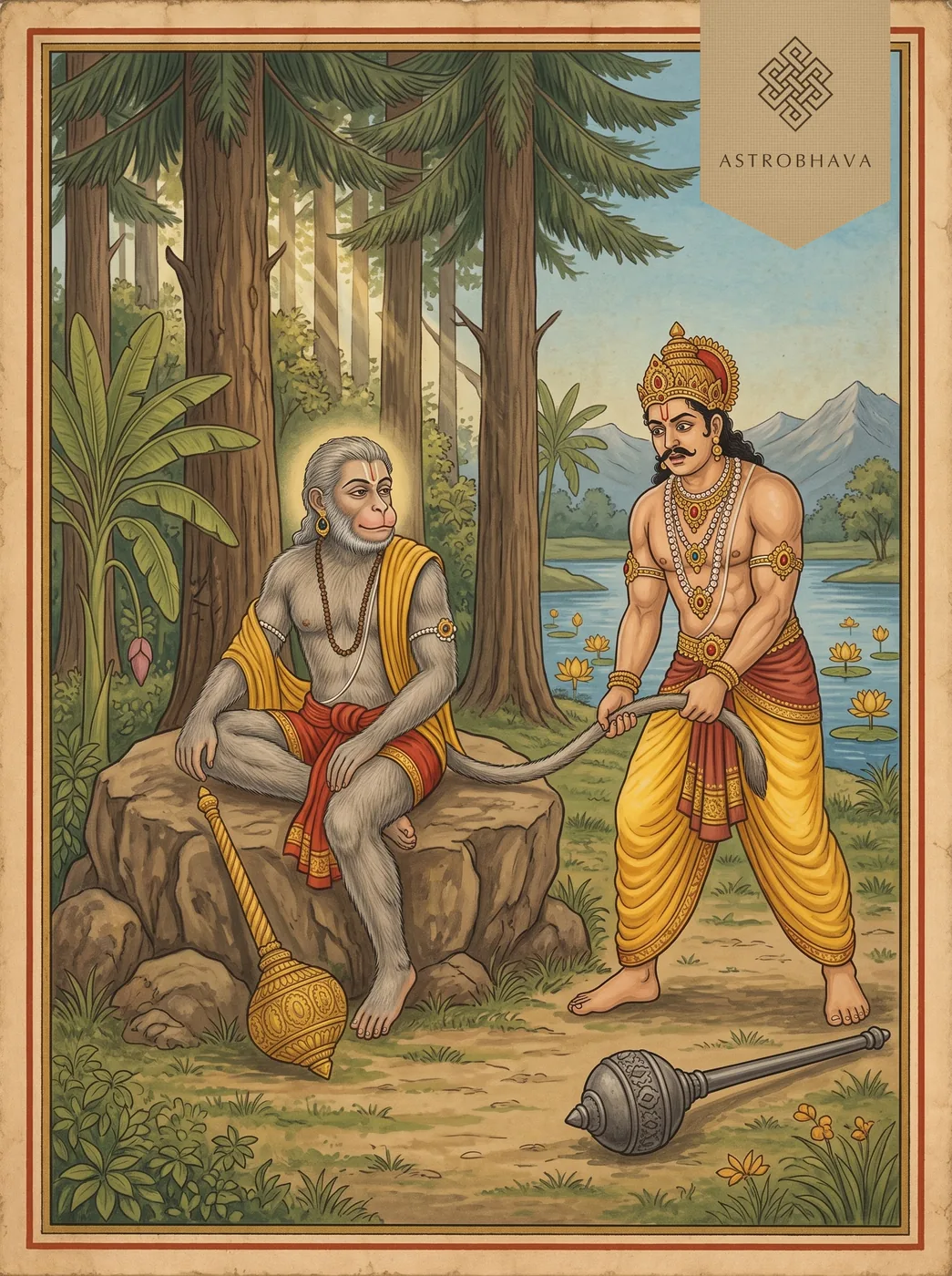
Eleven of the twelve names belong to the Ramayana, and the second verse even sets the deeds in the order the epic tells them: the ocean crossed, Sita consoled in Lanka, Lakshmana revived on the battlefield, Ravana humbled. One name steps outside that story. Phalguna-sakha, friend of Phalguna, points to Arjuna, and to an age long after Rama. The Mahabharata's Vana Parva relates that during the Pandavas' forest exile, Bhima went in search of rare flowers for Draupadi and found his way blocked by an old monkey lying across the path. Unable to lift its tail, Bhima learned that the monkey was Hanuman, his elder brother, since both were sons of Vayu. Hanuman would not join the coming war in person, but he promised to sit on the flagstaff of Arjuna's chariot and add his roar to the Pandava war cries. The Bhagavad Gita, in its first chapter, calls Arjuna kapi-dhvaja, the one whose banner bears the monkey. By placing this name beside 'beloved of Rama', the stotra holds both epics in a single line: the servant of one avatar becomes the companion of the archer whom Krishna guides in the other.
The mantra, in six scripts
- हनुमानञ्जनीसूनुर्वायुपुत्रो
- hanumānañjanīsūnurvāyuputro — Hanuman, son of Anjani, son of Vayu
- महाबलः
- mahābalaḥ — of great strength
- रामेष्टः
- rāmeṣṭaḥ — dear to Rama
- फाल्गुनसखः
- phālgunasakhaḥ — friend of Phalguna (Arjuna)
- पिङ्गाक्षोऽमितविक्रमः
- piṅgākṣo'mitavikramaḥ — tawny-eyed, of boundless valour
Hanuman Dwadasha Nama Stotram lyrics in full
Two verses of names followed by two verses on the fruit of recitation, in the four-verse form widely printed across North India.
All 4 verses, in Sanskrit, Tamil, Telugu, Kannada, Malayalam and English, each with its meaning. Choose a script:
Download the Hanuman Dwadasha Nama Stotram PDFAll 4 verses with their meanings, in Sanskrit. Free to print and keep.
हनुमानञ्जनीसूनुर्वायुपुत्रो महाबलः ।
रामेष्टः फाल्गुनसखः पिङ्गाक्षोऽमितविक्रमः ॥
ஹநுமாநஞ்ஜநீஸூநுர்வாயுபுத்ரோ மஹாபலஃ ।
ராமேஷ்டஃ பால்குநஸகஃ பிங்காக்ஷோமிதவிக்ரமஃ ॥
హనుమానఞ్జనీసూనుర్వాయుపుత్రో మహాబలః ।
రామేష్టః ఫాల్గునసఖః పిఙ్గాక్షోఽమితవిక్రమః ॥
ಹನುಮಾನಞ್ಜನೀಸೂನುರ್ವಾಯುಪುತ್ರೋ ಮಹಾಬಲಃ ।
ರಾಮೇಷ್ಟಃ ಫಾಲ್ಗುನಸಖಃ ಪಿಙ್ಗಾಕ್ಷೋಽಮಿತವಿಕ್ರಮಃ ॥
ഹനുമാനഞ്ജനീസൂനുര്വായുപുത്രോ മഹാബലഃ ।
രാമേഷ്ടഃ ഫാല്ഗുനസഖഃ പിങ്ഗാക്ഷോഽമിതവിക്രമഃ ॥
hanumānañjanīsūnurvāyuputro mahābalaḥ |
rāmeṣṭaḥ phālgunasakhaḥ piṅgākṣo'mitavikramaḥ ||
Hanuman, son of Anjani, son of Vayu the wind god, the mighty one; beloved of Rama, friend of Arjuna (Phalguna), the tawny-eyed one of boundless valour.
उदधिक्रमणश्चैव सीताशोकविनाशनः ।
लक्ष्मणप्राणदाता च दशग्रीवस्य दर्पहा ॥
உததிக்ரமணஶ்சைவ ஸீதாஶோகவிநாஶநஃ ।
லக்ஷ்மணப்ராணதாதா ச தஶக்ரீவஸ்ய தர்பஹா ॥
ఉదధిక్రమణశ్చైవ సీతాశోకవినాశనః ।
లక్ష్మణప్రాణదాతా చ దశగ్రీవస్య దర్పహా ॥
ಉದಧಿಕ್ರಮಣಶ್ಚೈವ ಸೀತಾಶೋಕವಿನಾಶನಃ ।
ಲಕ್ಷ್ಮಣಪ್ರಾಣದಾತಾ ಚ ದಶಗ್ರೀವಸ್ಯ ದರ್ಪಹಾ ॥
ഉദധിക്രമണശ്ചൈവ സീതാശോകവിനാശനഃ ।
ലക്ഷ്മണപ്രാണദാതാ ച ദശഗ്രീവസ്യ ദര്പഹാ ॥
udadhikramaṇaścaiva sītāśokavināśanaḥ |
lakṣmaṇaprāṇadātā ca daśagrīvasya darpahā ||
He who leapt across the ocean, the destroyer of Sita's grief, the giver of life to Lakshmana, and the one who crushed the pride of ten-headed Ravana.
एवं द्वादश नामानि कपीन्द्रस्य महात्मनः ।
स्वापकाले प्रबोधे च यात्राकाले च यः पठेत् ॥
ஏவம் த்வாதஶ நாமாநி கபீந்த்ரஸ்ய மஹாத்மநஃ ।
ஸ்வாபகாலே ப்ரபோதே ச யாத்ராகாலே ச யஃ படேத் ॥
ఏవం ద్వాదశ నామాని కపీన్ద్రస్య మహాత్మనః ।
స్వాపకాలే ప్రబోధే చ యాత్రాకాలే చ యః పఠేత్ ॥
ಏವಂ ದ್ವಾದಶ ನಾಮಾನಿ ಕಪೀನ್ದ್ರಸ್ಯ ಮಹಾತ್ಮನಃ ।
ಸ್ವಾಪಕಾಲೇ ಪ್ರಬೋಧೇ ಚ ಯಾತ್ರಾಕಾಲೇ ಚ ಯಃ ಪಠೇತ್ ॥
ഏവം ദ്വാദശ നാമാനി കപീന്ദ്രസ്യ മഹാത്മനഃ ।
സ്വാപകാലേ പ്രബോധേ ച യാത്രാകാലേ ച യഃ പഠേത് ॥
evaṃ dvādaśa nāmāni kapīndrasya mahātmanaḥ |
svāpakāle prabodhe ca yātrākāle ca yaḥ paṭhet ||
These are the twelve names of the great-souled lord of the monkeys. Whoever recites them at bedtime, on waking, and when setting out on a journey -
तस्य सर्वभयं नास्ति रणे च विजयी भवेत् ।
राजद्वारे गह्वरे च भयं नास्ति कदाचन ॥
தஸ்ய ஸர்வபயம் நாஸ்தி ரணே ச விஜயீ பவேத் ।
ராஜத்வாரே கஹ்வரே ச பயம் நாஸ்தி கதாசந ॥
తస్య సర్వభయం నాస్తి రణే చ విజయీ భవేత్ ।
రాజద్వారే గహ్వరే చ భయం నాస్తి కదాచన ॥
ತಸ್ಯ ಸರ್ವಭಯಂ ನಾಸ್ತಿ ರಣೇ ಚ ವಿಜಯೀ ಭವೇತ್ ।
ರಾಜದ್ವಾರೇ ಗಹ್ವರೇ ಚ ಭಯಂ ನಾಸ್ತಿ ಕದಾಚನ ॥
തസ്യ സര്വഭയം നാസ്തി രണേ ച വിജയീ ഭവേത് ।
രാജദ്വാരേ ഗഹ്വരേ ച ഭയം നാസ്തി കദാചന ॥
tasya sarvabhayaṃ nāsti raṇe ca vijayī bhavet |
rājadvāre gahvare ca bhayaṃ nāsti kadācana ||
The verse says that such a person has no fear of any kind and will be victorious in battle, and that at the king's court or in a deep, lonely place fear never touches them.
The syllable people get wrong
In piṅgākṣo'mitavikramaḥ the mark ' (avagraha) shows that the a of amita has merged into the o before it, so the phrase is said as one flow, ping-gaak-sho-mita-vikramah, not 'pingaksho amita'. The ṅ before g is a nasal from the back of the mouth, as in 'finger'.
When the Hanuman Dwadasha Nama Stotram is chanted
Weekday. Tuesday
Festival. Hanuman Jayanti
Questions
Have your chart read before you decide
Chanting is yours to do, and free. But which deity your situation calls for — and whether a mantra alone is the right response — depends on your chart. Sometimes it is; sometimes it is not.
- Over 30 years in the Guru–Sishya Parampara, from the age of five
- He reads every chart himself — 60 minutes, one to one, never delegated
- Charts are read only between sunrise and sunset, following tradition