Hanuman Mangalashtakam
वैशाखे मासि कृष्णायां दशम्यां मन्दवासरे । पूर्वाभाद्रप्रभूताय मङ्गलं श्रीहनूमते ॥Also known as Anjaneya Mangalashtakam
In Devanagari, Tamil, Telugu, Kannada, Malayalam and English — with the meaning of every word, and the one syllable most people pronounce wrongly.
 The Hanuman Homam, performed for youBook →
What the Hanuman Mangalashtakam is
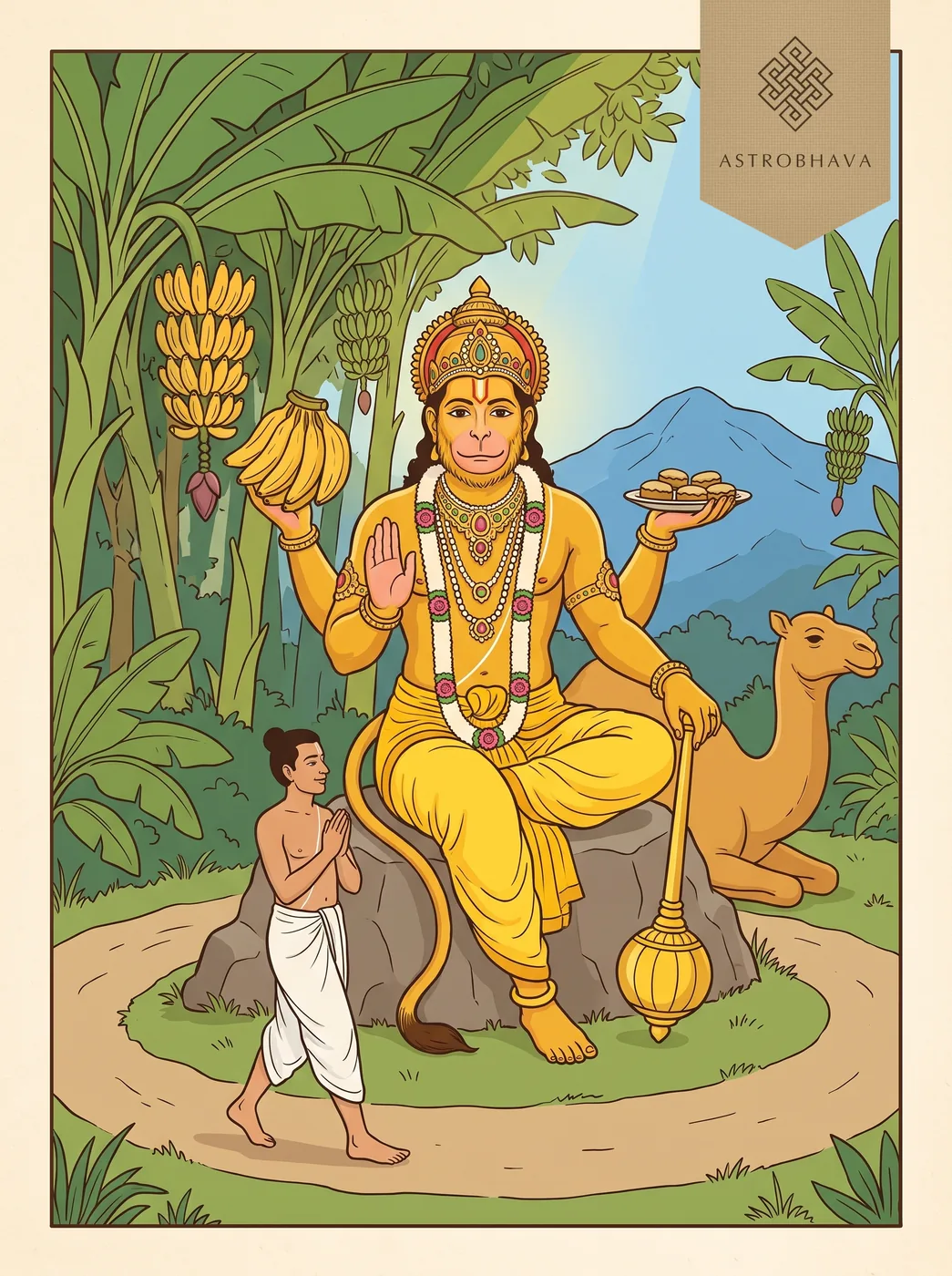
The Hanuman Mangalashtakam is a short Sanskrit hymn of eight verses, each wishing auspiciousness to Hanuman and each ending on the refrain 'mangalam shri hanumate'. It reads less like a plea for help than a portrait assembled in order. Verse 1 fixes his birth in the calendar: Vaishakha, dark fortnight, tenth day, a Saturday, under the star Purva Bhadra. Verses 2 to 4 describe him: fruits and sweet cakes, gem necklaces, Suvarchala as consort, four arms, a camel as mount, yellow cloth and a body the colour of molten gold. Verses 5 to 7 turn to deeds and places: Janaki's grief removed, Lakshmana revived, the banks of the Pampa, Mount Gandhamadana. Verse 8 ends on the five-faced form, the slaying of Kalanemi and the Kaundinya gotra. A ninth verse then steps outside the praise to report what a devotee named Nilamegha did next. The text is anonymous and traditional, and its date is not established.
A Birth Date and a Married Hanuman
The standard proofread text traces this hymn to a Hindi printing of the Parashara Samhita, the work devotional writers treat as the chief account of Hanuman's life, and much that looks unusual here makes sense against that background. Hanuman's birthday differs by region. Most of north India keeps Chaitra Purnima, and Tamil Nadu and Kerala keep the new moon of Margali, while Andhra Pradesh, Telangana and parts of Karnataka keep Vaishakha Bahula Dashami, the date in Verse 1. Purva Bhadra, named in the same line, is the birth star those communities give him. Verse 3 holds the other surprise. According to the legend told from the Samhita, Hanuman studied under Surya, who asked him to marry his daughter Suvarchala and said the marriage would not break his celibacy. The wedding is remembered on Jyeshtha Shukla Dashami, and a temple at Yellandu in Telangana worships the two together, though many devotees dispute the story. Verse 7 looks elsewhere: its plantain grove and Gandhamadana recall the Vana Parva of the Mahabharata, where Bhima finds Hanuman lying across a path among plantain trees on that mountain. The closing verse supplies the hymn's only narrative, as Nilamegha, his distress gone, walks around Hanuman and bows five times.
The mantra, in six scripts
- वैशाखे
- vaiśākhe — in Vaishakha
- मासि
- māsi — in the month
- कृष्णायां
- kṛṣṇāyāṃ — in the dark fortnight
- दशम्यां
- daśamyāṃ — on the tenth day
- मन्दवासरे
- mandavāsare — on a Saturday
- पूर्वाभाद्रप्रभूताय
- pūrvābhādraprabhūtāya — to the one born under Purva Bhadra
- मङ्गलं
- maṅgalaṃ — auspiciousness
- श्रीहनूमते
- śrīhanūmate — to Sri Hanuman
Hanuman Mangalashtakam lyrics in full
Eight verses on the refrain, followed by a narrative verse about Nilamegha that many chanted forms leave out. The printed closing line is given at the end.
All 10 verses, in Sanskrit, Tamil, Telugu, Kannada, Malayalam and English, each with its meaning. Choose a script:
Download the Hanuman Mangalashtakam PDFAll 10 verses with their meanings, in Sanskrit. Free to print and keep.
वैशाखे मासि कृष्णायां दशम्यां मन्दवासरे ।
पूर्वाभाद्रप्रभूताय मङ्गलं श्रीहनूमते ॥
வைஶாகே மாஸி க்ருஷ்ணாயாம் தஶம்யாம் மந்தவாஸரே ।
பூர்வாபாத்ரப்ரபூதாய மங்கலம் ஶ்ரீஹநூமதே ॥
వైశాఖే మాసి కృష్ణాయాం దశమ్యాం మన్దవాసరే ।
పూర్వాభాద్రప్రభూతాయ మఙ్గలం శ్రీహనూమతే ॥
ವೈಶಾಖೇ ಮಾಸಿ ಕೃಷ್ಣಾಯಾಂ ದಶಮ್ಯಾಂ ಮನ್ದವಾಸರೇ ।
ಪೂರ್ವಾಭಾದ್ರಪ್ರಭೂತಾಯ ಮಙ್ಗಲಂ ಶ್ರೀಹನೂಮತೇ ॥
വൈശാഖേ മാസി കൃഷ്ണായാം ദശമ്യാം മന്ദവാസരേ ।
പൂര്വാഭാദ്രപ്രഭൂതായ മങ്ഗലം ശ്രീഹനൂമതേ ॥
vaiśākhe māsi kṛṣṇāyāṃ daśamyāṃ mandavāsare |
pūrvābhādraprabhūtāya maṅgalaṃ śrīhanūmate ||
Auspiciousness to Sri Hanuman, who was born in the month of Vaishakha, in the dark fortnight, on the tenth day, a Saturday, under the star Purva Bhadra.
करुणारसपूर्णाय फलापूपप्रियाय च ।
नानामाणिक्यहाराय मङ्गलं श्रीहनूमते ॥
கருணாரஸபூர்ணாய பலாபூபப்ரியாய ச ।
நாநாமாணிக்யஹாராய மங்கலம் ஶ்ரீஹநூமதே ॥
కరుణారసపూర్ణాయ ఫలాపూపప్రియాయ చ ।
నానామాణిక్యహారాయ మఙ్గలం శ్రీహనూమతే ॥
ಕರುಣಾರಸಪೂರ್ಣಾಯ ಫಲಾಪೂಪಪ್ರಿಯಾಯ ಚ ।
ನಾನಾಮಾಣಿಕ್ಯಹಾರಾಯ ಮಙ್ಗಲಂ ಶ್ರೀಹನೂಮತೇ ॥
കരുണാരസപൂര്ണായ ഫലാപൂപപ്രിയായ ച ।
നാനാമാണിക്യഹാരായ മങ്ഗലം ശ്രീഹനൂമതേ ॥
karuṇārasapūrṇāya phalāpūpapriyāya ca |
nānāmāṇikyahārāya maṅgalaṃ śrīhanūmate ||
Auspiciousness to Sri Hanuman, who is full of compassion, who is fond of fruits and sweet cakes, and who wears necklaces of many gems.
सुवर्चलाकलत्राय चतुर्भुजधराय च ।
उष्ट्रारूढाय वीराय मङ्गलं श्रीहनूमते ॥
ஸுவர்சலாகலத்ராய சதுர்புஜதராய ச ।
உஷ்ட்ராரூடாய வீராய மங்கலம் ஶ்ரீஹநூமதே ॥
సువర్చలాకలత్రాయ చతుర్భుజధరాయ చ ।
ఉష్ట్రారూఢాయ వీరాయ మఙ్గలం శ్రీహనూమతే ॥
ಸುವರ್ಚಲಾಕಲತ್ರಾಯ ಚತುರ್ಭುಜಧರಾಯ ಚ ।
ಉಷ್ಟ್ರಾರೂಢಾಯ ವೀರಾಯ ಮಙ್ಗಲಂ ಶ್ರೀಹನೂಮತೇ ॥
സുവര്ചലാകലത്രായ ചതുര്ഭുജധരായ ച ।
ഉഷ്ട്രാരൂഢായ വീരായ മങ്ഗലം ശ്രീഹനൂമതേ ॥
suvarcalākalatrāya caturbhujadharāya ca |
uṣṭrārūḍhāya vīrāya maṅgalaṃ śrīhanūmate ||
Auspiciousness to Sri Hanuman, whose consort is Suvarchala, who bears four arms, the hero who rides a camel.
दिव्यमङ्गलदेहाय पीताम्बरधराय च ।
तप्तकाञ्चनवर्णाय मङ्गलं श्रीहनूमते ॥
திவ்யமங்கலதேஹாய பீதாம்பரதராய ச ।
தப்தகாஞ்சநவர்ணாய மங்கலம் ஶ்ரீஹநூமதே ॥
దివ్యమఙ్గలదేహాయ పీతామ్బరధరాయ చ ।
తప్తకాఞ్చనవర్ణాయ మఙ్గలం శ్రీహనూమతే ॥
ದಿವ್ಯಮಙ್ಗಲದೇಹಾಯ ಪೀತಾಮ್ಬರಧರಾಯ ಚ ।
ತಪ್ತಕಾಞ್ಚನವರ್ಣಾಯ ಮಙ್ಗಲಂ ಶ್ರೀಹನೂಮತೇ ॥
ദിവ്യമങ്ഗലദേഹായ പീതാമ്ബരധരായ ച ।
തപ്തകാഞ്ചനവര്ണായ മങ്ഗലം ശ്രീഹനൂമതേ ॥
divyamaṅgaladehāya pītāmbaradharāya ca |
taptakāñcanavarṇāya maṅgalaṃ śrīhanūmate ||
Auspiciousness to Sri Hanuman, whose body is divine and auspicious, who wears yellow garments, and whose colour is that of molten gold.
भक्तरक्षणशीलाय जानकीशोकहारिणे ।
ज्वलत्पावकनेत्राय मङ्गलं श्रीहनूमते ॥
பக்தரக்ஷணஶீலாய ஜாநகீஶோகஹாரிணே ।
ஜ்வலத்பாவகநேத்ராய மங்கலம் ஶ்ரீஹநூமதே ॥
భక్తరక్షణశీలాయ జానకీశోకహారిణే ।
జ్వలత్పావకనేత్రాయ మఙ్గలం శ్రీహనూమతే ॥
ಭಕ್ತರಕ್ಷಣಶೀಲಾಯ ಜಾನಕೀಶೋಕಹಾರಿಣೇ ।
ಜ್ವಲತ್ಪಾವಕನೇತ್ರಾಯ ಮಙ್ಗಲಂ ಶ್ರೀಹನೂಮತೇ ॥
ഭക്തരക്ഷണശീലായ ജാനകീശോകഹാരിണേ ।
ജ്വലത്പാവകനേത്രായ മങ്ഗലം ശ്രീഹനൂമതേ ॥
bhaktarakṣaṇaśīlāya jānakīśokahāriṇe |
jvalatpāvakanetrāya maṅgalaṃ śrīhanūmate ||
Auspiciousness to Sri Hanuman, whose nature is to protect his devotees, who took away the grief of Janaki, and whose eyes are like blazing fire.
पम्पातीरविहाराय सौमित्रिप्राणदायिने ।
सृष्टिकारणभूताय मङ्गलं श्रीहनूमते ॥
பம்பாதீரவிஹாராய ஸௌமித்ரிப்ராணதாயிநே ।
ஸ்ருஷ்டிகாரணபூதாய மங்கலம் ஶ்ரீஹநூமதே ॥
పమ్పాతీరవిహారాయ సౌమిత్రిప్రాణదాయినే ।
సృష్టికారణభూతాయ మఙ్గలం శ్రీహనూమతే ॥
ಪಮ್ಪಾತೀರವಿಹಾರಾಯ ಸೌಮಿತ್ರಿಪ್ರಾಣದಾಯಿನೇ ।
ಸೃಷ್ಟಿಕಾರಣಭೂತಾಯ ಮಙ್ಗಲಂ ಶ್ರೀಹನೂಮತೇ ॥
പമ്പാതീരവിഹാരായ സൌമിത്രിപ്രാണദായിനേ ।
സൃഷ്ടികാരണഭൂതായ മങ്ഗലം ശ്രീഹനൂമതേ ॥
pampātīravihārāya saumitriprāṇadāyine |
sṛṣṭikāraṇabhūtāya maṅgalaṃ śrīhanūmate ||
Auspiciousness to Sri Hanuman, who roams the banks of the Pampa, who gave life back to Lakshmana, and who is the very cause of creation.
रम्भावनविहाराय गन्धमादनवासिने ।
सर्वलोकैकनाथाय मङ्गलं श्रीहनूमते ॥
ரம்பாவநவிஹாராய கந்தமாதநவாஸிநே ।
ஸர்வலோகைகநாதாய மங்கலம் ஶ்ரீஹநூமதே ॥
రమ్భావనవిహారాయ గన్ధమాదనవాసినే ।
సర్వలోకైకనాథాయ మఙ్గలం శ్రీహనూమతే ॥
ರಮ್ಭಾವನವಿಹಾರಾಯ ಗನ್ಧಮಾದನವಾಸಿನೇ ।
ಸರ್ವಲೋಕೈಕನಾಥಾಯ ಮಙ್ಗಲಂ ಶ್ರೀಹನೂಮತೇ ॥
രമ്ഭാവനവിഹാരായ ഗന്ധമാദനവാസിനേ ।
സര്വലോകൈകനാഥായ മങ്ഗലം ശ്രീഹനൂമതേ ॥
rambhāvanavihārāya gandhamādanavāsine |
sarvalokaikanāthāya maṅgalaṃ śrīhanūmate ||
Auspiciousness to Sri Hanuman, who roams the plantain groves, who dwells on Mount Gandhamadana, and who is the one lord of all the worlds.
पञ्चाननाय भीमाय कालनेमिहराय च ।
कौण्डिन्यगोत्रजाताय मङ्गलं श्रीहनूमते ॥
பஞ்சாநநாய பீமாய காலநேமிஹராய ச ।
கௌண்டிந்யகோத்ரஜாதாய மங்கலம் ஶ்ரீஹநூமதே ॥
పఞ్చాననాయ భీమాయ కాలనేమిహరాయ చ ।
కౌణ్డిన్యగోత్రజాతాయ మఙ్గలం శ్రీహనూమతే ॥
ಪಞ್ಚಾನನಾಯ ಭೀಮಾಯ ಕಾಲನೇಮಿಹರಾಯ ಚ ।
ಕೌಣ್ಡಿನ್ಯಗೋತ್ರಜಾತಾಯ ಮಙ್ಗಲಂ ಶ್ರೀಹನೂಮತೇ ॥
പഞ്ചാനനായ ഭീമായ കാലനേമിഹരായ ച ।
കൌണ്ഡിന്യഗോത്രജാതായ മങ്ഗലം ശ്രീഹനൂമതേ ॥
pañcānanāya bhīmāya kālanemiharāya ca |
kauṇḍinyagotrajātāya maṅgalaṃ śrīhanūmate ||
Auspiciousness to Sri Hanuman, the five-faced, the mighty one, the slayer of Kalanemi, born in the Kaundinya lineage.
इति स्तुत्वा हनूमन्तं नीलमेघो गतव्यथः ।
प्रदक्षिणनमस्कारान् पञ्चवारं चकार सः ॥
இதி ஸ்துத்வா ஹநூமந்தம் நீலமேகோ கதவ்யதஃ ।
ப்ரதக்ஷிணநமஸ்காராந் பஞ்சவாரம் சகார ஸஃ ॥
ఇతి స్తుత్వా హనూమన్తం నీలమేఘో గతవ్యథః ।
ప్రదక్షిణనమస్కారాన్ పఞ్చవారం చకార సః ॥
ಇತಿ ಸ್ತುತ್ವಾ ಹನೂಮನ್ತಂ ನೀಲಮೇಘೋ ಗತವ್ಯಥಃ ।
ಪ್ರದಕ್ಷಿಣನಮಸ್ಕಾರಾನ್ ಪಞ್ಚವಾರಂ ಚಕಾರ ಸಃ ॥
ഇതി സ്തുത്വാ ഹനൂമന്തം നീലമേഘോ ഗതവ്യഥഃ ।
പ്രദക്ഷിണനമസ്കാരാന് പഞ്ചവാരം ചകാര സഃ ॥
iti stutvā hanūmantaṃ nīlamegho gatavyathaḥ |
pradakṣiṇanamaskārān pañcavāraṃ cakāra saḥ ||
Having praised Hanuman in this way, Nilamegha, his distress gone, walked around him in reverence and bowed to him five times.
इति श्री हनुमान् मङ्गलाष्टकम् ॥
இதி ஶ்ரீ ஹநுமாந் மங்கலாஷ்டகம் ॥
ఇతి శ్రీ హనుమాన్ మఙ్గలాష్టకమ్ ॥
ಇತಿ ಶ್ರೀ ಹನುಮಾನ್ ಮಙ್ಗಲಾಷ್ಟಕಮ್ ॥
ഇതി ശ്രീ ഹനുമാന് മങ്ഗലാഷ്ടകമ് ॥
iti śrī hanumān maṅgalāṣṭakam ||
Thus ends the Sri Hanuman Mangalashtakam.
The syllable people get wrong
In Verse 3, uṣṭrārūḍhāya ('riding a camel') is often flattened to 'ushtra-roodaya'. Curl the tongue back for both ṣṭ and ḍh, keep the aspirated ḍh, and hold the long vowels: oosh-TRAA-roo-DHAA-ya.
When the Hanuman Mangalashtakam is chanted
Weekday. Tuesday
Festival. Hanuman Jayanti on Vaishakha Bahula Dashami (Andhra Pradesh, Telangana)
Questions
Have your chart read before you decide
Chanting is yours to do, and free. But which deity your situation calls for — and whether a mantra alone is the right response — depends on your chart. Sometimes it is; sometimes it is not.
- Over 30 years in the Guru–Sishya Parampara, from the age of five
- He reads every chart himself — 60 minutes, one to one, never delegated
- Charts are read only between sunrise and sunset, following tradition
