Indra Mantra
ॐ सहस्रनेत्राय विद्महे वज्रहस्ताय धीमहि । तन्नो इन्द्रः प्रचोदयात् ॥Also known as Indra Gayatri
In Devanagari, Tamil, Telugu, Kannada, Malayalam and English — with the meaning of every word, and the one syllable most people pronounce wrongly.
 The Navagraha Homam, performed for youBook →
What the Indra Mantra is
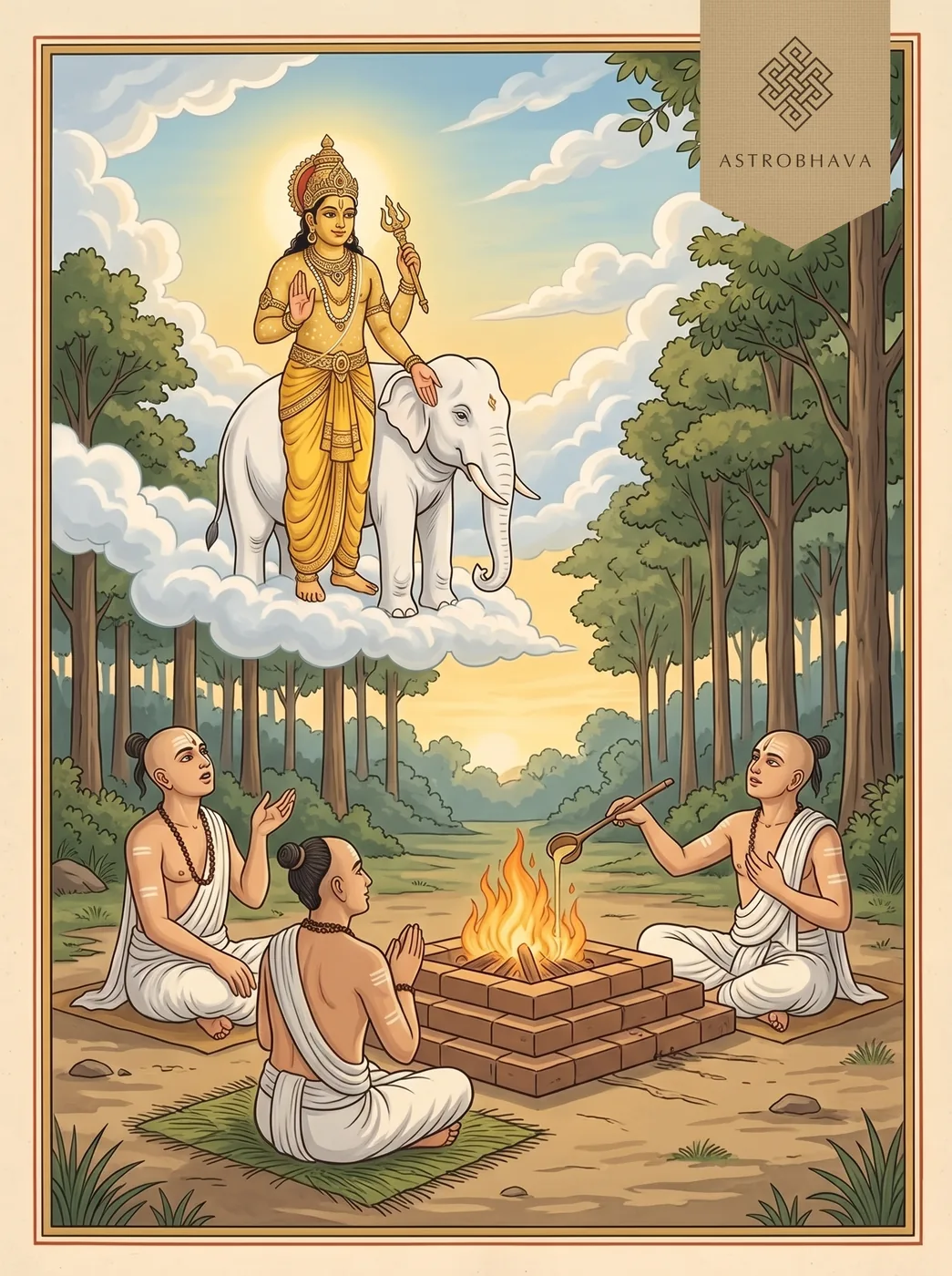
The Indra Mantra, as printed here, is a set of four short prayers to Indra, chief of the devas and bearer of the thunderbolt. Mantra 1 is the Indra Gayatri, which hails him as the thousand-eyed one with the vajra in his hand; it is a traditional devotional formula, and no scripture is given as its source. Mantra 2, Om Indraya Namah, is the plain salutation to his name, the form used wherever Indra is honoured by name in a puja. Verse 1 is Rigveda 1.7.1, the opening of a ten-verse hymn in Gayatri metre by Madhuchchhandas, son of Vishvamitra, who is also the seer of the Rigveda's first hymn. Verse 2 is Rigveda 6.47.11, the Trataram Indram verse in Trishtubh metre, from a hymn of Garga, son of Bharadvaja. The two Vedic verses are printed without accent marks; chanting them with the svaras is learned from a teacher.
Three priesthoods and the guardian of the east
Sayana, the classical commentator on the Rigveda, reads Verse 1 as a picture of the whole sacrifice. The gathinah, the singers, are the udgatar priests who chant to Samaveda melodies; the arkinah, who praise with arka, are the hotar priests reciting Rig verses; and the vanih, the voices, belong to the adhvaryu priests who speak the Yajus formulas. In this reading every order of priest turns to Indra alone. Sayana also records where the hymn was recited in the larger Vedic sacrifices: in the Nishkevalya shastra of the Mahavrata day, and in the Acchavaka priest's recitation during the first round of the Atiratra night. Verse 2 stands in a long hymn of Garga that opens by praising the Soma with which Indra rejoiced in slaying Vritra, and closes by addressing the war chariot and the battle drum. Sayana notes that the ritual manuals assign this verse to Indra as Trata, the rescuer, in an offering made for long life. In later puja manuals it became the mantra of the east. In the Ashta Dikpalaka puja that opens many Shiva rites, the eight guardians are worshipped from east round to north-east, and Indra's place comes first, with this verse followed by the bija Lam. The same manuals picture him with a thousand eyes, riding Airavata in Amaravati beside Shachi, the image the Gayatri's first epithet calls up.
The mantra, in six scripts
- ॐ
- oṃ — Om
- सहस्रनेत्राय
- sahasranetrāya — to the thousand-eyed one
- विद्महे
- vidmahe — we come to know
- वज्रहस्ताय
- vajrahastāya — to him with the thunderbolt in hand
- धीमहि
- dhīmahi — we meditate
- तन्नो
- tanno — that one, our
- इन्द्रः
- indraḥ — Indra
- प्रचोदयात्
- pracodayāt — may he stir and guide
Indra Mantra lyrics in full
Four short items: the Indra Gayatri, the name mantra and two Rigveda verses, the Vedic verses printed without accent marks.
All 4 verses, in Sanskrit, Tamil, Telugu, Kannada, Malayalam and English, each with its meaning. Choose a script:
Download the Indra Mantra PDFAll 4 verses with their meanings, in Sanskrit. Free to print and keep.
ॐ सहस्रनेत्राय विद्महे वज्रहस्ताय धीमहि ।
तन्नो इन्द्रः प्रचोदयात् ॥
ௐ ஸஹஸ்ரநேத்ராய வித்மஹே வஜ்ரஹஸ்தாய தீமஹி ।
தந்நோ இந்த்ரஃ ப்ரசோதயாத் ॥
ఓం సహస్రనేత్రాయ విద్మహే వజ్రహస్తాయ ధీమహి ।
తన్నో ఇన్ద్రః ప్రచోదయాత్ ॥
ಓಂ ಸಹಸ್ರನೇತ್ರಾಯ ವಿದ್ಮಹೇ ವಜ್ರಹಸ್ತಾಯ ಧೀಮಹಿ ।
ತನ್ನೋ ಇನ್ದ್ರಃ ಪ್ರಚೋದಯಾತ್ ॥
ഓം സഹസ്രനേത്രായ വിദ്മഹേ വജ്രഹസ്തായ ധീമഹി ।
തന്നോ ഇന്ദ്രഃ പ്രചോദയാത് ॥
oṃ sahasranetrāya vidmahe vajrahastāya dhīmahi |
tanno indraḥ pracodayāt ||
Om. We come to know the thousand-eyed one; we meditate on him who holds the thunderbolt in his hand. May that Indra stir and guide our minds.
ॐ इन्द्राय नमः ॥
ௐ இந்த்ராய நமஃ ॥
ఓం ఇన్ద్రాయ నమః ॥
ಓಂ ಇನ್ದ್ರಾಯ ನಮಃ ॥
ഓം ഇന്ദ്രായ നമഃ ॥
oṃ indrāya namaḥ ||
Om, salutation to Indra.
इन्द्रमिद्गाथिनो बृहदिन्द्रमर्केभिरर्किणः ।
इन्द्रं वाणीरनूषत ॥
இந்த்ரமித்காதிநோ ப்ருஹதிந்த்ரமர்கேபிரர்கிணஃ ।
இந்த்ரம் வாணீரநூஷத ॥
ఇన్ద్రమిద్గాథినో బృహదిన్ద్రమర్కేభిరర్కిణః ।
ఇన్ద్రం వాణీరనూషత ॥
ಇನ್ದ್ರಮಿದ್ಗಾಥಿನೋ ಬೃಹದಿನ್ದ್ರಮರ್ಕೇಭಿರರ್ಕಿಣಃ ।
ಇನ್ದ್ರಂ ವಾಣೀರನೂಷತ ॥
ഇന്ദ്രമിദ്ഗാഥിനോ ബൃഹദിന്ദ്രമര്കേഭിരര്കിണഃ ।
ഇന്ദ്രം വാണീരനൂഷത ॥
indramidgāthino bṛhadindramarkebhirarkiṇaḥ |
indraṃ vāṇīranūṣata ||
The singers have praised Indra greatly with their songs, the chanters have praised Indra with their hymns; their voices have praised Indra alone.
त्रातारमिन्द्रमवितारमिन्द्रं हवेहवे सुहवं शूरमिन्द्रम् ।
ह्वयामि शक्रं पुरुहूतमिन्द्रं स्वस्ति नो मघवा धात्विन्द्रः ॥
த்ராதாரமிந்த்ரமவிதாரமிந்த்ரம் ஹவேஹவே ஸுஹவம் ஶூரமிந்த்ரம் ।
ஹ்வயாமி ஶக்ரம் புருஹூதமிந்த்ரம் ஸ்வஸ்தி நோ மகவா தாத்விந்த்ரஃ ॥
త్రాతారమిన్ద్రమవితారమిన్ద్రం హవేహవే సుహవం శూరమిన్ద్రమ్ ।
హ్వయామి శక్రం పురుహూతమిన్ద్రం స్వస్తి నో మఘవా ధాత్విన్ద్రః ॥
ತ್ರಾತಾರಮಿನ್ದ್ರಮವಿತಾರಮಿನ್ದ್ರಂ ಹವೇಹವೇ ಸುಹವಂ ಶೂರಮಿನ್ದ್ರಮ್ ।
ಹ್ವಯಾಮಿ ಶಕ್ರಂ ಪುರುಹೂತಮಿನ್ದ್ರಂ ಸ್ವಸ್ತಿ ನೋ ಮಘವಾ ಧಾತ್ವಿನ್ದ್ರಃ ॥
ത്രാതാരമിന്ദ്രമവിതാരമിന്ദ്രം ഹവേഹവേ സുഹവം ശൂരമിന്ദ്രമ് ।
ഹ്വയാമി ശക്രം പുരുഹൂതമിന്ദ്രം സ്വസ്തി നോ മഘവാ ധാത്വിന്ദ്രഃ ॥
trātāramindramavitāramindraṃ havehave suhavaṃ śūramindram |
hvayāmi śakraṃ puruhūtamindraṃ svasti no maghavā dhātvindraḥ ||
At every call I invoke Indra the rescuer, Indra the helper, the hero who is easy to call. I call on Shakra, Indra invoked by many; may Indra the bountiful grant us well-being.
The syllable people get wrong
In Verse 2, hvayāmi ('I call') begins with h and v joined into a single syllable, hvā-yā-mi, so it should not be stretched into ha-va-yā-mi or hu-va-yā-mi. The form huve heard in some recitations is the Yajurveda's reading, a different word, not a way of saying hvayāmi.
Questions
Have your chart read before you decide
Chanting is yours to do, and free. But which deity your situation calls for — and whether a mantra alone is the right response — depends on your chart. Sometimes it is; sometimes it is not.
- Over 30 years in the Guru–Sishya Parampara, from the age of five
- He reads every chart himself — 60 minutes, one to one, never delegated
- Charts are read only between sunrise and sunset, following tradition
