Kandar Anubhuti
நெஞ்சக் கனகல்லு நெகிழ்ந் துருகத் தஞ்சத் தருள்சண் முகனுக் கியல்சேர்Also known as Kandar Anuboothi
In Tamil and English — with the meaning of every word, and the one sound most people pronounce wrongly.
 The Subramanya Homam, performed for youBook →
What the Kandar Anubhuti is
Kandar Anubhuti, also spelled Kandar Anuboothi, is the Tamil poem in which Arunagirinathar, the fifteenth-century saint-poet of Tiruvannamalai, sets down anubhuti, the lived experience of union with Kandan, that is Murugan. It opens with a kappu verse bowing at the feet of the five-handed, elephant-faced Ganapati, so that this garland of words may melt even a heart of stone. Fifty-one four-line verses follow. The first asks for a single task in life: to sing of the peacock, the spear and the rooster. Many verses then name the poet's own snares, house, gold and kin, and ask, 'is it right, is it right?' Others speak to the mind itself, telling it to give, let go and reach the feet of the spear-bearer. Verse 12 records the teaching 'be still, without words', and later verses ask how what was known could ever be told. The last asks the Lord, form and formless, flower and fragrance, to come as guru. Devotees set the work beside the Thirumanthiram.
A parrot, peepul leaves and a dream
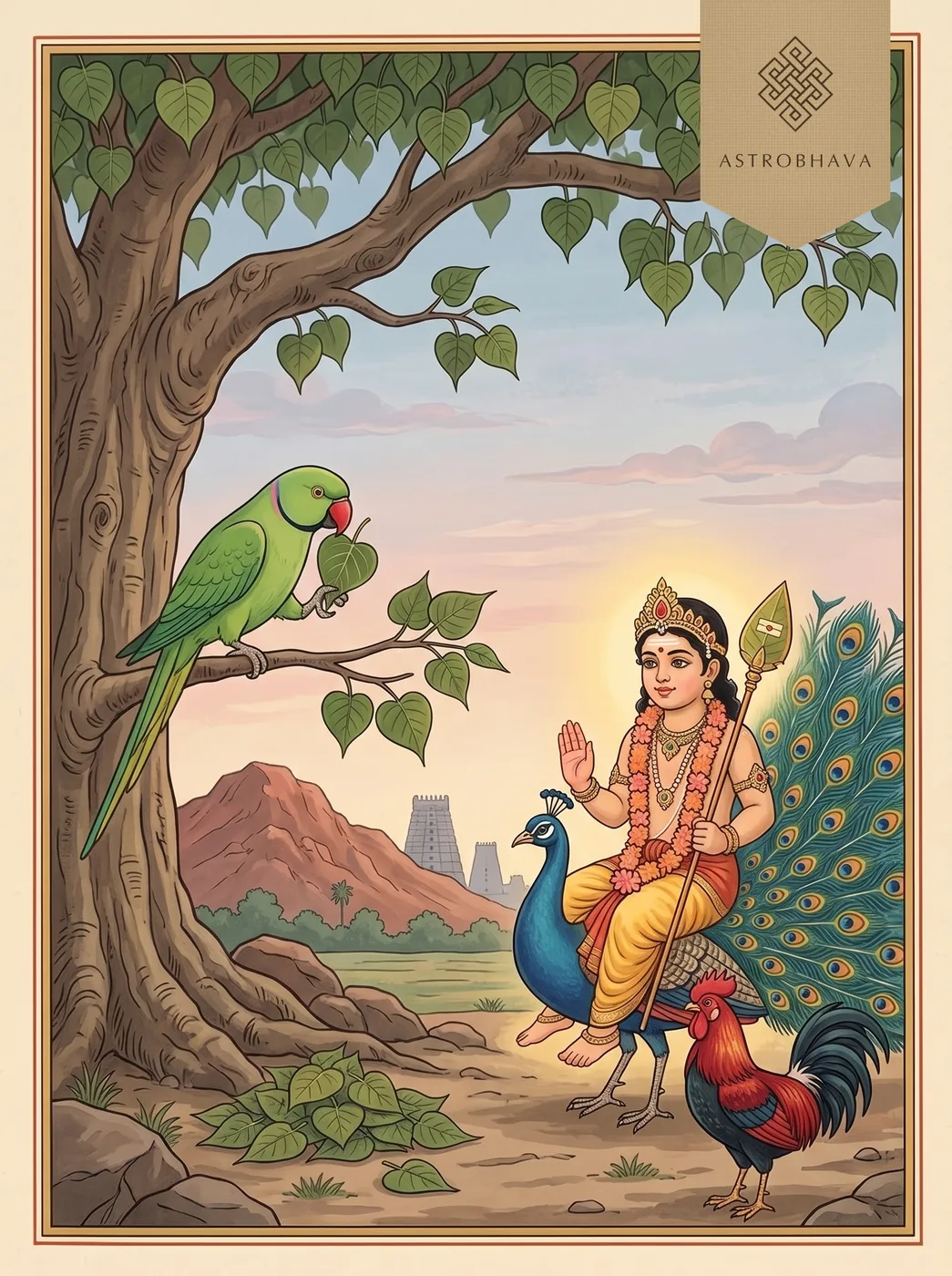
According to the traditional account, Kandar Anubhuti belongs to the close of Arunagirinathar's life, after his long pilgrimage to the shrines of Murugan. Sambandandan, a rival at the court of King Praudha Deva Raya, is said to have persuaded the king to ask the saint for parijata flowers from the world of the gods. Arunagiri left his body in a tower of the Tiruvannamalai temple, entered the body of a dead parrot and flew away. While he was gone, Sambandandan told the king the saint had died and had the body cremated, so Arunagiri remained a parrot. In one version the bird perched on a peepul tree near Tiruvannamalai and wrote each verse on a single leaf with its beak; the leaves, gathered up, became Kandar Anubhuti. Other tellings place the parrot on the arm of Murugan at Tiruttani or at Tiruchengode instead. A modern commentator on the poem rejects the parrot story, pointing out that the saint's own songs never mention it and that a samadhi shrine for him stands in the western enclosure of the Arunachaleswarar temple. In that account Murugan appeared to Arunagiri in a dream at Tirut-thurutti, marked the spear and the peacock on his shoulders, and told him to sing the Anubhuti.
The opening lines, in Tamil and English
- நெஞ்சக்
- neñcak — of the heart
- கனகல்லு
- kaṉakallu — the hard stone
- நெகிழ்ந்
- nekiḻn — softening
- துருகத்
- turukat — (and) melting
- தஞ்சத்
- tañcat — to (all who come for) refuge
- தருள்சண்
- taruḷcaṇ — granting grace, to Shan-
- முகனுக்
- mukaṉuk — -mukha
- கியல்சேர்
- kiyalcēr — fitting, graceful
- செஞ்சொற்
- ceñcoṟ — of fine words
- புனைமாலை
- puṉaimālai — the woven garland
- சிறந்
- ciṟan — excel
- திடவே
- tiṭavē — so that it may
- பஞ்சக்
- pañcak — five
- கரவானை
- karavāṉai — -handed elephant
- பதம்
- patam — feet
- பணிவாம்
- paṇivām — we bow at
Kandar Anubhuti lyrics in full
The kappu invocation to Ganapati and the fifty-one verses, printed in the traditional joined metrical form.
All 208 lines, in Tamil and English, each with its meaning. Choose a script:
Download the Kandar Anubhuti PDFAll 208 lines with their meanings, in Tamil. Free to print and keep.
நெஞ்சக் கனகல்லு நெகிழ்ந் துருகத்
தஞ்சத் தருள்சண் முகனுக் கியல்சேர்
செஞ்சொற் புனைமாலை சிறந் திடவே
பஞ்சக் கரவானை பதம் பணிவாம்
neñcak kaṉakallu nekiḻn turukat
tañcat taruḷcaṇ mukaṉuk kiyalcēr
ceñcoṟ puṉaimālai ciṟan tiṭavē
pañcak karavāṉai patam paṇivām
So that this garland of fine words, made for Shanmukha who gives grace to all who take refuge in him, may excel and melt even the hard stone of the heart, we bow at the feet of the five-handed elephant-faced Lord (Ganapati).
ஆடும் பரிவே லணிசே வலெனப்
பாடும் பணியே பணியா யருள்வாய்
தேடுங் கயமா முகனைச் செருவிற்
சாடுந் தனியா னைசகோ தரனே
āṭum parivē laṇicē valeṉap
pāṭum paṇiyē paṇiyā yaruḷvāy
tēṭuṅ kayamā mukaṉaic ceruviṟ
cāṭun taṉiyā ṉaicakō taraṉē
Grant me the grace that my one task in life is to sing of your dancing peacock steed, your spear and your handsome rooster. O brother of the peerless elephant-faced god who struck down in battle the elephant-faced demon who came hunting for the gods.
உல்லாச நிராகுல யோக விதச்
சல்லாப விநோதனு நீயலையோ
எல்லாமற என்னை யிழந்த நலஞ்
சொல்லாய் முருகா சுரபூ பதியே
ullāca nirākula yōka vitac
callāpa vinōtaṉu nīyalaiyō
ellāmaṟa eṉṉai yiḻanta nalañ
collāy murukā curapū patiyē
Are you not the one who delights in joyful, untroubled yoga and in sweet loving play? O Muruga, lord of the gods, tell me what that bliss was, when everything fell away and I lost myself.
வானோ புனல்பார் கனல்மா ருதமோ
ஞானோ தயமோ நவில்நான் மறையோ
யானோ மனமோ எனையாண் டவிடந்
தானோ பொருளா வதுசண்முகனே
vāṉō puṉalpār kaṉalmā rutamō
ñāṉō tayamō navilnāṉ maṟaiyō
yāṉō maṉamō eṉaiyāṇ ṭaviṭan
tāṉō poruḷā vatucaṇmukaṉē
Is it the sky, or water, earth, fire or wind? Is it the dawning of wisdom, or the four Vedas that are recited? Is it I, or the mind, or the very place where you took me as your own? O Shanmukha, what is the true reality?
வளைபட் டகைம் மாதொடு மக்களெனுந்
தளைபட் டழியத் தகுமோ தகுமோ
கிளைபட் டெழுசூ ருரமுங் கிரியுந்
தொளைபட் டுருவத் தொடுவே லவனே
vaḷaipaṭ ṭakaim mātoṭu makkaḷeṉun
taḷaipaṭ ṭaḻiyat takumō takumō
kiḷaipaṭ ṭeḻucū ruramuṅ kiriyun
toḷaipaṭ ṭuruvat toṭuvē lavaṉē
Is it right, is it right, that I should be caught and ruined in the fetters called a bangled wife and children? O Lord of the spear, whose spear pierced clean through the chest of Sura, who rose up with all his kin, and through the mountain.
மகமாயை களைந்திட வல்ல பிரான்
முகமாறு மொழிந்து மொழிந் திலனே
அகமாடை மடந்தைய ரென் றயருஞ்
சகமாயையுள் நின்று தயங் குவதே
makamāyai kaḷaintiṭa valla pirāṉ
mukamāṟu moḻintu moḻin tilaṉē
akamāṭai maṭantaiya reṉ ṟayaruñ
cakamāyaiyuḷ niṉṟu tayaṅ kuvatē
The Lord who alone can dispel the great illusion has taught me with his six faces, yet I have not stopped. I still waver inside the illusion of the world, pining after house, gold and women.
திணியா னமனோ சிலைமீ துனதாள்
அணியா ரரவிந்த மரும்பு மதோ
பணியா வென வள்ளி பதம் பணியுந்
தணியா வதிமோக தயா பரனே
tiṇiyā ṉamaṉō cilaimī tuṉatāḷ
aṇiyā raravinta marumpu matō
paṇiyā veṉa vaḷḷi patam paṇiyun
taṇiyā vatimōka tayā paraṉē
O you of overflowing love and compassion, who bows at Valli's feet asking 'What is your command?' Will the lovely lotus of your feet ever bud upon the hard stone of my mind?
கெடுவாய் மனனே கதிகேள் கரவா
திடுவாய் வடிவே லிறைதாள் நினைவாய்
சுடுவாய் நெடுவே தனைதூள் படவே
விடுவாய் விடுவாய் வினையா வையுமே
keṭuvāy maṉaṉē katikēḷ karavā
tiṭuvāy vaṭivē liṟaitāḷ niṉaivāy
cuṭuvāy neṭuvē taṉaitūḷ paṭavē
viṭuvāy viṭuvāy viṉaiyā vaiyumē
O mind, you will be ruined; listen to the way out. Give without holding back, meditate on the feet of the Lord of the sharp spear, burn your long suffering to dust, and let go, let go of every deed that binds you.
அமரும் பதிகே ளகமா மெனுமிப்
பிமரங் கெடமெய்ப் பொருள் பேசியவா
குமரன் கிரிராச குமாரி மகன்
சமரம் பொரு தானவ நாசகனே
amarum patikē ḷakamā meṉumip
pimaraṅ keṭameyp poruḷ pēciyavā
kumaraṉ kirirāca kumāri makaṉ
camaram poru tāṉava nācakaṉē
You taught the true reality that destroys the delusion 'this is my lasting home, these are my kin, this is myself.' O Kumara, son of the mountain king's daughter, destroyer of the demons who came to fight.
மட்டூர்குழல் மங்கையர் மையல் வலைப்
பட்டூசல் படும் பரிசென் றொழிவேன்
தட்டூ டறவேல் சயிலத் தெறியும்
நிட்டூர நிராகுல நிர்ப் பயனே
maṭṭūrkuḻal maṅkaiyar maiyal valaip
paṭṭūcal paṭum pariceṉ ṟoḻivēṉ
taṭṭū ṭaṟavēl cayilat teṟiyum
niṭṭūra nirākula nirp payaṉē
When will I be freed from swinging to and fro, caught in the net of longing for women with honeyed hair? O fearless, untroubled one, fierce to the wicked, who hurled the spear so that the mountain was split through.
கார்மா மிசைகா லன்வரிற் கலபத்
தேர்மா மிசைவந் தெதிரப் படுவாய்
தார்மார்ப வலாரி தலாரி யெனுஞ்
சூர்மா மடியத் தொடுவே லவனே
kārmā micaikā laṉvariṟ kalapat
tērmā micaivan tetirap paṭuvāy
tārmārpa valāri talāri yeṉuñ
cūrmā maṭiyat toṭuvē lavaṉē
When Death comes riding his great black buffalo, you will appear before me on your great peacock. O garlanded Lord of the spear, who struck down the mighty Sura, the foe who harried Indra.
கூகா வெனவென் கிளைகூ டியழப்
போகா வகைமெய்ப் பொருள்பே சியவா
நாகாசல வேலவ நாலு கவித்
தியாகா சுரலோக சிகா மணியே
kūkā veṉaveṉ kiḷaikū ṭiyaḻap
pōkā vakaimeyp poruḷpē ciyavā
nākācala vēlava nālu kavit
tiyākā curalōka cikā maṇiyē
You spoke the true teaching so that I need not depart while my kin gather and wail. O spear-bearer of the serpent hill, giver of the four kinds of poetry, crest jewel of the world of the gods.
செம்மான் மகளைத் திருடுந் திருடன்
பெம்மான் முருகன் பிறவா னிறவான்
சும்மா இருசொல் லறவென் றலுமே
அம்மா பொரு ளொன்று மறிந்திலனே
cemmāṉ makaḷait tiruṭun tiruṭaṉ
pemmāṉ murukaṉ piṟavā ṉiṟavāṉ
cummā irucol laṟaveṉ ṟalumē
ammā poru ḷoṉṟu maṟintilaṉē
The thief who stole the daughter of the red deer, the Lord Muruga, who is never born and never dies, said 'Be still, without words', and at that, oh, I knew nothing at all.
முருகன் தனிவேல் முநிநங் குருவென்
றருள்கொண் டறியா ரறியுந் தரமோ
உருவன் றருவன் றுளதன் றிலதன்
றிருளன் றொளியன் றெனநின் றதுவே
murukaṉ taṉivēl muninaṅ kuruveṉ
ṟaruḷkoṇ ṭaṟiyā raṟiyun taramō
uruvaṉ ṟaruvaṉ ṟuḷataṉ ṟilataṉ
ṟiruḷaṉ ṟoḷiyaṉ ṟeṉaniṉ ṟatuvē
Can those who do not come to know him by his grace, as Murugan, the sage of the peerless spear, our guru, ever know him? He stood as neither form nor formless, neither being nor non-being, neither darkness nor light.
கைவாய் கதிர்வேல் முருகன் கழல்பெற்
றுய்வாய் மனனே யொழிவா யொழிவாய்
மெய்வாய் விழி நாசியொடுஞ் செவியாம்
ஐவாய் வழி செல்லு மவாவினையே
kaivāy katirvēl murukaṉ kaḻalpeṟ
ṟuyvāy maṉaṉē yoḻivā yoḻivāy
meyvāy viḻi nāciyoṭuñ ceviyām
aivāy vaḻi cellu mavāviṉaiyē
O mind, reach the feet of Murugan, who holds the shining spear in his hand, and be saved. Give up, give up the craving that runs out along the five roads of body, mouth, eyes, nose and ears.
முருகன் குமரன் குகனென்று மொழிந்
துருகுஞ் செயல்தந் துணர்வென் றருள்வாய்
பொருபுங் கவரும் புவியும் பரவுங்
குருபுங் கவஎண் குணபஞ் சரனே
murukaṉ kumaraṉ kukaṉeṉṟu moḻin
turukuñ ceyaltan tuṇarveṉ ṟaruḷvāy
porupuṅ kavarum puviyum paravuṅ
kurupuṅ kavaeṇ kuṇapañ caraṉē
Grant me the gift of melting as I say 'Murugan, Kumaran, Guhan', and the awareness that comes with it. O foremost of gurus, adored by the warrior gods and by the earth, home of the eight divine qualities.
பேராசை யெனும் பிணியிற் பிணிபட்
டோரா வினையே னுழலத் தகுமோ
வீரா முதுசூர் படவே லெறியுஞ்
சூரா சுரலோ கதுரந் தரனே
pērācai yeṉum piṇiyiṟ piṇipaṭ
ṭōrā viṉaiyē ṉuḻalat takumō
vīrā mutucūr paṭavē leṟiyuñ
cūrā curalō katuran taraṉē
Is it fitting that I, a sinner who does not reflect, should wander, sick with the disease of great greed? O hero, valiant one who hurled the spear so that the ancient Sura fell, upholder of the world of the gods.
யாமோ தியகல் வியுமெம் மறிவுந்
தாமே பெறவே லவர்தந் ததனாற்
பூமேல் மயல்போ யறமெய்ப் புணர்வீர்
நாமேல் நடவீர் நடவீ ரினியே
yāmō tiyakal viyumem maṟivun
tāmē peṟavē lavartan tataṉāṟ
pūmēl mayalpō yaṟameyp puṇarvīr
nāmēl naṭavīr naṭavī riṉiyē
The learning we studied and the knowledge we have came to us because the Lord of the spear gave them. So let worldly delusion go, hold to virtue and truth, and walk on, walk on, from now on.
உதியா மரியா வுணரா மறவா
விதிமா லறியா விமலன் புதல்வா
அதிகா வநகா வபயா வமரா
பதிகா வலசூர பயங் கரனே
utiyā mariyā vuṇarā maṟavā
vitimā laṟiyā vimalaṉ putalvā
atikā vanakā vapayā vamarā
patikā valacūra payaṅ karaṉē
Son of the pure Lord who is never born and never dies, who needs no waking and never forgets, whom Brahma and Vishnu could not know. O supreme one, sinless one, giver of refuge, immortal one, guardian of the gods' city, terror to Sura.
வடிவுந் தனமும் மனமுங் குணமுங்
குடியுங் குலமுங் குடிபோ கியவா
அடியந் தமிலா அயில்வே லரசே
மிடி யென்றொரு பாவி வெளிப் படினே
vaṭivun taṉamum maṉamuṅ kuṇamuṅ
kuṭiyuṅ kulamuṅ kuṭipō kiyavā
aṭiyan tamilā ayilvē laracē
miṭi yeṉṟoru pāvi veḷip paṭiṉē
O king of the sharp spear, without beginning or end: when the sinner called poverty shows himself, beauty, wealth, mind, good nature, family and lineage all move out.
அரிதா கியமெய்ப் பொருளுக் கடியேன்
உரிதா வுபதேச முணர்த் தியவா
விரிதா ரணவிக் ரமவே ளிமையோர்
புரிதா ரகநா கபுரந் தரனே
aritā kiyameyp poruḷuk kaṭiyēṉ
uritā vupatēca muṇart tiyavā
viritā raṇavik ramavē ḷimaiyōr
puritā rakanā kapuran taraṉē
You taught me, your servant, the rare true reality as my own instruction. O valiant Lord with the broad garland, ruler of the realm of the gods, who destroyed Taraka for the immortals.
கருதா மறவா நெறிகா ணஎனக்
கிருதாள் வனசந் தரஎன் றிசைவாய்
வரதா முருகா மயில்வா கனனே
விரதா சுரசூர விபாட ணனே
karutā maṟavā neṟikā ṇaeṉak
kirutāḷ vaṉacan taraeṉ ṟicaivāy
varatā murukā mayilvā kaṉaṉē
viratā curacūra vipāṭa ṇaṉē
Agree to give me your two lotus feet, so that I may find the path beyond both thinking and forgetting. O giver of boons, Muruga, rider of the peacock, steadfast one who tore Sura apart.
காளைக் குமரே சனெனக் கருதித்
தாளைப் பணியத் தவமெய் தியவா
பாளைக் குழல் வள்ளி பதம்பணியும்
வேளைச் சுரபூபதி மேருவையே
kāḷaik kumarē caṉeṉak karutit
tāḷaip paṇiyat tavamey tiyavā
pāḷaik kuḻal vaḷḷi patampaṇiyum
vēḷaic curapūpati mēruvaiyē
What fortune, that thinking of him as youthful Kumaresa I came to bow at his feet: the Lord, king of the gods and steady as Meru, who bows at the feet of Valli with hair like the areca blossom.
அடியைக் குறியா தறியா மையினான்
முடியக் கெடவோ முறையோ முறையோ
வடிவிக் ரமவேல் மகிபா குறமின்
கொடியைப் புணருங் குணபூத ரனே
aṭiyaik kuṟiyā taṟiyā maiyiṉāṉ
muṭiyak keṭavō muṟaiyō muṟaiyō
vaṭivik ramavēl makipā kuṟamiṉ
koṭiyaip puṇaruṅ kuṇapūta raṉē
Is it right, is it right, that through ignorance, never fixing my mind on your feet, I should be utterly ruined? O king with the sharp, mighty spear, mountain of virtues, who embraces the lightning-vine of the hill tribe.
கூர்வேல் விழி மங்கையர் கொங்கையிலே
சேர்வே னருள்சே ரவுமெண் ணுமதோ
சூர்வே ரொடுகுன் றுதொளைத் தநெடும்
போர்வேல புரந்தர பூப தியே
kūrvēl viḻi maṅkaiyar koṅkaiyilē
cērvē ṉaruḷcē ravumeṇ ṇumatō
cūrvē roṭukuṉ ṟutoḷait taneṭum
pōrvēla purantara pūpa tiyē
Will I, who cling to women with eyes sharp as spears, ever even think of attaining grace? O Lord of the great battle spear that pierced Sura to the root and split the mountain, ruler of Indra and of the earth.
மெய்யே யெனவெவ் வினைவாழ் வையுகந்
தையோ அடியே னலையத் தகுமோ
கையோ அயிலோ கழலோ முழுதுஞ்
செய்யோய் மயிலே றியசே வகனே
meyyē yeṉavev viṉaivāḻ vaiyukan
taiyō aṭiyē ṉalaiyat takumō
kaiyō ayilō kaḻalō muḻutuñ
ceyyōy mayilē ṟiyacē vakaṉē
Alas, is it fitting that I, your servant, should wander, cherishing this cruel life of deeds as if it were real? O warrior who rides the peacock, whose hands, spear and feet are all radiant.
ஆதா ரமிலே னருளைப் பெறவே
நீதா னொருசற் றுநினைந் திலையே
வேதா கமஞா னவிநோ தமநோ
தீதா சுரலோ கசிகா மணியே
ātā ramilē ṉaruḷaip peṟavē
nītā ṉorucaṟ ṟuniṉain tilaiyē
vētā kamañā ṉavinō tamanō
tītā curalō kacikā maṇiyē
I have no support of my own; did you not think of me even a little, so that I might receive your grace? O you who delight in the wisdom of the Vedas and Agamas, who are beyond the mind, crest jewel of the world of the gods.
மின்னே நிகர்வாழ் வைவிரும் பியயான்
என்னே விதியின் பயனிங் கிதுவோ
பொன்னே மணியே பொருளே யருளே
மன்னே மயிலேறிய வானவனே
miṉṉē nikarvāḻ vaivirum piyayāṉ
eṉṉē vitiyiṉ payaṉiṅ kituvō
poṉṉē maṇiyē poruḷē yaruḷē
maṉṉē mayilēṟiya vāṉavaṉē
Why is this the fruit of my fate here, that I longed for a life as fleeting as lightning? O gold, O gem, O treasure, O grace, O king, O celestial one who rides the peacock.
ஆனா அமுதே அயில்வே லரசே
ஞானா கரனே நவிலத் தகுமோ
யானாகிய வென்னை விழுங்கி வெறுந்
தானாய் நிலைநின் றதுதற் பரமே
āṉā amutē ayilvē laracē
ñāṉā karaṉē navilat takumō
yāṉākiya veṉṉai viḻuṅki veṟun
tāṉāy nilainiṉ ṟatutaṟ paramē
O nectar that never runs dry, king of the sharp spear, mine of wisdom, can it be put into words? The Supreme swallowed the 'I' that I was and remained as itself alone.
இல்லே யெனுமா யையி லிட்டனைநீ
பொல்லே னறியாமை பொறுத் திலையே
மல்லே புரிபன் னிருவா குவிலென்
சொல்லே புனையுஞ் சுடர்வே லவனே
illē yeṉumā yaiyi liṭṭaṉainī
pollē ṉaṟiyāmai poṟut tilaiyē
mallē puripaṉ ṉiruvā kuvileṉ
collē puṉaiyuñ cuṭarvē lavaṉē
You placed me in the illusion that says 'there is nothing'; have you not borne with my wicked ignorance? O spear of light, who wears my words as a garland upon your twelve mighty shoulders.
செவ்வா னுருவிற் றிகழ்வே லவனன்
றொவ்வா ததென வுணர்வித் ததுதான்
அவ்வா றறிவா ரறிகின் றதலால்
எவ்வா றொருவர்க் கிசைவிப் பதுவே
cevvā ṉuruviṟ ṟikaḻvē lavaṉaṉ
ṟovvā tateṉa vuṇarvit tatutāṉ
avvā ṟaṟivā raṟikiṉ ṟatalāl
evvā ṟoruvark kicaivip patuvē
What the Lord of the spear, shining in a form like the red sky, made me realise that day as beyond compare: apart from those who know it in that way, how could anyone convey it to another?
பாழ்வாழ் வெனுமிப் படுமா யையிலே
வீழ்வா யென என்னை விதித்தனையே
தாழ்வா னவைசெய் தனதா முளவோ
வாழ்வா யினிநீ மயில்வா கனனே
pāḻvāḻ veṉumip paṭumā yaiyilē
vīḻvā yeṉa eṉṉai vitittaṉaiyē
tāḻvā ṉavaicey taṉatā muḷavō
vāḻvā yiṉinī mayilvā kaṉaṉē
You decreed that I should fall into this harmful illusion called an empty life. Are any of the low deeds that were done truly mine? Grant me true life from now on, O rider of the peacock.
கலையே பதறிக் கதறித் தலையூ
டலையே படுமா றதுவாய் விடவோ
கொலையே புரி வேடர்குலப் பிடிதோய்
மலையே மலை கூறிடு வாகையனே
kalaiyē pataṟik kataṟit talaiyū
ṭalaiyē paṭumā ṟatuvāy viṭavō
kolaiyē puri vēṭarkulap piṭitōy
malaiyē malai kūṟiṭu vākaiyaṉē
Shall I let my learning shake and cry aloud, and my mind be tossed about like the waves? O mountain who embraced the doe of the hunters, victor who split the mountain.
சிந்தா குலவில் லொடுசெல் வமெனும்
விந்தா டவியென்று விடப் பெறுவேன்
மந்தா கினிதந்த வரோ தயனே
கந்தா முருகா கருணா கரனே
cintā kulavil loṭucel vameṉum
vintā ṭaviyeṉṟu viṭap peṟuvēṉ
mantā kiṉitanta varō tayaṉē
kantā murukā karuṇā karaṉē
When will I be released from the dense forest of worry, home and wealth? O bringer of blessings, child of the heavenly Ganga, Kanda, Muruga, ocean of compassion.
சிங்கார மடந்தையர் தீநெறி போய்
மங்காம லெனக்கு வரந்தருவாய்
சங்க்ராம சிகா வலசண் முகனே
கங்கா நதி பால க்ருபாகரனே
ciṅkāra maṭantaiyar tīneṟi pōy
maṅkāma leṉakku varantaruvāy
caṅkrāma cikā valacaṇ mukaṉē
kaṅkā nati pāla krupākaraṉē
Grant me the boon that I may not waste away by following adorned women on the wrong path. O Shanmukha, guardian in battle, son of the Ganga, ocean of mercy.
விதிகாணு முடம்பை விடா வினையேன்
கதிகாண மலர்க்கழ லென் றருள்வாய்
மதிவா ணுதல்வள்ளியையல் லதுபின்
துதியா விரதா சுரபூ பதியே
vitikāṇu muṭampai viṭā viṉaiyēṉ
katikāṇa malarkkaḻa leṉ ṟaruḷvāy
mativā ṇutalvaḷḷiyaiyal latupiṉ
tutiyā viratā curapū patiyē
When will you grant me, bound to deeds and unwilling to leave this body shaped by fate, your flower feet so that I may reach liberation? O steadfast one who praises no one but Valli of the moon-bright brow, lord of the gods.
நாதா குமரா நமவென் றரனார்
ஓதா யெனவோ தியதெப் பொருள்தான்
வேதா முதல் விண்ணவர் சூடுமலர்ப்
பாதா குறமின் பதசே கரனே
nātā kumarā namaveṉ ṟaraṉār
ōtā yeṉavō tiyatep poruḷtāṉ
vētā mutal viṇṇavar cūṭumalarp
pātā kuṟamiṉ patacē karaṉē
O Lord, Kumara, what was the meaning you taught when Shiva said 'Teach me' and bowed to you? O you whose feet Brahma and all the gods wear as flowers, who wears on his head the feet of the lightning-bright hill maiden.
கிரிவாய் விடுவிக் ரம வேலிறையோன்
பரிவா ரமெனும் பதமே வலையே
புரிவாய் மனனே பொறையா மறிவால்
அரிவா யடியோடு மகந் தையையே
kirivāy viṭuvik rama vēliṟaiyōṉ
parivā rameṉum patamē valaiyē
purivāy maṉaṉē poṟaiyā maṟivāl
arivā yaṭiyōṭu makan taiyaiyē
O mind, take your place in the retinue of the Lord whose mighty spear split the mountain. With the wisdom that is patience, cut away ego at its root.
ஆதாளியை யொன் றறியே னையறத்
தீதாளியை யாண் டதுசெப் புமதோ
கூதாள கிராத குலிக் கிறைவா
வேதாள கணம் புகழ்வே லவனே
ātāḷiyai yoṉ ṟaṟiyē ṉaiyaṟat
tītāḷiyai yāṇ ṭatucep pumatō
kūtāḷa kirāta kulik kiṟaivā
vētāḷa kaṇam pukaḻvē lavaṉē
Can it be told how he took as his own me, an empty boaster who knew nothing, an utter wrongdoer? O Lord of the hunter maiden of the hill tribe, O spear-bearer praised by the hosts of spirits.
மாவேழ் சனனங் கெடமா யைவிடா
மூவேடணை யென்று முடிந் திடுமோ
கோவே குறமின் கொடித்தோள் புணருந்
தேவே சிவ சங்கர தேசிகனே
māvēḻ caṉaṉaṅ keṭamā yaiviṭā
mūvēṭaṇai yeṉṟu muṭin tiṭumō
kōvē kuṟamiṉ koṭittōḷ puṇarun
tēvē civa caṅkara tēcikaṉē
When will the threefold craving end, that will not let go of illusion so that the great sevenfold births may perish? O king, O god who embraces the shoulders of the vine-like hill maiden, O teacher who taught Shiva himself.
வினையோட விடுங் கதிர்வேல் மறவேன்
மனையோடு தியங்கி மயங் கிடவோ
சுனையோ டருவித் துறையோடு பசுந்
தினையோ டிதணோடு திரிந் தவனே
viṉaiyōṭa viṭuṅ katirvēl maṟavēṉ
maṉaiyōṭu tiyaṅki mayaṅ kiṭavō
cuṉaiyō ṭaruvit tuṟaiyōṭu pacun
tiṉaiyō ṭitaṇōṭu tirin tavaṉē
Shall I be bewildered, entangled with home, and fail to remember the shining spear that drives away all deeds? O you who roamed by the springs and waterfalls, the green millet fields and the watch platforms.
சாகா தெனையே சரணங் களிலே
காகா நமனார் கலகஞ் செயுநாள்
வாகா முருகா மயில்வா கனனே
யோகா சிவஞா னொபதே சிகனே
cākā teṉaiyē caraṇaṅ kaḷilē
kākā namaṉār kalakañ ceyunāḷ
vākā murukā mayilvā kaṉaṉē
yōkā civañā ṉopatē cikaṉē
On the day Death's messengers come to make their trouble, protect me, protect me at your feet so that I do not perish. O victorious one, Muruga, rider of the peacock, yogi, teacher of the wisdom of Shiva.
குறியைக் குறியாது குறித்தறியும்
நெறியைத் தனிவேலை நிகழ்த் திடலுஞ்
செறிவற் றுலகோ டுரைசிந் தையுமற்
றறிவற் றறியா மையு மற்றதுவே
kuṟiyaik kuṟiyātu kuṟittaṟiyum
neṟiyait taṉivēlai nikaḻt tiṭaluñ
ceṟivaṟ ṟulakō ṭuraicin taiyumaṟ
ṟaṟivaṟ ṟaṟiyā maiyu maṟṟatuvē
When the peerless spear revealed the way to know, by aiming at it, the goal that cannot be aimed at, attachment to the world, speech and thought all ceased; knowing ceased, and not-knowing ceased as well.
தூசா மணியுந் துகிலும் புனைவாள்
நேசா முருகா நினதன் பருளால்
ஆசா நிகளந் துகளா யினபின்
பேசா அநுபூதி பிறந் ததுவே
tūcā maṇiyun tukilum puṉaivāḷ
nēcā murukā niṉataṉ paruḷāl
ācā nikaḷan tukaḷā yiṉapiṉ
pēcā anupūti piṟan tatuvē
O beloved of Valli, who wears pure gems and silks, O Muruga: by your loving grace, once the chains of desire were broken to dust, the experience beyond words was born.
சாடுந் தனிவேல் முருகன் சரணஞ்
சூடும் படிதந் ததுசொல் லுமதோ
வீடுஞ் சுரர்மா முடிவே தமும்வெங்
காடும் புனமுங் கமழுங் கழலே
cāṭun taṉivēl murukaṉ caraṇañ
cūṭum paṭitan tatucol lumatō
vīṭuñ curarmā muṭivē tamumveṅ
kāṭum puṉamuṅ kamaḻuṅ kaḻalē
Can it be told how Murugan of the striking spear gave me his feet to wear on my head? Feet whose fragrance spreads in liberation, on the great crowns of the gods, in the Vedas, in the hot wilderness and in the millet fields.
கரவா கியகல்வி யுளார் கடைசென்
றிரவா வகைமெய்ப் பொருளீ குவையோ
குரவா குமரா குலிசா யுதகுஞ்
சரவா சிவயோக தயா பரனே
karavā kiyakalvi yuḷār kaṭaiceṉ
ṟiravā vakaimeyp poruḷī kuvaiyō
kuravā kumarā kulicā yutakuñ
caravā civayōka tayā paraṉē
Will you give me the true reality, so that I need not go begging at the doors of those whose learning is deceit? O guru, Kumara, wielder of the thunderbolt, consort of Devasena, compassionate one of Shiva-yoga.
எந்தாயுமெனக் கருள்தந்தையுநீ
சிந்தா குலமா னவைதீர்த் தெனையாள்
கந்தா கதிர்வே லவனே யுமையாள்
மைந்தா குமரா மறைநா யகனே
entāyumeṉak karuḷtantaiyunī
cintā kulamā ṉavaitīrt teṉaiyāḷ
kantā katirvē lavaṉē yumaiyāḷ
maintā kumarā maṟainā yakaṉē
You are my mother and my gracious father; remove my worries and rule over me. O Kanda, Lord of the shining spear, son of Uma, Kumara, Lord of the Vedas.
ஆறா றையுநீத் ததன்மேல் நிலையைப்
பேறா வடியேன் பெறுமா றுளதோ
சீறா வருசூர் சிதைவித் திமையோர்
கூறா வுலகங் குளிர்வித் தவனே
āṟā ṟaiyunīt tataṉmēl nilaiyaip
pēṟā vaṭiyēṉ peṟumā ṟuḷatō
cīṟā varucūr citaivit timaiyōr
kūṟā vulakaṅ kuḷirvit tavaṉē
Is there a way for me, your servant, to reach the state beyond the thirty-six principles? O you who shattered the raging Sura and brought coolness to the worlds of the gods who sing your praise.
அறிவொன் றறநின் றறிவா ரறிவிற்
பிறிவொன் றறநின் றபிரா னலையோ
செறிவொன் றறவந் திருளே சிதைய
வெறிவென்றவ ரோடுறும் வேலவனே
aṟivoṉ ṟaṟaniṉ ṟaṟivā raṟiviṟ
piṟivoṉ ṟaṟaniṉ ṟapirā ṉalaiyō
ceṟivoṉ ṟaṟavan tiruḷē citaiya
veṟiveṉṟava rōṭuṟum vēlavaṉē
Are you not the Lord who stands without any separation in the knowing of those who know by letting all knowing go? O Lord of the spear who comes with those who have conquered passion, so that every bond is gone and darkness is destroyed.
தன்னந் தனிநின் றதுதா னறிய
இன்னம் ஒருவர்க் கிசைவிப் பதுவோ
மின்னுங் கதிர்வேல் விகிர்தா நினைவார்
கின்னங் களையும் க்ருபைசூழ் சுடரே
taṉṉan taṉiniṉ ṟatutā ṉaṟiya
iṉṉam oruvark kicaivip patuvō
miṉṉuṅ katirvēl vikirtā niṉaivār
kiṉṉaṅ kaḷaiyum krupaicūḻ cuṭarē
Can that which stood all alone ever be explained to another so that they know it? O radiant one of mercy with the gleaming spear, unique one who removes the sorrow of those who think of you.
மதிகெட்டறவா டிமயங் கியறக்
கதிகெட்டவமே கெடவோ கடவேன்
நதிபுத்திர ஞான சுகா திபவத்
திதிபுத் திரர்வீ றடுசே வகனே
matikeṭṭaṟavā ṭimayaṅ kiyaṟak
katikeṭṭavamē keṭavō kaṭavēṉ
natiputtira ñāṉa cukā tipavat
titiput tirarvī ṟaṭucē vakaṉē
Must I perish in vain, my mind ruined, wholly bewildered and fallen from the path? O son of the river, lord of wisdom and bliss, warrior who crushed the pride of the sons of Diti.
உருவா யருவா யுளதா யிலதாய்
மருவாய் மலராய் மணியா யொளியாய்க்
கருவா யுயிராய்க் கதியாய் விதியாய்க்
குருவாய் வருவா யருள்வாய் குகனே
uruvā yaruvā yuḷatā yilatāy
maruvāy malarāy maṇiyā yoḷiyāyk
karuvā yuyirāyk katiyāy vitiyāyk
kuruvāy varuvā yaruḷvāy kukaṉē
As form and formless, as being and non-being, as fragrance and flower, as gem and light, as seed and life, as the goal and the law, come as my guru and grant me grace, O Guha.
The syllable people get wrong
In verse 12, சும்மா is written cummā in ISO 15919, but the Tamil letter ச is said 's' at the start of a word: say 'SUM-maa', with a short u, a clearly doubled m and a long final a, not 'chum-ma' or 'soo-ma'.
When the Kandar Anubhuti is chanted
Weekday. Tuesday
Questions
Have your chart read before you decide
Chanting is yours to do, and free. But which deity your situation calls for — and whether a mantra alone is the right response — depends on your chart. Sometimes it is; sometimes it is not.
- Over 30 years in the Guru–Sishya Parampara, from the age of five
- He reads every chart himself — 60 minutes, one to one, never delegated
- Charts are read only between sunrise and sunset, following tradition
