Subramanya Ashtothram
ॐ स्कन्दाय नमः ।Also known as Subramanya Ashtothram
In Devanagari, Tamil, Telugu, Kannada, Malayalam and English — with the meaning of every word, and the one syllable most people pronounce wrongly.
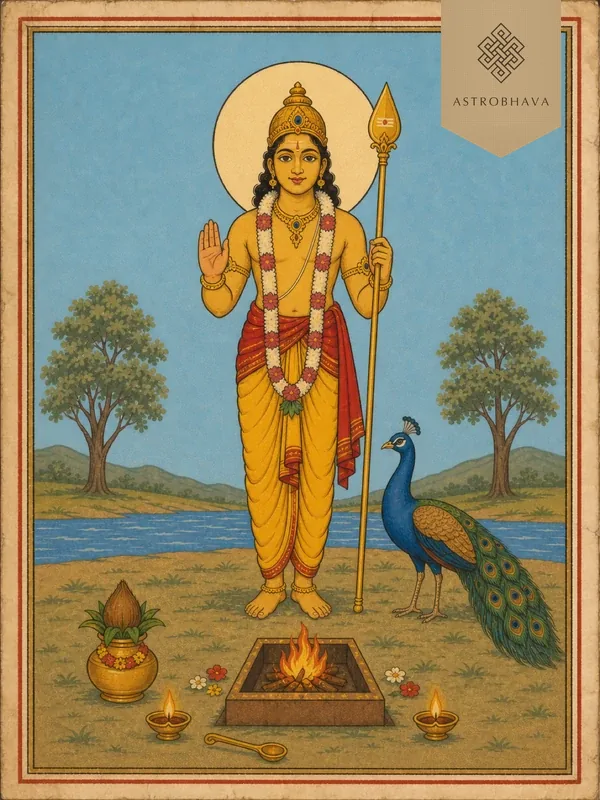 The Subramanya Homa, performed for youBook →
What the Subramanya Ashtothram is
The Subramanya Ashtothram, in full the Subramanya Ashtottara Shatanamavali, is the list of the 108 names of Murugan, each name framed as om ... namah so that every line is one salutation. It is the namavali form of the Subrahmanya Ashtottarashatanama Stotram, a traditional verse hymn with no named author, and the names follow it line by line. After Skanda, Guha and Shanmukha, the list gathers his several parentages: son of the forehead-eyed Shiva, of Uma, of Agni, of Ganga and of the Krittikas. Battle names follow, the slayer of Taraka and the splitter of Mount Krauncha, then runs built on one root, such as matta, pramatta and unmatta, or the god of one, two, three, four and five colours. Later names call him the supreme Brahman and the husband of Valli, the hunter's daughter. Three names occur twice, and the list closes on akshayaphalaprada, giver of fruit that never perishes. A second, widely copied list differs at about fifteen names and ends with a name saluting Subrahmanya together with Valli and Devasena.
Markandeya counts the names of Skanda
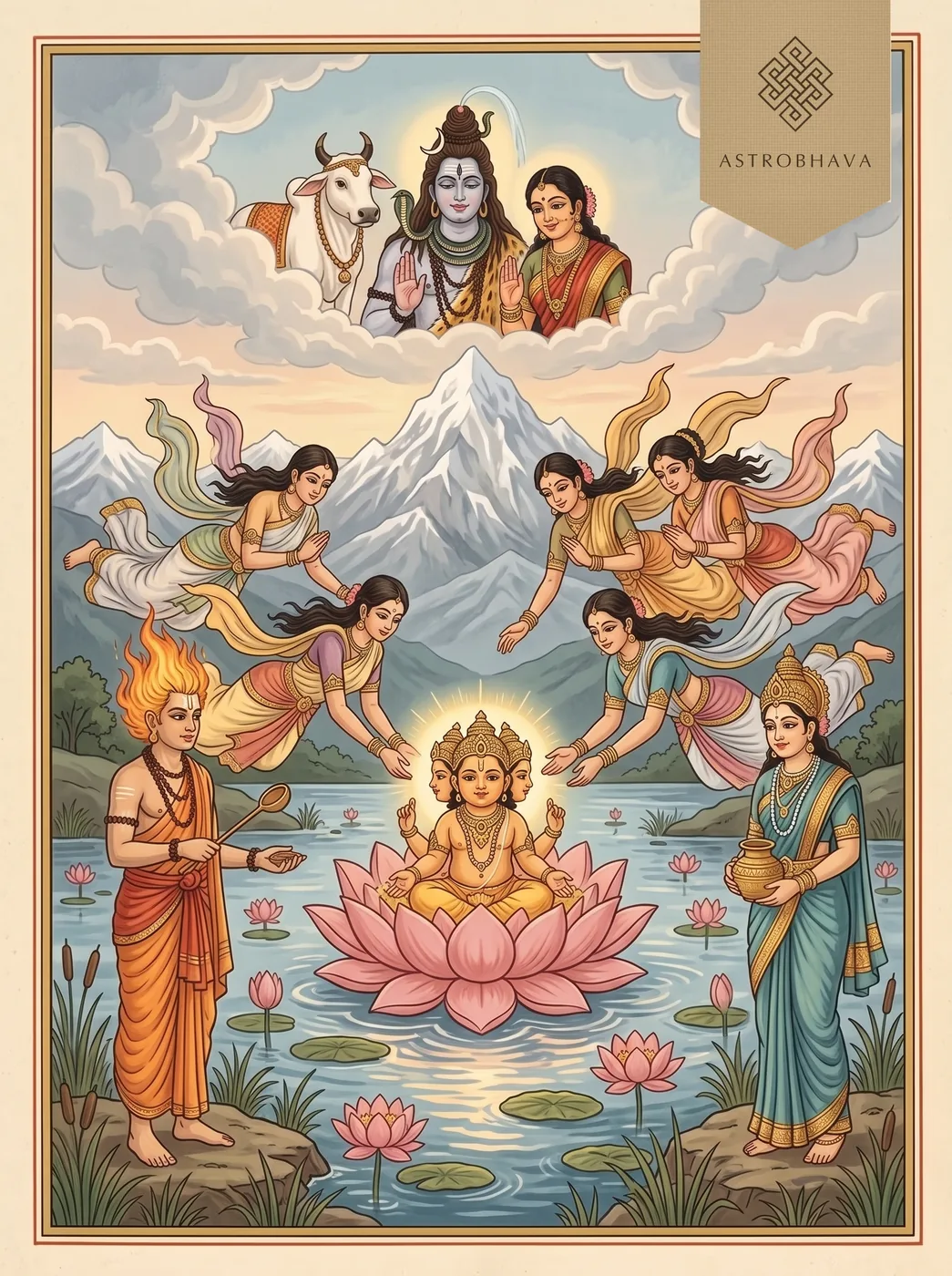
The oldest long account of Skanda's names is in the Vana Parva of the Mahabharata, where the sage Markandeya tells the exiled Yudhishthira how the god came to be. In this telling Svaha, daughter of Daksha, loves Agni and takes the form of the sages' wives one after another, failing only with Arundhati; six times she carries Agni's seed to a golden lake on the White Mountain, and there a child with six faces and twelve eyes is born. Because the seed was cast off, the child is called Skanda, and because Rudra is said to have entered Agni, he is also the son of Rudra. Indra rides out to kill the newborn and hurls his thunderbolt, which pierces Skanda's right side; from the wound springs a second youth, club in hand, named Vishakha, and Indra asks for peace. Skanda's arrows rend the Krauncha hill. When Yudhishthira asks for the god's names, Markandeya recites a list that includes Skanda, Prabhu, Anamaya, Vishakha and Kanyabhartri, and says that whoever repeats them gains fame, wealth and liberation. The later namavali keeps these layers side by side: it salutes him as son of Agni, of Ganga, of the Krittikas, of Uma and of Shankara without choosing between the accounts, and Vishakha stands as Name 29.
The mantra, in six scripts
- ॐ
- oṃ — Om, the sacred syllable
- स्कन्दाय
- skandāya — to Skanda, the one who leapt forth (Name 1)
- नमः
- namaḥ — salutation
- गुहाय
- guhāya — to Guha, the hidden one (Name 2)
- षण्मुखाय
- ṣaṇmukhāya — to the six-faced one (Name 3)
- फालनेत्रसुताय
- phālanetrasutāya — to the son of the forehead-eyed Shiva (Name 4)
- प्रभवे
- prabhave — to the mighty Lord (Name 5)
- पिङ्गलाय
- piṅgalāya — to the tawny-golden one (Name 6)
- कृत्तिकासूनवे
- kṛttikāsūnave — to the son of the Krittikas (Name 7)
- शिखिवाहाय
- śikhivāhāya — to the rider of the peacock (Name 8)
Subramanya Ashtothram lyrics in full
All 108 names, each framed by Om and namah, in the order of the verse stotram that opens skando guhah shanmukhashcha.
All 108 verses, in Sanskrit, Tamil, Telugu, Kannada, Malayalam and English, each with its meaning. Choose a script:
Download the Subramanya Ashtothram PDFAll 108 verses with their meanings, in Sanskrit. Free to print and keep.
ॐ स्कन्दाय नमः ।
ௐ ஸ்கந்தாய நமஃ ।
ఓం స్కన్దాయ నమః ।
ಓಂ ಸ್ಕನ್ದಾಯ ನಮಃ ।
ഓം സ്കന്ദായ നമഃ ।
oṃ skandāya namaḥ |
Salutations to Skanda, the one whose power leapt forth; the warrior son of Shiva.
ॐ गुहाय नमः ।
ௐ குஹாய நமஃ ।
ఓం గుహాయ నమః ।
ಓಂ ಗುಹಾಯ ನಮಃ ।
ഓം ഗുഹായ നമഃ ।
oṃ guhāya namaḥ |
Salutations to Guha, the hidden one who dwells in the cave of the heart.
ॐ षण्मुखाय नमः ।
ௐ ஷண்முகாய நமஃ ।
ఓం షణ్ముఖాయ నమః ।
ಓಂ ಷಣ್ಮುಖಾಯ ನಮಃ ।
ഓം ഷണ്മുഖായ നമഃ ।
oṃ ṣaṇmukhāya namaḥ |
Salutations to the six-faced one.
ॐ फालनेत्रसुताय नमः ।
ௐ பாலநேத்ரஸுதாய நமஃ ।
ఓం ఫాలనేత్రసుతాయ నమః ।
ಓಂ ಫಾಲನೇತ್ರಸುತಾಯ ನಮಃ ।
ഓം ഫാലനേത്രസുതായ നമഃ ।
oṃ phālanetrasutāya namaḥ |
Salutations to the son of Shiva, the god with the eye on his forehead.
ॐ प्रभवे नमः ।
ௐ ப்ரபவே நமஃ ।
ఓం ప్రభవే నమః ।
ಓಂ ಪ್ರಭವೇ ನಮಃ ।
ഓം പ്രഭവേ നമഃ ।
oṃ prabhave namaḥ |
Salutations to the mighty Lord.
ॐ पिङ्गलाय नमः ।
ௐ பிங்கலாய நமஃ ।
ఓం పిఙ్గలాయ నమః ।
ಓಂ ಪಿಙ್ಗಲಾಯ ನಮಃ ।
ഓം പിങ്ഗലായ നമഃ ।
oṃ piṅgalāya namaḥ |
Salutations to the tawny-golden one.
ॐ कृत्तिकासूनवे नमः ।
ௐ க்ருத்திகாஸூநவே நமஃ ।
ఓం కృత్తికాసూనవే నమః ।
ಓಂ ಕೃತ್ತಿಕಾಸೂನವೇ ನಮಃ ।
ഓം കൃത്തികാസൂനവേ നമഃ ।
oṃ kṛttikāsūnave namaḥ |
Salutations to the son of the Krittikas, the six star-maidens who nursed him.
ॐ शिखिवाहाय नमः ।
ௐ ஶிகிவாஹாய நமஃ ।
ఓం శిఖివాహాయ నమః ।
ಓಂ ಶಿಖಿವಾಹಾಯ ನಮಃ ।
ഓം ശിഖിവാഹായ നമഃ ।
oṃ śikhivāhāya namaḥ |
Salutations to the one who rides the peacock.
ॐ द्विषड्भुजाय नमः ।
ௐ த்விஷட்புஜாய நமஃ ।
ఓం ద్విషడ్భుజాయ నమః ।
ಓಂ ದ್ವಿಷಡ್ಭುಜಾಯ ನಮಃ ।
ഓം ദ്വിഷഡ്ഭുജായ നമഃ ।
oṃ dviṣaḍbhujāya namaḥ |
Salutations to the twelve-armed one (twice six arms).
ॐ द्विषण्णेत्राय नमः ।
ௐ த்விஷண்ணேத்ராய நமஃ ।
ఓం ద్విషణ్ణేత్రాయ నమః ।
ಓಂ ದ್ವಿಷಣ್ಣೇತ್ರಾಯ ನಮಃ ।
ഓം ദ്വിഷണ്ണേത്രായ നമഃ ।
oṃ dviṣaṇṇetrāya namaḥ |
Salutations to the twelve-eyed one (twice six eyes).
ॐ शक्तिधराय नमः ।
ௐ ஶக்திதராய நமஃ ।
ఓం శక్తిధరాయ నమః ।
ಓಂ ಶಕ್ತಿಧರಾಯ ನಮಃ ।
ഓം ശക്തിധരായ നമഃ ।
oṃ śaktidharāya namaḥ |
Salutations to the bearer of the Shakti, the divine spear (Vel).
ॐ पिशिताशप्रभञ्जनाय नमः ।
ௐ பிஶிதாஶப்ரபஞ்ஜநாய நமஃ ।
ఓం పిశితాశప్రభఞ్జనాయ నమః ।
ಓಂ ಪಿಶಿತಾಶಪ್ರಭಞ್ಜನಾಯ ನಮಃ ।
ഓം പിശിതാശപ്രഭഞ്ജനായ നമഃ ।
oṃ piśitāśaprabhañjanāya namaḥ |
Salutations to the destroyer of the flesh-eating demons.
ॐ तारकासुरसंहारिणे नमः ।
ௐ தாரகாஸுரஸம்ஹாரிணே நமஃ ।
ఓం తారకాసురసంహారిణే నమః ।
ಓಂ ತಾರಕಾಸುರಸಂಹಾರಿಣೇ ನಮಃ ।
ഓം താരകാസുരസംഹാരിണേ നമഃ ।
oṃ tārakāsurasaṃhāriṇe namaḥ |
Salutations to the slayer of the demon Taraka.
ॐ रक्षोबलविमर्दनाय नमः ।
ௐ ரக்ஷோபலவிமர்தநாய நமஃ ।
ఓం రక్షోబలవిమర్దనాయ నమః ।
ಓಂ ರಕ್ಷೋಬಲವಿಮರ್ದನಾಯ ನಮಃ ।
ഓം രക്ഷോബലവിമര്ദനായ നമഃ ।
oṃ rakṣobalavimardanāya namaḥ |
Salutations to the one who crushes the strength of the demons.
ॐ मत्ताय नमः ।
ௐ மத்தாய நமஃ ।
ఓం మత్తాయ నమః ।
ಓಂ ಮತ್ತಾಯ ನಮಃ ।
ഓം മത്തായ നമഃ ।
oṃ mattāya namaḥ |
Salutations to the one rapt in divine joy.
ॐ प्रमत्ताय नमः ।
ௐ ப்ரமத்தாய நமஃ ।
ఓం ప్రమత్తాయ నమః ।
ಓಂ ಪ್ರಮತ್ತಾಯ ನಮಃ ।
ഓം പ്രമത്തായ നമഃ ।
oṃ pramattāya namaḥ |
Salutations to the one supremely rapt in joy.
ॐ उन्मत्ताय नमः ।
ௐ உந்மத்தாய நமஃ ।
ఓం ఉన్మత్తాయ నమః ।
ಓಂ ಉನ್ಮತ್ತಾಯ ನಮಃ ।
ഓം ഉന്മത്തായ നമഃ ।
oṃ unmattāya namaḥ |
Salutations to the one wholly beyond himself in divine ecstasy.
ॐ सुरसैन्यसुरक्षकाय नमः ।
ௐ ஸுரஸைந்யஸுரக்ஷகாய நமஃ ।
ఓం సురసైన్యసురక్షకాయ నమః ।
ಓಂ ಸುರಸೈನ್ಯಸುರಕ್ಷಕಾಯ ನಮಃ ।
ഓം സുരസൈന്യസുരക്ഷകായ നമഃ ।
oṃ surasainyasurakṣakāya namaḥ |
Salutations to the guardian of the armies of the gods.
ॐ देवसेनापतये नमः ।
ௐ தேவஸேநாபதயே நமஃ ।
ఓం దేవసేనాపతయే నమః ।
ಓಂ ದೇವಸೇನಾಪತಯೇ ನಮಃ ।
ഓം ദേവസേനാപതയേ നമഃ ।
oṃ devasenāpataye namaḥ |
Salutations to the commander of the army of the gods.
ॐ प्राज्ञाय नमः ।
ௐ ப்ராஜ்ஞாய நமஃ ।
ఓం ప్రాజ్ఞాయ నమః ।
ಓಂ ಪ್ರಾಜ್ಞಾಯ ನಮಃ ।
ഓം പ്രാജ്ഞായ നമഃ ।
oṃ prājñāya namaḥ |
Salutations to the wise one.
ॐ कृपालवे नमः ।
ௐ க்ருபாலவே நமஃ ।
ఓం కృపాలవే నమః ।
ಓಂ ಕೃಪಾಲವೇ ನಮಃ ।
ഓം കൃപാലവേ നമഃ ।
oṃ kṛpālave namaḥ |
Salutations to the compassionate one.
ॐ भक्तवत्सलाय नमः ।
ௐ பக்தவத்ஸலாய நமஃ ।
ఓం భక్తవత్సలాయ నమః ।
ಓಂ ಭಕ್ತವತ್ಸಲಾಯ ನಮಃ ।
ഓം ഭക്തവത്സലായ നമഃ ।
oṃ bhaktavatsalāya namaḥ |
Salutations to the one who loves his devotees tenderly.
ॐ उमासुताय नमः ।
ௐ உமாஸுதாய நமஃ ।
ఓం ఉమాసుతాయ నమః ।
ಓಂ ಉಮಾಸುತಾಯ ನಮಃ ।
ഓം ഉമാസുതായ നമഃ ।
oṃ umāsutāya namaḥ |
Salutations to the son of Uma (Parvati).
ॐ शक्तिधराय नमः ।
ௐ ஶக்திதராய நமஃ ।
ఓం శక్తిధరాయ నమః ।
ಓಂ ಶಕ್ತಿಧರಾಯ ನಮಃ ।
ഓം ശക്തിധരായ നമഃ ।
oṃ śaktidharāya namaḥ |
Salutations to the bearer of the Shakti spear (the name recurs in the list).
ॐ कुमाराय नमः ।
ௐ குமாராய நமஃ ।
ఓం కుమారాయ నమః ।
ಓಂ ಕುಮಾರಾಯ ನಮಃ ।
ഓം കുമാരായ നമഃ ।
oṃ kumārāya namaḥ |
Salutations to Kumara, the ever-youthful prince.
ॐ क्रौञ्चदारणाय नमः ।
ௐ க்ரௌஞ்சதாரணாய நமஃ ।
ఓం క్రౌఞ్చదారణాయ నమః ।
ಓಂ ಕ್ರೌಞ್ಚದಾರಣಾಯ ನಮಃ ।
ഓം ക്രൌഞ്ചദാരണായ നമഃ ।
oṃ krauñcadāraṇāya namaḥ |
Salutations to the one who split Mount Krauncha.
ॐ सेनान्ये नमः ।
ௐ ஸேநாந்யே நமஃ ।
ఓం సేనాన్యే నమః ।
ಓಂ ಸೇನಾನ್ಯೇ ನಮಃ ।
ഓം സേനാന്യേ നമഃ ।
oṃ senānye namaḥ |
Salutations to the general, leader of the army.
ॐ अग्निजन्मने नमः ।
ௐ அக்நிஜந்மநே நமஃ ।
ఓం అగ్నిజన్మనే నమః ।
ಓಂ ಅಗ್ನಿಜನ್ಮನೇ ನಮಃ ।
ഓം അഗ്നിജന്മനേ നമഃ ।
oṃ agnijanmane namaḥ |
Salutations to the one born of fire.
ॐ विशाखाय नमः ।
ௐ விஶாகாய நமஃ ।
ఓం విశాఖాయ నమః ।
ಓಂ ವಿಶಾಖಾಯ ನಮಃ ।
ഓം വിശാഖായ നമഃ ।
oṃ viśākhāya namaḥ |
Salutations to Vishakha, a name of Skanda.
ॐ शङ्करात्मजाय नमः ।
ௐ ஶங்கராத்மஜாய நமஃ ।
ఓం శఙ్కరాత్మజాయ నమః ।
ಓಂ ಶಙ್ಕರಾತ್ಮಜಾಯ ನಮಃ ।
ഓം ശങ്കരാത്മജായ നമഃ ।
oṃ śaṅkarātmajāya namaḥ |
Salutations to the son of Shankara (Shiva).
ॐ शिवस्वामिने नमः ।
ௐ ஶிவஸ்வாமிநே நமஃ ।
ఓం శివస్వామినే నమః ।
ಓಂ ಶಿವಸ್ವಾಮಿನೇ ನಮಃ ।
ഓം ശിവസ്വാമിനേ നമഃ ।
oṃ śivasvāmine namaḥ |
Salutations to the master who is Shiva's own teacher (Swaminatha).
ॐ गणस्वामिने नमः ।
ௐ கணஸ்வாமிநே நமஃ ।
ఓం గణస్వామినే నమః ।
ಓಂ ಗಣಸ್ವಾಮಿನೇ ನಮಃ ।
ഓം ഗണസ്വാമിനേ നമഃ ।
oṃ gaṇasvāmine namaḥ |
Salutations to the master of the ganas, Shiva's attendants.
ॐ सर्वस्वामिने नमः ।
ௐ ஸர்வஸ்வாமிநே நமஃ ।
ఓం సర్వస్వామినే నమః ।
ಓಂ ಸರ್ವಸ್ವಾಮಿನೇ ನಮಃ ।
ഓം സര്വസ്വാമിനേ നമഃ ।
oṃ sarvasvāmine namaḥ |
Salutations to the master of all.
ॐ सनातनाय नमः ।
ௐ ஸநாதநாய நமஃ ।
ఓం సనాతనాయ నమః ।
ಓಂ ಸನಾತನಾಯ ನಮಃ ।
ഓം സനാതനായ നമഃ ।
oṃ sanātanāya namaḥ |
Salutations to the eternal one.
ॐ अनन्तशक्तये नमः ।
ௐ அநந்தஶக்தயே நமஃ ।
ఓం అనన్తశక్తయే నమః ।
ಓಂ ಅನನ್ತಶಕ್ತಯೇ ನಮಃ ।
ഓം അനന്തശക്തയേ നമഃ ।
oṃ anantaśaktaye namaḥ |
Salutations to the one of endless power.
ॐ अक्षोभ्याय नमः ।
ௐ அக்ஷோப்யாய நமஃ ।
ఓం అక్షోభ్యాయ నమః ।
ಓಂ ಅಕ್ಷೋಭ್ಯಾಯ ನಮಃ ।
ഓം അക്ഷോഭ്യായ നമഃ ।
oṃ akṣobhyāya namaḥ |
Salutations to the one who is never shaken.
ॐ पार्वतीप्रियनन्दनाय नमः ।
ௐ பார்வதீப்ரியநந்தநாய நமஃ ।
ఓం పార్వతీప్రియనన్దనాయ నమః ।
ಓಂ ಪಾರ್ವತೀಪ್ರಿಯನನ್ದನಾಯ ನಮಃ ।
ഓം പാര്വതീപ്രിയനന്ദനായ നമഃ ।
oṃ pārvatīpriyanandanāya namaḥ |
Salutations to the beloved, delightful son of Parvati.
ॐ गङ्गासुताय नमः ।
ௐ கங்காஸுதாய நமஃ ।
ఓం గఙ్గాసుతాయ నమః ।
ಓಂ ಗಙ್ಗಾಸುತಾಯ ನಮಃ ।
ഓം ഗങ്ഗാസുതായ നമഃ ।
oṃ gaṅgāsutāya namaḥ |
Salutations to the son of the Ganga.
ॐ शरोद्भूताय नमः ।
ௐ ஶரோத்பூதாய நமஃ ।
ఓం శరోద్భూతాయ నమః ।
ಓಂ ಶರೋದ್ಭೂತಾಯ ನಮಃ ।
ഓം ശരോദ്ഭൂതായ നമഃ ।
oṃ śarodbhūtāya namaḥ |
Salutations to the one born in the reed forest (Sharavana).
ॐ आहूताय नमः ।
ௐ ஆஹூதாய நமஃ ।
ఓం ఆహూతాయ నమః ।
ಓಂ ಆಹೂತಾಯ ನಮಃ ।
ഓം ആഹൂതായ നമഃ ।
oṃ āhūtāya namaḥ |
Salutations to the one who is invoked.
ॐ पावकात्मजाय नमः ।
ௐ பாவகாத்மஜாய நமஃ ।
ఓం పావకాత్మజాయ నమః ।
ಓಂ ಪಾವಕಾತ್ಮಜಾಯ ನಮಃ ।
ഓം പാവകാത്മജായ നമഃ ।
oṃ pāvakātmajāya namaḥ |
Salutations to the son of Agni, the purifying fire.
ॐ जृम्भाय नमः ।
ௐ ஜ்ரும்பாய நமஃ ।
ఓం జృమ్భాయ నమః ।
ಓಂ ಜೃಮ್ಭಾಯ ನಮಃ ।
ഓം ജൃമ്ഭായ നമഃ ।
oṃ jṛmbhāya namaḥ |
Salutations to the one who expands (Jrimbha).
ॐ प्रजृम्भाय नमः ।
ௐ ப்ரஜ்ரும்பாய நமஃ ।
ఓం ప్రజృమ్భాయ నమః ।
ಓಂ ಪ್ರಜೃಮ್ಭಾಯ ನಮಃ ।
ഓം പ്രജൃമ്ഭായ നമഃ ।
oṃ prajṛmbhāya namaḥ |
Salutations to the one who expands forth (Prajrimbha).
ॐ उज्जृम्भाय नमः ।
ௐ உஜ்ஜ்ரும்பாய நமஃ ।
ఓం ఉజ్జృమ్భాయ నమః ।
ಓಂ ಉಜ್ಜೃಮ್ಭಾಯ ನಮಃ ।
ഓം ഉജ്ജൃമ്ഭായ നമഃ ।
oṃ ujjṛmbhāya namaḥ |
Salutations to the one who rises up and expands (Ujjrimbha).
ॐ कमलासनसंस्तुताय नमः ।
ௐ கமலாஸநஸம்ஸ்துதாய நமஃ ।
ఓం కమలాసనసంస్తుతాయ నమః ।
ಓಂ ಕಮಲಾಸನಸಂಸ್ತುತಾಯ ನಮಃ ।
ഓം കമലാസനസംസ്തുതായ നമഃ ।
oṃ kamalāsanasaṃstutāya namaḥ |
Salutations to the one praised by Brahma, who is seated on the lotus.
ॐ एकवर्णाय नमः ।
ௐ ஏகவர்ணாய நமஃ ।
ఓం ఏకవర్ణాయ నమః ।
ಓಂ ಏಕವರ್ಣಾಯ ನಮಃ ।
ഓം ഏകവര്ണായ നമഃ ।
oṃ ekavarṇāya namaḥ |
Salutations to the one of a single colour.
ॐ द्विवर्णाय नमः ।
ௐ த்விவர்ணாய நமஃ ।
ఓం ద్వివర్ణాయ నమః ।
ಓಂ ದ್ವಿವರ್ಣಾಯ ನಮಃ ।
ഓം ദ്വിവര്ണായ നമഃ ।
oṃ dvivarṇāya namaḥ |
Salutations to the one of two colours.
ॐ त्रिवर्णाय नमः ।
ௐ த்ரிவர்ணாய நமஃ ।
ఓం త్రివర్ణాయ నమః ।
ಓಂ ತ್ರಿವರ್ಣಾಯ ನಮಃ ।
ഓം ത്രിവര്ണായ നമഃ ।
oṃ trivarṇāya namaḥ |
Salutations to the one of three colours.
ॐ सुमनोहराय नमः ।
ௐ ஸுமநோஹராய நமஃ ।
ఓం సుమనోహరాయ నమః ।
ಓಂ ಸುಮನೋಹರಾಯ ನಮಃ ।
ഓം സുമനോഹരായ നമഃ ।
oṃ sumanoharāya namaḥ |
Salutations to the one who is most charming.
ॐ चतुर्वर्णाय नमः ।
ௐ சதுர்வர்ணாய நமஃ ।
ఓం చతుర్వర్ణాయ నమః ।
ಓಂ ಚತುರ್ವರ್ಣಾಯ ನಮಃ ।
ഓം ചതുര്വര്ണായ നമഃ ।
oṃ caturvarṇāya namaḥ |
Salutations to the one of four colours.
ॐ पञ्चवर्णाय नमः ।
ௐ பஞ்சவர்ணாய நமஃ ।
ఓం పఞ్చవర్ణాయ నమః ।
ಓಂ ಪಞ್ಚವರ್ಣಾಯ ನಮಃ ।
ഓം പഞ്ചവര്ണായ നമഃ ।
oṃ pañcavarṇāya namaḥ |
Salutations to the one of five colours.
ॐ प्रजापतये नमः ।
ௐ ப்ரஜாபதயே நமஃ ।
ఓం ప్రజాపతయే నమః ।
ಓಂ ಪ್ರಜಾಪತಯೇ ನಮಃ ।
ഓം പ്രജാപതയേ നമഃ ।
oṃ prajāpataye namaḥ |
Salutations to the lord of creatures.
ॐ अहर्पतये नमः ।
ௐ அஹர்பதயே நமஃ ।
ఓం అహర్పతయే నమః ।
ಓಂ ಅಹರ್ಪತಯೇ ನಮಃ ।
ഓം അഹര്പതയേ നമഃ ।
oṃ aharpataye namaḥ |
Salutations to the lord of the day, the sun.
ॐ अग्निगर्भाय नमः ।
ௐ அக்நிகர்பாய நமஃ ।
ఓం అగ్నిగర్భాయ నమః ।
ಓಂ ಅಗ್ನಿಗರ್ಭಾಯ ನಮಃ ।
ഓം അഗ്നിഗര്ഭായ നമഃ ।
oṃ agnigarbhāya namaḥ |
Salutations to the one born of fire.
ॐ शमीगर्भाय नमः ।
ௐ ஶமீகர்பாய நமஃ ।
ఓం శమీగర్భాయ నమః ।
ಓಂ ಶಮೀಗರ್ಭಾಯ ನಮಃ ।
ഓം ശമീഗര്ഭായ നമഃ ।
oṃ śamīgarbhāya namaḥ |
Salutations to the one born from the Shami tree.
ॐ विश्वरेतसे नमः ।
ௐ விஶ்வரேதஸே நமஃ ।
ఓం విశ్వరేతసే నమః ।
ಓಂ ವಿಶ್ವರೇತಸೇ ನಮಃ ।
ഓം വിശ്വരേതസേ നമഃ ।
oṃ viśvaretase namaḥ |
Salutations to the one whose seed is the universe.
ॐ सुरारिघ्ने नमः ।
ௐ ஸுராரிக்நே நமஃ ।
ఓం సురారిఘ్నే నమః ।
ಓಂ ಸುರಾರಿಘ್ನೇ ನಮಃ ।
ഓം സുരാരിഘ്നേ നമഃ ।
oṃ surārighne namaḥ |
Salutations to the slayer of the enemies of the gods.
ॐ हरिद्वर्णाय नमः ।
ௐ ஹரித்வர்ணாய நமஃ ।
ఓం హరిద్వర్ణాయ నమః ।
ಓಂ ಹರಿದ್ವರ್ಣಾಯ ನಮಃ ।
ഓം ഹരിദ്വര്ണായ നമഃ ।
oṃ haridvarṇāya namaḥ |
Salutations to the one of green-golden hue.
ॐ शुभकराय नमः ।
ௐ ஶுபகராய நமஃ ।
ఓం శుభకరాయ నమః ।
ಓಂ ಶುಭಕರಾಯ ನಮಃ ।
ഓം ശുഭകരായ നമഃ ।
oṃ śubhakarāya namaḥ |
Salutations to the one who brings what is auspicious.
ॐ वटवे नमः ।
ௐ வடவே நமஃ ।
ఓం వటవే నమః ।
ಓಂ ವಟವೇ ನಮಃ ।
ഓം വടവേ നമഃ ।
oṃ vaṭave namaḥ |
Salutations to the young student (vatu).
ॐ वटुवेषभृते नमः ।
ௐ வடுவேஷப்ருதே நமஃ ।
ఓం వటువేషభృతే నమః ।
ಓಂ ವಟುವೇಷಭೃತೇ ನಮಃ ।
ഓം വടുവേഷഭൃതേ നമഃ ।
oṃ vaṭuveṣabhṛte namaḥ |
Salutations to the one who wears the dress of a young celibate student.
ॐ पूष्णे नमः ।
ௐ பூஷ்ணே நமஃ ।
ఓం పూష్ణే నమః ।
ಓಂ ಪೂಷ್ಣೇ ನಮಃ ।
ഓം പൂഷ്ണേ നമഃ ।
oṃ pūṣṇe namaḥ |
Salutations to Pushan, the nourisher.
ॐ गभस्तये नमः ।
ௐ கபஸ்தயே நமஃ ।
ఓం గభస్తయే నమః ।
ಓಂ ಗಭಸ್ತಯೇ ನಮಃ ।
ഓം ഗഭസ്തയേ നമഃ ।
oṃ gabhastaye namaḥ |
Salutations to the one who is a ray of light.
ॐ गहनाय नमः ।
ௐ கஹநாய நமஃ ।
ఓం గహనాయ నమః ।
ಓಂ ಗಹನಾಯ ನಮಃ ।
ഓം ഗഹനായ നമഃ ।
oṃ gahanāya namaḥ |
Salutations to the deep and unfathomable one.
ॐ चन्द्रवर्णाय नमः ।
ௐ சந்த்ரவர்ணாய நமஃ ।
ఓం చన్ద్రవర్ణాయ నమః ।
ಓಂ ಚನ್ದ್ರವರ್ಣಾಯ ನಮಃ ।
ഓം ചന്ദ്രവര്ണായ നമഃ ।
oṃ candravarṇāya namaḥ |
Salutations to the one with the colour of the moon.
ॐ कलाधराय नमः ।
ௐ கலாதராய நமஃ ।
ఓం కలాధరాయ నమః ।
ಓಂ ಕಲಾಧರಾಯ ನಮಃ ।
ഓം കലാധരായ നമഃ ।
oṃ kalādharāya namaḥ |
Salutations to the one who holds the digits of the moon, the arts.
ॐ मायाधराय नमः ।
ௐ மாயாதராய நமஃ ।
ఓం మాయాధరాయ నమః ।
ಓಂ ಮಾಯಾಧರಾಯ ನಮಃ ।
ഓം മായാധരായ നമഃ ।
oṃ māyādharāya namaḥ |
Salutations to the wielder of Maya, divine illusion.
ॐ महामायिने नमः ।
ௐ மஹாமாயிநே நமஃ ।
ఓం మహామాయినే నమః ।
ಓಂ ಮಹಾಮಾಯಿನೇ ನಮಃ ।
ഓം മഹാമായിനേ നമഃ ।
oṃ mahāmāyine namaḥ |
Salutations to the great master of Maya.
ॐ कैवल्याय नमः ।
ௐ கைவல்யாய நமஃ ।
ఓం కైవల్యాయ నమః ।
ಓಂ ಕೈವಲ್ಯಾಯ ನಮಃ ।
ഓം കൈവല്യായ നമഃ ।
oṃ kaivalyāya namaḥ |
Salutations to the one who is final liberation (kaivalya).
ॐ शङ्करात्मजाय नमः ।
ௐ ஶங்கராத்மஜாய நமஃ ।
ఓం శఙ్కరాత్మజాయ నమః ।
ಓಂ ಶಙ್ಕರಾತ್ಮಜಾಯ ನಮಃ ।
ഓം ശങ്കരാത്മജായ നമഃ ।
oṃ śaṅkarātmajāya namaḥ |
Salutations to the son of Shankara (the name recurs in the list).
ॐ विश्वयोनये नमः ।
ௐ விஶ்வயோநயே நமஃ ।
ఓం విశ్వయోనయే నమః ।
ಓಂ ವಿಶ್ವಯೋನಯೇ ನಮಃ ।
ഓം വിശ്വയോനയേ നമഃ ।
oṃ viśvayonaye namaḥ |
Salutations to the source of the universe.
ॐ अमेयात्मने नमः ।
ௐ அமேயாத்மநே நமஃ ।
ఓం అమేయాత్మనే నమః ।
ಓಂ ಅಮೇಯಾತ್ಮನೇ ನಮಃ ।
ഓം അമേയാത്മനേ നമഃ ।
oṃ ameyātmane namaḥ |
Salutations to the one whose self is beyond measure.
ॐ तेजोनिधये नमः ।
ௐ தேஜோநிதயே நமஃ ।
ఓం తేజోనిధయే నమః ।
ಓಂ ತೇಜೋನಿಧಯೇ ನಮಃ ।
ഓം തേജോനിധയേ നമഃ ।
oṃ tejonidhaye namaḥ |
Salutations to the treasury of radiance.
ॐ अनामयाय नमः ।
ௐ அநாமயாய நமஃ ।
ఓం అనామయాయ నమః ।
ಓಂ ಅನಾಮಯಾಯ ನಮಃ ।
ഓം അനാമയായ നമഃ ।
oṃ anāmayāya namaḥ |
Salutations to the one free from all illness.
ॐ परमेष्ठिने नमः ।
ௐ பரமேஷ்டிநே நமஃ ।
ఓం పరమేష్ఠినే నమః ।
ಓಂ ಪರಮೇಷ್ಠಿನೇ ನಮಃ ।
ഓം പരമേഷ്ഠിനേ നമഃ ।
oṃ parameṣṭhine namaḥ |
Salutations to the one who stands at the highest place.
ॐ परब्रह्मणे नमः ।
ௐ பரப்ரஹ்மணே நமஃ ।
ఓం పరబ్రహ్మణే నమః ।
ಓಂ ಪರಬ್ರಹ್ಮಣೇ ನಮಃ ।
ഓം പരബ്രഹ്മണേ നമഃ ।
oṃ parabrahmaṇe namaḥ |
Salutations to the supreme Brahman.
ॐ वेदगर्भाय नमः ।
ௐ வேதகர்பாய நமஃ ।
ఓం వేదగర్భాయ నమః ।
ಓಂ ವೇದಗರ್ಭಾಯ ನಮಃ ।
ഓം വേദഗര്ഭായ നമഃ ।
oṃ vedagarbhāya namaḥ |
Salutations to the one who holds the Vedas within him.
ॐ विराट्सुताय नमः ।
ௐ விராட்ஸுதாய நமஃ ।
ఓం విరాట్సుతాయ నమః ।
ಓಂ ವಿರಾಟ್ಸುತಾಯ ನಮಃ ।
ഓം വിരാട്സുതായ നമഃ ।
oṃ virāṭsutāya namaḥ |
Salutations to the son of Viraj, the cosmic being.
ॐ पुलिन्दकन्याभर्त्रे नमः ।
ௐ புலிந்தகந்யாபர்த்ரே நமஃ ।
ఓం పులిన్దకన్యాభర్త్రే నమః ।
ಓಂ ಪುಲಿನ್ದಕನ್ಯಾಭರ್ತ್ರೇ ನಮಃ ।
ഓം പുലിന്ദകന്യാഭര്ത്രേ നമഃ ।
oṃ pulindakanyābhartre namaḥ |
Salutations to the husband of the daughter of the hunter tribe (Valli).
ॐ महासारस्वतावृताय नमः ।
ௐ மஹாஸாரஸ்வதாவ்ருதாய நமஃ ।
ఓం మహాసారస్వతావృతాయ నమః ।
ಓಂ ಮಹಾಸಾರಸ್ವತಾವೃತಾಯ ನಮಃ ।
ഓം മഹാസാരസ്വതാവൃതായ നമഃ ।
oṃ mahāsārasvatāvṛtāya namaḥ |
Salutations to the one surrounded by great learning and eloquence.
ॐ आश्रिताखिलदात्रे नमः ।
ௐ ஆஶ்ரிதாகிலதாத்ரே நமஃ ।
ఓం ఆశ్రితాఖిలదాత్రే నమః ।
ಓಂ ಆಶ್ರಿತಾಖಿಲದಾತ್ರೇ ನಮಃ ।
ഓം ആശ്രിതാഖിലദാത്രേ നമഃ ।
oṃ āśritākhiladātre namaḥ |
Salutations to the one who grants everything to those who take refuge in him.
ॐ चोरघ्नाय नमः ।
ௐ சோரக்நாய நமஃ ।
ఓం చోరఘ్నాయ నమః ।
ಓಂ ಚೋರಘ್ನಾಯ ನಮಃ ।
ഓം ചോരഘ്നായ നമഃ ।
oṃ coraghnāya namaḥ |
Salutations to the destroyer of thieves.
ॐ रोगनाशनाय नमः ।
ௐ ரோகநாஶநாய நமஃ ।
ఓం రోగనాశనాయ నమః ।
ಓಂ ರೋಗನಾಶನಾಯ ನಮಃ ।
ഓം രോഗനാശനായ നമഃ ।
oṃ roganāśanāya namaḥ |
Salutations to the destroyer of disease.
ॐ अनन्तमूर्तये नमः ।
ௐ அநந்தமூர்தயே நமஃ ।
ఓం అనన్తమూర్తయే నమః ।
ಓಂ ಅನನ್ತಮೂರ್ತಯೇ ನಮಃ ।
ഓം അനന്തമൂര്തയേ നമഃ ।
oṃ anantamūrtaye namaḥ |
Salutations to the one of endless forms.
ॐ आनन्दाय नमः ।
ௐ ஆநந்தாய நமஃ ।
ఓం ఆనన్దాయ నమః ।
ಓಂ ಆನನ್ದಾಯ ನಮಃ ।
ഓം ആനന്ദായ നമഃ ।
oṃ ānandāya namaḥ |
Salutations to the one who is bliss.
ॐ शिखण्डिकृतकेतनाय नमः ।
ௐ ஶிகண்டிக்ருதகேதநாய நமஃ ।
ఓం శిఖణ్డికృతకేతనాయ నమః ।
ಓಂ ಶಿಖಣ್ಡಿಕೃತಕೇತನಾಯ ನಮಃ ।
ഓം ശിഖണ്ഡികൃതകേതനായ നമഃ ।
oṃ śikhaṇḍikṛtaketanāya namaḥ |
Salutations to the one whose banner bears the peacock.
ॐ डम्भाय नमः ।
ௐ டம்பாய நமஃ ।
ఓం డమ్భాయ నమః ।
ಓಂ ಡಮ್ಭಾಯ ನಮಃ ।
ഓം ഡമ്ഭായ നമഃ ।
oṃ ḍambhāya namaḥ |
Salutations to Dambha, the mighty one (a name with no settled meaning; sometimes read as the one of hidden power).
ॐ परमडम्भाय नमः ।
ௐ பரமடம்பாய நமஃ ।
ఓం పరమడమ్భాయ నమః ।
ಓಂ ಪರಮಡಮ್ಭಾಯ ನಮಃ ।
ഓം പരമഡമ്ഭായ നമഃ ।
oṃ paramaḍambhāya namaḥ |
Salutations to Paramadambha, the supremely mighty one.
ॐ महाडम्भाय नमः ।
ௐ மஹாடம்பாய நமஃ ।
ఓం మహాడమ్భాయ నమః ।
ಓಂ ಮಹಾಡಮ್ಭಾಯ ನಮಃ ।
ഓം മഹാഡമ്ഭായ നമഃ ।
oṃ mahāḍambhāya namaḥ |
Salutations to Mahadambha, the greatly mighty one.
ॐ वृषाकपये नमः ।
ௐ வ்ருஷாகபயே நமஃ ।
ఓం వృషాకపయే నమః ।
ಓಂ ವೃಷಾಕಪಯೇ ನಮಃ ।
ഓം വൃഷാകപയേ നമഃ ।
oṃ vṛṣākapaye namaḥ |
Salutations to Vrishakapi, a Vedic name shared with Vishnu and Shiva.
ॐ कारणोपात्तदेहाय नमः ।
ௐ காரணோபாத்ததேஹாய நமஃ ।
ఓం కారణోపాత్తదేహాయ నమః ।
ಓಂ ಕಾರಣೋಪಾತ್ತದೇಹಾಯ ನಮಃ ।
ഓം കാരണോപാത്തദേഹായ നമഃ ।
oṃ kāraṇopāttadehāya namaḥ |
Salutations to the one who takes a body for a cause.
ॐ कारणातीतविग्रहाय नमः ।
ௐ காரணாதீதவிக்ரஹாய நமஃ ।
ఓం కారణాతీతవిగ్రహాయ నమః ।
ಓಂ ಕಾರಣಾತೀತವಿಗ್ರಹಾಯ ನಮಃ ।
ഓം കാരണാതീതവിഗ്രഹായ നമഃ ।
oṃ kāraṇātītavigrahāya namaḥ |
Salutations to the one whose form is beyond all causes.
ॐ अनीश्वराय नमः ।
ௐ அநீஶ்வராய நமஃ ।
ఓం అనీశ్వరాయ నమః ।
ಓಂ ಅನೀಶ್ವರಾಯ ನಮಃ ।
ഓം അനീശ്വരായ നമഃ ।
oṃ anīśvarāya namaḥ |
Salutations to the one who has no lord over him.
ॐ अमृताय नमः ।
ௐ அம்ருதாய நமஃ ।
ఓం అమృతాయ నమః ।
ಓಂ ಅಮೃತಾಯ ನಮಃ ।
ഓം അമൃതായ നമഃ ।
oṃ amṛtāya namaḥ |
Salutations to the immortal one.
ॐ प्राणाय नमः ।
ௐ ப்ராணாய நமஃ ।
ఓం ప్రాణాయ నమః ।
ಓಂ ಪ್ರಾಣಾಯ ನಮಃ ।
ഓം പ്രാണായ നമഃ ।
oṃ prāṇāya namaḥ |
Salutations to the one who is the breath of life.
ॐ प्राणायामपरायणाय नमः ।
ௐ ப்ராணாயாமபராயணாய நமஃ ।
ఓం ప్రాణాయామపరాయణాయ నమః ।
ಓಂ ಪ್ರಾಣಾಯಾಮಪರಾಯಣಾಯ ನಮಃ ।
ഓം പ്രാണായാമപരായണായ നമഃ ।
oṃ prāṇāyāmaparāyaṇāya namaḥ |
Salutations to the one devoted to the discipline of breath control.
ॐ विरुद्धहन्त्रे नमः ।
ௐ விருத்தஹந்த்ரே நமஃ ।
ఓం విరుద్ధహన్త్రే నమః ।
ಓಂ ವಿರುದ್ಧಹನ್ತ್ರೇ ನಮಃ ।
ഓം വിരുദ്ധഹന്ത്രേ നമഃ ।
oṃ viruddhahantre namaḥ |
Salutations to the slayer of the hostile.
ॐ वीरघ्नाय नमः ।
ௐ வீரக்நாய நமஃ ।
ఓం వీరఘ్నాయ నమః ।
ಓಂ ವೀರಘ್ನಾಯ ನಮಃ ।
ഓം വീരഘ്നായ നമഃ ।
oṃ vīraghnāya namaḥ |
Salutations to the slayer of mighty warriors.
ॐ रक्तास्याय नमः ।
ௐ ரக்தாஸ்யாய நமஃ ।
ఓం రక్తాస్యాయ నమః ।
ಓಂ ರಕ್ತಾಸ್ಯಾಯ ನಮಃ ।
ഓം രക്താസ്യായ നമഃ ।
oṃ raktāsyāya namaḥ |
Salutations to the one with a red face.
ॐ श्यामकन्धराय नमः ।
ௐ ஶ்யாமகந்தராய நமஃ ।
ఓం శ్యామకన్ధరాయ నమః ।
ಓಂ ಶ್ಯಾಮಕನ್ಧರಾಯ ನಮಃ ।
ഓം ശ്യാമകന്ധരായ നമഃ ।
oṃ śyāmakandharāya namaḥ |
Salutations to the one with a dark neck.
ॐ सुब्रह्मण्याय नमः ।
ௐ ஸுப்ரஹ்மண்யாய நமஃ ।
ఓం సుబ్రహ్మణ్యాయ నమః ।
ಓಂ ಸುಬ್ರಹ್ಮಣ್ಯಾಯ ನಮಃ ।
ഓം സുബ്രഹ്മണ്യായ നമഃ ।
oṃ subrahmaṇyāya namaḥ |
Salutations to Subrahmanya, the one most dear to Brahman and the wise.
ॐ गुहाय नमः ।
ௐ குஹாய நமஃ ।
ఓం గుహాయ నమః ।
ಓಂ ಗುಹಾಯ ನಮಃ ।
ഓം ഗുഹായ നമഃ ।
oṃ guhāya namaḥ |
Salutations to Guha, the hidden one (the name recurs in the list).
ॐ प्रीताय नमः ।
ௐ ப்ரீதாய நமஃ ।
ఓం ప్రీతాయ నమః ।
ಓಂ ಪ್ರೀತಾಯ ನಮಃ ।
ഓം പ്രീതായ നമഃ ।
oṃ prītāya namaḥ |
Salutations to the one who is pleased and loving.
ॐ ब्रह्मण्याय नमः ।
ௐ ப்ரஹ்மண்யாய நமஃ ।
ఓం బ్రహ్మణ్యాయ నమః ।
ಓಂ ಬ್ರಹ್ಮಣ್ಯಾಯ ನಮಃ ।
ഓം ബ്രഹ്മണ്യായ നമഃ ।
oṃ brahmaṇyāya namaḥ |
Salutations to the one devoted to Brahman and the Vedas.
ॐ ब्राह्मणप्रियाय नमः ।
ௐ ப்ராஹ்மணப்ரியாய நமஃ ।
ఓం బ్రాహ్మణప్రియాయ నమః ।
ಓಂ ಬ್ರಾಹ್ಮಣಪ್ರಿಯಾಯ ನಮಃ ।
ഓം ബ്രാഹ്മണപ്രിയായ നമഃ ।
oṃ brāhmaṇapriyāya namaḥ |
Salutations to the one dear to Brahmins.
ॐ वंशवृद्धिकराय नमः ।
ௐ வம்ஶவ்ருத்திகராய நமஃ ।
ఓం వంశవృద్ధికరాయ నమః ।
ಓಂ ವಂಶವೃದ್ಧಿಕರಾಯ ನಮಃ ।
ഓം വംശവൃദ്ധികരായ നമഃ ।
oṃ vaṃśavṛddhikarāya namaḥ |
Salutations to the one who makes a family line flourish.
ॐ वेदवेद्याय नमः ।
ௐ வேதவேத்யாய நமஃ ।
ఓం వేదవేద్యాయ నమః ।
ಓಂ ವೇದವೇದ್ಯಾಯ ನಮಃ ।
ഓം വേദവേദ്യായ നമഃ ।
oṃ vedavedyāya namaḥ |
Salutations to the one known through the Vedas.
ॐ अक्षयफलप्रदाय नमः ।
ௐ அக்ஷயபலப்ரதாய நமஃ ।
ఓం అక్షయఫలప్రదాయ నమః ।
ಓಂ ಅಕ್ಷಯಫಲಪ್ರದಾಯ ನಮಃ ।
ഓം അക്ഷയഫലപ്രദായ നമഃ ।
oṃ akṣayaphalapradāya namaḥ |
Salutations to the giver of fruit that never perishes.
The syllable people get wrong
Name 7, kṛttikāsūnave (कृत्तिकासूनवे, 'to the son of the Krittikas'), opens with the vowel ṛ and a doubled t: say KRIT-ti-kaa-SOO-na-vay, with a short ri, both t sounds held, and long aa and oo. It is not 'kar-ti-ka', which turns the star-mothers into the month of Kartika.
When the Subramanya Ashtothram is chanted
Weekday. Tuesday
Festival. Skanda Shashti
Questions
Have your chart read before you decide
Chanting is yours to do, and free. But which deity your situation calls for — and whether a mantra alone is the right response — depends on your chart. Sometimes it is; sometimes it is not.
- Over 30 years in the Guru–Sishya Parampara, from the age of five
- He reads every chart himself — 60 minutes, one to one, never delegated
- Charts are read only between sunrise and sunset, following tradition
