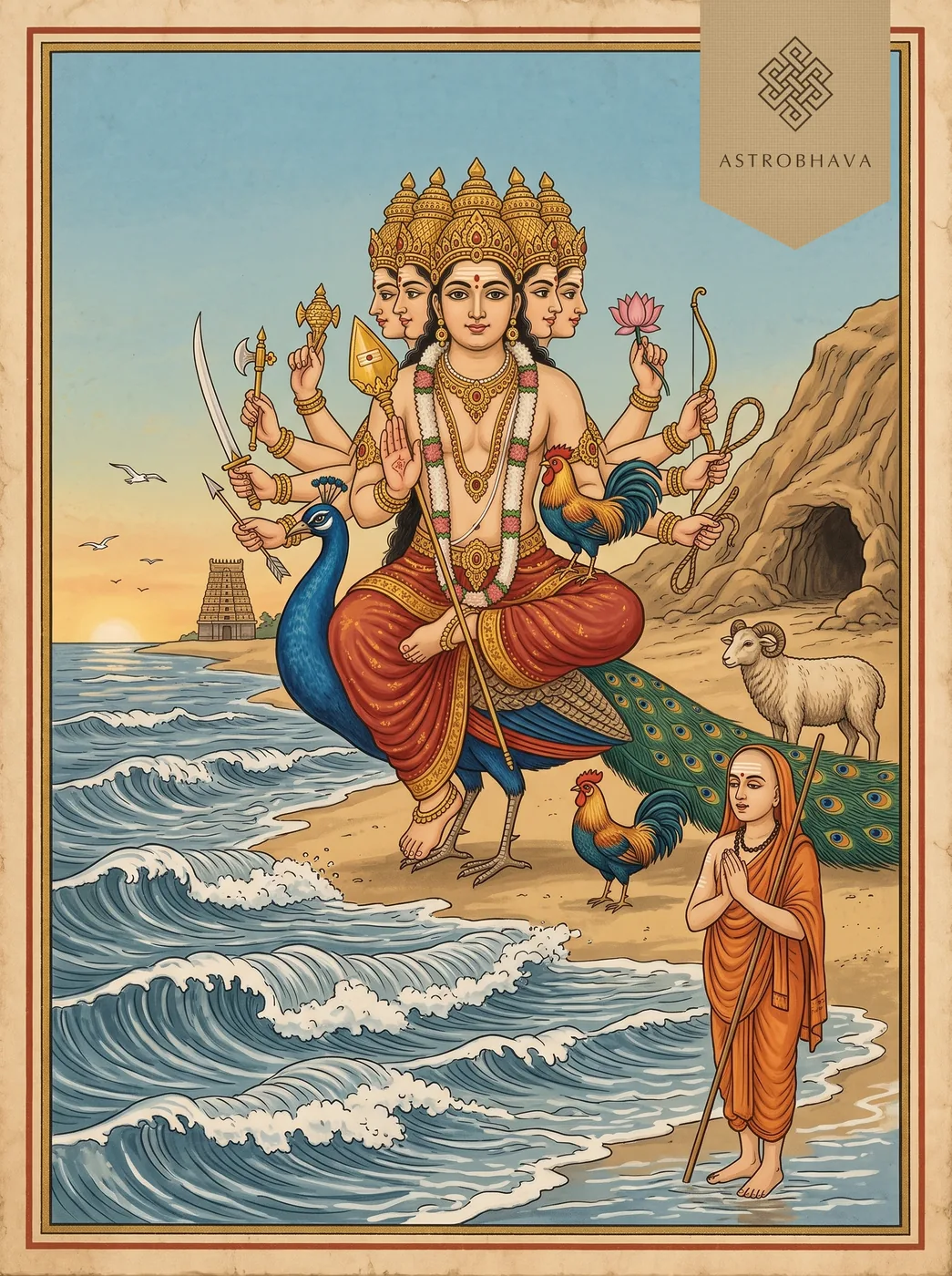
Subramanya Bhujangam
सदा बालरूपाऽपि विघ्नाद्रिहन्त्री महादन्तिवक्त्राऽपि पञ्चास्यमान्या । विधीन्द्रादिमृग्या गणेशाभिधा मे विधत्तां श्रियं काऽपि कल्याणमूर्तिः ॥Also known as Sada Balarupapi
In Devanagari, Tamil, Telugu, Kannada, Malayalam and English — with the meaning of every word, and the one syllable most people pronounce wrongly.
What the Subramanya Bhujangam is
The Subramanya Bhujangam is a Sanskrit hymn of 33 verses to Skanda, attributed to Adi Shankaracharya and addressed to him as the god who stands on the shore at Tiruchendur. Every verse is in bhujangaprayata, the 'serpent's gait', a metre built from groups of one short syllable followed by two long ones, and the hymn takes its title from it. Verse 1 is a salutation to Ganesha as a child who still breaks mountains of obstacles. In verse 2 the poet confesses he knows neither grammar nor prosody, yet a six-faced light speaks through him. Verses 4 to 8 describe the shrine: the sea, its waves, the Sugandha hill and its cave. Verses 9 to 18 move over the god's form from feet to crowns and end with the boy leaping from Parvati's lap to Shiva. Verses 20 to 22 ask him to come at the hour of death, and verse 33 is the phala shruti.
A shrine the waves keep pointing to
Unusually for a stotra, this one draws its setting into the verses. In verse 4 the god sits by the sea as if announcing that whoever reaches his presence has already crossed the ocean of worldly life. In verse 5 the rows of breaking waves become his sign: as tall waves die on the shore, so the troubles of those who serve him subside. Verse 7 places him in a cave of the Sugandha hill beside an ocean that carries sins away, and verse 31 salutes the sea and the seashore itself along with his peacock, spear, ram and rooster. Tradition reads all of this as the temple at Tiruchendur, where the sea beats close against the walls. The account of how Shankara came there is told in more than one way. Tiruchendur temple tradition says he fell ill in Gokarna, that Shiva sent him south, and that the hymn came unbidden at the first sight of the deity. Other tellings make it Murugan who called him in a dream, and give the illness as consumption or as stomach pain brought on by a rival's spell. Some add a vision of Adisesha spreading his hood over the god, which they connect with the serpent metre. Verse 25 ties the hymn to a living custom: the temple still gives its sacred ash folded in a leaf of the panneer tree.
The mantra, in six scripts
- सदा
- sadā — always
- बालरूपाऽपि
- bālarūpā'pi — though in a child's form
- विघ्नाद्रिहन्त्री
- vighnādrihantrī — breaker of mountains of obstacles
- महादन्तिवक्त्राऽपि
- mahādantivaktrā'pi — though elephant-faced
- पञ्चास्यमान्या
- pañcāsyamānyā — honoured by five-faced Shiva
- विधीन्द्रादिमृग्या
- vidhīndrādimṛgyā — sought by Brahma, Indra and others
- गणेशाभिधा
- gaṇeśābhidhā — named Ganesha
- मे
- me — to me
- विधत्तां
- vidhattāṃ — may it grant
- श्रियं
- śriyaṃ — prosperity
- काऽपि
- kā'pi — some wondrous
- कल्याणमूर्तिः
- kalyāṇamūrtiḥ — auspicious form
Subramanya Bhujangam lyrics in full
All thirty-three verses: a salutation to Ganesha, thirty-one to Skanda, and the closing phala shruti.
All 33 verses, in Sanskrit, Tamil, Telugu, Kannada, Malayalam and English, each with its meaning. Choose a script:
Download the Subramanya Bhujangam PDFAll 33 verses with their meanings, in Sanskrit. Free to print and keep.
सदा बालरूपाऽपि विघ्नाद्रिहन्त्री महादन्तिवक्त्राऽपि पञ्चास्यमान्या ।
विधीन्द्रादिमृग्या गणेशाभिधा मे विधत्तां श्रियं काऽपि कल्याणमूर्तिः ॥
ஸதா பாலரூபாபி விக்நாத்ரிஹந்த்ரீ மஹாதந்திவக்த்ராபி பஞ்சாஸ்யமாந்யா ।
விதீந்த்ராதிம்ருக்யா கணேஶாபிதா மே விதத்தாம் ஶ்ரியம் காபி கல்யாணமூர்திஃ ॥
సదా బాలరూపాఽపి విఘ్నాద్రిహన్త్రీ మహాదన్తివక్త్రాఽపి పఞ్చాస్యమాన్యా ।
విధీన్ద్రాదిమృగ్యా గణేశాభిధా మే విధత్తాం శ్రియం కాఽపి కల్యాణమూర్తిః ॥
ಸದಾ ಬಾಲರೂಪಾಽಪಿ ವಿಘ್ನಾದ್ರಿಹನ್ತ್ರೀ ಮಹಾದನ್ತಿವಕ್ತ್ರಾಽಪಿ ಪಞ್ಚಾಸ್ಯಮಾನ್ಯಾ ।
ವಿಧೀನ್ದ್ರಾದಿಮೃಗ್ಯಾ ಗಣೇಶಾಭಿಧಾ ಮೇ ವಿಧತ್ತಾಂ ಶ್ರಿಯಂ ಕಾಽಪಿ ಕಲ್ಯಾಣಮೂರ್ತಿಃ ॥
സദാ ബാലരൂപാഽപി വിഘ്നാദ്രിഹന്ത്രീ മഹാദന്തിവക്ത്രാഽപി പഞ്ചാസ്യമാന്യാ ।
വിധീന്ദ്രാദിമൃഗ്യാ ഗണേശാഭിധാ മേ വിധത്താം ശ്രിയം കാഽപി കല്യാണമൂര്തിഃ ॥
sadā bālarūpā'pi vighnādrihantrī mahādantivaktrā'pi pañcāsyamānyā |
vidhīndrādimṛgyā gaṇeśābhidhā me vidhattāṃ śriyaṃ kā'pi kalyāṇamūrtiḥ ||
Though ever in the form of a child, he shatters mountains of obstacles; though elephant-faced, he is honoured even by five-faced Shiva. Sought by Brahma, Indra and the gods, may that wondrous auspicious form named Ganesha grant me prosperity.
न जानामि शब्दं न जानामि चार्थं न जानामि पद्यं न जानामि गद्यम् ।
चिदेका षडास्या हृदि द्योतते मे मुखान्निःसरन्ते गिरश्चापि चित्रम् ॥
ந ஜாநாமி ஶப்தம் ந ஜாநாமி சார்தம் ந ஜாநாமி பத்யம் ந ஜாநாமி கத்யம் ।
சிதேகா ஷடாஸ்யா ஹ்ருதி த்யோததே மே முகாந்நிஃஸரந்தே கிரஶ்சாபி சித்ரம் ॥
న జానామి శబ్దం న జానామి చార్థం న జానామి పద్యం న జానామి గద్యమ్ ।
చిదేకా షడాస్యా హృది ద్యోతతే మే ముఖాన్నిఃసరన్తే గిరశ్చాపి చిత్రమ్ ॥
ನ ಜಾನಾಮಿ ಶಬ್ದಂ ನ ಜಾನಾಮಿ ಚಾರ್ಥಂ ನ ಜಾನಾಮಿ ಪದ್ಯಂ ನ ಜಾನಾಮಿ ಗದ್ಯಮ್ ।
ಚಿದೇಕಾ ಷಡಾಸ್ಯಾ ಹೃದಿ ದ್ಯೋತತೇ ಮೇ ಮುಖಾನ್ನಿಃಸರನ್ತೇ ಗಿರಶ್ಚಾಪಿ ಚಿತ್ರಮ್ ॥
ന ജാനാമി ശബ്ദം ന ജാനാമി ചാര്ഥം ന ജാനാമി പദ്യം ന ജാനാമി ഗദ്യമ് ।
ചിദേകാ ഷഡാസ്യാ ഹൃദി ദ്യോതതേ മേ മുഖാന്നിഃസരന്തേ ഗിരശ്ചാപി ചിത്രമ് ॥
na jānāmi śabdaṃ na jānāmi cārthaṃ na jānāmi padyaṃ na jānāmi gadyam |
cidekā ṣaḍāsyā hṛdi dyotate me mukhānniḥsarante giraścāpi citram ||
I do not know sound or meaning, nor verse nor prose. Yet a single six-faced light of consciousness shines in my heart, and wonderful words pour out of my mouth.
मयूराधिरूढं महावाक्यगूढं मनोहारिदेहं महच्चित्तगेहम् ।
महीदेवदेवं महावेदभावं महादेवबालं भजे लोकपालम् ॥
மயூராதிரூடம் மஹாவாக்யகூடம் மநோஹாரிதேஹம் மஹச்சித்தகேஹம் ।
மஹீதேவதேவம் மஹாவேதபாவம் மஹாதேவபாலம் பஜே லோகபாலம் ॥
మయూరాధిరూఢం మహావాక్యగూఢం మనోహారిదేహం మహచ్చిత్తగేహమ్ ।
మహీదేవదేవం మహావేదభావం మహాదేవబాలం భజే లోకపాలమ్ ॥
ಮಯೂರಾಧಿರೂಢಂ ಮಹಾವಾಕ್ಯಗೂಢಂ ಮನೋಹಾರಿದೇಹಂ ಮಹಚ್ಚಿತ್ತಗೇಹಮ್ ।
ಮಹೀದೇವದೇವಂ ಮಹಾವೇದಭಾವಂ ಮಹಾದೇವಬಾಲಂ ಭಜೇ ಲೋಕಪಾಲಮ್ ॥
മയൂരാധിരൂഢം മഹാവാക്യഗൂഢം മനോഹാരിദേഹം മഹച്ചിത്തഗേഹമ് ।
മഹീദേവദേവം മഹാവേദഭാവം മഹാദേവബാലം ഭജേ ലോകപാലമ് ॥
mayūrādhirūḍhaṃ mahāvākyagūḍhaṃ manohāridehaṃ mahaccittageham |
mahīdevadevaṃ mahāvedabhāvaṃ mahādevabālaṃ bhaje lokapālam ||
I worship the son of Mahadeva, the protector of the worlds: he who rides the peacock, who is hidden in the great Vedic sayings, whose form is enchanting, who dwells in the hearts of the great, the god of the learned and the very meaning of the Vedas.
यदा सन्निधानं गता मानवा मे भवाम्भोधिपारं गतास्ते तदैव ।
इति व्यञ्जयन्सिन्धुतीरे य आस्ते तमीडे पवित्रं पराशक्तिपुत्रम् ॥
யதா ஸந்நிதாநம் கதா மாநவா மே பவாம்போதிபாரம் கதாஸ்தே ததைவ ।
இதி வ்யஞ்ஜயந்ஸிந்துதீரே ய ஆஸ்தே தமீடே பவித்ரம் பராஶக்திபுத்ரம் ॥
యదా సన్నిధానం గతా మానవా మే భవామ్భోధిపారం గతాస్తే తదైవ ।
ఇతి వ్యఞ్జయన్సిన్ధుతీరే య ఆస్తే తమీడే పవిత్రం పరాశక్తిపుత్రమ్ ॥
ಯದಾ ಸನ್ನಿಧಾನಂ ಗತಾ ಮಾನವಾ ಮೇ ಭವಾಮ್ಭೋಧಿಪಾರಂ ಗತಾಸ್ತೇ ತದೈವ ।
ಇತಿ ವ್ಯಞ್ಜಯನ್ಸಿನ್ಧುತೀರೇ ಯ ಆಸ್ತೇ ತಮೀಡೇ ಪವಿತ್ರಂ ಪರಾಶಕ್ತಿಪುತ್ರಮ್ ॥
യദാ സന്നിധാനം ഗതാ മാനവാ മേ ഭവാമ്ഭോധിപാരം ഗതാസ്തേ തദൈവ ।
ഇതി വ്യഞ്ജയന്സിന്ധുതീരേ യ ആസ്തേ തമീഡേ പവിത്രം പരാശക്തിപുത്രമ് ॥
yadā sannidhānaṃ gatā mānavā me bhavāmbhodhipāraṃ gatāste tadaiva |
iti vyañjayansindhutīre ya āste tamīḍe pavitraṃ parāśaktiputram ||
I praise the pure son of Parashakti who stays on the seashore as if to declare: 'Whoever comes into my presence has at that very moment crossed the ocean of worldly existence.'
यथाब्धेस्तरङ्गा लयं यान्ति तुङ्गास्तथैवापदः सन्निधौ सेवतां मे ।
इतीवोर्मिपङ्क्तीर्नृणां दर्शयन्तं सदा भावये हृत्सरोजे गुहं तम् ॥
யதாப்தேஸ்தரங்கா லயம் யாந்தி துங்காஸ்ததைவாபதஃ ஸந்நிதௌ ஸேவதாம் மே ।
இதீவோர்மிபங்க்தீர்ந்ருணாம் தர்ஶயந்தம் ஸதா பாவயே ஹ்ருத்ஸரோஜே குஹம் தம் ॥
యథాబ్ధేస్తరఙ్గా లయం యాన్తి తుఙ్గాస్తథైవాపదః సన్నిధౌ సేవతాం మే ।
ఇతీవోర్మిపఙ్క్తీర్నృణాం దర్శయన్తం సదా భావయే హృత్సరోజే గుహం తమ్ ॥
ಯಥಾಬ್ಧೇಸ್ತರಙ್ಗಾ ಲಯಂ ಯಾನ್ತಿ ತುಙ್ಗಾಸ್ತಥೈವಾಪದಃ ಸನ್ನಿಧೌ ಸೇವತಾಂ ಮೇ ।
ಇತೀವೋರ್ಮಿಪಙ್ಕ್ತೀರ್ನೃಣಾಂ ದರ್ಶಯನ್ತಂ ಸದಾ ಭಾವಯೇ ಹೃತ್ಸರೋಜೇ ಗುಹಂ ತಮ್ ॥
യഥാബ്ധേസ്തരങ്ഗാ ലയം യാന്തി തുങ്ഗാസ്തഥൈവാപദഃ സന്നിധൌ സേവതാം മേ ।
ഇതീവോര്മിപങ്ക്തീര്നൃണാം ദര്ശയന്തം സദാ ഭാവയേ ഹൃത്സരോജേ ഗുഹം തമ് ॥
yathābdhestaraṅgā layaṃ yānti tuṅgāstathaivāpadaḥ sannidhau sevatāṃ me |
itīvormipaṅktīrnṛṇāṃ darśayantaṃ sadā bhāvaye hṛtsaroje guhaṃ tam ||
I always meditate in the lotus of my heart on that Guha who shows people the rows of waves, as if to say: 'Just as the tall waves of the sea subside on the shore, so do the troubles of those who serve me in my presence.'
गिरौ मन्निवासे नरा येऽधिरूढास्तदा पर्वते राजते तेऽधिरूढाः ।
इतीव ब्रुवन्गन्धशैलाधिरूढः स देवो मुदे मे सदा षण्मुखोऽस्तु ॥
கிரௌ மந்நிவாஸே நரா யேதிரூடாஸ்ததா பர்வதே ராஜதே தேதிரூடாஃ ।
இதீவ ப்ருவந்கந்தஶைலாதிரூடஃ ஸ தேவோ முதே மே ஸதா ஷண்முகோஸ்து ॥
గిరౌ మన్నివాసే నరా యేఽధిరూఢాస్తదా పర్వతే రాజతే తేఽధిరూఢాః ।
ఇతీవ బ్రువన్గన్ధశైలాధిరూఢః స దేవో ముదే మే సదా షణ్ముఖోఽస్తు ॥
ಗಿರೌ ಮನ್ನಿವಾಸೇ ನರಾ ಯೇಽಧಿರೂಢಾಸ್ತದಾ ಪರ್ವತೇ ರಾಜತೇ ತೇಽಧಿರೂಢಾಃ ।
ಇತೀವ ಬ್ರುವನ್ಗನ್ಧಶೈಲಾಧಿರೂಢಃ ಸ ದೇವೋ ಮುದೇ ಮೇ ಸದಾ ಷಣ್ಮುಖೋಽಸ್ತು ॥
ഗിരൌ മന്നിവാസേ നരാ യേഽധിരൂഢാസ്തദാ പര്വതേ രാജതേ തേഽധിരൂഢാഃ ।
ഇതീവ ബ്രുവന്ഗന്ധശൈലാധിരൂഢഃ സ ദേവോ മുദേ മേ സദാ ഷണ്മുഖോഽസ്തു ॥
girau mannivāse narā ye'dhirūḍhāstadā parvate rājate te'dhirūḍhāḥ |
itīva bruvangandhaśailādhirūḍhaḥ sa devo mude me sadā ṣaṇmukho'stu ||
May that six-faced god, who stands on the Gandha (Sugandha) hill as if saying, 'Those who climb this hill where I dwell have truly climbed the king of mountains, Kailasa,' always give me joy.
महाम्भोधितीरे महापापचोरे मुनीन्द्रानुकूले सुगन्धाख्यशैले ।
गुहायां वसन्तं स्वभासा लसन्तं जनार्तिं हरन्तं श्रयामो गुहं तम् ॥
மஹாம்போதிதீரே மஹாபாபசோரே முநீந்த்ராநுகூலே ஸுகந்தாக்யஶைலே ।
குஹாயாம் வஸந்தம் ஸ்வபாஸா லஸந்தம் ஜநார்திம் ஹரந்தம் ஶ்ரயாமோ குஹம் தம் ॥
మహామ్భోధితీరే మహాపాపచోరే మునీన్ద్రానుకూలే సుగన్ధాఖ్యశైలే ।
గుహాయాం వసన్తం స్వభాసా లసన్తం జనార్తిం హరన్తం శ్రయామో గుహం తమ్ ॥
ಮಹಾಮ್ಭೋಧಿತೀರೇ ಮಹಾಪಾಪಚೋರೇ ಮುನೀನ್ದ್ರಾನುಕೂಲೇ ಸುಗನ್ಧಾಖ್ಯಶೈಲೇ ।
ಗುಹಾಯಾಂ ವಸನ್ತಂ ಸ್ವಭಾಸಾ ಲಸನ್ತಂ ಜನಾರ್ತಿಂ ಹರನ್ತಂ ಶ್ರಯಾಮೋ ಗುಹಂ ತಮ್ ॥
മഹാമ്ഭോധിതീരേ മഹാപാപചോരേ മുനീന്ദ്രാനുകൂലേ സുഗന്ധാഖ്യശൈലേ ।
ഗുഹായാം വസന്തം സ്വഭാസാ ലസന്തം ജനാര്തിം ഹരന്തം ശ്രയാമോ ഗുഹം തമ് ॥
mahāmbhodhitīre mahāpāpacore munīndrānukūle sugandhākhyaśaile |
guhāyāṃ vasantaṃ svabhāsā lasantaṃ janārtiṃ harantaṃ śrayāmo guhaṃ tam ||
We take refuge in Guha, who dwells in the cave of the Sugandha hill on the shore of the great ocean that steals away great sins, a place dear to the great sages; he shines with his own light and removes the suffering of people.
लसत्स्वर्णगेहे नृणां कामदोहे सुमस्तोमसञ्छन्नमाणिक्यमञ्चे ।
समुद्यत्सहस्रार्कतुल्यप्रकाशं सदा भावये कार्तिकेयं सुरेशम् ॥
லஸத்ஸ்வர்ணகேஹே ந்ருணாம் காமதோஹே ஸுமஸ்தோமஸஞ்சந்நமாணிக்யமஞ்சே ।
ஸமுத்யத்ஸஹஸ்ரார்கதுல்யப்ரகாஶம் ஸதா பாவயே கார்திகேயம் ஸுரேஶம் ॥
లసత్స్వర్ణగేహే నృణాం కామదోహే సుమస్తోమసఞ్ఛన్నమాణిక్యమఞ్చే ।
సముద్యత్సహస్రార్కతుల్యప్రకాశం సదా భావయే కార్తికేయం సురేశమ్ ॥
ಲಸತ್ಸ್ವರ್ಣಗೇಹೇ ನೃಣಾಂ ಕಾಮದೋಹೇ ಸುಮಸ್ತೋಮಸಞ್ಛನ್ನಮಾಣಿಕ್ಯಮಞ್ಚೇ ।
ಸಮುದ್ಯತ್ಸಹಸ್ರಾರ್ಕತುಲ್ಯಪ್ರಕಾಶಂ ಸದಾ ಭಾವಯೇ ಕಾರ್ತಿಕೇಯಂ ಸುರೇಶಮ್ ॥
ലസത്സ്വര്ണഗേഹേ നൃണാം കാമദോഹേ സുമസ്തോമസഞ്ഛന്നമാണിക്യമഞ്ചേ ।
സമുദ്യത്സഹസ്രാര്കതുല്യപ്രകാശം സദാ ഭാവയേ കാര്തികേയം സുരേശമ് ॥
lasatsvarṇagehe nṛṇāṃ kāmadohe sumastomasañchannamāṇikyamañce |
samudyatsahasrārkatulyaprakāśaṃ sadā bhāvaye kārtikeyaṃ sureśam ||
I always meditate on Kartikeya, lord of the gods, seated in a shining golden hall that grants people their wishes, on a ruby couch covered with heaps of flowers, his radiance equal to a thousand rising suns.
रणद्धंसके मञ्जुलेऽत्यन्तशोणे मनोहारिलावण्यपीयूषपूर्णे ।
मनःषट्पदो मे भवक्लेशतप्तः सदा मोदतां स्कन्द ते पादपद्मे ॥
ரணத்தம்ஸகே மஞ்ஜுலேத்யந்தஶோணே மநோஹாரிலாவண்யபீயூஷபூர்ணே ।
மநஃஷட்பதோ மே பவக்லேஶதப்தஃ ஸதா மோததாம் ஸ்கந்த தே பாதபத்மே ॥
రణద్ధంసకే మఞ్జులేఽత్యన్తశోణే మనోహారిలావణ్యపీయూషపూర్ణే ।
మనఃషట్పదో మే భవక్లేశతప్తః సదా మోదతాం స్కన్ద తే పాదపద్మే ॥
ರಣದ್ಧಂಸಕೇ ಮಞ್ಜುಲೇಽತ್ಯನ್ತಶೋಣೇ ಮನೋಹಾರಿಲಾವಣ್ಯಪೀಯೂಷಪೂರ್ಣೇ ।
ಮನಃಷಟ್ಪದೋ ಮೇ ಭವಕ್ಲೇಶತಪ್ತಃ ಸದಾ ಮೋದತಾಂ ಸ್ಕನ್ದ ತೇ ಪಾದಪದ್ಮೇ ॥
രണദ്ധംസകേ മഞ്ജുലേഽത്യന്തശോണേ മനോഹാരിലാവണ്യപീയൂഷപൂര്ണേ ।
മനഃഷട്പദോ മേ ഭവക്ലേശതപ്തഃ സദാ മോദതാം സ്കന്ദ തേ പാദപദ്മേ ॥
raṇaddhaṃsake mañjule'tyantaśoṇe manohārilāvaṇyapīyūṣapūrṇe |
manaḥṣaṭpado me bhavakleśataptaḥ sadā modatāṃ skanda te pādapadme ||
O Skanda, may the bee of my mind, scorched by the troubles of worldly life, always delight in your lotus feet, which are graceful, deep red, tinkling with anklets and full of the nectar of enchanting beauty.
सुवर्णाभदिव्याम्बरैर्भासमानां क्वणत्किङ्किणीमेखलाशोभमानाम् ।
लसद्धेमपट्टेन विद्योतमानां कटिं भावये स्कन्द ते दीप्यमानाम् ॥
ஸுவர்ணாபதிவ்யாம்பரைர்பாஸமாநாம் க்வணத்கிங்கிணீமேகலாஶோபமாநாம் ।
லஸத்தேமபட்டேந வித்யோதமாநாம் கடிம் பாவயே ஸ்கந்த தே தீப்யமாநாம் ॥
సువర్ణాభదివ్యామ్బరైర్భాసమానాం క్వణత్కిఙ్కిణీమేఖలాశోభమానామ్ ।
లసద్ధేమపట్టేన విద్యోతమానాం కటిం భావయే స్కన్ద తే దీప్యమానామ్ ॥
ಸುವರ್ಣಾಭದಿವ್ಯಾಮ್ಬರೈರ್ಭಾಸಮಾನಾಂ ಕ್ವಣತ್ಕಿಙ್ಕಿಣೀಮೇಖಲಾಶೋಭಮಾನಾಮ್ ।
ಲಸದ್ಧೇಮಪಟ್ಟೇನ ವಿದ್ಯೋತಮಾನಾಂ ಕಟಿಂ ಭಾವಯೇ ಸ್ಕನ್ದ ತೇ ದೀಪ್ಯಮಾನಾಮ್ ॥
സുവര്ണാഭദിവ്യാമ്ബരൈര്ഭാസമാനാം ക്വണത്കിങ്കിണീമേഖലാശോഭമാനാമ് ।
ലസദ്ധേമപട്ടേന വിദ്യോതമാനാം കടിം ഭാവയേ സ്കന്ദ തേ ദീപ്യമാനാമ് ॥
suvarṇābhadivyāmbarairbhāsamānāṃ kvaṇatkiṅkiṇīmekhalāśobhamānām |
lasaddhemapaṭṭena vidyotamānāṃ kaṭiṃ bhāvaye skanda te dīpyamānām ||
O Skanda, I meditate on your radiant waist, gleaming with divine gold-coloured garments, beautiful with a girdle of tinkling bells, and shining with a bright golden band.
पुलिन्देशकन्याघनाभोगतुङ्गस्तनालिङ्गनासक्तकाश्मीररागम् ।
नमस्याम्यहं तारकारे तवोरः स्वभक्तावने सर्वदा सानुरागम् ॥
புலிந்தேஶகந்யாகநாபோகதுங்கஸ்தநாலிங்கநாஸக்தகாஶ்மீரராகம் ।
நமஸ்யாம்யஹம் தாரகாரே தவோரஃ ஸ்வபக்தாவநே ஸர்வதா ஸாநுராகம் ॥
పులిన్దేశకన్యాఘనాభోగతుఙ్గస్తనాలిఙ్గనాసక్తకాశ్మీరరాగమ్ ।
నమస్యామ్యహం తారకారే తవోరః స్వభక్తావనే సర్వదా సానురాగమ్ ॥
ಪುಲಿನ್ದೇಶಕನ್ಯಾಘನಾಭೋಗತುಙ್ಗಸ್ತನಾಲಿಙ್ಗನಾಸಕ್ತಕಾಶ್ಮೀರರಾಗಮ್ ।
ನಮಸ್ಯಾಮ್ಯಹಂ ತಾರಕಾರೇ ತವೋರಃ ಸ್ವಭಕ್ತಾವನೇ ಸರ್ವದಾ ಸಾನುರಾಗಮ್ ॥
പുലിന്ദേശകന്യാഘനാഭോഗതുങ്ഗസ്തനാലിങ്ഗനാസക്തകാശ്മീരരാഗമ് ।
നമസ്യാമ്യഹം താരകാരേ തവോരഃ സ്വഭക്താവനേ സര്വദാ സാനുരാഗമ് ॥
pulindeśakanyāghanābhogatuṅgastanāliṅganāsaktakāśmīrarāgam |
namasyāmyahaṃ tārakāre tavoraḥ svabhaktāvane sarvadā sānurāgam ||
O slayer of Taraka, I bow to your chest, reddened with the saffron from embracing the full breasts of the hunter chief's daughter Valli, and always full of love for protecting your devotees.
विधौ कॢप्तदण्डान् स्वलीलाधृताण्डान्निरस्तेभशुण्डान् द्विषत्कालदण्डान् ।
हतेन्द्रारिषण्डाञ्जगत्त्राणशौण्डान् सदा ते प्रचण्डान् श्रये बाहुदण्डान् ॥
விதௌ க்லுப்ததண்டாந் ஸ்வலீலாத்ருதாண்டாந்நிரஸ்தேபஶுண்டாந் த்விஷத்காலதண்டாந் ।
ஹதேந்த்ராரிஷண்டாஞ்ஜகத்த்ராணஶௌண்டாந் ஸதா தே ப்ரசண்டாந் ஶ்ரயே பாஹுதண்டாந் ॥
విధౌ కౢప్తదణ్డాన్ స్వలీలాధృతాణ్డాన్నిరస్తేభశుణ్డాన్ ద్విషత్కాలదణ్డాన్ ।
హతేన్ద్రారిషణ్డాఞ్జగత్త్రాణశౌణ్డాన్ సదా తే ప్రచణ్డాన్ శ్రయే బాహుదణ్డాన్ ॥
ವಿಧೌ ಕೢಪ್ತದಣ್ಡಾನ್ ಸ್ವಲೀಲಾಧೃತಾಣ್ಡಾನ್ನಿರಸ್ತೇಭಶುಣ್ಡಾನ್ ದ್ವಿಷತ್ಕಾಲದಣ್ಡಾನ್ ।
ಹತೇನ್ದ್ರಾರಿಷಣ್ಡಾಞ್ಜಗತ್ತ್ರಾಣಶೌಣ್ಡಾನ್ ಸದಾ ತೇ ಪ್ರಚಣ್ಡಾನ್ ಶ್ರಯೇ ಬಾಹುದಣ್ಡಾನ್ ॥
വിധൌ കൢപ്തദണ്ഡാന് സ്വലീലാധൃതാണ്ഡാന്നിരസ്തേഭശുണ്ഡാന് ദ്വിഷത്കാലദണ്ഡാന് ।
ഹതേന്ദ്രാരിഷണ്ഡാഞ്ജഗത്ത്രാണശൌണ്ഡാന് സദാ തേ പ്രചണ്ഡാന് ശ്രയേ ബാഹുദണ്ഡാന് ॥
vidhau kḷptadaṇḍān svalīlādhṛtāṇḍānnirastebhaśuṇḍān dviṣatkāladaṇḍān |
hatendrāriṣaṇḍāñjagattrāṇaśauṇḍān sadā te pracaṇḍān śraye bāhudaṇḍān ||
I always take refuge in your mighty arms, which punished Brahma, which hold the worlds in play, which threw back the trunks of elephants, which are the rod of death to enemies, which killed the hosts of Indra's foes, and which are skilled at saving the world.
सदा शारदाः षण्मृगाङ्का यदि स्युः समुद्यन्त एव स्थिताश्चेत्समन्तात् ।
सदा पूर्णबिम्बाः कलङ्कैश्च हीनास्तदा त्वन्मुखानां ब्रुवे स्कन्द साम्यम् ॥
ஸதா ஶாரதாஃ ஷண்ம்ருகாங்கா யதி ஸ்யுஃ ஸமுத்யந்த ஏவ ஸ்திதாஶ்சேத்ஸமந்தாத் ।
ஸதா பூர்ணபிம்பாஃ கலங்கைஶ்ச ஹீநாஸ்ததா த்வந்முகாநாம் ப்ருவே ஸ்கந்த ஸாம்யம் ॥
సదా శారదాః షణ్మృగాఙ్కా యది స్యుః సముద్యన్త ఏవ స్థితాశ్చేత్సమన్తాత్ ।
సదా పూర్ణబిమ్బాః కలఙ్కైశ్చ హీనాస్తదా త్వన్ముఖానాం బ్రువే స్కన్ద సామ్యమ్ ॥
ಸದಾ ಶಾರದಾಃ ಷಣ್ಮೃಗಾಙ್ಕಾ ಯದಿ ಸ್ಯುಃ ಸಮುದ್ಯನ್ತ ಏವ ಸ್ಥಿತಾಶ್ಚೇತ್ಸಮನ್ತಾತ್ ।
ಸದಾ ಪೂರ್ಣಬಿಮ್ಬಾಃ ಕಲಙ್ಕೈಶ್ಚ ಹೀನಾಸ್ತದಾ ತ್ವನ್ಮುಖಾನಾಂ ಬ್ರುವೇ ಸ್ಕನ್ದ ಸಾಮ್ಯಮ್ ॥
സദാ ശാരദാഃ ഷണ്മൃഗാങ്കാ യദി സ്യുഃ സമുദ്യന്ത ഏവ സ്ഥിതാശ്ചേത്സമന്താത് ।
സദാ പൂര്ണബിമ്ബാഃ കലങ്കൈശ്ച ഹീനാസ്തദാ ത്വന്മുഖാനാം ബ്രുവേ സ്കന്ദ സാമ്യമ് ॥
sadā śāradāḥ ṣaṇmṛgāṅkā yadi syuḥ samudyanta eva sthitāścetsamantāt |
sadā pūrṇabimbāḥ kalaṅkaiśca hīnāstadā tvanmukhānāṃ bruve skanda sāmyam ||
O Skanda, only if there were six autumn moons, rising and standing on every side, always full and free of blemishes, could I speak of them as equal to your faces.
स्फुरन्मन्दहासैः सहंसानि चञ्चत्कटाक्षावलीभृङ्गसङ्घोज्ज्वलानि ।
सुधास्यन्दिबिम्बाधराणीशसूनो तवालोकये षण्मुखाम्भोरुहाणि ॥
ஸ்புரந்மந்தஹாஸைஃ ஸஹம்ஸாநி சஞ்சத்கடாக்ஷாவலீப்ருங்கஸங்கோஜ்ஜ்வலாநி ।
ஸுதாஸ்யந்திபிம்பாதராணீஶஸூநோ தவாலோகயே ஷண்முகாம்போருஹாணி ॥
స్ఫురన్మన్దహాసైః సహంసాని చఞ్చత్కటాక్షావలీభృఙ్గసఙ్ఘోజ్జ్వలాని ।
సుధాస్యన్దిబిమ్బాధరాణీశసూనో తవాలోకయే షణ్ముఖామ్భోరుహాణి ॥
ಸ್ಫುರನ್ಮನ್ದಹಾಸೈಃ ಸಹಂಸಾನಿ ಚಞ್ಚತ್ಕಟಾಕ್ಷಾವಲೀಭೃಙ್ಗಸಙ್ಘೋಜ್ಜ್ವಲಾನಿ ।
ಸುಧಾಸ್ಯನ್ದಿಬಿಮ್ಬಾಧರಾಣೀಶಸೂನೋ ತವಾಲೋಕಯೇ ಷಣ್ಮುಖಾಮ್ಭೋರುಹಾಣಿ ॥
സ്ഫുരന്മന്ദഹാസൈഃ സഹംസാനി ചഞ്ചത്കടാക്ഷാവലീഭൃങ്ഗസങ്ഘോജ്ജ്വലാനി ।
സുധാസ്യന്ദിബിമ്ബാധരാണീശസൂനോ തവാലോകയേ ഷണ്മുഖാമ്ഭോരുഹാണി ॥
sphuranmandahāsaiḥ sahaṃsāni cañcatkaṭākṣāvalībhṛṅgasaṅghojjvalāni |
sudhāsyandibimbādharāṇīśasūno tavālokaye ṣaṇmukhāmbhoruhāṇi ||
O son of Shiva, I behold your six lotus faces, with swans of bright gentle smiles, shining with swarms of bees that are your darting glances, and with bimba-red lips flowing with nectar.
विशालेषु कर्णान्तदीर्घेष्वजस्रं दयास्यन्दिषु द्वादशस्वीक्षणेषु ।
मयीषत्कटाक्षः सकृत्पातितश्चेद्भवेत्ते दयाशील का नाम हानिः ॥
விஶாலேஷு கர்ணாந்ததீர்கேஷ்வஜஸ்ரம் தயாஸ்யந்திஷு த்வாதஶஸ்வீக்ஷணேஷு ।
மயீஷத்கடாக்ஷஃ ஸக்ருத்பாதிதஶ்சேத்பவேத்தே தயாஶீல கா நாம ஹாநிஃ ॥
విశాలేషు కర్ణాన్తదీర్ఘేష్వజస్రం దయాస్యన్దిషు ద్వాదశస్వీక్షణేషు ।
మయీషత్కటాక్షః సకృత్పాతితశ్చేద్భవేత్తే దయాశీల కా నామ హానిః ॥
ವಿಶಾಲೇಷು ಕರ್ಣಾನ್ತದೀರ್ಘೇಷ್ವಜಸ್ರಂ ದಯಾಸ್ಯನ್ದಿಷು ದ್ವಾದಶಸ್ವೀಕ್ಷಣೇಷು ।
ಮಯೀಷತ್ಕಟಾಕ್ಷಃ ಸಕೃತ್ಪಾತಿತಶ್ಚೇದ್ಭವೇತ್ತೇ ದಯಾಶೀಲ ಕಾ ನಾಮ ಹಾನಿಃ ॥
വിശാലേഷു കര്ണാന്തദീര്ഘേഷ്വജസ്രം ദയാസ്യന്ദിഷു ദ്വാദശസ്വീക്ഷണേഷു ।
മയീഷത്കടാക്ഷഃ സകൃത്പാതിതശ്ചേദ്ഭവേത്തേ ദയാശീല കാ നാമ ഹാനിഃ ॥
viśāleṣu karṇāntadīrgheṣvajasraṃ dayāsyandiṣu dvādaśasvīkṣaṇeṣu |
mayīṣatkaṭākṣaḥ sakṛtpātitaścedbhavette dayāśīla kā nāma hāniḥ ||
Your twelve eyes are wide, long to the ears, and ever flowing with compassion. O merciful one, if a small side-glance fell on me even once, what would you lose?
सुताङ्गोद्भवो मेऽसि जीवेति षड्धा जपन्मन्त्रमीशो मुदा जिघ्रते यान् ।
जगद्भारभृद्भ्यो जगन्नाथ तेभ्यः किरीटोज्ज्वलेभ्यो नमो मस्तकेभ्यः ॥
ஸுதாங்கோத்பவோ மேஸி ஜீவேதி ஷட்தா ஜபந்மந்த்ரமீஶோ முதா ஜிக்ரதே யாந் ।
ஜகத்பாரப்ருத்ப்யோ ஜகந்நாத தேப்யஃ கிரீடோஜ்ஜ்வலேப்யோ நமோ மஸ்தகேப்யஃ ॥
సుతాఙ్గోద్భవో మేఽసి జీవేతి షడ్ధా జపన్మన్త్రమీశో ముదా జిఘ్రతే యాన్ ।
జగద్భారభృద్భ్యో జగన్నాథ తేభ్యః కిరీటోజ్జ్వలేభ్యో నమో మస్తకేభ్యః ॥
ಸುತಾಙ್ಗೋದ್ಭವೋ ಮೇಽಸಿ ಜೀವೇತಿ ಷಡ್ಧಾ ಜಪನ್ಮನ್ತ್ರಮೀಶೋ ಮುದಾ ಜಿಘ್ರತೇ ಯಾನ್ ।
ಜಗದ್ಭಾರಭೃದ್ಭ್ಯೋ ಜಗನ್ನಾಥ ತೇಭ್ಯಃ ಕಿರೀಟೋಜ್ಜ್ವಲೇಭ್ಯೋ ನಮೋ ಮಸ್ತಕೇಭ್ಯಃ ॥
സുതാങ്ഗോദ്ഭവോ മേഽസി ജീവേതി ഷഡ്ധാ ജപന്മന്ത്രമീശോ മുദാ ജിഘ്രതേ യാന് ।
ജഗദ്ഭാരഭൃദ്ഭ്യോ ജഗന്നാഥ തേഭ്യഃ കിരീടോജ്ജ്വലേഭ്യോ നമോ മസ്തകേഭ്യഃ ॥
sutāṅgodbhavo me'si jīveti ṣaḍdhā japanmantramīśo mudā jighrate yān |
jagadbhārabhṛdbhyo jagannātha tebhyaḥ kirīṭojjvalebhyo namo mastakebhyaḥ ||
O lord of the world, I bow to your six crowned heads that bear the burden of the world, which Shiva joyfully kissed while saying six times the mantra, 'You are born from my body; live, my son.'
स्फुरद्रत्नकेयूरहाराभिरामश्चलत्कुण्डलश्रीलसद्गण्डभागः ।
कटौ पीतवासाः करे चारुशक्तिः पुरस्तान्ममास्तां पुरारेस्तनूजः ॥
ஸ்புரத்ரத்நகேயூரஹாராபிராமஶ்சலத்குண்டலஶ்ரீலஸத்கண்டபாகஃ ।
கடௌ பீதவாஸாஃ கரே சாருஶக்திஃ புரஸ்தாந்மமாஸ்தாம் புராரேஸ்தநூஜஃ ॥
స్ఫురద్రత్నకేయూరహారాభిరామశ్చలత్కుణ్డలశ్రీలసద్గణ్డభాగః ।
కటౌ పీతవాసాః కరే చారుశక్తిః పురస్తాన్మమాస్తాం పురారేస్తనూజః ॥
ಸ್ಫುರದ್ರತ್ನಕೇಯೂರಹಾರಾಭಿರಾಮಶ್ಚಲತ್ಕುಣ್ಡಲಶ್ರೀಲಸದ್ಗಣ್ಡಭಾಗಃ ।
ಕಟೌ ಪೀತವಾಸಾಃ ಕರೇ ಚಾರುಶಕ್ತಿಃ ಪುರಸ್ತಾನ್ಮಮಾಸ್ತಾಂ ಪುರಾರೇಸ್ತನೂಜಃ ॥
സ്ഫുരദ്രത്നകേയൂരഹാരാഭിരാമശ്ചലത്കുണ്ഡലശ്രീലസദ്ഗണ്ഡഭാഗഃ ।
കടൌ പീതവാസാഃ കരേ ചാരുശക്തിഃ പുരസ്താന്മമാസ്താം പുരാരേസ്തനൂജഃ ॥
sphuradratnakeyūrahārābhirāmaścalatkuṇḍalaśrīlasadgaṇḍabhāgaḥ |
kaṭau pītavāsāḥ kare cāruśaktiḥ purastānmamāstāṃ purārestanūjaḥ ||
May the son of Shiva, slayer of Tripura, stand before me: lovely with gem-studded armlets and necklaces, his cheeks shining with swinging earrings, wearing yellow cloth at the waist and holding a beautiful spear in his hand.
इहायाहि वत्सेति हस्तान्प्रसार्याह्वयत्यादराच्छङ्करे मातुरङ्कात् ।
समुत्पत्य तातं श्रयन्तं कुमारं हराश्लिष्टगात्रं भजे बालमूर्तिम् ॥
இஹாயாஹி வத்ஸேதி ஹஸ்தாந்ப்ரஸார்யாஹ்வயத்யாதராச்சங்கரே மாதுரங்காத் ।
ஸமுத்பத்ய தாதம் ஶ்ரயந்தம் குமாரம் ஹராஶ்லிஷ்டகாத்ரம் பஜே பாலமூர்திம் ॥
ఇహాయాహి వత్సేతి హస్తాన్ప్రసార్యాహ్వయత్యాదరాచ్ఛఙ్కరే మాతురఙ్కాత్ ।
సముత్పత్య తాతం శ్రయన్తం కుమారం హరాశ్లిష్టగాత్రం భజే బాలమూర్తిమ్ ॥
ಇಹಾಯಾಹಿ ವತ್ಸೇತಿ ಹಸ್ತಾನ್ಪ್ರಸಾರ್ಯಾಹ್ವಯತ್ಯಾದರಾಚ್ಛಙ್ಕರೇ ಮಾತುರಙ್ಕಾತ್ ।
ಸಮುತ್ಪತ್ಯ ತಾತಂ ಶ್ರಯನ್ತಂ ಕುಮಾರಂ ಹರಾಶ್ಲಿಷ್ಟಗಾತ್ರಂ ಭಜೇ ಬಾಲಮೂರ್ತಿಮ್ ॥
ഇഹായാഹി വത്സേതി ഹസ്താന്പ്രസാര്യാഹ്വയത്യാദരാച്ഛങ്കരേ മാതുരങ്കാത് ।
സമുത്പത്യ താതം ശ്രയന്തം കുമാരം ഹരാശ്ലിഷ്ടഗാത്രം ഭജേ ബാലമൂര്തിമ് ॥
ihāyāhi vatseti hastānprasāryāhvayatyādarācchaṅkare māturaṅkāt |
samutpatya tātaṃ śrayantaṃ kumāraṃ harāśliṣṭagātraṃ bhaje bālamūrtim ||
I worship the child-form Kumara who, when Shankara stretched out his hands and lovingly called, 'Come here, child,' leapt from his mother's lap to his father and was held in Shiva's embrace.
कुमारेशसूनो गुह स्कन्द सेनापते शक्तिपाणे मयूराधिरूढ ।
पुलिन्दात्मजाकान्त भक्तार्तिहारिन् प्रभो तारकारे सदा रक्ष मां त्वम् ॥
குமாரேஶஸூநோ குஹ ஸ்கந்த ஸேநாபதே ஶக்திபாணே மயூராதிரூட ।
புலிந்தாத்மஜாகாந்த பக்தார்திஹாரிந் ப்ரபோ தாரகாரே ஸதா ரக்ஷ மாம் த்வம் ॥
కుమారేశసూనో గుహ స్కన్ద సేనాపతే శక్తిపాణే మయూరాధిరూఢ ।
పులిన్దాత్మజాకాన్త భక్తార్తిహారిన్ ప్రభో తారకారే సదా రక్ష మాం త్వమ్ ॥
ಕುಮಾರೇಶಸೂನೋ ಗುಹ ಸ್ಕನ್ದ ಸೇನಾಪತೇ ಶಕ್ತಿಪಾಣೇ ಮಯೂರಾಧಿರೂಢ ।
ಪುಲಿನ್ದಾತ್ಮಜಾಕಾನ್ತ ಭಕ್ತಾರ್ತಿಹಾರಿನ್ ಪ್ರಭೋ ತಾರಕಾರೇ ಸದಾ ರಕ್ಷ ಮಾಂ ತ್ವಮ್ ॥
കുമാരേശസൂനോ ഗുഹ സ്കന്ദ സേനാപതേ ശക്തിപാണേ മയൂരാധിരൂഢ ।
പുലിന്ദാത്മജാകാന്ത ഭക്താര്തിഹാരിന് പ്രഭോ താരകാരേ സദാ രക്ഷ മാം ത്വമ് ॥
kumāreśasūno guha skanda senāpate śaktipāṇe mayūrādhirūḍha |
pulindātmajākānta bhaktārtihārin prabho tārakāre sadā rakṣa māṃ tvam ||
O son of Shiva, Guha, Skanda, commander of the army, bearer of the spear, rider of the peacock, beloved of the hunter's daughter, remover of devotees' distress, lord, slayer of Taraka: always protect me.
प्रशान्तेन्द्रिये नष्टसंज्ञे विचेष्टे कफोद्गारिवक्त्रे भयोत्कम्पिगात्रे ।
प्रयाणोन्मुखे मय्यनाथे तदानीं द्रुतं मे दयालो भवाग्रे गुह त्वम् ॥
ப்ரஶாந்தேந்த்ரியே நஷ்டஸம்ஜ்ஞே விசேஷ்டே கபோத்காரிவக்த்ரே பயோத்கம்பிகாத்ரே ।
ப்ரயாணோந்முகே மய்யநாதே ததாநீம் த்ருதம் மே தயாலோ பவாக்ரே குஹ த்வம் ॥
ప్రశాన్తేన్ద్రియే నష్టసంజ్ఞే విచేష్టే కఫోద్గారివక్త్రే భయోత్కమ్పిగాత్రే ।
ప్రయాణోన్ముఖే మయ్యనాథే తదానీం ద్రుతం మే దయాలో భవాగ్రే గుహ త్వమ్ ॥
ಪ್ರಶಾನ್ತೇನ್ದ್ರಿಯೇ ನಷ್ಟಸಂಜ್ಞೇ ವಿಚೇಷ್ಟೇ ಕಫೋದ್ಗಾರಿವಕ್ತ್ರೇ ಭಯೋತ್ಕಮ್ಪಿಗಾತ್ರೇ ।
ಪ್ರಯಾಣೋನ್ಮುಖೇ ಮಯ್ಯನಾಥೇ ತದಾನೀಂ ದ್ರುತಂ ಮೇ ದಯಾಲೋ ಭವಾಗ್ರೇ ಗುಹ ತ್ವಮ್ ॥
പ്രശാന്തേന്ദ്രിയേ നഷ്ടസംജ്ഞേ വിചേഷ്ടേ കഫോദ്ഗാരിവക്ത്രേ ഭയോത്കമ്പിഗാത്രേ ।
പ്രയാണോന്മുഖേ മയ്യനാഥേ തദാനീം ദ്രുതം മേ ദയാലോ ഭവാഗ്രേ ഗുഹ ത്വമ് ॥
praśāntendriye naṣṭasaṃjñe viceṣṭe kaphodgārivaktre bhayotkampigātre |
prayāṇonmukhe mayyanāthe tadānīṃ drutaṃ me dayālo bhavāgre guha tvam ||
When my senses have stilled, my awareness is lost and I cannot move, when phlegm rises from my mouth and my body trembles with fear, when I am about to depart and have no one, then, O compassionate Guha, come quickly before me.
कृतान्तस्य दूतेषु चण्डेषु कोपाद्दह च्छिन्द्धि भिन्द्धीति मां तर्जयत्सु ।
मयूरं समारुह्य मा भैरिति त्वं पुरः शक्तिपाणिर्ममायाहि शीघ्रम् ॥
க்ருதாந்தஸ்ய தூதேஷு சண்டேஷு கோபாத்தஹ ச்சிந்த்தி பிந்த்தீதி மாம் தர்ஜயத்ஸு ।
மயூரம் ஸமாருஹ்ய மா பைரிதி த்வம் புரஃ ஶக்திபாணிர்மமாயாஹி ஶீக்ரம் ॥
కృతాన్తస్య దూతేషు చణ్డేషు కోపాద్దహ చ్ఛిన్ద్ధి భిన్ద్ధీతి మాం తర్జయత్సు ।
మయూరం సమారుహ్య మా భైరితి త్వం పురః శక్తిపాణిర్మమాయాహి శీఘ్రమ్ ॥
ಕೃತಾನ್ತಸ್ಯ ದೂತೇಷು ಚಣ್ಡೇಷು ಕೋಪಾದ್ದಹ ಚ್ಛಿನ್ದ್ಧಿ ಭಿನ್ದ್ಧೀತಿ ಮಾಂ ತರ್ಜಯತ್ಸು ।
ಮಯೂರಂ ಸಮಾರುಹ್ಯ ಮಾ ಭೈರಿತಿ ತ್ವಂ ಪುರಃ ಶಕ್ತಿಪಾಣಿರ್ಮಮಾಯಾಹಿ ಶೀಘ್ರಮ್ ॥
കൃതാന്തസ്യ ദൂതേഷു ചണ്ഡേഷു കോപാദ്ദഹ ച്ഛിന്ദ്ധി ഭിന്ദ്ധീതി മാം തര്ജയത്സു ।
മയൂരം സമാരുഹ്യ മാ ഭൈരിതി ത്വം പുരഃ ശക്തിപാണിര്മമായാഹി ശീഘ്രമ് ॥
kṛtāntasya dūteṣu caṇḍeṣu kopāddaha cchinddhi bhinddhīti māṃ tarjayatsu |
mayūraṃ samāruhya mā bhairiti tvaṃ puraḥ śaktipāṇirmamāyāhi śīghram ||
When the fierce messengers of Yama angrily threaten me, crying 'Burn, cut, pierce,' come quickly before me on your peacock, spear in hand, saying 'Do not fear.'
प्रणम्यासकृत्पादयोस्ते पतित्वा प्रसाद्य प्रभो प्रार्थयेऽनेकवारम् ।
न वक्तुं क्षमोऽहं तदानीं कृपाब्धे न कार्यान्तकाले मनागप्युपेक्षा ॥
ப்ரணம்யாஸக்ருத்பாதயோஸ்தே பதித்வா ப்ரஸாத்ய ப்ரபோ ப்ரார்தயேநேகவாரம் ।
ந வக்தும் க்ஷமோஹம் ததாநீம் க்ருபாப்தே ந கார்யாந்தகாலே மநாகப்யுபேக்ஷா ॥
ప్రణమ్యాసకృత్పాదయోస్తే పతిత్వా ప్రసాద్య ప్రభో ప్రార్థయేఽనేకవారమ్ ।
న వక్తుం క్షమోఽహం తదానీం కృపాబ్ధే న కార్యాన్తకాలే మనాగప్యుపేక్షా ॥
ಪ್ರಣಮ್ಯಾಸಕೃತ್ಪಾದಯೋಸ್ತೇ ಪತಿತ್ವಾ ಪ್ರಸಾದ್ಯ ಪ್ರಭೋ ಪ್ರಾರ್ಥಯೇಽನೇಕವಾರಮ್ ।
ನ ವಕ್ತುಂ ಕ್ಷಮೋಽಹಂ ತದಾನೀಂ ಕೃಪಾಬ್ಧೇ ನ ಕಾರ್ಯಾನ್ತಕಾಲೇ ಮನಾಗಪ್ಯುಪೇಕ್ಷಾ ॥
പ്രണമ്യാസകൃത്പാദയോസ്തേ പതിത്വാ പ്രസാദ്യ പ്രഭോ പ്രാര്ഥയേഽനേകവാരമ് ।
ന വക്തും ക്ഷമോഽഹം തദാനീം കൃപാബ്ധേ ന കാര്യാന്തകാലേ മനാഗപ്യുപേക്ഷാ ॥
praṇamyāsakṛtpādayoste patitvā prasādya prabho prārthaye'nekavāram |
na vaktuṃ kṣamo'haṃ tadānīṃ kṛpābdhe na kāryāntakāle manāgapyupekṣā ||
Bowing again and again and falling at your feet, I plead with you, Lord, many times: O ocean of mercy, at that final hour I will not be able to speak, so do not neglect me even a little then.
सहस्राण्डभोक्ता त्वया शूरनामा हतस्तारकः सिंहवक्त्रश्च दैत्यः ।
ममान्तर्हृदिस्थं मनःक्लेशमेकं न हंसि प्रभो किं करोमि क्व यामि ॥
ஸஹஸ்ராண்டபோக்தா த்வயா ஶூரநாமா ஹதஸ்தாரகஃ ஸிம்ஹவக்த்ரஶ்ச தைத்யஃ ।
மமாந்தர்ஹ்ருதிஸ்தம் மநஃக்லேஶமேகம் ந ஹம்ஸி ப்ரபோ கிம் கரோமி க்வ யாமி ॥
సహస్రాణ్డభోక్తా త్వయా శూరనామా హతస్తారకః సింహవక్త్రశ్చ దైత్యః ।
మమాన్తర్హృదిస్థం మనఃక్లేశమేకం న హంసి ప్రభో కిం కరోమి క్వ యామి ॥
ಸಹಸ್ರಾಣ್ಡಭೋಕ್ತಾ ತ್ವಯಾ ಶೂರನಾಮಾ ಹತಸ್ತಾರಕಃ ಸಿಂಹವಕ್ತ್ರಶ್ಚ ದೈತ್ಯಃ ।
ಮಮಾನ್ತರ್ಹೃದಿಸ್ಥಂ ಮನಃಕ್ಲೇಶಮೇಕಂ ನ ಹಂಸಿ ಪ್ರಭೋ ಕಿಂ ಕರೋಮಿ ಕ್ವ ಯಾಮಿ ॥
സഹസ്രാണ്ഡഭോക്താ ത്വയാ ശൂരനാമാ ഹതസ്താരകഃ സിംഹവക്ത്രശ്ച ദൈത്യഃ ।
മമാന്തര്ഹൃദിസ്ഥം മനഃക്ലേശമേകം ന ഹംസി പ്രഭോ കിം കരോമി ക്വ യാമി ॥
sahasrāṇḍabhoktā tvayā śūranāmā hatastārakaḥ siṃhavaktraśca daityaḥ |
mamāntarhṛdisthaṃ manaḥkleśamekaṃ na haṃsi prabho kiṃ karomi kva yāmi ||
You slew Shura, who ruled a thousand worlds, Taraka, and the lion-faced demon. Yet you do not destroy the one anguish that sits deep in my heart. Lord, what shall I do, where shall I go?
अहं सर्वदा दुःखभारावसन्नो भवान्दीनबन्धुस्त्वदन्यं न याचे ।
भवद्भक्तिरोधं सदा कॢप्तबाधं ममाधिं द्रुतं नाशयोमासुत त्वम् ॥
அஹம் ஸர்வதா துஃகபாராவஸந்நோ பவாந்தீநபந்துஸ்த்வதந்யம் ந யாசே ।
பவத்பக்திரோதம் ஸதா க்லுப்தபாதம் மமாதிம் த்ருதம் நாஶயோமாஸுத த்வம் ॥
అహం సర్వదా దుఃఖభారావసన్నో భవాన్దీనబన్ధుస్త్వదన్యం న యాచే ।
భవద్భక్తిరోధం సదా కౢప్తబాధం మమాధిం ద్రుతం నాశయోమాసుత త్వమ్ ॥
ಅಹಂ ಸರ್ವದಾ ದುಃಖಭಾರಾವಸನ್ನೋ ಭವಾನ್ದೀನಬನ್ಧುಸ್ತ್ವದನ್ಯಂ ನ ಯಾಚೇ ।
ಭವದ್ಭಕ್ತಿರೋಧಂ ಸದಾ ಕೢಪ್ತಬಾಧಂ ಮಮಾಧಿಂ ದ್ರುತಂ ನಾಶಯೋಮಾಸುತ ತ್ವಮ್ ॥
അഹം സര്വദാ ദുഃഖഭാരാവസന്നോ ഭവാന്ദീനബന്ധുസ്ത്വദന്യം ന യാചേ ।
ഭവദ്ഭക്തിരോധം സദാ കൢപ്തബാധം മമാധിം ദ്രുതം നാശയോമാസുത ത്വമ് ॥
ahaṃ sarvadā duḥkhabhārāvasanno bhavāndīnabandhustvadanyaṃ na yāce |
bhavadbhaktirodhaṃ sadā kḷptabādhaṃ mamādhiṃ drutaṃ nāśayomāsuta tvam ||
I am always weighed down by burdens of sorrow; you are the friend of the helpless, and I ask no one but you. O son of Uma, quickly destroy my anguish, which blocks my devotion to you and keeps afflicting me.
अपस्मारकुष्ठक्षयार्शः प्रमेहज्वरोन्मादगुल्मादिरोगा महान्तः ।
पिशाचाश्च सर्वे भवत्पत्रभूतिं विलोक्य क्षणात्तारकारे द्रवन्ते ॥
அபஸ்மாரகுஷ்டக்ஷயார்ஶஃ ப்ரமேஹஜ்வரோந்மாதகுல்மாதிரோகா மஹாந்தஃ ।
பிஶாசாஶ்ச ஸர்வே பவத்பத்ரபூதிம் விலோக்ய க்ஷணாத்தாரகாரே த்ரவந்தே ॥
అపస్మారకుష్ఠక్షయార్శః ప్రమేహజ్వరోన్మాదగుల్మాదిరోగా మహాన్తః ।
పిశాచాశ్చ సర్వే భవత్పత్రభూతిం విలోక్య క్షణాత్తారకారే ద్రవన్తే ॥
ಅಪಸ್ಮಾರಕುಷ್ಠಕ್ಷಯಾರ್ಶಃ ಪ್ರಮೇಹಜ್ವರೋನ್ಮಾದಗುಲ್ಮಾದಿರೋಗಾ ಮಹಾನ್ತಃ ।
ಪಿಶಾಚಾಶ್ಚ ಸರ್ವೇ ಭವತ್ಪತ್ರಭೂತಿಂ ವಿಲೋಕ್ಯ ಕ್ಷಣಾತ್ತಾರಕಾರೇ ದ್ರವನ್ತೇ ॥
അപസ്മാരകുഷ്ഠക്ഷയാര്ശഃ പ്രമേഹജ്വരോന്മാദഗുല്മാദിരോഗാ മഹാന്തഃ ।
പിശാചാശ്ച സര്വേ ഭവത്പത്രഭൂതിം വിലോക്യ ക്ഷണാത്താരകാരേ ദ്രവന്തേ ॥
apasmārakuṣṭhakṣayārśaḥ pramehajvaronmādagulmādirogā mahāntaḥ |
piśācāśca sarve bhavatpatrabhūtiṃ vilokya kṣaṇāttārakāre dravante ||
The verse says that epilepsy, leprosy, consumption, piles, diabetes, fever, madness, abdominal tumours and other great diseases, and all evil spirits, flee in an instant, O slayer of Taraka, on seeing the sacred ash given on your leaf.
दृशि स्कन्दमूर्तिः श्रुतौ स्कन्दकीर्तिर्मुखे मे पवित्रं सदा तच्चरित्रम् ।
करे तस्य कृत्यं वपुस्तस्य भृत्यं गुहे सन्तु लीना ममाशेषभावाः ॥
த்ருஶி ஸ்கந்தமூர்திஃ ஶ்ருதௌ ஸ்கந்தகீர்திர்முகே மே பவித்ரம் ஸதா தச்சரித்ரம் ।
கரே தஸ்ய க்ருத்யம் வபுஸ்தஸ்ய ப்ருத்யம் குஹே ஸந்து லீநா மமாஶேஷபாவாஃ ॥
దృశి స్కన్దమూర్తిః శ్రుతౌ స్కన్దకీర్తిర్ముఖే మే పవిత్రం సదా తచ్చరిత్రమ్ ।
కరే తస్య కృత్యం వపుస్తస్య భృత్యం గుహే సన్తు లీనా మమాశేషభావాః ॥
ದೃಶಿ ಸ್ಕನ್ದಮೂರ್ತಿಃ ಶ್ರುತೌ ಸ್ಕನ್ದಕೀರ್ತಿರ್ಮುಖೇ ಮೇ ಪವಿತ್ರಂ ಸದಾ ತಚ್ಚರಿತ್ರಮ್ ।
ಕರೇ ತಸ್ಯ ಕೃತ್ಯಂ ವಪುಸ್ತಸ್ಯ ಭೃತ್ಯಂ ಗುಹೇ ಸನ್ತು ಲೀನಾ ಮಮಾಶೇಷಭಾವಾಃ ॥
ദൃശി സ്കന്ദമൂര്തിഃ ശ്രുതൌ സ്കന്ദകീര്തിര്മുഖേ മേ പവിത്രം സദാ തച്ചരിത്രമ് ।
കരേ തസ്യ കൃത്യം വപുസ്തസ്യ ഭൃത്യം ഗുഹേ സന്തു ലീനാ മമാശേഷഭാവാഃ ॥
dṛśi skandamūrtiḥ śrutau skandakīrtirmukhe me pavitraṃ sadā taccaritram |
kare tasya kṛtyaṃ vapustasya bhṛtyaṃ guhe santu līnā mamāśeṣabhāvāḥ ||
May Skanda's form be in my eyes, his fame in my ears, his pure story always in my mouth, his service in my hands and my body his servant; may all my feelings be absorbed in Guha.
मुनीनामुताहो नृणां भक्तिभाजामभीष्टप्रदाः सन्ति सर्वत्र देवाः ।
नृणामन्त्यजानामपि स्वार्थदाने गुहाद्देवमन्यं न जाने न जाने ॥
முநீநாமுதாஹோ ந்ருணாம் பக்திபாஜாமபீஷ்டப்ரதாஃ ஸந்தி ஸர்வத்ர தேவாஃ ।
ந்ருணாமந்த்யஜாநாமபி ஸ்வார்ததாநே குஹாத்தேவமந்யம் ந ஜாநே ந ஜாநே ॥
మునీనాముతాహో నృణాం భక్తిభాజామభీష్టప్రదాః సన్తి సర్వత్ర దేవాః ।
నృణామన్త్యజానామపి స్వార్థదానే గుహాద్దేవమన్యం న జానే న జానే ॥
ಮುನೀನಾಮುತಾಹೋ ನೃಣಾಂ ಭಕ್ತಿಭಾಜಾಮಭೀಷ್ಟಪ್ರದಾಃ ಸನ್ತಿ ಸರ್ವತ್ರ ದೇವಾಃ ।
ನೃಣಾಮನ್ತ್ಯಜಾನಾಮಪಿ ಸ್ವಾರ್ಥದಾನೇ ಗುಹಾದ್ದೇವಮನ್ಯಂ ನ ಜಾನೇ ನ ಜಾನೇ ॥
മുനീനാമുതാഹോ നൃണാം ഭക്തിഭാജാമഭീഷ്ടപ്രദാഃ സന്തി സര്വത്ര ദേവാഃ ।
നൃണാമന്ത്യജാനാമപി സ്വാര്ഥദാനേ ഗുഹാദ്ദേവമന്യം ന ജാനേ ന ജാനേ ॥
munīnāmutāho nṛṇāṃ bhaktibhājāmabhīṣṭapradāḥ santi sarvatra devāḥ |
nṛṇāmantyajānāmapi svārthadāne guhāddevamanyaṃ na jāne na jāne ||
There are gods everywhere who grant the wishes of sages and of devoted people, but for giving their desire even to the lowest outcastes, I know no god other than Guha, I know none.
कलत्रं सुता बन्धुवर्गः पशुर्वा नरो वाथ नारी गृहे ये मदीयाः ।
यजन्तो नमन्तः स्तुवन्तो भवन्तं स्मरन्तश्च ते सन्तु सर्वे कुमार ॥
கலத்ரம் ஸுதா பந்துவர்கஃ பஶுர்வா நரோ வாத நாரீ க்ருஹே யே மதீயாஃ ।
யஜந்தோ நமந்தஃ ஸ்துவந்தோ பவந்தம் ஸ்மரந்தஶ்ச தே ஸந்து ஸர்வே குமார ॥
కలత్రం సుతా బన్ధువర్గః పశుర్వా నరో వాథ నారీ గృహే యే మదీయాః ।
యజన్తో నమన్తః స్తువన్తో భవన్తం స్మరన్తశ్చ తే సన్తు సర్వే కుమార ॥
ಕಲತ್ರಂ ಸುತಾ ಬನ್ಧುವರ್ಗಃ ಪಶುರ್ವಾ ನರೋ ವಾಥ ನಾರೀ ಗೃಹೇ ಯೇ ಮದೀಯಾಃ ।
ಯಜನ್ತೋ ನಮನ್ತಃ ಸ್ತುವನ್ತೋ ಭವನ್ತಂ ಸ್ಮರನ್ತಶ್ಚ ತೇ ಸನ್ತು ಸರ್ವೇ ಕುಮಾರ ॥
കലത്രം സുതാ ബന്ധുവര്ഗഃ പശുര്വാ നരോ വാഥ നാരീ ഗൃഹേ യേ മദീയാഃ ।
യജന്തോ നമന്തഃ സ്തുവന്തോ ഭവന്തം സ്മരന്തശ്ച തേ സന്തു സര്വേ കുമാര ॥
kalatraṃ sutā bandhuvargaḥ paśurvā naro vātha nārī gṛhe ye madīyāḥ |
yajanto namantaḥ stuvanto bhavantaṃ smarantaśca te santu sarve kumāra ||
O Kumara, may my wife, children, relatives, cattle, and every man and woman in my home all worship you, bow to you, praise you and remember you.
मृगाः पक्षिणो दंशका ये च दुष्टास्तथा व्याधयो बाधका ये मदङ्गे ।
भवच्छक्तितीक्ष्णाग्रभिन्नाः सुदूरे विनश्यन्तु ते चूर्णितक्रौञ्चशैल ॥
ம்ருகாஃ பக்ஷிணோ தம்ஶகா யே ச துஷ்டாஸ்ததா வ்யாதயோ பாதகா யே மதங்கே ।
பவச்சக்திதீக்ஷ்ணாக்ரபிந்நாஃ ஸுதூரே விநஶ்யந்து தே சூர்ணிதக்ரௌஞ்சஶைல ॥
మృగాః పక్షిణో దంశకా యే చ దుష్టాస్తథా వ్యాధయో బాధకా యే మదఙ్గే ।
భవచ్ఛక్తితీక్ష్ణాగ్రభిన్నాః సుదూరే వినశ్యన్తు తే చూర్ణితక్రౌఞ్చశైల ॥
ಮೃಗಾಃ ಪಕ್ಷಿಣೋ ದಂಶಕಾ ಯೇ ಚ ದುಷ್ಟಾಸ್ತಥಾ ವ್ಯಾಧಯೋ ಬಾಧಕಾ ಯೇ ಮದಙ್ಗೇ ।
ಭವಚ್ಛಕ್ತಿತೀಕ್ಷ್ಣಾಗ್ರಭಿನ್ನಾಃ ಸುದೂರೇ ವಿನಶ್ಯನ್ತು ತೇ ಚೂರ್ಣಿತಕ್ರೌಞ್ಚಶೈಲ ॥
മൃഗാഃ പക്ഷിണോ ദംശകാ യേ ച ദുഷ്ടാസ്തഥാ വ്യാധയോ ബാധകാ യേ മദങ്ഗേ ।
ഭവച്ഛക്തിതീക്ഷ്ണാഗ്രഭിന്നാഃ സുദൂരേ വിനശ്യന്തു തേ ചൂര്ണിതക്രൌഞ്ചശൈല ॥
mṛgāḥ pakṣiṇo daṃśakā ye ca duṣṭāstathā vyādhayo bādhakā ye madaṅge |
bhavacchaktitīkṣṇāgrabhinnāḥ sudūre vinaśyantu te cūrṇitakrauñcaśaila ||
O you who shattered the Krauncha mountain, may beasts, birds, biting insects that are harmful, and the diseases that afflict my body, be pierced by the sharp tip of your spear and perish far away.
जनित्री पिता च स्वपुत्रापराधं सहेते न किं देवसेनाधिनाथ ।
अहं चातिबालो भवान् लोकतातः क्षमस्वापराधं समस्तं महेश ॥
ஜநித்ரீ பிதா ச ஸ்வபுத்ராபராதம் ஸஹேதே ந கிம் தேவஸேநாதிநாத ।
அஹம் சாதிபாலோ பவாந் லோகதாதஃ க்ஷமஸ்வாபராதம் ஸமஸ்தம் மஹேஶ ॥
జనిత్రీ పితా చ స్వపుత్రాపరాధం సహేతే న కిం దేవసేనాధినాథ ।
అహం చాతిబాలో భవాన్ లోకతాతః క్షమస్వాపరాధం సమస్తం మహేశ ॥
ಜನಿತ್ರೀ ಪಿತಾ ಚ ಸ್ವಪುತ್ರಾಪರಾಧಂ ಸಹೇತೇ ನ ಕಿಂ ದೇವಸೇನಾಧಿನಾಥ ।
ಅಹಂ ಚಾತಿಬಾಲೋ ಭವಾನ್ ಲೋಕತಾತಃ ಕ್ಷಮಸ್ವಾಪರಾಧಂ ಸಮಸ್ತಂ ಮಹೇಶ ॥
ജനിത്രീ പിതാ ച സ്വപുത്രാപരാധം സഹേതേ ന കിം ദേവസേനാധിനാഥ ।
അഹം ചാതിബാലോ ഭവാന് ലോകതാതഃ ക്ഷമസ്വാപരാധം സമസ്തം മഹേശ ॥
janitrī pitā ca svaputrāparādhaṃ sahete na kiṃ devasenādhinātha |
ahaṃ cātibālo bhavān lokatātaḥ kṣamasvāparādhaṃ samastaṃ maheśa ||
O lord of the divine army, do not a mother and father bear with the faults of their own child? I am a mere child and you are the father of the world; O great lord, forgive all my faults.
नमः केकिने शक्तये चापि तुभ्यं नमश्छाग तुभ्यं नमः कुक्कुटाय ।
नमः सिन्धवे सिन्धुदेशाय तुभ्यं पुनः स्कन्दमूर्ते नमस्ते नमोऽस्तु ॥
நமஃ கேகிநே ஶக்தயே சாபி துப்யம் நமஶ்சாக துப்யம் நமஃ குக்குடாய ।
நமஃ ஸிந்தவே ஸிந்துதேஶாய துப்யம் புநஃ ஸ்கந்தமூர்தே நமஸ்தே நமோஸ்து ॥
నమః కేకినే శక్తయే చాపి తుభ్యం నమశ్ఛాగ తుభ్యం నమః కుక్కుటాయ ।
నమః సిన్ధవే సిన్ధుదేశాయ తుభ్యం పునః స్కన్దమూర్తే నమస్తే నమోఽస్తు ॥
ನಮಃ ಕೇಕಿನೇ ಶಕ್ತಯೇ ಚಾಪಿ ತುಭ್ಯಂ ನಮಶ್ಛಾಗ ತುಭ್ಯಂ ನಮಃ ಕುಕ್ಕುಟಾಯ ।
ನಮಃ ಸಿನ್ಧವೇ ಸಿನ್ಧುದೇಶಾಯ ತುಭ್ಯಂ ಪುನಃ ಸ್ಕನ್ದಮೂರ್ತೇ ನಮಸ್ತೇ ನಮೋಽಸ್ತು ॥
നമഃ കേകിനേ ശക്തയേ ചാപി തുഭ്യം നമശ്ഛാഗ തുഭ്യം നമഃ കുക്കുടായ ।
നമഃ സിന്ധവേ സിന്ധുദേശായ തുഭ്യം പുനഃ സ്കന്ദമൂര്തേ നമസ്തേ നമോഽസ്തു ॥
namaḥ kekine śaktaye cāpi tubhyaṃ namaśchāga tubhyaṃ namaḥ kukkuṭāya |
namaḥ sindhave sindhudeśāya tubhyaṃ punaḥ skandamūrte namaste namo'stu ||
Salutations to your peacock and to your spear; salutations to your ram and to your rooster; salutations to the sea and to the seashore place that are yours; again and again, O form of Skanda, salutations to you.
जयानन्दभूमञ्जयापारधामञ्जयामोघकीर्ते जयानन्दमूर्ते ।
जयानन्दसिन्धो जयाशेषबन्धो जय त्वं सदा मुक्तिदानेशसूनो ॥
ஜயாநந்தபூமஞ்ஜயாபாரதாமஞ்ஜயாமோககீர்தே ஜயாநந்தமூர்தே ।
ஜயாநந்தஸிந்தோ ஜயாஶேஷபந்தோ ஜய த்வம் ஸதா முக்திதாநேஶஸூநோ ॥
జయానన్దభూమఞ్జయాపారధామఞ్జయామోఘకీర్తే జయానన్దమూర్తే ।
జయానన్దసిన్ధో జయాశేషబన్ధో జయ త్వం సదా ముక్తిదానేశసూనో ॥
ಜಯಾನನ್ದಭೂಮಞ್ಜಯಾಪಾರಧಾಮಞ್ಜಯಾಮೋಘಕೀರ್ತೇ ಜಯಾನನ್ದಮೂರ್ತೇ ।
ಜಯಾನನ್ದಸಿನ್ಧೋ ಜಯಾಶೇಷಬನ್ಧೋ ಜಯ ತ್ವಂ ಸದಾ ಮುಕ್ತಿದಾನೇಶಸೂನೋ ॥
ജയാനന്ദഭൂമഞ്ജയാപാരധാമഞ്ജയാമോഘകീര്തേ ജയാനന്ദമൂര്തേ ।
ജയാനന്ദസിന്ധോ ജയാശേഷബന്ധോ ജയ ത്വം സദാ മുക്തിദാനേശസൂനോ ॥
jayānandabhūmañjayāpāradhāmañjayāmoghakīrte jayānandamūrte |
jayānandasindho jayāśeṣabandho jaya tvaṃ sadā muktidāneśasūno ||
Victory to you, abode of bliss, boundless light, whose fame never fails, embodiment of bliss; victory, ocean of bliss, friend of all; victory always to you, son of the lord who grants liberation.
भुजङ्गाख्यवृत्तेन कॢप्तं स्तवं यः पठेद्भक्तियुक्तो गुहं सम्प्रणम्य ।
सुपुत्रान्कलत्रं धनं दीर्घमायुर्लभेत्स्कन्दसायुज्यमन्ते नरः सः ॥
புஜங்காக்யவ்ருத்தேந க்லுப்தம் ஸ்தவம் யஃ படேத்பக்தியுக்தோ குஹம் ஸம்ப்ரணம்ய ।
ஸுபுத்ராந்கலத்ரம் தநம் தீர்கமாயுர்லபேத்ஸ்கந்தஸாயுஜ்யமந்தே நரஃ ஸஃ ॥
భుజఙ్గాఖ్యవృత్తేన కౢప్తం స్తవం యః పఠేద్భక్తియుక్తో గుహం సమ్ప్రణమ్య ।
సుపుత్రాన్కలత్రం ధనం దీర్ఘమాయుర్లభేత్స్కన్దసాయుజ్యమన్తే నరః సః ॥
ಭುಜಙ್ಗಾಖ್ಯವೃತ್ತೇನ ಕೢಪ್ತಂ ಸ್ತವಂ ಯಃ ಪಠೇದ್ಭಕ್ತಿಯುಕ್ತೋ ಗುಹಂ ಸಮ್ಪ್ರಣಮ್ಯ ।
ಸುಪುತ್ರಾನ್ಕಲತ್ರಂ ಧನಂ ದೀರ್ಘಮಾಯುರ್ಲಭೇತ್ಸ್ಕನ್ದಸಾಯುಜ್ಯಮನ್ತೇ ನರಃ ಸಃ ॥
ഭുജങ്ഗാഖ്യവൃത്തേന കൢപ്തം സ്തവം യഃ പഠേദ്ഭക്തിയുക്തോ ഗുഹം സമ്പ്രണമ്യ ।
സുപുത്രാന്കലത്രം ധനം ദീര്ഘമായുര്ലഭേത്സ്കന്ദസായുജ്യമന്തേ നരഃ സഃ ॥
bhujaṅgākhyavṛttena kḷptaṃ stavaṃ yaḥ paṭhedbhaktiyukto guhaṃ sampraṇamya |
suputrānkalatraṃ dhanaṃ dīrghamāyurlabhetskandasāyujyamante naraḥ saḥ ||
The verse says that whoever reads with devotion this hymn composed in the bhujanga metre, bowing to Guha, will gain good sons, a wife, wealth and long life, and at the end will attain union with Skanda.
The syllable people get wrong
Verse 33 calls the hymn kḷptaṃ, 'composed', and the same root returns in verses 12 and 24. The ḷ is a vowel, not a consonant cluster: say KLRIP-tam, with a light 'lri' in the middle, never 'kalp-tam' or 'klup-tam'.
When the Subramanya Bhujangam is chanted
Weekday. Tuesday
Questions
Have your chart read before you decide
Chanting is yours to do, and free. But which deity your situation calls for — and whether a mantra alone is the right response — depends on your chart. Sometimes it is; sometimes it is not.
- Over 30 years in the Guru–Sishya Parampara, from the age of five
- He reads every chart himself — 60 minutes, one to one, never delegated
- Charts are read only between sunrise and sunset, following tradition