Subramanya Sahasranamam
ऋषय ऊचुः । सर्वशास्त्रार्थतत्त्वज्ञ सर्वलोकोपकारक । वयं चातिथयः प्राप्ता आतिथेयोऽसि सुव्रत ॥Also known as Shanmukha Sahasranama
In Devanagari, Tamil, Telugu, Kannada, Malayalam and English — with the meaning of every word, and the one syllable most people pronounce wrongly.
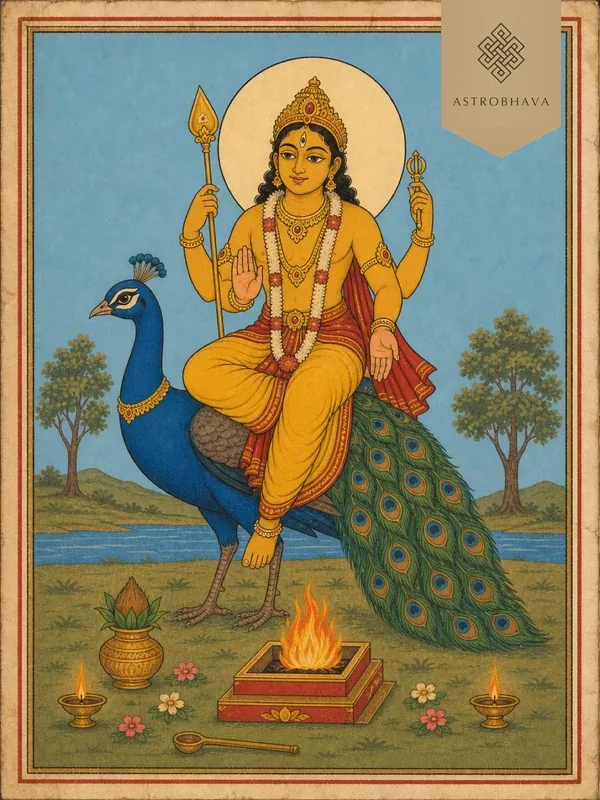 The Skanda Homam, performed for youBook →
What the Subramanya Sahasranamam is
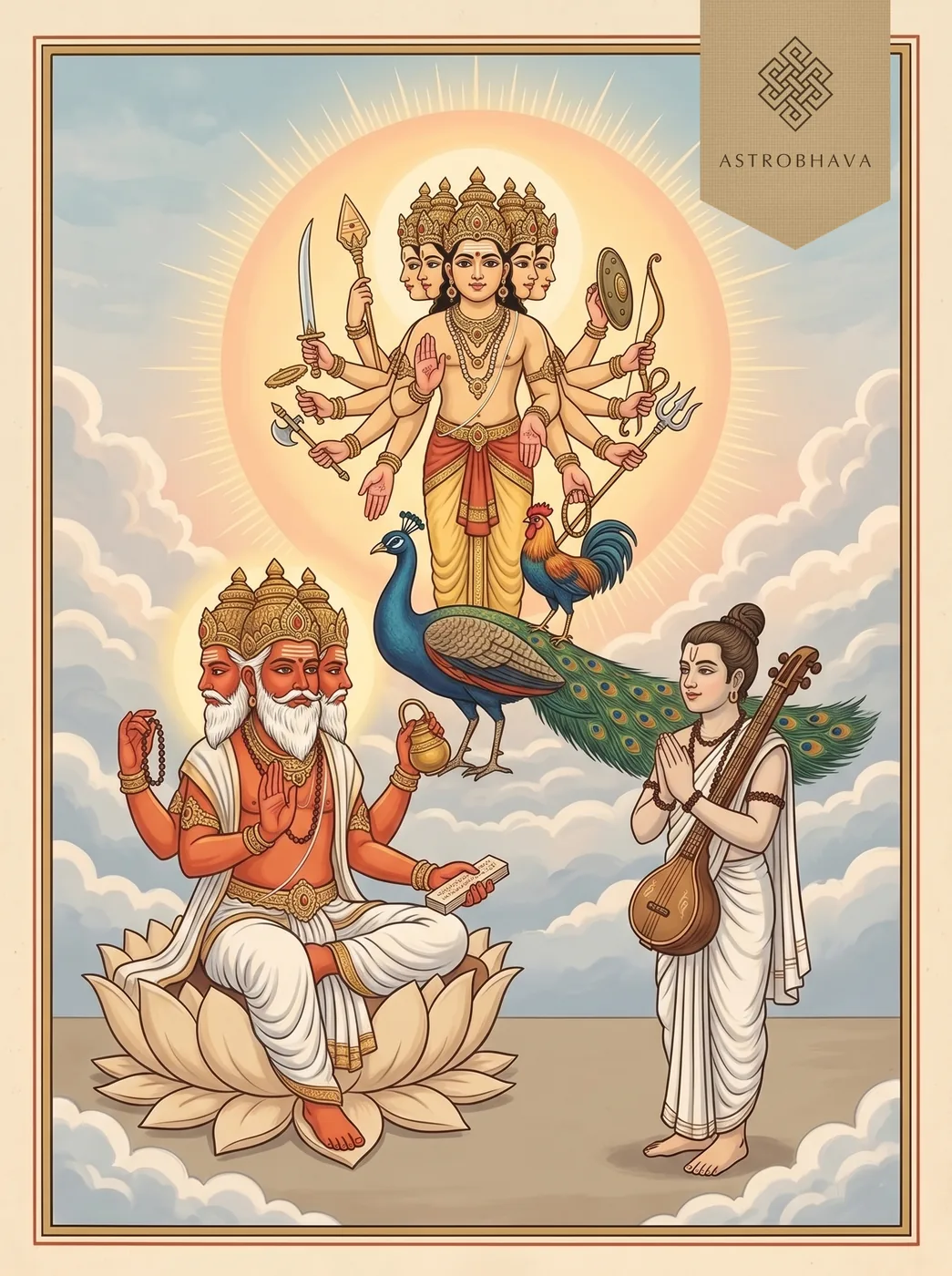
The Subramanya Sahasranamam, in full the Subrahmanya Sahasranama Stotram, is the hymn of a thousand names of the six-faced son of Shiva; its closing line places it in the Skanda Mahapurana and calls it the Shanmukha Sahasranama. The form printed here begins its names with acintyashakti, he of inconceivable power. Fourteen verses of dialogue come first, then two dhyana stanzas, one picturing six crowns bright as the rising sun, the other twelve items held in his hands and a many-coloured peacock as his mount. The 131 name verses follow, which Brahma describes in Verse 11 as set in the order of the alphabet: a at Verse 15, ka at Verse 36, and so on to ksha at Verses 142 to 145. The name Subrahmanya itself comes only once, heading the sa names at Verse 130, just after Verses 127 to 129 gather the names built on six. Three phala shruti verses and the closing line end the text.
From Naimisha Forest to Brahma's Throne
According to the hymn's own opening, the sages of the Naimisha forest come to Suta as guests and ask for a guest's due in the form of knowledge. Their concern is the Kali age, when minds are stained, and they want to know which hymn frees people from the bonds of sin and takes away sorrow, poverty and illness. Suta answers that the teaching is not his own. He is passing on what Brahma, the Self-born, once told Narada. The sages press him for that very conversation, and the scene moves to Brahma on a divine throne, praised by all the gods. Narada bows with his whole body, stands with joined palms, and asks for the supreme hymn of the Six-faced One. He appeals to Brahma as a son would, asking for it out of a father's love. Brahma calls it a king of hymns strung on the letters of the alphabet, and the meditation verses and the names follow. The reader therefore hears the names at one remove, Suta repeating Brahma. The printed closing line adds one more voice, calling the hymn spoken by Ishvara and set in the dialogue of Brahma and Narada. That line names the Skanda Mahapurana and gives no chapter.
The mantra, in six scripts
- ऋषय
- ṛṣaya — the sages
- ऊचुः
- ūcuḥ — said
- सर्वशास्त्रार्थतत्त्वज्ञ
- sarvaśāstrārthatattvajña — O knower of the truth of all scriptures
- सर्वलोकोपकारक
- sarvalokopakāraka — benefactor of all the worlds
- वयं
- vayaṃ — we
- चातिथयः
- cātithayaḥ — and guests
- प्राप्ता
- prāptā — have come
- आतिथेयोऽसि
- ātitheyo'si — you are the host
- सुव्रत
- suvrata — O one of good vows
Subramanya Sahasranamam lyrics in full
Fourteen verses of dialogue, two dhyana stanzas, 131 name verses and three phala shruti verses, numbered straight through, so that name verse 1 of most printings is Verse 15 here. The printed closing line is given at the end.
All 151 verses, in Sanskrit, Tamil, Telugu, Kannada, Malayalam and English, each with its meaning. Choose a script:
Download the Subramanya Sahasranamam PDFAll 151 verses with their meanings, in Sanskrit. Free to print and keep.
ऋषय ऊचुः ।
सर्वशास्त्रार्थतत्त्वज्ञ सर्वलोकोपकारक ।
वयं चातिथयः प्राप्ता आतिथेयोऽसि सुव्रत ॥
ருஷய ஊசுஃ ।
ஸர்வஶாஸ்த்ரார்ததத்த்வஜ்ஞ ஸர்வலோகோபகாரக ।
வயம் சாதிதயஃ ப்ராப்தா ஆதிதேயோஸி ஸுவ்ரத ॥
ఋషయ ఊచుః ।
సర్వశాస్త్రార్థతత్త్వజ్ఞ సర్వలోకోపకారక ।
వయం చాతిథయః ప్రాప్తా ఆతిథేయోఽసి సువ్రత ॥
ಋಷಯ ಊಚುಃ ।
ಸರ್ವಶಾಸ್ತ್ರಾರ್ಥತತ್ತ್ವಜ್ಞ ಸರ್ವಲೋಕೋಪಕಾರಕ ।
ವಯಂ ಚಾತಿಥಯಃ ಪ್ರಾಪ್ತಾ ಆತಿಥೇಯೋಽಸಿ ಸುವ್ರತ ॥
ഋഷയ ഊചുഃ ।
സര്വശാസ്ത്രാര്ഥതത്ത്വജ്ഞ സര്വലോകോപകാരക ।
വയം ചാതിഥയഃ പ്രാപ്താ ആതിഥേയോഽസി സുവ്രത ॥
ṛṣaya ūcuḥ |
sarvaśāstrārthatattvajña sarvalokopakāraka |
vayaṃ cātithayaḥ prāptā ātitheyo'si suvrata ||
The sages said: O knower of the truth of all scriptures, benefactor of all the worlds, we have come as your guests, and you, O man of good vows, are our host.
ज्ञानदानेन संसारसागरात्तारयस्व नः ।
कलौ कलुषचित्ता ये नराः पापरताः सदा ॥
ஜ்ஞாநதாநேந ஸம்ஸாரஸாகராத்தாரயஸ்வ நஃ ।
கலௌ கலுஷசித்தா யே நராஃ பாபரதாஃ ஸதா ॥
జ్ఞానదానేన సంసారసాగరాత్తారయస్వ నః ।
కలౌ కలుషచిత్తా యే నరాః పాపరతాః సదా ॥
ಜ್ಞಾನದಾನೇನ ಸಂಸಾರಸಾಗರಾತ್ತಾರಯಸ್ವ ನಃ ।
ಕಲೌ ಕಲುಷಚಿತ್ತಾ ಯೇ ನರಾಃ ಪಾಪರತಾಃ ಸದಾ ॥
ജ്ഞാനദാനേന സംസാരസാഗരാത്താരയസ്വ നഃ ।
കലൌ കലുഷചിത്താ യേ നരാഃ പാപരതാഃ സദാ ॥
jñānadānena saṃsārasāgarāttārayasva naḥ |
kalau kaluṣacittā ye narāḥ pāparatāḥ sadā ||
By the gift of knowledge carry us across the ocean of worldly existence. In the Kali age there are people of stained minds, ever given to wrongdoing.
केन स्तोत्रेण मुच्यन्ते सर्वपातकबन्धनात् ।
इष्टसिद्धिकरं पुण्यं दुःखदारिद्र्यनाशनम् ॥
கேந ஸ்தோத்ரேண முச்யந்தே ஸர்வபாதகபந்தநாத் ।
இஷ்டஸித்திகரம் புண்யம் துஃகதாரித்ர்யநாஶநம் ॥
కేన స్తోత్రేణ ముచ్యన్తే సర్వపాతకబన్ధనాత్ ।
ఇష్టసిద్ధికరం పుణ్యం దుఃఖదారిద్ర్యనాశనమ్ ॥
ಕೇನ ಸ್ತೋತ್ರೇಣ ಮುಚ್ಯನ್ತೇ ಸರ್ವಪಾತಕಬನ್ಧನಾತ್ ।
ಇಷ್ಟಸಿದ್ಧಿಕರಂ ಪುಣ್ಯಂ ದುಃಖದಾರಿದ್ರ್ಯನಾಶನಮ್ ॥
കേന സ്തോത്രേണ മുച്യന്തേ സര്വപാതകബന്ധനാത് ।
ഇഷ്ടസിദ്ധികരം പുണ്യം ദുഃഖദാരിദ്ര്യനാശനമ് ॥
kena stotreṇa mucyante sarvapātakabandhanāt |
iṣṭasiddhikaraṃ puṇyaṃ duḥkhadāridryanāśanam ||
By which hymn are they freed from the bonds of all sins? Tell us a holy hymn that fulfils what is desired and destroys sorrow and poverty.
सर्वरोगहरं स्तोत्रं सूत नो वक्तुमर्हसि ।
श्रीसूत उवाच ।
शृणुध्वमृषयः सर्वे नैमिषारण्यवासिनः ॥
ஸர்வரோகஹரம் ஸ்தோத்ரம் ஸூத நோ வக்துமர்ஹஸி ।
ஶ்ரீஸூத உவாச ।
ஶ்ருணுத்வம்ருஷயஃ ஸர்வே நைமிஷாரண்யவாஸிநஃ ॥
సర్వరోగహరం స్తోత్రం సూత నో వక్తుమర్హసి ।
శ్రీసూత ఉవాచ ।
శృణుధ్వమృషయః సర్వే నైమిషారణ్యవాసినః ॥
ಸರ್ವರೋಗಹರಂ ಸ್ತೋತ್ರಂ ಸೂತ ನೋ ವಕ್ತುಮರ್ಹಸಿ ।
ಶ್ರೀಸೂತ ಉವಾಚ ।
ಶೃಣುಧ್ವಮೃಷಯಃ ಸರ್ವೇ ನೈಮಿಷಾರಣ್ಯವಾಸಿನಃ ॥
സര്വരോഗഹരം സ്തോത്രം സൂത നോ വക്തുമര്ഹസി ।
ശ്രീസൂത ഉവാച ।
ശൃണുധ്വമൃഷയഃ സര്വേ നൈമിഷാരണ്യവാസിനഃ ॥
sarvarogaharaṃ stotraṃ sūta no vaktumarhasi |
śrīsūta uvāca |
śṛṇudhvamṛṣayaḥ sarve naimiṣāraṇyavāsinaḥ ||
O Suta, please tell us the hymn that removes all illness. Sri Suta said: Listen, all you sages who dwell in the Naimisha forest.
तत्त्वज्ञानतपोनिष्ठाः सर्वशास्त्रविशारदाः ।
स्वयम्भुवा पुरा प्रोक्तं नारदाय महात्मने ॥
தத்த்வஜ்ஞாநதபோநிஷ்டாஃ ஸர்வஶாஸ்த்ரவிஶாரதாஃ ।
ஸ்வயம்புவா புரா ப்ரோக்தம் நாரதாய மஹாத்மநே ॥
తత్త్వజ్ఞానతపోనిష్ఠాః సర్వశాస్త్రవిశారదాః ।
స్వయమ్భువా పురా ప్రోక్తం నారదాయ మహాత్మనే ॥
ತತ್ತ್ವಜ್ಞಾನತಪೋನಿಷ್ಠಾಃ ಸರ್ವಶಾಸ್ತ್ರವಿಶಾರದಾಃ ।
ಸ್ವಯಮ್ಭುವಾ ಪುರಾ ಪ್ರೋಕ್ತಂ ನಾರದಾಯ ಮಹಾತ್ಮನೇ ॥
തത്ത്വജ്ഞാനതപോനിഷ്ഠാഃ സര്വശാസ്ത്രവിശാരദാഃ ।
സ്വയമ്ഭുവാ പുരാ പ്രോക്തം നാരദായ മഹാത്മനേ ॥
tattvajñānataponiṣṭhāḥ sarvaśāstraviśāradāḥ |
svayambhuvā purā proktaṃ nāradāya mahātmane ||
You are steadfast in the knowledge of truth and in austerity, and learned in all the scriptures. In ancient times the Self-born Brahma told this to the great soul Narada.
तदहं सम्प्रवक्ष्यामि श्रोतुं कौतूहलं यदि ।
ऋषय ऊचुः ।
किमाह भगवान्ब्रह्मा नारदाय महात्मने ॥
ததஹம் ஸம்ப்ரவக்ஷ்யாமி ஶ்ரோதும் கௌதூஹலம் யதி ।
ருஷய ஊசுஃ ।
கிமாஹ பகவாந்ப்ரஹ்மா நாரதாய மஹாத்மநே ॥
తదహం సమ్ప్రవక్ష్యామి శ్రోతుం కౌతూహలం యది ।
ఋషయ ఊచుః ।
కిమాహ భగవాన్బ్రహ్మా నారదాయ మహాత్మనే ॥
ತದಹಂ ಸಮ್ಪ್ರವಕ್ಷ್ಯಾಮಿ ಶ್ರೋತುಂ ಕೌತೂಹಲಂ ಯದಿ ।
ಋಷಯ ಊಚುಃ ।
ಕಿಮಾಹ ಭಗವಾನ್ಬ್ರಹ್ಮಾ ನಾರದಾಯ ಮಹಾತ್ಮನೇ ॥
തദഹം സമ്പ്രവക്ഷ്യാമി ശ്രോതും കൌതൂഹലം യദി ।
ഋഷയ ഊചുഃ ।
കിമാഹ ഭഗവാന്ബ്രഹ്മാ നാരദായ മഹാത്മനേ ॥
tadahaṃ sampravakṣyāmi śrotuṃ kautūhalaṃ yadi |
ṛṣaya ūcuḥ |
kimāha bhagavānbrahmā nāradāya mahātmane ||
That I shall tell you, if you are eager to hear it. The sages said: What did Lord Brahma say to the great soul Narada?
सूतपुत्र महाभाग वक्तुमर्हसि साम्प्रतम् ।
श्रीसूत उवाच ।
दिव्यसिंहासनासीनं सर्वदेवैरभिष्टुतम् ॥
ஸூதபுத்ர மஹாபாக வக்துமர்ஹஸி ஸாம்ப்ரதம் ।
ஶ்ரீஸூத உவாச ।
திவ்யஸிம்ஹாஸநாஸீநம் ஸர்வதேவைரபிஷ்டுதம் ॥
సూతపుత్ర మహాభాగ వక్తుమర్హసి సామ్ప్రతమ్ ।
శ్రీసూత ఉవాచ ।
దివ్యసింహాసనాసీనం సర్వదేవైరభిష్టుతమ్ ॥
ಸೂತಪುತ್ರ ಮಹಾಭಾಗ ವಕ್ತುಮರ್ಹಸಿ ಸಾಮ್ಪ್ರತಮ್ ।
ಶ್ರೀಸೂತ ಉವಾಚ ।
ದಿವ್ಯಸಿಂಹಾಸನಾಸೀನಂ ಸರ್ವದೇವೈರಭಿಷ್ಟುತಮ್ ॥
സൂതപുത്ര മഹാഭാഗ വക്തുമര്ഹസി സാമ്പ്രതമ് ।
ശ്രീസൂത ഉവാച ।
ദിവ്യസിംഹാസനാസീനം സര്വദേവൈരഭിഷ്ടുതമ് ॥
sūtaputra mahābhāga vaktumarhasi sāmpratam |
śrīsūta uvāca |
divyasiṃhāsanāsīnaṃ sarvadevairabhiṣṭutam ||
O son of the Suta, O fortunate one, please tell us now. Sri Suta said: Brahma was seated on a divine throne, praised by all the gods.
साष्टाङ्गं प्रणिपत्यैनं ब्रह्माणं भुवनेश्वरम् ।
नारदः परिपप्रच्छ कृताञ्जलिरुपस्थितः ॥
ஸாஷ்டாங்கம் ப்ரணிபத்யைநம் ப்ரஹ்மாணம் புவநேஶ்வரம் ।
நாரதஃ பரிபப்ரச்ச க்ருதாஞ்ஜலிருபஸ்திதஃ ॥
సాష్టాఙ్గం ప్రణిపత్యైనం బ్రహ్మాణం భువనేశ్వరమ్ ।
నారదః పరిపప్రచ్ఛ కృతాఞ్జలిరుపస్థితః ॥
ಸಾಷ್ಟಾಙ್ಗಂ ಪ್ರಣಿಪತ್ಯೈನಂ ಬ್ರಹ್ಮಾಣಂ ಭುವನೇಶ್ವರಮ್ ।
ನಾರದಃ ಪರಿಪಪ್ರಚ್ಛ ಕೃತಾಞ್ಜಲಿರುಪಸ್ಥಿತಃ ॥
സാഷ്ടാങ്ഗം പ്രണിപത്യൈനം ബ്രഹ്മാണം ഭുവനേശ്വരമ് ।
നാരദഃ പരിപപ്രച്ഛ കൃതാഞ്ജലിരുപസ്ഥിതഃ ॥
sāṣṭāṅgaṃ praṇipatyainaṃ brahmāṇaṃ bhuvaneśvaram |
nāradaḥ paripapraccha kṛtāñjalirupasthitaḥ ||
Bowing with his whole body to Brahma, master of the worlds, Narada stood before him with joined palms and questioned him.
नारद उवाच ।
लोकनाथ सुरश्रेष्ठ सर्वज्ञ करुणाकर ।
षण्मुखस्य परं स्तोत्रं पावनं पापनाशनम् ॥
நாரத உவாச ।
லோகநாத ஸுரஶ்ரேஷ்ட ஸர்வஜ்ஞ கருணாகர ।
ஷண்முகஸ்ய பரம் ஸ்தோத்ரம் பாவநம் பாபநாஶநம் ॥
నారద ఉవాచ ।
లోకనాథ సురశ్రేష్ఠ సర్వజ్ఞ కరుణాకర ।
షణ్ముఖస్య పరం స్తోత్రం పావనం పాపనాశనమ్ ॥
ನಾರದ ಉವಾಚ ।
ಲೋಕನಾಥ ಸುರಶ್ರೇಷ್ಠ ಸರ್ವಜ್ಞ ಕರುಣಾಕರ ।
ಷಣ್ಮುಖಸ್ಯ ಪರಂ ಸ್ತೋತ್ರಂ ಪಾವನಂ ಪಾಪನಾಶನಮ್ ॥
നാരദ ഉവാച ।
ലോകനാഥ സുരശ്രേഷ്ഠ സര്വജ്ഞ കരുണാകര ।
ഷണ്മുഖസ്യ പരം സ്തോത്രം പാവനം പാപനാശനമ് ॥
nārada uvāca |
lokanātha suraśreṣṭha sarvajña karuṇākara |
ṣaṇmukhasya paraṃ stotraṃ pāvanaṃ pāpanāśanam ||
Narada said: O Lord of the world, best of the gods, all-knowing one, source of compassion, tell me the supreme hymn of the Six-faced One, which purifies and destroys sin.
धातस्त्वं पुत्रवात्सल्यात्तद्वद प्रणताय मे ।
उपदिश्य तु मां देव रक्ष रक्ष कृपानिधे ॥
தாதஸ்த்வம் புத்ரவாத்ஸல்யாத்தத்வத ப்ரணதாய மே ।
உபதிஶ்ய து மாம் தேவ ரக்ஷ ரக்ஷ க்ருபாநிதே ॥
ధాతస్త్వం పుత్రవాత్సల్యాత్తద్వద ప్రణతాయ మే ।
ఉపదిశ్య తు మాం దేవ రక్ష రక్ష కృపానిధే ॥
ಧಾತಸ್ತ್ವಂ ಪುತ್ರವಾತ್ಸಲ್ಯಾತ್ತದ್ವದ ಪ್ರಣತಾಯ ಮೇ ।
ಉಪದಿಶ್ಯ ತು ಮಾಂ ದೇವ ರಕ್ಷ ರಕ್ಷ ಕೃಪಾನಿಧೇ ॥
ധാതസ്ത്വം പുത്രവാത്സല്യാത്തദ്വദ പ്രണതായ മേ ।
ഉപദിശ്യ തു മാം ദേവ രക്ഷ രക്ഷ കൃപാനിധേ ॥
dhātastvaṃ putravātsalyāttadvada praṇatāya me |
upadiśya tu māṃ deva rakṣa rakṣa kṛpānidhe ||
O Creator, out of a father's love tell it to me, who bow before you. Teach it to me, O divine one, and protect me, protect me, O treasure of mercy.
ब्रह्मोवाच ।
शृणु वक्ष्यामि देवर्षे स्तवराजमिमं परम् ।
मातृकामालिकायुक्तं ज्ञानमोक्षसुखप्रदम् ॥
ப்ரஹ்மோவாச ।
ஶ்ருணு வக்ஷ்யாமி தேவர்ஷே ஸ்தவராஜமிமம் பரம் ।
மாத்ருகாமாலிகாயுக்தம் ஜ்ஞாநமோக்ஷஸுகப்ரதம் ॥
బ్రహ్మోవాచ ।
శృణు వక్ష్యామి దేవర్షే స్తవరాజమిమం పరమ్ ।
మాతృకామాలికాయుక్తం జ్ఞానమోక్షసుఖప్రదమ్ ॥
ಬ್ರಹ್ಮೋವಾಚ ।
ಶೃಣು ವಕ್ಷ್ಯಾಮಿ ದೇವರ್ಷೇ ಸ್ತವರಾಜಮಿಮಂ ಪರಮ್ ।
ಮಾತೃಕಾಮಾಲಿಕಾಯುಕ್ತಂ ಜ್ಞಾನಮೋಕ್ಷಸುಖಪ್ರದಮ್ ॥
ബ്രഹ്മോവാച ।
ശൃണു വക്ഷ്യാമി ദേവര്ഷേ സ്തവരാജമിമം പരമ് ।
മാതൃകാമാലികായുക്തം ജ്ഞാനമോക്ഷസുഖപ്രദമ് ॥
brahmovāca |
śṛṇu vakṣyāmi devarṣe stavarājamimaṃ param |
mātṛkāmālikāyuktaṃ jñānamokṣasukhapradam ||
Brahma said: Listen, O divine sage, I shall tell you this supreme king of hymns, set out in the order of the alphabet, which gives knowledge, liberation and happiness.
सहस्राणि च नामानि षण्मुखस्य महात्मनः ।
यानि नामानि दिव्यानि दुःखरोगहराणि च ॥
ஸஹஸ்ராணி ச நாமாநி ஷண்முகஸ்ய மஹாத்மநஃ ।
யாநி நாமாநி திவ்யாநி துஃகரோகஹராணி ச ॥
సహస్రాణి చ నామాని షణ్ముఖస్య మహాత్మనః ।
యాని నామాని దివ్యాని దుఃఖరోగహరాణి చ ॥
ಸಹಸ್ರಾಣಿ ಚ ನಾಮಾನಿ ಷಣ್ಮುಖಸ್ಯ ಮಹಾತ್ಮನಃ ।
ಯಾನಿ ನಾಮಾನಿ ದಿವ್ಯಾನಿ ದುಃಖರೋಗಹರಾಣಿ ಚ ॥
സഹസ്രാണി ച നാമാനി ഷണ്മുഖസ്യ മഹാത്മനഃ ।
യാനി നാമാനി ദിവ്യാനി ദുഃഖരോഗഹരാണി ച ॥
sahasrāṇi ca nāmāni ṣaṇmukhasya mahātmanaḥ |
yāni nāmāni divyāni duḥkharogaharāṇi ca ||
These are the thousand names of the great Six-faced One, divine names that remove sorrow and disease.
तानि नामानि वक्ष्यामि कृपया त्वयि नारद ।
जपमात्रेण सिध्यन्ति मनसा चिन्तितान्यपि ॥
தாநி நாமாநி வக்ஷ்யாமி க்ருபயா த்வயி நாரத ।
ஜபமாத்ரேண ஸித்யந்தி மநஸா சிந்திதாந்யபி ॥
తాని నామాని వక్ష్యామి కృపయా త్వయి నారద ।
జపమాత్రేణ సిధ్యన్తి మనసా చిన్తితాన్యపి ॥
ತಾನಿ ನಾಮಾನಿ ವಕ್ಷ್ಯಾಮಿ ಕೃಪಯಾ ತ್ವಯಿ ನಾರದ ।
ಜಪಮಾತ್ರೇಣ ಸಿಧ್ಯನ್ತಿ ಮನಸಾ ಚಿನ್ತಿತಾನ್ಯಪಿ ॥
താനി നാമാനി വക്ഷ്യാമി കൃപയാ ത്വയി നാരദ ।
ജപമാത്രേണ സിധ്യന്തി മനസാ ചിന്തിതാന്യപി ॥
tāni nāmāni vakṣyāmi kṛpayā tvayi nārada |
japamātreṇa sidhyanti manasā cintitānyapi ||
Out of kindness to you, O Narada, I shall tell you those names. The verse says that by mere repetition of them even what is only thought of in the mind is accomplished.
इहामुत्र परं भोगं लभते नात्र संशयः ।
इदं स्तोत्रं परं पुण्यं कोटियज्ञफलप्रदम् ।
सन्देहो नात्र कर्तव्यः शृणु मे निश्चितं वचः ॥
இஹாமுத்ர பரம் போகம் லபதே நாத்ர ஸம்ஶயஃ ।
இதம் ஸ்தோத்ரம் பரம் புண்யம் கோடியஜ்ஞபலப்ரதம் ।
ஸந்தேஹோ நாத்ர கர்தவ்யஃ ஶ்ருணு மே நிஶ்சிதம் வசஃ ॥
ఇహాముత్ర పరం భోగం లభతే నాత్ర సంశయః ।
ఇదం స్తోత్రం పరం పుణ్యం కోటియజ్ఞఫలప్రదమ్ ।
సన్దేహో నాత్ర కర్తవ్యః శృణు మే నిశ్చితం వచః ॥
ಇಹಾಮುತ್ರ ಪರಂ ಭೋಗಂ ಲಭತೇ ನಾತ್ರ ಸಂಶಯಃ ।
ಇದಂ ಸ್ತೋತ್ರಂ ಪರಂ ಪುಣ್ಯಂ ಕೋಟಿಯಜ್ಞಫಲಪ್ರದಮ್ ।
ಸನ್ದೇಹೋ ನಾತ್ರ ಕರ್ತವ್ಯಃ ಶೃಣು ಮೇ ನಿಶ್ಚಿತಂ ವಚಃ ॥
ഇഹാമുത്ര പരം ഭോഗം ലഭതേ നാത്ര സംശയഃ ।
ഇദം സ്തോത്രം പരം പുണ്യം കോടിയജ്ഞഫലപ്രദമ് ।
സന്ദേഹോ നാത്ര കര്തവ്യഃ ശൃണു മേ നിശ്ചിതം വചഃ ॥
ihāmutra paraṃ bhogaṃ labhate nātra saṃśayaḥ |
idaṃ stotraṃ paraṃ puṇyaṃ koṭiyajñaphalapradam |
sandeho nātra kartavyaḥ śṛṇu me niścitaṃ vacaḥ ||
The verse says that one gains the highest enjoyment here and hereafter, without doubt, and that this holy hymn gives the fruit of ten million sacrifices. Have no doubt about this; hear my firm word.
ध्यायेत्षण्मुखमिन्दुकोटिसदृशं रत्नप्रभाशोभितं बालार्कद्युतिषट्किरीटविलसत्केयूरहारान्वितम् ।
कर्णालम्बितकुण्डलप्रविलसद्गण्डस्थलाशोभितं काञ्चीकङ्कणकिङ्किणीरवयुतं शृङ्गारसारोदयम् ॥
த்யாயேத்ஷண்முகமிந்துகோடிஸத்ருஶம் ரத்நப்ரபாஶோபிதம் பாலார்கத்யுதிஷட்கிரீடவிலஸத்கேயூரஹாராந்விதம் ।
கர்ணாலம்பிதகுண்டலப்ரவிலஸத்கண்டஸ்தலாஶோபிதம் காஞ்சீகங்கணகிங்கிணீரவயுதம் ஶ்ருங்காரஸாரோதயம் ॥
ధ్యాయేత్షణ్ముఖమిన్దుకోటిసదృశం రత్నప్రభాశోభితం బాలార్కద్యుతిషట్కిరీటవిలసత్కేయూరహారాన్వితమ్ ।
కర్ణాలమ్బితకుణ్డలప్రవిలసద్గణ్డస్థలాశోభితం కాఞ్చీకఙ్కణకిఙ్కిణీరవయుతం శృఙ్గారసారోదయమ్ ॥
ಧ್ಯಾಯೇತ್ಷಣ್ಮುಖಮಿನ್ದುಕೋಟಿಸದೃಶಂ ರತ್ನಪ್ರಭಾಶೋಭಿತಂ ಬಾಲಾರ್ಕದ್ಯುತಿಷಟ್ಕಿರೀಟವಿಲಸತ್ಕೇಯೂರಹಾರಾನ್ವಿತಮ್ ।
ಕರ್ಣಾಲಮ್ಬಿತಕುಣ್ಡಲಪ್ರವಿಲಸದ್ಗಣ್ಡಸ್ಥಲಾಶೋಭಿತಂ ಕಾಞ್ಚೀಕಙ್ಕಣಕಿಙ್ಕಿಣೀರವಯುತಂ ಶೃಙ್ಗಾರಸಾರೋದಯಮ್ ॥
ധ്യായേത്ഷണ്മുഖമിന്ദുകോടിസദൃശം രത്നപ്രഭാശോഭിതം ബാലാര്കദ്യുതിഷട്കിരീടവിലസത്കേയൂരഹാരാന്വിതമ് ।
കര്ണാലമ്ബിതകുണ്ഡലപ്രവിലസദ്ഗണ്ഡസ്ഥലാശോഭിതം കാഞ്ചീകങ്കണകിങ്കിണീരവയുതം ശൃങ്ഗാരസാരോദയമ് ॥
dhyāyetṣaṇmukhamindukoṭisadṛśaṃ ratnaprabhāśobhitaṃ bālārkadyutiṣaṭkirīṭavilasatkeyūrahārānvitam |
karṇālambitakuṇḍalapravilasadgaṇḍasthalāśobhitaṃ kāñcīkaṅkaṇakiṅkiṇīravayutaṃ śṛṅgārasārodayam ||
Let one meditate on the Six-faced One, radiant as ten million moons, shining with the light of gems, with six crowns bright as the rising sun, adorned with armlets and necklaces. His cheeks gleam with hanging earrings, the tinkling of his girdle, bracelets and small bells sounds about him, and he is the very essence of beauty.
ध्यायेदीप्सितसिद्धिदं शिवसुतं श्रीद्वादशाक्षं गुहं खेटं कुक्कुटमङ्कुशं च वरदं पाशं धनुश्चक्रकम् ।
वज्रं शक्तिमसिं च शूलमभयं दोर्भिर्धृतं षण्मुखं देवं चित्रमयूरवाहनगतं चित्राम्बरालङ्कृतम् ॥
த்யாயேதீப்ஸிதஸித்திதம் ஶிவஸுதம் ஶ்ரீத்வாதஶாக்ஷம் குஹம் கேடம் குக்குடமங்குஶம் ச வரதம் பாஶம் தநுஶ்சக்ரகம் ।
வஜ்ரம் ஶக்திமஸிம் ச ஶூலமபயம் தோர்பிர்த்ருதம் ஷண்முகம் தேவம் சித்ரமயூரவாஹநகதம் சித்ராம்பராலங்க்ருதம் ॥
ధ్యాయేదీప్సితసిద్ధిదం శివసుతం శ్రీద్వాదశాక్షం గుహం ఖేటం కుక్కుటమఙ్కుశం చ వరదం పాశం ధనుశ్చక్రకమ్ ।
వజ్రం శక్తిమసిం చ శూలమభయం దోర్భిర్ధృతం షణ్ముఖం దేవం చిత్రమయూరవాహనగతం చిత్రామ్బరాలఙ్కృతమ్ ॥
ಧ್ಯಾಯೇದೀಪ್ಸಿತಸಿದ್ಧಿದಂ ಶಿವಸುತಂ ಶ್ರೀದ್ವಾದಶಾಕ್ಷಂ ಗುಹಂ ಖೇಟಂ ಕುಕ್ಕುಟಮಙ್ಕುಶಂ ಚ ವರದಂ ಪಾಶಂ ಧನುಶ್ಚಕ್ರಕಮ್ ।
ವಜ್ರಂ ಶಕ್ತಿಮಸಿಂ ಚ ಶೂಲಮಭಯಂ ದೋರ್ಭಿರ್ಧೃತಂ ಷಣ್ಮುಖಂ ದೇವಂ ಚಿತ್ರಮಯೂರವಾಹನಗತಂ ಚಿತ್ರಾಮ್ಬರಾಲಙ್ಕೃತಮ್ ॥
ധ്യായേദീപ്സിതസിദ്ധിദം ശിവസുതം ശ്രീദ്വാദശാക്ഷം ഗുഹം ഖേടം കുക്കുടമങ്കുശം ച വരദം പാശം ധനുശ്ചക്രകമ് ।
വജ്രം ശക്തിമസിം ച ശൂലമഭയം ദോര്ഭിര്ധൃതം ഷണ്മുഖം ദേവം ചിത്രമയൂരവാഹനഗതം ചിത്രാമ്ബരാലങ്കൃതമ് ॥
dhyāyedīpsitasiddhidaṃ śivasutaṃ śrīdvādaśākṣaṃ guhaṃ kheṭaṃ kukkuṭamaṅkuśaṃ ca varadaṃ pāśaṃ dhanuścakrakam |
vajraṃ śaktimasiṃ ca śūlamabhayaṃ dorbhirdhṛtaṃ ṣaṇmukhaṃ devaṃ citramayūravāhanagataṃ citrāmbarālaṅkṛtam ||
Let one meditate on Guha, son of Shiva, the twelve-eyed giver of desired success, the Six-faced One who holds in his hands shield, rooster, goad, the boon-giving gesture, noose, bow and discus, and thunderbolt, spear, sword, trident and the gesture of fearlessness. He is the divine one who rides a many-coloured peacock and wears bright garments.
अचिन्त्यशक्तिरनघस्त्वक्षोभ्यस्त्वपराजितः ।
अनाथवत्सलोऽमोघस्त्वशोकोऽप्यजरोऽभयः ॥
அசிந்த்யஶக்திரநகஸ்த்வக்ஷோப்யஸ்த்வபராஜிதஃ ।
அநாதவத்ஸலோமோகஸ்த்வஶோகோப்யஜரோபயஃ ॥
అచిన్త్యశక్తిరనఘస్త్వక్షోభ్యస్త్వపరాజితః ।
అనాథవత్సలోఽమోఘస్త్వశోకోఽప్యజరోఽభయః ॥
ಅಚಿನ್ತ್ಯಶಕ್ತಿರನಘಸ್ತ್ವಕ್ಷೋಭ್ಯಸ್ತ್ವಪರಾಜಿತಃ ।
ಅನಾಥವತ್ಸಲೋಽಮೋಘಸ್ತ್ವಶೋಕೋಽಪ್ಯಜರೋಽಭಯಃ ॥
അചിന്ത്യശക്തിരനഘസ്ത്വക്ഷോഭ്യസ്ത്വപരാജിതഃ ।
അനാഥവത്സലോഽമോഘസ്ത്വശോകോഽപ്യജരോഽഭയഃ ॥
acintyaśaktiranaghastvakṣobhyastvaparājitaḥ |
anāthavatsalo'moghastvaśoko'pyajaro'bhayaḥ ||
He of inconceivable power, the sinless, the unshakable, the unconquered; kind to the helpless, unfailing, without sorrow, ageless, fearless.
अत्युदारो ह्यघहरस्त्वग्रगण्योऽद्रिजासुतः ।
अनन्तमहिमाऽपारोऽनन्तसौख्यप्रदोऽव्ययः ॥
அத்யுதாரோ ஹ்யகஹரஸ்த்வக்ரகண்யோத்ரிஜாஸுதஃ ।
அநந்தமஹிமாபாரோநந்தஸௌக்யப்ரதோவ்யயஃ ॥
అత్యుదారో హ్యఘహరస్త్వగ్రగణ్యోఽద్రిజాసుతః ।
అనన్తమహిమాఽపారోఽనన్తసౌఖ్యప్రదోఽవ్యయః ॥
ಅತ್ಯುದಾರೋ ಹ್ಯಘಹರಸ್ತ್ವಗ್ರಗಣ್ಯೋಽದ್ರಿಜಾಸುತಃ ।
ಅನನ್ತಮಹಿಮಾಽಪಾರೋಽನನ್ತಸೌಖ್ಯಪ್ರದೋಽವ್ಯಯಃ ॥
അത്യുദാരോ ഹ്യഘഹരസ്ത്വഗ്രഗണ്യോഽദ്രിജാസുതഃ ।
അനന്തമഹിമാഽപാരോഽനന്തസൌഖ്യപ്രദോഽവ്യയഃ ॥
atyudāro hyaghaharastvagragaṇyo'drijāsutaḥ |
anantamahimā'pāro'nantasaukhyaprado'vyayaḥ ||
The most generous, remover of sin, foremost of all, son of the Mountain's daughter; of endless greatness, boundless, giver of endless joy, the imperishable.
अनन्तमोक्षदोऽनादिरप्रमेयोऽक्षरोऽच्युतः ।
अकल्मषोऽभिरामोऽग्रधुर्यश्चामितविक्रमः ॥
அநந்தமோக்ஷதோநாதிரப்ரமேயோக்ஷரோச்யுதஃ ।
அகல்மஷோபிராமோக்ரதுர்யஶ்சாமிதவிக்ரமஃ ॥
అనన్తమోక్షదోఽనాదిరప్రమేయోఽక్షరోఽచ్యుతః ।
అకల్మషోఽభిరామోఽగ్రధుర్యశ్చామితవిక్రమః ॥
ಅನನ್ತಮೋಕ್ಷದೋಽನಾದಿರಪ್ರಮೇಯೋಽಕ್ಷರೋಽಚ್ಯುತಃ ।
ಅಕಲ್ಮಷೋಽಭಿರಾಮೋಽಗ್ರಧುರ್ಯಶ್ಚಾಮಿತವಿಕ್ರಮಃ ॥
അനന്തമോക്ഷദോഽനാദിരപ്രമേയോഽക്ഷരോഽച്യുതഃ ।
അകല്മഷോഽഭിരാമോഽഗ്രധുര്യശ്ചാമിതവിക്രമഃ ॥
anantamokṣado'nādiraprameyo'kṣaro'cyutaḥ |
akalmaṣo'bhirāmo'gradhuryaścāmitavikramaḥ ||
Giver of endless liberation, without beginning, immeasurable, undecaying, unfallen; stainless, delightful, the foremost bearer of burdens, of limitless valour.
अनाथनाथो ह्यमलो ह्यप्रमत्तोऽमरप्रभुः ।
अरिन्दमोऽखिलाधारस्त्वणिमादिगुणोऽग्रणीः ॥
அநாதநாதோ ஹ்யமலோ ஹ்யப்ரமத்தோமரப்ரபுஃ ।
அரிந்தமோகிலாதாரஸ்த்வணிமாதிகுணோக்ரணீஃ ॥
అనాథనాథో హ్యమలో హ్యప్రమత్తోఽమరప్రభుః ।
అరిన్దమోఽఖిలాధారస్త్వణిమాదిగుణోఽగ్రణీః ॥
ಅನಾಥನಾಥೋ ಹ್ಯಮಲೋ ಹ್ಯಪ್ರಮತ್ತೋಽಮರಪ್ರಭುಃ ।
ಅರಿನ್ದಮೋಽಖಿಲಾಧಾರಸ್ತ್ವಣಿಮಾದಿಗುಣೋಽಗ್ರಣೀಃ ॥
അനാഥനാഥോ ഹ്യമലോ ഹ്യപ്രമത്തോഽമരപ്രഭുഃ ।
അരിന്ദമോഽഖിലാധാരസ്ത്വണിമാദിഗുണോഽഗ്രണീഃ ॥
anāthanātho hyamalo hyapramatto'maraprabhuḥ |
arindamo'khilādhārastvaṇimādiguṇo'graṇīḥ ||
Protector of the unprotected, the pure, the ever-alert, Lord of the immortals; subduer of enemies, support of all, the leader who holds the powers such as becoming minute.
अचञ्चलोऽमरस्तुत्यो ह्यकलङ्कोऽमिताशनः ।
अग्निभूरनवद्याङ्गो ह्यद्भुतोऽभीष्टदायकः ॥
அசஞ்சலோமரஸ்துத்யோ ஹ்யகலங்கோமிதாஶநஃ ।
அக்நிபூரநவத்யாங்கோ ஹ்யத்புதோபீஷ்டதாயகஃ ॥
అచఞ్చలోఽమరస్తుత్యో హ్యకలఙ్కోఽమితాశనః ।
అగ్నిభూరనవద్యాఙ్గో హ్యద్భుతోఽభీష్టదాయకః ॥
ಅಚಞ್ಚಲೋಽಮರಸ್ತುತ್ಯೋ ಹ್ಯಕಲಙ್ಕೋಽಮಿತಾಶನಃ ।
ಅಗ್ನಿಭೂರನವದ್ಯಾಙ್ಗೋ ಹ್ಯದ್ಭುತೋಽಭೀಷ್ಟದಾಯಕಃ ॥
അചഞ്ചലോഽമരസ്തുത്യോ ഹ്യകലങ്കോഽമിതാശനഃ ।
അഗ്നിഭൂരനവദ്യാങ്ഗോ ഹ്യദ്ഭുതോഽഭീഷ്ടദായകഃ ॥
acañcalo'marastutyo hyakalaṅko'mitāśanaḥ |
agnibhūranavadyāṅgo hyadbhuto'bhīṣṭadāyakaḥ ||
Unwavering, praised by the immortals, spotless, of unmeasured appetite; born of fire, of faultless limbs, wondrous, giver of what is wished for.
अतीन्द्रियोऽप्रमेयात्मा ह्यदृश्योऽव्यक्तलक्षणः ।
आपद्विनाशकस्त्वार्य आढ्य आगमसंस्तुतः ॥
அதீந்த்ரியோப்ரமேயாத்மா ஹ்யத்ருஶ்யோவ்யக்தலக்ஷணஃ ।
ஆபத்விநாஶகஸ்த்வார்ய ஆட்ய ஆகமஸம்ஸ்துதஃ ॥
అతీన్ద్రియోఽప్రమేయాత్మా హ్యదృశ్యోఽవ్యక్తలక్షణః ।
ఆపద్వినాశకస్త్వార్య ఆఢ్య ఆగమసంస్తుతః ॥
ಅತೀನ್ದ್ರಿಯೋಽಪ್ರಮೇಯಾತ್ಮಾ ಹ್ಯದೃಶ್ಯೋಽವ್ಯಕ್ತಲಕ್ಷಣಃ ।
ಆಪದ್ವಿನಾಶಕಸ್ತ್ವಾರ್ಯ ಆಢ್ಯ ಆಗಮಸಂಸ್ತುತಃ ॥
അതീന്ദ്രിയോഽപ്രമേയാത്മാ ഹ്യദൃശ്യോഽവ്യക്തലക്ഷണഃ ।
ആപദ്വിനാശകസ്ത്വാര്യ ആഢ്യ ആഗമസംസ്തുതഃ ॥
atīndriyo'prameyātmā hyadṛśyo'vyaktalakṣaṇaḥ |
āpadvināśakastvārya āḍhya āgamasaṃstutaḥ ||
Beyond the senses, the immeasurable Self, invisible, of unmanifest signs; destroyer of calamity, the noble one, the rich one, praised by the scriptures.
आर्तसंरक्षणस्त्वाद्य आनन्दस्त्वार्यसेवितः ।
आश्रितेष्टार्थवरद आनन्द्यार्तफलप्रदः ॥
ஆர்தஸம்ரக்ஷணஸ்த்வாத்ய ஆநந்தஸ்த்வார்யஸேவிதஃ ।
ஆஶ்ரிதேஷ்டார்தவரத ஆநந்த்யார்தபலப்ரதஃ ॥
ఆర్తసంరక్షణస్త్వాద్య ఆనన్దస్త్వార్యసేవితః ।
ఆశ్రితేష్టార్థవరద ఆనన్ద్యార్తఫలప్రదః ॥
ಆರ್ತಸಂರಕ್ಷಣಸ್ತ್ವಾದ್ಯ ಆನನ್ದಸ್ತ್ವಾರ್ಯಸೇವಿತಃ ।
ಆಶ್ರಿತೇಷ್ಟಾರ್ಥವರದ ಆನನ್ದ್ಯಾರ್ತಫಲಪ್ರದಃ ॥
ആര്തസംരക്ഷണസ്ത്വാദ്യ ആനന്ദസ്ത്വാര്യസേവിതഃ ।
ആശ്രിതേഷ്ടാര്ഥവരദ ആനന്ദ്യാര്തഫലപ്രദഃ ॥
ārtasaṃrakṣaṇastvādya ānandastvāryasevitaḥ |
āśriteṣṭārthavarada ānandyārtaphalapradaḥ ||
Protector of the afflicted, the first, the blissful, served by the noble. Bestower of the wishes of those who take refuge, joyous one, giver of fruit to the distressed.
आश्चर्यरूप आनन्द आपन्नार्तिविनाशनः ।
इभवक्त्रानुजस्त्विष्ट इभासुरहरात्मजः ॥
ஆஶ்சர்யரூப ஆநந்த ஆபந்நார்திவிநாஶநஃ ।
இபவக்த்ராநுஜஸ்த்விஷ்ட இபாஸுரஹராத்மஜஃ ॥
ఆశ్చర్యరూప ఆనన్ద ఆపన్నార్తివినాశనః ।
ఇభవక్త్రానుజస్త్విష్ట ఇభాసురహరాత్మజః ॥
ಆಶ್ಚರ್ಯರೂಪ ಆನನ್ದ ಆಪನ್ನಾರ್ತಿವಿನಾಶನಃ ।
ಇಭವಕ್ತ್ರಾನುಜಸ್ತ್ವಿಷ್ಟ ಇಭಾಸುರಹರಾತ್ಮಜಃ ॥
ആശ്ചര്യരൂപ ആനന്ദ ആപന്നാര്തിവിനാശനഃ ।
ഇഭവക്ത്രാനുജസ്ത്വിഷ്ട ഇഭാസുരഹരാത്മജഃ ॥
āścaryarūpa ānanda āpannārtivināśanaḥ |
ibhavaktrānujastviṣṭa ibhāsuraharātmajaḥ ||
Of wondrous form, the blissful, destroyer of the pain of the afflicted; younger brother of the Elephant-faced One, the beloved, son of the slayer of the elephant demon.
इतिहासश्रुतिस्तुत्य इन्द्रभोगफलप्रदः ।
इष्टापूर्तफलप्राप्तिरिष्टेष्टवरदायकः ॥
இதிஹாஸஶ்ருதிஸ்துத்ய இந்த்ரபோகபலப்ரதஃ ।
இஷ்டாபூர்தபலப்ராப்திரிஷ்டேஷ்டவரதாயகஃ ॥
ఇతిహాసశ్రుతిస్తుత్య ఇన్ద్రభోగఫలప్రదః ।
ఇష్టాపూర్తఫలప్రాప్తిరిష్టేష్టవరదాయకః ॥
ಇತಿಹಾಸಶ್ರುತಿಸ್ತುತ್ಯ ಇನ್ದ್ರಭೋಗಫಲಪ್ರದಃ ।
ಇಷ್ಟಾಪೂರ್ತಫಲಪ್ರಾಪ್ತಿರಿಷ್ಟೇಷ್ಟವರದಾಯಕಃ ॥
ഇതിഹാസശ്രുതിസ്തുത്യ ഇന്ദ്രഭോഗഫലപ്രദഃ ।
ഇഷ്ടാപൂര്തഫലപ്രാപ്തിരിഷ്ടേഷ്ടവരദായകഃ ॥
itihāsaśrutistutya indrabhogaphalapradaḥ |
iṣṭāpūrtaphalaprāptiriṣṭeṣṭavaradāyakaḥ ||
Praised by the histories and the Vedas, giver of the enjoyments of Indra. Attainment of the fruit of sacrifice and charity, granter of every desired boon.
इहामुत्रेष्टफलद इष्टदस्त्विन्द्रवन्दितः ।
ईडनीयस्त्वीशपुत्र ईप्सितार्थप्रदायकः ॥
இஹாமுத்ரேஷ்டபலத இஷ்டதஸ்த்விந்த்ரவந்திதஃ ।
ஈடநீயஸ்த்வீஶபுத்ர ஈப்ஸிதார்தப்ரதாயகஃ ॥
ఇహాముత్రేష్టఫలద ఇష్టదస్త్విన్ద్రవన్దితః ।
ఈడనీయస్త్వీశపుత్ర ఈప్సితార్థప్రదాయకః ॥
ಇಹಾಮುತ್ರೇಷ್ಟಫಲದ ಇಷ್ಟದಸ್ತ್ವಿನ್ದ್ರವನ್ದಿತಃ ।
ಈಡನೀಯಸ್ತ್ವೀಶಪುತ್ರ ಈಪ್ಸಿತಾರ್ಥಪ್ರದಾಯಕಃ ॥
ഇഹാമുത്രേഷ്ടഫലദ ഇഷ്ടദസ്ത്വിന്ദ്രവന്ദിതഃ ।
ഈഡനീയസ്ത്വീശപുത്ര ഈപ്സിതാര്ഥപ്രദായകഃ ॥
ihāmutreṣṭaphalada iṣṭadastvindravanditaḥ |
īḍanīyastvīśaputra īpsitārthapradāyakaḥ ||
Giver of desired fruit here and hereafter, giver of what is wanted, worshipped by Indra; worthy of praise, son of Ishvara, bestower of the aims one longs for.
ईतिभीतिहरश्चेड्य ईषणात्रयवर्जितः ।
उदारकीर्तिरुद्योगी चोत्कृष्टोरुपराक्रमः ॥
ஈதிபீதிஹரஶ்சேட்ய ஈஷணாத்ரயவர்ஜிதஃ ।
உதாரகீர்திருத்யோகீ சோத்க்ருஷ்டோருபராக்ரமஃ ॥
ఈతిభీతిహరశ్చేడ్య ఈషణాత్రయవర్జితః ।
ఉదారకీర్తిరుద్యోగీ చోత్కృష్టోరుపరాక్రమః ॥
ಈತಿಭೀತಿಹರಶ್ಚೇಡ್ಯ ಈಷಣಾತ್ರಯವರ್ಜಿತಃ ।
ಉದಾರಕೀರ್ತಿರುದ್ಯೋಗೀ ಚೋತ್ಕೃಷ್ಟೋರುಪರಾಕ್ರಮಃ ॥
ഈതിഭീതിഹരശ്ചേഡ്യ ഈഷണാത്രയവര്ജിതഃ ।
ഉദാരകീര്തിരുദ്യോഗീ ചോത്കൃഷ്ടോരുപരാക്രമഃ ॥
ītibhītiharaśceḍya īṣaṇātrayavarjitaḥ |
udārakīrtirudyogī cotkṛṣṭoruparākramaḥ ||
Remover of calamity and fear, the adorable, free of the three cravings; of noble fame, the ever-active, the excellent one of great valour.
उत्कृष्टशक्तिरुत्साह उदारश्चोत्सवप्रियः ।
उज्जृम्भ उद्भवश्चोग्र उदग्रश्चोग्रलोचनः ॥
உத்க்ருஷ்டஶக்திருத்ஸாஹ உதாரஶ்சோத்ஸவப்ரியஃ ।
உஜ்ஜ்ரும்ப உத்பவஶ்சோக்ர உதக்ரஶ்சோக்ரலோசநஃ ॥
ఉత్కృష్టశక్తిరుత్సాహ ఉదారశ్చోత్సవప్రియః ।
ఉజ్జృమ్భ ఉద్భవశ్చోగ్ర ఉదగ్రశ్చోగ్రలోచనః ॥
ಉತ್ಕೃಷ್ಟಶಕ್ತಿರುತ್ಸಾಹ ಉದಾರಶ್ಚೋತ್ಸವಪ್ರಿಯಃ ।
ಉಜ್ಜೃಮ್ಭ ಉದ್ಭವಶ್ಚೋಗ್ರ ಉದಗ್ರಶ್ಚೋಗ್ರಲೋಚನಃ ॥
ഉത്കൃഷ്ടശക്തിരുത്സാഹ ഉദാരശ്ചോത്സവപ്രിയഃ ।
ഉജ്ജൃമ്ഭ ഉദ്ഭവശ്ചോഗ്ര ഉദഗ്രശ്ചോഗ്രലോചനഃ ॥
utkṛṣṭaśaktirutsāha udāraścotsavapriyaḥ |
ujjṛmbha udbhavaścogra udagraścogralocanaḥ ||
Of exalted power, enthusiasm itself, the generous, lover of festivals; the expansive, the source, the fierce, the lofty, the fierce-eyed.
उन्मत्त उग्रशमन उद्वेगघ्नोरगेश्वरः ।
उरुप्रभावश्चोदीर्ण उमापुत्र उदारधीः ॥
உந்மத்த உக்ரஶமந உத்வேகக்நோரகேஶ்வரஃ ।
உருப்ரபாவஶ்சோதீர்ண உமாபுத்ர உதாரதீஃ ॥
ఉన్మత్త ఉగ్రశమన ఉద్వేగఘ్నోరగేశ్వరః ।
ఉరుప్రభావశ్చోదీర్ణ ఉమాపుత్ర ఉదారధీః ॥
ಉನ್ಮತ್ತ ಉಗ್ರಶಮನ ಉದ್ವೇಗಘ್ನೋರಗೇಶ್ವರಃ ।
ಉರುಪ್ರಭಾವಶ್ಚೋದೀರ್ಣ ಉಮಾಪುತ್ರ ಉದಾರಧೀಃ ॥
ഉന്മത്ത ഉഗ്രശമന ഉദ്വേഗഘ്നോരഗേശ്വരഃ ।
ഉരുപ്രഭാവശ്ചോദീര്ണ ഉമാപുത്ര ഉദാരധീഃ ॥
unmatta ugraśamana udvegaghnorageśvaraḥ |
uruprabhāvaścodīrṇa umāputra udāradhīḥ ||
The ecstatic, pacifier of the fierce, destroyer of anxiety, Lord of serpents; of wide influence, the exalted, son of Uma, the noble-minded.
ऊर्ध्वरेतःसुतस्तूर्ध्वगतिदस्तूर्जपालकः ।
ऊर्जितस्तूर्ध्वगस्तूर्ध्व ऊर्ध्वलोकैकनायकः ॥
ஊர்த்வரேதஃஸுதஸ்தூர்த்வகதிதஸ்தூர்ஜபாலகஃ ।
ஊர்ஜிதஸ்தூர்த்வகஸ்தூர்த்வ ஊர்த்வலோகைகநாயகஃ ॥
ఊర్ధ్వరేతఃసుతస్తూర్ధ్వగతిదస్తూర్జపాలకః ।
ఊర్జితస్తూర్ధ్వగస్తూర్ధ్వ ఊర్ధ్వలోకైకనాయకః ॥
ಊರ್ಧ್ವರೇತಃಸುತಸ್ತೂರ್ಧ್ವಗತಿದಸ್ತೂರ್ಜಪಾಲಕಃ ।
ಊರ್ಜಿತಸ್ತೂರ್ಧ್ವಗಸ್ತೂರ್ಧ್ವ ಊರ್ಧ್ವಲೋಕೈಕನಾಯಕಃ ॥
ഊര്ധ്വരേതഃസുതസ്തൂര്ധ്വഗതിദസ്തൂര്ജപാലകഃ ।
ഊര്ജിതസ്തൂര്ധ്വഗസ്തൂര്ധ്വ ഊര്ധ്വലോകൈകനായകഃ ॥
ūrdhvaretaḥsutastūrdhvagatidastūrjapālakaḥ |
ūrjitastūrdhvagastūrdhva ūrdhvalokaikanāyakaḥ ||
Son of the celibate Shiva, giver of the upward path, protector of strength; the mighty, the one who rises, the high, the sole leader of the higher worlds.
ऊर्जावानूर्जितोदार ऊर्जितोर्जितशासनः ।
ऋषिदेवगणस्तुत्य ऋणत्रयविमोचनः ॥
ஊர்ஜாவாநூர்ஜிதோதார ஊர்ஜிதோர்ஜிதஶாஸநஃ ।
ருஷிதேவகணஸ்துத்ய ருணத்ரயவிமோசநஃ ॥
ఊర్జావానూర్జితోదార ఊర్జితోర్జితశాసనః ।
ఋషిదేవగణస్తుత్య ఋణత్రయవిమోచనః ॥
ಊರ್ಜಾವಾನೂರ್ಜಿತೋದಾರ ಊರ್ಜಿತೋರ್ಜಿತಶಾಸನಃ ।
ಋಷಿದೇವಗಣಸ್ತುತ್ಯ ಋಣತ್ರಯವಿಮೋಚನಃ ॥
ഊര്ജാവാനൂര്ജിതോദാര ഊര്ജിതോര്ജിതശാസനഃ ।
ഋഷിദേവഗണസ്തുത്യ ഋണത്രയവിമോചനഃ ॥
ūrjāvānūrjitodāra ūrjitorjitaśāsanaḥ |
ṛṣidevagaṇastutya ṛṇatrayavimocanaḥ ||
Full of vigour, the mighty and generous, of powerful and firm command; praised by the hosts of sages and gods, releaser from the three debts.
ऋजुरूपो ह्यृजुकर ऋजुमार्गप्रदर्शनः ।
ऋतम्भरो ह्यृजुप्रीत ऋषभस्त्वृद्धिदस्त्वृतः ॥
ருஜுரூபோ ஹ்ய்ருஜுகர ருஜுமார்கப்ரதர்ஶநஃ ।
ருதம்பரோ ஹ்ய்ருஜுப்ரீத ருஷபஸ்த்வ்ருத்திதஸ்த்வ்ருதஃ ॥
ఋజురూపో హ్యృజుకర ఋజుమార్గప్రదర్శనః ।
ఋతమ్భరో హ్యృజుప్రీత ఋషభస్త్వృద్ధిదస్త్వృతః ॥
ಋಜುರೂಪೋ ಹ್ಯೃಜುಕರ ಋಜುಮಾರ್ಗಪ್ರದರ್ಶನಃ ।
ಋತಮ್ಭರೋ ಹ್ಯೃಜುಪ್ರೀತ ಋಷಭಸ್ತ್ವೃದ್ಧಿದಸ್ತ್ವೃತಃ ॥
ഋജുരൂപോ ഹ്യൃജുകര ഋജുമാര്ഗപ്രദര്ശനഃ ।
ഋതമ്ഭരോ ഹ്യൃജുപ്രീത ഋഷഭസ്ത്വൃദ്ധിദസ്ത്വൃതഃ ॥
ṛjurūpo hyṛjukara ṛjumārgapradarśanaḥ |
ṛtambharo hyṛjuprīta ṛṣabhastvṛddhidastvṛtaḥ ||
Straight in form, maker of straightness, shower of the straight path; bearer of truth, lover of the straightforward, the excellent one, giver of prosperity, truth itself.
लुलितोद्धारको लूतभवपाशप्रभञ्जनः ।
एणाङ्कधरसत्पुत्र एक एनोविनाशनः ॥
லுலிதோத்தாரகோ லூதபவபாஶப்ரபஞ்ஜநஃ ।
ஏணாங்கதரஸத்புத்ர ஏக ஏநோவிநாஶநஃ ॥
లులితోద్ధారకో లూతభవపాశప్రభఞ్జనః ।
ఏణాఙ్కధరసత్పుత్ర ఏక ఏనోవినాశనః ॥
ಲುಲಿತೋದ್ಧಾರಕೋ ಲೂತಭವಪಾಶಪ್ರಭಞ್ಜನಃ ।
ಏಣಾಙ್ಕಧರಸತ್ಪುತ್ರ ಏಕ ಏನೋವಿನಾಶನಃ ॥
ലുലിതോദ്ധാരകോ ലൂതഭവപാശപ്രഭഞ്ജനഃ ।
ഏണാങ്കധരസത്പുത്ര ഏക ഏനോവിനാശനഃ ॥
lulitoddhārako lūtabhavapāśaprabhañjanaḥ |
eṇāṅkadharasatputra eka enovināśanaḥ ||
Uplifter of the shaken, breaker of the noose of worldly existence as a spider's web is torn; the true son of the moon-crested Shiva, the One, destroyer of sin.
ऐश्वर्यदश्चैन्द्रभोगी चैतिह्यश्चैन्द्रवन्दितः ।
ओजस्वी चौषधिस्थानमोजोदश्चौदनप्रदः ॥
ஐஶ்வர்யதஶ்சைந்த்ரபோகீ சைதிஹ்யஶ்சைந்த்ரவந்திதஃ ।
ஓஜஸ்வீ சௌஷதிஸ்தாநமோஜோதஶ்சௌதநப்ரதஃ ॥
ఐశ్వర్యదశ్చైన్ద్రభోగీ చైతిహ్యశ్చైన్ద్రవన్దితః ।
ఓజస్వీ చౌషధిస్థానమోజోదశ్చౌదనప్రదః ॥
ಐಶ್ವರ್ಯದಶ್ಚೈನ್ದ್ರಭೋಗೀ ಚೈತಿಹ್ಯಶ್ಚೈನ್ದ್ರವನ್ದಿತಃ ।
ಓಜಸ್ವೀ ಚೌಷಧಿಸ್ಥಾನಮೋಜೋದಶ್ಚೌದನಪ್ರದಃ ॥
ഐശ്വര്യദശ്ചൈന്ദ്രഭോഗീ ചൈതിഹ്യശ്ചൈന്ദ്രവന്ദിതഃ ।
ഓജസ്വീ ചൌഷധിസ്ഥാനമോജോദശ്ചൌദനപ്രദഃ ॥
aiśvaryadaścaindrabhogī caitihyaścaindravanditaḥ |
ojasvī cauṣadhisthānamojodaścaudanapradaḥ ||
Giver of sovereignty, enjoyer of Indra's delights, known from tradition, worshipped by Indra; the radiant, abode of healing herbs, giver of vigour, giver of food.
औदार्यशील औमेय औग्र औन्नत्यदायकः ।
औदार्य औषधकर औषधं चौषधाकरः ॥
ஔதார்யஶீல ஔமேய ஔக்ர ஔந்நத்யதாயகஃ ।
ஔதார்ய ஔஷதகர ஔஷதம் சௌஷதாகரஃ ॥
ఔదార్యశీల ఔమేయ ఔగ్ర ఔన్నత్యదాయకః ।
ఔదార్య ఔషధకర ఔషధం చౌషధాకరః ॥
ಔದಾರ್ಯಶೀಲ ಔಮೇಯ ಔಗ್ರ ಔನ್ನತ್ಯದಾಯಕಃ ।
ಔದಾರ್ಯ ಔಷಧಕರ ಔಷಧಂ ಚೌಷಧಾಕರಃ ॥
ഔദാര്യശീല ഔമേയ ഔഗ്ര ഔന്നത്യദായകഃ ।
ഔദാര്യ ഔഷധകര ഔഷധം ചൌഷധാകരഃ ॥
audāryaśīla aumeya augra aunnatyadāyakaḥ |
audārya auṣadhakara auṣadhaṃ cauṣadhākaraḥ ||
Noble by nature, son of Uma, the fierce, giver of eminence; generosity itself, maker of remedies, the remedy and the mine of remedies.
अंशुमानंशुमालीड्य अम्बिकातनयोऽन्नदः ।
अन्धकारिसुतोऽन्धत्वहारी चाम्बुजलोचनः ॥
அம்ஶுமாநம்ஶுமாலீட்ய அம்பிகாதநயோந்நதஃ ।
அந்தகாரிஸுதோந்தத்வஹாரீ சாம்புஜலோசநஃ ॥
అంశుమానంశుమాలీడ్య అమ్బికాతనయోఽన్నదః ।
అన్ధకారిసుతోఽన్ధత్వహారీ చామ్బుజలోచనః ॥
ಅಂಶುಮಾನಂಶುಮಾಲೀಡ್ಯ ಅಮ್ಬಿಕಾತನಯೋಽನ್ನದಃ ।
ಅನ್ಧಕಾರಿಸುತೋಽನ್ಧತ್ವಹಾರೀ ಚಾಮ್ಬುಜಲೋಚನಃ ॥
അംശുമാനംശുമാലീഡ്യ അമ്ബികാതനയോഽന്നദഃ ।
അന്ധകാരിസുതോഽന്ധത്വഹാരീ ചാമ്ബുജലോചനഃ ॥
aṃśumānaṃśumālīḍya ambikātanayo'nnadaḥ |
andhakārisuto'ndhatvahārī cāmbujalocanaḥ ||
The radiant, praised by the Sun, son of Ambika, giver of food. Son of the slayer of Andhaka, remover of blindness, the lotus-eyed.
अस्तमायोऽमराधीशो ह्यस्पष्टोऽस्तोकपुण्यदः ।
अस्तामित्रोऽस्तरूपश्चास्खलत्सुगतिदायकः ॥
அஸ்தமாயோமராதீஶோ ஹ்யஸ்பஷ்டோஸ்தோகபுண்யதஃ ।
அஸ்தாமித்ரோஸ்தரூபஶ்சாஸ்கலத்ஸுகதிதாயகஃ ॥
అస్తమాయోఽమరాధీశో హ్యస్పష్టోఽస్తోకపుణ్యదః ।
అస్తామిత్రోఽస్తరూపశ్చాస్ఖలత్సుగతిదాయకః ॥
ಅಸ್ತಮಾಯೋಽಮರಾಧೀಶೋ ಹ್ಯಸ್ಪಷ್ಟೋಽಸ್ತೋಕಪುಣ್ಯದಃ ।
ಅಸ್ತಾಮಿತ್ರೋಽಸ್ತರೂಪಶ್ಚಾಸ್ಖಲತ್ಸುಗತಿದಾಯಕಃ ॥
അസ്തമായോഽമരാധീശോ ഹ്യസ്പഷ്ടോഽസ്തോകപുണ്യദഃ ।
അസ്താമിത്രോഽസ്തരൂപശ്ചാസ്ഖലത്സുഗതിദായകഃ ॥
astamāyo'marādhīśo hyaspaṣṭo'stokapuṇyadaḥ |
astāmitro'starūpaścāskhalatsugatidāyakaḥ ||
Free of illusion, ruler of the immortals, beyond clear definition, giver of no small merit. Destroyer of enemies, of form beyond sight, giver of an unfaltering good path.
कार्तिकेयः कामरूपः कुमारः क्रौञ्चदारणः ।
कामदः कारणं काम्यः कमनीयः कृपाकरः ॥
கார்திகேயஃ காமரூபஃ குமாரஃ க்ரௌஞ்சதாரணஃ ।
காமதஃ காரணம் காம்யஃ கமநீயஃ க்ருபாகரஃ ॥
కార్తికేయః కామరూపః కుమారః క్రౌఞ్చదారణః ।
కామదః కారణం కామ్యః కమనీయః కృపాకరః ॥
ಕಾರ್ತಿಕೇಯಃ ಕಾಮರೂಪಃ ಕುಮಾರಃ ಕ್ರೌಞ್ಚದಾರಣಃ ।
ಕಾಮದಃ ಕಾರಣಂ ಕಾಮ್ಯಃ ಕಮನೀಯಃ ಕೃಪಾಕರಃ ॥
കാര്തികേയഃ കാമരൂപഃ കുമാരഃ ക്രൌഞ്ചദാരണഃ ।
കാമദഃ കാരണം കാമ്യഃ കമനീയഃ കൃപാകരഃ ॥
kārtikeyaḥ kāmarūpaḥ kumāraḥ krauñcadāraṇaḥ |
kāmadaḥ kāraṇaṃ kāmyaḥ kamanīyaḥ kṛpākaraḥ ||
Son of the Krittikas, taking any form at will, the youth, splitter of Mount Krauncha; giver of desires, the cause, the desirable, the lovely, the merciful.
काञ्चनाभः कान्तियुक्तः कामी कामप्रदः कविः ।
कीर्तिकृत्कुक्कुटधरः कूटस्थः कुवलेक्षणः ॥
காஞ்சநாபஃ காந்தியுக்தஃ காமீ காமப்ரதஃ கவிஃ ।
கீர்திக்ருத்குக்குடதரஃ கூடஸ்தஃ குவலேக்ஷணஃ ॥
కాఞ్చనాభః కాన్తియుక్తః కామీ కామప్రదః కవిః ।
కీర్తికృత్కుక్కుటధరః కూటస్థః కువలేక్షణః ॥
ಕಾಞ್ಚನಾಭಃ ಕಾನ್ತಿಯುಕ್ತಃ ಕಾಮೀ ಕಾಮಪ್ರದಃ ಕವಿಃ ।
ಕೀರ್ತಿಕೃತ್ಕುಕ್ಕುಟಧರಃ ಕೂಟಸ್ಥಃ ಕುವಲೇಕ್ಷಣಃ ॥
കാഞ്ചനാഭഃ കാന്തിയുക്തഃ കാമീ കാമപ്രദഃ കവിഃ ।
കീര്തികൃത്കുക്കുടധരഃ കൂടസ്ഥഃ കുവലേക്ഷണഃ ॥
kāñcanābhaḥ kāntiyuktaḥ kāmī kāmapradaḥ kaviḥ |
kīrtikṛtkukkuṭadharaḥ kūṭasthaḥ kuvalekṣaṇaḥ ||
Bright as gold, full of radiance, the loving, giver of desires, the poet; maker of fame, holder of the rooster, the unchanging, with eyes like blue lilies.
कुङ्कुमाङ्गः क्लमहरः कुशलः कुक्कुटध्वजः ।
कुशानुसम्भवः क्रूरः क्रूरघ्नः कलितापहृत् ॥
குங்குமாங்கஃ க்லமஹரஃ குஶலஃ குக்குடத்வஜஃ ।
குஶாநுஸம்பவஃ க்ரூரஃ க்ரூரக்நஃ கலிதாபஹ்ருத் ॥
కుఙ్కుమాఙ్గః క్లమహరః కుశలః కుక్కుటధ్వజః ।
కుశానుసమ్భవః క్రూరః క్రూరఘ్నః కలితాపహృత్ ॥
ಕುಙ್ಕುಮಾಙ್ಗಃ ಕ್ಲಮಹರಃ ಕುಶಲಃ ಕುಕ್ಕುಟಧ್ವಜಃ ।
ಕುಶಾನುಸಮ್ಭವಃ ಕ್ರೂರಃ ಕ್ರೂರಘ್ನಃ ಕಲಿತಾಪಹೃತ್ ॥
കുങ്കുമാങ്ഗഃ ക്ലമഹരഃ കുശലഃ കുക്കുടധ്വജഃ ।
കുശാനുസമ്ഭവഃ ക്രൂരഃ ക്രൂരഘ്നഃ കലിതാപഹൃത് ॥
kuṅkumāṅgaḥ klamaharaḥ kuśalaḥ kukkuṭadhvajaḥ |
kuśānusambhavaḥ krūraḥ krūraghnaḥ kalitāpahṛt ||
Of saffron-coloured limbs, remover of weariness, the skilled, with the rooster on his banner; born of fire, stern, destroyer of the cruel, remover of the ills of the Kali age.
कामरूपः कल्पतरुः कान्तः कामितदायकः ।
कल्याणकृत्क्लेशनाशः कृपालुः करुणाकरः ॥
காமரூபஃ கல்பதருஃ காந்தஃ காமிததாயகஃ ।
கல்யாணக்ருத்க்லேஶநாஶஃ க்ருபாலுஃ கருணாகரஃ ॥
కామరూపః కల్పతరుః కాన్తః కామితదాయకః ।
కల్యాణకృత్క్లేశనాశః కృపాలుః కరుణాకరః ॥
ಕಾಮರೂಪಃ ಕಲ್ಪತರುಃ ಕಾನ್ತಃ ಕಾಮಿತದಾಯಕಃ ।
ಕಲ್ಯಾಣಕೃತ್ಕ್ಲೇಶನಾಶಃ ಕೃಪಾಲುಃ ಕರುಣಾಕರಃ ॥
കാമരൂപഃ കല്പതരുഃ കാന്തഃ കാമിതദായകഃ ।
കല്യാണകൃത്ക്ലേശനാശഃ കൃപാലുഃ കരുണാകരഃ ॥
kāmarūpaḥ kalpataruḥ kāntaḥ kāmitadāyakaḥ |
kalyāṇakṛtkleśanāśaḥ kṛpāluḥ karuṇākaraḥ ||
Of form at will, wish-granting tree, the beautiful, giver of what is wished. Doer of good, destroyer of affliction, the merciful, the source of compassion.
कलुषघ्नः क्रियाशक्तिः कठोरः कवची कृती ।
कोमलाङ्गः कुशप्रीतः कुत्सितघ्नः कलाधरः ॥
கலுஷக்நஃ க்ரியாஶக்திஃ கடோரஃ கவசீ க்ருதீ ।
கோமலாங்கஃ குஶப்ரீதஃ குத்ஸிதக்நஃ கலாதரஃ ॥
కలుషఘ్నః క్రియాశక్తిః కఠోరః కవచీ కృతీ ।
కోమలాఙ్గః కుశప్రీతః కుత్సితఘ్నః కలాధరః ॥
ಕಲುಷಘ್ನಃ ಕ್ರಿಯಾಶಕ್ತಿಃ ಕಠೋರಃ ಕವಚೀ ಕೃತೀ ।
ಕೋಮಲಾಙ್ಗಃ ಕುಶಪ್ರೀತಃ ಕುತ್ಸಿತಘ್ನಃ ಕಲಾಧರಃ ॥
കലുഷഘ്നഃ ക്രിയാശക്തിഃ കഠോരഃ കവചീ കൃതീ ।
കോമലാങ്ഗഃ കുശപ്രീതഃ കുത്സിതഘ്നഃ കലാധരഃ ॥
kaluṣaghnaḥ kriyāśaktiḥ kaṭhoraḥ kavacī kṛtī |
komalāṅgaḥ kuśaprītaḥ kutsitaghnaḥ kalādharaḥ ||
Destroyer of impurity, the power of action, the stern, the armoured, the accomplished; of tender limbs, pleased with kusha grass, destroyer of the vile, holder of the arts.
ख्यातः खेटधरः खड्गी खट्वाङ्गी खलनिग्रहः ।
ख्यातिप्रदः खेचरेशः ख्यातेहः खेचरस्तुतः ॥
க்யாதஃ கேடதரஃ கட்கீ கட்வாங்கீ கலநிக்ரஹஃ ।
க்யாதிப்ரதஃ கேசரேஶஃ க்யாதேஹஃ கேசரஸ்துதஃ ॥
ఖ్యాతః ఖేటధరః ఖడ్గీ ఖట్వాఙ్గీ ఖలనిగ్రహః ।
ఖ్యాతిప్రదః ఖేచరేశః ఖ్యాతేహః ఖేచరస్తుతః ॥
ಖ್ಯಾತಃ ಖೇಟಧರಃ ಖಡ್ಗೀ ಖಟ್ವಾಙ್ಗೀ ಖಲನಿಗ್ರಹಃ ।
ಖ್ಯಾತಿಪ್ರದಃ ಖೇಚರೇಶಃ ಖ್ಯಾತೇಹಃ ಖೇಚರಸ್ತುತಃ ॥
ഖ്യാതഃ ഖേടധരഃ ഖഡ്ഗീ ഖട്വാങ്ഗീ ഖലനിഗ്രഹഃ ।
ഖ്യാതിപ്രദഃ ഖേചരേശഃ ഖ്യാതേഹഃ ഖേചരസ്തുതഃ ॥
khyātaḥ kheṭadharaḥ khaḍgī khaṭvāṅgī khalanigrahaḥ |
khyātipradaḥ khecareśaḥ khyātehaḥ khecarastutaḥ ||
The renowned, bearer of the shield, the swordsman, bearer of the skull-staff, restrainer of the wicked; giver of renown, Lord of those who move in the sky, of famous deeds, praised by the sky-goers.
खरतापहरः स्वस्थः खेचरः खेचराश्रयः ।
खण्डेन्दुमौलितनयः खेलः खेचरपालकः ॥
கரதாபஹரஃ ஸ்வஸ்தஃ கேசரஃ கேசராஶ்ரயஃ ।
கண்டேந்துமௌலிதநயஃ கேலஃ கேசரபாலகஃ ॥
ఖరతాపహరః స్వస్థః ఖేచరః ఖేచరాశ్రయః ।
ఖణ్డేన్దుమౌలితనయః ఖేలః ఖేచరపాలకః ॥
ಖರತಾಪಹರಃ ಸ್ವಸ್ಥಃ ಖೇಚರಃ ಖೇಚರಾಶ್ರಯಃ ।
ಖಣ್ಡೇನ್ದುಮೌಲಿತನಯಃ ಖೇಲಃ ಖೇಚರಪಾಲಕಃ ॥
ഖരതാപഹരഃ സ്വസ്ഥഃ ഖേചരഃ ഖേചരാശ്രയഃ ।
ഖണ്ഡേന്ദുമൌലിതനയഃ ഖേലഃ ഖേചരപാലകഃ ॥
kharatāpaharaḥ svasthaḥ khecaraḥ khecarāśrayaḥ |
khaṇḍendumaulitanayaḥ khelaḥ khecarapālakaḥ ||
Remover of the heat of the wicked, the self-abiding, the sky-goer, refuge of sky-goers; son of the crescent-crested Shiva, the playful, protector of the sky-goers.
खस्थलः खण्डितार्कश्च खेचरीजनपूजितः ।
गाङ्गेयो गिरिजापुत्रो गणनाथानुजो गुहः ॥
கஸ்தலஃ கண்டிதார்கஶ்ச கேசரீஜநபூஜிதஃ ।
காங்கேயோ கிரிஜாபுத்ரோ கணநாதாநுஜோ குஹஃ ॥
ఖస్థలః ఖణ్డితార్కశ్చ ఖేచరీజనపూజితః ।
గాఙ్గేయో గిరిజాపుత్రో గణనాథానుజో గుహః ॥
ಖಸ್ಥಲಃ ಖಣ್ಡಿತಾರ್ಕಶ್ಚ ಖೇಚರೀಜನಪೂಜಿತಃ ।
ಗಾಙ್ಗೇಯೋ ಗಿರಿಜಾಪುತ್ರೋ ಗಣನಾಥಾನುಜೋ ಗುಹಃ ॥
ഖസ്ഥലഃ ഖണ്ഡിതാര്കശ്ച ഖേചരീജനപൂജിതഃ ।
ഗാങ്ഗേയോ ഗിരിജാപുത്രോ ഗണനാഥാനുജോ ഗുഹഃ ॥
khasthalaḥ khaṇḍitārkaśca khecarījanapūjitaḥ |
gāṅgeyo girijāputro gaṇanāthānujo guhaḥ ||
Abiding in the sky, who split the sun, worshipped by the women of the sky. Son of the Ganga, son of the Mountain's Daughter, younger brother of Ganesha, Guha.
गोप्ता गीर्वाणसंसेव्यो गुणातीतो गुहाश्रयः ।
गतिप्रदो गुणनिधिः गम्भीरो गिरिजात्मजः ॥
கோப்தா கீர்வாணஸம்ஸேவ்யோ குணாதீதோ குஹாஶ்ரயஃ ।
கதிப்ரதோ குணநிதிஃ கம்பீரோ கிரிஜாத்மஜஃ ॥
గోప్తా గీర్వాణసంసేవ్యో గుణాతీతో గుహాశ్రయః ।
గతిప్రదో గుణనిధిః గమ్భీరో గిరిజాత్మజః ॥
ಗೋಪ್ತಾ ಗೀರ್ವಾಣಸಂಸೇವ್ಯೋ ಗುಣಾತೀತೋ ಗುಹಾಶ್ರಯಃ ।
ಗತಿಪ್ರದೋ ಗುಣನಿಧಿಃ ಗಮ್ಭೀರೋ ಗಿರಿಜಾತ್ಮಜಃ ॥
ഗോപ്താ ഗീര്വാണസംസേവ്യോ ഗുണാതീതോ ഗുഹാശ്രയഃ ।
ഗതിപ്രദോ ഗുണനിധിഃ ഗമ്ഭീരോ ഗിരിജാത്മജഃ ॥
goptā gīrvāṇasaṃsevyo guṇātīto guhāśrayaḥ |
gatiprado guṇanidhiḥ gambhīro girijātmajaḥ ||
The protector, served by the gods, beyond the qualities, dwelling in the cave of the heart; giver of the goal, treasure of virtues, the deep, son of the Mountain's daughter.
गूढरूपो गदहरो गुणाधीशो गुणाग्रणीः ।
गोधरो गहनो गुप्तो गर्वघ्नो गुणवर्धनः ॥
கூடரூபோ கதஹரோ குணாதீஶோ குணாக்ரணீஃ ।
கோதரோ கஹநோ குப்தோ கர்வக்நோ குணவர்தநஃ ॥
గూఢరూపో గదహరో గుణాధీశో గుణాగ్రణీః ।
గోధరో గహనో గుప్తో గర్వఘ్నో గుణవర్ధనః ॥
ಗೂಢರೂಪೋ ಗದಹರೋ ಗುಣಾಧೀಶೋ ಗುಣಾಗ್ರಣೀಃ ।
ಗೋಧರೋ ಗಹನೋ ಗುಪ್ತೋ ಗರ್ವಘ್ನೋ ಗುಣವರ್ಧನಃ ॥
ഗൂഢരൂപോ ഗദഹരോ ഗുണാധീശോ ഗുണാഗ്രണീഃ ।
ഗോധരോ ഗഹനോ ഗുപ്തോ ഗര്വഘ്നോ ഗുണവര്ധനഃ ॥
gūḍharūpo gadaharo guṇādhīśo guṇāgraṇīḥ |
godharo gahano gupto garvaghno guṇavardhanaḥ ||
Of hidden form, remover of disease, master of virtues, foremost in virtue; bearer of the earth, the unfathomable, the hidden, destroyer of pride, increaser of virtue.
गुह्यो गुणज्ञो गीतिज्ञो गतातङ्को गुणाश्रयः ।
गद्यपद्यप्रियो गुण्यो गोस्तुतो गगनेचरः ॥
குஹ்யோ குணஜ்ஞோ கீதிஜ்ஞோ கதாதங்கோ குணாஶ்ரயஃ ।
கத்யபத்யப்ரியோ குண்யோ கோஸ்துதோ ககநேசரஃ ॥
గుహ్యో గుణజ్ఞో గీతిజ్ఞో గతాతఙ్కో గుణాశ్రయః ।
గద్యపద్యప్రియో గుణ్యో గోస్తుతో గగనేచరః ॥
ಗುಹ್ಯೋ ಗುಣಜ್ಞೋ ಗೀತಿಜ್ಞೋ ಗತಾತಙ್ಕೋ ಗುಣಾಶ್ರಯಃ ।
ಗದ್ಯಪದ್ಯಪ್ರಿಯೋ ಗುಣ್ಯೋ ಗೋಸ್ತುತೋ ಗಗನೇಚರಃ ॥
ഗുഹ്യോ ഗുണജ്ഞോ ഗീതിജ്ഞോ ഗതാതങ്കോ ഗുണാശ്രയഃ ।
ഗദ്യപദ്യപ്രിയോ ഗുണ്യോ ഗോസ്തുതോ ഗഗനേചരഃ ॥
guhyo guṇajño gītijño gatātaṅko guṇāśrayaḥ |
gadyapadyapriyo guṇyo gostuto gaganecaraḥ ||
The secret one, knower of virtues, knower of song, free of dread, refuge of virtues; lover of prose and verse, the virtuous, praised in speech, the sky-traveller.
गणनीयचरित्रश्च गतक्लेशो गुणार्णवः ।
घूर्णिताक्षो घृणिनिधिः घनगम्भीरघोषणः ॥
கணநீயசரித்ரஶ்ச கதக்லேஶோ குணார்ணவஃ ।
கூர்ணிதாக்ஷோ க்ருணிநிதிஃ கநகம்பீரகோஷணஃ ॥
గణనీయచరిత్రశ్చ గతక్లేశో గుణార్ణవః ।
ఘూర్ణితాక్షో ఘృణినిధిః ఘనగమ్భీరఘోషణః ॥
ಗಣನೀಯಚರಿತ್ರಶ್ಚ ಗತಕ್ಲೇಶೋ ಗುಣಾರ್ಣವಃ ।
ಘೂರ್ಣಿತಾಕ್ಷೋ ಘೃಣಿನಿಧಿಃ ಘನಗಮ್ಭೀರಘೋಷಣಃ ॥
ഗണനീയചരിത്രശ്ച ഗതക്ലേശോ ഗുണാര്ണവഃ ।
ഘൂര്ണിതാക്ഷോ ഘൃണിനിധിഃ ഘനഗമ്ഭീരഘോഷണഃ ॥
gaṇanīyacaritraśca gatakleśo guṇārṇavaḥ |
ghūrṇitākṣo ghṛṇinidhiḥ ghanagambhīraghoṣaṇaḥ ||
He whose deeds are to be counted, free of affliction, ocean of virtues. With rolling eyes, treasury of kindness, of deep thunderous voice.
घण्टानादप्रियो घोषो घोराघौघविनाशनः ।
घनानन्दो घर्महन्ता घृणावान् घृष्टिपातकः ॥
கண்டாநாதப்ரியோ கோஷோ கோராகௌகவிநாஶநஃ ।
கநாநந்தோ கர்மஹந்தா க்ருணாவாந் க்ருஷ்டிபாதகஃ ॥
ఘణ్టానాదప్రియో ఘోషో ఘోరాఘౌఘవినాశనః ।
ఘనానన్దో ఘర్మహన్తా ఘృణావాన్ ఘృష్టిపాతకః ॥
ಘಣ್ಟಾನಾದಪ್ರಿಯೋ ಘೋಷೋ ಘೋರಾಘೌಘವಿನಾಶನಃ ।
ಘನಾನನ್ದೋ ಘರ್ಮಹನ್ತಾ ಘೃಣಾವಾನ್ ಘೃಷ್ಟಿಪಾತಕಃ ॥
ഘണ്ടാനാദപ്രിയോ ഘോഷോ ഘോരാഘൌഘവിനാശനഃ ।
ഘനാനന്ദോ ഘര്മഹന്താ ഘൃണാവാന് ഘൃഷ്ടിപാതകഃ ॥
ghaṇṭānādapriyo ghoṣo ghorāghaughavināśanaḥ |
ghanānando gharmahantā ghṛṇāvān ghṛṣṭipātakaḥ ||
Lover of the sound of bells, the resounding, destroyer of the mass of terrible sins; dense bliss, slayer of heat, the compassionate, who grinds down sin.
घृणी घृणाकरो घोरो घोरदैत्यप्रहारकः ।
घटितैश्वर्यसन्दोहो घनार्थो घनसङ्क्रमः ॥
க்ருணீ க்ருணாகரோ கோரோ கோரதைத்யப்ரஹாரகஃ ।
கடிதைஶ்வர்யஸந்தோஹோ கநார்தோ கநஸங்க்ரமஃ ॥
ఘృణీ ఘృణాకరో ఘోరో ఘోరదైత్యప్రహారకః ।
ఘటితైశ్వర్యసన్దోహో ఘనార్థో ఘనసఙ్క్రమః ॥
ಘೃಣೀ ಘೃಣಾಕರೋ ಘೋರೋ ಘೋರದೈತ್ಯಪ್ರಹಾರಕಃ ।
ಘಟಿತೈಶ್ವರ್ಯಸನ್ದೋಹೋ ಘನಾರ್ಥೋ ಘನಸಙ್ಕ್ರಮಃ ॥
ഘൃണീ ഘൃണാകരോ ഘോരോ ഘോരദൈത്യപ്രഹാരകഃ ।
ഘടിതൈശ്വര്യസന്ദോഹോ ഘനാര്ഥോ ഘനസങ്ക്രമഃ ॥
ghṛṇī ghṛṇākaro ghoro ghoradaityaprahārakaḥ |
ghaṭitaiśvaryasandoho ghanārtho ghanasaṅkramaḥ ||
The compassionate, source of pity, the terrible, smiter of terrible demons. In whom all lordship is gathered, abundant in wealth, moving in the clouds.
चित्रकृच्चित्रवर्णश्च चञ्चलश्चपलद्युतिः ।
चिन्मयश्चित्स्वरूपश्च चिरानन्दश्चिरन्तनः ॥
சித்ரக்ருச்சித்ரவர்ணஶ்ச சஞ்சலஶ்சபலத்யுதிஃ ।
சிந்மயஶ்சித்ஸ்வரூபஶ்ச சிராநந்தஶ்சிரந்தநஃ ॥
చిత్రకృచ్చిత్రవర్ణశ్చ చఞ్చలశ్చపలద్యుతిః ।
చిన్మయశ్చిత్స్వరూపశ్చ చిరానన్దశ్చిరన్తనః ॥
ಚಿತ್ರಕೃಚ್ಚಿತ್ರವರ್ಣಶ್ಚ ಚಞ್ಚಲಶ್ಚಪಲದ್ಯುತಿಃ ।
ಚಿನ್ಮಯಶ್ಚಿತ್ಸ್ವರೂಪಶ್ಚ ಚಿರಾನನ್ದಶ್ಚಿರನ್ತನಃ ॥
ചിത്രകൃച്ചിത്രവര്ണശ്ച ചഞ്ചലശ്ചപലദ്യുതിഃ ।
ചിന്മയശ്ചിത്സ്വരൂപശ്ച ചിരാനന്ദശ്ചിരന്തനഃ ॥
citrakṛccitravarṇaśca cañcalaścapaladyutiḥ |
cinmayaścitsvarūpaśca cirānandaścirantanaḥ ||
Doer of wonders, of many colours, the lively, of flashing light; full of consciousness, consciousness itself, lasting bliss, the eternal.
चित्रकेलिश्चित्रतरश्चिन्तनीयश्चमत्कृतिः ।
चोरघ्नश्चतुरश्चारुश्चामीकरविभूषणः ॥
சித்ரகேலிஶ்சித்ரதரஶ்சிந்தநீயஶ்சமத்க்ருதிஃ ।
சோரக்நஶ்சதுரஶ்சாருஶ்சாமீகரவிபூஷணஃ ॥
చిత్రకేలిశ్చిత్రతరశ్చిన్తనీయశ్చమత్కృతిః ।
చోరఘ్నశ్చతురశ్చారుశ్చామీకరవిభూషణః ॥
ಚಿತ್ರಕೇಲಿಶ್ಚಿತ್ರತರಶ್ಚಿನ್ತನೀಯಶ್ಚಮತ್ಕೃತಿಃ ।
ಚೋರಘ್ನಶ್ಚತುರಶ್ಚಾರುಶ್ಚಾಮೀಕರವಿಭೂಷಣಃ ॥
ചിത്രകേലിശ്ചിത്രതരശ്ചിന്തനീയശ്ചമത്കൃതിഃ ।
ചോരഘ്നശ്ചതുരശ്ചാരുശ്ചാമീകരവിഭൂഷണഃ ॥
citrakeliścitrataraścintanīyaścamatkṛtiḥ |
coraghnaścaturaścāruścāmīkaravibhūṣaṇaḥ ||
Of wonderful sport, the most wondrous, worthy of contemplation, marvel itself; destroyer of thieves, the clever, the lovely, adorned with gold.
चन्द्रार्ककोटिसदृशश्चन्द्रमौलितनूभवः ।
छादिताङ्गश्छद्महन्ता छेदिताखिलपातकः ॥
சந்த்ரார்ககோடிஸத்ருஶஶ்சந்த்ரமௌலிதநூபவஃ ।
சாதிதாங்கஶ்சத்மஹந்தா சேதிதாகிலபாதகஃ ॥
చన్ద్రార్కకోటిసదృశశ్చన్ద్రమౌలితనూభవః ।
ఛాదితాఙ్గశ్ఛద్మహన్తా ఛేదితాఖిలపాతకః ॥
ಚನ್ದ್ರಾರ್ಕಕೋಟಿಸದೃಶಶ್ಚನ್ದ್ರಮೌಲಿತನೂಭವಃ ।
ಛಾದಿತಾಙ್ಗಶ್ಛದ್ಮಹನ್ತಾ ಛೇದಿತಾಖಿಲಪಾತಕಃ ॥
ചന്ദ്രാര്കകോടിസദൃശശ്ചന്ദ്രമൌലിതനൂഭവഃ ।
ഛാദിതാങ്ഗശ്ഛദ്മഹന്താ ഛേദിതാഖിലപാതകഃ ॥
candrārkakoṭisadṛśaścandramaulitanūbhavaḥ |
chāditāṅgaśchadmahantā cheditākhilapātakaḥ ||
Like ten million moons and suns, son of the moon-crested Shiva; of veiled form, slayer of deceit, cutter of all sins.
छेदीकृततमःक्लेशश्छत्रीकृतमहायशाः ।
छादिताशेषसन्तापश्छुरितामृतसागरः ॥
சேதீக்ருததமஃக்லேஶஶ்சத்ரீக்ருதமஹாயஶாஃ ।
சாதிதாஶேஷஸந்தாபஶ்சுரிதாம்ருதஸாகரஃ ॥
ఛేదీకృతతమఃక్లేశశ్ఛత్రీకృతమహాయశాః ।
ఛాదితాశేషసన్తాపశ్ఛురితామృతసాగరః ॥
ಛೇದೀಕೃತತಮಃಕ್ಲೇಶಶ್ಛತ್ರೀಕೃತಮಹಾಯಶಾಃ ।
ಛಾದಿತಾಶೇಷಸನ್ತಾಪಶ್ಛುರಿತಾಮೃತಸಾಗರಃ ॥
ഛേദീകൃതതമഃക്ലേശശ്ഛത്രീകൃതമഹായശാഃ ।
ഛാദിതാശേഷസന്താപശ്ഛുരിതാമൃതസാഗരഃ ॥
chedīkṛtatamaḥkleśaśchatrīkṛtamahāyaśāḥ |
chāditāśeṣasantāpaśchuritāmṛtasāgaraḥ ||
Cutter of the affliction of darkness, whose great fame is a parasol. Who covers all suffering, overlaid with an ocean of nectar.
छन्नत्रैगुण्यरूपश्च छातेहश्छिन्नसंशयः ।
छन्दोमयश्छन्दगामी छिन्नपाशश्छविश्छदः ॥
சந்நத்ரைகுண்யரூபஶ்ச சாதேஹஶ்சிந்நஸம்ஶயஃ ।
சந்தோமயஶ்சந்தகாமீ சிந்நபாஶஶ்சவிஶ்சதஃ ॥
ఛన్నత్రైగుణ్యరూపశ్చ ఛాతేహశ్ఛిన్నసంశయః ।
ఛన్దోమయశ్ఛన్దగామీ ఛిన్నపాశశ్ఛవిశ్ఛదః ॥
ಛನ್ನತ್ರೈಗುಣ್ಯರೂಪಶ್ಚ ಛಾತೇಹಶ್ಛಿನ್ನಸಂಶಯಃ ।
ಛನ್ದೋಮಯಶ್ಛನ್ದಗಾಮೀ ಛಿನ್ನಪಾಶಶ್ಛವಿಶ್ಛದಃ ॥
ഛന്നത്രൈഗുണ്യരൂപശ്ച ഛാതേഹശ്ഛിന്നസംശയഃ ।
ഛന്ദോമയശ്ഛന്ദഗാമീ ഛിന്നപാശശ്ഛവിശ്ഛദഃ ॥
channatraiguṇyarūpaśca chātehaśchinnasaṃśayaḥ |
chandomayaśchandagāmī chinnapāśaśchaviśchadaḥ ||
Whose form covers the three qualities, of hidden effort, cutter of doubts. Made of the sacred metres, moving in those metres, whose bonds are cut, the radiant, the covering.
जगद्धितो जगत्पूज्यो जगज्ज्येष्ठो जगन्मयः ।
जनको जाह्नवीसूनुर्जितामित्रो जगद्गुरुः ॥
ஜகத்திதோ ஜகத்பூஜ்யோ ஜகஜ்ஜ்யேஷ்டோ ஜகந்மயஃ ।
ஜநகோ ஜாஹ்நவீஸூநுர்ஜிதாமித்ரோ ஜகத்குருஃ ॥
జగద్ధితో జగత్పూజ్యో జగజ్జ్యేష్ఠో జగన్మయః ।
జనకో జాహ్నవీసూనుర్జితామిత్రో జగద్గురుః ॥
ಜಗದ್ಧಿತೋ ಜಗತ್ಪೂಜ್ಯೋ ಜಗಜ್ಜ್ಯೇಷ್ಠೋ ಜಗನ್ಮಯಃ ।
ಜನಕೋ ಜಾಹ್ನವೀಸೂನುರ್ಜಿತಾಮಿತ್ರೋ ಜಗದ್ಗುರುಃ ॥
ജഗദ്ധിതോ ജഗത്പൂജ്യോ ജഗജ്ജ്യേഷ്ഠോ ജഗന്മയഃ ।
ജനകോ ജാഹ്നവീസൂനുര്ജിതാമിത്രോ ജഗദ്ഗുരുഃ ॥
jagaddhito jagatpūjyo jagajjyeṣṭho jaganmayaḥ |
janako jāhnavīsūnurjitāmitro jagadguruḥ ||
Benefactor of the world, adored by the world, eldest of the world, pervading the world; the father, son of the Ganga, conqueror of enemies, teacher of the world.
जयी जितेन्द्रियो जैत्रो जरामरणवर्जितः ।
ज्योतिर्मयो जगन्नाथो जगज्जीवो जनाश्रयः ॥
ஜயீ ஜிதேந்த்ரியோ ஜைத்ரோ ஜராமரணவர்ஜிதஃ ।
ஜ்யோதிர்மயோ ஜகந்நாதோ ஜகஜ்ஜீவோ ஜநாஶ்ரயஃ ॥
జయీ జితేన్ద్రియో జైత్రో జరామరణవర్జితః ।
జ్యోతిర్మయో జగన్నాథో జగజ్జీవో జనాశ్రయః ॥
ಜಯೀ ಜಿತೇನ್ದ್ರಿಯೋ ಜೈತ್ರೋ ಜರಾಮರಣವರ್ಜಿತಃ ।
ಜ್ಯೋತಿರ್ಮಯೋ ಜಗನ್ನಾಥೋ ಜಗಜ್ಜೀವೋ ಜನಾಶ್ರಯಃ ॥
ജയീ ജിതേന്ദ്രിയോ ജൈത്രോ ജരാമരണവര്ജിതഃ ।
ജ്യോതിര്മയോ ജഗന്നാഥോ ജഗജ്ജീവോ ജനാശ്രയഃ ॥
jayī jitendriyo jaitro jarāmaraṇavarjitaḥ |
jyotirmayo jagannātho jagajjīvo janāśrayaḥ ||
The victorious, master of the senses, the conquering, free of old age and death; full of light, Lord of the world, life of the world, refuge of the people.
जगत्सेव्यो जगत्कर्ता जगत्साक्षी जगत्प्रियः ।
जम्भारिवन्द्यो जयदो जगज्जनमनोहरः ॥
ஜகத்ஸேவ்யோ ஜகத்கர்தா ஜகத்ஸாக்ஷீ ஜகத்ப்ரியஃ ।
ஜம்பாரிவந்த்யோ ஜயதோ ஜகஜ்ஜநமநோஹரஃ ॥
జగత్సేవ్యో జగత్కర్తా జగత్సాక్షీ జగత్ప్రియః ।
జమ్భారివన్ద్యో జయదో జగజ్జనమనోహరః ॥
ಜಗತ್ಸೇವ್ಯೋ ಜಗತ್ಕರ್ತಾ ಜಗತ್ಸಾಕ್ಷೀ ಜಗತ್ಪ್ರಿಯಃ ।
ಜಮ್ಭಾರಿವನ್ದ್ಯೋ ಜಯದೋ ಜಗಜ್ಜನಮನೋಹರಃ ॥
ജഗത്സേവ്യോ ജഗത്കര്താ ജഗത്സാക്ഷീ ജഗത്പ്രിയഃ ।
ജമ്ഭാരിവന്ദ്യോ ജയദോ ജഗജ്ജനമനോഹരഃ ॥
jagatsevyo jagatkartā jagatsākṣī jagatpriyaḥ |
jambhārivandyo jayado jagajjanamanoharaḥ ||
Served by the world, maker of the world, witness of the world, beloved of the world; worshipped by Indra, giver of victory, delight of the minds of all beings.
जगदानन्दजनको जनजाड्यापहारकः ।
जपाकुसुमसङ्काशो जनलोचनशोभनः ॥
ஜகதாநந்தஜநகோ ஜநஜாட்யாபஹாரகஃ ।
ஜபாகுஸுமஸங்காஶோ ஜநலோசநஶோபநஃ ॥
జగదానన్దజనకో జనజాడ్యాపహారకః ।
జపాకుసుమసఙ్కాశో జనలోచనశోభనః ॥
ಜಗದಾನನ್ದಜನಕೋ ಜನಜಾಡ್ಯಾಪಹಾರಕಃ ।
ಜಪಾಕುಸುಮಸಙ್ಕಾಶೋ ಜನಲೋಚನಶೋಭನಃ ॥
ജഗദാനന്ദജനകോ ജനജാഡ്യാപഹാരകഃ ।
ജപാകുസുമസങ്കാശോ ജനലോചനശോഭനഃ ॥
jagadānandajanako janajāḍyāpahārakaḥ |
japākusumasaṅkāśo janalocanaśobhanaḥ ||
Source of the joy of the world, remover of the dullness of the people; bright as the hibiscus flower, a beauty to the eyes of the people.
जनेश्वरो जितक्रोधो जनजन्मनिबर्हणः ।
जयदो जन्तुतापघ्नो जितदैत्यमहाव्रजः ॥
ஜநேஶ்வரோ ஜிதக்ரோதோ ஜநஜந்மநிபர்ஹணஃ ।
ஜயதோ ஜந்துதாபக்நோ ஜிததைத்யமஹாவ்ரஜஃ ॥
జనేశ్వరో జితక్రోధో జనజన్మనిబర్హణః ।
జయదో జన్తుతాపఘ్నో జితదైత్యమహావ్రజః ॥
ಜನೇಶ್ವರೋ ಜಿತಕ್ರೋಧೋ ಜನಜನ್ಮನಿಬರ್ಹಣಃ ।
ಜಯದೋ ಜನ್ತುತಾಪಘ್ನೋ ಜಿತದೈತ್ಯಮಹಾವ್ರಜಃ ॥
ജനേശ്വരോ ജിതക്രോധോ ജനജന്മനിബര്ഹണഃ ।
ജയദോ ജന്തുതാപഘ്നോ ജിതദൈത്യമഹാവ്രജഃ ॥
janeśvaro jitakrodho janajanmanibarhaṇaḥ |
jayado jantutāpaghno jitadaityamahāvrajaḥ ||
Lord of the people, conqueror of anger, destroyer of the rebirth of the people; giver of victory, destroyer of the suffering of beings, conqueror of great hosts of demons.
जितमायो जितक्रोधो जितसङ्गो जनप्रियः ।
झञ्झानिलमहावेगो झरिताशेषपातकः ॥
ஜிதமாயோ ஜிதக்ரோதோ ஜிதஸங்கோ ஜநப்ரியஃ ।
சஞ்சாநிலமஹாவேகோ சரிதாஶேஷபாதகஃ ॥
జితమాయో జితక్రోధో జితసఙ్గో జనప్రియః ।
ఝఞ్ఝానిలమహావేగో ఝరితాశేషపాతకః ॥
ಜಿತಮಾಯೋ ಜಿತಕ್ರೋಧೋ ಜಿತಸಙ್ಗೋ ಜನಪ್ರಿಯಃ ।
ಝಞ್ಝಾನಿಲಮಹಾವೇಗೋ ಝರಿತಾಶೇಷಪಾತಕಃ ॥
ജിതമായോ ജിതക്രോധോ ജിതസങ്ഗോ ജനപ്രിയഃ ।
ഝഞ്ഝാനിലമഹാവേഗോ ഝരിതാശേഷപാതകഃ ॥
jitamāyo jitakrodho jitasaṅgo janapriyaḥ |
jhañjhānilamahāvego jharitāśeṣapātakaḥ ||
Conqueror of illusion, conqueror of anger, conqueror of attachment, beloved of the people; of the great speed of the storm wind, who washes away all sins.
झर्झरीकृतदैत्यौघो झल्लरीवाद्यसम्प्रियः ।
ज्ञानमूर्तिर्ज्ञानगम्यो ज्ञानी ज्ञानमहानिधिः ॥
சர்சரீக்ருததைத்யௌகோ சல்லரீவாத்யஸம்ப்ரியஃ ।
ஜ்ஞாநமூர்திர்ஜ்ஞாநகம்யோ ஜ்ஞாநீ ஜ்ஞாநமஹாநிதிஃ ॥
ఝర్ఝరీకృతదైత్యౌఘో ఝల్లరీవాద్యసమ్ప్రియః ।
జ్ఞానమూర్తిర్జ్ఞానగమ్యో జ్ఞానీ జ్ఞానమహానిధిః ॥
ಝರ್ಝರೀಕೃತದೈತ್ಯೌಘೋ ಝಲ್ಲರೀವಾದ್ಯಸಮ್ಪ್ರಿಯಃ ।
ಜ್ಞಾನಮೂರ್ತಿರ್ಜ್ಞಾನಗಮ್ಯೋ ಜ್ಞಾನೀ ಜ್ಞಾನಮಹಾನಿಧಿಃ ॥
ഝര്ഝരീകൃതദൈത്യൌഘോ ഝല്ലരീവാദ്യസമ്പ്രിയഃ ।
ജ്ഞാനമൂര്തിര്ജ്ഞാനഗമ്യോ ജ്ഞാനീ ജ്ഞാനമഹാനിധിഃ ॥
jharjharīkṛtadaityaugho jhallarīvādyasampriyaḥ |
jñānamūrtirjñānagamyo jñānī jñānamahānidhiḥ ||
Who beats the hordes of demons to pieces, fond of the sound of cymbals; embodiment of knowledge, reached by knowledge, the knower, great treasure of knowledge.
टङ्कारनृत्तविभवः टङ्कवज्रध्वजाङ्कितः ।
टङ्किताखिललोकश्च टङ्कितैनस्तमोरविः ॥
டங்காரந்ருத்தவிபவஃ டங்கவஜ்ரத்வஜாங்கிதஃ ।
டங்கிதாகிலலோகஶ்ச டங்கிதைநஸ்தமோரவிஃ ॥
టఙ్కారనృత్తవిభవః టఙ్కవజ్రధ్వజాఙ్కితః ।
టఙ్కితాఖిలలోకశ్చ టఙ్కితైనస్తమోరవిః ॥
ಟಙ್ಕಾರನೃತ್ತವಿಭವಃ ಟಙ್ಕವಜ್ರಧ್ವಜಾಙ್ಕಿತಃ ।
ಟಙ್ಕಿತಾಖಿಲಲೋಕಶ್ಚ ಟಙ್ಕಿತೈನಸ್ತಮೋರವಿಃ ॥
ടങ്കാരനൃത്തവിഭവഃ ടങ്കവജ്രധ്വജാങ്കിതഃ ।
ടങ്കിതാഖിലലോകശ്ച ടങ്കിതൈനസ്തമോരവിഃ ॥
ṭaṅkāranṛttavibhavaḥ ṭaṅkavajradhvajāṅkitaḥ |
ṭaṅkitākhilalokaśca ṭaṅkitainastamoraviḥ ||
Of the majesty of the dance with twanging sound, marked with a banner of chisel and thunderbolt; who has stamped all the worlds, the sun to the darkness of sin.
डम्बरप्रभवो डम्भो डम्बो डमरुकप्रियः ।
डमरोत्कटसन्नादो डिम्भरूपस्वरूपकः ॥
டம்பரப்ரபவோ டம்போ டம்போ டமருகப்ரியஃ ।
டமரோத்கடஸந்நாதோ டிம்பரூபஸ்வரூபகஃ ॥
డమ్బరప్రభవో డమ్భో డమ్బో డమరుకప్రియః ।
డమరోత్కటసన్నాదో డిమ్భరూపస్వరూపకః ॥
ಡಮ್ಬರಪ್ರಭವೋ ಡಮ್ಭೋ ಡಮ್ಬೋ ಡಮರುಕಪ್ರಿಯಃ ।
ಡಮರೋತ್ಕಟಸನ್ನಾದೋ ಡಿಮ್ಭರೂಪಸ್ವರೂಪಕಃ ॥
ഡമ്ബരപ്രഭവോ ഡമ്ഭോ ഡമ്ബോ ഡമരുകപ്രിയഃ ।
ഡമരോത്കടസന്നാദോ ഡിമ്ഭരൂപസ്വരൂപകഃ ॥
ḍambaraprabhavo ḍambho ḍambo ḍamarukapriyaḥ |
ḍamarotkaṭasannādo ḍimbharūpasvarūpakaḥ ||
Source of splendour, the majestic, the splendid, lover of the damaru drum. Of mighty sound like the damaru, whose nature is the form of a child.
ढक्कानादप्रीतिकरो ढालितासुरसङ्कुलः ।
ढौकितामरसन्दोहो ढुण्ढिविघ्नेश्वरानुजः ॥
டக்காநாதப்ரீதிகரோ டாலிதாஸுரஸங்குலஃ ।
டௌகிதாமரஸந்தோஹோ டுண்டிவிக்நேஶ்வராநுஜஃ ॥
ఢక్కానాదప్రీతికరో ఢాలితాసురసఙ్కులః ।
ఢౌకితామరసన్దోహో ఢుణ్ఢివిఘ్నేశ్వరానుజః ॥
ಢಕ್ಕಾನಾದಪ್ರೀತಿಕರೋ ಢಾಲಿತಾಸುರಸಙ್ಕುಲಃ ।
ಢೌಕಿತಾಮರಸನ್ದೋಹೋ ಢುಣ್ಢಿವಿಘ್ನೇಶ್ವರಾನುಜಃ ॥
ഢക്കാനാദപ്രീതികരോ ഢാലിതാസുരസങ്കുലഃ ।
ഢൌകിതാമരസന്ദോഹോ ഢുണ്ഢിവിഘ്നേശ്വരാനുജഃ ॥
ḍhakkānādaprītikaro ḍhālitāsurasaṅkulaḥ |
ḍhaukitāmarasandoho ḍhuṇḍhivighneśvarānujaḥ ||
Delighted by the sound of the drum, who overthrew the crowded demons; to whom the hosts of immortals come, younger brother of Dhundhi, the Lord of obstacles.
तत्त्वज्ञस्तत्वगस्तीव्रस्तपोरूपस्तपोमयः ।
त्रयीमयस्त्रिकालज्ञस्त्रिमूर्तिस्त्रिगुणात्मकः ॥
தத்த்வஜ்ஞஸ்தத்வகஸ்தீவ்ரஸ்தபோரூபஸ்தபோமயஃ ।
த்ரயீமயஸ்த்ரிகாலஜ்ஞஸ்த்ரிமூர்திஸ்த்ரிகுணாத்மகஃ ॥
తత్త్వజ్ఞస్తత్వగస్తీవ్రస్తపోరూపస్తపోమయః ।
త్రయీమయస్త్రికాలజ్ఞస్త్రిమూర్తిస్త్రిగుణాత్మకః ॥
ತತ್ತ್ವಜ್ಞಸ್ತತ್ವಗಸ್ತೀವ್ರಸ್ತಪೋರೂಪಸ್ತಪೋಮಯಃ ।
ತ್ರಯೀಮಯಸ್ತ್ರಿಕಾಲಜ್ಞಸ್ತ್ರಿಮೂರ್ತಿಸ್ತ್ರಿಗುಣಾತ್ಮಕಃ ॥
തത്ത്വജ്ഞസ്തത്വഗസ്തീവ്രസ്തപോരൂപസ്തപോമയഃ ।
ത്രയീമയസ്ത്രികാലജ്ഞസ്ത്രിമൂര്തിസ്ത്രിഗുണാത്മകഃ ॥
tattvajñastatvagastīvrastaporūpastapomayaḥ |
trayīmayastrikālajñastrimūrtistriguṇātmakaḥ ||
Knower of truth, who reaches truth, the intense, form of austerity, made of austerity; made of the three Vedas, knower of the three times, the three forms, the Self of the three qualities.
त्रिदशेशस्तारकारिस्तापघ्नस्तापसप्रियः ।
तुष्टिदस्तुष्टिकृत्तीक्ष्णस्तपोरूपस्त्रिकालवित् ॥
த்ரிதஶேஶஸ்தாரகாரிஸ்தாபக்நஸ்தாபஸப்ரியஃ ।
துஷ்டிதஸ்துஷ்டிக்ருத்தீக்ஷ்ணஸ்தபோரூபஸ்த்ரிகாலவித் ॥
త్రిదశేశస్తారకారిస్తాపఘ్నస్తాపసప్రియః ।
తుష్టిదస్తుష్టికృత్తీక్ష్ణస్తపోరూపస్త్రికాలవిత్ ॥
ತ್ರಿದಶೇಶಸ್ತಾರಕಾರಿಸ್ತಾಪಘ್ನಸ್ತಾಪಸಪ್ರಿಯಃ ।
ತುಷ್ಟಿದಸ್ತುಷ್ಟಿಕೃತ್ತೀಕ್ಷ್ಣಸ್ತಪೋರೂಪಸ್ತ್ರಿಕಾಲವಿತ್ ॥
ത്രിദശേശസ്താരകാരിസ്താപഘ്നസ്താപസപ്രിയഃ ।
തുഷ്ടിദസ്തുഷ്ടികൃത്തീക്ഷ്ണസ്തപോരൂപസ്ത്രികാലവിത് ॥
tridaśeśastārakāristāpaghnastāpasapriyaḥ |
tuṣṭidastuṣṭikṛttīkṣṇastaporūpastrikālavit ||
Lord of the gods, enemy of Taraka, destroyer of pain, beloved of ascetics; giver and maker of contentment, the sharp, form of austerity, knower of the three times.
स्तोता स्तव्यः स्तवप्रीतः स्तुतिः स्तोत्रं स्तुतिप्रियः ।
स्थितः स्थायी स्थापकश्च स्थूलसूक्ष्मप्रदर्शकः ॥
ஸ்தோதா ஸ்தவ்யஃ ஸ்தவப்ரீதஃ ஸ்துதிஃ ஸ்தோத்ரம் ஸ்துதிப்ரியஃ ।
ஸ்திதஃ ஸ்தாயீ ஸ்தாபகஶ்ச ஸ்தூலஸூக்ஷ்மப்ரதர்ஶகஃ ॥
స్తోతా స్తవ్యః స్తవప్రీతః స్తుతిః స్తోత్రం స్తుతిప్రియః ।
స్థితః స్థాయీ స్థాపకశ్చ స్థూలసూక్ష్మప్రదర్శకః ॥
ಸ್ತೋತಾ ಸ್ತವ್ಯಃ ಸ್ತವಪ್ರೀತಃ ಸ್ತುತಿಃ ಸ್ತೋತ್ರಂ ಸ್ತುತಿಪ್ರಿಯಃ ।
ಸ್ಥಿತಃ ಸ್ಥಾಯೀ ಸ್ಥಾಪಕಶ್ಚ ಸ್ಥೂಲಸೂಕ್ಷ್ಮಪ್ರದರ್ಶಕಃ ॥
സ്തോതാ സ്തവ്യഃ സ്തവപ്രീതഃ സ്തുതിഃ സ്തോത്രം സ്തുതിപ്രിയഃ ।
സ്ഥിതഃ സ്ഥായീ സ്ഥാപകശ്ച സ്ഥൂലസൂക്ഷ്മപ്രദര്ശകഃ ॥
stotā stavyaḥ stavaprītaḥ stutiḥ stotraṃ stutipriyaḥ |
sthitaḥ sthāyī sthāpakaśca sthūlasūkṣmapradarśakaḥ ||
He who praises, who is praised, who loves praise; praise itself, the hymn, lover of hymns. The firm, the lasting, the establisher, who reveals both the gross and the subtle.
स्थविष्ठः स्थविरः स्थूलः स्थानदः स्थैर्यदः स्थिरः ।
दान्तो दयापरो दाता दुरितघ्नो दुरासदः ॥
ஸ்தவிஷ்டஃ ஸ்தவிரஃ ஸ்தூலஃ ஸ்தாநதஃ ஸ்தைர்யதஃ ஸ்திரஃ ।
தாந்தோ தயாபரோ தாதா துரிதக்நோ துராஸதஃ ॥
స్థవిష్ఠః స్థవిరః స్థూలః స్థానదః స్థైర్యదః స్థిరః ।
దాన్తో దయాపరో దాతా దురితఘ్నో దురాసదః ॥
ಸ್ಥವಿಷ್ಠಃ ಸ್ಥವಿರಃ ಸ್ಥೂಲಃ ಸ್ಥಾನದಃ ಸ್ಥೈರ್ಯದಃ ಸ್ಥಿರಃ ।
ದಾನ್ತೋ ದಯಾಪರೋ ದಾತಾ ದುರಿತಘ್ನೋ ದುರಾಸದಃ ॥
സ്ഥവിഷ്ഠഃ സ്ഥവിരഃ സ്ഥൂലഃ സ്ഥാനദഃ സ്ഥൈര്യദഃ സ്ഥിരഃ ।
ദാന്തോ ദയാപരോ ദാതാ ദുരിതഘ്നോ ദുരാസദഃ ॥
sthaviṣṭhaḥ sthaviraḥ sthūlaḥ sthānadaḥ sthairyadaḥ sthiraḥ |
dānto dayāparo dātā duritaghno durāsadaḥ ||
The most vast, the ancient, the massive, giver of position, giver of steadiness, the firm; the self-controlled, intent on mercy, the giver, destroyer of sin, hard to approach.
दर्शनीयो दयासारो देवदेवो दयानिधिः ।
दुराधर्षो दुर्विगाह्यो दक्षो दर्पणशोभितः ॥
தர்ஶநீயோ தயாஸாரோ தேவதேவோ தயாநிதிஃ ।
துராதர்ஷோ துர்விகாஹ்யோ தக்ஷோ தர்பணஶோபிதஃ ॥
దర్శనీయో దయాసారో దేవదేవో దయానిధిః ।
దురాధర్షో దుర్విగాహ్యో దక్షో దర్పణశోభితః ॥
ದರ್ಶನೀಯೋ ದಯಾಸಾರೋ ದೇವದೇವೋ ದಯಾನಿಧಿಃ ।
ದುರಾಧರ್ಷೋ ದುರ್ವಿಗಾಹ್ಯೋ ದಕ್ಷೋ ದರ್ಪಣಶೋಭಿತಃ ॥
ദര്ശനീയോ ദയാസാരോ ദേവദേവോ ദയാനിധിഃ ।
ദുരാധര്ഷോ ദുര്വിഗാഹ്യോ ദക്ഷോ ദര്പണശോഭിതഃ ॥
darśanīyo dayāsāro devadevo dayānidhiḥ |
durādharṣo durvigāhyo dakṣo darpaṇaśobhitaḥ ||
Lovely to see, essence of mercy, God of gods, treasure of mercy; unassailable, hard to fathom, the able, shining like a mirror.
दुर्धरो दानशीलश्च द्वादशाक्षो द्विषड्भुजः ।
द्विषट्कर्णो द्विषड्बाहुर्दीनसन्तापनाशनः ॥
துர்தரோ தாநஶீலஶ்ச த்வாதஶாக்ஷோ த்விஷட்புஜஃ ।
த்விஷட்கர்ணோ த்விஷட்பாஹுர்தீநஸந்தாபநாஶநஃ ॥
దుర్ధరో దానశీలశ్చ ద్వాదశాక్షో ద్విషడ్భుజః ।
ద్విషట్కర్ణో ద్విషడ్బాహుర్దీనసన్తాపనాశనః ॥
ದುರ್ಧರೋ ದಾನಶೀಲಶ್ಚ ದ್ವಾದಶಾಕ್ಷೋ ದ್ವಿಷಡ್ಭುಜಃ ।
ದ್ವಿಷಟ್ಕರ್ಣೋ ದ್ವಿಷಡ್ಬಾಹುರ್ದೀನಸನ್ತಾಪನಾಶನಃ ॥
ദുര്ധരോ ദാനശീലശ്ച ദ്വാദശാക്ഷോ ദ്വിഷഡ്ഭുജഃ ।
ദ്വിഷട്കര്ണോ ദ്വിഷഡ്ബാഹുര്ദീനസന്താപനാശനഃ ॥
durdharo dānaśīlaśca dvādaśākṣo dviṣaḍbhujaḥ |
dviṣaṭkarṇo dviṣaḍbāhurdīnasantāpanāśanaḥ ||
Hard to bear, generous by nature, twelve-eyed, twelve-armed. With twelve ears and twelve arms, destroyer of the sorrow of the poor.
दन्दशूकेश्वरो देवो दिव्यो दिव्याकृतिर्दमः ।
दीर्घवृत्तो दीर्घबाहुर्दीर्घदृष्टिर्दिवस्पतिः ॥
தந்தஶூகேஶ்வரோ தேவோ திவ்யோ திவ்யாக்ருதிர்தமஃ ।
தீர்கவ்ருத்தோ தீர்கபாஹுர்தீர்கத்ருஷ்டிர்திவஸ்பதிஃ ॥
దన్దశూకేశ్వరో దేవో దివ్యో దివ్యాకృతిర్దమః ।
దీర్ఘవృత్తో దీర్ఘబాహుర్దీర్ఘదృష్టిర్దివస్పతిః ॥
ದನ್ದಶೂಕೇಶ್ವರೋ ದೇವೋ ದಿವ್ಯೋ ದಿವ್ಯಾಕೃತಿರ್ದಮಃ ।
ದೀರ್ಘವೃತ್ತೋ ದೀರ್ಘಬಾಹುರ್ದೀರ್ಘದೃಷ್ಟಿರ್ದಿವಸ್ಪತಿಃ ॥
ദന്ദശൂകേശ്വരോ ദേവോ ദിവ്യോ ദിവ്യാകൃതിര്ദമഃ ।
ദീര്ഘവൃത്തോ ദീര്ഘബാഹുര്ദീര്ഘദൃഷ്ടിര്ദിവസ്പതിഃ ॥
dandaśūkeśvaro devo divyo divyākṛtirdamaḥ |
dīrghavṛtto dīrghabāhurdīrghadṛṣṭirdivaspatiḥ ||
Lord of serpents, the divine, the heavenly, of heavenly form, restraint itself; of long-standing conduct, long-armed, far-seeing, Lord of the sky.
दण्डो दमयिता दर्पो देवसिंहो दृढव्रतः ।
दुर्लभो दुर्गमो दीप्तो दुष्प्रेक्ष्यो दिव्यमण्डनः ॥
தண்டோ தமயிதா தர்போ தேவஸிம்ஹோ த்ருடவ்ரதஃ ।
துர்லபோ துர்கமோ தீப்தோ துஷ்ப்ரேக்ஷ்யோ திவ்யமண்டநஃ ॥
దణ్డో దమయితా దర్పో దేవసింహో దృఢవ్రతః ।
దుర్లభో దుర్గమో దీప్తో దుష్ప్రేక్ష్యో దివ్యమణ్డనః ॥
ದಣ್ಡೋ ದಮಯಿತಾ ದರ್ಪೋ ದೇವಸಿಂಹೋ ದೃಢವ್ರತಃ ।
ದುರ್ಲಭೋ ದುರ್ಗಮೋ ದೀಪ್ತೋ ದುಷ್ಪ್ರೇಕ್ಷ್ಯೋ ದಿವ್ಯಮಣ್ಡನಃ ॥
ദണ്ഡോ ദമയിതാ ദര്പോ ദേവസിംഹോ ദൃഢവ്രതഃ ।
ദുര്ലഭോ ദുര്ഗമോ ദീപ്തോ ദുഷ്പ്രേക്ഷ്യോ ദിവ്യമണ്ഡനഃ ॥
daṇḍo damayitā darpo devasiṃho dṛḍhavrataḥ |
durlabho durgamo dīpto duṣprekṣyo divyamaṇḍanaḥ ||
The rod of justice, the subduer, pride itself, lion among gods, firm in vows; hard to win, hard to reach, the radiant, dazzling to behold, of divine adornment.
दुरोदरघ्नो दुःखघ्नो दुरारिघ्नो दिशाम्पतिः ।
दुर्जयो देवसेनेशो दुर्ज्ञेयो दुरतिक्रमः ॥
துரோதரக்நோ துஃகக்நோ துராரிக்நோ திஶாம்பதிஃ ।
துர்ஜயோ தேவஸேநேஶோ துர்ஜ்ஞேயோ துரதிக்ரமஃ ॥
దురోదరఘ్నో దుఃఖఘ్నో దురారిఘ్నో దిశామ్పతిః ।
దుర్జయో దేవసేనేశో దుర్జ్ఞేయో దురతిక్రమః ॥
ದುರೋದರಘ್ನೋ ದುಃಖಘ್ನೋ ದುರಾರಿಘ್ನೋ ದಿಶಾಮ್ಪತಿಃ ।
ದುರ್ಜಯೋ ದೇವಸೇನೇಶೋ ದುರ್ಜ್ಞೇಯೋ ದುರತಿಕ್ರಮಃ ॥
ദുരോദരഘ്നോ ദുഃഖഘ്നോ ദുരാരിഘ്നോ ദിശാമ്പതിഃ ।
ദുര്ജയോ ദേവസേനേശോ ദുര്ജ്ഞേയോ ദുരതിക്രമഃ ॥
durodaraghno duḥkhaghno durārighno diśāmpatiḥ |
durjayo devaseneśo durjñeyo duratikramaḥ ||
Destroyer of gambling, destroyer of sorrow, destroyer of fierce foes, master of the directions; unconquerable, husband of Devasena, hard to know, not to be surpassed.
दम्भो दृप्तश्च देवर्षिर्दैवज्ञो दैवचिन्तकः ।
धुरन्धरो धर्मपरो धनदो धृतिवर्धनः ॥
தம்போ த்ருப்தஶ்ச தேவர்ஷிர்தைவஜ்ஞோ தைவசிந்தகஃ ।
துரந்தரோ தர்மபரோ தநதோ த்ருதிவர்தநஃ ॥
దమ్భో దృప్తశ్చ దేవర్షిర్దైవజ్ఞో దైవచిన్తకః ।
ధురన్ధరో ధర్మపరో ధనదో ధృతివర్ధనః ॥
ದಮ್ಭೋ ದೃಪ್ತಶ್ಚ ದೇವರ್ಷಿರ್ದೈವಜ್ಞೋ ದೈವಚಿನ್ತಕಃ ।
ಧುರನ್ಧರೋ ಧರ್ಮಪರೋ ಧನದೋ ಧೃತಿವರ್ಧನಃ ॥
ദമ്ഭോ ദൃപ്തശ്ച ദേവര്ഷിര്ദൈവജ്ഞോ ദൈവചിന്തകഃ ।
ധുരന്ധരോ ധര്മപരോ ധനദോ ധൃതിവര്ധനഃ ॥
dambho dṛptaśca devarṣirdaivajño daivacintakaḥ |
dhurandharo dharmaparo dhanado dhṛtivardhanaḥ ||
The display of power, the proud, the divine sage, knower of fate, thinker on fate; bearer of the burden, devoted to dharma, giver of wealth, increaser of resolve.
धर्मेशो धर्मशास्त्रज्ञो धन्वी धर्मपरायणः ।
धनाध्यक्षो धनपतिर्धृतिमान्धूतकिल्बिषः ॥
தர்மேஶோ தர்மஶாஸ்த்ரஜ்ஞோ தந்வீ தர்மபராயணஃ ।
தநாத்யக்ஷோ தநபதிர்த்ருதிமாந்தூதகில்பிஷஃ ॥
ధర్మేశో ధర్మశాస్త్రజ్ఞో ధన్వీ ధర్మపరాయణః ।
ధనాధ్యక్షో ధనపతిర్ధృతిమాన్ధూతకిల్బిషః ॥
ಧರ್ಮೇಶೋ ಧರ್ಮಶಾಸ್ತ್ರಜ್ಞೋ ಧನ್ವೀ ಧರ್ಮಪರಾಯಣಃ ।
ಧನಾಧ್ಯಕ್ಷೋ ಧನಪತಿರ್ಧೃತಿಮಾನ್ಧೂತಕಿಲ್ಬಿಷಃ ॥
ധര്മേശോ ധര്മശാസ്ത്രജ്ഞോ ധന്വീ ധര്മപരായണഃ ।
ധനാധ്യക്ഷോ ധനപതിര്ധൃതിമാന്ധൂതകില്ബിഷഃ ॥
dharmeśo dharmaśāstrajño dhanvī dharmaparāyaṇaḥ |
dhanādhyakṣo dhanapatirdhṛtimāndhūtakilbiṣaḥ ||
Lord of dharma, knower of the law books, the archer, devoted to dharma; overseer of wealth, master of wealth, the resolute, who has shaken off all stain.
धर्महेतुर्धर्मशूरो धर्मकृद्धर्मविद् ध्रुवः ।
धाता धीमान्धर्मचारी धन्यो धुर्यो धृतव्रतः ॥
தர்மஹேதுர்தர்மஶூரோ தர்மக்ருத்தர்மவித் த்ருவஃ ।
தாதா தீமாந்தர்மசாரீ தந்யோ துர்யோ த்ருதவ்ரதஃ ॥
ధర్మహేతుర్ధర్మశూరో ధర్మకృద్ధర్మవిద్ ధ్రువః ।
ధాతా ధీమాన్ధర్మచారీ ధన్యో ధుర్యో ధృతవ్రతః ॥
ಧರ್ಮಹೇತುರ್ಧರ್ಮಶೂರೋ ಧರ್ಮಕೃದ್ಧರ್ಮವಿದ್ ಧ್ರುವಃ ।
ಧಾತಾ ಧೀಮಾನ್ಧರ್ಮಚಾರೀ ಧನ್ಯೋ ಧುರ್ಯೋ ಧೃತವ್ರತಃ ॥
ധര്മഹേതുര്ധര്മശൂരോ ധര്മകൃദ്ധര്മവിദ് ധ്രുവഃ ।
ധാതാ ധീമാന്ധര്മചാരീ ധന്യോ ധുര്യോ ധൃതവ്രതഃ ॥
dharmaheturdharmaśūro dharmakṛddharmavid dhruvaḥ |
dhātā dhīmāndharmacārī dhanyo dhuryo dhṛtavrataḥ ||
The cause of dharma, hero of dharma, doer of dharma, knower of dharma, the fixed; the Creator, the wise, who walks in dharma, the blessed, the leader, firm in vows.
नित्योत्सवो नित्यतृप्तो निर्लेपो निश्चलात्मकः ।
निरवद्यो निराधारो निष्कलङ्को निरञ्जनः ॥
நித்யோத்ஸவோ நித்யத்ருப்தோ நிர்லேபோ நிஶ்சலாத்மகஃ ।
நிரவத்யோ நிராதாரோ நிஷ்கலங்கோ நிரஞ்ஜநஃ ॥
నిత్యోత్సవో నిత్యతృప్తో నిర్లేపో నిశ్చలాత్మకః ।
నిరవద్యో నిరాధారో నిష్కలఙ్కో నిరఞ్జనః ॥
ನಿತ್ಯೋತ್ಸವೋ ನಿತ್ಯತೃಪ್ತೋ ನಿರ್ಲೇಪೋ ನಿಶ್ಚಲಾತ್ಮಕಃ ।
ನಿರವದ್ಯೋ ನಿರಾಧಾರೋ ನಿಷ್ಕಲಙ್ಕೋ ನಿರಞ್ಜನಃ ॥
നിത്യോത്സവോ നിത്യതൃപ്തോ നിര്ലേപോ നിശ്ചലാത്മകഃ ।
നിരവദ്യോ നിരാധാരോ നിഷ്കലങ്കോ നിരഞ്ജനഃ ॥
nityotsavo nityatṛpto nirlepo niścalātmakaḥ |
niravadyo nirādhāro niṣkalaṅko nirañjanaḥ ||
Ever in festival, ever content, untainted, of steady nature; faultless, without support, spotless, unstained.
निर्ममो निरहङ्कारो निर्मोहो निरुपद्रवः ।
नित्यानन्दो निरातङ्को निष्प्रपञ्चो निरामयः ॥
நிர்மமோ நிரஹங்காரோ நிர்மோஹோ நிருபத்ரவஃ ।
நித்யாநந்தோ நிராதங்கோ நிஷ்ப்ரபஞ்சோ நிராமயஃ ॥
నిర్మమో నిరహఙ్కారో నిర్మోహో నిరుపద్రవః ।
నిత్యానన్దో నిరాతఙ్కో నిష్ప్రపఞ్చో నిరామయః ॥
ನಿರ್ಮಮೋ ನಿರಹಙ್ಕಾರೋ ನಿರ್ಮೋಹೋ ನಿರುಪದ್ರವಃ ।
ನಿತ್ಯಾನನ್ದೋ ನಿರಾತಙ್ಕೋ ನಿಷ್ಪ್ರಪಞ್ಚೋ ನಿರಾಮಯಃ ॥
നിര്മമോ നിരഹങ്കാരോ നിര്മോഹോ നിരുപദ്രവഃ ।
നിത്യാനന്ദോ നിരാതങ്കോ നിഷ്പ്രപഞ്ചോ നിരാമയഃ ॥
nirmamo nirahaṅkāro nirmoho nirupadravaḥ |
nityānando nirātaṅko niṣprapañco nirāmayaḥ ||
Free of my-ness, free of ego, free of delusion, untroubled; eternal bliss, without dread, beyond the visible world, free of illness.
निरवद्यो निरीहश्च निर्दर्शो निर्मलात्मकः ।
नित्यानन्दो निर्जरेशो निःसङ्गो निगमस्तुतः ॥
நிரவத்யோ நிரீஹஶ்ச நிர்தர்ஶோ நிர்மலாத்மகஃ ।
நித்யாநந்தோ நிர்ஜரேஶோ நிஃஸங்கோ நிகமஸ்துதஃ ॥
నిరవద్యో నిరీహశ్చ నిర్దర్శో నిర్మలాత్మకః ।
నిత్యానన్దో నిర్జరేశో నిఃసఙ్గో నిగమస్తుతః ॥
ನಿರವದ್ಯೋ ನಿರೀಹಶ್ಚ ನಿರ್ದರ್ಶೋ ನಿರ್ಮಲಾತ್ಮಕಃ ।
ನಿತ್ಯಾನನ್ದೋ ನಿರ್ಜರೇಶೋ ನಿಃಸಙ್ಗೋ ನಿಗಮಸ್ತುತಃ ॥
നിരവദ്യോ നിരീഹശ്ച നിര്ദര്ശോ നിര്മലാത്മകഃ ।
നിത്യാനന്ദോ നിര്ജരേശോ നിഃസങ്ഗോ നിഗമസ്തുതഃ ॥
niravadyo nirīhaśca nirdarśo nirmalātmakaḥ |
nityānando nirjareśo niḥsaṅgo nigamastutaḥ ||
Faultless, free of desire, beyond showing, of pure nature; eternal bliss, Lord of the ageless gods, unattached, praised by the Vedas.
निष्कण्टको निरालम्बो निष्प्रत्यूहो निरुद्भवः ।
नित्यो नियतकल्याणो निर्विकल्पो निराश्रयः ॥
நிஷ்கண்டகோ நிராலம்போ நிஷ்ப்ரத்யூஹோ நிருத்பவஃ ।
நித்யோ நியதகல்யாணோ நிர்விகல்போ நிராஶ்ரயஃ ॥
నిష్కణ్టకో నిరాలమ్బో నిష్ప్రత్యూహో నిరుద్భవః ।
నిత్యో నియతకల్యాణో నిర్వికల్పో నిరాశ్రయః ॥
ನಿಷ್ಕಣ್ಟಕೋ ನಿರಾಲಮ್ಬೋ ನಿಷ್ಪ್ರತ್ಯೂಹೋ ನಿರುದ್ಭವಃ ।
ನಿತ್ಯೋ ನಿಯತಕಲ್ಯಾಣೋ ನಿರ್ವಿಕಲ್ಪೋ ನಿರಾಶ್ರಯಃ ॥
നിഷ്കണ്ടകോ നിരാലമ്ബോ നിഷ്പ്രത്യൂഹോ നിരുദ്ഭവഃ ।
നിത്യോ നിയതകല്യാണോ നിര്വികല്പോ നിരാശ്രയഃ ॥
niṣkaṇṭako nirālambo niṣpratyūho nirudbhavaḥ |
nityo niyatakalyāṇo nirvikalpo nirāśrayaḥ ||
Without thorn, needing no prop, without hindrance, of no birth; the eternal, sure in blessing, beyond all doubt, depending on none.
नेता निधिर्नैकरूपो निराकारो नदीसुतः ।
पुलिन्दकन्यारमणः पुरुजित्परमप्रियः ॥
நேதா நிதிர்நைகரூபோ நிராகாரோ நதீஸுதஃ ।
புலிந்தகந்யாரமணஃ புருஜித்பரமப்ரியஃ ॥
నేతా నిధిర్నైకరూపో నిరాకారో నదీసుతః ।
పులిన్దకన్యారమణః పురుజిత్పరమప్రియః ॥
ನೇತಾ ನಿಧಿರ್ನೈಕರೂಪೋ ನಿರಾಕಾರೋ ನದೀಸುತಃ ।
ಪುಲಿನ್ದಕನ್ಯಾರಮಣಃ ಪುರುಜಿತ್ಪರಮಪ್ರಿಯಃ ॥
നേതാ നിധിര്നൈകരൂപോ നിരാകാരോ നദീസുതഃ ।
പുലിന്ദകന്യാരമണഃ പുരുജിത്പരമപ്രിയഃ ॥
netā nidhirnaikarūpo nirākāro nadīsutaḥ |
pulindakanyāramaṇaḥ purujitparamapriyaḥ ||
The guide, the treasure, of many forms, the formless, son of the river; husband of the hunter maiden Valli, conqueror of many, supremely dear.
प्रत्यक्षमूर्तिः प्रत्यक्षः परेशः पूर्णपुण्यदः ।
पुण्याकरः पुण्यरूपः पुण्यः पुण्यपरायणः ॥
ப்ரத்யக்ஷமூர்திஃ ப்ரத்யக்ஷஃ பரேஶஃ பூர்ணபுண்யதஃ ।
புண்யாகரஃ புண்யரூபஃ புண்யஃ புண்யபராயணஃ ॥
ప్రత్యక్షమూర్తిః ప్రత్యక్షః పరేశః పూర్ణపుణ్యదః ।
పుణ్యాకరః పుణ్యరూపః పుణ్యః పుణ్యపరాయణః ॥
ಪ್ರತ್ಯಕ್ಷಮೂರ್ತಿಃ ಪ್ರತ್ಯಕ್ಷಃ ಪರೇಶಃ ಪೂರ್ಣಪುಣ್ಯದಃ ।
ಪುಣ್ಯಾಕರಃ ಪುಣ್ಯರೂಪಃ ಪುಣ್ಯಃ ಪುಣ್ಯಪರಾಯಣಃ ॥
പ്രത്യക്ഷമൂര്തിഃ പ്രത്യക്ഷഃ പരേശഃ പൂര്ണപുണ്യദഃ ।
പുണ്യാകരഃ പുണ്യരൂപഃ പുണ്യഃ പുണ്യപരായണഃ ॥
pratyakṣamūrtiḥ pratyakṣaḥ pareśaḥ pūrṇapuṇyadaḥ |
puṇyākaraḥ puṇyarūpaḥ puṇyaḥ puṇyaparāyaṇaḥ ||
The form directly seen, the evident, the supreme master, giver of full merit; mine of merit, form of merit, the holy, devoted to merit.
पुण्योदयः परं ज्योतिः पुण्यकृत्पुण्यवर्धनः ।
परानन्दः परतरः पुण्यकीर्तिः पुरातनः ॥
புண்யோதயஃ பரம் ஜ்யோதிஃ புண்யக்ருத்புண்யவர்தநஃ ।
பராநந்தஃ பரதரஃ புண்யகீர்திஃ புராதநஃ ॥
పుణ్యోదయః పరం జ్యోతిః పుణ్యకృత్పుణ్యవర్ధనః ।
పరానన్దః పరతరః పుణ్యకీర్తిః పురాతనః ॥
ಪುಣ್ಯೋದಯಃ ಪರಂ ಜ್ಯೋತಿಃ ಪುಣ್ಯಕೃತ್ಪುಣ್ಯವರ್ಧನಃ ।
ಪರಾನನ್ದಃ ಪರತರಃ ಪುಣ್ಯಕೀರ್ತಿಃ ಪುರಾತನಃ ॥
പുണ്യോദയഃ പരം ജ്യോതിഃ പുണ്യകൃത്പുണ്യവര്ധനഃ ।
പരാനന്ദഃ പരതരഃ പുണ്യകീര്തിഃ പുരാതനഃ ॥
puṇyodayaḥ paraṃ jyotiḥ puṇyakṛtpuṇyavardhanaḥ |
parānandaḥ parataraḥ puṇyakīrtiḥ purātanaḥ ||
The rise of merit, the supreme light, maker and increaser of merit; supreme bliss, the higher still, of holy fame, the ancient.
प्रसन्नरूपः प्राणेशः पन्नगः पापनाशनः ।
प्रणतार्तिहरः पूर्णः पार्वतीनन्दनः प्रभुः ॥
ப்ரஸந்நரூபஃ ப்ராணேஶஃ பந்நகஃ பாபநாஶநஃ ।
ப்ரணதார்திஹரஃ பூர்ணஃ பார்வதீநந்தநஃ ப்ரபுஃ ॥
ప్రసన్నరూపః ప్రాణేశః పన్నగః పాపనాశనః ।
ప్రణతార్తిహరః పూర్ణః పార్వతీనన్దనః ప్రభుః ॥
ಪ್ರಸನ್ನರೂಪಃ ಪ್ರಾಣೇಶಃ ಪನ್ನಗಃ ಪಾಪನಾಶನಃ ।
ಪ್ರಣತಾರ್ತಿಹರಃ ಪೂರ್ಣಃ ಪಾರ್ವತೀನನ್ದನಃ ಪ್ರಭುಃ ॥
പ്രസന്നരൂപഃ പ്രാണേശഃ പന്നഗഃ പാപനാശനഃ ।
പ്രണതാര്തിഹരഃ പൂര്ണഃ പാര്വതീനന്ദനഃ പ്രഭുഃ ॥
prasannarūpaḥ prāṇeśaḥ pannagaḥ pāpanāśanaḥ |
praṇatārtiharaḥ pūrṇaḥ pārvatīnandanaḥ prabhuḥ ||
Of gracious form, Lord of life, the serpent, destroyer of sin; remover of the pain of those who bow, the complete, delight of Parvati, the master.
पूतात्मा पुरुषः प्राणः प्रभवः पुरुषोत्तमः ।
प्रसन्नः परमस्पष्टः परः परिवृढः परः ॥
பூதாத்மா புருஷஃ ப்ராணஃ ப்ரபவஃ புருஷோத்தமஃ ।
ப்ரஸந்நஃ பரமஸ்பஷ்டஃ பரஃ பரிவ்ருடஃ பரஃ ॥
పూతాత్మా పురుషః ప్రాణః ప్రభవః పురుషోత్తమః ।
ప్రసన్నః పరమస్పష్టః పరః పరివృఢః పరః ॥
ಪೂತಾತ್ಮಾ ಪುರುಷಃ ಪ್ರಾಣಃ ಪ್ರಭವಃ ಪುರುಷೋತ್ತಮಃ ।
ಪ್ರಸನ್ನಃ ಪರಮಸ್ಪಷ್ಟಃ ಪರಃ ಪರಿವೃಢಃ ಪರಃ ॥
പൂതാത്മാ പുരുഷഃ പ്രാണഃ പ്രഭവഃ പുരുഷോത്തമഃ ।
പ്രസന്നഃ പരമസ്പഷ്ടഃ പരഃ പരിവൃഢഃ പരഃ ॥
pūtātmā puruṣaḥ prāṇaḥ prabhavaḥ puruṣottamaḥ |
prasannaḥ paramaspaṣṭaḥ paraḥ parivṛḍhaḥ paraḥ ||
The pure Self, the Person, the breath of life, the origin, the Supreme Person; the gracious, the utterly clear, the highest, the mighty ruler, the beyond.
परमात्मा परब्रह्म परार्थः प्रियदर्शनः ।
पवित्रः पुष्टिदः पूर्तिः पिङ्गलः पुष्टिवर्धनः ॥
பரமாத்மா பரப்ரஹ்ம பரார்தஃ ப்ரியதர்ஶநஃ ।
பவித்ரஃ புஷ்டிதஃ பூர்திஃ பிங்கலஃ புஷ்டிவர்தநஃ ॥
పరమాత్మా పరబ్రహ్మ పరార్థః ప్రియదర్శనః ।
పవిత్రః పుష్టిదః పూర్తిః పిఙ్గలః పుష్టివర్ధనః ॥
ಪರಮಾತ್ಮಾ ಪರಬ್ರಹ್ಮ ಪರಾರ್ಥಃ ಪ್ರಿಯದರ್ಶನಃ ।
ಪವಿತ್ರಃ ಪುಷ್ಟಿದಃ ಪೂರ್ತಿಃ ಪಿಙ್ಗಲಃ ಪುಷ್ಟಿವರ್ಧನಃ ॥
പരമാത്മാ പരബ്രഹ്മ പരാര്ഥഃ പ്രിയദര്ശനഃ ।
പവിത്രഃ പുഷ്ടിദഃ പൂര്തിഃ പിങ്ഗലഃ പുഷ്ടിവര്ധനഃ ॥
paramātmā parabrahma parārthaḥ priyadarśanaḥ |
pavitraḥ puṣṭidaḥ pūrtiḥ piṅgalaḥ puṣṭivardhanaḥ ||
The supreme Self, the supreme Brahman, the highest aim, lovely to see; the pure, giver of nourishment, fullness itself, the golden-red, increaser of strength.
पापहारी पाशधरः प्रमत्तासुरशिक्षकः ।
पावनः पावकः पूज्यः पूर्णानन्दः परात्परः ॥
பாபஹாரீ பாஶதரஃ ப்ரமத்தாஸுரஶிக்ஷகஃ ।
பாவநஃ பாவகஃ பூஜ்யஃ பூர்ணாநந்தஃ பராத்பரஃ ॥
పాపహారీ పాశధరః ప్రమత్తాసురశిక్షకః ।
పావనః పావకః పూజ్యః పూర్ణానన్దః పరాత్పరః ॥
ಪಾಪಹಾರೀ ಪಾಶಧರಃ ಪ್ರಮತ್ತಾಸುರಶಿಕ್ಷಕಃ ।
ಪಾವನಃ ಪಾವಕಃ ಪೂಜ್ಯಃ ಪೂರ್ಣಾನನ್ದಃ ಪರಾತ್ಪರಃ ॥
പാപഹാരീ പാശധരഃ പ്രമത്താസുരശിക്ഷകഃ ।
പാവനഃ പാവകഃ പൂജ്യഃ പൂര്ണാനന്ദഃ പരാത്പരഃ ॥
pāpahārī pāśadharaḥ pramattāsuraśikṣakaḥ |
pāvanaḥ pāvakaḥ pūjyaḥ pūrṇānandaḥ parātparaḥ ||
Remover of sin, holder of the noose, who chastens the arrogant demons; the purifier, the fire, the adorable, full bliss, higher than the highest.
पुष्कलः प्रवरः पूर्वः पितृभक्तः पुरोगमः ।
प्राणदः प्राणिजनकः प्रदिष्टः पावकोद्भवः ॥
புஷ்கலஃ ப்ரவரஃ பூர்வஃ பித்ருபக்தஃ புரோகமஃ ।
ப்ராணதஃ ப்ராணிஜநகஃ ப்ரதிஷ்டஃ பாவகோத்பவஃ ॥
పుష్కలః ప్రవరః పూర్వః పితృభక్తః పురోగమః ।
ప్రాణదః ప్రాణిజనకః ప్రదిష్టః పావకోద్భవః ॥
ಪುಷ್ಕಲಃ ಪ್ರವರಃ ಪೂರ್ವಃ ಪಿತೃಭಕ್ತಃ ಪುರೋಗಮಃ ।
ಪ್ರಾಣದಃ ಪ್ರಾಣಿಜನಕಃ ಪ್ರದಿಷ್ಟಃ ಪಾವಕೋದ್ಭವಃ ॥
പുഷ്കലഃ പ്രവരഃ പൂര്വഃ പിതൃഭക്തഃ പുരോഗമഃ ।
പ്രാണദഃ പ്രാണിജനകഃ പ്രദിഷ്ടഃ പാവകോദ്ഭവഃ ॥
puṣkalaḥ pravaraḥ pūrvaḥ pitṛbhaktaḥ purogamaḥ |
prāṇadaḥ prāṇijanakaḥ pradiṣṭaḥ pāvakodbhavaḥ ||
The abundant, the best, the first, devoted to his father, who goes before; giver of life, father of living beings, the appointed, born of fire.
परब्रह्मस्वरूपश्च परमैश्वर्यकारणम् ।
परर्द्धिदः पुष्टिकरः प्रकाशात्मा प्रतापवान् ॥
பரப்ரஹ்மஸ்வரூபஶ்ச பரமைஶ்வர்யகாரணம் ।
பரர்த்திதஃ புஷ்டிகரஃ ப்ரகாஶாத்மா ப்ரதாபவாந் ॥
పరబ్రహ్మస్వరూపశ్చ పరమైశ్వర్యకారణమ్ ।
పరర్ద్ధిదః పుష్టికరః ప్రకాశాత్మా ప్రతాపవాన్ ॥
ಪರಬ್ರಹ್ಮಸ್ವರೂಪಶ್ಚ ಪರಮೈಶ್ವರ್ಯಕಾರಣಮ್ ।
ಪರರ್ದ್ಧಿದಃ ಪುಷ್ಟಿಕರಃ ಪ್ರಕಾಶಾತ್ಮಾ ಪ್ರತಾಪವಾನ್ ॥
പരബ്രഹ്മസ്വരൂപശ്ച പരമൈശ്വര്യകാരണമ് ।
പരര്ദ്ധിദഃ പുഷ്ടികരഃ പ്രകാശാത്മാ പ്രതാപവാന് ॥
parabrahmasvarūpaśca paramaiśvaryakāraṇam |
pararddhidaḥ puṣṭikaraḥ prakāśātmā pratāpavān ||
Of the nature of the supreme Brahman, the cause of supreme sovereignty; giver of the highest wealth, giver of strength, of radiant nature, the mighty.
प्रज्ञापरः प्रकृष्टार्थः पृथुः पृथुपराक्रमः ।
फणीश्वरः फणिवरः फणामणिविभूषणः ॥
ப்ரஜ்ஞாபரஃ ப்ரக்ருஷ்டார்தஃ ப்ருதுஃ ப்ருதுபராக்ரமஃ ।
பணீஶ்வரஃ பணிவரஃ பணாமணிவிபூஷணஃ ॥
ప్రజ్ఞాపరః ప్రకృష్టార్థః పృథుః పృథుపరాక్రమః ।
ఫణీశ్వరః ఫణివరః ఫణామణివిభూషణః ॥
ಪ್ರಜ್ಞಾಪರಃ ಪ್ರಕೃಷ್ಟಾರ್ಥಃ ಪೃಥುಃ ಪೃಥುಪರಾಕ್ರಮಃ ।
ಫಣೀಶ್ವರಃ ಫಣಿವರಃ ಫಣಾಮಣಿವಿಭೂಷಣಃ ॥
പ്രജ്ഞാപരഃ പ്രകൃഷ്ടാര്ഥഃ പൃഥുഃ പൃഥുപരാക്രമഃ ।
ഫണീശ്വരഃ ഫണിവരഃ ഫണാമണിവിഭൂഷണഃ ॥
prajñāparaḥ prakṛṣṭārthaḥ pṛthuḥ pṛthuparākramaḥ |
phaṇīśvaraḥ phaṇivaraḥ phaṇāmaṇivibhūṣaṇaḥ ||
Devoted to wisdom, of the highest purpose, the broad, of vast valour; Lord of serpents, best of the hooded ones, adorned with the jewels of serpent hoods.
फलदः फलहस्तश्च फुल्लाम्बुजविलोचनः ।
फडुच्चाटितपापौघः फणिलोकविभूषणः ॥
பலதஃ பலஹஸ்தஶ்ச புல்லாம்புஜவிலோசநஃ ।
படுச்சாடிதபாபௌகஃ பணிலோகவிபூஷணஃ ॥
ఫలదః ఫలహస్తశ్చ ఫుల్లామ్బుజవిలోచనః ।
ఫడుచ్చాటితపాపౌఘః ఫణిలోకవిభూషణః ॥
ಫಲದಃ ಫಲಹಸ್ತಶ್ಚ ಫುಲ್ಲಾಮ್ಬುಜವಿಲೋಚನಃ ।
ಫಡುಚ್ಚಾಟಿತಪಾಪೌಘಃ ಫಣಿಲೋಕವಿಭೂಷಣಃ ॥
ഫലദഃ ഫലഹസ്തശ്ച ഫുല്ലാമ്ബുജവിലോചനഃ ।
ഫഡുച്ചാടിതപാപൌഘഃ ഫണിലോകവിഭൂഷണഃ ॥
phaladaḥ phalahastaśca phullāmbujavilocanaḥ |
phaḍuccāṭitapāpaughaḥ phaṇilokavibhūṣaṇaḥ ||
Giver of fruit, with fruit in his hand, with eyes like full-blown lotuses; who drives away floods of sin with the syllable phat, ornament of the serpent world.
बाहुलेयो बृहद्रूपो बलिष्ठो बलवान् बली ।
ब्रह्मेशविष्णुरूपश्च बुद्धो बुद्धिमतां वरः ॥
பாஹுலேயோ ப்ருஹத்ரூபோ பலிஷ்டோ பலவாந் பலீ ।
ப்ரஹ்மேஶவிஷ்ணுரூபஶ்ச புத்தோ புத்திமதாம் வரஃ ॥
బాహులేయో బృహద్రూపో బలిష్ఠో బలవాన్ బలీ ।
బ్రహ్మేశవిష్ణురూపశ్చ బుద్ధో బుద్ధిమతాం వరః ॥
ಬಾಹುಲೇಯೋ ಬೃಹದ್ರೂಪೋ ಬಲಿಷ್ಠೋ ಬಲವಾನ್ ಬಲೀ ।
ಬ್ರಹ್ಮೇಶವಿಷ್ಣುರೂಪಶ್ಚ ಬುದ್ಧೋ ಬುದ್ಧಿಮತಾಂ ವರಃ ॥
ബാഹുലേയോ ബൃഹദ്രൂപോ ബലിഷ്ഠോ ബലവാന് ബലീ ।
ബ്രഹ്മേശവിഷ്ണുരൂപശ്ച ബുദ്ധോ ബുദ്ധിമതാം വരഃ ॥
bāhuleyo bṛhadrūpo baliṣṭho balavān balī |
brahmeśaviṣṇurūpaśca buddho buddhimatāṃ varaḥ ||
Son of the Krittikas, of mighty form, the strongest, the powerful, the strong; form of Brahma, Shiva and Vishnu, the awakened, best of the wise.
बालरूपो ब्रह्मगर्भो ब्रह्मचारी बुधप्रियः ।
बहुश्रुतो बहुमतो ब्रह्मण्यो ब्राह्मणप्रियः ॥
பாலரூபோ ப்ரஹ்மகர்போ ப்ரஹ்மசாரீ புதப்ரியஃ ।
பஹுஶ்ருதோ பஹுமதோ ப்ரஹ்மண்யோ ப்ராஹ்மணப்ரியஃ ॥
బాలరూపో బ్రహ్మగర్భో బ్రహ్మచారీ బుధప్రియః ।
బహుశ్రుతో బహుమతో బ్రహ్మణ్యో బ్రాహ్మణప్రియః ॥
ಬಾಲರೂಪೋ ಬ್ರಹ್ಮಗರ್ಭೋ ಬ್ರಹ್ಮಚಾರೀ ಬುಧಪ್ರಿಯಃ ।
ಬಹುಶ್ರುತೋ ಬಹುಮತೋ ಬ್ರಹ್ಮಣ್ಯೋ ಬ್ರಾಹ್ಮಣಪ್ರಿಯಃ ॥
ബാലരൂപോ ബ്രഹ്മഗര്ഭോ ബ്രഹ്മചാരീ ബുധപ്രിയഃ ।
ബഹുശ്രുതോ ബഹുമതോ ബ്രഹ്മണ്യോ ബ്രാഹ്മണപ്രിയഃ ॥
bālarūpo brahmagarbho brahmacārī budhapriyaḥ |
bahuśruto bahumato brahmaṇyo brāhmaṇapriyaḥ ||
Of the form of a child, womb of Brahman, the celibate, beloved of the wise; deeply learned, highly regarded, devoted to the Brahman, beloved of brahmins.
बलप्रमथनो ब्रह्मा बहुरूपो बहुप्रदः ।
बृहद्भानुतनूद्भूतो बृहत्सेनो बिलेशयः ॥
பலப்ரமதநோ ப்ரஹ்மா பஹுரூபோ பஹுப்ரதஃ ।
ப்ருஹத்பாநுதநூத்பூதோ ப்ருஹத்ஸேநோ பிலேஶயஃ ॥
బలప్రమథనో బ్రహ్మా బహురూపో బహుప్రదః ।
బృహద్భానుతనూద్భూతో బృహత్సేనో బిలేశయః ॥
ಬಲಪ್ರಮಥನೋ ಬ್ರಹ್ಮಾ ಬಹುರೂಪೋ ಬಹುಪ್ರದಃ ।
ಬೃಹದ್ಭಾನುತನೂದ್ಭೂತೋ ಬೃಹತ್ಸೇನೋ ಬಿಲೇಶಯಃ ॥
ബലപ്രമഥനോ ബ്രഹ്മാ ബഹുരൂപോ ബഹുപ്രദഃ ।
ബൃഹദ്ഭാനുതനൂദ്ഭൂതോ ബൃഹത്സേനോ ബിലേശയഃ ॥
balapramathano brahmā bahurūpo bahupradaḥ |
bṛhadbhānutanūdbhūto bṛhatseno bileśayaḥ ||
Crusher of strength, Brahma himself, of many forms, giver of much. Born from the body of the fire, with a great army, dweller in the cave.
बहुबाहुर्बलश्रीमान् बहुदैत्यविनाशकः ।
बिलद्वारान्तरालस्थो बृहच्छक्तिधनुर्धरः ॥
பஹுபாஹுர்பலஶ்ரீமாந் பஹுதைத்யவிநாஶகஃ ।
பிலத்வாராந்தராலஸ்தோ ப்ருஹச்சக்திதநுர்தரஃ ॥
బహుబాహుర్బలశ్రీమాన్ బహుదైత్యవినాశకః ।
బిలద్వారాన్తరాలస్థో బృహచ్ఛక్తిధనుర్ధరః ॥
ಬಹುಬಾಹುರ್ಬಲಶ್ರೀಮಾನ್ ಬಹುದೈತ್ಯವಿನಾಶಕಃ ।
ಬಿಲದ್ವಾರಾನ್ತರಾಲಸ್ಥೋ ಬೃಹಚ್ಛಕ್ತಿಧನುರ್ಧರಃ ॥
ബഹുബാഹുര്ബലശ്രീമാന് ബഹുദൈത്യവിനാശകഃ ।
ബിലദ്വാരാന്തരാലസ്ഥോ ബൃഹച്ഛക്തിധനുര്ധരഃ ॥
bahubāhurbalaśrīmān bahudaityavināśakaḥ |
biladvārāntarālastho bṛhacchaktidhanurdharaḥ ||
Of many arms, rich in strength, destroyer of many demons; who stays within the opening of the cave, bearer of the great spear and bow.
बालार्कद्युतिमान् बालो बृहद्वक्षा बृहद्धनुः ।
भव्यो भोगीश्वरो भाव्यो भवनाशो भवप्रियः ॥
பாலார்கத்யுதிமாந் பாலோ ப்ருஹத்வக்ஷா ப்ருஹத்தநுஃ ।
பவ்யோ போகீஶ்வரோ பாவ்யோ பவநாஶோ பவப்ரியஃ ॥
బాలార్కద్యుతిమాన్ బాలో బృహద్వక్షా బృహద్ధనుః ।
భవ్యో భోగీశ్వరో భావ్యో భవనాశో భవప్రియః ॥
ಬಾಲಾರ್ಕದ್ಯುತಿಮಾನ್ ಬಾಲೋ ಬೃಹದ್ವಕ್ಷಾ ಬೃಹದ್ಧನುಃ ।
ಭವ್ಯೋ ಭೋಗೀಶ್ವರೋ ಭಾವ್ಯೋ ಭವನಾಶೋ ಭವಪ್ರಿಯಃ ॥
ബാലാര്കദ്യുതിമാന് ബാലോ ബൃഹദ്വക്ഷാ ബൃഹദ്ധനുഃ ।
ഭവ്യോ ഭോഗീശ്വരോ ഭാവ്യോ ഭവനാശോ ഭവപ്രിയഃ ॥
bālārkadyutimān bālo bṛhadvakṣā bṛhaddhanuḥ |
bhavyo bhogīśvaro bhāvyo bhavanāśo bhavapriyaḥ ||
Radiant as the rising sun, the child, broad-chested, with a great bow; the noble, Lord of serpents, the one to be contemplated, destroyer of worldly existence, beloved of Shiva.
भक्तिगम्यो भयहरो भावज्ञो भक्तसुप्रियः ।
भुक्तिमुक्तिप्रदो भोगी भगवान् भाग्यवर्धनः ॥
பக்திகம்யோ பயஹரோ பாவஜ்ஞோ பக்தஸுப்ரியஃ ।
புக்திமுக்திப்ரதோ போகீ பகவாந் பாக்யவர்தநஃ ॥
భక్తిగమ్యో భయహరో భావజ్ఞో భక్తసుప్రియః ।
భుక్తిముక్తిప్రదో భోగీ భగవాన్ భాగ్యవర్ధనః ॥
ಭಕ್ತಿಗಮ್ಯೋ ಭಯಹರೋ ಭಾವಜ್ಞೋ ಭಕ್ತಸುಪ್ರಿಯಃ ।
ಭುಕ್ತಿಮುಕ್ತಿಪ್ರದೋ ಭೋಗೀ ಭಗವಾನ್ ಭಾಗ್ಯವರ್ಧನಃ ॥
ഭക്തിഗമ്യോ ഭയഹരോ ഭാവജ്ഞോ ഭക്തസുപ്രിയഃ ।
ഭുക്തിമുക്തിപ്രദോ ഭോഗീ ഭഗവാന് ഭാഗ്യവര്ധനഃ ॥
bhaktigamyo bhayaharo bhāvajño bhaktasupriyaḥ |
bhuktimuktiprado bhogī bhagavān bhāgyavardhanaḥ ||
Reached by devotion, remover of fear, knower of hearts, most dear to devotees; giver of enjoyment and liberation, the enjoyer, the Blessed One, increaser of fortune.
भ्राजिष्णुर्भावनो भर्ता भीमो भीमपराक्रमः ।
भूतिदो भूतिकृद्भोक्ता भूतात्मा भुवनेश्वरः ॥
ப்ராஜிஷ்ணுர்பாவநோ பர்தா பீமோ பீமபராக்ரமஃ ।
பூதிதோ பூதிக்ருத்போக்தா பூதாத்மா புவநேஶ்வரஃ ॥
భ్రాజిష్ణుర్భావనో భర్తా భీమో భీమపరాక్రమః ।
భూతిదో భూతికృద్భోక్తా భూతాత్మా భువనేశ్వరః ॥
ಭ್ರಾಜಿಷ್ಣುರ್ಭಾವನೋ ಭರ್ತಾ ಭೀಮೋ ಭೀಮಪರಾಕ್ರಮಃ ।
ಭೂತಿದೋ ಭೂತಿಕೃದ್ಭೋಕ್ತಾ ಭೂತಾತ್ಮಾ ಭುವನೇಶ್ವರಃ ॥
ഭ്രാജിഷ്ണുര്ഭാവനോ ഭര്താ ഭീമോ ഭീമപരാക്രമഃ ।
ഭൂതിദോ ഭൂതികൃദ്ഭോക്താ ഭൂതാത്മാ ഭുവനേശ്വരഃ ॥
bhrājiṣṇurbhāvano bhartā bhīmo bhīmaparākramaḥ |
bhūtido bhūtikṛdbhoktā bhūtātmā bhuvaneśvaraḥ ||
The shining, the one who brings into being, the sustainer, the mighty, of awesome valour; giver and maker of prosperity, the enjoyer, the Self of beings, master of the worlds.
भावको भीकरो भीष्मो भावकेष्टो भवोद्भवः ।
भवतापप्रशमनो भोगवान् भूतभावनः ॥
பாவகோ பீகரோ பீஷ்மோ பாவகேஷ்டோ பவோத்பவஃ ।
பவதாபப்ரஶமநோ போகவாந் பூதபாவநஃ ॥
భావకో భీకరో భీష్మో భావకేష్టో భవోద్భవః ।
భవతాపప్రశమనో భోగవాన్ భూతభావనః ॥
ಭಾವಕೋ ಭೀಕರೋ ಭೀಷ್ಮೋ ಭಾವಕೇಷ್ಟೋ ಭವೋದ್ಭವಃ ।
ಭವತಾಪಪ್ರಶಮನೋ ಭೋಗವಾನ್ ಭೂತಭಾವನಃ ॥
ഭാവകോ ഭീകരോ ഭീഷ്മോ ഭാവകേഷ്ടോ ഭവോദ്ഭവഃ ।
ഭവതാപപ്രശമനോ ഭോഗവാന് ഭൂതഭാവനഃ ॥
bhāvako bhīkaro bhīṣmo bhāvakeṣṭo bhavodbhavaḥ |
bhavatāpapraśamano bhogavān bhūtabhāvanaḥ ||
The loving, the fearsome, the dread, beloved of the devout, source of the world; calmer of the fever of worldly existence, the opulent, who brings beings into being.
भोज्यप्रदो भ्रान्तिनाशो भानुमान् भुवनाश्रयः ।
भूरिभोगप्रदो भद्रो भजनीयो भिषग्वरः ॥
போஜ்யப்ரதோ ப்ராந்திநாஶோ பாநுமாந் புவநாஶ்ரயஃ ।
பூரிபோகப்ரதோ பத்ரோ பஜநீயோ பிஷக்வரஃ ॥
భోజ్యప్రదో భ్రాన్తినాశో భానుమాన్ భువనాశ్రయః ।
భూరిభోగప్రదో భద్రో భజనీయో భిషగ్వరః ॥
ಭೋಜ್ಯಪ್ರದೋ ಭ್ರಾನ್ತಿನಾಶೋ ಭಾನುಮಾನ್ ಭುವನಾಶ್ರಯಃ ।
ಭೂರಿಭೋಗಪ್ರದೋ ಭದ್ರೋ ಭಜನೀಯೋ ಭಿಷಗ್ವರಃ ॥
ഭോജ്യപ്രദോ ഭ്രാന്തിനാശോ ഭാനുമാന് ഭുവനാശ്രയഃ ।
ഭൂരിഭോഗപ്രദോ ഭദ്രോ ഭജനീയോ ഭിഷഗ്വരഃ ॥
bhojyaprado bhrāntināśo bhānumān bhuvanāśrayaḥ |
bhūribhogaprado bhadro bhajanīyo bhiṣagvaraḥ ||
Giver of food, destroyer of confusion, the bright, refuge of the worlds; giver of abundant enjoyment, the auspicious, worthy of worship, best of healers.
महासेनो महोदारो महाशक्तिर्महाद्युतिः ।
महाबुद्धिर्महावीर्यो महोत्साहो महाबलः ॥
மஹாஸேநோ மஹோதாரோ மஹாஶக்திர்மஹாத்யுதிஃ ।
மஹாபுத்திர்மஹாவீர்யோ மஹோத்ஸாஹோ மஹாபலஃ ॥
మహాసేనో మహోదారో మహాశక్తిర్మహాద్యుతిః ।
మహాబుద్ధిర్మహావీర్యో మహోత్సాహో మహాబలః ॥
ಮಹಾಸೇನೋ ಮಹೋದಾರೋ ಮಹಾಶಕ್ತಿರ್ಮಹಾದ್ಯುತಿಃ ।
ಮಹಾಬುದ್ಧಿರ್ಮಹಾವೀರ್ಯೋ ಮಹೋತ್ಸಾಹೋ ಮಹಾಬಲಃ ॥
മഹാസേനോ മഹോദാരോ മഹാശക്തിര്മഹാദ്യുതിഃ ।
മഹാബുദ്ധിര്മഹാവീര്യോ മഹോത്സാഹോ മഹാബലഃ ॥
mahāseno mahodāro mahāśaktirmahādyutiḥ |
mahābuddhirmahāvīryo mahotsāho mahābalaḥ ||
The great commander, the very generous, of great power, of great splendour; of great intellect, of great valour, of great energy, of great strength.
महाभोगी महामायी मेधावी मेखली महान् ।
मुनिस्तुतो महामान्यो महानन्दो महायशाः ॥
மஹாபோகீ மஹாமாயீ மேதாவீ மேகலீ மஹாந் ।
முநிஸ்துதோ மஹாமாந்யோ மஹாநந்தோ மஹாயஶாஃ ॥
మహాభోగీ మహామాయీ మేధావీ మేఖలీ మహాన్ ।
మునిస్తుతో మహామాన్యో మహానన్దో మహాయశాః ॥
ಮಹಾಭೋಗೀ ಮಹಾಮಾಯೀ ಮೇಧಾವೀ ಮೇಖಲೀ ಮಹಾನ್ ।
ಮುನಿಸ್ತುತೋ ಮಹಾಮಾನ್ಯೋ ಮಹಾನನ್ದೋ ಮಹಾಯಶಾಃ ॥
മഹാഭോഗീ മഹാമായീ മേധാവീ മേഖലീ മഹാന് ।
മുനിസ്തുതോ മഹാമാന്യോ മഹാനന്ദോ മഹായശാഃ ॥
mahābhogī mahāmāyī medhāvī mekhalī mahān |
munistuto mahāmānyo mahānando mahāyaśāḥ ||
Great enjoyer, great master of illusion, the wise, wearer of the girdle, the great; praised by sages, greatly honoured, of great bliss, of great fame.
महोर्जितो माननिधिर्मनोरथफलप्रदः ।
महोदयो महापुण्यो महाबलपराक्रमः ॥
மஹோர்ஜிதோ மாநநிதிர்மநோரதபலப்ரதஃ ।
மஹோதயோ மஹாபுண்யோ மஹாபலபராக்ரமஃ ॥
మహోర్జితో మాననిధిర్మనోరథఫలప్రదః ।
మహోదయో మహాపుణ్యో మహాబలపరాక్రమః ॥
ಮಹೋರ್ಜಿತೋ ಮಾನನಿಧಿರ್ಮನೋರಥಫಲಪ್ರದಃ ।
ಮಹೋದಯೋ ಮಹಾಪುಣ್ಯೋ ಮಹಾಬಲಪರಾಕ್ರಮಃ ॥
മഹോര്ജിതോ മാനനിധിര്മനോരഥഫലപ്രദഃ ।
മഹോദയോ മഹാപുണ്യോ മഹാബലപരാക്രമഃ ॥
mahorjito mānanidhirmanorathaphalapradaḥ |
mahodayo mahāpuṇyo mahābalaparākramaḥ ||
Of great might, treasure of honour, giver of the fruit of wishes; of great rising, of great merit, of great strength and valour.
मानदो मतिदो माली मुक्तामालाविभूषणः ।
मनोहरो महामुख्यो महर्द्धिर्मूर्तिमान्मुनिः ॥
மாநதோ மதிதோ மாலீ முக்தாமாலாவிபூஷணஃ ।
மநோஹரோ மஹாமுக்யோ மஹர்த்திர்மூர்திமாந்முநிஃ ॥
మానదో మతిదో మాలీ ముక్తామాలావిభూషణః ।
మనోహరో మహాముఖ్యో మహర్ద్ధిర్మూర్తిమాన్మునిః ॥
ಮಾನದೋ ಮತಿದೋ ಮಾಲೀ ಮುಕ್ತಾಮಾಲಾವಿಭೂಷಣಃ ।
ಮನೋಹರೋ ಮಹಾಮುಖ್ಯೋ ಮಹರ್ದ್ಧಿರ್ಮೂರ್ತಿಮಾನ್ಮುನಿಃ ॥
മാനദോ മതിദോ മാലീ മുക്താമാലാവിഭൂഷണഃ ।
മനോഹരോ മഹാമുഖ്യോ മഹര്ദ്ധിര്മൂര്തിമാന്മുനിഃ ॥
mānado matido mālī muktāmālāvibhūṣaṇaḥ |
manoharo mahāmukhyo maharddhirmūrtimānmuniḥ ||
Giver of honour, giver of understanding, the garlanded, adorned with strings of pearls; the charming, the great chief, of great prosperity, the embodied sage.
महोत्तमो महोपायो मोक्षदो मङ्गलप्रदः ।
मुदाकरो मुक्तिदाता महाभोगो महोरगः ॥
மஹோத்தமோ மஹோபாயோ மோக்ஷதோ மங்கலப்ரதஃ ।
முதாகரோ முக்திதாதா மஹாபோகோ மஹோரகஃ ॥
మహోత్తమో మహోపాయో మోక్షదో మఙ్గలప్రదః ।
ముదాకరో ముక్తిదాతా మహాభోగో మహోరగః ॥
ಮಹೋತ್ತಮೋ ಮಹೋಪಾಯೋ ಮೋಕ್ಷದೋ ಮಙ್ಗಲಪ್ರದಃ ।
ಮುದಾಕರೋ ಮುಕ್ತಿದಾತಾ ಮಹಾಭೋಗೋ ಮಹೋರಗಃ ॥
മഹോത്തമോ മഹോപായോ മോക്ഷദോ മങ്ഗലപ്രദഃ ।
മുദാകരോ മുക്തിദാതാ മഹാഭോഗോ മഹോരഗഃ ॥
mahottamo mahopāyo mokṣado maṅgalapradaḥ |
mudākaro muktidātā mahābhogo mahoragaḥ ||
The highest of the great, of great means, giver of liberation, giver of auspiciousness; source of joy, giver of freedom, of great enjoyment, the great serpent.
यशस्करो योगयोनिर्योगिष्ठो यमिनां वरः ।
यशस्वी योगपुरुषो योग्यो योगनिधिर्यमी ॥
யஶஸ்கரோ யோகயோநிர்யோகிஷ்டோ யமிநாம் வரஃ ।
யஶஸ்வீ யோகபுருஷோ யோக்யோ யோகநிதிர்யமீ ॥
యశస్కరో యోగయోనిర్యోగిష్ఠో యమినాం వరః ।
యశస్వీ యోగపురుషో యోగ్యో యోగనిధిర్యమీ ॥
ಯಶಸ್ಕರೋ ಯೋಗಯೋನಿರ್ಯೋಗಿಷ್ಠೋ ಯಮಿನಾಂ ವರಃ ।
ಯಶಸ್ವೀ ಯೋಗಪುರುಷೋ ಯೋಗ್ಯೋ ಯೋಗನಿಧಿರ್ಯಮೀ ॥
യശസ്കരോ യോഗയോനിര്യോഗിഷ്ഠോ യമിനാം വരഃ ।
യശസ്വീ യോഗപുരുഷോ യോഗ്യോ യോഗനിധിര്യമീ ॥
yaśaskaro yogayoniryogiṣṭho yamināṃ varaḥ |
yaśasvī yogapuruṣo yogyo yoganidhiryamī ||
Maker of fame, source of yoga, fixed in yoga, best of the restrained; the famous, the Person of yoga, the fit, treasure of yoga, the self-controlled.
यतिसेव्यो योगयुक्तो योगविद्योगसिद्धिदः ।
यन्त्रो यन्त्री च यन्त्रज्ञो यन्त्रवान्यन्त्रवाहकः ॥
யதிஸேவ்யோ யோகயுக்தோ யோகவித்யோகஸித்திதஃ ।
யந்த்ரோ யந்த்ரீ ச யந்த்ரஜ்ஞோ யந்த்ரவாந்யந்த்ரவாஹகஃ ॥
యతిసేవ్యో యోగయుక్తో యోగవిద్యోగసిద్ధిదః ।
యన్త్రో యన్త్రీ చ యన్త్రజ్ఞో యన్త్రవాన్యన్త్రవాహకః ॥
ಯತಿಸೇವ್ಯೋ ಯೋಗಯುಕ್ತೋ ಯೋಗವಿದ್ಯೋಗಸಿದ್ಧಿದಃ ।
ಯನ್ತ್ರೋ ಯನ್ತ್ರೀ ಚ ಯನ್ತ್ರಜ್ಞೋ ಯನ್ತ್ರವಾನ್ಯನ್ತ್ರವಾಹಕಃ ॥
യതിസേവ്യോ യോഗയുക്തോ യോഗവിദ്യോഗസിദ്ധിദഃ ।
യന്ത്രോ യന്ത്രീ ച യന്ത്രജ്ഞോ യന്ത്രവാന്യന്ത്രവാഹകഃ ॥
yatisevyo yogayukto yogavidyogasiddhidaḥ |
yantro yantrī ca yantrajño yantravānyantravāhakaḥ ||
Served by ascetics, joined in yoga, knower of yoga, giver of success in yoga; the yantra, its master, its knower, its possessor and its bearer.
यातनारहितो योगी योगीशो योगिनां वरः ।
रमणीयो रम्यरूपो रसज्ञो रसभावनः ॥
யாதநாரஹிதோ யோகீ யோகீஶோ யோகிநாம் வரஃ ।
ரமணீயோ ரம்யரூபோ ரஸஜ்ஞோ ரஸபாவநஃ ॥
యాతనారహితో యోగీ యోగీశో యోగినాం వరః ।
రమణీయో రమ్యరూపో రసజ్ఞో రసభావనః ॥
ಯಾತನಾರಹಿತೋ ಯೋಗೀ ಯೋಗೀಶೋ ಯೋಗಿನಾಂ ವರಃ ।
ರಮಣೀಯೋ ರಮ್ಯರೂಪೋ ರಸಜ್ಞೋ ರಸಭಾವನಃ ॥
യാതനാരഹിതോ യോഗീ യോഗീശോ യോഗിനാം വരഃ ।
രമണീയോ രമ്യരൂപോ രസജ്ഞോ രസഭാവനഃ ॥
yātanārahito yogī yogīśo yogināṃ varaḥ |
ramaṇīyo ramyarūpo rasajño rasabhāvanaḥ ||
Free of torment, the yogi, Lord of yogis, best of yogis; the delightful, of lovely form, knower of the essence, who savours the essence.
रञ्जनो रञ्जितो रागी रुचिरो रुद्रसम्भवः ।
रणप्रियो रणोदारो रागद्वेषविनाशनः ॥
ரஞ்ஜநோ ரஞ்ஜிதோ ராகீ ருசிரோ ருத்ரஸம்பவஃ ।
ரணப்ரியோ ரணோதாரோ ராகத்வேஷவிநாஶநஃ ॥
రఞ్జనో రఞ్జితో రాగీ రుచిరో రుద్రసమ్భవః ।
రణప్రియో రణోదారో రాగద్వేషవినాశనః ॥
ರಞ್ಜನೋ ರಞ್ಜಿತೋ ರಾಗೀ ರುಚಿರೋ ರುದ್ರಸಮ್ಭವಃ ।
ರಣಪ್ರಿಯೋ ರಣೋದಾರೋ ರಾಗದ್ವೇಷವಿನಾಶನಃ ॥
രഞ്ജനോ രഞ്ജിതോ രാഗീ രുചിരോ രുദ്രസമ്ഭവഃ ।
രണപ്രിയോ രണോദാരോ രാഗദ്വേഷവിനാശനഃ ॥
rañjano rañjito rāgī ruciro rudrasambhavaḥ |
raṇapriyo raṇodāro rāgadveṣavināśanaḥ ||
The pleaser, the pleased, the passionate, the bright, born of Rudra; lover of battle, noble in battle, destroyer of attraction and hatred.
रत्नार्ची रुचिरो रम्यो रूपलावण्यविग्रहः ।
रत्नाङ्गदधरो रत्नभूषणो रमणीयकः ॥
ரத்நார்சீ ருசிரோ ரம்யோ ரூபலாவண்யவிக்ரஹஃ ।
ரத்நாங்கததரோ ரத்நபூஷணோ ரமணீயகஃ ॥
రత్నార్చీ రుచిరో రమ్యో రూపలావణ్యవిగ్రహః ।
రత్నాఙ్గదధరో రత్నభూషణో రమణీయకః ॥
ರತ್ನಾರ್ಚೀ ರುಚಿರೋ ರಮ್ಯೋ ರೂಪಲಾವಣ್ಯವಿಗ್ರಹಃ ।
ರತ್ನಾಙ್ಗದಧರೋ ರತ್ನಭೂಷಣೋ ರಮಣೀಯಕಃ ॥
രത്നാര്ചീ രുചിരോ രമ്യോ രൂപലാവണ്യവിഗ്രഹഃ ।
രത്നാങ്ഗദധരോ രത്നഭൂഷണോ രമണീയകഃ ॥
ratnārcī ruciro ramyo rūpalāvaṇyavigrahaḥ |
ratnāṅgadadharo ratnabhūṣaṇo ramaṇīyakaḥ ||
Bright as gems, the radiant, the lovely, of graceful and charming form; wearer of jewelled armlets, adorned with jewels, the delightful.
रुचिकृद्रोचमानश्च रञ्जितो रोगनाशनः ।
राजीवाक्षो राजराजो रक्तमाल्यानुलेपनः ॥
ருசிக்ருத்ரோசமாநஶ்ச ரஞ்ஜிதோ ரோகநாஶநஃ ।
ராஜீவாக்ஷோ ராஜராஜோ ரக்தமால்யாநுலேபநஃ ॥
రుచికృద్రోచమానశ్చ రఞ్జితో రోగనాశనః ।
రాజీవాక్షో రాజరాజో రక్తమాల్యానులేపనః ॥
ರುಚಿಕೃದ್ರೋಚಮಾನಶ್ಚ ರಞ್ಜಿತೋ ರೋಗನಾಶನಃ ।
ರಾಜೀವಾಕ್ಷೋ ರಾಜರಾಜೋ ರಕ್ತಮಾಲ್ಯಾನುಲೇಪನಃ ॥
രുചികൃദ്രോചമാനശ്ച രഞ്ജിതോ രോഗനാശനഃ ।
രാജീവാക്ഷോ രാജരാജോ രക്തമാല്യാനുലേപനഃ ॥
rucikṛdrocamānaśca rañjito roganāśanaḥ |
rājīvākṣo rājarājo raktamālyānulepanaḥ ||
Maker of light, the shining, the pleased, destroyer of disease; lotus-eyed, king of kings, wearing red garlands and sandal paste.
राजद्वेदागमस्तुत्यो रजःसत्त्वगुणान्वितः ।
रजनीशकलारम्यो रत्नकुण्डलमण्डितः ॥
ராஜத்வேதாகமஸ்துத்யோ ரஜஃஸத்த்வகுணாந்விதஃ ।
ரஜநீஶகலாரம்யோ ரத்நகுண்டலமண்டிதஃ ॥
రాజద్వేదాగమస్తుత్యో రజఃసత్త్వగుణాన్వితః ।
రజనీశకలారమ్యో రత్నకుణ్డలమణ్డితః ॥
ರಾಜದ್ವೇದಾಗಮಸ್ತುತ್ಯೋ ರಜಃಸತ್ತ್ವಗುಣಾನ್ವಿತಃ ।
ರಜನೀಶಕಲಾರಮ್ಯೋ ರತ್ನಕುಣ್ಡಲಮಣ್ಡಿತಃ ॥
രാജദ്വേദാഗമസ്തുത്യോ രജഃസത്ത്വഗുണാന്വിതഃ ।
രജനീശകലാരമ്യോ രത്നകുണ്ഡലമണ്ഡിതഃ ॥
rājadvedāgamastutyo rajaḥsattvaguṇānvitaḥ |
rajanīśakalāramyo ratnakuṇḍalamaṇḍitaḥ ||
Praised by the resplendent Vedas and Agamas, endowed with the qualities of rajas and sattva; lovely as the digit of the moon, adorned with jewelled earrings.
रत्नसन्मौलिशोभाढ्यो रणन्मञ्जीरभूषणः ।
लोकैकनाथो लोकेशो ललितो लोकनायकः ॥
ரத்நஸந்மௌலிஶோபாட்யோ ரணந்மஞ்ஜீரபூஷணஃ ।
லோகைகநாதோ லோகேஶோ லலிதோ லோகநாயகஃ ॥
రత్నసన్మౌలిశోభాఢ్యో రణన్మఞ్జీరభూషణః ।
లోకైకనాథో లోకేశో లలితో లోకనాయకః ॥
ರತ್ನಸನ್ಮೌಲಿಶೋಭಾಢ್ಯೋ ರಣನ್ಮಞ್ಜೀರಭೂಷಣಃ ।
ಲೋಕೈಕನಾಥೋ ಲೋಕೇಶೋ ಲಲಿತೋ ಲೋಕನಾಯಕಃ ॥
രത്നസന്മൌലിശോഭാഢ്യോ രണന്മഞ്ജീരഭൂഷണഃ ।
ലോകൈകനാഥോ ലോകേശോ ലലിതോ ലോകനായകഃ ॥
ratnasanmauliśobhāḍhyo raṇanmañjīrabhūṣaṇaḥ |
lokaikanātho lokeśo lalito lokanāyakaḥ ||
Rich in the glow of a jewelled crown, adorned with tinkling anklets; sole Lord of the world, master of the world, the graceful, leader of the world.
लोकरक्षो लोकशिक्षो लोकलोचनरञ्जितः ।
लोकबन्धुर्लोकधाता लोकत्रयमहाहितः ॥
லோகரக்ஷோ லோகஶிக்ஷோ லோகலோசநரஞ்ஜிதஃ ।
லோகபந்துர்லோகதாதா லோகத்ரயமஹாஹிதஃ ॥
లోకరక్షో లోకశిక్షో లోకలోచనరఞ్జితః ।
లోకబన్ధుర్లోకధాతా లోకత్రయమహాహితః ॥
ಲೋಕರಕ್ಷೋ ಲೋಕಶಿಕ್ಷೋ ಲೋಕಲೋಚನರಞ್ಜಿತಃ ।
ಲೋಕಬನ್ಧುರ್ಲೋಕಧಾತಾ ಲೋಕತ್ರಯಮಹಾಹಿತಃ ॥
ലോകരക്ഷോ ലോകശിക്ഷോ ലോകലോചനരഞ്ജിതഃ ।
ലോകബന്ധുര്ലോകധാതാ ലോകത്രയമഹാഹിതഃ ॥
lokarakṣo lokaśikṣo lokalocanarañjitaḥ |
lokabandhurlokadhātā lokatrayamahāhitaḥ ||
Guardian of the world, teacher of the world, delight of the eyes of the world; friend of the world, sustainer of the world, great benefactor of the three worlds.
लोकचूडामणिर्लोकवन्द्यो लावण्यविग्रहः ।
लोकाध्यक्षस्तु लीलावान्लोकोत्तरगुणान्वितः ॥
லோகசூடாமணிர்லோகவந்த்யோ லாவண்யவிக்ரஹஃ ।
லோகாத்யக்ஷஸ்து லீலாவாந்லோகோத்தரகுணாந்விதஃ ॥
లోకచూడామణిర్లోకవన్ద్యో లావణ్యవిగ్రహః ।
లోకాధ్యక్షస్తు లీలావాన్లోకోత్తరగుణాన్వితః ॥
ಲೋಕಚೂಡಾಮಣಿರ್ಲೋಕವನ್ದ್ಯೋ ಲಾವಣ್ಯವಿಗ್ರಹಃ ।
ಲೋಕಾಧ್ಯಕ್ಷಸ್ತು ಲೀಲಾವಾನ್ಲೋಕೋತ್ತರಗುಣಾನ್ವಿತಃ ॥
ലോകചൂഡാമണിര്ലോകവന്ദ്യോ ലാവണ്യവിഗ്രഹഃ ।
ലോകാധ്യക്ഷസ്തു ലീലാവാന്ലോകോത്തരഗുണാന്വിതഃ ॥
lokacūḍāmaṇirlokavandyo lāvaṇyavigrahaḥ |
lokādhyakṣastu līlāvānlokottaraguṇānvitaḥ ||
Crest jewel of the world, adored by the world, of graceful form; overseer of the world, the playful, endowed with qualities beyond the world.
वरिष्ठो वरदो वैद्यो विशिष्टो विक्रमो विभुः ।
विबुधाग्रचरो वश्यो विकल्पपरिवर्जितः ॥
வரிஷ்டோ வரதோ வைத்யோ விஶிஷ்டோ விக்ரமோ விபுஃ ।
விபுதாக்ரசரோ வஶ்யோ விகல்பபரிவர்ஜிதஃ ॥
వరిష్ఠో వరదో వైద్యో విశిష్టో విక్రమో విభుః ।
విబుధాగ్రచరో వశ్యో వికల్పపరివర్జితః ॥
ವರಿಷ್ಠೋ ವರದೋ ವೈದ್ಯೋ ವಿಶಿಷ್ಟೋ ವಿಕ್ರಮೋ ವಿಭುಃ ।
ವಿಬುಧಾಗ್ರಚರೋ ವಶ್ಯೋ ವಿಕಲ್ಪಪರಿವರ್ಜಿತಃ ॥
വരിഷ്ഠോ വരദോ വൈദ്യോ വിശിഷ്ടോ വിക്രമോ വിഭുഃ ।
വിബുധാഗ്രചരോ വശ്യോ വികല്പപരിവര്ജിതഃ ॥
variṣṭho varado vaidyo viśiṣṭo vikramo vibhuḥ |
vibudhāgracaro vaśyo vikalpaparivarjitaḥ ||
The best, giver of boons, the healer, the eminent, the valiant, the all-pervading; going before the gods, the obedient, free of wavering thought.
विपाशो विगतातङ्को विचित्राङ्गो विरोचनः ।
विद्याधरो विशुद्धात्मा वेदाङ्गो विबुधप्रियः ॥
விபாஶோ விகதாதங்கோ விசித்ராங்கோ விரோசநஃ ।
வித்யாதரோ விஶுத்தாத்மா வேதாங்கோ விபுதப்ரியஃ ॥
విపాశో విగతాతఙ్కో విచిత్రాఙ్గో విరోచనః ।
విద్యాధరో విశుద్ధాత్మా వేదాఙ్గో విబుధప్రియః ॥
ವಿಪಾಶೋ ವಿಗತಾತಙ್ಕೋ ವಿಚಿತ್ರಾಙ್ಗೋ ವಿರೋಚನಃ ।
ವಿದ್ಯಾಧರೋ ವಿಶುದ್ಧಾತ್ಮಾ ವೇದಾಙ್ಗೋ ವಿಬುಧಪ್ರಿಯಃ ॥
വിപാശോ വിഗതാതങ്കോ വിചിത്രാങ്ഗോ വിരോചനഃ ।
വിദ്യാധരോ വിശുദ്ധാത്മാ വേദാങ്ഗോ വിബുധപ്രിയഃ ॥
vipāśo vigatātaṅko vicitrāṅgo virocanaḥ |
vidyādharo viśuddhātmā vedāṅgo vibudhapriyaḥ ||
Free of bonds, free of dread, of wonderful limbs, the shining; holder of knowledge, the pure Self, limb of the Vedas, beloved of the gods.
वचस्करो व्यापकश्च विज्ञानी विनयान्वितः ।
विद्वत्तमो विरोधिघ्नो वीरो विगतरागवान् ॥
வசஸ்கரோ வ்யாபகஶ்ச விஜ்ஞாநீ விநயாந்விதஃ ।
வித்வத்தமோ விரோதிக்நோ வீரோ விகதராகவாந் ॥
వచస్కరో వ్యాపకశ్చ విజ్ఞానీ వినయాన్వితః ।
విద్వత్తమో విరోధిఘ్నో వీరో విగతరాగవాన్ ॥
ವಚಸ್ಕರೋ ವ್ಯಾಪಕಶ್ಚ ವಿಜ್ಞಾನೀ ವಿನಯಾನ್ವಿತಃ ।
ವಿದ್ವತ್ತಮೋ ವಿರೋಧಿಘ್ನೋ ವೀರೋ ವಿಗತರಾಗವಾನ್ ॥
വചസ്കരോ വ്യാപകശ്ച വിജ്ഞാനീ വിനയാന്വിതഃ ।
വിദ്വത്തമോ വിരോധിഘ്നോ വീരോ വിഗതരാഗവാന് ॥
vacaskaro vyāpakaśca vijñānī vinayānvitaḥ |
vidvattamo virodhighno vīro vigatarāgavān ||
Giver of speech, the pervading, the deep knower, full of humility; most learned, slayer of opponents, the hero, free of passion.
वीतभावो विनीतात्मा वेदगर्भो वसुप्रदः ।
विश्वदीप्तिर्विशालाक्षो विजितात्मा विभावनः ॥
வீதபாவோ விநீதாத்மா வேதகர்போ வஸுப்ரதஃ ।
விஶ்வதீப்திர்விஶாலாக்ஷோ விஜிதாத்மா விபாவநஃ ॥
వీతభావో వినీతాత్మా వేదగర్భో వసుప్రదః ।
విశ్వదీప్తిర్విశాలాక్షో విజితాత్మా విభావనః ॥
ವೀತಭಾವೋ ವಿನೀತಾತ್ಮಾ ವೇದಗರ್ಭೋ ವಸುಪ್ರದಃ ।
ವಿಶ್ವದೀಪ್ತಿರ್ವಿಶಾಲಾಕ್ಷೋ ವಿಜಿತಾತ್ಮಾ ವಿಭಾವನಃ ॥
വീതഭാവോ വിനീതാത്മാ വേദഗര്ഭോ വസുപ്രദഃ ।
വിശ്വദീപ്തിര്വിശാലാക്ഷോ വിജിതാത്മാ വിഭാവനഃ ॥
vītabhāvo vinītātmā vedagarbho vasupradaḥ |
viśvadīptirviśālākṣo vijitātmā vibhāvanaḥ ||
Free of worldly feeling, of humble nature, womb of the Vedas, giver of wealth; light of the universe, the large-eyed, the self-conquered, the manifester.
वेदवेद्यो विधेयात्मा वीतदोषश्च वेदवित् ।
विश्वकर्मा वीतभयो वागीशो वासवार्चितः ॥
வேதவேத்யோ விதேயாத்மா வீததோஷஶ்ச வேதவித் ।
விஶ்வகர்மா வீதபயோ வாகீஶோ வாஸவார்சிதஃ ॥
వేదవేద్యో విధేయాత్మా వీతదోషశ్చ వేదవిత్ ।
విశ్వకర్మా వీతభయో వాగీశో వాసవార్చితః ॥
ವೇದವೇದ್ಯೋ ವಿಧೇಯಾತ್ಮಾ ವೀತದೋಷಶ್ಚ ವೇದವಿತ್ ।
ವಿಶ್ವಕರ್ಮಾ ವೀತಭಯೋ ವಾಗೀಶೋ ವಾಸವಾರ್ಚಿತಃ ॥
വേദവേദ്യോ വിധേയാത്മാ വീതദോഷശ്ച വേദവിത് ।
വിശ്വകര്മാ വീതഭയോ വാഗീശോ വാസവാര്ചിതഃ ॥
vedavedyo vidheyātmā vītadoṣaśca vedavit |
viśvakarmā vītabhayo vāgīśo vāsavārcitaḥ ||
Known through the Vedas, of obedient nature, free of fault, knower of the Vedas; maker of all, free of fear, master of speech, worshipped by Indra.
वीरध्वंसो विश्वमूर्तिर्विश्वरूपो वरासनः ।
विशाखो विमलो वाग्मी विद्वान्वेदधरो वटुः ॥
வீரத்வம்ஸோ விஶ்வமூர்திர்விஶ்வரூபோ வராஸநஃ ।
விஶாகோ விமலோ வாக்மீ வித்வாந்வேததரோ வடுஃ ॥
వీరధ్వంసో విశ్వమూర్తిర్విశ్వరూపో వరాసనః ।
విశాఖో విమలో వాగ్మీ విద్వాన్వేదధరో వటుః ॥
ವೀರಧ್ವಂಸೋ ವಿಶ್ವಮೂರ್ತಿರ್ವಿಶ್ವರೂಪೋ ವರಾಸನಃ ।
ವಿಶಾಖೋ ವಿಮಲೋ ವಾಗ್ಮೀ ವಿದ್ವಾನ್ವೇದಧರೋ ವಟುಃ ॥
വീരധ്വംസോ വിശ്വമൂര്തിര്വിശ്വരൂപോ വരാസനഃ ।
വിശാഖോ വിമലോ വാഗ്മീ വിദ്വാന്വേദധരോ വടുഃ ॥
vīradhvaṃso viśvamūrtirviśvarūpo varāsanaḥ |
viśākho vimalo vāgmī vidvānvedadharo vaṭuḥ ||
Destroyer of heroes, form of the universe, of universal form, of the choicest seat; Vishakha, the stainless, the eloquent, the scholar, bearer of the Vedas, the youth.
वीरचूडामणिर्वीरो विद्येशो विबुधाश्रयः ।
विजयी विनयी वेत्ता वरीयान्विरजा वसुः ॥
வீரசூடாமணிர்வீரோ வித்யேஶோ விபுதாஶ்ரயஃ ।
விஜயீ விநயீ வேத்தா வரீயாந்விரஜா வஸுஃ ॥
వీరచూడామణిర్వీరో విద్యేశో విబుధాశ్రయః ।
విజయీ వినయీ వేత్తా వరీయాన్విరజా వసుః ॥
ವೀರಚೂಡಾಮಣಿರ್ವೀರೋ ವಿದ್ಯೇಶೋ ವಿಬುಧಾಶ್ರಯಃ ।
ವಿಜಯೀ ವಿನಯೀ ವೇತ್ತಾ ವರೀಯಾನ್ವಿರಜಾ ವಸುಃ ॥
വീരചൂഡാമണിര്വീരോ വിദ്യേശോ വിബുധാശ്രയഃ ।
വിജയീ വിനയീ വേത്താ വരീയാന്വിരജാ വസുഃ ॥
vīracūḍāmaṇirvīro vidyeśo vibudhāśrayaḥ |
vijayī vinayī vettā varīyānvirajā vasuḥ ||
Crest jewel of heroes, the hero, master of knowledge, refuge of the gods; the victorious, the humble, the knower, the noblest, the dustless, the bright one.
वीरघ्नो विज्वरो वेद्यो वेगवान्वीर्यवान्वशी ।
वरशीलो वरगुणो विशोको वज्रधारकः ॥
வீரக்நோ விஜ்வரோ வேத்யோ வேகவாந்வீர்யவாந்வஶீ ।
வரஶீலோ வரகுணோ விஶோகோ வஜ்ரதாரகஃ ॥
వీరఘ్నో విజ్వరో వేద్యో వేగవాన్వీర్యవాన్వశీ ।
వరశీలో వరగుణో విశోకో వజ్రధారకః ॥
ವೀರಘ್ನೋ ವಿಜ್ವರೋ ವೇದ್ಯೋ ವೇಗವಾನ್ವೀರ್ಯವಾನ್ವಶೀ ।
ವರಶೀಲೋ ವರಗುಣೋ ವಿಶೋಕೋ ವಜ್ರಧಾರಕಃ ॥
വീരഘ്നോ വിജ്വരോ വേദ്യോ വേഗവാന്വീര്യവാന്വശീ ।
വരശീലോ വരഗുണോ വിശോകോ വജ്രധാരകഃ ॥
vīraghno vijvaro vedyo vegavānvīryavānvaśī |
varaśīlo varaguṇo viśoko vajradhārakaḥ ||
Slayer of the mighty, free of fever, the one to be known, the swift, the heroic, the self-controlled; of the best nature, of the best virtues, free of sorrow, bearer of the thunderbolt.
शरजन्मा शक्तिधरः शत्रुघ्नः शिखिवाहनः ।
श्रीमान्शिष्टः शुचिः शुद्धः शाश्वतः श्रुतिसागरः ॥
ஶரஜந்மா ஶக்திதரஃ ஶத்ருக்நஃ ஶிகிவாஹநஃ ।
ஶ்ரீமாந்ஶிஷ்டஃ ஶுசிஃ ஶுத்தஃ ஶாஶ்வதஃ ஶ்ருதிஸாகரஃ ॥
శరజన్మా శక్తిధరః శత్రుఘ్నః శిఖివాహనః ।
శ్రీమాన్శిష్టః శుచిః శుద్ధః శాశ్వతః శ్రుతిసాగరః ॥
ಶರಜನ್ಮಾ ಶಕ್ತಿಧರಃ ಶತ್ರುಘ್ನಃ ಶಿಖಿವಾಹನಃ ।
ಶ್ರೀಮಾನ್ಶಿಷ್ಟಃ ಶುಚಿಃ ಶುದ್ಧಃ ಶಾಶ್ವತಃ ಶ್ರುತಿಸಾಗರಃ ॥
ശരജന്മാ ശക്തിധരഃ ശത്രുഘ്നഃ ശിഖിവാഹനഃ ।
ശ്രീമാന്ശിഷ്ടഃ ശുചിഃ ശുദ്ധഃ ശാശ്വതഃ ശ്രുതിസാഗരഃ ॥
śarajanmā śaktidharaḥ śatrughnaḥ śikhivāhanaḥ |
śrīmānśiṣṭaḥ śuciḥ śuddhaḥ śāśvataḥ śrutisāgaraḥ ||
Born in the reeds, bearer of the spear, destroyer of enemies, rider of the peacock; the glorious, the disciplined, the clean, the pure, the eternal, ocean of the Vedas.
शरण्यः शुभदः शर्म शिष्टेष्टः शुभलक्षणः ।
शान्तः शूलधरः श्रेष्ठः शुद्धात्मा शङ्करः शिवः ॥
ஶரண்யஃ ஶுபதஃ ஶர்ம ஶிஷ்டேஷ்டஃ ஶுபலக்ஷணஃ ।
ஶாந்தஃ ஶூலதரஃ ஶ்ரேஷ்டஃ ஶுத்தாத்மா ஶங்கரஃ ஶிவஃ ॥
శరణ్యః శుభదః శర్మ శిష్టేష్టః శుభలక్షణః ।
శాన్తః శూలధరః శ్రేష్ఠః శుద్ధాత్మా శఙ్కరః శివః ॥
ಶರಣ್ಯಃ ಶುಭದಃ ಶರ್ಮ ಶಿಷ್ಟೇಷ್ಟಃ ಶುಭಲಕ್ಷಣಃ ।
ಶಾನ್ತಃ ಶೂಲಧರಃ ಶ್ರೇಷ್ಠಃ ಶುದ್ಧಾತ್ಮಾ ಶಙ್ಕರಃ ಶಿವಃ ॥
ശരണ്യഃ ശുഭദഃ ശര്മ ശിഷ്ടേഷ്ടഃ ശുഭലക്ഷണഃ ।
ശാന്തഃ ശൂലധരഃ ശ്രേഷ്ഠഃ ശുദ്ധാത്മാ ശങ്കരഃ ശിവഃ ॥
śaraṇyaḥ śubhadaḥ śarma śiṣṭeṣṭaḥ śubhalakṣaṇaḥ |
śāntaḥ śūladharaḥ śreṣṭhaḥ śuddhātmā śaṅkaraḥ śivaḥ ||
Giver of shelter, giver of good, the happiness, dear to the disciplined, of auspicious marks; the peaceful, bearer of the trident, the best, the pure Self, Shankara, Shiva.
शितिकण्ठात्मजः शूरः शान्तिदः शोकनाशनः ।
षाण्मातुरः षण्मुखश्च षड्गुणैश्वर्यसंयुतः ॥
ஶிதிகண்டாத்மஜஃ ஶூரஃ ஶாந்திதஃ ஶோகநாஶநஃ ।
ஷாண்மாதுரஃ ஷண்முகஶ்ச ஷட்குணைஶ்வர்யஸம்யுதஃ ॥
శితికణ్ఠాత్మజః శూరః శాన్తిదః శోకనాశనః ।
షాణ్మాతురః షణ్ముఖశ్చ షడ్గుణైశ్వర్యసంయుతః ॥
ಶಿತಿಕಣ್ಠಾತ್ಮಜಃ ಶೂರಃ ಶಾನ್ತಿದಃ ಶೋಕನಾಶನಃ ।
ಷಾಣ್ಮಾತುರಃ ಷಣ್ಮುಖಶ್ಚ ಷಡ್ಗುಣೈಶ್ವರ್ಯಸಂಯುತಃ ॥
ശിതികണ്ഠാത്മജഃ ശൂരഃ ശാന്തിദഃ ശോകനാശനഃ ।
ഷാണ്മാതുരഃ ഷണ്മുഖശ്ച ഷഡ്ഗുണൈശ്വര്യസംയുതഃ ॥
śitikaṇṭhātmajaḥ śūraḥ śāntidaḥ śokanāśanaḥ |
ṣāṇmāturaḥ ṣaṇmukhaśca ṣaḍguṇaiśvaryasaṃyutaḥ ||
Son of the blue-throated Shiva, the brave, giver of peace, destroyer of sorrow; son of six mothers, the Six-faced One, endowed with the six excellences of sovereignty.
षट्चक्रस्थः षडूर्मिघ्नः षडङ्गश्रुतिपारगः ।
षड्भावरहितः षट्कः षट्शास्त्रस्मृतिपारगः ॥
ஷட்சக்ரஸ்தஃ ஷடூர்மிக்நஃ ஷடங்கஶ்ருதிபாரகஃ ।
ஷட்பாவரஹிதஃ ஷட்கஃ ஷட்ஶாஸ்த்ரஸ்ம்ருதிபாரகஃ ॥
షట్చక్రస్థః షడూర్మిఘ్నః షడఙ్గశ్రుతిపారగః ।
షడ్భావరహితః షట్కః షట్శాస్త్రస్మృతిపారగః ॥
ಷಟ್ಚಕ್ರಸ್ಥಃ ಷಡೂರ್ಮಿಘ್ನಃ ಷಡಙ್ಗಶ್ರುತಿಪಾರಗಃ ।
ಷಡ್ಭಾವರಹಿತಃ ಷಟ್ಕಃ ಷಟ್ಶಾಸ್ತ್ರಸ್ಮೃತಿಪಾರಗಃ ॥
ഷട്ചക്രസ്ഥഃ ഷഡൂര്മിഘ്നഃ ഷഡങ്ഗശ്രുതിപാരഗഃ ।
ഷഡ്ഭാവരഹിതഃ ഷട്കഃ ഷട്ശാസ്ത്രസ്മൃതിപാരഗഃ ॥
ṣaṭcakrasthaḥ ṣaḍūrmighnaḥ ṣaḍaṅgaśrutipāragaḥ |
ṣaḍbhāvarahitaḥ ṣaṭkaḥ ṣaṭśāstrasmṛtipāragaḥ ||
Abiding in the six chakras, destroyer of the six waves of hunger, thirst and the like, master of the Vedas with their six limbs; free of the six changes of being, the sixfold one, master of the six systems and the smritis.
षड्वर्गदाता षड्ग्रीवः षडरिघ्नः षडाश्रयः ।
षट्किरीटधरः श्रीमान् षडाधारश्च षट्क्रमः ॥
ஷட்வர்கதாதா ஷட்க்ரீவஃ ஷடரிக்நஃ ஷடாஶ்ரயஃ ।
ஷட்கிரீடதரஃ ஶ்ரீமாந் ஷடாதாரஶ்ச ஷட்க்ரமஃ ॥
షడ్వర్గదాతా షడ్గ్రీవః షడరిఘ్నః షడాశ్రయః ।
షట్కిరీటధరః శ్రీమాన్ షడాధారశ్చ షట్క్రమః ॥
ಷಡ್ವರ್ಗದಾತಾ ಷಡ್ಗ್ರೀವಃ ಷಡರಿಘ್ನಃ ಷಡಾಶ್ರಯಃ ।
ಷಟ್ಕಿರೀಟಧರಃ ಶ್ರೀಮಾನ್ ಷಡಾಧಾರಶ್ಚ ಷಟ್ಕ್ರಮಃ ॥
ഷഡ്വര്ഗദാതാ ഷഡ്ഗ്രീവഃ ഷഡരിഘ്നഃ ഷഡാശ്രയഃ ।
ഷട്കിരീടധരഃ ശ്രീമാന് ഷഡാധാരശ്ച ഷട്ക്രമഃ ॥
ṣaḍvargadātā ṣaḍgrīvaḥ ṣaḍarighnaḥ ṣaḍāśrayaḥ |
ṣaṭkirīṭadharaḥ śrīmān ṣaḍādhāraśca ṣaṭkramaḥ ||
Giver of the six groups, six-necked, destroyer of the six inner enemies, refuge of the six; wearer of six crowns, the glorious, the six supports, of the six duties.
षट्कोणमध्यनिलयः षण्डत्वपरिहारकः ।
सेनानीः सुभगः स्कन्दः सुरानन्दः सतां गतिः ॥
ஷட்கோணமத்யநிலயஃ ஷண்டத்வபரிஹாரகஃ ।
ஸேநாநீஃ ஸுபகஃ ஸ்கந்தஃ ஸுராநந்தஃ ஸதாம் கதிஃ ॥
షట్కోణమధ్యనిలయః షణ్డత్వపరిహారకః ।
సేనానీః సుభగః స్కన్దః సురానన్దః సతాం గతిః ॥
ಷಟ್ಕೋಣಮಧ್ಯನಿಲಯಃ ಷಣ್ಡತ್ವಪರಿಹಾರಕಃ ।
ಸೇನಾನೀಃ ಸುಭಗಃ ಸ್ಕನ್ದಃ ಸುರಾನನ್ದಃ ಸತಾಂ ಗತಿಃ ॥
ഷട്കോണമധ്യനിലയഃ ഷണ്ഡത്വപരിഹാരകഃ ।
സേനാനീഃ സുഭഗഃ സ്കന്ദഃ സുരാനന്ദഃ സതാം ഗതിഃ ॥
ṣaṭkoṇamadhyanilayaḥ ṣaṇḍatvaparihārakaḥ |
senānīḥ subhagaḥ skandaḥ surānandaḥ satāṃ gatiḥ ||
Dwelling at the centre of the six-pointed star, remover of impotence; the commander, the fortunate, Skanda, joy of the gods, goal of the good.
सुब्रह्मण्यः सुराध्यक्षः सर्वज्ञः सर्वदः सुखी ।
सुलभः सिद्धिदः सौम्यः सिद्धेशः सिद्धिसाधनः ॥
ஸுப்ரஹ்மண்யஃ ஸுராத்யக்ஷஃ ஸர்வஜ்ஞஃ ஸர்வதஃ ஸுகீ ।
ஸுலபஃ ஸித்திதஃ ஸௌம்யஃ ஸித்தேஶஃ ஸித்திஸாதநஃ ॥
సుబ్రహ్మణ్యః సురాధ్యక్షః సర్వజ్ఞః సర్వదః సుఖీ ।
సులభః సిద్ధిదః సౌమ్యః సిద్ధేశః సిద్ధిసాధనః ॥
ಸುಬ್ರಹ್ಮಣ್ಯಃ ಸುರಾಧ್ಯಕ್ಷಃ ಸರ್ವಜ್ಞಃ ಸರ್ವದಃ ಸುಖೀ ।
ಸುಲಭಃ ಸಿದ್ಧಿದಃ ಸೌಮ್ಯಃ ಸಿದ್ಧೇಶಃ ಸಿದ್ಧಿಸಾಧನಃ ॥
സുബ്രഹ്മണ്യഃ സുരാധ്യക്ഷഃ സര്വജ്ഞഃ സര്വദഃ സുഖീ ।
സുലഭഃ സിദ്ധിദഃ സൌമ്യഃ സിദ്ധേശഃ സിദ്ധിസാധനഃ ॥
subrahmaṇyaḥ surādhyakṣaḥ sarvajñaḥ sarvadaḥ sukhī |
sulabhaḥ siddhidaḥ saumyaḥ siddheśaḥ siddhisādhanaḥ ||
Subrahmanya, overseer of the gods, the all-knowing, giver of all, the happy; easily reached, giver of success, the gentle, master of the perfected, the means of success.
सिद्धार्थः सिद्धसङ्कल्पः सिद्धसाधुः सुरेश्वरः ।
सुभुजः सर्वदृक्साक्षी सुप्रसादः सनातनः ॥
ஸித்தார்தஃ ஸித்தஸங்கல்பஃ ஸித்தஸாதுஃ ஸுரேஶ்வரஃ ।
ஸுபுஜஃ ஸர்வத்ருக்ஸாக்ஷீ ஸுப்ரஸாதஃ ஸநாதநஃ ॥
సిద్ధార్థః సిద్ధసఙ్కల్పః సిద్ధసాధుః సురేశ్వరః ।
సుభుజః సర్వదృక్సాక్షీ సుప్రసాదః సనాతనః ॥
ಸಿದ್ಧಾರ್ಥಃ ಸಿದ್ಧಸಙ್ಕಲ್ಪಃ ಸಿದ್ಧಸಾಧುಃ ಸುರೇಶ್ವರಃ ।
ಸುಭುಜಃ ಸರ್ವದೃಕ್ಸಾಕ್ಷೀ ಸುಪ್ರಸಾದಃ ಸನಾತನಃ ॥
സിദ്ധാര്ഥഃ സിദ്ധസങ്കല്പഃ സിദ്ധസാധുഃ സുരേശ്വരഃ ।
സുഭുജഃ സര്വദൃക്സാക്ഷീ സുപ്രസാദഃ സനാതനഃ ॥
siddhārthaḥ siddhasaṅkalpaḥ siddhasādhuḥ sureśvaraḥ |
subhujaḥ sarvadṛksākṣī suprasādaḥ sanātanaḥ ||
Of fulfilled purpose, of fulfilled resolve, the perfected saint, Lord of the gods; of fine arms, seeing all, the witness, the very gracious, the eternal.
सुधापतिः स्वयञ्ज्योतिः स्वयम्भूः सर्वतोमुखः ।
समर्थः सत्कृतिः सूक्ष्मः सुघोषः सुखदः सुहृत् ॥
ஸுதாபதிஃ ஸ்வயஞ்ஜ்யோதிஃ ஸ்வயம்பூஃ ஸர்வதோமுகஃ ।
ஸமர்தஃ ஸத்க்ருதிஃ ஸூக்ஷ்மஃ ஸுகோஷஃ ஸுகதஃ ஸுஹ்ருத் ॥
సుధాపతిః స్వయఞ్జ్యోతిః స్వయమ్భూః సర్వతోముఖః ।
సమర్థః సత్కృతిః సూక్ష్మః సుఘోషః సుఖదః సుహృత్ ॥
ಸುಧಾಪತಿಃ ಸ್ವಯಞ್ಜ್ಯೋತಿಃ ಸ್ವಯಮ್ಭೂಃ ಸರ್ವತೋಮುಖಃ ।
ಸಮರ್ಥಃ ಸತ್ಕೃತಿಃ ಸೂಕ್ಷ್ಮಃ ಸುಘೋಷಃ ಸುಖದಃ ಸುಹೃತ್ ॥
സുധാപതിഃ സ്വയഞ്ജ്യോതിഃ സ്വയമ്ഭൂഃ സര്വതോമുഖഃ ।
സമര്ഥഃ സത്കൃതിഃ സൂക്ഷ്മഃ സുഘോഷഃ സുഖദഃ സുഹൃത് ॥
sudhāpatiḥ svayañjyotiḥ svayambhūḥ sarvatomukhaḥ |
samarthaḥ satkṛtiḥ sūkṣmaḥ sughoṣaḥ sukhadaḥ suhṛt ||
Lord of nectar, self-luminous, self-born, facing in every direction; the able, doer of good, the subtle, of fine voice, giver of happiness, the good friend.
सुप्रसन्नः सुरश्रेष्ठः सुशीलः सत्यसाधकः ।
सम्भाव्यः सुमनाः सेव्यः सकलागमपारगः ॥
ஸுப்ரஸந்நஃ ஸுரஶ்ரேஷ்டஃ ஸுஶீலஃ ஸத்யஸாதகஃ ।
ஸம்பாவ்யஃ ஸுமநாஃ ஸேவ்யஃ ஸகலாகமபாரகஃ ॥
సుప్రసన్నః సురశ్రేష్ఠః సుశీలః సత్యసాధకః ।
సమ్భావ్యః సుమనాః సేవ్యః సకలాగమపారగః ॥
ಸುಪ್ರಸನ್ನಃ ಸುರಶ್ರೇಷ್ಠಃ ಸುಶೀಲಃ ಸತ್ಯಸಾಧಕಃ ।
ಸಮ್ಭಾವ್ಯಃ ಸುಮನಾಃ ಸೇವ್ಯಃ ಸಕಲಾಗಮಪಾರಗಃ ॥
സുപ്രസന്നഃ സുരശ്രേഷ്ഠഃ സുശീലഃ സത്യസാധകഃ ।
സമ്ഭാവ്യഃ സുമനാഃ സേവ്യഃ സകലാഗമപാരഗഃ ॥
suprasannaḥ suraśreṣṭhaḥ suśīlaḥ satyasādhakaḥ |
sambhāvyaḥ sumanāḥ sevyaḥ sakalāgamapāragaḥ ||
The very gracious, best of the gods, of good character, achiever of truth; worthy of honour, of good mind, to be served, master of all the scriptures.
सुव्यक्तः सच्चिदानन्दः सुवीरः सुजनाश्रयः ।
सर्वलक्षणसम्पन्नः सत्यधर्मपरायणः ॥
ஸுவ்யக்தஃ ஸச்சிதாநந்தஃ ஸுவீரஃ ஸுஜநாஶ்ரயஃ ।
ஸர்வலக்ஷணஸம்பந்நஃ ஸத்யதர்மபராயணஃ ॥
సువ్యక్తః సచ్చిదానన్దః సువీరః సుజనాశ్రయః ।
సర్వలక్షణసమ్పన్నః సత్యధర్మపరాయణః ॥
ಸುವ್ಯಕ್ತಃ ಸಚ್ಚಿದಾನನ್ದಃ ಸುವೀರಃ ಸುಜನಾಶ್ರಯಃ ।
ಸರ್ವಲಕ್ಷಣಸಮ್ಪನ್ನಃ ಸತ್ಯಧರ್ಮಪರಾಯಣಃ ॥
സുവ്യക്തഃ സച്ചിദാനന്ദഃ സുവീരഃ സുജനാശ്രയഃ ।
സര്വലക്ഷണസമ്പന്നഃ സത്യധര്മപരായണഃ ॥
suvyaktaḥ saccidānandaḥ suvīraḥ sujanāśrayaḥ |
sarvalakṣaṇasampannaḥ satyadharmaparāyaṇaḥ ||
Clearly revealed, being-consciousness-bliss, the fine hero, refuge of good people; endowed with all good marks, devoted to truth and dharma.
सर्वदेवमयः सत्यः सदा मृष्टान्नदायकः ।
सुधापी सुमतिः सत्यः सर्वविघ्नविनाशनः ॥
ஸர்வதேவமயஃ ஸத்யஃ ஸதா ம்ருஷ்டாந்நதாயகஃ ।
ஸுதாபீ ஸுமதிஃ ஸத்யஃ ஸர்வவிக்நவிநாஶநஃ ॥
సర్వదేవమయః సత్యః సదా మృష్టాన్నదాయకః ।
సుధాపీ సుమతిః సత్యః సర్వవిఘ్నవినాశనః ॥
ಸರ್ವದೇವಮಯಃ ಸತ್ಯಃ ಸದಾ ಮೃಷ್ಟಾನ್ನದಾಯಕಃ ।
ಸುಧಾಪೀ ಸುಮತಿಃ ಸತ್ಯಃ ಸರ್ವವಿಘ್ನವಿನಾಶನಃ ॥
സര്വദേവമയഃ സത്യഃ സദാ മൃഷ്ടാന്നദായകഃ ।
സുധാപീ സുമതിഃ സത്യഃ സര്വവിഘ്നവിനാശനഃ ॥
sarvadevamayaḥ satyaḥ sadā mṛṣṭānnadāyakaḥ |
sudhāpī sumatiḥ satyaḥ sarvavighnavināśanaḥ ||
Full of all the gods, the true, ever giver of pure food; drinker of nectar, of good thought, the true, destroyer of all obstacles.
सर्वदुःखप्रशमनः सुकुमारः सुलोचनः ।
सुग्रीवः सुधृतिः सारः सुराराध्यः सुविक्रमः ॥
ஸர்வதுஃகப்ரஶமநஃ ஸுகுமாரஃ ஸுலோசநஃ ।
ஸுக்ரீவஃ ஸுத்ருதிஃ ஸாரஃ ஸுராராத்யஃ ஸுவிக்ரமஃ ॥
సర్వదుఃఖప్రశమనః సుకుమారః సులోచనః ।
సుగ్రీవః సుధృతిః సారః సురారాధ్యః సువిక్రమః ॥
ಸರ್ವದುಃಖಪ್ರಶಮನಃ ಸುಕುಮಾರಃ ಸುಲೋಚನಃ ।
ಸುಗ್ರೀವಃ ಸುಧೃತಿಃ ಸಾರಃ ಸುರಾರಾಧ್ಯಃ ಸುವಿಕ್ರಮಃ ॥
സര്വദുഃഖപ്രശമനഃ സുകുമാരഃ സുലോചനഃ ।
സുഗ്രീവഃ സുധൃതിഃ സാരഃ സുരാരാധ്യഃ സുവിക്രമഃ ॥
sarvaduḥkhapraśamanaḥ sukumāraḥ sulocanaḥ |
sugrīvaḥ sudhṛtiḥ sāraḥ surārādhyaḥ suvikramaḥ ||
Calmer of all sorrow, the tender youth, of lovely eyes; of fine neck, of good resolve, the essence, adored by the gods, of great valour.
सुरारिघ्नः स्वर्णवर्णः सर्पराजः सदा शुचिः ।
सप्तार्चिर्भूः सुरवरः सर्वायुधविशारदः ॥
ஸுராரிக்நஃ ஸ்வர்ணவர்ணஃ ஸர்பராஜஃ ஸதா ஶுசிஃ ।
ஸப்தார்சிர்பூஃ ஸுரவரஃ ஸர்வாயுதவிஶாரதஃ ॥
సురారిఘ్నః స్వర్ణవర్ణః సర్పరాజః సదా శుచిః ।
సప్తార్చిర్భూః సురవరః సర్వాయుధవిశారదః ॥
ಸುರಾರಿಘ್ನಃ ಸ್ವರ್ಣವರ್ಣಃ ಸರ್ಪರಾಜಃ ಸದಾ ಶುಚಿಃ ।
ಸಪ್ತಾರ್ಚಿರ್ಭೂಃ ಸುರವರಃ ಸರ್ವಾಯುಧವಿಶಾರದಃ ॥
സുരാരിഘ്നഃ സ്വര്ണവര്ണഃ സര്പരാജഃ സദാ ശുചിഃ ।
സപ്താര്ചിര്ഭൂഃ സുരവരഃ സര്വായുധവിശാരദഃ ॥
surārighnaḥ svarṇavarṇaḥ sarparājaḥ sadā śuciḥ |
saptārcirbhūḥ suravaraḥ sarvāyudhaviśāradaḥ ||
Slayer of the enemies of the gods, of golden colour, king of serpents, ever pure; born of the seven-flamed fire, best of the gods, skilled in all weapons.
हस्तिचर्माम्बरसुतो हस्तिवाहनसेवितः ।
हस्तचित्रायुधधरो हृताघो हसिताननः ॥
ஹஸ்திசர்மாம்பரஸுதோ ஹஸ்திவாஹநஸேவிதஃ ।
ஹஸ்தசித்ராயுததரோ ஹ்ருதாகோ ஹஸிதாநநஃ ॥
హస్తిచర్మామ్బరసుతో హస్తివాహనసేవితః ।
హస్తచిత్రాయుధధరో హృతాఘో హసితాననః ॥
ಹಸ್ತಿಚರ್ಮಾಮ್ಬರಸುತೋ ಹಸ್ತಿವಾಹನಸೇವಿತಃ ।
ಹಸ್ತಚಿತ್ರಾಯುಧಧರೋ ಹೃತಾಘೋ ಹಸಿತಾನನಃ ॥
ഹസ്തിചര്മാമ്ബരസുതോ ഹസ്തിവാഹനസേവിതഃ ।
ഹസ്തചിത്രായുധധരോ ഹൃതാഘോ ഹസിതാനനഃ ॥
hasticarmāmbarasuto hastivāhanasevitaḥ |
hastacitrāyudhadharo hṛtāgho hasitānanaḥ ||
Son of the wearer of the elephant hide, served by the elephant-rider Indra; holding marvellous weapons in his hands, who takes away sin, of smiling face.
हेमभूषो हरिद्वर्णो हृष्टिदो हृष्टिवर्धनः ।
हेमाद्रिभिद्धंसरूपो हुङ्कारहतकिल्बिषः ॥
ஹேமபூஷோ ஹரித்வர்ணோ ஹ்ருஷ்டிதோ ஹ்ருஷ்டிவர்தநஃ ।
ஹேமாத்ரிபித்தம்ஸரூபோ ஹுங்காரஹதகில்பிஷஃ ॥
హేమభూషో హరిద్వర్ణో హృష్టిదో హృష్టివర్ధనః ।
హేమాద్రిభిద్ధంసరూపో హుఙ్కారహతకిల్బిషః ॥
ಹೇಮಭೂಷೋ ಹರಿದ್ವರ್ಣೋ ಹೃಷ್ಟಿದೋ ಹೃಷ್ಟಿವರ್ಧನಃ ।
ಹೇಮಾದ್ರಿಭಿದ್ಧಂಸರೂಪೋ ಹುಙ್ಕಾರಹತಕಿಲ್ಬಿಷಃ ॥
ഹേമഭൂഷോ ഹരിദ്വര്ണോ ഹൃഷ്ടിദോ ഹൃഷ്ടിവര്ധനഃ ।
ഹേമാദ്രിഭിദ്ധംസരൂപോ ഹുങ്കാരഹതകില്ബിഷഃ ॥
hemabhūṣo haridvarṇo hṛṣṭido hṛṣṭivardhanaḥ |
hemādribhiddhaṃsarūpo huṅkārahatakilbiṣaḥ ||
Adorned with gold, of golden-green colour, giver and increaser of joy; breaker of the golden mountain, of swan form, who destroys sin with the sound hum.
हिमाद्रिजातातनुजो हरिकेशो हिरण्मयः ।
हृद्यो हृष्टो हरिसखो हंसो हंसगतिर्हविः ॥
ஹிமாத்ரிஜாதாதநுஜோ ஹரிகேஶோ ஹிரண்மயஃ ।
ஹ்ருத்யோ ஹ்ருஷ்டோ ஹரிஸகோ ஹம்ஸோ ஹம்ஸகதிர்ஹவிஃ ॥
హిమాద్రిజాతాతనుజో హరికేశో హిరణ్మయః ।
హృద్యో హృష్టో హరిసఖో హంసో హంసగతిర్హవిః ॥
ಹಿಮಾದ್ರಿಜಾತಾತನುಜೋ ಹರಿಕೇಶೋ ಹಿರಣ್ಮಯಃ ।
ಹೃದ್ಯೋ ಹೃಷ್ಟೋ ಹರಿಸಖೋ ಹಂಸೋ ಹಂಸಗತಿರ್ಹವಿಃ ॥
ഹിമാദ്രിജാതാതനുജോ ഹരികേശോ ഹിരണ്മയഃ ।
ഹൃദ്യോ ഹൃഷ്ടോ ഹരിസഖോ ഹംസോ ഹംസഗതിര്ഹവിഃ ॥
himādrijātātanujo harikeśo hiraṇmayaḥ |
hṛdyo hṛṣṭo harisakho haṃso haṃsagatirhaviḥ ||
Son of the daughter of the snow mountain, of tawny hair, made of gold; the charming, the joyful, friend of Vishnu, the swan, of swan's gait, the offering.
हिरण्यवर्णो हितकृद्धर्षदो हेमभूषणः ।
हरप्रियो हितकरो हतपापो हरोद्भवः ॥
ஹிரண்யவர்ணோ ஹிதக்ருத்தர்ஷதோ ஹேமபூஷணஃ ।
ஹரப்ரியோ ஹிதகரோ ஹதபாபோ ஹரோத்பவஃ ॥
హిరణ్యవర్ణో హితకృద్ధర్షదో హేమభూషణః ।
హరప్రియో హితకరో హతపాపో హరోద్భవః ॥
ಹಿರಣ್ಯವರ್ಣೋ ಹಿತಕೃದ್ಧರ್ಷದೋ ಹೇಮಭೂಷಣಃ ।
ಹರಪ್ರಿಯೋ ಹಿತಕರೋ ಹತಪಾಪೋ ಹರೋದ್ಭವಃ ॥
ഹിരണ്യവര്ണോ ഹിതകൃദ്ധര്ഷദോ ഹേമഭൂഷണഃ ।
ഹരപ്രിയോ ഹിതകരോ ഹതപാപോ ഹരോദ്ഭവഃ ॥
hiraṇyavarṇo hitakṛddharṣado hemabhūṣaṇaḥ |
harapriyo hitakaro hatapāpo harodbhavaḥ ||
Of golden colour, doer of good, giver of delight, adorned with gold; beloved of Shiva, maker of benefit, destroyer of sin, born of Shiva.
क्षेमदः क्षेमकृत्क्षेम्यः क्षेत्रज्ञः क्षामवर्जितः ।
क्षेत्रपालः क्षमाधारः क्षेमक्षेत्रः क्षमाकरः ॥
க்ஷேமதஃ க்ஷேமக்ருத்க்ஷேம்யஃ க்ஷேத்ரஜ்ஞஃ க்ஷாமவர்ஜிதஃ ।
க்ஷேத்ரபாலஃ க்ஷமாதாரஃ க்ஷேமக்ஷேத்ரஃ க்ஷமாகரஃ ॥
క్షేమదః క్షేమకృత్క్షేమ్యః క్షేత్రజ్ఞః క్షామవర్జితః ।
క్షేత్రపాలః క్షమాధారః క్షేమక్షేత్రః క్షమాకరః ॥
ಕ್ಷೇಮದಃ ಕ್ಷೇಮಕೃತ್ಕ್ಷೇಮ್ಯಃ ಕ್ಷೇತ್ರಜ್ಞಃ ಕ್ಷಾಮವರ್ಜಿತಃ ।
ಕ್ಷೇತ್ರಪಾಲಃ ಕ್ಷಮಾಧಾರಃ ಕ್ಷೇಮಕ್ಷೇತ್ರಃ ಕ್ಷಮಾಕರಃ ॥
ക്ഷേമദഃ ക്ഷേമകൃത്ക്ഷേമ്യഃ ക്ഷേത്രജ്ഞഃ ക്ഷാമവര്ജിതഃ ।
ക്ഷേത്രപാലഃ ക്ഷമാധാരഃ ക്ഷേമക്ഷേത്രഃ ക്ഷമാകരഃ ॥
kṣemadaḥ kṣemakṛtkṣemyaḥ kṣetrajñaḥ kṣāmavarjitaḥ |
kṣetrapālaḥ kṣamādhāraḥ kṣemakṣetraḥ kṣamākaraḥ ||
Giver of well-being, maker of well-being, the prosperous, knower of the field, free of weakness; guardian of the field, support of the earth, field of well-being, mine of patience.
क्षुद्रघ्नः क्षान्तिदः क्षेमः क्षितिभूषः क्षमाश्रयः ।
क्षालिताघः क्षितिधरः क्षीणसंरक्षणक्षमः ॥
க்ஷுத்ரக்நஃ க்ஷாந்திதஃ க்ஷேமஃ க்ஷிதிபூஷஃ க்ஷமாஶ்ரயஃ ।
க்ஷாலிதாகஃ க்ஷிதிதரஃ க்ஷீணஸம்ரக்ஷணக்ஷமஃ ॥
క్షుద్రఘ్నః క్షాన్తిదః క్షేమః క్షితిభూషః క్షమాశ్రయః ।
క్షాలితాఘః క్షితిధరః క్షీణసంరక్షణక్షమః ॥
ಕ್ಷುದ್ರಘ್ನಃ ಕ್ಷಾನ್ತಿದಃ ಕ್ಷೇಮಃ ಕ್ಷಿತಿಭೂಷಃ ಕ್ಷಮಾಶ್ರಯಃ ।
ಕ್ಷಾಲಿತಾಘಃ ಕ್ಷಿತಿಧರಃ ಕ್ಷೀಣಸಂರಕ್ಷಣಕ್ಷಮಃ ॥
ക്ഷുദ്രഘ്നഃ ക്ഷാന്തിദഃ ക്ഷേമഃ ക്ഷിതിഭൂഷഃ ക്ഷമാശ്രയഃ ।
ക്ഷാലിതാഘഃ ക്ഷിതിധരഃ ക്ഷീണസംരക്ഷണക്ഷമഃ ॥
kṣudraghnaḥ kṣāntidaḥ kṣemaḥ kṣitibhūṣaḥ kṣamāśrayaḥ |
kṣālitāghaḥ kṣitidharaḥ kṣīṇasaṃrakṣaṇakṣamaḥ ||
Destroyer of the petty, giver of patience, well-being itself, ornament of the earth, refuge of the forgiving; washer of sin, bearer of the earth, able to protect the weak.
क्षणभङ्गुरसन्नद्धघनशोभिकपर्दकः ।
क्षितिभृन्नाथतनयामुखपङ्कजभास्करः ॥
க்ஷணபங்குரஸந்நத்தகநஶோபிகபர்தகஃ ।
க்ஷிதிப்ருந்நாததநயாமுகபங்கஜபாஸ்கரஃ ॥
క్షణభఙ్గురసన్నద్ధఘనశోభికపర్దకః ।
క్షితిభృన్నాథతనయాముఖపఙ్కజభాస్కరః ॥
ಕ್ಷಣಭಙ್ಗುರಸನ್ನದ್ಧಘನಶೋಭಿಕಪರ್ದಕಃ ।
ಕ್ಷಿತಿಭೃನ್ನಾಥತನಯಾಮುಖಪಙ್ಕಜಭಾಸ್ಕರಃ ॥
ക്ഷണഭങ്ഗുരസന്നദ്ധഘനശോഭികപര്ദകഃ ।
ക്ഷിതിഭൃന്നാഥതനയാമുഖപങ്കജഭാസ്കരഃ ॥
kṣaṇabhaṅgurasannaddhaghanaśobhikapardakaḥ |
kṣitibhṛnnāthatanayāmukhapaṅkajabhāskaraḥ ||
With matted hair shining like a passing cloud; the sun to the lotus face of the Mountain King's daughter.
क्षताहितः क्षरः क्षन्ता क्षतदोषः क्षमानिधिः ।
क्षपिताखिलसन्तापः क्षपानाथसमाननः ॥
க்ஷதாஹிதஃ க்ஷரஃ க்ஷந்தா க்ஷததோஷஃ க்ஷமாநிதிஃ ।
க்ஷபிதாகிலஸந்தாபஃ க்ஷபாநாதஸமாநநஃ ॥
క్షతాహితః క్షరః క్షన్తా క్షతదోషః క్షమానిధిః ।
క్షపితాఖిలసన్తాపః క్షపానాథసమాననః ॥
ಕ್ಷತಾಹಿತಃ ಕ್ಷರಃ ಕ್ಷನ್ತಾ ಕ್ಷತದೋಷಃ ಕ್ಷಮಾನಿಧಿಃ ।
ಕ್ಷಪಿತಾಖಿಲಸನ್ತಾಪಃ ಕ್ಷಪಾನಾಥಸಮಾನನಃ ॥
ക്ഷതാഹിതഃ ക്ഷരഃ ക്ഷന്താ ക്ഷതദോഷഃ ക്ഷമാനിധിഃ ।
ക്ഷപിതാഖിലസന്താപഃ ക്ഷപാനാഥസമാനനഃ ॥
kṣatāhitaḥ kṣaraḥ kṣantā kṣatadoṣaḥ kṣamānidhiḥ |
kṣapitākhilasantāpaḥ kṣapānāthasamānanaḥ ||
Destroyer of the hostile, the perishable, the forgiving, free of fault, treasure of patience; remover of all pain, with a face like the moon.
इति नाम्नां सहस्राणि षण्मुखस्य च नारद ।
यः पठेच्छृणुयाद्वापि भक्तियुक्तेन चेतसा ॥
இதி நாம்நாம் ஸஹஸ்ராணி ஷண்முகஸ்ய ச நாரத ।
யஃ படேச்ச்ருணுயாத்வாபி பக்தியுக்தேந சேதஸா ॥
ఇతి నామ్నాం సహస్రాణి షణ్ముఖస్య చ నారద ।
యః పఠేచ్ఛృణుయాద్వాపి భక్తియుక్తేన చేతసా ॥
ಇತಿ ನಾಮ್ನಾಂ ಸಹಸ್ರಾಣಿ ಷಣ್ಮುಖಸ್ಯ ಚ ನಾರದ ।
ಯಃ ಪಠೇಚ್ಛೃಣುಯಾದ್ವಾಪಿ ಭಕ್ತಿಯುಕ್ತೇನ ಚೇತಸಾ ॥
ഇതി നാമ്നാം സഹസ്രാണി ഷണ്മുഖസ്യ ച നാരദ ।
യഃ പഠേച്ഛൃണുയാദ്വാപി ഭക്തിയുക്തേന ചേതസാ ॥
iti nāmnāṃ sahasrāṇi ṣaṇmukhasya ca nārada |
yaḥ paṭhecchṛṇuyādvāpi bhaktiyuktena cetasā ||
Thus, O Narada, are the thousand names of the Six-faced One. The verse says that whoever recites or hears them with a devoted mind
स सद्यो मुच्यते पापैर्मनोवाक्कायसम्भवैः ।
आयुर्वृद्धिकरं पुंसां स्थैर्यवीर्यविवर्धनम् ॥
ஸ ஸத்யோ முச்யதே பாபைர்மநோவாக்காயஸம்பவைஃ ।
ஆயுர்வ்ருத்திகரம் பும்ஸாம் ஸ்தைர்யவீர்யவிவர்தநம் ॥
స సద్యో ముచ్యతే పాపైర్మనోవాక్కాయసమ్భవైః ।
ఆయుర్వృద్ధికరం పుంసాం స్థైర్యవీర్యవివర్ధనమ్ ॥
ಸ ಸದ್ಯೋ ಮುಚ್ಯತೇ ಪಾಪೈರ್ಮನೋವಾಕ್ಕಾಯಸಮ್ಭವೈಃ ।
ಆಯುರ್ವೃದ್ಧಿಕರಂ ಪುಂಸಾಂ ಸ್ಥೈರ್ಯವೀರ್ಯವಿವರ್ಧನಮ್ ॥
സ സദ്യോ മുച്യതേ പാപൈര്മനോവാക്കായസമ്ഭവൈഃ ।
ആയുര്വൃദ്ധികരം പുംസാം സ്ഥൈര്യവീര്യവിവര്ധനമ് ॥
sa sadyo mucyate pāpairmanovākkāyasambhavaiḥ |
āyurvṛddhikaraṃ puṃsāṃ sthairyavīryavivardhanam ||
is at once freed from sins born of mind, speech and body. It says they increase a person's life span and add to steadiness and strength.
वाक्येनैकेन वक्ष्यामि वाञ्छितार्थं प्रयच्छति ।
तस्मात्सर्वात्मना ब्रह्मन्नियमेन जपेत्सुधीः ॥
வாக்யேநைகேந வக்ஷ்யாமி வாஞ்சிதார்தம் ப்ரயச்சதி ।
தஸ்மாத்ஸர்வாத்மநா ப்ரஹ்மந்நியமேந ஜபேத்ஸுதீஃ ॥
వాక్యేనైకేన వక్ష్యామి వాఞ్ఛితార్థం ప్రయచ్ఛతి ।
తస్మాత్సర్వాత్మనా బ్రహ్మన్నియమేన జపేత్సుధీః ॥
ವಾಕ್ಯೇನೈಕೇನ ವಕ್ಷ್ಯಾಮಿ ವಾಞ್ಛಿತಾರ್ಥಂ ಪ್ರಯಚ್ಛತಿ ।
ತಸ್ಮಾತ್ಸರ್ವಾತ್ಮನಾ ಬ್ರಹ್ಮನ್ನಿಯಮೇನ ಜಪೇತ್ಸುಧೀಃ ॥
വാക്യേനൈകേന വക്ഷ്യാമി വാഞ്ഛിതാര്ഥം പ്രയച്ഛതി ।
തസ്മാത്സര്വാത്മനാ ബ്രഹ്മന്നിയമേന ജപേത്സുധീഃ ॥
vākyenaikena vakṣyāmi vāñchitārthaṃ prayacchati |
tasmātsarvātmanā brahmanniyamena japetsudhīḥ ||
In one sentence I will say it: the verse says this grants what is wished for. Therefore, O Brahmin, the wise should repeat it with discipline and with all their being.
॥ इति श्रीस्कान्दे महापुराणे ईश्वरप्रोक्ते ब्रह्मनारदसंवादे षण्मुखसहस्रनामस्तोत्रं सम्पूर्णम् ॥
॥ இதி ஶ்ரீஸ்காந்தே மஹாபுராணே ஈஶ்வரப்ரோக்தே ப்ரஹ்மநாரதஸம்வாதே ஷண்முகஸஹஸ்ரநாமஸ்தோத்ரம் ஸம்பூர்ணம் ॥
॥ ఇతి శ్రీస్కాన్దే మహాపురాణే ఈశ్వరప్రోక్తే బ్రహ్మనారదసంవాదే షణ్ముఖసహస్రనామస్తోత్రం సమ్పూర్ణమ్ ॥
॥ ಇತಿ ಶ್ರೀಸ್ಕಾನ್ದೇ ಮಹಾಪುರಾಣೇ ಈಶ್ವರಪ್ರೋಕ್ತೇ ಬ್ರಹ್ಮನಾರದಸಂವಾದೇ ಷಣ್ಮುಖಸಹಸ್ರನಾಮಸ್ತೋತ್ರಂ ಸಮ್ಪೂರ್ಣಮ್ ॥
॥ ഇതി ശ്രീസ്കാന്ദേ മഹാപുരാണേ ഈശ്വരപ്രോക്തേ ബ്രഹ്മനാരദസംവാദേ ഷണ്മുഖസഹസ്രനാമസ്തോത്രം സമ്പൂര്ണമ് ॥
|| iti śrīskānde mahāpurāṇe īśvaraprokte brahmanāradasaṃvāde ṣaṇmukhasahasranāmastotraṃ sampūrṇam ||
Thus ends the hymn of the thousand names of the Six-faced One, told by Ishvara in the dialogue of Brahma and Narada, in the great Skanda Purana.
The syllable people get wrong
The name subrahmaṇyaḥ in Verse 130 is often flattened to "Subramanya": the h is sounded before the m (su-brah-mun-yah), and the ṇ is made with the tongue tip curled back.
When the Subramanya Sahasranamam is chanted
Weekday. Tuesday
Festival. Skanda Shashti
Questions
Have your chart read before you decide
Chanting is yours to do, and free. But which deity your situation calls for — and whether a mantra alone is the right response — depends on your chart. Sometimes it is; sometimes it is not.
- Over 30 years in the Guru–Sishya Parampara, from the age of five
- He reads every chart himself — 60 minutes, one to one, never delegated
- Charts are read only between sunrise and sunset, following tradition
