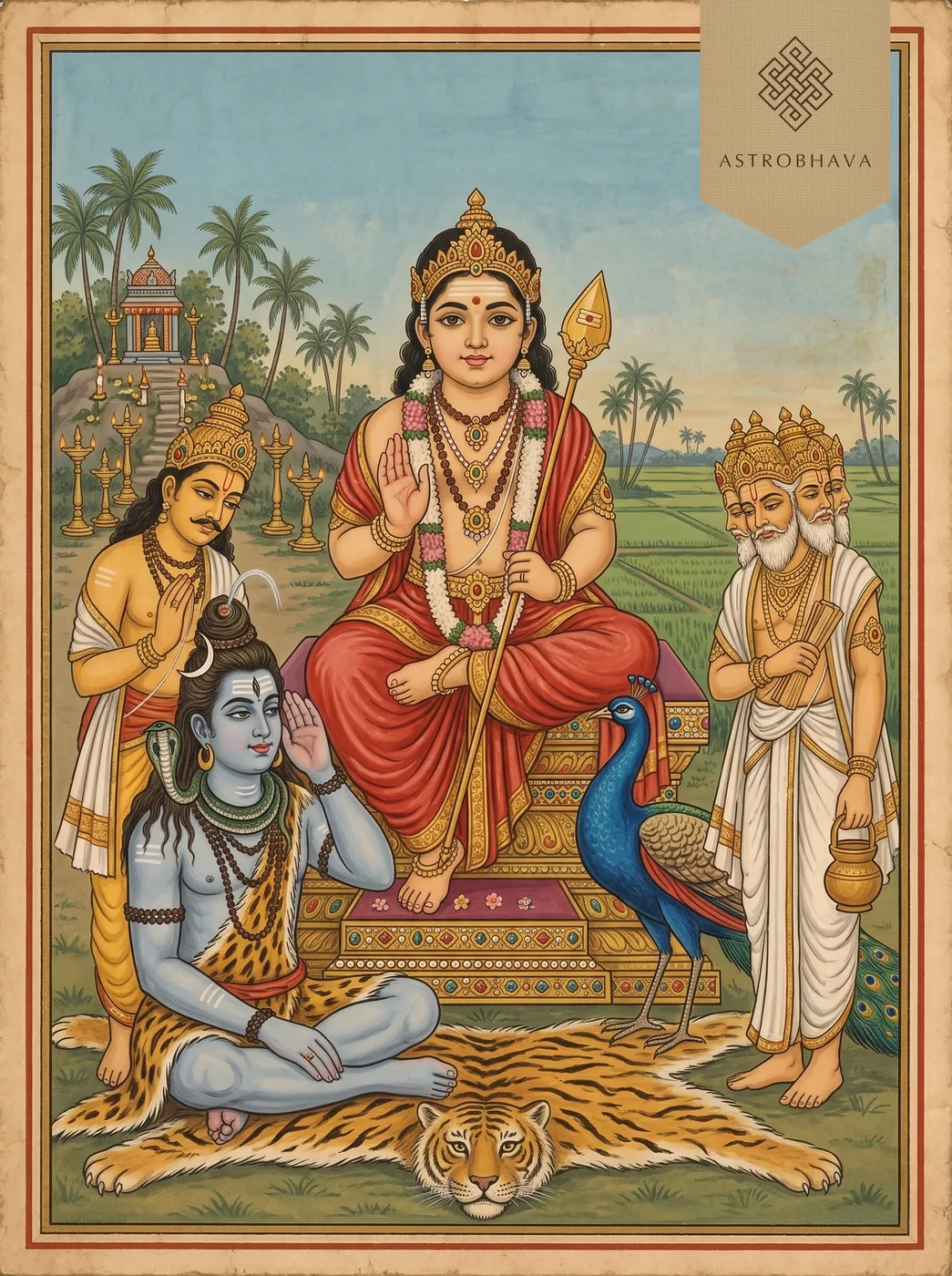
Subramanya Karavalamba Stotram
हे स्वामिनाथ करुणाकर दीनबन्धो श्रीपार्वतीशमुखपङ्कजपद्मबन्धो । श्रीशादिदेवगणपूजितपादपद्म वल्लीशनाथ मम देहि करावलम्बम् ॥Also known as Subramanya Ashtakam
In Devanagari, Tamil, Telugu, Kannada, Malayalam and English — with the meaning of every word, and the one syllable most people pronounce wrongly.
What the Subramanya Karavalamba Stotram is
The Subramanya Karavalamba Stotram, popularly called the Subramanya Ashtakam, is an eight-verse Sanskrit hymn to Murugan, addressed by his names Swaminatha, Kartikeya and Subrahmanya. Popular tradition attributes it to Adi Shankaracharya, though the older printed stotra collections, among them the Brihat Stotra Ratnakara printed at Madras in 1927, carry it without an author's name. Every verse is a string of epithets that closes on the same request: vallisha-natha mama dehi karavalambam, 'lord of Valli, give me the support of your hand.' The epithets move in order. Verses one and two place him in his family and among the gods, with the sage Narada singing his fame. Verse three turns to his generosity, naming him a constant giver of food. Verses four to six recall his weapons, the splitting of Krauncha and the defeat of Shura and Taraka. Verse seven describes his crowning by Indra and the sages, and verse eight asks his glance to wash the mind clean of desire. Two short closing verses state the merit of reciting it.
A life of Skanda told in epithets
No composition legend is attached to this hymn in the way one is told for its namesake, the seventeen-verse Lakshmi Narasimha Karavalamba Stotram, which tradition says Shankara sang to calm Narasimha after the god had risen in his disciple Padmapada to rescue him from a Kapalika's sacrificial altar. The Subrahmanya hymn borrows that form, a closing line repeated as a refrain, and fills it with the story of Skanda himself. The first name it uses is Swaminatha, 'teacher of the lord', a title that according to tradition belongs to Swamimalai near Kumbakonam: Brahma could not explain the syllable Om when the young god questioned him, and when Shiva then asked for the meaning, the son gave it to the father. Verse three echoes that episode in calling his own nature the thing that Om declares. The middle verses run through the war against the asuras: the spear that split Krauncha, the firm bow in his hand when Shura fell, the victory over Taraka. Verse seven pictures the coronation that followed, with Indra and the sages bathing him in Ganges water and the five nectars. Throughout, he is named as the lord of Valli, the forest-born maiden who became his consort, so that the warrior and the bridegroom are held in a single refrain.
The mantra, in six scripts
- हे
- he — O
- स्वामिनाथ
- svāminātha — Swaminatha, teacher of the lord
- करुणाकर
- karuṇākara — source of mercy
- दीनबन्धो
- dīnabandho — friend of the humble
- श्रीपार्वतीशमुखपङ्कजपद्मबन्धो
- śrīpārvatīśamukhapaṅkajapadmabandho — sun to the lotus face of Parvati's lord
- श्रीशादिदेवगणपूजितपादपद्म
- śrīśādidevagaṇapūjitapādapadma — lotus feet worshipped by Vishnu and the gods
- वल्लीशनाथ
- vallīśanātha — lord of Valli
- मम
- mama — to me
- देहि
- dehi — give
- करावलम्बम्
- karāvalambam — support of your hand
Subramanya Ashtakam lyrics in full
Eight verses, each closing on the plea to the lord of Valli, followed by two verses on the merit of recitation.
All 10 verses, in Sanskrit, Tamil, Telugu, Kannada, Malayalam and English, each with its meaning. Choose a script:
Download the Subramanya Ashtakam PDFAll 10 verses with their meanings, in Sanskrit. Free to print and keep.
हे स्वामिनाथ करुणाकर दीनबन्धो श्रीपार्वतीशमुखपङ्कजपद्मबन्धो ।
श्रीशादिदेवगणपूजितपादपद्म वल्लीशनाथ मम देहि करावलम्बम् ॥
ஹே ஸ்வாமிநாத கருணாகர தீநபந்தோ ஶ்ரீபார்வதீஶமுகபங்கஜபத்மபந்தோ ।
ஶ்ரீஶாதிதேவகணபூஜிதபாதபத்ம வல்லீஶநாத மம தேஹி கராவலம்பம் ॥
హే స్వామినాథ కరుణాకర దీనబన్ధో శ్రీపార్వతీశముఖపఙ్కజపద్మబన్ధో ।
శ్రీశాదిదేవగణపూజితపాదపద్మ వల్లీశనాథ మమ దేహి కరావలమ్బమ్ ॥
ಹೇ ಸ್ವಾಮಿನಾಥ ಕರುಣಾಕರ ದೀನಬನ್ಧೋ ಶ್ರೀಪಾರ್ವತೀಶಮುಖಪಙ್ಕಜಪದ್ಮಬನ್ಧೋ ।
ಶ್ರೀಶಾದಿದೇವಗಣಪೂಜಿತಪಾದಪದ್ಮ ವಲ್ಲೀಶನಾಥ ಮಮ ದೇಹಿ ಕರಾವಲಮ್ಬಮ್ ॥
ഹേ സ്വാമിനാഥ കരുണാകര ദീനബന്ധോ ശ്രീപാര്വതീശമുഖപങ്കജപദ്മബന്ധോ ।
ശ്രീശാദിദേവഗണപൂജിതപാദപദ്മ വല്ലീശനാഥ മമ ദേഹി കരാവലമ്ബമ് ॥
he svāminātha karuṇākara dīnabandho śrīpārvatīśamukhapaṅkajapadmabandho |
śrīśādidevagaṇapūjitapādapadma vallīśanātha mama dehi karāvalambam ||
O Swaminatha, merciful one, friend of the humble; O sun that opens the lotus of the face of Shiva, lord of Parvati. You whose lotus feet are worshipped by Vishnu and the hosts of gods, O lord of Valli, give me the support of your hand.
देवादिदेवसुत देवगणाधिनाथ देवेन्द्रवन्द्य मृदुपङ्कजमञ्जुपाद ।
देवर्षिनारदमुनीन्द्रसुगीतकीर्ते वल्लीशनाथ मम देहि करावलम्बम् ॥
தேவாதிதேவஸுத தேவகணாதிநாத தேவேந்த்ரவந்த்ய ம்ருதுபங்கஜமஞ்ஜுபாத ।
தேவர்ஷிநாரதமுநீந்த்ரஸுகீதகீர்தே வல்லீஶநாத மம தேஹி கராவலம்பம் ॥
దేవాదిదేవసుత దేవగణాధినాథ దేవేన్ద్రవన్ద్య మృదుపఙ్కజమఞ్జుపాద ।
దేవర్షినారదమునీన్ద్రసుగీతకీర్తే వల్లీశనాథ మమ దేహి కరావలమ్బమ్ ॥
ದೇವಾದಿದೇವಸುತ ದೇವಗಣಾಧಿನಾಥ ದೇವೇನ್ದ್ರವನ್ದ್ಯ ಮೃದುಪಙ್ಕಜಮಞ್ಜುಪಾದ ।
ದೇವರ್ಷಿನಾರದಮುನೀನ್ದ್ರಸುಗೀತಕೀರ್ತೇ ವಲ್ಲೀಶನಾಥ ಮಮ ದೇಹಿ ಕರಾವಲಮ್ಬಮ್ ॥
ദേവാദിദേവസുത ദേവഗണാധിനാഥ ദേവേന്ദ്രവന്ദ്യ മൃദുപങ്കജമഞ്ജുപാദ ।
ദേവര്ഷിനാരദമുനീന്ദ്രസുഗീതകീര്തേ വല്ലീശനാഥ മമ ദേഹി കരാവലമ്ബമ് ॥
devādidevasuta devagaṇādhinātha devendravandya mṛdupaṅkajamañjupāda |
devarṣināradamunīndrasugītakīrte vallīśanātha mama dehi karāvalambam ||
O son of the god of gods, commander of the divine hosts, you whose soft and lovely lotus feet are honoured by Indra. You whose fame is sung well by the divine sage Narada, chief of sages, O lord of Valli, give me the support of your hand.
नित्यान्नदाननिरताखिलरोगहारिन् तस्मात्प्रदानपरिपूरितभक्तकाम ।
श्रुत्यागमप्रणववाच्यनिजस्वरूप वल्लीशनाथ मम देहि करावलम्बम् ॥
நித்யாந்நதாநநிரதாகிலரோகஹாரிந் தஸ்மாத்ப்ரதாநபரிபூரிதபக்தகாம ।
ஶ்ருத்யாகமப்ரணவவாச்யநிஜஸ்வரூப வல்லீஶநாத மம தேஹி கராவலம்பம் ॥
నిత్యాన్నదాననిరతాఖిలరోగహారిన్ తస్మాత్ప్రదానపరిపూరితభక్తకామ ।
శ్రుత్యాగమప్రణవవాచ్యనిజస్వరూప వల్లీశనాథ మమ దేహి కరావలమ్బమ్ ॥
ನಿತ್ಯಾನ್ನದಾನನಿರತಾಖಿಲರೋಗಹಾರಿನ್ ತಸ್ಮಾತ್ಪ್ರದಾನಪರಿಪೂರಿತಭಕ್ತಕಾಮ ।
ಶ್ರುತ್ಯಾಗಮಪ್ರಣವವಾಚ್ಯನಿಜಸ್ವರೂಪ ವಲ್ಲೀಶನಾಥ ಮಮ ದೇಹಿ ಕರಾವಲಮ್ಬಮ್ ॥
നിത്യാന്നദാനനിരതാഖിലരോഗഹാരിന് തസ്മാത്പ്രദാനപരിപൂരിതഭക്തകാമ ।
ശ്രുത്യാഗമപ്രണവവാച്യനിജസ്വരൂപ വല്ലീശനാഥ മമ ദേഹി കരാവലമ്ബമ് ॥
nityānnadānaniratākhilarogahārin tasmātpradānaparipūritabhaktakāma |
śrutyāgamapraṇavavācyanijasvarūpa vallīśanātha mama dehi karāvalambam ||
O remover of every illness, ever devoted to the giving of food; you who fulfil the wishes of devotees through your giving. You whose true nature is what the Vedas, the Agamas and the syllable Om declare, O lord of Valli, give me the support of your hand.
क्रौञ्चासुरेन्द्रपरिखण्डनशक्तिशूलचापादिशस्त्रपरिमण्डितदिव्यपाणे ।
श्रीकुण्डलीशधरतुण्डशिखीन्द्रवाह वल्लीशनाथ मम देहि करावलम्बम् ॥
க்ரௌஞ்சாஸுரேந்த்ரபரிகண்டநஶக்திஶூலசாபாதிஶஸ்த்ரபரிமண்டிததிவ்யபாணே ।
ஶ்ரீகுண்டலீஶதரதுண்டஶிகீந்த்ரவாஹ வல்லீஶநாத மம தேஹி கராவலம்பம் ॥
క్రౌఞ్చాసురేన్ద్రపరిఖణ్డనశక్తిశూలచాపాదిశస్త్రపరిమణ్డితదివ్యపాణే ।
శ్రీకుణ్డలీశధరతుణ్డశిఖీన్ద్రవాహ వల్లీశనాథ మమ దేహి కరావలమ్బమ్ ॥
ಕ್ರೌಞ್ಚಾಸುರೇನ್ದ್ರಪರಿಖಣ್ಡನಶಕ್ತಿಶೂಲಚಾಪಾದಿಶಸ್ತ್ರಪರಿಮಣ್ಡಿತದಿವ್ಯಪಾಣೇ ।
ಶ್ರೀಕುಣ್ಡಲೀಶಧರತುಣ್ಡಶಿಖೀನ್ದ್ರವಾಹ ವಲ್ಲೀಶನಾಥ ಮಮ ದೇಹಿ ಕರಾವಲಮ್ಬಮ್ ॥
ക്രൌഞ്ചാസുരേന്ദ്രപരിഖണ്ഡനശക്തിശൂലചാപാദിശസ്ത്രപരിമണ്ഡിതദിവ്യപാണേ ।
ശ്രീകുണ്ഡലീശധരതുണ്ഡശിഖീന്ദ്രവാഹ വല്ലീശനാഥ മമ ദേഹി കരാവലമ്ബമ് ॥
krauñcāsurendraparikhaṇḍanaśaktiśūlacāpādiśastraparimaṇḍitadivyapāṇe |
śrīkuṇḍalīśadharatuṇḍaśikhīndravāha vallīśanātha mama dehi karāvalambam ||
O you whose divine hands are adorned with the spear, the trident, the bow and other weapons that split apart Krauncha, chief of the asuras. You who ride the king of peacocks, whose beak holds the lord of serpents, O lord of Valli, give me the support of your hand.
देवादिदेव रथमण्डलमध्यवेद्य देवेन्द्रपीठनगरं दृढचापहस्तम् ।
शूरं निहत्य सुरकोटिभिरीड्यमान वल्लीशनाथ मम देहि करावलम्बम् ॥
தேவாதிதேவ ரதமண்டலமத்யவேத்ய தேவேந்த்ரபீடநகரம் த்ருடசாபஹஸ்தம் ।
ஶூரம் நிஹத்ய ஸுரகோடிபிரீட்யமாந வல்லீஶநாத மம தேஹி கராவலம்பம் ॥
దేవాదిదేవ రథమణ్డలమధ్యవేద్య దేవేన్ద్రపీఠనగరం దృఢచాపహస్తమ్ ।
శూరం నిహత్య సురకోటిభిరీడ్యమాన వల్లీశనాథ మమ దేహి కరావలమ్బమ్ ॥
ದೇವಾದಿದೇವ ರಥಮಣ್ಡಲಮಧ್ಯವೇದ್ಯ ದೇವೇನ್ದ್ರಪೀಠನಗರಂ ದೃಢಚಾಪಹಸ್ತಮ್ ।
ಶೂರಂ ನಿಹತ್ಯ ಸುರಕೋಟಿಭಿರೀಡ್ಯಮಾನ ವಲ್ಲೀಶನಾಥ ಮಮ ದೇಹಿ ಕರಾವಲಮ್ಬಮ್ ॥
ദേവാദിദേവ രഥമണ്ഡലമധ്യവേദ്യ ദേവേന്ദ്രപീഠനഗരം ദൃഢചാപഹസ്തമ് ।
ശൂരം നിഹത്യ സുരകോടിഭിരീഡ്യമാന വല്ലീശനാഥ മമ ദേഹി കരാവലമ്ബമ് ॥
devādideva rathamaṇḍalamadhyavedya devendrapīṭhanagaraṃ dṛḍhacāpahastam |
śūraṃ nihatya surakoṭibhirīḍyamāna vallīśanātha mama dehi karāvalambam ||
O god of gods, known at the centre of the ring of chariots; having slain Shura, who held the seat and city of Indra, firm bow in hand, you are praised by countless gods. O lord of Valli, give me the support of your hand.
हारादिरत्नमणियुक्तकिरीटहार केयूरकुण्डललसत्कवचाभिरामम् ।
हे वीर तारक जयाऽमरबृन्दवन्द्य वल्लीशनाथ मम देहि करावलम्बम् ॥
ஹாராதிரத்நமணியுக்தகிரீடஹார கேயூரகுண்டலலஸத்கவசாபிராமம் ।
ஹே வீர தாரக ஜயாமரப்ருந்தவந்த்ய வல்லீஶநாத மம தேஹி கராவலம்பம் ॥
హారాదిరత్నమణియుక్తకిరీటహార కేయూరకుణ్డలలసత్కవచాభిరామమ్ ।
హే వీర తారక జయాఽమరబృన్దవన్ద్య వల్లీశనాథ మమ దేహి కరావలమ్బమ్ ॥
ಹಾರಾದಿರತ್ನಮಣಿಯುಕ್ತಕಿರೀಟಹಾರ ಕೇಯೂರಕುಣ್ಡಲಲಸತ್ಕವಚಾಭಿರಾಮಮ್ ।
ಹೇ ವೀರ ತಾರಕ ಜಯಾಽಮರಬೃನ್ದವನ್ದ್ಯ ವಲ್ಲೀಶನಾಥ ಮಮ ದೇಹಿ ಕರಾವಲಮ್ಬಮ್ ॥
ഹാരാദിരത്നമണിയുക്തകിരീടഹാര കേയൂരകുണ്ഡലലസത്കവചാഭിരാമമ് ।
ഹേ വീര താരക ജയാഽമരബൃന്ദവന്ദ്യ വല്ലീശനാഥ മമ ദേഹി കരാവലമ്ബമ് ॥
hārādiratnamaṇiyuktakirīṭahāra keyūrakuṇḍalalasatkavacābhirāmam |
he vīra tāraka jayā'marabṛndavandya vallīśanātha mama dehi karāvalambam ||
O handsome one, wearing a crown and necklaces set with jewels and gems, with armlets, earrings and gleaming armour. O hero, victor over Taraka, saluted by the host of immortals, O lord of Valli, give me the support of your hand.
पञ्चाक्षरादिमनुमन्त्रितगाङ्गतोयैः पञ्चामृतैः प्रमुदितेन्द्रमुखैर्मुनीन्द्रैः ।
पट्टाभिषिक्त हरियुक्त परासनाथ वल्लीशनाथ मम देहि करावलम्बम् ॥
பஞ்சாக்ஷராதிமநுமந்த்ரிதகாங்கதோயைஃ பஞ்சாம்ருதைஃ ப்ரமுதிதேந்த்ரமுகைர்முநீந்த்ரைஃ ।
பட்டாபிஷிக்த ஹரியுக்த பராஸநாத வல்லீஶநாத மம தேஹி கராவலம்பம் ॥
పఞ్చాక్షరాదిమనుమన్త్రితగాఙ్గతోయైః పఞ్చామృతైః ప్రముదితేన్ద్రముఖైర్మునీన్ద్రైః ।
పట్టాభిషిక్త హరియుక్త పరాసనాథ వల్లీశనాథ మమ దేహి కరావలమ్బమ్ ॥
ಪಞ್ಚಾಕ್ಷರಾದಿಮನುಮನ್ತ್ರಿತಗಾಙ್ಗತೋಯೈಃ ಪಞ್ಚಾಮೃತೈಃ ಪ್ರಮುದಿತೇನ್ದ್ರಮುಖೈರ್ಮುನೀನ್ದ್ರೈಃ ।
ಪಟ್ಟಾಭಿಷಿಕ್ತ ಹರಿಯುಕ್ತ ಪರಾಸನಾಥ ವಲ್ಲೀಶನಾಥ ಮಮ ದೇಹಿ ಕರಾವಲಮ್ಬಮ್ ॥
പഞ്ചാക്ഷരാദിമനുമന്ത്രിതഗാങ്ഗതോയൈഃ പഞ്ചാമൃതൈഃ പ്രമുദിതേന്ദ്രമുഖൈര്മുനീന്ദ്രൈഃ ।
പട്ടാഭിഷിക്ത ഹരിയുക്ത പരാസനാഥ വല്ലീശനാഥ മമ ദേഹി കരാവലമ്ബമ് ॥
pañcākṣarādimanumantritagāṅgatoyaiḥ pañcāmṛtaiḥ pramuditendramukhairmunīndraiḥ |
paṭṭābhiṣikta hariyukta parāsanātha vallīśanātha mama dehi karāvalambam ||
O you who were crowned and consecrated by joyful Indra and the great sages with Ganges water sanctified by the five-syllable mantra and other mantras, and with the five nectars. O lord of the supreme seat, joined with Vishnu, O lord of Valli, give me the support of your hand.
श्रीकार्तिकेय करुणामृतपूर्णदृष्ट्या कामादिरोगकलुषीकृतदुष्टचित्तम् ।
सिक्त्वा तु मामव कलाधर कान्तिकान्त्या वल्लीशनाथ मम देहि करावलम्बम् ॥
ஶ்ரீகார்திகேய கருணாம்ருதபூர்ணத்ருஷ்ட்யா காமாதிரோககலுஷீக்ருததுஷ்டசித்தம் ।
ஸிக்த்வா து மாமவ கலாதர காந்திகாந்த்யா வல்லீஶநாத மம தேஹி கராவலம்பம் ॥
శ్రీకార్తికేయ కరుణామృతపూర్ణదృష్ట్యా కామాదిరోగకలుషీకృతదుష్టచిత్తమ్ ।
సిక్త్వా తు మామవ కలాధర కాన్తికాన్త్యా వల్లీశనాథ మమ దేహి కరావలమ్బమ్ ॥
ಶ್ರೀಕಾರ್ತಿಕೇಯ ಕರುಣಾಮೃತಪೂರ್ಣದೃಷ್ಟ್ಯಾ ಕಾಮಾದಿರೋಗಕಲುಷೀಕೃತದುಷ್ಟಚಿತ್ತಮ್ ।
ಸಿಕ್ತ್ವಾ ತು ಮಾಮವ ಕಲಾಧರ ಕಾನ್ತಿಕಾನ್ತ್ಯಾ ವಲ್ಲೀಶನಾಥ ಮಮ ದೇಹಿ ಕರಾವಲಮ್ಬಮ್ ॥
ശ്രീകാര്തികേയ കരുണാമൃതപൂര്ണദൃഷ്ട്യാ കാമാദിരോഗകലുഷീകൃതദുഷ്ടചിത്തമ് ।
സിക്ത്വാ തു മാമവ കലാധര കാന്തികാന്ത്യാ വല്ലീശനാഥ മമ ദേഹി കരാവലമ്ബമ് ॥
śrīkārtikeya karuṇāmṛtapūrṇadṛṣṭyā kāmādirogakaluṣīkṛtaduṣṭacittam |
siktvā tu māmava kalādhara kāntikāntyā vallīśanātha mama dehi karāvalambam ||
O Kartikeya, with your glance full of the nectar of compassion, sprinkle my mind, made foul and impure by desire and the other diseases, and protect me. O you who shine with the radiance of the moon, O lord of Valli, give me the support of your hand.
सुब्रह्मण्याष्टकं पुण्यं ये पठन्ति द्विजोत्तमाः ।
ते सर्वे मुक्तिमायान्ति सुब्रह्मण्यप्रसादतः ॥
ஸுப்ரஹ்மண்யாஷ்டகம் புண்யம் யே படந்தி த்விஜோத்தமாஃ ।
தே ஸர்வே முக்திமாயாந்தி ஸுப்ரஹ்மண்யப்ரஸாததஃ ॥
సుబ్రహ్మణ్యాష్టకం పుణ్యం యే పఠన్తి ద్విజోత్తమాః ।
తే సర్వే ముక్తిమాయాన్తి సుబ్రహ్మణ్యప్రసాదతః ॥
ಸುಬ್ರಹ್ಮಣ್ಯಾಷ್ಟಕಂ ಪುಣ್ಯಂ ಯೇ ಪಠನ್ತಿ ದ್ವಿಜೋತ್ತಮಾಃ ।
ತೇ ಸರ್ವೇ ಮುಕ್ತಿಮಾಯಾನ್ತಿ ಸುಬ್ರಹ್ಮಣ್ಯಪ್ರಸಾದತಃ ॥
സുബ്രഹ്മണ്യാഷ്ടകം പുണ്യം യേ പഠന്തി ദ്വിജോത്തമാഃ ।
തേ സര്വേ മുക്തിമായാന്തി സുബ്രഹ്മണ്യപ്രസാദതഃ ॥
subrahmaṇyāṣṭakaṃ puṇyaṃ ye paṭhanti dvijottamāḥ |
te sarve muktimāyānti subrahmaṇyaprasādataḥ ||
The verse says that those excellent twice-born who recite this holy Subrahmanya Ashtakam all reach liberation by the grace of Subrahmanya.
सुब्रह्मण्याष्टकमिदं प्रातरुत्थाय यः पठेत् ।
कोटिजन्मकृतं पापं तत्क्षणादेव नश्यति ॥
ஸுப்ரஹ்மண்யாஷ்டகமிதம் ப்ராதருத்தாய யஃ படேத் ।
கோடிஜந்மக்ருதம் பாபம் தத்க்ஷணாதேவ நஶ்யதி ॥
సుబ్రహ్మణ్యాష్టకమిదం ప్రాతరుత్థాయ యః పఠేత్ ।
కోటిజన్మకృతం పాపం తత్క్షణాదేవ నశ్యతి ॥
ಸುಬ್ರಹ್ಮಣ್ಯಾಷ್ಟಕಮಿದಂ ಪ್ರಾತರುತ್ಥಾಯ ಯಃ ಪಠೇತ್ ।
ಕೋಟಿಜನ್ಮಕೃತಂ ಪಾಪಂ ತತ್ಕ್ಷಣಾದೇವ ನಶ್ಯತಿ ॥
സുബ്രഹ്മണ്യാഷ്ടകമിദം പ്രാതരുത്ഥായ യഃ പഠേത് ।
കോടിജന്മകൃതം പാപം തത്ക്ഷണാദേവ നശ്യതി ॥
subrahmaṇyāṣṭakamidaṃ prātarutthāya yaḥ paṭhet |
koṭijanmakṛtaṃ pāpaṃ tatkṣaṇādeva naśyati ||
The verse says that for one who rises at dawn and recites this Subrahmanya Ashtakam, the sin committed over ten million births is destroyed that very moment.
The syllable people get wrong
The refrain word करावलम्बम् (karāvalambam) joins kara, 'hand', with avalamba, 'support', so the second syllable carries a long ā: say ka-RAA-va-lam-bam, not a clipped 'kara-valambam' that splits the word in the wrong place.
When the Subramanya Karavalamba Stotram is chanted
Weekday. Tuesday
Festival. Skanda Shashti
Questions
Have your chart read before you decide
Chanting is yours to do, and free. But which deity your situation calls for — and whether a mantra alone is the right response — depends on your chart. Sometimes it is; sometimes it is not.
- Over 30 years in the Guru–Sishya Parampara, from the age of five
- He reads every chart himself — 60 minutes, one to one, never delegated
- Charts are read only between sunrise and sunset, following tradition