Muthai Tharu
முத்தைத்தரு பத்தித் திருநகை அத்திக்கிறை சத்திச் சரவணAlso known as Muthai Tharu Paththi Thirunagai
In Tamil and English — with the meaning of every word, and the one sound most people pronounce wrongly.
 The Subramanya Homa, performed for youBook →
What the Muthai Tharu is
Muthai Tharu is the Thiruppugazh song that Arunagirinathar, the Tamil poet of fifteenth-century Tiruvannamalai, addressed to Murugan, and tradition counts it as the first song he ever composed. In the standard numbering of the Thiruppugazh it is song 6, placed straight after the opening invocations and assigned to Thiruvannamalai. The song runs to eight long lines built on a strict santham, a drum-like beat of syllables. Its first half is a chain of praise in other mouths: Shiva hails Murugan as the consort of Deivayanai and the seed of liberation, Murugan teaches Shiva the syllable that stands before the Vedas, and Vishnu, recalled through the arrow that felled Ravana, the churning of the ocean and the chariot he drove for Arjuna, also extols him. The line then turns to a single plea for the day of his protection. The second half moves to the battlefield, where Bhairavi dances, the eight Bhairavas chant and owls cry while Murugan cuts down the asuras and pierces the Krauncha mountain.
The song sung at the temple tower
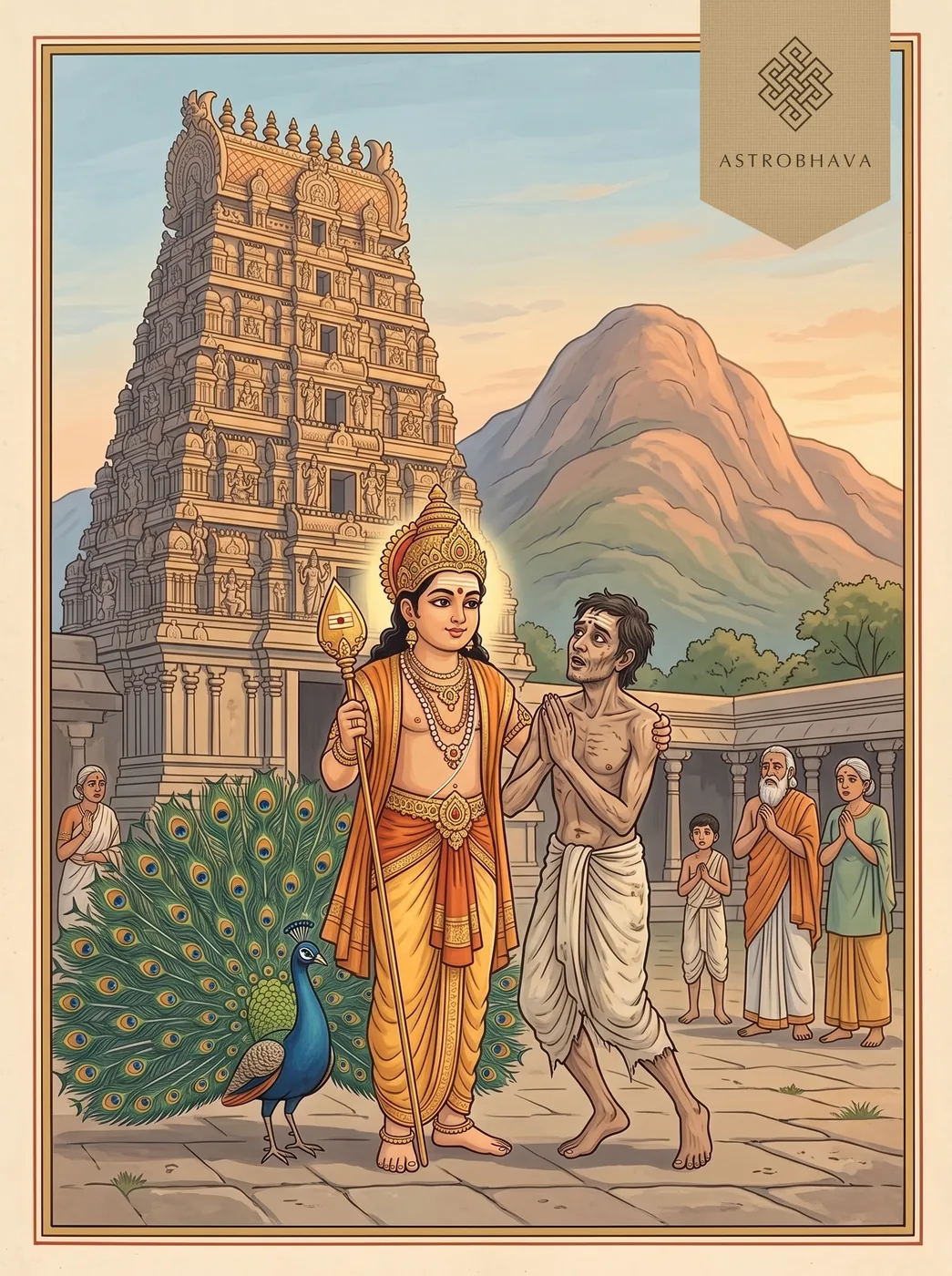
According to tradition, Arunagiri spent his youth in Tiruvannamalai in gambling and indulgence, and the life ruined his health and his name. The popular account says that when his sister, who had given him all she earned, had nothing more to give, she told him to sell her instead; ashamed, he went to the Arunachaleswarar temple and climbed a tower of the temple to end his life. Murugan is said to have caught him as he fell, in the form of an ascetic, and told him to sing of him. Temple tradition marks the spot with a shrine called Gopurathu Ilaiyanar, the Young Lord of the Tower. The commentary tradition on the Thiruppugazh adds that Murugan himself gave the poet the opening words of his first song, and that the song which followed was Muthai Tharu. Arunagirinathar's own verses tell a plainer story, speaking of a wife and family who had turned from him and thanking the Lord for saving him, so scholars treat the fuller legend as later hagiography, and the dates usually given, roughly 1370 to 1450, are approximate. He went on to sing at hundreds of shrines; the collection he left was gathered from manuscripts and first printed in two volumes in 1894 and 1901. The 1964 Tamil film Arunagirinathar used this song, sung by T. M. Soundararajan, for the rescue scene.
The opening lines, in Tamil and English
- முத்தைத்தரு
- muttaittaru — yielding pearls, pearl-like
- பத்தித்
- pattit — rows (of teeth)
- திருநகை
- tirunakai — lovely smile
- அத்திக்கிறை
- attikkiṟai — lord of Atti (Deivayanai)
- சத்திச்
- cattic — Shakti spear (bearer)
- சரவண
- caravaṇa — O Saravana
- முத்திக்கொரு
- muttikkoru — the one for liberation
- வித்துக்
- vittuk — seed
- குருபர
- kurupara — O supreme Guru
- எனவோதும்
- eṉavōtum — so (Shiva) proclaims
Muthai Tharu lyrics in full
The whole song in eight lines, each printed in its three santham segments.
All 24 lines, in Tamil and English, each with its meaning. Choose a script:
Download the Muthai Tharu PDFAll 24 lines with their meanings, in Tamil. Free to print and keep.
முத்தைத்தரு பத்தித் திருநகை
அத்திக்கிறை சத்திச் சரவண
முத்திக்கொரு வித்துக் குருபர எனவோதும்
muttaittaru pattit tirunakai
attikkiṟai cattic caravaṇa
muttikkoru vittuk kurupara eṉavōtum
O consort of Deivayanai, whose lovely smile shows rows of pearl-like teeth; O Saravana who holds the Shakti spear; O Guru, the one seed of liberation - so the three-eyed Supreme One praises you.
முக்கட்பர மற்குச் சுருதியின்
முற்பட்டது கற்பித் திருவரும்
முப்பத்துமு வர்க்கத் தமரரும் அடிபேணப்
mukkaṭpara maṟkuc curutiyiṉ
muṟpaṭṭatu kaṟpit tiruvarum
muppattumu varkkat tamararum aṭipēṇap
To that three-eyed Supreme Lord, Shiva, you taught the syllable that stands before the Vedas, while Brahma and Vishnu and the gods of the thirty-three classes worship your feet.
பத்துத்தலை தத்தக் கணைதொடு
ஒற்றைக்கிரி மத்தைப் பொருதொரு
பட்டப்பகல் வட்டத் திகிரியில் இரவாகப்
pattuttalai tattak kaṇaitoṭu
oṟṟaikkiri mattaip porutoru
paṭṭappakal vaṭṭat tikiriyil iravākap
Vishnu loosed the arrow that sent the ten heads of Ravana tumbling, churned the ocean with the lone mountain as a churning rod, and with his round discus turned broad daylight into night.
பத்தற்கிர தத்தைக் கடவிய
பச்சைப்புயல் மெச்சத் தகுபொருள்
பட்சத்தொடு ரட்சித் தருள்வதும் ஒருநாளே
pattaṟkira tattaik kaṭaviya
paccaippuyal meccat takuporuḷ
paṭcattoṭu raṭcit taruḷvatum orunāḷē
He drove the chariot for his devotee Arjuna; that green-cloud-hued Vishnu praises you as the worthy Truth. Will there ever be a day when you lovingly protect me?
தித்தித்தெய ஒத்தப் பரிபுர
நிர்த்தப்பதம் வைத்துப் பயிரவி
திக்கொட்கந டிக்கக் கழுகொடு கழுதாடத்
tittitteya ottap paripura
nirttappatam vaittup payiravi
tikkoṭkana ṭikkak kaḻukoṭu kaḻutāṭat
Bhairavi sets down her anklet-bound dancing feet to the beat of 'thiththitheya' and dances, whirling through every direction, while ghosts dance together with vultures.
திக்குப்பரி அட்டப் பயிரவர்
தொக்குத்தொகு தொக்குத் தொகுதொகு
சித்ரப்பவு ரிக்குத் த்ரிகடக எனவோதக்
tikkuppari aṭṭap payiravar
tokkuttoku tokkut tokutoku
citrappavu rikkut trikaṭaka eṉavōtak
The eight Bhairavas who guard the directions chant 'thokkuthoku thokku thokuthoku' and 'thrikadaka' for the wondrous circling dance.
கொத்துப்பறை கொட்டக் களமிசை
குக்குக்குகு குக்குக் குகுகுகு
குத்திப்புதை புக்குப் பிடியென முதுகூகை
kottuppaṟai koṭṭak kaḷamicai
kukkukkuku kukkuk kukukuku
kuttipputai pukkup piṭiyeṉa mutukūkai
Clusters of drums are beaten, and over the battlefield the old owls cry 'kukkukku kukku kukukuku' and 'stab, bury, rush in, seize'.
கொட்புற்றெழ நட்பற் றவுணரை
வெட்டிப்பலி யிட்டுக் குலகிரி
குத்துப்பட ஒத்துப் பொரவல பெருமாளே
koṭpuṟṟeḻa naṭpaṟ ṟavuṇarai
veṭṭippali yiṭṭuk kulakiri
kuttuppaṭa ottup poravala perumāḷē
They wheel and rise as you cut down the unfriendly asuras as an offering and pierce the clan-mountain Krauncha. O great Lord, mighty in righteous battle!
The syllable people get wrong
In tirunakai (திருநகை, 'sacred smile') the k between two vowels softens in Tamil speech, so the word is said 'thiru-na-gai', with the g of 'go', not 'thiru-na-kai'. The same softening applies to kurupara, which is said 'guru-para'.
When the Muthai Tharu is chanted
Weekday. Tuesday
Questions
Have your chart read before you decide
Chanting is yours to do, and free. But which deity your situation calls for — and whether a mantra alone is the right response — depends on your chart. Sometimes it is; sometimes it is not.
- Over 30 years in the Guru–Sishya Parampara, from the age of five
- He reads every chart himself — 60 minutes, one to one, never delegated
- Charts are read only between sunrise and sunset, following tradition
