Navagraha Peedahara Stotram
ग्रहाणामादिरादित्यो लोकरक्षणकारकः । विषमस्थानसंभूतां पीडां हरतु मे रविः ॥Also known as Grahanam Adir Adityo
In Devanagari, Tamil, Telugu, Kannada, Malayalam and English — with the meaning of every word, and the one syllable most people pronounce wrongly.
 The Navagraha Homam, performed for youBook →
What the Navagraha Peedahara Stotram is
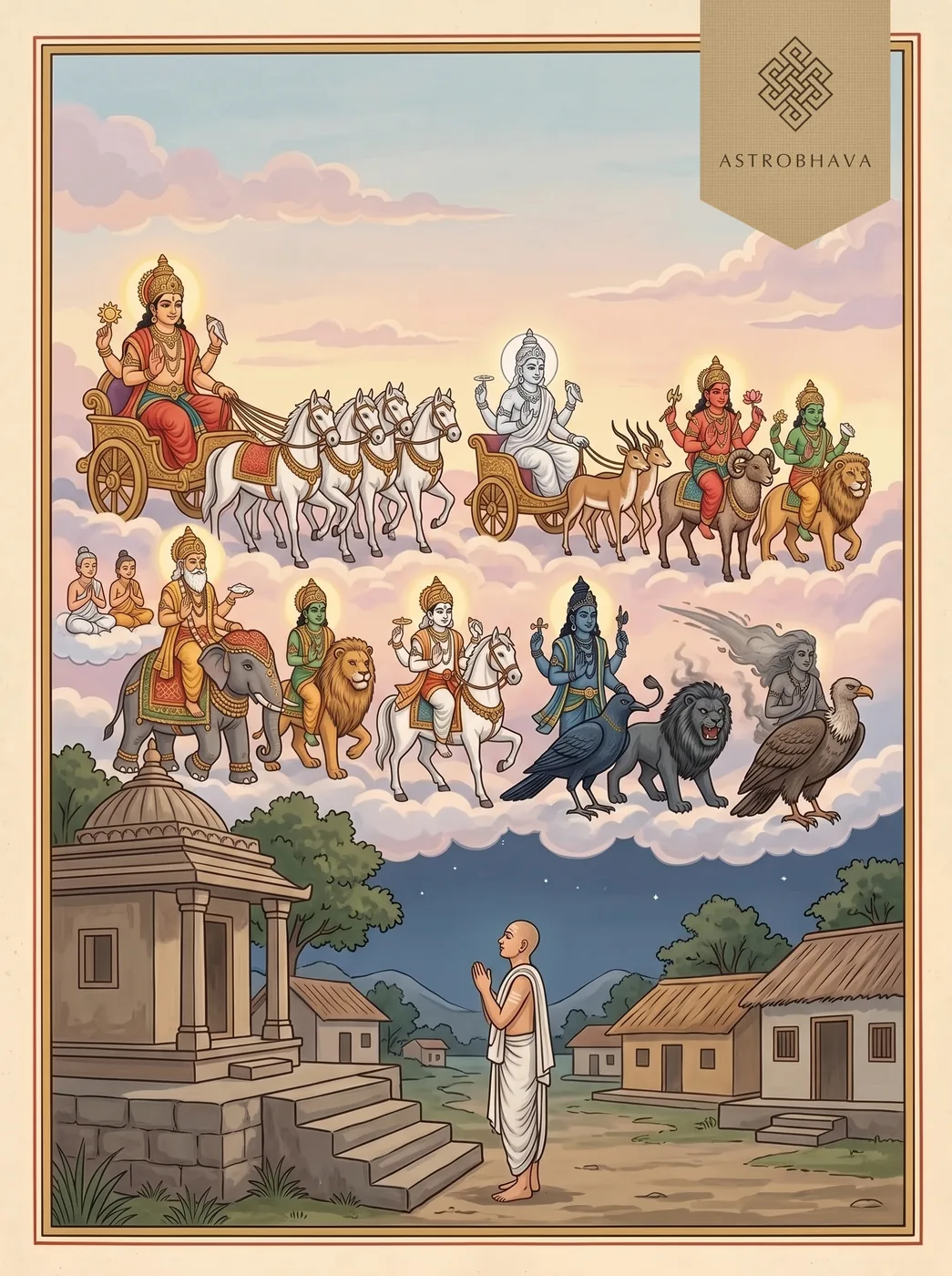
The Navagraha Peedahara Stotram, the 'hymn that removes the affliction of the nine grahas', is a short Sanskrit prayer of nine verses traditionally attributed to the Brahmanda Purana. It takes the grahas one at a time, in the order Sun, Moon, Mars, Mercury, Jupiter, Venus, Saturn, Rahu and Ketu, and gives each a single verse in the anushtubh metre. Every verse ends on the same request, pidam haratu me, 'may he remove my affliction', followed by the graha's name. The names chosen are often the less familiar ones: Ravi, Vidhu, Kuja, Bhrigu for Venus, Tamah for Rahu and Shikhi, 'the crested one', for Ketu. The first three quarters of each verse are a compact portrait drawn from that graha's lineage and nature, so the hymn works as a roll-call of who each graha is before it asks anything of them. The opening line names Aditya the first of the grahas and the protector of the world.
Nine Lineages Behind One Repeated Plea
No episode of composition is told for this hymn. Tradition places it in the Brahmanda Purana, yet the stotra is not readily found in the printed text of that Purana, and it may belong to the later appendices, the khilas, that gathered around the Puranas over time. What the verses carry instead is a set of older stories compressed into epithets. Chandra is hailed as Rohinisha, lord of Rohini, the daughter of Daksha who became his consort. Kuja is Bhumiputra, the son of the Earth goddess Bhumi. Budha is Chandraputra, son of the Moon, whom the Puranas name as born to Chandra and Tara or Rohini. Brihaspati is the counsellor of the gods, while Venus is named Bhrigu after his clan and called the counsellor of the Daityas and pranada, the giver of life to them, recalling the Puranic account in which Shiva granted Shukra the Sanjivani knowledge of raising the dead, used to restore fallen asuras. Shani is the son of the Sun and mandachara, slow of course, the sense also held in his name Shanaishchara. Rahu is atanu, without a body, and mahashira, great of head: the Puranas tell how the asura Svarbhanu was cut in two after the churning of the ocean of milk, his head becoming Rahu and his body Ketu.
The mantra, in six scripts
- ग्रहाणामादिरादित्यो
- grahāṇāmādirādityo — Aditya, the first of the grahas
- लोकरक्षणकारकः
- lokarakṣaṇakārakaḥ — the one who protects the world
- विषमस्थानसंभूतां
- viṣamasthānasaṃbhūtāṃ — arising from an unfavourable position
- पीडां
- pīḍāṃ — affliction
- हरतु
- haratu — may he remove
- मे
- me — my
- रविः
- raviḥ — Ravi, the Sun
Navagraha Peedahara Stotram lyrics in full
Nine verses, one for each graha from the Sun to Ketu. The hymn closes with the ninth verse; no phala shruti is printed with it.
All 10 verses, in Sanskrit, Tamil, Telugu, Kannada, Malayalam and English, each with its meaning. Choose a script:
Download the Navagraha Peedahara Stotram PDFAll 10 verses with their meanings, in Sanskrit. Free to print and keep.
ग्रहाणामादिरादित्यो लोकरक्षणकारकः ।
विषमस्थानसंभूतां पीडां हरतु मे रविः ॥
க்ரஹாணாமாதிராதித்யோ லோகரக்ஷணகாரகஃ ।
விஷமஸ்தாநஸம்பூதாம் பீடாம் ஹரது மே ரவிஃ ॥
గ్రహాణామాదిరాదిత్యో లోకరక్షణకారకః ।
విషమస్థానసంభూతాం పీడాం హరతు మే రవిః ॥
ಗ್ರಹಾಣಾಮಾದಿರಾದಿತ್ಯೋ ಲೋಕರಕ್ಷಣಕಾರಕಃ ।
ವಿಷಮಸ್ಥಾನಸಂಭೂತಾಂ ಪೀಡಾಂ ಹರತು ಮೇ ರವಿಃ ॥
ഗ്രഹാണാമാദിരാദിത്യോ ലോകരക്ഷണകാരകഃ ।
വിഷമസ്ഥാനസംഭൂതാം പീഡാം ഹരതു മേ രവിഃ ॥
grahāṇāmādirādityo lokarakṣaṇakārakaḥ |
viṣamasthānasaṃbhūtāṃ pīḍāṃ haratu me raviḥ ||
Aditya, the first of the grahas, is the one who protects the world. May Ravi, the Sun, remove the affliction that arises from his unfavourable position.
रोहिणीशः सुधामूर्तिः सुधागात्रः सुधाशनः ।
विषमस्थानसंभूतां पीडां हरतु मे विधुः ॥
ரோஹிணீஶஃ ஸுதாமூர்திஃ ஸுதாகாத்ரஃ ஸுதாஶநஃ ।
விஷமஸ்தாநஸம்பூதாம் பீடாம் ஹரது மே விதுஃ ॥
రోహిణీశః సుధామూర్తిః సుధాగాత్రః సుధాశనః ।
విషమస్థానసంభూతాం పీడాం హరతు మే విధుః ॥
ರೋಹಿಣೀಶಃ ಸುಧಾಮೂರ್ತಿಃ ಸುಧಾಗಾತ್ರಃ ಸುಧಾಶನಃ ।
ವಿಷಮಸ್ಥಾನಸಂಭೂತಾಂ ಪೀಡಾಂ ಹರತು ಮೇ ವಿಧುಃ ॥
രോഹിണീശഃ സുധാമൂര്തിഃ സുധാഗാത്രഃ സുധാശനഃ ।
വിഷമസ്ഥാനസംഭൂതാം പീഡാം ഹരതു മേ വിധുഃ ॥
rohiṇīśaḥ sudhāmūrtiḥ sudhāgātraḥ sudhāśanaḥ |
viṣamasthānasaṃbhūtāṃ pīḍāṃ haratu me vidhuḥ ||
Lord of Rohini, whose form and body are nectar and who feeds on nectar. May Vidhu, the Moon, remove the affliction that arises from his unfavourable position.
भूमिपुत्रो महातेजा जगतां भयकृत् सदा ।
वृष्टिकृद्वृष्टिहर्ता च पीडां हरतु मे कुजः ॥
பூமிபுத்ரோ மஹாதேஜா ஜகதாம் பயக்ருத் ஸதா ।
வ்ருஷ்டிக்ருத்வ்ருஷ்டிஹர்தா ச பீடாம் ஹரது மே குஜஃ ॥
భూమిపుత్రో మహాతేజా జగతాం భయకృత్ సదా ।
వృష్టికృద్వృష్టిహర్తా చ పీడాం హరతు మే కుజః ॥
ಭೂಮಿಪುತ್ರೋ ಮಹಾತೇಜಾ ಜಗತಾಂ ಭಯಕೃತ್ ಸದಾ ।
ವೃಷ್ಟಿಕೃದ್ವೃಷ್ಟಿಹರ್ತಾ ಚ ಪೀಡಾಂ ಹರತು ಮೇ ಕುಜಃ ॥
ഭൂമിപുത്രോ മഹാതേജാ ജഗതാം ഭയകൃത് സദാ ।
വൃഷ്ടികൃദ്വൃഷ്ടിഹര്താ ച പീഡാം ഹരതു മേ കുജഃ ॥
bhūmiputro mahātejā jagatāṃ bhayakṛt sadā |
vṛṣṭikṛdvṛṣṭihartā ca pīḍāṃ haratu me kujaḥ ||
Son of the Earth, of great brilliance, ever a cause of fear to the worlds, who brings rain and also withholds it. May Kuja, Mars, remove my affliction.
उत्पातरूपो जगतां चन्द्रपुत्रो महाद्युतिः ।
सूर्यप्रियकरो विद्वान् पीडां हरतु मे बुधः ॥
உத்பாதரூபோ ஜகதாம் சந்த்ரபுத்ரோ மஹாத்யுதிஃ ।
ஸூர்யப்ரியகரோ வித்வாந் பீடாம் ஹரது மே புதஃ ॥
ఉత్పాతరూపో జగతాం చన్ద్రపుత్రో మహాద్యుతిః ।
సూర్యప్రియకరో విద్వాన్ పీడాం హరతు మే బుధః ॥
ಉತ್ಪಾತರೂಪೋ ಜಗತಾಂ ಚನ್ದ್ರಪುತ್ರೋ ಮಹಾದ್ಯುತಿಃ ।
ಸೂರ್ಯಪ್ರಿಯಕರೋ ವಿದ್ವಾನ್ ಪೀಡಾಂ ಹರತು ಮೇ ಬುಧಃ ॥
ഉത്പാതരൂപോ ജഗതാം ചന്ദ്രപുത്രോ മഹാദ്യുതിഃ ।
സൂര്യപ്രിയകരോ വിദ്വാന് പീഡാം ഹരതു മേ ബുധഃ ॥
utpātarūpo jagatāṃ candraputro mahādyutiḥ |
sūryapriyakaro vidvān pīḍāṃ haratu me budhaḥ ||
He appears as a portent to the worlds, the son of the Moon, of great radiance, the learned one who does what pleases the Sun. May Budha, Mercury, remove my affliction.
देवमन्त्री विशालाक्षः सदा लोकहिते रतः ।
अनेकशिष्यसम्पूर्णः पीडां हरतु मे गुरुः ॥
தேவமந்த்ரீ விஶாலாக்ஷஃ ஸதா லோகஹிதே ரதஃ ।
அநேகஶிஷ்யஸம்பூர்ணஃ பீடாம் ஹரது மே குருஃ ॥
దేవమన్త్రీ విశాలాక్షః సదా లోకహితే రతః ।
అనేకశిష్యసమ్పూర్ణః పీడాం హరతు మే గురుః ॥
ದೇವಮನ್ತ್ರೀ ವಿಶಾಲಾಕ್ಷಃ ಸದಾ ಲೋಕಹಿತೇ ರತಃ ।
ಅನೇಕಶಿಷ್ಯಸಮ್ಪೂರ್ಣಃ ಪೀಡಾಂ ಹರತು ಮೇ ಗುರುಃ ॥
ദേവമന്ത്രീ വിശാലാക്ഷഃ സദാ ലോകഹിതേ രതഃ ।
അനേകശിഷ്യസമ്പൂര്ണഃ പീഡാം ഹരതു മേ ഗുരുഃ ॥
devamantrī viśālākṣaḥ sadā lokahite rataḥ |
anekaśiṣyasampūrṇaḥ pīḍāṃ haratu me guruḥ ||
Counsellor of the gods, wide-eyed, always devoted to the good of the world, surrounded by many disciples. May Guru, Jupiter, remove my affliction.
दैत्यमन्त्री गुरुस्तेषां प्राणदश्च महामतिः ।
प्रभुस्ताराग्रहाणां च पीडां हरतु मे भृगुः ॥
தைத்யமந்த்ரீ குருஸ்தேஷாம் ப்ராணதஶ்ச மஹாமதிஃ ।
ப்ரபுஸ்தாராக்ரஹாணாம் ச பீடாம் ஹரது மே ப்ருகுஃ ॥
దైత్యమన్త్రీ గురుస్తేషాం ప్రాణదశ్చ మహామతిః ।
ప్రభుస్తారాగ్రహాణాం చ పీడాం హరతు మే భృగుః ॥
ದೈತ್ಯಮನ್ತ್ರೀ ಗುರುಸ್ತೇಷಾಂ ಪ್ರಾಣದಶ್ಚ ಮಹಾಮತಿಃ ।
ಪ್ರಭುಸ್ತಾರಾಗ್ರಹಾಣಾಂ ಚ ಪೀಡಾಂ ಹರತು ಮೇ ಭೃಗುಃ ॥
ദൈത്യമന്ത്രീ ഗുരുസ്തേഷാം പ്രാണദശ്ച മഹാമതിഃ ।
പ്രഭുസ്താരാഗ്രഹാണാം ച പീഡാം ഹരതു മേ ഭൃഗുഃ ॥
daityamantrī gurusteṣāṃ prāṇadaśca mahāmatiḥ |
prabhustārāgrahāṇāṃ ca pīḍāṃ haratu me bhṛguḥ ||
Counsellor of the Daityas and their teacher, the giver of life to them, of great intellect, and lord among the star-planets. May Bhrigu, Venus, remove my affliction.
सूर्यपुत्रो दीर्घदेहो विशालाक्षः शिवप्रियः ।
मन्दचारः प्रसन्नात्मा पीडां हरतु मे शनिः ॥
ஸூர்யபுத்ரோ தீர்கதேஹோ விஶாலாக்ஷஃ ஶிவப்ரியஃ ।
மந்தசாரஃ ப்ரஸந்நாத்மா பீடாம் ஹரது மே ஶநிஃ ॥
సూర్యపుత్రో దీర్ఘదేహో విశాలాక్షః శివప్రియః ।
మన్దచారః ప్రసన్నాత్మా పీడాం హరతు మే శనిః ॥
ಸೂರ್ಯಪುತ್ರೋ ದೀರ್ಘದೇಹೋ ವಿಶಾಲಾಕ್ಷಃ ಶಿವಪ್ರಿಯಃ ।
ಮನ್ದಚಾರಃ ಪ್ರಸನ್ನಾತ್ಮಾ ಪೀಡಾಂ ಹರತು ಮೇ ಶನಿಃ ॥
സൂര്യപുത്രോ ദീര്ഘദേഹോ വിശാലാക്ഷഃ ശിവപ്രിയഃ ।
മന്ദചാരഃ പ്രസന്നാത്മാ പീഡാം ഹരതു മേ ശനിഃ ॥
sūryaputro dīrghadeho viśālākṣaḥ śivapriyaḥ |
mandacāraḥ prasannātmā pīḍāṃ haratu me śaniḥ ||
Son of the Sun, tall of body, wide-eyed, dear to Shiva, slow in his course and serene in spirit. May Shani, Saturn, remove my affliction.
महाशिरा महावक्त्रो दीर्घदंष्ट्रो महाबलः ।
अतनुश्चोर्ध्वकेशश्च पीडां हरतु मे तमः ॥
மஹாஶிரா மஹாவக்த்ரோ தீர்கதம்ஷ்ட்ரோ மஹாபலஃ ।
அதநுஶ்சோர்த்வகேஶஶ்ச பீடாம் ஹரது மே தமஃ ॥
మహాశిరా మహావక్త్రో దీర్ఘదంష్ట్రో మహాబలః ।
అతనుశ్చోర్ధ్వకేశశ్చ పీడాం హరతు మే తమః ॥
ಮಹಾಶಿರಾ ಮಹಾವಕ್ತ್ರೋ ದೀರ್ಘದಂಷ್ಟ್ರೋ ಮಹಾಬಲಃ ।
ಅತನುಶ್ಚೋರ್ಧ್ವಕೇಶಶ್ಚ ಪೀಡಾಂ ಹರತು ಮೇ ತಮಃ ॥
മഹാശിരാ മഹാവക്ത്രോ ദീര്ഘദംഷ്ട്രോ മഹാബലഃ ।
അതനുശ്ചോര്ധ്വകേശശ്ച പീഡാം ഹരതു മേ തമഃ ॥
mahāśirā mahāvaktro dīrghadaṃṣṭro mahābalaḥ |
atanuścordhvakeśaśca pīḍāṃ haratu me tamaḥ ||
Great-headed, great-mouthed, with long fangs and great strength, bodiless, with hair standing upward. May Tamas, Rahu, remove my affliction.
अनेकरूपवर्णैश्च शतशोऽथ सहस्रशः ।
उत्पातरूपो जगतां पीडां हरतु मे शिखी ॥
அநேகரூபவர்ணைஶ்ச ஶதஶோத ஸஹஸ்ரஶஃ ।
உத்பாதரூபோ ஜகதாம் பீடாம் ஹரது மே ஶிகீ ॥
అనేకరూపవర్ణైశ్చ శతశోఽథ సహస్రశః ।
ఉత్పాతరూపో జగతాం పీడాం హరతు మే శిఖీ ॥
ಅನೇಕರೂಪವರ್ಣೈಶ್ಚ ಶತಶೋಽಥ ಸಹಸ್ರಶಃ ।
ಉತ್ಪಾತರೂಪೋ ಜಗತಾಂ ಪೀಡಾಂ ಹರತು ಮೇ ಶಿಖೀ ॥
അനേകരൂപവര്ണൈശ്ച ശതശോഽഥ സഹസ്രശഃ ।
ഉത്പാതരൂപോ ജഗതാം പീഡാം ഹരതു മേ ശിഖീ ॥
anekarūpavarṇaiśca śataśo'tha sahasraśaḥ |
utpātarūpo jagatāṃ pīḍāṃ haratu me śikhī ||
Appearing in many forms and colours, by hundreds and by thousands, a portent to the worlds. May Shikhi, Ketu, remove my affliction.
इति नवग्रहपीडाहरस्तोत्रं सम्पूर्णम् ॥
இதி நவக்ரஹபீடாஹரஸ்தோத்ரம் ஸம்பூர்ணம் ॥
ఇతి నవగ్రహపీడాహరస్తోత్రం సమ్పూర్ణమ్ ॥
ಇತಿ ನವಗ್ರಹಪೀಡಾಹರಸ್ತೋತ್ರಂ ಸಮ್ಪೂರ್ಣಮ್ ॥
ഇതി നവഗ്രഹപീഡാഹരസ്തോത്രം സമ്പൂര്ണമ് ॥
iti navagrahapīḍāharastotraṃ sampūrṇam ||
Thus ends the Navagraha Peedahara Stotram.
The syllable people get wrong
The refrain word पीडां (pīḍāṃ), which also gives the hymn its name, has a retroflex ḍ: curl the tongue tip back against the roof of the mouth, as in the Indian English 'd' of 'door', rather than saying a soft dental 'peedam'. Both vowels are long, pee-DAAM, and the final nasal blends into the h of haratu that follows.
Questions
Have your chart read before you decide
Chanting is yours to do, and free. But which deity your situation calls for — and whether a mantra alone is the right response — depends on your chart. Sometimes it is; sometimes it is not.
- Over 30 years in the Guru–Sishya Parampara, from the age of five
- He reads every chart himself — 60 minutes, one to one, never delegated
- Charts are read only between sunrise and sunset, following tradition
