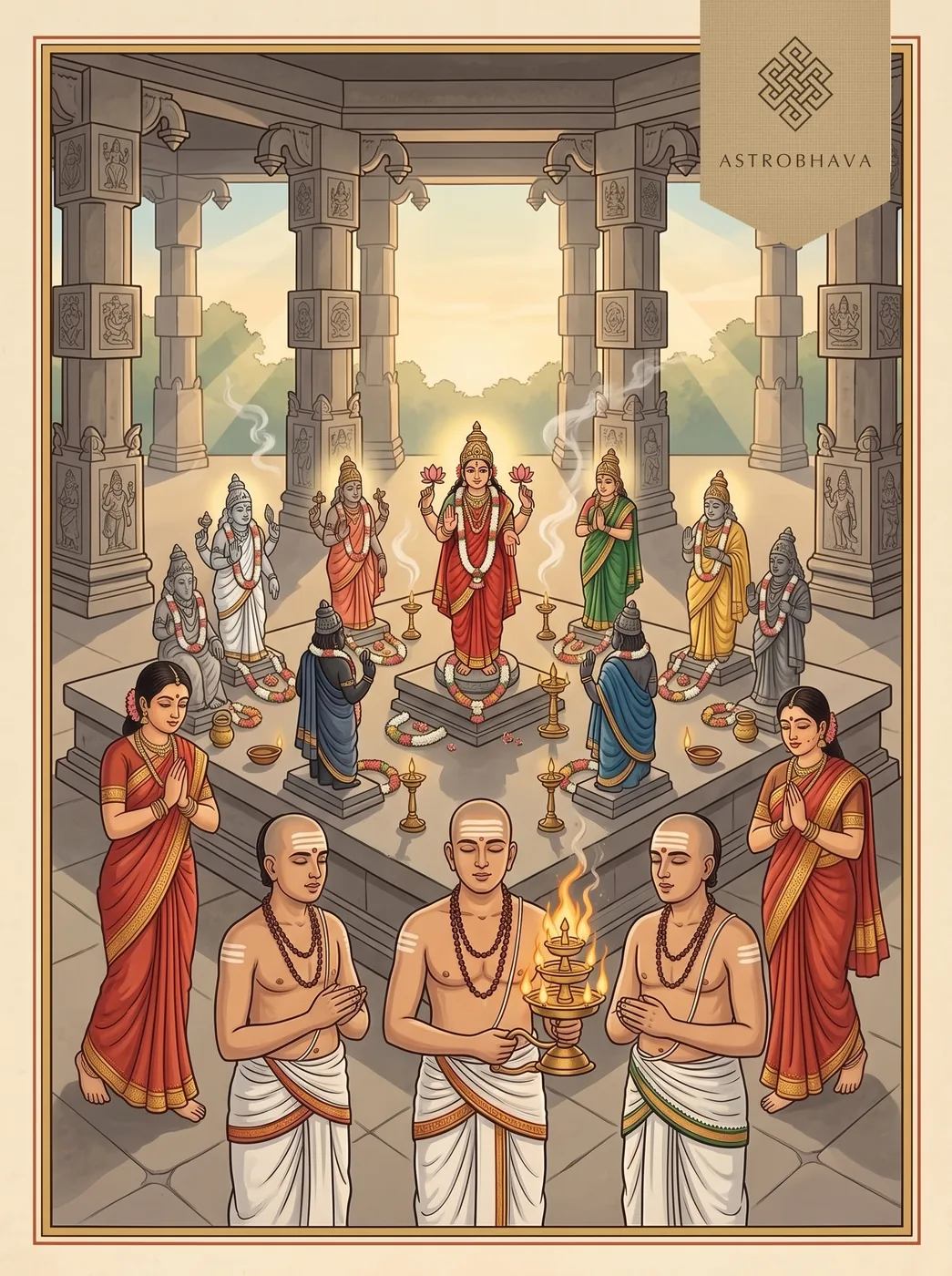
Navagraha Suktam
ॐ आसत्येन रजसा वर्तमानो निवेशयन्नमृतं मर्त्यञ्च । हिरण्ययेन सविता रथेनाऽऽदेवो याति भुवना विपश्यन् ॥Also known as Asatyena Rajasa
In Devanagari, Tamil, Telugu, Kannada, Malayalam and English — with the meaning of every word, and the one syllable most people pronounce wrongly.
 The Navagraha Homam, performed for youBook →
What the Navagraha Suktam is
The Navagraha Suktam is not a single hymn of one seer but a traditional compilation of Vedic mantras for the nine grahas, taken in the order Surya, Chandra, Angaraka, Budha, Brihaspati, Shukra, Shani, Rahu and Ketu. Its verses come from the Vedic samhitas: South Indian chanting books give them in their Krishna Yajurveda form, as in the Taittiriya Samhita, and most of them also stand in the Rigveda. Each graha receives three mantras: its own verse, then a verse for its adhidevata and one for its pratyadhidevata, the two deities who preside with it. A salutation line closes each group, and a final line bows to all nine together, making 27 mantras in all. This page prints the full sequence of mantras and salutations, without the Ganesha dhyana, pranayama and sankalpa that precede it in puja books. It is printed without Vedic accent marks; chanting with the svaras is learned from a teacher.
Old Vedic verses given to nine grahas
None of these 27 verses was composed for a planet. The Sun's mantra is a Rigveda verse to Savitr, the god borne in a golden chariot who settles the immortal and the mortal each in its place (Rigveda 1.35.2). Where the Rigveda reads 'a krishnena rajasa', through the dark region, the South Indian books print 'asatyena rajasa', by truth. The Moon's verse addresses Soma, the Moon's own name, and Jupiter's names Brihaspati outright. Mars takes 'agnir murdha', Agni as head of heaven. Mercury takes 'udbudhyasva', a call to wake. Venus takes 'pra vah shukraya', to the bright one. Saturn opens with 'shanno devih', a verse to the divine Waters. Ketu takes 'ketum krinvan', making a light or banner where there was none. The companion verses are older still in their settings. Mars is given the Rigveda prayer to Earth to be free of thorns, and Mercury the three strides of Vishnu, both from Rigveda 1.22. The Moon receives the lowing cow of the riddle hymn, Rigveda 1.164.41. Venus receives the line on Indrani, whose husband never dies of age, from Rigveda 10.86. What the tradition added is the order and the salutation that binds each three into one graha's worship.
The mantra, in six scripts
- ॐ
- oṃ — Om
- आसत्येन
- āsatyena — by truth
- रजसा
- rajasā — through the region of space
- वर्तमानो
- vartamāno — moving
- निवेशयन्नमृतं
- niveśayannamṛtaṃ — settling the immortal
- मर्त्यञ्च
- martyañca — and the mortal
- हिरण्ययेन
- hiraṇyayena — golden
- सविता
- savitā — Savitr
- रथेनाऽऽदेवो
- rathenā''devo — by chariot, the god
- याति
- yāti — comes
- भुवना
- bhuvanā — the worlds
- विपश्यन्
- vipaśyan — looking upon
Navagraha Suktam lyrics in full
The nine graha mantras, each with its adhidevata and pratyadhidevata verses and closing salutation, followed by the salutation to all nine grahas, printed without accent marks.
All 37 verses, in Sanskrit, Tamil, Telugu, Kannada, Malayalam and English, each with its meaning. Choose a script:
Download the Navagraha Suktam PDFAll 37 verses with their meanings, in Sanskrit. Free to print and keep.
ॐ आसत्येन रजसा वर्तमानो निवेशयन्नमृतं मर्त्यञ्च ।
हिरण्ययेन सविता रथेनाऽऽदेवो याति भुवना विपश्यन् ॥
ௐ ஆஸத்யேந ரஜஸா வர்தமாநோ நிவேஶயந்நம்ருதம் மர்த்யஞ்ச ।
ஹிரண்யயேந ஸவிதா ரதேநாதேவோ யாதி புவநா விபஶ்யந் ॥
ఓం ఆసత్యేన రజసా వర్తమానో నివేశయన్నమృతం మర్త్యఞ్చ ।
హిరణ్యయేన సవితా రథేనాఽఽదేవో యాతి భువనా విపశ్యన్ ॥
ಓಂ ಆಸತ್ಯೇನ ರಜಸಾ ವರ್ತಮಾನೋ ನಿವೇಶಯನ್ನಮೃತಂ ಮರ್ತ್ಯಞ್ಚ ।
ಹಿರಣ್ಯಯೇನ ಸವಿತಾ ರಥೇನಾಽಽದೇವೋ ಯಾತಿ ಭುವನಾ ವಿಪಶ್ಯನ್ ॥
ഓം ആസത്യേന രജസാ വര്തമാനോ നിവേശയന്നമൃതം മര്ത്യഞ്ച ।
ഹിരണ്യയേന സവിതാ രഥേനാഽഽദേവോ യാതി ഭുവനാ വിപശ്യന് ॥
oṃ āsatyena rajasā vartamāno niveśayannamṛtaṃ martyañca |
hiraṇyayena savitā rathenā''devo yāti bhuvanā vipaśyan ||
Om. Moving through the region of space by truth, settling the immortal and the mortal each in its place, the god Savitr comes in his golden chariot, looking upon all the worlds. (Mantra for Surya, the Sun.)
अग्निं दूतं वृणीमहे होतारं विश्ववेदसम् ।
अस्य यज्ञस्य सुक्रतुम् ॥
அக்நிம் தூதம் வ்ருணீமஹே ஹோதாரம் விஶ்வவேதஸம் ।
அஸ்ய யஜ்ஞஸ்ய ஸுக்ரதும் ॥
అగ్నిం దూతం వృణీమహే హోతారం విశ్వవేదసమ్ ।
అస్య యజ్ఞస్య సుక్రతుమ్ ॥
ಅಗ್ನಿಂ ದೂತಂ ವೃಣೀಮಹೇ ಹೋತಾರಂ ವಿಶ್ವವೇದಸಮ್ ।
ಅಸ್ಯ ಯಜ್ಞಸ್ಯ ಸುಕ್ರತುಮ್ ॥
അഗ്നിം ദൂതം വൃണീമഹേ ഹോതാരം വിശ്വവേദസമ് ।
അസ്യ യജ്ഞസ്യ സുക്രതുമ് ॥
agniṃ dūtaṃ vṛṇīmahe hotāraṃ viśvavedasam |
asya yajñasya sukratum ||
We choose Agni as our messenger, the priest who calls the gods, the all-knowing one, the skilful performer of this sacrifice. (Adhidevata verse for the Sun: Agni.)
येषामीशे पशुपतिः पशूनां चतुष्पदामुत च द्विपदाम् ।
निष्क्रीतोऽयं यज्ञियं भागमेतु रायस्पोषा यजमानस्य सन्तु ॥
யேஷாமீஶே பஶுபதிஃ பஶூநாம் சதுஷ்பதாமுத ச த்விபதாம் ।
நிஷ்க்ரீதோயம் யஜ்ஞியம் பாகமேது ராயஸ்போஷா யஜமாநஸ்ய ஸந்து ॥
యేషామీశే పశుపతిః పశూనాం చతుష్పదాముత చ ద్విపదామ్ ।
నిష్క్రీతోఽయం యజ్ఞియం భాగమేతు రాయస్పోషా యజమానస్య సన్తు ॥
ಯೇಷಾಮೀಶೇ ಪಶುಪತಿಃ ಪಶೂನಾಂ ಚತುಷ್ಪದಾಮುತ ಚ ದ್ವಿಪದಾಮ್ ।
ನಿಷ್ಕ್ರೀತೋಽಯಂ ಯಜ್ಞಿಯಂ ಭಾಗಮೇತು ರಾಯಸ್ಪೋಷಾ ಯಜಮಾನಸ್ಯ ಸನ್ತು ॥
യേഷാമീശേ പശുപതിഃ പശൂനാം ചതുഷ്പദാമുത ച ദ്വിപദാമ് ।
നിഷ്ക്രീതോഽയം യജ്ഞിയം ഭാഗമേതു രായസ്പോഷാ യജമാനസ്യ സന്തു ॥
yeṣāmīśe paśupatiḥ paśūnāṃ catuṣpadāmuta ca dvipadām |
niṣkrīto'yaṃ yajñiyaṃ bhāgametu rāyaspoṣā yajamānasya santu ||
Pashupati rules over the creatures, the four-footed and the two-footed. Redeemed, may this one go to its sacrificial share; may increase of wealth belong to the one who offers the sacrifice. (Pratyadhidevata verse for the Sun: Rudra as Pashupati.)
ॐ अधिदेवता प्रत्यधिदेवता सहिताय आदित्याय नमः ॥
ௐ அதிதேவதா ப்ரத்யதிதேவதா ஸஹிதாய ஆதித்யாய நமஃ ॥
ఓం అధిదేవతా ప్రత్యధిదేవతా సహితాయ ఆదిత్యాయ నమః ॥
ಓಂ ಅಧಿದೇವತಾ ಪ್ರತ್ಯಧಿದೇವತಾ ಸಹಿತಾಯ ಆದಿತ್ಯಾಯ ನಮಃ ॥
ഓം അധിദേവതാ പ്രത്യധിദേവതാ സഹിതായ ആദിത്യായ നമഃ ॥
oṃ adhidevatā pratyadhidevatā sahitāya ādityāya namaḥ ||
Om. Salutation to Aditya, the Sun, together with his adhidevata and pratyadhidevata.
ॐ आप्यायस्व समेतु ते विश्वतस्सोम वृष्णियम् ।
भवा वाजस्य सङ्गथे ॥
ௐ ஆப்யாயஸ்வ ஸமேது தே விஶ்வதஸ்ஸோம வ்ருஷ்ணியம் ।
பவா வாஜஸ்ய ஸங்கதே ॥
ఓం ఆప్యాయస్వ సమేతు తే విశ్వతస్సోమ వృష్ణియమ్ ।
భవా వాజస్య సఙ్గథే ॥
ಓಂ ಆಪ್ಯಾಯಸ್ವ ಸಮೇತು ತೇ ವಿಶ್ವತಸ್ಸೋಮ ವೃಷ್ಣಿಯಮ್ ।
ಭವಾ ವಾಜಸ್ಯ ಸಙ್ಗಥೇ ॥
ഓം ആപ്യായസ്വ സമേതു തേ വിശ്വതസ്സോമ വൃഷ്ണിയമ് ।
ഭവാ വാജസ്യ സങ്ഗഥേ ॥
oṃ āpyāyasva sametu te viśvatassoma vṛṣṇiyam |
bhavā vājasya saṅgathe ||
Om. Swell and grow, O Soma; may vigour gather in you from every side. Be present where strength is gathered. (Mantra for Chandra, the Moon.)
अप्सुमे सोमो अब्रवीदन्तर्विश्वानि भेषजा ।
अग्निञ्च विश्वशम्भुवमापश्च विश्वभेषजीः ॥
அப்ஸுமே ஸோமோ அப்ரவீதந்தர்விஶ்வாநி பேஷஜா ।
அக்நிஞ்ச விஶ்வஶம்புவமாபஶ்ச விஶ்வபேஷஜீஃ ॥
అప్సుమే సోమో అబ్రవీదన్తర్విశ్వాని భేషజా ।
అగ్నిఞ్చ విశ్వశమ్భువమాపశ్చ విశ్వభేషజీః ॥
ಅಪ್ಸುಮೇ ಸೋಮೋ ಅಬ್ರವೀದನ್ತರ್ವಿಶ್ವಾನಿ ಭೇಷಜಾ ।
ಅಗ್ನಿಞ್ಚ ವಿಶ್ವಶಮ್ಭುವಮಾಪಶ್ಚ ವಿಶ್ವಭೇಷಜೀಃ ॥
അപ്സുമേ സോമോ അബ്രവീദന്തര്വിശ്വാനി ഭേഷജാ ।
അഗ്നിഞ്ച വിശ്വശമ്ഭുവമാപശ്ച വിശ്വഭേഷജീഃ ॥
apsume somo abravīdantarviśvāni bheṣajā |
agniñca viśvaśambhuvamāpaśca viśvabheṣajīḥ ||
Soma told me that all remedies lie within the waters, and Agni who brings blessing to all, and the waters that heal all. (Adhidevata verse for the Moon: the Waters.)
गौरी मिमाय सलिलानि तक्षत्येकपदी द्विपदी सा चतुष्पदी ।
अष्टापदी नवपदी बभूवुषी सहस्राक्षरा परमे व्योमन् ॥
கௌரீ மிமாய ஸலிலாநி தக்ஷத்யேகபதீ த்விபதீ ஸா சதுஷ்பதீ ।
அஷ்டாபதீ நவபதீ பபூவுஷீ ஸஹஸ்ராக்ஷரா பரமே வ்யோமந் ॥
గౌరీ మిమాయ సలిలాని తక్షత్యేకపదీ ద్విపదీ సా చతుష్పదీ ।
అష్టాపదీ నవపదీ బభూవుషీ సహస్రాక్షరా పరమే వ్యోమన్ ॥
ಗೌರೀ ಮಿಮಾಯ ಸಲಿಲಾನಿ ತಕ್ಷತ್ಯೇಕಪದೀ ದ್ವಿಪದೀ ಸಾ ಚತುಷ್ಪದೀ ।
ಅಷ್ಟಾಪದೀ ನವಪದೀ ಬಭೂವುಷೀ ಸಹಸ್ರಾಕ್ಷರಾ ಪರಮೇ ವ್ಯೋಮನ್ ॥
ഗൌരീ മിമായ സലിലാനി തക്ഷത്യേകപദീ ദ്വിപദീ സാ ചതുഷ്പദീ ।
അഷ്ടാപദീ നവപദീ ബഭൂവുഷീ സഹസ്രാക്ഷരാ പരമേ വ്യോമന് ॥
gaurī mimāya salilāni takṣatyekapadī dvipadī sā catuṣpadī |
aṣṭāpadī navapadī babhūvuṣī sahasrākṣarā parame vyoman ||
Gauri lowed, shaping the waters; she became one-footed, two-footed, four-footed, eight-footed, nine-footed, of a thousand syllables, in the highest heaven. (Pratyadhidevata verse for the Moon: Gauri.)
ॐ अधिदेवता प्रत्यधिदेवता सहिताय सोमाय नमः ॥
ௐ அதிதேவதா ப்ரத்யதிதேவதா ஸஹிதாய ஸோமாய நமஃ ॥
ఓం అధిదేవతా ప్రత్యధిదేవతా సహితాయ సోమాయ నమః ॥
ಓಂ ಅಧಿದೇವತಾ ಪ್ರತ್ಯಧಿದೇವತಾ ಸಹಿತಾಯ ಸೋಮಾಯ ನಮಃ ॥
ഓം അധിദേവതാ പ്രത്യധിദേവതാ സഹിതായ സോമായ നമഃ ॥
oṃ adhidevatā pratyadhidevatā sahitāya somāya namaḥ ||
Om. Salutation to Soma, the Moon, together with his adhidevata and pratyadhidevata.
ॐ अग्निर्मूर्धा दिवः ककुत्पतिः पृथिव्या अयम् ।
अपां रेतांसि जिन्वति ॥
ௐ அக்நிர்மூர்தா திவஃ ககுத்பதிஃ ப்ருதிவ்யா அயம் ।
அபாம் ரேதாம்ஸி ஜிந்வதி ॥
ఓం అగ్నిర్మూర్ధా దివః కకుత్పతిః పృథివ్యా అయమ్ ।
అపాం రేతాంసి జిన్వతి ॥
ಓಂ ಅಗ್ನಿರ್ಮೂರ್ಧಾ ದಿವಃ ಕಕುತ್ಪತಿಃ ಪೃಥಿವ್ಯಾ ಅಯಮ್ ।
ಅಪಾಂ ರೇತಾಂಸಿ ಜಿನ್ವತಿ ॥
ഓം അഗ്നിര്മൂര്ധാ ദിവഃ കകുത്പതിഃ പൃഥിവ്യാ അയമ് ।
അപാം രേതാംസി ജിന്വതി ॥
oṃ agnirmūrdhā divaḥ kakutpatiḥ pṛthivyā ayam |
apāṃ retāṃsi jinvati ||
Om. This Agni is the head of heaven, the summit and lord of the earth; he quickens the seeds of the waters. (Mantra for Angaraka, Mars.)
स्योना पृथिवि भवाऽनृक्षरा निवेशनी ।
यच्छानश्शर्म सप्रथाः ॥
ஸ்யோநா ப்ருதிவி பவாந்ருக்ஷரா நிவேஶநீ ।
யச்சாநஶ்ஶர்ம ஸப்ரதாஃ ॥
స్యోనా పృథివి భవాఽనృక్షరా నివేశనీ ।
యచ్ఛానశ్శర్మ సప్రథాః ॥
ಸ್ಯೋನಾ ಪೃಥಿವಿ ಭವಾಽನೃಕ್ಷರಾ ನಿವೇಶನೀ ।
ಯಚ್ಛಾನಶ್ಶರ್ಮ ಸಪ್ರಥಾಃ ॥
സ്യോനാ പൃഥിവി ഭവാഽനൃക്ഷരാ നിവേശനീ ।
യച്ഛാനശ്ശര്മ സപ്രഥാഃ ॥
syonā pṛthivi bhavā'nṛkṣarā niveśanī |
yacchānaśśarma saprathāḥ ||
O Earth, be kind to us, free of thorns, a place to rest; give us shelter wide and spreading. (Adhidevata verse for Mars: the Earth.)
क्षेत्रस्य पतिना वयं हितेनेव जयामसि ।
गामश्वं पोषयित्न्वा स नो मृडातीदृशे ॥
க்ஷேத்ரஸ்ய பதிநா வயம் ஹிதேநேவ ஜயாமஸி ।
காமஶ்வம் போஷயித்ந்வா ஸ நோ ம்ருடாதீத்ருஶே ॥
క్షేత్రస్య పతినా వయం హితేనేవ జయామసి ।
గామశ్వం పోషయిత్న్వా స నో మృడాతీదృశే ॥
ಕ್ಷೇತ್ರಸ್ಯ ಪತಿನಾ ವಯಂ ಹಿತೇನೇವ ಜಯಾಮಸಿ ।
ಗಾಮಶ್ವಂ ಪೋಷಯಿತ್ನ್ವಾ ಸ ನೋ ಮೃಡಾತೀದೃಶೇ ॥
ക്ഷേത്രസ്യ പതിനാ വയം ഹിതേനേവ ജയാമസി ।
ഗാമശ്വം പോഷയിത്ന്വാ സ നോ മൃഡാതീദൃശേ ॥
kṣetrasya patinā vayaṃ hiteneva jayāmasi |
gāmaśvaṃ poṣayitnvā sa no mṛḍātīdṛśe ||
With the Lord of the Field, as with a friend, we win; may he who nourishes cattle and horses be gracious to us in this way. (Pratyadhidevata verse for Mars: Kshetrapati, the Lord of the Field.)
ॐ अधिदेवता प्रत्यधिदेवता सहिताय अङ्गारकाय नमः ॥
ௐ அதிதேவதா ப்ரத்யதிதேவதா ஸஹிதாய அங்காரகாய நமஃ ॥
ఓం అధిదేవతా ప్రత్యధిదేవతా సహితాయ అఙ్గారకాయ నమః ॥
ಓಂ ಅಧಿದೇವತಾ ಪ್ರತ್ಯಧಿದೇವತಾ ಸಹಿತಾಯ ಅಙ್ಗಾರಕಾಯ ನಮಃ ॥
ഓം അധിദേവതാ പ്രത്യധിദേവതാ സഹിതായ അങ്ഗാരകായ നമഃ ॥
oṃ adhidevatā pratyadhidevatā sahitāya aṅgārakāya namaḥ ||
Om. Salutation to Angaraka, Mars, together with his adhidevata and pratyadhidevata.
ॐ उद्बुध्यस्वाग्ने प्रतिजागृह्येनमिष्टापूर्ते संसृजेथामयञ्च ।
पुनः कृण्वंस्त्वा पितरं युवानमन्वातांसीत्त्वयि तन्तुमेतम् ॥
ௐ உத்புத்யஸ்வாக்நே ப்ரதிஜாக்ருஹ்யேநமிஷ்டாபூர்தே ஸம்ஸ்ருஜேதாமயஞ்ச ।
புநஃ க்ருண்வம்ஸ்த்வா பிதரம் யுவாநமந்வாதாம்ஸீத்த்வயி தந்துமேதம் ॥
ఓం ఉద్బుధ్యస్వాగ్నే ప్రతిజాగృహ్యేనమిష్టాపూర్తే సంసృజేథామయఞ్చ ।
పునః కృణ్వంస్త్వా పితరం యువానమన్వాతాంసీత్త్వయి తన్తుమేతమ్ ॥
ಓಂ ಉದ್ಬುಧ್ಯಸ್ವಾಗ್ನೇ ಪ್ರತಿಜಾಗೃಹ್ಯೇನಮಿಷ್ಟಾಪೂರ್ತೇ ಸಂಸೃಜೇಥಾಮಯಞ್ಚ ।
ಪುನಃ ಕೃಣ್ವಂಸ್ತ್ವಾ ಪಿತರಂ ಯುವಾನಮನ್ವಾತಾಂಸೀತ್ತ್ವಯಿ ತನ್ತುಮೇತಮ್ ॥
ഓം ഉദ്ബുധ്യസ്വാഗ്നേ പ്രതിജാഗൃഹ്യേനമിഷ്ടാപൂര്തേ സംസൃജേഥാമയഞ്ച ।
പുനഃ കൃണ്വംസ്ത്വാ പിതരം യുവാനമന്വാതാംസീത്ത്വയി തന്തുമേതമ് ॥
oṃ udbudhyasvāgne pratijāgṛhyenamiṣṭāpūrte saṃsṛjethāmayañca |
punaḥ kṛṇvaṃstvā pitaraṃ yuvānamanvātāṃsīttvayi tantumetam ||
Om. Wake up, O Agni, and keep watch over him; may you and he be joined with the merit of offerings and good works. Making you young again as a father, he has stretched this thread out to you. (Mantra for Budha, Mercury.)
इदं विष्णुर्विचक्रमे त्रेधा निदधे पदम् ।
समूढमस्य पांसुरे ॥
இதம் விஷ்ணுர்விசக்ரமே த்ரேதா நிததே பதம் ।
ஸமூடமஸ்ய பாம்ஸுரே ॥
ఇదం విష్ణుర్విచక్రమే త్రేధా నిదధే పదమ్ ।
సమూఢమస్య పాంసురే ॥
ಇದಂ ವಿಷ್ಣುರ್ವಿಚಕ್ರಮೇ ತ್ರೇಧಾ ನಿದಧೇ ಪದಮ್ ।
ಸಮೂಢಮಸ್ಯ ಪಾಂಸುರೇ ॥
ഇദം വിഷ്ണുര്വിചക്രമേ ത്രേധാ നിദധേ പദമ് ।
സമൂഢമസ്യ പാംസുരേ ॥
idaṃ viṣṇurvicakrame tredhā nidadhe padam |
samūḍhamasya pāṃsure ||
Vishnu strode across this universe; three times he set down his foot, and the whole is gathered in his dusty footprint. (Adhidevata verse for Mercury: Vishnu.)
विष्णो रराटमसि विष्णोः पृष्ठमसि विष्णोश्श्नप्त्रेस्थो विष्णोस्स्यूरसि ।
विष्णोर्ध्रुवमसि वैष्णवमसि विष्णवे त्वा ॥
விஷ்ணோ ரராடமஸி விஷ்ணோஃ ப்ருஷ்டமஸி விஷ்ணோஶ்ஶ்நப்த்ரேஸ்தோ விஷ்ணோஸ்ஸ்யூரஸி ।
விஷ்ணோர்த்ருவமஸி வைஷ்ணவமஸி விஷ்ணவே த்வா ॥
విష్ణో రరాటమసి విష్ణోః పృష్ఠమసి విష్ణోశ్శ్నప్త్రేస్థో విష్ణోస్స్యూరసి ।
విష్ణోర్ధ్రువమసి వైష్ణవమసి విష్ణవే త్వా ॥
ವಿಷ್ಣೋ ರರಾಟಮಸಿ ವಿಷ್ಣೋಃ ಪೃಷ್ಠಮಸಿ ವಿಷ್ಣೋಶ್ಶ್ನಪ್ತ್ರೇಸ್ಥೋ ವಿಷ್ಣೋಸ್ಸ್ಯೂರಸಿ ।
ವಿಷ್ಣೋರ್ಧ್ರುವಮಸಿ ವೈಷ್ಣವಮಸಿ ವಿಷ್ಣವೇ ತ್ವಾ ॥
വിഷ്ണോ രരാടമസി വിഷ്ണോഃ പൃഷ്ഠമസി വിഷ്ണോശ്ശ്നപ്ത്രേസ്ഥോ വിഷ്ണോസ്സ്യൂരസി ।
വിഷ്ണോര്ധ്രുവമസി വൈഷ്ണവമസി വിഷ്ണവേ ത്വാ ॥
viṣṇo rarāṭamasi viṣṇoḥ pṛṣṭhamasi viṣṇośśnaptrestho viṣṇossyūrasi |
viṣṇordhruvamasi vaiṣṇavamasi viṣṇave tvā ||
You are Vishnu's forehead, you are Vishnu's back, you two are Vishnu's corners, you are Vishnu's seam, you are Vishnu's firm knot; you belong to Vishnu; you are for Vishnu. (Pratyadhidevata verse for Mercury: Vishnu, addressed through the sacrificial shelter.)
ॐ अधिदेवता प्रत्यधिदेवता सहिताय बुधाय नमः ॥
ௐ அதிதேவதா ப்ரத்யதிதேவதா ஸஹிதாய புதாய நமஃ ॥
ఓం అధిదేవతా ప్రత్యధిదేవతా సహితాయ బుధాయ నమః ॥
ಓಂ ಅಧಿದೇವತಾ ಪ್ರತ್ಯಧಿದೇವತಾ ಸಹಿತಾಯ ಬುಧಾಯ ನಮಃ ॥
ഓം അധിദേവതാ പ്രത്യധിദേവതാ സഹിതായ ബുധായ നമഃ ॥
oṃ adhidevatā pratyadhidevatā sahitāya budhāya namaḥ ||
Om. Salutation to Budha, Mercury, together with his adhidevata and pratyadhidevata.
ॐ बृहस्पते अतियदर्यो अर्हाद्द्युमद्विभाति क्रतुमज्जनेषु ।
यद्दीदयच्चवसर्तप्रजात तदस्मासु द्रविणन्धेहि चित्रम् ॥
ௐ ப்ருஹஸ்பதே அதியதர்யோ அர்ஹாத்த்யுமத்விபாதி க்ரதுமஜ்ஜநேஷு ।
யத்தீதயச்சவஸர்தப்ரஜாத ததஸ்மாஸு த்ரவிணந்தேஹி சித்ரம் ॥
ఓం బృహస్పతే అతియదర్యో అర్హాద్ద్యుమద్విభాతి క్రతుమజ్జనేషు ।
యద్దీదయచ్చవసర్తప్రజాత తదస్మాసు ద్రవిణన్ధేహి చిత్రమ్ ॥
ಓಂ ಬೃಹಸ್ಪತೇ ಅತಿಯದರ್ಯೋ ಅರ್ಹಾದ್ದ್ಯುಮದ್ವಿಭಾತಿ ಕ್ರತುಮಜ್ಜನೇಷು ।
ಯದ್ದೀದಯಚ್ಚವಸರ್ತಪ್ರಜಾತ ತದಸ್ಮಾಸು ದ್ರವಿಣನ್ಧೇಹಿ ಚಿತ್ರಮ್ ॥
ഓം ബൃഹസ്പതേ അതിയദര്യോ അര്ഹാദ്ദ്യുമദ്വിഭാതി ക്രതുമജ്ജനേഷു ।
യദ്ദീദയച്ചവസര്തപ്രജാത തദസ്മാസു ദ്രവിണന്ധേഹി ചിത്രമ് ॥
oṃ bṛhaspate atiyadaryo arhāddyumadvibhāti kratumajjaneṣu |
yaddīdayaccavasartaprajāta tadasmāsu draviṇandhehi citram ||
Om. O Brihaspati, born of cosmic order, place in us that wonderful wealth which the noble deserve, which shines brightly and with purpose among people, and which blazes with strength. (Mantra for Guru, Jupiter.)
इन्द्रमरुत्व इह पाहि सोमं यथा शार्याते अपिबस्सुतस्य ।
तव प्रणीती तव शूरशर्मन्नाविवासन्ति कवयस्सुयज्ञाः ॥
இந்த்ரமருத்வ இஹ பாஹி ஸோமம் யதா ஶார்யாதே அபிபஸ்ஸுதஸ்ய ।
தவ ப்ரணீதீ தவ ஶூரஶர்மந்நாவிவாஸந்தி கவயஸ்ஸுயஜ்ஞாஃ ॥
ఇన్ద్రమరుత్వ ఇహ పాహి సోమం యథా శార్యాతే అపిబస్సుతస్య ।
తవ ప్రణీతీ తవ శూరశర్మన్నావివాసన్తి కవయస్సుయజ్ఞాః ॥
ಇನ್ದ್ರಮರುತ್ವ ಇಹ ಪಾಹಿ ಸೋಮಂ ಯಥಾ ಶಾರ್ಯಾತೇ ಅಪಿಬಸ್ಸುತಸ್ಯ ।
ತವ ಪ್ರಣೀತೀ ತವ ಶೂರಶರ್ಮನ್ನಾವಿವಾಸನ್ತಿ ಕವಯಸ್ಸುಯಜ್ಞಾಃ ॥
ഇന്ദ്രമരുത്വ ഇഹ പാഹി സോമം യഥാ ശാര്യാതേ അപിബസ്സുതസ്യ ।
തവ പ്രണീതീ തവ ശൂരശര്മന്നാവിവാസന്തി കവയസ്സുയജ്ഞാഃ ॥
indramarutva iha pāhi somaṃ yathā śāryāte apibassutasya |
tava praṇītī tava śūraśarmannāvivāsanti kavayassuyajñāḥ ||
O Indra with the Maruts, drink the Soma here, as you drank the pressed juice at Sharyata's rite. Under your guidance and in your shelter, O hero, the wise who sacrifice well worship you. (Adhidevata verse for Jupiter: Indra.)
ब्रह्मजज्ञानं प्रथमं पुरस्ताद्विसीमतस्सुरुचो वेन आवः ।
सबुध्निया उपमा अस्य विष्ठास्सतश्च योनिमसतश्च विवः ॥
ப்ரஹ்மஜஜ்ஞாநம் ப்ரதமம் புரஸ்தாத்விஸீமதஸ்ஸுருசோ வேந ஆவஃ ।
ஸபுத்நியா உபமா அஸ்ய விஷ்டாஸ்ஸதஶ்ச யோநிமஸதஶ்ச விவஃ ॥
బ్రహ్మజజ్ఞానం ప్రథమం పురస్తాద్విసీమతస్సురుచో వేన ఆవః ।
సబుధ్నియా ఉపమా అస్య విష్ఠాస్సతశ్చ యోనిమసతశ్చ వివః ॥
ಬ್ರಹ್ಮಜಜ್ಞಾನಂ ಪ್ರಥಮಂ ಪುರಸ್ತಾದ್ವಿಸೀಮತಸ್ಸುರುಚೋ ವೇನ ಆವಃ ।
ಸಬುಧ್ನಿಯಾ ಉಪಮಾ ಅಸ್ಯ ವಿಷ್ಠಾಸ್ಸತಶ್ಚ ಯೋನಿಮಸತಶ್ಚ ವಿವಃ ॥
ബ്രഹ്മജജ്ഞാനം പ്രഥമം പുരസ്താദ്വിസീമതസ്സുരുചോ വേന ആവഃ ।
സബുധ്നിയാ ഉപമാ അസ്യ വിഷ്ഠാസ്സതശ്ച യോനിമസതശ്ച വിവഃ ॥
brahmajajñānaṃ prathamaṃ purastādvisīmatassuruco vena āvaḥ |
sabudhniyā upamā asya viṣṭhāssataśca yonimasataśca vivaḥ ||
The Brahman born first in the east, the Seer has opened out from the shining edge; he revealed its deepest and nearest forms, the womb of what is and of what is not. (Pratyadhidevata verse for Jupiter: Brahma.)
ॐ अधिदेवता प्रत्यधिदेवता सहिताय बृहस्पतये नमः ॥
ௐ அதிதேவதா ப்ரத்யதிதேவதா ஸஹிதாய ப்ருஹஸ்பதயே நமஃ ॥
ఓం అధిదేవతా ప్రత్యధిదేవతా సహితాయ బృహస్పతయే నమః ॥
ಓಂ ಅಧಿದೇವತಾ ಪ್ರತ್ಯಧಿದೇವತಾ ಸಹಿತಾಯ ಬೃಹಸ್ಪತಯೇ ನಮಃ ॥
ഓം അധിദേവതാ പ്രത്യധിദേവതാ സഹിതായ ബൃഹസ്പതയേ നമഃ ॥
oṃ adhidevatā pratyadhidevatā sahitāya bṛhaspataye namaḥ ||
Om. Salutation to Brihaspati, Jupiter, together with his adhidevata and pratyadhidevata.
ॐ प्रवश्शुक्राय भानवे भरध्वम् ।
हव्यं मतिं चाग्नये सुपूतम् ।
यो दैव्यानि मानुषा जनूंषि ।
अन्तर्विश्वानि विद्म ना जिगाति ॥
ௐ ப்ரவஶ்ஶுக்ராய பாநவே பரத்வம் ।
ஹவ்யம் மதிம் சாக்நயே ஸுபூதம் ।
யோ தைவ்யாநி மாநுஷா ஜநூம்ஷி ।
அந்தர்விஶ்வாநி வித்ம நா ஜிகாதி ॥
ఓం ప్రవశ్శుక్రాయ భానవే భరధ్వమ్ ।
హవ్యం మతిం చాగ్నయే సుపూతమ్ ।
యో దైవ్యాని మానుషా జనూంషి ।
అన్తర్విశ్వాని విద్మ నా జిగాతి ॥
ಓಂ ಪ್ರವಶ್ಶುಕ್ರಾಯ ಭಾನವೇ ಭರಧ್ವಮ್ ।
ಹವ್ಯಂ ಮತಿಂ ಚಾಗ್ನಯೇ ಸುಪೂತಮ್ ।
ಯೋ ದೈವ್ಯಾನಿ ಮಾನುಷಾ ಜನೂಂಷಿ ।
ಅನ್ತರ್ವಿಶ್ವಾನಿ ವಿದ್ಮ ನಾ ಜಿಗಾತಿ ॥
ഓം പ്രവശ്ശുക്രായ ഭാനവേ ഭരധ്വമ് ।
ഹവ്യം മതിം ചാഗ്നയേ സുപൂതമ് ।
യോ ദൈവ്യാനി മാനുഷാ ജനൂംഷി ।
അന്തര്വിശ്വാനി വിദ്മ നാ ജിഗാതി ॥
oṃ pravaśśukrāya bhānave bharadhvam |
havyaṃ matiṃ cāgnaye supūtam |
yo daivyāni mānuṣā janūṃṣi |
antarviśvāni vidma nā jigāti ||
Om. Bring to the bright and shining one your offering and your well-purified prayer for Agni, who moves among all births, divine and human, knowing them. (Mantra for Shukra, Venus.)
इन्द्राणीमासु नारिषु सुपत्नीमहमश्रवम् ।
न ह्यस्या अपरञ्चन जरसा मरते पतिः ॥
இந்த்ராணீமாஸு நாரிஷு ஸுபத்நீமஹமஶ்ரவம் ।
ந ஹ்யஸ்யா அபரஞ்சந ஜரஸா மரதே பதிஃ ॥
ఇన్ద్రాణీమాసు నారిషు సుపత్నీమహమశ్రవమ్ ।
న హ్యస్యా అపరఞ్చన జరసా మరతే పతిః ॥
ಇನ್ದ್ರಾಣೀಮಾಸು ನಾರಿಷು ಸುಪತ್ನೀಮಹಮಶ್ರವಮ್ ।
ನ ಹ್ಯಸ್ಯಾ ಅಪರಞ್ಚನ ಜರಸಾ ಮರತೇ ಪತಿಃ ॥
ഇന്ദ്രാണീമാസു നാരിഷു സുപത്നീമഹമശ്രവമ് ।
ന ഹ്യസ്യാ അപരഞ്ചന ജരസാ മരതേ പതിഃ ॥
indrāṇīmāsu nāriṣu supatnīmahamaśravam |
na hyasyā aparañcana jarasā marate patiḥ ||
Among these women I have heard that Indrani is the most blessed wife, for her husband never dies of old age. (Adhidevata verse for Venus: Indrani.)
इन्द्रं वो विश्वतस्परि हवामहे जनेभ्यः ।
अस्माकमस्तु केवलः ॥
இந்த்ரம் வோ விஶ்வதஸ்பரி ஹவாமஹே ஜநேப்யஃ ।
அஸ்மாகமஸ்து கேவலஃ ॥
ఇన్ద్రం వో విశ్వతస్పరి హవామహే జనేభ్యః ।
అస్మాకమస్తు కేవలః ॥
ಇನ್ದ್ರಂ ವೋ ವಿಶ್ವತಸ್ಪರಿ ಹವಾಮಹೇ ಜನೇಭ್ಯಃ ।
ಅಸ್ಮಾಕಮಸ್ತು ಕೇವಲಃ ॥
ഇന്ദ്രം വോ വിശ്വതസ്പരി ഹവാമഹേ ജനേഭ്യഃ ।
അസ്മാകമസ്തു കേവലഃ ॥
indraṃ vo viśvataspari havāmahe janebhyaḥ |
asmākamastu kevalaḥ ||
On your behalf we call Indra from every side, away from all other people; may he be ours alone. (Pratyadhidevata verse for Venus: Indra.)
ॐ अधिदेवता प्रत्यधिदेवता सहिताय शुक्राय नमः ॥
ௐ அதிதேவதா ப்ரத்யதிதேவதா ஸஹிதாய ஶுக்ராய நமஃ ॥
ఓం అధిదేవతా ప్రత్యధిదేవతా సహితాయ శుక్రాయ నమః ॥
ಓಂ ಅಧಿದೇವತಾ ಪ್ರತ್ಯಧಿದೇವತಾ ಸಹಿತಾಯ ಶುಕ್ರಾಯ ನಮಃ ॥
ഓം അധിദേവതാ പ്രത്യധിദേവതാ സഹിതായ ശുക്രായ നമഃ ॥
oṃ adhidevatā pratyadhidevatā sahitāya śukrāya namaḥ ||
Om. Salutation to Shukra, Venus, together with his adhidevata and pratyadhidevata.
ॐ शन्नो देवीरभिष्टय आपो भवन्तु पीतये ।
शंयोरभिस्रवन्तु नः ॥
ௐ ஶந்நோ தேவீரபிஷ்டய ஆபோ பவந்து பீதயே ।
ஶம்யோரபிஸ்ரவந்து நஃ ॥
ఓం శన్నో దేవీరభిష్టయ ఆపో భవన్తు పీతయే ।
శంయోరభిస్రవన్తు నః ॥
ಓಂ ಶನ್ನೋ ದೇವೀರಭಿಷ್ಟಯ ಆಪೋ ಭವನ್ತು ಪೀತಯೇ ।
ಶಂಯೋರಭಿಸ್ರವನ್ತು ನಃ ॥
ഓം ശന്നോ ദേവീരഭിഷ്ടയ ആപോ ഭവന്തു പീതയേ ।
ശംയോരഭിസ്രവന്തു നഃ ॥
oṃ śanno devīrabhiṣṭaya āpo bhavantu pītaye |
śaṃyorabhisravantu naḥ ||
Om. May the divine waters be a blessing to us, for help and for drinking; may they flow toward us bringing health and freedom from harm. (Mantra for Shani, Saturn.)
प्रजापते न त्वदेतान्यन्यो विश्वा जातानि परिता बभूव ।
यत्कामास्ते जुहुमस्तन्नो अस्तु वयं स्याम पतयो रयीणाम् ॥
ப்ரஜாபதே ந த்வதேதாந்யந்யோ விஶ்வா ஜாதாநி பரிதா பபூவ ।
யத்காமாஸ்தே ஜுஹுமஸ்தந்நோ அஸ்து வயம் ஸ்யாம பதயோ ரயீணாம் ॥
ప్రజాపతే న త్వదేతాన్యన్యో విశ్వా జాతాని పరితా బభూవ ।
యత్కామాస్తే జుహుమస్తన్నో అస్తు వయం స్యామ పతయో రయీణామ్ ॥
ಪ್ರಜಾಪತೇ ನ ತ್ವದೇತಾನ್ಯನ್ಯೋ ವಿಶ್ವಾ ಜಾತಾನಿ ಪರಿತಾ ಬಭೂವ ।
ಯತ್ಕಾಮಾಸ್ತೇ ಜುಹುಮಸ್ತನ್ನೋ ಅಸ್ತು ವಯಂ ಸ್ಯಾಮ ಪತಯೋ ರಯೀಣಾಮ್ ॥
പ്രജാപതേ ന ത്വദേതാന്യന്യോ വിശ്വാ ജാതാനി പരിതാ ബഭൂവ ।
യത്കാമാസ്തേ ജുഹുമസ്തന്നോ അസ്തു വയം സ്യാമ പതയോ രയീണാമ് ॥
prajāpate na tvadetānyanyo viśvā jātāni paritā babhūva |
yatkāmāste juhumastanno astu vayaṃ syāma patayo rayīṇām ||
O Prajapati, no one other than you encompasses all these created things. May what we desire when we offer to you be ours; may we become masters of riches. (Verse to Prajapati, recited with Saturn.)
इमं यमप्रस्तरमाहि सीदाऽङ्गिरोभिः पितृभिस्संविदानः ।
आत्वा मन्त्राः कविशस्ता वहन्त्वेना राजन् हविषा मादयस्व ॥
இமம் யமப்ரஸ்தரமாஹி ஸீதாங்கிரோபிஃ பித்ருபிஸ்ஸம்விதாநஃ ।
ஆத்வா மந்த்ராஃ கவிஶஸ்தா வஹந்த்வேநா ராஜந் ஹவிஷா மாதயஸ்வ ॥
ఇమం యమప్రస్తరమాహి సీదాఽఙ్గిరోభిః పితృభిస్సంవిదానః ।
ఆత్వా మన్త్రాః కవిశస్తా వహన్త్వేనా రాజన్ హవిషా మాదయస్వ ॥
ಇಮಂ ಯಮಪ್ರಸ್ತರಮಾಹಿ ಸೀದಾಽಙ್ಗಿರೋಭಿಃ ಪಿತೃಭಿಸ್ಸಂವಿದಾನಃ ।
ಆತ್ವಾ ಮನ್ತ್ರಾಃ ಕವಿಶಸ್ತಾ ವಹನ್ತ್ವೇನಾ ರಾಜನ್ ಹವಿಷಾ ಮಾದಯಸ್ವ ॥
ഇമം യമപ്രസ്തരമാഹി സീദാഽങ്ഗിരോഭിഃ പിതൃഭിസ്സംവിദാനഃ ।
ആത്വാ മന്ത്രാഃ കവിശസ്താ വഹന്ത്വേനാ രാജന് ഹവിഷാ മാദയസ്വ ॥
imaṃ yamaprastaramāhi sīdā'ṅgirobhiḥ pitṛbhissaṃvidānaḥ |
ātvā mantrāḥ kaviśastā vahantvenā rājan haviṣā mādayasva ||
O Yama, come and sit on this sacred grass, in accord with the Angirases and the ancestors. May the mantras spoken by the seers bring you here; O king, rejoice in this offering. (Verse to Yama, recited with Saturn.)
ॐ अधिदेवता प्रत्यधिदेवता सहिताय शनैश्चराय नमः ॥
ௐ அதிதேவதா ப்ரத்யதிதேவதா ஸஹிதாய ஶநைஶ்சராய நமஃ ॥
ఓం అధిదేవతా ప్రత్యధిదేవతా సహితాయ శనైశ్చరాయ నమః ॥
ಓಂ ಅಧಿದೇವತಾ ಪ್ರತ್ಯಧಿದೇವತಾ ಸಹಿತಾಯ ಶನೈಶ್ಚರಾಯ ನಮಃ ॥
ഓം അധിദേവതാ പ്രത്യധിദേവതാ സഹിതായ ശനൈശ്ചരായ നമഃ ॥
oṃ adhidevatā pratyadhidevatā sahitāya śanaiścarāya namaḥ ||
Om. Salutation to Shanaishchara, Saturn, together with his adhidevata and pratyadhidevata.
ॐ कया नश्चित्र आभुवदूती सदावृधस्सखा ।
कया शचिष्ठया वृता ॥
ௐ கயா நஶ்சித்ர ஆபுவதூதீ ஸதாவ்ருதஸ்ஸகா ।
கயா ஶசிஷ்டயா வ்ருதா ॥
ఓం కయా నశ్చిత్ర ఆభువదూతీ సదావృధస్సఖా ।
కయా శచిష్ఠయా వృతా ॥
ಓಂ ಕಯಾ ನಶ್ಚಿತ್ರ ಆಭುವದೂತೀ ಸದಾವೃಧಸ್ಸಖಾ ।
ಕಯಾ ಶಚಿಷ್ಠಯಾ ವೃತಾ ॥
ഓം കയാ നശ്ചിത്ര ആഭുവദൂതീ സദാവൃധസ്സഖാ ।
കയാ ശചിഷ്ഠയാ വൃതാ ॥
oṃ kayā naścitra ābhuvadūtī sadāvṛdhassakhā |
kayā śaciṣṭhayā vṛtā ||
Om. With what help will the wonderful one, our ever-growing friend, come to us, and with what most powerful company? (Mantra for Rahu.)
आऽयङ्गौः पृश्निरक्रमीदसनन्मातरं पुनः ।
पितरञ्च प्रयन्त्सुवः ॥
ஆயங்கௌஃ ப்ருஶ்நிரக்ரமீதஸநந்மாதரம் புநஃ ।
பிதரஞ்ச ப்ரயந்த்ஸுவஃ ॥
ఆఽయఙ్గౌః పృశ్నిరక్రమీదసనన్మాతరం పునః ।
పితరఞ్చ ప్రయన్త్సువః ॥
ಆಽಯಙ್ಗೌಃ ಪೃಶ್ನಿರಕ್ರಮೀದಸನನ್ಮಾತರಂ ಪುನಃ ।
ಪಿತರಞ್ಚ ಪ್ರಯನ್ತ್ಸುವಃ ॥
ആഽയങ്ഗൌഃ പൃശ്നിരക്രമീദസനന്മാതരം പുനഃ ।
പിതരഞ്ച പ്രയന്ത്സുവഃ ॥
ā'yaṅgauḥ pṛśnirakramīdasananmātaraṃ punaḥ |
pitarañca prayantsuvaḥ ||
This dappled bull has come forward and sat before the mother, and goes on to the father, to heaven. (Verse recited with Rahu.)
यत्ते देवी निर्ऋतिराबबन्ध दाम ग्रीवास्वविचर्त्यम् ।
इदन्ते तद्विष्याम्यायुषो न मध्यादथाजीवः पितुमद्धि प्रमुक्तः ॥
யத்தே தேவீ நிர்ருதிராபபந்த தாம க்ரீவாஸ்வவிசர்த்யம் ।
இதந்தே தத்விஷ்யாம்யாயுஷோ ந மத்யாததாஜீவஃ பிதுமத்தி ப்ரமுக்தஃ ॥
యత్తే దేవీ నిర్ఋతిరాబబన్ధ దామ గ్రీవాస్వవిచర్త్యమ్ ।
ఇదన్తే తద్విష్యామ్యాయుషో న మధ్యాదథాజీవః పితుమద్ధి ప్రముక్తః ॥
ಯತ್ತೇ ದೇವೀ ನಿರ್ಋತಿರಾಬಬನ್ಧ ದಾಮ ಗ್ರೀವಾಸ್ವವಿಚರ್ತ್ಯಮ್ ।
ಇದನ್ತೇ ತದ್ವಿಷ್ಯಾಮ್ಯಾಯುಷೋ ನ ಮಧ್ಯಾದಥಾಜೀವಃ ಪಿತುಮದ್ಧಿ ಪ್ರಮುಕ್ತಃ ॥
യത്തേ ദേവീ നിര്ഋതിരാബബന്ധ ദാമ ഗ്രീവാസ്വവിചര്ത്യമ് ।
ഇദന്തേ തദ്വിഷ്യാമ്യായുഷോ ന മധ്യാദഥാജീവഃ പിതുമദ്ധി പ്രമുക്തഃ ॥
yatte devī nirṛtirābabandha dāma grīvāsvavicartyam |
idante tadviṣyāmyāyuṣo na madhyādathājīvaḥ pitumaddhi pramuktaḥ ||
The cord that the goddess Nirriti has tied round your neck, which cannot be untied, I now loosen for you, as from the middle of life; set free and living, eat your food. (Verse to Nirriti, recited with Rahu.)
ॐ अधिदेवता प्रत्यधिदेवता सहिताय राहवे नमः ॥
ௐ அதிதேவதா ப்ரத்யதிதேவதா ஸஹிதாய ராஹவே நமஃ ॥
ఓం అధిదేవతా ప్రత్యధిదేవతా సహితాయ రాహవే నమః ॥
ಓಂ ಅಧಿದೇವತಾ ಪ್ರತ್ಯಧಿದೇವತಾ ಸಹಿತಾಯ ರಾಹವೇ ನಮಃ ॥
ഓം അധിദേവതാ പ്രത്യധിദേവതാ സഹിതായ രാഹവേ നമഃ ॥
oṃ adhidevatā pratyadhidevatā sahitāya rāhave namaḥ ||
Om. Salutation to Rahu, together with his adhidevata and pratyadhidevata.
ॐ केतुङ्कृण्वन्नकेतवे पेशो मर्या अपेशसे ।
समुषद्भिरजायथाः ॥
ௐ கேதுங்க்ருண்வந்நகேதவே பேஶோ மர்யா அபேஶஸே ।
ஸமுஷத்பிரஜாயதாஃ ॥
ఓం కేతుఙ్కృణ్వన్నకేతవే పేశో మర్యా అపేశసే ।
సముషద్భిరజాయథాః ॥
ಓಂ ಕೇತುಙ್ಕೃಣ್ವನ್ನಕೇತವೇ ಪೇಶೋ ಮರ್ಯಾ ಅಪೇಶಸೇ ।
ಸಮುಷದ್ಭಿರಜಾಯಥಾಃ ॥
ഓം കേതുങ്കൃണ്വന്നകേതവേ പേശോ മര്യാ അപേശസേ ।
സമുഷദ്ഭിരജായഥാഃ ॥
oṃ ketuṅkṛṇvannaketave peśo maryā apeśase |
samuṣadbhirajāyathāḥ ||
Om. Giving light to what had no light, O mortals, and form to what had no form, you were born together with the dawns. (Mantra for Ketu.)
ब्रह्मा देवानां पदवीः कवीनामृषिर्विप्राणां महिषो मृगाणाम् ।
श्येनो गृध्राणां स्वधितिर्वनानां सोमः पवित्रमत्येति रेभन् ॥
ப்ரஹ்மா தேவாநாம் பதவீஃ கவீநாம்ருஷிர்விப்ராணாம் மஹிஷோ ம்ருகாணாம் ।
ஶ்யேநோ க்ருத்ராணாம் ஸ்வதிதிர்வநாநாம் ஸோமஃ பவித்ரமத்யேதி ரேபந் ॥
బ్రహ్మా దేవానాం పదవీః కవీనామృషిర్విప్రాణాం మహిషో మృగాణామ్ ।
శ్యేనో గృధ్రాణాం స్వధితిర్వనానాం సోమః పవిత్రమత్యేతి రేభన్ ॥
ಬ್ರಹ್ಮಾ ದೇವಾನಾಂ ಪದವೀಃ ಕವೀನಾಮೃಷಿರ್ವಿಪ್ರಾಣಾಂ ಮಹಿಷೋ ಮೃಗಾಣಾಮ್ ।
ಶ್ಯೇನೋ ಗೃಧ್ರಾಣಾಂ ಸ್ವಧಿತಿರ್ವನಾನಾಂ ಸೋಮಃ ಪವಿತ್ರಮತ್ಯೇತಿ ರೇಭನ್ ॥
ബ്രഹ്മാ ദേവാനാം പദവീഃ കവീനാമൃഷിര്വിപ്രാണാം മഹിഷോ മൃഗാണാമ് ।
ശ്യേനോ ഗൃധ്രാണാം സ്വധിതിര്വനാനാം സോമഃ പവിത്രമത്യേതി രേഭന് ॥
brahmā devānāṃ padavīḥ kavīnāmṛṣirviprāṇāṃ mahiṣo mṛgāṇām |
śyeno gṛdhrāṇāṃ svadhitirvanānāṃ somaḥ pavitramatyeti rebhan ||
Brahma among the gods, leader among poets, seer among sages, buffalo among wild beasts, falcon among birds of prey, axe among the trees: Soma passes through the filter, singing. (Adhidevata verse for Ketu: Brahma.)
सचित्र चित्रं चितयन्तमस्मे चित्रक्षत्र चित्रतमं वयोधाम् ।
चन्द्रं रयिं पुरुवीरम् बृहन्तं चन्द्रचन्द्राभिर्गृणते युवस्व ॥
ஸசித்ர சித்ரம் சிதயந்தமஸ்மே சித்ரக்ஷத்ர சித்ரதமம் வயோதாம் ।
சந்த்ரம் ரயிம் புருவீரம் ப்ருஹந்தம் சந்த்ரசந்த்ராபிர்க்ருணதே யுவஸ்வ ॥
సచిత్ర చిత్రం చితయన్తమస్మే చిత్రక్షత్ర చిత్రతమం వయోధామ్ ।
చన్ద్రం రయిం పురువీరమ్ బృహన్తం చన్ద్రచన్ద్రాభిర్గృణతే యువస్వ ॥
ಸಚಿತ್ರ ಚಿತ್ರಂ ಚಿತಯನ್ತಮಸ್ಮೇ ಚಿತ್ರಕ್ಷತ್ರ ಚಿತ್ರತಮಂ ವಯೋಧಾಮ್ ।
ಚನ್ದ್ರಂ ರಯಿಂ ಪುರುವೀರಮ್ ಬೃಹನ್ತಂ ಚನ್ದ್ರಚನ್ದ್ರಾಭಿರ್ಗೃಣತೇ ಯುವಸ್ವ ॥
സചിത്ര ചിത്രം ചിതയന്തമസ്മേ ചിത്രക്ഷത്ര ചിത്രതമം വയോധാമ് ।
ചന്ദ്രം രയിം പുരുവീരമ് ബൃഹന്തം ചന്ദ്രചന്ദ്രാഭിര്ഗൃണതേ യുവസ്വ ॥
sacitra citraṃ citayantamasme citrakṣatra citratamaṃ vayodhām |
candraṃ rayiṃ puruvīram bṛhantaṃ candracandrābhirgṛṇate yuvasva ||
O bright one of bright dominion, grant us wealth that is wonderful, shining, most splendid and life-giving, gleaming, rich in heroes and great; with your bright gifts, bestow it on the one who praises you. (Pratyadhidevata verse for Ketu: Chitragupta.)
ॐ अधिदेवता प्रत्यधिदेवता सहितेभ्यः केतुभ्यो नमः ॥
ௐ அதிதேவதா ப்ரத்யதிதேவதா ஸஹிதேப்யஃ கேதுப்யோ நமஃ ॥
ఓం అధిదేవతా ప్రత్యధిదేవతా సహితేభ్యః కేతుభ్యో నమః ॥
ಓಂ ಅಧಿದೇವತಾ ಪ್ರತ್ಯಧಿದೇವತಾ ಸಹಿತೇಭ್ಯಃ ಕೇತುಭ್ಯೋ ನಮಃ ॥
ഓം അധിദേവതാ പ്രത്യധിദേവതാ സഹിതേഭ്യഃ കേതുഭ്യോ നമഃ ॥
oṃ adhidevatā pratyadhidevatā sahitebhyaḥ ketubhyo namaḥ ||
Om. Salutation to the Ketus, together with their adhidevata and pratyadhidevata.
ॐ आदित्यादि नवग्रह देवताभ्यो नमो नमः ॥
ௐ ஆதித்யாதி நவக்ரஹ தேவதாப்யோ நமோ நமஃ ॥
ఓం ఆదిత్యాది నవగ్రహ దేవతాభ్యో నమో నమః ॥
ಓಂ ಆದಿತ್ಯಾದಿ ನವಗ್ರಹ ದೇವತಾಭ್ಯೋ ನಮೋ ನಮಃ ॥
ഓം ആദിത്യാദി നവഗ്രഹ ദേവതാഭ്യോ നമോ നമഃ ॥
oṃ ādityādi navagraha devatābhyo namo namaḥ ||
Om. Salutation again and again to the nine graha deities beginning with Aditya, the Sun.
The syllable people get wrong
In the seventh salutation, śanaiścarāya is often said as 'Shanishcharaya'; the word is śanaiś-cara, 'the one who moves slowly', so say sha-NAI-shcha-raa-ya, keeping the diphthong ai in the second syllable.
When the Navagraha Suktam is chanted
Festival. Navagraha shanti rites and the Navagraha Homam
Questions
Have your chart read before you decide
Chanting is yours to do, and free. But which deity your situation calls for — and whether a mantra alone is the right response — depends on your chart. Sometimes it is; sometimes it is not.
- Over 30 years in the Guru–Sishya Parampara, from the age of five
- He reads every chart himself — 60 minutes, one to one, never delegated
- Charts are read only between sunrise and sunset, following tradition
